Categories


Jack Mann, who has died aged 100, served with the SAS and the Special Boat Service (SBS) and was believed to be the last surviving member of the Long Range Desert Group (LRDG).
Mann volunteered to join the LRDG as a radio operator in January 1943. The unit was born of the expertise of a small number of prewar desert explorers. It ranged over huge distances in North Africa, travelling behind enemy lines and navigating with the aid of the stars and a sun compass – a primitive but effective device – to gather intelligence for the 8th Army.
Primarily a reconnaissance unit, the LRDG did not seek confrontation, but if it ran into trouble its vehicle-mounted machine guns proved highly effective. Mann was responsible for receiving and deciphering the double-coded messages that directed operations over great distances.
Using modified No 11 sets, housed in cabinets on Chevrolet and Ford trucks, he had to contend with high desert temperatures and sandstorms which degraded equipment and disrupted incoming signals. As the enemy’s range-finding equipment became more sophisticated, transmissions became increasingly hazardous.
The LRDG made the desert their accomplice. Their patrols believed that they could always outwit the Axis forces on the ground. Mann, however, hated the desert. “Don’t talk to me about sand,” he used to say. “I’ve had it in my eyes, my mouth, up my nose, in my food, everywhere.”
He served with the SAS in North Africa and Italy before moving to the RAF Ramat David camp in Palestine, then under British administration, where he took a parachute course. The training included jumping out of a truck at 20mph and leaping from the top of a 15ft ladder without a harness.

As a radio operator he had to contend with high desert temperatures and sandstorms which degraded equipment and disrupted incoming signals – Courtesy of family
Mann subsequently moved to Nahariya, the base camp of the Special Raiding Forces, and transferred to the newly formed Special Boat Service as a radio operator – one of its original members. It was commanded by Lieutenant-Colonel George Jellicoe, the son and heir of the 1st Earl Jellicoe, a naval commander at the Battle of Jutland and Admiral of the Fleet in the First World War.
Mann was seconded to the Greek Sacred Squadron, which had trained with the SAS and seen action in North Africa. The Squadron used small boats and took part in hit-and-run amphibious operations against German garrisons in the Eastern Mediterranean, the Aegean Sea and the Dodecanese islands.
These islands off the coast of Turkey were controlled by the Italians up to Italy’s surrender in September 1943; Turkey then claimed sovereignty over them. Churchill, who hoped to bring Turkey into the war on the Allied side, committed substantial forces in an attempt to seize the islands as a springboard for an attack on mainland Greece. The Dodecanese operation failed primarily because of lack of air cover.
Mann was involved in reconnaissance missions using kayaks and a camouflaged hide-out near Bodrum on the Turkish coast. On other raids, Royal Navy motor torpedo boats and launches took members of the squadron to Turkey, where they were transferred to fishing caiques. Their rations were sometimes supplemented by wild boar, and fish dynamited in the sea.
On one occasion, Mann had just finished preparing a meal when an officer pushed his way to the front. When Mann told him to get back in the queue, he was arrested and marched off to a military prison.
In his paybook, however, he had given his nationality as Russian Orthodox instead of Jewish and, using his language skills, he persuaded his jailers that he was a Russian and insisted that he be allowed to appeal to the Soviet authorities. They decided that he was too much trouble and returned him to his unit.
One night, Mann was asleep in his hide-out on the island of Chios when he and a comrade were awakened by a German “E” Boat, a fast motor torpedo boat, approaching the shore. The two men, armed with rifles but in their underwear, greeted the German crew in Greek.

Mann, middle row, fourth from the right, with his LRDG comrades in 1943 – Courtesy of family
The crew surrendered but they tried to be friendly, claiming that they were all Anglo-Saxons. Mann retorted that he was a Jew, ordered them to cut off their swastika badges and had them placed in the local prison. There they were made to clean a local building of faeces left by the occupying German forces.
Jack Mann was born Zacharia Zuckerman in Cairo on September 23 1925. His father, Zachary, who had died two days earlier, was an eminent dental surgeon from Bucharest in Romania who had gained his degree in dentistry in France.
His mother, Victoria, née Warshawsky, from Odessa, was Russian, spoke French and came from a well-to-do family. Mann’s uncle, Henry, was also a dental surgeon and treated members of the Egyptian royal family.
Mann spent the first years of his life living in Paris before returning to Cairo. He was educated at the Cairo Lycée Français, where he learnt Arabic, English, French and Italian. By 1942 he was learning from his relations in Europe that fellow Jews were being rounded up and sent to concentration camps.
He falsified his age in order to enlist in the British Army to fight the Nazis and joined the Royal Corps of Signals as a radio operator. He was subsequently recruited by the Intelligence Corps and tasked with infiltrating a POW camp to glean intelligence from captured Italians. He decided, however, that his Italian was not fluent enough to maintain his cover.
In 1945, after several more months liberating islands from German control, the Aegean Raiding Forces were disbanded. Mann moved to a naval base near Alexandria in Egypt, where he rejoined the Royal Signals. After the end of the war, he resigned from the Army.

Jack and Helga Mann at Cannes in the 1960s – Courtesy of family
As a Jew, he had been determined to fight the Nazis, and then to help the Jewish diaspora and displaced Jews of Europe when the war ended. In November 1947, the UN passed a resolution to divide British-ruled Palestine into separate Jewish and Arab states.
Israel declared independence in May 1948. Arab armies invaded in what became known as the Arab-Israeli War and Mann joined the conflict to help establish a state of Israel. He was given the rank of major and put in charge of communications on the Southern Front.
Mann moved to Britain and worked in a shipping business based at Southampton. He subsequently became European sales manager for two leading chemical companies, a job which involved him in extensive travel. In his spare time he enjoyed swimming; he also had a passion for music and played the piano by ear. He also worked as a Samaritan and supported a number of charitable causes.
He remained closely involved with the veteran associations of the Special Forces in which he had served, and at his funeral his coffin was escorted by standard-bearers from the SAS Regimental Association, the SBS Association and the Association of Jewish Ex-Servicemen and Women.
Mann had a host of friends and a fund of amusing stories and was the best of company. On his 100th birthday last year he received a handwritten letter from the King, together with a bottle of champagne.
Jack Mann married first, in 1950, Elizabeth Fine. When the marriage came to an end, he married, in 1965, Helga Jorgas. She survives him with two daughters from his first marriage and two daughters from his second.
Jack Mann, born September 23 1925, died August 13 2026
A burning Vickers Wellington was coming apart over Holland when Sergeant James Ward did something almost impossible. He crawled outside the bomber at 13,000 feet and went after the fire himself.

Between 3 and 6% of the general population suffers from acrophobia. That’s the doctor word for fear of heights. Most normal people are rendered a bit uneasy if exposed to a high place, particularly without reliable safety measures.
The military weaponizes this. Back when dinosaurs roamed the plains and I was training to become an Army officer, we had to walk along a long board set up on cinder blocks maybe eight inches off the ground. The objective was to step over a big wooden box mounted in the middle. At the time, we thought that a fairly ridiculous exercise.
Then we climbed a tall tower out over a deep lake and had to do the same thing. This time, however, the long plank was secured forty feet above the water. What had been a bit of a lark down on terra firma became a gut check that high up in the air.
That exercise was supposed to teach us something, though I don’t recall exactly what. It did, however, leave an impression on me.
Even though I am not in that 6% myself, I still wasn’t too crazy about having to clamber over that big box suspended forty feet above a lake. While we can likely all agree that a modest fear of heights is pretty physiological, a WW2-era aviator named Sergeant James Allen Ward did not seem so encumbered.

James Ward was born on 14 June 1919 in Wanganui, New Zealand, to English parents Percy Harold and Ada May Ward. He attended Wanganui Technical College and trained to be an educator. Ward had just accepted his first teaching position in 1939 when World War 2 kicked off. He volunteered for the Royal New Zealand Air Force and was accepted for flight training.
At this point in the history of the British military, pilots could be either commissioned officers or sergeants. James Ward was the latter. Additionally, unlike their American counterparts, most British multi-engine bombers were typically configured to fly with a single pilot. Even the massive four-engine Lancaster flew with a single pilot alongside a flight engineer who was trained to manage the flight controls in an emergency. When a unit had enough pilots, they would take along a spare whenever possible, but it wasn’t necessary. This was, however, important for new inexperienced aviators just learning their trade.
James Ward was eventually assigned to No. 75 Squadron flying twin-engine Wellington bombers. At the time of his arrival, No. 75 Squadron only had a single flight position remaining open. Ward earned the posting on the strength of a coin toss.

The Vickers Wellington was called the “Wimpy” by the men who flew it. 11,461 of these tough twin-engine bombers were produced. The plane carried a crew of five and evolved through several marks. The Wellington Mk IC was 64 feet long and sported an 86-foot wingspan. Maximum takeoff weight was 28,500 pounds, and the plane would carry 4,500 pounds’ worth of ordnance.
The Wellington Mk IC carried two.303-caliber Browning machineguns in each powered turret in the nose and tail. There were fittings for two more .303 Brownings in waist positions. The plane’s maximum speed was 235 mph, and the service ceiling was 18,000 feet. The Wellington had a maximum range of 2,550 miles. The plane remained competitive with similar German, Japanese, and American designs.

The Wellington was curious in that it was formed around a geodetic skeleton covered in doped fabric. This made the airframe strong but light and was a cost-effective way to build airplanes. However, the fabric covering was not as substantial as aluminum. It was also quick to burn.
| Aircraft | Vickers Wellington Mk IC |
|---|---|
| Length | 64 feet |
| Wingspan | 86-foot wingspan |
| Maximum Takeoff Weight | 28,500 pounds |
| Ordnance | 4,500 pounds’ worth |
| Maximum Speed | 235 mph |
| Service Ceiling | 18,000 feet |
| Maximum Range | 2,550 miles |
By mutual acclimation, the British bombed at night, while the Americans operated during the daytime. This kept the pressure on German air defenses around the clock. However, the Germans quickly adapted. Particularly early in the war, their day and night fighter forces were without peer.
On 8 July 1941, Sergeant Pilot James Ward was flying with his commander, Squadron Commander Reuben Widdowson. This was Ward’s sixth combat mission with this pilot and crew. Their objective was the Dutch coast. Everything went smoothly until Ward and Co turned the big plane for home.

Out of the darkness, Ward’s Wimpy was attacked by a German Bf 110 night fighter. These aircraft eventually carried their own radar and variable geometry guns optimized for the night fighter mission.
At this point in the war, however, German night fighter pilots usually received rough guidance from radar ground controllers and then finalized their attacks, keying off of the small yellow flames emitted by the target planes’ exhaust stacks.
The Bf 110 carried four 7.92mm rifle-caliber machineguns tightly clustered in the nose along with a pair of 20mm cannon fitted in the belly and boresighted to fire alongside the smaller machineguns. This extreme concentration of firepower brought down many an Allied bomber.
On the evening of 8 July, this Bf 110 raked the Wellington along the right wing root. The fuel tank in the starboard wing ruptured and began spilling gasoline. This fuel caught fire and threatened to burn through the aircraft’s structure.

The tail gunner was hit in the foot, though he did successfully shoot down the marauding Messerschmitt. However, in short order, the plane’s fabric skin began conflagrating. The crew hacked a hole in the fuselage to access the fire and expended all of their onboard fire extinguishers fruitlessly. They even threw their coffee onto the flames in an unsuccessful effort at putting out the stubborn fire.
With the fire spreading steadily, Squadron Leader Widdowson ordered his crew to bail out while he still retained control of the aircraft.
However, Sergeant Ward made one last suggestion. What if he could crawl outside the airplane and then use an engine cover to smother the flames? This operation would be unimaginably dangerous. However, it might just prevent the crew from spending the rest of the war in a prison camp or worse. Widdowson relayed his bailout order.
Nobody had ever done this before, and the plane was not designed to support a NASA-grade EVA (Extra-Vehicular Activity) in flight. Ward just had to make this up as he went along. He removed the astrodome navigation port and harvested a length of rope from the onboard survival dinghy. Once he had the dinghy rope secured around his waist, SGT Ward crawled out of the airplane. The hole was too small to accommodate a parachute.

The Wellington stalls at around 65 knots or about 75 miles per hour. That number goes up if the flaps and landing gear have not been deployed. Ward somehow fitted his parachute while also clinging to the exterior of the airplane. With the slipstream tearing at his face and hands, SGT Ward actually crawled along the outside of his airplane heading to the right wing root that was actively ablaze.
There was nothing to hang on to, so Allen punched foot and handholds into the Wellington’s fabric skin with a fire axe…while also being buffeted around at 13,000 feet over Holland in the dark.
Ward described his experience outside on the wing of the aircraft while exposed to the slipstream, as “…being in a terrific gale only worse than any gale I’ve ever known.” He did, however, eventually reach the engine along with the part of the wing that was fuel-soaked and burning.
The plane’s navigator, SGT Joe Lawton, kept tension on the dinghy rope while Ward was crawling around on the outside of the big flaming airplane.
They had previously been using the padded engine cover as a seat cushion. Cushion in tow, Ward crawled three feet down the fuselage to get to the wing and then slithered another three feet hand-over-hand to reach the fire. Now he was oriented right behind the screaming prop that was trying desperately to blow him off into space.
Ward used the engine cover to smother the fire and discovered a gaping hole in the plane along with a severed piece of tubing that appeared to be the source of the fuel leak. He attempted to plug the hole and staunch the leak with the cushion. However, a gust tore the cover out of his hand, and it was lost.

Now utterly exhausted, Ward clawed his way back through the astrodome. However, the fuel line was still leaking. As they neared their home airfield, accumulated gasoline flared up again but miraculously burned itself out without reigniting the wing fabric. Despite the severe damage to the airplane, Squadron Leader Widdowson and Sergeant Ward successfully wrestled the big machine safely to the ground.
On 5 August, SGT James Ward was awarded the Victoria Cross, Great Britain’s highest decoration for gallantry in combat. SGT Ward was one of only three New Zealanders to earn the VC during World War 2.
The award was presented by Winston Churchill himself at 10 Downing Street. Once in the presence of the Prime Minister, Ward found himself unable to speak. Moved by the young man’s discomfited state, Churchill said, “You must feel very humble and awkward in my presence.” Ward replied, “Yes, sir.”
Churchill continued, “Then you can imagine how humble and awkward I feel in yours.”

While on leave to receive the award, Ward attended a formal dinner in his honor. Someone spilled fuel from a cigarette lighter onto Ward’s hand and inadvertently set it alight. The injury was trivial, but Ward fainted. Realizing the emotional trauma that the young man had clearly endured, Ward’s treating physician drafted a note to keep him off of flight duty. That note was never passed up the chain.
I wish the tale ended there. However, SGT Ward kept flying combat missions. Upon his return to his unit, Ward was given his own plane and crew. On his second mission as aircraft commander, Ward’s Wellington was engaged by a German night fighter.

The plane caught fire in short order. Appreciating that the machine was doomed, Ward held the aircraft steady and ordered his crew to bail out. Two of the five-man crew did so and were made prisoner. Ward and his other two mates rode the plane in. James Ward was 22 years old at the time of his death.
There is brave, and then there is “climb outside a flaming aircraft to save your buddies” brave. James Ward was next level. His amazing sacrifice ultimately helped drive the Allies to victory. Now, better part of a century later, I am legitimately in awe of the man.
 Gun owners have plenty of reasons to be skeptical of politicians who suddenly discover the Second Amendment during election season. We’ve been through this before.
Campaign promises are easy. Following through is where things tend to get complicated.
That makes the second Trump administration worth looking at as a whole rather than judging it by whichever gun story happens to be dominating the news this week. There have been missteps, unresolved issues, and a few decisions that deserve criticism. But taken together, what the administration has done on the Second Amendment since returning to office represents a substantial shift in how the federal government approaches gun rights.
And arguably the biggest change isn’t coming from the White House itself.
It’s coming from the Department of Justice.
For decades, gun owners became accustomed to seeing the Justice Department on the opposite side of Second Amendment cases.
That’s what makes the creation of a dedicated Second Amendment Section within DOJ’s Civil Rights Division so significant.
The section isn’t merely advisory. DOJ says its mission includes investigating alleged patterns of Second Amendment violations by law enforcement, pursuing litigation, filing statements of interest, intervening in cases, and using amicus briefs to advance a broad interpretation of the right to keep and bear arms.
The federal government isn’t simply declining to defend a particular gun-control law. In several cases, it is actively suing state and local governments over restrictions DOJ believes violate the Second Amendment.
That includes challenges involving Los Angeles County’s handling of concealed carry permits, gun permitting practices in the U.S. Virgin Islands, Washington, D.C.’s ban on commonly owned semi-automatic rifles, Denver’s so-called “assault weapons” ban, Colorado’s magazine restrictions, California’s handgun roster and GLOCK restrictions, Virginia’s recently enacted semi-automatic rifle ban, and Montgomery County, Maryland’s expansive “sensitive place” restrictions.
The Denver rifle-ban lawsuit and Colorado magazine-ban lawsuit are particularly notable because DOJ isn’t dancing around the central issue. The government is arguing that commonly owned semi-automatic rifles and standard-capacity magazines are constitutionally protected arms.
That’s the kind of position gun-rights organizations have been arguing in court for years.
On February 7, 2025, President Trump signed an executive order titled Protecting Second Amendment Rights, directing the Attorney General to review federal regulations, guidance, policies, international agreements, and other government actions that potentially infringed on the right to keep and bear arms.
That review included Biden-era firearms regulations and enforcement policies.
What could easily have become another symbolic executive order instead produced tangible changes throughout DOJ and ATF.
Among them was the end of the Biden administration’s so-called “zero tolerance” policy toward Federal Firearms Licensees.
The Department of Veterans Affairs also stopped reporting veterans to NICS as prohibited persons solely because they required fiduciary assistance managing their benefits.
Then there was the creation of DOJ’s Second Amendment Section itself.
Those aren’t campaign promises. They’re changes in federal policy.
ATF hasn’t exactly enjoyed a warm relationship with America’s gun owners.
That makes the agency’s current regulatory direction particularly interesting.
In April, DOJ and ATF announced a package containing 34 final and proposed rulemaking actions following the administration’s review of federal firearms regulations.
Some of the proposals are fairly technical. Others could have meaningful consequences for gun owners and FFLs.
ATF has moved to clarify the definition of an “unlawful user of or addicted to” a controlled substance, revise rules governing certain non-over-the-counter firearm transactions, and reconsider other regulations affecting dealers and gun owners.
Instead of searching for increasingly creative ways to expand existing statutory language, the agency is now publicly describing its regulatory work in terms of reducing unnecessary burdens and aligning regulations with current law and court precedent.
That’s quite a change from where ATF was only a few years ago.
The National Firearms Act remains one of the more complicated pieces of the administration’s Second Amendment record.
Congress eliminated the $200 tax on suppressors and short-barreled rifles, removing one of the NFA’s most recognizable burdens. Registration, however, remained.
That created an obvious legal problem.
If the tax that historically justified the NFA’s registration scheme disappears, what exactly is the constitutional basis for continuing to require registration?
That question is now being fought in court.
The administration has also taken positions suggesting suppressors receive at least some Second Amendment protection, an important development for challenges to state laws that ban them outright.
More recently, the government’s handling of the consolidated Silencer Shop v. ATF and Jensen v. ATF litigation has raised even bigger questions about whether DOJ intends to continue defending portions of the NFA registration regime.
TTAG covered the latest development when DOJ allowed the stay to expire, putting Silencer Shop’s NFA injunction into effect.
As of August 2026, that story is still developing.
What happens next could be one of the most consequential Second Amendment developments of Trump’s second term.
DOJ’s direct lawsuits aren’t the entire story.
The federal government has also increasingly appeared as an amicus in major Second Amendment litigation.
That includes challenges involving so-called “assault weapon” and magazine bans, ammunition background checks, handgun rosters, and restrictions on where lawful gun owners may carry firearms.
The administration filed briefs in Wolford v. Lopez, for example, challenging Hawaii’s restrictions on carrying firearms on private property open to the public.
It has also participated in litigation involving California’s ammunition background-check system and Massachusetts’ handgun roster.
That matters because the Solicitor General and Justice Department carry institutional weight that another amicus brief from a gun-rights organization simply doesn’t.
It also creates something that has historically been missing from Second Amendment litigation: an executive branch willing to tell courts that state and local governments have gone too far.
None of this means gun owners should stop paying attention.
The administration’s record isn’t spotless.
DOJ has continued defending some federal gun laws, including portions of the NFA and the Gun-Free School Zones Act. Some of that is expected; the Justice Department ordinarily defends federal statutes. But gun owners aren’t obligated to pretend those positions suddenly become good policy because they’re being defended by a Republican administration.
There have also been questionable litigation decisions.
The government’s position on the scope of relief available to members of organizations involved in Second Amendment lawsuits created legitimate concerns about associational standing.
DOJ’s handling of Benson was another unforced error, with U.S. Attorney Jeanine Pirro’s office urging the D.C. Court of Appeals to rehear a favorable Second Amendment decision en banc.
Then there are the pardons that haven’t happened.
Gun-rights advocates have repeatedly raised the cases of individuals such as Patrick Adamiak and Matthew Hoover. Trump has demonstrated no reluctance to use his pardon and commutation authority elsewhere, making the lack of action in some firearms cases increasingly difficult for supporters to ignore.
There have also been comments from Trump and administration officials following high-profile shootings that haven’t exactly inspired confidence among gun owners.
The mistake is judging the administration’s Second Amendment record based on one lawsuit, one comment, one ATF rule, or one disappointing decision.
Look at the entire scorecard.
The administration ordered a government-wide review of federal firearms policy. DOJ created a section of its Civil Rights Division specifically dedicated to enforcing the Second Amendment. The Justice Department is suing governments over rifle bans, magazine restrictions, handgun rosters, carry permit practices, and sensitive-place laws. The federal government is filing briefs supporting gun-rights challenges nationwide. ATF has reversed enforcement policies and begun unwinding or reconsidering regulations. Congress eliminated the NFA tax on suppressors and SBRs.
There are still significant fights ahead, particularly over the remaining NFA registration requirements and the administration’s willingness to challenge other federal gun laws.
There are also legitimate criticisms that shouldn’t be dismissed simply because the overall trajectory is favorable.
Gun owners have spent decades fighting against the institutional power of the federal government. For perhaps the first time in the modern Second Amendment era, at least part of that institutional machinery is being pointed in the opposite direction.
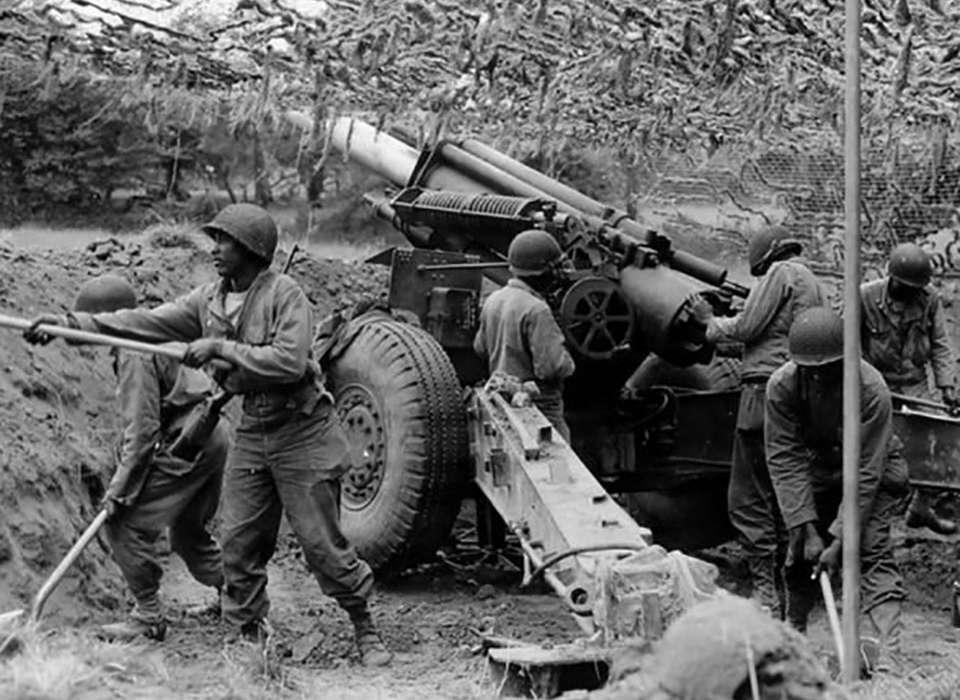
Top Image: African American crew of an M1 155mm howitzer in action courtesy of the US Army.
An act of heroic self-sacrifice highlighted the dedicated service of the 333rd Field Artillery Battalion, a segregated African American unit that bolstered American forces in Western Europe during World War II. That sacrifice unfortunately ended in tragedy for 11 American soldiers, murdered in one of the many atrocities committed by German Waffen-SS troops, in this case with particular savagery because the victims were black. Compounding the tragedy, this atrocity was not officially recognized in the United States until many decades after the war had ended.
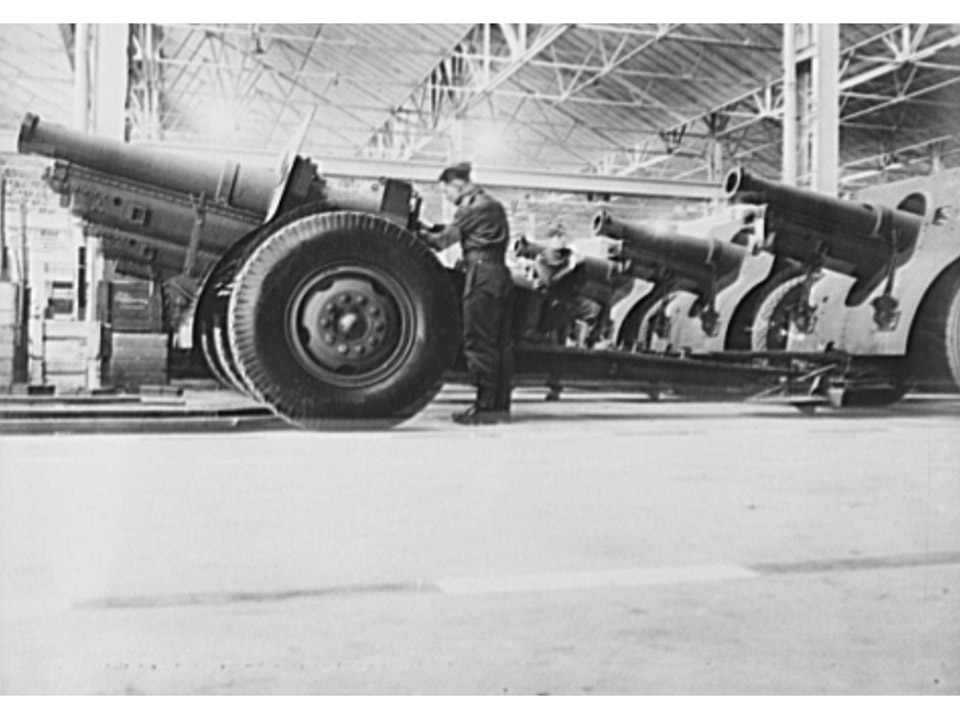
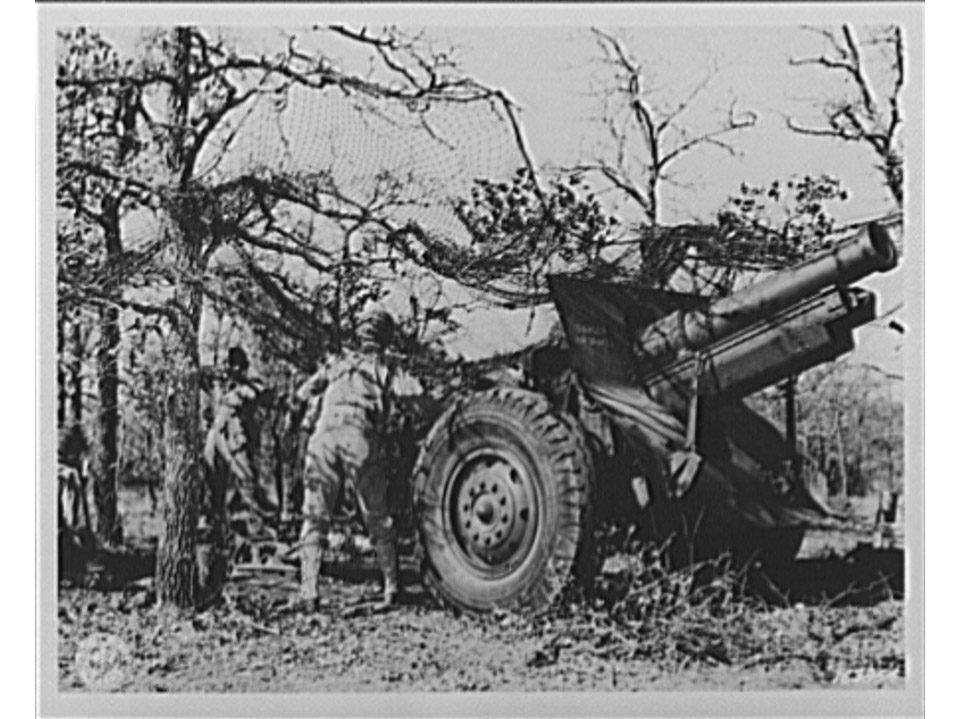
The 333rd was originally organized as a regiment in 1942, and trained at Camp Gruber, Oklahoma. In 1943, however, it was reorganized as the 333rd Field Artillery Group, consisting of the 333rd and 969th Field Artillery Battalions, both African American units with mostly white officers. Subsequently, two other field artillery battalions would be added to this group. The 333rd and 969th battalions were equipped with the M1 155mm howitzer, a versatile and effective truck-drawn weapon used by the US Army until the Vietnam War, and still in use in some parts of the world today.
Arriving in England in February 1944, the 333rd and 969th battalions shipped over to Normandy in July and provided vital artillery support to American forces through months of hard fighting, including at the siege of Brest, France.
By the time the Allies liberated Paris in August, the two battalions were known as some of the most efficient and hard-hitting artillery units in the US Army. In October 1944, the units were assigned to what was assumed to be a quiet front, in support of VIII Corps and the untested 106th Infantry Division in the Ardennes region along the Belgian-German border.
The 333rd Battalion was deployed around the small town of Schönberg in an atmosphere “tranquil to a point almost approaching garrison conditions,” as a later report would admit. Tired from months of constant service, the men took the opportunity to relax, with a recreation center that included a beer hall, bowling alley, and even a badminton court.
They were preparing a musical theater performance when the German offensive known as the Battle of the Bulge began on December 16.
The 106th Division was quickly thrown into disarray. At some outposts, black artillerymen took up rifles and fought alongside the infantry, in one case beating off a German attack and inflicting serious casualties. The German tide was overwhelming, however, driving through the defending infantry.
Recognizing the seriousness of the crisis, batteries of the 333rd and 969th battalions began pulling back under orders.
The 106th Division’s artillery commander desperately requested, however, that the battalions leave batteries behind to offer continuing support, assuring them that the main lines would be held and that they would be in no danger. He was wrong.
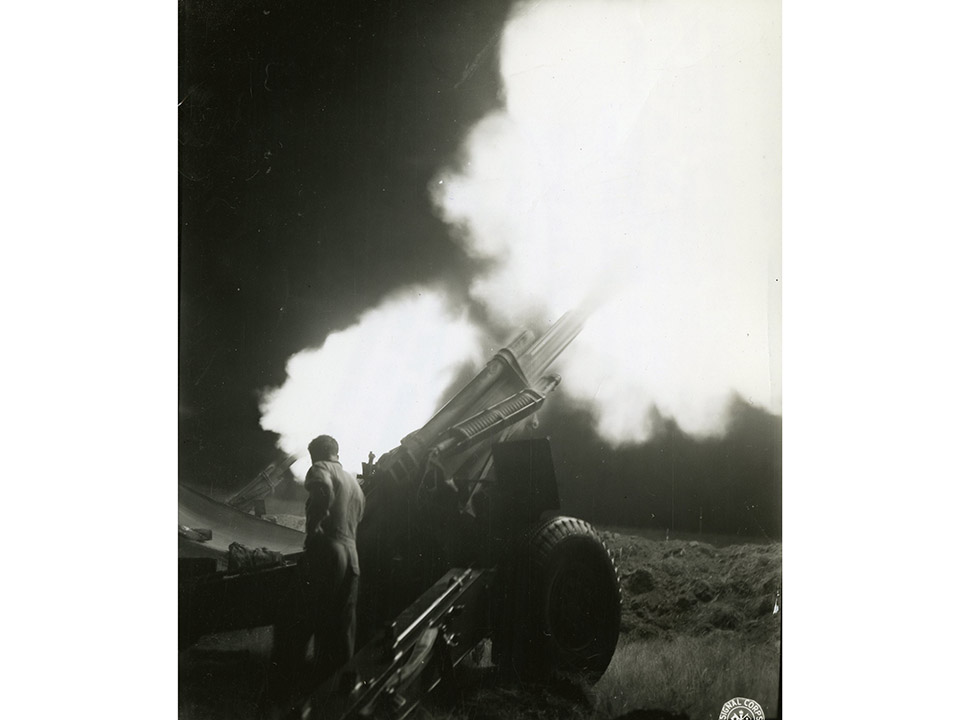
Master Sergeant Floyd Jones, an African American artilleryman serving with the 333rd Group, remembered: “We had just been sitting around awaiting orders when news came of the German breakthrough, so—get ready for action!”
Guns of the 333rd Battalion fired furiously in support of the American infantry, allowing some men to escape who might otherwise have been killed or captured. But the gunners’ heroism came at terrible cost as the Germans broke in among the howitzer positions.
The Germans captured Schönberg and, continuing to advance, shattered much of the 333rd Field Artillery Battalion, killing or capturing half of its men.
Eleven artillerymen escaped the German net and walked 10 miles away to the town of Wereth, where they were sheltered by a local civilian.
A neighbor who was sympathetic to the Germans betrayed them, however, and the Americans had the misfortune to fall into the hands of troops of the 1st SS Leibstandarte Adolf Hitler Panzer Division. Like the men of other Waffen SS divisions, these Germans were deeply indoctrinated in Nazi ideology and regarded their prisoners as racial inferiors.
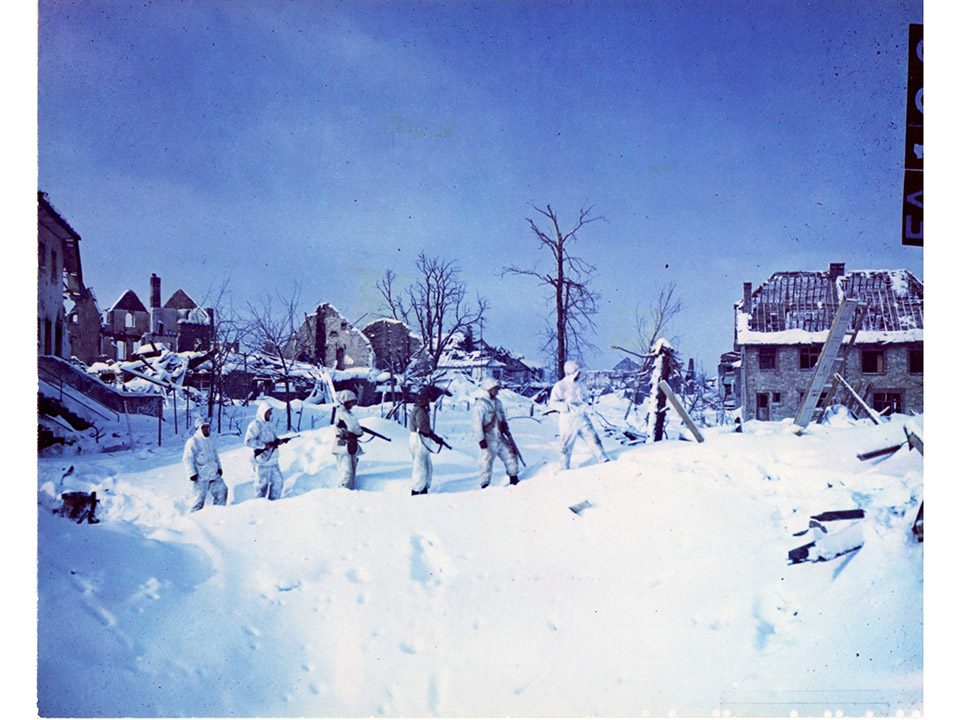
At 7:00 p.m. on the evening of December 17, the SS men drove their captors into the forest. There they savagely tortured their victims with rifle butts and bayonets before cutting off many of their fingers and running over them with vehicles—whether before or after the Americans were dead is impossible to say. Then they moved on, leaving the bodies behind.
The remnants of the 333rd Field Artillery Battalion fell back, joined with the still-intact 969th Field Artillery Battalion, and participated in the defense of Bastogne.
For its bravery during this action, the 969th received a Presidential Unit Citation—although the members of the 333rd who fought at Bastogne surely deserved to share in the honors.
The 11 men who died at Wereth, however, were ignored. The same US Army investigators who uncovered the atrocity at Malmedy also recovered the full details of what happened at Wereth, including the fact that—unlike the white victims at Malmedy—the black men who died there had been brutally tortured.
But the investigators made no effort to pursue the matter further, taking no testimonies even though many of the local civilians—including those who had sheltered the artillerymen—were still alive and could have provided evidence. In 1949 a subcommittee of the Senate’s Committee on Armed Services conducted a full review of Nazi atrocities during the Battle of the Bulge—and completely ignored the Wereth massacre.
Members of the family who had sheltered the “Wereth Eleven” marked the site of the massacre with a memorial in 1994, and it was expanded 10 years later.
Only in 2017, however, did Congress pass a resolution bestowing “official recognition” on the victims of the massacre: Curtis Adams of South Carolina, Mager Bradley of Mississippi, George Davis, Jr., of Alabama, Thomas Forte of Mississippi, Robert Green of Georgia, James Leatherwood of Mississippi, Nathaniel Moss of Texas, George Motten of Texas, William Pritchett of Alabama, James Stewart of West Virginia, and Due Turner of Arkansas.
Edward G. Lengel is the former Senior Director of Programs for the National WWII Museum’s Institute for the Study of War and Democracy.

