
Category: Leadership of the highest kind
Your Army
Medal of Honor announced for soldier who fought through three floors of insurgents in Fallujah
/arc-anglerfish-arc2-prod-mco.s3.amazonaws.com/public/3TOCWEDL4VAMLLLKHTGKZDLL4Q.jpg)
Staff Sgt. David Bellavia, left, in Iraq. (Army)
The president will award the Medal of Honor on June 25 to a soldier who fought through a nest of insurgents during the second Battle of Fallujah in 2004, the White House officially announced Monday.
Then-Staff Sgt. David G. Bellavia originally received the Silver Star for his actions, but his citation was revisited as part of a review of valor awards and determined worthy of the nation’s highest combat award.
The award will give Bellavia one of now seven Operation Iraqi Freedom Medals of Honor, and make him the only living recipient from the Iraq War.
During the battle, Bellavia single-handedly killed multiple insurgents, including one during hand-to-hand combat.
A squad leader at the time, Bellavia, now 43, was clearing a block of buildings when his platoon was pinned down on Nov. 10, 2004, in Fallujah, Iraq.
The first nine buildings were found to be unoccupied, but were filled with rockets, grenade launchers and other weapons. When Bellavia and four others entered the 10th building, they came under fire from insurgents in the house, according to his Silver Star citation.
The ensuing gun battle injured several soldiers. Bellavia switched out his M16 rifle for an M249 SAW gun and entered one room where the insurgents were located to spray it with gunfire, forcing the Jihadists to take cover and allowing the squad to move out into the street.
Other insurgents on the rooftop of the building began firing on his squad below, forcing them to seek cover in a nearby building. Bellavia then went back to the street and called in a Bradley Fighting Vehicle to shell the houses before re-entering the building to assess the scene.
Upon entering, Bellavia gunned down one insurgent who was loading an RPG launcher. A second enemy fighter began firing as he ran toward the kitchen and Bellavia fired back, wounding him in the shoulder. A third insurgent then began yelling from the second floor.
/arc-anglerfish-arc2-prod-mco.s3.amazonaws.com/public/OI64KVSJZRBVZJU3YOQNAOTCSE.JPG)
Cache of weapons confiscated in Fallujah by Staff Sgt. David Bellavia and his unit. (Army)
Bellavia then entered the uncleared master bedroom and emptied gunfire into all the corners, at which point the wounded insurgent entered the room, yelling and firing his weapon, the citation reads. Bellavia fired back, killing the man. Bellavia was then shot at by another insurgent upstairs and the staff sergeant returned the fire, killing him as well.
“At that point, a Jihadist hiding in a wardrobe in a bedroom jumped out, firing wildly around the room and knocking over the wardrobe. As the man leaped over the bed he tripped and Sergeant Bellavia shot him several times, wounding but not killing him,” the citation reads. “Another insurgent was yelling from upstairs, and the wounded Jihadist escaped the bedroom and ran upstairs. Sergeant Bellavia pursued, but slipped on the blood-soaked stairs.”
Bellavia followed the bloody tracks of the insurgent up the stairs to a room on his left. Hearing the wounded insurgent inside, he threw a fragmentary grenade into the room, which caused the insurgent to flee to the roof. Two more insurgents began yelling from the third story of the building.
/arc-anglerfish-arc2-prod-mco.s3.amazonaws.com/public/OLJIGRAS2NDK7MCSLTGF443SBE.jpg)
This soldier is about to be the Iraq War’s first living Medal of Honor recipient
Staff Sgt. David Bellavia, who originally received a Silver Star, will receive his upgraded award this month.
Bellavia grabbed the wounded insurgent and put him in a choke hold to keep him from giving away their position.
“The wounded Jihadist then bit Sergeant Bellavia on the arm and smacked him in the face with the butt of his AK-47. In the wild scuffle that followed, Sergeant Bellavia took out his knife and slit the Jihadist’s throat,” the Silver Star citation reads. “Two other insurgents who were trying to come to their comrade’s rescue, fired at Bellavia, but he had slipped out of the room, which was now full of smoke and fire.”
A final insurgent dropped from the third story to the second-story roof. Bellavia saw the fleeing man and fired at him, hitting him in the back and the legs and causing him to fall off the roof and die.
By this point, five members of the platoon had entered the house and took control of the first floor. Before they would finish off the remaining insurgent fighters, however, they were ordered to move out of the area because close air support had been called in by a nearby unit.
The White House release said that Bellavia’s actions that day rescued an entire squad, cleared an insurgent strongpoint, and saved many members of his platoon from possible death.
Bellavia originally enlisted in the Army in 1999 and served in Kosovo, before deploying to Iraq in 2004 with Company A, Task Force 2-2, 1st Infantry Division. After leaving the service on Aug. 16, 2005, he has engaged in New York state politics and continued to serve the military and veteran communities through various advocacy groups.
Bellavia now has his own daily radio talk show for WBEN in Buffalo.

General George S. Patton – A Vision for Business Leadership


Yes I know it is a real shock to some folks like my Old School Teachers that I can read. But nonetheless I do when I find time.
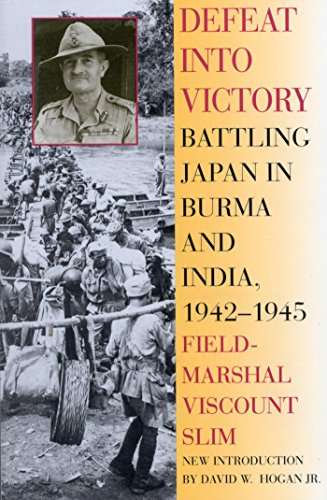
Anyways one of the men that I look up to is a man that most Americans and a lot of Brits don’t know about. Bill Slim, the man who rebuilt a savagely mauled Army that barely escaped the Japs in Burma. Who then took it back and almost completely destroyed the Occupying Jap Army.
This book though does not deal with this subject. Instead it deals with a lot of interesting characters and events in a very humorous manner that happened during his earlier military career.
For example when he was involved in a punitive campaign with the Pathans on the NW Frontier. When on horse back and carrying a flag to signal his beloved Ghurka Troops to withdraw. He had the flag wrap around his head all the while under fire.
Or how he got his butt chewed out for smuggling Australian beer from Haifa to his Troops in Iraq. When his very unofficial & unauthorised Beer Convoy ran his bosses car and him into a ditch.
Anyways if you like a good war story or two. Then you might want to get your hand on a copy of this really amusing book. Oh yeah before I forget his other book Defeat into Victory. Is another great Generals Book to read! Grumpy
The following was kindly provided by Captain T.W. Forrest of the D.C. Army National Guard.
Suggestions for
Professional Officer Development Readings
Gen. George S. Patton, Jr.
As soldiers it is our duty to continue are professional development by reading. General George S. Patton, Jr. (1885-1945), was known for his study and reading of military history.
In 1952, his widow, Beatrice Patton, provided a list of his favorite books for an issue of Armor magazine (Patton, Beatrice Ayer, “A Soldier’s Reading,” Armor 61 (November-December 1952, pp. 10-11). I provide it to you for your professional development:
- Maxims of Frederick the Great
- Maxims of Napoleon, and all the authoritative military biographies of Napoleon
- Commentaries, Julius Caesar
- Treatises by von Treitchke, and von Clausewitz
- Memoirs of General the Baron de Marbot, and de Fezansec, a colonel under Napoleon
- Fifteen Decisive Battles of the World, Creasy
- Charles XII of Sweden, Klingspor
- The Decline and Fall of the Roman Empire (Vols 1, 2, 3) (Vols 4, 5, 6), Gibbon
- Strategicon, Marcus and Spaulding
- The Prince, Machiavelli
- The Crowd, Le Bon
- A History of the Art of War in the Middle Ages, Oman
- The Influence of Sea Power Upon History,, Mahan
- Stonewall Jackson, Henderson
- Memoirs of U. S. Grant, and those of McClellan
- Battles and Leaders of the Civil War, R. E. Lee, and Lee’s Lieutenants, Freeman
- Years of Victory and Years of Endurance, Bryant
- Gallipoli, Hamilton
- Thucydides’ Military History of Greece
- Memoirs of Ludendorff, von Hindenburg and Foch
- Genghis Khan, Alexander, Lamb
- Alexander, Weigall
- The Home Book of Verse
- Anything by Winston Churchill
- Kipling, complete
- Anything by Liddle Hart
- Anything by J. F. C. Fuller, especially ‘Generalship: Its Diseases and Their Cure’
She also explained that during WW II, Patton read about the areas in which he fought and for an understanding of tactics. For example:
- The Normans in Sicily, Knight
- The Greatest Norman Conquest, Osborne
- The History of the Norman Conquest of England, five volumes by Freeman
- Caesar’s Gallic War
- Infantry Attacks, Rommel
For further study in the importance of professional reading and how it can shape a soldier I recommend the following:
- Dietrich, Steve E. “The Professional Reading of General George S. Patton, Jr.” Journal of Military History 53 (October 1989)
- Nye, Roger H., The Patton Mind: The Professional Development of an Extraordinary Leader. Garden City, N.Y.: Avery Publishing Group, Inc., 1993.
- _____, “Whence Patton’s Military Genius?” Parameters 21 (Winter 1991-92), pp. 60-73.
Obit watch: April 7, 2019.
Vonda N. McIntyre, noted SF writer, passed away on Monday, but I did not know about this until Lawrence mentioned it last night. The NYTobit is datelined Friday, but I’m thinking it must have been posted late in the day.
Ernest “Fritz” Hollings, for the historical record.
Ly Tong. He was a pilot with the South Vietnamese Air Force.
Ernest “Fritz” Hollings, for the historical record.
Ly Tong. He was a pilot with the South Vietnamese Air Force.
So, in 1992, he…
…hijacked a commercial airliner after takeoff from Bangkok, ordered the pilot to fly low over Ho Chi Minh City — known as Saigon, South Vietnam’s capital, before the Communist victory — and dumped thousands of leaflets calling for a popular uprising.
He then strapped on a parachute and followed the leaflets down to certain capture. He was released six years later in an amnesty and returned to the United States, where he had become a citizen after the war.
That takes us to 1998. In 2000…
Later that year…
He spent another six years in a Thai prison for that. The paper of record states he was unarmed and nobody was hurt during either of his hijackings, which makes me wonder about the definition of “hijacking”. But I digress.