Category: HUH!
Things are getting interesting in narco-Mexico…
According to a report in the Atlantic (paywalled, but an archived version is here), the politicians in Mexico who have for years – probably for generations – been bribed and/or cajoled and/or threatened by the drug cartels into turning a blind eye to their criminal activities, appear to be changing their tune.
(BIAS WARNING: The Atlantic is notoriously anti-President Trump and routinely criticizes the policies and actions of his administration. This article appears to be unusually positive, despite that reservation.)
… the governor of the strategically important border state of Baja California was just caught on tape offering to become an FBI informant. The remarkable thing here is that she would not be the first; the list of current and former Mexican officials and drug traffickers who have offered to cooperate with the U.S. government is now lengthy.
. . .
Since his second term began, Trump has periodically threatened military action inside Mexico, alluding to air strikes or operations that would “take out the cartels.” Mexican officials have repeatedly rejected the possibility. “There will be no invasion of Mexico,” President Claudia Sheinbaum said last year. But quietly, Mexican officials have discussed what it would mean if they were attacked by their neighbor and largest trading partner. Would it be a special-forces operation, like the one that seized former Venezuelan President Nicolás Maduro? A drone strike on a fentanyl lab? Some Mexican officials are reading books about the Mexican-American War, searching for historical precedent.
Because the threat of military intervention is so dramatic, not enough attention has been paid to a type of intervention that is already taking place, one that could pave the way for strikes.
In a break with long-standing precedent, American prosecutors have used informants to pursue members of the Mexican government, apparently “moving up the food chain,” as one U.S. official described it to me … Several former Mexican officials facing U.S. charges have turned themselves in, apparently agreeing to cooperate with authorities to reduce their sentences.
Dozens of newly extradited drug traffickers, too, are believed to be cooperating. Their accounts appear to have allowed U.S. investigators to build cases against members of Sheinbaum’s Morena political party. At least four have been indicted. Many more have had their visas revoked.
It’s a high-risk escalation in the Trump administration’s fight against narco corruption—and possibly also a pretext for a unilateral attack. Trump could use evidence of the government’s links to organized crime in an attempt to justify using force in Mexico. This week, the Trump-appointed head of the Drug Enforcement Administration, Terry Cole, gave a speech describing “the deadly connection between cartel networks and the Mexican government.”
“They are one [and] the same,” he said.
. . .
Last week, the State Department designated two lesser-known drug cartels—the Juárez Cartel and Los Viagras—as “foreign terrorist organizations” and “specially designated global terrorists.” Some within the Trump administration believe that those designations would offer some kind of legal authority for an attack, though international-law experts largely differ … The campaign against cartel leaders has been so successful that, even if the United States wanted to decapitate a drug-trafficking organization, it’s unclear whom they would target.
There’s more at the link.
This has mostly been taking place “under the wire”, so to speak. We’ve known for years that the entire government structure of Mexico – local, regional and national – is corrupted by drug money from the cartels, who effectively run most of the country.
However, if the cartel leaders, and political leaders, are rendered ineffective (or imprisoned), what’s going to happen to the social fabric of Mexico? So much of it is cartel-corrupted (including almost every element of the police and armed forces, the emergency services, etc.) that ordinary citizens have learned to live without most of the social structure we take for granted.
If the replacement structures of the cartel are suddenly removed, will Mexico survive in its present form?
I think there are three possibilities.
- Mexico will collapse into a “failed state”, with widespread chaos and anarchy. It will be almost impossible for business to function without paying massive bribes to local strongmen, but those strongmen will be at war with each other, so that an effective regional or national government simply won’t be possible.
- Mexico will limp along as it does at present. The cartel structures will continue to use their financial wealth (very considerable, having amassed it over decades) to buy the cooperation of the civil authorities. However, the competition between cartels to take over those resources will devolve into civil war in parts of the country, and will likely spill over into the southern United States. I’d expect southern California, Arizona and New Mexico to become very dangerous areas, even more so than at present. (I daresay Texas will probably cope better than they do, because Texas law enforcement authorities aren’t handcuffed by liberal politicians who’ll do everything in their power to restrict them.)
- Mexico may break into several smaller nation-states, based on divisions that go back centuries. Don’t forget, “modern” Mexico was “created” out of a series of revolutions and civil wars that imposed unity out of the barrel of a gun, and killed anyone who argued with the concept. With the number of guns in circulation there now, it’ll be harder to impose authority in that way.
I could be completely wrong, of course. Time will tell . . .
Peter
Categories
Why No One Is Allowed Near the Scharnhorst

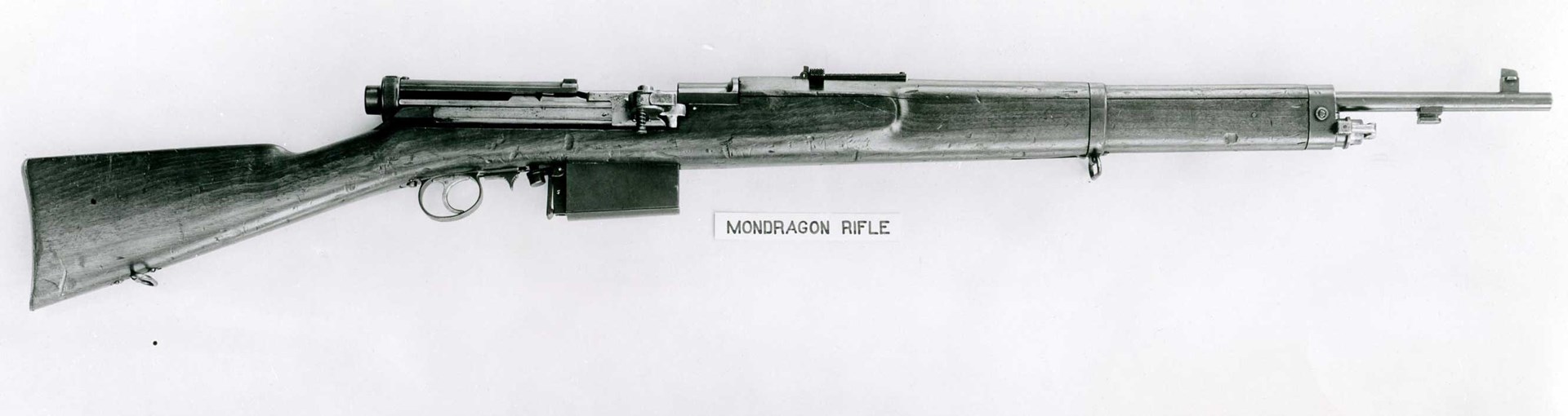
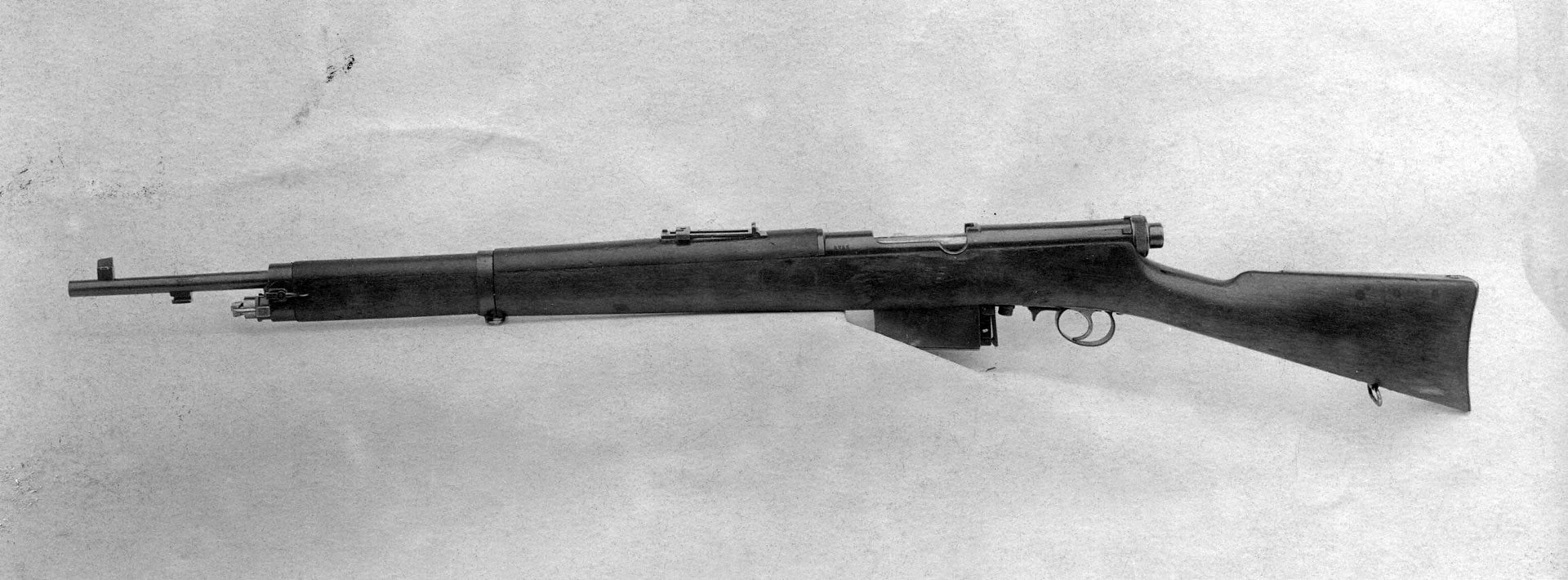
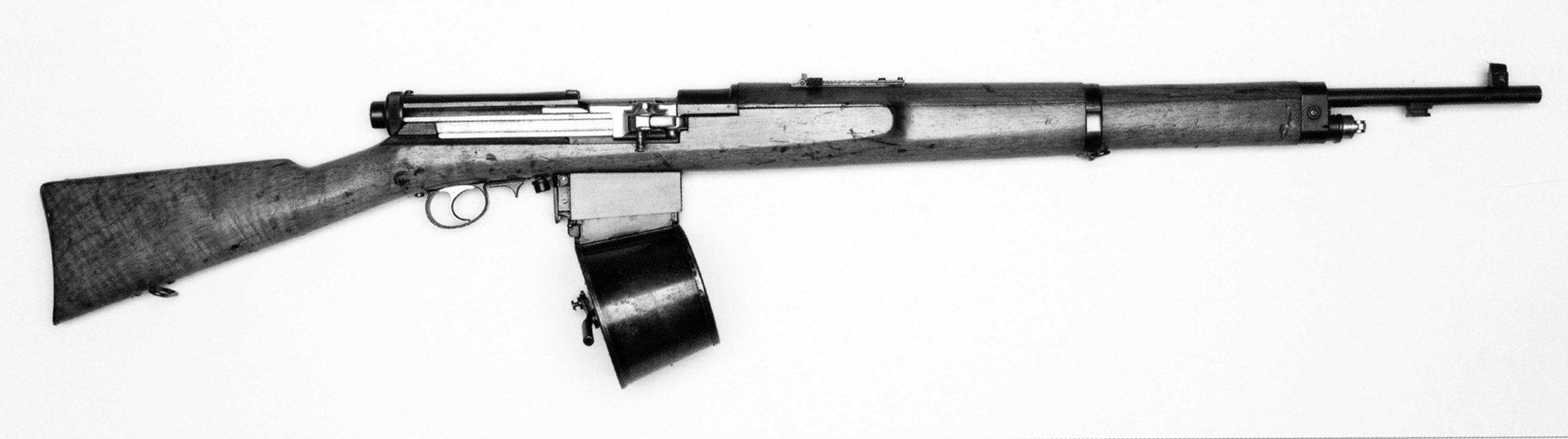
The Mondragon could be used either as a self-loader or as a manually cocked repeating rifle (in case the gas pressure mechanism failed).
NARA
Recently, I tried to describe the Mondragón rifle to a friend, using just a few words:
“A turn-of-the-20th-century semi-auto rifle, the first self-loading rifle accepted by any army, designed in Mexico, built in Switzerland and finally destined for use aboard German aircraft in World War I.”
Clearly, I am not a man of few words. But in my defense, the Mondragón is a unique rifle worth talking about.
Mexican artillery officer Gen. Manuel Mondragón began his firearm design career with a straight-pull, bolt-action rifle design named the Model 1893 chambered in 6.5×48 mm, a cartridge developed by Mondragón himself. Mondragón received patents for the M1893 in Belgium and France in 1892, and then in the United States in 1896.
There was little interest in his first rifle, but Mondragón was a man on a mission. His next design was a unique and aggressive concept quite literally 20 years ahead of its time.
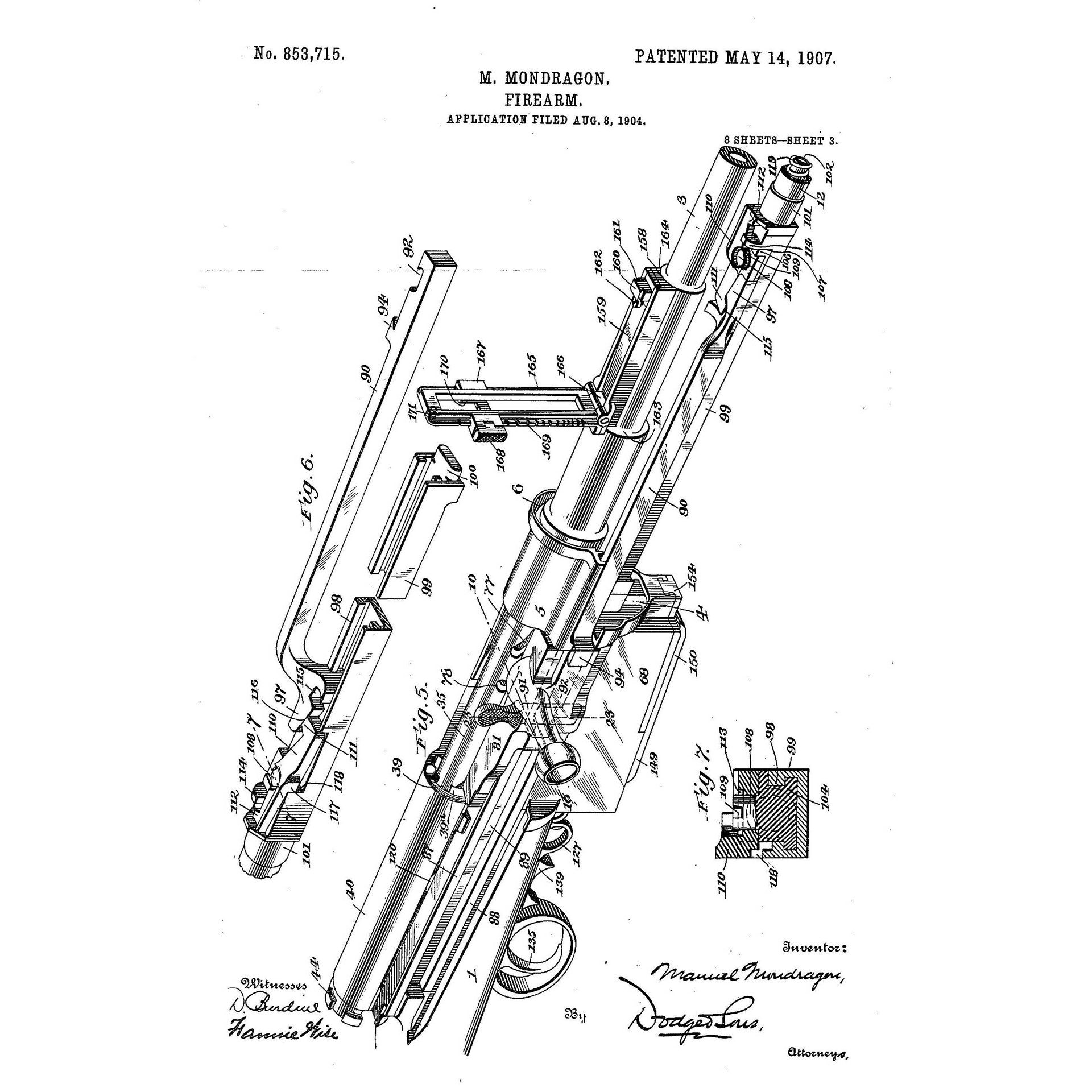
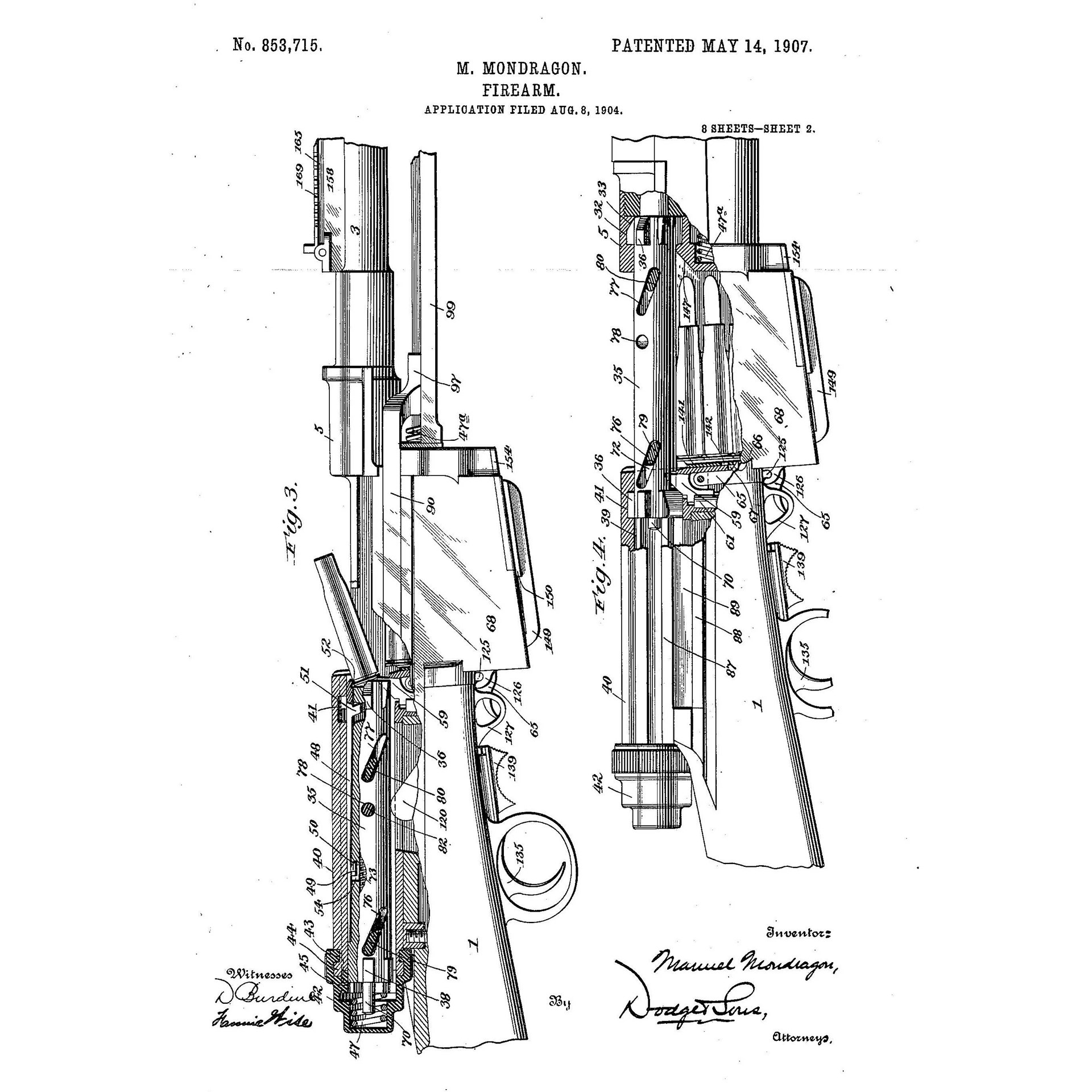
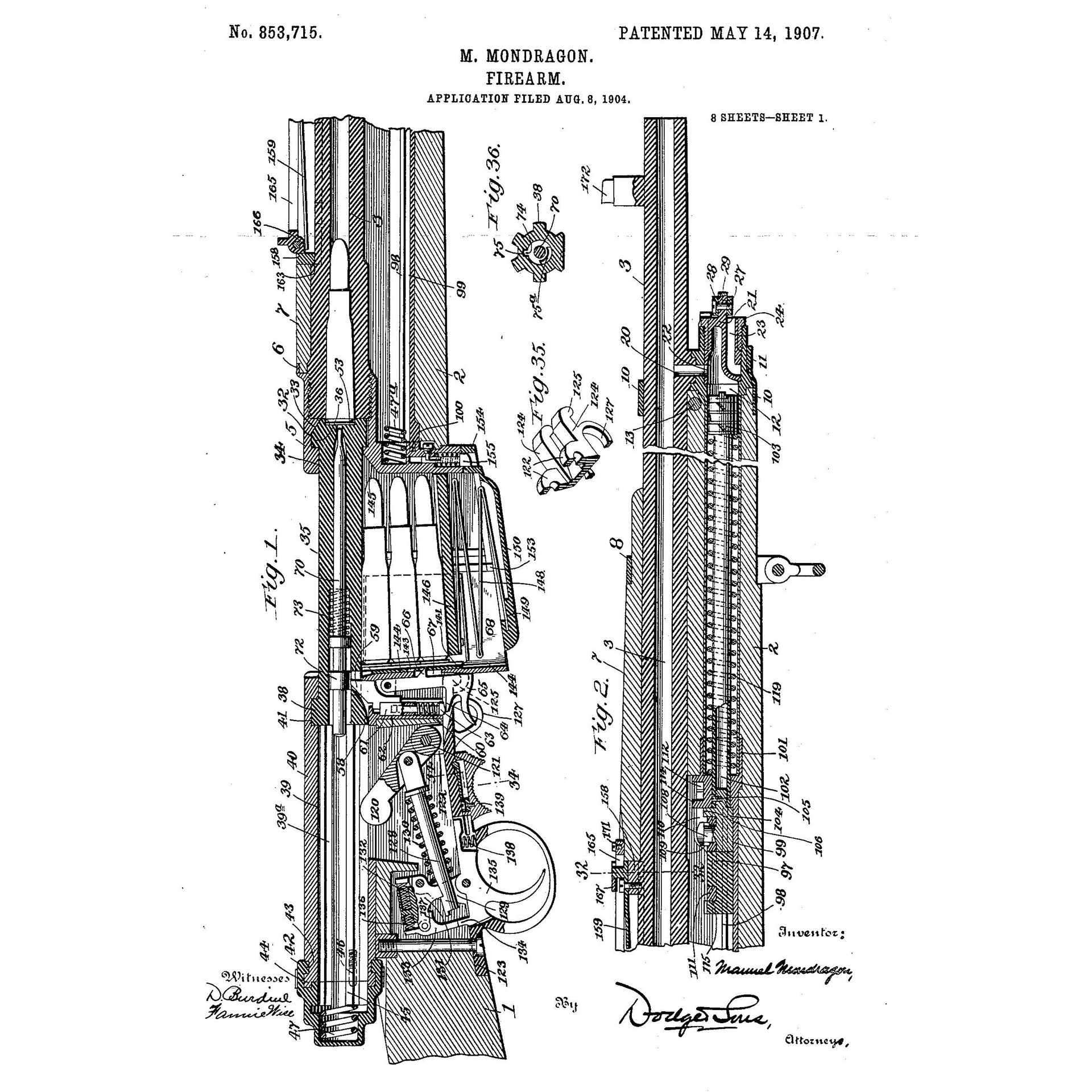
By August 1904, Mondragón filed a patent application for a self-loading rifle. General Mondragón was a self-starter, and he began the design process on his own initiative, creating an ambitious self-loading firearm at a time when many nations were still using first generation bolt-action rifles.
It is worthwhile to mention that Mondragón developed his rifle completely on his own, without relevant examples for influence, or earlier designs to copy or refine.
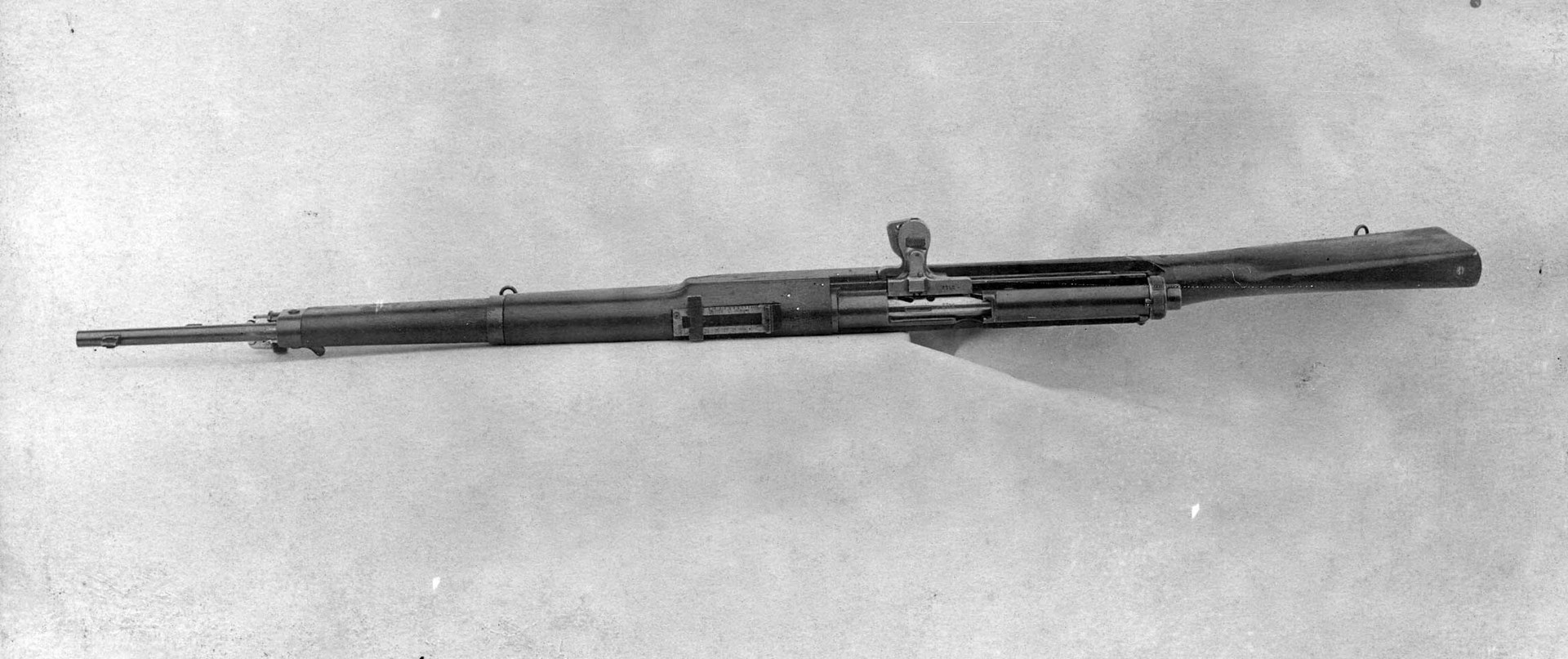
Despite working alone, he managed to create a semi-automatic, gas-operated rifle with a multi-lug, rotary bolt operated by a long-stroke gas piston. Propellent gas was drawn off through a small hole near the muzzle, and this drove the gas piston beneath the barrel. The gas impulse unlocked the bolt and operated the self-loading action.
More than 120 years later, Mondragón’s semi-automatic is still a great gun story, filled with political intrigue, financial drama, maddening mechanical intricacy and a strange appearance in World War I.
Porfirio Díaz: Dictator & Mondragón patron
The fact that the Mondragón rifle existed at all was due, in large part, to the patronage of Mexican President Porfirio Díaz. The dictatorial Díaz regime (1876-1911) brought about a period of relative political stability in Mexico, and his power base of technocrats (the “Científicos”) boosted innovation in Mexico as never before.
Diaz’s military experience allowed him to see the great potential in Mondragón’s self-loading rifle, which would ultimately bear his name as the “Fusil Porfirio Diaz Systema Mondragón Modelo 1908.”
As Mexico lacked the necessary manufacturing equipment and skills to produce the design domestically, in 1894, Mondragón convinced the Swiss firm Schweizerische Industrie-Gesellschaft (SIG) to build 50 test samples of his fledgling self-loading rifle. Later that year, the Mexican army was impressed enough to order 200 more.
It took until 1904 before a few samples were completed and sent to Mexico. After some testing and further discussion, the Mexican government decided to move ahead with the project. It was a point of pride for President Diaz, and, he believed, it demonstrated that Mexico was becoming the equal of the military powers in Europe.
Development of the new rifle was frustrating, and a considerable amount of time was consumed in experimentation and negotiation.
Various cartridges were tried, including a unique 5.2×68 mm round developed by Mondragón and Swiss Col. Rubin. Unfortunately, Mondragón’s complicated design was found to be ammunition-sensitive—the gunpowders of the era developed too much pressure, and several early tests ended in frustration with broken internal parts.
After flirting with several chamberings, Mondragón settled on the 7 mm Mauser cartridge, and on May 24, 1908, the Mexican government contracted with SIG to manufacture 4,000 of the self-loading Mondragón rifles, along with 4,000 dagger-type bayonets.
The original rifles used an integral 8-round box magazine, with a 20-round detachable box magazine coming shortly thereafter. The new rifles were outrageously expensive. Each Mondragón cost the equivalent of four well-proven Mauser rifles.
Production lagged at SIG until early 1911, when the first group of 400 rifles were finally delivered to Mexico. Problems were noted with the initial shipment almost immediately—the Modelo 1908s did not work well with Mexican ammunition.
Conceptually, the Mondragón was a tremendous breakthrough in infantry firepower, but in practice, the design was dogged by its need for pristine ammunition and nearly perfect shooting conditions.
Also, the rifle itself had to be kept exceptionally clean, and the fussy design simply would not allow it to be easily field stripped for maintenance—certainly not in the field, nor even on the test range where contracts are won or lost.
Disaster struck on May 25, 1911, as President Diaz, the ultimate sponsor of the Mondragón rifle, was forced to resign from office. The Mexican Revolution was underway and would not end until December 1920.
Under those circumstances, no one in Mexico was interested in paying for expensive rifles that rarely worked. As for the rifles already in Mexico, there are rumors of their use in the revolution, but no hard evidence.
In Europe, SIG was temporarily stuck with about 4,000 Mondragón Modelo 1908 rifles. Little did the Swiss accountants know that a firearm-sales opportunity called World War I was soon to begin.
A German Windfall
In the fall of 1915, the Mondragón rifles languished in storage at the Swiss Neuhausen factory. On paper, the prospect of acquiring self-loading rifles (potentially at a deep discount) was particularly appealing to the German Ministry of War.
Keeping them out of the hands of the Kaiser’s enemies was another important motivation, and by late October 1915, the German Rifle Testing Commission was investigating the combat potential of the Mondragón.
Again, ammunition was a consistent problem. The Germans originally tested the rifles with Belgian-made cartridges, which delivered poor results in muzzle velocity and accuracy.
The commission recommended a change to German-made 7mm ammunition, and this provided acceptable ballistic performance. However, the commission realized that the Mondragón was specialized firearm not suited for the rigors of trench warfare along the Western Front.
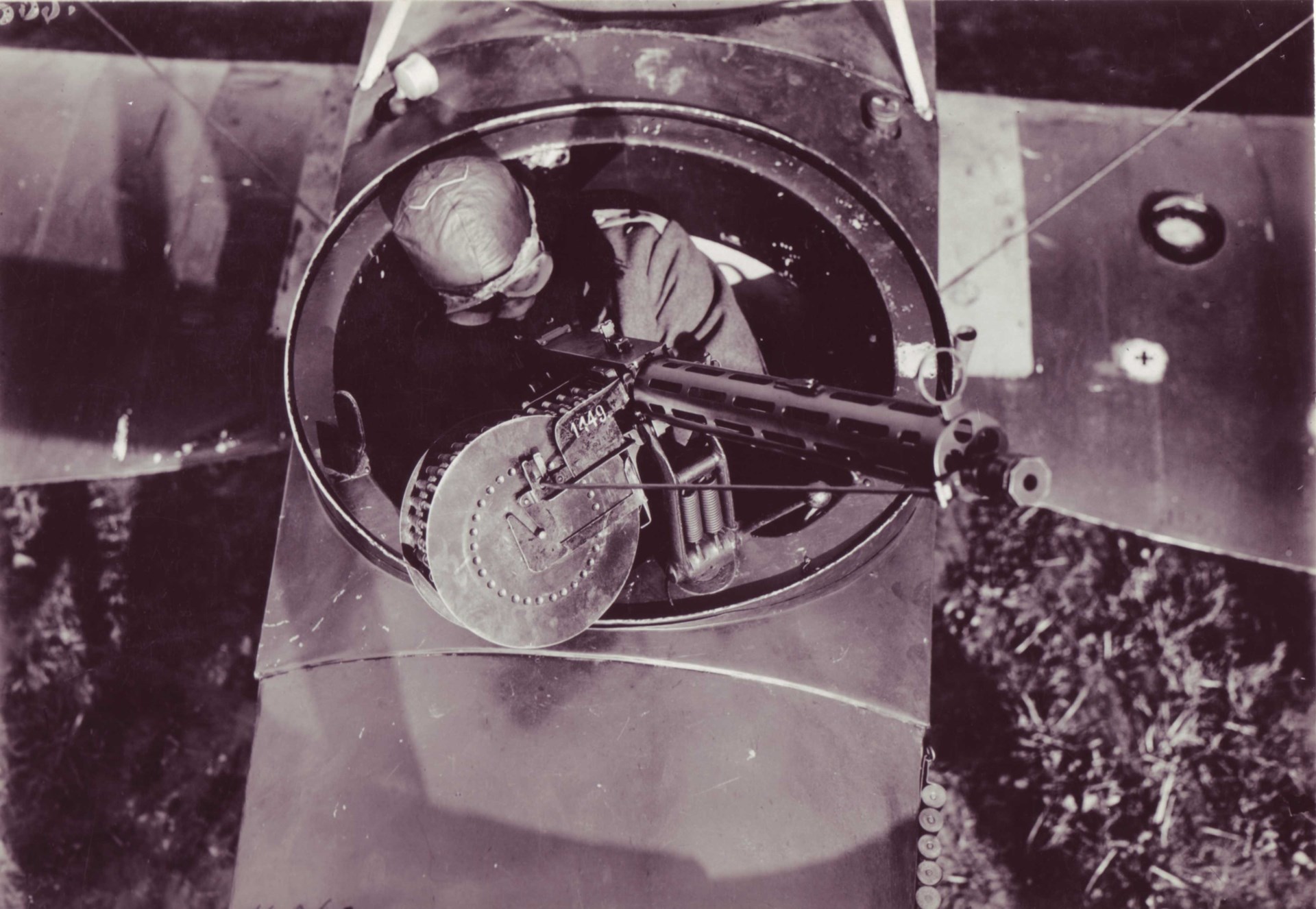
Their recommendation was that the Mondragón was best suited for use by airmen in the relatively clean environment of the first air war.
To that end, the commission further recommended that the magazine capacity be increased—and this resulted in the development of a 30-round drum magazine mounted into the rifle’s floorplate.
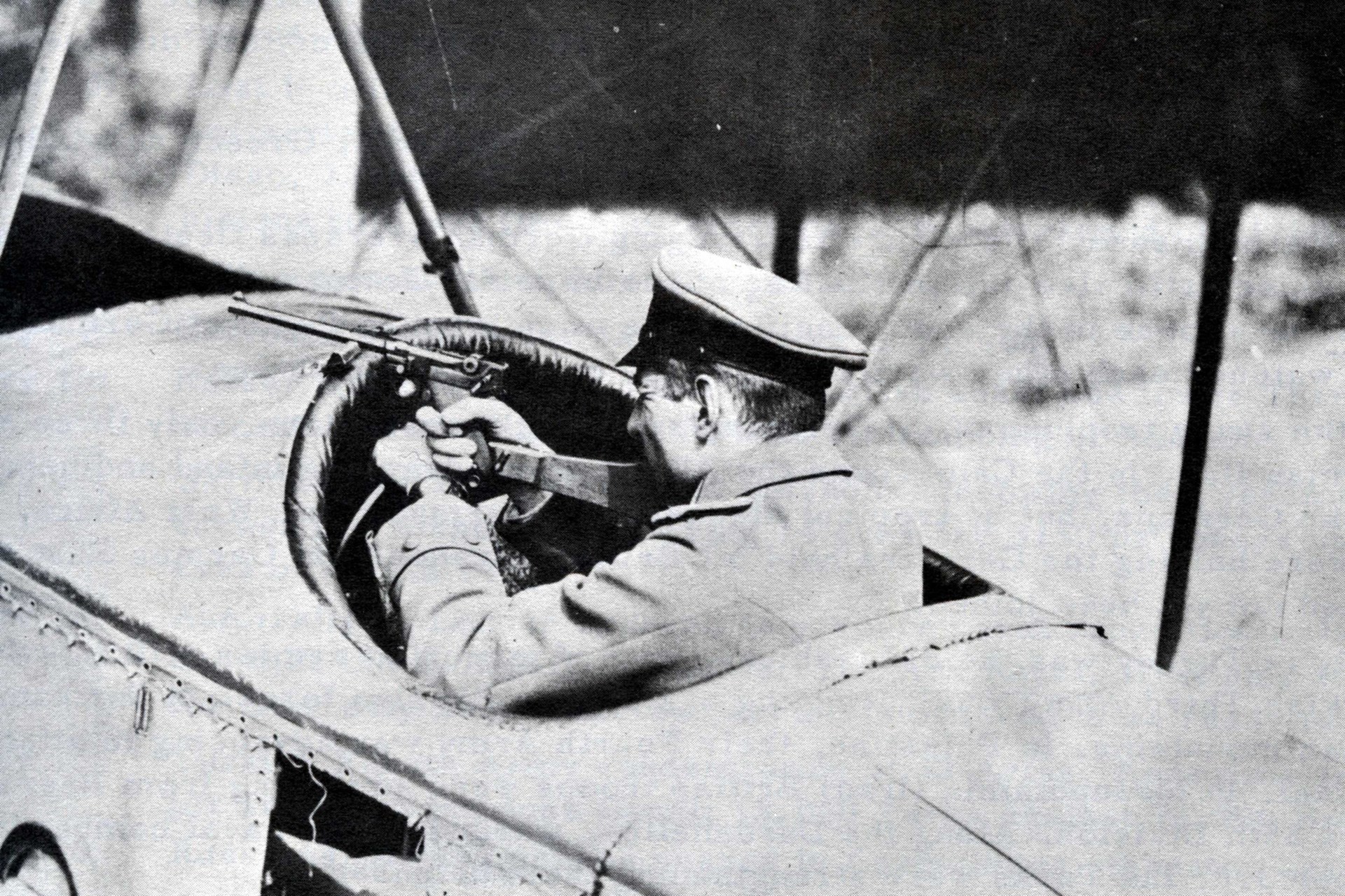
In late 1915, the German air force faced a serious lack of air-worthy firearms. Machine guns were in critically short supply, and observers used an odd collection of bolt-action carbines, Luger P08 and Mauser C96 pistols, along with the occasional use of shotguns. The Mondragón self-loading rifle, fitted with a 30-round drum magazine, was considered an emergency solution and was dubbed the “Air Force Self Loading Carbine M 15.”
Tempered Expectations
Final inspections in German factories in January 1916 revealed a host of problems: extractors were weak and often broke, firing pins frequently malfunctioned, and several other internal parts needed a slight redesign and stronger construction. While these revisions were made, the German air force began to receive proper machine guns in useful numbers, weapons like the air-cooled Parabellum MG 14 and MG 08/15.
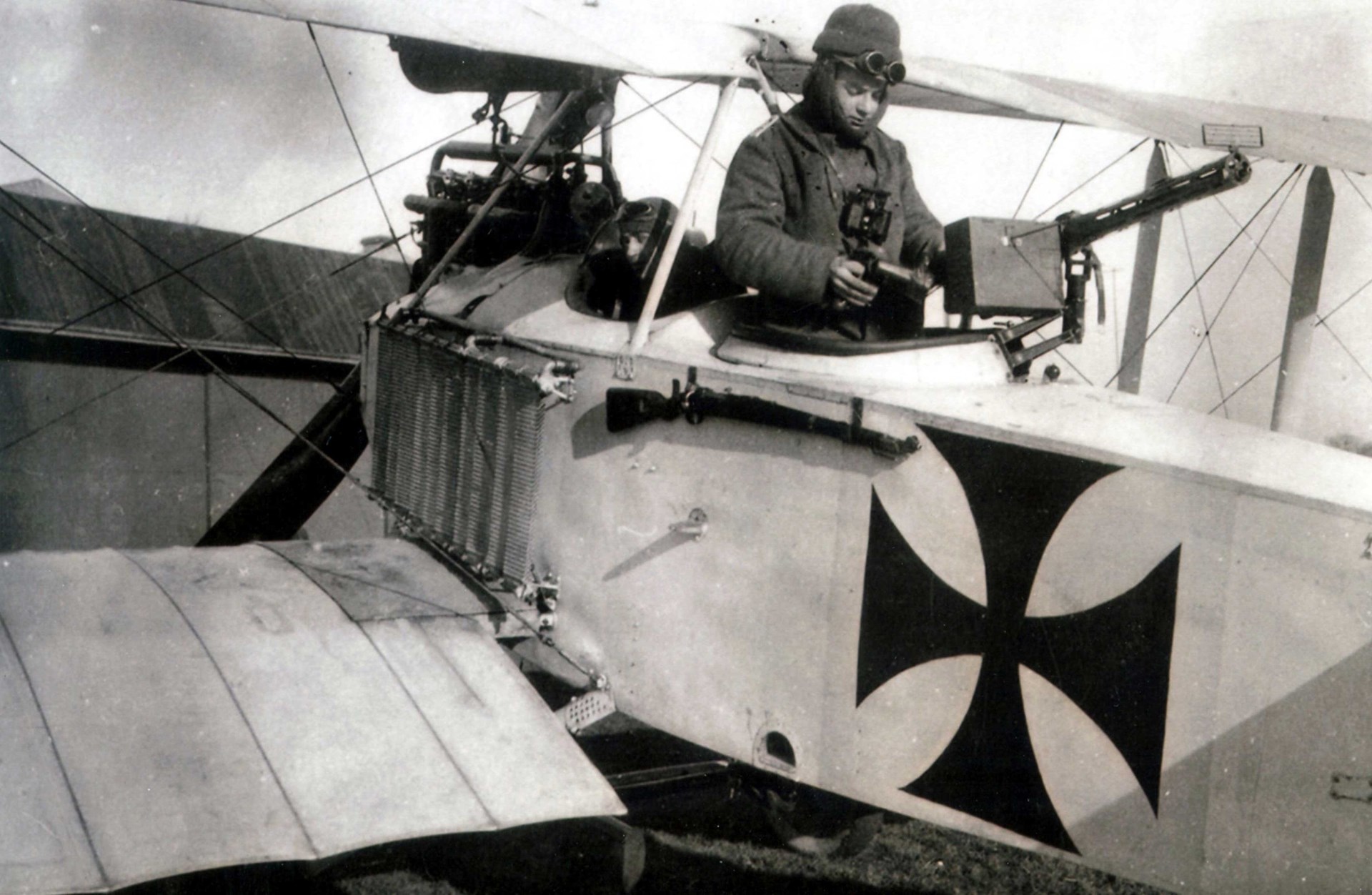
When the Air Force M 15 carbines were finally ready for service, they filtered out in small numbers to second-line squadrons. Even so, the Luftstreitkräfte armorers had no illusions, and the Mondragón was considered an emergency-use arm only, requiring careful maintenance by specifically trained personnel. The following are excerpts from the German manual on the Mondragón/Air Force Carbine M 15:
Instructions for the use of the Air Force Self-Loading Carbine M 15 with 7mm Ammunition
The 7mm Air Force Self-Loading Carbine M 15 is a gas-operated self-loading rifle. At 165mm behind the muzzle, the gases flow through a 1mm hole into the gas cylinder located beneath, pushing the piston back and activating simultaneously the main spring placed around the piston.
The piston rod is hollow to take up oils for self-lubrication of the gas cylinder; for the same reason, the gas piston is provided with three drill holes.
General description of detachable magazine
The 30-shot, detachable magazine for the Air Force Self Loading Carbine M 15 consists of the following major parts:
- An outer case, the drum, with detachable neck.
- An inner case, the spring case with winding device and lid for the spring case.
- The feeding spring with footplate and follower plate.
Dimensions for the outer and inner case are designed in such a way as to form a hollow space, the cartridge canal, between the two cases after assembly of the magazine. Onto the cocking lever shaft running through the center of the two cases, the flat coil spring which is located in the interior of the two spring cases is hooked. This spring can be wound by turning, counterclockwise, the winding device which is located at the back wall of the drum.
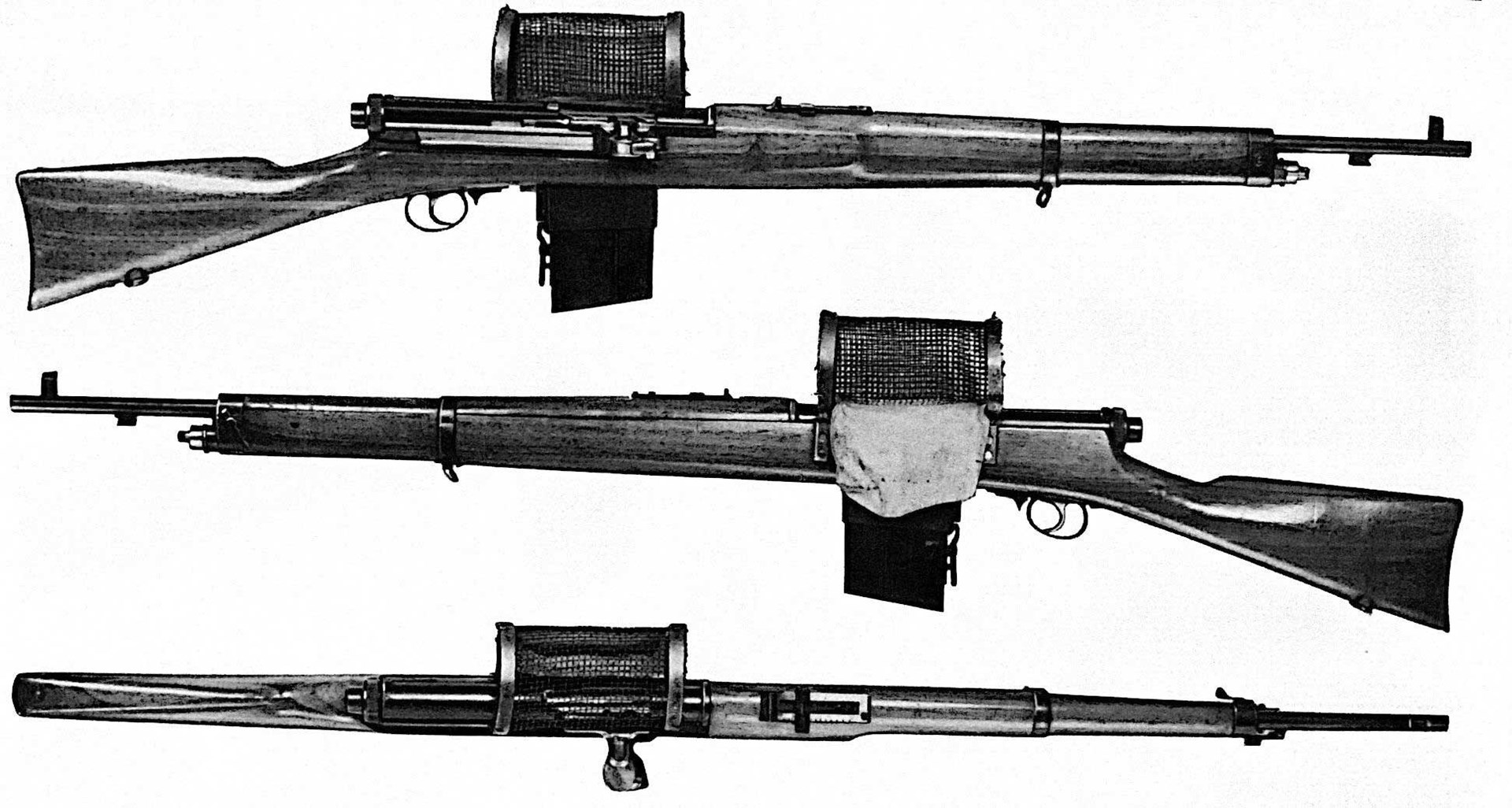
The pressure of the spring is transferred to the cartridges by means of the transferring lever which is rigidly connected to the cocking lever shaft of the winding device. The follower spring screwed to the transferring lever at its foot provides for the feeding of the last 10 cartridges. There is one feeder device and one filling block for each six magazines.
By 1917, the German Air Force no longer considered their armament situation to be an emergency and were keen to pass along their 7mm Self-Loading Carbine M 15 to someone else, maybe even almost anyone else. The German army wasn’t interested in the semi-auto rifles, not even for propaganda purposes. It seems that the M 15 Carbines ended up with the German navy, in a sort of limbo between the ships and the shore.
Mondragón: The First Self-Loading Rifle Adopted by Any National Army
That distinction may seem like an obscure answer in a game of firearm trivia, but the Mondragón rifle is much more than that. Flawed in many ways, it still offered a preview of the infantry rifles to come. And the circumstances of the Mondragón’s birth showed that not all firearm innovation comes from the hallowed halls of Springfield, Colt, Mauser or Enfield.
President Donald Trump’s eldest son is a key player in GrabAGun, a company that hopes to dominate internet firearms sales.
He would also be responsible for helping to execute the company’s marketing strategy, developing partnerships, and “serving as a spokesperson for the Company to effectively communicate the Company’s mission and initiatives,” the filings say.
GrabAGun Digital Holdings is a 16-year-old Texas-based company that aims to digitize the gun-buying process, according to SEC filings. It hopes to reach a more youthful cohort of firearms users, who company executives say would be more likely than their older peers to buy firearms online.
Since going public, the company — which is valued at nearly $70 million — has dropped in value, public records show. On the earnings call, company executives blamed the loss in value on the costs of going public and expanding.
Trump Jr. has made it clear that the company’s path toward greater profitability is internet sales.

On the campaign trail, the elder Trump promised to roll back Biden-era firearms regulations, such as a rule that prohibits the sale of stabilizing brace firearm accessories, and received the backing of major gun rights groups. In April, the Bureau of Alcohol, Tobacco, Firearms and Explosives (ATF) — the law enforcement agency within the Justice Department tasked with regulating the nation’s hundreds of millions of firearms — proposed amending or eliminating 34 gun regulations.
Experts said some of those changes, taken together, would transform the firearms market from one that largely plays out in storefronts across the country into a potentially lucrative digital marketplace.
Currently, licensed firearms dealers must verify a potential buyer’s identity and run a federally mandated background check in person. That stems from Congress’s move to tighten the rules in 1968, after Lee Harvey Oswald used a fake name on a mail order to buy the gun he used to assassinate President John F. Kennedy in 1963.
Gun rights groups say the regulations are outdated in the digital era. Under one of the ATF proposals, firearms sellers would be able to verify someone’s identity and check their background online.
Erich Pratt, senior vice president of Gun Owners of America, said the Gun Control Act of 1968 went beyond the government’s authority in restricting gun purchases, given the Second Amendment right to bear arms. Pratt, the ATF and other gun rights groups have said that the proposal has ample measures in place to ensure the safe sale of firearms online.
“The right of Americans to buy guns — even online — is something that is deeply rooted in our nation’s text, history and tradition,” Pratt said, echoing the language of recent Supreme Court decisions. “It is as American as apple pie.”
GrabAGun’s business model allows customers to order firearms on the company’s website or mobile app. The guns are shipped not to their homes but to a licensed dealer in their states, and the customers must undergo background checks at the store before they can pick up the firearms.
As the ATF moves to allow background checks online, a separate proposal would loosen a century-old ban on sending handguns to people’s homes through the U.S. Postal Service. Under the proposed rule, licensed firearms dealers could ship guns to residents of their state. The proposal follows a Justice Department memo in January, authored by lawyers in the department’s Office of Legal Counsel, declaring the gun-mailing ban unconstitutional.
If the ATF and Postal Service rule changes are enacted, GrabAGun could sell firearms online and ship them directly to consumers, at least in states where the company is licensed. GrabAGun is a licensed dealer in Texas, according to public records, and firearms experts say it would not be difficult for the company to get licensed in many other states.
The ATF announced its proposals on April 29, beginning a 90-day public comment period that will expire in early August. The public comment period for the Postal Service measure has closed, and those comments are under review. Multiple state attorneys general have said they are against the Postal Service proposal, suggesting that it could face legal challenges if adopted.
The administration says its proposals would remedy the misinterpretation of the law and Constitution by Biden-era officials.
“ATF regulation changes reflect President Trump’s commitment to the rule of law, and that includes protecting the Second Amendment rights of all Americans,” a White House official said. “We refuse to bypass Congress and use the regulatory process to harass law-abiding Americans seeking to exercise their rights,” as the administration claims its predecessors did.
Advocates for stricter gun laws say it is critical that potential buyers have in-person interactions before they acquire handguns. In face-to-face interactions, they say, gun sellers can pick up on any red flags suggesting that it would be unsafe for the potential buyer to possess a firearm.
Gun-control advocates cite another administration proposal that, they say, could help GrabAGun but threaten public safety.
Under existing ATF regulations, residents of states with rigorous procedures for obtaining concealed-carry permits can bypass the federal background check. Under the new proposal, more states, including those with laxer procedures, would qualify for the waiver.
Marianna Mitchem, senior industry adviser for Everytown for Gun Safety, a gun-control advocacy group, said she fears that the administration’s proposals would make it simpler for gun traffickers, criminals and underage people to get their hands on firearms through online platforms such as GrabAGun.
Mitchem, who was a senior official at ATF overseeing inspections of gun shops before leaving the agency in 2025, said the agency during the Biden administration never discussed easing regulations to enable online sales.
“This is going to make it so much easier for dangerous people to get firearms,” Mitchem said. “You are eliminating [gun shops’] ability to be the first line of defense.”
GrabAGun’s executives disagree, and they submitted a comment to ATF supporting online background checks.
“The Second Amendment is in our blood,” Jonathan B. Wolens, GrabAGun’s general counsel, wrote in the comment, which is available online. “We support this rule change because we believe it will promote efficiency and support compliance by enabling more timely, accurate confirmation of license validity.”
ATF said the proposed rule would require a rigorous identification process while updating the gun sales process for the 21st century. “ATF’s proposed rule modernizes and strengthens identity-verification requirements … and reduces burden on consumers,” an ATF spokesperson said in a statement.
GrabAGun appears poised to move fast if the rule changes are enacted. In October — months before the proposals were introduced — GrabAGun formed a subsidiary called Pew Logistics, with a stated mission of selling software to provide “next-generation, white-label direct-to-consumer fulfillment solutions to modernize the firearms supply chain.”
That software would be sold to gun manufacturers, helping them sell directly to consumers online.
Trump Jr. has multiple other financial ties to GrabAGun that could enable him to profit if the company takes off.
GrabAGun offers a “Shoot Now Pay Later” financing option through a company called Credova Financial. Credova is a subsidiary of Public Square Holdings, where the president’s son is a board member and investor.
In August, the Consumer Financial Protection Bureau dropped an investigation of Credova, which had been accused of wrongly charging fees to customers. It said the inquiry, which started during the Biden administration, was politically biased against companies affiliated with firearms.
When GrabAGun went public, it merged with Colombier Acquisition Corp. II, a firm designed to combine with other companies and take them public. Colombier is led by Omeed Malik, a major Republican donor who chairs 1789 Capital, a venture capital firm that includes Trump Jr. as a partner.