I heard that Hitler was absolutely furious about them defending his holdout. I just hope that most of these evil folks were taken care of by The NKVD. (Another set of “tender” folks that did Stalins dirty work)
Category: Hard Nosed Folks Both Good & Bad
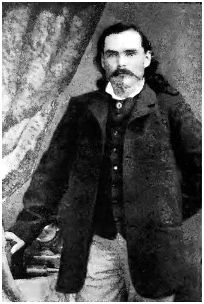
William “Billy” Dixon was born in West Virginia on September 25, 1850. Soon after, his parents moved west to Missouri. Due to unknown circumstances, he was orphaned at age 12. He worked as a woodcutter and various other odd jobs along the Missouri river. Quickly garnering a reputation as a skilled marksman and woodsman and like many footloose young men of his time, he drifted into buffalo hunting. Shortly before June 27, 1874, Dixon arrived at the Adobe Walls outpost.
 The Adobe Walls settlement began life in 1845 as a trading post in the Texas Panhandle, just north of the Canadian River, not far from the present day town of Stinton. As the name implies, adobe blocks were the main building material. Due to repeated Indian attacks, it was abandoned 3 years later. The first battle of Adobe Walls happened in November 1864 and involved the legendary Kit Carson. Then, a Colonel in charge of an Army Expeditionary Force. Carson was conducting an operation labeled as a punitive action against several plains Indian tribes and choose the Adobe Walls site as a defendable base camp. But that’s another story.
In the spring of 1874, with buffalo hunting in full swing in the panhandle, the partnership of Charlie Myers and Fred Leonard re-opened the Adobe Walls settlement and other merchants quickly followed. Improvements to the site included a 200′ x 300′ hide yard with 8′ high stockade-type fence enclosure and three buildings comprising a mess hall, store and stable. These buildings were made of cottonwood logs set on end in the ground and chinked with mud, a common building practice at the time.
Reportedly, there were 28 men and 1 woman ( Mrs. Bill Olds, restaurant proprietress) at Adobe Walls on the morning of June 27, ‘74. At dawn, a combined force of Comanche, Cheyenne, and Kiowa warriors attacked the camp. At the time, their numbers were estimated in excess of 700 strong, however, historians claim 400 or less is a more accurate figure based on population densities at the time and the unlikeliness that multiple tribes and clans numbering 700 would be able to align themselves under one leader for a coordinated attack. That the Indians were lead by Comanche Chief Quanah Parker, son of a captured white woman, {Cynthia Ann Parker}is not debated. Chief Parker, angry at broken treaties and the continued loss of his buffalo, was determined to destroy the populace of Adobe Walls. The initial attack almost carried the day. The Indian’s rush was successful. They were in close enough to attempt to breach the doors of the buildings with their rifle butts and by backing their horses into the doors. Due to the building materials and construction, they were unable to make entry on any of the structures. The fight was in such close quarters the hunters’ long range rifles were almost useless. They were fighting with pistols and Henry and Winchester lever-action rifles. Mostly in .44 rimfire. When the Indians attack momentum failed, they retreated to an area out of rifle range and made camp to decide on a new plan and hash out some tribal business. One of the Indian leaders was a shaman whose name, Isatai, translates into Coyote Poop. Reportedly, Shaman Poop had convinced the warriors that his medicine was so strong it would keep bullets from injuring them. That turned out not to be the case and several of the braves who had just lost friends and relatives in the attack were understandably angry with Mr. Poop They registered their displeasure by chasing him around the impromptu camp and pelting the nefarious shaman with sticks and stones. Always the optimist, Poop was able to convince his compatriots that he could do better and their attention returned to the Walls. The fight had now degenerated into a sniping match in which the Indians were literally out gunned. This continued for 3 days. At this point, the hunters had suffered four fatalities, one being Mr. Bill Olds, who was accidentally shot by his wife.
The third day after the initial attack, some Indians rode out on a knoll or butte, some distance away to survey the situation. At the behest of another hunter, Billy Dixon, already renowned as a crack shot, took aim with a ‘Big Fifty’ Sharps, it was either a .50-70 or -90, probably the latter, and cleanly dropped a warrior from atop his horse. This apparently so discouraged the already stymied Indians, they decamped and gave up the fight. Two weeks later a team of US Army surveyors, under the command of Nelson Miles measured the distance of the shot at 1,538 yards, or nine-tenths of a mile. For the rest of his life, Billy Dixon never claimed the shot was anything other than a lucky one; his memoirs do not devote even a full paragraph to ‘the shot’
However, Billy and his shot were carried into infamy. There is much contention as to the actual distance. A Texas surveyor measured the range in 1924 and determined it was 1,028 yards. What evidence he used to reach that figure is unknown. It is also a mystery exactly how Nelson Miles arrived at his conclusion, because there is no high ground at 1500 yards and no official notation of the distance. Today, nothing is left of the settlement. There are 2 buttes in the vicinity. One at 600 and the other at 1200. Historians tentatively agree that the distance was in the 1200 range. Another factor that muddies the water is the rifle itself. Billy was using a borrowed gun because his Sharps had been lost in a creek-crossing while en route to the Walls.
A 1200 yard kill with a borrowed rifle. Wow!
(Modern reproduction shown below)

Although this is the incident for which he is most known, it is not his only place in history. Shortly after the Walls battle, Billy became an Army scout, reportedly with an endorsement from Nelson Miles stating “that young man can shoot!” That same year, Dixon was part of an army dispatch detail consisting of another scout, Amos Chapman, and four troopers. They were ambushed by a large combined band of Kiowa and Comanches. They managed to fight their way to a buffalo wallow in what is present day Hemphill County Texas. With accurate rifle fire, they held off the Indians for an entire day. An extremely cold rainstorm that night discouraged the Indians, and they broke off the fight; every man in the detail was wounded and one trooper killed. For this action Billy Dixon, along with the other survivors of ‘The Buffalo Wallow Fight’, were awarded the Congressional Medal of Honor (for Gallantry in Battle).
Billy Dixon is one of only a handful of civilians to ever be awarded the CMH.
In 1883, Dixon returned to civilian life and built a home near the Adobe Walls site. He was postmaster there for 20 years and also was the first sheriff of the newly-formed Hutchinson Co. He married and had 7 children. In 1906 the family moved to Oklahoma. In 1913 Billy died of pneumonia. He was 63. His body was later re-interred at Adobe Walls.
Categories
Darwin would of approved of this! Fieldcraft Funny Pictures & Memes Hard Nosed Folks Both Good & Bad Manly Stuff Paint me surprised by this Real men Some Red Hot Gospel there! This looks like a lot of fun to me! Well I thought it was funny! Well I thought it was neat! You have to be kidding, right!?!
Talk about getting into your opponents mind before the fun starts!


Commonly known as the father of the modern U.S. Marine Corps sniper program, former NRA Secretary and retired USMC Major Edward James “Jim” Land Jr. has had a life full of significant accomplishments, challenges
and change.

Edward James Land, Jr. was born in 1935 and was raised on a farm in Lincoln, Nebraska. Land graduated at 17 from high school in 1953. He had a full scholarship to the University of Nebraska Agricultural College because of his work on his family farm with soil conservation. “Most of the time when we sat down for a meal, the only thing at the table that didn’t come off the farm was salt and pepper,” said Land. A few days after he graduated high school, Land changed course and enlisted in The Marine Corps.
Planning on serving his country and then using the GI Bill, Land was transferred to Marine Barracks 8th & I which is where he met his wife. They were married and welcomed a daughter while stationed there. Somewhere along the way he changed his plans and wanted to become a Marine Corps officer. He started taking college courses and reenlisted for recruit training to become a Drill Instructor (DI). In 1957, Land went to Marine Corps Recruit Depot (MCRD) San Diego for Drill Instructor School and upon completion of their 9-week school became a DI. After 22 months Land was selected for Officer Candidate School (OCS).

After 12 weeks of training at OCS, located at Marine Base Quantico, Land was commissioned as a Second Lieutenant. He had 9 months of training at The Basic School (TBS) and was transferred to the 4th Marine Regiment in Hawaii. After being a platoon commander at Marine Corps Base Hawaii for a year, Land began to grow restless. “Mrs. Land pointed out that I had achieved my goal to become an officer. She said ‘You need a new goal, that’s your problem.’” Land said it made a lot of sense to him since he had always had goals to aspire towards, so he set a new one. To get his college degree.

Land was scheduled to go to Marine Corps Reconnaissance Company that was attached to the Brigade in Hawaii. Before joining Recon Company, he had orders to Panama for Jungle Warfare School. Ten days before his departure, Land was informed by his battalion commander that his orders had been canceled and he was now going to Division Matches. “I had no idea what the division matches were, and I had never shot competitively,” said Land. They won the Pacific Division Match Team Championship his first competition. He was then selected to join the FAF PAC Rifle & Pistol team.

Land worked with CWO Arthur Terry to found the Corps’ first modern sniper course. “We decided you can only give the commanding general so many pot medal trophies…we needed to provide a service,” said Land.
“So we were trying to find something that could provide a service.” Land got the idea from an Army shooter who attended a Canadian sniper school. “So that got me started on the sniper business.”
“My mom used to have a saying ‘If you want to hear God laugh just tell him your plans.’ Because I was going in one direction and he took me somewhere else,” said Land.
Land went to Vietnam as Officer in Charge (OIC) of the 1st Marine Division Sniper Teams. It was in Vietnam that he was the Commanding Officer of legendary Marine Corps sniper, Carlos Hathcock.

After his time in Vietnam, Land was Inspector-Instructor (I&I) for a reserve unit. In 1973 he was sent back to Washington, DC, this time to Headquarters Marine Corps Henderson Hall to be a briefing officer for the Commandant. Due to the high-stress environment of the position, briefing officers were only given a 6-month billet. Land was then assigned as the Marksmanship Coordinator for the Marine Corps, making him responsible for all the marksmanship training across the Corps. Unfortunately, the sniper program had been canceled in 1972. Through his efforts and the help of several fellow Marines, Land managed to get the sniper program started again.
Land was able to reestablish the MOS (military occupational specialty), got the table of organization (TO) and the table of equipment (TE). And finally, the Commandant approved the first permanent Marine Corps Scout Sniper School in Quantico, Virginia. It is still in full operation today.
“The good Lord gave me the contacts that helped me make this possible,” said Land. “I had no idea how to function at that high level of bureaucracy of the Marine Corps. I had many help and guide me along the way.”
When Land retired from the Marine Corps in 1977, he had finally achieved his goal that was set back in Hawaii. He graduated with a Bachelor of Political Science from George Washington University in 1976 and upon his retirement he found himself unemployed and again, without a goal. 6 days later he was hired by the National Rifle Association (NRA), and he would start the second career path that would lead him to be the Secretary of the NRA for 21 years.

In 2015, at the age of 80, he retired from the NRA after being there for 31 years. Shortly after his retirement, his wife of 60 years passed away. “When I was on I&I duty in 1976, I was a Casualty Assistance Officer,” said Land. “I knocked on 211 doors for casualty notifications to families, and one of the things I always told them was not to make any major decisions for at least a year.” He took that advice after his wife, Elly, passed and tried to come up with a new plan.
He purchased a small farm in rural Virginia that he says was “the only thing that kept me going at the time.”
Land starts each day as he always has, with his “plan of the day.” He works on projects out at the farm, hunts and encourages other veterans, many of them his former Marines, to continue living life to the fullest. He has a bucket list of items that he checks off as he completes them and has no plans of slowing down.
Also on his list of projects are motivational sayings that he has come up with and used over the years:
“Establish your priorities and get to work.”
“Nothing will work unless you do.”
“Done is better than perfect.”
He looks at this every day to keep him on track and encourages others to do the same.
Not too bad for a “friendly drill instructor.”
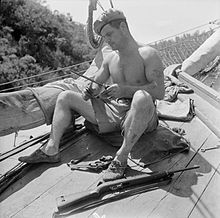
Saul David has written a new authorised history of the SBS and has uncovered some of the most extraordinary stories of World War Two.
Silent Warriors
Britain’s SBS – or Special Boat Service – was the world’s first maritime special operations unit. Founded in the dark days of 1940, the SBS started as a small and inexperienced outfit that leaned heavily on volunteers’ raw courage and boyish enthusiasm. It went on to change the course of the Second World War – and has served as a model for special forces ever since.
The fledgling unit’s first mission was a daring beach reconnaissance of Rhodes in the spring of 1941. Over the next four years, the SBS would carry out many more spectacular operations in the Mediterranean, the Atlantic, the Channel and the Far East. These missions – including Operation Frankton, the daredevil attempt by the “Cockleshell Heroes” to paddle up the Gironde River, deep behind enemy lines, and sink Axis ships in Bordeaux harbour – were some of the most audacious and legendary of the war.
Paddling flimsy canoes, and armed only with knives, pistols and a few submachine guns, this handful of brave and determined men operated deep behind enemy lines in the full knowledge that if caught, they might be executed. Many were.
Yet their many improbable achievements – destroying enemy ships and infrastructure, landing secret agents, tying up enemy forces, spreading fear and uncertainty, and most importantly, preparing the ground for D-Day – helped to make an Allied victory possible.
An Unlikely Partnership
The acknowledged “father” of the SBS is Roger “Jumbo” Courtney, a 38-year-old former big-game hunter with a “bashed-in kind of face” and a “blunt, no-nonsense manner”, who in October 1940 came up with a new way to take the fight to the enemy: using two-man folding canoes (known as folbots) to deliver teams of highly trained commandos deep behind enemy lines. Having provided his superiors with proof of concept – by paddling up to and then sneaking aboard a heavily guarded ship in Inveraray harbour in the Scottish Highlands – he was given permission to form the Folbot Troop, later renamed the Special Boat Section (or SBS). Thus was born “a new style of warfare: a Special Force who came from the sea”.
Deployed to the Middle East, Courtney quickly joined forces with Lieutenant Commander Nigel Willmott, a 30-year-old Royal Navy navigator who was convinced that secret beach reconnaissance was vital if the amphibious landings needed to defeat the Nazis were to succeed. Willmott’s conundrum was how to land on beaches silently; Courtney’s canoes provided the answer. It was an unlikely partnership. Courtney was a big picture person “with a flair for improvisation in a tight corner”, Willmott a details man. This combination of vision and precision would be the making of the SBS.
In March 1941, the two men were transported by submarine from Alexandria to a point off the coast of the Italian-held island of Rhodes. From there they paddled in by canoe and took it in turns to swim ashore and carry out a clandestine survey of the closely guarded shore as preparation for an amphibious assault.
The dangerous mission – undertaken with improvised equipment and at a time of year when the weather was wild and unpredictable – almost resulted in their capture or drowning. Yet, each time they returned safely to the submarine with vital information and proved, beyond doubt, that folbots could make a difference. Together they had pioneered a new technique – close beach reconnaissance – that would save thousands of Allied lives in the years to come.
The two men soon went their separate ways: Courtney to develop the SBS whose multiple roles included landing secret agents, assisting Commando operations, and destroying ships and coastal infrastructure; and Willmott to create, in December 1942, the brilliant maritime special operations unit known as COPP – or Combined Operations Pilotage Parties – that provided beach intelligence for the great amphibious landings in Sicily, Italy, Normandy and later the Far East. Both units are forerunners of the modern SBS.
The Men and Their Missions
Two of Courtney’s most effective operators were Lieutenant “Tug” Wilson and Marine Wally Hughes who would, over the course of eight months in 1941, execute a succession of extraordinarily daring and successful operations that made them the scourge of the Italian military. Yet, both were slight and unassuming types, “the complete opposite of the Commando of fiction, usually portrayed by post-war journalist-authors as rip-roaring, bloodthirsty thugs ever ready to slit a throat”. Hughes, a man of few words, was “short, lean, tough and ready to tackle anything”; Wilson his “suave, sophisticated opposite”.
Their nerve-wracking missions – carried out at night, deep behind enemy lines – involved their transport in submarines to the coasts of Sicily and mainland Italy where they paddled ashore and laid explosive charges that destroyed trains, railway lines and bridges.
On their last operation together, a failed attempt to use a limpet mine to sink an Italian destroyer in the Greek harbour of Navarino in December 1941, Wilson almost drowned in freezing water. “Wetsuits were in the future,” commented a submarine officer, “and Wilson was a skinny man; a plumper operator might have managed.”
Wilson’s long reign of terror was finally brought to an end in September 1942 when he and a new partner, Bombardier John Brittlebank, were captured after they tried to sink a ship in Crotone harbour in Southern Italy with mini hand-operated torpedoes. A hard man to replace, Wilson has been a model for SBS operators ever since: small-framed but deceptively strong, a team player but capable of independent action, an intelligent problem solver, eager to embrace new technology and as brave as a lion.
Another prominent SBS man was Lieutenant Ted Wesley who, in late 1944, took part in a daredevil mission to destroy a railway bridge in northern Sumatra in the Dutch East Indies (modern Indonesia). Dropped off by submarine, four pairs of canoeists – two officers and six men – lost their way because of a faulty compass, blundered around in the dark jungle, and had to abort the first attempt. Undeterred, they tried again the following night and, having avoided a Japanese bicycle patrol, got to the bridge where they attached 400lbs of explosives and set off their pencil fuses.
Observed by some locals, they took one prisoner and attempted to force him into a canoe to be quizzed later. He resisted and thus began a comical struggle as Ted Wesley tried to subdue the captive by punching him, hitting him with the butt of his luger, and, in a final act of desperation, forcing him under the water ‘to drown some of the life out of him’. The captive responded by biting Wesley’s hand. It was the final straw. Exhausted by the struggle and unwilling to inflict any more harm on the local, Wesley let him go and ‘patted him on the back – a poor atonement for all that bullying!’
Late for their rendezvous with the submarine, they were paddling furiously when a huge explosion heralded the destruction of the bridge.
Preparing for D-Day
Nigel Willmott’s Coppists did vital work throughout the war, losing several men in the process. But their finest hour was in preparing the ground for D-Day. First, during the night of New Year’s Eve 1943, two of Willmott’s best men – Major Logan Scott-Bowden and Sergeant Bruce Ogden-Smith – swam ashore in a highly risky mission to take samples from Gold Beach in Normandy to confirm the sand was firm enough for Allied vehicles to land. Narrowly avoiding detection by German sentries, they returned with the evidence that it was. “On these operations,” wrote Admiral Bertram Ramsay, commanding D-Day naval forces, “depends to a very great extent the final success of operation ‘Overlord’.”
A fortnight later, the same pair scouted Omaha Beach by swimming ashore from a midget submarine. Once again, they brought back vital intelligence, particularly on Omaha’s intimidating defences, and advised American commander Lieutenant General Omar Bradley that “this beach is a very formidable proposition indeed”.
Partly, as a result of the Coppists’ report, the number of invasion beaches was increased from three to five. But nervous about giving the game away, the Americans chose not to accept the Coppists’ offer to signpost their two beaches – Omaha and Utah – on D-Day. The decision had disastrous consequences. “They could have done with that offer of markers,” wrote one Coppist history. “With no inshore signal to guide them, the whole assault force set its predetermined course for the unseen shore from its start point twelve miles out to sea. Immediately the weather and the powerful tidal set took hold of the mass of boats and swept them steadily, innocent, and unknowing, to the east…The whole assault force on ‘Omaha’ had slipped sideways and was surging straight for catastrophe.”
Put ashore in the wrong place, weighed down by weapons and kit, the American troops were massacred. More than 2,000 died on Omaha on 6 June 1944.
Operation Gambit
The value of beach markers was demonstrated a short way to the east of Omaha where Coppist teams in two midget submarines – X20 and X23 – were tasked with guiding British and Canadian landing craft into their respective beaches. The mini-subs were needed for D-Day because the shallow depths and stormy seas off of Normandy were unsuitable for normal submarines and canoes.
The plan, Operation Gambit, was for the two mini-subs – just 50 feet long and each with a 5-man crew – to depart Portsmouth on the night of 2 June 1944, cross the Channel and wait submerged off their respective beaches until just before dawn on 5 June (the original date for D-Day) when they would surface and begin flashing signals.
It was the toughest and most important job on D-Day. To pull it off required perfect timing, nerves of steel and no small amount of luck. Failure was not an option: their premature discovery, they knew, would jeopardise the whole invasion.
Arriving off the Normandy coast in the morning of 4 June, they remained submerged for most of the next two days as bad weather forced a 24-hour postponement of the invasion. This meant another torturous 18-hour oxygen-starved stint beneath the waves on 5 June. From which, they finally emerged at 11.15 p.m. to the “worst hangover in the world” and the news that the invasion was a go for the morning of the 6th.
X23 surfaced off Sword Beach at 4:45 a.m. on Tuesday 6 June and its crew began rigging the signals that would guide the invasion fleet. These lights began flashing seawards at 5.07 a.m. With dawn fast approaching, it was only a matter of time before they were spotted by the shore defences.
Suddenly, recalled 22-year-old Sub Lieutenant Jim Booth, a Coppist on his first mission, the “light must have changed because we saw a huge host of ships coming towards us. Thousands of them. It was incredible. The landing craft came incredibly close to us.” Booth and the others cheered and yelled as the landing craft ploughed past them, a curious sight to the helmeted soldiers as, with most of the submarine underwater, it must have seemed as if they were walking on water.
Though it would not be acknowledged publicly for years, Willmott’s top-secret Coppists had played a key role in the success of D-Day. They were the first to set foot on the beaches, and their lonely and dangerous vigil in X-craft from 4–6 June 1944 would ensure that on the British and Canadian beaches, at least, the assault troops landed in the right place at the right time.
The success of the hazardous operation, wrote Admiral Ramsay, had “materially assisted the greatest landing of British forces on any enemy coast that has ever taken place in the history of the world”.

Saul David is an award-winning historian and the author of SBS: Silent Warriors, which is now out in paperback.
