Category: Gun Info for Rookies
Categories
What Baldwin failed to do!
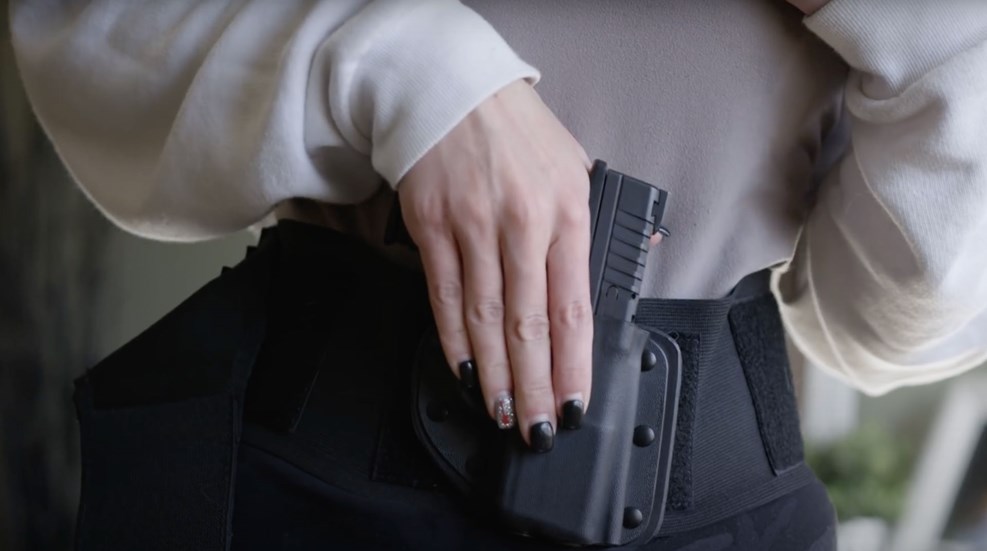
CrossBreed Holsters Modular Belly Band
CrossBreed Holsters YouTube
One of the most common questions I am asked as a firearms instructor is, “What gun would you recommend for self-defense?” As all instructors should, I go through the pros and cons of the different actions, makes and models so that the student can make an informed decision. There is no one-size-fits-all defensive firearm.
The natural follow-up question should be, “What type of holster should I wear?” Unfortunately, that follow-up question is seldom asked. However, there are as many holster options as there are handguns. I now ask that follow-up when I am asked the first question. After discussing the pros and cons of handgun choices, I ask the student or new shooter, “How to you plan on carrying your self-defense gun?” The answer is always the same, “I am not sure,” or “I have not really given it much thought.” Decisions on the right gun and holster type should go hand-in-hand.
Outside the Waistband Holster
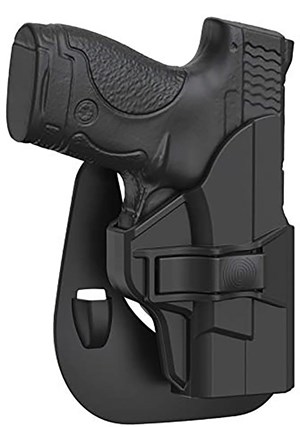
Outside the waistband (OWB) holsters are usually worn on the strong side of the individual. Many individuals who live in open carry states prefer the outside the waistband holster.
The most common OWB holster is the traditional belt holster. This type attaches and secures the holster to the body by sliding through the belt loops or snapping over the belt. The belt holster provides the most secure and strongest base for drawing your firearm.
Another type of outside the waistband holster is the paddle holster. This type of holster is attached to a paddle that slips over the belt and pants with the paddle inside the waistband, and the holster outside the pants and belt. These are beneficial because they can be easily removed and locked in your vehicle if entering a place where firearms are prohibited, such as a U.S. Post Office.
Outside the waistband holsters allow the carrier to access her firearm from a natural position and are easily concealed by an outer garment. This type of carry allows you to easily access the firearm from a natural position. As you walk or if you are just standing, your arms naturally hang to your side with your hand reaching near or about waist level. Carrying a firearm on your belt outside the waistband is also very comfortable. However, during warm weather you’ll have to keep that jacket or coat on if you wish to carry concealed. You’ll also need two hands to draw your firearm; one to clear your clothing and one to draw the firearm.
Inside the Waistband Holster
Like the outside the waistband, the inside the waistband (IWB) holster is usually worn on the dominant hand side of the individual. This type of holster is placed inside the waistband, next to your body. The holster is secured by clips that attach to your pants or belt. The firearm is then concealed by covering it with an outer shirt. A properly fitted inside the waistband holster provides the best concealment of the firearm with minimum printing, or visible outline of the firearm. The inside the waistband holster also usually rides higher on the hip, eliminating the need for special or additional clothing to try and conceal the firearm.
Many people report that inside the waistband holsters are not as comfortable as outside the waistband holsters. The wearer may need to purchase larger-sized pants to accommodate the extra room needed for the holster. Additionally, like the outside the waistband holster, the inside the waistband holster also takes two hands to draw. One hand is needed to clear the clothing from the holster and the other hand is used to draw the firearm.
Small of the Back Holster
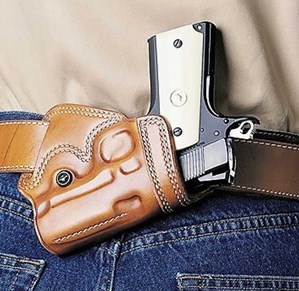
There are two types of small of the back holsters. One can be worn outside of the belt and the other inside, both sitting in the middle of the small of the back. These holsters are usually attached to the belt. Small of the back holsters are easy to conceal, especially with a jacket. However, they are only comfortable when standing or walking.
The small of the back holster is a less common form of carry because there are many cons. First, it is relatively slow to draw compared to the other types of holsters. This is because your firearm is more difficult to access due to the excessive arm and hand movement needed to reach your firearm. This type of holster also tends to be very uncomfortable while seated and can be almost impossible to draw while sitting in a vehicle.
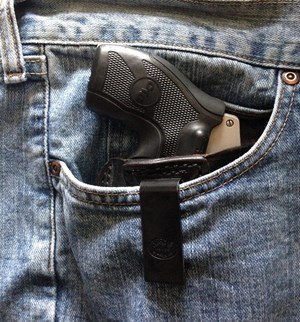
Pocket Holster
Pocket holsters are growing in popularity. Pocket holsters are small enough to fit in the front pocket of your pants. This type of holster allows for quick and easy access to your firearm. It is a very comfortable carry, whether you are sitting, standing or walking. The pocket holster is carried in the pocket on the strong side or dominant hand side. This type of holster is easily concealable, regardless of the outside temperature. It also can be carried in the pocket of any type of clothing, such as suits, jeans, shorts, dresses, etc.
There are a few downsides to using a pocket holster. The number one drawback is that it is only compatible with small-frame revolvers or micro pistols. Small handguns usually mean a small ammunition capacity. Many feel that the limited ammunition capacity is a fair trade-off for always having a firearm for self-defense. Those individuals who use a pocket holster are seldom without protection.
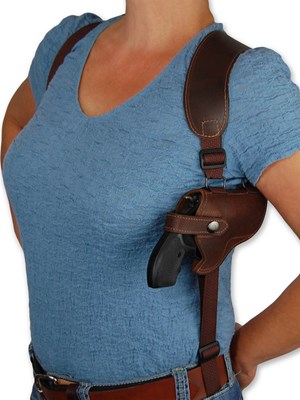
Shoulder Holster
Shoulder holsters are usually carried when wearing a suit, vest, jacket or other type of outer garment. It seems that everyone who has tried a shoulder holster eventually settled on another type of holster. If properly fitted, the shoulder holster can be comfortable to wear. Unfortunately, if it is not properly fitted, it can be very uncomfortable by adding stress on the shoulders or back.
The biggest benefit to a shoulder holster is that it is easy to accessorize with extra magazines, speed loaders, flashlights, etc. Another benefit is that the firearm is easily accessed by the wearer. The firearm is worn opposite of the dominant hand and can be drawn with one hand. The wearer reaches across the body with their strong hand to grip the firearm and draw from the holster.
There are several cons to using shoulder holsters. The most obvious is the need of an outer garment for concealment. The biggest obstacle with the shoulder holster has to do with safety. When teaching firearm classes, we stress muzzle control and keeping the muzzle pointed in a safe direction in every single situation. Shoulder holsters often violate this cardinal safety rule. Most shoulder holsters are positioned so that the barrel is pointed to the rear. This causes the muzzle of the firearm to “sweep” anyone or anything that is behind the wearer. Other shoulder holsters point the muzzle straight down but cause the same safety violation if the wearer bends over.
Some gun ranges and clubs prohibit the use of shoulder holsters while on the premises for this reason. The other safety issue with the shoulder holster is the act of drawing the firearm. As the gun is removed from the holster to cover the target, the firearm can sweep across unintended objects, including other individuals in the area.
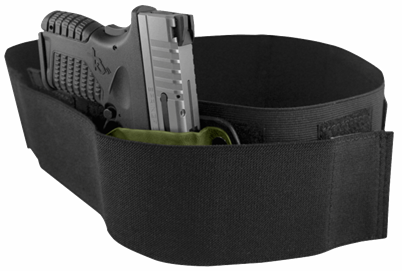 Belly Bands
Belly bands are a unique style of firearm retention holsters. A belly band is an adjustable elastic band that wraps around the waist to fit any body shape or size. They are typically very lightweight and comfortable to wear. Belly bands can hold just about any pistol or revolver that is designed for concealed carry.
The belly band offers great firearm retention and safely protects the trigger. All the wearer needs to do is access their firearm by raising their outer garment with their non-dominant hand and drawing the firearm with their dominant hand. There are also belly bands that not only offer pockets for handguns and extra magazines, but pockets for other items such as a mini flashlight and nonlethal methods of self-protection such as pepper spray.
Like any firearm retention system, there are disadvantages to wearing a belly band. In hotter climates, belly bands can be uncomfortable. Some people who wear a belly band in the cooler months tend to opt for a different holster style in the summer. Another disadvantage to belly bands is that accessing the firearm can take longer than accessing from other types of holsters.
Choosing and training with your holster is just as important as training with your firearm. After all, you can be very proficient with your firearm, but if you cannot access it quickly to defend yourself when needed, you could be in trouble. All shooters, new and old, need to practice drawing from their holster. Also, just like all shooters should try different handguns to find the one that best fits their needs, they should know the pros and cons of different holsters and try out a few different options.
The only problem with that I had with these early colts is that of the fixed sights. In that I can never it seems be able to use the round front sight. As it seems to me to waver a lot, which affects where I am aiming at.
But once I shot somebody else Colt New Service. That had the front sight bobbed with a flatten sight. My patterns were almost half way decent. All I can say is go figure! Grumpy

Regardless if you procured an outdated rifle from an older family member, via a gun-show purchase or through some other method, you hope the vintage shooting iron still hurtles projectiles downrange accurately. You may get lucky with that classic gun, but you also may struggle with it spitting bullets irregularly like a malfunctioning baseball pitching machine. You might address the issue via a gun shop visit or DIY gunsmithing. Additionally, consider these five upgrades as possible remedies for errant rounds.
Before you give your old friend a major makeover, do some research. Use the serial number, model number and other details of the rifle to determine its age. First, the firearm may be an actual antique, and if you have ever watched the PBS program “Antiques Roadshow,” you understand that modifying the character of an item typically decreases its value.
Second, older firearms were not manufactured with the same specifications as their counterparts today. Those older designs may not be up to the task when launching the higher pressures of modern ammunition. Risk of injury or even death could result in a mismatch. Seek out advice from the manufacturer and trusted firearm experts to determine whether your old rifle should return to the field or rest comfortably above the fireplace mantle.

Spring Cleaning
If given the green light to transform an elderly rifle, you can start easily with spring cleaning. Give that old firearm a good scrubdown from end to end. Whether the past owner neglected regular cleanings or simply put the rifle away after the last deer season without cleaning it, a good cleaning could remove performance-affecting gunk throughout.
Make sure the firearm is unloaded and then disassemble, with the help of manufacturer guidelines. This gives you access to all nooks and crannies containing crud. Clean from the breech end with the help of a bore guide as you push your cleaning rod toward the bore. Your goal is to remove all deep-seated copper fouling in the barrel. Repeat until your patches come out clean.
Using gunsmithing tools and solvents, clean the bolt, action, trigger assembly and any mechanisms that hold cartridges, including springs. Afterwards, lubricate lightly with rust prevention products and foul the barrel with one or two shots before assessing accuracy. Fouling removes traces of oil and cleaning solvents, plus it pads the rifling with copper and powder residue. If your rifle shoots accurately and you are happy, your improvements may be complete.

New Fuel
After your lawn mower sits all winter, a dose of new fuel helps spark it back to life. New ammunition could do the same for that older rifle, especially after a deep cleaning. Set aside any stockpiles of nostalgic ammunition that may have come with the rifle and explore the latest options. After establishing that your rifle can handle newer advancements in ammunition, research selections that are receiving kudos in articles, forums and blogs. A lot has changed since the original Peters deer hunting cartridges were last available. Technological boosts, such as Hornady’s revolutionary use of Doppler radar to aid bullet design, have led to projectiles that fly more accurately and expand with consistent results.
Handloading may be your thing, and it provides an environment where you can safely create your own recipe for accuracy success. Not only can you tailor loads to match the era of your rifle’s specifications, but you can also tweak them until a bullet flies to your objective.
Whether you test with factory updates or handloaded perfection, new ammunition can make an older rifle shine in performance.

Stock It
Rifles of yesteryear traditionally featured stocks crafted from wood. Some of these were elegant examples of artistic craftsmanship. Others might be held together with a firm wrapping of electrical tape. Unfortunately, the wood stock could be a major culprit in marginalizing your rifle’s precision usefulness.
With weather variables (humidity being the worst), wood could swell and apply pressure to the barrel or receiver, affecting accuracy. Fortunately, you have several easy fixes to the issue. The first fix is to glass- or pillar-bed the action along with free-floating the barrel. Order either kit from Brownells and do it yourself or find a gunsmith for the job. Before you chart this course, consider again the antiquity value of the rifle. This alteration could reduce its value with the “Pawn Stars” employees.
To protect vintage value, ditch this option and shop for a replacement stock. Technically advanced stock systems, crafted of a single component or layers of polymer, graphite and even Kevlar, provide a quality replacement for pressure issues. You can even peruse laminated wood options if you favor that feel. Plus, if you ever wish to sell your heirloom, simply swap back the stock and advertise it as original. Magpul, Hogue, Boyds and others manufacture stocks that are bedded and easy to install.

I See Clearly Now
Despite a reemerging spotlight on open-sight rifles, most of us rely on a riflescope to perfect our aim. Your rifle may have arrived with a scope on it, but evaluate the optic to see if it is better gifted or tossed. Improved glass and multilayer coatings, trajectory reticles, focusing abilities and first- and second-focal plane reticle choices can improve your aim.
Technologically advanced optics systems, like SIG Sauer’s Sierra3BDX system, Bluetooth communicate between the riflescope and the rangefinder to automatically adjust the reticle. The 1970s Weaver riflescope that tops your grandfather’s rifle cannot do that trick. While swapping scopes, consider upgrading hardware, including new rings and bases. If yesteryear tugs at your heart, save the old hardware and scope to restore that rifle to a past era when it completes your tour of duty.

Crisp and Clean
Lastly, like NASA, a clean launch ensures a good start to your mission. A new trigger can guarantee a good bullet launch. It is possible your earlier cleaning returned the trigger to a quality state or a gunsmith could tune the old trigger into a functioning mechanism with a sweet spot. Companies such as Timney and Geissele manufacture replacement trigger systems for a variety of firearms. Study up on an upgrade for your project rifle and consider having work completed by a competent gunsmith. A trigger needs to be adjusted according to manufacturer recommendations or you need to be responsible if you decide to set your trigger for a more sensitive release.

Many precision rifles have adjustable triggers from 1.5 to 4.5 pounds. A setting between 2.5 and 3.5 allows you to depress without jerking and keeps your rifle safe. This is critical, as a trigger adjusted too light could accidentally go off simply by slamming the bolt closed.
A rifle with senior-citizen status does not have to be sent to the display case. With some creative ingenuity, it can still play a major part in your future hunts.