Categories
All About Guns Anti Civil Rights ideas & "Friends" Born again Cynic! California Grumpy's hall of Shame Gun Fearing Wussies You have to be kidding, right!?!

California Democrats pass state tax on guns and ammunition after nearly a decade of attempts by Lindsey Holden

Taya Gray/USA TODAY NETWORK file

California lawmakers will send a state excise tax on guns and ammunition to Gov. Gavin Newsom after years of failed attempts by Democratic legislators.

The Senate voted 27-9 on Thursday to approve Assembly Bill 28, which would require manufacturers, vendors and dealers to pay an 11% tax on guns and ammunition to fund violence prevention efforts. The bill passed with exactly the two-thirds threshold needed for approval of a tax.

Gun and ammunition-sellers would pay the new state tax on top of the 10 to 11% federal excise tax they already pay to fund wildlife conservation efforts.

Assemblyman Jesse Gabriel, D-Woodland Hills, authored the bill after former Assemblyman Marc Levine, D-San Rafael, failed multiple times to get excise tax bills through the Legislature.

Prior to Levine’s attempts, at least three other lawmakers had pushed similar taxes on guns and ammunition since 2013. Gabriel’s bill was the first of its kind to pass out of the Assembly.

When the assemblyman first put the bill forward, there were questions about whether it was “in the realm of possibility,” he said after the Senate vote.

“I introduced this bill at the very beginning of session,” Gabriel said. “A few weeks later, we have mass shootings in Half Moon Bay and in Monterey Park and in all these places.”

“Frankly, I think part of the reason the bill passed is the public is demanding this of us,” he added. “They are demanding that we have more solutions that will do more to protect their kids, to protect their communities.”

Lawmakers debate tax effectiveness

Many senators on Thursday cited their children and grandchildren and school safety concerns in their arguments for backing the bill. Floor debate lasted for about an hour before lawmakers voted.

Sen. Angelique Ashby, D-Sacramento, urged her colleagues to support AB 28 as a “mechanism to address gun violence.” She made her plea in the name of her school-age daughter and California children, as well as Amber Clark, a Natomas librarian who was fatally shot in 2018.

“Like so many Americans, I do hug my little daughter each morning as I drop her off at school,” Ashby said. “And as I drive away, I push out of my mind the unthinkable. Otherwise, it would be impossible for me to face the tasks I’m responsible for every day.”

But Republicans, and a handful of Democrats, said the tax would do little to prevent gun violence, and retailers would pass on the added cost on to customers. In this way, it would penalize law-abiding firearm owners, hunters and students taking part in shooting sports, they said.

“When you add another 11% on, all it’s going do is decrease the number of hunters,” said Sen. Bill Dodd, D-Napa. “Sooner or later, this will be like the tobacco tax. And sooner or later, this money’s going to go down, down, down.”

Gun control groups cheered AB 28’s passage and urged Newsom to sign it.

“This bill is an innovative approach in tackling gun violence and a crucial step to improve the safety of all California families,” said Cassandra Whetstone, a volunteer with the California chapter of Moms Demand Action for Gun Sense in America, in a statement.

Gun rights advocates said they plan to sue the state over the legislation if the governor makes it law.

“The passage of this bill will be seen for what it is … an unconstitutional tax on an enumerated right,” said Rick Travis, legislative director for the California Rifle and Pistol Association, in an email.

The measure now heads to Newsom, who must sign or veto bills by Oct. 14.

(Yup, you read that right – California is going to tax one of our Constitutionally protected Rights.)
Categories
All About Guns Gun Fearing Wussies

Frequently Debunked Crackpots Claim the AR-15 is Worthless for Self-Defense by Lee Williams

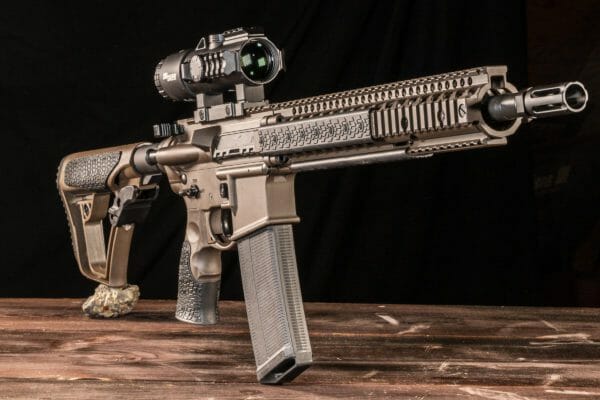
AmmoLand Giveaway - Daniel Defense DDM4A1 AR-15 and SIG SAUER BRAVO5
Daniel Defense DDM4A1 AR-15 and SIG SAUER BRAVO5

When the young paste-eaters at Michael Bloomberg’s anti-gun propaganda factory, known as the Trace, team up with the stodgy window-lickers at the Gun Violence Archive to produce a story about the utility of the AR-15 platform as a modern self-defense tool, it’s hard not to get too excited.

It’s like watching two freight trains headed toward each other on the same track. You know the results are going to be cataclysmic. None of these halfwits have ever heard a shot fired, much less one fired in anger, or especially one fired to good effect. They know less about what makes a reliable home defense weapon than I do about man-buns, skinny jeans, or avocado toast.

We have debunked the Trace and the Gun Violence Archive so often it’s getting old. The kids at the Trace masquerade as legitimate journalists when, in fact, they’re nothing more than highly paid anti-gun activists. The GVA purports to track gun crimes and maintain a list of mass shootings, but their data is collected from media, and even social media sources, and their stats are so inflated they’d have you believe a mass shooting occurs nearly every time someone draws from a holster. When the two anti-gun nonprofits combine for a story, it’s bound to be something as bereft of facts as it is poorly written, and to that standard, their most recent collaboration does not disappoint.

A story published Tuesday asks: “How Often Are AR-Style Rifles Used for Self-Defense? Supporters of AR-15s, often used in mass shootings and racist attacks, say they’re important for self-defense. Our analysis of Gun Violence Archive data suggests otherwise.”

The story was written by one of the Trace’s senior fabulists, Jennifer Mascia, who is “currently the lead writer of the Ask The Trace series and tracks news developments on the gun beat.” Mascia has also led the Trace’s hilarious we’re journalists, not activists, propaganda campaign on social media.

Mascia claims her story was a response to a reader’s question: “Many gun owners claim to buy assault-style rifles for defense. So how many documented cases are out there where someone actually defended themselves with an assault-style rifle?”

Mascia reportedly searched the GVA’s data for “assault weapon,” which she said the GVA defines as “AR-15, AK-47, and all variants defined by law enforcement.” Of course, there’s no mention of whether the weapons were capable of select-fire and, therefore, actual assault weapons. She started with 190 incidents, which she whittled down for various reasons. The results: “That left 51 incidents over a nine-and-a-half-year span in which legal gun owners brandished or used an AR-style rifle to defend life or property. That averages out to around five per year.”

To be clear, I trust Mascia’s findings about as much as I trust the GVA data that produced the results. The whole story is GIGO – garbage in, garbage out.

It is noteworthy that the firearms “expert” whom Mascia found to further beclown herself – who wrote in a CNN story that the AR is the last gun he’d recommend for self-defense – is none other than former Washington D.C. police officer Michael Fanone. He’s the officer who cried a lot before the January 6 Commission – the one with the beard who cried a lot, if that helps jog your memory.

“I’m more familiar with the gun than most people: I own one. And one thing I know for sure is that this weapon doesn’t belong in the hands of the average civilian,” Fanone wrote of the AR platform in the CNN story.

The network must have liked the cut of his jib. Fanone is now a CNN contributor and hawking a new book: “Hold the Line: The Insurrection and One Cop’s Battle for America’s Soul.” (Nancy Pelosi highly recommended it.)

Since he’s so afraid of the AR platform, I can’t help but wonder what weapon Fanone, or for that matter, Mascia, would recommend for home defense. If I had to guess, it probably has two barrels, a wooden stock and exposed hammers.

I’m somewhat familiar with the AR myself, which is why I trust it to defend my hearth and home. It’s light, accurate, and deadly, which is exactly the point, and something we should stop making allowances for.

Despite the exhortations of Bloomberg’s activists or crybaby ex-cops, an AR-15 is exactly what I want when The Bad Man comes a-calling.

This story is presented by the Second Amendment Foundation’s Investigative Journalism Project and wouldn’t be possible without you. Please click here to make a tax-deductible donation to support more pro-gun stories like this.


About Lee Williams

Lee Williams, who is also known as “The Gun Writer,” is the chief editor of the Second Amendment Foundation’s Investigative Journalism Project. Until recently, he was also an editor for a daily newspaper in Florida. Before becoming an editor, Lee was an investigative reporter at newspapers in three states and a U.S. Territory. Before becoming a journalist, he worked as a police officer. Before becoming a cop, Lee served in the Army. He’s earned more than a dozen national journalism awards as a reporter, and three medals of valor as a cop. Lee is an avid tactical shooter.

Categories
All About Guns Anti Civil Rights ideas & "Friends" Gun Fearing Wussies You have to be kidding, right!?!

Biden’s Proposed Rule Will Eliminate Private Gun Sales by John Crump

Canik iStock 1182677191
Biden’s Proposed Rule Will Eliminate Private Gun Sales IMG iStock-1182677191

President Joe Biden and the Department of Justice announced a proposed rule to change who will need a federal firearms license (FFL) to sell firearms.

The long-awaited rule was hailed by anti-gun groups like Everytown for Gun Safety, Giffords, and Brady United as a way of closing the “gun show loophole” and the “internet loophole.” Anti-gun organizations claim this is a step towards universal background checks, a centerpiece of the Biden Administration’s anti-gun policy.

The proposed rule is powered by the Bipartisan Safer Communities Act (BSCA), which was a law championed by Chris Murphy (D-CT) and John Cornyn (R-TX). The BSCA changed the law’s wording to describe who the federal government considers a gun dealer. The bill altered the language of Section 921(a) of Title 18, United States Code.

The BSCA changed the definition of someone “engaged in the business” of selling guns from “with the principal objective of livelihood and profit” to the ambiguous statement of “to predominantly earn a profit.” Now, the Biden Administration is exploiting that change through the upcoming rule. At the time, some Republicans who backed the law blew off the concerns that an anti-gun administration would exploit the language. The change read:

(22) The term `to predominantly earn a profit’ means that the intent underlying the sale or disposition of firearms is predominantly one of obtaining pecuniary gain, as opposed to other intents, such as improving or liquidating a personal firearms collection: Provided, that proof of profit shall not be required as to a person who engages in the regular and repetitive purchase and disposition of firearms for criminal purposes or terrorism.

The new rule will also affect those that sell multiples of the same type of firearms. This section means that anyone who liquidates a collection of Glock pistols must acquire an FFL before they can liquidate the guns. Many people collect certain guns, and this would prevent the legal transfer of those firearms without an FFL.

Unlicensed sellers who sell through “online auctions” would be required to obtain an FFL under the proposed rule. This section is a targeted shot at sites like Armslist.

These websites do not sell firearms and currently do not have to get an FFL. The new rule seems to change that. This has long been a goal of the Biden Administration, which has put out false narratives about online gun sales, such as buyers not having to go through background checks for guns purchased online. The rule reads:

“In addition, it clarifies the term “dealer,” including how that term applies to auctioneers, and defines the term “responsible person.” These proposed changes would assist persons in understanding when they are required to have a license to deal in firearms.”

“These examples are provided to clarify for unlicensed persons that firearms dealing requires a license in whatever place or through whatever medium the firearms are purchased and sold, including the Internet and locations other than a traditional brick and mortar store.”

Armslist is specifically called out in the rule. Armslist is a firearms version of “Craigslist List.” Armslist has been the target of anti-gun groups for years who keep launching and losing lawsuits against the website. Many think this is a concerted effort to hurt the website’s business by stating up to 25% of people selling on the site will require an FFL under the proposed rule. The rule reads:

“To better estimate both online and offline sales, ATF assumed, based on best professional judgment of FIPB SMEs and with limited available information, that the national online marketplace estimate above may represent 25 percent of the total national firearms market, which would also include in-person, local, or other offline transactions like flea markets, State-wide exchanges, or websites within each of the 50 States.”

The rule would make it so that anyone who rents a table at a gun show will be assumed to be in the business of selling firearms, meaning that private citizens will no longer be able to sell their firearms at any gun show.

Also, if someone advertises their firearms for sale, they could be assumed to be in the business of selling firearms, which will shut down most private sales. The rule reads:

“Based on this decades-long body of experience, the proposed rule provides that, absent reliable evidence to the contrary, a person is presumed to have the intent to “predominantly earn a profit” when the person: (1) advertises, markets, or otherwise promotes a firearms business (e.g., advertises or posts firearms for sale, including on any website, establishes a website for selling or offering for sale their firearms, makes available business cards, or tags firearms with sales prices), regardless of whether the person incurs expenses or only promotes the business informally;94 (2) purchases, rents, or otherwise secures or sets aside permanent or temporary physical space to display or store firearms they offer for sale, including part or all of a business premises, table or space at a gun show, or display case;95 (3) makes or maintains records, in any form, to document, track, or calculate profits and losses from firearms purchases and sales;96 (4) purchases or otherwise secures merchant services as a business (e.g., credit card transaction services, digital wallet for business) through which the person makes or offers to make payments for firearms transactions;97 (5) formally or informally purchases, hires, or otherwise secures business security services (e.g., a central station-monitored security) system registered to a business,98 or guards for security99) to protect business assets or transactions that include firearms; (6) formally or informally establishes a business entity, trade name, or online business account, including an account using a business name on a social media or other website, through which the person makes or offers to make firearms transactions;100 (7) secures or applies for a State or local business license to purchase for resale or to sell merchandise that includes firearms; or (8) purchases a business insurance policy, including any riders that cover firearms inventory. 101 Any of these nonexclusive, firearms-business-related activities justifies a rebuttable presumption that the person has the requisite intent to predominantly earn a profit from reselling or disposing of firearms.”

By requiring more people to get FFLs, it will prevent a lot of Americans from selling guns. The secondary market has been an excellent way for those less fortunate to acquire the means of protection. Those who choose to get an FFL will be subject to unannounced warrantless inspections. These inspections have been used to revoke gun shop’s FFLs under the Biden Administration’s zero-tolerance policy.

FFL revocation is up between 350% and 500% and is currently at a 17-year high. The amount of record keeping, cost, and hostile environment created by the ATF could mean that many will not get an FFL to sell their firearms, which could be part of Biden’s plan.

The government’s argument is most criminals do not get their guns from gun dealers. That fact is true, but most criminals do not get firearms from legal transactions. Most guns used in crimes are obtained illegally through such means as theft, which means this rule will not prevent criminals from getting firearms.

“The U.S. Sentencing Commission reports that “88.8 percent of firearm offenders sentenced under §2K2.1130 [of the United States Sentencing Commission GuidelinesManual (Nov. 2021)] were [already] prohibited from possessing a firearm” under 18U.S.C. 922(g). These individuals would thus have been flagged in a background check,would have therefore been prohibited from buying a firearm from a licensed dealer after their first offense, and would not have been able to commit the subsequent firearms offense(s) if their seller had been licensed.”

There will be an exception for gifting firearms between family members. Although this type of transfer only makes up a small portion of transfers. There will be a 90-day comment period once the proposed rule is posted to the federal registry. After the comment period, a final rule will be unveiled.”

AmmoLand News is currently reaching out to those Republicans who backed the BSCA to get comments.

Categories
All About Guns Gun Fearing Wussies

And how did all this work out for you?

Categories
Gun Fearing Wussies Well I thought it was funny!

7 Gun-Free Tactics To Defend Your Home

Categories
Anti Civil Rights ideas & "Friends" Gun Fearing Wussies

Federal Court Clears Path for New Jersey to Pursue Legal Action Against Gun Manufacturers by F Riehl, Editor in Chief

Business Woman Thumb Down Vote No iStock-Lazy_Bear 1137891404
iStock-Lazy_Bear

In a significant ruling, the 3rd U.S. Circuit Court of Appeals announced on Thursday that New Jersey possesses the authority to sue firearm manufacturers under its “public nuisance” law. This comes as a substantial victory for the ant-freedom state and its ongoing efforts to gut public safety amidst the backdrop of gun rights affirmation by the U.S. Supreme Court.

From Fox News:

“A three-judge panel on the 3rd U.S. Circuit Court of Appeals unanimously ruled that a legal challenge brought against the law by the National Sports Shooting Foundation (NSSF) was premature. Though the court acknowledged the law is somewhat vague about what conduct can trigger a lawsuit from the state, it nevertheless said the firearms industry “jumped the gun” by filing a legal challenge before demonstrating injury. “

Although New Jersey’s “public nuisance” legislation was signed into law by Democratic Governor Phil Murphy in July 2022, the National Shooting Sports Foundation (NSSF) moved swiftly, only four months later, to block its enforcement.

NSSF argued that this state law was in direct contradiction to the federal Protection of Lawful Commerce in Arms Act (PLCAA), which offers broad protective measures against liabilities for the gun industry. However, the recent 3rd Circuit decision ruled that NSSF’s legal challenge might have been too hasty. This sentiment was mirrored in Judge Stephanos Bibas’ statement, noting that there was little evidence to indicate that enforcement was imminent.

As a result, he commented, the firearms industry “jumped the gun” by filing a legal challenge prior to any observable harm.

Despite this setback for the gun industry, the NSSF remains resolute. Lawrence Keane, the NSSF General Counsel, pointed out that while they disagreed with the court’s decision, it’s important to underline the court hasn’t expressly stated that New Jersey’s law is compliant with the PLCAA. This distinction leaves a door open for further legal challenges if New Jersey moves to enforce the “public nuisance” law against firearm manufacturers.

This constitutionally shaky law is part of a broader series of gun reforms rushed into law by Governor Murphy. It grants New Jersey the ability to sue the firearms sector over concocted “public nuisance” violations that government officials claim arise from various stages in the gun lifecycle – from manufacturing and distribution to marketing. The significance of this strategy is further highlighted by the establishment of a new office by the state attorney general, Matt Platkin. This office, reportedly the first of its kind in the nation, sole purpose is initiating civil enforcement actions against firearm companies at taxpayers’ expense.

Democrat supporters of the legislation believe it’s an essential tool for public safety. Attorney General Platkin reaffirmed this belief, stating that the law aims to hold accountable those whose actions, driven by profit motives, exacerbate the epidemic of gun violence.

On the national stage, New Jersey’s initiative appears to be setting a foreboding precedent. Following the state’s lead, other predominantly blue states, including Delaware, California, Colorado, Hawaii, Washington, and Illinois, have either passed or are considering analogous measures to attack the gun industry, one of America’s last robust manufacturing sectors. With the 3rd Circuit’s ruling being the first instance of a federal appellate court weighing in on such laws, the decision will likely influence subsequent judicial perspectives.

The journey is far from over. As states tread this shady legal path, they are guaranteed to encounter additional challenges from the gun industry and advocates for the U.S. Constitution. The primary contention remains the incongruence between overarching state laws like New Jersey’s and the federal PLCAA.

Categories
All About Guns Anti Civil Rights ideas & "Friends" Born again Cynic! Dear Grumpy Advice on Teaching in Today's Classroom Grumpy's hall of Shame Gun Fearing Wussies You have to be kidding, right!?!

Pop Quiz

Categories
Gun Fearing Wussies

Changes Coming Soon for New York State Gun Owners

There are some significant changes due to take effect early next month in the Empire State.

New York is switching from a jurisdiction in which the Federal Bureau of Investigation (FBI) conducts firearms-related NICS background checks, to one in which the New York State Police will conduct all firearm and ammunition-related background checks using both NICS and a pending “statewide license and record database.” This shift is occurring due to legislation enacted last year, NY Exec. Law § 228, which authorizes the state police to act as the “point of contact” for background checks required under “18 U.S.C. sec. 922(t), all federal regulations and applicable guidelines adopted pursuant thereto, and the national instant criminal background check system for the purchase of firearms and ammunition.”

That law directs the Superintendent of State Police to establish a “centralized bureau” for firearm and ammunition background checks.  NY Exec. Law § 228(7) specifies that, within 60 days of July 15, 2023, the superintendent must “notify each licensed dealer holding a permit to sell firearms” to submit requests for background checks to the state police, which appears to be an indirect way of setting a deadline of September 13 (the date the 60-day period expires) for the system to be operational.

Section § 228(5) allows the state to charge fees for background checks using this state database, which fees cannot “exceed the total amount of direct and indirect costs incurred by the bureau in performing such background check.” One source indicates that these fees will add an additional $9 (firearms) and $2.50 (ammunition) to purchases and transfers.

The shift to a state “point of contact” jurisdiction occurs in tandem with a second change, a related but separate development under a state law that mandates background checks for ammunition transfers by “sellers of ammunition.” This background check requirement dates back to the SAFE Act of 2013 and requires that a state database for ammunition background checks be used (federal law, 28 C.F.R. 25.6, limits the use of the NICS system for checks “only in connection with a proposed firearm transfer as required by the Brady Act. FFLs are strictly prohibited from initiating a NICS background check for any other purpose”).

This ammunition background check requirement comes with a statutory precondition and grace period before it may take effect. Specifically, the state police superintendent must first “certify” that “the statewide license and record database established pursuant to [NY Penal Law § 400.02] and the statewide license and record database established for ammunition sales are operational,” followed by a 30-day period after which the ammunition background check requirement is in effect. In a classic example of the New York’s legislature’s signature style of “pass gun control laws first, figure out if they work later,” it became apparent once the SAFE Act was passed that the ammunition background check mandate was unachievable at the time. The-then police superintendent advised that his agency lacked the technology to implement the requirement and had “no idea when ammunition background checks… will begin across the state.”

A further complication is that the entire ammunition background check database project was placed in abeyance due to a 2015 memorandum of understanding (MOU). The agreement, entered into by the Cuomo Administration and then-Republican Senate Majority Leader John Flanagan, promised that no state money would be spent on implementing the ammunition background check database until a cost plan had been approved by the parties. The MOU further stipulated that any certification of the database as operational would not be made until the parties had approved a plan on its implementation. Last year, however, Governor Kathy Hochul indicated she was aware of the “old MOU that was signed related to ammunition sales after laws were passed the decade ago, it was an administration document between the prior administration and the Senate Republicans,” but decided to ignore it – “we are literally tearing it up and New York will now require and conduct background checks for all ammunition purchases.”

There is no indication on either the state police or the governor’s websites that the certification of the statewide license and record database as operational has occurred. However, the NY State Police website currently advises that the “background check requirements imposed on all retail sellers of ammunition are scheduled to take effect on September 13, 2023.”

Categories
California Gun Fearing Wussies

SoCal city tries to block new gun shops from opening By Cam Edwards

SoCal city tries to block new gun shops from opening
AP Photo/Mark J. Terrill
On Friday my colleague John Petrolino reported on some good news from Imperial City, California, where a proposed moratorium on gun shops appears to be off the table and a firearms retailer should soon be able to open her doors to customers. Unfortunately, another southern California community is now adopting its own strategy to keep gun shops out of town.

Monterey Park, California was in the headlines back in January when a man opened fire at a Chinese New Year celebration at a local dance facility, killing 11 people. Now the town is making news again with council members approving an ordinance prohibiting gun sales from taking place within 1,000 feet of “sensitive receptors” like schools and private dwellings; placing most of the community off-limits to lawful firearm transfers.

“I know that as a parent and as a teacher in this community, I think that it is very important to keep our families and our residencies and also our schools safe,” said Mayor Jose Sanchez before casting his vote. “This is one way, I think, for us to try to send a message to not just our community but to our nation as a whole of the necessary measures that we need when it comes to gun control.

The only message that Monterey Park is sending is that its leaders are eager and willing to violate the fundamental civil rights of its residents by making it harder for them to lawfully purchase and possess a firearm. Maybe a near-total prohibition on gun sales is the “necessary measure” that Sanchez thinks is needed, but in taking this step the mayor and city council are basically acknowledging that none of California’s current restrictions, including “universal” background checks and a 10-day waiting period on all gun transfers, are keeping criminals away from guns.

Not that the new ordinance is going to stop those criminals either. They’ll continue to get ahold of guns through the same illicit means they always have; theft, straw purchases, black market sales, and even crafting their own. And for now, at least, a few retailers already operating inside the city limits will still be allowed to conduct business, though it sounds like there are more restrictions on the horizon.

Locally, there are a few retailers already in the area considered not compliant with these 1,000-foot buffer zones, but their existence before the ordinance is considered “legal non-conforming” and are allowed to remain. Neither EuroArms on West Valley Boulevard nor Caps Armory on Monterey Pass Road elected to comment. A call to Big 5 on South Atlantic Boulevard corporate office had not been returned.

For some council members, the new ordinance, months in the making, was only the first step.

Councilmember Thomas Wong proposed an effort to collaborate countywide to expand the buffer zone restrictions to more cities.

“Maybe we can look at efforts to encourage (Los Angeles) to pass it and share this ordinance language and the research with our neighboring cities to encourage them to adopt similar restrictions in their own communities, so that a store doesn’t open up just outside of our borders that otherwise would not be allowed to open up,” he said.

Clearly Wong isn’t just trying to limit gun stores from operating in areas of Monterey Park zoned for commercial use. If he’s talking about getting other communities in Los Angeles County to put similar restrictions in place, he’s hoping to turn the entirety of L.A. County into a “health protection zone” where sales can be banned outright. As it is, L.A. County supervisors have imposed a ban on gun stores in unincorporated areas of the county located within 1,000 feet of schools, daycares, parks, and other FFLs, so Wong is well on his way to getting his wish.

Will this make Monterey Park free of guns or crime? Absolutely not. Chicago and Washington, D.C. are just two examples of major metropolitan areas that have no retail gun stores inside their city limits and more than their share of violent crimes, and if L.A. County officials ever decided to do the same I don’t think the results would be any different.

The senseless murders in Monterey Park were horrifying, but responding to this terrible crime by making it harder for responsible residents to exercise their fundamental right to armed self-defense is an awful approach. Not only does this move violate the fundamental civil liberties of those who live there, but in doing so it makes the community a more inviting target in the future for those violent criminals who prefer their victims be unarmed and defenseless.

Categories
All About Guns California Gun Fearing Wussies

Judge upholds San Jose’s ordinance requiring gun owners to have liability insurance By Zach Fuentes

SAN JOSE, Calif. (KGO) — The City of San Jose is calling it a victory in the fight against gun violence a judge upholding the city’s Gun Harm Reduction Ordinance.

In 2022, the city of San Jose passed the first-of-its-kind ordinance requiring gun owners to have liability insurance.

The challenges against it began immediately with the city facing a lawsuit from groups like the National Association for Gun Rights.

Late last week a court dismissed the Second Amendment claims.

In effect since the start of 2023, gun owners have to have liability insurance and pay a fee of $25.

That fee would go to a nonprofit with the money to be used for firearm safety training, suicide prevention and more.

From the time the ordinance was announced it has faced backlash.

In January 2022, Harmeet K. Dhillon who represented the National Association for Gun Rights spoke at a press conference held to announce the lawsuit:

“It’s going to be the law-abiding citizens who actually deter crime by having weapons in their homes who are going to be the ones who bear the burden of this unconstitutional ordinance,” Dhillon said last year.

Along with the National Association for Gun Rights, plaintiffs also included the Howard Jarvis Taxpayers Association.

Attorney Tamarah Prevost, a partner with Bay Area firm Cotchett, Pitre and McCarthy, took on the city’s case pro bono.

“We felt very confident that the ordinance was constitutional,” Prevost said. “The city did a lot of work on the front end to really craft something that it believed would be upheld, because the city is not taking guns away from people. It isn’t banning certain guns.”

The case was being fought as the U.S. Supreme Court came down with the Bruen Decision, one of the most significant cases regarding the Second Amendment.

The decision changed Second Amendment analysis in the courts and in turn, impacted the fight over the San Jose ordinance.

“We had to change gears and the judge had to change gears and apply a different legal standard that came down from the U.S. Supreme Court,” Prevost said. “The ordinance had to be evaluated based on historic precedent, what the framers in the 1800s would have thought of at the time, and whether an ordinance has historic roots as it were.”

With the change, Brady, a nonprofit that pushes for gun safety, was looked to by the court to weigh in.

The federal judge ruled Thursday that the insurance requirement for gun owners does not restrict gun firearm possession or use.

In a statement sent to ABC7 the National Gun Rights Association for Gun Rights said:

“This ruling is what happens when judges rely more on anti-gun groups like Brady than the actual ruling authorities here – namely the U.S. Constitution and the U.S. Supreme Court. This ruling makes a mockery of the Supreme Court’s Bruen standard with the claim that requiring an annual tax just to exercise a Second Amendment right somehow doesn’t actually violate that right.”

The statement goes on to say:

“No one would argue that having to pay $25 a year to petition your government or speak your mind wouldn’t violate those rights – and yet that is exactly what this court has claimed when it comes to the right to keep and bear arms. This is a truly astounding example of bad-faith judicial acrobatics.”

The $25 fee that was also part of the ordinance still hasn’t been completely worked out by the city. As a result, the court said the fee is not ready for judicial review yet allowing the plaintiffs time to file an amended complaint.

The Howard Jarvis Taxpayers Association’s, chief counsel Timothy A. Bittle sent ABC7 this statement:

“The ruling last week by the federal District Court on the City’s latest motion to dismiss our Consolidated Amended Complaint in the San Jose gun fee case is nothing new. This is the third time the City has moved for dismissal and the third time its motion has been granted, but with leave for plaintiffs to file an amended complaint.

This revolving door of amended complaints and motions to dismiss is due to the City’s long delay in implementing the gun fee ordinance. The ordinance requires gun owners to annually pay a fee of an unspecified amount to a nonprofit organization that the City will designate. However, the City has yet to fix the final amount of the fee, set a date for payment of the fee to commence, or identify a nonprofit organization to collect the fee.

The City has argued in its motions to dismiss that, until these steps are taken, plaintiffs’ legal challenge is premature. The Court has repeatedly granted the City’s motion, setting a date by which the City is “expected” to take the necessary steps, followed by a specific deadline for plaintiffs to file an amended complaint. When the City fails to take the necessary steps by the expected date, plaintiffs ask the City to stipulate to an extension of time for the filing of their amended complaint. The City refuses. We file an amended complaint. The City files a motion to dismiss, and round and round we go.

Fortunately, in again granting us leave to amend this time, the Judge did not impose a date certain for us to file our amended complaint, but rather gave us an open-ended deadline of 14 days after the City reports that the necessary actions have been taken.”

While it’s still not entirely clear yet whether appeals or amended complaints will be made by the plaintiffs, Prevost says she and the City of San Jose are ready to continue fighting.

“We are going to fight for the constitutionality of this law until the very end,” she said. “It may go up to the U.S. Supreme Court, we’re prepared for that.”