You cannot make this up, and even if you could, the actual facts would read like something out of a really strange movie script about good versus just plain dumb.
When Illinois Gov. J.B. Pritzker last month rushed to sign a brand new gun control bill before the Legislature adjourned (only to re-convene about 24 hours later), something happened nobody saw coming. County sheriffs up and down the Prairie State loudly declared they would not enforce the new law, which banned so-called “assault weapons” and “high-capacity magazines.” It requires current owners to register their guns with the Illinois State Police.
How this may play out is ripe for speculation. By the time you read this, at least one federal lawsuit involving the Illinois State Rifle Association, Second Amendment Foundation and Firearms Policy Coalition will have been filed. There could be more. It all means that the new Illinois law might be headed for a collision with the Constitution’s Second Amendment.
This certainly appears to be what the sheriffs of at least 80 Illinois counties were thinking when they posted letters saying essentially the same thing.
“As your duly elected Sheriff,” the letter says, “my job and my office are sworn to protect the citizens … This is a job and responsibility that I take with the utmost seriousness. The right to keep and bear arms for defense of life, liberty and property is regarded as an inalienable right by the people of this country …”
“Therefore, as the custodian of the jail and chief law enforcement official, I proclaim that neither myself nor my office will be checking to ensure that lawful gun owners register their weapons with the State, nor will we be arresting or housing law-abiding gun individuals that have been arrested solely with non-compliance of this Act.”
Published reports, and reliable sources, confirm Pritzker was furious when the sheriffs went public with their opposition. When he intimated the lawmen would lose their jobs, at least two different Illinois sources told me between laughs that the governor does not have the authority to fire elected sheriffs.
Meanwhile, Out West
When sheriffs in Washington State got wind of the gun control package put forth by Gov. Jay Inslee, which also involves a ban on semi-auto rifles, the Washington State Sheriff’s Association circulated a letter signed by Kittitas County Sheriff Clay Myer —president of the group — and it was not congenial.
“Governor Inslee,” Sheriff Myers wrote, “has announced plans for significant new restrictions on the ownership of firearms by law-abiding Washingtonians. We, members of the Washington Sheriffs’ Association, believe the proposed restrictions will serve to erode constitutionally protected rights without addressing the root causes of violent crime. We are particularly concerned with the proposed so-called ‘assault weapons ban’ and ‘permit to purchase’ laws.”
A few paragraphs later, Myers put it bluntly: “The rise in violent crime that so concerns citizens has happened even as regulations and restrictions on firearm ownership have grown. Of course, this is because the people who commit violent crimes simply don’t concern themselves with obeying rules about guns.”
Murder and mayhem is up in Washington, and so is the number of concealed pistol licenses. As the year wrapped up, there were just short of 697,000 active CPLs in circulation, according to data from the state department of licensing.
It’s not the first time county sheriffs have “just said no.” Back in 2018 and early 2019, many Washington sheriffs announced they would not actively enforce provisions of Initiative 1639, an extremist gun control measure passed by voters.
Some sheriffs in New York State say they will not “aggressively” enforce that state’s new gun law, which is being challenged by at least two federal lawsuits. A few sheriffs in Oregon have said essentially the same thing about provisions of Measure 114, the gun control initiative passed there last November.
A Good Man Gone
The problem with being an old gun guy is that it becomes more frequent we must say “goodbye” to a good friend, who happens to have also been just a plain good person.
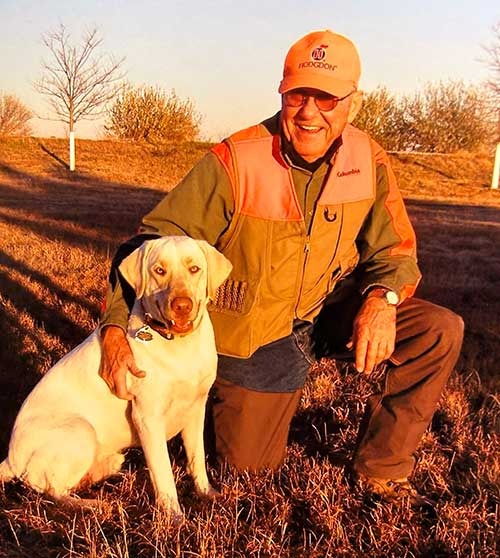
Robert E. “Bob” Hodgdon, whose family name is part of the fabric of American metallic cartridge reloading, passed away Jan. 13. Having been born in August 1938, Hodgdon had a good run that covered a lot of ground. He and his brother, J.B. helped build the company founded by their father, Bruce Hodgdon, and today that name is iconic in the industry for the variety of reloading propellants for rifles, shotguns and handguns. According to an obituary the family posted, he “also assisted with the design and lead the team constructing the Pyrodex Plant in Herington, Kan. in 1979 and helped to design and build The Bullet Hole, a 44-station indoor shooting range in 1967.”
I served with Hodgdon on the NRA board of directors more than 20 years ago, and you could not find a more devoted fellow where perpetuation of the shooting sports, and protection of the Second Amendment, was concerned. He was a kind and gentle soul, a person you’d be delighted to share a campfire with, and someone who was as devoted to his family as his professional pursuits. He was father to four children, Chris (Adele) Hodgdon, Heidi (Erwin) Rodriguez, Stacie (Bryant Larimore) Hodgdon and Alisa Hodgdon — and grandfather of 11 and great-grandfather to eight.
A native of Kansas, he grew up in suburban Kansas City. He attended Baker University in Baldwin City, Kan., and graduated Summa Cum Laude from the University of Kansas. He served in the U.S. Air Force and the Air Force Reserves.
He served as president of Hodgdon for more than 20 years and then as board chairman from 2014 to 2017.
Hodgdon volunteered in several civic organizations, and was a member of the Westside Family Church in Lenexa, Kan.
Additionally, he was a founding member of the National Shooting Sports Foundation, a member of the Kansas State Rifle Association, and founding member of the Kansas Sportsmen’s Alliance.
State’s pistol purchase permit requirement has been in existence for 110 years.
The North Carolina General Assembly appears poised to repeal the state’s 110-year-old pistol purchase permit, but how exactly it’s accomplished remains unclear.
House Republicans approved House Bill 50 in a party-line vote on Wednesday to repeal the state’s pistol purchase permit. The measure now heads to the Senate, which approved the same in a broader bill package last week.
Senate Bill 41 was also approved in a party-line vote to repeal the permit that requires approval from the respective 100 county sheriffs. SB 41 includes measures to allow concealed carry of firearms at religious services that share locations with private or charter schools, and to launch a two-year firearm safe storage awareness initiative, as well.
Sen. Danny Britt, R-Robeson, sponsor of the Senate bill, contends the vast majority of pistol sales in North Carolina take place through federally licensed dealers, who would still be required to conduct checks through the National Instant Criminal Background Check System run by the FBI.
Supporters of the change have cited complaints about the slow pace of permit approvals and touted support for repeal from the North Carolina Sheriff’s Association.
Democrats have argued the bill would create a “giant loophole” that would allow dangerous individuals to obtain handguns through private sellers who are not required to conduct background checks.
Aspects of SB 41 regarding the safe storage awareness initiative and concealed carry at religious services have already cleared the House in standalone bills with support from Democrats. Democrat Gov. Roy Cooper vetoed similar legislation to repeal the pistol purchase permit in 2021, alleging “gun permit laws reduce gun homicides and suicides and reduce the availability of guns for criminal activity.”
Senate Republicans now hold a supermajority necessary to override a gubernatorial veto, while Republicans in the House came one vote shy of that threshold in the November election.
HB 50’s single Democratic co-sponsor, Rep. Michael Wray of Northampton County, told the media he decided to vote against the bill on Wednesday after consulting with sheriffs in his district.
SB 41 is currently in the Committee on Rules, Calendar, and Operations of the House, while HB 50 has not yet been referred to a Senate committee.
House Speaker Tim Moore, R-Cleveland, recently told reporters that while he believes discussions should continue with Democrats to court support for repeal, the lower chamber could simply adopt SB 41.
Advocates for repeal have highlighted how pistol purchase permits were initially implemented by Jim Crow Democrats to prevent black residents from gaining legal access to guns, dubbing the permit law “the Klan’s favorite law.”
North Carolina is the only southern state that still requires a pistol purchase permit.
Today I have been thinking back over the many changes that I’ve seen in the personal-defense community during my active years. The biggest change during those years are the number of states that now issue handgun permits to citizens and, even better, those states that now have permitless carry. Of course, today’s selection of guns, gear and ammo are really impressive. And, it is certainly encouraging to see the number of people who understand the value of obtaining professional defensive training. But, I think the biggest change is the way today’s shooters value and preach gun safety.
Back when I first started shooting, you’d hear a lot of talk about someone having, or someone else trying to avoid, an accidental discharge. Well, friends, let me tell you… an accidental discharge is when lightning strikes your firearm in such a way as to cause it to fire. Just about anything else is a negligent discharge.
Any unintentional discharge of a firearm can usually be traced to negligence on some individual’s part. Not knowing the proper manual of arms for a certain gun. Not focusing on safety while handling it. Using the wrong ammunition. Failing to properly maintain a particular firearm. Leaving a firearm laying around where some unauthorized person might pick it up. And you can think of other examples of negligence that could lead to a discharge that often results in injury or death. Using the term “accident” sort of implies that it was really nobody’s fault, while “negligent” puts it right back on somebody who should have been more responsible.
My point is that I think the average shooter has become better educated in recognizing the need for gun safety and preaching it. I like to post vintage photos on the internet of old-time lawmen and shootists. Often those photos depict gun handling that we no longer consider safe practices. Fingers on the trigger, muzzles pointed in unsafe directions, old-timers leaning on their rifles with the gun muzzles in the dirt, are just some of the things that we see. What I appreciate is the number of folks who take the time to comment and call attention to what they perceive to be unsafe practices. In so doing, it often causes a gun-safety discussion and it certainly serves as a reminder to all of us. And, nowadays, if someone uses the term “accidental discharge” he is nearly always strongly and loudly reminded that it is a “negligent discharge.” New shooters learn through these exchanges and we older shooters are reminded of the safety rules that we already know.
Just as a reminder, here are the safety rules that I use, courtesy of Col. Jeff Cooper’s Gunsite Academy.
#1… ALL GUNS ARE ALWAYS LOADED
#2… NEVER LET YOUR GUN MUZZLE COVER ANYTHING THAT YOU ARE NOT WILLING TO DESTROY.
#3… KEEP YOUR FINGER OFF THE TRIGGER UNTIL YOUR SIGHTS ARE ON THE TARGET.
David Niven was an esteemed English actor and novelist. During the course of his long and storied acting career, Niven played a leading man, a world explorer, the villain in a Pink Panther movie, a soldier, a sailor, an action hero, and even James Bond in the first Casino Royale. He won the Oscar for Best Actor in 1958 for his role as Major Pollock in Separate Tables.
Most modern actors are a lot better at looking awesome than actually being awesome.
Today’s crop of actors is, with few exceptions, a bunch of vapid amoral losers. Their standard of accomplishment is running about naked and flying on private jets to A-lister conferences while telling the rest of us what we should be sacrificing to battle climate change. By contrast, David Niven was a real-live warrior.
David Niven had military service in his DNA.
Born March 1, 1910, at Belgrave mansions, Grosvenor Gardens, London, Niven came from a long line of British soldiers. His father LT William Niven was killed in Turkey during the Gallipoli Campaign serving with the Berkshire Yeomanry in 1915. His maternal grandfather, CPT William Degacher, was killed in 1879 at the Battle of Isandlwana during the Zulu Wars. His great grandfather was LTG James Webber Smith CB.
An inveterate prankster, a young David Niven was actually expelled from his first British boarding school.
Two years after the death of his father, Niven’s mother remarried, this time to a prominent British Conservative politician. At age six, young David was remanded to boarding school. His experience there was rocky, predominantly the result of his proclivity toward pranks.
Margaret Whigham was David Niven’s first love. She harbored a deep affection for him throughout her life.
At age 18, Niven impregnated a fifteen-year-old socialite named Margaret Whigham while she was on holiday. Given the puritanical mores of the day this held the potential for great scandal. The young woman’s family arranged for an abortion, but she revered Niven until his death. Whigham was among the VIP guests at his memorial service in London after he died.
Finding Himself
David Niven’s military service played a large part in shaping his gentleman persona.
David Niven was educated at the Royal Military College at Sandhurst, graduating in 1930 as a Second Lieutenant in the British Army. This experience was said to be foundational to his developing the refined unflappable bearing that held him in good stead on the stage and screen. However, the peacetime Army did little to hold Niven’s attention.
David Niven arrived in New York City bereft of both money and a plan.
LT Niven once ditched a lecture on machinegun tactics delivered by a British Major General in favor of a social engagement with a young woman. Niven was subsequently arrested for insubordination but killed a bottle of whisky with Rhoddy Rose, the officer tasked with guarding him. Rose later went on to become a decorated Colonel in the British Army. With Rose’s assistance, Niven escaped out a window and caught a ship for America, resigning his commission via telegram once underway. Upon his arrival in the United States he tried and failed to make a living first selling whisky and then as a rodeo promoter.
In retrospect Errol Flynn was likely a pedophile, but he helped open the door to Hollywood when David Niven was an aspiring young actor.
After stints in both Mexico and the Caribbean, Niven eventually made his way to Hollywood, securing a role as an extra in such films as Barbary Coast and Mutiny on the Bounty. His designation as an extra was, “Anglo-Saxon Type No. 2,008.” More serious roles followed until, by the late 1930’s, he had become an A-lister leading man. Niven and Errol Flynn shared a house for a time. By 1939 David Niven was on top of his game, having earned top billing for big budget Hollywood productions. Then Hitler invaded Western Europe, and Niven gave it all up to return to England and rejoin the British Army. At the time, David Niven was the only British movie star working in America to do so.
The Humble Warrior
David Niven served with the British Commandos throughout most of World War 2.
I watched a couple of interviews with David Niven on YouTube in preparation for this project. Despite his refined, almost haughty British demeanor, you cannot help but be struck by the man’s humility when he was elaborating on his military experience. Once during an interview with Dick Cavett he was asked to relate the most perilous experience he had while serving in World War 2. He prefaced his answer that many other men had done much greater things than had he and that he was likely the most terrified man in Europe during the war. However, cutting through the fluff, David Niven was the real freaking deal.
The British Commandos were some of the hardest soldiers in Allied service.
After being recommissioned as a Lieutenant, Niven was assigned to the motor training battalion of the Prince Consort’s Own Rifle Brigade. The British have some of the most adorable unit designations. Dissatisfied with the pace of that assignment, he volunteered for the Commandos. Niven trained at Inverailort House in the Western Highlands, eventually coming to command “A” Squadron of the General Headquarters Liaison Regiment.
This photo is obviously staged, but the weapons are interesting. The lead Commando sports a captured German P08 Artillery Luger with a 32-round trommelmagazin snail drum, while the trail man carries an M1928A1 Thompson submachine gun.
The British Commandos during World War 2 were an elite light infantry unit specializing in small unit operations. A modern counterpart might be the US Army Rangers. Their training was notoriously grueling, and they were relied upon to execute the toughest missions, often with minimal support. Commando training and operational experience laid the foundation for much of the world’s modern Special Operations capabilities.
Niven’s Commando unit ranged ahead of Allied lines conducting reconnaissance and establishing bombing lines for Allied air power.
Niven was an acting Lieutenant Colonel by the time he landed on the continent several days after D-Day. He served with a unit called “Phantom” that was tasked with covertly locating and reporting enemy positions in the chaos following Operation Overlord. One of the few war stories that he was willing to relate publicly concerned his being shelled while attempting to cross a bridge between the American 1st and British 2d Armies.
LTC Niven Earns the Iron Cross
Bridges are natural choke points in military maneuver. They attract chaos.
LTC Niven was crossing a bridge just as the Germans began dropping artillery on it. He dove out of his jeep and into a nearby foxhole with heavy German artillery fire impacting all around. Amidst the unfettered chaos of the moment he looked up to see John McClain, an old friend and drama critic, hunkered down the next foxhole over.
The Iron Cross was the archetypal German combat decoration.
The Germans obliterated the bridge, but Niven and McClain emerged unscathed. McClain was uniformed as a Lieutenant in the US Navy. After a happy reunion McClain produced a sack filled with German Iron Crosses. The German forces at Cherbourg were cut off and surrounded. Their commander, Generalleutnant von Schlieben, had requested a sackful of Iron Crosses be air dropped into the salient to be distributed to his men in an effort at shoring up their morale. The Luftwaffe attempted to drop the sack from a fighter plane but inadvertently deposited it in McClain’s hole.
This is a scene from The Guns of Navarone. Years before David Niven made this movie he was informally awarded an Iron Cross for bravery under fire.
These men were in show business, after all, and were ever on the lookout for an opportunity at levity. Niven’s friend formally presented him with a German Iron Cross for bravery right there in their foxhole. Niven said that he affixed the decoration to his shirt underneath his combat jacket and wore it for the rest of the war.
David Niven and Errol Flynn were roommates for a time.
Though Niven was tight-lipped concerning the details of his wartime service, it was undeniably extensive. He was evacuated as part of the British Expeditionary Force at Dunkirk. When once he was preparing his men for an assault he attempted to allay their jitters with,”Look, you chaps only have to do this once. But I’ll have to do it all over again in Hollywood with Errol Flynn!”
The Battle of the Bulge was chaos for Allied troops subjected to German attack.
During the Battle of the Bulge, Niven was challenged by a nervous American sentry jumpy over stories of Otto Skorzeny’s commandos infiltrating Allied lines in American uniforms. The trigger-happy American asked him who had won the World Series in 1943. Niven responded with, “Haven’t the foggiest idea, but I did co-star with Ginger Rogers in Bachelor Mother.” The sentry let him pass.
David Niven knew what it was like to be on the receiving end of German fire. Note that the Wehrmacht soldier on the right is packing a Soviet SVT-40 self-loading rifle.
Many Hollywood actors had actively avoided combat. When pressed about his wartime service, Niven said this, “Anyone who says a bullet sings past, hums past, flies, pings, or whines past, has never heard one – they go crack!”
Once the war ended Niven was ready to resume his previous life.
Niven ended the war a Lieutenant Colonel and returned to Hollywood. Among his several decorations was the American Legion of Merit. Like most combat veterans of that era, Niven seemed ready to put the war behind him and move on with his life.
The Rest of the Story
Niven married Primula Susan Rollo soon after he returned from WW2. Her accidental death nearly drove him to suicide.
Soon after his return to Hollywood, the Niven family was enjoying an evening as guests of Tyrone Power. While playing Sardines, a lights-out version of hide and seek with the accumulated kids, Niven’s wife Primmie took a tumble down some stairs, fractured her skull, and was tragically killed. The distraught man immersed himself in his work to compensate. Prominent roles alongside the likes of Cary Grant, Ginger Rogers, and Shirley Temple followed.
Around the World in 80 Days took Best Picture and invigorated David Niven’s film career.
David Niven’s career waxed and waned as is often the custom for movie stars. He played on Broadway opposite Gloria Swanson in Nina as a respite from movies. His fortunes lagged for a time until he was cast as Phileas Fogg in the smash 1956 hit Around the World in 80 Days. Around the World took home Best Picture that year.
David Niven was the very image of a Hollywood leading man.
David Niven holds the distinction of being the only person ever to win a Best Actor award at a ceremony he was hosting. Appearing on-screen for only 23 minutes in Separate Tables, his performance was also the briefest ever to be afforded this honor. Niven’s Oscar proved to be the key that opened all the doors in Hollywood.
Streaking was popular back in the 1970’s. I never saw the appeal myself.
Niven shined in movies like The Guns of Navarone, Death on the Nile, Rough Cut, and Seawolves. While hosting the 46th Academy Awards ceremony in 1974, Niven was interrupted when a naked man went streaking past in the background. Streaking was considered quite the popular pastime in the early 1970’s. His classic off-the-cuff response was, “Isn’t it fascinating to think that probably the only laugh that man will ever get in his life is by stripping off and showing his shortcomings?” David Niven was ever the refined English gentleman.
Despite being part of the most narcissistic profession in human history, David Niven’s wartime service humbled him.
This quote lends insight to this remarkable man’s worldview, “I will, however, tell you just one thing about the war, my first story and my last. I was asked by some American friends to search out the grave of their son near Bastogne. I found it where they told me I would, but it was among 27,000 others, and I told myself that here, Niven, were 27,000 reasons why you should keep your mouth shut after the war.” What a stud.
David Niven excelled at everything he did.
David Niven died in 1983 at the age of 73 from complications of Lou Gehrig’s disease. The archetypal English gentleman on the silver screen, Niven was also quite the British patriot when it counted.
Elon Musk’s House : An inside look at all the houses owned by Elon Musk
SHARE
In May, Elon Musk, the billionaire Tesla and SpaceX CEO tweeted that he would be “selling almost all physical possessions. Will own no house.” A few days later, he listed four stunning mansions in Los Angeles for sale for a total of $137 million. Elon Musk’s House portfolio holds Gene Wilder’s former home, a $30 million mansion in Los Angeles, and a historic 100-year-old mansion on the San Francisco Peninsula. In this article, we take a look at the breathtaking houses owned by the world’s first billionaire renter.
At one point, Musk owned several properties across the greater Los Angeles area collectively worth over a whopping $70 million. Musk purchased his first piece of Bel-Air real estate in late 2012. He started by renting the same house in 2010; he lived there with his family. He later bought the mansion for $17 million. This Elon Musk house has 20,248 sprawls over square feet with a total of seven bedrooms and thirteen baths. The kitchen features a beautiful brick ceiling. The backyard has a beautiful pool, a spacious tennis court, and a picturesque view of the exclusive Bel-Air Country Club. The home also houses a gym and a wine cellar. This 20,248-square-foot property was the beginning of it all, the first and the largest of his Bel Air estates to go after Musk had tweeted about his goal to the world, the property had been up for sale with an asking price of $30 million and had sold for $29.72 million to William Ding, a Chinese billionaire The sum is reportedly about $5.5 million more than what the Tesla CEO paid when buying it in 2016.
The First Piece of Bel-Air Real Estate Bought by Musk Credits: Los Angeles Times
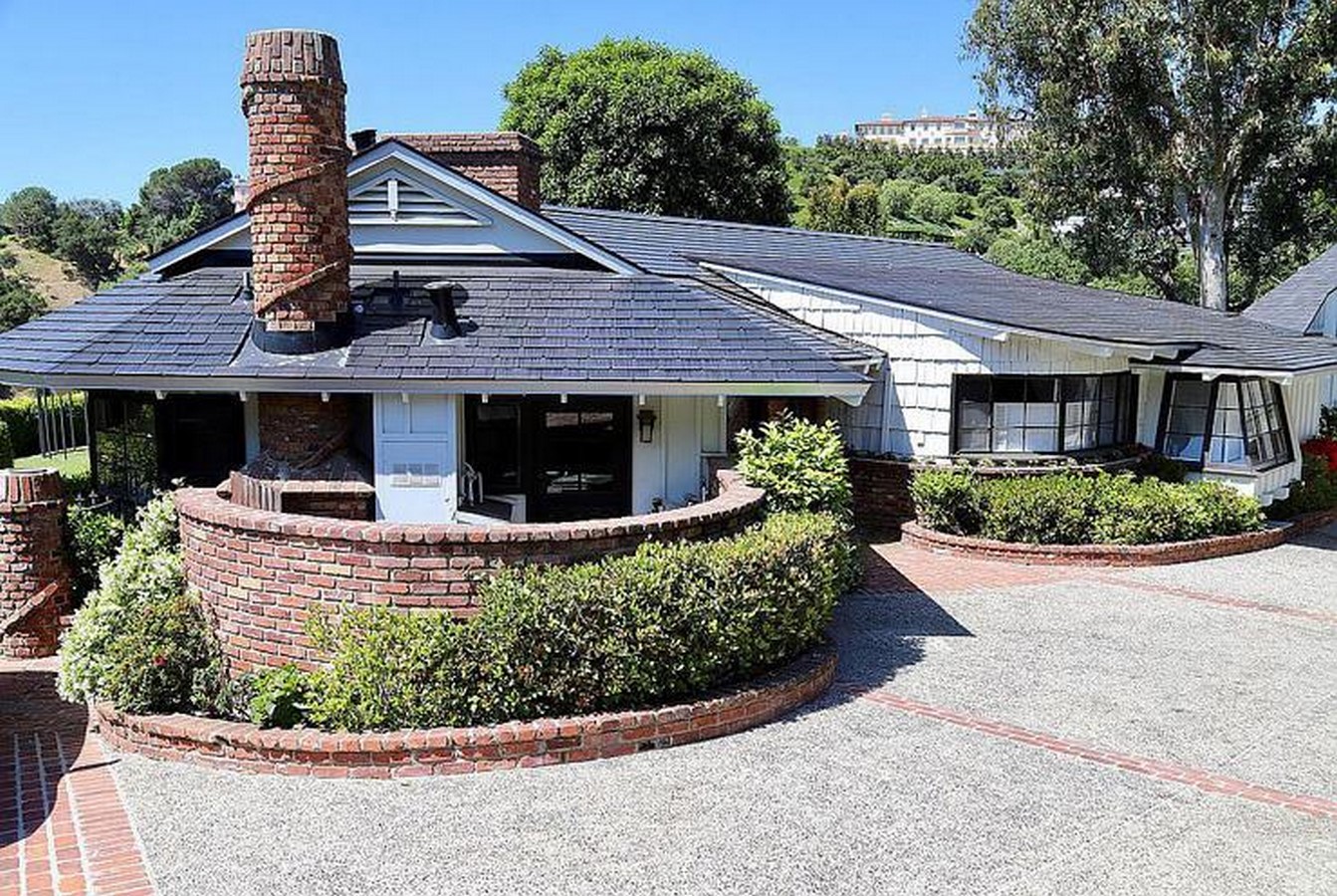
This stunning Elon Musk’s house was located a little away from his mansion for $6.75 million in October 2013. Yes, Elon Musk owned the house of the late actor Gene Wilders, which he had purchased to “preserve the spirit of Gene Wilder”. Beloved actor Gene Wilder lived there for over 30 years until 2007. In a 2015 interview with Vogue, the billionaire CEO described it as “like a little schoolhouse on the prairie, except in Bel-Air on a golf course.” Though Musk never lived in the house, he had used it as a private school—named AdAstra—for his children and children of some of the SpaceX and Tesla employees. While selling the house, the Tesla CEO made it clear that the buyer must not harm the house’s “soul” or tear it down. “Just one stipulation on sale: I own Gene Wilder’s old house. It cannot be torn down or lose any of its soul.” Musk tweeted. Soon, it was revealed that he had sold the Wilder estate to Elizabeth Hunter, the wife of Wilder’s nephew Jordan Walker-Perlman, for $7 million in an off-market deal. It was also reported that the tech mogul lent as much as $6.7 million to help them buy the property too.
This boomerang-shaped Elon Musk’s house in Brentwood, California, about 15 miles northwest of downtown Los Angeles was previously owned by Elon Musk. Musk paid just under $3.7 million for it in 2014, per the Variety-owned real-estate site Dirt. The building is surrounded by privacy hedges for security but has floor-to-ceiling giant windows throughout to let the daylight in. Musk sold the home for $4 million in late August 2019, stated a Business Insider report. Way before he publicly declared his intentions, Musk had already sold a 0.28-acre modern house in Brentwood, only about 20 minutes away from his six former Chalon-Somera properties. He sold it in August 2019 for $3.9 million, the property had reportedly cost the Tesla CEO about $3.7 million in 2014.
The Brentwood Property Credits: Realtor/ https://www.mensxp.com
The billionaire techie purchased another Bel-Air mansion while it was still under construction for $24.25 million in 2016, Variety reported that year. Notably, Musk doesn’t own a home near the Tesla factory in Fremont, California. He has previously shared that he slept on a couch or the floor of a conference room during busy production periods.
The Bel-Air mansion Credits: Variety
In a Zillow listing, the four of Musk’s remaining properties in Bel Air had a combined asking price of $62.5 million and an interesting description to go with: “A project for the big thinker, designed to showcase one of the best views in Los Angeles – from the city to the ocean and beyond.” The properties, all unique in architecture and their worth ranging between $4 million to $30 million, made him a profit of about $6.8 million.
The 4 Bel Air Properties Credits: Zillow/ https://www.mensxp.com
Now, after almost a year of emptying his material baggage, it has all come down to one gigantic 100-year-old mansion near San Jose. The Hillsborough estate is built on 47 acres of land, with 9 bedrooms, 9.5 baths, and just about anything you could dream of including hiking trails, canyons, a big ballroom, and a reservoir! Originally listed for $35 million in May 2020, it seems Musk has taken down the listing for now. However, according to reports, there is every possibility that the home will be relisted and Musk will complete his quest to get rid of all his real estate assets.
The 100-year-old mansion near San Jose Credits: Realtor/ https://www.mensxp.com