Categories
Category: Gear & Stuff
So, the barbarians are at the Gates, what should you do?
Well, smart people will already have done something about it, but, well, troubled times, troubled times. Nobody expects the Visigoths, Mongols, Ottomans, Frisians, Norse, Dane, Swedes, Rus, Rhode Islanders to come crashing through your peaceful estates far from the rough border regions. Sure, the Border Lords are supposed to keep all the riff-raff on the other side of the invisible barrier between “Us” and “Those uncivilized barbaric nomadic uneducated mean people.”
But, unbeknownst to we civilized folk, the very people who rule over us and tax us have let the very barbarians they are supposed to keep away from us in to be around US! What is wrong with people? The Nerve!!!
Now what? Well, hmmm. What are we to do? Oh, sure, one can arm oneself with one’s relative’s cavalry weapons, but there’s an issue about that. Cavalry weapons are long and designed to be fought with while on a horse. In the open. Wide open. Wide wide open.
Unfortunately, turn around. We are all surrounded by walls, furniture, household staff, all things that get in the way of wildly swinging a cavalry spatha, sword, saber, longsword etc. I mean, you can get new household staff but the lady of the manse probably would get perturbed with slashes in tapestries, furniture, the housecat or dog or both, her, and, yes, household staff.
What to do? The concept of a sword is a good one, and very useful outside if your estates are vast, but in these fallen times, we all live crammed together almost on top of each other. Long length is a no-go. So, well, let’s look at other tools of the trade.
Spears and other daggers-on-a-stick – way too long, need room to maneuver, but keep that idea around.
Swords-on-a-stick (like glaives, naginata, rampele etc) – better than a spear, but still too long, but keep that idea around.
Axes-on-a-stick (like halberds, two-handed axes, poleaxes etc) – Come on! Anything-on-a-stick is too long and unwieldy in one’s domicile. Plus, some of them require way too much training (you don’t just pick up a great axe and start swinging, as there is an art to not getting yourself killed using one while killing one’s opponent.)
What about smaller axes, like hand axes and tomahawks and boarding axes and and and… Think about it. Hand axes are for fighting outside. Same with tomahawks (plus, tool of barbarian, duh!,) and boarding axe means you are on a boat or ship and that’s a whole different type of fighting, totally uncouth for us gentle folk.
And what about broadswords and single-edge cleavers like cutlasses, falchions, falcata? Getting better, but unless you live in a palatial home, still too long.
Which leaves… daggers and swords. You know, civilized weapons. “But Beans,” you say, “you told us swords are too long!”
Well, broad swords and falchions and cutlasses are still to long
No, not all swords. For there is a class of swords that are designed to be used in close quarters, and they are called “Short Swords.”
Like, well, short double-bladed swords like the Gladius Iberius and it’s cousin the Xiphos and the Cinqueda.
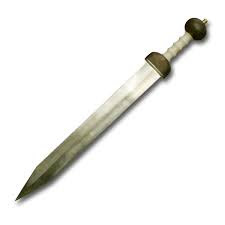
The Gladius – Short, double-edged, stabby point.
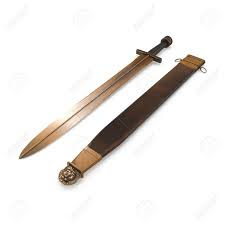
The Xiphos – Short, double-edged, stabby point.
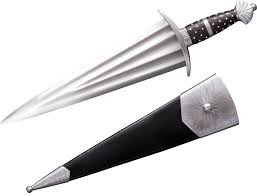
The Cinqueda – Short, double-edged, stabby point.
Beginning to get the hint here? Short, great for close quarter combat. Double-edged to cut on either a forehand cut or backhand cut. Stabby point, for, duh, stabbing. All three are short enough to use in pretty much even the most cluttered house, heavy enough to chop through one’s target, and, well, STABBY-STABBY!
So how does one use one of these wunder-weapons?
First, determine whether you are right or left handed. Place handle in that hand. Now extend your non-sword foot forward and to the side, point that foot at your target. Slightly turn your swordside foot outward. Bend your knees a little. Stand up straight. Rotate on your hips back and forth, back and forth.
Did you do that? Good. Does it feel comfortable? This is a basic stance in all fighting. Some call it a boxer’s stance, or horse stance, or fighter’s stance. From this stance comes all other movement.
Now, bring up your sword hand, up, up, up to around your face level, with your hand, well, like a boxer’s, protecting your face. Your other hand, can have another shorter blade, or a hand axe (yes, there is a place for a hand axe in the house, but it’s for defensive purposes,) or a shield, or your mother-in-law (if you don’t like her) or one of the domestic staff, or a pan, or shield (Do Not Try to Use Cat. Cat will Keeel You) and if so filled, left hand lower and more forward (you can even use the scabard.)
Swing your hips from swordside to off-side while bringing your sword hand from sword side to off side. Like, well, a tennis racket.
Reset.
Swing again. Does it feel good? Keep swinging.
Now imagine your opponent is a post sticking out of the ground (this is called a pell. You can use a tree or a boxing bag or your mother-in-law. Don’t swing hard, just swing. Swing away, swing so that your sword hand is past the post towards your offside. This is called ‘cutting through.’ Always cut through, as that is how you actually cut.
Do it again.
Now, try this. Swing like that again but stop at the end of the swing with your hand past the pell, and now swing back, like a backhand in tennis. Again, cut through the target (you may need multiple mothers-in-law, about the only good thing about polygamy I can see) and bring your hand back up to your resting stance.
Wow.
Swing forward, swing backward, reset. Swing forward, swing backward, reset.
Hack and slash, hack and slash. This is what real swords are for. Chop, chop, chop. Like a butcher, which is what you are now. Swing hack, Swing slash, chop, chop, chop.
Now, once in a while, take the pointy end and go stabby-stabby towards the eyes or the gut. This is called a fake, makes one’s opponent jump back. The secret to a fake is to not make it a fake. If you stab at thee eye, stab the eye. If you stab at thee gut, stab the gut. If the idiot at the other end isn’t smart enough to jump out of the way, well, he’s stabbed.
Got it?
Swing and a chop, backswing and a slice. Same Same, Stab.
Now here’s where the skull-sweat comes in. And it’s called “The Rule of Three.”
Which is… Don’t do the same thing more than three times in a row as it sets up a pattern your opponent can predict. Be unpredictable. Which includes… once in a while break the rule of three. Because unpredictable.
You can do this wearing a toga. Pajamas. A tunic and hosen. Armor. A flight suit. Maybe not a space suit, unless it’s one of those snazzy SpaceX spacesuits, but not one of those antiquated NASA orange flight suits that make you look like you’re about 3 times your weight. You can even do this naked, which can be considered a weapon all unto itself.
Easy, peasy.
Swing and a chop. If you miss swing back and slash chop. Poke him/her/it. Keep it up. Barbarians recognize a determined opponent and will respect you as they bleed out.
About that other hand… If the object is heavy enough, like a shield or a pan or an axe, you can, if able to, hit your opponent with that object. Shield bashing works. Whacking someone with a fry-pan (preferably cast iron as aluminum doesn’t have much mass behind it) works.
And this is how you protect your house against random barbarians with a short sword.
Oh, okay, you can use a single-edged blade the same way, as long as it has a point. Like a Kukri, or a smaller Sax, or a long-Bowie, or an artillery short sword.
Same thing. Swing-chop, Swing-slash, stabby-stabby.
The “crappy” Mark 14 Torpedo and the effect it had on the American Sub Force.
.This was supposed to drop this morning, but I got the date wrong.
I had ran across this article on the internet doing research on something else, it discussed the torpedo debacle that the American Submarines had and to a lesser extent, the American Torpedo planes had because they basically were using the same technology and systems. It was very enlightening to see the bureaucratic stalling and shafting the sub crews and skippers who tried to tell BuOrd that their torpedoes sucked, whereas the Japanese had the awesome Long Lance torpedoes and their air arm had their own effective air dropped version. The Pics are complements of “Google”.
I had ran across this article on the internet doing research on something else, it discussed the torpedo debacle that the American Submarines had and to a lesser extent, the American Torpedo planes had because they basically were using the same technology and systems. It was very enlightening to see the bureaucratic stalling and shafting the sub crews and skippers who tried to tell BuOrd that their torpedoes sucked, whereas the Japanese had the awesome Long Lance torpedoes and their air arm had their own effective air dropped version. The Pics are complements of “Google”.
Fizzling fish, wrong tactics and incompetent commanders — ingredients for disaster simmering below the waves aboard American submarines — how many years did they add to World War II?
A strong case has been made, by authors as varied as Jim Dunnigan, John Keegan and George Friedman, that the leading cause of the eventual defeat of the Japanese in World War II was the choke hold on its commercial shipping achieved by the Allies. Friedman, in his thought provoking if flawed The Coming War With Japan, argues that aerial strategic bombing had little effect on Japanese production capacity. But production capacity is useless without raw materials. US submarines, ranging on the north-south routes from the Indies and along the Japanese coast, systematically interdicted the flow of strategic materials. By the end of the war Japanese imports of bulk commodities such as iron ore and oil had plunged almost 90% from prewar levels. Unable to get the supplies it needed to maintain its armed forces the Japanese were forced to submit to the demand for unconditional surrender. As Friedman points out, the lesson was driven home — the bulk of modern Japan’s Maritime Self Defense Force is devoted to antisubmarine warfare.
For World War II’s submariners it was not a one-sided battle. While American submarines claimed 201 Japanese warships and 1013 merchant vessels (roughly 55% of all tonnage sunk), fifty four American submarines made their final dive to the floor of the Pacific, taking 3500 sailors to a watery grave. The loss rate — 22% — suffered by the Submarine Service was the highest experienced by any force of their size in the war. But the blood and iron lost in the shallows and deeps of the Pacific destroyed Japanese war making ability. It almost didn’t happen that way.
Run Silent, Run Deep
While salvage crews rescued what they could from the twisted wreckage of the Pacific Fleet in the aftermath of the raid on Pearl Harbor, the American Navy scrambled to strike back. Chief of Naval Operations, Admiral Ernest J. King turned to the only branch of the service with the ability to damage the Japanese without risking the few precious carriers — the submarine service.
Before December was out, American submarines had struck back with a ferocity born out of desperation and a grim sense of revenge. One boat alone carried out attacks on six Japanese ships putting 13 “fish” (naval slang for torpedoes) in the water. Overall there were forty-six separate attacks on Japanese shipping, both civilian and military, involving the launching of 96 torpedoes. The scope and number of operations were a tribute to the determination and hunting skills of the submariners. The one problem, from the naval warfare point of view, was that all this activity resulted in the loss of exactly five freighters. Ironically, at the same time the Atlantic German submarine commander Grand Admiral Karl Doenitz was complaining to his captains that it took them took 816 torpedoes to sink 404 ships. Something was terribly wrong in the Pacific.
Commanders, Tactics & Torpedoes
As 1941 faded into 1942, then 1943, three things became obvious: American submarines in the Pacific were commanded by unsuitable commanders utilizing inappropriate tactics and armed with useless torpedoes.
It is axiomatic that those who rise to high command in peacetime are frequently ill-equipped to handle the rigors of battle. Peacetime is a period when competency is judged on skill at personal relationships, office politics and ballroom dancing rather than aggressiveness, battle experience or drive. At the start of the war, many submarine commanders were too old, too poorly trained and unready for the tasks they faced. In one noted instance a sub captain, assigned to his first combat patrol, turned the conn over to his Executive officer and locked himself in the cabin until it returned to port. The Navy recognized the problem and conducted a house cleaning — in 1942 thirty percent of submarine captains were relieved of their commands as unfit for duty. Their places were taken by men with more fire in their bowels.
Tactics were just as poor. Prior to the war American submarine doctrine saw the submarine as a forward scout responsible for the protection of battleships. Combat tactics called for submarines to attack fully submerged using sound rather than their periscopes to attack. It was unrealistic and what was worse, completely oblivious to the lessons of World War I and the naval war to that date. German submarines, employing much more aggressive tactics were on the verge of strangling Great Britain. Before Pearl Harbor the efficiency of the German U-boats had forced President Franklin D. Roosevelt to move warships from the Pacific to the Atlantic and use American vessels to protect British convoys.
The Germans understood the purpose and strengths of submarine warfare. Submarines operate best as aggressive attackers. Like sharks they are efficient killing machines that need to hunt. The role of scout is as poor a one for a submarine as passenger plane is for an F-15.
The American Navy learned quickly. Commanders were replaced and tactics altered. But still the number of Japanese ships sunk was embarrassingly low. Through 1943 the navy expended 14,748 torpedoes against 4,112 Japanese ships — sinking 1,305. At the same time Doenitz was complaining about using two torpedoes to sink a ship, American submarines were expending 11.3 per target sunk.
Torpedo Tribulations
The third problem lies with the submarine’s main weapon — its torpedoes. To start with, there weren’t that many around. The navy had started the war with a few hundred torpedoes; nearly half of which (233) were lost when the Philippines fell and the stockpiles there abandoned. Submarine torpedo production was all of 60 per month at the beginning of 1942. Submarines went to sea with two thirds of their optimum content with orders not to waste them. Ironically, in the middle of a war, submarine commanders were praised for not expending their ammunition on the enemy. The shortage might actually have been a blessing in disguise. There were some problems with the main torpedoes.
American submarines were equipped with two types of torpedoes. The older Mark 10, and the fifteen-years-in-development, top secret Mark 14. The Mark 10 was an adequate torpedo but outdated and not particularly powerful. Only the older S-boats were outfitted with them. The navy had been replacing it with the ultra-modern Mark 14.
Mark 14 Mayhem
The Mark 14 had three separate and distinct glitches. It ran 11 feet deeper than its setting, it had a faulty magnetic detonator which caused premature detonation, and the contact detonator was incredibly fragile. Compounding matters was the attitude of the Navy. Replacing incompetent commanders was done as soon as the problem was noted. Tactics and doctrine were revised when they proved untenable. But the torpedo problem would haunt the submariners for two years before the three problems were admitted to and solved by a hidebound Navy bureaucracy.
Design of the Decade?
The major difference in the models lay in their respective methods of detonation. The Mark 10 torpedo detonation design was as straightforward as a sledge hammer — it hit its target and exploded, opening a hole in the hull at or below the waterline. The Mark 14 was designed to explode while passing under the target’s keel, thus breaking the back of the ship. The magnetic detonator was supposed to explode the device at the exact place it would do the most damage. In theory it was a great idea. The reality was different.

The Mark 14 torpedo looked as if it had been designed by Rube Goldberg in a particularly creative mood. Its 92 pound Mark 6 detonator was a complicated affair complete with chains, spinners and a compass needle. It had poor structural strength and as fragile as a glass watch. To make matters worse the Navy had never really put the Mark 14 through any testing.
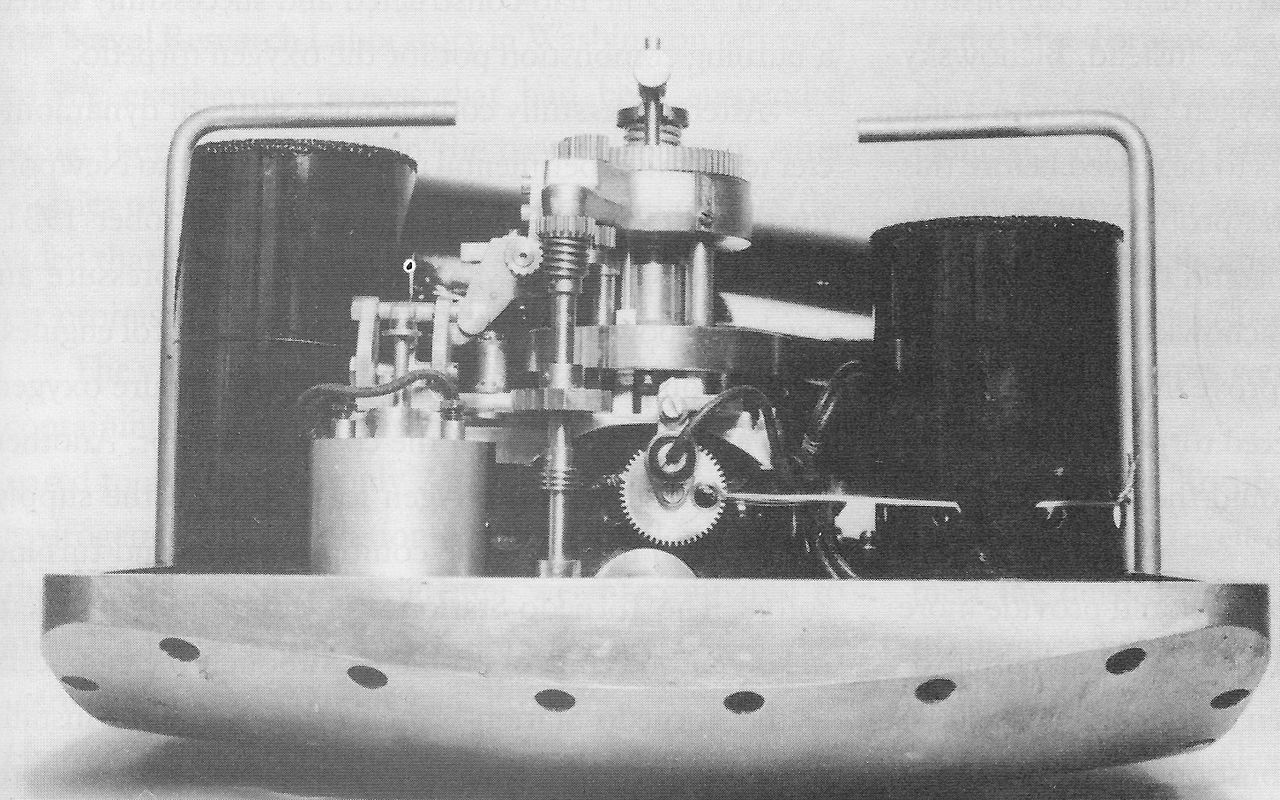
Mark VI Exploder Version 1
In the interwar years of severe budgetary restrictions cash for testing was given a low priority. The Bureau of Ordnance (BuOrd) convinced itself that at $10,000 a piece, the Mark 14 was just too expensive to blow up during testing. So the warhead was filled with water and deliberately set to pass under the under the target to preserve both for reuse. A test firing was deemed successful if the exhaust bubbles passed under the target ship. Not a one was ever actually exploded. In the words of the Submarine Operational History: “The war began with an entire generation of submarine personnel none of whom had ever seen or heard the detonation of a submarine torpedo.”
Firing Failures
Seven days after Pearl Harbor the Navy should have recognized they had problems with their torpedoes. An American submarine found a Japanese tanker, put it in its sights and let fly one of the state of the art Mark 14 fish. The torpedo, fired from a range of 1000 yards, sped along straight and true then detonated 450 yards from the target.
The submarine commander, who had done previous service with BuOrd knew as much about the Mark 14 torpedo as anyone commanding a boat. Suspecting the problem might be the magnetic detonator he deactivated them on his Mark 14 torpedoes. Continuing his patrol he fired a total of 13 torpedoes at six different targets without a hit.
Duds
Once Nimitz’ subs stopped using the magnetic detonating feature it became obvious that most of the torpedoes were duds. One sub reported firing 15 fish at an anchored Japanese Whale Factory. Eleven torpedoes failed to explode though they hit their target. Lockwood ordered more tests, this time of the contact detonators. Mark 14s were fired at a cliff and dropped from a crane in an effort to get to the bottom of the problem.
By September the tests had proven that the Mark 14 contact firing pin was unfit for combat. The pin was so delicate that it would crush without detonating the torpedo on an optimal hit of 90 degrees relative to the target. At 45 degrees, 50% of the torpedoes failed. Lockwood ordered the submariners to target glancing shots at enemy vessels. Yes, he admitted, they were more difficult to make, but they had a chance of being successful while the problem was corrected
Totally frustrated the captain informed the Commander, Submarines, Southwest Pacific1 (COMSUBSOWESPAC) that he had disobeyed orders by disarming the magnetic detonator. Regrettably, he added, even this did not seem to help. He opined that the torpedoes were either running significantly deeper than their setting or the contact detonators were not functioning or both. Aware they had been only tested using a water filled warhead he hypothesized that the actual Torpex explosive, being significantly heavier, was carrying the torpedoes down to a lower depth. He requested that he be allowed to conduct test firings at a fish net to check the depth setting on the torpedo. His request earned him a reprimand and a visit from a BuOrd officer. This officer, after reviewing crew procedures and conducting an inspection of the ship’s remaining torpedoes, placed the blame squarely on the crew.
Still the problem continued. On April 1, 1942 USS Scuplin fired a spread of three Mark 14s at an unescorted cargo ship at 1,000 yards. The captain of the Scuplin was the only thing that exploded as he watched the torpedoes pass harmlessly under the target. By July 5th 1942 Scuplin had fired 45 torpedoes damaging all of seven ships.
Over the next months the misses mounted. USS Spearfish fired and missed with four torpedoes at a Japanese cruiser. USS Skipjack targeted two on a seaplane tender with no hits. Scuplin spent another six days missing three Japanese freighters with nine Mark 14 torpedoes.
Henry Bruton, commander of USS Greenling, fired four Mark 14 torpedoes at a Japanese freighter after a textbook approach. All of them missed. Bruton went ballistic. Ordering the sub to the surface he passed the Japanese ship, setting up for another attack at 1,350 yards. Two fish sped toward the helpless freighter in the bright moonlight. Bruton watched as they missed. Again Bruton ordered Greenling to the surface to set up for a third attack. By now the Greenling had been spotted by the target. During the ensuing battle Bruton fired two more torpedoes. One was clean miss, the other exploded — 500 yards short of the target.
In the late summer of 1942 USS Seawolf ended her sixth patrol having fired 17 Mark 14s to sink two ships. Freddy Warder, Seawolf ‘s captain then loaded his submarine with a combination of the old Mark 10 “sledgehammer simple” and the newer Mark 14 torpedoes. Finding a 8,000 ton transport at anchor with no tide or current he conducted a test. At 1,400 yards he fired 4 Mark 14 torpedoes. The first, set at 18 feet, ran under the target exploding on the beach. The second, set at eight feet, appeared to detonate on the transport’s side while the other two, set at four feet, failed to explode. Warder, with Japanese shells exploding around his periscope, withdrew, reloaded his tubes with Mark 10s and attacked again. Both ran “hot and true” and sank the transport.
Captains complained, but no one seemed to be listening. A number of senior officers had their suspicions but they ran into brick walls.
Lockwood
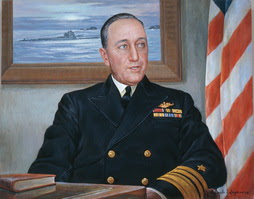
In June 1942, Rear Admiral Charles Lockwood became COMSUBSOWESPAC. After reading the war diaries of his submariners he became convinced that poor torpedo performance was the root cause of fleet’s poor sub kill rate. Lockwood asked BuOrd if they had recently tested the Mark 14. The answer was a curt “No.” Lockwood then purchased a 500 foot long fish net and tested the Mark 14 himself. The results were no surprise to the submarine captains. One torpedo, set at 10 feet, ran through the net at 25 feet, another with the same depth setting passed through at 18 feet. Another, set to ride on the surface, went through the net at 11 feet.
Lockwood notified BuOrd of his results and was told that no reliable conclusions could be drawn from his test. Lockwood then repeated the test with another submarine. Three torpedoes, each set at 10 feet, cut the net at 21 feet. In July, informed of Lockwood’s tests, King, ordered BuOrd to test the Mark 14. In August of 1942 the Bureau completed its tests and formally declared the Mark 14 ran 11 feet deeper than set.
Premature Explosions
Even after this problem was “solved” complaints on torpedo performance continued. Most concerned the issue of premature explosions. Lockwood endorsed these reports and sent them to Washington. Rear Admiral Ralph Waldo Christie, the BuOrd officer largely responsible for the development of the Mark 14 and Mark 6 magnetic detonator, then entered the fray.
When the failure of the attack was blamed on his beloved detonators and torpedoes. Christie wrote Lockwood: “It is not defective torpedoes nor exploders causing the dearth of sunken Japanese ships. It is ineffective submarine crews… and by the way stop your negative reports about the torpedoes.” Lockwood replied, “From the amount of belly-aching it (Lockwood’s note) contains, I assume that your breakfast coffee was scorched or perhaps it was a bad egg. You boys may figure the problem out to suit your favorite theories but the fact remains that we have now lost six valuable targets due to prematures so close to that the skipper thought they were hits.”
Lockwood made his feelings plain at a conference in Washington DC. He ripped into the BuOrd declaring “If the Bureau of Ordnance can’t provide us with torpedoes that will hit and explode, then for God’s sake get the Bureau of Ships to design a boat hook with which we can rip plates off a target’s sides.”
Lockwood was immediately confronted by an old friend, Rear Admiral WHP “Spike” Blandy, the BuOrd Chief. “I don’t know whether it’s part of your mission to discredit the Bureau of Ordnance, but you seem to be doing a pretty good job of it.”
“Well, Spike,” Lockwood retorted, “if anything I have said will get the bureau off its duff and get some action, I will feel that my trip has not been wasted.”
Christie Checks
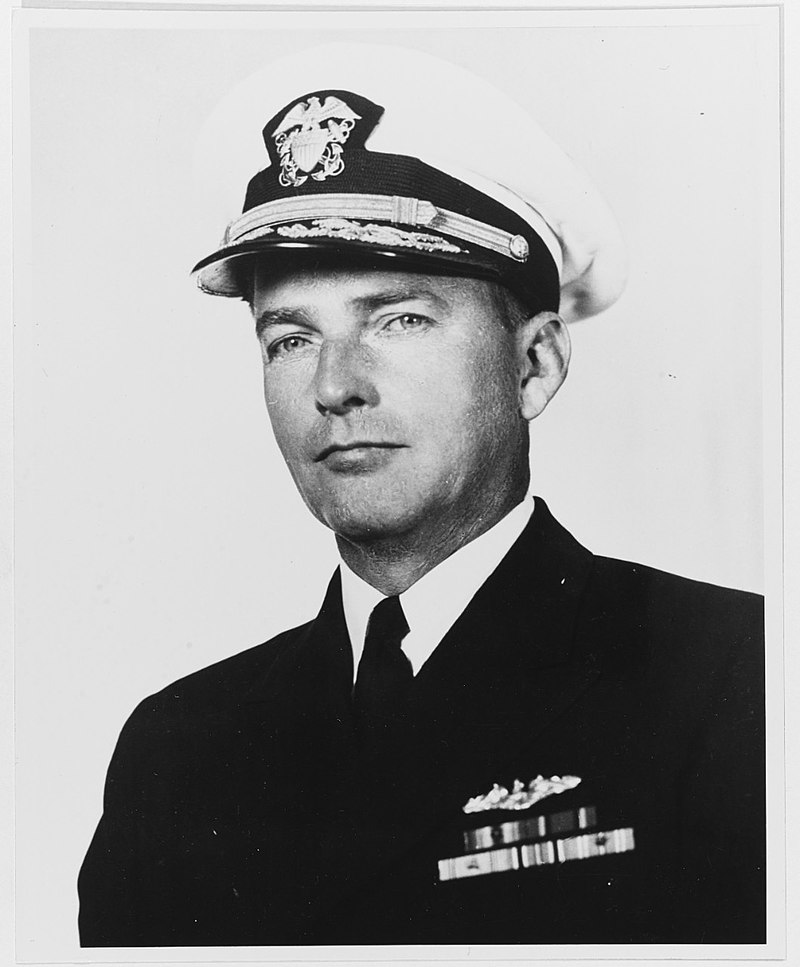
In early 1943 the submarine command structure changed. Lockwood moved from being COMSUBSOWESPAC to COMSUBPAC at Pearl Harbor under Admiral Chester Nimitz, the Commander In Chief, Pacific Fleet (CINCPAC). Christie was named COMSUBSOWESPAC. Far from bowing to the obvious, Christie conducted a vendetta against skippers who slurred his torpedo. When two of his captains questioned the reliability of the Mark 14 they were transferred out. Word spread that to question the Mark 14 in Christie’s command was a sure way of being assigned shore duty.
To forestall criticism, Christie actually went on patrol with his most successful captain in order to observe the Mark 14 in action. Of three fired in the first attack, the first torpedo broke to the surface zigzagged and passed in front of the target while the other two hit and sank the ship. During the second attack on this cruise Christie watched as 18 torpedoes were fired at one ship. Only five hit but none of the blows was a killing one and the Japanese ship steamed off. Christie deemed the operation a success.
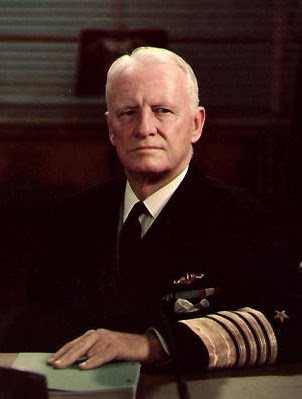
Nimitz Takes Action
The missed opportunities continued to mount. In April 1943 the USS Tunny had worked herself into the center of a Japanese carrier formation near Truk. On one side loomed a fleet carrier, on the other two smaller ones. Tunny launched four aft torpedoes at the small carrier and six at the big one at a range of 850 yards. Despite the spread and position only one of the small carriers was damaged while most of the other torpedoes detonated prematurely. Tunny had to flee for her life with little to show for her efforts.
On June 11, 1943 US submarines entered Tokyo Harbor, one of the war’s most daring feats. Salvo after salvo failed to sink any fleet units in the harbor’s confined spaces.
This and other failed attacks were enough for Nimitz. In June 1943, CINCPAC ordered the deactivation of the magnetic warheads on his submarines. Christie, still maintaining his faith in the magnetic detonator, continued their use in his fleet.
A Matter of Physics
Nimitz was right, Christie was wrong. The magnetic detonator on the Mark 6 was not working. After much investigation, it turned out to be a matter of physics. Every steel bottomed ship was encased in a magnetic field that radiated in all directions. Designers presumed that this field extended an equal distance in all directions, forming a perfect hemisphere under the bottom of the ship. But there was flaw in the reasoning. What was not understood (by anyone in the world) was that the magnetic field encasing a ship varied in shape depending in circumstances. Near the equator, this magnetic envelope flattened out until it resembled a thick disk more than a hemisphere. Since the torpedo would enter the magnetic field some distance from the ship it would explode harmlessly.
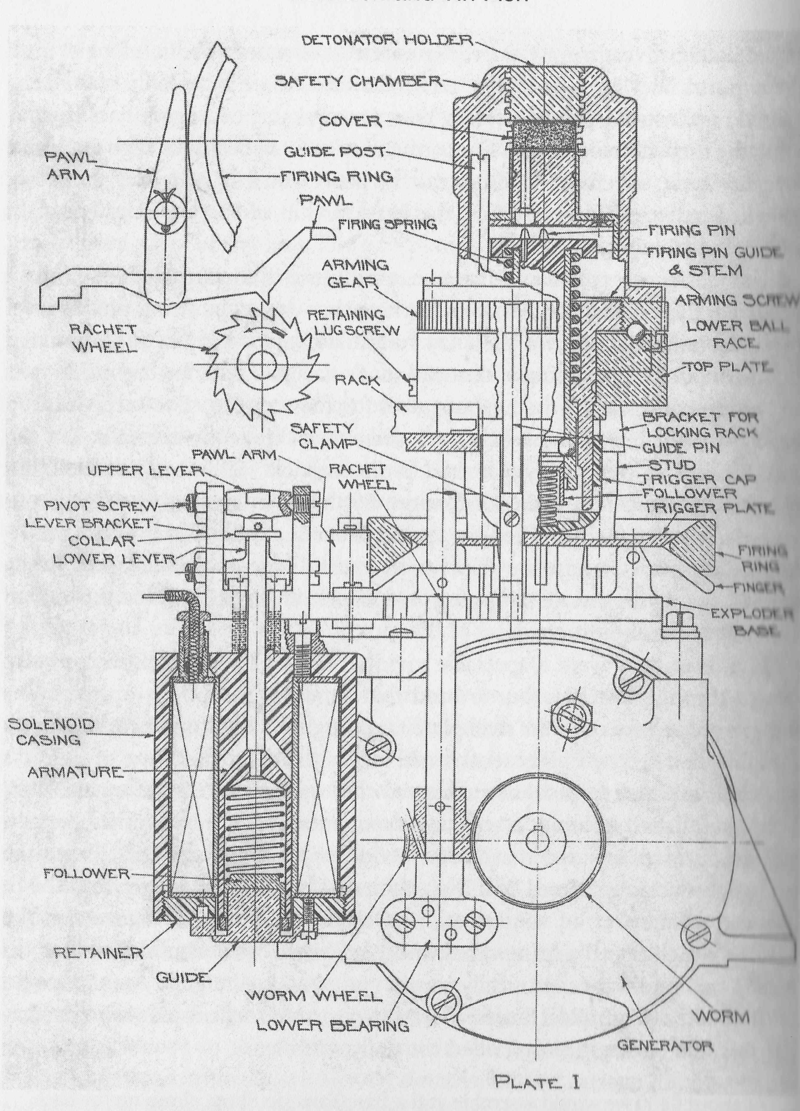
Drawing of the Mark VI Trigger operation.
The war was now eighteen months old. The Navy had already discovered that its state of the art torpedo was running eleven feet lower than its setting and that the magnetic detonator wasn’t working. What else could go wrong?
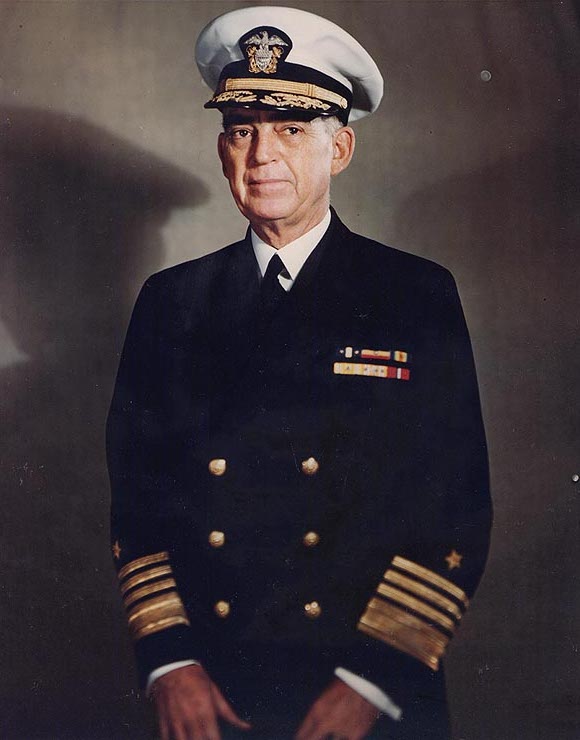
Admiral Kincaid
In November 1943 Christie was given a direct order by Vice Admiral Thomas Kinkaid, Commander of the Seventh Fleet to disarm all the magnetic detonators. It was a bitter blow and he refused to accept its logic. “Today,” he wrote in his diary, “the long hard battle on the Mark 6 magnetic feature ends with defeat. I am forced to inactivate all magnetic exploders. We are licked.”
During the same month a fix for the contact pin problem was introduced. Now when the submarines pulled out of port they were finally able to hunt and kill, not shoot fizzling fish.
Categories