Categories
Fieldcraft

The Tunnels of Cu Chi – Some pretty slick Fieldcraft there is all that I can say!

Categories
Fieldcraft The Green Machine War

Some tips to how to harden your home that is in a bad neighborhood

Clay’s Guide to Urban Defense: Ep. 4 Hardening the Home

In our last episodes we covered the fun part: guns and how much ammo to feed ’em. I’m as guilty as anyone when it comes to chewing the fat on this topic; I’ve spent hours in the forums talking about caliber preference, weight vs. power, and all the like.
But now we have to get into the not so fun part, the part that resembles work. If guns are the equivalent of showing off your abs, the hardening the home part of this series is how you got those abs. It isn’t sexy, but it is important.

Clay’s Guide to Urban Defense

My Experience


I’m going to start here with some general experience, and why I’m qualified to speak on the matter of defending an urban location. First and foremost, I did some tours in Iraq, which offers some unique insights.
Despite what the public generally thinks about U.S. Military bases and the lines of trailers many troops used, it wasn’t always like that.  Especially in the early days, we took over former regime buildings and lived and worked in them.
It is pretty funny to see a bunch of grunts living in a palace with gold toilets, but it’s how it went. The bad guys weren’t shy about still trying to kill us in those structures, so we learned a lot about hardening them from both rifle fire and mortar attacks.
With the caveat that we usually had Uncle Sugar’s logistics train to help us, which provided very expensive and unwieldy things. Like Kevlar blast blankets and Hesco bastions as time went on. Blast blankets start at about $1,500 apiece, so I think we can leave those off the shopping list.
Second, Iraq had a very weird infrastructure. In certain spots at least, I remember being amazed by how similar it was to a U.S. city. Like the interstate highway system around Baghdad had green and white signs exactly like ours (only they were in English and Arabic), letting you know what exit was coming up.
This applied somewhat to buildings as well. In the cities, most structures were concrete and bore at least a passing resemblance to ours. Minus all the OSHA standards and safety features.
Third, not only did we harden buildings, so did the bad guys. It was not uncommon at all to have to fight through barricades and the like, especially if a certain neighborhood was in open revolt at the time.
That, combined with some very odd design choices, gives a man insight into how to set up a defense.
And fourth, my last job helps a lot as well. As a CQB instructor, part of the task was teaching new guys how to deal with obstacles similar to what they were likely to encounter.
But being on a timeline and a budget, the idea was to build those obstacles cheap and easy. But also in a manner that would require a lot of effort from the student to overcome or work around or breakthrough.

Suburban Defense

Much like the first article on rifles, where we divided the world into free and non-free cities, we need to divide again. The first part of this will focus on the suburbs, for a normal American house built of 2x4s and drywall.
The second will focus on the concrete and stone structures we introduced in episode one. There is obviously some overlap of what can be done, and those things I will put in the second part.
Having traveled the world, I can generally break all construction into two categories. American, and everyone else. For cities this is definitely true, Prague looks like Okinawa, looks like Cairo, in terms of things built in the last 50 years.
Maybe I lack the artist’s eye, but it’s how I see it. No one on earth has American-like home ownership, owed at least partially to our ability to build them relatively cheap but also structurally sound.
And while American homes have proven capable of lasting against the elements for 100 plus years, they do have a weakness. They don’t stop bullets worth a damn! Maybe that is also because we always play away games.
Unless you have something a little different, like a log cabin with foot-thick walls, your house is largely indefensible against rifles. It is even worse against fire, which is a concern I often see ignored in preppier circles. Your back fence will burn, your shingles will burn, and the outside of your house will burn with very little effort.
We have largely mitigated this problem in civilized society by having good fire departments and enforcing suburban burn bans, but it is a different animal when Mad Max rules are in play. In short, I would not want to ever try and defend my house from teeming hordes equipped with Molotov cocktails and long guns.

Sandbags And Fighting Positions

But you might not have a choice. So you can still do some things to tilt the odds in your favor. A lot of this is construction specific, which also varies from region to region. One thing that has been brought up in the comments section is sandbags.
Plausible option and it would help stop bullets at least. The downside here is the number of sandbags you would need to secure a perimeter around your home, and the labor required to fill them. Having done some sandbag filling, it is not a fun chore.
Some suggested sandbags in the context of hardening only one room, but that has downsides too. Even to protect an interior room is going to require a lot. And if you can only defend that room, you are ceding enough ground to attacking forces to get within 4 feet of you before you have a clear shot.
If you are built on a concrete foundation, you can actually take a shortcut. It’s extreme, but we are talking about extreme circumstances. If you cut holes in your floor for fighting positions, you would lower your needed sandbag count by a lot.
Because you have walls to hold the dirt up, you could actually get by without any sandbags at all. You will still want a wheelbarrow, but you could actually build “range berms” three feet high the entire way around your house. Inside or outside, depending on the direness of the situation.
I have a full basement, so my options are more complex. The smartest thing I could do is build parapets to my needed perimeter positions, and then cut firing ports in the walls to the outside. That cedes my entire first floor, but the surprise would be nasty. Imagine running up the driveway for an easy score, then taking rifle fire at knee height. Ouch!
While we are talking about the typical neighborhood set up, the direness of the situation directly influences the level of heavy-handed response from you. For instance, have you thought about fields of fire?
Most of the places I have lived, my best course of action would be extreme. I would have to huddle the neighbors in my own home, while I burned theirs to the ground.
Otherwise, the avenues of approach would be many. You can stop saboteurs at 50 meters. At five meters, they are likely to win or at least complete their task.

Plywood

What else is a high priority? The next step we can take directly from our friends in hurricane country. While plywood window coverings won’t stop bullets, they do stop bricks and Antifa goblins (FYI: half-inch plywood won’t even stop handgun rounds, much less rifle fire).
I suggest a slight variation from the full coverage of windows, leaving an 8-inch gap at the bottom. This prevents your house from being totally dark while also creating airflow. Since you bought a pile of guns from episode 1, it also gives you space to see and shoot back.
Won’t the gap make the window coverings easier to rip off? That is a valid criticism, and yes, a little. But two things. One, as they said in Rhodesia, “An obstacle is only an obstacle if it’s covered by fire.”
If someone is sticking a crowbar in your barricades, you should be sticking bullets in them. And two, trying to remove a sheet of plywood held in by a dozen three-inch deck screws is no easy feat. With your F-250 maybe but not with just your hands or hand tools.
Won’t the gap allow snipers to shoot into your house? Possibly. Walking in front of a lit window does create a signature that could get you shot. But it is also kind of the point of the gap. That ribbon of light should serve as a reminder not to walk in front of it. Because in terms of rifle fire, your house might as well be made of paper mache.
Doesn’t the plywood create a fire risk all its own? Yes, it will burn, no question. But if it keeps a Molotov from landing in your living room/inside perimeter, it has still done its job. Which brings up the next subject.

Fire Extinguishers And Screws!

Aside from all the standard prepper food and water, you are going to need some other things for home defense. Right up there with bullets should be fire extinguishers. A million dollars in guns and ammo is worthless to you if it burns up. When you calculate the spots in your home that need to be covered by a sentry, calculate 2x fire extinguishers for each as well.
Next, you need at minimum a full contractor box of either nails or deck screws. I prefer deck screws, but only if I have a cordless drill. Nails are easier to install with manual labor but are also easier to pull out. You can make some creative barricades with just that and materials laying around your garage or basement. In the absence of plywood, I could barricade all my windows with fence planks.
For our suburban neighborhood defense, I will close with this. You are going to have to think outside the box. One of the other specific suggestions I have is to plant a large bush or bamboo in a spot you have no windows, 3-4 feet off the wall. The thicker the better. If I was planning to siege a suburban house, and I had numbers on my side, what would my plan be? The same as any Old West movie. Cover the doors and windows with guns, and set it on fire. Shoot anyone that comes out. It is a mistake to assume goblins have never watched an old Western or can’t fathom that simplistic line of reasoning. If you find yourself in that spot, the weakness of sheetrock walls can work to your advantage for once. The bushes are to cover your emergency escape hatch, that you are cutting on the inside from day one of the crisis. If you ever need it, cut the last bit of exterior wall you have left in place, and the ground cover buys you precious seconds of surprise. It’s little things that often give you a tactical advantage, and you have to shift your thinking.
Tune in next week, when we cover the specific defense of concrete buildings for our brethren stuck at the city center.

Categories
Fieldcraft

What Tool Would You Want in the Event of a Cougar Attack?

Image result for female cougar

NO NOT THAT KIND OF COUGAR!!!
This kind, geez!Image result for female cougar

I think I would want a firearm, or at the very least, a large knife. Cougar attack suspected in hiker’s death near Oregon’s Mount Hood, officials say.
But that advice is beyond the pale for CBS in Oregon. Or maybe Oregon, in all its liberal glory forbids weapons in parks. (Why would you need to be armed in nature? Read this article.)

If in the very unusual event that a cougar attacks you, fight back with rocks, sticks, tools or any items available.

This is the sad story of a hiker killed on Mount Hood, by a wild animal. Or maybe it is a cautionary tale.
While this is the first fatal attack in Oregon, there have been fatal attacks in other states.

Although this is Oregon’s first documented fatal cougar attack in the wild, other states with large cougar populations have seen fatal attacks.
Three people have died due to cougar attacks in California, and 10 people have been attacked and suffered non-fatal injuries, according to state records. Colorado also has had three fatal cougar attacks.

Humans are only apex predators when we are armed. Fighting off a wild animal with rocks and sticks ignores millennia of our history. (Though we did start with sticks and rocks, that was a very long time ago.)

Categories
Darwin would of approved of this! Fieldcraft

From Wire cutter – The P's

Proper Planning Prevents Piss Poor Performance!

How damned hard is it to put a week’s worth of canned goods (vegetables, canned meats) potatoes, and rice back for emergencies?
How hard is it to maintain stock on those items?
Same thing with dog food. Buy 4-5 cases or a 40 pound bag of dried dog food and rotate that shit out.
Dogs have to eat too.
People are screaming because they can’t find bottled water on the shelves.
How about going to Tractor Supply and buying 2-3 of those blue 5 gallon cans and filling them up? Tap water may not taste that great but it ain’t going to kill you unless you live in Eastern Kentucky or West Virginia. I’ve got mine out in my shed.
What about gas? I never ever let myself get below a tank’s worth of gas in cans in the shed and a half a tank in the truck.
That pipeline mess in Alabama a while back taught me a lesson – you couldn’t find gas in Macon County for several days after that happened and I didn’t have but 10 gallons in cans.
Now I try to keep my truck full and I’ve got 30 gallons in cans that I rotate out monthly, plus I’ve got a full tank in my generator.
If I had to jump in the truck and escape some emergency right now, I could drive 800 miles before I even had to start thinking about getting gas.
If we were stuck here and couldn’t get away, I could survive for months with the food we’ve got here.
My biggest inconvenience would be running out of Copenhagen because I only keep a roll on hand at any given time, but that’ll last me a month.
Gotta think ahead, people. Sure, you may not be able to afford to buy all that stuff at once, so piecemeal it together by buying a little at a time.
Go to the Save-a-lot or some other discount store and buy off-brand canned goods at half the price of Del Monte and other name brands.
It’ll taste just fine when you’re hungry.
I’ve always preached buying a box of ammo every week to build up a stockpile. The same thing applies to food and other essentials.

Categories
Fieldcraft

A tip from your ol’ buddy Wirecutter


Hair spray is the ticket. If you have a really tough label, spray it down first, then use a hair dryer as you pull it up.
Works on old bumper stickers too.
You’re welcome.

Categories
All About Guns Cops Fieldcraft Gun Info for Rookies Related Topics War

Don't rely on the police for protection!

Bayou Renaissance Man

If you’re one of those who says that you’ll rely on the police to protect you, rather than take steps to be able to defend yourself and your family if necessary, consider this.

Michael Lewis is the Sheriff in Wicomico County, and was also a Sergeant with the Maryland State Police. He joined Ed Norris and Steve Davis on Thursday to talk about the alleged controversial orders the police were given during the riots.
. . .
“They said we could have handled this, we were very capable of handling this, but we were told to stand down, repeatedly told to stand down,” he said. “I had never heard that order come from anyone — we went right out to our posts as soon as we got there, so I never heard the mayor say that.

But repeatedly these guys, and there were many high-ranking officials from the Baltimore City Police Department … and these guys told me they were essentially neutered from the start. They were spayed from the start.

They were told to stand down, you will not take any action, let them destroy property. I couldn’t believe it, I’m a 31-year veteran of law enforcement. … I had never heard anything like this before in my life and these guys obviously aren’t gonna speak out and the more I thought about this, … I had to say a few things. I apologize if I’ve upset people, but I believe in saying it like it is.”
Lewis said though he didn’t hear the order to stand down come from the mayor, he did hear it from police officials.
“I heard it myself over the Baltimore City police radio that I had tethered to my body-armor vest, I heard it repeatedly. ‘Stand down, stand down, stand down! Back up, back up, retreat, retreat!’ I couldn’t believe those words.

Those are words I’ve never heard in my law enforcement vocabulary,” he said. “Baltimore City police, all law enforcement agencies are very capable of handling that city. They’re trained to handle that city. These guys were hearing words that had never been echoed in their lives, in their careers.”

There’s more at the link.
What happens if you rely on the cops to protect you, but the politicians in charge of those cops think it’s more important for their image, or their re-electability, or for whatever politically correct reasons, to stop the cops from doing their job?
It matters not whether it’s a riot situation such as Sheriff Lewis is describing, or a problem with community relations that stops police from carrying out their normal duties.  Where does that leave you?
I’ll tell you where it leaves you.  Up the creek without a paddle.
I only hope that all my readers have the sense to read Sheriff Lewis’ words and draw the appropriate conclusions from them.  Your safety is first and foremost in yourhands – no-one else’s.  Train and prepare accordingly.
Peter
 

Categories
All About Guns Fieldcraft Gun Info for Rookies

How to clean a bolt action

Attachments area
Categories
Anti Civil Rights ideas & "Friends" Cops Fieldcraft

Poor Britain, Be careful there Guys!

Police forces are ‘failing the public’ due to cuts, Police Federation chief warns

‘We are moving into an area where some crimes will not be investigated … we can’t do everything’

John Apter warns the public ‘are already suffering’ and ‘are going to suffer more’
John Apter warns the public ‘are already suffering’ and ‘are going to suffer more’ ( PFEW )
The British public are being “failed” because huge demand and stretched resources mean police are not responding to crimes they would have dealt with in the past, the new head of the Police Federation has warned.
John Apter, who has been a police officer for 26 years, told The Independent that policing in some areas was “broken” and said that government cuts had created a “crisis”.

“We are moving into an area where some crimes will not be investigated, whereas two to five years ago they were,” he said.

“We can’t do everything – there are going to be situations where we simply can’t deliver the policing we want to deliver.
“In those cases we are failing the public but that’s not the fault of police officers on the ground, and in some cases it’s not the chief constable’s fault. You can only slice the financial cake so many ways and you have to prioritise … the public are already suffering and they are going to suffer more and more.”
Last year the Metropolitan Police announced the creation of a new “crime assessment policy”, which gave officers new guidelines on when to stop investigations.

Details suggested that incidents involving a loss of under £50 would not be investigated, as well as offences where there is not a “realistic chance officers will be able to solve it”.
Shoplifting, car crime and criminal damage were among the “lower level” offences being downgraded amid a rise in violent crime, sex offences and 999 calls.
Scotland Yard said the measures were needed to “balance the books” as the force works to make £325m savings by 2022.

Cressida Dick: ‘Naive’ to think cuts to police haven’t had impact on rising crime

In response to questions by The Independent, several other forces said they had implemented measures aiming to make better use of their “finite resources”.
Thames Valley Police has changed its policies on dealing with shoplifting and drivers who flee petrol stations without paying for fuel “to reduce demand on the frontline”.

The force is giving business owners packs allowing them to collect their own evidence and CCTV footage for police, so officers can investigate without travelling to the scene.
“New structures have been designed to provide more flexibility to ensure Thames Valley Police better prioritises, and effectively and efficiently targets resources to the areas of greatest need,” a spokesperson said.

West Yorkshire Police chief constable Dee Collins said her force had to “completely change the way we work”.

“We have to make incredibly difficult decisions, as we seek to balance significantly reduced resources against very high levels of demand” that is often not crime-related, she added.
“I would really like to dispatch more officers to more victims on more occasions than we do but given the current situation and demands for our services, sadly we have to be realistic and pragmatic.”
Bedfordshire Police said the increase in “hidden crimes” like cyber offences, modern slavery and sexual exploitation had changed policing dramatically in recent years.

Deputy chief constable Garry Forsyth said the force had started giving appointments to victims of crimes where there is no threat to the wider public.
“We have to make difficult decisions every day about the crimes we can respond to and whether there is sufficient evidence to warrant a full investigation,” he added.
“Obviously we will always prioritise those high-harm crimes which change people’s lives, where there is a threat to the public’s safety, but we are exploring a range of options where there might be alternative resolutions to dealing with incidents to help maximise our officers’ time.”

A Leicestershire Police spokesperson said it was using “limited resources most effectively to deliver public value for money”, adding: “We have to prioritise investigations that cause the highest harm.”
The National Police Chiefs’ Council (NPCC) has been urging police forces to use the “Thrive” model which prioritieses emergency calls according to “threat, harm, risk, investigation possibilities, vulnerability and engagement”.
“Every police service is facing continuous challenges re financial constraints and service delivery, demand and resourcing to public expectations and needs,” said a document published last April. “Each service has adopted its own approach, project and programme thinking regarding future policing delivery.”

North Yorkshire Police said the system is not a “one-size-fits-all-policy” on different crime types and still allows a bespoke response for each incident.

“There is no doubt that we have to manage our resources carefully and cannot attend every incident that’s reported to us,” a spokesperson added.
“Over the past year Thrive has helped us to reallocate around 2,000 hours of police-officer time from incidents that didn’t really need police attendance to incidents where they can make a real difference.”

HM Inspectorate of Constabulary’s annual report found that forces are failing to respond to low-priority crimes because of “significant stress” caused by budget cuts and rising demand, saying that prioritisation assessments can sometimes “be misapplied or poorly managed” and put people at risk.
Inspectors also warned that if a victim’s first experience with police is not positive, they may not report crimes in the future.
Research published exclusively by The Independent earlier this month showed that confidence in the criminal justice system is declining among victims, with one woman saying her experience left her wondering “what is the point in ringing” the police.

Police forces have been working to improve their technology and procedures, but many cite the impact of “unprecedented” demand driven by factors including increasing 999 calls, rising violent crime and complex sexual offence cases and fraud.

Sajid Javid promised police officers he would fight for more funding shortly after being made home secretary (PA)

The number of police officers in England and Wales has fallen to a record low after plummeting by around 22,000 since 2010, while the past year has seen homicides rise by 12 per cent, knife crime by 16 per cent and robbery by 30 per cent.
The government says there is no conclusive evidence of a link between rising crime and falling police officer numbers, but Mr Apter insisted there was “absolutely” a relationship, adding: “The demand has massively increased while officer numbers have considerably been cut.

“The maths just does not add up and the government are purely responsible.”
Almost half of all criminal investigations are being closed with no suspect identified, and the proportion ending with someone being charged or summonsed to court fell to just 9 per cent in the year to March.

Mr Apter said funding cuts were also increasing the strain on police officers themselves, amid a rise in long-term sickness and a record number taking second jobs to supplement their incomes.
“The reality is that policing in some places is broken, we are most certainly in crisis and that is a direct result of the pressure the government has put on by a reduction in funding,” he added.

“I’m not saying that in the early days of austerity there were not efficiencies to be made, but what we are finding now is that we’ve been cut so much we start to become inefficient.
“We’re not giving the service we want to the public and we’re certainly not looking after our officers as much as we should be.”
Sajid Javid has promised to fight for more resources for policing in a government-wide spending review but admitted he has “no magic wand” to increase funding.
A Home Office spokesperson said: “Police have the resources they need to carry out their vital work and we have provided a strong and comprehensive settlement that is increasing total investment in the police system by over £460m in 2018/19, including funding for local policing through council tax precept.
“However, we know the nature of crime is changing. That is why the policing minister spoke to every police force in the country to understand the demands they are facing and why the home secretary, in May, committed to prioritising police funding in next year’s spending review.”

Categories
All About Guns Ammo Fieldcraft Gun Info for Rookies

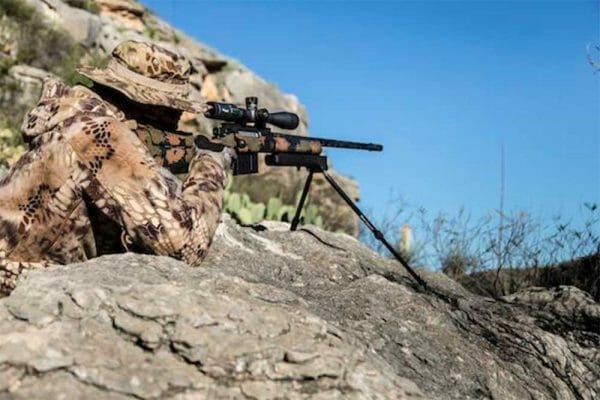
Ballistic Pro Tip: Long-Range Hunting Starts at 100 Yards

Long-Range Hunting Starts at 100 Yards

Gainesville, GA –-(Ammoland.com)- For the long-distance hunter, success in the field always begins at the shooting range. It would be great if every shooting range was designed so you could practice from 100 yards all the way out to 1,000 yards. The reality though, is that most ranges only offer rifle venues out to 100 yards, especially older ranges built before long-range shooting became so prevalent.
A shorter range doesn’t have to limit your preparation though. Using a ballistic calculator like Ballistic, your practice time at 100 yards can effectively prepare you for that longer-range shot in the field.
When you get to your range, enter your basic inputs into Ballistic, including bullet weight and type, atmospheric conditions, and sight height. Then, using your hunting rifle-optic set up, plus your hunting ammunition, zero your rifle at 100 yards, generating as tight a three- to five-shot group as possible.
Now, use a high-quality chronograph to determine your muzzle velocity; ten shots through the chronograph will provide the ammunition’s average velocity. Add this velocity number to your Ballistic inputs.
The next steps is to mimic field conditions with realistic game animal targets. While standard target practice is important, game animals don’t have bullseyes pasted to their vital zones. So, set up a life-sized animal target (there are many available today) at your 100-yard distance. Most of the better realistic targets even have the vital zones outlined. Once you can effectively place your shots where needed, switch to a smaller animal target. A one-half- or one-quarter-sized game animal target will help prepare you for what the animal will look like in the field, at distance, through your scope.
Once you get to your actual hunting area input your 100-yard zero into your Ballistic workup for your load, and it will show you the bullet’s drop at various distances. Let’s say the 200-yard listing shows a 2.5-inch drop from the 100-yard zero. Adjust the elevation on your optic according, in this case plus 2.5-inches, and you should be right on at 200 yards. Lastly, always make sure to redo your Atmospheric inputs for local conditions, and Ballistic will provide the precise data you need to take your trophy at long distance.


About BallisticBallistic
Ballistic is the definitive ballistics trajectory calculator, intended for long-range and precision shooters who want a serious–and a seriously accurate–application. Ballistic will calculate your bullet’s trajectory, windage, velocity, energy, lead, and flight time for any valid range. The app can also compensate for atmospheric conditions such as temperature, barometric pressure, humidity, and altitude–it can even accept density of air or density altitude inputs! The world-renowned JBM Ballistics engine powers all Ballistic computations. Ballistic is used by competition shooters, long-range hunters, and the military to deliver the most precise calculations possible.
With Ballistic, you’ll be able to make the most accurate calculations for every shot, everywhere, even in areas with no cellular coverage.

Categories
Fieldcraft Gear & Stuff Gun Info for Rookies

The Stylish Man’s Guide to Concealed Carry

Antonio | September 26, 2012

StyleStyle & Grooming

concealed carry style blazer handgun showing jacket open

How to arrange good-looking clothing around the decidedly non-standard bulge of a handgun is a topic worth looking at. It’s something that a whole range of men need to think about: police detectives, security guards, entrepreneurs in dangerous countries, and even your average American civilian who prefers to be armed.
“Concealed carry” exists for a number of reasons. When you’re doing it, you want to be living up to both parts of the phrase: you want to be carrying, and have access to, a firearm, and you want it to be discreetly hidden until such time as you need it.
For some men, any jacket long enough to hide a holster is sufficient. But for most men, concealed carry needs to fit other societal expectations:

  • Most plainclothes peace officers will have specific dress needs — either a respectable suit or blazer to give them out-of-uniform authority, or in some cases a disguise to help them blend into their environment.
  • Security guards are almost always expected to dress professionally, as much for the comfort of their employer’s clients as anything else. Banks and government buildings need high security, but prefer a discreet man in a blazer as opposed to a uniformed, paramilitary-looking trooper looming over their customers.
  • An armed civilian gets less hassle if he doesn’t fit the stereotype of an armed threat. A trenchcoat and combat boots conceal a weapon, but it doesn’t really conceal the likelihood that you’ve got a gun under there. Bringing a little men’s style into the equation makes the “concealed” part of “concealed carry” a lot more effective. Plus, it’s the law in most states that if you’re carrying heat, you conceal it. Editor’s Note: If you’re a civilian, be sure to check with your local and state laws before you begin carrying a firearm. Most states require citizens who wish to carry a firearm to obtain a concealed carry license; there also may be restrictions on where you can carry your firearm.

There are many reasons to think about both concealed carry and style in the same picture. This article lays out the quickest and best steps to making your concealed carry experience both practical and stylish:

  • Step 1: Choose Your Weapon
  • Step 2: Choose Your Method of Carry
  • Step 3: Choose Your Outfit
  • Step 4: Talk to Your Tailor

So let’s take it step by step:

Step 1: Choose Your Weapon

Concealed carry means striking a balance between firepower, ammunition, and size. You inevitably end up making a sacrifice in one area or the other — it’s more a question of personal needs and tastes than it is a matter of which is the “best” weapon.
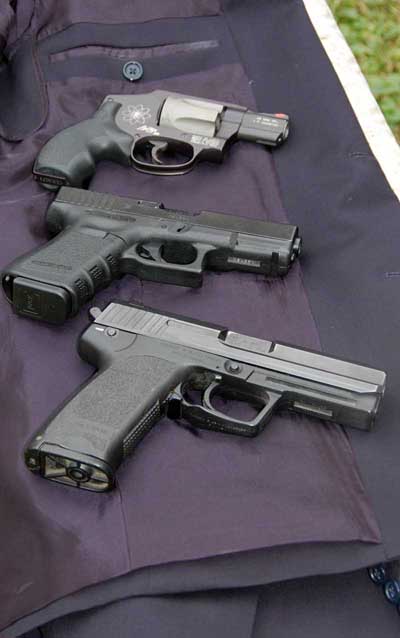
handguns lying on blazer concealed carry weapon
But for choosing a handgun, which is what most men will be carrying when they carry a firearm in public, here are a few factors worth thinking about:
Magazine Size and Shape
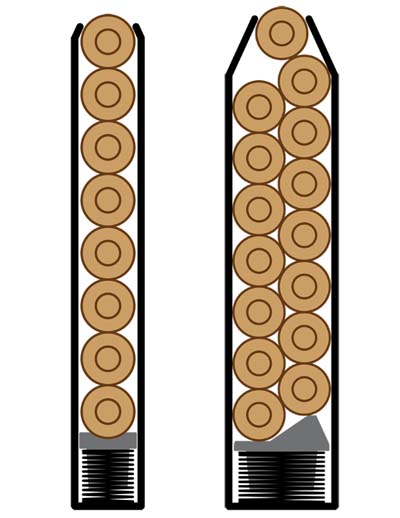
single stack vs double handgun magazine diagram
A single-stack magazine is always easier to conceal than a double-stack.
The most important dimension of a pistol for concealment purposes is the width — how fat the barrel and the grip are. That’s what’s going to make a bulge under your clothing, more than the length or even the weight of the gun.
As a result, it’s better to have a single-stack magazine of relatively low caliber, at least in terms of concealment purposes. If that’s just not going to meet your needs in terms of firepower or ammunition, you get a slightly thicker magazine and cope as best you can.
The disadvantage of a smaller grip/magazine (aside from limiting your shots) is that a powerful handgun with a small grip has a ton of kick. The shorter the grip, the less leverage you have, making aiming trickier (especially follow-up shots after the first). A heavier frame can help compensate for a smaller magazine, and won’t alter the concealment in most holster types (though it will create more of a sag if you’re carrying it in your pocket or by another non-holstered method).
Look for a balance that suits your needs, but from a concealment standpoint do be aware that a longer grip/magazine is harder to hide, and may end up poking you depending on your carry method.
Caliber
This is one that some people have very strong feelings on. Some people will swear that you always want the maximum firepower you can carry; other people are comfortable with the idea that no bullet is a bullet anyone wants to take, and therefore even a tiny holdout pistol is plenty for self-defense.
You’ve got to make that call yourself. But the reality is, smaller caliber handguns are easier to conceal both because of the magazine size and the barrel width and length.
It’s not a universal scale — a .45 could be more concealable than a .38 depending on the shape and size of the grip and magazine — it’s just something you need to be thinking of as a firepower/concealability trade-off.
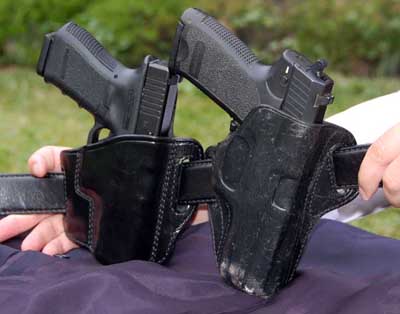
handguns in holster concealed carry style choices
Exterior Construction
To use a very untechnical term, some guns are made with lots of “fiddly bits.”
You know what I’m talking about — everything from sighting notches to bulky safety catches to raised lettering on the barrel. Any of those is going to make the gun harder to conceal.
Weapons that are purpose-designed for concealed carry (and a number of manufacturers do have models specifically for the CC market) tend to be smooth-sided and streamlined. Look for designs with minimum “fiddly bits.” It’ll help both your concealment and your draw.
Barrel and Magazine Length
It’s a secondary consideration next to width, but the length of the pistol (in both directions) does matter. Extended magazines are hard to hide, and tend to poke you while you carry them.
Longer barrels give you range and accuracy, and longer magazines give you more shots without reloading, but the reality for most of us is that neither of those is a huge consideration. Unless you’re in an active military or paramilitary kind of situation, you — hopefully — won’t ever need more than a shot or two, even in the very worst-case scenario. Most of the time you won’t even need that.
So when possible, err on the side of a smaller weapon and magazine for the sake of concealability and comfort. It’s one of those trade-offs where you have to know your own needs, but don’t just default to the biggest magazine and longest barrel available for your handgun of choice.
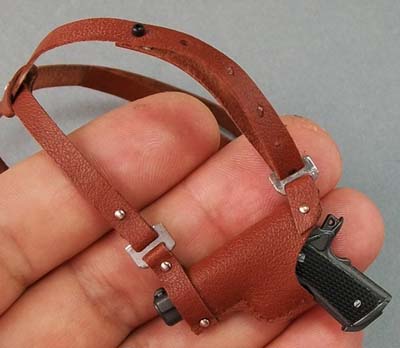
mosquito gun with leather holster tiny gun in hand

Although easy to conceal, the mosquito gun is ineffective against anything larger than a squirrel.

So Which Gun is the Right One?
There’s no single right answer to that question. But, most men with concealed carry experience will recommend something along the same basic lines:

  • low to mid-caliber ammunition
  • single-stack magazine (or very slim-profiled revolver)
  • slim grip
  • short barrel
  • smooth exterior
  • light weight

Here are a few of the more popular models that get tossed around in discussions of concealed carry — this is by no means an exhaustive list, nor should any of these be taken as strong recommendations, but they’re good examples of the relatively broad range of options you have:

  • Glock Model 19
  • NAA .22 Magnum Mini-Revolver
  • Kahr PM9
  • Smith & Wesson M&P series
  • Walther PPS
  • Springfield XD

There are many more beyond these. But the important step here — and this is key — is to know which one you carry (or will be carrying) before you start planning your wardrobe around it, and especially before you have any tailor-made adjustments. You get the maximum benefit when you can have clothes tailored specifically for your gun and holster of choice.
Which brings us to our next step:

Step 2: Choose Your Method of Carry

Just like handguns, holsters come in every style imaginable. You might own one, or you might own a dozen. Depends on your needs. But for purposes of deciding what to wear and how to conceal your gun, you’ll want to know where you’re going to wear it, and in what kind of holster.
Regardless of your method of carry, one key piece of equipment is a very sturdy belt. This not only helps keep the gun in place and prevents your trousers from sagging, it’s also an important safety feature. You don’t want the holster shifting and you certainly don’t want the belt buckle popping open because of the extra weight or the jerk of your draw. Invest in something broad and made of sturdy leather or ballistic nylon. Most stores that sell holsters will also sell belts designed for them.
Paddle Holster, Hip Carry – OWB (Outside the Waistband)
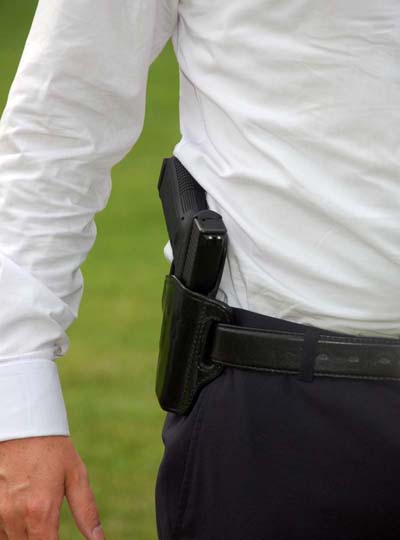
paddle holster hip carry outside the waistband handgun

  • Advantages: Simple, cheap, and quick to draw
  • Disadvantages: Bulky and hard to conceal

This is the most typical way for peace officers and soldiers to carry their primary handgun: a “paddle” style holster (basically the outline of the gun, with a flat “paddle” backing that rests against your body) worn at the belt line, with the pistol pointed down the thigh. The magazine points toward the rear of your body, and the grip is typically angled a bit forward.
The disadvantage for concealed carry should be obvious: it’s going to be very easy to accidentally reveal a gun that’s worn up by your front pockets. A long, loose jacket will do the trick, but as soon as you unbutton/unzip the front it only takes a stiff breeze to expose your holster.
It’s also hard to conceal the bulge if you wear a buttoned suit or sports jacket, even one tailored for the holster. You can pull it off with a small holster and a small gun, but expect to look pretty heavy around the hips when you do it.
Paddle Holster, Behind the Back – OWB (Outside the Waistband)

  • Advantages: Simple, cheap, and still fairly quick to draw
  • Disadvantages: Still bulky; still requires at least a jacket to conceal

An obvious solution to the hip-carry problem is to keep the same simple holster but move it to the small of your back.
This removes the problem of an unbuttoned jacket brushing back to expose the pistol. The whole back of your coat/jacket would have to flip up to reveal your firearm. It makes a suit or sports jacket much more effective concealment, especially if it’s cut a bit long in the rear. A little looseness also looks more natural on the back of your jacket than it does at the sides.
Drawing a pistol from behind your back is a bit slower than off the hip, but still not too cripplingly inconvenient. There is growing concern, however, that a gun in the small of your back can cause back injuries if you fall or are struck hard where the gun rests — many police departments mandate that nothing except soft items (gloves, CPR kits, etc.) be carried directly in the center of the back for this reason.
So while the simple paddle holster worn behind the back is an effective method of concealment, and still a favorite for a lot of concealed carriers, it comes with some safety cautions. And, of course, it requires you to sit down pretty gingerly, if at all.
Shoulder Holster
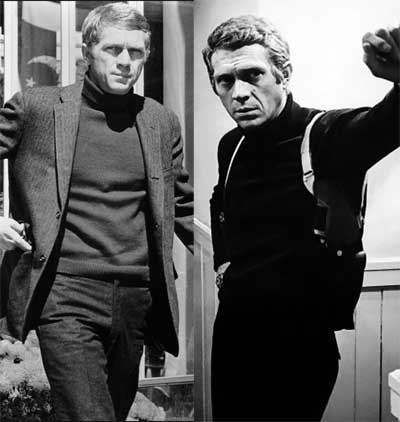
  • Advantages: Decent concealment, faster draw than behind the back
  • Disadvantages: Uncomfortable, easy to accidentally expose

The shoulder holster, which keeps the handgun tucked under your armpit and against your upper ribs, is a popular one with law enforcement (and one made famous by Hollywood and television cops). It’s a good choice for easy access, and only slightly slower to draw from than a holster on your hip.
Unfortunately, it’s also not that great for concealment. A suit jacket or blazer angles back toward the shoulder — you’ve usually only got a few inches between the butt of your pistol and the opening of your jacket. Unbuttoned, it’s very easy for the jacket to slide back far enough to reveal your weapon.
Typically, your draw with a shoulder holster also has to cross your body, with the barrel sweeping in almost a full semi-circle. They’re not allowed on many firing ranges for this reason — instructors and managers don’t want to risk other people being placed within the line of fire as you draw. It’s important to have very good trigger control and be careful with your safety when you’re drawing from a shoulder holster.
Due to the concealment drawbacks and need for trained habits, shoulder holsters tend to be best for people like plainclothes detectives and security guards who are being discreet, but don’t need to effectively disguise the fact that they’re carrying a weapon, and tend to have more firearms training than your average civilian.
Sheath Holster IWB (Inside-the-Waistband)

  • Advantages: Good concealment, doesn’t require a jacket
  • Disadvantages: Requires tailored trousers

IWB holsters (the most common name) carry the gun tucked into the trousers rather than worn outside them. They make special holsters for this, which are worth investing in. Whatever you may see on TV, don’t go tucking guns into your pants without a holster unless you absolutely have to. Most IWB holsters can be positioned anywhere on your back, allowing for basic behind-the-back carry or for something shifted to one hip or the other.
The advantage here is that you only have to hide the handle of the gun, rather than the whole thing. A smooth holster inside custom-widened trousers conceals most of the bulk for you. Just a loose T-shirt will do to hide an inside-the-waistband carry in a pinch.
The downside is that it’s an expensive and a fairly uncomfortable option. You need the tailored trousers, the specific holster, and the willingness to stand and sit with a gun barrel pointed down your rear end.
Pocket Carry
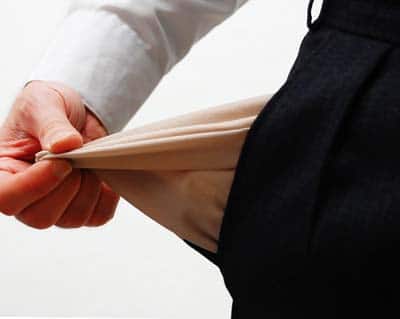
  • Advantages: Good concealment, flexible positioning
  • Disadvantage: Requires a small gun, concealment can vary; gun may shift

Pocket carry is what it sounds like — sticking a gun in your pocket. How effective the method is at concealment depends on how large your pockets are, how thick their lining is, and what style they are — big patch pockets with thick lining and a closing flap will hide a gun fairly effectively, while the back or hip pockets of your jeans will not.
The biggest disadvantage of carrying your gun in your pocket is that, unless you have an internal holder sewn into the pocket (which we recommend if you plan on pocket carrying regularly), the gun will shift around as you move. This can slow your draw, make the gun more likely to “print” (show its outline through the fabric), and even be a safety hazard.
If you wear a garment with large, easily-accessed pockets low on your midsection, you can position a gun for off-hand draw as well. A side-slit pocket near where your off-hand naturally falls is about as easy access as you’re going to get for emergency off-hand draw if your primary arm is incapacitated.
Many people prefer to use pocket carry for a back-up or holdout weapon, paired with another method of concealed carry for a primary weapon. If you do pocket carry, be sure that the gun is snug in the pocket, and have a tailor sew a holder into the interior if necessary. You don’t want your gun falling out, or to go to draw it and find it upside down and backwards in your pocket.
Ankle Holster
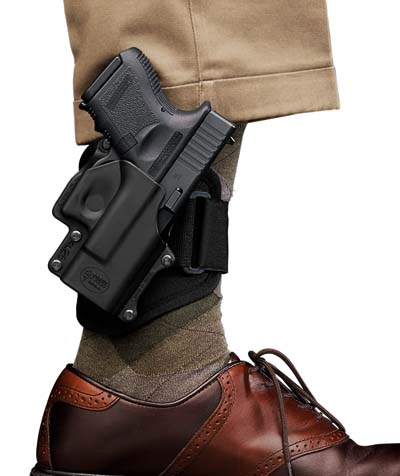
ankle holster for small handgun dress pants shoes

  • Advantages: Excellent concealment
  • Disadvantages: Very slow draw, limited to the smallest handguns

An ankle holster is a traditional holdout option for very small handguns. It requires nothing fancier than boot-cut jeans to conceal, and may even be missed by careless pat-downs. But it limits you to little more than a derringer (though some police carry sub-compacts, usually in specially-tailored trousers), and takes several seconds to draw from, making it a backup option rather than a primary method of carry for most men.
Holdout holsters can also be strapped to a forearm, inner thigh, or other unusual point for maximum concealment. Again, however, these are difficult to draw from and can only conceal the very smallest handguns out there.

Step 3: Choose Your Outfit

Once you know what gun you’re going to carry and where you’re going to carry it, you’re ready to plan an outfit that both conceals the weapon and looks sharp on you.
Different men have different sartorial needs, just as they have different firearm needs. The good news is, there’s a concealing outfit for every standard of dress from James Bond’s tuxedo all the way down to cargo pants and a T-shirt.
Business Concealed Carry
Suit-and-tie concealed carry is more common than you might think. Businessmen who travel frequently like to take personal protection along with them, and some politicians actively advertise their habit of carrying a weapon as a matter of principle as well as protection.

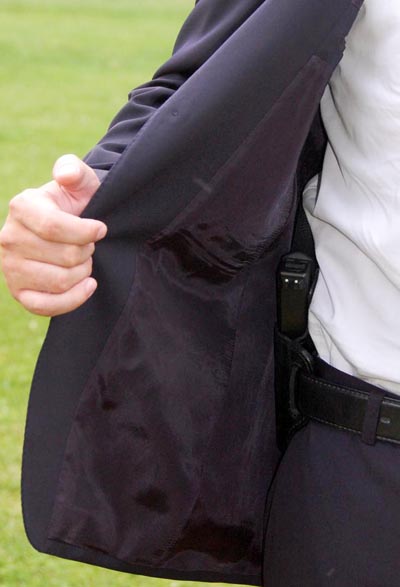
Can you spot the handgun’s print?

Happily for all of them, a business suit is a fairly effective method of concealment. It’s actually one of the better options out there, short of a full length coat. You can use pretty much every type of holster:

  • Paddle on the hip (with the jacket buttoned; jacket should be tailored for the bulge)
  • Paddle behind the back (a long jacket easily conceals the whole thing)
  • Inside the waistband (practically invisible under a jacket)
  • Shoulder/armband holster (concealed as long as the jacket’s buttoned)
  • Ankle holster

The biggest consideration for a man in a suit is usually whether he needs to be able to take the jacket off or wear it unbuttoned. An unbuttoned suit jacket can still conceal either kind of behind-the-back carry, and of course a holdout, but will probably reveal a holster on the hip or under the arm if the wearer moves much.
Men who need to be able to take their jacket off and still keep a weapon hidden should wear trousers tailored for inside-the-waistband carry and a shirt with a long, loose back that can be untucked or draped over the butt of the gun.
Three-piece suits are also popular with concealed carriers — the waistcoat can be cut deliberately long to hide an inside-the-waistband carry.
If you’re actually likely to be in any sort of combat situation, be sure to swap a clip-on tie with a breakaway clip for the hand-tied version. They’re not quite as nice-looking, but someone who’s working as a bodyguard or security officer doesn’t need to be offering a free chokehold to potential assailants.
Business-Casual Concealed Carry
A step down from the suit and tie look, business casual is the style preferred by most men who carry a handgun as part of their job — plainclothes cops, body guards, security guards, and so forth. A business casual outfit looks respectable and often includes a conveniently concealing jacket, making it all around useful for people in that sort of line.

Civilians should also take advantage of the blazer-and-slacks combination. It gives you plenty of places to conceal a weapon, and it has the added advantage of making you look well-dressed relative to the average guy on the street. People looking at you are going to be thinking, “Hey, he looks sharp,” not, “Hmm, I wonder if he’s carrying a gun.”
A sport coat or blazer jacket and long trousers of any kind offer basically the same concealment as a suit jacket. You also have the option of wearing either an unmatched “odd vest” or a longer sweater vest, either of which will hide the handle of a gun worn inside the waistband without the need for a jacket.
Dress-casual concealed carry can be made to look quite casual — think Dirty Harry, Miami Vice, or Steve McQueen in Bullitt, all of which feature shoulder-holstered policemen in jackets and sharp shirts.
Of course, if you’re planning on serious physical activity or movement, don’t expect a suit jacket or blazer to provide much concealment. But presumably at the point where you have to sprint, concealment is no longer the chief priority.
Casual Concealed Carry
If there’s no dress code to observe, you can wear almost anything that conceals a weapon. That said, don’t default straight to baggy jeans and an untucked T-shirt — it works, but it doesn’t do much to disguise the fact that you could be armed, and it’s neither as practical nor as attractive as some of your other options:

  • Concealment jackets – These are coats made by arms manufacturers (or affiliates) specifically for concealed carry. SIG makes one designed to look like your basic work jacket, similar to a Carhartt or Dickies, making it very unobtrusive almost anywhere in America. Concealment jackets have large internal pockets, usually Velcro-sealed, with loops or hooks for a handgun. They’re great for outdoors concealed carry, but get both uncomfortable and obviously out of place if you’re indoors for any length of time.

  • Leather jackets – A classic style and excellent concealment, opt for one that’s on the longer and looser side. Bomber-style jackets are perfect for concealed carry, since they have a padded lining that conceals bulges and a longer waist than moto-style jackets.
  • Denim or wool coats – Lightweight coats are comfortable most of the year and can conceal any style of holster except the paddle (longer coats will even cover that). Just be cautious of tight-fitted waists, typical on jean jackets, unless you know you’re going to be using a shoulder holster exclusively.

  • Safari/photographer’s vests – The thigh-length, multi-pocketed vest typical among journalists and photographers is an ideal concealed carry garment. It’s long enough to hide holsters at the waistband, thick enough to disguise bulges, and features plenty of pockets for ammunition or even a smaller holdout weapon. There’s a reason they’re popular with people traveling in rough countries — that said, they’re also the most recognizable “concealed carry” garments, and may draw attention from people looking for concealed weapons.
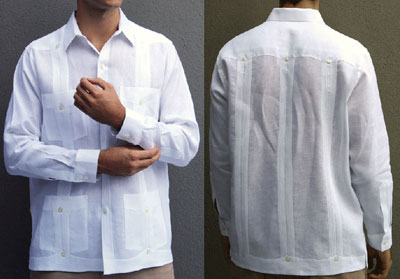
  • Casual shirts worn untucked – Just a plain white dress shirt is plenty of concealment if you’ve got an inside-the-waistband holster. Wear any sort of collared or uncollared shirt loose and untucked and you’ve got enough concealment to hide the grip of a handgun from casual observation. It’s a good option when you’re carrying in places where a jacket or blazer would be conspicuously overdressed. Remember the guayabera shirts we just wrote about?
  • Sweatshirts/hoodies – These are pretty much everywhere, and they add plenty of bulk around the waist that can hide even a large handgun. Just be aware that men over 30 wearing a hoodie look like they’re trying a little too hard. It’s good gun concealment, but it’s not magical urban camouflage that will make people think you’re from the streets if you’re not. To learn more about your options check out this classic AOM article on sweater styles for men.

Step 4: Talk to Your Tailor

Bizarrely, this is the step most men skip — even though the cost of alterations is usually less than the cost of a holster, and certainly less than a decent handgun.
Don’t skip it.
A single purpose-made garment is better concealment than any half-dozen layers of unaltered clothing. Tailors have their jobs for a reason.
The key here is to find a tailor who’s willing to work specifically on concealed carry issues. Always ask ahead of time — it’s very bad form to walk into a stranger’s shop and pull out a gun unannounced, even for demonstration purposes. Set up an appointment ahead of time and make it clear that you’ll be bringing a gun.

Some basic changes a tailor can make that go a long way in concealed carry include:

  • An extra layer of canvas and lining in the jacket increases stiffness, which reduces the “print” the gun makes through the outer fabric.
  • Extra length in the back (you can usually get away with up to an extra inch before it starts to look odd) helps keep a paddle holster concealed when you move or raise your arms.
  • Small armholes make the jacket rise less when you move your arms, making them good for paddle holsters. Large armholes, on the other hand, help hide a shoulder holster, and the hem of the jacket lifting doesn’t affect shoulder carry. Pick whichever you need for your holster.
  • Small pockets can be added inside the lining at the bottom front corners. You can slip a fishing weight or large coin into the pocket to help keep the jacket in place as you move, preventing any inadvertent holster-flashing.
  • If you’re planning on pocket-carrying, a small cloth sling or loop can be added inside the pocket to hold your pistol at the proper angle and keep it from sliding around.
  • Select a textured fabric to help break up lines, especially if you carry a bulkier gun. Herringbone, birdseye, and rough tweed all help reduce the visibility of the outline. Stay away from stripes, which emphasize any bulges.
  • A stiffened rod or strap can be sewn into the front edge of the jacket, making it easier to flip out of the way when you do draw but keeping it lightly weighted down at all other times.
  • Extra pockets can be added to any garment for spare ammunition. If you plan on carrying one specific type of magazine, bring an empty along and have the pocket made to fit it.
  • Get a tight-fitted shirt if you use a shoulder holster, to prevent the holster from tugging loose fabric into conspicuous wrinkles across the front of your body.

good tailor will always take the measurement of the gun itself and of you wearing the gun. Be sure to have all components in place, especially if it makes a difference in size.
Once you have a jacket and trousers (or other garment) tailored for concealed carry, the rest is in your personal style and mannerisms. Carry yourself calmly and with confidence, and dress tastefully but blandly, and you should be able to slip past everyone’s notice without the possibility that you’re armed ever crossing their mind.
The worst thing a concealed carrier can do is fiddle with his clothing, especially where the gun is hidden, so keep your hands at your side and try to look bored. In the ideal concealed carry situation, no one knows you have a gun until you’re using it — and if you’re lucky, that means no one ever knows you have a gun.

Thank You

I would like to extend a big thank to the many law enforcement professionals, military men, and citizens whom I consulted with on this article.
______________
Written by Antonio Centeno, Founder Real Men Real Style
Want to learn more about style? Watch my men’s style videos here.