Categories
Fieldcraft

How to Treat a Venomous Snakebite by Patrick Hutchison

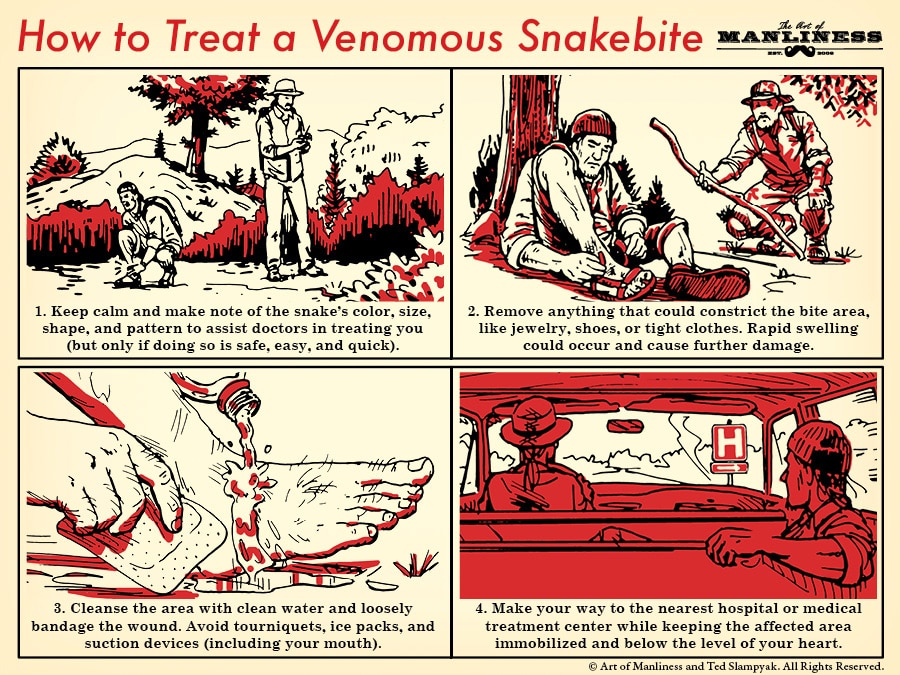
treating a venomous snakebite illustration how-to diagram

Out of the 3,000 or so snake species in the world, less than 10% are venomous in a truly dangerous way. But that still leaves a few hundred varieties you need to keep an eye out for the next time you’re tromping through the wilderness. As always, the best way to treat a snakebite is to prevent it. Avoid hiking in areas where snakes are known to be a problem, wear heavy boots that cover your ankle, step carefully in areas of tall grass, and watch out when stepping or reaching under rocks where snakes typically rest up.
If you are bitten, remain calm above all else. One of the most dangerous aspects of a snake bite is that it causes people to panic. Panic is bad because it elevates heart rate and blood flow to increase venom absorption and it leads to poor decision making, all of which puts you at far greater risk of serious injury.

Categories
Darwin would of approved of this! Fieldcraft

Why you do not fuck around in Wild Animals!

https://youtu.be/pIYh8Ce4yzg

Categories
Fieldcraft Related Topics War

How to Break Down a Door: An Illustrated Guide by Brett & Kate McKay

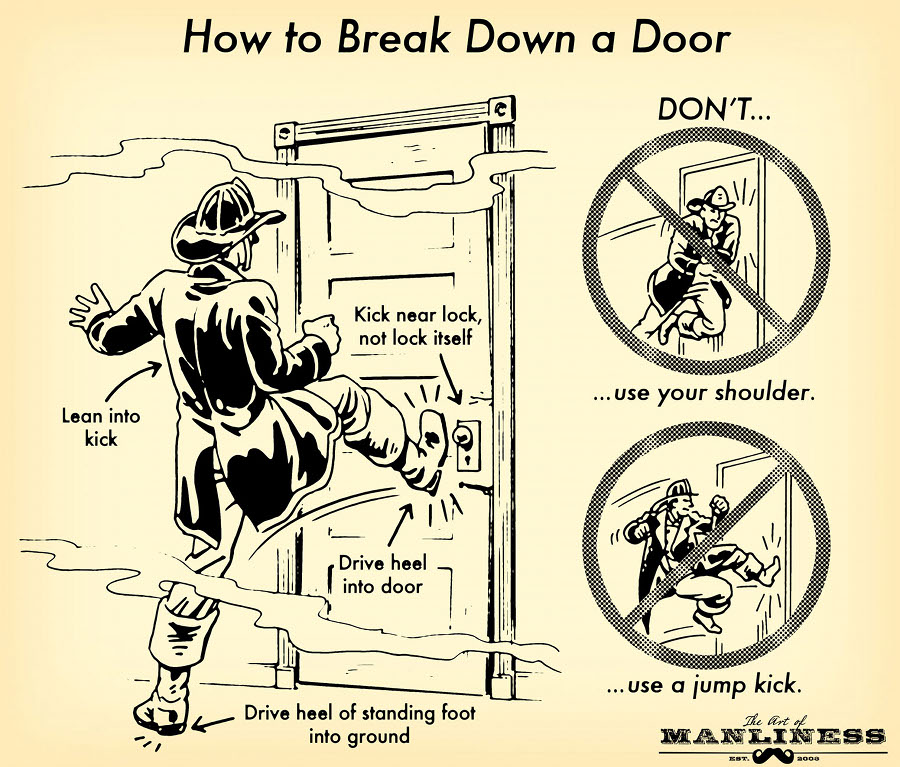
how to break down a door fireman illustration drawing
or

How To Break Down A Door

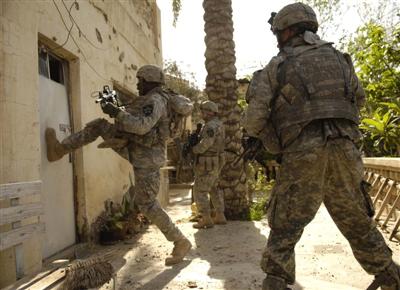
soldier kicking down door

Alright, let’s get this out of the way first: kicking down a door is not the best option for opening a locked door. It will damage the door and cost you lots of money to fix it. It is better to call a locksmith, pick the lock, or attempt to crawl in a window.

But let’s say it’s an emergency. You’re in a burning house and you need to escape and the door is on fire. Or your loved ones are in a burning house and you’re locked out. You can’t stand there fiddling with the lock, you’ve got to break it down! Or perhaps a loved one is stricken with a medical emergency and is locked inside a room or in their house. What to do? Be a man, dammit! Break down that door! You know you’ve always wanted to.

How to break down a door

If you have watched enough movies, your next move is a no brainer….run at the door shoulder first, right? Wrong. This technique may be uber-manly, but it will probably dislocate your shoulder. It is better to employ a more forceful and well placed kick.
Check to see which way the door opens by checking the hinges.If the door opens towards you, kicking it down is going to be next to impossible. Kicking a door down is best employed on a door that swings away from you.
Kick to the side of where the lock is mounted (near the keyhole).This is typically the weakest part of the door.
Using a front kick, drive the heel of your foot into the door. Give the kick forward momentum and keep your balance by driving the heel of your standing foot into the ground. Don’t kick the lock itself; this could break your foot.
The wood should begin to splinter. Today most doors are made of soft wood and are hollow. They should give way fairly easily, especially since the lock’s deadlock bolt extends only an inch or less into the door frame. Older, completely solid doors will prove more resistant. Just keep on kicking until the door gives way and you can save the day.
Avoid jump kicks. While you may be tempted to employ this manly move, jumping diminishes your stability which causes you to lose power.

Categories
Fieldcraft

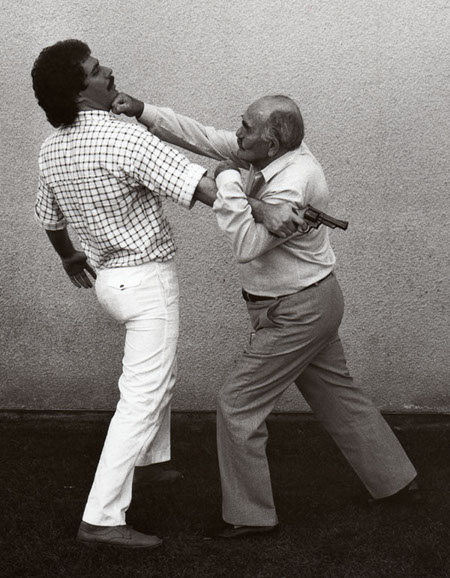
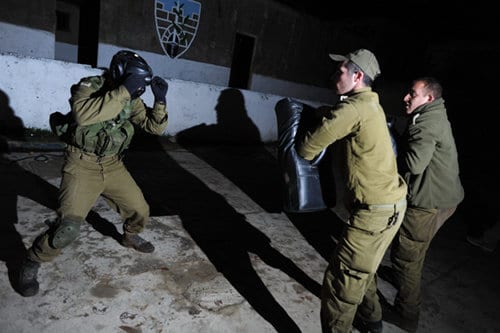
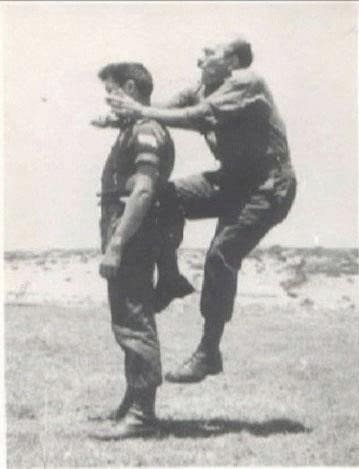
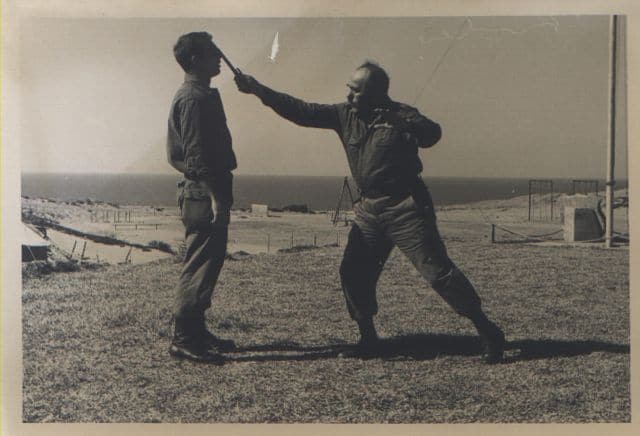
Krav Maga or how to do I.D.F. style Asskicking by Brett

A Primer on Krav Maga: The Combative System of the Israeli Defense Forces

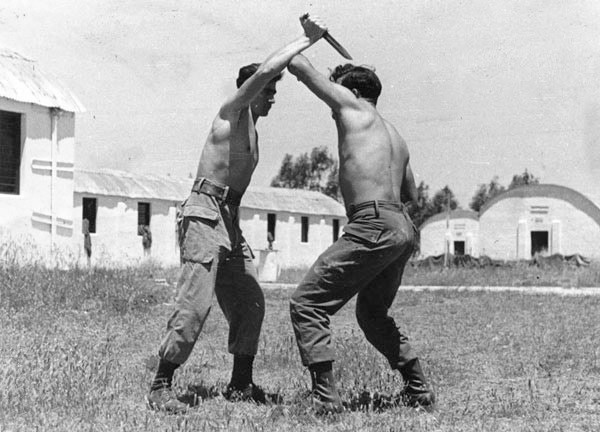
vintage krav maga practice israeli soldiers fighting

I can’t remember how I first heard about Krav Maga, but I do remember being immediately intrigued. All martial arts have an appeal to most men and their fighting spirit, but Krav Maga’s draw owes less to the mystique of many of the traditional disciplines and more to a distinct aura of bad-assitude. It’s a simple and effective “street fighting” self-defense system that’s more martial than art. A well-trained practitioner of Krav Maga is basically a walking human weapon.
Wanting to learn more about Krav Maga, I first looked for a reputable gym that taught the system in my area, but I unfortunately came up short. So I got a set of Mastering Krav Maga DVDs for Christmas last year to familiarize myself with some of its basic principles. Wanting to know still more, I then called up David Kahn, the badass dude who made the videos and the Chief Instructor of the U.S. Israeli Krav Maga Association, to get his insights firsthand.
What I discovered is that Krav Maga is a brutally effective tactical mixed martial art/combative and self-defense system that lives up to its reputation. If you too have ever wondered what Krav Maga is all about, here’s your primer.

The History of Krav Maga

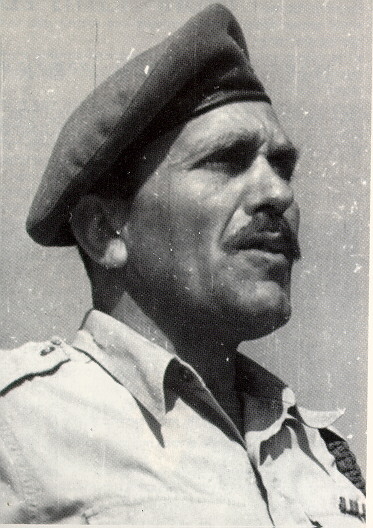
Imi Lichtenfeld, founder of Krav Maga israeli military

Imi Lichtenfeld, founder of Krav Maga.

To fully appreciate Krav Maga, David says, you need to know its history.
The origins of Krav Maga can be traced to pre-World War II Czechoslovakia (present-day Slovakia) and a young Jewish athlete named Imi Lichtenfeld. Imi was a nationally and internationally renowned boxer, wrestler, and gymnast. Beginning in the mid-1930s, fascist and anti-Semitic groups rose to power in Czechoslovakia and began inflicting violence on Jewish communities. Feeling duty-bound to protect his neighbors, Lichtenfeld organized a group of young men to patrol his community and defend against would-be attackers. He quickly learned, however, that his training in sport martial arts was no match for the anti-Semitic thugs he encountered. Fighting for points in a match and fighting for your life in a street fight require a different mindset and different techniques. To effectively defend himself and his community, Imi began synthesizing his martial art knowledge and started placing an emphasis on attacks that quickly disabled and neutralized a threat.
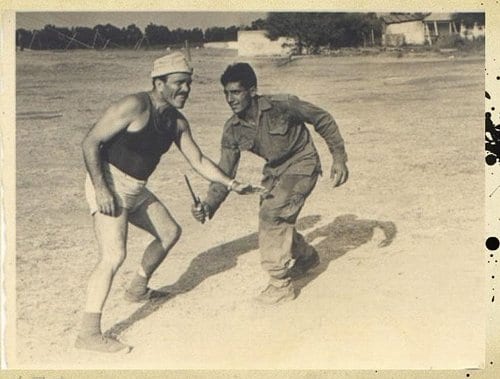
Imi Lichtenfeld, founder of Krav Maga, practicing martial arts
By 1940, Imi found himself living under a Nazi-allied puppet regime and decided to head for Palestine to join the Zionist Movement and fight for a Jewish state of Israel. When he moved to Palestine in 1942, he joined the Haganah, a pre-Israel Jewish paramilitary organization with a mission to protect Jewish settlers from locals who did not welcome the new arrivals. Israeli military leaders quickly noticed Imi’s fighting skills and his ability to teach those skills to others. They put him in charge of training the military’s elite fighting forces, including the Palmach (elite strike force), the Palyam (marine commandos), and the Haganah.
Imi Lichtenfeld, founder of Krav Maga practicing martial arts
After Israel gained statehood in 1948, these separate fighting forces were merged into the Israel Defense Forces (IDF), and Lichtenfeld was named the Chief Instructor of Physical Fitness at the IDF School of Combat Fitness. It was in this role that he developed what today is known as Krav Maga. Lichtenfeld needed a combative system he could teach new military recruits in just three weeks — one that was simple, efficient, and effective, and could be applied in a number of lethal situations. To create such a system, Lichtenfeld combined the most effective techniques of boxing, aikido, judo, wrestling, and jujitsu into a single, fluid, fighting military discipline that emphasized continuous motion, simultaneous defense and attack, and attacks to an assailant’s soft tissue and pressure points. He called his self-defense system “Krav Maga,” meaning “contact combat” in Hebrew. It quickly became the official combative of the IDF and continues to be today.

retired Imi Lichtenfeld, founder of Krav Maga teaching students

After retiring from the IDF, Lichtenfeld began teaching Krav Maga to Israeli citizens.

Imi taught Krav Maga for nearly 20 years in the IDF. After retiring from military service in 1964, he began devoting his time and energy to modifying and teaching the self-defense system to civilians. Imi opened two Krav Maga studios in Israel where he taught thousands of students and instructors, all while continuing to add and improve upon the fighting discipline he had developed in the military. In 1974, Imi founded the Krav Maga Association, a non-profit dedicated to promoting and teaching Krav Maga in Israel and throughout the world.

1st-Commando israeli defense forces practicing krav maga

Krav Maga is still the official combative system of the Israeli Defense Forces.

A few of Imi’s early disciples brought Krav Maga to the United States, and it quickly became a preferred close-combat system in many U.S. military and police forces. Several commercial Krav Maga organizations have formed over the years to teach and promote Krav Maga in the U.S., each with a counterpart in Israel. Each of these organizations claim to be the “true” heir and guardian of Imi Lichtenfeld’s original Israeli Krav Maga, and go out of their way to show their connection to Krav’s founder.

The Principles of Krav Maga

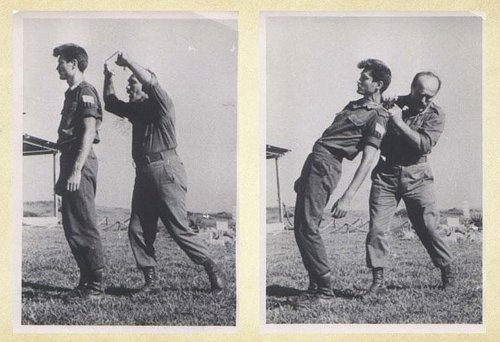
Imi Lichtenfeld, founder of Krav Maga practicing moves on soldier
As mentioned above, Krav Maga is a tactical mixed-martial art/combative and self-defense system that combines boxing, judo, jujitsu, and aikido. In recent years, other martial arts have been incorporated into Krav Maga such as muay Thai and Wing Chun.
Neutralize the threat. The primary goal in Krav Maga is to neutralize your threat as quickly as possible. This overarching goal governs all the other principles of Krav Maga. Because your aim is to dominate and incapacitate your attacker as soon as possible, pretty much anything goes in Krav Maga. You can’t worry about fighting etiquette when your life is on the line. You do whatever you have to do to preserve your life.
Keep it simple. There aren’t katas or patterns in Krav Maga. Just strikes, holds, and blocks. Krav Maga was designed so that it could be put to use as soon as possible.
Simultaneous defense and attack. Many martial arts treat defensive and offensive moves as separate and discrete actions, e.g., first you block (defensive), then you kick when you find an opening (offensive). The downside of this approach is that it’s reactive and you typically just end up in a cycle of never-ending defensive movements. In Krav Maga, the fighter looks to combine an offensive movement with every defensive movement — he wants to disrupt the attack and simultaneously counterattack. For example, if an attacker goes for your throat, you’d not only try to deflect his attack, but also simultaneously counterattack by going for his eyes, groin, or throat. The goal is to neutralize your threat as quickly as possible. (Sidenote: Wing Chun also has a similar simultaneous defensive/offensive principle.)
Retzevor continuous motion. Related to the principles of simultaneous defense and attack is retzev, a Hebrew word for “continuous motion.” David Kahn describes retzev as a “seamless explosion of violence,” in which the goal is to neutralize your attacker with a continuous series of aggressive defensive and offensive movements. As your attacker reacts to your counterattacks, you’ll respond with more punches, kicks, and headbutts until the attacker is no longer a threat. Retzev requires a fighter to work from instinct and not rely on a pre-set routine. A well-trained practitioner of Krav Maga will know how to react to any type of threat without hesitation.
Imi Lichtenfeld, founder of Krav Maga practicing moves
Use of weapons of opportunity. You can easily incorporate firearms and knives into Krav Maga. Besides these traditional weapons, Krav Maga also teaches practitioners to improvise and use any object at their disposal as a weapon. Keys, pens, belts, and chairs can all be incorporated into Krav Maga techniques in order to neutralize your opponent as quickly as possible.
Weapon defense. Besides teaching students how to use weapons, Krav Maga also shows how to defend yourself from an armed attack.
Focus on vulnerable soft tissue and pressure points. A well-known principle of Krav Maga is its emphasis on attacking vulnerable soft tissue and pressure points. Many counterattacks involve eye gouging, groin attacks, and strikes to the throat. Some criticize Krav Maga for this, arguing that “it’s not manly to punch a guy in the nuts.” I brought this criticism up with David during our conversation and this was his response: “Krav Maga’s goal is to neutralize a dangerous attacker as quickly as possible. Plain and simple. Sometimes a strike to the groin is the best option to neutralize an attack. When you’re violently attacked in the street, the person attacking you isn’t following some sportsman’s code of chivalry — he wants to hurt, maim, or possibly kill you — so why should you give him the courtesy of not punching below the belt? You can’t worry about fighting etiquette or what’s ‘manly’ when your life is at stake.”
Subduing techniques. In addition to striking attacks, Krav Maga also utilizes subduing techniques in order to de-escalate a violent confrontation. Joint locks and various grabs are used to exert control over your attacker and put you in a position to end the threat.

Listen to my podcast with Krav Maga expert David Kahn:

Krav Maga in Action

How to Get Started in Krav Maga

Join a Krav Maga gym. The best way to get started with Krav Maga is to join a Krav Maga gym. “Krav Maga, like any martial art, is best learned in a group and under the guidance of a well-trained instructor,” says David. Because Krav Maga is designed to prepare you for real-life attacks, you need to have people who can help simulate those situations for you in a gym. It’s hard to practice how to defend and counterattack a headlock if no one is there to put you in a headlock.
David did have one caveat about joining a Krav Maga gym. Because of Krav’s growing popularity in the United States, there are a lot martial arts studios saying they teach Krav Maga in order to get new students, even though the instructors sometimes have little or no formal training in the system. “Do your research and make sure the instructors are legit,” David says. If the instructor has trained in Israel, that’s a good sign.
As mentioned above, there are several competing Krav Maga organizations that claim to be teaching the “true” Krav Maga of Imi Lichtenfeld. It’s a touchy subject among Krav Maga followers and there have been lawsuits between the groups. David is the Chief Instructor of the U.S. Israeli Krav Maga Association (IKMA), a non-profit formed in 1978 by Imi Lichtenfeld to govern and promote the teaching of Krav Maga. There are gyms across the country that associate with U.S. IKMA. David teaches at the gym in New Jersey. If you’re in the area, stop by and check it out. David is a super nice guy and you’ll learn a lot.
Buy videos and books. If you can’t find a reputable Krav Maga gym in your area, there are plenty of instructional books and DVDs on the subject. Watching a DVD is definitely no substitute for actually training in a gym, and you shouldn’t try out moves you’ve learned solely by video in a street fight, but the DVDs will give a basic overview of Krav Maga and its techniques. I highly recommend David’s set of DVDs, Mastering Krav Maga. They’re very well-done and David does a great job explaining and demonstrating the methods and movements.

 Learn Specific Krav Maga Techniques:

Categories
Fieldcraft Gun Info for Rookies

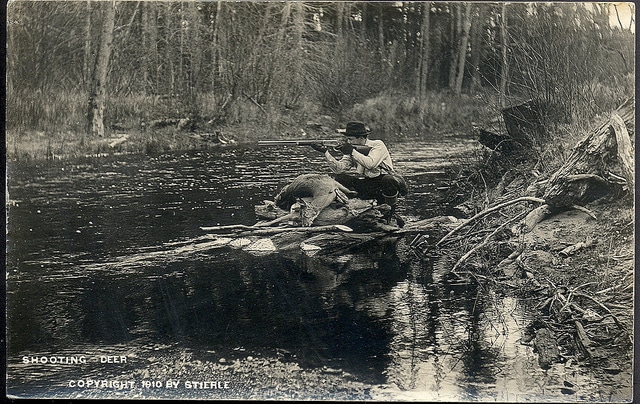
I found this Primer On Deer Hunting

vintage hunter on riverbank aiming rifle

Editor’s note: This is a guest post from Josh Cantrell and Kevin King.
The hunting of various species of wild deer has been a national passion and tradition for countless generations. Many Native American stories and accounts are riddled with the hunting and harvesting of whitetails. The Pilgrims of Plymouth Plantation, in addition to numerous waterfowl and turkeys, harvested deer or “venison,” as was documented by William Bradford in his journals. Many early explorers of the West found whitetail and mule deer to be a bountiful, necessary food source for themselves and their families. Unfortunately, the 20th century saw a sharp decline in the harvesting of deer due to overhunting and a decreasing population of whitetail throughout the United States. However, due to the diligent efforts of state conservation departments and responsible hunters, many states now boast close to 200,000 or more harvested deer each year. In fact, in many states deer are overpopulated and are threatening forest growth and farms and may also increase the risk of lyme disease in humans in areas where their numbers are particularly high. Responsible hunters play an important role in managing deer populations so the herds don’t stress ecosystems.
Your may have found yourself considering deer hunting at one time or another but never really knew where to start. The advantages of deer hunting are numerous:

With this primer on deer hunting, and some practice and mentoring from experienced hunters, you should be able to take to the woods with confidence in pursuit of your first in a long and happy series of deer.

Choose Your Weapon
vintage hunters in woods talking rifles leaning on trees
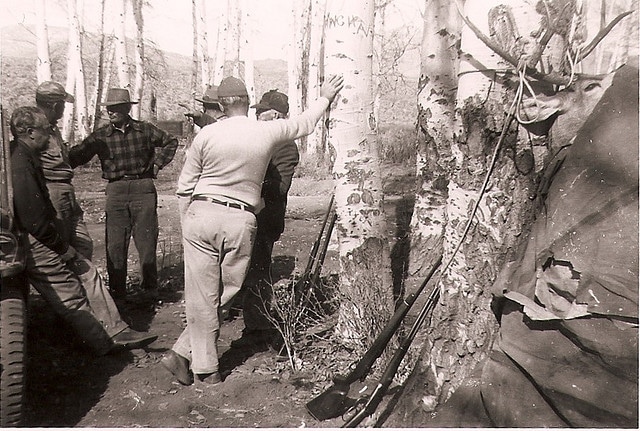
The first place to start with deer hunting is to decide your method. Do you want to be a rifle hunter or do you want to be an alternative methods hunter (bow, atlatl, pistol, etc.)? Many of us began as rifle hunters because it is the most accessible place to start. Since this is a beginner’s primer on deer hunting, we would recommend starting with a rifle and then branching out as your interests dictate.
When choosing a deer rifle, one must take budget and fit into account. When I recently spoke to Ken Jorgensen at Ruger Firearms he recommended that a hunter finds a rifle that:

  1. Completes the task effectively (in this case, kill a deer quickly)
  2. Fits the shooter
  3. Can be shot well

It is worth your time and efforts to go to a gun store and “try out” potential rifles. Pick up the guns, shoulder them, manipulate the actions, sight-in an object on the floor or ceiling, and just see how you like them. A few models of guns to look into as a budget-friendly starting point are:

  • Winchester Model 70
  • Savage Trophy Hunter XP
  • Weatherby Vanguard
  • Remington Model 700
  • Ruger American Rifle

To complete the task effectively in deer hunting requires a cartridge with a little punch. However, if you are unfamiliar with gun calibers, choosing the best caliber for yourself is like choosing some random battery off the shelf and hoping that it will work in your TV remote. You need the proper amount of power combined with your ability to manage recoil. A few common calibers for deer hunting are as follows:

  • .270 Winchester
  • .308 Winchester
  • .30-30 Winchester
  • .30-06 Springfield
  • 7mm Remington Magnum

All of these calibers are favorites amongst deer hunters and outdoorsmen. If you can, try to shoot these calibers before you buy one to see which you like; each cartridge almost seems to have its own personality. If you cannot shoot before committing to a rifle, read and watch as many reviews as possible to educate yourself on their uses. If you choose an adequate caliber and the gun fits you well, you have won 2/3 of the battle. All you have to do now is practice.
A great place to start when practicing is to shoot from a bench towards a stationary target, placed at 25 yards. You want to work on placing groups on the target that are all striking near the same position. Then, as you get more familiar with the gun, move your target out to 100 yards and work on the same thing. A 100-yard shot is a good place to begin as a first-time hunter. As you get more familiar with the gun, you will be able to work out to farther shot placements. However, for your first, 100 yards is a respectable distance.

Hunter’s Safety Course

Once you have acquired the gun and skills required to hunt efficiently, there is one final step of the process: becoming certified and licensed by your state conservation department. Regulations on becoming licensed vary from state to state. Most states require anyone who wishes to legally hunt with a firearm to take a hunter’s safety course. The requirements of the course, including the age at which one must be licensed, varies from state to state. The best source for this information would be your state conservation department website or a nearby conservation office.
Most hunter safety courses include a 4-hour course and a written exam. You can study for the exam online or with an instruction booklet provided by your conservation department. Then, once you have prepared for the class, simply register for your 4-hour certification course online or in person. Most of these classes are free of charge. Once you have passed your test and received certification, you are now able to purchase your permits for your hunt.
If you are not sure yet if deer hunting is for you, you might look into a short-term alternative to acquire your hunter permits. In many states, there are hunter apprentice programs that allow you to take to the field alongside another certified hunter that has completed their hunter’s safety course. This allows you to buy permits and hunt in this manner for a brief time before you take a hunter’s safety course for yourself. That way, you can decide if it is a good fit for you.
Before taking to the field, it is important to read your state’s hunting regulations thoroughly each and every year that you hunt. These regulations, due to management needs, can change annually.

Dressing for the Field

The next step is to outfit yourself with hunting gear. This is where a hunter can really lose themselves in the influx of scents, camos, and various other products that supposedly offer unlimited success. Here are the bare-bones necessities when you head into the woods on your hunt:

  • Your gun
  • Blaze orange hat and vest (wear this 100% of the time – it can save your life)
  • A box of ammunition (unless you shoot and miss a lot, this should suffice)
  • A good, sharp knife (for field dressing your deer)
  • Tall rubber gloves (for field dressing your deer)
  • A flashlight (for tracking your deer)
  • Warm gloves, hat, and jacket (for those cold November hunts)
  • Your permits (the most essential item)
  • A ziplock bag, zip tie, and a pen (depending on your state laws for tagging your game)

Finding a Place to Hunt
vintage illustration hunters in canoe deer in boat
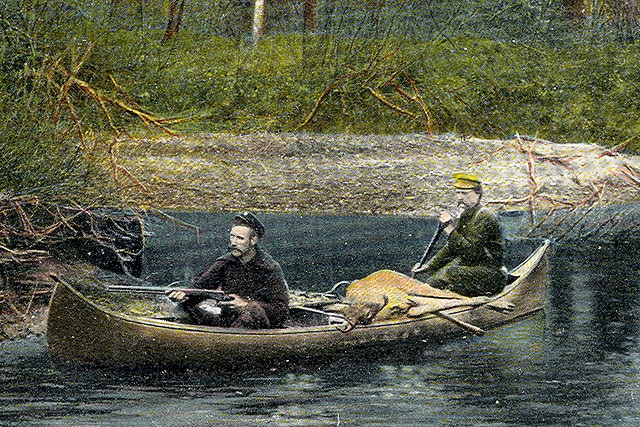
Once you have procured all of your essentials and are now a proficient marksman, the next step is finding a place to hunt. If you are a landowner with enough land to hunt, you are in luck. If not, you need to either find some public hunting land in your area or become friends with some of your local farmers and landowners. Never hunt somewhere that you have not obtained permission to hunt. Build a good relationship with those kind enough to let you hunt and, if you are blessed with a harvest, share a portion of it with your host.
When you find land, either choose a location in a wooded area that allows for deer and other animals to pass by, or choose to hunt the edge of an open field. This is where pre-season scouting becomes very important. When hunting for the first time, we recommend hunting from ground level, but if you prefer a stand, make sure you choose one that is stable and easy to climb into with a rifle and your gear. These types of stands are called tripod stands and can be found at your local outdoor stores. These stands increase the cost of your hunt dramatically, so decide whether a stand is necessary before making the investment. The advantage to hunting out of a stand is that you are not eye level with the deer so it is harder for them to see you.
You want to make sure that your stand or ground location is along a path that deer travel frequently. Another thing that you should consider when picking your stand or hunting spot is your comfort level. If you are not able to consistently make long shots, an open field is not the place for you. You should try setting up in some hardwoods where the only shot that you can take is a close one. Make sure you arrive to your hunting location before sunrise or a few hours before sunset, so as to minimize your presence. Then, patiently wait for your game to arrive.
One way to increase the odds in your favor is to put out a salt lick, a food plot, or other attractants near your hunting spot before the season opens. These attract deer, as well as other wildlife, and make your hunting location part of their regular routine. One thing to consider when doing this, however, is the potential requirement to discontinue your attractants before the season (normally 10 days prior). Otherwise, you may be dealing with a baiting violation and a huge fine. If you take this step, be aware of all of the responsibilities involved and take the necessary precautions to ensure an ethical, legal hunt. Every state is different, so check your state’s laws about food plots and baiting. When trying to decide what would work best for you, think through your hunting situation and commitment level. It takes time, land, and discipline to plant and maintain a plot. Make sure that you are ready to make that commitment of both time and resources.

Taking the Shot

When taking a shot, you always need to wait for a deer to stand broadside, which means that they are standing perpendicular to your rifle barrel. When you can see from nose to tail, bring your sights onto the deer just behind the front shoulder, as you want to hit the lungs and/or heart. Quietly take the gun off safety, take a big breath and let it out, and evenly squeeze the trigger until the gun fires. Immediately, rack the bolt and chamber a live shell.
If you have hit your mark, watch where the deer takes off. Wait anywhere between 15 and 30 minutes before tracking and pursuing. This will give the deer plenty of time to lie down and expire. If you try to chase the deer as soon as it is shot, you are going to place unneeded stress on the animal. This will also cause more adrenaline to be produced by the deer, which will make it travel farther. The additional surge of hormones and chemicals can potentially result in your venison developing a strong “gamey” or undesirable flavor. If the deer has crossed a property line, make sure that you have permission to be on that property before pursuing. It is still considered trespassing if you are chasing a wounded animal. Make sure you know who owns all of the land around you and how to get in touch with them. It’s your responsibility to make every effort to recover any deer you shoot.

Following the Trail

To track your deer, go to the location where you think your shot connected with the animal. When you reach that location, look for the tell-tale signs of a wounded animal: ground severely torn by hooves, tufts of hair, bone fragments, and most of all, blood. At this point, many hunters put down an object, such as a hat, next to the first hint of a trail. Do your best to look for a trail of any of these materials on the ground and follow it to find your deer. If the blood becomes more plentiful, you are on the right track. If, at any time, you lose the trail, go back to the last point where you had a clear trail and track it again. Taking a buddy or a group of other hunters to help track a difficult trail can be the difference between an animal harvested and an animal wasted. (You might also consider hunting with a canine companion.)
When you come upon your deer, do so with a loaded gun, ready to put your game down if it is not yet expired. Once you have determined that your animal is down, take a moment to pat yourself on the back and breathe a sigh of successful relief. After that, it’s time to get to work.

After the Shot
vintage hunters carrying killed deer out of forest
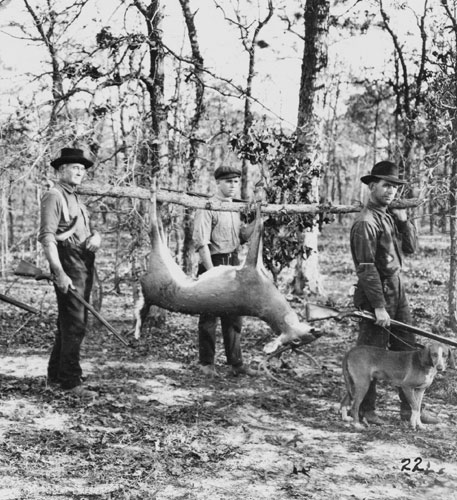
Before dressing your game, make sure you first tag your deer. Follow the methods of tagging your game that are required by your conservation department, to the letter. Some states have you attach the permit to an antler, others have you place it in a plastic bag around the leg, and others have you tag the animal via smartphone. Make sure you are familiar with and prepared for the tagging procedures before you are out in the field.
Methods for field dressing a whitetail are varied and everyone thinks that their way is the right way. Therefore, while there are a few “essentials” when dressing a deer, to get a more specific how-to, I recommend looking at videos online or reading the literature given out by state conservation organizations.
The standard way to field dress a whitetail begins with a long incision (blade facing up) between the pelvis and the sternum, making sure not to nick the internal organs. Remove exterior genitalia and discard before cutting in a circular motion around the anus. With a short length of string, tie off the lower intestines and bladder inside the body cavity before rolling the deer over on its side to empty the contents. Some cutting will be needed to free the organs from the back. Then, cut through the diaphragm (some people split the rib cage here, as well), remove the lungs, heart, and the windpipe as high as you can reach. Then, turn your deer over one more time to drain any remaining blood left in the cavity.
At this point, you can take your deer to a meat processor and they will work up the deer for a fee. However, if you want to work it up yourself, get the deer someplace where it can be hung upside down and drained out for a few hours before quartering and butchering it, much like you would a cow. If you are doing the self-butchering method, we also recommend getting a grinder, a group of people to help, and a lot of food-saver vacuum bags. Lastly, make sure you clear out a nice big spot in the freezer for all of the great meat you are going to enjoy for months to come.

Ethics in the Woods
vintage hunter posing with deer kill
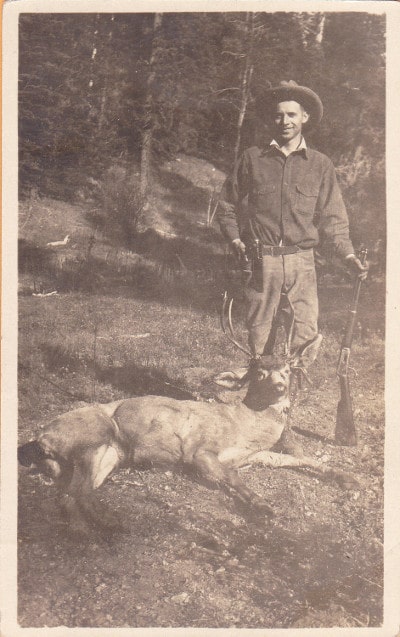
When going out in the woods in search of deer it is important that you maintain a high ethical standard of behavior. One of the best ways to do this is to practice with your weapon of choice. The more confident you are with your weapon, the more humane you will be to the deer.
Treat all the land with respect. Anything you pack in, make sure you pack it out. Unfortunately, there are hunters out there that are not interested in cleaning up after themselves. If you come upon trash (shell casings, food wrappers, discarded scents, etc.), pack out that trash as well, even though it is not your own. The more we all work to take care of our natural resources, the longer it will be there to enjoy. Make sure that safety is always at the forefront of your thinking when hunting, even if you are hunting alone. Accidents can happen when you are by yourself, so always be overly cautious and ensure that safety rules are being followed.
Lastly, don’t allow yourself to get too caught up in the technical aspects of the hunt that you forget to enjoy the experience. Deer hunting is a fun, challenging, exciting, and character-building way for you to feed your family while maintaining a tradition that spans far beyond the history of this nation and its inhabitants.
___________________________
Josh Cantrell and Kevin King are avid outdoorsmen, fishermen, hunters, and teachers in southwest Missouri.
Categories
Dear Grumpy Advice on Teaching in Today's Classroom Fieldcraft

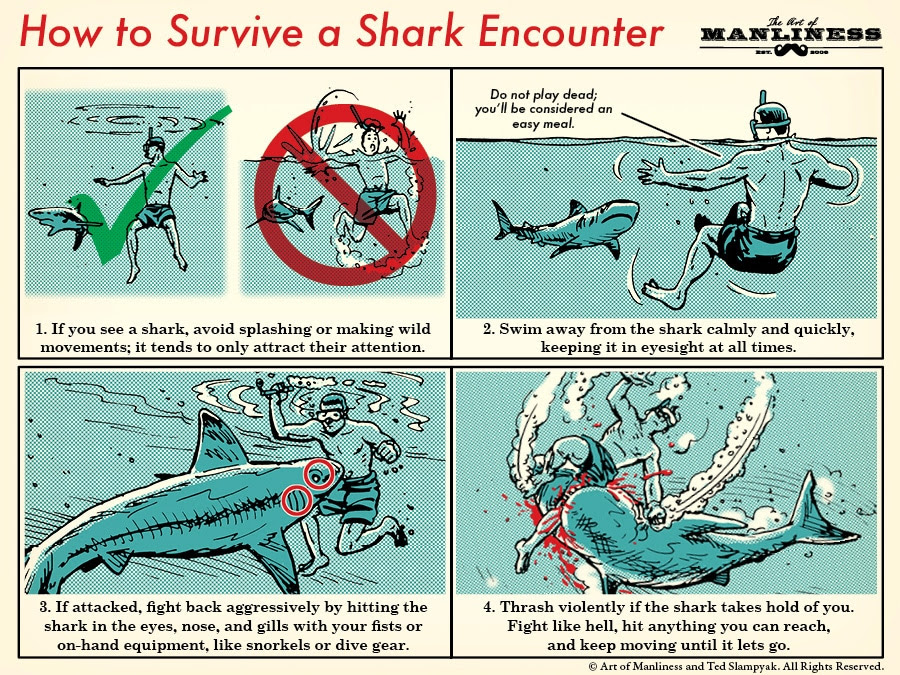
How to Survive a Shark Attack

how to survive a shark attack step-by-step illustration diagram

Sure, we could talk about the statistically infinitesimal chance that you’re going to get attacked by a shark (about 1 in 11.5 million), and that the vast majority of shark attacks are non-fatal, and that sharks don’t actually want to eat people, they just get confused sometimes. We could say that by staying away from active fishing grounds, river mouths, and estuaries, and by paying attention to warning signs posted at beaches, you are virtually guaranteed that the only sharks you see will be in an aquarium or on the TV.
Sure, we could tell you all of that, and it’s all true, but hey, someone is going to be that 1 in 11.5 million. And if it’s you, here’s how to survive an attack by a blood-thirsty, okay, possibly just confused, sea monster.

Categories
Dear Grumpy Advice on Teaching in Today's Classroom Fieldcraft

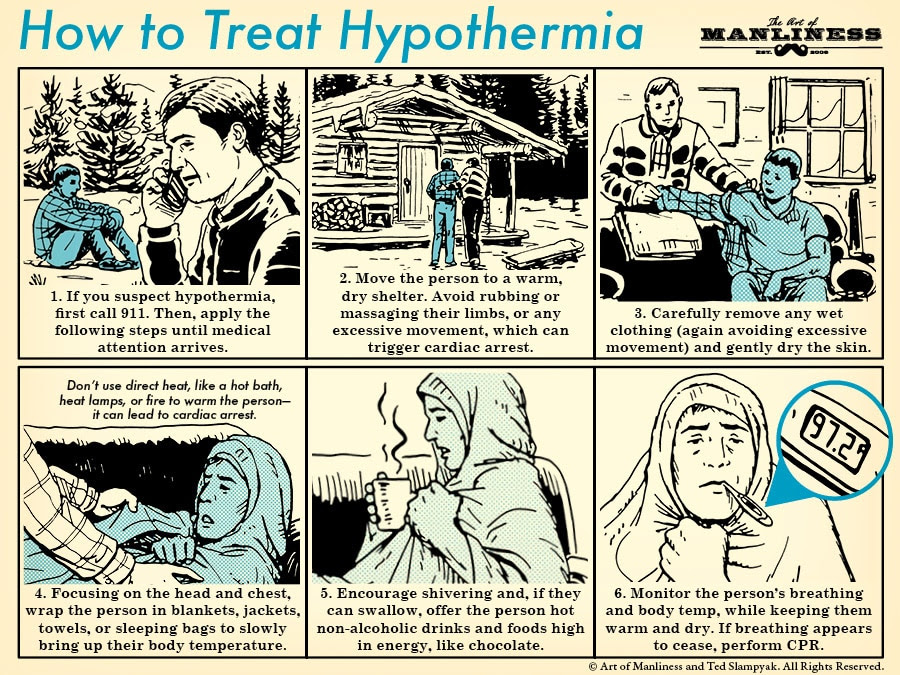
How to Treat Hypothermia

Patrick Hutchison | December 15, 2016

Health & SportsManly SkillsSurvivalVisual GuidesWellness
how to treat hypothermia illustration

It’s easy to imagine hypothermia as the type of malady that can only affect people who get trapped in disastrous conditions, like being lost in a frozen Alaskan wilderness or falling into an icy river far. The reality is that hypothermia is fairly easy to get.
Imagine a simple day hike, starting at low elevation in sunny weather. Charging up, you work up a good sweat in your cotton t-shirt, without taking enough breaks to hydrate or eat.
At the top, the weather turns, rain or wind settles in, and you twist your ankle. Your cotton shirt is now acting like a refrigerator, and the wind only serves to pull your body temperature down quicker.
At first, symptoms are seemingly minor. Shivering and a lack of coordination set in, but with time and more exposure, the symptoms change.
Severe confusion, a surprising lack of shivering, and inexplicable feelings of being too warm begin to take over.
You may even take clothes off because you feel too hot, which only speeds up the process. A day hike has quickly turned into a very dangerous scenario.
Prevent hypothermia by wearing synthetic or wool clothes, checking the weather forecast, keeping dry, and staying nourished and hydrated.
But if you find yourself on the brink, knowing what to do at that moment could mean the difference between life and death

Categories
All About Guns Ammo Dear Grumpy Advice on Teaching in Today's Classroom Fieldcraft

This could be one of the last things you will see in Alaska!


Unless you have one of these & know how to use it during the unforgiving moment! Grumpy
Related image
Image result for winchester model 70 in 375 h&h magnum
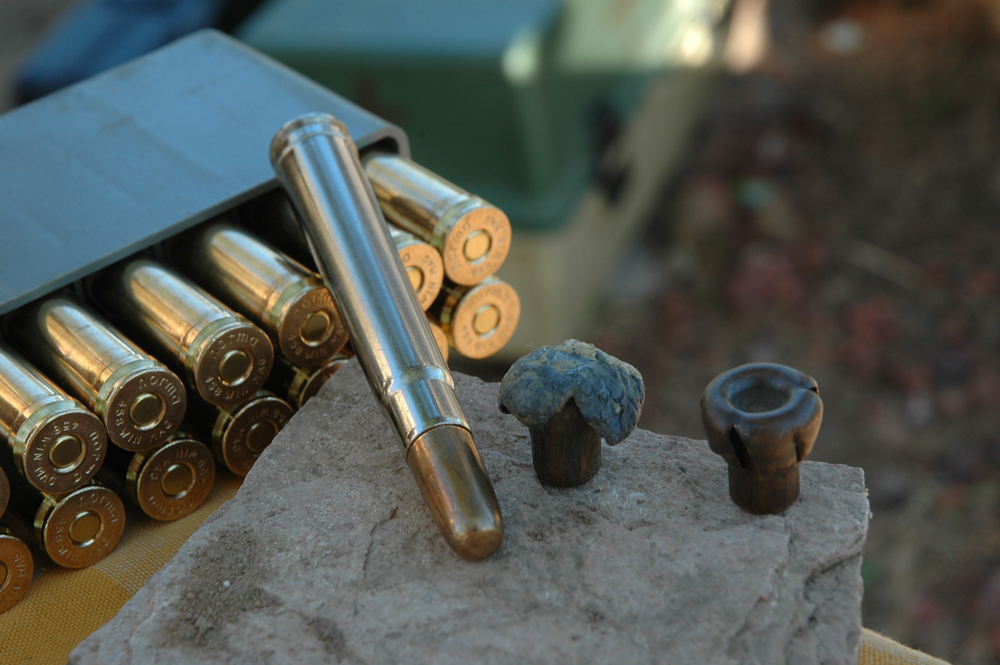
A Winchester Model 70 in Caliber 375 H&H with I suggest using Solids at this time!Image result for 375 h&h magnum solids

Categories
Fieldcraft Gear & Stuff

A Primer On Deer Hunting

A Manly Guest Contributor | November 4, 2014

Manly SkillsOutdoors

vintage hunter on riverbank aiming rifle

Editor’s note: This is a guest post from Josh Cantrell and Kevin King.
The hunting of various species of wild deer has been a national passion and tradition for countless generations. Many Native American stories and accounts are riddled with the hunting and harvesting of whitetails. The Pilgrims of Plymouth Plantation, in addition to numerous waterfowl and turkeys, harvested deer or “venison,” as was documented by William Bradford in his journals. Many early explorers of the West found whitetail and mule deer to be a bountiful, necessary food source for themselves and their families. Unfortunately, the 20th century saw a sharp decline in the harvesting of deer due to overhunting and a decreasing population of whitetail throughout the United States. However, due to the diligent efforts of state conservation departments and responsible hunters, many states now boast close to 200,000 or more harvested deer each year. In fact, in many states deer are overpopulated and are threatening forest growth and farms and may also increase the risk of lyme disease in humans in areas where their numbers are particularly high. Responsible hunters play an important role in managing deer populations so the herds don’t stress ecosystems.
Your may have found yourself considering deer hunting at one time or another but never really knew where to start. The advantages of deer hunting are numerous:

With this primer on deer hunting, and some practice and mentoring from experienced hunters, you should be able to take to the woods with confidence in pursuit of your first in a long and happy series of deer.

Choose Your Weapon

vintage hunters in woods talking rifles leaning on trees
The first place to start with deer hunting is to decide your method. Do you want to be a rifle hunter or do you want to be an alternative methods hunter (bow, atlatl, pistol, etc.)? Many of us began as rifle hunters because it is the most accessible place to start. Since this is a beginner’s primer on deer hunting, we would recommend starting with a rifle and then branching out as your interests dictate.
When choosing a deer rifle, one must take budget and fit into account. When I recently spoke to Ken Jorgensen at Ruger Firearms he recommended that a hunter finds a rifle that:

  1. Completes the task effectively (in this case, kill a deer quickly)
  2. Fits the shooter
  3. Can be shot well

It is worth your time and efforts to go to a gun store and “try out” potential rifles. Pick up the guns, shoulder them, manipulate the actions, sight-in an object on the floor or ceiling, and just see how you like them. A few models of guns to look into as a budget-friendly starting point are:

  • Winchester Model 70
  • Savage Trophy Hunter XP
  • Weatherby Vanguard
  • Remington Model 700
  • Ruger American Rifle

To complete the task effectively in deer hunting requires a cartridge with a little punch. However, if you are unfamiliar with gun calibers, choosing the best caliber for yourself is like choosing some random battery off the shelf and hoping that it will work in your TV remote. You need the proper amount of power combined with your ability to manage recoil. A few common calibers for deer hunting are as follows:

  • .270 Winchester
  • .308 Winchester
  • .30-30 Winchester
  • .30-06 Springfield
  • 7mm Remington Magnum

All of these calibers are favorites amongst deer hunters and outdoorsmen. If you can, try to shoot these calibers before you buy one to see which you like; each cartridge almost seems to have its own personality. If you cannot shoot before committing to a rifle, read and watch as many reviews as possible to educate yourself on their uses. If you choose an adequate caliber and the gun fits you well, you have won 2/3 of the battle. All you have to do now is practice.
A great place to start when practicing is to shoot from a bench towards a stationary target, placed at 25 yards. You want to work on placing groups on the target that are all striking near the same position. Then, as you get more familiar with the gun, move your target out to 100 yards and work on the same thing. A 100-yard shot is a good place to begin as a first-time hunter. As you get more familiar with the gun, you will be able to work out to farther shot placements. However, for your first, 100 yards is a respectable distance.

Hunter’s Safety Course

Once you have acquired the gun and skills required to hunt efficiently, there is one final step of the process: becoming certified and licensed by your state conservation department. Regulations on becoming licensed vary from state to state. Most states require anyone who wishes to legally hunt with a firearm to take a hunter’s safety course. The requirements of the course, including the age at which one must be licensed, varies from state to state. The best source for this information would be your state conservation department website or a nearby conservation office.
Most hunter safety courses include a 4-hour course and a written exam. You can study for the exam online or with an instruction booklet provided by your conservation department. Then, once you have prepared for the class, simply register for your 4-hour certification course online or in person. Most of these classes are free of charge. Once you have passed your test and received certification, you are now able to purchase your permits for your hunt.
If you are not sure yet if deer hunting is for you, you might look into a short-term alternative to acquire your hunter permits. In many states, there are hunter apprentice programs that allow you to take to the field alongside another certified hunter that has completed their hunter’s safety course. This allows you to buy permits and hunt in this manner for a brief time before you take a hunter’s safety course for yourself. That way, you can decide if it is a good fit for you.
Before taking to the field, it is important to read your state’s hunting regulations thoroughly each and every year that you hunt. These regulations, due to management needs, can change annually.

Dressing for the Field

The next step is to outfit yourself with hunting gear. This is where a hunter can really lose themselves in the influx of scents, camos, and various other products that supposedly offer unlimited success. Here are the bare-bones necessities when you head into the woods on your hunt:

  • Your gun
  • Blaze orange hat and vest (wear this 100% of the time – it can save your life)
  • A box of ammunition (unless you shoot and miss a lot, this should suffice)
  • A good, sharp knife (for field dressing your deer)
  • Tall rubber gloves (for field dressing your deer)
  • A flashlight (for tracking your deer)
  • Warm gloves, hat, and jacket (for those cold November hunts)
  • Your permits (the most essential item)
  • A ziplock bag, zip tie, and a pen (depending on your state laws for tagging your game)

Finding a Place to Hunt

vintage illustration hunters in canoe deer in boat
Once you have procured all of your essentials and are now a proficient marksman, the next step is finding a place to hunt. If you are a landowner with enough land to hunt, you are in luck. If not, you need to either find some public hunting land in your area or become friends with some of your local farmers and landowners. Never hunt somewhere that you have not obtained permission to hunt. Build a good relationship with those kind enough to let you hunt and, if you are blessed with a harvest, share a portion of it with your host.
When you find land, either choose a location in a wooded area that allows for deer and other animals to pass by, or choose to hunt the edge of an open field. This is where pre-season scouting becomes very important. When hunting for the first time, we recommend hunting from ground level, but if you prefer a stand, make sure you choose one that is stable and easy to climb into with a rifle and your gear. These types of stands are called tripod stands and can be found at your local outdoor stores. These stands increase the cost of your hunt dramatically, so decide whether a stand is necessary before making the investment. The advantage to hunting out of a stand is that you are not eye level with the deer so it is harder for them to see you.
You want to make sure that your stand or ground location is along a path that deer travel frequently. Another thing that you should consider when picking your stand or hunting spot is your comfort level. If you are not able to consistently make long shots, an open field is not the place for you. You should try setting up in some hardwoods where the only shot that you can take is a close one. Make sure you arrive to your hunting location before sunrise or a few hours before sunset, so as to minimize your presence. Then, patiently wait for your game to arrive.
One way to increase the odds in your favor is to put out a salt lick, a food plot, or other attractants near your hunting spot before the season opens. These attract deer, as well as other wildlife, and make your hunting location part of their regular routine. One thing to consider when doing this, however, is the potential requirement to discontinue your attractants before the season (normally 10 days prior). Otherwise, you may be dealing with a baiting violation and a huge fine. If you take this step, be aware of all of the responsibilities involved and take the necessary precautions to ensure an ethical, legal hunt. Every state is different, so check your state’s laws about food plots and baiting. When trying to decide what would work best for you, think through your hunting situation and commitment level. It takes time, land, and discipline to plant and maintain a plot. Make sure that you are ready to make that commitment of both time and resources.

Taking the Shot

When taking a shot, you always need to wait for a deer to stand broadside, which means that they are standing perpendicular to your rifle barrel. When you can see from nose to tail, bring your sights onto the deer just behind the front shoulder, as you want to hit the lungs and/or heart. Quietly take the gun off safety, take a big breath and let it out, and evenly squeeze the trigger until the gun fires. Immediately, rack the bolt and chamber a live shell.
If you have hit your mark, watch where the deer takes off. Wait anywhere between 15 and 30 minutes before tracking and pursuing. This will give the deer plenty of time to lie down and expire. If you try to chase the deer as soon as it is shot, you are going to place unneeded stress on the animal. This will also cause more adrenaline to be produced by the deer, which will make it travel farther. The additional surge of hormones and chemicals can potentially result in your venison developing a strong “gamey” or undesirable flavor. If the deer has crossed a property line, make sure that you have permission to be on that property before pursuing. It is still considered trespassing if you are chasing a wounded animal. Make sure you know who owns all of the land around you and how to get in touch with them. It’s your responsibility to make every effort to recover any deer you shoot.

Following the Trail

To track your deer, go to the location where you think your shot connected with the animal. When you reach that location, look for the tell-tale signs of a wounded animal: ground severely torn by hooves, tufts of hair, bone fragments, and most of all, blood. At this point, many hunters put down an object, such as a hat, next to the first hint of a trail. Do your best to look for a trail of any of these materials on the ground and follow it to find your deer. If the blood becomes more plentiful, you are on the right track. If, at any time, you lose the trail, go back to the last point where you had a clear trail and track it again. Taking a buddy or a group of other hunters to help track a difficult trail can be the difference between an animal harvested and an animal wasted. (You might also consider hunting with a canine companion.)
When you come upon your deer, do so with a loaded gun, ready to put your game down if it is not yet expired. Once you have determined that your animal is down, take a moment to pat yourself on the back and breathe a sigh of successful relief. After that, it’s time to get to work.

After the Shot

vintage hunters carrying killed deer out of forest
Before dressing your game, make sure you first tag your deer. Follow the methods of tagging your game that are required by your conservation department, to the letter. Some states have you attach the permit to an antler, others have you place it in a plastic bag around the leg, and others have you tag the animal via smartphone. Make sure you are familiar with and prepared for the tagging procedures before you are out in the field.
Methods for field dressing a whitetail are varied and everyone thinks that their way is the right way. Therefore, while there are a few “essentials” when dressing a deer, to get a more specific how-to, I recommend looking at videos online or reading the literature given out by state conservation organizations.
The standard way to field dress a whitetail begins with a long incision (blade facing up) between the pelvis and the sternum, making sure not to nick the internal organs. Remove exterior genitalia and discard before cutting in a circular motion around the anus. With a short length of string, tie off the lower intestines and bladder inside the body cavity before rolling the deer over on its side to empty the contents. Some cutting will be needed to free the organs from the back. Then, cut through the diaphragm (some people split the rib cage here, as well), remove the lungs, heart, and the windpipe as high as you can reach. Then, turn your deer over one more time to drain any remaining blood left in the cavity.
At this point, you can take your deer to a meat processor and they will work up the deer for a fee. However, if you want to work it up yourself, get the deer someplace where it can be hung upside down and drained out for a few hours before quartering and butchering it, much like you would a cow. If you are doing the self-butchering method, we also recommend getting a grinder, a group of people to help, and a lot of food-saver vacuum bags. Lastly, make sure you clear out a nice big spot in the freezer for all of the great meat you are going to enjoy for months to come.

Ethics in the Woods

vintage hunter posing with deer kill
When going out in the woods in search of deer it is important that you maintain a high ethical standard of behavior. One of the best ways to do this is to practice with your weapon of choice. The more confident you are with your weapon, the more humane you will be to the deer.
Treat all the land with respect. Anything you pack in, make sure you pack it out. Unfortunately, there are hunters out there that are not interested in cleaning up after themselves. If you come upon trash (shell casings, food wrappers, discarded scents, etc.), pack out that trash as well, even though it is not your own. The more we all work to take care of our natural resources, the longer it will be there to enjoy. Make sure that safety is always at the forefront of your thinking when hunting, even if you are hunting alone. Accidents can happen when you are by yourself, so always be overly cautious and ensure that safety rules are being followed.
Lastly, don’t allow yourself to get too caught up in the technical aspects of the hunt that you forget to enjoy the experience. Deer hunting is a fun, challenging, exciting, and character-building way for you to feed your family while maintaining a tradition that spans far beyond the history of this nation and its inhabitants.
___________________________
Josh Cantrell and Kevin King are avid outdoorsmen, fishermen, hunters, and teachers in southwest Missouri.
Categories
All About Guns Cops Fieldcraft

Going somewhere this Xmas? -The Two Keys to Flying With Firearms Flying with 
a firearm isn’t difficult at all if you know the rules BY WILL BRANTLEY

How to Fly With a Firearm

Case in Point: Most lockable gun cases meeting TSA requirements will last you for years.
Ralph Smith
The TSA agent called an airport police officer to inspect the firearms in my checked luggage. The officer didn’t seem to know much about guns, but she was a large woman with a Glock on her hip and the authority to lock me in the airport jail. Call it intuition, but I got the sense that her friendly demeanor could change.

I’d removed the barrel from my 870 so that it would fit into the case a little easier. Rather than open its action, she grasped the receiver and slide in a few places, as if gauging the firmness of a big zucchini. Then she held the barrel up, squinting one eye as she peered through the muzzle with the other.
Satisfied with that, she then picked up my carry gun, which, unlike her Glock, has a manual safety that at first prevented her from cycling the slide. She began wrenching on it like a frustrated toddler.
You have to take the safety off first,” I said softly. “It’s right there.”
Tempted as I was to say something clever, the sure outcome of any smartassery would’ve been more time spent in the airport back room with my new friends, and I had no interest in that. I kept my mouth shut, and a few minutes later, I was on the way to my gate.
Flying with firearms makes people nervous, and I’m frequently asked about the difficulty of it. I fly 10 to 12 times a year, and almost always with a firearm. Most trips end without any delays or questions from security. But on occasion, situations like the one I just described—which happened to me after a turkey hunt last spring—do arise.
If you’re not prepared, you might have a long day and some probing in your future. You don’t want that. Plan ahead and be informed, and nothing in your travels with guns will be unmanageable.

Know the Rules

TSA rules for flying with firearms are explicit and easy to understand, and they apply to every domestic airline. Read them here.
Some airlines (and airports) implement rules of their own, but in general, if you understand and follow the TSA rules without exception, you will be O.K.
Your firearm and ammunition must be in your checked baggage. Gun parts—magazines, choke tubes, bolts, etc.—need to stay in your checked bags as well. You can throw a fit in the security line and argue over the harmlessness of a choke tube, but it won’t do you any good—and it could be the first step toward that probing I mentioned earlier.
You can’t just drop your .45 in your suitcase, either. To legally check your firearm, you need a hard-sided case that meets TSA specifications (most appropriate cases are labeled as such). I’ve flown all over the country with a $30 hard-sided plastic pistol case with a pair of padlocks on it. I have checked rifles and shotguns alike in a basic $40 Plano case as well, but if you’re protecting optics, it’s worth investing in a beefier case.
Pistol cases can be put inside other checked luggage; long guns need to be checked in individual bags. Be certain to remove any detachable magazines, and check twice to ensure that the gun is unloaded. A limited amount of ammunition can be checked in the case alongside the firearm or separately in your luggage, but it must also be packaged per TSA regulations. The easiest thing to do is to keep ammo in its factory packaging. Don’t forget any loose rounds in pockets or packs. You don’t have to use TSA locks to secure your gun case, but they do make life easier. Ensure that there are no potential access points into your case, particularly if you’re using a plastic case, which has corners that can be pried open. When in doubt, add another lock.
Once you’re positive that everything is secured properly, arrive at the ticket counter at least 30 minutes earlier than normal. You’re required to “declare” your firearm to the airline immediately upon checking in. It’s better to softly say, “I’m checking a rifle and ammunition,” than to loudly say, “I’ve got a gun!”
After that, you’ll be required to sign a declaration form that your firearm is unloaded. They may ask to see inside the case, they may call for a TSA inspection on the spot, or they may tape the form to your case and send you on your merry way. Be prepared for any of the above—but do not allow the firearm to leave your possession unless the case is locked and you have the keys. If your firearm is sent down the line, hang out for 10 to 15 minutes before heading through security yourself, because you could very well be called to unlock the case for an inspection.
Some people who dislike guns also work at airports—especially around major metropolitan areas. If you sense that someone is uncomfortable around your firearm, then they probably are. Even personnel tasked with their inspection, like TSA officers or airport police, may not know much of anything about guns. That’s why it’s worth hanging out a few extra minutes with the keys to your locks, just so you can be present if they need to look inside your case.
Once you’re called into the back room, you can give them a good rant about your Second Amendment rights, their ineptness, and the overall wretched state of their administration. But that won’t get you to your gate or back home any faster. Being cordial and helpful—but saying nothing more than what’s needed—-probably will.

TIP OF THE MONTH: Airports and Archery Gear

Interestingly, I’m stalled in security more consistently with bowhunting tackle than with firearms. In fact, I can recall one hunt where the security officer virtually ignored the locked pistol case in my bag but spent 15 minutes inspecting the innards of my bow case. Although you’re not required to declare archery tackle, the TSA may want to see it anyway—and you don’t want them tampering with your bow unsupervised. That advice about arriving early if you’re flying with guns applies to flying with bows, too. —W.B.