Category: EVIL MF
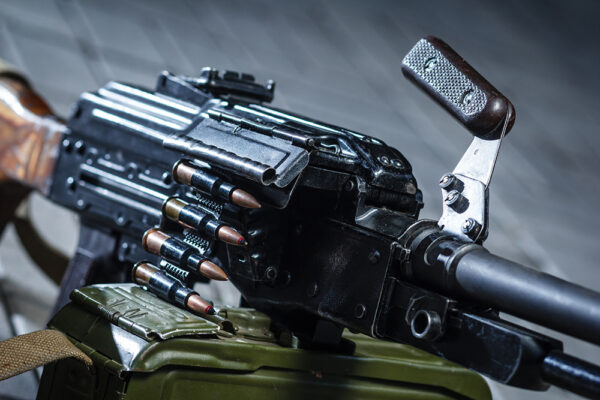
In a move that has triggered debate among gun rights advocates and lawmakers, West Virginia Senate Bill 1071, commonly referred to as the “Machine Gun Bill,” will not proceed in the current legislative session. Senate President Randy Smith (R-Preston) announced his decision to block the bill, citing what he calls significant legal and drafting issues rather than any opposition to Second Amendment rights.
The bill, introduced late in the session, aimed to expand access to fully automatic machine guns for eligible West Virginia residents.
Specifically, it advocated creating the Office of Public Defense within the West Virginia State Police, which would oversee the purchase, sale, and distribution of machine guns to individuals for state defense purposes. Supporters contend the bill aligns with Second Amendment protections, bolsters personal and community security, while complying with federal background check requirements.
SB 1071 initially cleared the Senate Judiciary Committee on Monday, March 2, following a contentious meeting that ended in confusion.
Committee Chairman Tom Willis called for a recess, and after discussions, the bill appeared to advance with strong support.
However, it never reached the full Senate floor or the Finance Committee, stalling ahead of the crossover day deadline on Wednesday, March 4, the point by which bills must pass their originating chamber to remain viable.
Smith explained his rationale in statements released today, describing the legislation as “poorly drafted” and submitted on the final day for Senate bills.
He consulted with multiple attorneys, members of West Virginia’s National Rifle Association, and the West Virginia Citizens Defense League (WVCDL), all of whom reportedly advised that the bill would likely fail in the House of Delegates and invite court challenges. “This bill, as it was submitted to us, would be unable to pass the House of Delegates and would face numerous judicial challenges to its implementation upon passage,” Smith stated.
Speaking to multiple senators, WVCDL lobbyist Art Thomm implied that the NRA does not support the bill.
Ammoland News spoke to NRA-ILA President John Commerford, who denied that the NRA had anything to do with killing the bill.
In fact, Commerford stated that the NRA is looking forward to working with the sponsor of the bill to improve it for next year.
Mr. Commerford also confirmed to AmmoLand News that Thomm does not work for the NRA and hasn’t worked for the gun rights organizations for a few years.
The NRA has a new West Virginia State Director starting Monday. The lawmakers AmmoLand News spoke to said they believed the NRA was opposed to the bill’s passage.
Critics of the decision, including bill sponsor Sen. Chris Rose (R-Monongalia) and Sen. Laura Chapman (R-Ohio), voiced frustration over the lack of transparency.
Rose noted that reviving the bill would require suspending constitutional rules and obtaining a two-thirds majority, a hurdle he deemed unlikely at this stage. “Traditionally speaking, this bill would be dead at this time,” Rose said. Chapman reiterated these sentiments, calling the process opaque: “The bill is dead, and it was killed without transparency and without consensus, despite the fact that this bill had overwhelming support by this body.”
Gun Owners of America (GOA) has mobilized supporters to pressure Smith for a floor vote.
In an urgent call to action, GOA claimed the bill “mysteriously disappeared” despite passing committee and urged constituents to contact the Senate President, pointing out that 93% of West Virginia gun owners reportedly support such measures. “We have an extremely small window to get this done,” GOA stated.
The bill’s failure emphasizes continuing tensions in West Virginia’s Republican-dominated legislature over gun rights legislation.
While the state has some of the most permissive gun laws in the nation, including permitless carry, efforts to challenge federal restrictions on machine guns, which have been tightly regulated since the 1934 National Firearms Act (NFA) and further restricted by the 1986 Hughes Amendment, commonly experience scrutiny for possible conflicts with national law.
During committee discussions, concerns were raised that the bill may unintentionally expose residents or state police to federal violations, with West Virginia Troopers Association President Lonnie Faircloth voicing concerns about transferring machine guns to private citizens.
Opposition within the committee was limited but notable. Sen. Ryan Weld (R-Brooke) voted against the bill, and Sen. Joey Garcia (D-Marion) questioned its adherence to federal regulations. Despite this, the measure had obtained considerable backing from gun rights groups and some lawmakers who viewed it as a stand against supposed federal overreach.
As the legislative session winds down, the fate of SB 1071 acts as a reminder of the procedural and statutory hurdles even popular ideas can face. Smith reasserted his commitment to Second Amendment issues, suggesting that a better-drafted version could be considered in future sessions.
For now, however, West Virginians seeking machine guns have to navigate the existing National Firearms Act licensing process, which remains stringent and costly.
This change has fueled discussions on social media platforms such as X, where users and news outlets have shared updates on the bill’s demise.
Gun rights advocates continue to rally, but with the session’s end approaching, the window for revival appears to be closing fast unless a super majority of the Senate votes to suspend the rules.

Orrin Porter Rockwell
** First published in the March 1973 issue of GUNS Magazine. **
When Orrin Porter Rockwell died in 1878, the Church of the Latter-Day Saints was eulogizing him as a devout patriarch, while anti-Mormons were busy acclaiming him as a killer of unsuspecting travelers, church members and apostates.
As the tales progressed, it became increasingly more difficult to separate the fact about the “Danite Chief” from the fantasy. From the year 1855 until his death, Rockwell’s name was synonymous with mysteries and terror, luridly described in dime novels of that day. Prejudiced accounts have been written by both sides, but now a serious effort has been made to relate only verifiable facts.

One of Rockwell’s favorites, the “Avenger Barrel” 1860 Colt Richards conversion 44 Army Model.
Rockwell On Trial
At the time of Rockwell’s death, June 9, 1878, he was on trial with Sylvanus Collect; both charged with the murder of the Aiken Brothers in 1857. Such charges were never considered until after the death of Rockwell’s protector, Brigham Young, in 1877.
Brigham Young’s grave was hardly covered when Rockwell was denounced and charged with the murders which had occurred some twenty years prior. The case was essentially this: In the fall of 1857, a party of six people came into Utah from California, planning to go East.
They were detained for proper clearances. When they were permitted to leave, they had apparently changed their minds about going East, and went south to Lehi, then to Nephi, some 80 miles south of Salt Lake City. Here they hired Rockwell and Collect to lead them. They were never heard from again. Of the six, one lone survivor made it to Nephi where he died after accusing Rockwell and Collect of the murders.
The bodies of the five were later found in an abandoned well. Rockwell and Collect were defended in Provo, Utah, by the first president of the Brigham Young Academy and later Mayor of Provo, Utah, Mr. Warren Dusenberry. Due to Rockwell’s death in June, the court acquitted Collect on October 18, 1878.
Orrin Porter Rockwell was born in Beldher County, Massachusetts, June 28, 1813. Earliest known records are his crossing of the Erie Canal and joining the Mormons when he was 17. In order to appreciate some of Rockwell’s activities and temper one’s judgment of him with some degree of understanding, one must be aware of the vicious persecution he witnessed as a youth in Ohio and Missouri.
He saw men, women, and children, openly flogged under the direction of Lt. Governor Lilburn Biggs. He and all his associates we, driven from their homes; first from Jackson County, then three years later, from Clay County, Missouri.
He was a witness to the mob massacre of the Mormons at tragic Haun’s Mill, where bodies of children were hurled against the mill proper. It would seem reasonable, after such incidents, that one would feel like being his own protector if he were to survive.
Rockwell encouraged the foundation of the Danite society after his brother was clubbed nearly to death, his wife’s hair was pulled out by the roots, his brother-in-law inhumanly whipped, and an attempt was made to openly rape his sister Electa. The last straw came when his home was burned down for the third time. The secret society, “The Danites” was organized by the brethren in September of 1842, and was to continue until 1872.

One of a pair of Metropolitan .36 caliber Navy Revolvers given to Rockwell by Brigham Young.
Origin Of The Danites
Basis for the group’s name came from Genesis 49:16-17. “Dan shall judge his people as one of the tribes of Israel. Dan shall be a serpent by the way of adder in the path that biteth the horse heels so that his rider shall fall backward.”
This was the second formal charge ever leveled at Porter Rockwell. The first was in March, 1843, when he was charged with the attempted murder of the Lt. Governor of Missouri, Lilburn Boggs.
Rockwell spent nine terrifying months in the Missouri jail. His accounts of the brutality are almost unbelievable. Rockwell’s statement that persuaded a reluctant jury to exonerate him was, “Had I shot at Boggs, he wouldn’t be alive today.”
This certainly had a ring of truth in it, for it had been a matter of prophesy that the “Destroying Angel” would act on his designs. It was from this incident that Rockwell was given the title of “The Destroying Angel.” Boggs, as a matter of record, was shot with an unmarked German four barrel percussion pistol stolen from a local shop and abandoned at the scene. Twenty years later, Rockwell confided in three of his brethren that he did the shooting and it was his damp load that failed.

Original barrel length compared with a typical “Avenger Barrel” on the Colt Richards conversion of the 1860 Army Model. Characteristic of all “Avenger Barrels” is the strange and unique mounting of a front sight.
Who Be You?
William Swartzel divulged in his early writings that the sign of a brother in distress was clapping the right hand to the right thigh and then raising it quickly to the right temple, the thumb extending behind the ear. The password was “Who be you,” the acknowledgement, “Anama,” meaning friend.
Once a man had embraced the mysteries of the Daniters, he was then a “Man of God and a Son of Thunder.” The oath itself was lengthy, and closed with the binding of oneself to the brotherhood with a penalty of shedding their own blood, an oath Porter would not have taken too lightly. Even though Rockwell was a distant cousin of the fireside student, Abraham Lincoln, he never learned the basics of reading or writing.
Many references exist that mention the early Allen and Wheelock pepper-boxes, obtained through Elder Cyrus Wheelock, a close relative of the manufacturer, Thomas P. Wheelock. It was with such a weapon that Joseph Smith defended his life at the Carthage Jail shortly after the inception of the “Danites.”
Rockwell was very close to Joseph Smith and usually not a shout from his side. He even gave up his first wife for Joseph when she insisted on a choice between them. Rockwell was known to be the killer of the Carthage militia leader, Lt. Frank Worrell, who had participated in the murder of Joseph Smith, but he was never charged. Rockwell migrated to Utah in 1847, as Brigham Young’s bodyguard and general protectorate.
No specific mention of any weapon that Rockwell owned or used exists before mention of a brace of Navy pistols being given to him by Brigham Young. These he obtained from speculators coming through the territory selling arms. The Navy percussion revolvers were not Colts, but Metropolitan revolvers.
Only one has survived or is known of the pair, No. 3558, a truly fine old Metropolitan. As these were available to the public and were not under military contract, they were probably easier to obtain than other manufacturer’s arms. Also noteworthy, is a reference in Harold Schindler’s writings to a cropped Colt Navy revolver No. 168,832, used by Rockwell.

What was probably the first “Detective Special,” the “Avenger Barrel” 1860 Colt .44 percussion Army Model.
The Avenger Barrel
As government harassment increased, Rockwell discarded any display of arms and innovated perhaps the first “Detective Special.” First on record is a 1860 Colt Army Model, 44 caliber percussion, with the barrel cropped shorter than two inches. Such barrels have become known as “Avenger Barrels” and are typical of other Danite guns, such as William Hickman’s and Anson Black’s, infamous in their own biographies as associates of Porter Rockwell.
Mormons, as a group, never displayed holstered weapons of any type. Other than the weapons in the hands of the Danites, weapons were stored and locked in an arsenal.
Another arm examined that purportedly belonged to Orrin Porter Rockwell was a Colt factory conversion of the Pocket Pistol of Navy origin, 38 Caliber, type 6, the rarest and most desirable of all the pocket conversions.
At another archive, a 44 CF Colt Richards conversion of the 1860 Army was examined. The cropped barrel bore the professional stamping “J.B.,” which according to the curator is believed to be the work of Jonathan Browning who migrated with Brigham Young to Utah in 1847 and set up shop making grinders, plows, and mills, out of wagon rims. Browning probably modified some of the early arms that found their way into the territory.
The “Avenger barrels” examined are definitely the work of a craftsman and not a period basement mechanic. All are old and a sight to see; scarce collector’s items surviving in excellent condition except for the crushing indignity of a “cropped barrel.”
Rockwell, with his penchant for “short barrels,” was known to have used a 10-gage double barrel shotgun with cropped stock and barrels, worn under the waistcoat and suspended by a shoulder strap which was connected to the gun by a swivel located at balance point when gun was loaded. Thus when the coat was opened, the barrels would rise ready for business.

Danite Lieutenant Anson Black is said to have used this Colt conversion of the Navy Pocket Pistol, type 6; converted to .38 metallic cartridge.
Two Masters — God And The Devil
As Utah became settled and feelings moderated, Rockwell turned his attention to mining claims and ranching in the west mountains. He was a man who was said to have two masters “God and the Devil” enjoying his whiskey in large doses. He was married three times and had 13 children.
The Salt Lake Tribune’s headline just 36 hours after Rockwell’s death read: “Porter Rockwell the Chief of the Danite Band Shuffles off in a Stable and Cheats the Hangman of a Worthy Candidate.” The article further stated that he killed many travelers for their “booty,” enemies of the church, or those who dared wag their tongues about Zion.
The editorial stated that he committed over 100 murders, none of which he ever divulged. He and his activities had been the subject of controversy even while he lived.
On the evening of June 9, 1878, Rockwell staggered into an office he maintained in the Colorado Stables, in downtown Salt Lake City and died from congestive chills and violent vomiting. The hastily summoned physician mentions the attempt of “mouth to mouth resuscitation” in his account of the death.
The most interesting gun examined was a 1875 Remington Frontier Army Model. A very early Remington, serial 128, in the early issue of 44 Remington (not 44-40), made without a lanyard ring, original ivory grips and nickel finish. The gun came from Rockwell’s ranch in Tooele County, and was passed onto his heirs just prior to his death when he had virtually retired from the protectorate service.
Upon his death, almost 1,000 persons filled the 14th ward assembly rooms to hear Joseph F. Smith, a member of the council of 12 apostles, offer the eulogy. “Porter had his little faults,” he said, “but his life on earth, taken altogether, was one worthy of example and reflected honor upon the church. Through all his trials he had never once forgotten his obligations to his brethren and his God.”
The Salt Lake Tribune stated “It was a fitting tribute from one outlaw to another.” That controversy will only be settled in heaven.
The kid born damaged by a kick grew into Brazil’s most infamous vigilante, hunted monsters across prisons and streets, then chased redemption on YouTube before a ruthless end.
Violence Sells, Even When It Horrifies
Taking human life is an unnatural act. We talk about it all the time. Most every week in this space I endeavor to wax eloquent about something that is, at its heart, quite very horrible. While this undoubtedly objectifies violence, it is also reliably titillating.

For this same reason, stylized depictions of violence form the basis for most television and cinematic drama as well as a great many video games. Leftist actors lecture us until the sun burns out on the evils of firearms, yet gladly accept zillions of dollars to shoot people with firearms in movies. Yeah, I’m talking to you, Alec Baldwin and Mark Ruffalo. In Baldwin’s case, he even shot somebody for real.
Murder, theft, and rape are all adequate to get you locked away in the real world. However, hyper-realistic depictions of exactly the same stuff on screens both large and small are simply discounted as entertainment. It’s all honestly kind of weird if you think about it.
The Psychology That Builds a Psychopath
I’m a writer by trade. While I do love these historical pieces, my real passion is fiction. Track down my website below in the bio for a few examples. If the wind is in my sails, I hope to polish up a novel or two here directly. I can attest from personal experience, it is quite easy to depict violence in the guise of recreation. Actually doing it for real is another thing altogether. However, not everybody possesses that intrinsic sense of restraint.

Those rare souls are the true psychopaths, the stuff of legend in both literature and film. The textbook definition of a psychopath is an individual with a personality disorder characterized by a severe lack of empathy and remorse, superficial charm, impulsivity, manipulativeness, and antisocial behavior. That lack of empathy is the key. The practical psychopath is intellectually incapable of perceiving another person’s pain. Some folks with this lamentable affliction come from the factory that way. Others, like Pedro Rodrigues Filho, are created.
Origins of a Vigilante: How the ‘Monster’ Was Made
Pedro Rodrigues Filho was born on 29 October 1954 in Santa Rita do Sapucai, Minas Gerais, Brazil. In Portuguese, the word “Filho” means “son.” It is a generational suffix much like our own “Junior.” Tragically, Pedro Rodrigues was dealt a pretty sordid hand before he even took his first breath.

Pedro’s dad was a proper beast. He had a falling out with the boy’s severely pregnant mom and kicked her viciously in the belly. He paid for that later, but his attack left the unborn child with head trauma in utero. It has been postulated that this antepartum insult might have been the precipitating factor behind Pedro’s subsequent curious malady. This kid entered the world a cold-blooded killer.
First Blood: A Thirteen Year Old’s Threat
Pedro Rodrigues was never quite right. At age thirteen, he got into a fight with an older cousin. The cousin punched him in the face and knocked him down. Looking up, beaten and battered, Pedro stated flatly, “I’m going to kill you.”

These were just kids. The cousin laughed it off. Soon thereafter, Pedro and his cousin were working around a sugarcane press. When the opportunity arose, Pedro shoved his relative into the machine, very nearly tearing his arm off. With the bully now immobilized, Pedro drew a knife to finish the job. Family members heard the older boy’s screams and arrived in time to prevent the murder. However, this was just the beginning.
Finding His Stride in Blood: Teen Vigilante Emerges
Pedro’s dad was a school security guard, and times were hard. The local deputy mayor falsely accused the senior Rodrigues of stealing food and fired him before having him thrown in jail. When Pedro heard the news, he retrieved his grandfather’s shotgun, tracked down the actual thief, and blew him away. He then confronted the deputy mayor and killed him as well. Pedro was 14 at the time.

With the law on his trail, young Pedro fled to Mogi das Cruzes, Greater São Paulo. However, he didn’t know anyone and had few marketable skills. Facing destitution or worse, Pedro Rodrigues tapped into the one thing he was really good at. To make ends meet, he began hunting drug dealers. These he summarily executed before cleaning out their cash reserves. It was an unconventional profession, but the money was good.
Along the way, he met a woman named Maria Aparecida Olympia. Her nickname was Botinha. Botinha was a widow who had previously been married to a local drug lord. I could not ascertain if Botinha’s better half was one of the scumbags that Pedro had liquidated. Regardless, the two fell madly in love. Pedro subsequently assumed the marital responsibilities of the demised criminal. Botinha became pregnant in short order. As near as I could tell, Pedro should have been all of sixteen at the time.
Escalation and Loss: The Killings That Changed Him
Pedro’s new job placed him atop a modest criminal empire of his own. In this new role, the teenage psychopath murdered three former coworkers to cement his position in the gang. However, this job had a pretty sucktastic retirement plan. The leader of a rival gang attempted to assassinate the criminal phenom. Pedro narrowly escaped, but Botinha was killed. Pedro did not take this well.

Pedro set his drug-dealing enterprise aside for a bit in favor of full-time bloodletting. Meticulously and over time, he hunted down the gang that killed his woman and murdered them…every single one of them. This earned him the attention of local Law Enforcement.
Prison Turns Him Into a Legend
Rodrigues was arrested for the first time on 24 MAY 1973. It’s not like he made any great secret of whacking all these scumbags. The evidence was incontrovertible.

Once, while incarcerated, Pedro was being transported alongside a second inmate convicted of rape. The two men got into the van together. By the time they arrived at their destination, the rapist was dead. Pedro admitted to killing him, explaining that he did it because he was a rapist. Pedro Rodrigues had a weird code, but he took it really seriously. He earned a total of 126 years behind bars.
Despite the astronomical sentence, there was a rule in Brazil that stated that no one should be imprisoned longer than 30 years. This number was later revised upward to 40 years for just such characters as Pedro Rodrigues. 34 years later, Pedro breathed free air again.
Rodrigues secured a job as a caretaker, but that didn’t last. In September 2011, he was arrested a second time, apparently for murders committed while in prison. He then served a further seven years, getting out on 10 December 2018. Here’s where the story gets really strange.
Rebrand to Influencer: ‘Ex Killer’ on YouTube
After getting out of prison the second time, Pedro Rodrigues announced to the world that he was a reformed vigilante. He hung up his cape and declared himself a new man. To celebrate his fresh persona, Pedro did what any of us might do if we had decided not to be psychopaths anymore. He became a YouTube personality.

Pedro’s YouTube channel was called “Pedrinho EX Matador.” This literally translates to “Little Peter the Former Killer.” Pedro’s videos discussed infamous crimes and denounced gang activity. His recurring theme was encouraging the public not to glorify violence. He asserted that criminality was not something of which to be proud. Portuguese-speaking folks couldn’t get enough. At his apogee, Pedro had more than a quarter million subscribers. His videos have been viewed more than 36 million times. Pedro earned YouTube creator awards for his work.
Throat Cut in Broad Daylight: The Final Hit
Around 10 in the morning on 5 March 2023, three men drove up to Pedro Rodrigues in a car and shot him to pieces. One of the assassins leapt out and cut his throat just to make sure the job was done. In his haste, however, the assailant very nearly chopped Pedro’s head off. Local police later found the vehicle, but the murderers were neither identified nor apprehended. Pedro was 68 years old at the time of his death.

We’ve glossed over a great deal of this tale. Pedro Rodrigues was formally charged with a whopping 71 counts of murder to include that of his own father. More than half of these were committed while in jail. His total body count was suspected of being well over 100. He spent 41 of his 68 years in prison. However, as we discussed previously, he obviously started young.
From Dexter to Pop Culture: The Aftershock
Pedro’s tale did not actually end there. After his first 2003 release from prison, novelist Jeff Lindsay penned a 2004 book series loosely based on his life and exploits titled Dexter. James Manos Jr adapted the book into a popular TV show of the same name in 2006. The series spanned eight seasons and 96 episodes.

I don’t watch much TV myself, but I did knock out the first two episodes while researching this piece. It was bloody, profane, and gruesome, as one might anticipate. The protagonist, Dexter Morgan, is a proper psychopath, a serial killer incapable of empathy who hunts, tortures, and kills violent criminals. Despite my best efforts, I found it quite engaging.

I’ve never really understood society’s aversion to vigilantes. I mean, it’s pretty obvious who the hero is in Batman. In the case of Pedro Rodrigues, this unfortunate broken kid devoted his entire life to cleansing his world of the worst of the worst. We certainly won’t all agree with his approach, and I’d not be too keen on having him as a next-door neighbor. However, by his strange calculus, he was, in a manner of speaking, kind of the good guy. In this case, art really does imitate life.
Case File Snapshot: Pedro Rodrigues Filho
| Not a Firearm Review | Specs not applicable; archival true crime feature |
|---|---|
| Birth | 29 October 1954 |
| First Arrest | 24 MAY 1973 |
| Charges | 71 counts of murder |
| Alleged Total Kills | Well over 100 |
| Years Imprisoned | 41 |
| Death | 5 March 2023 |
Pros and Cons of This Wild True Crime Ride
- Pros: Unflinching history, gripping pacing, sharp character study, pop culture tie-in to Dexter, high stakes from first scene to last.
- Cons: Graphic content, moral ambiguity, bleak subject matter, zero neat endings.

Categories
Lincoln Wasn’t the Only Target
Categories
Later on, Man it’s hot down here!
The clip, filmed at Sanctuary of Praise Church in Florida on January 16, shows Hall standing under stage lights in front of a massive digital screen displaying a QR code labeled Sow Your Seed.
Sorry but I still think that Hell ain’t hot enough for folks like him! Grumpy