Category: Dear Grumpy Advice on Teaching in Today’s Classroom


Volubilis –
https://en.wikipedia.org/wiki/Volubilis
Every time the question of a bigger rifle or smaller rifle (for any game) springs up, someone’s bound to say it: Karamojo Bell killed a thousand elephants with an .256. No, wait, with a .275. No, wait, he killed 1011 elephants, but only a few with the .256. No, but he was sniping out undisturbed elephants from long distance.
Exploits of W.D.M. Bell, Esq., nicknamed “Karamojo” because of being the first European to penetrate the territory of the Karamojo people, became legendary and controversial. Any scientific argument must begin with a study of the sources, so let’s turn to the book that made W. D. M. Bell famous: “The Wanderings of an Elephant Hunter”, published in 1923. Our comments will follow.

CHAPTER II. THE BRAIN SHOT AT ELEPHANT (EXTRACT).
In hunting elephant, as in other things, what will suit one man may not suit another. Every hunter has different methods and uses different rifles. Some believe in the big bores, holding that the bigger the bore therefore the greater the shock.
Others hold that the difference between the shock from a bullet of, say, 250 grs. and that from a bullet of, say, 500 grs. is so slight that, when exercised upon an animal of such bulk as an elephant, it amounts to nothing at all. And there is no end to the arguments and contentions brought forward by either side ; therefore it should be borne in mind when reading the following instructions that they are merely the result of one individual’s personal experience and not the hard and fast rules of an exact science.
As regards rifles, I will simply state that I have tried the following: .416, .450/.400, .360, .350, .318, .275 and .256. At the time I possessed the double .400 I also had a .275. Sometimes I used one and sometimes the other, and it began to dawn on me that when an elephant was hit in the right place with the .275 it died just as quickly as when hit with the .400, and, vice versa, when the bullet from either rifle was wrongly placed death did not ensue.
In pursuance of this train of thought I wired both triggers of the double .450/.400 together, so that when I pulled the rear one both barrels went off simultaneously. By doing this I obtained the equivalent of 800 grs. of lead propelled by 120 grs. of cordite.
The net result was still the same. If wrongly placed, the 800 grs. from the .400 had no more effect than the 200 grs. from the 275. For years after that I continued to use the .275 and the .256 in all kinds of country and for all kinds of game. Each hunter should use the weapon he has most confidence in.
Again, the smallest bore rifles with cartridges of a modern military description, such as the .256, .275, .303 or .318, are quite sufficiently powerful for the brain shot. The advantages of these I need hardly enumerate, such as their cheap ness, reliability, handiness, lightness, freedom from recoil, etc.
For the brain shot only bullets with an unbroken metal envelope (i.e., solids) should be employed; and those showing good weight, moderate velocity, with a blunt or round-nosed point, are much better than the more modern high velocity sharp-pointed variety. They keep a truer course, and are not so liable to turn over as the latter.

CHAPTER X. RIFLES
The question of which rifles to use for big-game hunting is for each individual to settle for himself. If the novice starts off with, say, three rifles : one heavy, say a double -577 ; one medium, say a .318 or a .350 ; and one light, say a .256 or a .240 or a .276, then he cannot fail to develop a preference for one or other of them.
\For the style of killing which appeals to me most the light calibres are undoubtedly superior to the heavy. In this style you keep perfectly cool and are never in a hurry. You never fire unless you can clearly see your way to place the bullet in a vital spot.
That done the calibre of the bullet makes no difference. But to some men of different temperament this style is not suited. They cannot or will not control the desire to shoot almost on sight if close to the game. For these the largest bores are none too big. If I belonged to this school I would have had built a much more powerful weapon than the .600 bores.
Speaking personally, my greatest successes have been obtained with the 7 mm. Rigby-Mauser or .276, with the old round-nosed solid, weighing, I believe, 200 grs. It seemed to show a remarkable aptitude for finding the brain of an elephant. This holding of a true course I think is due to the moderate velocity, 2,300 ft., and to the fact that the proportion of diameter to length of bullet seems to be the ideal combination. For when you come below .276 to .256 or 6-5 mm., I found a bending of the bullet took place when fired into heavy bones.
Then, again, the ballistics of the 275 cartridge, as loaded in Germany at any rate, are such as to make for the very greatest reliability. In spite of the pressures being high, the cartridge construction is so excellent that trouble from blowbacks and split cases and loose caps in the mechanism are entirely obviated. Why the caps should be so reliable in this particular cartridge I have never understood. But the fact remains that, although I have used almost every kind of rifle, the only one which never let me down was a .276 with German (D.W.M.) ammunition. I never had one single hangfire even. Nor a stuck case, nor a split one, nor a blowback, nor a miss-fire. All of these I had with other rifles.
I often had the opportunity of testing this extraordinary little weapon on other animals than elephant. Once, to relate one of the less bloody of its killings, I met at close range, in high grass, three bull buffalo. Having at the moment a large native following more or less on the verge of starvation, as the country was rather game less, I had no hesitation about getting all three. One stood with head up about 10 yds. away and facing me, while the others appeared as rustles in the grass behind him.
Instantly ready as I always was, carrying my own rifle, I placed a .276 solid in his chest. He fell away in a forward lurch, disclosing another immediately behind him and in a similar posture. He also received a .276, falling on his nose and knees. The third now became visible through the commotion, affording a chance at his neck as he barged across my front. A bullet between neck and shoulder laid him flat. All three died without further trouble, and the whole affair lasted perhaps four or five seconds.

Another point in favour of the .276 is the shortness of the motions required to reload. This is most important in thick stuff. If one develops the habit by constant practice of pushing the rifle forward with the left hand while the right hand pulls back the bolt and then vice versa draws the rifle towards one while closing it, the rapidity of fire becomes quite extraordinary. With a long cartridge, necessitating long bolt movements, there is a danger that on occasions requiring great speed the bolt may not be drawn back quite sufficiently far to reject the fired case, and it may become re-entered into the chamber.
This once happened to me with a .350 Mauser at very close quarters with a rhino. I did not want any rhino, but the villagers had complained about this particular one upsetting their women while gathering firewood. We tracked him back into high grass. I had foolishly allowed a number of the villagers to come with me.
When it was obvious that we were close to our game these villagers began their African whispering, about as loud, in the still bush, as a full-throated bass voice in a gramophone song. Almost immediately the vicious old beast could be heard tearing through the grass straight towards us. I meant to fire my first shot into the movement as soon as it became visible, and to kill with my second as he swerved.
At a very few paces’ distance the grass showed where he was and I fired into it, reloading almost instantaneously. At the shot he swerved across, almost within kicking range, showing a wonderful chance at his neck. I fired, but there was only a click. I opened the bolt and there was my empty case.
I once lost a magnificent bull elephant through a .256 Mannlicher going wrong. I got up to him and pulled trigger on him, but click ! a miss-fire. He paid no attention and I softly opened the bolt. Out came the case, spilling the flake powder into the mechanism and leaving the bullet securely fast in the barrel lead. I tried to ram another cartridge in, but could not do so. Here was a fix. How to get that bullet out.
Caliber .256 is very small when you come to try poking sticks down it. Finally I got the bullet out, but then the barrel was full of short lengths of sticks which could not be cleared out, as no stick could be found sufficiently long, yet small enough.
So I decided to chance it and fire the whole lot into the old elephant, who, meanwhile, was feeding steadily along. I did so from sufficiently close range, but what happened I cannot say. Certainly that elephant got nothing of the charge except perhaps a few bits of stick. That something had touched him up was evident from his anxiety to get far away, for he never stopped during the hours I followed him.
At one time I used a double .450/.400. It was a beautiful weapon, but heavy. Its drawbacks I found were : it was slow for the third and succeeding shots ; it was noisy ; the cartridges weighed too much ; the strikers broke if a shade too hard or flattened and cut the cap if a shade too soft ; the caps of the cartridges were quite unreliable ; and finally, if any sand, grit or vegetation happened to fall on to the breech faces as you tore along you were done ; you could not close it. Grit especially was liable to do this when following an elephant which had had a mud bath, leaving the vegetation covered with it as he passed along. This would soon dry and tumble off at the least touch.
I have never heard any explanation of the undoubted fact that our British ammunition manufacturers cannot even yet produce a reliable rifle cartridge head, anvil and cap, other than that of the service .303. On my last shoot in Africa two years ago, when W and I went up the Bahr Aouck, the very first time he fired at an elephant he had a miss-fire and I had identically the same thing. We were using .318’s with English made cartridges.
Then on the same shoot I nearly had my head blown off and my thumb severely bruised by an English loaded .256. There was no miss-fire there. The cartridge appeared to me almost to detonate. More vapour came from the breech end than from the other. I have since been told by a great authority that it was probably due to a burst case, due to weak head.
On my return I complained about this and was supplied with a new batch, said to be all right. But whenever I fire four or five rounds I have a jam, and on investigating invariably find a cap blown out and lodging in the slots cut for the lugs of the bolt head. Luckily these cartridges are wanting in force; at one time they used fairly to blast me with gas from the wrong end. The fact that these faults are not conspicuously apparent in this country may be traced to the small number of rounds fired from sporting rifles, or, more probably, to the pressures increasing in a tropical temperature.

I have never been able to appreciate “shock” as applied to killing big game. It seems to me that you cannot hope to kill an elephant weighing six tons by ” shock ” unless you hit him with a field gun. And yet nearly all writers advocate the use of large bores as they “shock” the animal so much more than the small bores.
They undoubtedly “shock” the firer more, but I fail to see the difference they are going to make to the recipient of the bullet. If you expect to produce upon him by the use of big bores the effect a handful of shot had upon the Jumping Frog of Calaveras County, you will be disappointed. Wounded non-vitally he will go just as far and be just as savage with 500 grains of lead as with 200. And 100 grains in the right place are as good as ten million.
The thing that did most for my rifle shooting was, I believe, the fact that I always carried my own rifle. It weighed about 7 lb., and I constantly aligned it at anything and everything. I was always playing with it. Constant handling, constant aiming, constant Swedish drill with it, and then when it was required there it was ready and pointing true.
COMMENTS
A lot of controversy about Karamojo Bell comes from Mr. Bell himself. “The Wonderings of an Elephant Hunter” was written when the trails were still hot, memories fresh, and from the “here’s what worked for me, under my specific circumstances” position. Later in life, however, his views became more radical.
In an article titled “Big Bores vs. Small Bores”, for example, published posthumously by “The American Rifleman” in 1954, he urged everyone to dump the big bores and hunt all animals with rifles of the .308 Win. class (he praised the cartridge, even though he had no personal experience with it).
All dependent on bullet placement, he wrote, “a .600 caliber 900-grain bullet in the right place will kill as dead as a 100-grain bullet”. A few paragraphs later, he called the .318 Westley Richards “the deadliest” of his foursome of favorites, that also included the 6.5 mm. Mannlicher, the 7 mm. Mauser, and the .303 British. So, he could see the difference in killing power between .318 and 7 mm, but not between .22 Swift and .600 NE. Er… seriously?
Was it rhetorical vigor, or was W.D.M. Bell simply pulling the readers’ collective leg? These British “old chaps” loved a good prank – oh, pardon me, practical joke! What most people tend to learn over their lifetimes is that a radical view on anything is usually wrong. That includes Karamojo Bell and his small-bore rifles.
On the one hand, Bell certainly didn’t kill over a thousand elephants with a 6.5 mm rifle. .As we already know, he used rifles for at least eight different rounds. For the trip into the Karamojo country, he had a battery of three rifles, two already mentioned and a.303 British. For three of his trips – to Liberia, up the River Bahr Aouk, and into the Buba Gida Potentiate and the Lakka country, he carried only one big-game rifle: a .318 Westley Richards.
This is a medium bore (.330, or 8.4 mm) round that came loaded with a 250-grain (16 gram) bullet at 2,400 ft/s (730 m/s), or a 180-grain (12 gram) at 2,700 ft/s (820 m/s). He is credited with killing over 1011 elephants in his career, but the .256 accounted for the minority of kills, due to various ammunition problems.

On the other hand, critics tend to downplay Bell’s experience, saying he was mostly shooting undisturbed elephants at long distance in an open country. In fact, Bell killed all kinds of elephants in all kinds of terrain. That included the 12-foot grass in the Lado Enclave, where he had to shoot from an improvised elevation.
If Bell couldn’t see the difference between bigger and smaller cartridges, why would he use the .318 WR on so many trips, and why did he order one .416 Rigby after another (as Rigby’s record books testify)? On the other hand, when African national parks carried out large-scale elephant culls – the nearest thing to Bell’s ivory hunting in modern world – the weapon of choice, to our knowledge, were semi-automatic military rifles and the 7.62 mm NATO (the military version of the .308 Win.). Karamojo would’ve approved. The bottom line is, precisely as Karamojo himself claimed in his earliest prose, the 7 mm Mauser was what worked for a specific person under specific circumstances. It’s not a magic bullet for everyone everywhere.
In any case, Bell’s books make a wonderful read, whether you agree with his views or not. He was one of the people who had a unique experience, intelligent enough to know their experience were unique, and talented enough to preserve it for later generations in high-quality prose and imagery. And, as long as you don’t take Bell’s tips literally, his advice on knowing your weapon, the killing spots of your quarry, and being able to put every bullet where it belongs, still makes a lot of sense.
Well I thought this was really cool. Seeing that you get to see and hear stuff on this film that the “Professionals” so often leave out. So I hope that you enjoy this! Grumpy
We’re in the early months of the centennial of U.S. participation in World War I, the so-called, “War to end all wars.” With the vantage of 20/20 hindsight, we now know that rather than “making the world safe for democracy,” as Woodrow Wilson hoped, World War I instead set the stage for the next round of global conflict.
The United States entered the war in 1917 as a relatively unknown quantity. The U.S. Army was tiny in 1917, and many wondered whether it would be able to mobilize enough men to really make a difference. In the end, the U.S. was able to put over a million military personnel in Europe – enough to sway the balance of power in Europe against the Central Powers.
November of 1918 saw the Armistice signed and a tenuous peace return to the world. And suddenly, America felt and saw the power of her military might. This came at the cost of hundreds of thousands of killed, wounded, and missing servicemen.
After the initial euphoria of victory wore off, Americans began to ask what had been gained from the war. As the Great Depression swept the world and Germany slid towards totalitarianism, this question became all the more pertinent. When war flared again in 1939, one can hardly blame those who advocated for U.S. isolationism given that U.S. participation in the Great War seemingly did little to prevent another conflagration. But what these people didn’t realize was that America would win World War II because of their experience in World War I.
When the U.S. entered World War I in 1917, the Army more closely resembled that of the Civil War than that of World War II. The horse was still the prime mover for the majority of the Army. The National Guard was still organized in state entities with no division alignments, ill-suited for modern warfare. The Army had few effective machine guns and virtually no modern artillery. There were no tanks or aircraft. Thus it was that machine guns, automatic rifles, gas masks, grenades, artillery, tanks, and aircraft all had to be supplied by the French and British in the first year of U.S. participation in the war.
While the equipment and organization of the Army lagged behind the rest of the world in 1917, there were greater and more serious gaps at the strategic level. Very few leaders had commanded or maneuvered anything larger than a brigade. Now the Army was designing divisions of 28,000 men – a massive and unwieldy organization.
The Army would struggle to keep command and control across these huge units throughout the entirety of the war. There was very little concept of command and staff operations in the U.S. Army at the strategic level at the outset of the war.
And the man chosen to lead the new American Expeditionary Force had some strong ideas about warfare that did not mesh with the realities on the battlefields of Europe. General John J. Pershing stated that, “the ultimate success of the army depends upon their proper use in open warfare…Aggressive offensive based on self-reliant infantry.” In other words, Pershing said that movement and maneuver in the open would be the foundation of U.S. tactics rather than the trench warfare of literally everyone else.
There was a problem with this, of course. The French and British had been trying this for years – with calamitous results. In fact, just as the U.S. was entering the war, the French were annihilating a large part of their army in the Nivelle Offensive. The enormous losses they incurred from this operation caused whole divisions to mutiny.
This led to massive reforms within the French Army. The Germans were already moving toward infiltration tactics. All sides were experimenting with combined arms with tanks, airplanes, artillery, and infantry working together. And here came the Americans, scoffing at the battle-hardened British and French, saying that trench warfare had made them immobile and scared to attack.
As one American brigade commander told his men in 1917, “The war will be won in the open; the Boche is in the trenches now and has been for four years. We have got to be able to drive him out and that is why this French instruction is valuable; but remember we are going to get him out into the open and then all the old and fixed principles of our school of warfare will come into play.” In the first American offensives of 1918 at Cantigny and Chateau-Thierry, thousands of Americans died in droves in front of German machine guns and under bursting artillery shells. Divisions were cleaned out in weeks and had to be revitalized with barely-trained replacements. It was an unsustainable form of warfare.
Throughout 1918, the Americans struggled to adapt their tactics to their adversaries. They fielded tanks at St. Mihiel, built up a formidable Air Service, and slowly learned how to fight war in the 20th century. Pershing and his staff began to learn that prosecuting war on the battlefield was not the only fight; as important was negotiating with allies. Unfortunately, Pershing was not a man cut out for diplomacy.
While he certainly looked the part, he lacked the temperament for dealing with his British and  French counterparts – with whom he clashed constantly. To his credit, he had been placed in an incredibly difficult situation: raise, arm, train, and field the largest American army ever created while staving off British and French attempts to take all his troops for their own offensives.
But he didn’t make it easier on himself by blowing up at his allied counterparts and creating what could have been international incidents, had the Allies not needed American assistance so badly. Fortunately, he had some good subordinates, such as George C. Marshall. It was Marshall who not only organized and planned the Meuse-Argonne Offensive – the war-ending battle – but who smoothed over Pershing’s relations with everyone from foreign generals to Pershing’s own irate division commanders who objected to his micromanagement.
It was junior officers – men like Marshall, George Patton, Douglas MacArthur, Dwight Eisenhower (although he was never afforded the opportunity to fight in Europe), Mark Clarke, Lesley McNair, and Walter Kruger, amongst so many – who looked at the lessons from World War I and realized that the U.S. Army needed to change if it wanted to be competitive on the battlefield in another war. They knew that the Army could not sustain the disastrous casualty rates that “open warfare” had caused.
So they began to change the Army after the World War. Change was slow because they were still fighting the general officers who had grown up in the pre-World War I Army. Patton and Eisenhower were threatened with court martial if they didn’t stop publishing articles about such heretical things as the tank being the basis for offensives rather than dismounted infantry.
Efforts of the World War I generation were not helped by popular distrust in the military as the Army battled small budgets, low manpower authorizations, and increasing responsibilities around the world. Marshall moved his way through the Army staff system, overseeing sweeping changes to doctrine and staff procedures.
By 1939, he was the Army Chief of Staff; the WWI officer corps was finally in a position to effect the changes that they had envisioned and written about for twenty years. It wasn’t a moment too soon: the same day Marshall was sworn in, Germany invaded Poland.
In 1940, Marshall – remembering the poor performance of commanders in World War I – began the GHQ Maneuvers in the southern U.S. He called up National Guard divisions and paired them with Regular Army divisions to create full-scale army maneuvers: hundreds of thousands of men moving around Texas, Louisiana, and the Carolinas.
Here he and other military leaders were able to evaluate new technologies, test new doctrine, and get a feel for whether commanders were effective or not. Many were not, and were relieved of command, probably saving many lives in the coming conflict. The entire maneuvers provided Marshall and other key leaders the informational snapshot that they needed in order to start building the Army to war footing. Just as the maneuvers were winding down in the winter of 1941, the Japanese attacked Pearl Harbor and the U.S. was at war again.
One of the first things that the War Department did in 1942 was to operationalize the National Guard. One of the key lessons from World War I was that the Guard was needed on the front lines, but that they needed a time to train up. The other move was to get rid of the 28,000-man monstrosity of a division. The Army’s divisions were cut down in size, made more agile and adaptive, and given greater lethality through the addition of more enablers.
The Army got rid of the brigade and replaced it with the regimental combat team, composed of an infantry regiment, a field artillery battalion, and an engineer company. Infantry regiments gained antitank capabilities as well as their own organic artillery companies. These smaller and faster forces proved far more effective than their lumbering predecessors of World War I.
The Army adopted a tank corps as well and began training for combined arms warfare. Although the Army was still behind the 8-ball when it entered combat in 1942, the results would have been far more disastrous had it not been for the efforts of the generation of officers who had lived through the Great War.
Another key take-away from World War I was building relationships with Allies. Marshall and Eisenhower were far more patient men than Pershing had been, and were able to navigate the diplomatic pitfalls of being an allied commander far better than someone like Patton or MacArthur would have.
But Marshall did have his breaking points. For example, during a 1944 planning conference with the British, Prime Minister Winston Churchill was demanding an Allied invasion of the island of Rhodes, at which Marshall finally exploded, allegedly stating, “No American is going to land on that goddam island!” These outbursts were minimal, however, and the American and British coalition managed to stay together to defeat the Nazis and the Japanese.
There was one more way that World War I taught the U.S. people a lesson, and that was in the realm of veterans’ affairs. Between 1919-1920, the U.S. military sent millions of servicemembers back into civilian life. Many were wounded – both physically and mentally – and there was no real plan to take care of these “ex servicemen” as they were called at the time. Congress had passed a bill in 1924 granting a bonus to those who had honorably served during the war, but during the Great Depression the payouts had been

cut back. In 1932, thousands of veterans descended on Washington D.C. in the infamous Bonus March. They were eventually evicted at gunpoint and with tear gas by Army units in one of the most shameful treatment of veterans in our nation’s history.
MacArthur, Patton, and Eisenhower all took part in this execrable affair. With that living in recent memory, veterans services organizations and WWI veterans in Congress resolved that nothing like it should ever happen again. The Servicemen’s Readjustment Act of 1944 provided a whole range of benefits to veterans returning to society, the chief of which was access to a college education. This act is commonly known as the GI Bill.
From the battlefield to the staff room to the college campus, World War I veterans made their presence felt. While World War I would lead to World War II, it was American experience in the first that brought victory to the second.
Enjoy what you just read? Please share on social media or email utilizing the buttons below.
About the Author: Angry Staff Officer is an Army engineer officer who is adrift in a sea of doctrine and staff operations and uses writing as a means to retain his sanity. He also collaborates on a podcast with Adin Dobkin entitled War Stories, which examines key moments in the history of warfare.

This is how the banksters really think!
The “crappy” Mark 14 Torpedo and the effect it had on the American Sub Force.
.This was supposed to drop this morning, but I got the date wrong.
I had ran across this article on the internet doing research on something else, it discussed the torpedo debacle that the American Submarines had and to a lesser extent, the American Torpedo planes had because they basically were using the same technology and systems. It was very enlightening to see the bureaucratic stalling and shafting the sub crews and skippers who tried to tell BuOrd that their torpedoes sucked, whereas the Japanese had the awesome Long Lance torpedoes and their air arm had their own effective air dropped version. The Pics are complements of “Google”.
I had ran across this article on the internet doing research on something else, it discussed the torpedo debacle that the American Submarines had and to a lesser extent, the American Torpedo planes had because they basically were using the same technology and systems. It was very enlightening to see the bureaucratic stalling and shafting the sub crews and skippers who tried to tell BuOrd that their torpedoes sucked, whereas the Japanese had the awesome Long Lance torpedoes and their air arm had their own effective air dropped version. The Pics are complements of “Google”.
Fizzling fish, wrong tactics and incompetent commanders — ingredients for disaster simmering below the waves aboard American submarines — how many years did they add to World War II?
A strong case has been made, by authors as varied as Jim Dunnigan, John Keegan and George Friedman, that the leading cause of the eventual defeat of the Japanese in World War II was the choke hold on its commercial shipping achieved by the Allies. Friedman, in his thought provoking if flawed The Coming War With Japan, argues that aerial strategic bombing had little effect on Japanese production capacity. But production capacity is useless without raw materials. US submarines, ranging on the north-south routes from the Indies and along the Japanese coast, systematically interdicted the flow of strategic materials. By the end of the war Japanese imports of bulk commodities such as iron ore and oil had plunged almost 90% from prewar levels. Unable to get the supplies it needed to maintain its armed forces the Japanese were forced to submit to the demand for unconditional surrender. As Friedman points out, the lesson was driven home — the bulk of modern Japan’s Maritime Self Defense Force is devoted to antisubmarine warfare.
For World War II’s submariners it was not a one-sided battle. While American submarines claimed 201 Japanese warships and 1013 merchant vessels (roughly 55% of all tonnage sunk), fifty four American submarines made their final dive to the floor of the Pacific, taking 3500 sailors to a watery grave. The loss rate — 22% — suffered by the Submarine Service was the highest experienced by any force of their size in the war. But the blood and iron lost in the shallows and deeps of the Pacific destroyed Japanese war making ability. It almost didn’t happen that way.
Run Silent, Run Deep
While salvage crews rescued what they could from the twisted wreckage of the Pacific Fleet in the aftermath of the raid on Pearl Harbor, the American Navy scrambled to strike back. Chief of Naval Operations, Admiral Ernest J. King turned to the only branch of the service with the ability to damage the Japanese without risking the few precious carriers — the submarine service.
Before December was out, American submarines had struck back with a ferocity born out of desperation and a grim sense of revenge. One boat alone carried out attacks on six Japanese ships putting 13 “fish” (naval slang for torpedoes) in the water. Overall there were forty-six separate attacks on Japanese shipping, both civilian and military, involving the launching of 96 torpedoes. The scope and number of operations were a tribute to the determination and hunting skills of the submariners. The one problem, from the naval warfare point of view, was that all this activity resulted in the loss of exactly five freighters. Ironically, at the same time the Atlantic German submarine commander Grand Admiral Karl Doenitz was complaining to his captains that it took them took 816 torpedoes to sink 404 ships. Something was terribly wrong in the Pacific.
Commanders, Tactics & Torpedoes
As 1941 faded into 1942, then 1943, three things became obvious: American submarines in the Pacific were commanded by unsuitable commanders utilizing inappropriate tactics and armed with useless torpedoes.
It is axiomatic that those who rise to high command in peacetime are frequently ill-equipped to handle the rigors of battle. Peacetime is a period when competency is judged on skill at personal relationships, office politics and ballroom dancing rather than aggressiveness, battle experience or drive. At the start of the war, many submarine commanders were too old, too poorly trained and unready for the tasks they faced. In one noted instance a sub captain, assigned to his first combat patrol, turned the conn over to his Executive officer and locked himself in the cabin until it returned to port. The Navy recognized the problem and conducted a house cleaning — in 1942 thirty percent of submarine captains were relieved of their commands as unfit for duty. Their places were taken by men with more fire in their bowels.
Tactics were just as poor. Prior to the war American submarine doctrine saw the submarine as a forward scout responsible for the protection of battleships. Combat tactics called for submarines to attack fully submerged using sound rather than their periscopes to attack. It was unrealistic and what was worse, completely oblivious to the lessons of World War I and the naval war to that date. German submarines, employing much more aggressive tactics were on the verge of strangling Great Britain. Before Pearl Harbor the efficiency of the German U-boats had forced President Franklin D. Roosevelt to move warships from the Pacific to the Atlantic and use American vessels to protect British convoys.
The Germans understood the purpose and strengths of submarine warfare. Submarines operate best as aggressive attackers. Like sharks they are efficient killing machines that need to hunt. The role of scout is as poor a one for a submarine as passenger plane is for an F-15.
The American Navy learned quickly. Commanders were replaced and tactics altered. But still the number of Japanese ships sunk was embarrassingly low. Through 1943 the navy expended 14,748 torpedoes against 4,112 Japanese ships — sinking 1,305. At the same time Doenitz was complaining about using two torpedoes to sink a ship, American submarines were expending 11.3 per target sunk.
Torpedo Tribulations
The third problem lies with the submarine’s main weapon — its torpedoes. To start with, there weren’t that many around. The navy had started the war with a few hundred torpedoes; nearly half of which (233) were lost when the Philippines fell and the stockpiles there abandoned. Submarine torpedo production was all of 60 per month at the beginning of 1942. Submarines went to sea with two thirds of their optimum content with orders not to waste them. Ironically, in the middle of a war, submarine commanders were praised for not expending their ammunition on the enemy. The shortage might actually have been a blessing in disguise. There were some problems with the main torpedoes.
American submarines were equipped with two types of torpedoes. The older Mark 10, and the fifteen-years-in-development, top secret Mark 14. The Mark 10 was an adequate torpedo but outdated and not particularly powerful. Only the older S-boats were outfitted with them. The navy had been replacing it with the ultra-modern Mark 14.
Mark 14 Mayhem
The Mark 14 had three separate and distinct glitches. It ran 11 feet deeper than its setting, it had a faulty magnetic detonator which caused premature detonation, and the contact detonator was incredibly fragile. Compounding matters was the attitude of the Navy. Replacing incompetent commanders was done as soon as the problem was noted. Tactics and doctrine were revised when they proved untenable. But the torpedo problem would haunt the submariners for two years before the three problems were admitted to and solved by a hidebound Navy bureaucracy.
Design of the Decade?
The major difference in the models lay in their respective methods of detonation. The Mark 10 torpedo detonation design was as straightforward as a sledge hammer — it hit its target and exploded, opening a hole in the hull at or below the waterline. The Mark 14 was designed to explode while passing under the target’s keel, thus breaking the back of the ship. The magnetic detonator was supposed to explode the device at the exact place it would do the most damage. In theory it was a great idea. The reality was different.

The Mark 14 torpedo looked as if it had been designed by Rube Goldberg in a particularly creative mood. Its 92 pound Mark 6 detonator was a complicated affair complete with chains, spinners and a compass needle. It had poor structural strength and as fragile as a glass watch. To make matters worse the Navy had never really put the Mark 14 through any testing.
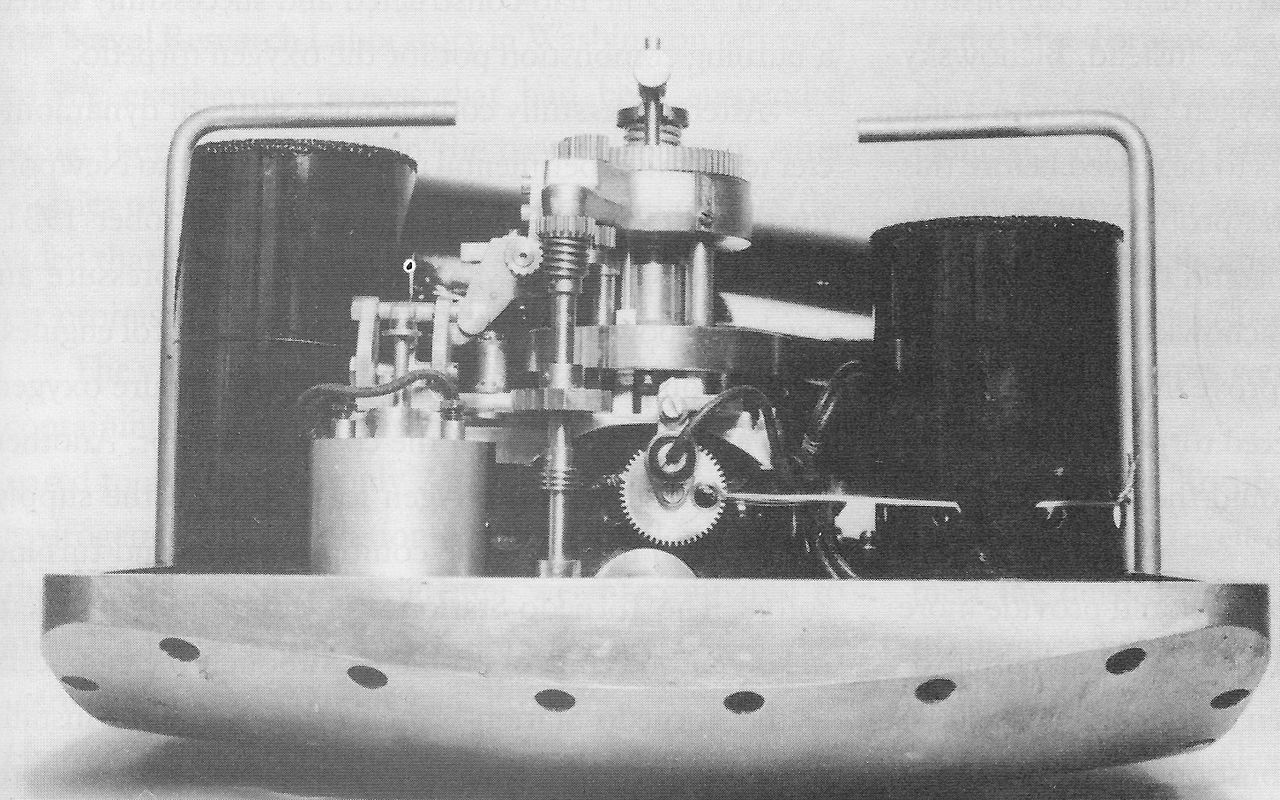
Mark VI Exploder Version 1
In the interwar years of severe budgetary restrictions cash for testing was given a low priority. The Bureau of Ordnance (BuOrd) convinced itself that at $10,000 a piece, the Mark 14 was just too expensive to blow up during testing. So the warhead was filled with water and deliberately set to pass under the under the target to preserve both for reuse. A test firing was deemed successful if the exhaust bubbles passed under the target ship. Not a one was ever actually exploded. In the words of the Submarine Operational History: “The war began with an entire generation of submarine personnel none of whom had ever seen or heard the detonation of a submarine torpedo.”
Firing Failures
Seven days after Pearl Harbor the Navy should have recognized they had problems with their torpedoes. An American submarine found a Japanese tanker, put it in its sights and let fly one of the state of the art Mark 14 fish. The torpedo, fired from a range of 1000 yards, sped along straight and true then detonated 450 yards from the target.
The submarine commander, who had done previous service with BuOrd knew as much about the Mark 14 torpedo as anyone commanding a boat. Suspecting the problem might be the magnetic detonator he deactivated them on his Mark 14 torpedoes. Continuing his patrol he fired a total of 13 torpedoes at six different targets without a hit.
Duds
Once Nimitz’ subs stopped using the magnetic detonating feature it became obvious that most of the torpedoes were duds. One sub reported firing 15 fish at an anchored Japanese Whale Factory. Eleven torpedoes failed to explode though they hit their target. Lockwood ordered more tests, this time of the contact detonators. Mark 14s were fired at a cliff and dropped from a crane in an effort to get to the bottom of the problem.
By September the tests had proven that the Mark 14 contact firing pin was unfit for combat. The pin was so delicate that it would crush without detonating the torpedo on an optimal hit of 90 degrees relative to the target. At 45 degrees, 50% of the torpedoes failed. Lockwood ordered the submariners to target glancing shots at enemy vessels. Yes, he admitted, they were more difficult to make, but they had a chance of being successful while the problem was corrected
Totally frustrated the captain informed the Commander, Submarines, Southwest Pacific1 (COMSUBSOWESPAC) that he had disobeyed orders by disarming the magnetic detonator. Regrettably, he added, even this did not seem to help. He opined that the torpedoes were either running significantly deeper than their setting or the contact detonators were not functioning or both. Aware they had been only tested using a water filled warhead he hypothesized that the actual Torpex explosive, being significantly heavier, was carrying the torpedoes down to a lower depth. He requested that he be allowed to conduct test firings at a fish net to check the depth setting on the torpedo. His request earned him a reprimand and a visit from a BuOrd officer. This officer, after reviewing crew procedures and conducting an inspection of the ship’s remaining torpedoes, placed the blame squarely on the crew.
Still the problem continued. On April 1, 1942 USS Scuplin fired a spread of three Mark 14s at an unescorted cargo ship at 1,000 yards. The captain of the Scuplin was the only thing that exploded as he watched the torpedoes pass harmlessly under the target. By July 5th 1942 Scuplin had fired 45 torpedoes damaging all of seven ships.
Over the next months the misses mounted. USS Spearfish fired and missed with four torpedoes at a Japanese cruiser. USS Skipjack targeted two on a seaplane tender with no hits. Scuplin spent another six days missing three Japanese freighters with nine Mark 14 torpedoes.
Henry Bruton, commander of USS Greenling, fired four Mark 14 torpedoes at a Japanese freighter after a textbook approach. All of them missed. Bruton went ballistic. Ordering the sub to the surface he passed the Japanese ship, setting up for another attack at 1,350 yards. Two fish sped toward the helpless freighter in the bright moonlight. Bruton watched as they missed. Again Bruton ordered Greenling to the surface to set up for a third attack. By now the Greenling had been spotted by the target. During the ensuing battle Bruton fired two more torpedoes. One was clean miss, the other exploded — 500 yards short of the target.
In the late summer of 1942 USS Seawolf ended her sixth patrol having fired 17 Mark 14s to sink two ships. Freddy Warder, Seawolf ‘s captain then loaded his submarine with a combination of the old Mark 10 “sledgehammer simple” and the newer Mark 14 torpedoes. Finding a 8,000 ton transport at anchor with no tide or current he conducted a test. At 1,400 yards he fired 4 Mark 14 torpedoes. The first, set at 18 feet, ran under the target exploding on the beach. The second, set at eight feet, appeared to detonate on the transport’s side while the other two, set at four feet, failed to explode. Warder, with Japanese shells exploding around his periscope, withdrew, reloaded his tubes with Mark 10s and attacked again. Both ran “hot and true” and sank the transport.
Captains complained, but no one seemed to be listening. A number of senior officers had their suspicions but they ran into brick walls.
Lockwood
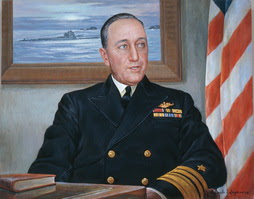
In June 1942, Rear Admiral Charles Lockwood became COMSUBSOWESPAC. After reading the war diaries of his submariners he became convinced that poor torpedo performance was the root cause of fleet’s poor sub kill rate. Lockwood asked BuOrd if they had recently tested the Mark 14. The answer was a curt “No.” Lockwood then purchased a 500 foot long fish net and tested the Mark 14 himself. The results were no surprise to the submarine captains. One torpedo, set at 10 feet, ran through the net at 25 feet, another with the same depth setting passed through at 18 feet. Another, set to ride on the surface, went through the net at 11 feet.
Lockwood notified BuOrd of his results and was told that no reliable conclusions could be drawn from his test. Lockwood then repeated the test with another submarine. Three torpedoes, each set at 10 feet, cut the net at 21 feet. In July, informed of Lockwood’s tests, King, ordered BuOrd to test the Mark 14. In August of 1942 the Bureau completed its tests and formally declared the Mark 14 ran 11 feet deeper than set.
Premature Explosions
Even after this problem was “solved” complaints on torpedo performance continued. Most concerned the issue of premature explosions. Lockwood endorsed these reports and sent them to Washington. Rear Admiral Ralph Waldo Christie, the BuOrd officer largely responsible for the development of the Mark 14 and Mark 6 magnetic detonator, then entered the fray.
When the failure of the attack was blamed on his beloved detonators and torpedoes. Christie wrote Lockwood: “It is not defective torpedoes nor exploders causing the dearth of sunken Japanese ships. It is ineffective submarine crews… and by the way stop your negative reports about the torpedoes.” Lockwood replied, “From the amount of belly-aching it (Lockwood’s note) contains, I assume that your breakfast coffee was scorched or perhaps it was a bad egg. You boys may figure the problem out to suit your favorite theories but the fact remains that we have now lost six valuable targets due to prematures so close to that the skipper thought they were hits.”
Lockwood made his feelings plain at a conference in Washington DC. He ripped into the BuOrd declaring “If the Bureau of Ordnance can’t provide us with torpedoes that will hit and explode, then for God’s sake get the Bureau of Ships to design a boat hook with which we can rip plates off a target’s sides.”
Lockwood was immediately confronted by an old friend, Rear Admiral WHP “Spike” Blandy, the BuOrd Chief. “I don’t know whether it’s part of your mission to discredit the Bureau of Ordnance, but you seem to be doing a pretty good job of it.”
“Well, Spike,” Lockwood retorted, “if anything I have said will get the bureau off its duff and get some action, I will feel that my trip has not been wasted.”
Christie Checks
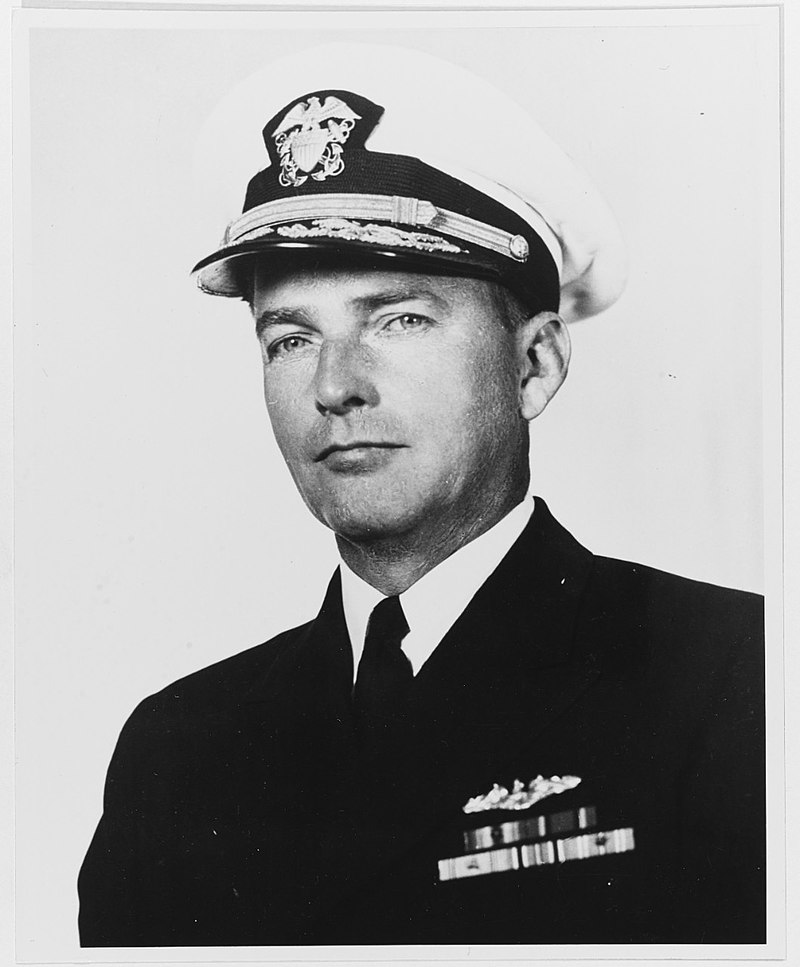
In early 1943 the submarine command structure changed. Lockwood moved from being COMSUBSOWESPAC to COMSUBPAC at Pearl Harbor under Admiral Chester Nimitz, the Commander In Chief, Pacific Fleet (CINCPAC). Christie was named COMSUBSOWESPAC. Far from bowing to the obvious, Christie conducted a vendetta against skippers who slurred his torpedo. When two of his captains questioned the reliability of the Mark 14 they were transferred out. Word spread that to question the Mark 14 in Christie’s command was a sure way of being assigned shore duty.
To forestall criticism, Christie actually went on patrol with his most successful captain in order to observe the Mark 14 in action. Of three fired in the first attack, the first torpedo broke to the surface zigzagged and passed in front of the target while the other two hit and sank the ship. During the second attack on this cruise Christie watched as 18 torpedoes were fired at one ship. Only five hit but none of the blows was a killing one and the Japanese ship steamed off. Christie deemed the operation a success.
Nimitz Takes Action
The missed opportunities continued to mount. In April 1943 the USS Tunny had worked herself into the center of a Japanese carrier formation near Truk. On one side loomed a fleet carrier, on the other two smaller ones. Tunny launched four aft torpedoes at the small carrier and six at the big one at a range of 850 yards. Despite the spread and position only one of the small carriers was damaged while most of the other torpedoes detonated prematurely. Tunny had to flee for her life with little to show for her efforts.
On June 11, 1943 US submarines entered Tokyo Harbor, one of the war’s most daring feats. Salvo after salvo failed to sink any fleet units in the harbor’s confined spaces.
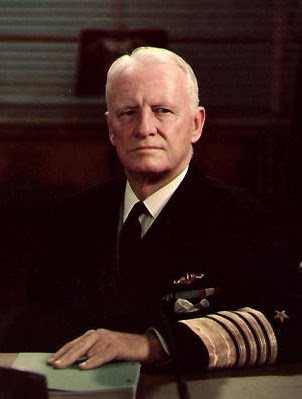
This and other failed attacks were enough for Nimitz. In June 1943, CINCPAC ordered the deactivation of the magnetic warheads on his submarines. Christie, still maintaining his faith in the magnetic detonator, continued their use in his fleet.
A Matter of Physics
Nimitz was right, Christie was wrong. The magnetic detonator on the Mark 6 was not working. After much investigation, it turned out to be a matter of physics. Every steel bottomed ship was encased in a magnetic field that radiated in all directions. Designers presumed that this field extended an equal distance in all directions, forming a perfect hemisphere under the bottom of the ship. But there was flaw in the reasoning. What was not understood (by anyone in the world) was that the magnetic field encasing a ship varied in shape depending in circumstances. Near the equator, this magnetic envelope flattened out until it resembled a thick disk more than a hemisphere. Since the torpedo would enter the magnetic field some distance from the ship it would explode harmlessly.
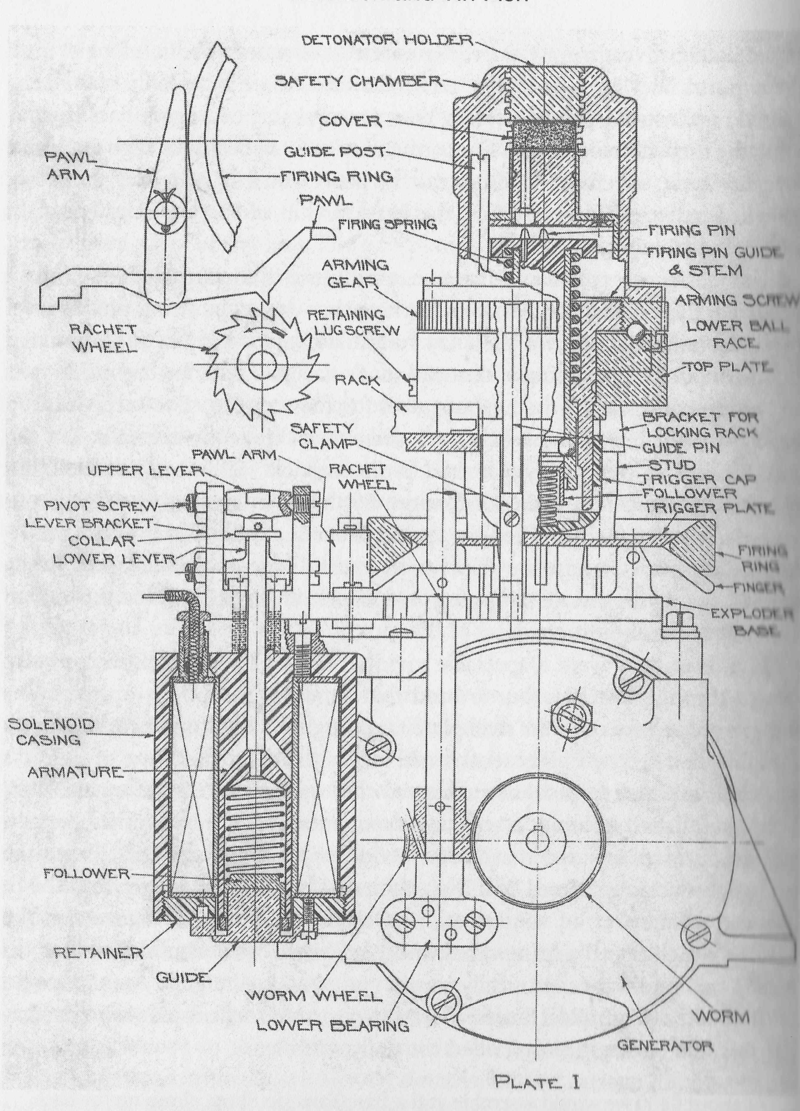
Drawing of the Mark VI Trigger operation.
The war was now eighteen months old. The Navy had already discovered that its state of the art torpedo was running eleven feet lower than its setting and that the magnetic detonator wasn’t working. What else could go wrong?
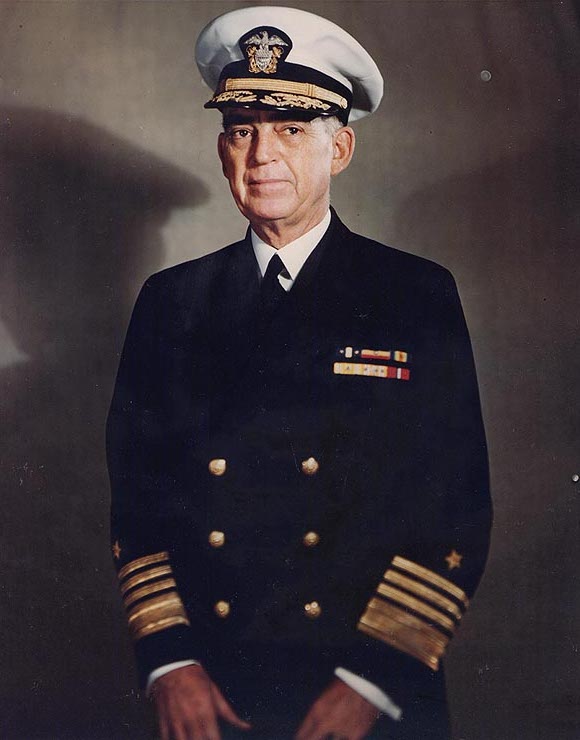
Admiral Kincaid
In November 1943 Christie was given a direct order by Vice Admiral Thomas Kinkaid, Commander of the Seventh Fleet to disarm all the magnetic detonators. It was a bitter blow and he refused to accept its logic. “Today,” he wrote in his diary, “the long hard battle on the Mark 6 magnetic feature ends with defeat. I am forced to inactivate all magnetic exploders. We are licked.”
During the same month a fix for the contact pin problem was introduced. Now when the submarines pulled out of port they were finally able to hunt and kill, not shoot fizzling fish.
Supposedly quite a few GI’s with training in Communications and other high skills were kidnapped by the NKVD and then abandoned by the brass. Quite a few German POWs that were interviewed by us. Told of seeing American Prisoners in their former Gulag’s & Prison Camps.
Also almost all the Russian Troops that worked with the Americans were imprisoned. For the “Crime” of being exposed to Western Troops and ideas. All in all this operation was just another example of the saying. Sometimes a Good Idea should stay a Good Idea. For more information look up Operation Frantic om Wikipedia. Grumpy