Categories
Dear Grumpy Advice on Teaching in Today's Classroom

Remember That Time a Nuclear Weapons Bunker Blew Up in San Antonio? DAVID WOOD

illustration of schoolchildren in a classroom while a blast occurs in the distance

On the clear, cool morning of November 13, 1963, a convoy flanked by blue Air Force police cars with flashing lights turned off the tarmac at Kelly Air Force Base, southwest of downtown San Antonio. It wound its way carefully across Interstate 410 and into the neighboring Lackland Air Force Base’s Medina Annex, slowly passing a neighborhood made up of new ranch homes.
At the center of the convoy, an ungainly vehicle called a straddle carrier, whose driver sat in a cab high above the roadway, held precious cargo slung between its four wheeled legs. The vehicle resembled a giant spider protecting its eggs.
The convoy drove into Site King, a secret area in Medina where about a hundred humpbacked rectangular bunkers made of fortified steel and concrete, known as “igloos”—each roughly the size of four 2-car garages—served as one of the country’s largest nuclear weapons installations.
The security was required because the convoy was transporting the explosive mechanisms of partially dismantled Mark-7 nuclear warheads, hundreds of which were being taken out of service. Technicians had removed the “pits” of radioactive fissile material from these warheads, leaving behind a round metallic shell of TNT-based baratol and cyclotol explosives, natural uranium (a hard, dense element found in minute quantities in most rocks and soil), and depleted uranium (a widely used metal left over when natural uranium is chemically enriched to make nuclear fuel).
Those spheres, each roughly the size of a beach ball, were studded with detonators that, if a bomb were fully armed and triggered, would initiate a nuclear explosion up to four times more powerful than the one that had destroyed Hiroshima eighteen years earlier. Without the fissile material, these warheads wouldn’t do anything like that. But even so, the explosives left behind would pack a mighty punch if they were ignited.
On this day at Igloo 572, the spheres, each weighing hundreds of pounds, were loaded on a steel pallet, carefully placed on a hydraulic lift, moved past the pair of ten-foot-tall, two-thousand-pound steel doors, and hauled into the dim interior. The igloo was nearly full of the spheres, 209 of them. Stacked along the floor and divided by a narrow aisle down the center, they were, in essence, one gigantic bomb. Civilian contractors Louis Ehlinger Sr. and Floyd Lutz were laying a pallet into place. It was difficult work.
Another contractor, Hilary Huser, was standing just outside the door, logging numbers from the remaining warheads. At 10:24 a.m., he was startled by a sudden loud crack! coming from the igloo and then saw Lutz and Ehlinger heading toward him. He ran.

The explosion at Medina Annex, in San Antonio, on November 13, 1963.

The explosion at Medina Annex, in San Antonio, on November 13, 1963. 37th TRW Office of History and Research

 
Life was good for the kids who lived in Lackland’s Medina Annex in the early sixties. “Carefree” is the word many of them use now to recall those days, even though many of their parents were deeply engaged in the struggles of the Cold War. In the mornings, blue Air Force buses took the kids to Lackland Elementary School; in the afternoons, the same buses brought them back to their neat homes and manicured lawns. After school, they would take off on bikes or roller-skate to the pool or get hot dogs and Popsicles at Lackland’s golf club snack bar.
Because the community was integrated, like all military bases, Black and white kids played together in a way that was uncommon. (On trips into San Antonio, the kids would gawk at “Whites Only” signs posted above public drinking fountains.) Officers’ wives attended white-glove afternoon teas and called the kids to weekday supper at five o’clock sharp. At sunset, the soulful notes of “Taps” brought the day to a close. “It was such a sheltered environment,” said Claudia Petroski, now 67, who grew up there. “Parents didn’t worry if we were out riding bikes. Everybody knew everybody. Everyone else’s mom was looking out for you.”
Most of the kids growing up at Lackland were insulated not just from the outside world but also from the base’s grim purpose: preparing to fight a civilization-ending nuclear war with the Soviet Union. Many of them knew that Site King had something to do with nuclear weapons. After all, the droop-winged B-52s that carried thermonuclear bombs on their global readiness missions landed nearby for servicing, and the weapons designed to kill millions of people came in for regular refurbishment at Medina. But the business of fighting a nuclear war was something adults generally didn’t talk to them about.
Site King’s 88 acres were surrounded by three concentric rings of chain-link fence topped with barbed wire, and K-9 units and armed guards patrolled the grounds. For some Air Force kids, that all seemed to promise high adventure. Reachable by way of a hard hike through tangled underbrush and across Medio Creek, the complex exerted an irresistible pull on young Bill McRaven, who lived at 212 Baseview Drive.
One day he carried his Roy Rogers cap gun on a mission with his buddies to climb over the first fence around the property, foretelling the commando operations he would later lead as a legendary Navy SEAL commander. (The authorities stopped the kids before they got to the second fence, aborting their mission.) Others, mindful of the barbed wire topping the fences, went low. “We’d just go under the fence,” recalled Floyd Smith, who also grew up on the base at the time. But they never made it all the way into Site King’s center.

A soldier, Sergeant Edward Joseph League, at a promotion ceremony at Lackland in the sixties.
A soldier, Sergeant Edward Joseph League, at a promotion ceremony at Lackland in the sixties. Courtesy of Kathy League Afnani

 
Over the span of almost six decades, memories have faltered and blurred, and the question of why one of the warhead assemblies in Igloo 572 sparked off remains frustratingly unanswered. It seems likely that a detonator was accidentally bumped and then ignited, quickly setting fire to the sphere of highly explosive TNT and uranium metal. That’s how the device was supposed to work, after all. Just not inside a storage igloo.
“There’s no direct answer to what caused it that we know of,” insists Floyd Lutz, who is eighty and owns a water treatment business in San Antonio. “When the igloo was fixin’ to ignite, we were inside setting down those units.” As soon as that loud crack! sounded, he and Ehlinger scampered through the open doorway amid dust and smoke.
“The fire started, so we hauled ass,” Lutz explained. They sprinted past Huser, yelling as they went.
“[They] didn’t have to tell me to run,” said Huser. “They went one way; I went the other down Perimeter Road. I guess it had rained the day before, and I bogged down in a ditch and fell, got back up and turned around and looked, and there was smoke coming off of the igloo’s vent. I was going to go to the next set of igloos to set off an alarm. I got about halfway, and the whole thing blew up.”
Huser, who died this past August, weeks after I last spoke to him, paused and rested his large hands on the carefully folded newspaper clippings and faded photographs spread out on the kitchen table of his modest one-story house near Blanco, in the gently rolling scrubland between San Antonio and Austin. Behind his rimless glasses, he had a thousand-yard stare that took him back more than half a century.
“I didn’t think I was gonna make it to the next row of igloos,” he said softly.
Within a minute, the fire that had started with one sphere ignited all 209 spheres in the igloo, setting off a tremendous detonation. The entire steel-and-concrete igloo and its contents—the hydraulic Yale lift, the steel pallets, and the one-ton steel doors—all went airborne, as did the dirt and layers of rock that lay as far down as 25 feet beneath the surface. Nothing was left but an empty crater more than half a football field wide. Much of the uranium and depleted uranium metal were vaporized into the towering cloud of dust and debris that rose a thousand feet.
As Ehlinger and Lutz ran, the pressure wave struck, throwing them down the road. They got up, started sprinting again, and made it about a hundred yards from the igloo before Ehlinger leaped into a culvert, where he tried to dodge debris. A chunk of concrete smashed into his thigh, leaving a knot that he says is still there.
“We were lucky enough not to be blowed to pieces,” Lutz said. “[The higher-ups] thought we were all goners. Our boss told ’em, ‘Those guys are probably no longer there.’ ”

The crater that remained after the Lackland Air Force Base blast in 1963
The crater created by the explosion at Lackland on November 13, 1963. San Antonio Express-News/ZUMA Press

Huser, stunned by the concussive blast that had ruptured his left eardrum, felt time stretch into slow motion. He had a terrifying moment when he realized that the large chunks of steel, concrete, and rock that had gone airborne were just as quickly going to come back down.
“I stood there for what seemed like five minutes looking in the air to see if I could dodge all that stuff, and I finally decided I couldn’t, and the biggest thing I could find was a little ol’ bush.” He dove under it and curled himself into the fetal position, his arms clutched tightly over his head as chunks of metal and concrete crashed around him.
When it was over, Huser unwound himself, got up, dusted himself off, and looked around. A lethal-sized block of concrete had landed a few feet away. The chain-link fences that enclosed the field of igloos had been blown over by the force of the blast. An old school bus the men had used to travel to and from the main gate had been thrown over on its side and its windows smashed out.
Hilary Huser dove under a bush and curled himself into the fetal position as chunks of metal and concrete crashed around him.
Eyeing the wreckage, Huser staggered on shaking legs to the concrete pad at the doorway of a nearby igloo and sat down, wondering what had become of Ehlinger and Lutz. Pretty soon their boss arrived in a vehicle. “I told him the other two guys run off, and he took off without saying anything,” Huser remembered. After a while, an ambulance showed up, and an attendant opened the rear door. Ehlinger and Lutz were inside.
The blast also shook Lackland Elementary School, where kids on the playground saw a cloud of smoke and debris rising over Medina Annex. “We thought World War III had started,” said Bill Manrow, then a seventh grader. “We were all scared s—less.” Sirens were going off, windows were broken in the Medina housing complex, and residents were rushing into the street to see what was going on. Many of the adults were terrified that a lethal dose of radiation had been released. It had been only a year, after all, since the United States had halted almost two decades of aboveground nuclear testing, which had showered Americans and others with radioactive fallout. “People fled the scene in panic,” the San Antonio Light reported later that day. Though there was no official evacuation, the roads around the base were jammed bumper to bumper.
The damage was hardly limited to the base. A dozen miles across the city, residents on San Antonio’s North Side reported dishes being thrown from shelves and wall decorations dashed to the floor. The plate-glass window fronting the Continental bus station on Broadway, about thirteen miles from Lackland, was blown in. Elsewhere, according to the Light, a parrot in a birdcage was knocked to the floor but emerged unhurt. A woman named Dora Aguilar was on the phone about a mile from the blast. “I was talking and the explosion simply blew the phone out of my hand,” she told the Associated Press. All over the city, the blast drew people out into the streets to gape at what they later swore was a mushroom-shaped cloud with a cap that was miles wide. (Photographs taken that day don’t show a mushroom-shaped cloud.)
When the explosion happened, Hilary Huser’s wife, Mary, had just arrived at the Model Market, on Vance Jackson Road, eleven miles from the blast. The store’s plate-glass window had bulged in from the pressure wave but hadn’t broken. She then went to another store, where the TV was reporting that there’d been an explosion at Medina Annex. Shocked, Mary picked up a bottle of liquor on the way home so that she and Hilary could celebrate what she hoped had been his narrow escape.

A fifth grade class at Lackland Elementary School

A fifth grade class at Lackland Elementary School, including Jane Vaughn (first row, far left) and Claudia Petroski (second row, second from left). Courtesy of Jane Feldmann Vaughn

 
Given that the blast occurred at a nuclear weapons facility in sight of a major American city at a time when the country was obsessed with civil defense, the folks at Lackland might have expected a fast and efficient government response. If they did, they were surely disappointed. The phone lines at Lackland AFB were quickly jammed by panicked callers, which meant the authorities couldn’t get through. So the Texas Department of Public Safety’s communications center, in Austin, assumed the role of coordinating much of the response, as best it could from nearly a hundred miles away.
There was a tremendous amount of confusion. Local civil defense director Martin Ester told reporters that the blast severely “shook up the town”—figuratively speaking—resulting in a flood of “pretty weird tales” and “utterly ridiculous” rumors. One report received by the DPS center from its district headquarters said that only “chemical” explosives were involved.
Then came a more alarming—and erroneous—message: enriched uranium-235 had been stored in the igloo. Another message, hardly reassuring, said that “normal” uranium was involved and that it might have been carried downwind. A radio station reported that it was probable that a nuclear reactor had blown up. Some people thought that the United States and the Soviet Union had finally gone to war.
A radio station reported that it was probable that a nuclear reactor had blown up. Some people thought that the United States and the Soviet Union had gone to war.
The state’s Division of Occupational Health and Radiation Control, in Austin, later complained that “there was little or no authoritative information available to the division’’ the entire day. The division dispatched staff members from Austin to collect soil and vegetation samples to test for radiation. Because the car didn’t have a two-way radio, they drove south, unaware of what they were getting into.
For most of the day, officials had no way of knowing “whether or not there was danger to the surrounding population or if assistance was needed on the base itself,” the Disaster Research Center at Ohio State University later observed. Telephone problems also plagued the San Antonio Health Department, which, for reasons that have never been explained, couldn’t make outgoing calls. “For some thirty minutes or more, which was a most important period of time, they had little or no information,” Raymond T. Moore, the regional director of radiological health for the U.S. Public Health Service, wrote in a memo to his boss two days later.
The authorities did address one issue quickly: the question of whether dangerous radiation had been released. Within hours of the blast, technicians had already gathered air, water, and soil samples and, they said, determined that no radiation above normal background levels was detected. Further analysis by a Public Health Service radiological lab confirmed that “no significant contamination” had been released.
How was that possible? The explanation is that the explosion was not, strictly speaking, a “nuclear” blast. Because the radioactive fissile core of each sphere had already been removed, all that was left—other than the TNT-based explosives—were the natural uranium and the depleted uranium, neither of which was dangerously radioactive.
The TNT itself was enough to cause a massive explosion but not the nuclear nightmare that so many feared.

Former civilian contractor Louis Ehlinger Sr.
Former civilian contractor Louis Ehlinger Sr. on April 30, 2020, with enlarged versions of the San Antonio Light’s front page from November 13 and 14, 1963, which he keeps at his home, in Devine. Courtesy of Nancy Saathoff

 
Yet as the years have gone by and Americans have become more skeptical of what their government tells them, some of the people who grew up at Lackland have wondered if they’ve gotten the full story about the after-effects of the explosion.
The children of Lackland Elementary School dispersed as their Air Force parents were transferred or deployed, and they eventually left their homes in San Antonio and went their own ways. But many of them remain such good friends that they have occasional reunions. The most recent one was held last year, in San Antonio.
In the spacious lobby of the historic Menger Hotel, a stone’s throw from the Alamo, ten Lackland alumni, a few of their spouses, and one of their teachers gathered over scrapbooks and old issues of the Junior Talespinner, the school’s newspaper. They shared prosaic memories: the four-foot rattlesnake one of the kids brought home from the woods around Site King, the secret preteen crushes, and the awkward dances at the youth center.
Oddly, most of the former Lackland kids in attendance whom I talked with said that the explosion hadn’t had a significant effect on their lives. When pushed, they spoke of the various traumas of the sixties—the assassinations, the race riots, the friends and family lost in Vietnam—and said they regard that day’s events as inseparable from those larger forces. The explosion was just another event in a decade that left them, and much of the country, reeling.
As they reminisced about their years at Lackland, they also mentioned, sadly, as people their age do, those who are gone. At least five close classmates have died: two from brain tumors; two, in their early sixties, from other cancers; and one from a heart attack. Two other classmates currently have cancer. Inevitably, the people gathered there wondered if the explosion of Igloo 572 had something to do with these deaths and illnesses. “When we started to see all these people with cancer, we started wondering if there wasn’t some connection,” said Jane Vaughn, now 66, who was 9 at the time of the explosion.
Over the past year, I’ve worked to get an answer to that question. One problem: it’s hard to know if the number of Lackland alums with cancer is unusual. Military families frequently move around, so it’s difficult to track down every student who would have been there at the time. I’ve managed to contact fifty of the likely hundreds of children who passed through Lackland Elementary School during the early sixties, hardly enough to do a proper epidemiological study. I’ve dug up reams of technical reports on the explosion and its aftermath, including the original files of the Atomic Energy Commission and analyses of the air, water, and soil sampling done immediately after the explosion and in the days and years afterward. At Lackland in 2002, 2009, and 2010 the Air Force commissioned studies of possible radiological contamination of the soil at the site. Each of the studies found that any contamination was below safe limits.
Last summer I forwarded all of that material to Sheldon Landsberger, a professor of nuclear and radiation engineering at the University of Texas at Austin who serves on the board of the Journal of Environmental Radioactivity. Landsberger didn’t see any evidence of contamination at Lackland dangerous enough to cause cancer. “There’s no smoking gun,” he told me. “It’s hard to predict that cancer would come from this explosion.”
Still, even if there was no epidemiological significance to the explosion, the violent destruction of a nuclear weapons bunker in a major city is the sort of historical event that one would think would live on in Texans’ memories decades later. And yet the Lackland explosion has been forgotten by almost everyone but those who experienced it. Perhaps that’s because the story, in the end, is somewhat anticlimactic; it was a seemingly worst-case scenario that turned out to be not that bad after all. It started with a bang and ended with a whimper.
Or perhaps the Lackland explosion has been lost to history because it was soon overshadowed by a much more momentous event.
On November 21, eight days after the blast, Air Force One landed at San Antonio International Airport, and President John F. Kennedy and first lady Jacqueline Kennedy descended to be greeted by a delirious public. Crowds of people wearing their Sunday best leaned out of windows and balconies and waved and cheered as a motorcade sped the president, the first lady, and Texas governor John Connally and his wife, Nellie, through downtown and out to Brooks Air Force Base to dedicate a new aerospace medical facility.
The Lackland Elementary School kids were bused over to hear the president speak, and afterward, Claudia Petroski and her friend Sally Wolter McLaughlin unexpectedly ran into JFK and Jackie waiting at their car. Petroski remembers Jackie, who must have realized that they had been part of the audience, saying, “Oh Jack, look—the children!” Jackie and the president shook hands with them. “She had her white gloves on,” Petroski said. “I idolized her.”
Later that day the Kennedys flew to Houston and then on to Fort Worth, where they stayed overnight. The next morning, November 22, they boarded Air Force One once again and took off for Dallas.
This article originally appeared in the November 2020 issue of Texas Monthly with the headline “We Thought World War III Had Started.”

Categories
Dear Grumpy Advice on Teaching in Today's Classroom This great Nation & Its People War

Vicksburg: Animated Battle Map

Categories
Dear Grumpy Advice on Teaching in Today's Classroom Leadership of the highest kind Soldiering This great Nation & Its People

One reason why we should never forget Stonewall Jackson (He has a lot to teach folks about soldiering)

Categories
Cops Dear Grumpy Advice on Teaching in Today's Classroom Hard Nosed Folks Both Good & Bad Interesting stuff Leadership of the highest kind

Unspeakable Truths about Racial Inequality in America written by Glenn Loury

This is the text of a lecture delivered by the author as part of the Benson Center Lecture Series at the University of Colorado, Boulder, on February 8th, 2021.

I am a black American intellectual living in an age of persistent racial inequality in my country. As a black man I feel compelled to represent the interests of “my people.” (But that reference is not unambiguous!) As an intellectual, I feel that I must seek out the truth and speak such truths as I am given to know. As an American, at this critical moment of “racial reckoning,” I feel that imperative all the more urgently. But, I ask, what are my responsibilities? Do they conflict with one another? I will explore this question tonight.

My conclusion: “My responsibilities as a black man, as an American, and as an intellectual are not in conflict.” I defend this position as best I can in what follows. I also try to illustrate the threat “cancel culture” poses to a rational discourse about racial inequality in America that our country now so desperately requires. Finally, I will try to model how an intellectual who truly loves “his people” should respond. I will do this by enunciating out loud what have increasingly become some unspeakable truths. So, brace yourselves!

I begin with a provocation: Consider this story from my hometown newspaper, the Chicago Sun-Times, that ran on May 31st, 2016. (Things have only gotten worse since.) I ask you to bear with me here because these details matter. We must look them squarely in the face:

Six people were killed, including a 15-year-old girl, and at least 63 others were wounded in shootings across Chicago over Memorial Day weekend.

The total number of people shot during the weekend this year surpassed the 2015 holiday, when 55 people were shot, 12 fatally, over Memorial Day weekend.

The most recent homicide happened late Monday in the Washington Park neighborhood on the South Side.

Officers responding to a call of shots fired about 11pm found James Taylor lying on the ground near his vehicle in the 5100 block of South Calumet, according to Chicago Police and the Cook County medical examiner’s office. Taylor, who lived in the 6500 block of South Ellis, had been shot in the chest and was pronounced dead at the scene, authorities said.

Witnesses at the scene were not cooperating with detectives.

About the same time, a man was shot to death in the West Rogers Park neighborhood on the North Side.

Officers responding to a call of shots fired about 11pm found 39-year-old Johan Jean lying in a gangway in the 6400 block of North Rockwell, authorities said.

Jean, who lived in the 100 block of North Ashland in Evanston, was shot in the neck and taken to Presence Saint Francis Hospital in Evanston, where he was later pronounced dead, authorities said. Police said he was 25 years old.

A source said the shooting stemmed from a dispute between two women. One of them has a child with the man and the other was his girlfriend. Both women were armed, and the man was eventually shot during the argument. No weapons were recovered from the scene.

About 5.20pm Saturday, a man was shot to death in the Fuller Park neighborhood on the South Side.

Garvin Whitmore, 27, was sitting in the driver seat of a vehicle with a passenger, 26-year-old Ashley Harrison, in the 200 block of West Root, when someone walked up to the vehicle and shot him in the head, according to police and the medical examiner’s office.

Whitmore, of the 5800 block of West 63rd Place, was pronounced dead at the scene at 5.29pm, authorities said.

All of the victims were black people. Sixty-three shot, six dead, one weekend, one city. Here’s the thing: reports such as this could be multiplied dozens of times, effortlessly. If a black intellectual truly believes that “Black Lives Matter,” then what is he supposed to say in response to such nauseating reports—that “there is nothing to see here?” I think not.

Violence on such a scale involving blacks as both perpetrators and victims poses a dilemma to someone like myself. On the one hand, as the Harvard legal scholar Randall Kennedy has observed, we elites need to represent the decent law-abiding majority of African Americans cowering fearfully inside their homes in the face of such violence. We must do so not just to enhance our group’s reputation as in the “politics of respectability” but mainly as a precondition for our own dignity and self-respect.

On the other hand, we elites must also counter the demonization of young black men which the larger American culture has for some time now been feverishly engaged in. Even as we condemn murderers, we cannot help but view with sympathy the plight of many poor youngsters who, though not incorrigible, have nevertheless committed crimes. We must wrestle with complex historical and contemporary causes internal and external to the black experience that help to account for this pathology. (There’s no way around it. This is pathology. The behavior in question here is not okay. That one can adduce social-psychological explanations does not resolve all moral questions.)

Where is the self-respecting black intellectual to take his stand? Must he simply act as a mouthpiece for movement propaganda aiming to counteract “white supremacy”? Has he anything to say to his own people about how some of us are living? Is there space in American public discourses for nuanced, subtle, sophisticated moral engagement with these questions? Or are they mere fodder for what amount to tendentious, cynical, and overtly politically partisan arguments on behalf of something called “racial equity”? And what about those so-called “white intellectuals”? Do they have to remain mute? Or, must they limit themselves to incanting anti-racist slogans?

I don’t know all of the answers here, but I know that those victims had names. I know they had families. I know they did not deserve their fate. I know that black intellectuals must bear witness to what actually is taking place in our midst; must wrestle with complex historical and contemporary causes both within and outside the black community that bear on these tragedies; must tell truths about what is happening and must not hide from the truth with platitudes, euphemisms and lies.

I know, despite whatever causal factors may be at play, that we black intellectuals must insist each youngster is capable of choosing a moral way of life. I know that, for the sake of the dignity and self-respect of my people as well as for the future of my country, we American intellectuals of all colors must never lose sight of what a moral way of life consists in. And yet, we are in imminent danger of doing precisely that, I fear. Here’s why. 

The first unspeakable truth: Downplaying behavioral disparities by race is actually a “bluff”

Socially mediated behavioral issues lie at the root of today’s racial inequality problem. They are real and must be faced squarely if we are to grasp why racial disparities persist. This is a painful necessity. Activists on the Left of American politics claim that “white supremacy,” “implicit bias,” and old-fashioned “anti-black racism” are sufficient to account for black disadvantage. But this is a bluff that relies on “cancel culture” to be sustained. Those making such arguments are, in effect, daring you to disagree with them. They are threatening to “cancel” you if you do not accept their account: You must be a “racist”; you must believe something is intrinsically wrong with black people if you do not attribute pathological behavior among them to systemic injustice. You must think blacks are inferior, for how else could one explain the disparities? “Blaming the victim” is the offense they will convict you of, if you’re lucky.

I claim this is a dare; a debater’s trick. Because, at the end of the day, what are those folks saying when they declare that “mass incarceration” is “racism”—that the high number of blacks in jails is, self-evidently, a sign of racial antipathy? To respond, “No. It’s mainly a sign of anti-social behavior by criminals who happen to be black,” one risks being dismissed as a moral reprobate. This is so, even if the speaker is black. Just ask Justice Clarence Thomas. Nobody wants to be cancelled.

But we should all want to stay in touch with reality. Common sense and much evidence suggest that, on the whole, people are not being arrested, convicted, and sentenced because of their race. Those in prison are, in the main, those who have broken the law—who have hurt others, or stolen things, or otherwise violated the basic behavioral norms which make civil society possible. Seeing prisons as a racist conspiracy to confine black people is an absurd proposition. No serious person could believe it. Not really. Indeed, it is self-evident that those taking lives on the streets of St. Louis, Baltimore, Philadelphia, and Chicago are, to a man, behaving despicably. Moreover, those bearing the cost of such pathology, almost exclusively, are other blacks. An ideology that ascribes this violent behavior to racism is laughable. Of course, this is an unspeakable truth—but no writer or social critic, of whatever race, should be cancelled for saying so.

Or, consider the educational achievement gap. Anti-racism advocates, in effect, are daring you to notice that some groups send their children to elite colleges and universities in outsized numbers compared to other groups due to the fact that their academic preparation is magnitudes higher and better and finer. They are daring you to declare such excellence to be an admirable achievement. One isn’t born knowing these things. One acquires such intellectual mastery through effort. Why are some youngsters acquiring these skills and others not? That is a very deep and interesting question, one which I am quite prepared to entertain. But the simple retort, “racism”, is laughable—as if such disparities have nothing to do with behavior, with cultural patterns, with what peer groups value, with how people spend their time, with what they identify as being critical to their own self-respect. Anyone actually believing such nonsense is a fool, I maintain.

Asians are said, sardonically, according to the politically correct script, to be a “model minority.” Well, as a matter of fact, a pretty compelling case can be made that “culture” is critical to their success. Read Jennifer Lee and Min Zhou’s book, The Asian American Achievement Paradox. They have interviewed Asian families in Southern California, trying to learn how these kids get into Dartmouth and Columbia and Cornell with such high rates. They find that these families exhibit cultural patterns, embrace values, adopt practices, engage in behavior, and follow disciplines that orient them in such a way as to facilitate the achievements of their children. It defies common sense, as well as the evidence, to assert that they do not or, conversely, to assert that the paucity of African Americans performing near the top of the intellectual spectrum—I am talking here about academic excellence, and about the low relative numbers of blacks who exhibit it—has nothing to do with the behavior of black people; that this outcome is due to institutional forces alone. That, quite frankly, is an absurdity. No serious person could believe it.

Nor does anybody actually believe that 70 percent of African American babies being born to a woman without a husband is (1) a good thing or (2) due to anti-black racism. People say this, but they don’t believe it. They are bluffing—daring you to observe that the 21st-century failures of African Americans to take full advantage of the opportunities created by the 20th century’s revolution of civil rights are palpable and damning. These failures are being denied at every turn, and these denials are sustained by a threat to “cancel” dissenters for being “racists.” This position is simply not tenable. The end of Jim Crow segregation and the advent of the era of equal rights was transformative for blacks. And now—a half-century down the line—we still have these disparities. This is a shameful blight on our society, I agree. But the plain fact of the matter is that some considerable responsibility for this sorry state of affairs lies with black people ourselves. Dare we Americans acknowledge this?

Leftist critics tout the racial wealth gap. They act as if pointing to the absence of wealth in the African American community is, ipso facto, an indictment of the system—even as black Caribbean and African immigrants are starting businesses, penetrating the professions, presenting themselves at Ivy League institutions in outsize numbers, and so forth. In doing so, they behave like other immigrant groups in our nation’s past. Yes, they are immigrants, not natives. And yes, immigration can be positively selective. I acknowledge that. Still, something is dreadfully wrong when adverse patterns of behavior readily visible in the native-born black American population go without being adequately discussed—to the point that anybody daring to mention them risks being cancelled as a racist. This bluff can’t be sustained indefinitely. Despite the outcome of the recent election, I believe we are already beginning to see the collapse of this house of cards.

A second unspeakable truth: “Structural racism” isn’t an explanation, it’s an empty category

The invocation of “structural racism” in political argument is both a bluff and a bludgeon. It is a bluff in the sense that it offers an “explanation” that is not an explanation at all and, in effect, dares the listener to come back. So, for example, if someone says, “There are too many blacks in prison in the US and that’s due to structural racism,” what you’re being dared to say is, “No. Blacks are so many among criminals, and that’s why there are so many in prison. It’s their fault, not the system’s fault.” And it is a bludgeon in the sense that use of the phrase is mainly a rhetorical move. Users don’t even pretend to offer evidence-based arguments beyond citing the fact of the racial disparity itself. The “structural racism” argument seldom goes into cause and effect. Rather, it asserts shadowy causes that are never fully specified, let alone demonstrated. We are all just supposed to know that it’s the fault of something called “structural racism,” abetted by an environment of “white privilege,” furthered by an ideology of “white supremacy” that purportedly characterizes our society. It explains everything. Confronted with any racial disparity, the cause is, “structural racism.”

History, I would argue, is rather more complicated than such “just so” stories would suggest. These racial disparities have multiple interwoven and interacting causes, from culture to politics to economics, to historical accident to environmental influence and, yes, also to the nefarious doings of particular actors who may or may not be “racists,” as well as systems of law and policy that disadvantage some groups without having been so intended. I want to know what they are talking about when they say “structural racism.” In effect, use of the term expresses a disposition. It calls me to solidarity. It asks for my fealty, for my affirmation of a system of belief. It’s a very mischievous way of talking, especially in a university, although I can certainly understand why it might work well on Twitter.

Another unspeakable truth: We must put the police killings of black Americans into perspective

There are about 1,200 fatal shootings of people by the police in the US each year, according to the carefully documented database kept by the Washington Post which enumerates, as best it can determine, every single instance of a fatal police shooting. Roughly 300 of those killed are African Americans, about one-fourth, while blacks are about 13 percent of the population. So that’s an over-representation, though still far less than a majority of the people who are killed. More whites than blacks are killed by police in the country every year. You wouldn’t know that from the activists’ rhetoric.

Now, 1,200 may be too many. I am prepared to entertain that idea. I’d be happy to discuss the training of police, the recruitment of them, the rules of engagement that they have with citizens, the accountability that they should face in the event they overstep their authority. These are all legitimate questions. And there is a racial disparity although, as I have noted, there is also a disparity in blacks’ rate of participation in criminal activity that must be reckoned with as well. I am making no claims here, one way or the other, about the existence of discrimination against blacks in the police use of force. This is a debate about which evidence could be brought to bear. There may well be some racial discrimination in police use of force, especially non-lethal force.

But, in terms of police killings, we are talking about 300 victims per year who are black. Not all of them are unarmed innocents. Some are engaged in violent conflict with police officers that leads to them being killed. Some are instances like George Floyd—problematic in the extreme, without question—that deserve the scrutiny of concerned persons. Still, we need to bear in mind that this is a country of more than 300 million people with scores of concentrated urban areas where police interact with citizens. Tens of thousands of arrests occur daily in the United States. So, these events—which are extremely regrettable and often do not reflect well on the police—are, nevertheless, quite rare.

To put it in perspective, there are about 17,000 homicides in the United States every year, nearly half of which involve black perpetrators. The vast majority of those have other blacks as victims. For every black killed by the police, more than 25 other black people meet their end because of homicides committed by other blacks. This is not to ignore the significance of holding police accountable for how they exercise their power vis-à-vis citizens. It is merely to notice how very easy it is to overstate the significance and the extent of this phenomenon, precisely as the Black Lives Matter activists have done.

Thus, the narrative that something called “white supremacy” and “systemic racism” have put a metaphorical “knee on the neck” of black America is simply false. The idea that as a black person I dare not step from my door for fear that the police would round me up or gun me down or bludgeon me to death because of my race is simply ridiculous. That is like not going outdoors for fear of being struck by lightning. The tendentious interpretation of every one of these incidents where violent conflict emerges between police and an African American, such that the incident is read as if it were the latter-day instantiation of the lynching of Emmett Till—that posture, I am obliged to report, is simply preposterous. Fear of being “cancelled” is the only thing that keeps many white people outside of the alt-Right from saying so out loud. “White silence” about anti-racism is not “violence.” Nor is it tacit agreement. But it should worry us.

I also want to stress the dangers of seeing police killings primarily through a racial lens. These events are regrettable regardless of the race of the people involved. Invoking race—emphasizing that the officer is white, and the victim is black—tacitly presumes that the reason the officer acted as he did was because the dead young man was black, and we do not necessarily know that. Moreover, once we get into the habit of racializing these events, we may not be able to contain that racialization merely to instances of white police officers killing black citizens. We may find ourselves soon enough in a world where we talk about black criminals who kill unarmed white victims—a world no thoughtful person should welcome, since there are a great many such instances of black criminals harming white people. Framing them in racial terms is obviously counter-productive.

These are criminals harming people, who should be dealt with accordingly. They do not stand in for their race when they act badly. White victims of crimes committed by blacks oughtn’t to see themselves mainly in racial terms if their automobile is stolen, or if someone beats them up and takes their wallet or breaks into their home and abuses them. Such things are happening on a daily basis in this country. We shouldn’t want to live in a world where such events are interpreted primarily through a racial lens. People are playing with fire, I think, when they gratuitously bring that sensibility to police-citizen interaction. That will not be the end of the story.

Yet another unspeakable truth: There is a dark side to the “white fragility” blame game

Likewise, I suspect that what we are hearing from the progressives in the academy and the media is but one side of the “whiteness” card. That is, I wonder if the “white-guilt” and “white-apologia” and “white-privilege” view of the world cannot exist except also to give birth to a “white-pride” backlash, even if the latter is seldom expressed overtly—it being politically incorrect to do so.

Confronted by someone who is constantly bludgeoning me about the evils of colonialism, urging me to tear down the statues of “dead white men,” insisting that I apologize for what my white forebears did to the “peoples of color” in years past, demanding that I settle my historical indebtedness via reparations, and so forth—I well might begin to ask myself, were I one of these “white oppressors,” on exactly what foundations does human civilization in the 21st century stand? I might begin to enumerate the great works of philosophy, mathematics, and science that ushered in the “Age of Enlightenment,” that allowed modern medicine to exist, that gave rise to the core of human knowledge about the origins of the species or of the universe. I might begin to tick-off the great artistic achievements of European culture, the architectural innovations, the paintings, the symphonies, etc. And then, were I in a particularly agitated mood, I might even ask these “people of color,” who think that they can simply bully me into a state of guilt-ridden self-loathing, where is “their” civilization?

Now, everything I just said exemplifies “racist” and “white supremacist” rhetoric. I wish to stipulate that I would never actually say something like that myself. I am not here attempting to justify that position. I am simply noticing that, if I were a white person, it might tempt me, and I cannot help but think that it is tempting a great many white people. We can wag our fingers at them all we want but they are a part of the racism-monger’s package. If one is going to go down this route, one has got to expect this. How can we make “whiteness” into a site of unrelenting moral indictment without also occasioning it to become the basis of pride, of identity and, ultimately, of self-affirmation?

One risks cancellation for saying this, but the right idea is the idea of Gandhi and Martin Luther King: to transcend our racial particularism while stressing the universality of our humanity. That is, the right idea—if only fitfully and by degrees—is to carry on with our march toward the goal of “race-blindness,” to move toward a world where no person’s worth is seen to be contingent upon racial inheritance. This is the only way to address a legacy of historical racism effectively without running into a reactionary chauvinism. Promoting anti-whiteness (and Black Lives Matter often seems to flirt with this) may cause one to reap what one sows in a backlash of pro-whiteness. Here we have yet another unspeakable truth which, as a responsible black intellectual, it is my duty to apprise you of.

On the unspeakable infantilization of “black fragility”

I would add that there is an assumption of “black fragility,” or at least of black lack of resilience lurking behind these anti-racism arguments. Blacks are being treated like infants whom one dares not to touch. One dares not say the wrong word in front of us; to ask any question that might offend us; to demand anything from us, for fear that we will be so adversely impacted by that. The presumption is that black people cannot be disagreed with, criticized, called to account, or asked for anything. No one asks black people, “What do you owe America?” How about not just what does America owe us—reparations for slavery, for example? What do we owe America? How about duty? How about honor?

When you take agency away from people, you remove the possibility of holding them to account and the capacity to maintain judgment and standards so that you can evaluate what they do. If a youngster who happens to be black has no choice about whether or not to join a gang, pick up a gun, and become a criminal, since society has failed him by not providing adequate housing, healthcare, income support, job opportunities, etc., then it becomes impossible to effectively discriminate between the black youngsters who do and do not pick up guns and become members of a gang in those conditions, and to maintain within African American society a judgment of our fellows’ behavior, and to affirm expectations of right-living. Since, don’t you know, we are all the victims of anti-black racism. The end result of all of this is that we are leveled down morally by a presumed lack of control over our lives and lack of accountability for what we do.

What is more, there is a deep irony in first declaring white America to be systemically racist, but then mounting a campaign to demand that whites recognize their own racism and deliver blacks from its consequences. I want to say to such advocates: “If, indeed, you are right that your oppressors are racists, why would you expect them to respond to your moral appeal? You are, in effect, putting yourself on the mercy of the court, while simultaneously decrying that the court is unrelentingly biased.” The logic of such advocacy escapes me.

On achieving “true equality” for black Americans

I am reminded, amidst the contemporary turmoil, of the period after the Emancipation, more than 150 years ago. There was a brief moment of pro-freedmen sentiment during Reconstruction, in the immediate aftermath of the Civil War, but it was washed away and the long, dark night of Jim Crow emerged. Blacks were set back. But, in the wake of this setback emerged some of the greatest achievements of African American history. The freedmen who had been liberated from slavery in 1863 were almost universally illiterate. Within a half-century, their increased literacy rate rivals anything that has been seen, in terms of a mass population acquiring the capacity to read. Now, that was really very significant, for it helped bring them into the modern world.

We now look at the black family lamenting, perhaps, the high rate of births to mothers who are not married and so forth—but that is a modern, post-1960 phenomenon. In fact, the health of the African American social fiber coming out of slavery was remarkable. Books have been written about this. Businesses were built. People acquired land. People educated their children. People acquired skills. They constantly faced opposition at every step along the way, “no blacks need apply,” “white only,” this and that and the other, and nevertheless they built a foundation from which could be launched a Civil Rights Movement in the mid-20th century, that would change the politics of the country. As my friend Robert Woodson is fond of saying, “When whites were at their worst, we blacks were at our best.” Such potentiality seems now to have been, in a way, forgotten as we throw ourselves, as I say, on the mercy of the court. “There’s nothing we can do.” “We’re prostrate here.” “Our kids are not doing as well, our communities are troubled, but here we are, and we demand that you save us.”

This is the very same population about which such a noble history of extraordinary accomplishment under unimaginably adverse conditions can be told. So, pull yourself up by the bootstraps is a kind of cliché, and people will laugh when you say it, and they’ll roll their eyes and whatnot. Take responsibility for your life. No one’s coming to save you. It’s not anybody else’s job to raise your children. It’s not anybody else’s job to pick the trash up from in front of your home, etc. Take responsibility for your life. It’s not fair, and this is another, I think, delusion. People think there is some benevolent being up in the sky who will make sure everything works out fairly, but it is not so. Life is full of tragedy and atrocity and barbarity and so on. This is not fair. It is not right. But such is the way of the world.

Here, then, is my final unspeakable truth, which I utter now in defiance of “cancel culture”: If we blacks want to walk with dignity—if we want to be truly equal—then we must realize that white people cannot give us equality. We actually have to actually earn equal status. Please don’t cancel me just yet, because I am on the side of black people here. But I feel obliged to report that equality of dignity, equality of standing, equality of honor, of security in one’s position in society, equality of being able to command the respect of others—this is not something that can be simply handed over. Rather, it is something that one has to wrest from a cruel and indifferent world with hard work, with our bare hands, inspired by the example of our enslaved and newly freed ancestors. We have to make ourselves equal. No one can do it for us.


Glenn Loury is a professor of economics and faculty fellow at the Watson Institute at Brown University and a senior fellow at the Manhattan Institute. You can follow him on Twitter @GlennLoury.

Categories
Anti Civil Rights ideas & "Friends" Dear Grumpy Advice on Teaching in Today's Classroom

The Code of the West vs the Code of the Left by VANDERLEUN

“A man’s got to have a code, a creed to live by, no matter his job.” — John Wayne

Once upon a time, there was “The Code of the West.” That was long ago, far away and in another country. In the US today “The Code of the Left” seems to prevail in a large swath of the population. I’ve compared the two here.

WEST * Never shoot an unarmed or unwarned enemy. This was also known as “the rattlesnake code”: always warn before you strike. However, if a man was being stalked, this could be ignored.

LEFT * Always smear a blameless or dangerous political enemy. Lying and innuendo are approved and rewarded. Be the rattlesnake. Unless the man is stalking the same office you are. In that case smear early and smear often. Lie big and lie long.

* Don’t inquire into a person’s past. Take the measure of a man for what he is today.

* There are no “people,” only “social policies.” Don’t inquire into a social policy’s past or that policy’s likely consequences for the future. Take the measure of a policy by how closely it maps to the Socialist Utopia that has already killed and crippled hundreds of millions of people. Dream big nightmares.

* Never steal another man’s horse. A horse thief pays with his life.

* Always look to steal another man’s money with a “tax.” Always ask your fellow citizen to reach for his wallet. All tax thieves are rewarded with a fat government pension and fatter health plan.

* Respect the land and the environment by not smoking in hazardous fire areas, disfiguring rocks, trees, or other natural areas.

* Respect the small, endless fears of everyone in the environment by not smoking anywhere at anytime unless it is copious amounts of really righteous dope. Remember the first commandment of the Leftist: “Tobacco and Fox News bad. Dope and the New York Times good.” Seek to have laws passed enabling everyone to smoke as much dope as they want. Then they will be too stoned to see through your insane plans. They will even think that more taxes on the rich means higher government revenues. Praise those who are disfiguring rocks, walls, and buildings with graffiti as “artistes.” Return forests and farmland to their natural state — especially if you can get them cheap via takings or public domain. Let the surviving population live like the sheep they are and eat grass.

* Defend yourself whenever necessary.

* Do not defend yourself or the country under any circumstances. Killers are just grown-up kids who were abused. Terrorists are just people who haven’t had their issues listened to with compassion. Make sure nobody else can defend themselves. Use only diplomacy to defend your country. Armies are raised only to place sandbags around towns about to be flooded for the fifth time. When that happens use government money to enable the fools who built them to rebuild them.

* Look out for your own.

* Look out, first, last and always, for any other people numerous enough to declare themselves an oppressed group (The minimum number is 3) — except if the group is an actual family, in which case seek to disband it by any means necessary.

* Remove your guns before sitting at the dining table.

* Remove guns. Anytime, anywhere, any reason. The Second Amendment is a misprint. Erase it in the original. Burn all copies. Beat all the guns into cast-iron dual-control dildos and demo on Ellen. Daily.

* Never order anything weaker than whiskey.

* Never order anything stronger than a decaf double latte made with soy milk. Yes, that drink will shrink your testicles and/or ovaries to the size of peas, but you weren’t using them anyway. Make it a double.

 * Always fill your whiskey glass to the brim.

* Always buy and carry the really big bottle of Fuji mineral water everywhere so people can know that while you object to Big Oil making windfall profits on $3.00 a gallon gasoline, you have no problem with windfall profits on $10 a gallon bottled water.

* A Cowboy is pleasant even when out of sorts. Complaining is what quitters do, and Cowboys hate quitters.

* A Leftist is mean and bitter even when in office or post-orgasmic stupor. Complaining and turning small complaints into laws is what Leftists at all levels do. Leftists love making new laws from old whines.

 * Be hospitable to strangers. Anyone who wanders in, including an enemy, is welcome at the dinner table. The same was true for riders who joined Cowboys on the range.

* Be hospitable to those who “wander” into your country illegally. Anyone who “wanders” into the United States, including an enemy, is welcome at the welfare table. This is especially true for those who will do the voting sane Americans won’t – voting for you.

* Real Cowboys are modest. A braggart who is “all gurgle and no guts” is not tolerated.

* Real Leftists are the first to tell you what wonderful human beings they are. A Leftist who is “all gurgle and no guts” can be easily nominated for high office. See “Waters, Maxine.”

* Consideration for others is central to the code, such as: Don’t stir up dust around the chuck-wagon, don’t wake up the wrong man for herd duty, etc.

* Being inconsiderate of personal God-given liberty is central to the code of the Left. There is no God, there is only the Party and the dream of a socialist utopia. Always stir up dust and regulations around the free market — it can and does donate money to your opponents. Don’t wake up those who depend on government hand-outs for everything. Promise more and keep them comatose.

* Honesty is absolute – your word is your bond, a handshake is more binding than a contract.

* Lies are your friend. Never let facts obfuscate falsehoods. Your word is only good for those your are speaking to at the time you are speaking. After you’ve promised something, forget about it. A handshake and a contract are simply lies waiting for laws to make them inoperative. If caught in a lie and under oath remember to always ask what the meaning of “is” is.

Categories
Dear Grumpy Advice on Teaching in Today's Classroom

Something for the History Teachers out there! – Roman Britain – The Work of Giants Crumbled

Categories
Being a Stranger in a very Strange Land Born again Cynic! Dear Grumpy Advice on Teaching in Today's Classroom

My ex thought it was cool that the previous Homeowner put in a ‘cat door’. I’m not fucking kidding.


I know it is hard to believe but even in Los Angeles, up until the 1960’s that is. There were these folks called the Milk Man who brought to your home Fresh Milk and Butter!
Believe it or not! Grumpy

Categories
All About Guns Dear Grumpy Advice on Teaching in Today's Classroom

Wild West Shootout: Bob Dalton & The Coffeyville Raid

Categories
Allies Dear Grumpy Advice on Teaching in Today's Classroom Leadership of the highest kind War Well I thought it was neat!

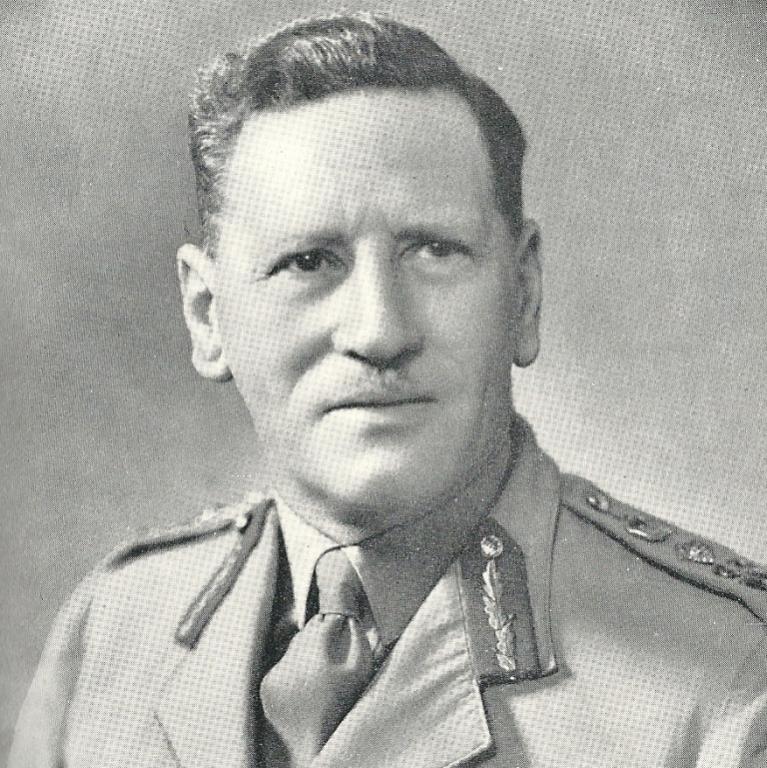
The Auk , One of Churchills wasted Generals

Sir Claude Auchinleck GCB GCIE CSI DSO OBE | Royal Irish - Virtual Military  Gallery

The Mediterranean was to Churchill what the Mississippi River was to Lincoln – a vital strategic lifeline. Churchill biographer Martin Gilbert wrote: “The removal of these armoured troops from Britain to Egypt, at the very moment when Britain herself seemed so vulnerable, was a decision of courage by all concerned, principally Churchill, Eden and the Chiefs of Staff, constituting, as John Martin has written, the despatch, ‘of precious troops and arms, including nearly half our best tanks….’”49

Historian David Dilks wrote “it was to [the Mediterranean] theatre that from August 1940, long before anyone could be confident that the threat of invasion had abated, the British government sent a large proportion of its armoured strength. The decision entailed a calculated and bold risk and originated with the CIGS, General [John] Dill and the Secretary of State for War, [Anthony] Eden.

It was first opposed by General [Alan] Brooke, who was then C.-in-C. Home Forces and later to succeed Dill. The Prime Minster, once convinced gave his indispensable support. Without that decision and a series of similar actions in 1941, the Middle Eastern position might well have been lost.”50 Historian Andrew Roberts wrote: “The constant fear of both the American and British High Commands centred on what would happen if the Germans moved south-eastwards into the Caucasus and Iraq at precisely the same time that Japanese naval and air forces managed to close the Gulf of Persia and thus the southern exit of the Suez Canal.”51 The loss of these oilfields would have been devastating to the Allied effort.

In July 1940, CIGS John Dill and Churchill clashed over the prime minister’s criticism of Wavell attached to a report from theMideast commander: “One of the clearest impressions I get from General Wavell’s statement is that, as is his habit, he is taking blame to himself which properly belongs to his subordinates, particularly those who were taken prisoner and are therefore unable to state their case,” wrote Dill to Churchill.

The prime minister responded: “I must retain the right to address my own Cabinet colleagues as I think fit upon such information as is before me at any time.”52 Churchill and Wavell would never understand each other. Historian Carlo D’Este noted: “In Wavell, Churchill had a bright, aggressive commander – of the sort that was in desperately short supply in the moribund British army of the 1940 and 1941 – to tackle one of the most difficult command assignments ever handed a British officer.”53

Communication and personality were key problems between Churchill and his commanders. Historian Corelli Barnett argued that Churchill disdained Archibald Wavell because he was “absolutely tongue-tied” and disdained Claude Auchinleck as defeatist.54 General Ulysses S. Grant, too, was taciturn. Lincoln respected him. Wavell was taciturn. Churchill was annoyed. As Wavell once observed, “Winston is always expecting rabbits to come out of empty hats.”55 Churchill’s impatience was understandable; it was also often unreasonable. “Resentment and distrust now coalesced in Churchill’s mind,” wrote historian Ronald Lewin.

“Twice, in 1940 and 1941, Wavell had opposed shipment of armour through the Mediterranean; though he had accepted support for Greece, he had failed to submit to London a precise military appreciation to justify that acceptance, and Crete appeared to have collapsed because energetic measures for its defence had not been undertaken from Cairo; over Iraq, and again over Syria, he had been reluctant to intervene when instance action seemed critically important; and now, in an operation which, for Churchill, was the inevitable preliminary to the relief of Tobruk and the abolition of Axis in Africa nothing had happened but fumbling and defeat.”56

Like Lincoln, Churchill placed a high premium on aggressive military action by his subordinates. In mid-August, 1940, Secretary of War Anthony Eden wrote Churchill: “Dill and I were much perturbed at your judgment of Wavell. Neither of us know of any General Officer in the army better qualified to fill this difficult post at this critical time.”57 In the fall of 1940, Anthony disclosed to the Defence Committee “that Wavell had decided not to await [General Rodolfo] Graziani’s attack at Mersa Matruh, but to take the offensive himself at an early date; and he followed up this startling announcement with an explanation of Wavell’s plans [the successful attack on Italian forces called Operation Compass].

Every one of us could have jumped for joy, but Churchill could have jumped twice as high as the rest. He has said that he ‘purred like six cats.’ That is putting it mildly. He was rapturously happy. ‘At long last we are going to throw off the intolerable shackles of the defensive,’ he declaimed. ‘Wars are won by superior will-power. Now we will wrest the initiative from the enemy and impose our will on him.”58

In late 1940 Wavell secretly planned a major operation against the Italians in Libya. Keegan wrote that “Wavell also intended to ensure Churchill would not interfere in the operational details and, despite the latter’s chafing at the lack of action by the ‘Army of the Nile’, Wavell kept his silence.”59

In his communication with Mideast leaders at the end of 1940, wrote Ismay, Churchill “wanted, perhaps above all else, to impart to the commanders his own ‘impetuous, adventurous and defying character.’ He wanted them to feel that they were always in his thoughts, and that he was sharing their failures as well as their successes. He wanted them to tell him in what way he could help them, and he wanted them to understand that, provided they showed a sincere desire to engage the enemy, he would back them to the limit, whatever the result.”60

Churchill was, however, determined to pester regardless of whatever his generals did. Churchill worried in December 1940: “General Wavell is only playing small, and is not hurling in his whole available forces with furious energy, he will have failed to rise to the height of circumstances.”61

In early 1941, Churchill agonized over Greece, wanted to keep British commitments to the country made by Chamberlain but saying in October 1940 “that it would be wrong and foolish to make them promises which we could not fulfill.” A few days later Churchill said: “Aid to Greece must be attentively studied lest whole Turkish position is lost through proof that England never tries to ‘keep her guarantees.’”62

Writing to President Franklin D. Roosevelt in January 1941, Harry Hopkins acknowledged that Churchill “thinks Greece is lost – although he is now reinforcing the Greeks – and weakening his African Army.”63 The tradeoff was clear and difficult. The British War Cabinet decided on February 24 to move three British divisions to Greece to fight the Italian invasion. Churchill was ambivalent on what to do and looked to Dill, Eden, and Wavell to advise him. They advised aid to Greece “partly because of the misreading of German intentions and capability by Wavell’s intelligence staff in Cairo, and partly because of a sudden change of heart in Athens,” wrote historian Robin Edmonds.64

Churchill was dubious. Churchill wired Eden on March 6: “Difficult for Cabinet to believe that we now have any power to avert fate of Greece unless Turkey and/or Yugoslavia come in, which seems most improbable….We do not see any reason for expecting success, except that of course we attack great weight to opinions of Dill and Wavell….Loss of Greece and Balkans by no means a major catastrophe for us provided Turkey remains neutral.”65 Eden and Dill concluded otherwise. “In Cairo, Eden and Dill found that Wavell, Longmore and Cunningham were as emphatic as the Ambassador in feeling that ‘Lustre’ should go ahead.”66 Australian Prime Minister Robert Menzies was in London during the cabinet discussions regarding Greece and objected vehemently to the initiative proposed by Dill and Eden.67

An unsympathetic historian R. W. Thompson wrote: “Why Wavell gave in remains for most of us a mystery. Four precious British divisions, the very means of complete victory in the desert, were on their way to experience a second Dunkirk on the shores of Greece, followed by a devastating blow upon them from the airborne enemy in Crete, 15,000 men were lost with all their valuable equipment, and the naval resources in the Mediterranean were dangerously extended in the work of rescue.”68 Thompson charged: “Eden had been a poor and dangerous counsellor, for he lived in a rarified political air of his own, incapable of relating political ends to military means, a condition that would bring him to ruin.”69

Admiral Andrew Cunningham recalled the deliberations regarding Greece: “We, the naval element, thought roughly as follows. We were bound by treaty to help Greece if she were threatened, so there was no question at all that it was, politically, the right thing to do. On the other hand, we had serious misgivings if it was correct from the military point of view. We doubted very much if our Naval, Military and Air resources were equal to it.”70

The cabinet met on March 7 to evaluate the situation – with strong support from Eden in a telegram, saying what British leaders believed: “Collapse of Greece without further effort on our part to save her by intervention on land, after the Libyan victories had, as all the world knows, made forces available, would be the greatest calamity….No doubt our prestige will suffer if we are ignominiously ejected, but in any event to have fought and suffered in Greece would be less damaging to us than to have left Greece to her fate.”

Colville diaried about British support for Greece in March 1941: “It was thrust upon us partly because, in the first place, the PM felt that our prestige, in France, in Spain and in the US, could not stand our desertion of Greece; partly because Eden, Dill, Wavell and Cunningham (who has now telegraphed to point out the extreme length to which his resources are stretched) recommended it so strongly. But the danger of another Norway, Dunkirk and Dakar rolled into one looms threateningly before us.”71

General Hastings Ismay, the prime minister’s top military aide, wrote that Churchill repeatedly advised Wavell that the desert campaign should have priority over Greece. Eden and Dill were dispatched to the area to make a first had evaluation. “Scarcely had Eden and Dill arrive22 in Cairo when the Prime Minister warned them that the Cabinet were in no mood to press the matter of help to Greece.” Eden repeatedly said that help should be sent to Greece: “We are all agreed that the course advocated should be followed and help given to Greece.”72 Biographer Martin Gilbert wrote, however “Churchill’s desire to reinforce Crete and Wavell’s concern for his own strength in Egypt could not be reconciled.”73 Churchill concluded that Britain “should go forward with a good heart.”74

Evacuation from Greece began on April 24 under severe German attack. Not only did Britain lose Greece and Crete, it also lost the gains it had made against the Italian army when Rommel counterattacked in April. Greeks surrendered on April 24 – leading to an evacuation of 50,000 British soldiers. David Dilks noted that “early in May the House of Commons debated a motion of no confidence. Lloyd George attacked the Prime Minister fiercely for surrounding himself with yesmen’. Churchill replied by comparing Lloyd George to Pétain.

In the resulting division the Government won by 447 votes to 3.”75 Wavell’s support for British intervention in Greece would prove his undoing. Historian Robin Edmonds wrote: “This was his first major failure since he became Prime Minister and Minister of Defence. Not only did British forces lose on land, both in Greece and Libya, but the defence of Crete in particular cost the Royal Navy ships that were badly needed in the Atlantic and the Pacific Oceans.”76

Historian Carlo D’Este argued: “However noble British intentions, the Greek campaign did not make good military sense and was little more than a futile political gesture.”77 Churchill observed that the Greece operation had served a purpose: Without it, “Yugoslavia would not now be an open enemy of Germany. Further, the Greek war had caused a marked change of attitude in the United States.”78

After the Greece debacle, attention turned back to the desert war in North Africa. Churchill wrote General Ismay on April 30, 1941: “All concerned are reminded that we have in the Middle East an army of nearly half a million men, whose whole fighting value may be frustrated and even destroyed by a temporary hostile superiority in tanks and aircraft. The failure to win the battle of Egypt would be a disaster of the first magnitude to Great Britain. It might well determine the decisions of Turkey, Spain and Vichy. It might strike the United States the wrong way, i.e., they might think we are no good.”79

Dill wrote Wavell on May 21, “My attitude has always been that if the P.M. has lost confidence in you he should at once replace you. I have told him this several times because I felt he was losing confidence in you; and yet in spite of that I am sure, as I have already said twice, it would be disastrous for you to go now. It is odd how difficult it is to apply simple principles, such as trust or sack. [Lloyd George] didn’t trust Haig and couldn’t sack him. At least I don’t think he could. Too many people had complete confidence in him. Is history going to repeat itself?”80

Biographer John Connell wrote that Churchill’s War Cabinet system “was not a system that brought out the best in Wavell” and “the trust and confidence which Wavell was given so fully by his subordinates he could never get from Churchill.” Connell concluded that Wavell “fought all his campaigns against odds, and in averse circumstances such as few could have surmounted.”81

Churchill was oblivious to the physical problems faced by Wavell as he organized his beleaguered forces – but Wavell was probably insensitive to the political problems that Churchill faced as he rushed tanks through the dangerous waters of the Mediterranean to Cairo. Military historian John Keegan wrote: “What proved the final breaking point was the further development of the desert campaign. With news of more German tanks reaching Tripoli in late April,

Churchill had rushed the ‘Tiger’ convoy through the Mediterranean, a total of 238 new tanks for Wavell reaching Alexandria on 12 May. Churchill expected his ‘Cubs’ to be used immediately, especially as Ultra had revealed the parlous state of [German General Erwin] Rommel’s logistics. Wavell intended to go on to the offensive and launched Operation Brevity on 15 May in anticipation of making good losses from the newly arrived tanks. Unfortunately, Brevity failed as did a second operation – Battleaxe – launched with the new tanks of 15 June.”82 Historian Corelli Barnett wrote that “Battleaxe had been hopelessly premature.”83 In May 1941 Colville noted that Churchill “said some very harsh things about Wavell, whose excessive caution and inclination to pessimism he finds very antipathetic.”84

After the failure in June 1941, of Operation Battleaxe, an operation whose success Wavell diplomatically described as “doubtful,” Churchill axed the Mediterranean commander. Dill warned Wavell on May 21, “My attitude has always been that if the P.M. has lost confidence in you he should at once replace you. I have told him this several times because I felt he was losing confidence in you; and yet in spite of that I am sure, as I have already said twice, it would be disastrous for you to go now. I is odd how difficult it is to apply simple principles, such as trust or sack. [Lloyd George] didn’t trust Haig and couldn’t sack him. At least I don’t he could. Too many people had complete confidence in him. Is history going to repeat itself?”85

Writing on June 20, Churchill declared: “I have come to the conclusion that a change is needed in the command in the Middle East. Wavell has a glorious record, having completely destroyed the Italian Army and conquered the Italian Empire in Africa. He has also borne up well against the German attacks and has conduced war and policy in three or four directions simultaneously since the beginning of the struggle. I must regard him as our most distinguished General. Nevertheless, I feel he tired, and that a fresh eye and an unstrained hand is needed. I wish therefore to bring about a change-over for temporary war time conditions between him and Auchinleck.”86

Churchill had agonized over the decision to his Mideast commander before writing Wavell on June 21: “I have come to the conclusion that the public interest will best be served by the appointment of General Auchinleck to relieve you in the Command of the armies of the Middle East. I have greatly admired your command and conduct of these armies both in success and adversity, and the victories which are associated with your name will be famous in the story of the British Army and are an important contribution to our final success in this obstinate war. I feel however that after the long strain you have borne a new eye and a new hand are required in this most seriously menaced theatre.”87 Always the gentleman, Wavell responded: “I think you are wise to make the change and get new ideas and action on many problems in Middle East and am sure Auchinleck will be successful choice…..I appreciate your generous references to my work and am honoured that you should consider me fitted to fill post of C-in-C India.”88 Still, the dismissal hurt.

Wavell biographer John Connell wrote: “Wavell…was not unaware of the extraordinary linking of the man and the hour, and was far from unresponsive to its poetic and patriotic implications. But never could he give what Churchill asked. Far more subtle and complex in character than Churchill, and far better educated, he was steeled by a lifetime of strong self-discipline. He was cool and reticent where Churchill was warm and overflowing with emotion. He obeyed orders as readily as he gave them, but always with a clear, far-sighted understanding of their full consequences.”89 General John N. Kennedy, who was assistant chief of staff for the British army, wrote of Wavell’s dismissal that “his biggest mistake had been his failure to take the right line with regard to the instructions he had received from London. How far was a commander in the field justified in opposing directives from his Government with which he disagreed? We felt that he must expect to be abused, and to be reproached for lacking initiative, and that he ‘must be prepared to resign if his advice on major questions were over-ruled.’”90 Writing of frustration with the Middle East campaign in the fall of 1941, military strategist Kennedy wrote: “To cope with the situation adequately, it would almost have been worth while to have two staffs: one to deal with the Prime Minister, the other with the war. His domination over the Chiefs of Staff seemed greater than ever; and Dill, on whom fell the brunt of opposing him, now began to show signs of great exhaustion.”

When Churchill’s projects were finally thrown aside, after the useless expenditure of much labour and energy, he obviously did not realize that he had been saved from disasters. On the contrary, he seemed to think he had been thwarted by men who lacked initiative and courage. At such times as this, we often felt that we would give almost anything for a less colourful occupant of No. 10.91

Churchill was worried about the political impact of returning Wavell to London, so Wavell was sent to India instead. Historian R. W. Thompson wrote maintained that “to Churchill, any such person as Wavell must be either a rival or in a position to do him some potential harm.”92 Harold Nicolson, then an official in the Information Ministry wrote in his diary: “Grave public apprehension will be caused by the dégommage of Wavell, and we have not handled it properly. The P.M. simply does not understand that one cannot land the public with shocks.”93 In September 1941, Wavell visited London. “Why does Winston dislike me, Joan?,” Wavell asked Joan Bright as he walked the Defence Department aide back to her office. She wrote: “It was a tragedy that Churchill had lost confidence in Wavell but more of a tragedy that Wavell was so inarticulate, so unable to make out a case for himself. He was a soldier’s soldier, a poet, a philosopher, but he was not astute when it came to dealing with his brilliant Prime Minister.”94

“Dismissal of Wavell, in fact if not in intention, made him a scapegoat for Churchill’s own mistakes,” wrote historian Corelli Barnett. “Now the Commander-in-Chief was gong, Churchill could recognise that he had asked too much of him, and could ease the responsibilities of his successor.” Churchill later wrote: “It was only after the disasters had occurred in Cyrenaica, in Crete, and in the Desert that I realised how overloaded and under-sustained General Wavell’s organisation was. Wavell tried his best; but the handling machine at his disposal was too weak to enable him to cope with the vast mass of business which four or five simultaneous campaigns imposed on him.”95 At the time, Churchill wrote to the viceroy of India of Wavell: “I feel he is tired, and that a fresh eye and an unstrained hand is needed. I wish therefore to bring about a change-over for temporary war time conditions between him and Auchinleck.” Churchill added: “I feel sure Auchinleck would infuse a new energy and precision into the defence of the Nile Valley, and that Wavell would make an admirable Commander-in-Chief in India, who would aid you in the whole of the great sphere which India is now assuming as our flank moves eastward.” Years Later, Generals Ian Jacob and Pug Ismay discussed why Churchill replaced Wavell: “I can see you now, holding out both your hands as though you had a fishing rod in each of them, and you said: ‘I feel that I have got a tired fish on this rod, and a very lively one on the other.”96

General Claude Auchinleck was a general of competence, diligence, diplomacy, class, and ill luck. “As a soldier he was a complete professional and highly talent. He had a distrust of politicians which is shared by many soldiers, and he would not compromise his principles or adopt methods which appeared to be dishonest. “He could not accept the thesis that the end justifies the means; from his background, upbringing and training, honesty was not merely the best policy, but the only policy, concluded military historian John Keegan.97 “Auchinleck was an able and strong-minded officer always ready to attempt the bold and novel course,” wrote historian Corelli Barnett.98 “Auchinleck, with the character of the preux chevalier to which Churchill always responded, handsome, open, frank, a soldier of the firing-line, suffered not so much from distrust as from dissatisfaction,” wrote historian Ronald Lewin. “Like Lincoln in the crisis of the Civil War Churchill sought commanders who could deliver, and Auchinleck’s tragedy was that his great and manifest gifts aroused too great hopes – some of which, unfortunately, might have been fulfilled had the Prime Minister been less exigent, and his general more sophisticated in both his relations with Downing Street and his conduct of the battle. Dill was no deranged Cassandra when he observed, at the time of the switch of appointments, that ‘Auchinleck, for all his great qualities and his outstanding record on the Frontier, was not the coming man of the war, as the Prime Minister thought’.”99

General Ismay wrote that Auchinleck “was not a gambler, but never shrank from taking a calculated risk if the situation so demanded. His whole heart and soul were in the battle, and he was an apostle of the offensive. Time and again he would quote from Nelson’s Trafalgar memorandum: “No captain can do very wrong if he places his ship alongside that of an enemy.”100 However, noted historian Tuvia Ben-Moshe, when “Auchinleck refused to open his offensive before the autumn of 1941, Churchill recalled him to London, where he informed the general that it would be most unpleasant were the Russians to bear the main burden of the war while Britain did nothing at all.”101 In fairness, Churchill keenly felt his obligations to allies. He wrote the Chiefs of Staff in May 1942 about a pending convoy to Russia. “The operation is justified, if a half gets through. Failure on our part to make the attempt would weaken our influence with both our major Allies. There are always the uncertainties of weather and luck, which may aid us. I share your misgivings, but I feel it is a matter of duty.”102

Auchinleck resisted hasty action – understanding better than Churchill the realities of desert warfare. General Hastings Ismay wrote in his memoirs that Auchinleck “had retrieved the battle of Side Rezegh [in November 1941] when all seemed lost, and more recently he had saved Cairo. On both occasions he had show resolution and tactical skill of an exceptional order.”103 One of the biggest decisions Auchinleck had to make was choosing a commander for the critical Eighth Army facing Rommel. On November 26, 1941, Auchinleck dismissed General Alan Cunningham from that position after Cunningham recommended halting Operation Crusader he was leading against Rommel. Historian Correlli Barnett wrote that the pipe-smoking General Neil M. “Ritchie appeared the best possible candidate for the command of the Eighth Army. There was no time for a new Army Commander to fly out from England; Cunningham must be replaced in a matter of hours.”104 Ritchie was meant to be a temporary fix, but he served for seven months until Auchinleck relieved him. Ismay wrote that Auchinleck “may have been perfectly right to put Ritchie in temporary command of the Eighth Army when Cunningham broke down, but was it wise to keep him there as a permanency. If no one on the spot seemed the right man, there was nothing to prevent his asking for a replacement from England; and there is little doubt that even so senior a man as Alexander would have jumped at the opportunity.”105 Auchinleck observed that “Ritchie was perforce pitch-forked into a command at a desperate moment, knowing little or nothing of his subordinate commanders or troops and told to retrieve an apparently lost battle. I, therefore, thought it only right to ‘hold his hand’ and make myself very readily available for consultation at a short notice.” The assignment against one of the war’s toughest generals was nearly impossible for Ritchie, who was being asked to command subordinates who were both senior to him and far better informed about battlefield conditions.106 General Ismay wrote: “In London it was expected and hoped that Auchinleck would take personal control of the battle; but to the general astonishment, he appointed Major-General Ritchie.”107 Ritchie was the wrong man for the job but it took seven more months to discover how wrong.

Under the press of German General Erwin Rommel’s Desert Corps in the first half of 1942, Auchinleck soon lost Churchill’s confidence in the general’s will to be act aggressively. In May 1942, Churchill wrote Auchinleck: “There are no safe battles. But this one arises from an enemy attack and your forestalling or manoevring counter-stroke, or whether it has to be undertaken by you on its own, we have full confidence in you and your glorious army, and whatever happens, we will sustain you by every means in our power.’”108 Churchill had limited respect for Auchinleck, whom he wrote was “obstinate.” General Ismay wrote of Auchinleck: “Only those who knew him well realised that he was shy and sensitive. He was as much an introvert as his political chief was an extrovert, and there were likely to be misunderstandings between them unless they got to understand each other.” At Chequers, Ismay once tried to help Auchinleck understand Churchill, telling: “Churchill could not be judged by ordinary standards; he was different from anyone we had ever met before, or were ever likely to meet again. As a war leader, he was head and shoulders above anyone that the British or any other nation could produce. He was indispensable and completely irreplaceable. The idea that he was rude, arrogant and self-seeking was entirely wrong. He was none of these things. He was certainly frank in speech and writing, but he expected others to be equally frank with him. To a young brigadier from Middle East Headquarters, who had asked if he might speak freely, he replied, ‘Of course. We are not here to pay each other compliments.’ He was a child of nature.”109 When Auchinleck delayed the Churchill-demanded counterattack against Rommel in January, Churchill called it “intolerable.”110 In May 1942, Churchill wrote Auchinleck: “There are no safe battles. But this one arises from an enemy attack and your forestalling or manoevring counter-stroke, or whether it has to be undertaken by you on its own, we have full confidence in you and your glorious army, and whatever happens, we will sustain you by every means in our power.’”111

The prime minister always thought that Cairo was overstaffed with non-combatants and support personnel. He thought that superiority in numbers should count for something. Churchill’s lack of patience was obvious when he wired Auchinleck: “You have over 700,000 men on your ration strength in the Middle East. Every fit male should be made to fight and die for victory; there is no reason why units defending Mersa Matruh position should not be reinforced by several thousands of officers and the administrative personnel ordered to swell the battalions.” Lamb contended: “It was malicious of Churchill to bombard Auchinleck in this way at the height of the battle” especially when “Auchinleck was in the unpleasant position of having to sack Ritchie and take over command of the Eighth Army in person. It was the worst possible moment for Churchill to nag.” One of the serious problems that the Mideast commanders faced was that their tanks were inferior to the Germans’ tanks. One of Churchill’s problems was that he had told Parliament that British equipment was as good as that used by the Germans. That was not true. Lamb wrote that on May 6, “Auchinleck stated that he could not start his offensive until 15 June. Not until then, he said, would he have the necessary superiority in tanks. And should the fresh Italian division Littorio arrive in the battle zone, the offense would have to be postponed until August, while he had to divert forces to aid Turkey no offensive was possible at all. Lamb maintained that “Auchinleck’s conduct of his desert campaign was definitely first-class; he was defeated not because of his strategy or tactics, but because Rommel’s tanks and guns were superior.”112

Rommel’s strategy was also superior to Ritchies – leading to the envelopment of Tobruk. On June 21, Prime Minister Churchill learned of the fall of Tobruk and the loss of nearly 35,000 British and Dominion soldiers when he was meeting with President Franklin Roosevelt at the White House. In his memoirs, Churchill wrote: “This was one of the heaviest blows I can recall during the war.”113 Tobruk had obsessed Churchill. Martin Gilbert wrote: “Intent on following the defence of Tobruk as closely as possible, Churchill asked Ismay to prepare both a large-scale plan and a model for him, and, meanwhile, ‘the best photographs available, both from the air and from the ground.’”114 Historian Richard Lamb wrote: “After the fall of Tobruk Churchill plainly had little confidence in Auchinleck, but it is hard to understand why he thought that prodding and pinpricking would help the battle. After the war Auchinleck commented mildly: ‘I was not afraid of Churchill. Some people were. But his interference was a disturbing influence on a chap like myself who was concentrating the whole day and night on one thing. I did not need encouragement to beat the enemy although I was glad to get it if things went well.’ That is the nearest Auchinleck ever went to criticizing Churchill.”115

The fall of Tobruk might have been the very unfortunate result of Churchill’s meddling, according to some commentators. Historian Richard Lamb argues that Auchinleck had made it clear on January 10: “It is NOT my intention to try to hold permanent Tobruk or any other locality west of the frontier.” Neither Churchill nor Brook commented. Auchinleck repeated that intention a month later when he wrote: “If for any reason, we should be forced at some future date to withdraw from our present forward positions, every effort will still be made to prevent Tobruk being lost to the enemy, but it is not my intention to continue to hold it once the enemy is in a position to invest it effectively.”116 Lamb noted: “On 15 June the Prime Minister cabled Auchinleck to ask if the War Cabinet should interpret his telegram to mean that, if the need arose, Ritchie would leave as many troops in Tobruk as were necessary ‘to hold the place for certain. The following day Auchinleck replied that this was a ‘correct interpretation’, adding that Rommel was not strong enough to invest Tobruk and ‘mask’ British forces on the frontier.” Lamb contended: “Churchill’s insistence on Tobruk being defended pushed his general into a gross tactical mistake against his better judgement at the eleventh hour.” He argued: “Tobruk ought to have been abandoned, and the disastrous loss in prisoners and equipment must be laid at Churchill’s door.” Lamb wrote: “Auchinleck was also furious when Churchill wanted him to ‘depute’ a senior officer on his staff to conduct an enquiry into the fall of Tobruk. He protested vigorously to Churchill who climbed down, saying in excuse that it was a War Cabinet request, not his personal one.”117

Auchinleck biographer John Connell placed much of the blame for the Tobruk disaster on General Neil Ritchie’s tendency to listen to subordinate, General William Gott, rather than his superior, General Auchinleck. Neither accurately assessed the seriousness of the situation. “Auchinleck’s advice was good advice,” wrote Connell, “and when Ritchie took it he was a successful general. When he rejected it, when he fell under other influences, he failed. Men who were subordinate to him, but were sure of themselves and had a greater faith in their own judgment than he in his, could sway his opinion.” Gott’s advice had been to withdraw the Eighth Army and let Tobruk withstand the German siege. “With dismal frequency the British commanders were obliging Rommel by doing what he expected and wanted,” noted Connell.118 In his war memoirs, Churchill clearly placed the blame: “The personal association of Auchinleck and Ritchie did not give Ritchie a chance of those independent conceptions on which the command of violent events depends. The lack of clear thought and the ill-defined responsibility between General Auchinleck and his recent staff officer, General Ritchie, had led to a mishandling of the forces which its character and consequences constitutes an unfortunate page in British military history.”119

The British prime minister received the news of Tobruk’s fall while he was visiting the White House and sitting with the American president. “Tobruk has surrendered, with twenty-five thousand men take prisoners ” read the telegram that President Franklin D. Roosevelt received at the White House on June 21, 1942. “Nothing could exceed the sympathy and chivalry of my two friends,” wrote Churchill of Hopkins and Roosevelt who were in the room with him when he received the news. “There were no reproaches; not an unkind word was spoken. ‘What can we do to help,’ said Roosevelt. Meeting in his White House study with Winston S. Churchill, FDR wordlessly gave the telegram to the prime minister. “Neither Winston nor I had contemplated such an eventuality and it was a staggering blow. I cannot remember what the individual words were that the President used to convey his sympathy, but I remember vividly being impressed by the tact and real heartfelt sympathy that lay behind these words,” wrote Field Marshall Alan Brooke.120 Churchill’s physician remembered that Churchill declaring: “What matters is that it should happen when I am here” before moving to the White House window. “I am ashamed. I cannot understand why Tobruk gave in. More than 30,000 of our men put their hands up. If they won’t fight —‘ The P.M. stopped abruptly.”121 The next day, Churchill declared: “I am the most miserable Englishman in America – since Burgoyne.” In his memoirs. Churchill wrote of Tobruk: “Defeat is one thing; disgrace is another.”122 The loss of Tobruk also led to a confrontation with Churchill’s critics in the House of Commons – his second of 1942.

Churchill and CIGS Alan Brooke went to Cairo at the beginning of August 1843. “Both believed that there was something radically wrong with the Command; but the Prime Minister had not apprehended that whatever previous shortcomings there had been, whatever reverses had occurred (for which he, with his impetuosity and his interference, bore no small responsibility), the Axis forces had been decisively defeated during July. In Brooke the deep and steadfast awareness of his duty, of his personal and professional responsibilities, were tinged with a cautious, somewhat sombre foreboding,” wrote John Connell. “The Prime Minister, as he unashamedly confessed, was looking forward to a rare and exciting jaunt.”123 The delegation also included Field Marshal Jan Smuts, prime minister of South Africa, on whom Churchill relied for military and command advice. Many of the soldiers captured at Tobruk had been South African.

Auchinleck had in effect been serving as both Mideast commander and commander of the Eighth Army on the front lines fighting Rommel. Churchill and Brooke wrestled over new leadership – including at one point a Churchill suggestion that Brooke take over the Eighth Army. Brooke knew he did not have the desert war experience the job required; he preferred Bernard Montgomery for the job. After meeting with Auchinleck, however, Brooke wrote in his diary: “I had expected some opposition, but I felt some serious doubts as to whether an Auk-Monty combination would work. I felt that the Auk would interfere too much with Monty; would ride him on too tight a rein, and would consequently be liable to put him out of his strike. As I was anxious to place Monty in command of the Eighth Army, I felt this might necessitate moving the Auk to some other command.”124

Churchill was intent on a game of changing military chairs. Ideas were thrown out, discarded, adopted, and in one case ended in disaster. On August, 6, Brooke wrote about “[o]ne of the difficult days of my life.” The general recorded: “Whilst I was dressing and practically naked, the PM suddenly burst into my room. Very elated an informed me that his thoughts were taking shape and that he would soon commit himself to paper! I rather shuddered and wondered what he was up to! Ten minutes later he burst into my room again and invited me to breakfast with him. However, as I was in the middle of my breakfast by then he asked me to com as soon as I had finished my breakfast. When I went round he made me sit on the sofa whilst he walked up and down. First of all he said he had decided to split the ME Command in two. A Near East taking up to the canal, and a Middle East taking Syria, Palestine, Persia and Iraq. I argued with him that the Canal was an impossible boundary as both Palestine and Syria are based administratively on Egypt. He partially agreed, and then went on to say that he intended to remove the Auk to the Persia Iraq Command as he had lost confidence in him. And he wanted mt to take over the Near East Command with Montgomery as my 8th Army Commander! This made my heart race very fast! He said he did not require an answer at once, and that I could think it over if I wanted. However, I told him without waiting that I was quite certain that it would be a wrong move. I knew nothing about desert warfare, and could never have time to grip hold of the show to my satisfaction before the necessity to attack became imperative.”

Churchill decided on August 6 that General William Gott would take charge of the Eighth Army. It was a bad choice – Churchill was influenced by the general’s surface characteristics rather than military acumen. Reluctantly, Gott agreed and then flew off to Cairo. En route, his plane was shot down by a German fighter. Churchill was forced to adopt Brooke’s earlier suggestion of Bernard Montgomery to head the Eighth Army. Although Churchill made the decision, it required ratification by the War Cabinet meeting in London with Deputy Prime Minister Clement Atlee in the chair. With Brooke’s support, Churchill decided on another change at the top of the Mideast command – suddenly replacing General Auchinleck as Mideast commanders. General Ian Jacob was dispatched to deliver the news to Auchinleck in a letter which offered him the Near East command. “I felt as if I were just going to murder an unsuspecting friend,” wrote Jacob in his diary. “He opened it and read it through two or three times in silence. He did not move a muscle, and remained outwardly calm, and in completely control of himself. He then asked me whether it was intended that Persia should be under India. I told him that it was not so, the whole idea being that there should be three independent Commands. We discussed this for a bit, and then he led me out into the open, and we wandered about while he cleared his mind by talking to me. He said that it was a very evenly balanced question as to whether Iraq and Persia should come under India, or under the Middle East, but that it would never work to make an independent Command in those two countries. He felt that sooner or later they would inevitably come under India.” He decided that he could not accept the new post because his demotion meant “He could hardly in these circumstances retain the confidence of the troops, and by reason of this invidious position he could hardly have confidence in himself.” Jacob concluded: “I could not have admired more the way General Auchinleck received me, and his attitude throughout. A great man and a great fighter.”125 Auchinleck biographer John Connell viewed Auchinleck’s dismissal as reflecting a difficulty in distinguishing the roles of Mideast commander and Eighth Army leader: “An obstinate refusal to pay much regard to the established procedure of commands and staffs in the Army could be construed as a properly vigorous contempt for red tape and unnecessary convention, and, therefore, not merely pardonable but praiseworthy,” wrote Connell. More damnably, Churchill “blinded himself to the truth, which was that for the past six weeks Auchinleck had not been sitting in Cairo, while great events were occurring in the Desert, attending to matters appropriate to either a Minister or a quartermaster, but at the Tactical Headquarters of Eighth Army, directing those great events and beating Rommel to a standstill.”126

“It was a terrible thing to have to do [dismissing Claude Auchinleck]. He took it like a gentleman. It is difficult to remove a bad General at the height of a campaign: it is atrocious to remove a good General,” wrote Churchill. “We must use Auchinleck again. We cannot afford to lose such a man from the fighting line.”127 After relieving Auchinleck by letter, Churchill “then took off all of my clothes and rolled in the [Mediterranean] surf. Never had I had such a bathing.”128 Auchinleck retired (albeit temporarily) rather than be reassigned to Iraq. Historian Corelli Barnett wrote: “What was Auchinleck’s and [Eric] Dorman-Smith’s crime? It was to tell Churchill to his face in Cairo in August 1942 that his demand for an early offensive against Rommel was simply not militarily reasonable, and that the Eighth Army could not be properly re-trained and re-equipped until late September 1942.”129 Ironically, the excuse that Auchinleck used was not dissimilar to the excuse that Churchill himself used for postponing a frontal invasion of France by Anglo-American forces.

Auchinleck was one of many officials who would be awarded the “Order of the Boot” by Churchill. His predecessor, Archibald Wavell, commented at the time: “The P.M. is in his most Marlburian mood, and sees himself in the periwig and red coat of his great ancestor, directing Eugene (for which part Alexander is now cast) to begin the battle of Blenheim. Heads are falling so fast that the supply of chargers to put them on must run short soon, and the last Reinforcements Camp of Superior Commanders must be almost empty.”130 Auchinleck meanwhile returned to India where on Jun 18, 1943, he was again appointed commander-in-chief of British forces, serving until 1947. Having shaken up the Mideast command, Churchill left immediately for Moscow by plane for consultations with Josef Stalin.

Auchinleck was replaced by General Harold Alexander, who had been commander of British forces in Burma but was preparing for the joint Allied invasion of northwest Africa. Alexander John Colville wrote of General Alexander: “Widely respected for his gallant First War record as an officer of the Irish Guards, Alexander had commanded, with cool efficiency, first the rearguard on the Dunkirk beaches, and the fighting retreat of the British Army in Burma….he had a personal charm which enabled him to allay discord. He explained his plans with a quiet confidence that won immediate attention without seeming to demand it; and he stuck to his guns with as much courage in the Council Chamber as on the field of battle.”131 Historian John Keegan concluded that Alexander “was not a great soldier, though he was a strategist of some insight. Alexander was not a great diplomat, though he had a remarkable facility for making divergent and powerful personalities work together. Alexander was not a great battlefield commander, though he never lost a battle. Alexander could never be said to be a master of detail, nor a managerial wizard, though his armies operated over the most difficult terrain encountered in the European theatre of operations, and yet they were universally regarded as well administered.”132 After the British Eighth Army recaptured Tobruk in November 1942, Churchill declared: “This noble Desert Army, which has never doubted its power to beat the enemy, and whose pride had suffered cruelly from retreats and disasters which they could not understand, regained in a week its ardour and self-confidence. Historians may explain Tobruk. The Eighth Army has done better: it has avenged it.”

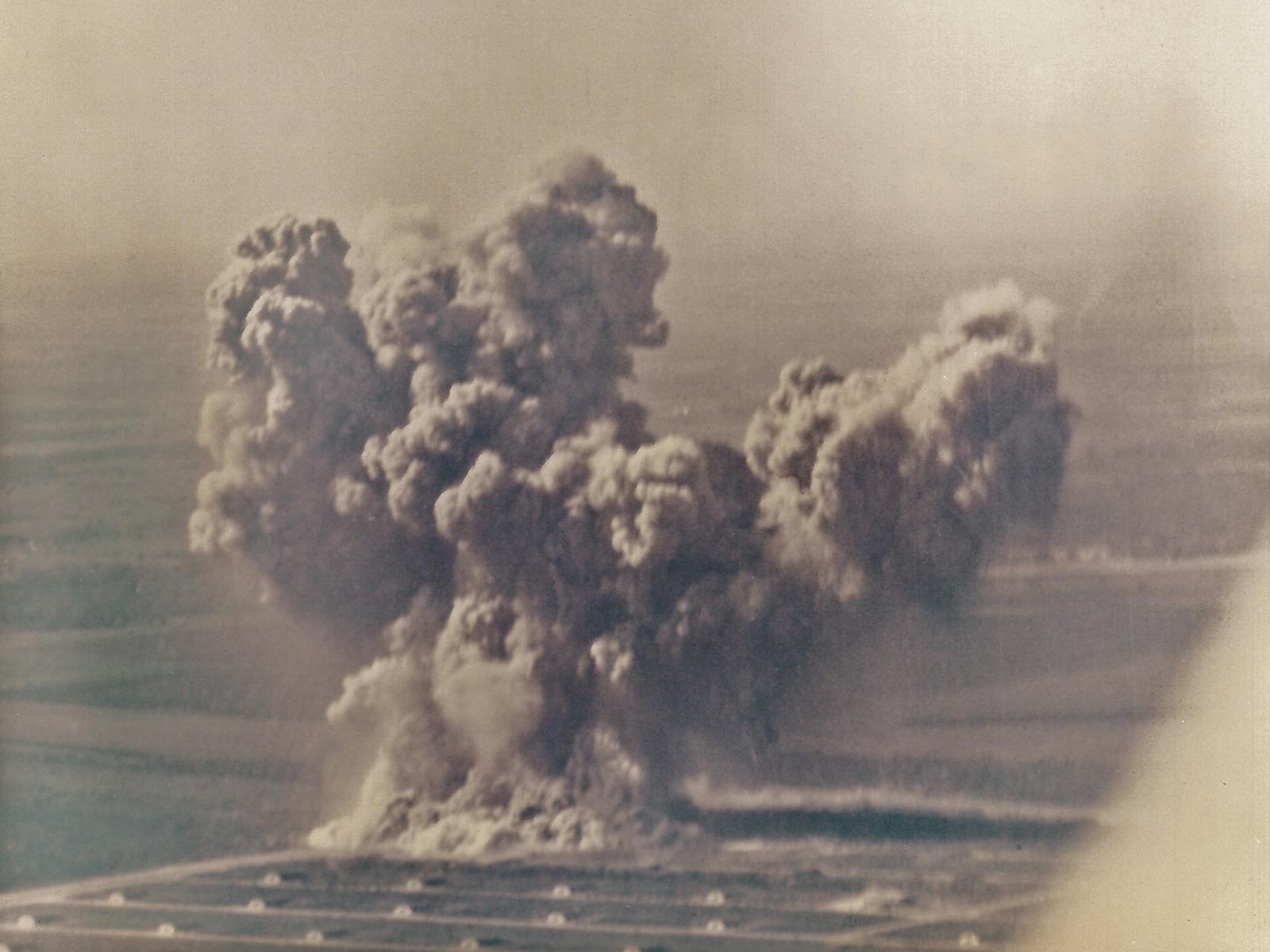
Categories
Dear Grumpy Advice on Teaching in Today's Classroom

Something for the English / Language Arts Teachers

Image may contain: text that says 'THE 5 LOVE LANGUAGES Words of Affirmation: Your guns are beautiful. Acts of Service cleaned your guns. Receiving Gifts: Here's a gun. Quality Time: Let's go shoot guns together. Physical Touch: Let me hold you like a gun.'