Categories
Dear Grumpy Advice on Teaching in Today's Classroom Soldiering The Green Machine This great Nation & Its People

“50 Civil War Uniforms in 10 Minutes” – The Evolution of Blue & Grey

Categories
Darwin would of approved of this! Dear Grumpy Advice on Teaching in Today's Classroom

The Five Universal Laws of Human Stupidity – We underestimate the stupid, and we do so at our own peril. by Corinne Purtill

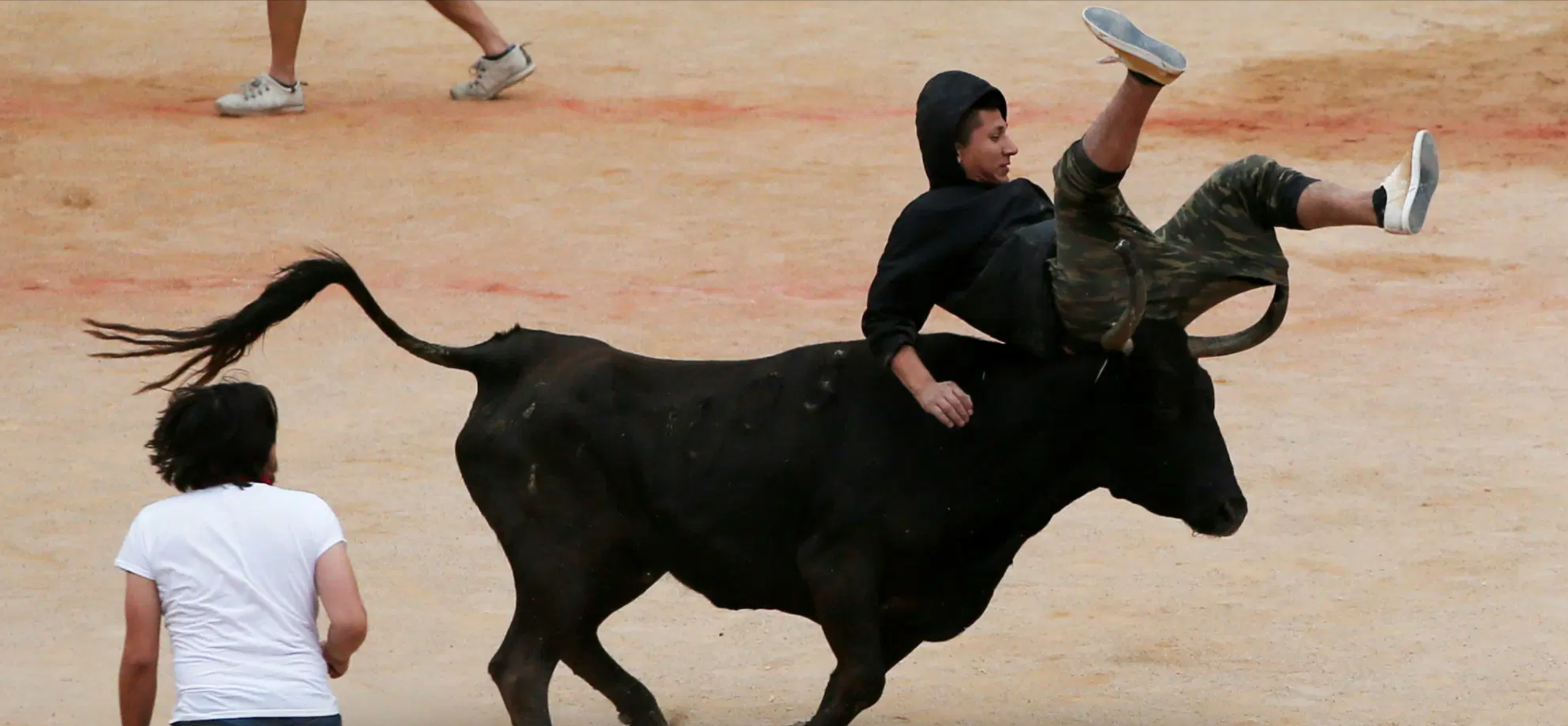
a person is thrown into the air by a bull

Not just a danger to themselves. Photo by Reuters/Susana Vera

In 1976, a professor of economic history at the University of California, Berkeley published an essay outlining the fundamental laws of a force he perceived as humanity’s greatest existential threat: Stupidity.

Stupid people, Carlo M. Cipolla explained, share several identifying traits: they are abundant, they are irrational, and they cause problems for others without apparent benefit to themselves, thereby lowering society’s total well-being. There are no defenses against stupidity, argued the Italian-born professor, who died in 2000. The only way a society can avoid being crushed by the burden of its idiots is if the non-stupid work even harder to offset the losses of their stupid brethren.

Let’s take a look at Cipolla’s five basic laws of human stupidity:

Law 1: Always and inevitably everyone underestimates the number of stupid individuals in circulation.

No matter how many idiots you suspect yourself surrounded by, Cipolla wrote, you are invariably lowballing the total. This problem is compounded by biased assumptions that certain people are intelligent based on superficial factors like their job, education level, or other traits we believe to be exclusive of stupidity. They aren’t. Which takes us to:

Law 2: The probability that a certain person be stupid is independent of any other characteristic of that person.

Cipolla posits stupidity is a variable that remains constant across all populations. Every category one can imagine—gender, race, nationality, education level, income—possesses a fixed percentage of stupid people. There are stupid college professors. There are stupid people at Davos and at the UN General Assembly. There are stupid people in every nation on earth. How numerous are the stupid amongst us? It’s impossible to say. And any guess would almost certainly violate the first law, anyway.

Law 3. A stupid person is a person who causes losses to another person or to a group of persons while himself deriving no gain and even possibly incurring losses.

Cipolla called this one the Golden Law of stupidity. A stupid person, according to the economist, is one who causes problems for others without any clear benefit to himself.

The uncle unable to stop himself from posting fake news articles to Facebook? Stupid. The customer service representative who keeps you on the phone for an hour, hangs up on you twice, and somehow still manages to screw up your account? Stupid.

This law also introduces three other phenotypes that Cipolla says co-exist alongside stupidity. First there is the intelligent person, whose actions benefit both himself and others. Then there is the bandit, who benefits himself at others’ expense. And lastly there is the helpless person, whose actions enrich others at his own expense. Cipolla imagined the four types along a graph, like this:
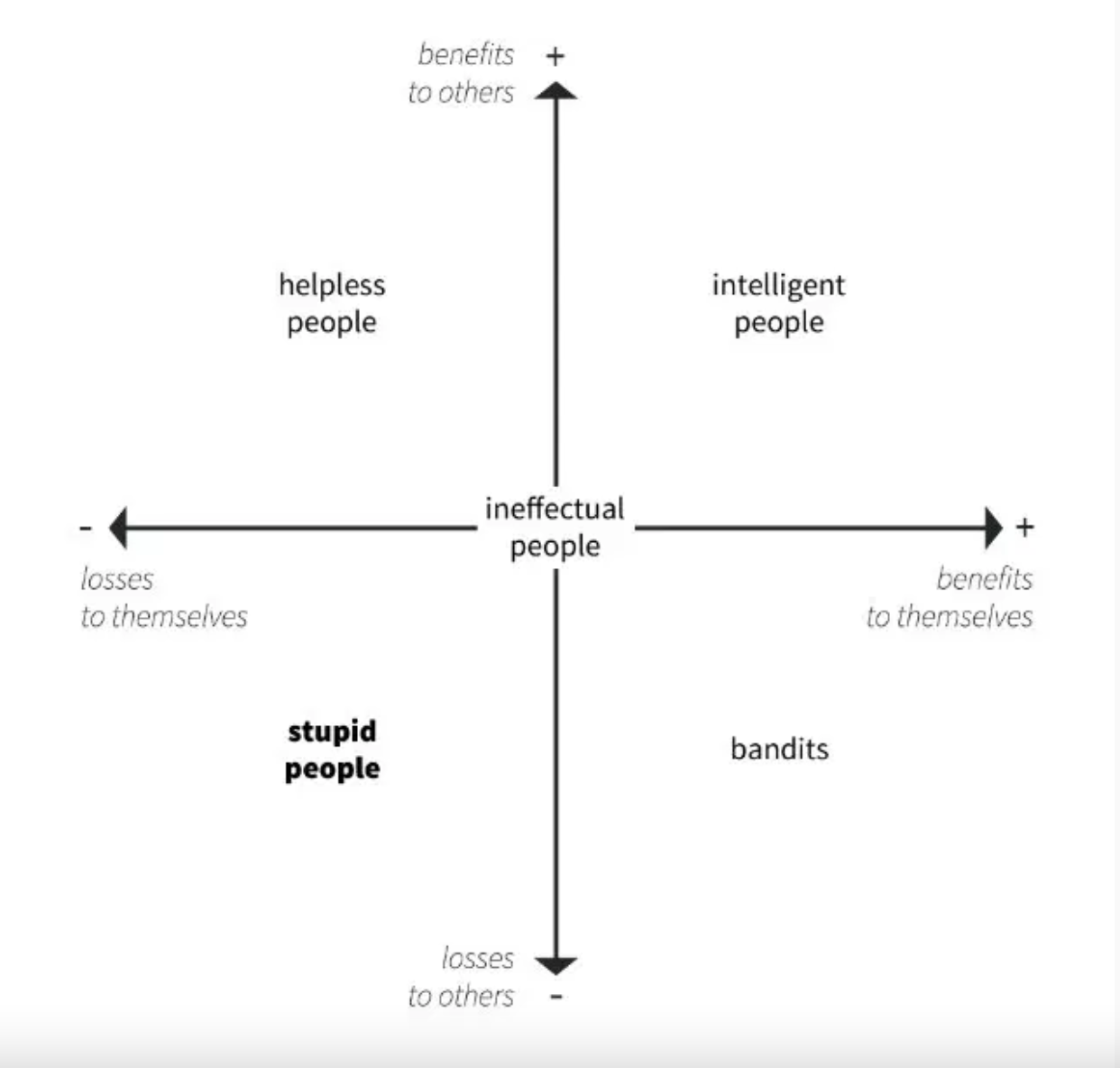
a chart of ineffectual people from helpless people to bandits

Stupidity, graphed. Photo by Vincedevries on Wikimedia, licensed under CC-BY-SA 4.0

The non-stupid are a flawed and inconsistent bunch. Sometimes we act intelligently, sometimes we are selfish bandits, sometimes we act helplessly and are taken advantage of by others, and sometimes we’re a bit of both. The stupid, in comparison, are paragons of consistency, acting at all times with unyielding idiocy.

However, consistent stupidity is the only consistent thing about the stupid. This is what makes stupid people so dangerous. Cipolla explains:

Essentially stupid people are dangerous and damaging because reasonable people find it difficult to imagine and understand unreasonable behavior. An intelligent person may understand the logic of a bandit. The bandit’s actions follow a pattern of rationality: nasty rationality, if you like, but still rationality. The bandit wants a plus on his account. Since he is not intelligent enough to devise ways of obtaining the plus as well as providing you with a plus, he will produce his plus by causing a minus to appear on your account. All this is bad, but it is rational and if you are rational you can predict it. You can foresee a bandit’s actions, his nasty maneuvres and ugly aspirations and often can build up your defenses.

With a stupid person all this is absolutely impossible as explained by the Third Basic Law. A stupid creature will harass you for no reason, for no advantage, without any plan or scheme and at the most improbable times and places. You have no rational way of telling if and when and how and why the stupid creature attacks. When confronted with a stupid individual you are completely at his mercy.

All of which leads us to:

Law 4: Non-stupid people always underestimate the damaging power of stupid individuals. In particular non-stupid people constantly forget that at all times and places and under any circumstances to deal and/or associate with stupid people always turns out to be a costly mistake.

We underestimate the stupid, and we do so at our own peril. This brings us to the fifth and final law:

Law 5: A stupid person is the most dangerous type of person.

And its corollary:

A stupid person is more dangerous than a bandit.

We can do nothing about the stupid. The difference between societies that collapse under the weight of their stupid citizens and those who transcend them are the makeup of the non-stupid. Those progressing in spite of their stupid possess a high proportion of people acting intelligently, those who counterbalance the stupid’s losses by bringing about gains for themselves and their fellows.

Declining societies have the same percentage of stupid people as successful ones. But they also have high percentages of helpless people and, Cipolla writes, “an alarming proliferation of the bandits with overtones of stupidity.”

“Such change in the composition of the non-stupid population inevitably strengthens the destructive power of the [stupid] fraction and makes decline a certainty,” Cipolla concludes. “And the country goes to Hell.”


Corinne Purtill writes about culture, behavioral science, and management. Based at various times in Washington, D.C., Phnom Penh, New York, and London, she has written about everything from terrorism to the search for the Loch Ness Monster. She has a BA in English from Stanford University and reports now from southern California.


Categories
All About Guns Dear Grumpy Advice on Teaching in Today's Classroom Hard Nosed Folks Both Good & Bad

Marine, Medal of Honor Recipient, Reunited with Stolen Weapon

(You have to be a real asshole not to have a allergy attack with your eyes on this story! Grumpy)

Image and video hosting by TinyPic

Here’s a story to warm the cockles of your heart…

A historic Colt .45-caliber, semi-automatic pistol stolen more than 30 years ago from a Medal of Honor winner recipient in South Carolina has been returned to its rightful owner.
The gun and owner were reunited after a history buff in Medford, who bought the old handgun in an online auction last month, tracked down the retired Marine whose name is engraved on it.

Pretty cool, huh? I’d guess there’d be some people who would see a weapon like that, engraved with the name of a Medal of Honor recipient and see dollar signs. This guy just saw the right thing to do.

“I knew if I found him and it was his gun, I couldn’t keep it,” said George Berry, 71, who knew little about the history of the gun when he purchased it from an auction house in Pennsylvania.
The story begins when Berry, a retired Navy warrant officer who also served in the Marine Corps, decided this summer to fulfill a lifelong dream of owning one of the historic handguns.
“I’ve always wanted to own a Colt Model 1911 .45 automatic — always wanted one,” he says. “John Wayne had one in every World War II movie I’ve ever seen him in.”
Early in July, he began searching the Internet and discovered that Alderfer Auction, a well-known auction firm in Hatfield, Pa., would be offering three of the Colt .45s in a July 12 auction.
In particular, lot No. 78 caught his eye: “Colt 1911 A1 semi-automatic pistol. Cal. 45. 5″ bbl. SN 0103889. Reblued finish on all metal, plain walnut Colt grips, after-market rear sight, no magazine,” the description read.
“Faint ‘USMC’ stamped on right side of slide, partial ‘United States Property’ wording is visible,” it continued. “The name ‘John J. McGinty USMC’ stamped on left side of slide. Very good.”

You can read John McGinty’s MoH citation here.
The pistol had been reblued, was missing its original sights or grips. It sold for a lot less at the auction than two other .45s. The new owner started searching the Internet to see what he could find out about this fellow whose name was on the pistol. Turns out, John McGinty had been awarded the Medal of Honor, and that very pistol was mentioned in his citation for the Medal.

As he read more about McGinty and his story, he knew he had to locate him to see if he was the same man who once owned the gun. He also wanted to find out how he parted with the pistol, and whether the former Marine wanted it back.
“His medal citation actually mentions the pistol,” Berry observed, referring to the fact the wounded McGinty used it to kill five enemy soldiers attacking his position.
However, Berry did not yet know whether it was the same McGinty associated with his newly acquired pistol. He used the Internet to track down McGinty, 71, in Beaufort, S.C. McGinty had retired from the corps as a captain in October 1976.
The retired Navy warrant officer called the retired Marine Corps officer and asked him if it was his pistol.
“He said, ‘Do you mean 0103889?’ ” Berry recalled, noting McGinty had just recited the gun’s serial number.
That’s when McGinty informed him the pistol had been stolen in 1978 when it was on display along with his uniform and sword. It was the very same pistol McGinty had used in Vietnam to repulse that final assault.

So, John McGinty was reunited with the pistol that saved his life and George Berry, the man who returned it to him refused to take any money for it. It was just the right thing to do.
Read the rest here.

Categories
Dear Grumpy Advice on Teaching in Today's Classroom

Huh!

20 Teacher Memes That Totally Get Your Daily Struggles

50 Teacher Memes That Will Make Teachers Laugh, Then Cry | Bored Panda

28 Memes For Teachers To Read If They Can Get A Minute Of Free Time. |  Teacher memes funny, Teaching memes, Teacher humor

Categories
Dear Grumpy Advice on Teaching in Today's Classroom

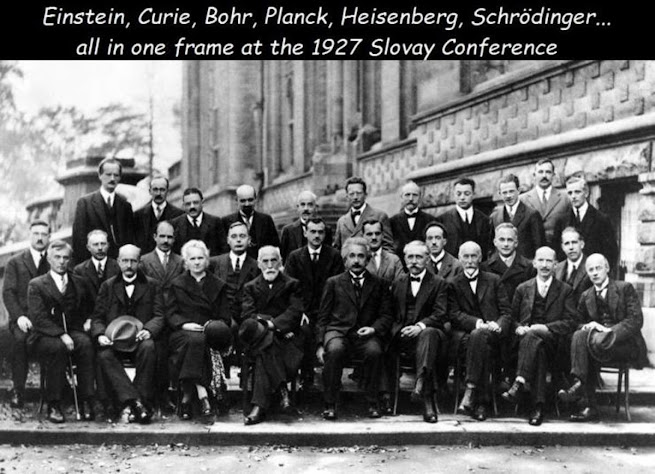
More scientific brainpower in this picture than ever before or since.

Categories
Dear Grumpy Advice on Teaching in Today's Classroom

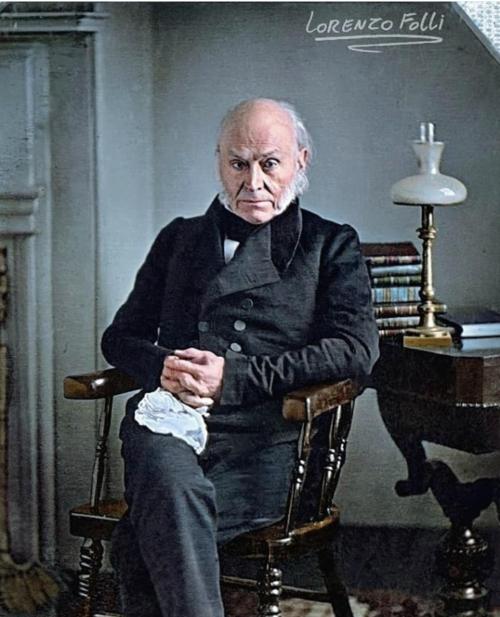
March, 1843, John Quincy Adams 14 years after his Presidency (Looks to me to be one crusty looking old B*stard)

Categories
Cops Dear Grumpy Advice on Teaching in Today's Classroom

One Gutsy Cop – William H. West

William Henry West (September 1842 – September 6, 1915) was an American soldier and police officer in Washington, DC said to have arrested United States President Ulysses S. Grant in 1872.[1][2] This is the only known record of a sitting US President being arrested.[3][4][disputed – discuss]

Early life

Born in Prince George’s County, Maryland, in his youth West was enslaved. He later fought in the American Civil War in Company K30th United States Colored Infantry formed in May 1863, which later fought in the Battle of the Crater.
He was one of two black policeman working for the Washington DC Police Department during Reconstruction. He was later remembered as “gentlemanly” and fond of good horses, especially fast ones. He married Katherine ‘Kate’ Bowie in Washington, D.C. on 11 June 1867, with whom he had six children. West was appointed to the Metropolitan police force on August 1, 1871.

Arrest of Grant

In one version of various stories relating to West and Grant, in 1872 West was patrolling on foot near 13th and M Streets in Washington DC, when he stopped the President for speeding in his horse and buggy and released with a warning for excessive speed. The next day, West observed Grant repeating the behavior, and arrested him.

I am very sorry. Mr. President, to have to do it, for you are the chief of the nation and I am nothing but a policeman, but duty is duty, sir, and I will have to place you under arrest.[5]

Grant was taken to the police station and released on a $20 bond (equivalent to $430 in 2019). Grant did not contest the fine or arrest.[6]

References

  1. ^ “D.C. police once arrested a U.S. president for speeding”WTOP. October 6, 2012. Retrieved December 17, 2018.
  2. ^ Rosenwald, Michael S. (December 16, 2018). “The police officer who arrested a president”The Washington Post.
  3. ^ “Which President Got a Speeding Ticket While Riding a Horse?”Ghosts of DC. March 4, 2014. Retrieved December 16, 2018.
  4. ^ “The Thin Blue Line”U.S. Grant Cottage State Historic Site. Retrieved December 16, 2018.
  5. ^ Sources differ on the exact wording of this quote, however all versions have the same gist and multiple sources ascribe to this particular wording.
  6. ^ Rosenwald, Michael S. (December 16, 2018). “The police officer who arrested a US President – could it happen again?”The Sydney Morning Herald. Retrieved December 17, 2018.

President Ulysses S. Grant was once arrested for speeding on a horse-drawn carriage, proving the POTUS is not above the law

Dec 17, 2018, 9:32 AM
Ulysses Grant

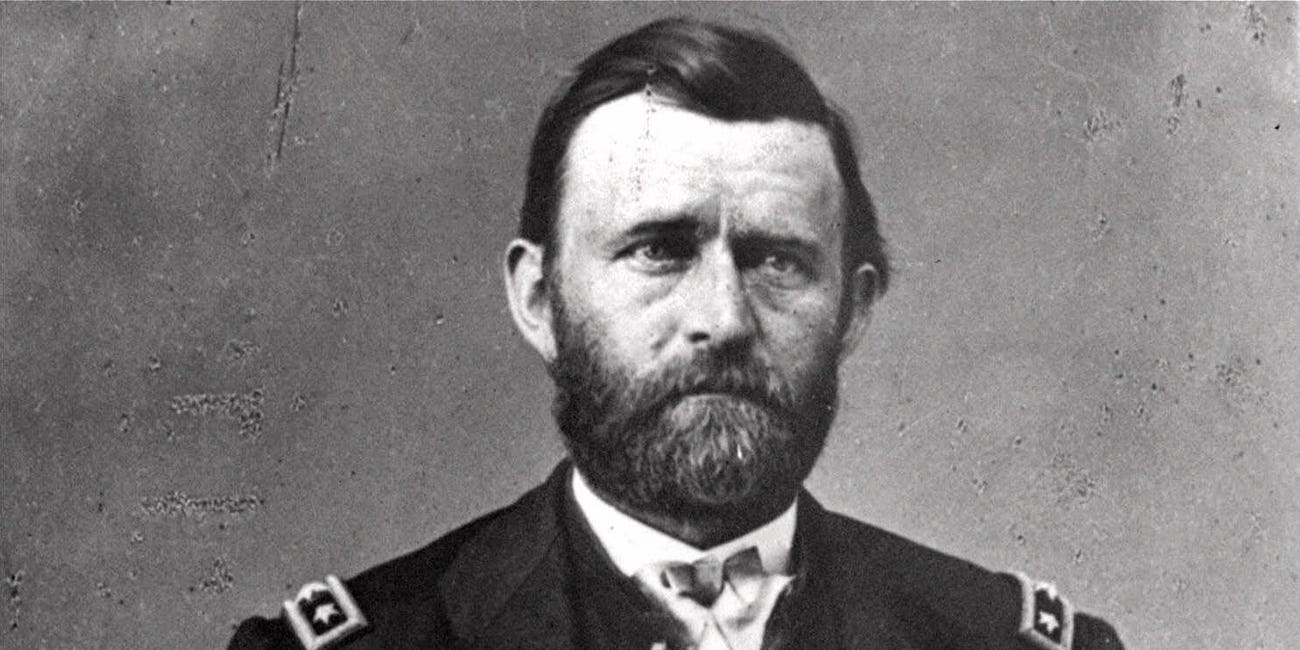
President Ulysses S. Grant. AP

  • In 1872, President Ulysses S. Grant was arrested for speeding on his horse-drawn carriage in Washington, DC.
  • Grant apparently had a penchant for speeding and a love for fast horses.
  • Grant ultimately paid a $20 bond but didn’t show up to court.

The answer is that it’s complicated. It’s difficult to indict a sitting president, and goes against Justice Department policy. The process surrounding impeachment is also convoluted, and it’s unclear whether the crimes in which Trump has been implicated merit going down that road as of yet.
But as legal experts debate this topic, The Washington Post on Sunday reminded us of at least once instance in US history in which a commander-in-chief learned that no person in the country is above the law.
In 1872, President Ulysses S. Grant was arrested for speeding on his horse-drawn carriage in Washington, DC. This was not an impeachable offense, but Grant still faced consequences.

Grant, the general who helped lead the Union to victory in the Civil War, was arrested at the corner of 13th and M streets in the nation’s capital. The story of his arrest was once told in a September 27, 1908, edition of the Washington Evening Star with the headline: “Only Policeman Who Ever Arrested a President.”
The police officer who arrested him was a black man who fought in the Civil War named William H. West, who gave his account of the incident to The Star, which The Post dug up.
Grant apparently had a penchant for speeding and a love for fast horses and had more than one run-in with West.
On the first occasion, the president was somewhat sassy with the officer as he stopped his carriage. The city was having problems with speeding at the time, and a mother and child had recently been injured as a result.
Grant said, “Well, officer, what do you want with me?”

West replied, “I want to inform you, Mr. President, that you are violating the law by speeding along this street. Your fast driving, sir, has set the example for a lot of other gentlemen.”
Grant apologized and told the officer it would not happen again.
But on the very next day Grant was speeding so fast through Georgetown in an area West was patrolling it took the officer an entire block to slow the president down.
Grant apparently greeted the officer with a smile and looked like a “schoolboy who had been caught in a guilty act by a teacher.”
West informed the president he’d violated the city’s speeding laws, again. “I cautioned you yesterday, Mr. President, about fast driving, and you said, sir, that it would not occur again,” West reportedly told Grant. “I am very sorry, Mr. President, to have to do it, for you are the chief of the nation, and I am nothing but a policeman, but duty is duty, sir, and I will have to place you under arrest.”

The president and other speeders were taken to the local police station. Officers at the station were reportedly unsure if they could charge a sitting president if he’d not been impeached.
In the end, Grant paid a $20 bond but didn’t show up to court.

Categories
Dear Grumpy Advice on Teaching in Today's Classroom Soldiering War

Another reason on why I am so glad to have missed the Dark Ages of Western Europe – Siege of Ravenna 476 Historical Machinima Total War: Atilla

https://youtu.be/_kXTnhLsoVc
Hopefully some of The History Teachers can use this! Grumpy

Categories
Dear Grumpy Advice on Teaching in Today's Classroom Soldiering

Another video for my Fellow History Teachers – A day in the life of a Roman soldier – Robert Garland

Categories
Dear Grumpy Advice on Teaching in Today's Classroom

What Happened to Dead Bodies After Big Battles Throughout History? (Something for the History Teachers out there)