Category: Darwin would of approved of this!

SURVIVAL FOR THE “SEASONED CITIZEN”
The scientific term is entropy. This is a quantifiable measure of the amount of disorder in a system. Everything naturally descends into a greater state of entropy. This simply means we inevitably get old.
Aging is not for sissies. Mundane things like turning my head when I back up the car can now be an ordeal. A foolish youth, spent relentlessly driving my body, has taken its inevitable toll. Now past the half-century mark I have come to appreciate there are some serious considerations when you wish to remain prickly after a Certain Age.

Fitness And The Physiology Of Aging
As we age our bones become brittle and we lose muscle mass. This leaves us more susceptible to younger, stronger predators. However, it doesn’t mean we have to just roll over and die. We can still mitigate these effects.
Keep your machine properly maintained. This means eating sensibly and avoiding tobacco and alcohol. Being out of shape is typically a choice. Eat the right stuff and in reasonable quantities.
With each passing year it gets tougher to stay lean and hard. My long-suffering knees won’t let me run, but my wife and I walk vigorously for an hour four days a week. It’s great fellowship.
An old back injury keeps me from doing pushups. I therefore did a perfect pushup on a bathroom scale and put the same weight on a bar. Now I can knock out my daily regimen via bench presses without stressing my back.
Most people eat a light breakfast, a modest lunch, and a massive supper but we have it all wrong. We are designed to eat a generous breakfast, a modest lunch, and minimal supper.
Staying strong and hard is still attainable in your later years but you have to want it. Keeping fit is a lifestyle. There are many aspects of aging over which you have no control but this is not necessarily one of them.
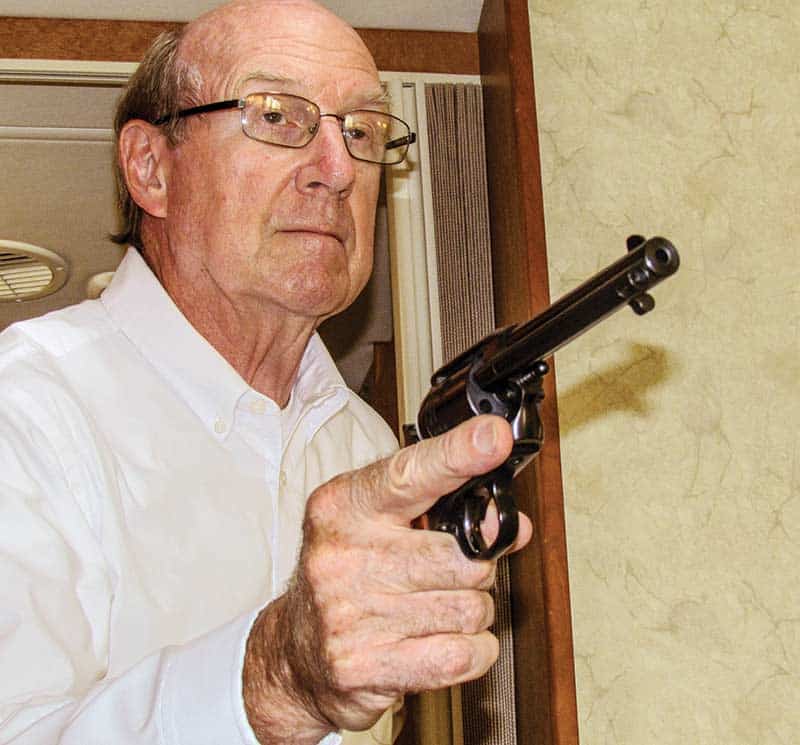
Staying prickly into serious adulthood is a way of life. You don’t need to be John or
Jenny Rambo to defend yourself capably in your Golden Years. Just make wise life choices.
Eyesight
It’s called presbyopia, and I hate it. As you age the lens in your eye stiffens. This means most older people can no longer focus up close. My reading glasses are now an unfortunate part of my wardrobe. The really sucky bit is I can no longer clearly see my sights.
I cannot approach the degree of precision I enjoyed in my youth. However, there are tools to help overcome these disabilities. Electro-optical sights are the great equalizers.
Most everybody makes combat handguns with slide cutouts for a micro red dot sight nowadays. My favorite comes from Holosun. Holosun sights incorporate small solar cells along with conventional battery power. This dual-fuel design offers just stupid-long run times. Holosun sights are the only red dots in the collection I intentionally leave on all the time. It takes a little experience to bring the optic into your line of sight without conscious thought but it’s not like practicing with a gun is actually work.
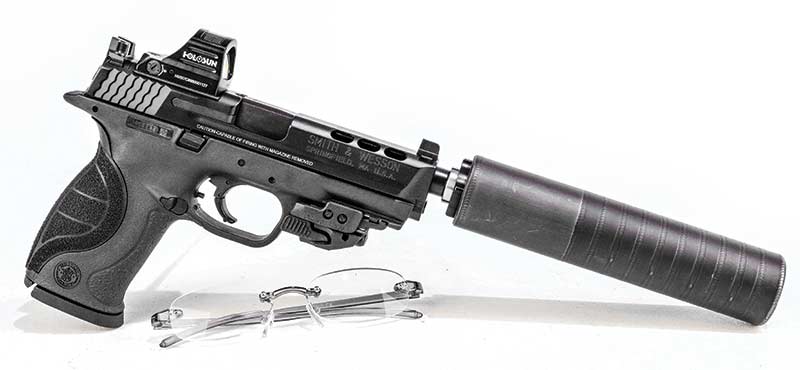
Presbyopia and reading glasses are inevitable for most people’s aging process
but a micro red dot sight like the Holosun can even the field.

Rock Island Armory produces 1911 pistols chambered in their blistering .22 TCM round.
These guns can also fire 9mm simply by swapping out the barrel and recoil spring.
Arthritis And Armaments
The joint pain associated with arthritis is a natural — though sucky — aspect of aging. This makes it tougher to jack the slide on a handgun. Working the action of a Desert Eagle is butt-whooping for a 20-year-old. As we get older even a GLOCK can become a challenge.
The 9mm Walther CCP sports a novel reverse gas piston design offering a very mild racking force. The 1911 pistols in .22TCM from Rock Island Armory are also comically light to charge. Some pistoleros will poo-poo the idea of carrying a gun throwing a tiny 40-gr. JHP bullet at 2,000 feet per second for defensive purposes. I’d be willing to bet those skeptics have never been shot with one.
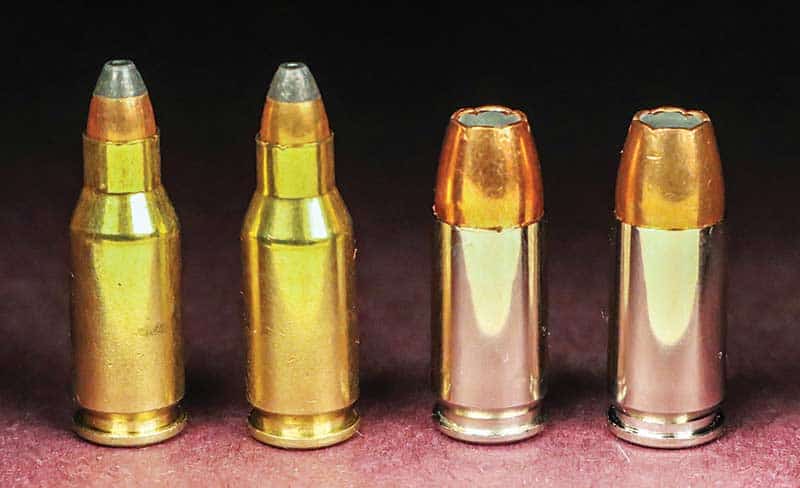
The zippy little .22 TCM (left) alongside the 9mm might not be your first choice for a
defensive handgun cartridge but it shoots like a laser and veritably explodes on impact.
Injury
As we get older our skin thins. Many seasoned Americans take blood thinners as well, even if it is just aspirin. This means you could be quick to bleed … a lot.
If you get hurt just put pressure on the wound as soon as the tactical situation allows. A typical healthy adult human has about five liters of blood. Lose one liter in 20 minutes and you get woozy. Two liters can be lethal. However, this amount is a lot of blood. Don’t freak out about it.
If you hit your head substantially you need to report to an emergency room, not a clinic. You’ll need a CT scan to rule out a bleed, and you usually cannot get one at your local urgent care. Take significant head injuries seriously, particularly in older people.
Be wary, treat your body respectfully, train hard and regularly, and choose your hardware carefully. Everybody gets old, but it doesn’t mean you have to do so gracefully. By properly maintaining your machine and packing the right iron you can remain tactically viable well into your golden years.



The explosive combination of young people and alcohol has kept medical
providers gainfully employed since the days of Hippocrates. Michael Discenza.
Our hero was a gigantic Popeye-looking kid with massive forearms. He clearly was no stranger to the gym. He presented to the clinic on a Saturday afternoon. Saturday afternoon was when the good stuff invariably slithered in.
He had been attending a rocking frat party the night before and was three sheets to the wind. In a fit of playful stupidity he had scooped up a handful of ice and thrown it at a friend. In his sordid state, the ice ball obviously missed its mark. His buddy scooped up the discarded bolus of ice and threw it back. My new pal reflexively raised his forearm to protect his face — ultimately preserving the kid’s striking good looks.
His friend had inadvertently scooped up a generous piece of broken beer bottle and hummed it back with the ice ball. This big shard of jagged glass tore deep into the lateral aspect of Popeye’s elbow, severing a sizable artery along the way. The wound began pulsing blood like Dracula’s garden hose.
The collective of drunken college students immediately and vigorously came unglued. A few in attendance of both genders were unaccustomed to human blood, particularly in such prodigious quantities, and reacted poorly. There was honestly only one solitary example of sound judgement exercised throughout the evening: no one drove to the hospital.
Somebody generously donated a t-shirt to the cause. This altruistic gesture didn’t do much good. Things were looking bleak. Then a voice in the wilderness spoke up. “I know what to do. I saw it in a movie.”
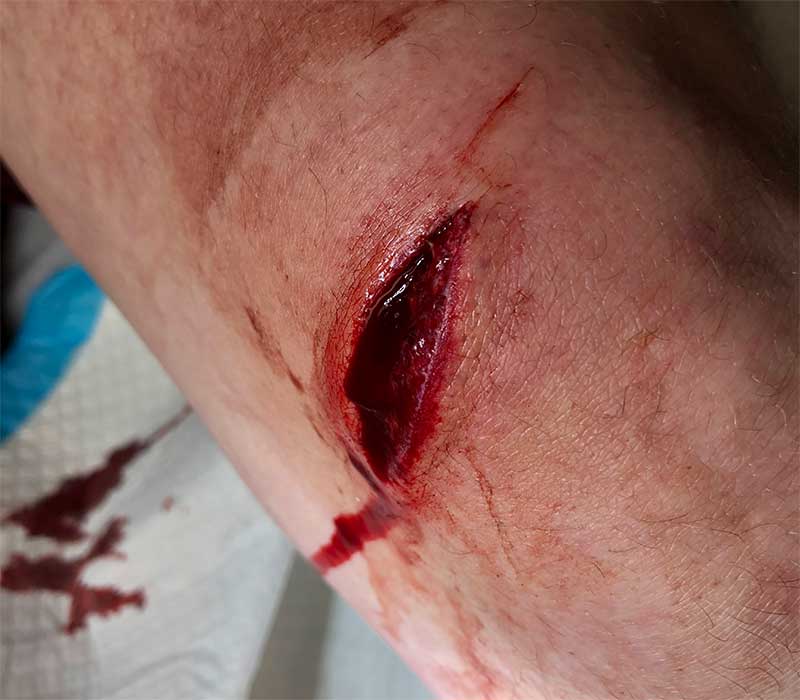
Nothing transforms a good day into a great day at work like a little gratuitous gore.
This ersatz practitioner of the healing arts somehow produced a butter knife and propane torch. They further lubricated the victim with distilled spirits to dull the pending undeniable agony and then liberally doused the wound in tequila, something that also likely stung a bit. They then proceeded to physically restrain the kid for his own safety.
Once they had the butter knife heated cherry red they pressed it deep and hard onto his flesh. The patient lost consciousness. Their healing work now complete, the kid’s buddies relocated him to a couch in the frat house to sleep it off. He proceeded to sleep the sleep of the dead, bleeding vigorously and with enthusiasm all night long.
The following morning someone thought to check on the kid and was shocked to find that the couch looked like something out of a slasher movie. At least by now they were all sufficiently clear-headed enough to drive safely. His friends bundled him up and brought him to me. What greeted me when I pulled the blood-soaked t-shirt clear was memorable to say the least. I did, with the benefit of hindsight, wonder what ever became of that couch.
The lateral aspect of this poor kid’s elbow looked like something you might obtain in a sack from the drive-thru at Cap’n D’s. The wound was maybe an inch and a half long and was still spurting with some vigor. I cleaned everything as best I could, numbed it up, and went exploring.
Addressing traumatic wounds is great fun once you get past the obligatory aversion to gore and the invariable associated human suffering. Every example is just a little bit different. The basic techniques are the same, but the specific application is unique to each circumstance. I appreciate that this sounds terribly ghoulish, but nothing transforms a good day into a great day at the clinic like a nice chainsaw to the thigh.
This pumper was fairly deep. So deep in fact that all the ad hoc high-temperature emergency therapy had not come even remotely close to the source of the bleeding. I isolated the severed artery and tied it off with a figure eight Vicryl suture before closing the wound by layers. Approximating the exterior skin was like trying to sew broiled fish.
I dressed the carnage and educated the now thoroughly sober kid on proper wound care. I gently inquired as to whether or not he planned ever to do that again. He answered in the negative. Never underestimate the capacity of the young human male for unfiltered stupidity. It’s a wonder any of us survive.
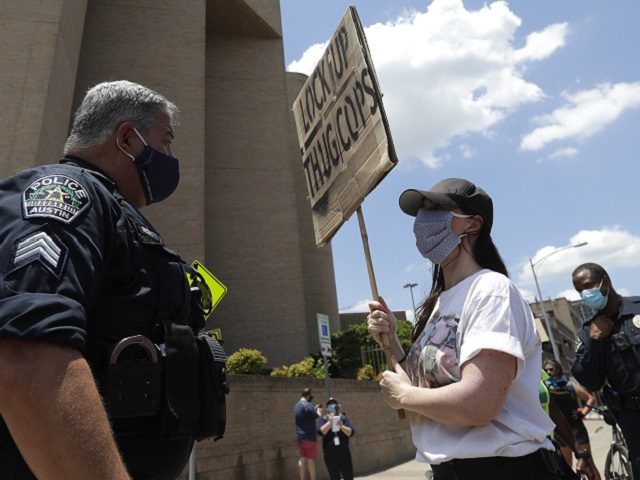
Today’s heartwarming story of Democrats getting what they voted for takes us to Austin, Texas, where a police staffing crisis exploded the murder rate, and according to a report there were no cops at all in a section of the city on one Saturday in February.
“Austin, Texas residents are expressing outrage over police staffing shortages and longer 911-call response times in the aftermath of the city council’s vote to defund the department in 2020,” the New York Post reported.
It gets better…
“In February, a section of the city was notably left without a single police officer for a few hours on a Saturday due to the ongoing shortages,” the Post noted.
“Each year since 2017, we’ve lost more officers than we’ve hired,” Austin Police Association President Michael Bullock warned. “We had to gut our specialized units and force detectives to work backfill on patrol just to try and respond to 911 calls.”
Bullock added, “Our staffing has been set back at least 15 years, and at the same time, we’ve dealt with a population growth of over 250,000 new residents.”
Here’s the rub:
In 2020 following the Black Lives Matter riots, Austin’s city council voted unanimously to cut up to $150 million from its police department budget — about 34% of its current total — and reinvest the funds in other services. The following year, the Texas Legislature passed a law essentially forcing Austin to restore the funding, but the officer shortage persists.
…
“What the Austin city council did was horrific to the community,” [Fraternal Order of Police Vice President Joe Gamaldi] told Fox News Digital.” There is no one left to fill these shortages because the city council treats officers like scum. Now, responses are over 10 minutes for emergency calls. Some districts are left without staff. City council should learn their lesson over violent crime. 2021 was the highest ever for recorded murders and, since then, the murder rate continues to stay close to that high and looks like 2024 will not be any better. People are dying over bad decisions.”
…
Last year, the department was on the verge of a staffing collapse after 40 officers filed retirement papers following a 9-2 city council vote to scrap a four-year contract that the city had previously agreed to in principle and instead pursue a one-year contract that the police union’s board had rejected.
You see, these Austin idiots have cornered themselves. They can either 1) allow their city to implode or 2) admit they were wrong. The problem for Austin is that leftists never admit they are wrong. In their twisted minds, they are not wrong. Rising crime is the goal. Violence is the goal. Urban blight is the goal. Chronic homelessness, poverty, and drug abuse are the goals. It’s all laid out right here.
The dummy voters are in a similar spot. They hate us MAGAtards and would rather see their city go full shithole before handing us a “toldjaso.”
Pride is such an awful and insidious thing. The inability to admit you are wrong is a devastating handicap. But that’s what the voters will have to do: admit they were wrong and that we MAGAtards are right about supporting your police force and locking up violent criminals and three-time losers.
While I wish no physical harm on anyone, watching the smug and prideful lose their city brings me nothing but joy. It’s no different than watching CNNLOL implode, or the Disney Grooming Syndicate lose billions. These voters, politicians, media outlets, and entertainment conglomerates are only victims of one thing: laughably stupid choices based on deranged and fascist thinking.
These people are so smug and self-involved that they honestly believe their Greatness can alter human nature: criminals will see the light, news consumers will enjoy being lied to, and parents will subject their small children to gay sex, transvestites, and other queering and grooming propaganda.
Burn, baby, burn.