Categories
California Cops

Calling 911 in rural California? Danger might be close, but the law can be hours away

Duration 2:11
In these parts of California, law enforcement is scarce

A shortage of sheriff’s deputies across rural, small town California puts law enforcement and residents at a safety risk as response times take hours after calling 911 in emergencies.

A spring snowstorm was bearing down on the remote mountain town of Kettenpom when Norma and Jim Gund received an unexpected call from the Trinity County Sheriff’s Office.
The Gunds’ neighbor, Kristine Constantino, had dialed 911 from her cabin five hours northwest of Sacramento and hung up. The closest deputy was en route from the county seat of Weaverville, 97 miles away. But the drive — through rugged forest and over steep passes — would take almost three hours.
The Gunds said the sheriff’s office asked if they could check on their neighbor in the meantime. They were happy to oblige.
As the afternoon slid into evening, Jim, then 59, and Norma, 49, drove their blue Ford pickup to Constantino’s house, a quarter-mile down a dirt road.
Norma approached the house while Jim stayed in the truck. Before she reached the front door, a man met her outside and told her Constantino was fine.
Norma insisted on going in anyway. As she crossed the threshold, she saw Constantino and her boyfriend dead on the floor, their bodies wrapped in plastic.
Then an excruciating jolt surged through her body. She later would learn she had been hit with a stun gun. But in the moment, Norma knew only that her muscles were contracting and her legs were buckling. She fell to the floor and the man jumped on top of her, slashing her face and throat with a hunting knife.
Entering the house to check on his wife, Jim saw the stranger holding Norma down, bloody blade in hand.
“Run, Norma! Run!” Jim shouted as the man turned the attack on him.

Too few deputies

As urban areas such as San Francisco, Los Angeles, Sacramento and Fresno grapple with discussions about use of force and the over-policing of minority communities, the state’s rural counties face a growing and no-less-serious law enforcement crisis: a severe shortage of staff that puts the public — and deputies — in danger.
A McClatchy investigation found that large stretches of rural California — where county sheriffs are the predominant law enforcement agencies and towns often run only a few blocks — do not have enough sworn deputies to provide adequate public safety for the communities they serve.
Departments in multiple jurisdictions are operating with skeleton staffs, McClatchy found, pushing response times into hours, or sometimes leaving residents without a response at all. In Trinity County, deputies regularly cover hundreds of miles of territory alone, leaving people like the Gunds to fend for themselves. When law enforcement does arrive in many outlying places, it’s often a single officer cut off from backup and, in some cases, communication with her or his department.
“We have no money. We have no people,” said Modoc County Sheriff Mike Poindexter, echoing more than a dozen rural California sheriffs. “We don’t have near enough people. We just don’t.”
McClatchy interviewed law enforcement and residents in 20 counties and examined staffing levels and crime statistics in 25 counties identified as rural by the California Communities Program, a rural-affairs center run by the University of California.
These counties account for 41 percent of the state’s land but 4 percent of its population. They include tourist destinations such as the Mendocino coast and Yosemite National Park, as well as some regions that are so inaccessible they require horses, snowmobiles or boats to reach.
Data analysis showed the number of sworn deputies in these rural California counties has dropped by 8 percent in the last decade, when sheriff’s department staffing in urban counties declined by only 2 percent.
In 2008, 1,758 sworn deputies worked in rural counties, according to the California Department of Justice. By 2017, that number had dropped to 1,610. The decrease may not sound drastic, but the loss of those deputies has pushed some already overworked departments to a tipping point in service, sheriffs and others said.
While the Sacramento County Sheriff’s Department employs nearly 160 deputies for every 100 square miles it covers, the tiny sheriff’s departments in Madera, Mariposa and Mendocino counties employ about four deputies for the same amount of turf. In Del Norte and Alpine, the counties make do with two deputies per 100 square miles.
Those figures include non-patrol personnel and those who work in county jails. Leaving those deputies out, the sparse staffing of rural sheriff’s departments becomes even more striking.
At any given time, for example, the Lake County department has just five deputies patrolling an area the size of Rhode Island. Amador usually deploys three or four deputies over 612 square miles.
“Unless there is a call for service, there are a lot of areas in the county that don’t get patrol coverage,” said Amador County Sheriff Martin Ryan.
In Lake County, where the Mendocino Complex Fire is still burning, a resident calling for aid in its remote reaches might have to wait 90 minutes for a sheriff’s deputy to arrive, “and that’s on a good day,” said Sheriff Brian Martin.
Residents of Mono County, on the eastern slope of the Sierra Nevada, sometimes must wait two hours for a deputy, said Mono Sheriff Ingrid Braun.
On the North Coast in Humboldt County, deputies’ response times can be as long as three hours. In the isolated mountainous areas of Madera County, the wait can stretch to four hours.
In multiple rural counties, not a single deputy actively patrols for certain periods of the day.
“There are deputies at home basically in bed that are subject to call-out if something is happening,” said Greg Van Patten, field services commander at the Mendocino department, where deputies do not patrol for four hours a night.
Many rural Californians interviewed by McClatchy said the lack of nearby law enforcement is frightening.
“We can’t ever just call someone and know that they will be here in a timely manner,” said Janet Irene, who runs the Country Hearth restaurant in the Modoc County town of Cedarville, 20 miles over a mountain pass from the sheriff’s office.

‘Things go on in the hills’

Rural areas often are sparsely populated and historically have had meager law enforcement presence as a result, even including the small police departments that some towns may have in addition to the county sheriff.
But these counties are increasingly grappling with the same problems as their urban counterparts — homelessness, mental illness and drug use and production, including marijuana and opioids. These issues all add strain to the bare-bones departments.
Some counties have high, or higher, crime rates than metropolitan areas.
McClatchy analyzed county-by-county crime data supplied by the California Department of Justice and found the violent crime rate in rural counties was higher overall than elsewhere in the state during 2017 — though it varied significantly by county.
About 4.7 violent crimes took place per 1,000 residents in the 25 rural counties in 2017, compared to 4.5 violent crimes per 1,000 residents in other California counties. Some rural counties — Shasta, Lassen, Inyo, Lake, Modoc, Mariposa, Trinity, Madera, Plumas and Del Norte — have among the highest violent crime rates in the state. Most are also among the poorest counties.

Trinity County, where the Gunds live, had a crime rate of 5.7 violent crimes per 1,000 residents in 2017, higher than the statewide rate, according to the California Department of Justice. The attack on the couple likely was part of a robbery of a marijuana grow that Constantino was managing, according to the Trinity County Sheriff’s Office.
On that day in March 2011, as Jim Gund grappled with the assailant, Norma was able to escape. She drove their truck to the town’s only store for help. The stranger hit Jim nearly two dozen times with the stun gun and slashed him with the knife, but Jim managed to get away as well.
The attacker, later identified as Tomas Gouverneur, 32, fled and died after crashing his car while being pursued by sheriff’s deputies in neighboring Mendocino County.
The Gunds survived the ordeal and filed a lawsuit against Trinity County, claiming they were inappropriately asked to do a deputy’s job.
The Trinity County Sheriff’s Department originally had disputed that it asked them to check on Constantino but later acknowledged it during court testimony. The Gunds’ suit has been unsuccessful for them so far but is headed to the state Supreme Court.

gunds.jpg
Norma and Jim Gund left their home in Kettenpom to check on a neighbor after a call from the Trinity County Sheriff’s Office. They were attacked by a man with a large hunting knife.
Hector Amezcua hamezcua@sacbee.com

Trinity County Sheriff’s Lt. Christopher Compton declined to discuss the case, citing the litigation. But Compton said renegade pot growing and drug abuse have increased in the county, adding to crime.
“I could say that the challenges are unique to us,” Compton said. “But I don’t know if they really are.”
Doug Binnewies, the sheriff of Mariposa County, said his area has been hit hard by a mental health crisis and suffers from an acute shortage of treatment facilities, a problem that affects crime there.
Rural counties have 0.9 psychiatrists for every 10,000 residents, about half the statewide average, according to California Medical Board data. Mariposa has been experimenting with “tele-doc” video technology to connect jail inmates with mental-health professionals in other counties.
Tex Dowdy, the sheriff-elect of Modoc County, said an influx of transient residents drawn to the low cost of living has made identifying suspects harder for Modoc’s deputies.
“It isn’t the same place where we used to live,” Dowdy said. “You used to recognize the bad guy walking around the street because he was in the paper every week.”
Humboldt County Sheriff William Honsal said patrolling in territory long known for its marijuana growing sometimes means trying to protect citizens who have purposely moved far from civilization and won’t call for help.
“Things go on in the hills all around us that go unreported,” he said. “We know that. Daily. It happens. It’s something that we’ve just gotten used to.
There are shootings that occur in the middle of the night. … We know that there’s kidnappings, we know there are people getting brutalized out in the hills, we know there are people getting robbed.”
In San Joaquin Valley’s farm country, undocumented immigrants fearful of arrest are sometimes reluctant to report crimes and present another growing challenge, said Madera County Sheriff Jay Varney.
“They’re kind of underneath the fear that if they have contact with law enforcement, they’re going to be immediately deported back to whatever country they came from,” said Varney as he cruised past an almond orchard.
Until recent years, many rural departments had regional substations and hired “resident deputies” who lived in the remote areas they served.
Those resident deputies knew their territories and most of the locals by name, making it harder for crime to go unnoticed, said multiple sheriffs. Resident deputies also allowed for quicker response times.
Those in need “just come and knock on your door,” said Modoc’s Poindexter. “You just grab your gun belt and go out the door and try to fix it.”
Budget cuts have eliminated most of those positions.
State policy also has increased the strain, sheriffs said. Gov. Jerry Brown’s 2010 prison realignment program, adopted in response to massive state budget deficits and a court-ordered crackdown on prison overcrowding, has dramatically altered how criminals are housed.
Thousands of low-level felons have been shifted from state prison to county jails.
Proposition 47, passed in 2014, also reduced some nonviolent crimes from felonies to misdemeanors. At the county level, some sheriffs and deputies claimed the changes have curtailed arrests and created a revolving-door effect in the jail system, in which inmates are quickly put back on the streets — or never brought in — to allow space for those serving longer sentences.
Multiple deputies said they felt discouraged by realignment and had stopped arresting people for low-level offenses such as drug possession.
On a weekday in Lake County a few months ago, veteran Deputy Dennis Keithly drove his Ford SUV patrol vehicle with his drug-sniffing yellow lab Dozer. His 12-hour shift covered hundreds of miles.
As he was driving past a vineyard near the county seat of Lakeport, he stopped to talk to two men standing by a car on the side of the road.
Keithly asked one of the men, who identified himself as “Bill,” to tilt his head back. Bill’s eyelids began fluttering, a likely sign of methamphetamine use, the deputy said. Keithly gave Bill a quick lecture on the dangers of meth — “You’re going to be dead in your 50s if you keep doing that” — and searched the car for drug paraphernalia. He didn’t find any. He returned to his vehicle and pressed on.
Keithly reasoned the men weren’t worth more effort, much less looking for a reason to arrest them.
“He’s going to be cut loose in three hours,” the veteran deputy said. “It would be a waste of my time, his time, the jail’s time.”

RB_Lake_County_0002.jpg
A Lake County Sheriff’s Deputy drives his patrol car along an unpaved rural road.
Randall Benton rbenton@sacbee.com

Slow economic recovery

Multiple sheriffs said the shortage of deputies is a simple money issue. Most rural counties are poor and lack an economic base despite the state’s current boom.
Huge pockets of Northern California struggled with the demise of the timber industry in the 1990s, and hardships in farming and commercial fishing.
They have failed to completely recover from the Great Recession even as urban and coastal areas once again thrive. Main streets in rural towns are pockmarked with empty shops, and tax revenue has languished or diminished, leaving local governments without money to pay for public services.
Counties where homes have been lost to wildfires are especially hard hit. More than 1,000 homes were lost in the recent Carr Fire in Redding. Lake County — where the largest wildfire in state history, the Mendocino Complex Fire, currently is burning — has lost about 1,785 homes to a series of wildfires since 2015, eroding property taxes.
Rural economies also are constrained by their vast quantities of protected federal and state lands — forests, parks, preserves and military bases among them — off limits for development and those resulting property taxes.
Counties receive “payments in lieu of taxes” from the U.S. government and the state, but Poindexter, the Modoc sheriff, said the funding doesn’t fully compensate for the lost revenue. That funding also has been unpredictable and is intended for a variety of public services, not just law enforcement.
On the federal level, the funding totaled $60.4 million in California this budget year. Trinity County, with 1.6 million acres of protected federal land, received $1.4 million. Modoc received $1.2 million.
But those amounts are expected to decrease in the next budget cycle as federal funding changes. That leaves sheriffs uncertain about how much money they can expect in the future.
“You can’t sustain an operating budget not knowing what is coming,” said Justin Caporusso, vice president of external affairs at the Rural County Representatives of California, an advocacy group.
The state compensates counties for protected lands, too, but that funding has been controversial and even less predictable. Since the 2015-2016 budget cycle, the state has given rural counties $644,000 for payments in total each year to be divided among them, said state Sen. Mike McGuire, whose coastal district spans seven counties from Marin to the Oregon border.
But the state says the payments are voluntary and didn’t make any for more than a decade before that.
Brown vetoed a 2016 bill by McGuire that would have made the payments mandatory but promised to continue them during his administration. McGuire plans on bringing legislation again in a fourth attempt to make the payments permanent.
“Small communities in rural counties desperately need these dollars to keep their neighborhoods safe,” McGuire said.
McGuire said that even though the amount is a “drop in the bucket” for urban areas, it’s vital in poor counties. Lake County, in his district, received $7,920 from the state funds this year — enough to pay for the county’s subscription to the federal emergency alert system, he said.
Sheriffs said one of the biggest hurdles with inconsistent funding is that it forces them to pay poorly in comparison to urban departments and to offer fewer benefits, making recruitment and retention difficult.
In Lake County, the roster of sworn deputies has fallen from 77 in 2003 to 65 today. (Sworn deputies carry firearms.) Starting pay is $25 an hour, compared to $36 an hour in Napa, just two hours away.
“We recruit at the academies, but we just can’t compete with the other counties,” said Capt. Kevin Jones of the Lassen Sheriff’s Office.
Modoc’s sheriff offers $13 an hour to rookie deputies.
“We get someone else’s reject that either didn’t make it off probation or didn’t make it off field training, and so we, for lack of anybody else, we take them and try to fix the problems they had,” Poindexter said. “Sometimes we hit a home run, sometimes we don’t.”

Different policing, different expectations

The lack of deputies has left both those with badges and those they serve with tempered expectations of what law enforcement can do.
“In a big city, you have backup that’s right there,” said Braun, the Mono sheriff, who previously was a Los Angeles police lieutenant. “In a rural area, you don’t. You learn how to do things on your own, or you wait for backup. It can be challenging.”
Many sheriffs said they rely heavily on help from state and federal agencies including the California Highway Patrol and the National Park Service.
In Cedarville in Modoc, investigative news reporter Jean Bilodeaux recalled when someone fired a gun at her while she was in her front yard after she published a controversial story about the local hospital. Her 911 call took nearly an hour to answer — and then it was a park ranger who arrived.
As departments adapt to handle the changing demographics and dangers in their counties, the problem may grow worse.
On a recent June afternoon in another part of Modoc, Deputy Justin Ridgeway and Sgt. Mike Main drove nearly two hours to investigate a disturbance call in the Ranchettes, a wooded warren of dirt lanes, trailers and junk-filled yards that once was meant to be an upscale retirement community. Deputies don’t regularly patrol it.
“At some point, we let it get away from us,” Dowdy, the sheriff-elect, said.
A few years ago, a deputy would have gone alone into places like the Ranchettes. Now, after a deputy was fatally shot in an ambush in 2016 while responding solo to a domestic violence call, they try to go in pairs, even if it means longer wait times for other callers.
The call the deputies were answering that day stemmed from a woman who had complained that another resident, Damien Roberts, had threatened her after she told him he was driving too fast.
The deputies found what they described as an illegal pot grow at Roberts’ trailer and encountered Roberts driving about five miles away.
A tall man with a heavy beard, he was irate when deputies pulled him over and asked him to step out of his truck. He yelled and waved his arms above his head, arguing the 911 caller had threatened his companion. Alone, it could have felt threatening for a deputy.
Ridgeway and Main remained nonchalant. Ridgeway told Roberts to stay away from the neighbors — and said he had given Roberts’ neighbors the same warning. The deputies didn’t bring up the illegal marijuana, deciding instead to return with re-enforcements.
Roberts, who said he’d had other altercations with police, calmed down and shook Ridgeway’s hand.
“We have freedom with responsibility out here,” Roberts told a McClatchy reporter. “We can do a lot of stuff. These guys referee.”
On the two-hour trip back to the station, Main said he didn’t know if he had done enough to intervene or if the dispute would escalate. But “verbal judo” was the best he could do without more backup. He said the first lesson he teaches new deputies is sometimes it’s best to walk away.
“We’ve got to be smarter,” he said. “I know that there is a hell of a lot of stuff where I’d feel a lot more comfortable going to a call with (more) people rather than just my lonesome.
There’s Tombstone courage where you get yourself into a situation where you’ve bit off more than you can chew and it might get you killed. … If your Spidey senses are telling you something is about to get real, get the hell out of there, especially if you are by yourself.”
How we reported this story: Four McClatchy journalists set out last December to answer a question — how effective is rural law enforcement in California? Starting with a list of 25 rural counties, as defined by a University of California policy center, they assembled a set of databases to compare crime rates and law-enforcement staffing levels with the state’s urban counties. They then interviewed sheriffs, deputies and residents in 20 counties, by phone or in person. They also spent hours in patrol cars in Lake, Mono, Madera and Modoc counties and traveled to Kettenpom in Trinity County to meet with assault victims Norma and Jim Gund.
*********************************************
And the folks down in Sacramento really don’t care. As they are generally Republican & Poor to boot! So if I lived up in that really nice looking area. I would think long & hard about packing some sort of weapon on me & my loved ones. – Grumpy

Categories
Born again Cynic! Cops Grumpy's hall of Shame Hard Nosed Folks Both Good & Bad

I still say that Hell's not Hot Enough!

Robert Burnette mugshot
Robert Burnette mugshot Courtesy photo St. Charles Police Department

Baby was crying, so dad tried to find the voice box in his child’s throat, Missouri police say

Updated August 29, 2018 11:58 AM

The baby, identified by police as J.B., was eventually taken to the hospital in critical condition, KTVI reported. He had broken bones, liver contusions and a brain bleed and was pronounced dead on Nov. 28, 2016, the station reported. Police told the station it was one of the worst cases they had dealt with.
Now almost two years later, Burnette pleaded guilty for child abuse resulting in death, KMOV reported. A sentencing hearing has been set for Oct. 29, and the state told the station it will be asking that the man face 30 years in prison.
Law enforcement officials told the Post-Dispatch that Burnette has a “history of violence” and “has been in mental institutions for severe anger issues and has been diagnosed with several mental disorders.”
Hendricks, 21, lied at the hospital in 2016 when she told doctors she didn’t know how the baby was hurt, police told the newspaper.
Police also said she wouldn’t use her son’s name — she’d use “the kid” or “the baby” when referring to him, and she didn’t show any emotion.
She is scheduled to be on trial next month, the Associated Press reported. She will also be tried on the charge of child abuse resulting in death.
********************************************
The words just fail me on how to exclaim the utter disgust that this story has produced in me! Grumpy

Categories
All About Guns Cops Fieldcraft Gun Info for Rookies Related Topics War

Don't rely on the police for protection!

Bayou Renaissance Man

If you’re one of those who says that you’ll rely on the police to protect you, rather than take steps to be able to defend yourself and your family if necessary, consider this.

Michael Lewis is the Sheriff in Wicomico County, and was also a Sergeant with the Maryland State Police. He joined Ed Norris and Steve Davis on Thursday to talk about the alleged controversial orders the police were given during the riots.
. . .
“They said we could have handled this, we were very capable of handling this, but we were told to stand down, repeatedly told to stand down,” he said. “I had never heard that order come from anyone — we went right out to our posts as soon as we got there, so I never heard the mayor say that.

But repeatedly these guys, and there were many high-ranking officials from the Baltimore City Police Department … and these guys told me they were essentially neutered from the start. They were spayed from the start.

They were told to stand down, you will not take any action, let them destroy property. I couldn’t believe it, I’m a 31-year veteran of law enforcement. … I had never heard anything like this before in my life and these guys obviously aren’t gonna speak out and the more I thought about this, … I had to say a few things. I apologize if I’ve upset people, but I believe in saying it like it is.”
Lewis said though he didn’t hear the order to stand down come from the mayor, he did hear it from police officials.
“I heard it myself over the Baltimore City police radio that I had tethered to my body-armor vest, I heard it repeatedly. ‘Stand down, stand down, stand down! Back up, back up, retreat, retreat!’ I couldn’t believe those words.

Those are words I’ve never heard in my law enforcement vocabulary,” he said. “Baltimore City police, all law enforcement agencies are very capable of handling that city. They’re trained to handle that city. These guys were hearing words that had never been echoed in their lives, in their careers.”

There’s more at the link.
What happens if you rely on the cops to protect you, but the politicians in charge of those cops think it’s more important for their image, or their re-electability, or for whatever politically correct reasons, to stop the cops from doing their job?
It matters not whether it’s a riot situation such as Sheriff Lewis is describing, or a problem with community relations that stops police from carrying out their normal duties.  Where does that leave you?
I’ll tell you where it leaves you.  Up the creek without a paddle.
I only hope that all my readers have the sense to read Sheriff Lewis’ words and draw the appropriate conclusions from them.  Your safety is first and foremost in yourhands – no-one else’s.  Train and prepare accordingly.
Peter
 

Categories
Allies Cops

The Real Reasons for Chicago's Deadly Crime Wave BY JACK DUNPHY

(Jack Dunphy was a LAPD Cop. Who writes better than I can & it is worth your time to read in my humble Opinion – Grumpy)

Chicago Police officers investigate the scene where two people were shot in Chicago. (Tyler LaRiviere /Chicago Sun-Times via AP)

But  If you were somehow to identify and arrest every single one of the shooters involved in the weekend violence, you would no doubt discover that nearly all of them came from homes with absent fathers, and that nearly all of them had been previously arrested for violent crime. (They won’t come close to arresting all of the shooters, or even a quarter of them; the website Heyjackass.com reports Chicago P.D.’s murder clearance rate for 2018 so far is 14.6 percent.)

As Rahm Emanuel knows, to take a stand against hit-and-run fatherhood is to cast blame on a significant portion of the Chicago electorate. What’s more, to do so would also cast blame on the leftist policies that gave rise to the welfare state and to which he owes his political career. The vast government apparatus that over the years has come to make fathers unnecessary, at least in a financial sense, lies at the very heart of Democratic politics. Single mothers may do their best, but the research is consistent and irrefutable: boys raised without fathers are far more likely to become involved in crime.

And if Rahm Emanuel cannot bring himself to address the long-term source of Chicago’s troubles, perhaps he can do something about the short-term ones. If the city is plagued with a cohort of dangerous young men, what’s to be done about them? As noted above, the short-term solution is well known but politically fraught: You encourage your police officers to identify and arrest the lawbreakers, and you encourage your prosecutors to bring appropriate charges and seek appropriate sentences. To those who are troubled by the specter of “mass incarceration,” a question: Given the blood running in the gutters of Chicago’s streets last weekend (and most weekends, especially in summer), are there too many people in jail or too few?

But to address this crime wave requires a police force that is fully staffed, suitably equipped, and well led, none of which describes the Chicago Police Department in its current state. Incredibly, Rahm Emanuel acquiesced to allowing the ACLU and the socialist front group Black Lives Matterto participate in the crafting of a consent decree soon to take effect in Chicago, a measure that will divert vast amounts of police manpower and resources from fighting crime to complying with the minutia the decree will demand. The ACLU was already successful in foisting on Chicago’s cops the “Investigative Stop Report,” the two-page form completed on every person detained, however briefly, in the course of a cop’s work day. If your goal is less police work, just add to the paperwork requirement and soon you’ll get what you want. The result of all this in Chicago is clear: the city’s thugs are less fearful of the consequences for their predations than are the police for the consequences of trying to oppose them. If the cops do what must be done, it will result in more violent confrontations between them and the lawbreakers, including more officer-involved shootings, even the most plainly justifiable of which brings protests and accusations of racism. This is how you get 74 people shot in one weekend.

What’s more, Chicago has hundreds of police openings, and retirements and resignations currently outpace hiring. Much of the police technology is out of date and police stations and detective bureaus have been shuttered. Most important, Superintendent Eddie Johnson is simply not up to the task of leading the department through its current crisis, and too many in his command staff are equally as incompetent. What Chicago needs is a proven leader, perhaps someone from outside the department, if any such would dare seek the job. Witness what William Bratton accomplished in Boston, New York, and Los Angeles, where he showed that cops who are equipped, trained, and motivated to fight crime while honoring the Constitution can solve problems once thought to be intractable.

Rahm Emanuel will never do what needs to be done to repair what ails Chicago. He is up for re-election next year. How will the voters choose?

Categories
Anti Civil Rights ideas & "Friends" Cops Gun Info for Rookies

Ask an Attorney: Prosecutor, Defense Attorney Discuss Controversial Florida Parking Lot Shooting by S.H. BLANNELBERRY

What follows any controversial deadly encounter caught on camera is a barrage of opinions from keyboard commandoes and wannabe legal experts claiming to know “the truth” about the circumstances surrounding the shooting, about whether the use of force was justified, about what will happen to the defendant, etc. etc. etc.
While it’s fine for average Joes to weigh in, it’s quite another when they attempt to pass off their opinions as real expertise.
In an attempt to elevate the level of discussion out here on the Interwebs, GunsAmerica reached out to two attorneys to get actual professional insight on that fatal shooting in a Florida parking lot last month that has everyone talking (see video above).
One is a defense attorney who specializes in all things 2A-related and who regularly handles firearms criminal defense cases; the other is a 2A-friendly prosecutor with tons of jury trial experience prosecuting murders and an Iraq war vet.
Both asked that we not disclose their identities because they’d rather not deal with butthurt Internet trolls messaging them at their offices.

The Q&A:

Question 1. To start, let’s forget Florida law and the specific details of the case for just a moment, and just ask a general question. Under what circumstances, if any, is one justified in using deadly force against an individual who just shoved him or her to the ground?
Seems to me that if there’s not a glaring disparity of force in play, like maybe a grown man violently shoving a fragile 90-year-old woman to the ground and seriously injuring her, then it’s hard to think of a situation when a shove warrants the use of lethal force. Your thoughts?
Defense Attorney: I agree. I think it’s really a stretch to think there’s ever a time that you could simply shoot someone for just pushing you to the ground. Usually, to justify using deadly force you need to have a reasonable belief that you are going to be seriously injured or killed.
Being pushed just doesn’t get you there. I’m not sure that a disparity of force would even get you there unless you reasonably believed the violence was going to continue and that this was your only chance to survive being killed.
If we want to get creative, we could argue that a push could be deadly if it was over a cliff, or into a speeding car, raging river, etc. Even that is different from the facts here because in those examples it’s not the push that will cause you the imminent harm, it’s the landing.
Prosecutor: Let me put it this way. Unless you are made of glass and your bones will shatter from the fall, you do NOT have the right to use deadly force from a mere shove to the ground. The jury is not going to buy that as a reasonable use of force in any state.
Question 2. Turning to the case, the available facts indicate that 47-year-old Michael Drejka shot and killed 28-year-old Markeis McGlockton in July after McGlockton shoved Drejka the ground. What prompted McGlockton to push Drejka was the fact that Drejka had confronted McGlockton’s girlfriend who had parked in a handicap space at a convenience store in Clearwater, Florida.
Pinellas County Sheriff Bob Gualtieri initially announced that he would not arrest Drejka because the shooting “is within the bookends of ‘stand your ground’ and within the bookends of force being justified.” He added, “I’m not saying I agree with it, but I don’t make that call.”
We found out this week, however, that Pinellas County State Attorney Bernie McCabe is charging Drejka with “manslaughter.”
“I went through it all and made the legal decision that that is the charge that we could prove,” McCabe told NBC News.
There’s a lot to unpack here, but is it common for there to be such a disconnect between the way law enforcement analyzes a case and the way prosecutors analyze a case? I mean there’s a huge gap between “That shooting was lawful, so no arrest” and “Nope, that’s manslaughter,” right?
Defense Attorney: It’s actually pretty common for law enforcement to get this stuff wrong. This is complicated stuff. Remember that most of the time law enforcement aren’t lawyers, they didn’t go to law school or pass the bar. They get trained and taught by lawyers and, let’s face it, even lawyers get stuff wrong regularly.
Most people don’t know but there is a prosecutor on call in most counties all night long to answer legal questions for police officers.
In fact, if law enforcement didn’t ever make mistakes there’d be almost no need for defense attorneys. Also, the prosecutor, in this case, had time to review the video, read the police reports, study the law, and make a decision on what he feels he can prove to a jury.
The police had to decide on the scene what to do without the benefit of hindsight, and they chose not to arrest.
I’m sure the reason Drejka is being charged with manslaughter rather than murder is because there’s a defense to murder if provoked by a hit or a push called the “heat of passion” wherein you have an uncontrollable state of mind. It doesn’t usually get you off, but often will reduce a charge from murder to manslaughter.
Prosecutor: I’m finding it very hard not to criticize law enforcement on this. They should have been able to see the video immediately at the scene, and we depend on them to understand the basics.
It was patently the wrong call. “Within the bookends of stand your ground?” BZZZZ! Wrong! Stand your ground means that Drejka did not have to run away. It did not (and would not in Florida or any other state) relieve Drejka of the need to “reasonably believe[] that such force is necessary to prevent imminent death or great bodily harm to himself” before he shoots! Florida Code 776.012, 776.013.
That reasonable belief that deadly force is needed to save is written into every self-defense law in the nation, including Stand Your Ground states. Any presumption of innocence in this case was clearly rebutted by the video depiction of the crime. Yeah, the cops got it wrong. Embarrassing.
Question 3. Speaking of Stand Your Ground, which states in part, “A person is justified in using or threatening to use deadly force if he or she reasonably believes that using or threatening to use such force is necessary to prevent imminent death or great bodily harm to himself or herself or another or to prevent the imminent commission of a forcible felony…” does it apply to this case?
Defense Attorney: I think that you’re looking at the wrong part of the statute. What you’re looking at are the requirements to use deadly force or to threaten someone with deadly force. We often call those the requirements for self-defense.
If you don’t meet those requirements and you use deadly force you could be charged with murder, manslaughter, attempted murder, or aggravated battery. If you don’t meet those requirements and you threaten someone with deadly force you could be charged with aggravated assault, or brandishing.
Generally, “stand your ground” literally means that you don’t have a duty to retreat or run if you’re in a place that you are legally and lawfully allowed to be in. In plain English, you don’t need to run if you aren’t breaking any laws or if the conflict isn’t your fault.
It does not give you the right to use deadly force. The only the time a person can use deadly force is if that person, “reasonably believes that using or threatening to use such force is necessary to prevent imminent death or great bodily harm to himself or herself or another or to prevent the imminent commission of a forcible felony…”.
Imminent death would be death that is just about to happen, death on the verge of happening, death that is going to happen at any moment, etc.
Great bodily harm would be things like, loss of a limb or organ, brain damage, rape, etc.
The majority of states have Stand Your Ground laws. When you combine Stand Your Ground with the Self Defense laws it allows law-abiding citizens to protect themselves or others from people that would kill or seriously injure them and removes the requirement to run away from danger. It’s that simple.
Also, in this situation, I think you could make a case for McGlockton having the right to stand his ground and protect his girlfriend. The facts, as I understand them, are that Drejka was harassing McGlockton’s girlfriend for parking in a handicapped parking space.
Drejka is not law enforcement and has no right to be enforcing the law. There’s a possibility, depending on the level of harassment, that McGlockton was legally defending his girlfriend when he pushed Drejka.
Prosecutor: Agreed. Stand Your Ground laws meant that Drejka did not have to run away. But that doesn’t mean he could blow this guy away without any reasonable fear for his life. Leftists like to treat this case like Stand Your Ground actually allows the use of deadly force here. That is misinformation, and when misinformed conservatives agree with it, they are playing into liberal hands.
Question 4. It appears from the video that McGlockton made no further attempt to physically harm or attack Drejka. Yet, Drejka drew his gun and fired anyhow. Supposing that’s the gist of it and there’s nothing else to contradict that analysis, does that rise to the level of imminent death or great bodily harm?
Defense Attorney: I certainly think that Drejka made a huge mistake. I didn’t see any actions from McGlockton that made me think Drejka was in imminent danger of death or bodily harm. McGlockton had no weapon and his body language wasn’t aggressive after the push. It looks to me like he wanted Drejka to leave his girlfriend alone. I don’t know what was said but usually it takes more than words to create imminent danger.
I’m a huge believer in self-defense, stand your ground, and the Second Amendment. I would struggle with being Drejka’s defense attorney in this case because I think he took a life that he wasn’t justified in taking.
Prosecutor: This video just flat-out convicts Drejka. It’s just so hard to justify shooting someone as they walk away. It just makes it impossible to effectively argue that Drejka had a reasonable belief of imminent death or great bodily harm.
Question 5. Lastly, what advice would you give to concealed carriers who find themselves in a situation where they notice someone breaking the law, assuming it’s not a forcible felony?
Defense Attorney: Most of the time my advice is to call 911, be a good witness, take notes, pictures, or video and try not to get involved. If it’s a forcible felony (rape, kidnap, murder, etc.) or someone is in imminent danger of serious injury or death, then you have a harder decision to make. Proceed with caution, be skeptical, and avoid shooting your gun unless it’s absolutely necessary. If it is necessary, make sure you hit what you are aiming at. Afterward, don’t talk to the police or anyone else until you’ve consulted an attorney.
Prosecutor: For misdemeanors, don’t try to be the police – call them instead. If someone is being attacked, just remember that you have to reasonably believe that they are in imminent danger of death or great bodily harm before you use deadly force. And remember you have to live with your decision long term.

Categories
Anti Civil Rights ideas & "Friends" Cops Fieldcraft

Poor Britain, Be careful there Guys!

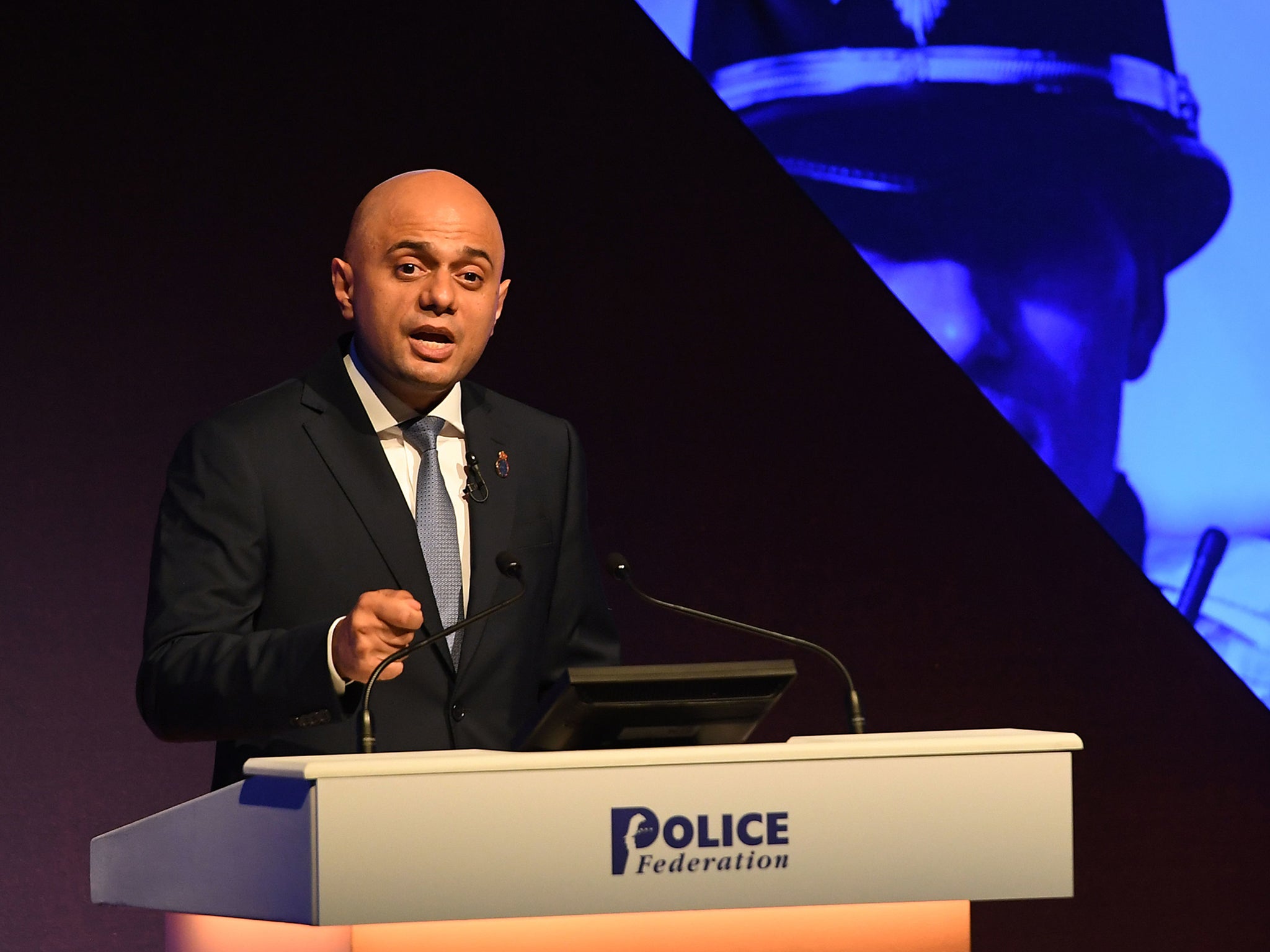
Police forces are ‘failing the public’ due to cuts, Police Federation chief warns

‘We are moving into an area where some crimes will not be investigated … we can’t do everything’

John Apter warns the public ‘are already suffering’ and ‘are going to suffer more’
John Apter warns the public ‘are already suffering’ and ‘are going to suffer more’ ( PFEW )
The British public are being “failed” because huge demand and stretched resources mean police are not responding to crimes they would have dealt with in the past, the new head of the Police Federation has warned.
John Apter, who has been a police officer for 26 years, told The Independent that policing in some areas was “broken” and said that government cuts had created a “crisis”.

“We are moving into an area where some crimes will not be investigated, whereas two to five years ago they were,” he said.

“We can’t do everything – there are going to be situations where we simply can’t deliver the policing we want to deliver.
“In those cases we are failing the public but that’s not the fault of police officers on the ground, and in some cases it’s not the chief constable’s fault. You can only slice the financial cake so many ways and you have to prioritise … the public are already suffering and they are going to suffer more and more.”
Last year the Metropolitan Police announced the creation of a new “crime assessment policy”, which gave officers new guidelines on when to stop investigations.

Details suggested that incidents involving a loss of under £50 would not be investigated, as well as offences where there is not a “realistic chance officers will be able to solve it”.
Shoplifting, car crime and criminal damage were among the “lower level” offences being downgraded amid a rise in violent crime, sex offences and 999 calls.
Scotland Yard said the measures were needed to “balance the books” as the force works to make £325m savings by 2022.

Cressida Dick: ‘Naive’ to think cuts to police haven’t had impact on rising crime

In response to questions by The Independent, several other forces said they had implemented measures aiming to make better use of their “finite resources”.
Thames Valley Police has changed its policies on dealing with shoplifting and drivers who flee petrol stations without paying for fuel “to reduce demand on the frontline”.

The force is giving business owners packs allowing them to collect their own evidence and CCTV footage for police, so officers can investigate without travelling to the scene.
“New structures have been designed to provide more flexibility to ensure Thames Valley Police better prioritises, and effectively and efficiently targets resources to the areas of greatest need,” a spokesperson said.

West Yorkshire Police chief constable Dee Collins said her force had to “completely change the way we work”.

“We have to make incredibly difficult decisions, as we seek to balance significantly reduced resources against very high levels of demand” that is often not crime-related, she added.
“I would really like to dispatch more officers to more victims on more occasions than we do but given the current situation and demands for our services, sadly we have to be realistic and pragmatic.”
Bedfordshire Police said the increase in “hidden crimes” like cyber offences, modern slavery and sexual exploitation had changed policing dramatically in recent years.

Deputy chief constable Garry Forsyth said the force had started giving appointments to victims of crimes where there is no threat to the wider public.
“We have to make difficult decisions every day about the crimes we can respond to and whether there is sufficient evidence to warrant a full investigation,” he added.
“Obviously we will always prioritise those high-harm crimes which change people’s lives, where there is a threat to the public’s safety, but we are exploring a range of options where there might be alternative resolutions to dealing with incidents to help maximise our officers’ time.”

A Leicestershire Police spokesperson said it was using “limited resources most effectively to deliver public value for money”, adding: “We have to prioritise investigations that cause the highest harm.”
The National Police Chiefs’ Council (NPCC) has been urging police forces to use the “Thrive” model which prioritieses emergency calls according to “threat, harm, risk, investigation possibilities, vulnerability and engagement”.
“Every police service is facing continuous challenges re financial constraints and service delivery, demand and resourcing to public expectations and needs,” said a document published last April. “Each service has adopted its own approach, project and programme thinking regarding future policing delivery.”

North Yorkshire Police said the system is not a “one-size-fits-all-policy” on different crime types and still allows a bespoke response for each incident.

“There is no doubt that we have to manage our resources carefully and cannot attend every incident that’s reported to us,” a spokesperson added.
“Over the past year Thrive has helped us to reallocate around 2,000 hours of police-officer time from incidents that didn’t really need police attendance to incidents where they can make a real difference.”

HM Inspectorate of Constabulary’s annual report found that forces are failing to respond to low-priority crimes because of “significant stress” caused by budget cuts and rising demand, saying that prioritisation assessments can sometimes “be misapplied or poorly managed” and put people at risk.
Inspectors also warned that if a victim’s first experience with police is not positive, they may not report crimes in the future.
Research published exclusively by The Independent earlier this month showed that confidence in the criminal justice system is declining among victims, with one woman saying her experience left her wondering “what is the point in ringing” the police.

Police forces have been working to improve their technology and procedures, but many cite the impact of “unprecedented” demand driven by factors including increasing 999 calls, rising violent crime and complex sexual offence cases and fraud.

Sajid Javid promised police officers he would fight for more funding shortly after being made home secretary (PA)

The number of police officers in England and Wales has fallen to a record low after plummeting by around 22,000 since 2010, while the past year has seen homicides rise by 12 per cent, knife crime by 16 per cent and robbery by 30 per cent.
The government says there is no conclusive evidence of a link between rising crime and falling police officer numbers, but Mr Apter insisted there was “absolutely” a relationship, adding: “The demand has massively increased while officer numbers have considerably been cut.

“The maths just does not add up and the government are purely responsible.”
Almost half of all criminal investigations are being closed with no suspect identified, and the proportion ending with someone being charged or summonsed to court fell to just 9 per cent in the year to March.

Mr Apter said funding cuts were also increasing the strain on police officers themselves, amid a rise in long-term sickness and a record number taking second jobs to supplement their incomes.
“The reality is that policing in some places is broken, we are most certainly in crisis and that is a direct result of the pressure the government has put on by a reduction in funding,” he added.

“I’m not saying that in the early days of austerity there were not efficiencies to be made, but what we are finding now is that we’ve been cut so much we start to become inefficient.
“We’re not giving the service we want to the public and we’re certainly not looking after our officers as much as we should be.”
Sajid Javid has promised to fight for more resources for policing in a government-wide spending review but admitted he has “no magic wand” to increase funding.
A Home Office spokesperson said: “Police have the resources they need to carry out their vital work and we have provided a strong and comprehensive settlement that is increasing total investment in the police system by over £460m in 2018/19, including funding for local policing through council tax precept.
“However, we know the nature of crime is changing. That is why the policing minister spoke to every police force in the country to understand the demands they are facing and why the home secretary, in May, committed to prioritising police funding in next year’s spending review.”

Categories
Cops

A Sad & Funny Video about the NYPD


I guess one can figure out my position about the Ladies & the Profession of Arms in a combat situation – Grumpy

Categories
Cops N.S.F.W. Well I thought it was funny!

Greeting from New Jersey with a little road rage thrown in for good measure!

Having gone to Army Basic Training at Ft. Dix, New Jersey. This brings back a lot of memories!

Categories
Anti Civil Rights ideas & "Friends" Cops

Don't you just hate this when this happens?

Anti-Gun Democrat Running to Become Texas Governor Lost Service Pistol

Lupe Valdez misplaced her service weapon in December of 2017 when she resigned from her position as Sheriff of Dallas County to make a bid for governor of Texas. (Photo: Facebook)

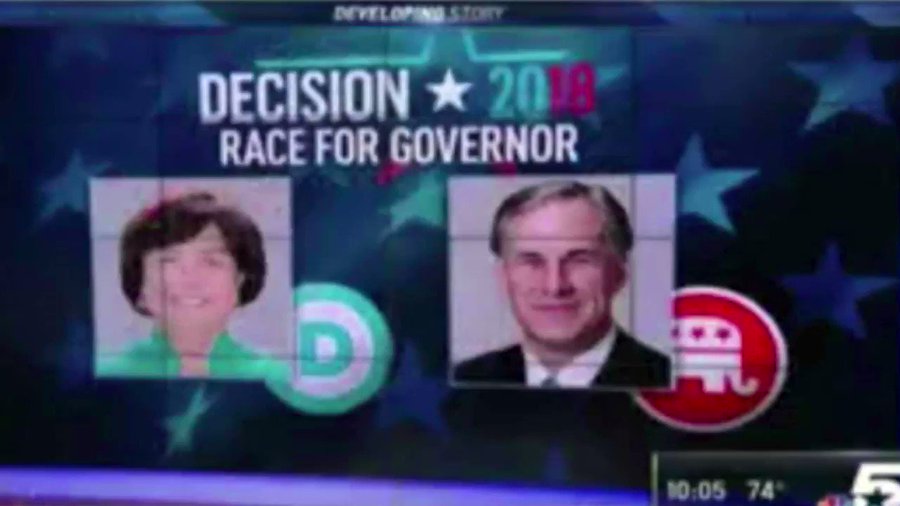
Texas gubernatorial candidate Lupe Valdez is in a bit of a pickle right now. The Democrat, who is hoping to take down incumbent Gov. Greg Abbott (R) this fall, misplaced her service pistol, local media reports.
Valdez apparently lost track of her Beretta 9mm in December of 2017 when she was transitioning from her role as publicly-elected sheriff of Dallas County to private citizen running for governor. As part of the move, she was required to return the handgun to the county.
Last month, the Dallas County Sheriff’s Office issued a report about the missing firearm fearing it may have been used in the commission of a crime.
This week a spokesperson for the Valdez campaign told The Dallas Morning News that the candidate is working with investigators to “locate the firearm.”
“As mentioned in the [police] report, it is possible that this weapon could have been stolen or misplaced during Sheriff Valdez’s moving transition and she is working with the Dallas County Sheriff Department to locate the firearm,” said spokesman Juan Bautista Dominguez.

SEE ALSO: She Ran for Congress on Gun Control, Now She’s Charged with Murder

Valdez may have an out if it’s discovered that the gun was lost after she turned it over to the department. However, Dominguez offered no comment about whether it went missing on her watch.
Complicating matters for Valdez is that she openly supports gun control. In the past, she’s championed criminalizing private transfers, banning certain magazines, and has opposed expanding campus carry on Texas universities. All of which has earned her support from the anti-gun lobby.
The Giffords Law Center to Prevent Gun Violence, the gun-control organization fronted by former Congresswoman Gabrielle Giffords (D-AZ), endorsed Valdez for governor in May.
“Law enforcement and first responders like Sheriff Valdez know how a firearm ending up in the wrong hands can lead to tragedy,” said Giffords. “Sheriff Valdez also knows that both law enforcement and elected officials play a pivotal role in keeping our communities safe from gun violence.”
In what might be the understatement of the year, the optics of the situation are très mal for Valdez. And, it didn’t take long for Gov. Abbott’s team to take note.

Texans for Abbott

@AbbottCampaign

If Lupe Valdez can’t keep track of her own gun, she can’t be trusted running the state of Texas.

“If Lupe Valdez can’t keep track of her own gun, she can’t be trusted running the state of Texas,” said Gov. Abbott on Twitter Wednesday, above a video montage of media members discussing the faux pas.
Just to get things straight.  Valdez is an anti-gun Democrat running for to become the next governor of Texas.  Texas!  She is a former CLEO who lost her service weapon.  Call me crazy but I don’t see a major political victory in her future.
** If it had been me, I would of offered to buy it back. Then a couple of days later report it as lost. I think Texas deserves better than this Lady’s offer of Service. Grumpy.**

Categories
Anti Civil Rights ideas & "Friends" Cops

I know that I am getting worried about this issue

 Should Gun Owners Fear The Deep State?
Should Gun Owners Fear The Deep State?

President Donald Trump and his opponents have loudly wrangled in recent months about whether a “deep state” is out to get the president. The term “deep state” commonly refers to the officials who secretly wield power permanently in Washington, often in federal agencies with vast sway and little accountability. According to a March poll, 74 percent of Americans believe that a deep state probably exists.

Unfortunately, the deep state could increasingly focus on gun owners in the coming years. The number of Americans who are violating firearm laws and regulations is increasing by tens or hundreds of thousands almost every year. This is not the result of a violent crime wave, but because politicians are continually criminalizing the possession of items that were previously legally owned.

Five years ago, the Connecticut legislature decreed that all owners of so-called “assault weapons” (which included any semi-automatic rifle with a pistol grip) must register their firearms. Perhaps as few as 15 percent of gun owners bothered to comply with the new law—meaning that Connecticut had up to 100,000 “criminals” living within its border. A 2016 Albany Times Union editorial lamented that 96 percent of roughly 1 million New Yorkers who owned so-called “assault weapons” failed to comply with registration requirements. California gun bans have been met with similar, massive non-compliance. Undeterred, local governments have begun jumping on the bandwagon. Deerfield, Ill., recently decreed a $1,000-a-day penalty on anyone who fails to surrender or disable their semi-automatic firearms with cosmetic features that frighten politicians and editorial writers.

While such laws were made by elected officials, it is unelected bureaucrats who are largely left in charge of enforcement, and that can cause big problems for gun owners. Just before press time for this issue, it was reported that a California farmer who was simply trying to meet the state’s ever-changing restrictive gun laws by registering his rifle is being charged with 12 felonies after the state DOJ determined his AR-15 to be “illegally modified.” That determination served as grounds for the agency to raid the man’s home and confiscate 12 firearms, 230 rounds of ammunition and two suppressors. He was later released on $150,000 bond, and at press time the case was still pending.

In addition to such state actions, there is a growing clamor on Capitol Hill to impose a nationwide ban on AR-15s and other semi-automatic firearms. If that happens, most gun owners are unlikely to surrender their prized possessions in response to a D.C. dictate. As a result, millions of Americans could technically become felons overnight for refusing to obey what they consider an unjust law.

The deep state’s surveillance and investigative powers make it far easier to target firearm-ban scofflaws than in earlier times. Anti-gun sentiment will seek to legitimize any surveillance or enforcement efforts carried out by federal agencies. At a time when politicians are shamelessly comparing the National Rifle Association to a terrorist organization, gun owners may face much wider assaults on their rights and privacy than have previously occurred.

Institutionalized Anti-Gun Conniving
Politicians have long relied on the secrecy of deep-state agencies to carry out campaigns intended to undermine the Second Amendment. After the 2014 showdown at a Nevada ranch, the FBI created a bogus independent film crew that spent a year hounding and videotaping the Bundy family and their supporters to gin up federal charges. Last January, a federal judge dismissed the case against the Bundys, in part because of pervasive FBI lying (including three years of denials that an FBI sniper team was deployed near the Bundys’ home). But the FBIsuffered no penalty, and there is no reason to expect the agency will not try the phony film crew gambit again.

The deep state has more levers than most Americans recognize. Because Congress has designated more than 4,000 criminal offenses and federal regulatory agencies have greatly expanded these through interpretation and rulemaking, bureaucracies have vast discretion to target whom they please. In 2012, the Obama administration launched Operation Choke Point, supposedly to “choke” illegal businesses’ access to financial services. The Justice Department and the Federal Deposit Insurance Corporation (FDIC) targeted firearm dealers, resulting in legitimate businesses having their assets frozen based on mere suspicion that they had failed to complete federal background checks on purchasers.

Emails from FDIC officials showed they were “scheming to influence banks’ decisions on who to do business … [to ensure] banks ‘get the message’ about the businesses the regulators don’t like, and pressuring banks to cut credit or close those accounts, effectively discouraging entire industries,” according to an analysis published by The Daily Signal. FDIC Chairman Martin Gruenberg testified to Congress in 2015 that “bank examiners had misinterpreted regulatory guidance to suggest that entire categories of businesses [including firearm dealers] should be barred from traditional banking services,” The Hill reported. Rep. Sean Duffy, R-Wis., complained that fdic officials were “weaponizing government to meet their ideological beliefs.” Operation Choke Point has been terminated, but legions of laws and regulations that could permit federal agencies to deny due process to any business that politicians dislike remain on the books.

Second Amendment As Subversion?
Some gun owners might assume that their patriotism exempts them from mistrust by government officials. But Second Amendment advocates have been vilified thanks to the 70-plus Fusion Centers bankrolled by the Department of Homeland Security (DHS), purportedly to track terrorist threats. To justify their existence, Fusion Centers concoct expansive definitions of suspicious activities. They have attached the “extremist” or potential terrorist tag to gun rights activists; individuals and groups “rejecting federal ice authority in favor of state or local authority” (even though many of the Founding Fathers shared the same creed); and people who were “reverent of individual liberty.”

Federal agencies or federally funded organizations have also declared that individuals can be considered dangerous extremists for “stockpiling” ammunition, displaying the Gadsden (Don’t Tread on Me) flag, asserting a “right to keep and bear arms,” having a “Know Your Rights or Lose Them” bumper sticker, or visiting online “extremist websites/blogs.” Some of those definitions seem designed to cause people to burst out laughing at their absurdity. But the fact that politicians are seeking to use catch-all notions of “suspicious” activity to disarm peaceful Americans is not funny.

Two years ago, Democratic senators conducted a filibuster in favor of prohibiting anyone on a terrorist watch list (which together now include 1.5 million names) from buying guns. “We’re just asking for terrorists not to be able to walk into a gun shop and buy a gun,” Rep. Sheila Jackson Lee, D-Texas, declared.

The fact that the lists contain the names of vast numbers of people who are not terrorists was irrelevant to anti-gun politicians. Names can be added to those watch lists based on the scantest evidence—or even no evidence at all. Obama administration officials boosted tenfold the number of people included on the so-called no-fly list, which was so slipshod that it repeatedly blocked the late Sen. Ted Kennedy, DMass., and Rep. John Lewis, DGa., from traveling. Once someone’s name was added to that list, he was left in bureaucratic purgatory and had to fight for years to even learn why he was on the list to begin with. Even a Los Angeles Times editorial opposed the “no fly, no buy” ban, declaring that owning a gun “is a recognized right, and we find it dangerous ground to let the government restrict the exercise of a right based on a mere suspicion.” But when anti-freedom politicians want to disarm Americans, “mere suspicion” is apparently sufficient. 

Federally Funded Vacuum Cleaners
The proliferation of anti-gun laws and regulations in recent years has strewn the nation with tripwires for firearm owners. DHS has given local and state governments more than $50 million to purchase license plate readers for police cars. John Filippidis was driving with his family through Maryland when he was pulled over by a Maryland transportation policeman outside a Baltimore tunnel. The policeman ordered Filippidis out of his car and angrily demanded to know where his gun was. Filippidis has a Right-to-Carry (RTC) permit from Florida—where he had left his firearm. Police spent hours questioning him and searching his minivan before permitting him to move on, leaving his wife and daughters utterly distraught. Maryland police have targeted and rigorously searched other out-of-state drivers with RTC permits (which Maryland does not recognize). Federal grants enabled Maryland to equip hundreds of police cars with license plate scanners that create almost 100 million records per year detailing exactly where and when each vehicle travels.

License plate readers are also being used to create federal records of individuals who attend gun shows. The Wall Street Journal revealed in 2016 that Immigration and Customs Enforcement (ICE) arranged for local police to scan license plates of attendees at a southern California gun show. ice officials told the Journal that ice “has no written policy on its use of license plate readers and could engage in similar surveillance in the future.” A 2015 ACLU investigation concluded that Drug Enforcement Administration (DEA) and ATF also used license plate readers to round up information about gun show attendees. If you have attended gun shows in recent years, that information could be on a federal dossier. More importantly, that fact might be used by law enforcement to justify further investigation of you.

Depressed And Disarmed
At the local and state level, gun owners can be imperiled by deep state-style mandatory reporting requirements spurred by politicians who seek pretexts to disarm as many citizens as possible. After railroading a prohibitive gun bill through the state legislature in 2013, New York Gov. Andrew Cuomo declared: “People who have mental health issues should not have guns. They could hurt themselves, they could hurt other people.” But tens of millions of Americans visit therapists each year, and “mental health issues” is vague enough for lots of political mischief. 

More than 85,000 individuals have lost their Second Amendment rights as a result of the law. As columnist Jacob Sullum observed, the “law effectively gives ‘mental health professionals’ the power to disarm people, and they do not even need a judge’s approval.” New York University law professor James Jacobs observed that, “based on as little as a single short emergency room interview,” an individual “need not even be notified that his or her name has been added to a database of persons whose firearm license must be revoked and whose firearms must be surrendered.”

One of the first victims of the law was a librarian who was forced to surrender his firearms to local law enforcement, in part, because he (like millions of other Americans) had received a prescription for Xanax. A New York City public radio station reported the case of “a retired police officer who went to a Long Island hospital complaining of insomnia. A week later sheriff’s deputies confiscated his guns.” 

The law intended for county health officials to vet the recommendations that nurses, social workers and others made for disarmament, but the vague standards produced a tidal wave of notifications. As a result, county health officials effectively become “clerical workers, rubber-stamping the decisions,” The New York Times reported. Now, some anti-gun activists consider the New York law a model for imitation in other states or at the federal level.

A nationwide attempted “mental health” gun grab occurred in the final weeks of the Obama administration. Under spurring from the White House, the Social Security Administration ruled that up to 75,000 disability recipients a year who were labeled “mental defectives” would be forced to surrender their firearms. Tens of thousands of Americans filed comments protesting the new regulations, and the Social Security Administration denied that it was implying “a connection between mental illness and a propensity for violence, particularly gun violence.” 

The new regulation was bizarrely overbroad. As U.S. Sen. Charles Grassley, R-Iowa, pointed out, “The disorders list [for banning gun ownership] included eating disorders and other disorders that merely impact sleep or caused restlessness or even ‘feelings of inadequacy,’ illustrating that the regulation was not limited to people with serious mental disorders that caused them to be dangerous.” The rules turned the Bill of Rights upside down. Individuals targeted for gun bans would have received no hearing to prove they should not be disarmed. Instead, as NRA-ILA observed, “The rule forces affected beneficiaries to file a petition for ‘restoration’ of rights and to somehow prove their possession of firearms would not harm public safety or the public interest.” 

Even the American Civil Liberties Union opposed the new mandate, asserting that it “reinforces the harmful stereotype that people with mental disabilities, a vast and diverse group of citizens, are violent.” Congress and the Trump administration speedily overturned the new rule last year. But the fact that such a policy was even promulgated is a bellwether of future attacks on the Second Amendment.

Fading Legality And Rising Surveillance
Gun owners who are confident that they will have no problems with the authorities should recognize how quickly government officials can shift the lines defining licit and illicit conduct.

As more gun bans are enacted at the state, local and, potentially, federal level, the number of violators who refuse to surrender their firearms will likely skyrocket. Widespread non-compliance would provide a pretext for demagogic politicians to proclaim an emergency that justifies destroying the privacy of gun owners across the board. How bad could it get? The feds could even commandeer living room and bedroom conversations that are continually captured and uploaded to the internet by Amazon Alexa or Google Home devices. Last year, Amazon gave Arkansas prosecutors Alexa recordings automatically made in the home of a murder suspect.

Some gun owners believe the deep state poses no peril to them because they are entitled to due process, a presumption of innocence and other constitutional rights. But such assurances can quickly become mirages when many politicians portray every privately owned firearm as a massacre in waiting. Many liberals will champion any “show us the gun and we’ll find a crime” crackdown.

“Those who have nothing to hide, have nothing to fear” is an old saying designed to breed docility. But gun owners can afford to accept this adage less now than ever before. The deep state stands ready to exploit the rising tide of laws that turn gun owners into criminals who can be destroyed for political and bureaucratic profit.

James Bovard is a usa Today columnist, a frequent contributor to The Hill and other publications, and the author of 10 books, including Lost Rights: The Destruction of American Liberty.