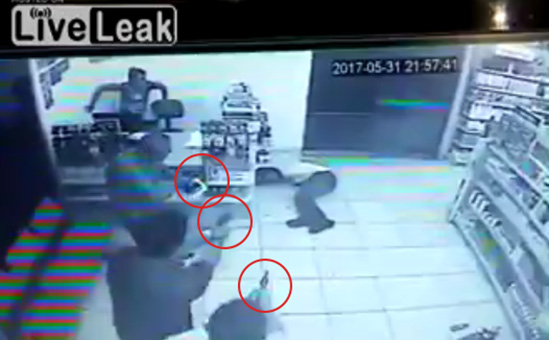
These guys a really good by the way! Grumpy
These guys a really good by the way! Grumpy

https://youtu.be/49pQf3E_yqE
Just a few years ago, she would of been disarmed and then been awaiting her trip to the local loony Bin! Grumpy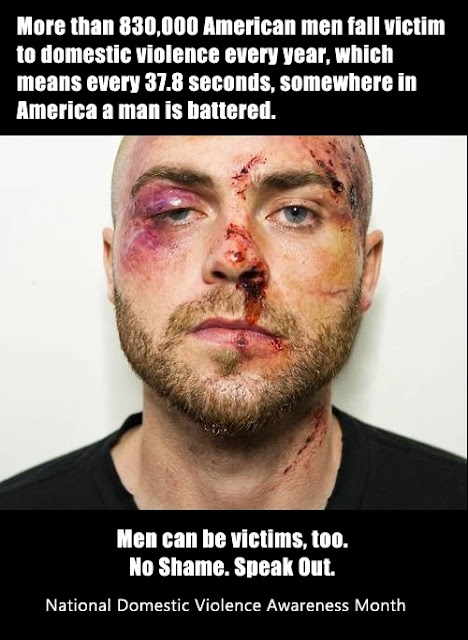
**********************************************
This is a really old Fim so take this gentlemans advice with a grain of salt. Make sure that you check out your areas rules & regulations!!
You can find equivalent BB or Airsoft clones of many regular firearms, and typically buy one of them and air cartridges and ammunition for well under $100 total. Use them, plus instructional video clips from YouTube (ignore the ‘tacticool’ over-the-top videos with rock music soundtracks – look for sober, sensible presentations without hype) and the help of friends who know what they’re doing, to get a basic idea of how to aim and fire a weapon. Concentrate on slow, accurate shooting at first, until you can put all your rounds into the center of a target (I use the cheapest grade of 8″ paper, plastic or foam disposable plates). Start at close range (10-15 feet) and extend it as you get better, until you can group 10 rounds inside 4″-6″ at 15-20 yards on demand. (This assumes your training weapon is capable of such accuracy, of course.)
Once you’ve learned the basics of accurate shooting, try to shoot faster without losing accuracy. Defensive shooting is typically at close range, so set up small targets (e.g. tennis balls to start, later progressing to even smaller table-tennis or squash balls) at varying distances (10-15 feet at first, moving out in stages to 15-20 yards) and try to hit them. I’ve trained several wheelchair-bound shooters to hit a rolling squash or table-tennis ball (or a target of similar size) with at least 7 out of 10 rounds from a handgun at distances of 10 to 20 feet, all within 5 to 6 seconds. That may sound daunting, but after a few thousand rounds of practice, starting with a BB pistol and progressing to a .22LR firearm, they didn’t find this too difficult. As I said to them, if they can hit a small, moving target that often at that range, they should have little trouble hitting someone threatening their safety!
I highly recommend taking a basic training course from a qualified instructor if possible. Many shooting ranges offer NRA courses, and some police and sheriff’s departments offer firearms training for citizens. They’ll probably expect you to use a real gun when you attend the course, rather than a BB or Airsoft ‘toy’, but they may be able to arrange a ‘loaner’ firearm for you. There’s no harm in asking. Expect to pay $50-$100 for this level of training, plus the cost of ammunition.
All right – you’ve invested in a BB or Airsoft weapon and practiced enough to be able to hit what you’re aiming at. That’s a great start. Now, on your very limited budget, what’s worth buying for defensive use?
I recommend a shotgun as a basic home defense weapon. It’s mechanically simple, usually pretty reliable, and powerful enough to stop most intruders in their tracks if the worst comes to the worst. I’ve written about shotguns for home defense in a three part series of articles – follow each of those links to read more about the subject. There’s also an excellent introduction to defensive shotguns here. You can buy a perfectly serviceable new Chinese-made shotgun for $200-$250, and used models of US shotguns are available for similar prices. Look for a shorter barrel (18″-20″) and, if possible, magazine capacity of at least 5 rounds – some offer up to 8 rounds. If you want maximum ammunition versatility, go for the 12 gaugeofferings; 20 gauge is almost as effective (and my recommended choice for those who are new to shotguns), but defensive ammunition (buckshot and slug) isn’t always as freely available. (You can get reduced recoil buckshot and slug ammo for 12ga. shotguns that’s easier to control than full-house loads.)
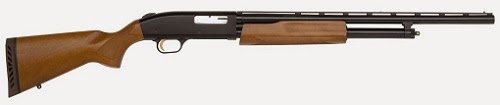
I recommend any of the following shotguns (if used, have an expert check their condition before you buy them):
There are many others out there that may serve you well; but in terms of quality and value for money, the four I’ve mentioned have worked for me. YMMV. You should be able to get a new or used example of any of the above, plus enough cheap birdshot ammunition to become familiar with it and some buckshot and/or slugs for home defense, for not more than $300 in all.
If you want a handgun instead, that can be a problem. A quality name-brand handgun will usually cost $300-$500 used, and $500-$750 new. There’s a plethora of designs and variations out there, and choosing the right one can be bewildering. However, if price is the ultimate consideration there’s one handgun that’s relatively low-cost ($175-$250 retail, depending on model and caliber), but runs surprisingly well in practice. That’s the Hi-Point range of pistols (manufacturer’s Web site here).
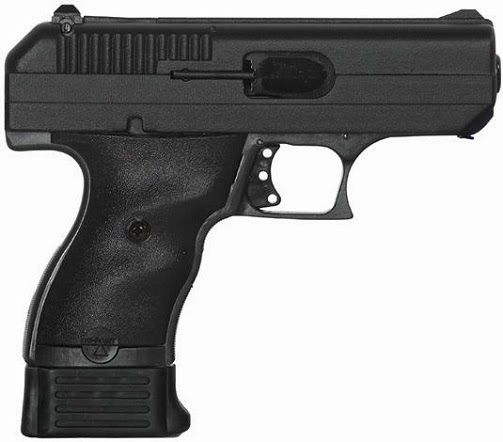
I don’t like them; they feel over-large, clunky and ungainly in my hands, and give the outward impression of poor quality. Nevertheless, many people who own them report that they’re reliable and accurate enough for defensive purposes. Those that I’ve fired have lived up to that reputation. Therefore, don’t let my prejudices put you off; try them for yourself. They’re certainly much more affordable than most of their competitors. The company also makes a line of pistol-caliber carbines that have earned a reputation for reliability. (I actually like their carbines much better than their handguns.) I’d still rather save my money until I could afford something better, but that’s my opinion. A bad guy will hate to get shot by any gun!
I don’t know a low-cost double-action revolver that’s of adequate quality to satisfy me. If I’m going to have to spend $300-$400 to buy a Charter Arms or Rossimodel, I’d rather spend as much or a little more on a higher-quality used Smith & Wesson revolver. (Get an expert to check it out before purchasing it, to make sure you aren’t buying someone else’s problem.)
(EDITED TO ADD: Reader Sport Pilot has offered one alternative that seems intriguing – see the foot of this article for details.)
However, there’s one low-cost revolver for trail and camping use that can also serve for defensive purposes in a pinch. It’s the Heritage Arms series of single-action revolvers, available in rimfire and centerfire calibers. Their .22LR and .22WMRrevolvers are very affordable, many costing less than $200 retail – I own a couple myself, and like them. (I agree that .22 rimfire, either LR or WMR, is marginal as a defensive round; but it’s better than nothing). Their centerfire models are more expensive, but still offer value for money compared to higher-grade competitors.
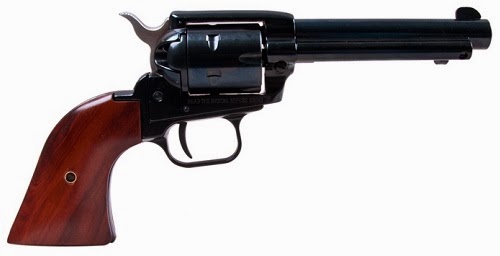
Most instructors (including myself) agree that a single-action revolver is slow to reload and not as fast to shoot as a double-action revolver, making it less than optimum for defensive use. Nevertheless, I can’t help remembering that the Old West was settled with the aid of such revolvers, and their modern users like the members of the Single Action Shooting Society (SASS – also known as ‘cowboy action shooting‘) demonstrate remarkable speed and accuracy with them. (Look on YouTube for videos of their prowess.) A single-action revolver will serve you as well as you train yourself to use it.
Whatever you buy, make sure you also purchase enough practice ammunition to familiarize yourself with your weapon of choice, and also buy some premium defensive ammo to take care of “things that go bump in the night”. In today’s market, ammo can be hard to come by, so don’t buy a gun that uses a cartridge you can’t find for love or money!
In my experience, you can buy a BB or Airsoft training weapon, plus enough gas cartridges and pellets to train yourself to an adequate level of performance, plus a defensive weapon (one of the shotguns or handguns mentioned above), plussufficient practice ammunition to become familiar with it, plus a small quantity of higher-quality defensive ammunition, for a total expenditure of under $500. If you wish to ignore my advice to get a BB or Airsoft training weapon and/or attend an entry-level training course, you can knock $100-$200 off that total. I don’t think you’ll be able to do much better than that.
What do you think, readers? Any suggestions?
Peter
EDITED TO ADD: In a comment, reader Sport Pilot tells us about the M5 12-gauge shotgun and the M200 and M206 .38 Special revolvers, all made by Armscor in the Philippines.
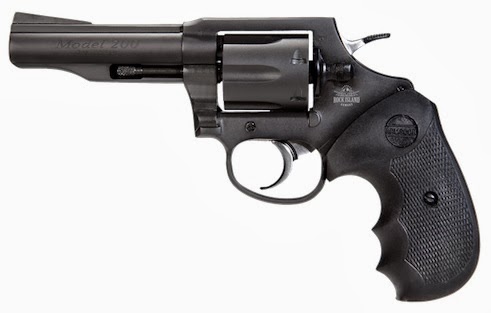
I have no personal experience of these firearms, but I found this review of the revolvers that seems positive. I was interested to read that one can use grips made for the Colt Detective Special to replace those supplied from the factory – an important consideration to improve a revolver’s fit and feel in one’s hand. I’m going to see about getting one to test in due course. Thanks for the heads-up, Sport Pilot. At a retail price that appears to be in the $220-$250 range (if one can find them) these might be a value-for-money proposition.
A couple of readers have suggested single-shot shotguns like these (a review is here). I like them as ‘fun guns’, but I tend to argue against them for defensive use, because for not much more money you can get a pump-action shotgun with greater magazine capacity. However, for those with so little money that they can’t afford any of the firearms I’ve discussed above, I suggest these as viable ‘last choice’ weapons. I’ve found several used examples for disabled students who had less than $100 to spend. They were able to buy the gun, a 25-round box of birdshot for familiarization and training, and a 5-round box of buckshot for defensive use within that budget. It’s hard to beat those numbers.
Last year, in an article titled ‘The changing urban self-defense environment‘, I pointed out (amongst many other points) that:
There’s much more at the link. If you haven’t read that earlier article, I suggest you do so before continuing with this one.
In the light of that article, I wasn’t surprised to read this report at PoliceOne.
Gangrelated crimes rose nearly 25 percent across Tennessee in 2011, but much of the illegal activity is happening away from big cities.
. . .
Since 2005, cities with fewer than 50,000 residents saw gang crime more than triple.
Gangs are becoming problems in places like Springfield, a town of about 16,000 people 30 miles north of Nashville.
In the past two months in Springfield, three suspected gang members were arrested in the armed holdup of a bank, and a 20-year-old man was found dead with a bullet wound to the back of his head near a youth center.
“By and large, the average citizen, I don’t think, sees or knows what’s really going on,” said Springfield police Chief David Thompson.
“There’s a lot of people that are just in denial or unaware. If it doesn’t impact them directly, they wouldn’t know about it. We’ve reached a space now where you can’t ignore what’s happening.”
But rural towns often have small and sometimes ill-equipped police departments, which can make the communities vulnerable and attractive to young criminals trying to dodge larger cities with more sophisticated gang units.
Also, gangs find rural areas to be full of eager, new drug customers and devoid of competition from other gangs. For a while, at least. The FBI’s annual National Gang Threat Assessment in 2011 was blunt in its appraisal of gangs’ interest in these untapped areas.
“Gang members are migrating from urban areas to suburban and rural communities to recruit new members, expand their drug distribution territories, form new alliances, and collaborate with rival gangs and criminal organizations for profit and influence,” the report said.
Again, more at the link. If you’re at all interested in your security, I highly recommend clicking over to PoliceOne and reading the whole thing, as well as the 2011 FBI National Gang Threat Assessment.
Don’t think this problem is confined to Tennessee – it’s not. The same trend is visible in almost every state, as gangs try to get out from under the increased surveillance directed at them in larger cities.
Another factor is the spread of drugs and drug money from Mexican cartels to local gangs, which are increasingly acting as distributors. They’ve got enough money backing them to spread their nets wider now.
Forewarned is forearmed, friends. I can only suggest that each of you carefully examine your family’s residential, work, commuting, education, shopping and entertainment environments, and take appropriate precautions to ensure your safety as best you can.
Peter
Supporters argue that the felony murder rule is used disproportionately against women, young people and minorities. They said the change will merely assign blame for a death to the correct people
(Yeah, doesn’t matter that they help plan & assist in the crime! Plus they are part & parcel of the protected class!)
Law enforcement and victim advocacy groups vigorously objected. They worried it would allow people who committed crimes that led to a death to go free without accepting responsibility.
____________________________________ (Yeah but who cares? Just remember that Murder Victims always get Capital Punishment!)
____________________________________
In a statement, Skinner called the bill “a fair and reasonable fix to California’s unjust felony murder rule.”
“California’s murder statute irrationally treated people who did not commit murder the same as those who did,” Skinner said. “SB 1437 makes clear there is a distinction, reserving the harshest punishment to those who directly participate in the death.”
____________________________________ Bottom Line – Its always about Money and how much it cost the state to lock this Scum up! Grumpy


I am so glad to be RETIRED from The Game!
Grumpy