
Categories
All About Guns Cops

How easy is it to choose when the pressure is REALLY on!

Categories
Cops Grumpy's hall of Shame

Over 100 Portland Police Officers Have Quit Over the Last Year by Eric Lendrum (I can’t blame them at all!!)

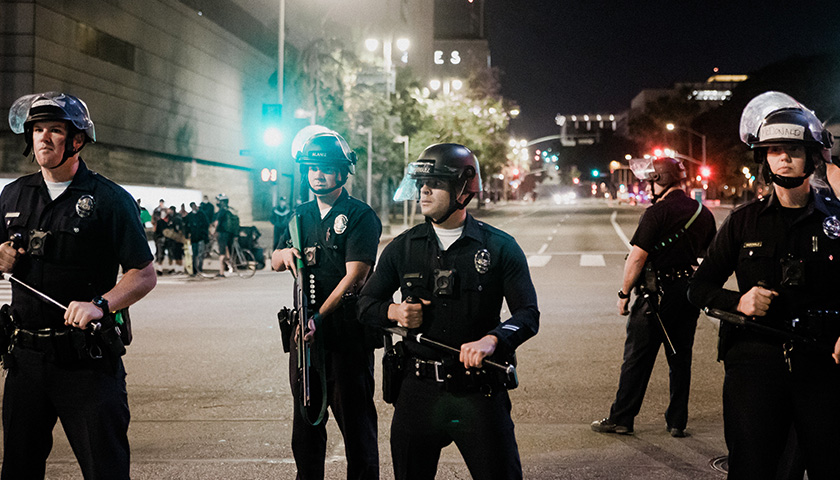
Group of police officers

After almost a year of nonstop violent riots by Black Lives Matter, Antifa, and other far-left domestic terrorist organizations in the city of Portland, over 100 of the city’s police officers have quit the force out of protest of the city’s failure to adequately handle the violence, according to Fox News.

The report first came from the newspaper The Oregonian, which said that since July of 2020, approximately 115 officers have left the department to take lower-paying jobs just to get out of the dangerous environment. The paper described it as “one of the biggest waves of departures in recent memory.”

Out of 31 exit interviews from officers who left during this time period, the general consensus was that the officers quit because they felt that they were receiving “zero support” from the community and local leadership. One officer said that “the city council are raging idiots, in addition to being stupid,” and that “the mayor and council ignore actual facts on crime and policing in favor of radical leftist and anarchist fantasy.”

As a result of the spike in riots, which began last summer after the accidental overdose death of George Floyd while in police custody in Minneapolis, Portland also saw its homicide rate surge to its highest point in 26 years, with 55 deaths over the course of 2020. Numerous efforts by Mayor Ted Wheeler (D-Ore.) to try to curb gun violence in the city, through special police forces and various multi-million dollar studies, have all failed thus far. Wheeler and other local leaders were widely criticized for refusing to crack down on the riots, with their inaction attributed to the fact that they shared many of the same political stances as the far-left rioters.

– – –

Eric Lendrum reports for American Greatness.


Categories
Born again Cynic! Cops

EXCLUSIVE: Exodus Underway as Record-Shattering Surge of Austin Police Officers Leave the Force BY BRYAN PRESTON

Image by Kate Baucherel from Pixabay
After the Austin city council voted unanimously to defund its police department by about one-third of its budget, in August 2020, many predicted that once the cuts kicked in a flood of officers would leave the force as soon as they could. The new district attorney’s policy of re-investigating police officers for closed cases is also expected to cause officers to resign or retire.

The city council’s cuts officially kicked in and have been in place for a few months.

PJ Media reports exclusively that APD is now suffering a huge surge of officer departures putting it on pace to shatter 2020’s record.

In January 2021, sources tell PJ Media 20 officers retired from APD and eight resigned, for a total of 28 departures.

In February 2021, five officers resigned and six retired, according to multiple sources, for a total of 11 departures.

In March 2021, 24 more officers left APD, with 20 officers retiring. Additionally, three officers resigned and one was terminated.

To put this into perspective, 2019 was the last non-pandemic year and the year before the city council cut APD’s budget. APD averages about 50 retirements or separations in a calendar year, and replaces them with cadets who have graduated from the police academy or officers who join APD from another force.

APD saw 46 officers retire with another 22 resigning in 2019, according to local TV news station KVUE.

2020’s numbers were exacerbated by the George Floyd riots; 78 officers departed or retired from APD from the beginning of those riots to the end of 2020, for a total of 89 separations, according to KVUE.

Official 2021 numbers provided to PJ Media by the Austin Police Retirement System (APRS) break down as follows:

    • Prior to 2020, retirements averaged 50-52 per year over the last 5-6 years
    • Record number of retirements in FY 2020: 97
    • First-quarter 2021 retirements: 45

Add to those 45 retirements the 18 resignations or terminations, for a total of 63 separations in just the first quarter of 2021. If the current pace continues, APD could lose approximately 252 officers — about five times the average number of separations for a year. This will impact public safety across the board, and according to the APRS, can impact retirees’ benefits as well. APRS raised the alarm about the impact the city council’s cuts could have in September of 2020.

March 2021’s retirements hit all over the department, including tactical intelligence, gang crimes, narcotics enforcement, investigations, and the bomb squad, according to a full list provided to PJ Media. Traffic enforcement  — both warnings and citations — has declined by more than 60% in the first two months of 2021, a source tells PJ Media.

At the same time, the city council’s cuts have forced the cancelation of police cadet classes. The department is losing experienced officers in droves and is unable to replace them with new officers.

Ken Casaday, president of the Austin Police Association, told PJ Media, “It’s extremely concerning. We’re using overtime and forcing people back to patrol just to be able to keep up with 9-1-1 calls. We fully expect to take 50 more officers off of specialized units just to keep up with patrol.”

“In Austin, Texas, the city council has fallen under the influence of hard-line anti-police activists,” Charley Wilkison, executive director of Combined Law Enforcement Associations of Texas (CLEAT), told PJ Media. “They don’t reflect the mainstream in Austin but they have been very loud.”

Wilkison described how the activists have disrupted the city’s relationship with the police department. “For the first time in modern memory, the city negotiated a contract with the police union, only to have activists storm the city council meeting and demand the contract be turned down, and it was.” Wilkison says the activists called the police every name imaginable and the city council “cratered” to them.

“Mayor Steve Adler wouldn’t be fit to hold the shoes of Austin mayors of the past,” Wilkison said. Wilkison also noted there are police defunding bills filed in the ongoing session of the Texas legislature. Those stand little chance of passage with Republicans controlling both houses and with a Republican lieutenant governor and governor.

Austin is “listening to people who want to change America and make it more like China,” Wilkison added. He warned strongly against Austin reverting to a “political police department” like it had before civil service reforms made hiring and promotion decisions based on merit rather than political patronage. “These are mistakes we don’t have to make,” he told PJ Media.

New city council member Mackenzie Kelly was not yet on the council when Mayor Steve Adler led the defunding vote. She defeated one of the most vocal proponents of the cuts in December 2020. Kelly told PJ Media “We need to look at the root causes of these officers leaving. Not just those that are eligible to retire, but also those just plain quitting.”

Noting the shocking number of officers choosing to leave, Kelly said “We are losing our most experienced officers and the community is suffering because of it.”

Austin’s homicide trend is ominous. 2019 saw 31 homicides in the city. Homicides in Austin increased in 2020 over 2019, to at least 44. Sources confirm Austin has had 21 homicides in the first quarter of 2021, putting it on pace to exceed 2020’s total by some distance. There were three shootings, including one fatality, this morning.

APD chiefs are said to be meeting this week to determine which units will be cut further in order to shore up patrols.


Sadly things are going to get very hairy in Keep Austin Weird Texas. All I can say is God help those folks down there1 grumpy

Categories
California Cops

The Sound Behind You Is Reality Catching Up (and It’s Carrying a Gun) BY JACK DUNPHY

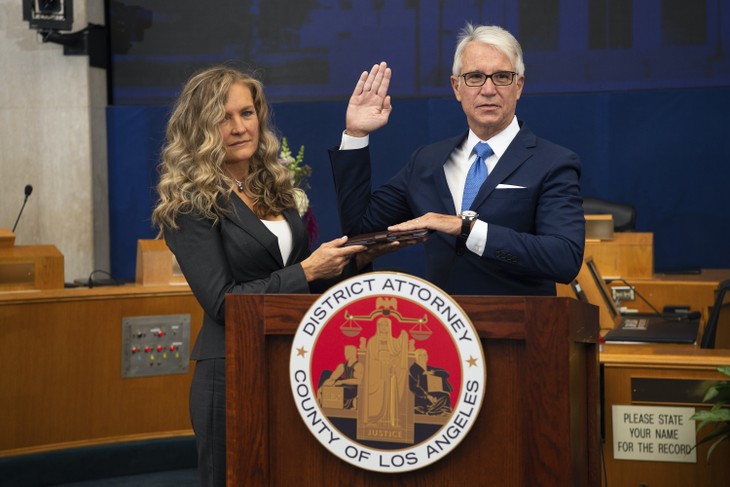
Bryan Chan/County of Los Angeles via AP
What value is there in a newspaper that ignores or subverts the truth in the service of  some fashionable agenda? And if this abuse of what once were universally observed journalistic standards isn’t shameful enough, how much worse is it when it results in needless death and bloodshed?

It should be obvious to anyone not ideologically blinkered that the Los Angeles Times has wed itself to the social justice cause, so inextricably so that no one at the paper seems cognizant of the fact that social justice, with its appeals for compassion for criminals, comes at the expense of actual justice and the welfare of crime victims.

The Los Angeles Times is hardly alone in its descent into woke activism. Indeed, the entire mainstream media complex seems to have abandoned its pretense of objectivity (and it has long been just a pretense) in favor of open left-wing activism. Nowhere is this more evident than in the reporting on issues relating to crime.

On Tuesday, the L.A. Times ran a story concerning one of the paper’s favorite ongoing themes, to wit, allegations of bias on the part of Los Angeles Police Department officers patrolling the more crime-ridden sections of the city. “LAPD admits it made hundreds more traffic stops in South L.A. than it told The Times,” reads the headline, reflecting the glee no doubt shared at the newspaper that the Department had been caught providing inaccurate data regarding this contentious issue.

This is not to excuse providing bad data to the Times, but the story itself seems to be more concerned with the “gotcha” aspect than with the far more important issue underlying the data, which is the problem of violent crime in Los Angeles, particularly in South L.A.

What’s more, the story is a muddle of unclear information from which the reader is unable to draw a sound conclusion. Times staff writer Kevin Rector opens the story with the “gotcha.” “Los Angeles Police Department officials earlier this month downplayed a return to controversial investigative traffic stops in South L.A.” he writes, “in part by telling The Times that the number of stops was dramatically lower than it used to be — with just 74 stops so far this year.” He goes on to cite the belatedly revealed accurate data. “But on Tuesday,” Rector writes, “LAPD Chief Michel Moore told the L.A. Police Commission that figure was wrong, and that the true count was more than eight times as high, with 639 stops having been conducted.”

Only by reading deep into the story, and by reading a linked Feb. 12 article, also by Rector, can the reader learn that it is stops by Metropolitan Division officers that is being discussed. Officers assigned Metropolitan Division, or Metro, do not respond to routine radio calls. Rather, they are traditionally deployed to inhibit crime in those areas of the city where it is most disruptive, which in Los Angeles means the four patrol divisions that make up South L.A.: Newton, Southwest, 77thStreet, and Southeast. (I worked at all of these stations at various times in my LAPD career.) L.A. Mayor Eric Garcetti and LAPD Chief Michel Moore were characteristically spineless and curtailed the patrols in 2019 after the L.A. Times ran stories claiming the tactic “disproportionately affected Black and Latino drivers.”

It would have been malfeasance on the part of the police had the stops not done so. Consider: these four divisions (of the LAPD’s total of 21) are home to about 640,000 people, or 16 percent of the city’s population, yet they accounted for 44 percent of the 349 homicides investigated by the LAPD in 2020. Nearly every single resident of these areas is black or Hispanic, as were the homicide victims and those who killed them.

The LAPD no longer publishes the racial breakdown of homicide victims and suspects as it once did, but it’s fair to assume that the city’s homicide figures run parallel to those of Los Angeles County, of which L.A. is by far the largest city and biggest driver of crime numbers. (Los Angeles County has about 10 million residents, of whom about 4 million live in the city of L.A.) According to the L.A. Times Homicide Report, last year there were 691 homicides committed in L.A. County, excluding those killed by police. Of these victims, 50 percent were Hispanic, 35 percent were black, 10 percent were white, and 5 percent were Asian. The county’s population is 47 percent Hispanic, 26 percent white, 15 percent Asian, and 9 percent black.

From these numbers one can see that homicide figures do not track perfectly with each racial and ethnic group’s share of the overall population. Yet the Los Angeles Times continues to insist something nefarious is afoot when LAPD stop figures align more closely with crime patterns than with population data. “The move to reinstate ‘investigative stops,’” writes Kevin Rector in the Feb. 12 story, “immediately raised concerns among some longtime police observers at a time of increased scrutiny over LAPD tactics in communities of color.”

As is now oh so fashionable, these “longtime police observers,” to include the writers and editors at the Los Angeles Times, apparently, are more discomfited by the prospect of police officers conducting investigative stops in high-crime neighborhoods than they are by the crime itself. It is precisely in those “communities of color” that law-abiding residents are most in need of protection from those who would prey on them.

Black Chicagoans Eviscerate Black Lives Matter Narrative, Booting Activists From Their Neighborhood

And yet the L.A. Times, along with nearly any other media outlet you can name, continues to peddle the lie – there is no better word for it – that what is most injurious to these “communities of color” is police harassment rather than the crime police seek to prevent.

How else to explain the paper’s uncritical devotion to George Gascón, L.A. County’s new district attorney and the latest of the George Soros-funded “progressive” prosecutors elected to office? The Times endorsed Gascón over incumbent Jackie Lacey last fall, and in the last two months has printed two editorials (here and here) defending Gascón and his lenient policies, the effects of which are fewer criminals sent to prison and shorter sentences for those who are.

Granted, Gascón was only recently elected, and one may argue, as does the L.A. Times, that his policies should be given time to bear their intended fruit. But what evidence is there that the fruit will be any less poisonous than that already produced in cities where progressive prosecutors have held office for longer? Larry Krasner took office as district attorney in Philadelphia on Jan. 1, 2018, and homicides in that city rose by 8 percent that year. Homicides declined by 1 percent in 2019, offering a hopeful sign, but then rose by 35 percent in 2020. They’re up an additional 33 percent so far this year.

In Chicago, Kim Foxx ran on a progressive platform and took office as state’s attorney for Cook County on Dec. 1, 2016, and was re-elected in 2020. Homicides in the city declined from 769 in 2016 to 492 in 2019, but then increased horrifyingly to 792 last year.

Chesa Boudin, district attorney for San Francisco, is the son of Weather Underground members and convicted murderers Kathy Boudin and David Gilbert, a lineage that would understandably warp one’s views on law and order. He was elected in 2019 after promising progressive reforms to the criminal justice system in that most progressive of cities. The results so far? San Francisco saw a 17 percent increase in homicides in 2020.

In short, there is precious little to suggest the progressive policies instituted by this new wave of prosecutors have brought about anything but a rising tide of bloodshed among the very populations they claim to champion. The only people profiting from all this “progress” are the undertakers.

It was the tough-on-crime measures enacted in the early and mid-1990s that stemmed the rising tide of violence seen across the country (2,245 homicides in New York City in 1990, 1,092 in Los Angeles and 943 in Chicago in 1992) and brought about the relative placidity of recent years. Those gains have been reversed with staggering speed, all with the blessing of these progressive prosecutors and their enablers in academia and media outlets like the Los Angeles Times, all of whom share the naive, even childlike belief that showing compassion for the cruel will make them less so.

You can run only so far from reality. Like a bullet, it catches up with you quickly

Categories
All About Guns Cops Well I thought it was funny!

Why the Hell not? The Shootings Of Raylan Givens

Categories
All About Guns Anti Civil Rights ideas & "Friends" Cops

FBI’s Shadow Gun Bans Threaten First and Second Amendment Rights

FBI’s Shadow Gun Bans Threaten First and Second Amendment Rights

For several years the FBI has been operating a shadow gun ban regime whereby Americans who are not prohibited from possessing firearms under federal law are being denied their Second Amendment rights without due process. This extralegal practice was brought to light again in recent weeks in the U.S. Court of Appeals for the Sixth Circuit case Turaani v. Wray. The case revealed that the FBI’s current administration of the National Instant Criminal Background Check System amounts to a may-issue gun purchasing scheme that is incompatible with the proper adjudication of a Constitutional right.

For more than a decade, gun control advocates and their allies in Congress have pushed legislation that would prohibit those on one of the federal government’s watch lists from purchasing firearms through the NICS system. As the federal government’s watch lists are oftenerroneous and the procedures for placing an individual on them are nebulous, opaque, and do not comport to any reasonable standard of due process, such legislation would empower the government to extinguish Americans’ Second Amendment rights with nearly unfettered discretion.

Given that such measures are a threat not only to Americans’ Second Amendment rights, but also their First and Fifth Amendment rights, NRA has been joined by the American Civil Liberties Union in opposing this dangerous legislation. NRA is not opposed to prohibiting dangerous individuals from possessing firearms, but the government must be forced to prove that an individual is dangerous by securing a conviction against them in a court of law.

Despite Congress having repeatedly rejected this may-issue scheme for gun ownership, the FBI has pressed forward with their shadow gun ban.

In 2013, the Congressional Research Service published a report titled, “Terrorist Watch List Screening and Background Checks for Firearms.” The document made clear that the FBI was checking the government’s watch lists during NICS background checks. Moreover, if a person came up on a list the transfer would be flagged and delayed. The report explained,

As part of the background check process, NICS typically responds to a federally licensed gun dealer, otherwise known as a federal firearms licensee (FFL), with a NICS Transaction Number (NTN) and one of three outcomes: (1) proceed” with transfer or permit/license issuance because no prohibiting record was found; (2) denied,” indicating that a prohibiting record was found; or (3) delayed,” indicating that the system produced information suggesting that there could be a prohibiting record.60 In the case of a possible watchlist match, NICS sends a delayed transfer (for up to three business days) response to the querying federally licensed gun dealer or state POC. During a delay, NICS staff contacts immediately the FBI Headquarters’ Counterterrorism Division and FBI Special Agents in the field, and a coordinated effort is made to research possibly unknown prohibiting factors. If no prohibiting factors are uncovered within this three-day period, firearms dealers may proceed with the transaction at their discretion.

Therefore, the FBI delays, as a matter of practice, firearms transactions involving individual for whom they have no information suggesting they are prohibited from possessing firearms. This would be bad enough if it involved a temporary delay, however, the FBI does not clear the delay. Rather, the non-prohibited individual must rely on the Federal Firearms Licensee (FFL or gun dealer) to proceed with firearm transfer once three business days have elapsed since the NICS check was initiated, as they are permitted to do by law. Such “default proceed” transfers are at the FFL’s discretion and some FFLs are reluctant to transfer a firearm under these circumstances. If a person delayed in this manner is unable to acquire the firearm from a reluctant FFL after a default proceed, the FBI has denied a non-prohibited individual their right to purchase a firearm.

In Turaani v. Wray, the FBI went a step further.

According to the facts presented in Judge Jeffrey Sutton’s opinion, in 2018 the plaintiff (Turaani) attempted to buy a firearm from an FFL. The requisite NICS check resulted in a delay. Then, as Sutton described,

The next day, FBI agent Jason Chambers went to the dealer’s house, which doubled as his place of business, to speak to him about Turaani. Chambers wanted to see what information Turaani had provided about himself and explained that we have a problem with the company” Turaani keeps.” He showed photographs of Turaani with another person of apparent Middle Eastern descent, whom the dealer did not recognize. And Chambers left his contact information with the dealer.

Turaani followed up with the dealer a few days later to purchase the gun. The dealer explained that he had received a visit from the FBI. While he technically could sell the gun” because the three-day delay had passed without further prohibitions on the sale, the dealer told Turaani that he was no longer comfortable doing so.

To recap, the FBI delayed the firearm transfer of a non-prohibited individual merely due to “the company” he “keeps.” Then the FBI paid a visit to the FFL that all but assured the firearm transfer would not go forward. Of course, freedom of association is an essential component of the First Amendment right.

Following the FBI’s actions, Turaani then filed suit, claiming that the federal government had impermissibly restricted his rights. However, the Sixth Circuit ruled for the government, claiming that while the FBI did share information with the FFL that made the dealer reluctant to transfer the firearm, they did not force the FFL to halt the transfer.

What the court failed to fully appreciate is that FFLs are licensed by the federal government and subject to its oversight. There is an obvious measure of coercion attendant a visit from the FBI to an individual whose livelihood is directly regulated by another branch of the Department of Justice.

The FBI’s shadow ban regime could be used to target any number of politically disfavored groups and individuals.

Consider the 2009 U.S. Department of Homeland Security report “Rightwing Extremism: Current Economic and Political Climate Fueling Resurgence in Radicalization and Recruitment.” The report explicitly targeted Second Amendment supporters and returned military as potential terrorists, stating,

The possible passage of new restrictions on firearms and the return of military veterans facing significant challenges reintegrating into their communities could lead to the potential emergence of terrorist groups or lone wolf extremists capable of carrying out violent attacks.

Further targeting gun rights supporters for heightened scrutiny, the report went on to explain,

Weapons rights and gun-control legislation are likely to be hotly contested subjects of political debate in light of the 2008 Supreme Court’s decision in District of Columbia v. Heller in which the Court reaffirmed an individual’s right to keep and bear arms under the Second Amendment to the U.S. Constitution, but left open to debate the precise contours of that right.  Because debates over constitutional rights are intense, and parties on all sides have deeply held, sincere, but vastly divergent beliefs, violent extremists may attempt to co-opt the debate and use the controversy as a radicalization tool.

In recent months, rhetoric about using the federal government to target those with divergent political views as “terrorists” has reached a fever pitch. The ACLU and other civil libertarians have warned about attempts to empower the federal government to pursue a new and misguided domestic war on terror. Former CIA Director John Brennan even suggested that the national security apparatus be turned on libertarians.

As bad as the current shadow gun ban regime is, there is legislation moving through Congress to make it even worse. H.R. 1446, would eliminate the three-day default proceed on NICS checks and would empower the FBI to indefinitely block FFLs from transferring firearms.

Under the bill, there would no longer be a set timeframe under which the FFL could proceed with a transfer if the FBI failed to give a definitive answer to a NICS check. An unresolved delay would become a presumptive prohibition on the transfer, even if the FBI never identified a disqualifying record.

Instead, the intended transferee – who already filed the Form 4473 with the FFL – would have to file a second petition with the government making the exact same declarations of eligibility and, once again, asking the FBI to rule on the matter.

But what would happen if the FBI didn’t resolve the follow-up petition?

In that case, the bill would require the FFL to wait at least 10 additional business days from the date the intended recipient filed the petition to consider making a default transfer. How the intended recipient is supposed to prove to the FFL the petition was even filed in the first place is not specified. This onerous and nebulous appeal procedure would only serve to exacerbate the threat posed by FBI’s current abuses.

The prejudices and unproven hunches of federal bureaucrats should never determine the exercise of a Constitutional right. That is why NRA members and other gun rights supporters must continue to work to oppose legislation that would give the federal government further discretion over the exercise of Second Amendment rights or compound the government’s current abuses.


Categories
All About Guns Anti Civil Rights ideas & "Friends" Cops

FBI’s Shadow Gun Bans Threaten First and Second Amendment Rights -NRA -Ila

FBI’s Shadow Gun Bans Threaten First and Second Amendment Rights

For several years the FBI has been operating a shadow gun ban regime whereby Americans who are not prohibited from possessing firearms under federal law are being denied their Second Amendment rights without due process. This extralegal practice was brought to light again in recent weeks in the U.S. Court of Appeals for the Sixth Circuit case Turaani v. Wray. The case revealed that the FBI’s current administration of the National Instant Criminal Background Check System amounts to a may-issue gun purchasing scheme that is incompatible with the proper adjudication of a Constitutional right.

For more than a decade, gun control advocates and their allies in Congress have pushed legislation that would prohibit those on one of the federal government’s watch lists from purchasing firearms through the NICS system. As the federal government’s watch lists are oftenerroneous and the procedures for placing an individual on them are nebulous, opaque, and do not comport to any reasonable standard of due process, such legislation would empower the government to extinguish Americans’ Second Amendment rights with nearly unfettered discretion.

Given that such measures are a threat not only to Americans’ Second Amendment rights, but also their First and Fifth Amendment rights, NRA has been joined by the American Civil Liberties Union in opposing this dangerous legislation. NRA is not opposed to prohibiting dangerous individuals from possessing firearms, but the government must be forced to prove that an individual is dangerous by securing a conviction against them in a court of law.

Despite Congress having repeatedly rejected this may-issue scheme for gun ownership, the FBI has pressed forward with their shadow gun ban.

In 2013, the Congressional Research Service published a report titled, “Terrorist Watch List Screening and Background Checks for Firearms.” The document made clear that the FBI was checking the government’s watch lists during NICS background checks. Moreover, if a person came up on a list the transfer would be flagged and delayed. The report explained,

As part of the background check process, NICS typically responds to a federally licensed gun dealer, otherwise known as a federal firearms licensee (FFL), with a NICS Transaction Number (NTN) and one of three outcomes: (1) proceed” with transfer or permit/license issuance because no prohibiting record was found; (2) denied,” indicating that a prohibiting record was found; or (3) delayed,” indicating that the system produced information suggesting that there could be a prohibiting record.60 In the case of a possible watchlist match, NICS sends a delayed transfer (for up to three business days) response to the querying federally licensed gun dealer or state POC. During a delay, NICS staff contacts immediately the FBI Headquarters’ Counterterrorism Division and FBI Special Agents in the field, and a coordinated effort is made to research possibly unknown prohibiting factors. If no prohibiting factors are uncovered within this three-day period, firearms dealers may proceed with the transaction at their discretion.

Therefore, the FBI delays, as a matter of practice, firearms transactions involving individual for whom they have no information suggesting they are prohibited from possessing firearms. This would be bad enough if it involved a temporary delay, however, the FBI does not clear the delay. Rather, the non-prohibited individual must rely on the Federal Firearms Licensee (FFL or gun dealer) to proceed with firearm transfer once three business days have elapsed since the NICS check was initiated, as they are permitted to do by law. Such “default proceed” transfers are at the FFL’s discretion and some FFLs are reluctant to transfer a firearm under these circumstances. If a person delayed in this manner is unable to acquire the firearm from a reluctant FFL after a default proceed, the FBI has denied a non-prohibited individual their right to purchase a firearm.

In Turaani v. Wray, the FBI went a step further.

According to the facts presented in Judge Jeffrey Sutton’s opinion, in 2018 the plaintiff (Turaani) attempted to buy a firearm from an FFL. The requisite NICS check resulted in a delay. Then, as Sutton described,

The next day, FBI agent Jason Chambers went to the dealer’s house, which doubled as his place of business, to speak to him about Turaani. Chambers wanted to see what information Turaani had provided about himself and explained that we have a problem with the company” Turaani keeps.” He showed photographs of Turaani with another person of apparent Middle Eastern descent, whom the dealer did not recognize. And Chambers left his contact information with the dealer.

Turaani followed up with the dealer a few days later to purchase the gun. The dealer explained that he had received a visit from the FBI. While he technically could sell the gun” because the three-day delay had passed without further prohibitions on the sale, the dealer told Turaani that he was no longer comfortable doing so.

To recap, the FBI delayed the firearm transfer of a non-prohibited individual merely due to “the company” he “keeps.” Then the FBI paid a visit to the FFL that all but assured the firearm transfer would not go forward. Of course, freedom of association is an essential component of the First Amendment right.

Following the FBI’s actions, Turaani then filed suit, claiming that the federal government had impermissibly restricted his rights. However, the Sixth Circuit ruled for the government, claiming that while the FBI did share information with the FFL that made the dealer reluctant to transfer the firearm, they did not force the FFL to halt the transfer.

What the court failed to fully appreciate is that FFLs are licensed by the federal government and subject to its oversight. There is an obvious measure of coercion attendant a visit from the FBI to an individual whose livelihood is directly regulated by another branch of the Department of Justice.

The FBI’s shadow ban regime could be used to target any number of politically disfavored groups and individuals.

Consider the 2009 U.S. Department of Homeland Security report “Rightwing Extremism: Current Economic and Political Climate Fueling Resurgence in Radicalization and Recruitment.” The report explicitly targeted Second Amendment supporters and returned military as potential terrorists, stating,

The possible passage of new restrictions on firearms and the return of military veterans facing significant challenges reintegrating into their communities could lead to the potential emergence of terrorist groups or lone wolf extremists capable of carrying out violent attacks.

Further targeting gun rights supporters for heightened scrutiny, the report went on to explain,

Weapons rights and gun-control legislation are likely to be hotly contested subjects of political debate in light of the 2008 Supreme Court’s decision in District of Columbia v. Heller in which the Court reaffirmed an individual’s right to keep and bear arms under the Second Amendment to the U.S. Constitution, but left open to debate the precise contours of that right.  Because debates over constitutional rights are intense, and parties on all sides have deeply held, sincere, but vastly divergent beliefs, violent extremists may attempt to co-opt the debate and use the controversy as a radicalization tool.

In recent months, rhetoric about using the federal government to target those with divergent political views as “terrorists” has reached a fever pitch. The ACLU and other civil libertarians have warned about attempts to empower the federal government to pursue a new and misguided domestic war on terror. Former CIA Director John Brennan even suggested that the national security apparatus be turned on libertarians.

As bad as the current shadow gun ban regime is, there is legislation moving through Congress to make it even worse. H.R. 1446, would eliminate the three-day default proceed on NICS checks and would empower the FBI to indefinitely block FFLs from transferring firearms.

Under the bill, there would no longer be a set timeframe under which the FFL could proceed with a transfer if the FBI failed to give a definitive answer to a NICS check. An unresolved delay would become a presumptive prohibition on the transfer, even if the FBI never identified a disqualifying record.

Instead, the intended transferee – who already filed the Form 4473 with the FFL – would have to file a second petition with the government making the exact same declarations of eligibility and, once again, asking the FBI to rule on the matter.

But what would happen if the FBI didn’t resolve the follow-up petition?

In that case, the bill would require the FFL to wait at least 10 additional business days from the date the intended recipient filed the petition to consider making a default transfer. How the intended recipient is supposed to prove to the FFL the petition was even filed in the first place is not specified. This onerous and nebulous appeal procedure would only serve to exacerbate the threat posed by FBI’s current abuses.

The prejudices and unproven hunches of federal bureaucrats should never determine the exercise of a Constitutional right. That is why NRA members and other gun rights supporters must continue to work to oppose legislation that would give the federal government further discretion over the exercise of Second Amendment rights or compound the government’s current abuses.

Categories
All About Guns Anti Civil Rights ideas & "Friends" Cops Fieldcraft

Boulder Colorado. Threats and Solutions.

Categories
Cops

Ex-officer on trial for deadly arrest asks to show jury an earlier George Floyd arrest (Who in their right mind would want to be a Cops today in this crazy Country of ours!?!)

By Jonathan Allen

(Reuters) – About a year before George Floyd was killed in a deadly arrest by Minneapolis police officers last May, he had a different encounter with police in which he also became distressed as an officer pointed a gun at him and ordered him out of a car.

On Tuesday, a lawyer for Derek Chauvin, the former Minneapolis police officer on trial for murder charges for Floyd’s death, asked the judge to allow the jury, which is still being selected, to see evidence of the earlier episode.

In the May 6, 2019 arrest, a panicked Floyd swallowed several opioid pain-killer pills as police approached and was later treated at a hospital. Eric Nelson, Chauvin’s lead lawyer, has argued that the main cause of Floyd’s death a year later, which was ruled a homicide, was the opioid fentanyl found in his blood at autopsy.

“The similarities are incredible, it’s the exact same behavior in two incidents almost exactly one year apart,” Nelson told the court, noting Floyd called out for his “mama” in both arrests, according to video footage.

Prosecutors opposed the move, saying the defense was seeking to dirty the character of Floyd, a 46-year-old Black man who died in handcuffs after the May 25, 2020 arrest. Video of his death in which Chauvin, who is white, pushes Floyd’s head into the road with a knee on his neck for nearly nine minutes ignited global protests against police brutality and racism.

Matthew Frank, a prosecutor in the Minnesota attorney general’s office, said the request showed “the desperation of the defense to smear Mr. Floyd’s character by showing that when he is struggling with an opioid addiction, like so many Americans do, it’s really just evidence of bad character.”

In body-worn camera footage from the 2020 arrest, foam can be seen around Floyd’s mouth as police order him out of his car on suspicion he used a counterfeit $20 bill to buy cigarettes.

Nelson wants to show the jury evidence supporting his argument that the foam resulted from Floyd swallowing drugs. Pills containing fentanyl and methamphetamine were found in Floyd’s car; semi-chewed versions of such pills were found in the back of the police car where officers had struggled to get Floyd to sit, Nelson said.

Hennepin County District Judge Peter Cahill, overseeing the trial in a heavily guarded tower in downtown Minneapolis, said he planned to rule on Nelson’s request on Thursday.

Cahill said he might allow evidence about a paramedic’s findings in the 2019 arrest, saying it could be admissible evidence of Floyd’s “bodily response” to ingesting a large amount of drugs.

But he said he would quickly quash anyone suggesting to the jury: “Don’t feel sympathy for him because he was taking drugs.”

Prosecutors argued the prior arrest and Floyd’s blood pressure on a date more than a year earlier were not relevant to the charges against Chauvin. They said the police response then, involving different officers than in 2020, was not comparable, not least in that Floyd survived.

In 2019, officers spoke calmly with Floyd and sat him in the squad car before he was taken to the hospital.

“Mr. Floyd had a history of hypertension, there’s no doubt about that,” Frank, the prosecutor, told the court. But it was wrong to argue that “he was on notice and so therefore he somehow gave up the right to be treated reasonably by police officers.”

The other three officers are due to go on trial later this year on charges of aiding and abetting Chauvin. The Minneapolis Police Department fired all four officers the day after the deadly arrest.

Chauvin, 44, is charged with second-degree murder, third-degree murder and second-degree manslaughter. He has pleaded not guilty, saying he followed his police training, and has appeared in court each day in a suit and tie taking notes on a yellow legal pad.

The court has seated nine jurors since the trial began last week, and plans to have opening arguments commence on March 29.

However, the defense has asked the judge to reconsider a request to move the trial to a different county after the city of Minneapolis announced last week it would pay $27 million to Floyd’s family to settle their federal wrongful-death lawsuit. Cahill said he is considering the request amid concerns publicity around the announcement may influence jurors.

Cahill said the jurors who were seated before Friday’s announcement will be recalled on Wednesday morning so he can question them on whether the settlement creates bias.

“The $27 million settlement is unfortunate,” Cahill said on Tuesday. “But let’s face it, it’s not just a legal decision, it’s a political decision, and I think people realize that.”

Chauvin faces up to 40 years in prison if convicted on the most serious charge.

(Reporting by Jonathan Allen; Editing by Dan Grebler)

Categories
All About Guns Cops

Feds Confiscate Guns in Flathead Valley With 30 Vehicles, Three Tanks, and Helicopter -Why is the Media ignoring this?


Heretofore ignored by the legacy press and mainstream media, in February, federal authorities invaded a neighborhood in the Flathead Valley with militarized police and terrorized its occupants with what appears to be Waco-level tyrannical overreach

In 1992, a federal siege occurred in Boundary County, Idaho, at a location known as Ruby Ridge.  The eleven-day siege lasted from August 21-31 and resulted in the deaths of one U.S. Marshall, and the wife and son of Randy Weaver, the target of the siege.  This event captured the attention of the nation. To secure the land around this seven-person home composed of three adults and four children, the federal government saw fit to send in hundreds of federal agents, as well as associated vehicles and air support.

The reasons for the siege are not pertinent here, but the fact is many lessons were learned as a result.  Those lessons revolved around Rules of Engagement, the use of force, and other legal concerns.  One would have hoped the lessons would be applied in future encounters, but in 1993 the same FBI Hostage Rescue Team commander took part in the siege and raid of the Branch Davidian compound in Waco, Texas. After fifty-one days, the compound was breached and seventy-five people were killed, including twenty-five children.  Nearly thirty years after Ruby Ridge, it seems that the only real lesson federal agencies applied from Ruby Ridge and Waco is that they needed to do a better job of keeping their activities out of the eyes of the public.  Why?  Because a similar event occurred in Western Montana on February 2, 2021, and it’s likely you’ve not heard anything about it.

The BearCat armored personnel carrier is often equipped with


In the early Tuesday morning hours, motion sensors alerted the occupant, hereafter referred to as John Doe (names have been changed to protect the innocent) that there was movement along the driveway to his home.  Given the time of day, the location of the home, and some recent history that will be discussed later, Doe knew he needed to react, but in a non-threatening manner.  His decision was to put on a pair of pants, remain barefoot and shirtless, and move to the front porch with his hands raised in the air.  What appeared in the driveway was the lead vehicle of three BearCat armored personnel carriers – commonly referred to as personnel tanks (pictured left) – in a convoy of over thirty total vehicles.

The BearCats are armed with a rotating turret for housing customer-specific weapon systems. Five gun ports are located on each side of the vehicle, and an additional two on the rear. The vehicle are often equipped with .50 BMG or 7.62mm rifles. It is a military-grade vehicle often used by U.S. Special Forces and the Australian military.

But on this day, they were cruising the Flathead Valley with thirty other police vehicles in tow.

Also surrounding the house were one-hundred-plus federal agents with a helicopter in support.  Federal agents immediately took Doe into custody and placed him in loose-fitting flex cuffs into the back of one of the BearCat vehicles. Inside the vehicle, John was placed on the outer wall, and at his feet were loaded weapons.  Doe later concluded that this had to be a setup, for if he were to try to free himself, he would likely be killed.  Seemingly unbeknownst to the Feds, Doe’s 88-year-old mother (who suffers from dementia) was asleep in the house. The actual homeowner, Jane Doe, was also in the home. This is why Doe wanted to avoid confrontation and the stress of such an event by presenting himself peacefully. What looked to be a quick and peaceful resolution then took a strange turn to the worse.

Why did agents breach the house when Doe was already in custody? Counter to standard practice, the team chose to enter a window next to Doe’s basement door.  That window is over three feet off the ground and thus difficult to breach and enter by a team that needs to move fast.  There are many windows in the house that would have made a breach entry a lot easier.  This window was different, not only in its height above ground and the resulting impact on the tactics used, but it is also right next to Doe’s bed.  If Doe had not exited the house and moved to the front porch to peacefully present himself, the concussion grenade employed by the breaching team would have landed on him while he was sleeping.  There’s no telling what would have happened in that instance, but John’s death is a possibility.

Federal agents obviously knew the home’s layout and they immediately entered Doe’s storage and security room and disconnected all security cameras while conducting a search. Though not included on the warrant, the federal agents searched John’s gun safes, a detached garage, and vehicles parked around the residence.

What provoked this Montana this raid?  Doe’s former girlfriend from North Carolina filed a restraining order (a civil matter, not criminal) against Doe in that state claiming he was homicidal, suicidal, a threat to her, and had bomb-making materials with the intention to cause harm.  She also claimed he had booby traps all over the home and the surrounding property.  But none of this was true.

Doe does in fact hold a Federal Firearms License (FFL) and is licensed for all weapons, ammunition, and powders on his property.  Given this fact, federal agents can request to see all his material at any time, no siege required. Circumstances brought Doe back to Montana and, despite the foregoing, a restraining order secured under false information in North Carolina caused a massive raid in Montana involving federal agents from around the country.

According to the Constitution, federal operators may not engage in law enforcement activities without the permission of the local county sheriff, something that is often overlooked and ignored, which is the case here.

Doe was not read his rights until two hours into the event. He was eventually transported to the Flathead County jail by a Deputy Sheriff who was not aware of the preceding events until well after the fact. Doe was released three days later on his own recognizance.  Jane was never read her rights despite being questioned by federal agents.  John, Jane, and John’s mother were not the only victims of this raid.  John’s neighbor, who shares a long driveway with him, was detained in handcuffs for two hours as he left for work. A close friend of John’s heard what had happened and was detained when he went to the house to check on his well-being.

On March 5, Doe and his neighbor both received mail that contained a list of confiscated weapons, but no ammunition was listed despite it all having been confiscated.  The list further contained only about twenty percent of the total number of items taken.  The address listed on the paperwork was John’s neighbor’s house and it remains unclear why both homes received the notice.

As of the date of the publication of this article, there continues to be a news blackout of this event. John has not been charged with any federal crimes, gun-related or otherwise. Jane has had to pay over $4,000 in out-of-pocket repairs for property damage to her home caused by the breaching team and the subsequent search. (She has received forms to request reimbursement from the Feds). Doe has had to pay thousands of dollars for legal representation.

The Feds spent thousands of tax dollars to execute this raid with agents from around the country, even as far away as Pennsylvania, Florida, and Virginia. Now that Joe Biden is so focused on removing the 2nd Amendment from the Constitution, these actions could become the norm. Americans will be made criminals as unconstitutional measures such as H.R.8 and H.R.127 pass through the U.S. House, on to the U.S. Senate, and ultimately to Joe Biden’s desk.  Let us all hold accountable the government that works for We the People, because what happened to John is not what America is supposed to be.

[Editor’s Note: The Montana Daily Gazette stands by the veracity of this report from a field reporter and we believe the Legacy Press has been intimidated into silence by the federal government. Names have been changed to protect the innocent]

A CALL TO ACTION:

Bringing you conservative news and commentary means it is tough out there on social media. We’re constantly getting kneecapped and constrained by tech companies who find the truth intolerable, resulting in our reach being severely throttled.

For this reason, please consider supporting us directly. If you like what you are reading and desire to to see more, please support our work here.