Categories
Cops Dear Grumpy Advice on Teaching in Today's Classroom

One Gutsy Cop – William H. West

William Henry West (September 1842 – September 6, 1915) was an American soldier and police officer in Washington, DC said to have arrested United States President Ulysses S. Grant in 1872.[1][2] This is the only known record of a sitting US President being arrested.[3][4][disputed – discuss]

Early life

Born in Prince George’s County, Maryland, in his youth West was enslaved. He later fought in the American Civil War in Company K30th United States Colored Infantry formed in May 1863, which later fought in the Battle of the Crater.
He was one of two black policeman working for the Washington DC Police Department during Reconstruction. He was later remembered as “gentlemanly” and fond of good horses, especially fast ones. He married Katherine ‘Kate’ Bowie in Washington, D.C. on 11 June 1867, with whom he had six children. West was appointed to the Metropolitan police force on August 1, 1871.

Arrest of Grant

In one version of various stories relating to West and Grant, in 1872 West was patrolling on foot near 13th and M Streets in Washington DC, when he stopped the President for speeding in his horse and buggy and released with a warning for excessive speed. The next day, West observed Grant repeating the behavior, and arrested him.

I am very sorry. Mr. President, to have to do it, for you are the chief of the nation and I am nothing but a policeman, but duty is duty, sir, and I will have to place you under arrest.[5]

Grant was taken to the police station and released on a $20 bond (equivalent to $430 in 2019). Grant did not contest the fine or arrest.[6]

References

  1. ^ “D.C. police once arrested a U.S. president for speeding”WTOP. October 6, 2012. Retrieved December 17, 2018.
  2. ^ Rosenwald, Michael S. (December 16, 2018). “The police officer who arrested a president”The Washington Post.
  3. ^ “Which President Got a Speeding Ticket While Riding a Horse?”Ghosts of DC. March 4, 2014. Retrieved December 16, 2018.
  4. ^ “The Thin Blue Line”U.S. Grant Cottage State Historic Site. Retrieved December 16, 2018.
  5. ^ Sources differ on the exact wording of this quote, however all versions have the same gist and multiple sources ascribe to this particular wording.
  6. ^ Rosenwald, Michael S. (December 16, 2018). “The police officer who arrested a US President – could it happen again?”The Sydney Morning Herald. Retrieved December 17, 2018.

President Ulysses S. Grant was once arrested for speeding on a horse-drawn carriage, proving the POTUS is not above the law
Dec 17, 2018, 9:32 AM
Ulysses Grant

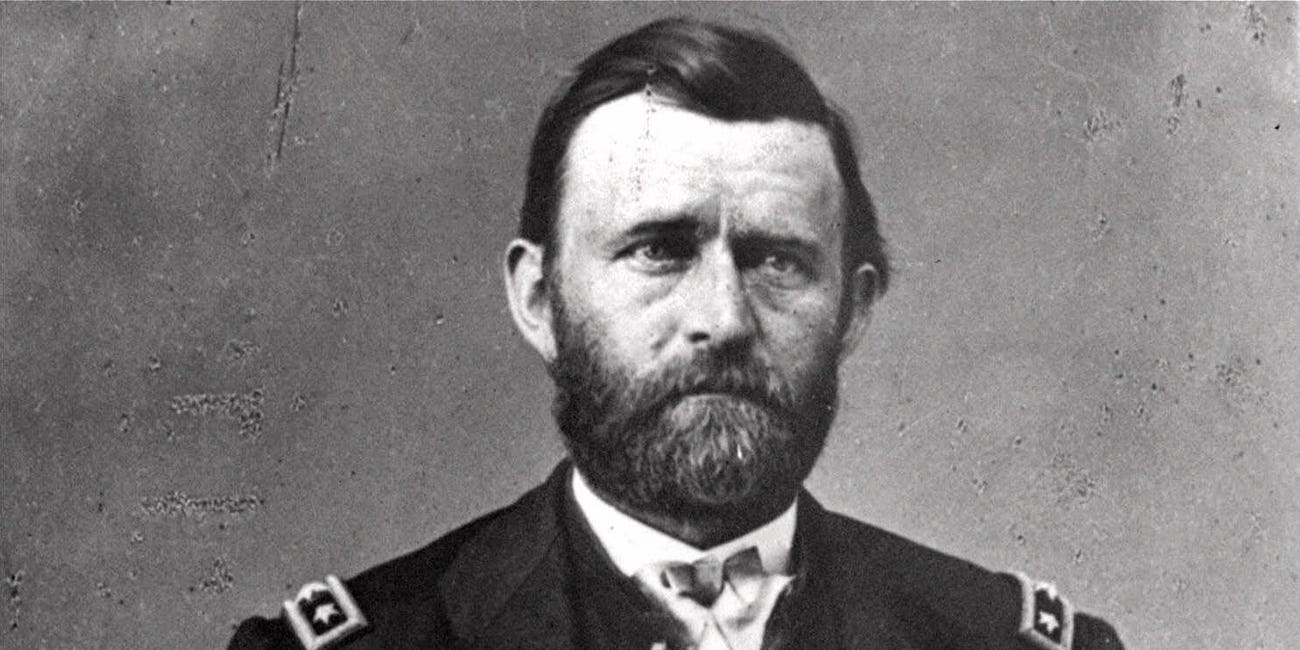
President Ulysses S. Grant. AP

  • In 1872, President Ulysses S. Grant was arrested for speeding on his horse-drawn carriage in Washington, DC.
  • Grant apparently had a penchant for speeding and a love for fast horses.
  • Grant ultimately paid a $20 bond but didn’t show up to court.

The answer is that it’s complicated. It’s difficult to indict a sitting president, and goes against Justice Department policy. The process surrounding impeachment is also convoluted, and it’s unclear whether the crimes in which Trump has been implicated merit going down that road as of yet.
But as legal experts debate this topic, The Washington Post on Sunday reminded us of at least once instance in US history in which a commander-in-chief learned that no person in the country is above the law.
In 1872, President Ulysses S. Grant was arrested for speeding on his horse-drawn carriage in Washington, DC. This was not an impeachable offense, but Grant still faced consequences.

Grant, the general who helped lead the Union to victory in the Civil War, was arrested at the corner of 13th and M streets in the nation’s capital. The story of his arrest was once told in a September 27, 1908, edition of the Washington Evening Star with the headline: “Only Policeman Who Ever Arrested a President.”
The police officer who arrested him was a black man who fought in the Civil War named William H. West, who gave his account of the incident to The Star, which The Post dug up.
Grant apparently had a penchant for speeding and a love for fast horses and had more than one run-in with West.
On the first occasion, the president was somewhat sassy with the officer as he stopped his carriage. The city was having problems with speeding at the time, and a mother and child had recently been injured as a result.
Grant said, “Well, officer, what do you want with me?”

West replied, “I want to inform you, Mr. President, that you are violating the law by speeding along this street. Your fast driving, sir, has set the example for a lot of other gentlemen.”
Grant apologized and told the officer it would not happen again.
But on the very next day Grant was speeding so fast through Georgetown in an area West was patrolling it took the officer an entire block to slow the president down.
Grant apparently greeted the officer with a smile and looked like a “schoolboy who had been caught in a guilty act by a teacher.”
West informed the president he’d violated the city’s speeding laws, again. “I cautioned you yesterday, Mr. President, about fast driving, and you said, sir, that it would not occur again,” West reportedly told Grant. “I am very sorry, Mr. President, to have to do it, for you are the chief of the nation, and I am nothing but a policeman, but duty is duty, sir, and I will have to place you under arrest.”

The president and other speeders were taken to the local police station. Officers at the station were reportedly unsure if they could charge a sitting president if he’d not been impeached.
In the end, Grant paid a $20 bond but didn’t show up to court.
Categories
Cops Hard Nosed Folks Both Good & Bad

Good Riddance, says I !

How Did Dutch Schultz Get Killed? - Death Photos - The NCS
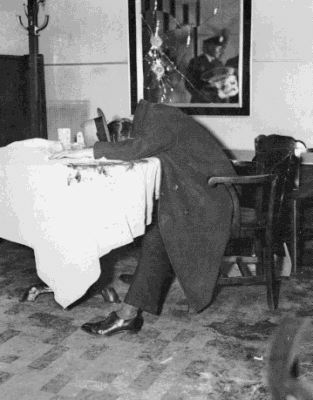
Dutch Schultz was shot on October 23, 1935, while he was at the Palace Chop House restaurant at 12 East Park Street in Newark, along with Otto Berman, his accountant; Abe Landau, his new chief lieutenant; and his personal bodyguard, Bernard “Lulu” Rosenkrantz.
The machine gunners who mowed down Dutch Schultz and three aids in this Newark restaurant, turned their weapons on the Bronx racketeer as he emerged from door at far end of bar where police are congregated (photo).  Berman died first, followed by Landau, then Schultz.  Rosenkrantz was the last to die, 29 hours after the shooting.
Murder Inc. hitmen, Mendy Weiss and Charles Workman, carried out the hit with Seymour Schechter waiting in the car as their driver.  Under orders, Schechter drove away with Weiss, leaving Workman at the scene to make sure the job was completed.  Workman, unhappy with being left behind, filed a grievance with Murder Inc. against Weiss and Schechter.  The grievance was upheld and Schechter was killed by Murder Inc.
In 1944, Weiss was executed in the electric chair for another murder.  Workman was caught, tried for the murder and spent 23 years in jail.  Upon release he went “straight” and got a job as a salesman in the garment district.  He died in 1979
Categories
Cops Fieldcraft

Huh, I never thought of that one!

Categories
Cops

And some Folks wonder why so many fellow Citizens are buying a Gun

FBI Statistics Show a 30% Increase in Murder in 2020. More Evidence That Defunding Police Wasn’t a Good Idea.

Sep 30th, 2021 5 min read
COMMENTARY BY
Jarrett Stepman

Columnist, The Daily Signal

Jarrett is a columnist for The Daily Signal.
Black Lives Matter supporters take to the streets in Los Angeles outside LAPD Headquarters on Tuesday, May 25, 2021.Sarah Reingewirtz/Los Angeles Daily News / Getty Images

KEY TAKEAWAYS

The murder rate rose by nearly 30% in 2020, more than any other time in the last half-century.

It’s hard not to see both the efforts to defund the police and—perhaps more importantly—the “Minneapolis Effect,” as driving factors.

What’s being done in the name of Black Lives Matter is destroying countless black lives and making American cities a dangerous place to be.

The surge in violent crime over the past year—murders in particular—has been astounding and historic.

The numbers back this up and paint a grim picture.

Property crime is generally down, but violent crime is way, way up.

Get exclusive insider information from Heritage experts delivered straight to your inbox each week. Subscribe to The Agenda >>

The murder rate rose by nearly 30% in 2020, more than any other time in the last half-century. This is according to recently released statistics compiled by the Federal Bureau of Investigation in its annual report on crime.

The report shows that there were 4,901 more murders committed in 2020 than in 2019.

It’s the largest single-year increase—by a wide margin—in murder rate since the FBI began compiling these statistics in 1960.

“The Uniform Crime Report will stand as the official word on an unusually grim year, detailing a rise in murder of around 29 percent,” reported The New York Times. “The previous largest one-year change was a 12.7 percent increase in 1968. The national rate—murders per 100,000—still remains about one-third below the rate in the early 1990s.”

The total murder rate is still far away from its historic high, but the trend is unmistakable. It looks like 2021 will have similar numbers to 2020, with only a slight dip in the national rate of increase in murder.

Again, that’s a dip in murder rate, not total murders. The trend is still going up, but not quite as historically fast.

And in some places, like Portland, the rate of increase actually continues to climb. More on Portland in just a moment.

Of course, some on the left have been quick to conclude that the issue is guns or possibly even simply the pandemic itself.

These conclusions seem dubious. Violent crime has been falling for decades even as gun ownership in the United States remained high.

It’s also important to note that the murder increase didn’t really start until the summer of 2020 following the death of George Floyd at the hands of police in Minneapolis. This was after the pandemic began and the country went into various states of lockdown.

While there certainly could be a variety of factors involved in the murder surge, it’s hard not to see both the efforts to defund the police and—perhaps more importantly—the “Minneapolis Effect,” as driving factors.

Following Floyd’s death, many cities hopped aboard the “defund the police” movement. Los Angeles, Baltimore, Seattle, Chicago, Portland, and Minneapolis went through with this idea, often stripping millions of dollars out of their police budgets and directing them toward other social services.

Minneapolis is going even further and is looking to abolish its police department altogether.

This push to defund, which happened during a time of protests and increasing anti-police rhetoric from activists and lawmakers created what some have called the “Minneapolis Effect.”

This is similar to the “Ferguson Effect,” which was the violence that followed the fatal police shooting of a black man in Ferguson, Missouri, in 2014.

The effect of this phenomenon was described by Paul Cassell, a law professor at the University of Utah, on a Heritage Foundation panel in March.

Here I think we have anti-police protests surrounding George Floyd’s killing. As a result, police had to be redeployed away from their normal beats and high-crime areas to police the protests. And even extending beyond that, I think what we see has happened is a reduction in policing, particularly the kinds of policing that might be expected to have the most effect on homicides and shooting crimes.

Cassell’s research shows a strong connection between de-policing and anti-police rhetoric driving surges in shootings. The 2020 numbers strongly back that up.

Departments moved away from proactive policing, and now struggle to clamp down on violent crime as police officers leave the force and are not replaced.

Many of the cities that defunded their police departments in 2020—like Portland—have been among the hardest hit by shootings. Some of these same cities later tacitly conceded that the idea was a failure by re-funding their police departments and re-creating proactive policing programs under new names.

Unfortunately, the issue is not just with the police. How much does policing matter when the justice system intentionally fails to prosecute people for crimes committed?

A huge number of cities elected George Soros-backed, far-left district attorneys and have employed rogue prosecutors who’ve refused to prosecute criminals in the name of social justice.

It’s hard not to see this toxic stew of attitudes and policies as a massive contributing factor toward why we have such a violent mess on our hands now.

“No one factor explains this criminal surge,” the Wall Street Journal editorial board concluded. “But it’s no coincidence that the bloodshed increased as cities slashed police budgets, progressive prosecutors demanded leniency and eliminated bail for criminals, and jails and prisons released thousands of lawbreakers amid the Covid-19 outbreak.”

It’s ironic that many of the defund-the-police policies were putatively adopted to stop “systemic racism.” But as the murder numbers indicate, most of the victims of the violent crime surge have been black and Latino. According to the FBI’s data, over half of the murder victims in 2020 were black.

What’s being done in the name of Black Lives Matter is destroying countless black lives and making American cities a dangerous place to be.

This piece originally appeared in The Daily Signal

Categories
Cops Well I thought it was funny!

Some Cop Humor

Officer Clegane, Riot Master. Leader of the Baton Batallion. : Bossfight

image.png

Officer Clegane, The Executioner of Gallowardolack : Bossfight | Super funny memes, Funny photos, Best funny photos

Categories
All About Guns Anti Civil Rights ideas & "Friends" Cops

What Guns Can I Buy In New York?! (AR15s)

Categories
Allies California Cops

Wyatt Earp: Legend of the Wild West

Categories
Anti Civil Rights ideas & "Friends" Cops Darwin would of approved of this!

Why does the Phrase “You reap what you sow” come to mind?

Defunding disaster: Austin Police no longer responding to ‘non-life threatening’ 911 calls

Department suffering from acute staffing shortages after Austin City Council defunded police budget by $150 million.
Image
Austin, Texas

The Austin Police Department is warning it won’t be responding to non-life threatening 911 calls.

Starting Friday, Austin’s sworn police officers will no longer be responding in person to non-emergency calls because of severe staffing shortages, APD announced.

The announcement comes after the Harris County Sheriff’s Deputies Organization in Houston warned residents that if they were “robbed, raped or shot” to “hold their breath and pray” because they might not have the personnel to respond.

The Austin no-response announcement includes vehicle collisions with no injuries and burglaries no longer in progress or where the suspect has fled the scene. Instead of calling 911, residents are being told to call 311 to file a non-emergency police report.

An APD spokesperson told Fox News that while a sworn police officer might not respond in person, a civilian officer, like a crime scene technician, might.

The department “regularly reviews response policies and procedures to ensure APD prioritizes calls with an immediate threat to life or property over non-emergency calls for service,” she said.

The staffing shortages and inability to respond to non-life threatening 911 calls is a direct result of the Austin City Council’s defunding of the APD last year, cutting $150 million of its budget, and other changes that were implemented affecting how the department operates.

“As a result of a recent review of APD’s patrol COVID mitigation protocols initiated in May 2020, recent staffing challenges and aligning with the Reimagining Public Safety Task Force patrol response recommendations, APD will change call routing and response for non-emergency calls for service effective October 1, 2021,” she said.

Austin Police Association President Ken Casaday told Fox News that APD hasn’t been able to hire new officers because it hasn’t been able to have a police academy for nearly two years. As a result, there aren’t enough patrol officers to respond to non-emergency calls.

“Probably about 95% of the time our shifts don’t meet minimum staffing … and that is the reason they’ve started cutting back on what types of calls are answered,” Casaday said. “It’s not optimal. It’s not providing a quality service to the community. But the community also needs to understand that we’re under a dire staffing crisis.”

After the City Council cut funding last year, by July, response times to 911 calls were 20-30 minutes longer on average, and the homicide rate is at a level that “we’ve never really seen here before,” interim chief Joseph Chacon said at the time. Cutting APD funds by $150 million resulted in canceling multiple cadet classes and disbanding multiple units responsible for responding to DWIs, domestic violence calls, stalking, and criminal interdiction.

The APD has been losing 15 to 20 officers a month, with many quitting and retiring and not enough new recruits to replace them. The department has projected 235 vacancies by May 2022, and 340 vacancies by May 2023.

while the APD has recently begun to resume cadet classes, it will take a while to get new officers on the streets. The city is paying more than $10,000 per day, with a maximum of $580,000 per year, to Joyce James Consulting to provide an “anti-racism” Critical Race Theory-based curriculum for a “reimagining public safety campaign.”

While the Houston sheriff’s organization sued Harris County over a lack of funding and noncompliance with regulations, a bipartisan activist group, Save Austin Now, took another approach. It initiated its second successful ballot initiative this year to allow voters to restore police funding.

“Austin doesn’t feel as safe recently. Because it isn’t,” the group argued as part of its campaign. “We’ve seen a series of city policy decisions over the last two years that have led to a surge in both violent crime and property crime against Austinites. A 300% increase in murders this year. A double-digit increase in property crimes such as burglaries and car jackings.”

“As Austin’s crime rate has soared, the federal government has taken note of it and sent in resources to help stabilize the chaos,” it adds. “But we cannot rely on the federal government’s Operation Undaunted to provide us with the local resources we’ll need to fight this trend: We’ll have to do it ourselves.”

Their petition received the required number of votes and its proposed public safety law will be on the November ballot. Among other things, it includes adding officers to APD according to the nationally recognized “Safe City Standard,” which stipulates two police officers hired for every 1,000 citizens.

Categories
All About Guns Cops

In my opinion, not a good idea – Testing Cops with Open Carry AR Pistol – Wise or Foolish?

Categories
Born again Cynic! Cops

Some more “Lovely” ASSET FORFEITURE stories

Married couple Jeni Pearsons and Michael Store aren’t wealthy.

Pearsons works at a nonprofit theater in Los Angeles , and Store is a transportation coordinator in the film industry. The couple has been saving for retirement for years, buying silver here and there when they could afford it. To keep their property safe, they rented a safe deposit box at U.S. Private Vaults.

They thought everything was above board until news broke earlier this year about a raid at the Beverly Hills business.

The government alleged that the company conspired with customers to sell drugs, launder money, and stash ill-gotten goods.

LA COUNTY ABUSES ASSET FORFEITURE, SEIZING MASSIVE AMOUNTS OF MONEY WITHOUT DUE PROCESS

Armed with a warrant, FBI and Drug Enforcement Administration agents spent five days ripping several hundred safety deposit boxes out of the walls and laying claim to its contents.

Prosecutors argued they were within their rights and that the boxes contained weapons and drugs. They also took jewelry, precious metals, and stacks of money to an undisclosed warehouse. Their final haul was worth around $86 million.

The problem is that federal authorities took the items from people who hadn’t been accused of a crime, including Pearsons and Store.

They’ve been able to keep it because of the country’s vague standards of civil forfeiture law, which allows the government to seize property and assets without any actual evidence of criminal wrongdoing.

During the raid, the authorities also seized Joseph Ruiz’s life savings.

The unemployed chef, who had a side job selling bongs made from liquor bottles, had stored $57,000 in his safety deposit box.

Prosecutors argued that he couldn’t possibly make enough money to have that much saved up and accused him of being an unlicensed marijuana dealer.

He went to court to get his money back and won. The government dropped its case against him after he was able to provide documents that showed the source of his money was legitimate.

“It was a complete violation of my privacy,” Ruiz told the Los Angeles Times. “They tried to discredit my character.”

Ruiz is one of 800 people whose money and property were taken in the March 22 raid. Six months later, the U.S. attorney’s office in Los Angeles hasn’t been able to prove criminal wrongdoing by the majority of box holders whose belongings the government is actively trying to keep.

Like Ruiz, 65 others have filed court documents claiming the government grab was unconstitutional.

CIVIL ASSET FORFEITURE CRIES OUT FOR REFORM

An investigation by the Los Angeles Times shows that the government’s reasons for taking money and property against numerous others were just as flimsy as it was in Ruiz’s case.

Agents claim drug-sniffing dogs alerted them to the scent of narcotics on the seized cash, but multiple analyses of drug-dog alerts have consistently shown high error rates, some hitting past the 50% mark.

“In effect, some of these K-9 units are worse than a coin flip,” Washington Post columnist Radley Balko said in a post about the accuracy of canine searches. He added that “while dogs are indeed capable of sniffing out illicit drugs, we’ve bred into them another overriding train: the desire to please. Even drug dogs with conscientious handlers will read their handlers’ unintentional body language and alert accordingly.”

Federal authorities have also pointed to the use of rubber bands to keep stacks of cash together, as well as other normal ways of storing currency, as tell-tale signs of money laundering and drug trafficking from the U.S. Private Vaults box holders.

The government also said in court documents that it deposited all the seized money in a bank, which experts say would make it impossible to test which drugs may have come in contact with which bills.

And even though U.S. Private Vaults was indicted in February on charges of conspiring with unnamed customers to sell drugs and launder money, no one has been charged.

The criminal case against them hasn’t moved forward, and the U.S. attorney’s office in Los Angeles isn’t saying why, the Los Angeles Times reported.

CLICK HERE FOR MORE FROM THE WASHINGTON EXAMINER

Unfortunately for many of the box holders, in civil forfeiture cases, a person is often guilty until proven innocent. No criminal conviction is required, and the government only has to show that it’s more likely than not that the money or property taken was linked to illegal activity.

Civil forfeiture was initially one way to cripple large-scale criminal enterprises by taking their assets. However, the practice has been widely abused, with victims forced to give up their homes and property and then spent small fortunes trying to get them back.

“Today, aided by deeply flawed federal and state laws, many police departments use forfeiture to benefit their bottom lines, making seizures motivated by profit rather than crime-fighting,” the American Civil Liberties Union said. “For people whose property has been seized through civil asset forfeiture, legally regaining such property is notoriously difficult and expensive, with costs sometimes exceeding the value of the property.”

For Pearsons and Store, the government’s seizure of their silver is unacceptable, and they have decided to fight back.

They, along with six others, have teamed up with the Institute for Justice for a class-action lawsuit challenging the government’s raid as an illegal search.

“The government’s theory is that having cash makes you a presumptive criminal, and I think every American should be worried about that,” IJ senior attorney Rob Johnson said.