Police in New York want the legal ability to seize firearms during a domestic violence call – even if no arrests were made. However, instead of going through normal legal channels and obtaining a search warrant or court order, police just want the legal ability to take the guns on their own.
New York State lawmakers plan to reintroduce a bill during the next legislative session that will go farther than the state’s Safe Homes Act of 2020, which allows officers to seize firearms found during a consensual search when police respond to a domestic dispute.
New York State Senator Peter Harckham, a Democrat from Westchester County, has sponsored a bill that would
“mandate” officers to confiscate all firearms left out in the open during a domestic call.
“This is not gun control, this is gun safety; and this is domestic safety,” the senator told Spectrum News. “This is keeping the victims of domestic violence alive. We had two fatalities through domestic violence and firearms in my district in the last month. This is very real. This is very deadly and this is not a permanent seizure.”
Senator Harckham’s bill would allow police to keep the seized weapons for five days – most likely to seek restraining orders or other legal options – before returning them to their rightful owners. Also, police would likely extend this five-day time limit as needed.
Tom King, president of New York State’s Rifle & Pistol Association, balked loudly about the new bill.
“No person shall be deprived of life, liberty or property without due process of law,” King told the reporters. “That means a search warrant or an order from a judge to confiscate the firearms, and they’re doing this without that.”
King pointed out the more than 100 New Yorkers who had firearms seized under the state’s newly expanded red-flag law. This group contacted King’s nonprofit seeking help getting their guns back. Some have already paid more than $10,000 in legal expenses, King said.
Takeaways
The main problem with the new bill is that it offers police yet another illegal mechanism to seize someone’s guns.
Our federal law does not allow law enforcement to go traipsing through someone’s home looking for firearms that were never used in a crime, which they will then seize for no evidentiary value.
These types of laws are passed solely for one reason – harassment. They want to harass gun owners. They want gun owners temporarily disarmed and then forced to make several trips to the police station to get their property returned, at great cost, too. Don’t forget that.
Today, gun owners have fewer rights in places like New York than they do in free states. This new bill will only make it worse.
Article courtesy of the Second Amendment Foundation’s Investigative Journalism Project. Click here to support the project.
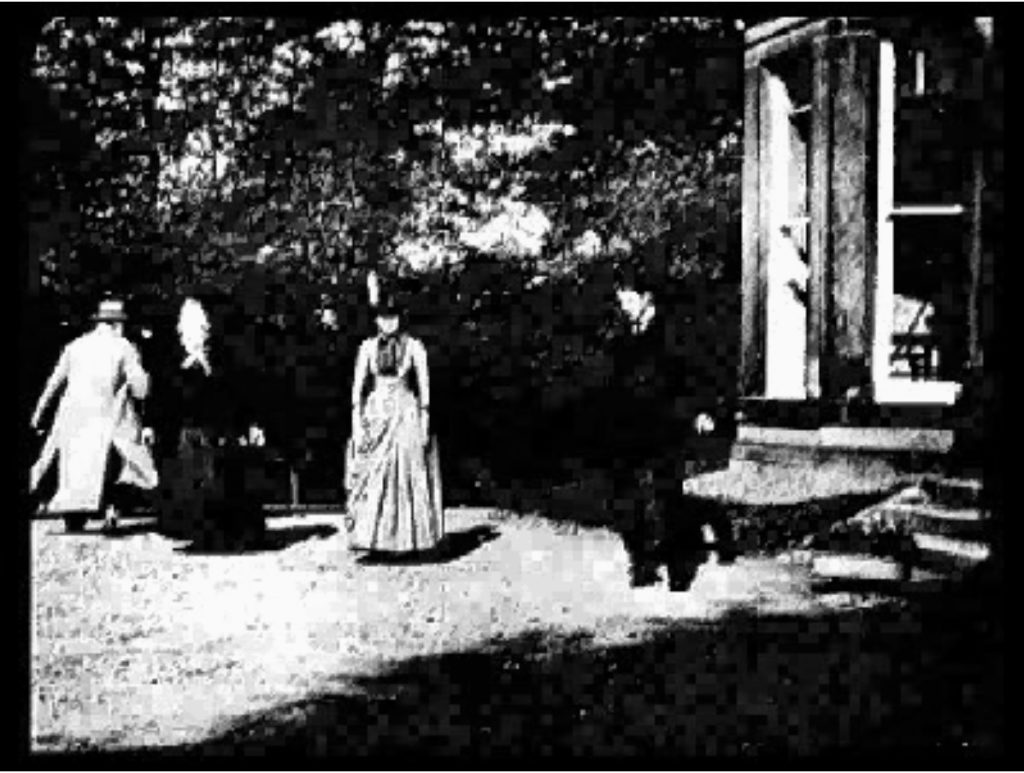
This is a still from the Roundhay Garden Scene, the world’s first motion picture. This tiny scrap of celluloid transformed entertainment in a way that profoundly shapes our culture today.
On October 14, 1888, Louis Le Prince released The Roundhay Garden Scene. With a run time of 2.11 seconds and starring Annie Hartley, Adolphe Le Prince, Joseph Whitley, and Sarah Whitley, this was the world’s first moving picture. The Roundhay Garden Scene changed the world. Here’s a link.
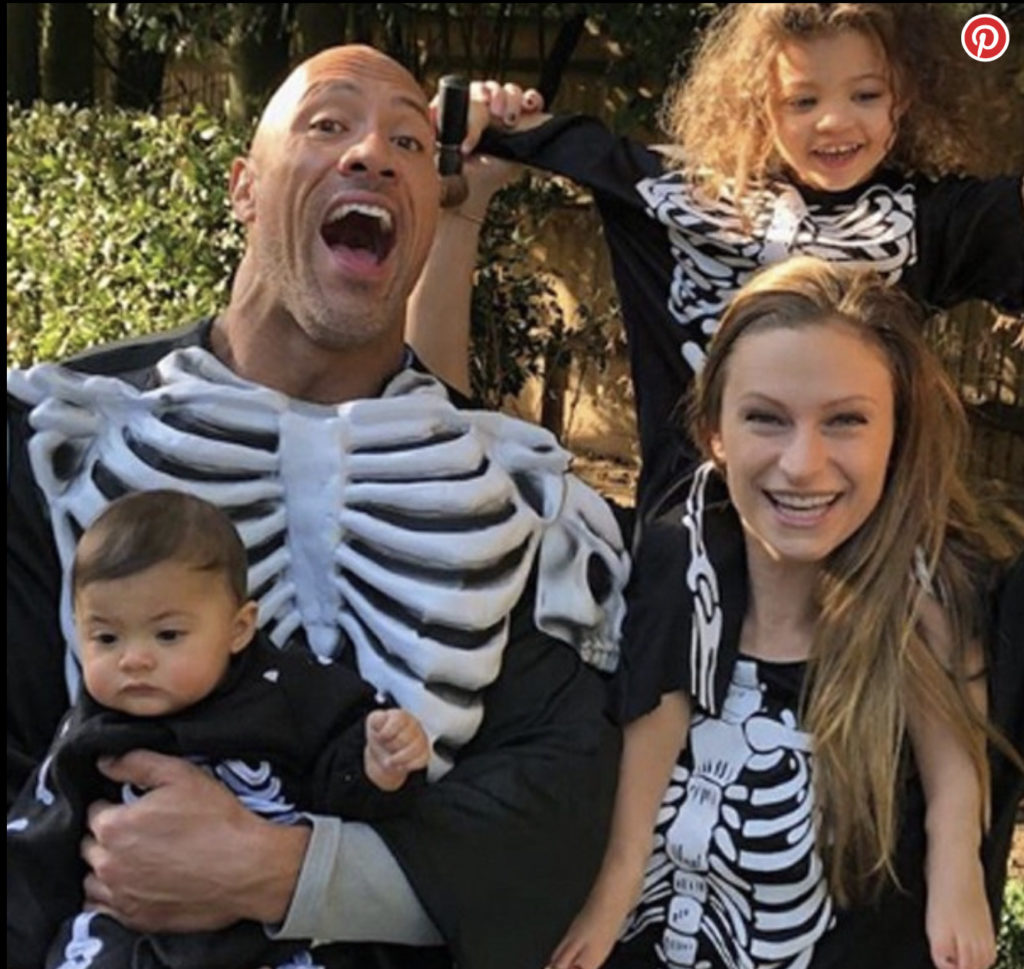
Dwayne Johnson is the most highly-paid actor in the world. This is The Rock celebrating Halloween with his family. Though I’ve never met him, Big Dwayne seems like a pretty cool guy.
Ours is a generation raised on movies. In 2020 the movie industry brought in $25.9 billion. That’s down from $35.3 billion the year before thanks to the Covid pandemic. The top four most successful actors in 2020 were Dwayne Johnson, Ryan Reynolds, Mark Wahlberg, and Ben Affleck. During that one year, The Rock pulled down a cool $87.5 million.
This is Christopher Markus. He co-wrote the screenplay for Avengers: End Game, Avengers: Infinity War, and Captain America: Civil War. His movies have grossed $9,367,535,948. My writing efforts have pulled in slightly less than that.
With those kinds of numbers, the movie industry can obviously afford top-grade talent. I am a professional writer. I bang out gun-related prose in exchange for ammo money. By contrast, the scriptwriters who drive these Hollywood blockbusters make some serious coin. For that kind of investment, Hollywood producers expect a quality product.
The villain makes the movie.
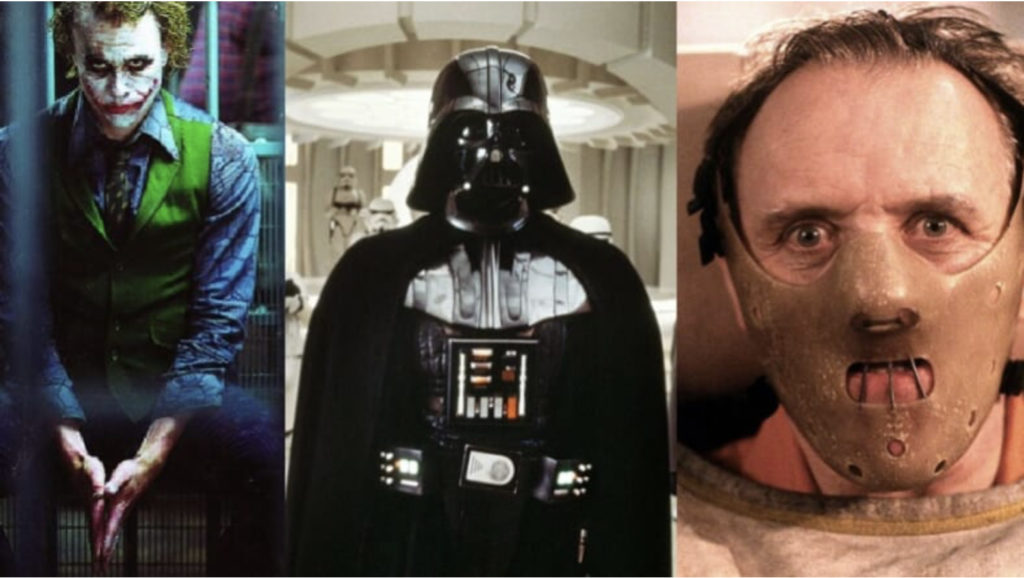
Everybody knows that a great movie turns on its villain. Vapid leading men are a dime a dozen, and hot girls with fake bosoms and a convincing scream are even cheaper. However, it takes talent to build a proper Bad Guy. Hannibal Lecter, Darth Vader, Agent Smith, the Joker, Voldemort, and Hans Gruber were some of the best.
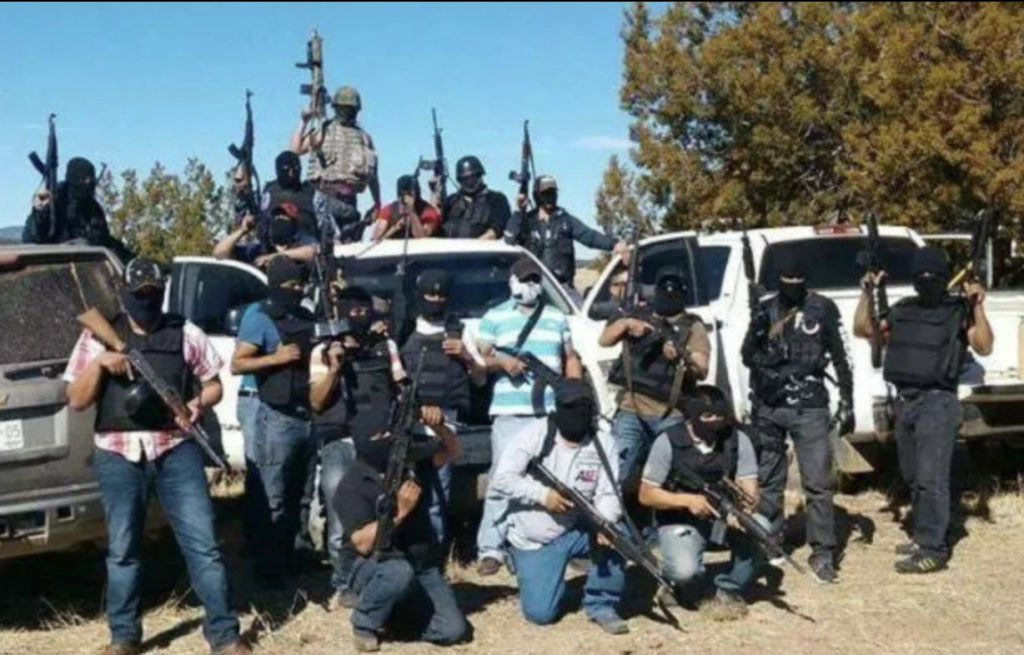
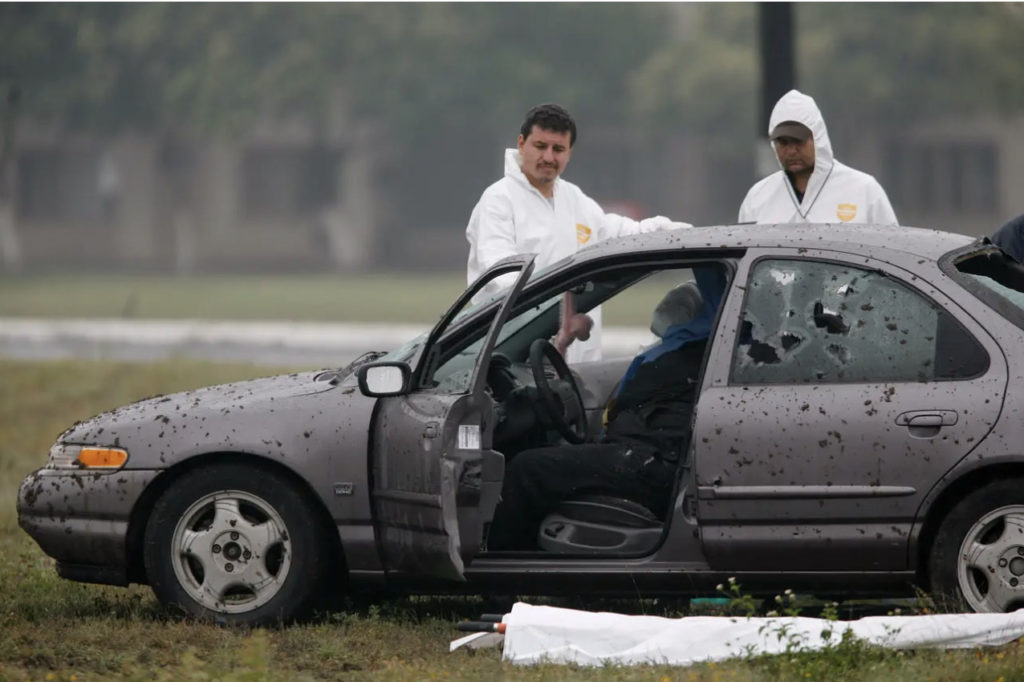
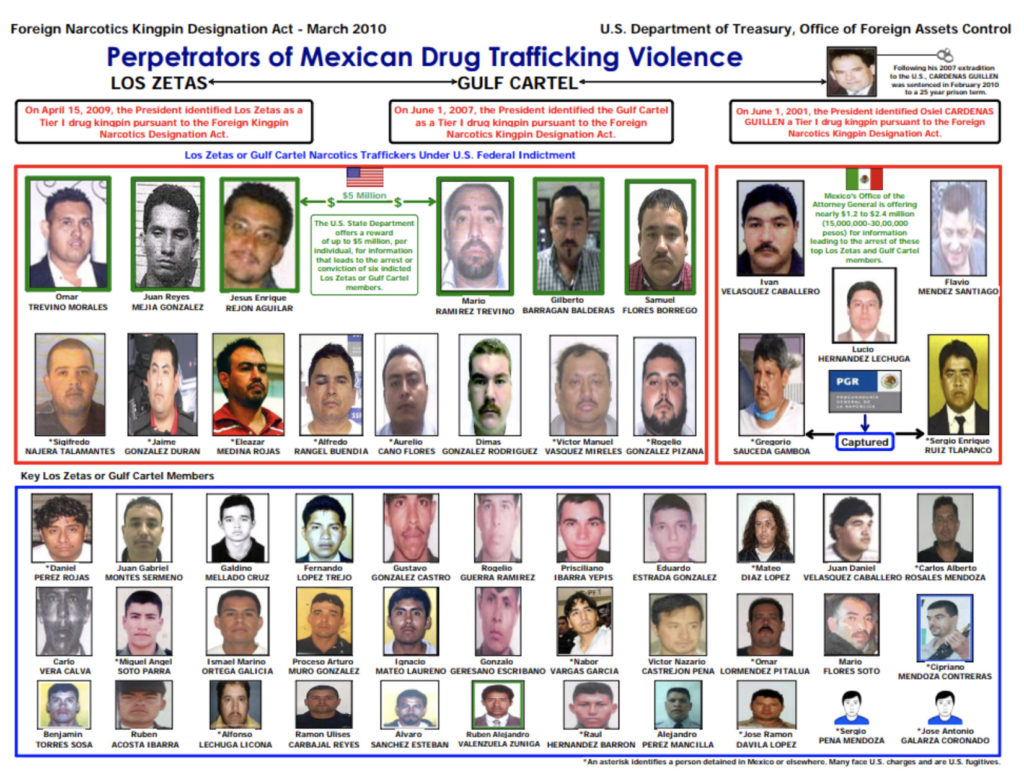
Los Zetas is a militarized drug cartel renowned for their simply breathtaking appetite for violence.
Sometimes you trip over a story in the real world that is even more compelling than a Hollywood screenplay. As all good tales turn on their villains, that was what first caught my eye in this case. Today we will explore the short life and violent death of Z-1, Arturo Guzmán Decena. Guzmán Decena put the bloodthirsty in “bloodthirsty Mexican drug cartel”. He was the founder and leader of Los Zetas, some of the most soulless butchers on the planet.
Origin Story
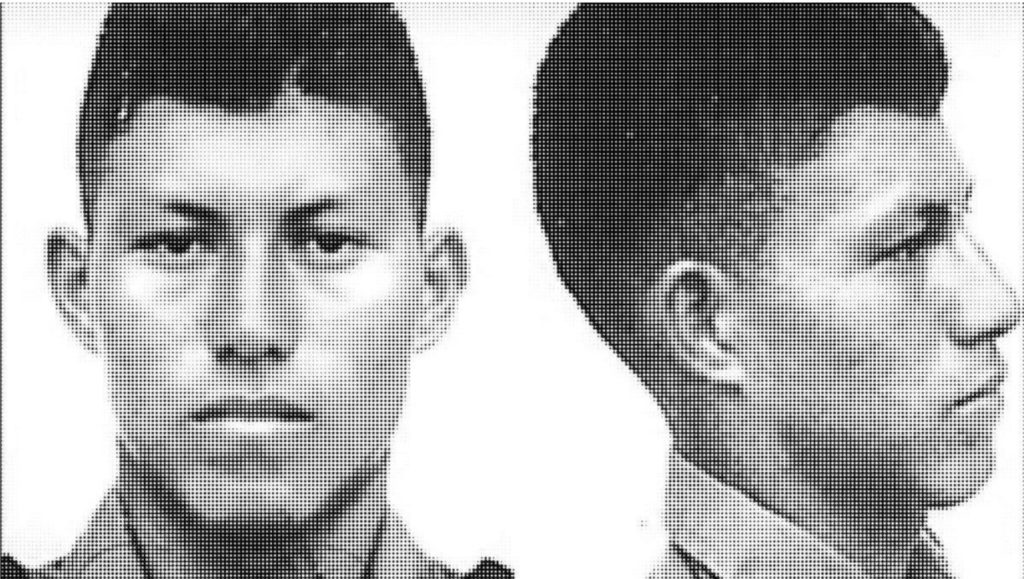
Arturo Guzmán Decena viewed a military uniform as his opportunity to better his sordid lot in life.
Arturo Guzmán Decena was born into abject poverty in January of 1976 in Puebla, Mexico. In a world where nobody had anything, Decena saw military service as his ticket out of hell. Once he joined the Army he found that he had a knack for the business. His natural talent and capacity for aggression landed him a billet with the elite Grupo Aeromovil de Fuerzas Especiales or GAFE. This Mexican Army Special Forces unit specialized in COIN or counter-insurgency operations.
Arturo Guzmán Decena was a promising young soldier who quickly took to military life.
Guzmán Decena and his unit were trained by US Special Forces advisors and IDF (Israel Defense Force) contractors. Their mission was to find, fix, and eliminate major personalities in Mexican drug trafficking organizations. GAFE operators were extremely good at what they did.
These motivated young studs ultimately provided fertile ground for recruitment into the armies of the drug cartels.
More than 3,000 Zapatista rebels seized a number of border communities in the southern state of Chiapas in 1994. The insurgents were trying to make a statement against crushing poverty and the PRI (Institutional Revolution Party), the sole political party ruling Mexico at the time. The GAFE broke the back of the uprising in short order, killing 34 rebels and capturing three. The bodies were subsequently discovered discarded on a remote riverbank. Their noses and ears had been sliced off.
Some folks view griping about the police as a full-time job in America today. I’d suggest they check out the cops in other countries for a little perspective.
For all the vociferous whining about American Law Enforcement shortcomings, corruption among American cops is thankfully fairly rare. By contrast, cops in many foreign lands see bribery, extortion, and sometimes murder as a routine part of the job. In some parts of Mexico, bribes are viewed as “benefits” to supplement their otherwise modest salaries. However, before Arturo Guzmán Decena the lines separating the Good Guys from the Bad were still fairly clear-cut. Decena changed all that.
Greener Pastures
When Osiel Cárdenas Guillén, the leader of the notorious Gulf Cartel, needed some muscle he just put a few of these guys on the payroll.
Arturo Guzmán Decena was one of the most effective GAFE operators. His star was rising. He was soon promoted to security chief and transferred to Miguel Aleman in the northern state of Tamaulipas. While there he met a proper villain named Osiel Cárdenas Guillén, the leader of the thriving Gulf Cartel. In short order, Arturo Guzmán Decena, a highly-trained and ruthless member of the Mexican Army Special Forces, was in the drug lord’s employ.
The real problem is the money. With financing on the scale enjoyed by Mexican drug cartels pretty much anybody can be bought.
The man had some curious motivations. Mexican cops and soldiers at the time often turned a blind eye to drug shipments in exchange for a little folding cash. In this case, however, Guzmán Decena went full Dark Side. While the money was way better, this also meant the hard young warrior embraced life as a hunted fugitive.
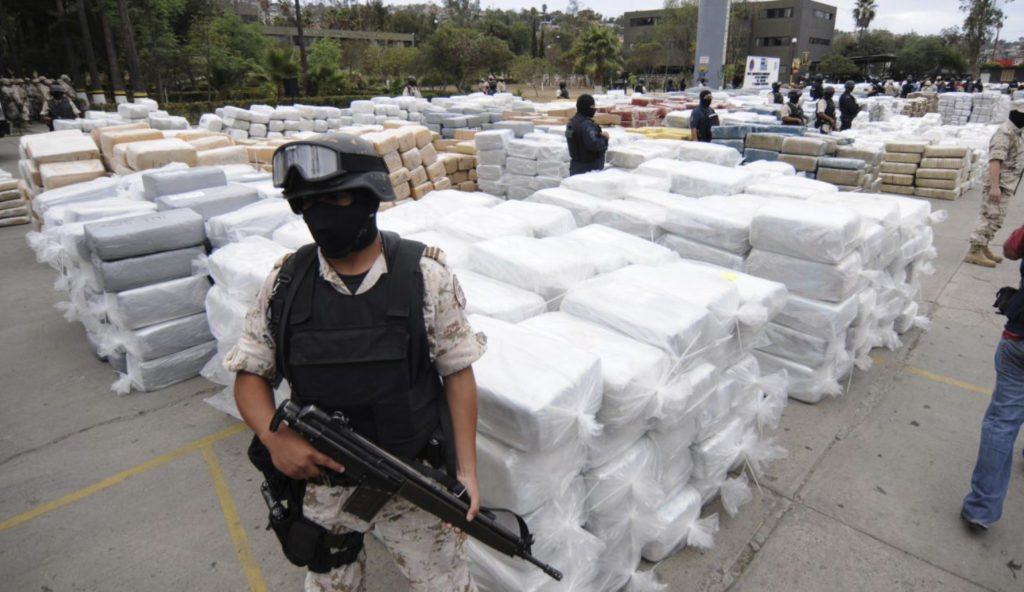
The American thirst for illicit drugs is insatiable.
In retrospect, Mexico’s grinding slog toward democracy likely frightened him. With a true representative government came the real probability of accountability for all those sliced-off ears and noses. Guzmán Decena saw service with the cartels as the wave of the future.
It apparently wasn’t terribly difficult to find 38 Mexican SF operators willing to trade their GI fatigues in for the filthy-rich opulence of the thug life.
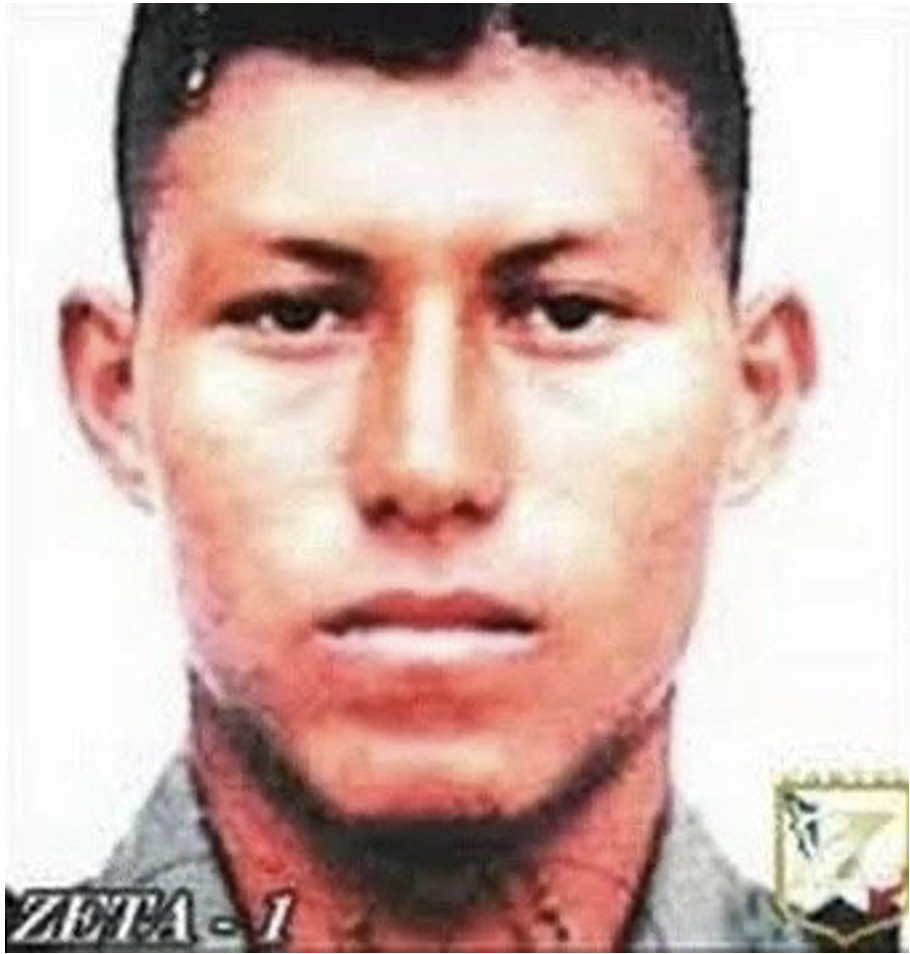
Once Guzmán Decena had tasted the good life he made a few phone calls. Not long after, he had recruited 38 fellow Special Forces operators to make up his happy troupe. Each man was assigned a unique Z-number. Guzmán Decena was Z-1 or Zeta 1. This cadre of trained killers became Los Zetas.
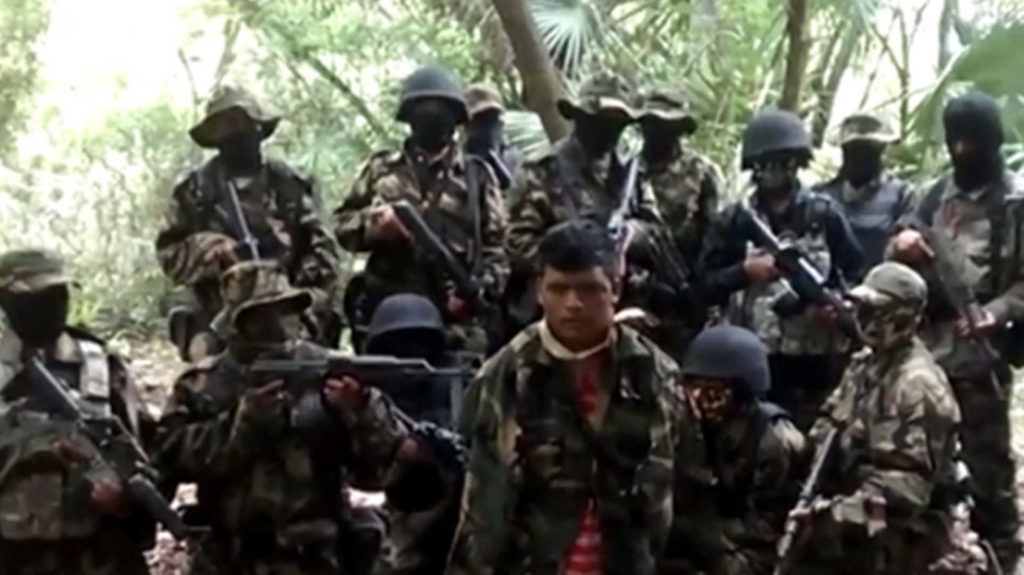
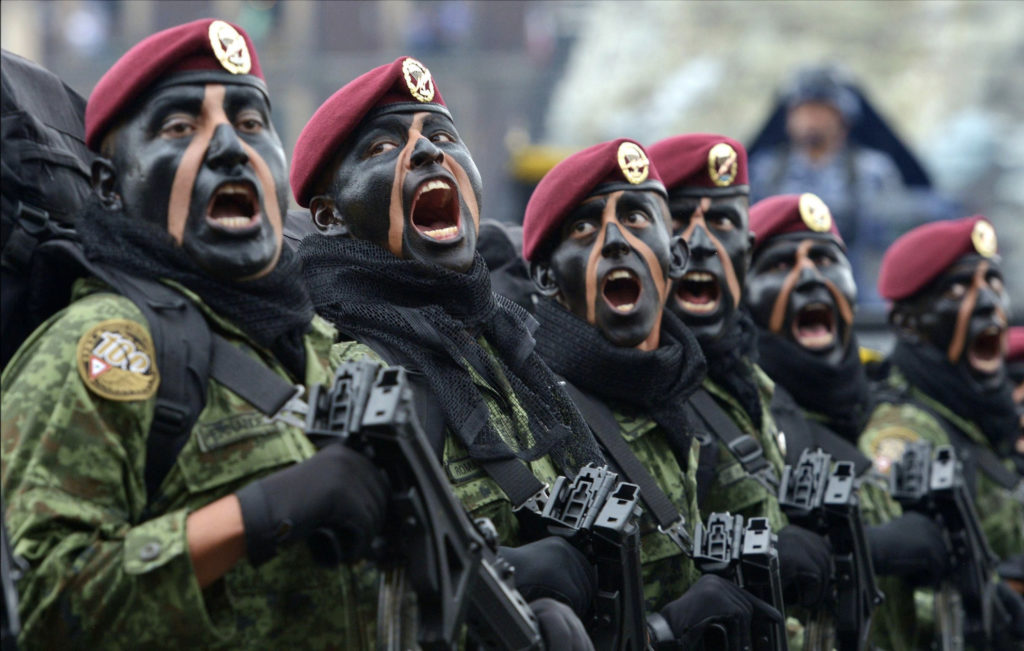
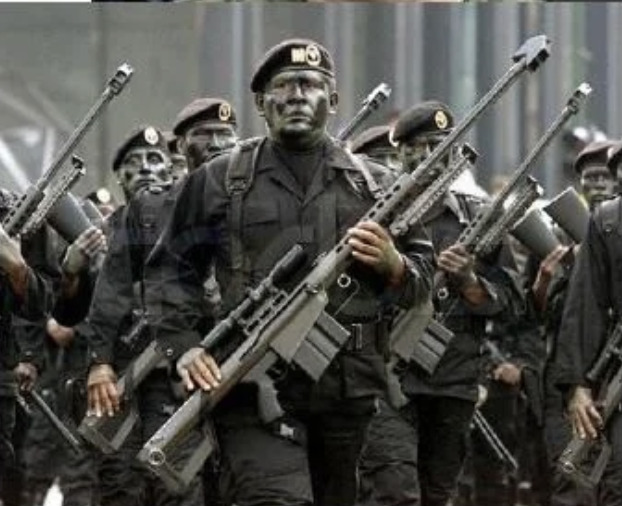
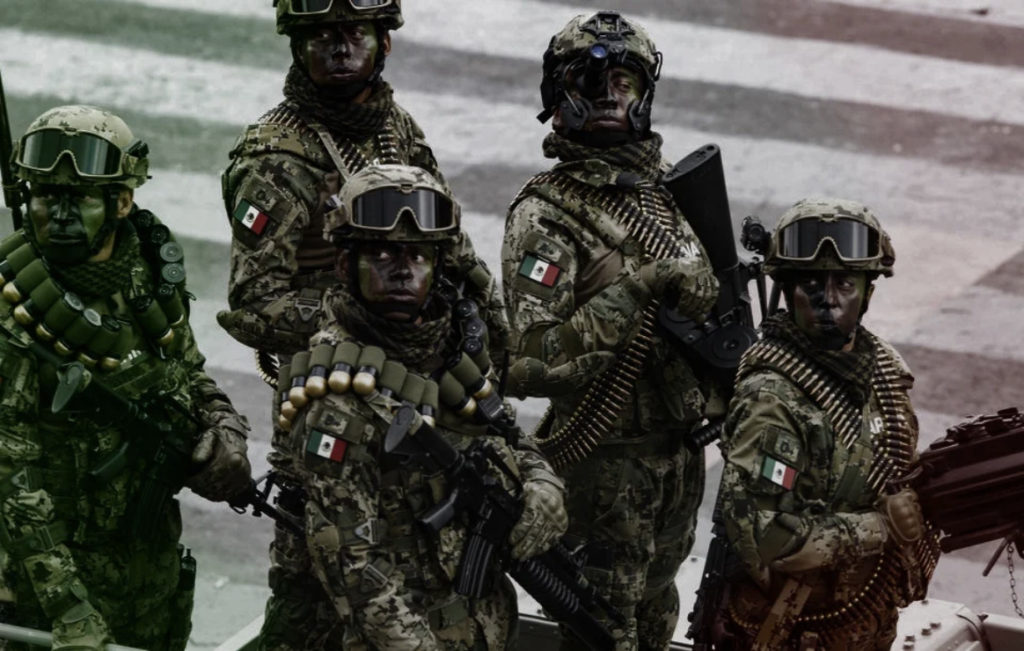
Scary-looking blokes like these changed the complexion of the Mexican drug wars.
It has been alleged that Guzmán Decena’s boss, Cárdenas Guillén, had the original idea. This is purportedly a transcript of a cell phone intercept made by the Mexican military that documents the birth of Los Zetas–
Cárdenas Guillén – “I want the best men. The best.”
Guzmán Decena – “What type of people do you need?”
Cárdenas Guillén – “The best-armed men that there are.”
Guzmán Decena – “These are only in the army.”
Cárdenas Guillén – “I want them.”
Absolute Power Corrupts Absolutely
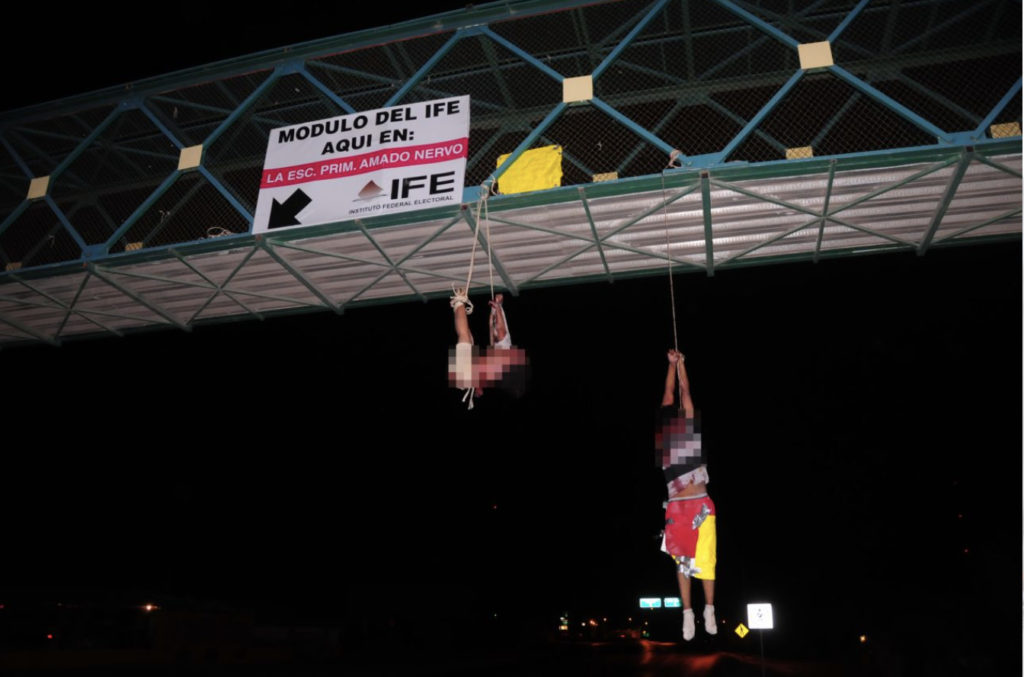
Part of the success of Los Zetas stems from their willingness to do stuff like this.
Now that the Gulf Cartel had its own trained and equipped Specops unit, they exercised it. Z-1 and his troops collected outstanding debts, secured drug routes, and brutally exterminated the cartel’s enemies. They were fabulously successful. Cárdenas Guillén wielded his merry band of monsters to cement his grip on power.
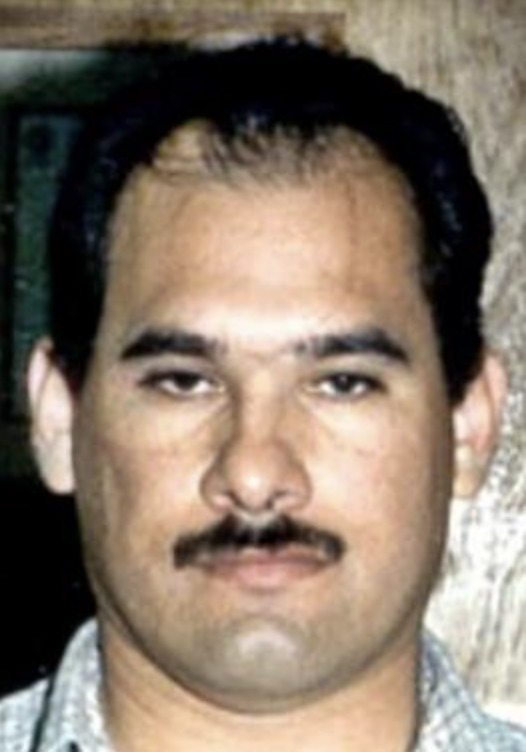
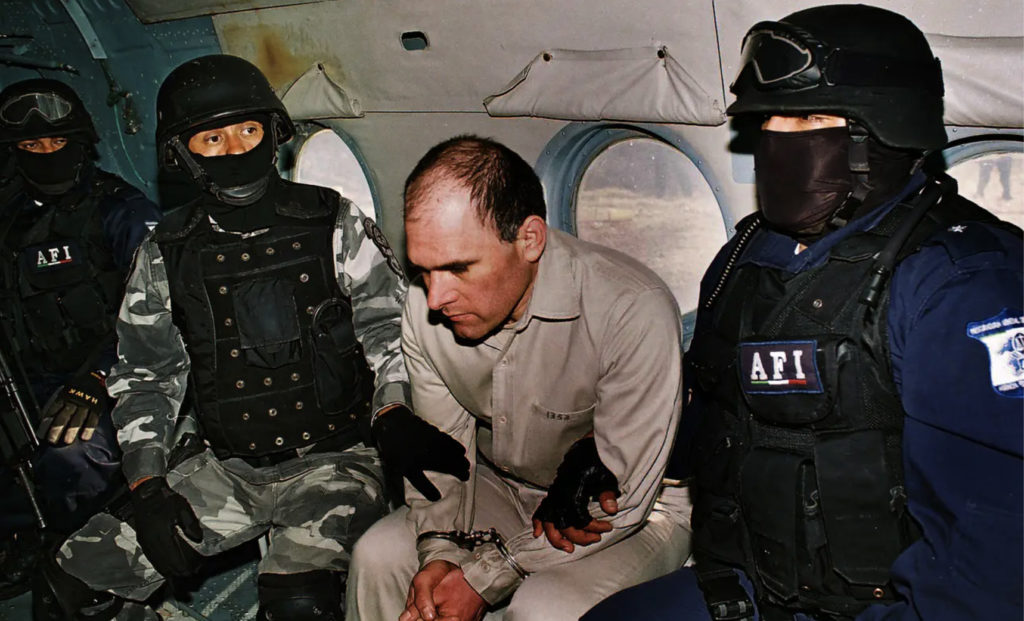
This is Osiel Cárdenas Guillén. He would kill absolutely anybody he believed to be a threat to his power.
Ángel Salvador Gómez Herrera was a close friend of Cárdenas Guillén. He had even been named godfather of Cárdenas Guillén’s child. However, in this rarefied world of high-stakes professional criminals, the line between friend and rival can be thin. Cárdenas Guillén suspected that Gómez Herrera was becoming covetous of his empire. That warranted a phone call to Z-1.
Heed my advice and never accept the offer of a free ride from a Mexican drug lord. You’ll thank me later.
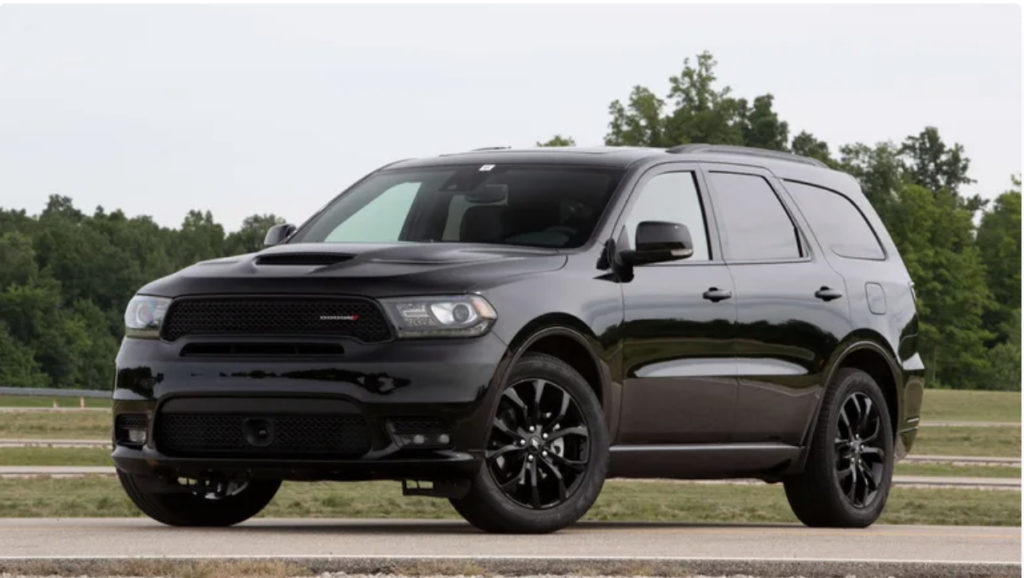
Immediately following the baptism of Cárdenas Guillén’s child, Gómez Herrera was invited to take a ride in the drug lord’s souped-up Dodge Durango. The newly-minted godfather sat in the passenger seat up front. Guzmán Decena had the seat behind him. The men exchanged laughs and basked in the moment following the infant’s baptism.
Then with little fanfare, Guzmán Decena drew his handgun and shot Gómez Herrera through the head. Mexican police later discovered his badly-decayed body discarded outside the town of Matamoros. In the aftermath of the execution, Guzmán Decena earned the nom de guerre “Mata Amigos” or “Friend Killer.” Apparently, he was good with that. The drug kingpin Cárdenas Guillén felt he had a buddy for life.
Eventually, Los Zetas felt that they didn’t really need the patronage of the Gulf Cartel any longer.
Eventually, Guzmán Decena and his fellow Special Forces operators came to appreciate that they really no longer needed the Gulf Cartel. They were accustomed to operating in hostile environments as a military unit and knew logistics, organization, and particularly extreme violence of action better than their soft decadent civilian bosses. As such Los Zetas took their show on the road.
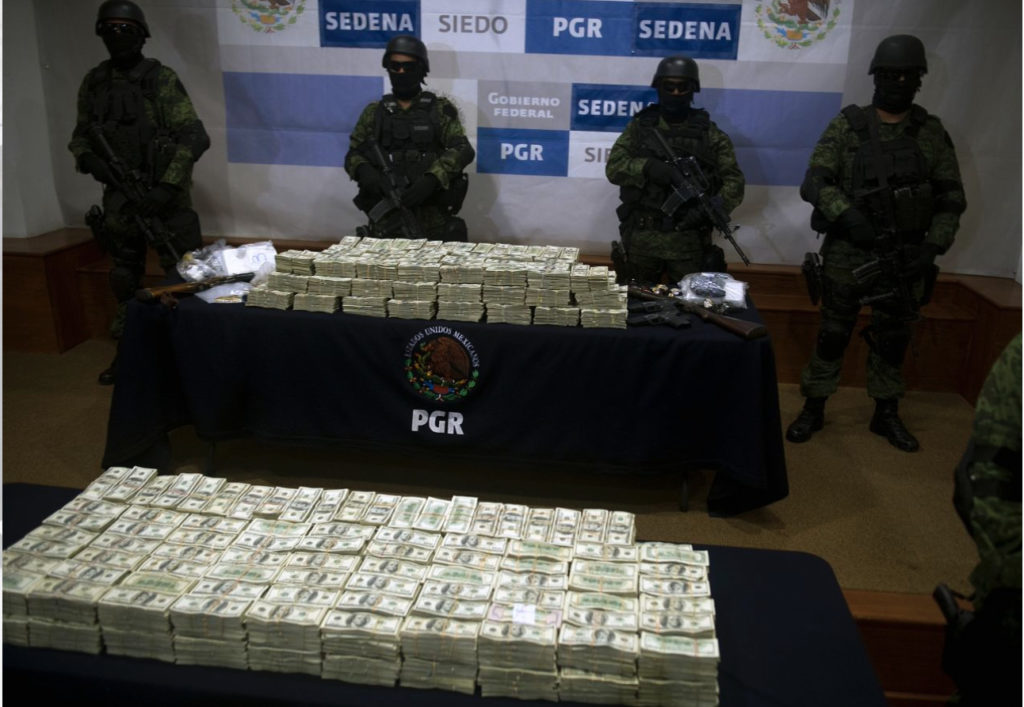
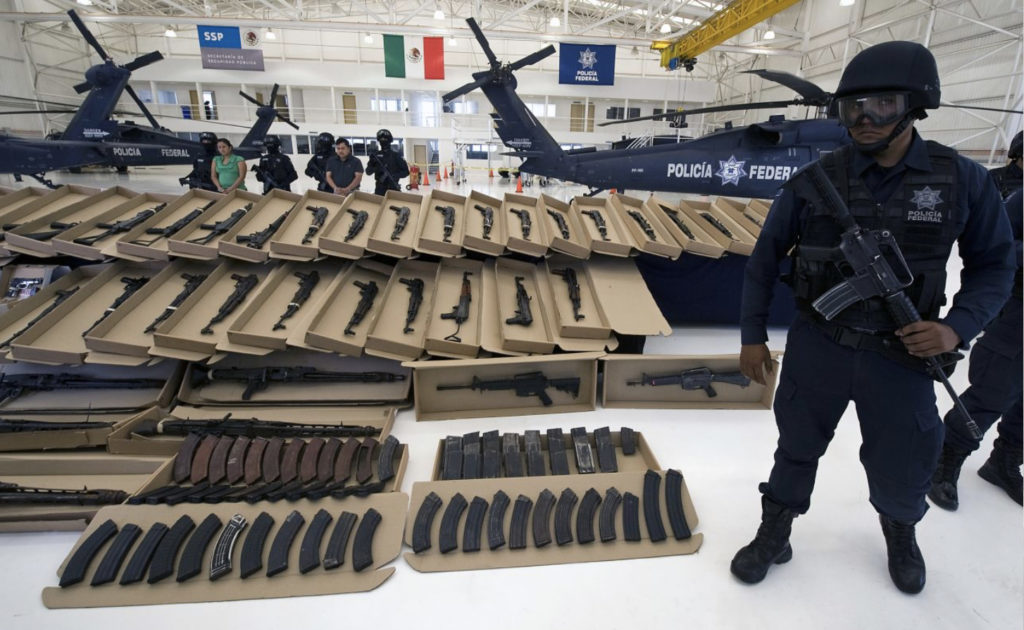
These weapons were captured in an operation against Los Zetas. Notice at least four MG-42/MG-3 belt-fed machine guns. They didn’t pick those puppies up at an American gun show.
In short order, the military-regimented Zetas displaced the Sinaloans as the largest drug cartel in Mexico. However, as Putin is discovering to his detriment in Ukraine, the challenge is not seizing power, it is keeping it. As the original Zetas were captured or killed by rival drug organizations and the Mexican government, their replacements were not cut from the same hard stuff. Regardless, for a time, Los Zetas was the dominant drug cartel in Mexico.
All Good Things Come to an End
When Z-1 fell, he fell hard.
The life of a successful drug lord is both stressful and fraught with peril. On November 22, 2002, Guzmán Decena was taking a meal with a few of his soldiers at a restaurant in Matamoros, Tamaulipas.
Feeling the need to unwind, he knocked back some Chivas and snorted a line of cocaine before heading over to the home of Ana Bertha González Lagunes, one of his several handy mistresses. She lived only a few blocks distant. Wishing his dalliance to be uninterrupted, Guzmán Decena had his troops seal off the roads leading into the area.
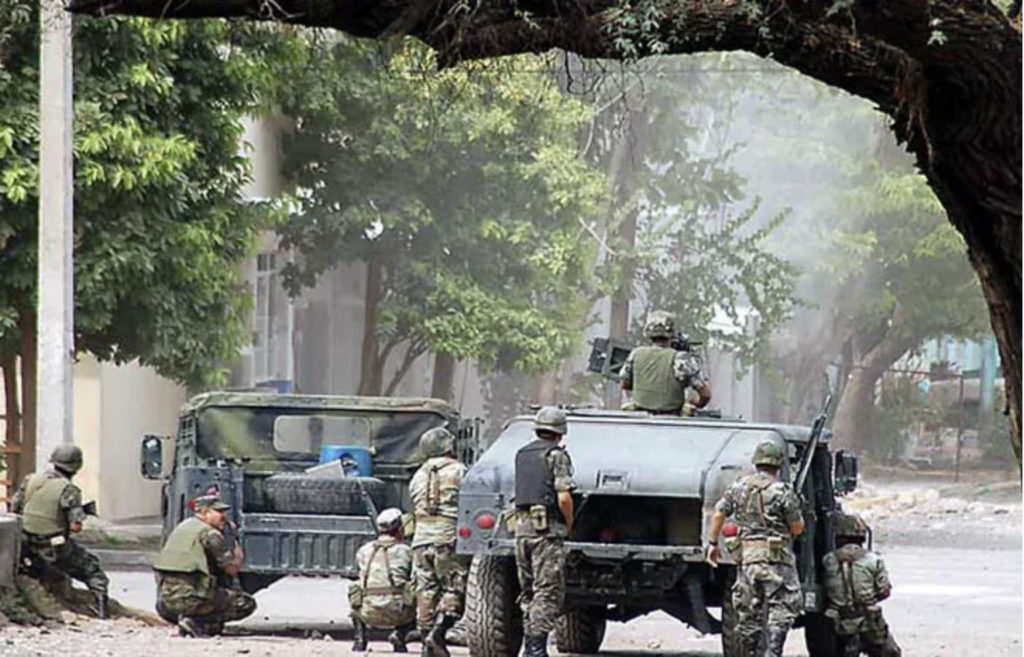
The Mexican Army came down on Guzmán Decena like the fist of God.
Guzmán Decena apparently got his quick roll in the hay, but the disruption to the community was substantial. A local denizen saw the commotion for what it was and notified the Mexican authorities. The cops notified the nearby Mexican Army quick reaction force who descended upon the woman’s house. They found Guzmán Decena duly distracted and gunned him down like a dog. He was 26 years old.
The Rest of the Story
Systematically disassembling the leadership of these cartels is a Gordian chore.
Los Zetas did not take the execution of their flamboyant commander well. In the immediate aftermath, Zetas hitters kidnapped and murdered four members of the Office of the General Prosecutor near Reynosa, Tamaulipas. Mexican troops arrested Cárdenas Guillén, the head of the Gulf Cartel, in March of 2003.
The following year they bagged Z-2, Rogelio González Pizaña. Z-3, Heriberto Lazcano Lazcano, duly took his place. He fell in a shootout with the Mexican Navy in 2012. Chasing the Zetas was like playing Whack-a-Mole.
Despite his best efforts to cling to power, Osiel Cárdenas Guillén was eventually captured, extradited to the US, and convicted. He currently takes his mail at the maximum security penitentiary in Terre Haute, Indiana.
The gory death of Arturo Guzmán Decena was the first real blow that the Mexican government landed against Los Zetas. While the organization came back like a hydra, Guzmán Decena’s killing made a serious dent. This story is ultimately a great tale of Good Guys beating Bad Guys, but there yet remain persistent rumors that the ruthless SF operator-turned-drug lord was actually murdered by his own troops on the orders of his former mentor Osiel Cárdenas Guillén. For a proper king, maintaining one’s kingdom can indeed be a full-time job.
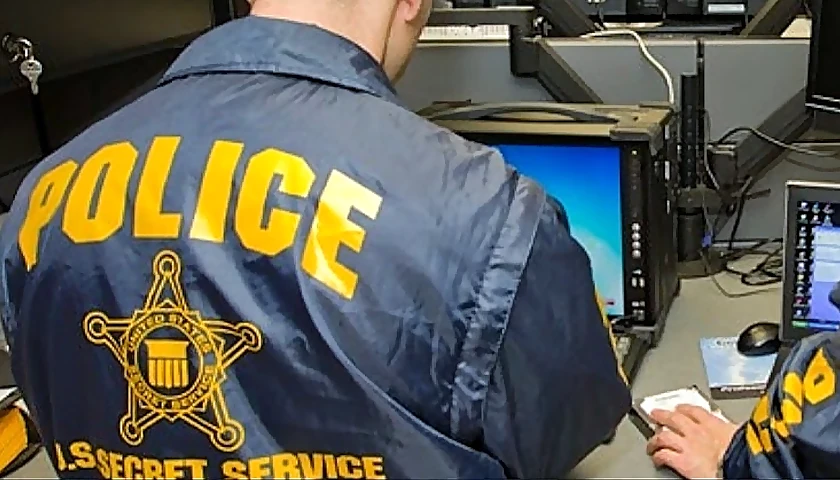
Secret Service leaders meddled in an independent government investigation of the July 13 assassination attempt against former President Donald Trump and are still not following many basic agency security protocols for presidential candidates, presidents, and vice presidents in the final days before the election, according to emails reviewed by RealClearPolitics and several sources in the Secret Service community.
As U.S. Secret Service (USSS) failures came to light in the weeks after the July assassination attempt, USSS managers sent emails to employees asking them to alert them to any “direct requests for information or interview” from the Department of Homeland Security Office of Inspector General, or DHS OIG. The internal government watchdog is conducting its probe of the failures that led to the near assassination of Trump, the killing of fireman Corey Comperatore, and the wounding of two other rally-goers at the western Pennsylvania campaign event.
The emails, which RealClearPolitics reviewed, contained the subject line “DHS OIG Inquiries” and directed employees to tell their supervisors if an OIG official reaches out to them so Secret Service managers could coordinate “an organized response.” Supervisors sent the email five days after the same inspector general issued a negative report on the Secret Service’s actions before and on Jan. 6, criticizing the agency for failing to detect a pipe bomb near Vice President Kamala Harris and not flagging signs of potential violence to other agencies.
Normally, responding to DHS OIG investigators without talking to superiors would not warrant coordination with supervisors, the email stated. But after the first assassination attempt against Trump, USSS leadership needed to provide the proper context and a coordinated response.
“Generally, not an issue; however, this is NOT the normal course of action, and the Service needs awareness and to ensure an organized response with information in the correct context,” Secret Service supervisors wrote in the emails, noting that “only we know what we do.”
The email is now under Senate scrutiny. Sen. Chuck Grassley, a longtime champion of government whistleblowers, on Wednesday sent a letter to Acting Secret Service Director Ronald Rowe expressing concern that the email and any other communications like it could have “a chilling effect” on employee disclosures to the inspector general’s office, as well as on congressional investigations.
“If this email is an accurate representation of the actions taken by Secret Service management, it could have a chilling effect on its employees from fully cooperating and providing information to the DHS OIG as well as congressional investigations out of fear of retaliation since supervisors will apparently be keeping tabs on their communications,” Grassley wrote in the letter, a copy of which his office provided to RCP.
Instead of trying to control the flow and context of information, Secret Service leaders should be “encouraging” employees to “come forward to provide truthful information to the DHS OIG and Congress so that lessons can be learned to prevent future assassination attempts,” Grassley added.
The Iowa Republican set a deadline of Nov. 13 for Rowe to hand over all records “between and among Secret Service personnel” related to providing information to the DHS OIG and congressional investigations into the July 13 attempted assassination.
Tristan Leavitt, an attorney and president of Empower Oversight, which represents Secret Service, IRS, and other government whistleblowers, said the email demanding that potential whistleblowers coordinate communications with their bosses stifles the free flow of information, which could help improve the agency’s performance and which federal law protects.
“Secret Service employees have every right to anonymously contact the DHS OIG without informing their supervisor,” Leavitt said. “While this email is purportedly aimed at employees contacted directly by the OIG, it will undoubtedly discourage employees who may have information about wrongdoing from contacting the OIG or Congress.”
The Secret Service acknowledged receipt of Grassley’s letter but declined to respond to RCP’s questions about how many supervisors sent the email and whether there were other attempts to pressure employees from independently discussing problems they’ve experienced in the Secret Service with DHS OIG or congressional investigators.
“The U.S. Secret Service is in receipt of the letter sent by Senator Grassley,” an agency spokesman said in a statement. “The Secret Service has been and will continue to examine the events of the July 13 assassination attempt and will fully cooperate with Congress and other relevant investigations. We respect the Senator’s role of oversight within the Senate Judiciary Committee and will respond through official channels.”
In the hectic waning hours before Election Day, Secret Service agents are also complaining about security shortcuts that agency leaders are allowing, sometimes requiring, to handle last-minute venue changes and adjustments to Trump’s and Vice President Kamala Harris’s break-neck campaign schedule.
The Secret Service still has not provided Trump’s campaign with a military aircraft three weeks after it was requested, even though President Biden said earlier this month that he had authorized the Department of Homeland Security to “give him every single thing he needs.”
Sources in the Secret Service community tell RCP that Trump’s campaign staff have made significant changes to his schedule less than 12 hours before arrivals, hamstringing the advance team’s ability to plan, coordinate, and obtain manpower and resources properly. The last-minute changes, which are typical in the final weeks of a presidential campaign, have posed significant challenges to providing security for Trump, who is still facing known threats from foreign and domestic actors.
After a second attempt on Trump’s life, the Secret Service started using ballistic glass to provide extra security for the Republican presidential nominee at outdoor and other venues. But at times, late schedule changes have prevented the glass from being in place when it should have been and has led to a shortage of security manpower, these sources assert.
Secret Service agents also complain that the agency’s managers devoted to Harris’ security have instructed advance personnel to submit manpower and resource requests without knowing any of the sites in Harris’ schedule. They also complain that Harris’ staff are “disorganized” in determining sites and are dictating what resources the vice president should have against the Secret Service advance team’s strong recommendations without any pushback from agency leaders.
“This is not new, just a continuation of poor USSS leadership,” a source tells RCP. “It puts the entire Secret Service into a cross-your-fingers-and-hope-nothing-happens situation. Sound familiar?”
The Secret Service also has come up short in securing Harris’ communications with her advance team, so they don’t share vital movements and logistics with the public or unwanted parties, according to several sources. The White House Communications Agency provides secure communications services for only the president and vice president but does not extend those to Trump because of a lack of resources.
However, even Harris’ campaign staff and her Secret Service advance teams have been using unauthorized communications because of a dearth of WHCA manpower and resources coupled with last-minute changes to the vice president’s campaign schedule, the sources contend.
Secret Service sources argue that the security procedures have not only failed to improve since July 13 but have further deteriorated.
The USSS workforce is “aggressively communicating” to their supervisors that they are providing inadequate security that fails to meet agency standards, while the agency’s leaders, ensconced in their Washington offices, are assuring everyone that “they’ll be fine and to keep up the good work,” one source argues.
“It’s those on the front lines, who do the long hours and impossible tasks, who get thrown under the bus when everything does go wrong while leaders simply retire and move on,” the source told RCP. “No accountability.”
The agency did not respond to questions about these alleged deviations from agency security protocols.
The ongoing saga between the ATF and Q’s Honey Badger leaves a lot of people asking, “Why the Honey Badger?” For that question, we turned to Rick Vasquez, the former Acting Chief of the Bureau of Alcohol, Tobacco, Firearms and Explosives (ATF) Firearms Technology Branch (FTB).
ATF Vet’s Take on Hunting the Honey Badger
Vasquez is uniquely positioned to comment on some of the most incendiary issues affecting American gun owners today. He currently serves as a consultant through RickVasquezfirearms.com. He provides testimony in accordance with statutes and regulations overseeing firearms as well as professional expertise in National Firearms Act/Gun Control Act issues, firearms importation, weapons training, and advanced gunsmith and evaluation services. When gun problems require serious horsepower, Vasquez is the man.
Rick’s Resume
During his 21 years in the Marine Corps, Vasquez served as Chief Instructor at the precision weapons shop at Quantico, Virginia. He fielded the M16A2 service rifle for the 6th Marine Regiment and coordinated the Marines’ development and implementation of the Barrett M82 .50-caliber anti-materiel rifle. He also served as a Marine Security Guard Detachment Commander in three different embassies including Moscow. Vasquez later worked for the State Department Diplomatic Security Service.
Vasquez subsequently transferred to the ATF Firearms Technology Branch, reviewing guns and gear to adjudicate compliance with firearms law. He eventually headed the FTB, crafting determinations of profound importance to the firearms industry. His insights into the inner workings of the ATF are literally unparalleled.
Vasquez subsequently transferred to the ATF Firearms Technology Branch, reviewing guns and gear to adjudicate compliance with firearms law. He eventually headed the FTB, crafting determinations of profound importance to the firearms industry. His insights into the inner workings of the ATF are literally unparalleled.
Vasquez is the archetypal warrior curmudgeon, a self-described “crotchety old guy,” and ever the Marine. He is the cumulative product of countless hard places and countless hard things. He is also a patriot. Vasquez’s devoted his entire adult life to service.
Vasquez isn’t overly burdened about hurting people’s feelings either. He prefers the right thing over political correctness. His observations on politics, guns, and freedom are mesmerizing.
Why the Q Honey Badger?
There are around four million Pistol Stabilizing Braces in circulation today. However, the ATF recently declared that the Q Honey Badger, with its 7-inch barrel and sliding PSB, was actually a Short-Barreled Rifle (SBR). Not only does an SBR require fingerprints, a $200 transfer tax, and a six- to nine-month wait, possession of an unregistered SBR is a felony good for up to 10 years in federal prison.
The current legal morass surrounding PSBs is a ghastly mess. We’ll explore that later. There are no published criteria discriminating PSB-equipped pistols from SBRs. Absent codified definitions the industry cannot determine if they are in compliance. My question to Vasquez was why Q, and why now? Why did the ATF single out the Honey Badger?
“When the first arm braces were approved there was not a great deal of thought put into their approval,” he said. “The letters are on the internet and can be reviewed. The original letter says in essence that they were approved as an arm brace but without specific criteria for features. There was no features test applied. The restrictive features being applied today are evolutionary in an effort at restricting the arm brace.”
No Rhyme or Reason
The FTB analyzes each product via some ethereal “looks like a stock to me”-sort of assessment. The width of the brace, the length of pull, and the orientation of the brace relative to the sights all fold in. This is actually the third time the ATF has administratively reclassified a brace-equipped gun as an NFA item. One case involved Fostech, while another concerned Kalashnikov.
“This opinion letter written on Q’s arm brace is a curious anomaly,” Vasquez said. “ATF opinion letters are typically lengthy, wordy, and spell out the features that are good and, if installed, bad. Now ATF’s response for a standard criterion on an arm brace is that they are not authorized by DOJ to provide criteria. Yet we have at least three seizures of arm braces described as stocks via ‘unwritten criteria.’”
Bully Tactics
There has been one prosecution of someone accused of redesigning a PSB-equipped pistol into an SBR. Vasquez says that the ATF singles out smaller companies because of their relative lack of resources.
“They used an arm brace that lacked the FTISB seal of approval,” Vasquez explained. “What is that seal of approval? Even though they are made as an arm brace and meet the known criteria of an arm brace, there is no regulation requiring ATF approval.”
Companies like SIG, HK, and Springfield Armory have deep pockets and armies of lawyers. Q, Fostech, and Kalashnikov, however, lack the assets to support a protracted and expensive legal fight.
The decision-makers at the ATF know this. These small companies represent low-hanging fruit. A victory against Fostech or Q better positions the ATF to move against larger stuff later. Vasquez believes these latest efforts reflect deliberate attempts to break these smaller companies and build precedents.
“Given the lack of standards if ATF can win a case on the arm brace then they can cite that court case in follow-on cases,” Vasquez said.
Political Motivations
Everything turns on the upcoming election. Entrenched ATF policy-makers with a hardline agenda are positioned to enter a Biden Presidency launching a new regulatory offensive. The White House is pushing back, but Trump is in a political fight for his life. An outgoing President’s power is profoundly diminished.
In fact, the curious case against the Q Honey Badger took yet another turn recently. After an uproar from the firearm industry, the ATF curiously sent another letter to Q’s representative. It informs the ATF backed off the Cease & Desist, taking 60 days to look into the matter further. That 60-day mark would conveniently push a decision to after the election … convenient indeed.
Q announced it would not resume manufacturer of the Honey Badger Pistol at this time. There remains a high level of distrust toward ATF’s motives.
“We believe this 60-day suspension is an effort to put manufacturers, distributors, and consumers at ease, and to postpone the issue pas the presidential election in hopes that a new administration will take a different view,” Q wrote in a response. “Using licensees as political pawns is unbecoming of a regulatory agency and ignoring the underlying evaluation in this letter is simply irresponsible.
Q will not succumb to this level of irresponsibility. Therefore, without further clarification from ATF on their evaluation, we will not continue manufacturing the Honey Badger Pistol.”
ATF Radio Silence
Inquiries from companies like Q and SB Tactical have thus far not been addressed. The ATF meets requests for technical guidance with deafening silence. Vasquez feels that this intransigence reflects intentional stalling.”
“How difficult is it to provide criteria? The ATF interprets the regulations and statutes driven by political leanings,” Vasquez said. “If those making firearm decisions are anti-gun then opinions are written accordingly. This isn’t supposed to be ATF’s method of operation yet here we are.”
The ATF currently appears to be hedging its bets. By dragging its feet until after the election the agency can adapt to changing tides. For American gun owners, however, these tides might very well be portents of a coming hurricane.
“Instruction and direction from this DOJ will simply disappear if the administration loses the election,” Vasquez said. “At that point the antigun agenda espoused by many in the ATF leadership will take off like a rocket.”
————————————————————————————– Yeah I know that this is really old but I thought it very interesting none the less. It just confirms my cynical view of the Government and the right to have a gun. Grumpy
Two guys were allegedly involved in robbing this credit union, while the White House was pushing a gun control measure that didn’t discuss crime prevention or holding criminals accountable.
Every story has a beginning, and this one involves the place where my family does its banking, the Sno Falls Credit Union in beautiful downtown scenic North Bend, Washington, where — on the afternoon of Jan. 26 —a pair of goofballs decided to rob the place.
This credit union was founded by my late mother-in-law and her long-deceased husband about 67 years ago, so there’s something of a personal angle to this story.
The two suspects were evidently determined, according to a statement by police on their Facebook page. The perp who actually went inside passed a note to a teller “stating he was armed with a gun and would kill everyone in the credit union and himself before police arrived,” the police statement said. That’s not just an “implied threat” of violence, which is normally associated with any kind of robbery note, but a real right-down-to-it promise of massive lethal violence. You betcha the tellers complied while hitting the silent alarm, and by the time police arrived within a couple of minutes, this guy was running to the getaway car, hopping in and fleeing the scene with his wheelman.
Not that it matters much, but a fair number of local residents have guns. I know this because a lot of them belong to the same gun club where I once served as president. While it is highly unlikely there might ever be a confrontation between any of them and an outlaw, anytime a holdup occurs in such a community, I’m reminded of the events of Oct. 5, 1892 in Coffeyville, Kansas, involving the infamous Dalton Gang, or the much earlier fireworks in Northfield, Minnesota on Sept. 7, 1876, in which the starring cast included Frank and Jesse James, the Younger brothers, plus Clell Miller, Charlie Pitts and Bill Chadwell.
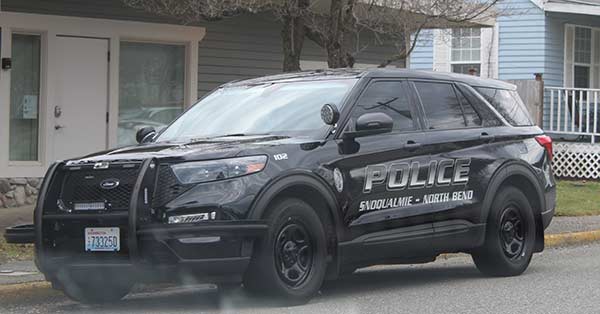
Besides, the community has a fairly strong presence of state troopers who patrol Interstate 90, the city is served by the Snoqualmie Police Department and at any given moment, there may be two or three King County sheriff’s deputies in the neighborhood. There are only three ways out: east or west on I-90 or northwest on Highway 202. If I wanted to pull a holdup, this place would not be my first, second or even third choice.
The White House Plan
Coincidentally, one day before this caper unfolded, the Biden White House announced “new executive actions to help promote safe storage of firearms … to reduce gun violence and make our communities safer.” Right up front, the White House statement asserted, “Gun violence is the leading cause of death of children in America.” The irony of that comment will become clear as you finish reading.
This 1,254-word announcement offered details such as “76% of school shootings are committed with guns from the home.” (It overlooks the fact that 100% of school shootings occur in so-called “gun-free zones.”)
The White House notes how the federal “Bureau of Alcohol, Tobacco, Firearms, and Explosives (ATF) reported that from 2017 to 2021, local law enforcement reported 770,642 private theft incidents involving 1,026,538 firearms. A rising trend has been firearms stolen from unattended motor vehicles.” It doesn’t mention that law-abiding citizens are often compelled to leave their guns in their vehicles because of “sensitive places” laws which prevent them from entering certain places with lawfully-concealed defensive firearms. There is also no acknowledgment that smash-and-grab after-hours gun store thefts account for quite a few stolen guns.
Buried about halfway through the Biden announcement is this revealing observation: “Local leaders, like school officials, community and faith leaders, and law enforcement can be trusted, credible messengers when it comes to providing guidance on gun violence prevention and safe firearm storage options.” Translation: The administration wants to use these local officials and leaders to spread Joe Biden’s gun control agenda, apparently because they are trusted in their local communities.
The Biden administration is apparently keener on so-called
“safe storage” than in going after criminals who misuse guns.
Biden’s Bullet Points
Here is more of the administration’s plan, which a lot of readers may not have heard about from the establishment media, with bullet points to emphasize their apparent importance to the White House scheme:
• The U.S. Department of Education will take new action on safe firearm storage by sending a letter to school principals across the country explaining the importance of safe storage and encouraging them to communicate with parents, families, caregivers, and the broader community about how safe storage can protect students in school and in their communities.
• The U.S. Department of Education will also issue a new communications template that principals and school leaders can use to engage with parents and families about the importance of safe firearm storage, and encourage more people to take preventive action by safely storing firearms.
• The U.S. Department of Justice (DOJ) will release a guide to safe storage of firearms in order to provide subject matter expertise on different types of storage devices and best practices for safely storing firearms. This is the most comprehensive guide on safe storage ever released by the federal government.
There is more, and some of it is actually laudable, such as efforts to prevent veteran suicide, and at least make some attempt to stem substance abuse, and address the mental health crisis. Even Alan Gottlieb, founder of the Second Amendment Foundation, has championed a pilot project in Washington State aimed at suicide prevention, for which he has received very little media recognition.
What Isn’t There
The administration has “urged states to enact and implement strong laws requiring firearms owners to safely store their firearms in their homes and vehicles. The laws should impose a clear standard to penalize those who do not safely store their weapons and whose weapons end up being used for violence.” However, there isn’t any mention of prosecuting and locking up criminals who actually misuse those guns.
You won’t find any reference to jailing and sentencing recidivist offenders to long stretches in the Gray Bar Hotel. There is nothing about deterring criminal activity. Apparently, the administration thinks it will be more effective to criminalize being the victim of a residential burglary or car prowl rather than jailing the miscreants who steal all of those firearms.
The White House says this project will save lives. It sounds like one more social experiment which puts more blame on honest gun owners than on criminals who ignore safe storage laws like they disregard any other gun control law.
And this brings us back around to the two guys who robbed the credit union
Snoqualmie Police quickly responded to the robbery and chased the perps down Interstate 90 toward Seattle. When they caught the suspects, they discovered both were 15-year-olds, and one had a criminal record.
End of the Road
Once the two suspects headed west on I-90 toward Seattle, with police and sheriff’s deputies in hot pursuit, their getaway didn’t get far. As the saying goes, “You can’t outrun Motorola.”
They hit another car when they tried to use an off-ramp as they passed through Bellevue and quickly got back on the freeway only to be stopped cold about two miles later by the Washington State Patrol, which pulled a PIT (Pursuit Intervention Technique) maneuver to bring their flight to an end. Fortunately, nobody was injured.
The wrap to this story is something out of a bad movie script. The perps in this case were both 15-year-olds, meaning they weren’t old enough to legally drive.
One of the two already had a criminal record, having been convicted of second-degree robbery. They were in a stolen car, taken earlier in the day, from a community several miles to the south.
Their entire grab came to a pitiful $10. They just swapped the rest of their lives for five bucks apiece because no matter where they go or what they do from now on, the events of Jan. 26 will be with them forever.
Had the stars been poorly aligned, one or both of these teens could have been hurt or killed, either by gunshot or in a crash.
Perhaps some bright bulb at the White House can explain how another gun control scheme, ostensibly about safe gun storage, will prevent minors like these kids, who should have been in school and planning a weekend instead of making stupid life choices.
Two stocking-masked, gun-toting idiots burst into the lobby of the Town House Motel in Belleville, Ill., and loudly demanded everybody’s money. Several employees and guests burst out laughing and wouldn’t stop. As their audience cracked up, the crooks tried reminding them that, hey, this is a robbery, and it’s like, you know, serious.
It didn’t work. The laughter continued. The crooks finally fled, penniless and humiliated. Later, the would-be victims explained that the crooks just kinda looked, well, stupid. And besides, who ever heard of pulling a robbery in a motel lobby?
.Life Imitates Art
Being a fugitive wanted for robbery didn’t keep 33-year-old Mary Annette Cole from going to the movies and catching a good flick. But considering the movie she was watching, she might have anticipated a police dragnet was tightening around her. Sure enough, those guys with flashlights who suddenly appeared and dragged her out of the theater weren’t ushers — they were Tulsa, Okla., cops.
Mary was watching “The Fugitive.” Maybe she should have opted for “Breaking Away.”
Devil’s In The Details
In cop-work and crook-work, you just gotta plan for all the little details. And if your operation depends on having a working motor vehicle at your disposal, you might want to pay attention to where your ignition keys are.
Our hero, an unnamed youthful dirtbag, scurried nervously into a convenience store in Portland, Ore., pulled a knife, and demanded the contents of the till. Following company policy, the cashier dutifully filled a paper bag with cash, handed it over, then reached for the phone as rag-man gleefully exited the front door.
The clerk started to punch 911, then observed — what’s this?— the suspect’s car keys on the counter! He flipped ’em into a bin, then made his call to the police.
A few seconds later, a very distraught rag-man re-entered the store, wondering if, uh, anybody seen my car keys? Could I have ’em back, maybe?
The clerk refused. Rag-man then offered to trade the bag of cash for the keys. Nope, that’s not how we play the game, the cashier patiently explained, and reminded rag-man the cops were on the way.
He left, dejected, and still not very bright. When officers arrived they found him outside on the pay phone, trying to report his van stolen.
Speak Of The Devil
Okay, so this one doesn’t have anything to do with guns or shooting, but, oh boy, does it remind you what kind of people — in what sort of condition — are out there on the road with you.
After a four-car pile-up on the Santa Ana Freeway in California, one of the nation’s busiest, the driver of the “at-fault” vehicle told officers, “I was just driving along when the car started to shake and glow, like it was possessed. It started going about a 100 mph when it just took over and crashed.”
The CHPs were a bit skeptical about this story — they don’t get too many verified incidents involving possessed cars — and asked the driver if he had any idea why the car might have undergone this supernatural phenomenon. Nope, he replied, he had just “… been testing cocaine all afternoon for Satan.” It took three officers to get the devil’s dope-tester into handcuffs.

 Dwayne Johnson is the most highly-paid actor in the world. This is The Rock celebrating Halloween with his family. Though I’ve never met him, Big Dwayne seems like a pretty cool guy.




 Two stocking-masked, gun-toting idiots burst into the lobby of the Town House Motel in Belleville, Ill., and loudly demanded everybody’s money. Several employees and guests burst out laughing and wouldn’t stop. As their audience cracked up, the crooks tried reminding them that, hey, this is a robbery, and it’s like, you know, serious.