
Category: COOL!!!!!!!!!!!!!!!!!

A warm thermos cap of coffee steams in my hand as I slowly pull down my neck gaiter on a 25-degree morning in paradise. The sunrise over the far trees is neon red, mirroring the ripples on the water in front of the ancient duck blind. A small flock of wood ducks whistles overhead three minutes before shooting light. That first sip is pure happiness.
Everyone has their spot. Could be a well-worn stool at the local pub, a section of trail on a mountain slope in Utah, or the rocking chair on your back porch. Mine is a 40-acre plot in northern Wisconsin that does little more than require you to be there to lighten your soul.
It’s a sliver of land that connects a large state protected marshland to a large chain of lakes. Water flows from the marsh through our tiny plot into these lakes and thanks to the commitment of some studious beavers, backs up and floods to form the perfect 15-acre duck pond.
Being a marshland in northern Wisconsin it’s only viable to be back there during the fall and winter. Ticks have infested the grounds and it’s not possible to get out during the spring and summer months without a fist full of those fuckers burrowing into your undercarriage.
Life stands still in the winter up north. The marsh freezes solid, and snow is measured in feet rather than inches. Often too deep to hike, snowshoes provide access to the far side, which is otherwise only accessible by canoe.
Hundreds of miles have been snowshoed back here and onto the public marsh it pushes up against. We’ve gotten lost and nearly had to spend a blistering cold night, but thankfully our stars have aligned, and there’s never been a major accident.
Things really light up in the fall. Large flocks of ducks and geese have called the surrounding marshlands home for more than the 3 generations it’s been in our family. Migrating birds swing through on their short stay when the weather pushes them south. A small herd of deer graze the surrounding forest, even the local albino stud has been known to make an appearance.
The ruffed grouse, king of the upland game birds, have given many a near heart attack—although they are much more easily hunted on the local logging roads. King of the marsh though is a 500lb black bear we call Hank. He wanders home after munching on cranberries all day at the bogs down the road. Not sure how old he is, but one day we’ll finally draw a bear tag and find out.
These hallowed grounds have led to some unbelievable hunts, some miserable ones, and a few with water filled waders. I’ve trained 3 dogs back here to carry on the tradition that 8 more had before them. They’ve left an unforgettable yet unseen mark on this place. A duck dog is home back in the pond. They always come ready for an adventure, even if that adventure is dunking the canoe and almost drowning you on a 20-degree day.
First hunts, memorial ceremonies, and innumerable other memories have graced this land. My wife even encouraged the idea of heading back there for her first duck hunt mere hours after I proposed. The hunting is great, but the wildlife only starts there. Trumpeter swans swing in from the big marsh on occasion and sing to us.
The aforementioned beavers have become an unlikely ally as they dam up the water, so it doesn’t dry up like it did in 2004. Owls feast on yard grizzlies, woodpeckers make their way with trees, and bald eagles circle above scanning for their next meal. One significantly large bald eagle even constructed a nest opposite the old duck blind, which it inhabited for 6 years.
Outside of worn-down grass on the drive in and trails to the duck blinds and tree stand, nothing has disturbed this land since 1967. It will stay that way as long as it’s in our family, as our house is located on another parcel across the street. Its entrance is guarded by overhanging branches thick with leaves that, unless you know where to look, won’t give up the narrow driveway.
Is it the top of a mountain overlooking a great Alaskan range? No, but who cares. That morning cup of coffee can’t be beat.

Hospitals are frightening places. US Army photo.
My bosses here at FMG have told me I can indulge in a spot of fiction on occasion, so long as I don’t make a habit of it. This week, I’ll strain that tolerance ….
The sick man awoke gradually. It took a moment to attain clarity. The hospital room was as he had previously left it — bright, cluttered, foreign and terrifying. Something, however, was not quite as it should be.
Like headlights dissecting a foggy road, his mind gradually made sense of the scene. The sick man understood little if any of the machines or their diabolical purposes. At that moment, however, he realized what seemed so alien about the place. Nothing was moving … like, at all.
The displays were bright and clear but unchanging. The very air no longer seemed mobile. That was strange in the extreme. It was then he noticed the young man seated comfortably next to his bed. The man’s eyes were fixed upon him, neutral and implacable. The sick man had always read people easily, but this man was unreadable.
The sick man pulled himself up in the bed. He was surprised at how good he felt. Gone was the ache in his back and hips. He no longer sensed the presence of the sundry tubes violating his spent body. Perhaps this would be a good day.
The silence between the two men soon became uncomfortable.
“Who are you?”
The young man answered flatly, “You know who I am.”
The younger man looked to be in his late twenties. He was handsome and fit, dressed in an unadorned blue t-shirt. His pants were so bland as to be unnoticeable. His eyes had a penetrating quality, like something that could cleave meat from bone. He exuded a palpable calm.
The revelation came suddenly, like an electric shock.
“But I’m not ready,” the sick man said, fear now obvious in his voice.
“Nobody is ever ready,” The young man responded. There resulted yet another uncomfortable silence.
“You’re not what I expected.”
“Literally everybody says that.”
There was no sense of impatience or cynicism. These were simply facts.
“So, it’s really time?”
“Indeed, it is.”
“I still have things I need to do.”
“Like what? You need to pull together another payroll or get that last shipment ready? Have you paid your taxes and signed the forms? Is there something you need to say to someone? You’ve had all of those opportunities and more. That’s all gone now.”

Modern medicine is long on machines. Everybody hates them for a reason. US Army photo.
The sick man struggled to push his natural disquiet back someplace else and focused on the moment. He had always been a problem solver, a man ever cursed with a hyperdeveloped sense of responsibility. This was simply a strange new problem to be solved.
“So, what’s the real deal here? How does this work?” His voice was steadier than his nerves.
The younger man gave the tiniest sigh. It wasn’t exasperation in any real sense, more resignation brought upon by endless repetition.
“Allow me to streamline this for you,” he said. “Denial, anger, bargaining, depression, and acceptance. It’s as predictable as the tides. We can talk here for as long as you wish. You’re on the clock, not me. You’ll find that time means something different now than it did for you previously. However, trust me, letting yourself get too deep into the weeds just makes this harder. Debating the finer points of philosophy will render you muddled. You’ll want your faculties intact for what is to come.”
That took a moment to process. “What is coming?” he asked.
“You already know that,” the younger man said.
“Will I go to heaven?”
“Should you? You tell me.”
The man’s mind raced. He searched for a Bible verse or something similarly profound, but nothing came. Before things got out of hand, the younger man continued, “You’ve answered your own question.”
The fear welled up again. Now teetering, the sick man said, “This is hard.”
Without emotion, the younger man said, “Try my job for a week.”
As predicted, the sick man skipped to acceptance straightaway. On a certain level, he appreciated that trying to negotiate would be fruitless.
“Will this hurt?”
“God is not cruel,” the younger man said. “Regardless of the mechanism or circumstances, it seldom takes long. From the outside looking in, sometimes it seems sudden. Others, it appears, are protracted. The actual event, however, is reliably quick.”
The sick man felt himself begin to rise inexplicably. The pressure of the sheets gave way as he, disconcertingly, began to pass through them. He sensed that he was above himself somehow. None of this felt real.
“I’m afraid,” he said. There was a childlike quality to his voice that had not been there previously.
“I know you are,” he heard the younger man say. The voice now felt distant. “Everyone is. That’s why I’m here. As I said, God is not cruel. Just, certainly, but never cruel.”
In moments, the young man was far away. With his absence, the sick man began to feel cold. The suffocating sense of isolation immediately exceeded his level of comfort. The fear boiled up yet again, stronger this time. He struggled to maintain control. Then the thing was done.
.jpg)
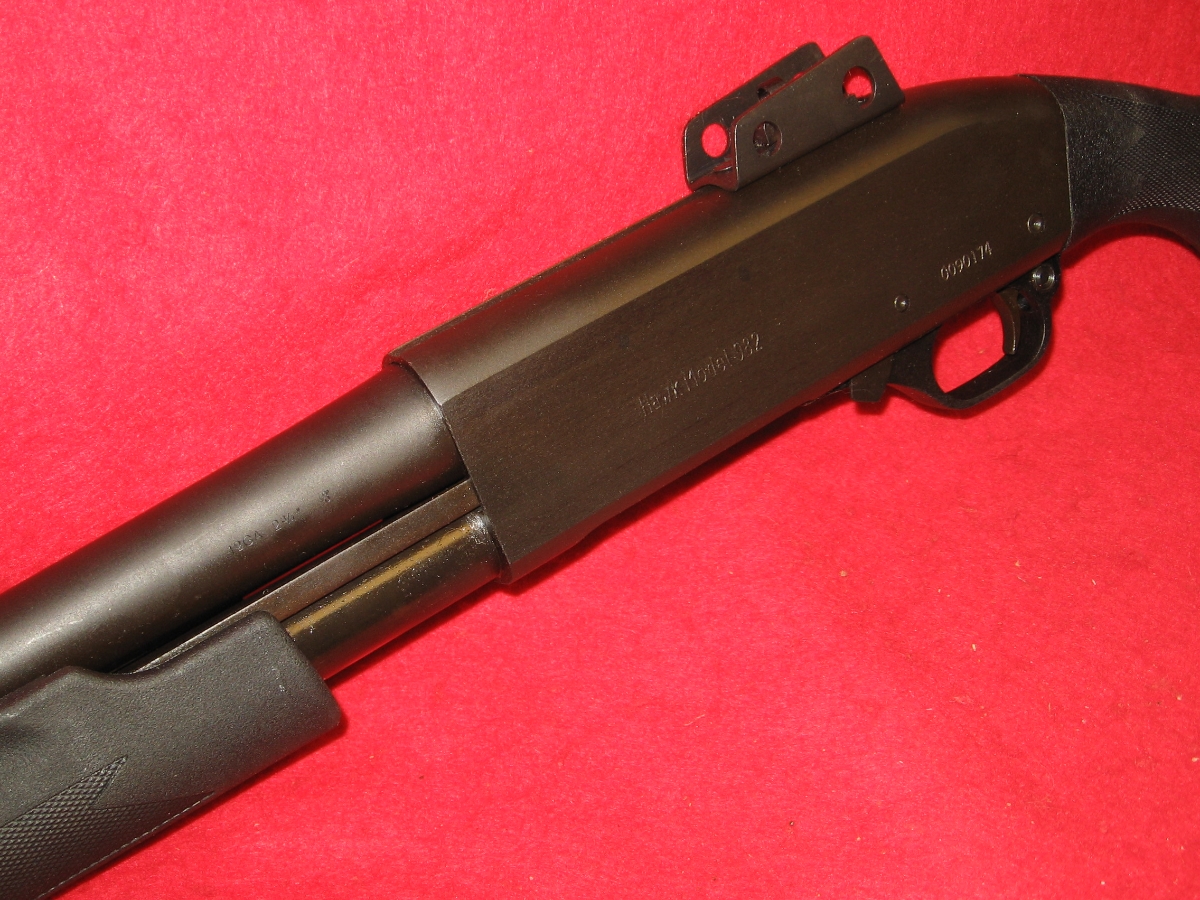
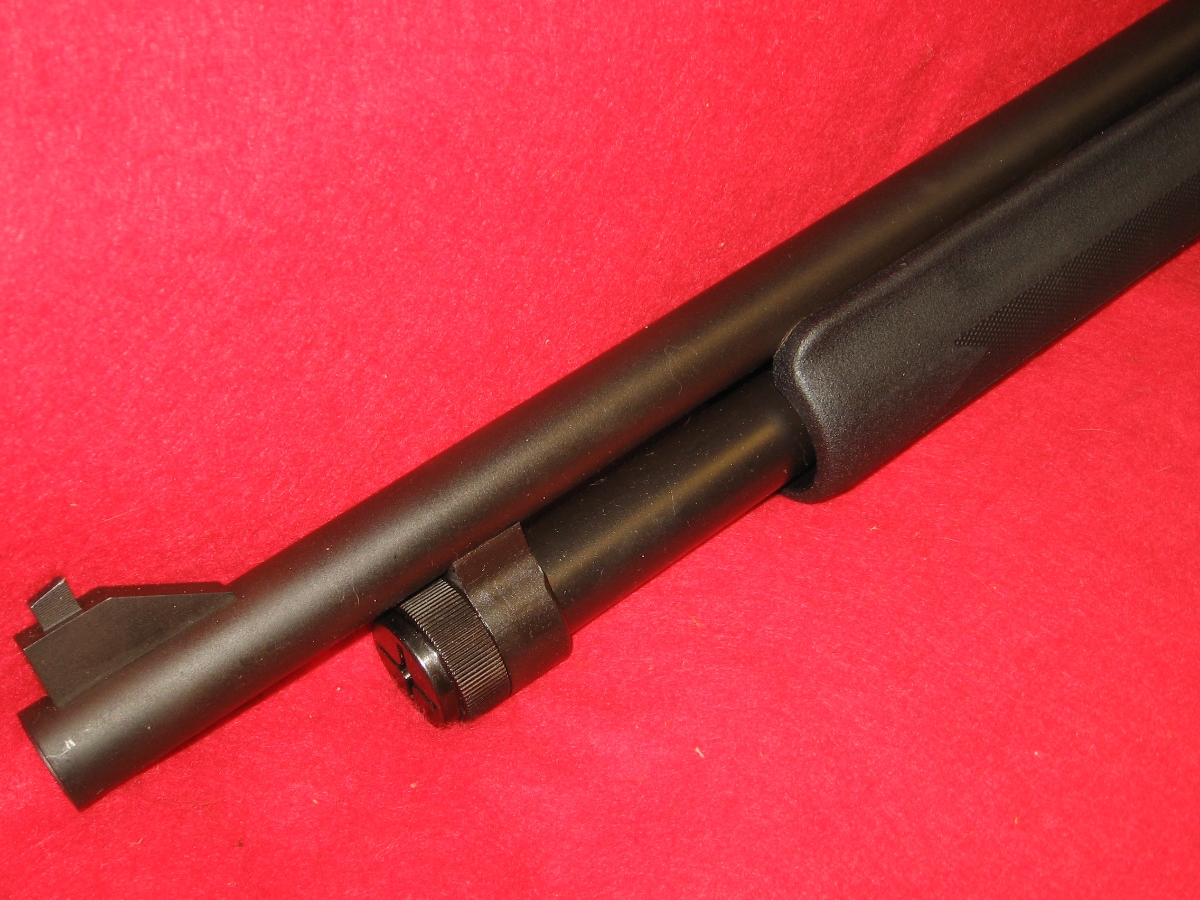
Its a Interstate Arms Corps Model Hawk in 12 GA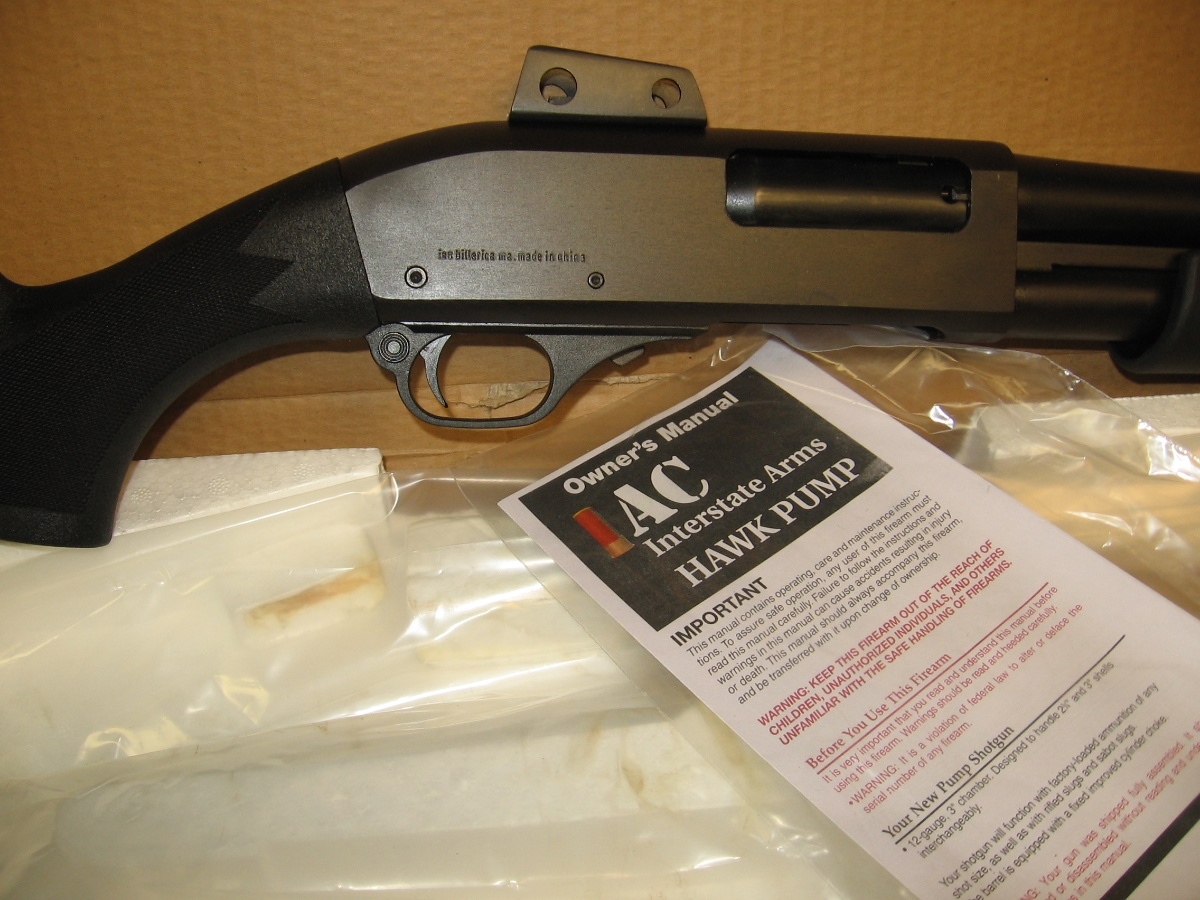
Boss & Co is London’s oldest gunmaker, a company that has remained in privately-owned operation since being established. Whether you are a seasoned shooter, an owner or an enthusiast, this insight into Boss & Co history will tell the story of the innovators and craftsmen who made the company what it is today.
Boss. A family name synonymous with fine gunmaking.
The Boss family originated from Leicestershire and had no roots in gunmaking when William Boss began an apprenticeship in 1773, aged just 15. His commitment to becoming a gunmaker was clear, and he moved away from his family to Birmingham to be closer to his mentor, gun and pistol maker Thomas Ketland.
Excelling at his craft, and already making a name for himself, William Boss then moved to London where the finest guns were being produced. There he could further refine his skills and become a part of the dominating London gun industry.
Soon he found a new mentor: Joseph Manton. He was a leader in his field and a man who only employed top-rate journeymen which, by this time, William was.
Staying with Manton for a number of years, William fathered three sons during his time with the firm, each of whom became an apprentice to their father. Sadly, while teaching his youngest son Thomas the art of gunmaking, William died. At this time, the death of a gunmaking father marked the end of any apprenticeship for his remaining sons. But Manton made an exception for the 19-year-old Thomas and allowed him to continue with the firm as his natural talent for the craft was clear.
Little did anyone know that by allowing Thomas Boss to continue his apprenticeship, it would be the start of a story that would secure the Boss family name at the very heart of gunmaking for centuries to come.
1812 -1826
Building Boss & Co
Eventually Thomas established a name for himself as a top gunmaker. He worked mostly as an outworker, a position that saw him finishing guns for the best-known gunmakers of the time – something he excelled at.
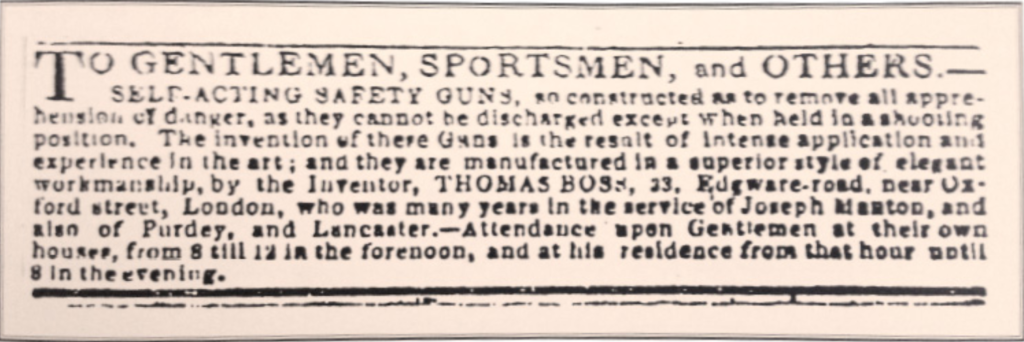
In 1812 Boss & Co was born. Thomas placed adverts in newspapers addressed to gentlemen, sportsmen and others, announcing Boss & Co to the nation. These adverts promoted ‘self-acting safety guns, constructed to remove all apprehension of danger as they cannot be discharged except when held in the shooting position’. Proudly, these guns were manufactured ‘in a superior style of elegant workmanship’ by Thomas Boss of Edgware Road, London.
At this time, Thomas provided home visits to potential customers by day, and at his private home of an evening, but that was soon to change.
The making of Boss & Co
As is true of any company wanting to make a name for itself amongst established competition, Thomas Boss knew the importance of image.
As the reputation of Boss & Co grew, so did the number of customers through the door. Soon Thomas Boss sought his own apprentices and journeyman gun makers, needing up to ten skilled staff and two apprentices. Two of these new employees were nephews of Thomas Boss, men who would go on to play an important role in the future of Boss & Co as it developed.
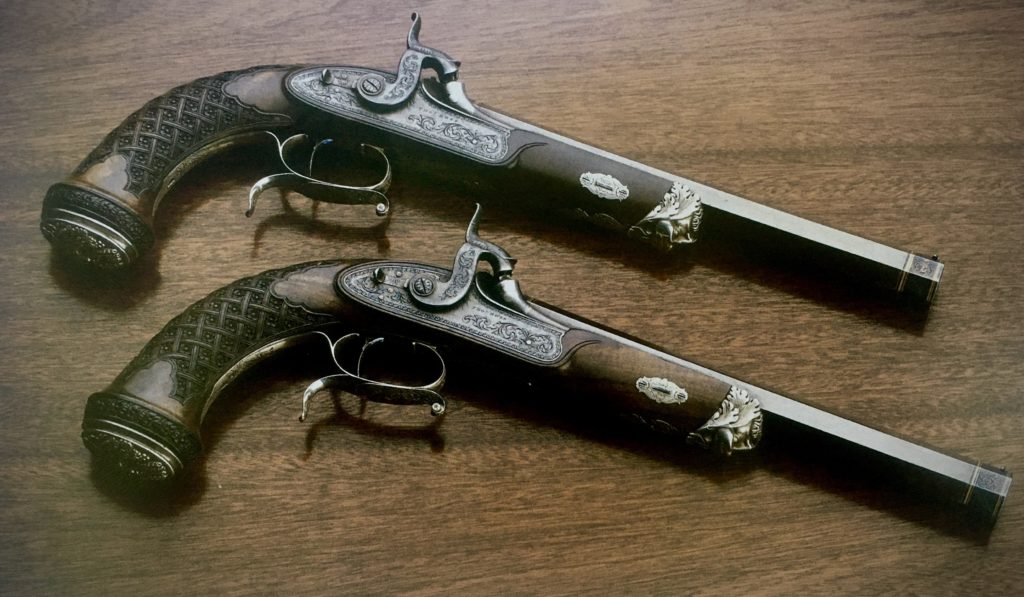
1851 saw Boss & Co invited to participate in Prince Albert’s Great Exhibition alongside other renowned gun makers. This invitation marked the increased status of Boss & Co as one of London’s leading gun makers and to celebrate they created a special pair of dueling pistols for the event. These pistols are now back in Boss & Co ownership and form an important part of the company archive.
1857 – 1890
The Paddison Years
By now Boss & Co was a well-established, highly regarded gun maker. Their output was sought after and their order book ever-increasing.
Thomas Boss, the creator of this success and reputation, died in 1857 having lived to see his name rise to the highest levels, but he left behind a company without leadership and direction.
By default, Amy, widow of Thomas, took over the business. But she had no gunmaking experience and would often seek the support and guidance of her employees to help run the company, a situation which was far from ideal for the now-famous Boss & Co.
Ageing in years, Amy turned to her nephews Edward and James Paddinson for assistance. The partnership worked well and lasted for many years up to the death of Amy in 1872. Edward and James then took over the firm as beneficiaries of her will.
The Paddinson brothers had trained and worked with Boss & Co for many years and were well-placed to continue its legacy. However, James Paddinson died just one year after taking control, leaving Edward as sole custodian.
Edward continued to produce the best quality London guns for the next 17-years, with high quality continuing to take focus over innovation and evolution. In 1890, ill health and personal financial concerns prompted him to seek a partner, and he welcomed John Robertson to the fold.
Robertson has long-supplied skilled work to Boss & Co and, having had first-hand experience of his work, Paddison had little hesitation in offering Robertson a half-share in the company.
The Robertson Era
The Robertson-Paddinson partnership would last just one year before Edward succumbed to illness and died.
Upon the death of Paddison in 1891 his half share passed to a nephew who had little interest in anything other than drawing his share of the profits. Eventually, in 1893, Robertson bought out the other half share and became the sole owner of Boss & Co, having had to re-mortgage his home to release the required funds. The company was now, finally, under his sole control.
The Robertson era of Boss & Co was, to date, probably the most important period in the history of the company. It was a time when the company became known for quality, beauty and innovation and was a development which led to the Boss & Co name being revered around the world.
There is much to celebrate with Robertson, as he can be thanked for important innovations such as the Boss Single-Trigger, the Boss Ejector and the Boss Over and Under, each of such huge importance to Boss & Co, and the gun trade as we know it today. Such is the importance of the innovations of the Robertson era, a detailed account of each can be found here.
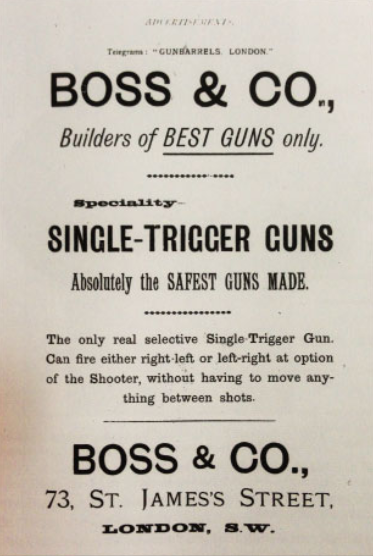
Another Boss & Co trademark that can be attributed to this period is Boss Rose and Scroll engraving. The Rose and Scroll design, introduced by Robertson, was the creation of an engraver named John Sumner, the third of four generations of engravers who all worked on Boss & Co guns. Again, we can attribute this era for creating one of the most recognizable elements of a Boss & Co, and one that remains a popular choice of finish to this day.
Robertson is a man who continues to be held in high regard, quoted as making the last significant changes to sporting guns, and shaping the way Boss & Co would be known for generations to come.
The Young Governors – The End of The Robertson Line
1917 saw the death of John Robertson, and Boss & Co was passed to the very capable hands of his three sons John, Sam and Bob, known in the industry as ‘The Young Governors’. The 1930s proved to be a tough time for gunmakers, but the young trio ran the firm with efficiency and continued to produce guns to a high standard for a discerning clientele.
By 1951 the last of the Young Governors died, but for many years thereafter the firm would still include a descendant of John Robertson amongst its ranks. It was as late as 1999 when the last Robertson left Boss & Co and so ended a family connection that had lasted for 109 years.
Boss & Co Today
Boss & Co continues today in private ownership as it always has since its founding in 1812, as London’s oldest gun company. Today it is owned by Arthur DeMoulas a man with a long-standing knowledge of, and appreciation for, the company, our heritage and guns.
He understood the importance of private ownership, a fact which has enabled Boss & Co to continue to focus on building “Best Guns Only” and lead the revered ‘holy-trinity’ of London gunmakers, unencumbered by the distractions of diversification, that can arise from being part of a large luxury lifestyle brand conglomerate.
In fact, the first decision that Arthur communicated to the workforce on buying the company was that Boss & Co would continue to make “Best Guns Only” by hand, using traditional methods. Second grade and machine made guns would never be built at the company.
Since then under his leadership, the company has invested in the London workshop, has helped to secure key suppliers and set up an apprenticeship scheme to train and pass on the skills to a new generation of Boss & Co London gunmakers.
With full workbenches and an extended team of master craftsman, the next stage of Arthur’s vision was set in motion revitalising the excitement for innovation that was seen at Boss & Co during the late 1800s and early 1900s, when our company led the gun making world with new inventions, design and style.
Work is now underway to re-introduce unique Boss & Co products not seen for over 100 years, providing continuity with the most celebrated periods in our history under the stewardship of our forefathers such as John Robertson and Thomas Boss.
For Arthur, he simply sees himself as a custodian and trustee of the company in the continuum of the storied history of one of the most famous gun companies in the world. His enthusiasm, investment, drive, knowledge and respect for the company and passion will continue to set Boss & Co apart as the gun makers and builder of “Best Guns Only”.