
Category: COOL!!!!!!!!!!!!!!!!!
Categories
A Victory! COOL!!!!!!!!!!!!!!!!! Hard Nosed Folks Both Good & Bad I am so grateful!! If I was in Charge Interesting stuff Leadership of the highest kind Manly Stuff One Hell of a Good Fight Our Great Kids Paint me surprised by this Real men Soldiering Some Red Hot Gospel there! Stand & Deliver This great Nation & Its People War
Another, this man is one Hell of a stud!! William Frederick Harris
 William Frederick Harris (March 6, 1918 – December 7, 1950) was a United States Marine Corps (USMC) lieutenant colonel during the Korean War. The son of USMC General Field Harris, he was a prisoner of war during World War II and a recipient of the Navy Cross for extraordinary heroism during the breakout in the Battle of Chosin Reservoir. He was last seen by American forces on December 7, 1950, was listed missing in action and is presumed to have been killed in action. Harris was featured in the book and film Unbroken.[1][2]
Biography
William Frederick Harris was born on March 6, 1918, at Good Samaritan Hospital in Lexington, Kentucky, to Field Harris (1895–1967) and Katherine Chinn-Harris (1899–1990).[1]
Harris graduated from the United States Naval Academy, Annapolis, Maryland, in the class of 1939. He was in A Company, 1st Battalion, 4th Marines[3] and was captured by Japanese forces during the Battle of Corregidor in May 1942.
He escaped with Edgar Whitcomb, future governor of Indiana,[4] and on May 22, 1942, swam 8+1⁄2 hours across Manila Bay to Bataan, where he joined Filipino guerrillas fighting Japan just after the Battle of Bataan.[5] In the summer of 1942, Harris and two others left Whitcomb and attempted to sail to China in a motorboat, but the engine failed and the boat drifted for 29 days with little food or water. The monsoon blew them back to an island in the southern part of the Philippines where they split up and he joined another resistance group.[6] Harris headed towards Australia hoping to rejoin American forces he heard were fighting in Guadalcanal, but he was recaptured in June[7] or September 1943[8] by Japan on Morotai island, Indonesia, around 1,000 miles (1,600 km) from Bataan.[9][10]
Harris was taken to Ōfuna POW camp, arriving February 13, 1944[11] and became acquainted with Louis Zamperini. Harris experienced malnutrition and brutal treatment at the hands of his jailers, notably by Sueharu Kitamura (later convicted of war crimes). Due to malnutrition, by mid-1944 the over 6 feet (180 cm) tall Harris weighed only 120 pounds (54 kg) and had beriberi.[12] In September and November 1944, Harris was beaten severely, to the point of unconsciousness, by Kitamura.[13][14] According to fellow captive, Pappy Boyington, Harris was knocked down 20 times with a baseball bat for reading a newspaper stolen from the trash.[15] Harris was near death when he arrived at a POW camp near Ōmori in early 1945. Zamperini provided Harris with additional rations and he recovered.[16] William Harris was chosen to represent prisoners of war during the surrender of Japan, aboard USS Missouri on September 2, 1945.
After World War II, Harris remained in the Marines. He married Jeanne Lejeune Glennon in 1946 and had two daughters.[1]
He was recalled to active duty during the Korean War.[2] He was the commanding officer of Third Battalion, Seventh Marines, First Marine Division (Reinforced) in the Korean War. During the breakout in the Battle of Chosin Reservoir, his unit stayed behind as a rear guard to protect retreating forces. Despite heavy losses, Harris rallied his troops and personally went into harm’s way during the battle. Harris was last seen by American forces on December 7, 1950, walking and carrying two rifles on his shoulders. He was listed as missing in action, but after the war when former POWs had neither seen nor heard of him, Harris was declared to be dead. He was awarded the Navy Cross in 1951 for his actions at Chosin. Because of his penchant for escape and survival exhibited during World War II, his peers and family were reluctant to accept his death. A superior officer held on to his Navy Cross for a number of years, expecting to be able to give it to Harris personally.[17]
Remains thought to be his were eventually recovered. His family doubted the remains were his, and conclusive testing using DNA had not been attempted as of 2014.[1]
Awards

For his leadership and heroism on December 7, 1950, Harris was awarded the Navy Cross.
The President of the United States of America takes pride in presenting the Navy Cross (Posthumously) to Lieutenant Colonel William Frederick Harris (MCSN: 0-5917), United States Marine Corps, for extraordinary heroism in connection with military operations against an armed enemy of the United Nations while serving as Commanding Officer of the Third Battalion, Seventh Marines, FIRST Marine Division (Reinforced), in action against enemy aggressor forces in the Republic of Korea the early morning of 7 December 1950. Directing his Battalion in affording flank protection for the regimental vehicle train and the first echelon of the division trains proceeding from Hagaru-ri to Koto-ri, Lieutenant Colonel Harris, despite numerous casualties suffered in the bitterly fought advance, promptly went into action when a vastly outnumbering, deeply entrenched hostile force suddenly attacked at point-blank range from commanding ground during the hours of darkness. With his column disposed on open, frozen terrain and in danger of being cut off from the convoy as the enemy laid down enfilade fire from a strong roadblock, he organized a group of men and personally led them in a bold attack to neutralize the position with heavy losses to the enemy, thereby enabling the convoy to move through the blockade. Consistently exposing himself to devastating hostile grenade, rifle and automatic weapons fire throughout repeated determined attempts by the enemy to break through, Lieutenant Colonel Harris fought gallantly with his men, offering words of encouragement and directing their heroic efforts in driving off the fanatic attackers. Stout-hearted and indomitable despite tremendous losses in dead and wounded, Lieutenant Colonel Harris, by his inspiring leadership, daring combat tactics and valiant devotion to duty, contributed to the successful accomplishment of a vital mission and upheld the highest traditions of the United States Naval Service.
— Board of Awards, Serial 1089, 17 October 1951[18]
Harris also received the Purple Heart, the Prisoner of War Medal, the Combat Action Ribbon, the Korean Service Medal, the United Nations Service Medal, the National Defense Service Medal, the Republic of Korea Presidential Unit Citation, the Korean War Service Medal and the World War II Victory Medal.[19]
  |
||||
 |
 |

|
 |
|
 |
|
.svg) |
 |
|


Walter Summerford
The Electrified Man
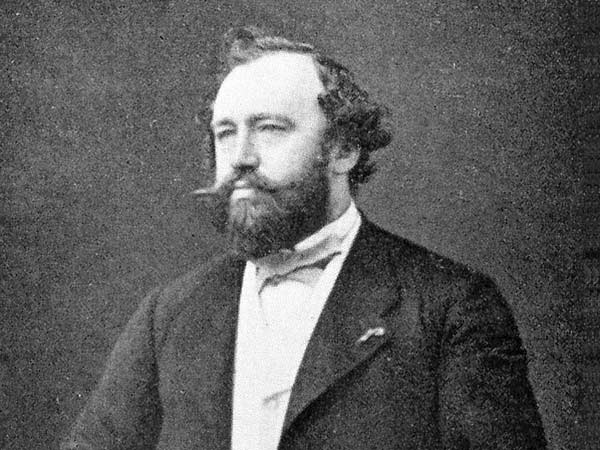
This is Walter Summerford. This poor schmuck got struck by lightning four times, once after he was already dead.
It’s an old wives’ tale that lightning doesn’t strike twice in the same place. Lightning is completely random. In the US alone, there are an average of 40 million lightning strikes per year. The odds of being hit by lightning in America are about one in a million in a given year. However, those numbers are, curiously, not consistent around the globe.
In the UK, there are only around 300,000 lightning strikes per annum. The United Kingdom is markedly smaller than the US, but its weather is way crappier. As a result, the odds of getting struck over there are closer to 1-in-15,300.
Lightning is some seriously nasty stuff. It’s basically just a big honking spark. Electrostatic energy builds up in the atmosphere and can discharge either from cloud to cloud or from a cloud into the ground. A typical lightning bolt runs about 50,000 degrees F, or five times the temperature of the surface of the sun. They pack millions of joules of energy. That stuff is undeniably pretty to look upon. However, you really don’t want to get any of it on you.
Around the globe, there are roughly 6,000 lightning strikes each and every minute. Nearly a quarter million people are struck by lightning every year. Roughly ten percent of those are killed.
On a certain level, those seem like pretty decent odds. If only one in every million Americans gets struck by lightning every year and, of those, nine out of ten live to tell the tale, that doesn’t sound so bad.
Those are indeed reassuring numbers, unless you happen to be Walter Summerford. Walter Summerford has been described as the unluckiest man in the universe. He was struck by lightning four times. One of those strikes was actually after he was already dead.
Background
Walter Summerford served as a British officer in World War I. In 1918, Major Summerford was riding a horse through a Belgian field when he caught a bolt of lightning.
This massive electrical shock rendered the poor man paralyzed from the waist down. However, he gradually recovered. With the war over and his recovery nearly complete, Summerford was demobilized and sent to Vancouver for further rehabilitation.
Six years later, in 1924, Summerford was enjoying a little quiet time out fishing by a river. A storm came up, so the man took refuge underneath a nearby tree. A bolt of lightning struck the tree and tracked down his body and into the ground. The strike left Summerford almost completely paralyzed on his right side.
After two long years, Summerford finally regained the use of his legs. The man was an inveterate outdoorsman and loved wandering about the wilderness hiking, hunting, and fishing.
However, in 1930, whilst taking a stroll in a public park, he was struck by lightning a third time. This bolt rendered him completely paralyzed. It was also markedly worse than the previous two. Summerford was destined to spend the rest of his natural life in a hospital bed.
Summerford’s physicians were amazed the man had survived this third blow. He fought valiantly for another two years before finally succumbing to the cumulative effects of these three lightning strikes in 1932.
As to whether he enjoyed some kind of unique body chemistry or had somehow offended his Maker, no one will ever know. Regardless, it was undoubtedly the cumulative effect of these three lightning strikes that ultimately did Walter Summerford in.
Four years after he was buried in a public cemetery in Vancouver, Canada, Walther Summerford’s gravestone was itself struck by lightning and split into pieces.
I’m not much into conspiracy theories myself. However, it is tough not to believe that there was something supernatural and spooky going on with that unfortunate guy.
The truly curious bit was that Walther Summerford was struck every six years starting in 1918, just like clockwork. Even after he died, when his six years were up, that’s when lightning struck his tombstone. The cyclical nature of the thing strains credulity, but his tale is well-documented.
The brother of one of the soldiers with whom I served was actually struck three times. Once the poor guy was in the shower. I can only imagine what that might do to somebody’s emotional well-being, not to mention your perspective on general hygiene.
My colleague was from rural Texas. He said that every time it got a little bit stormy out, his brother would retreat to the living room away from the television and read a book. Who can blame him?
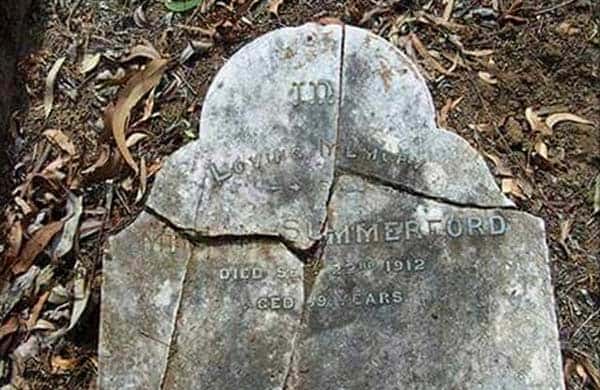
Walter Summerford got struck by lightning once after he was already dead. This is his shattered tombstone. Image: Public domain.
Ruminations
As kind of an amateur science guy myself, I always gravitated toward basic physics. I can get my head around the way things move. However, chemistry and electricity always kind of made me itch. I struggled to visualize these disciplines, so they held little fascination for me.
However, I have long appreciated that electricity is best appreciated at a distance. If Walter Summerford has taught me anything, it is that I’d really sooner not get struck by lightning.

This is me with my best friend Jason. The world would be a much better place if more people had buddies like mine.
I maintain a zippy little recreational fighter plane. You guys bought that for me, incidentally. Once my kids were grown and gone, I had the opportunity to get back into flying. The Army taught me the fine art of stick wiggling back in 1990. However, a tragic lack of time and resources kept me out of the cockpit for some two decades. Once my children moved on and my writing career kind of picked up steam, I got to remedy that.
My Vans RV6A is the classic compromise. Fancier, more powerful planes are more expensive and cost more to operate. Cheaper craft are mind-numbingly slow.
My RV6 is surprisingly affordable and cruises at around 155 knots. That’s about 180 mph. To put that in perspective, I could conceivably eat breakfast at home in Mississippi and grab lunch in Chicago.
The Vans RV line of small planes is the most-produced homebuilt aircraft family on Planet Earth. These spunky machines are fun, aerobatic and safe. As of 2015, there were some 8,900 copies flying. That number likely exceeds 10,000 today. I do love mine so.
My little plane will comfortably pack two adults and a spot of luggage. The baggage compartment is hardly palatial, but it is nonetheless amazing what you can wedge in there. In my case, that includes everything from a Thompson submachine gun to a Browning Automatic Rifle.

This sporty little airplane is so much fun.
The Mission
Like all normal guys, I have coveted my own Tommy gun since before I could walk. The sexy lines of the Chicago typewriter just stir something visceral in the male soul. Tragically, I was not the only person in America to think that.
The first run of 15,000 M1921 Thompsons was produced in, you guessed it, 1921 by Colt’s Manufacturing. Back in the heady days before the 1934 National Firearms Act, real-deal automatic weapons were technically available cash-and-carry from most any American hardware store. Over time, that original pot of 15,000 guns got whittled down considerably.
Nowadays, an original Colt Thompson costs substantially more than a decent automobile. Thankfully, I have two full-time jobs. My doctor gig supports my family. This word monkey thing keeps the gun collection energized. I literally saved for years before beginning my hunt in earnest. I landed the perfect example from a gentleman in central Florida.
Buying a live machine gun these days is a laborious experience. Machine gun ownership is governed by the state. Thirty-five states allow private ownership of automatic weapons. The rest obviously do not.
Those of you who live in California, Colorado, Delaware, Hawaii, Illinois, Iowa, Louisiana, Maryland, Massachusetts, Minnesota, New Jersey, New York, Rhode Island, and Wisconsin have my sincere pity. Louisiana surprises me. C’mon, you Cajun pansies — that’s just embarrassing.
I maintain my own Class 3 gun dealer’s license, so transferring this weapon was not as bad as it might otherwise have been. The FFL is actually not terribly difficult to obtain. Like everything the government does, there is a process. However, mind the rules, and it is readily surmountable by normal folk.

At the end of the day, this remarkable vintage M1921
Colt Thompson made it back to its new forever home.
The Gun
The Tommy in question has a fascinating story. I am only the third owner. The Seattle Police Department bought the gun new in 1928 and used it operationally for decades. It bears the stigmata of honest service as a result.
In the 1970s, the Seattle PD liquidated their old Thompsons, and this one was bought by this gent in the Sunshine State. He sold it to make money to buy a new airplane. We obviously had plenty in common.
The gun came with a vintage FBI case and a few accessories. The seller and I arranged to meet at a certain airfield at a certain time. The weather turned out to be just sparkly.

Friendship
If everybody had a best friend like Jason, the world would be a much better place. He and I are about the same size and have been mistaken for brothers. We met in seventh grade and roomed together in college. We stood in each other’s weddings. Together, we have shot guns, driven tanks, celebrated births and buried parents. There’s really not much I would not do for that guy, and he for me. I am immeasurably richer for his friendship.
On the appointed day, Jason and I piled into Tommyrot. Tommyrot is my wife’s name for the airplane. It means, “Foolish, silly, or ill-advised.” I had to look that up. We made it to the rendezvous on a single tank of gas with go juice to spare.
I treated the seller to lunch at a fast food joint and left with both a new friend and a cool vintage machine gun. Jason and I whiled away the trip home, jabbering about our fun, crazy adventures that spanned decades. The Colt Thompson is now a cherished treasure.
The Nancy Pelosis of the world will never comprehend the sheer unfiltered joy that can be derived from an intimate association with firearms. She and those like her are products of a different space. I get it. However, that really is a shame. Airborne gunrunning is something that everyone should experience at least once. My life is markedly better for it.
Categories
One of my favorite rounds – The 44 Magnum
Categories
Hunting British Wild Boar

This year, Beretta celebrates its 500th anniversary. That’s a big deal. What better way to commemorate this than with a new .22 pistol! In all seriousness, Beretta has a raft of exciting new products dropping during its 500th year, and the B22 Jaguar is a promising surprise entry.
Ahead of SHOT Show 2026, TFB had the pleasure of attending Beretta’s media range day at the impressive Pro Gun range southeast of Las Vegas. We were treated to extensive trigger time with many of Beretta’s product line, pistols, shotguns and rifles.
While I loved trying my hand at ringing steel at 500 yards with the BRX1 and getting some clay shooting tips from Beretta USA’s highly skilled shooting team, I was excited to get hands-on with the newly announced B22 Jaguar.

The B22 is a worthy, if unconventional, addition to Beretta’s venerable line-up of ‘Cat Guns’. Alongside the Bobcat and Cheetah, the Jaguar boasts some top-notch features that elevate it above more than just a plinker. The new cat undoubtedly has the match/competition pistol market in its sights.
As soon as I hit the pistol range, I made a beeline for the Jaguar bench and picked up an unsuppressed two-tone B22. Loading up a magazine, I had a moment to look over the new pistol, and I was impressed by the fit and finish (certainly the level you’d expect from Beretta) and the new pistol’s configuration.

While the new pistol doesn’t have much in common with its classic namesake, the Model 71 Jaguar, the new cat on the block brings some modern features. Such as ambidextrous safeties, a full-length top Picatinny rail and MLOK side interfaces. It has an Aluminum frame, and an unloaded and bare B22 weighs in at 26oz.
It’s available in a number of finishes, including black and a mix of brown and blue-grey. While the black was my favourite, the brown-grey of the competition pistol looked good in the bright Nevada sun and grew on me.

The competition variant features a Steam Demon Compensator and Tandemkross Accelerator Thumb Ledge that dramatically reduce recoil and improve muzzle control. While you might think these are pretty pointless additions to a .22 pistol, I was surprised to find they helped noticeably. The Jaguar’s polymer grips are nicely textured and the flat-faced trigger was crisp.

The pistols have 5-1/4 inch threaded barrels as standard and when paired with a suppressor, the fun factor increases exponentially. My favourite Jaguar was a pistol set up with a SilencerCo Switchback and a Cyelee red dot. Myself and fellow TFB Editor Hrachya put mag after mag through the various Jaguars. The only stoppages I experienced were ammunition-related.
The B22 was a lot of fun and it was great to get the chance to burn through quite a few mags to get a real feel for the gun. If you’re in the market for a rimfire pistol with a racier setup out of the box, the Jaguar might be for you. MSRP on the black standard B22 is going to be $749.00, while the tricked-out competition model is $969.00.

It remains to be seen how the B22 fairs against the competition, but it’s great to see that after 500 years, Beretta can still surprise us!