Category: California
California must stop sharing the personal identifying information of the state’s gun owners with academic researchers, a state judge has ruled.
San Diego Superior Court Judge Katherine Bacal issued a preliminary injunction against California’s Assembly Bill 173 on Friday. Judge Bacal noted that allowing the law to remain in effect while the case continued sufficiently threatened the privacy rights of California gun owners.
“Accordingly, plaintiffs have shown that the balance of harms weighs in favor of issuing the injunction,” she noted in her order.
The injunction represents a win for gun-rights advocates in their fight against the state’s attempts to share gun owners’ identifying information for outside research. The state already collects extensive data on gun and ammunition purchases–including an ammo registry. California’s practices make it an outlier, but one with the potential to be copied by other blue states seeking tighter gun laws. The successful injunction suggests advocates may be successful in permanently stopping the state from sharing that data with non-law enforcement entities and quash the potential for other states to follow California’s lead.
Assembly Bill 173, signed by Governor Gavin Newsom (D.) last September, directed the Attorney General to disclose personal information on gun purchasers to the California Firearm Violence Research Center at UC Davis. The information includes details such as the buyer’s name, address, date of birth, what they purchased, when and where they bought it, and more. It also authorized the center to share the information with any other “bona fide research institution.”
The now-blocked law is not the only time California officials have garnered controversy over how they handle gun owners’ private data. Earlier this June, The Reload broke news that the California Department of Justice had inadvertently leaked the names, racial identifications, home addresses, dates of birth, and permit classifications of the state’s concealed carry permit holders during a botched rollout of its 2022 Firearms Dashboard Portal. That information was made publicly available for download for several hours before eventually being scrubbed from the website. The state has since offered credit monitoring to all those it believes were affected by the leak.
Judge Bacal cited this incident as an example of the potential harm faced by gun owners if AB 173 were allowed to stay in effect.
“Defendant responds plaintiffs cannot establish irreparable harm because the personal identifying information has already been shared with researchers as recently as November of 2021,” she said. “Yet this does not account for the potential ongoing and future harms that could occur by continuous use of the information. Furthermore, and while this motion has been pending, a massive data breach reportedly occurred that leaked personal identifying information from the firearm databases for concealed carry applicants in or about June of 2022.”
A coalition of gun-rights groups, including the Firearms Policy Coalition (FPC), filed suit against the law in state court in January. The groups celebrated the injunction.
“The California government has proven time and time again that it can’t be trusted with the private personal information of its residents,” Bill Sack, FPC Director of Legal Operations, said in a press release. “Today’s ruling reinforces what FPC has been arguing all along; that you needn’t be forced to open your front door to immoral government intrusion in order to exercise your fundamental rights.”
California Attorney General Rob Bonta (D.) told The Reload that despite the ruling, he planned to continue defending the law in court.
“We are disappointed in this decision,” he said. “Research and collaboration would help protect our communities from gun violence and save lives. We will continue this fight in court.”
UPDATE 12:58 AM EASTERN 10-18-2022: This piece has been updated to include comment from Attorney General Bonta’s office.
Riverside County Sheriff Chad Bianco recently sent out a notification to concealed carry holders in the county alerting them to a public records request from Viacom-CBS for “the names of all people with concealed carry permits.” Bianco says that after the request was received, the department reached out to attorneys to “determine if their were any valid exceptions the department could use” in order to prevent handing over those names to the media. According to Bianco, an “outside legal analysis” determined that the California Supreme Court ruled all the way back in 1986 that if media outlets request this information, “public agencies must disclose the full names of concealed weapons permit holders.”
Bianco says he had no choice but to release the names of all those Riverside County residents who possess a valid concealed carry license, and in his alert to permit holders told them that he doesn’t take this matter lightly. Still, the sheriff says that because of “court precedent and a lack of protections” within the state’s legal code he was forced to hand over the information, and encouraged those “seeking a change” to state law to contact their local legislators.
I’m actually somewhat torn here. If California were a true “shall issue” state, then I don’t think there is any compelling public interest in knowing the names of those who possess a concealed carry license. In “may issue” states, however, I think the argument can be made that the subjective and arbitrary issuance of carry license is deserving of public scrutiny. Look at what’s going on in Santa Clara County, California right now, where Sheriff Laurie Smith is currently on trial in civil court on charges of corruption after allegations that deep-pocketed donors to her re-election campaign were given rarely-issued concealed carry permits in exchange for their “support”. While the powerful and well-connected were handed permits, those who didn’t have that same special relationship with the sheriff’s office were often left twisting in the wind without even a formal denial.
A former manager for a Silicon Valley security business testified at a sheriff’s civil corruption trial that he and the company’s CEO agreed to provide political donations in exchange for concealed-weapons permits.
Martin Nielsen, who implicated a Santa Clara County sheriff’s captain and others in the alleged bribery scheme, testified publicly for the first time Monday at Sheriff Laurie Smith’s trial.
He detailed how he was tasked with finding a way to get concealed-carry permits for AS Solutions security agents who were assigned to high-profile clients, the Mercury News reported. The effort followed a 2018 shooting at the YouTube campus in San Bruno in which a woman wounded three people before killing herself.
The now-defunct security company’s high-profile clients included Meta CEO Mark Zuckerberg. Nielsen testified that he and AS Solution’s then-head Christian West agreed to financially support Smith’s 2018 reelection bid in exchange for the permits for security agents assigned to protect executives for the company then known as Facebook.
… Nielsen, testifying under a grant of immunity from criminal prosecution, said he and West arranged to donate a large sum to an independent expenditure committee backing Smith’s reelection.
“Did you come away with the understanding you would get 10 to 15 permits?” prosecutor Gabriel Markoff asked.
“Yes,” Nielsen replied.
… Nielson did not state the precise donation amount in his testimony because San Mateo County Superior Court Judge Nancy Fineman had limited what details Nielsen could give in front of the jury.
However, in past testimony, Nielsen said $90,000 was the agreed amount, though only $45,000 was ever donated. The other half was scuttled after the bribery and corruption probe got underway in 2019.
Nielsen also testified that he was unilaterally exempted by a sheriff’s captain from having to qualify under a legally required firearms proficiency test, and was instructed to obscure their association with the security company to avoid negative optics.
“They could not all be AS Solution,” he said. “Something about the fact it was a security company and it didn’t look good.”
If the powerful and well-connected are afforded access to their right of armed self-defense while the vast majority of applicants are denied, that’s a legitimate news story. Having said that, the scandal in the Santa Clara County Sheriff’s Department wasn’t uncovered by local media, but by the Santa Clara County D.A.’s office. While the publicly available information could have been used by news outlets to uncover the alleged shady situation in the sheriff’s office, it looks instead like it was campaign finance disclosures that actually raised suspicions of prosecutors, with the media only picking up on the scandalous allegations after a search warrant was served on the sheriff’s office.
While there’s a theoretical benefit to publicly disclosing the names of concealed carry holders in “may issue” states, in practice this leads to responsible gun owners being put at risk of burglary and theft, and may even help aid stalkers learn whether their potential victims are armed or not. Unfortunately, for now this policy is the law of the land in California, and concealed carry holders can be outed by their local media. Whether that law would withstand constitutional scrutiny in light of the test laid out by the Supreme Court in Bruen is another question entirely, however, and I hope that one or more of the 2A groups operating in the state will challenge that 1986 California court decision by using the Bruen test in the very near future.
In San Jose, city council members have decided to up the ante on their requirement that legal gun owners purchase liability insurance by tacking on a $1000 fine for repeat “offenders” discovered in possession of a firearm without an insurance policy; a decision that one 2A group already suing the city calls atrocious.
“San Jose is hell-bent on disarming law-abiding gun owners anyway possible, at least as far as they can get away with in the courts,” wrote NAGR’s Policy Director Hannah Hill. “And a $1,000 fine for simply exercising your God-given right to keep and bear arms unless you bow down, buy insurance, and kiss their ring is simply atrocious.”
She added, “That’s why we’re suing to overturn this unconstitutional ordinance, and we look forward to rescuing law-abiding San Jose gun owners from these greedy, anti-gun council members.”
The penalties passed on Tuesday escalate for each offense. A gun owner’s first and second violation will cost them $250 and $500, respectively. A $1,000 fine will be levied against a third and any future infraction. The city’s police department will be in charge of enforcing the fines.
“City staff is moving forward with regulations needed to implement this first-in the-nation law to reduce gun deaths and injuries with a careful, balanced approach,” the mayor wrote in a statement. “I look forward to seeing this up and running next year.”
The “careful, balanced approach” that Liccardo mentions includes exemptions for some San Jose gun owners, including law enforcement, those with concealed carry permits, and “low income” residents. Everyone else exercising their right to keep a firearm in the home for self-defense, on the other hand, will be expected to comply with the new law.
While city officials insist that this law will be upheld by the courts, it seems to me that the ordinance flies in the face of the Supreme Court’s test laid out in the Bruen decision; the law must comport with the plain text of the Second Amendment as well as how it’s historically been exercised (and regulated), particularly at the time the Bill of Rights and the 14th Amendment were ratified. I’m not aware of any longstanding laws in 1791 or 1868 that required the vast majority of legal gun owners to purchase an insurance policy before they could own or carry a firearm, though the federal judge overseeing the lawsuit against San Jose compared the city’s insurance mandate to 19th century “surety” laws when she declined to issue an injunction blocking the new law from taking effect.
That comparison ignored what those surety laws were all about, however, as Justice Clarence Thomas made clear in the Bruen opinion. From page 5 of the majority opinion:
In the mid-19th century, many jurisdictions began adopting laws that required certain individuals to post bond before carrying weapons in public. Contrary to respondents’ position, these surety statutes in no way represented direct precursors to New York’s proper-cause requirement. While New York presumes that individuals have no public carry right without a showing of heightened need, the surety statutes presumed that individuals had a right to public carry that could be burdened only if another could make out a specific showing of “reasonable cause to fear an injury, or breach of the peace.” Thus, unlike New York’s regime, a showing of special need was required only after an individual was reasonably accused of intending to injure another or breach the peace. And, even then, proving special need simply avoided a fee.
Those surety laws were aimed at the bearing, not the keeping, of arms. Beyond that, they weren’t imposed on every gun owner who wanted to carry for self-defense. Instead, they were required only for those who had been “reasonably accused of intending to injure another or breach the peace.”
San Jose’s insurance mandate, on the other hand, applies to almost every legal gun owner who lives inside the city limits, and subjects them to penalties for keeping a gun in their home unless they’ve first purchased an insurance policy that covers accidental misuse of a firearm. That’s nothing like those surety bonds that the judge cited as an historic analogue, and I suspect that San Jose’s mandate won’t survive court scrutiny… at least once the case moves beyond the borders of the Ninth Circuit Court of Appeals. With New Jersey also seeking to impose insurance mandates on concealed carry licensees, this is an issue that could soon be ripe for review by the Supreme Court, and hopefully another legal smackdown as well.
Given the fact that a federal judge has already said that many portions of New York’s ironically named Concealed Carry Improvement Act are likely unconstitutional, are California lawmakers really ready to double down and approve similar restrictions in the Golden State? Unfortunately, the answer is “yes,” though California Attorney General Rob Bonta suggested in an interview this week that the California legislation could be tweaked in response to the New York case. One thing is clear, however: Bonta and other anti-gun Democrats are still intent on restricting the right to carry as much as they possibly can.
Bonta said his sense of urgency remains as acute as ever.
“There will be, and there have been huge spikes in the number of applicants,” he said. “We believe that it’s important to have a constitutional regime that allows for those who should constitutionally have a concealed carry weapon to have (one), but to take the steps to make sure that we are doing everything constitutionally permissible to keep people safe.”
“Keep people safe,” in Bonta’s view, means prohibiting concealed carry holders from actually carrying in most circumstances and ensuring stiff sentences and severe consequences for those concealed carry holders who may stray into one of the many “gun-free zones” Bonta and his anti-gun allies want to put in place. And even if the courts don’t look kindly on New York’s newest infringements on the Second Amendment, California’s AG is intent on putting new laws on the books.
Bonta echoed comments made by the bill’s author, state Sen. Anthony Portantino, a Glendale Democrat, who said that he would like to see the bill, or some version of it, introduced as soon as the next session begins in December.
That plan hit a possible speed bump late last month. Where California’s bill failed, a similar proposal in New York was signed into law, only for a federal judge to rule this month that its long list of “sensitive places” is unconstitutional.
“So we need to look at that, and maybe it is over-broad,” Bonta said, “and we should take that to heart…and respond appropriately with any new (similar) bill.”
Bonta was also asked about California’s new law that, in part, forces plaintiffs challenging any state-level gun control law to pay attorneys fees if they lose any portion of their lawsuit; a law enacted as a response to a Texas law allowing private citizens to sue abortion providers in the state. The California AG seemed to realize just how stupid this culture war fight really is, calling the move a “dangerous game” but claiming that somehow it’s okay when California does it.
Bonta insisted that the law is an earnest effort to “save lives,” but also acknowledged that it was meant to call the high court’s bluff.
“We’re using it in the best way that it can be used, in a way that advances California values,” he said. “But it’s dangerous. It’s a dangerous game. We’re using it responsibly. Now others can use it like Texas, and maybe the Supreme Court will look at the landscape of how this approach is being used and try to correct it. If that happens, that’s fine, too.”
Not exactly a stirring defense of the California law in question, is it? I’m sure the Second Amendment groups that are challenging the law in court will find Bonta’s comments very interesting, especially since it seems like Bonta’s basically asking the Supreme Court to step in and invalidate both the Texas and California statutes.
While Bonta might not be too eager to defend this particular law in court, he’s very much a willing participant in California Democrats’ attempt to chill the Second Amendment rights of Californians. Bonta can chalk that up to “advancing California values,” but to those trying to exercise their right to keep and bear arms Bonta’s efforts look a lot more like treading all over a fundamental right of we the people.
In the short time that Bruen has been the law of the land, it is already bearing tangible results. Courts have struck down bans on the carrying of guns by 18 to 21-year-olds and local laws on the possession of firearms. More recently, New York’s petulant legislative response to losing in Bruen is being eviscerated.
Now another shoe has dropped. In United States v. Price, a district court in West Virginia considered whether bans on firearm possession by felons and possession of firearms with obliterated serial numbers were constitutional. While finding that the law barring convicted felons from possessing guns was justified under Bruen, the court found that the laws against removing the serial number on a firearm, or possessing a firearm with an obliterated serial number were not.
As Judge Joseph R. Goodwin wrote . . .
Firearms with no serial number are just as “bearable” as the same firearm with a serial number, and there is no “common use” issue here as the presence or lack of a serial number makes no difference with respect to whether the type of weapon is commonly used. Finally, I can find no authority for the idea that a firearm without a serial number would meet the historical definition of a dangerous or unusual firearm.
The opinion applies Bruen in a straightforward manner. Noting that serial numbers on firearms were essentially unknown until the era of mass production, and laws requiring them and prohibiting their removal dated only to the 1968 Gun Control Act, the court ruled that 18 U.S.C. § 922(k) unconstitutionally infringes on Second Amendment rights.
While not before the court, the court seems to indicate that requiring a manufacturer to serialize the guns it puts into commerce was acceptable, as such did not infringe any right to keep or bear arms.
The court gave the following examples:
Assume, for example, that a law-abiding citizen purchases a firearm from a sporting goods store. At the time of the sale, that firearm complies with the commercial regulation that it bear a serial number. The law-abiding citizen takes the firearm home and removes the serial number. He has no ill intent and never takes any otherwise unlawful action with the firearm. Contrary to the Government’s argument that Section 922(k) does not amount to an “infringement” on the lawabiding citizen’s Second Amendment right, the practical application is that while the law-abiding citizen’s possession of the firearm was originally legal, it became illegal only because the serial number was removed. He could be prosecuted federally for his possession of it. That is the definition of an infringement on one’s right to possess a firearm.
Now, assume that the law-abiding citizen dies and leaves his gun collection to his law-abiding daughter. The daughter takes the firearms, the one with the removed serial number among them, to her home and displays them in her father’s memory. As it stands, Section 922(k) also makes her possession of the firearm illegal, despite the fact that it was legally purchased by her father and despite the fact that she was not the person who removed the serial number. These scenarios make clear that Section 922(k) is far more than the mere commercial regulation the Government claims it to be. Rather, it is a blatant prohibition on possession. The conduct prohibited by Section 922(k) falls squarely within the Second Amendment’s plain text.
Before you break out your Dremel tool and start de-identifying your gats, remember that this case isn’t over. While the decision may (and should) be upheld, until it is final and the feds formally acknowledge that Section 922(k) is kaput, you must recognize that it might not be – and once you’ve removed a serial number, you can’t put it back on.
Similarly, there are various state laws that prohibit removal of serial numbers or possession of unserialized guns. While these should eventually be struck down for the same reason, until they are, you would be playing with fire.
I read the court’s opinion as potentially blessing laws enhancing the criminal penalties for committing a crime with a firearm that has had its serial number removed . . . which would give a zealous prosecutor additional ammunition were you to use such a firearm in a Zimmerman or Rittenhouse type self-defense situation.
What are the implications of this ruling? If its logic and reasoning are followed by other courts – again, they should be, as it’s a straightforward application of Bruen – then “ghost gun” bans, serialization requirements for homemade firearms, microstamping requirements, “smart gun” laws, and other recent ideas from the Shannon Wattses of the worlds should be toast.
So too should be things like magazine capacity limits and just about everything the California politicians have come up with in the past couple of decades.
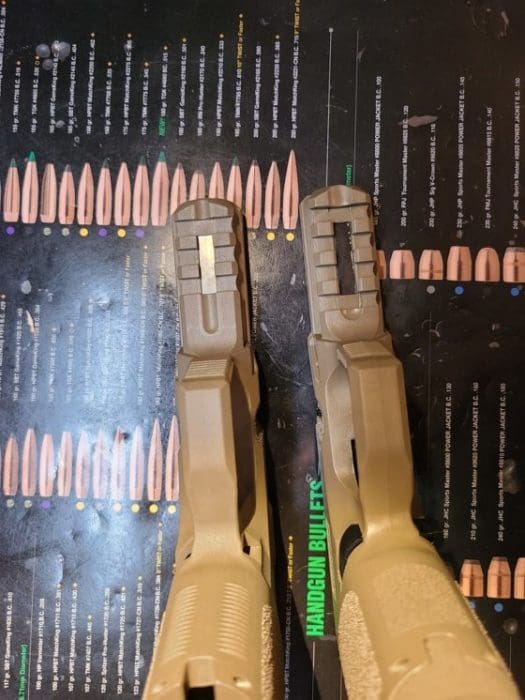
Could it similarly be used to invalidate NFA regulations on suppressors, SBR’s, and SBS’s? Perhaps, although the argument will be made that the NFA is just a tax. The NFA was structured that way because FDR’s DOJ was concerned that straightforward bans on those items would violate the Second Amendment. That issue should be addressed soon by Judge Pittman in the test case on the “Made in Texas” suppressor law.
Could the West Virginia ruling be used to attack the Hughes Amendment? Most definitely.
In the mean time, pass the popcorn. The Bruen show is still just getting started.
Disclaimer: While I am a lawyer, I’m not your lawyer. This essay is journalistic, and neither I, my firm, or TTAG is providing legal advice. Consult your own attorney if you have specific questions.
|
.gif)
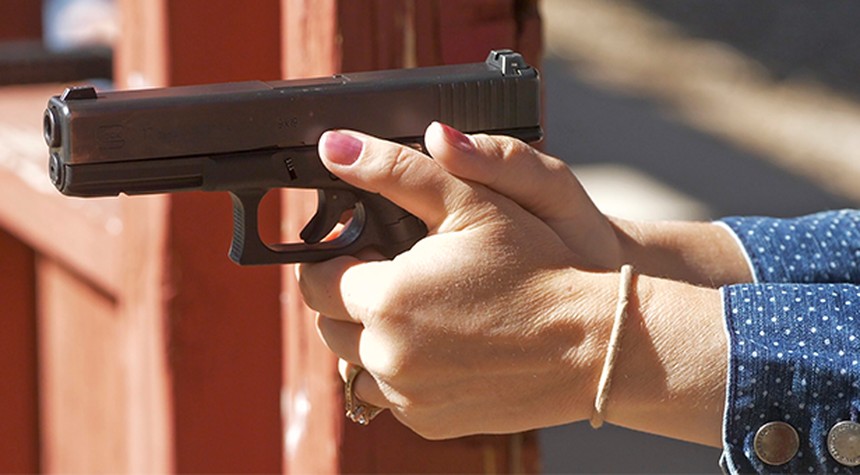
According to authorities, the woman in question had just picked up her pistol the day before, after waiting the 10 days required under California law between the time of purchase and when gun owners can actually take possession of their newly-bought firearm. Little did she realize that she would soon end up using the gun to fend off an attack on her husband in their own home.
A Patterson woman who had gotten a handgun just the previous day fatally shot a stranger who was grappling with her husband Saturday night at the door of their home, the Stanislaus County sheriff’s office said.
In a 911 call at 10:20 p.m., a resident of the Wilding Ranch subdivision on the city’s east edge reported that a neighbor had called and said she had just shot an intruder at her house.
When deputies arrived, they found a dead man near the home’s front entry. The residents — a 50-year-old woman and her 45-year-old husband — said that the apparently intoxicated stranger had tried to force his way into their home.
According to the sheriff’s report, as the husband fought with the intruder near the front door, his wife ran to the bedroom to get a revolver, which she said she had brought home on Friday. Returning to the entry, she fired all its rounds into the intruder.
According to authorities, 22-year old Angelo Santana tried to force entry into the home while he was “heavily intoxicated,” leading to him fighting with the 45-year old resident. Police say that, according to interviews with those who knew him, Santana had a history of alcohol abuse and would “regularly show-up unannounced trying to find friends and acquaintances of his in the same neighborhood.”
In a Facebook post, the Stanislaus County Sheriff’s Office announced that a preliminary investigation indicates the shooting was “strictly self-defense,” and while the investigation continues the details that the sheriff has released publicly appear to back up the woman’s claim that she was acting to protect her husband and herself from a combative stranger.
The house belonged to 50-year-old Yuhui Zheng and her husband, 45-year-old Yang Luan. The husband attempted to physically restrain Santana and was involved in a significant fight near the threshold of the front-door.Luan sustained minimal physical injuries, to include abrasions and scratches to the back, while fighting with Santana and trying to defend his home. Yuhui Zheng retrieved a revolver from the upstairs bedroom, which she had acquired only one-day prior, and in self-defense of her husband, fired all rounds into Angelo Santana.
Santana wasn’t armed, but neither Zheng nor Luan knew that at the time. All they knew for sure is that a strange man was trying to get inside their home and began attacking Luan as he tried to keep the would-be intruder at bay. I’d say that they had a reasonable fear that the stranger was trying to do them harm, but we’ll have to wait and see what the D.A. in Stanislaus County decides to do with the case.