Category: California
The BIG San Diego Gun Show
The The BIG San Diego Gun Show will be held on Jun 3rd-4th, 2023 in San Diego, CA. This San Diego gun show is held at East San Diego Masonic Lodge
————————————————————————————-
Now for the BAD News
In that I just came back from the San Diego Gun Show in East San Diego with the Boss. Who had a great time down there by the way as Dago is a really nice town.
But I digress. Here is what I saw while there at around 14:00 today. A grand total of about 20 guns for sale there. The rest of it was basically a really nice knife show. So care to guess which “show” this old fart and his money is NOT ever going to again ? One guess only Gang by the way
Grumpy
PS I guess that the age of going to a decent Gun Show & having some fun with old /new friends in the formerly Golden State is gone for good!
So Thanks Sacramento for a job that was REALLY well done & close to your heart! (Sacramento’s mantra is I swear “Somebody out there is somehow having fun & or making money. SO we gotta stop it by all means fair or foul!”)
by Victor Davis Hanson
A sign of a civilization in headlong decline is its embrace of absurdities. Unfortunately for the United States, we are witnessing an epidemic of nihilist nonsense. Here are a few examples:
Reparations
How could a dysfunctional state like California even contemplate $800 billion in reparations?
The state currently faces a $31 billion annual deficit—and it’s climbing. The state’s $100 billion high-speed rail project is inert, a veritable Stonehenge of concrete monoliths without a foot of track laid down.
California’s income tax rates are already the highest in the nation. Its sales taxes, electricity rates, and gas taxes and prices are among the steepest in the country. And for what?
Crime, homelessness, and medieval decay characterize the once great downtowns of San Francisco and Los Angeles. It is now not safe to walk alone in any major California city after dark.
Shoplifting and smash-and-grab theft are no longer treated as real crimes. The result is the mass flight of brand stores from our downtowns and inner cities, with all the accustomed cries of “racism,” even as racist public prosecutors pick and choose whether to indict the arrested on the basis of race.
California infrastructure, once the best in the county, is now among the worst. Decaying and crowded freeways, inadequate water storage, and pot-holed streets are the new norm. Once robust gas, oil, mining, and timber industries are nearly inert.
The state’s public schools are dysfunctional. Once premier public universities are spiraling headlong into decline—junking scholastic tests for admissions, using illegal racial quotas to warp admissions, and institutionalizing racialized dorms and graduation ceremonies.
Even if California enjoyed a huge surplus, even if 300,000 residents were not fleeing the state each year, even if California had a history of being a Confederate slave state, even if whites were the majority of the population, even if the black population was greater than its present 5-6 percent, it would be insane for the state to even contemplate racial reparations.
Twenty-seven percent of the state’s residents were born outside of the United States, and have no American ancestors. The state is the most racially diverse in America, and one in which every group could, in theory, lodge complaints against the dead of the past. Mexican-Americans, Armenians, Asians, and the descendants of the impoverished “Okie” diaspora could all cite legacies of bias—but from whom exactly? The long dead?
For those of increasingly mixed heritage—about a quarter of the state—did their own ancestors oppress their own ancestors? Are all blacks sure that eight generations ago their individual ancestors were slaves outside of California, and therefore they have monetary grievances against those in the state whose ancestors eight generations ago might have owned slaves outside of California? And can such writs be documented?
Do we really wish to go down this path of destroying individuality and insisting that superficial appearance damns us to a collective rooted in the past?
If so, are we to tally up the half-century role of racial quotas to calibrate all the impoverished whites of the last 50 years who were discriminated against in admissions and hiring? Have there not been existing reparations from the decades-long implementations of racial preferences and exemptions—or perhaps in some $20 trillion dollars in reparatory transferences during a half-century of Great Society entitlements?
If we are collectives and not individuals anymore, are all of us to be judged by adding up our group’s historical and current pluses and minuses?
If so, do we add or subtract reparatory charges based on group data? If one race is vastly overrepresented in hate crimes or interracial crime statistics, and other groups vastly underrepresented as perpetrators, is it the role of the state now to intervene and provide reparatory and collective “equity” from one collective for the relatives of the victims of another collective?
Are we really convinced that past institutional racial bias is all-determinative of present opportunity? If so, why do Asians nationally as a collective on average earn $20,000 a year more than non-Hispanic whites—despite past exclusionary immigration laws, forced government relocations, and zoning prohibitions? Was there some unknown university study that postulated that the Japanese-internment or early 20th century Yellow Peril exclusionary immigration statutes were irrelevant to Asian-American upward mobility?
Inequality Under the Laws
Ideology now has made a mockery of the cherished traditions of blind justice and equality under the laws. Whether you are arrested, indicted, and convicted increasingly hinges on your politics.
During the 120 days of 2020 riots, looting, arson, and assault that saw $2 billion in damage, 35-40 killed, hundreds of injured police officers, and 14,000 arrests, were there mass detentions, thousands of convictions, and lengthy sentences handed out to Antifa and BLM members for the violence? After all, the insurrectionary rioters staged iconic attacks on the idea of government, whether defined as torching a police precinct or federal courthouse.
Why then were so many protestors of January 6 demonstrations at the Capitol that saw no violent deaths at the hands of another—except a Trump supporter lethally shot for the misdemeanor of entering a broken window of the Capitol—given lengthy prison sentences?
George Floyd—a 6’4”, 223 pound black career violent felon, arrested while suspected of passing counterfeit money, serially high on dangerous drugs, resisting arrest—was choked into unconsciousness while resisting arrest by a reckless white police officer.
Floyd was canonized as an American hero, often portrayed with halo and angelic wings.
The officer was convicted of second-degree murder and is serving combined state and federal prison sentence of over 40 years.
A white Ashli Babbitt, 5’2”, 113 pounds, a 14-year military veteran, and, like Floyd, unarmed, was lethally shot for the crime of entering a broken window in the Capitol by a black policeman.
Postmortem, her life was smeared and slandered, her shooter canonized. Was Babbitt some sinner, Floyd a saint? The choker officer Chauvin a Satan, the lethal shooter cop Byrd godly? The petite Babbitt a mortal danger stopped only by a bullet, the huge and uncooperative Floyd supposedly easy to arrest with no need of force?
Why were the downtowns of Washington, D.C. and Seattle simply hijacked and expropriated by violent groups with impunity, while federal troops were forbidden to assist overtaxed local law enforcement? Was that not in stark contrast to the barbed wire, 20,000 soldiers and barricades that marked Washington for weeks after the Capitol demonstrations?
Why was there not to be a 2020 riot congressional commission to investigate the deaths and destruction caused by groups who crossed state lines to plan and orchestrate the violence, often weaving their conspiracies with the aid of social media?
Nullification
Did we not fight a Civil War to reestablish that states and locales could not ignore federal laws?
Why did 550 local and state jurisdictions, in old Confederate South Carolina style, declare with impunity that federal immigration law did not apply in their territories? Does the Left now believe in such neo-Confederate principles? Would it applaud counties that rendered federal endangered species, or handgun-control statutes null and void in their jurisdictions?
Or do we now declare some nullifications good and others bad, depending on our own politics?
How did the Biden Administration simply suspend all immigration law to greenlight 6-7 million illegal entries across the southern border since January 2021? Did Biden not take an oath to execute our laws faithfully?
Does any president now have the right to order the executive branch not to execute entire bodies of federal law? Will the next president declare entire sections of EPA statutes inert by de facto nonenforcement to appease a particular political base?
At any time, did Joe Biden send a bill to Congress requesting that anyone can now cross U.S. borders without identification and legal sanction?
So do citizens fly into JFK or LAX from foreign countries and simply announce that they either forgot their passports or never obtained them? And as a reward for lack of an ID or legal permission, are they still allowed into the United States and given a free phone, and a free hotel room? Do we have one set of laws for citizens, and another for non-citizens? And if so, why?
Rogue Agencies
How can a former FBI director under oath claim amnesia or ignorance 245 times during congressional testimony, or leak a classified account of a private conversation with a president with complete impunity, as did James Comey?
How can an FBI director, as did Andrew McCabe, lie on four occasions with impunity to federal investigators? Is it now the case that FBI directors at times must lie and deceive as part of their job descriptions?
How can a former FBI director, as in the case of Robert Mueller, with all seriousness deny under oath any knowledge of Fusion GPS or the Steele dossier, whose controversies prompted his own special counsel appointment? Can citizens tell inquisitive IRS auditors that they have no memory of deductions in question?
Why is there still an FBI after it has been confessed that it paid a foreign national, Christopher Steele, to compile dirt against a presidential candidate—and paid his source in Washington to provide Steele with false information to impugn a presidential candidate? How did the FBI manage to play a central role in both the 2016 and 2020 elections in efforts to alter the result?
How can a legitimate FBI knowingly submit such information that it knew was false to a federal judge to spy on an American citizen to further a farcical plot to destroy a presidential campaign?
So what will the FBI not do? Forge documents? Offer in vain $1 million to a foreign national to verify just one fact in a fake, bought dossier used to obtain a FISA warrant? Disappear cell phone data under subpoena?
Have high-ranking officials promise that a presidential candidate will never be elected? Infiltrate Latin-Mass Catholic Church services and school board meetings to monitor the activities of church-goers and parents in attendance?
Use armed performance-art SWAT teams to swoop into private homes to arrest suspects accused of mostly misdemeanors? Hire out social media private companies like Twitter to suppress free expression deemed by the FBI unhelpful or problematic?
Suppress information about an FBI-confiscated Hunter Biden laptop, while keeping mum as former intelligence officers lie absurdly before a national election that the computer in FBI hands was likely the work of Russian disinformationists—to aid a presidential candidate in a debate and harm the incumbent?
Destroy the lives of any whistleblowers who expose such miscreant behavior to Congress?
Printing Money
The journalist/historian Paul Johnson famously once wrote that the tripartite duty of any government leadership was “to ensure external security, internal order and maintenance of an honest currency.”
We certainly do not maintain an honest currency by borrowing 130 percent of annual GDP, with a looming debt of $33 trillion, an annual $1.5 trillion-plus budget deficit, and a 2022 annualized 6.5 percent inflation rate.
But statistics mask the real problem, which is a mentality of suicidal spending passed off as juvenile “modern monetary theory.” Unlimited borrowing as a “theory” is the academic idiocy that some socialist hare-brained professors dreamed up to excuse printing money we do not have.
Both parties have run up the debt. Yet the culpability mounts as each successive president adds to the crushing debt, in fear that on his watch the medicine of restraint will be worse than the disease of insolvency.
Note how casually the federal government burns through billions of dollars. We still have no idea how many billions of dollars in arms and equipment the military shrugged away in Kabul. Who cares anyway whether the terrorist Taliban is becoming one of the largest dispensers of U.S. taxpayers’ weaponry?
Currently, Joe Biden lies that by not spending allotted money he somehow is the greatest deficit hawk in memory, as he rams through a $1.5 trillion 2023 budget deficit.
The top federal income tax rate is 37 percent. In California, to take the example of our largest state, the top state bracket is 13.3 percent. Income subject to federal payroll taxes is 15.3 percent for the self-employed—and income subject to that crushing take is a whopping $160,200.
The above taxes are well aside from capital gains taxes, sales taxes, property taxes, and fuel taxes, which, along with income taxes, can easily take 50-60 percent of one’s middle-class income. Note that the government not only does not appreciate the crushing extractions but targets for auditing those who pay at that rate. And all this tax revenue leads to what? Multitrillion-dollar budget deficits and unsustainable national debt.
Adding insult to injury, our current White House occupant, Mr. “Ten-Percent”/ “The Big Guy” Joe Biden demagogues as “greedy” anyone who resents the wastage of federal spending after handing over half his income to the government. Yet did the Bidens report all their past foreign income and pay at that rate? Could Joe have ensured that his son first paid all he owed to the IRS before he smeared other Americans as not paying their fair shares?
A sane country would immediately reboot and update the old Simpson-Bowles reduction and simplification of taxes and spending proposals that would gradually work our way toward a balanced budget—and maybe, in a century, pay off what we have borrowed. But we know that is impossible since we would hear ad nauseam that such fiscal integrity was racist, heartless, and cruel.
So we will keep up borrowing and printing bread-and-circus money until, like the late fourth-century polis, or late imperial Rome, there is finally no money for the upkeep of infrastructure, domestic law and order, and deterrence against foreign enemies.
Then what cannot go on, will not go on and all the absurdities of the present will end with a bang not a whimper.
– – –
Victor Davis Hanson is a distinguished fellow of the Center for American Greatness and the Martin and Illie Anderson Senior Fellow at Stanford University’s Hoover Institution. He is an American military historian, columnist, a former classics professor, and scholar of ancient warfare.
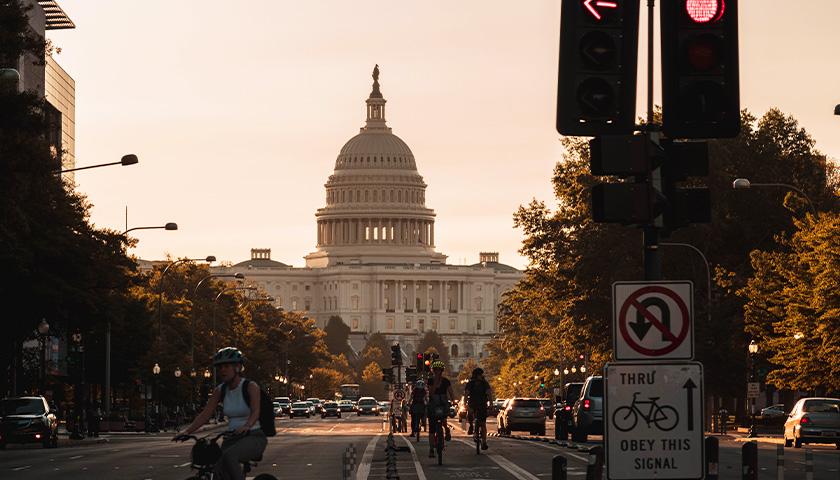
Photo “United States Capitol” by Andy Feliciotti.
———————————————————————————– Hey he didnt not mention the great weather & lack of humidiy!! Just kidding, so enjoy the decline is all that I can say. That & keep your ammo dry and your stash of food secret! Grumpy, who is behind enemy lines here in the peoples republic of California.
California outsources its toxic waste

California likes to pat itself on the back for being a leader in protecting the environment.
Every year, California workers dig up hundreds of thousands of tons of soil contaminated with things like lead, petroleum hydrocarbons and chemicals like DDT. The waste is so toxic, California considers it to be hazardous and requires that it be disposed of at a facility specially designed to handle such dangerous material.
Or, at least, that would be the requirement if the waste stayed in California. It often doesn’t.
A CalMatters investigation found that, for decades, California businesses and government agencies have taken hazardous waste over the border and dumped it at regular landfills in states with weaker environmental regulations.
Among the findings:
- Much of the waste is going to landfills in Arizona and Utah with fewer safeguards and less oversight than permitted hazardous waste disposal facilities.
- Two of the most popular destinations are next to Native American reservations. One of those landfills has a spotty environmental history, Arizona records show.
- One of the biggest out-of-state dumpers is the state’s own Department of Toxic Substances Control which, since 2018, took more than 105,000 tons of lead-contaminated soil from the area around the Exide cleanup in Los Angeles County and disposed of it in Arizona. Most went to a landfill that Arizona regulators labeled in 2021 an “imminent and substantial threat.”
CalMatters reporter Robert Lewis and photo editor Miguel Gutierrez traveled to Arizona and Utah, documenting where much of the Golden State’s toxic waste ends up. The Department of Toxic Substances Control said its decision to take the waste to Arizona is driven by cost and acknowledged the agency doesn’t really know how the out-of-state landfills are managed. Gov. Gavin Newsom’s office wouldn’t comment.
David Harper, a member of the Colorado River Indian Tribes, questioned why the Golden State would dump its toxic waste so close to the reservation, which straddles the border between California and Arizona.
- Harper: “If it was not a problem, why didn’t they keep it themselves? Why does it have to come here? Why isn’t it in California?”

 And no that is not my lovely wife! Grumpy

Categories
CALIFORNIA DREAMING By Aristophanes
“Best way to live in California is to be from somewhere else.”
— Cormac McCarthy, No Country for Old Men
The beacon of hope that used to be California is now a fading memory. Once the state symbolized the American Dream and prosperity, with classic cars cruising along Muscle Beach and Hollywood glamour drawing talent and beauty from everywhere: today it is a shadow of its former self, drowning in struggle and decline. As a native Californian, it breaks my heart to see my home state in such disrepair. In Texas I feel like a refugee from a country destroyed by some unimaginable disaster. The pain that I feel when I think about California’s current condition runs deep.
I grew up in the 90s in a small farming town in California’s central valley, with an economy built on peach orchards and a state university. Like many rural inland areas, our town was heavily white and conservative and struggled to cope with high taxes designed to support a large welfare class within the big cities. Those taxes enabled service industry workers to survive on low wages that couldn’t keep up with the high cost of living, but also fostered dependency.
In recent years, more people have been leaving California than arriving, a new trend for the Golden State, California has even lost a seat in the House of Representatives due to population decline, while Texas gained one. For my part, one reason I left the state almost a decade ago was because of the sense Californians were resigned to their fate. There was no fight left in the California Republican Party. Conservatives lacked either the influence or the will to wrest back control from the parasitic political consultant class who had captured the party and ran such unappealing candidates as Carly Fiorina and Meg Whitman. The party that had launched the political careers of popular candidates like Richard Nixon, Ronald Reagan, and Pete Wilson suddenly ran out of charismatic candidates. Attempts at governing through popular democracy were also stymied, with Prop 187 and Prop 8 both passing by strong margins only to be struck down later by federal judges. The last GOP majority in the state assembly was in 1994. I was just a kid back then, with no idea the golden age had come and gone.
Despite California’s decline, glimpses of its former glory can still be found. Streets, schools, and buildings in the Bay Area and Sacramento bear the names of war heroes like Dan Daly, and statues of some of the greatest Americans we’ve ever produced are tucked away in parks and streets of small-town California. Take what was once McClellan Air Force Base in Sacramento, now a business park. The Barracks have transformed into the Lions Gate Hotel, with the former Officer’s club serving as a bar, its walls adorned with pictures of the base’s history. The Squadron buildings are now cheap, asbestos-filled office space, occupied by homelessness NGOs that seem unable to do more than help the mentally ill and addicted subsist until they perish.
But just a few miles away, slumbering California can still be found. Away from the main urban arteries, American flags hang from homes, and carefully preserved classic cars are a common sight.
When I go back to California to visit the family I still have there, I’m moved by the memories of the best parts of my childhood. I’m lucky enough to remember the idyllic “old California.” Violent crimes were so rare that they were the talk of the town when they did happen. I remember 4th of July block parties, where we could still legally use our own fireworks. We would watch the massive fireworks show put on by the university and then produce one of our own. The whole street would assemble in front of a neighbor’s house, and everyone would take turns lighting off fountains and mortars for hours. Halloween enjoyed almost universal participation, and no one was afraid that it would be unsafe for kids to take to the streets in search of candy on their own. I walked to my elementary school, starting in first grade, with no fear of getting snatched up.
But in 2001, the old world came to an end for me, a little sooner than it did for most. My parents had been fighting and considering a trial separation for a few years, and my dad had fallen into a deep depression. He was prescribed the antidepressant Paxil, but 9/11 was the final nail in the coffin for him. The spark of optimism he still had preserved flickered out, and a month later he took his own life. Paxil would later face class action lawsuits over its role in driving depressed men like my dad to rock bottom. The California Dream ended for me that day, and ignited the rage I feel.
***
“They paved paradise and put up a parking lot.”
— Joni Mitchell, Big Yellow Taxi
No stretch of California evokes memories more vividly for me than the stretch of Highway 65 and Highway 70 from the northern edge of Sacramento to the mountain town of Paradise. In the summer the vast fields of haygrass resemble yarn spun from gold. Elkins Frosty, with its proud banner proclaiming the best (and only) burgers and shakes in town since 1976 recalls simpler times. Then, after the Oroville Dam, you reach the ill-fated town of Paradise.
Like many logging towns in the Northern California mountains, Paradise was devastated by the Sierra Club’s campaign to destroy the State’s logging industry in the name of conservation. With its primary industry gone, these towns sunk into economic decline. Most of the young people moved out, while drug use and petty crime increased. Eventually the economy consisted largely of retirees and the government, a situation now common to small towns across America following deindustrialization. Then, in 2018, the devastating “Camp Fire” wildfire burned Paradise to the ground, leaving only ashes and devastation in its wake.
My aunt and cousin, who had spent most of their lives in Paradise, lost their homes. Scores upon scores of homes were reduced to nothing more than concrete pads. But my great-grandmother survived. Her home was spared, and she returned as soon as she was allowed before recently passing away at the age of 92. It was her funeral that brought me back to Paradise and gave me a chance to see how the town was doing with its rebuilding efforts.
Despite the scars left by the Camp Fire, still visible on the trees that survived, Paradise has a feeling of new life to it. Slogans of solidarity and pride are scattered throughout the town: “Paradise: Rebuilding The Ridge,” “Paradise Strong,” and “Faith & Hope In Paradise.” Many of the buildings that were destroyed have been replaced with structures made of steel. There are new businesses everywhere, funded by fire insurance money and new investments. A charred metal Burger King sign without a building to go with it is all that remains of the many big corporate franchises that have yet to return. With the overgrowth swept away by the fire, enriching the soil, Paradise is an example of the cycle of destruction and rebirth that nature destines for all its creations.
***
“And home isn’t here and home isn’t there.”
— Deborah Landau, The Last Usable Hour
It is difficult to suppress the notion that the apathy towards the issues plaguing rural communities in California may be attributed to the disconnect between the political and financial power centers of the state and these areas. Over the past decade, the population of California saw a ten percent increase, with the majority of growth concentrated in urban areas. This influx has resulted in a class of urban parasites who have displaced native residents due to the growth of housing demand and have also imposed their own values and priorities upon these areas. The stereotype of the progressive middle-class “Californian” nobody wants to move into their red state was more than likely born in Pennsylvania or Ohio.
This new class has overrun the state, treating the residents as collateral damage in their search for upward mobility and acceptance within their adopted lifestyles. They have abandoned their roots, and in doing so, have turned a blind eye to the struggles of the folk that resembles their heartland kin. These problems, which closely mirror the struggles of their own families and hometowns, are now distant and insignificant to the political power that stems from the cities. As a result, there are no repercussions for neglecting to address them.
California today is at a crossroads. Will it be able to reclaim its former glory, or will it continue to decline? Time will tell. The once great state is now ravaged by poverty and corruption. The glamour of Hollywood and the prosperity of the gold rush and railroad seem like distant memories, preserved only in film. The pension obligations of its bureaucracy are in danger of going unfunded, while unions wield their power to prevent necessary changes. The Golden State is setting itself up for a catastrophic reckoning, but perhaps that is the only way it can be revived. Like an overgrown forest, California needs a firestorm to raze it, so that seeds of the future can be sown once again.