
Categories
Born again Cynic! Well I thought it was neat!

I am still waiting for mine since 1958!


I still remember from the 1960’s and the predictions of about how life would be in the 21st Century. I am sure that God is still laughing about them! Grumpy
Categories
Born again Cynic! Useful Shit Well I thought it was funny!

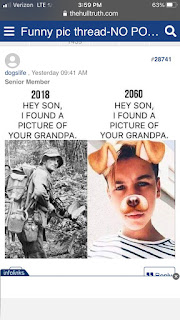
The truth about the "Good Old Days & how much tougher we were then today' Snowflakes"

Categories
Born again Cynic! Grumpy's hall of Shame

Sadly true for a lot of Families

Categories
Born again Cynic! Dear Grumpy Advice on Teaching in Today's Classroom

Same old story money talks and BS walks

This is how the banksters really think!

Categories
Born again Cynic! Cops

EXCLUSIVE: Exodus Underway as Record-Shattering Surge of Austin Police Officers Leave the Force BY BRYAN PRESTON

Image by Kate Baucherel from Pixabay
After the Austin city council voted unanimously to defund its police department by about one-third of its budget, in August 2020, many predicted that once the cuts kicked in a flood of officers would leave the force as soon as they could. The new district attorney’s policy of re-investigating police officers for closed cases is also expected to cause officers to resign or retire.

The city council’s cuts officially kicked in and have been in place for a few months.

PJ Media reports exclusively that APD is now suffering a huge surge of officer departures putting it on pace to shatter 2020’s record.

In January 2021, sources tell PJ Media 20 officers retired from APD and eight resigned, for a total of 28 departures.

In February 2021, five officers resigned and six retired, according to multiple sources, for a total of 11 departures.

In March 2021, 24 more officers left APD, with 20 officers retiring. Additionally, three officers resigned and one was terminated.

To put this into perspective, 2019 was the last non-pandemic year and the year before the city council cut APD’s budget. APD averages about 50 retirements or separations in a calendar year, and replaces them with cadets who have graduated from the police academy or officers who join APD from another force.

APD saw 46 officers retire with another 22 resigning in 2019, according to local TV news station KVUE.

2020’s numbers were exacerbated by the George Floyd riots; 78 officers departed or retired from APD from the beginning of those riots to the end of 2020, for a total of 89 separations, according to KVUE.

Official 2021 numbers provided to PJ Media by the Austin Police Retirement System (APRS) break down as follows:

    • Prior to 2020, retirements averaged 50-52 per year over the last 5-6 years
    • Record number of retirements in FY 2020: 97
    • First-quarter 2021 retirements: 45

Add to those 45 retirements the 18 resignations or terminations, for a total of 63 separations in just the first quarter of 2021. If the current pace continues, APD could lose approximately 252 officers — about five times the average number of separations for a year. This will impact public safety across the board, and according to the APRS, can impact retirees’ benefits as well. APRS raised the alarm about the impact the city council’s cuts could have in September of 2020.

March 2021’s retirements hit all over the department, including tactical intelligence, gang crimes, narcotics enforcement, investigations, and the bomb squad, according to a full list provided to PJ Media. Traffic enforcement  — both warnings and citations — has declined by more than 60% in the first two months of 2021, a source tells PJ Media.

At the same time, the city council’s cuts have forced the cancelation of police cadet classes. The department is losing experienced officers in droves and is unable to replace them with new officers.

Ken Casaday, president of the Austin Police Association, told PJ Media, “It’s extremely concerning. We’re using overtime and forcing people back to patrol just to be able to keep up with 9-1-1 calls. We fully expect to take 50 more officers off of specialized units just to keep up with patrol.”

“In Austin, Texas, the city council has fallen under the influence of hard-line anti-police activists,” Charley Wilkison, executive director of Combined Law Enforcement Associations of Texas (CLEAT), told PJ Media. “They don’t reflect the mainstream in Austin but they have been very loud.”

Wilkison described how the activists have disrupted the city’s relationship with the police department. “For the first time in modern memory, the city negotiated a contract with the police union, only to have activists storm the city council meeting and demand the contract be turned down, and it was.” Wilkison says the activists called the police every name imaginable and the city council “cratered” to them.

“Mayor Steve Adler wouldn’t be fit to hold the shoes of Austin mayors of the past,” Wilkison said. Wilkison also noted there are police defunding bills filed in the ongoing session of the Texas legislature. Those stand little chance of passage with Republicans controlling both houses and with a Republican lieutenant governor and governor.

Austin is “listening to people who want to change America and make it more like China,” Wilkison added. He warned strongly against Austin reverting to a “political police department” like it had before civil service reforms made hiring and promotion decisions based on merit rather than political patronage. “These are mistakes we don’t have to make,” he told PJ Media.

New city council member Mackenzie Kelly was not yet on the council when Mayor Steve Adler led the defunding vote. She defeated one of the most vocal proponents of the cuts in December 2020. Kelly told PJ Media “We need to look at the root causes of these officers leaving. Not just those that are eligible to retire, but also those just plain quitting.”

Noting the shocking number of officers choosing to leave, Kelly said “We are losing our most experienced officers and the community is suffering because of it.”

Austin’s homicide trend is ominous. 2019 saw 31 homicides in the city. Homicides in Austin increased in 2020 over 2019, to at least 44. Sources confirm Austin has had 21 homicides in the first quarter of 2021, putting it on pace to exceed 2020’s total by some distance. There were three shootings, including one fatality, this morning.

APD chiefs are said to be meeting this week to determine which units will be cut further in order to shore up patrols.


Sadly things are going to get very hairy in Keep Austin Weird Texas. All I can say is God help those folks down there1 grumpy

Categories
Born again Cynic! Dear Grumpy Advice on Teaching in Today's Classroom War Well I thought it was neat!

Stalin's American Air Force – Operation Frantic 1944


Supposedly quite a few GI’s with training in Communications and other high skills were kidnapped by the NKVD and then abandoned  by the brass. Quite a few German POWs that were interviewed by us. Told of seeing American Prisoners in their former Gulag’s & Prison Camps.
Also almost all the Russian Troops that worked with the Americans were imprisoned. For the “Crime” of being exposed to Western Troops and ideas. All in all this operation was just another example of the saying. Sometimes a Good Idea should stay a Good Idea. For more information look up  Operation Frantic om Wikipedia. Grumpy

Operation Frantic 1944

Categories
Born again Cynic!

I could of used this one a long time and a divorce or two ago!

Categories
Anti Civil Rights ideas & "Friends" Being a Stranger in a very Strange Land Born again Cynic! The Green Machine War

The Globular Girlboss G.I. Feminization of the military points to a deeper spiritual problem

There’s nothing more entertaining in public life these days, especially with Trump in retirement, than Tucker Carlson’s quarterly incitement of leftoid vitriol online. This week it was middle-aged generals acting like middle-school girls, after Carlson suggested on air that perhaps pregnant women are not the ideal candidate for combat roles in the military. To respond, military leaders, in uniform, published selfies on Twitter citing Carlson’s lack of military experience, the supposed unseriousness of his profession in comparison, his age, and many more peripheral, arbitrary, and mostly untrue aspects of his character and tone: anything but the actual merits of his point.

To borrow a jargony phrase from the academics who brought you the woke revolution, there’s a lot to unpack here.

First, Tucker’s broader point about the institutional feminization and relative unseriousness of the military was proven embarrassingly accurate by their own hysterical, social media-based response. How weak are the wokerati’s sacred cows, which can be slaughtered simply by pointing out their absurdity. And how venomous is the NPC vipers’ spittle-lipped “clapback.” It’s almost as if their career is built around toeing the line.

This brings us to another point: how thoroughly and successfully the lackeys of woke ideology have infiltrated the military: a historic institutional touchstone for conservatives. Any long-harbored illusions about the ideological imperviousness of the military, much like the judiciary, should be dashed by this moment. Frankly, it’s a shame that heartland boys keep joining up, imagining that whatever vestige of masculinity that remains will provide a path to honor and brotherhood, considering that the American military’s reigning ideology makes a mockery and an enemy of them. What better fodder for the endless wars than men you’d like to see dead anyway?

Finally, especially as a recently pregnant woman, the thing that strikes hardest about the entire discourse is the degree to which adult men are willing to completely ignore the fact of women and infant’s prenatal vulnerability. I’m not sure a meaningfully large contingent of our military needs a maternity flight suit, but to the extent that a woman requires such a thing, she is a delusional, malignant careerist and in a sane world would never find herself in such a position. That any one would condone the idea that a mother and child in that precarious period of both of their lives (or any part of their lives postpartum) should be anywhere near guns, helicopters, or big boom boom machines of any sort, let alone areas of the world known for rapist enemy combatants, demonstrates that there is something deeply wrong with their understanding of life itself.

We have forgotten why wars are ever fought in the first place. It’s understandable within the broader context of fighting pointless ones endlessly that America has lost the script. Lest we have forgotten completely: war is often about death for the sake of life. War is politics by other means, propelled by fear, honor, and interest, of course, but undergirding any classical definition is the fact that wars are fought so that a people can continue to exist how they please. Women, as conduits of new life in the world, have no place on the front lines of war because they are the thing—the precious, precarious, transcendentally beautiful and powerful channel for the continued existence of the species—that men will go to any lengths to preserve to ensure the honor of his legacy and his progeny. The happy warrior writes himself into the past so that his children may have a future.

Maternity flight suits are symptoms of the spiritually suicidal state. We are a nation of womanly men, mannish women, and disposable children. Those three have everything to do with one another. The culture of death marches on.


Helen Roy is a contributing editor to The American Mind and American Mindset.
Categories
All About Guns Anti Civil Rights ideas & "Friends" Born again Cynic!

And yet I am supposed to be surprised by this!?!

Categories
Anti Civil Rights ideas & "Friends" Born again Cynic! Dear Grumpy Advice on Teaching in Today's Classroom Grumpy's hall of Shame

Something that is really sad to read – Confessions of a Public Defender

Michael Smith, American Renaissance, May 9, 2014

Still liberal after all these years.
[Editor’s Note: This is just one of thirteen essays in our newly-released collection of first-hand reports about the reality of race, Face to Face with Race.]
I am a public defender in a large southern metropolitan area. Fewer than ten percent of the people in the area I serve are black but over 90 percent of my clients are black. The remaining ten percent are mainly Hispanics but there are a few whites.
I have no explanation for why this is, but crime has racial patterns. Hispanics usually commit two kinds of crime: sexual assault on children and driving under the influence. Blacks commit many violent crimes but very few sex crimes. The handful of whites I see commit all kinds of crimes. In my many years as a public defender I have represented only three Asians, and one was half black.
As a young lawyer, I believed the official story that blacks are law abiding, intelligent, family-oriented people, but are so poor they must turn to crime to survive. Actual black behavior was a shock to me.
The media invariably sugarcoat black behavior. Even the news reports of the very crimes I dealt with in court were slanted. Television news intentionally leaves out unflattering facts about the accused, and sometimes omits names that are obviously black. All this rocked my liberal, tolerant beliefs, but it took me years to set aside my illusions and accept the reality of what I see every day. I have now served thousands of blacks and their families, protecting their rights and defending them in court. What follow are my observations.
Although blacks are only a small percentage of our community, the courthouse is filled with them: the halls and gallery benches are overflowing with black defendants, families, and crime victims. Most whites with business in court arrive quietly, dress appropriately, and keep their heads down. They get in and get out–if they can–as fast as they can. For blacks, the courthouse is like a carnival. They all seem to know each other: hundreds and hundreds each day, gossiping, laughing loudly, waving, and crowding the halls.
When I am appointed to represent a client I introduce myself and explain that I am his lawyer. I explain the court process and my role in it, and I ask the client some basic questions about himself. At this stage, I can tell with great accuracy how people will react. Hispanics are extremely polite and deferential. An Hispanic will never call me by my first name and will answer my questions directly and with appropriate respect for my position. Whites are similarly respectful.
A black man will never call me Mr. Smith; I am always “Mike.” It is not unusual for a 19-year-old black to refer to me as “dog.” A black may mumble complaints about everything I say, and roll his eyes when I politely interrupt so I can continue with my explanation. Also, everything I say to blacks must be at about the third-grade level. If I slip and use adult language, they get angry because they think I am flaunting my superiority.
At the early stages of a case, I explain the process to my clients. I often do not yet have the information in the police reports. Blacks are unable to understand that I do not yet have answers to all of their questions, but that I will by a certain date. They live in the here and the now and are unable to wait for anything. Usually, by the second meeting with the client I have most of the police reports and understand their case.
Unlike people of other races, blacks never see their lawyer as someone who is there to help them. I am a part of the system against which they are waging war. They often explode with anger at me and are quick to blame me for anything that goes wrong in their case.
Black men often try to trip me up and challenge my knowledge of the law or the facts of the case. I appreciate sincere questions about the elements of the offense or the sentencing guidelines, but blacks ask questions to test me. Unfortunately, they are almost always wrong in their reading, or understanding, of the law, and this can cause friction. I may repeatedly explain the law, and provide copies of the statute showing, for example, why my client must serve six years if convicted, but he continues to believe that a hand-written note from his “cellie” is controlling law.
The risks of trial
The Constitution allows a defendant to make three crucial decisions in his case. He decides whether to plea guilty or not guilty. He decides whether to have a bench trial or a jury trial. He decides whether he will testify or whether he will remain silent. A client who insists on testifying is almost always making a terrible mistake, but I cannot stop him.
Most blacks are unable to speak English well. They cannot conjugate verbs. They have a poor grasp of verb tenses. They have a limited vocabulary. They cannot speak without swearing. They often become hostile on the stand. Many, when they testify, show a complete lack of empathy and are unable to conceal a morality based on the satisfaction of immediate, base needs. This is a disaster, especially in a jury trial. Most jurors are white, and are appalled by the demeanor of uneducated, criminal blacks.
Prosecutors are delighted when a black defendant takes the stand. It is like shooting fish in a barrel. However, the defense usually gets to cross-examine the black victim, who is likely to make just as bad an impression on the stand as the defendant. This is an invaluable gift to the defense, because jurors may not convict a defendant—even if they think he is guilty—if they dislike the victim even more than they dislike the defendant.
Most criminal cases do not go to trial. Often the evidence against the accused is overwhelming, and the chances of conviction are high. The defendant is better off with a plea bargain: pleading guilty to a lesser charge and getting a lighter sentence.
The decision to plea to a lesser charge turns on the strength of the evidence. When blacks ask the ultimate question—”Will we win at trial?”—I tell them I cannot know, but I then describe the strengths and weaknesses of our case. The weaknesses are usually obvious: There are five eyewitnesses against you. Or, you made a confession to both the detective and your grandmother. They found you in possession of a pink cell phone with a case that has rhinestones spelling the name of the victim of the robbery. There is a video of the murderer wearing the same shirt you were wearing when you were arrested, which has the words “In Da Houz” on the back, not to mention you have the same “RIP Pookie 7/4/12” tattoo on your neck as the man in the video. Etc.
If you tell a black man that the evidence is very harmful to his case, he will blame you. “You ain’t workin’ fo’ me.” “It like you workin’ with da State.” Every public defender hears this. The more you try to explain the evidence to a black man, the angrier he gets. It is my firm belief many blacks are unable to discuss the evidence against them rationally because they cannot view things from the perspective of others. They simply cannot understand how the facts in the case will appear to a jury.
This inability to see things from someone else’s perspective helps explain why there are so many black criminals. They do not understand the pain they are inflicting on others. One of my robbery clients is a good example. He and two co-defendants walked into a small store run by two young women. All three men were wearing masks. They drew handguns and ordered the women into a back room. One man beat a girl with his gun. The second man stood over the second girl while the third man emptied the cash register. All of this was on video.
My client was the one who beat the girl. When he asked me, “What are our chances at trial?” I said, “Not so good.” He immediately got angry, raised his voice, and accused me of working with the prosecution. I asked him how he thought a jury would react to the video. “They don’t care,” he said. I told him the jury would probably feel deeply sympathetic towards these two women and would be angry at him because of how he treated them. I asked him whether he felt bad for the women he had beaten and terrorized. He told me what I suspected—what too many blacks say about the suffering of others: “What do I care? She ain’t me. She ain’t kin. Don’t even know her.”
No fathers
As a public defender, I have learned many things about people. One is that defendants do not have fathers. If a black even knows the name of his father, he knows of him only as a shadowy person with whom he has absolutely no ties. When a client is sentenced, I often beg for mercy on the grounds that the defendant did not have a father and never had a chance in life. I have often tracked down the man’s father–in jail–and have brought him to the sentencing hearing to testify that he never knew his son and never lifted a finger to help him. Often, this is the first time my client has ever met his father. These meetings are utterly unemotional.
Many black defendants don’t even have mothers who care about them. Many are raised by grandmothers after the state removes the children from an incompetent teenaged mother. Many of these mothers and grandmothers are mentally unstable, and are completely disconnected from the realities they face in court and in life. A 47-year-old grandmother will deny that her grandson has gang ties even though his forehead is tattooed with a gang sign or slogan. When I point this out in as kind and understanding way as I can, she screams at me. When black women start screaming, they invoke the name of Jesus and shout swear words in the same breath.
Black women have great faith in God, but they have a twisted understanding of His role. They do not pray for strength or courage. They pray for results: the satisfaction of immediate needs. One of my clients was a black woman who prayed in a circle with her accomplices for God’s protection from the police before they would set out to commit a robbery.
The mothers and grandmothers pray in the hallways–not for justice, but for acquittal. When I explain that the evidence that their beloved child murdered the shop keeper is overwhelming, and that he should accept the very fair plea bargain I have negotiated, they will tell me that he is going to trial and will “ride with the Lord.” They tell me they speak to God every day and He assures them that the young man will be acquitted.
The mothers and grandmothers do not seem to be able to imagine and understand the consequences of going to trial and losing. Some–and this is a shocking reality it took me a long time to grasp–don’t really care what happens to the client, but want to make it look as though they care. This means pounding their chests in righteous indignation, and insisting on going to trial despite terrible evidence. They refuse to listen to the one person–me–who has the knowledge to make the best recommendation. These people soon lose interest in the case, and stop showing up after about the third or fourth court date. It is then easier for me to convince the client to act in his own best interests and accept a plea agreement.
Part of the problem is that underclass black women begin having babies at age 15. They continue to have babies, with different black men, until they have had five or six. These women do not go to school. They do not work. They are not ashamed to live on public money. They plan their entire lives around the expectation that they will always get free money and never have to work. I do not see this among whites, Hispanics, or any other people.
The black men who become my clients also do not work. They get social security disability payments for a mental defect or for a vague and invisible physical ailment. They do not pay for anything: not for housing (Grandma lives on welfare and he lives with her), not for food (Grandma and the baby-momma share with him), and not for child support. When I learn that my 19-year-old defendant does not work or go to school, I ask, “What do you do all day?” He smiles. “You know, just chill.” These men live in a culture with no expectations, no demands, and no shame.
If you tell a black to dress properly for trial, and don’t give specific instructions, he will arrive in wildly inappropriate clothes. I represented a woman who was on trial for drugs; she wore a baseball cap with a marijuana leaf embroidered on it. I represented a man who wore a shirt that read “rules are for suckers” to his probation hearing. Our office provides suits, shirts, ties, and dresses for clients to wear for jury trials. Often, it takes a whole team of lawyers to persuade a black to wear a shirt and tie instead of gang colors.
From time to time the media report that although blacks are 12 percent of the population they are 40 percent of the prison population. This is supposed to be an outrage that results from unfair treatment by the criminal justice system. What the media only hint at is another staggering reality: recidivism. Black men are arrested and convicted over and over. It is typical for a black man to have five felony convictions before the age of 30. This kind of record is rare among whites and Hispanics, and probably even rarer among Asians.

StatsSource: Bureau of Justice Statistics.

At one time our office was looking for a motto that defined our philosophy. Someone joked that it should be: “Doesn’t everyone deserve an eleventh chance?”
I am a liberal. I believe that those of us who are able to produce abundance have a moral duty to provide basic food, shelter, and medical care for those who cannot care for themselves. I believe we have this duty even to those who can care for themselves but don’t. This world view requires compassion and a willingness to act on it.
My experience has taught me that we live in a nation in which a jury is more likely to convict a black defendant who has committed a crime against a white. Even the dullest of blacks know this. There would be a lot more black-on-white crime if this were not the case.
However, my experience has also taught me that blacks are different by almost any measure to all other people. They cannot reason as well. They cannot communicate as well. They cannot control their impulses as well. They are a threat to all who cross their paths, black and non-black alike.
I do not know the solution to this problem. I do know that it is wrong to deceive the public. Whatever solutions we seek should be based on the truth rather than what we would prefer was the truth. As for myself, I will continue do my duty to protect the rights of all who need me.