
Category: Anti Civil Rights ideas & “Friends”

Should Gun Owners Fear The Deep State?
by James Bovard – Friday, August 10, 2018

President Donald Trump and his opponents have loudly wrangled in recent months about whether a “deep state” is out to get the president. The term “deep state” commonly refers to the officials who secretly wield power permanently in Washington, often in federal agencies with vast sway and little accountability. According to a March poll, 74 percent of Americans believe that a deep state probably exists.
Unfortunately, the deep state could increasingly focus on gun owners in the coming years. The number of Americans who are violating firearm laws and regulations is increasing by tens or hundreds of thousands almost every year. This is not the result of a violent crime wave, but because politicians are continually criminalizing the possession of items that were previously legally owned.
Five years ago, the Connecticut legislature decreed that all owners of so-called “assault weapons” (which included any semi-automatic rifle with a pistol grip) must register their firearms. Perhaps as few as 15 percent of gun owners bothered to comply with the new law—meaning that Connecticut had up to 100,000 “criminals” living within its border. A 2016 Albany Times Union editorial lamented that 96 percent of roughly 1 million New Yorkers who owned so-called “assault weapons” failed to comply with registration requirements. California gun bans have been met with similar, massive non-compliance. Undeterred, local governments have begun jumping on the bandwagon. Deerfield, Ill., recently decreed a $1,000-a-day penalty on anyone who fails to surrender or disable their semi-automatic firearms with cosmetic features that frighten politicians and editorial writers.
While such laws were made by elected officials, it is unelected bureaucrats who are largely left in charge of enforcement, and that can cause big problems for gun owners. Just before press time for this issue, it was reported that a California farmer who was simply trying to meet the state’s ever-changing restrictive gun laws by registering his rifle is being charged with 12 felonies after the state DOJ determined his AR-15 to be “illegally modified.” That determination served as grounds for the agency to raid the man’s home and confiscate 12 firearms, 230 rounds of ammunition and two suppressors. He was later released on $150,000 bond, and at press time the case was still pending.
In addition to such state actions, there is a growing clamor on Capitol Hill to impose a nationwide ban on AR-15s and other semi-automatic firearms. If that happens, most gun owners are unlikely to surrender their prized possessions in response to a D.C. dictate. As a result, millions of Americans could technically become felons overnight for refusing to obey what they consider an unjust law.
The deep state’s surveillance and investigative powers make it far easier to target firearm-ban scofflaws than in earlier times. Anti-gun sentiment will seek to legitimize any surveillance or enforcement efforts carried out by federal agencies. At a time when politicians are shamelessly comparing the National Rifle Association to a terrorist organization, gun owners may face much wider assaults on their rights and privacy than have previously occurred.
Institutionalized Anti-Gun Conniving
Politicians have long relied on the secrecy of deep-state agencies to carry out campaigns intended to undermine the Second Amendment. After the 2014 showdown at a Nevada ranch, the FBI created a bogus independent film crew that spent a year hounding and videotaping the Bundy family and their supporters to gin up federal charges. Last January, a federal judge dismissed the case against the Bundys, in part because of pervasive FBI lying (including three years of denials that an FBI sniper team was deployed near the Bundys’ home). But the FBIsuffered no penalty, and there is no reason to expect the agency will not try the phony film crew gambit again.
The deep state has more levers than most Americans recognize. Because Congress has designated more than 4,000 criminal offenses and federal regulatory agencies have greatly expanded these through interpretation and rulemaking, bureaucracies have vast discretion to target whom they please. In 2012, the Obama administration launched Operation Choke Point, supposedly to “choke” illegal businesses’ access to financial services. The Justice Department and the Federal Deposit Insurance Corporation (FDIC) targeted firearm dealers, resulting in legitimate businesses having their assets frozen based on mere suspicion that they had failed to complete federal background checks on purchasers.
Emails from FDIC officials showed they were “scheming to influence banks’ decisions on who to do business … [to ensure] banks ‘get the message’ about the businesses the regulators don’t like, and pressuring banks to cut credit or close those accounts, effectively discouraging entire industries,” according to an analysis published by The Daily Signal. FDIC Chairman Martin Gruenberg testified to Congress in 2015 that “bank examiners had misinterpreted regulatory guidance to suggest that entire categories of businesses [including firearm dealers] should be barred from traditional banking services,” The Hill reported. Rep. Sean Duffy, R-Wis., complained that fdic officials were “weaponizing government to meet their ideological beliefs.” Operation Choke Point has been terminated, but legions of laws and regulations that could permit federal agencies to deny due process to any business that politicians dislike remain on the books.
Second Amendment As Subversion?
Some gun owners might assume that their patriotism exempts them from mistrust by government officials. But Second Amendment advocates have been vilified thanks to the 70-plus Fusion Centers bankrolled by the Department of Homeland Security (DHS), purportedly to track terrorist threats. To justify their existence, Fusion Centers concoct expansive definitions of suspicious activities. They have attached the “extremist” or potential terrorist tag to gun rights activists; individuals and groups “rejecting federal ice authority in favor of state or local authority” (even though many of the Founding Fathers shared the same creed); and people who were “reverent of individual liberty.”
Federal agencies or federally funded organizations have also declared that individuals can be considered dangerous extremists for “stockpiling” ammunition, displaying the Gadsden (Don’t Tread on Me) flag, asserting a “right to keep and bear arms,” having a “Know Your Rights or Lose Them” bumper sticker, or visiting online “extremist websites/blogs.” Some of those definitions seem designed to cause people to burst out laughing at their absurdity. But the fact that politicians are seeking to use catch-all notions of “suspicious” activity to disarm peaceful Americans is not funny.
Two years ago, Democratic senators conducted a filibuster in favor of prohibiting anyone on a terrorist watch list (which together now include 1.5 million names) from buying guns. “We’re just asking for terrorists not to be able to walk into a gun shop and buy a gun,” Rep. Sheila Jackson Lee, D-Texas, declared.
The fact that the lists contain the names of vast numbers of people who are not terrorists was irrelevant to anti-gun politicians. Names can be added to those watch lists based on the scantest evidence—or even no evidence at all. Obama administration officials boosted tenfold the number of people included on the so-called no-fly list, which was so slipshod that it repeatedly blocked the late Sen. Ted Kennedy, D–Mass., and Rep. John Lewis, D–Ga., from traveling. Once someone’s name was added to that list, he was left in bureaucratic purgatory and had to fight for years to even learn why he was on the list to begin with. Even a Los Angeles Times editorial opposed the “no fly, no buy” ban, declaring that owning a gun “is a recognized right, and we find it dangerous ground to let the government restrict the exercise of a right based on a mere suspicion.” But when anti-freedom politicians want to disarm Americans, “mere suspicion” is apparently sufficient.
Federally Funded Vacuum Cleaners
The proliferation of anti-gun laws and regulations in recent years has strewn the nation with tripwires for firearm owners. DHS has given local and state governments more than $50 million to purchase license plate readers for police cars. John Filippidis was driving with his family through Maryland when he was pulled over by a Maryland transportation policeman outside a Baltimore tunnel. The policeman ordered Filippidis out of his car and angrily demanded to know where his gun was. Filippidis has a Right-to-Carry (RTC) permit from Florida—where he had left his firearm. Police spent hours questioning him and searching his minivan before permitting him to move on, leaving his wife and daughters utterly distraught. Maryland police have targeted and rigorously searched other out-of-state drivers with RTC permits (which Maryland does not recognize). Federal grants enabled Maryland to equip hundreds of police cars with license plate scanners that create almost 100 million records per year detailing exactly where and when each vehicle travels.
License plate readers are also being used to create federal records of individuals who attend gun shows. The Wall Street Journal revealed in 2016 that Immigration and Customs Enforcement (ICE) arranged for local police to scan license plates of attendees at a southern California gun show. ice officials told the Journal that ice “has no written policy on its use of license plate readers and could engage in similar surveillance in the future.” A 2015 ACLU investigation concluded that Drug Enforcement Administration (DEA) and ATF also used license plate readers to round up information about gun show attendees. If you have attended gun shows in recent years, that information could be on a federal dossier. More importantly, that fact might be used by law enforcement to justify further investigation of you.
Depressed And Disarmed
At the local and state level, gun owners can be imperiled by deep state-style mandatory reporting requirements spurred by politicians who seek pretexts to disarm as many citizens as possible. After railroading a prohibitive gun bill through the state legislature in 2013, New York Gov. Andrew Cuomo declared: “People who have mental health issues should not have guns. They could hurt themselves, they could hurt other people.” But tens of millions of Americans visit therapists each year, and “mental health issues” is vague enough for lots of political mischief.
More than 85,000 individuals have lost their Second Amendment rights as a result of the law. As columnist Jacob Sullum observed, the “law effectively gives ‘mental health professionals’ the power to disarm people, and they do not even need a judge’s approval.” New York University law professor James Jacobs observed that, “based on as little as a single short emergency room interview,” an individual “need not even be notified that his or her name has been added to a database of persons whose firearm license must be revoked and whose firearms must be surrendered.”
One of the first victims of the law was a librarian who was forced to surrender his firearms to local law enforcement, in part, because he (like millions of other Americans) had received a prescription for Xanax. A New York City public radio station reported the case of “a retired police officer who went to a Long Island hospital complaining of insomnia. A week later sheriff’s deputies confiscated his guns.”
The law intended for county health officials to vet the recommendations that nurses, social workers and others made for disarmament, but the vague standards produced a tidal wave of notifications. As a result, county health officials effectively become “clerical workers, rubber-stamping the decisions,” The New York Times reported. Now, some anti-gun activists consider the New York law a model for imitation in other states or at the federal level.
A nationwide attempted “mental health” gun grab occurred in the final weeks of the Obama administration. Under spurring from the White House, the Social Security Administration ruled that up to 75,000 disability recipients a year who were labeled “mental defectives” would be forced to surrender their firearms. Tens of thousands of Americans filed comments protesting the new regulations, and the Social Security Administration denied that it was implying “a connection between mental illness and a propensity for violence, particularly gun violence.”
The new regulation was bizarrely overbroad. As U.S. Sen. Charles Grassley, R-Iowa, pointed out, “The disorders list [for banning gun ownership] included eating disorders and other disorders that merely impact sleep or caused restlessness or even ‘feelings of inadequacy,’ illustrating that the regulation was not limited to people with serious mental disorders that caused them to be dangerous.” The rules turned the Bill of Rights upside down. Individuals targeted for gun bans would have received no hearing to prove they should not be disarmed. Instead, as NRA-ILA observed, “The rule forces affected beneficiaries to file a petition for ‘restoration’ of rights and to somehow prove their possession of firearms would not harm public safety or the public interest.”
Even the American Civil Liberties Union opposed the new mandate, asserting that it “reinforces the harmful stereotype that people with mental disabilities, a vast and diverse group of citizens, are violent.” Congress and the Trump administration speedily overturned the new rule last year. But the fact that such a policy was even promulgated is a bellwether of future attacks on the Second Amendment.
Fading Legality And Rising Surveillance
Gun owners who are confident that they will have no problems with the authorities should recognize how quickly government officials can shift the lines defining licit and illicit conduct.
As more gun bans are enacted at the state, local and, potentially, federal level, the number of violators who refuse to surrender their firearms will likely skyrocket. Widespread non-compliance would provide a pretext for demagogic politicians to proclaim an emergency that justifies destroying the privacy of gun owners across the board. How bad could it get? The feds could even commandeer living room and bedroom conversations that are continually captured and uploaded to the internet by Amazon Alexa or Google Home devices. Last year, Amazon gave Arkansas prosecutors Alexa recordings automatically made in the home of a murder suspect.
Some gun owners believe the deep state poses no peril to them because they are entitled to due process, a presumption of innocence and other constitutional rights. But such assurances can quickly become mirages when many politicians portray every privately owned firearm as a massacre in waiting. Many liberals will champion any “show us the gun and we’ll find a crime” crackdown.
“Those who have nothing to hide, have nothing to fear” is an old saying designed to breed docility. But gun owners can afford to accept this adage less now than ever before. The deep state stands ready to exploit the rising tide of laws that turn gun owners into criminals who can be destroyed for political and bureaucratic profit.
James Bovard is a usa Today columnist, a frequent contributor to The Hill and other publications, and the author of 10 books, including Lost Rights: The Destruction of American Liberty.
New Shopify Policy Bans Sale of Guns & Accessories Over the Internet
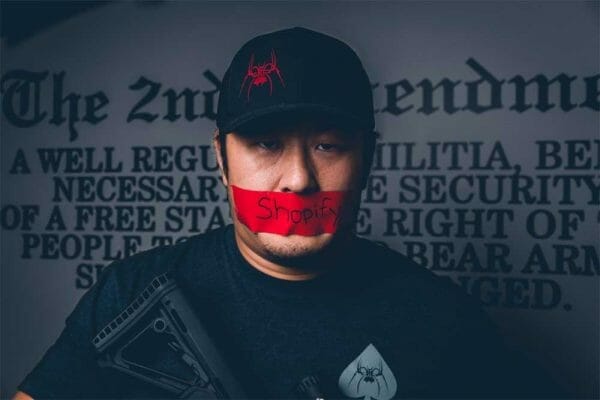
APOPKA, Fla. –-(Ammoland.com)- A change in policy announced Monday night by Shopify, an e-commerce platform used by more than 600,000 merchants to conduct online sales, will essentially shut down the sale of guns, gun parts and accessories over the internet by retailers who use Shopify.
Spike’s Tactical, a Florida-based gun manufacturer, has built their entire website and online sales portal exclusively using the Shopify platform and conducts millions of dollars in sales through Shopify each year.
“This decision will have significant ramifications to our business and should concern every online retailer and Second Amendment supporter,” said Cole Leleux, general manager of Spike’s Tactical.
Some of the new amended rules in Shopify’s Acceptable Use Policy now include banning the sale of semi-automatic firearms that have an ability to accept a detachable magazine and are capable of accepting more than 10 rounds. Additionally, unfinished lower receivers are also prohibited, according to the new rules. Most of Spike’s Tactical’ s products include AR-15 parts and full rifles, which would fall under those new restrictions.
One of the things that makes this more challenging for businesses like Spike’s Tactical, is that Shopify’s platform is entirely proprietary, meaning the information stored on their platform cannot be easily transferred to another online platform.
“We have invested more than $100,000 in the development of our Shopify store, which will disappear once these policies go into effect,” said Leleux.
As for when these new policies will go into effect, that remains a mystery. When representatives from Spike’s Tactical reached out to Shopify to try to learn more, Shopify refused to answer any questions and directed Spike’s Tactical team members to the Shopify legal department, which at the time of this news release, has yet to respond.
Ironically, when challenged by left-leaning critics about selling Breitbart products in 2017, Shopify CEO Tobias Lütke said, “We don’t like Breitbart, but products are speech and we are pro free speech. This means protecting the right of organizations to use our platform even if they are unpopular or if we disagree with their premise, as long as they are within the law.”
It now seems that Shopify has reversed course on their previous belief, as our products are not only legal, but also used by many law enforcement agencies, Leleux said.
Another gun company, which will also feel the pain of Shopify’s recent decision is Rare Breed Firearms. Rare Breed announced the launch of their new Spartan lower receiver last week and the product is also sold online exclusively through Shopify.
“We have spent the last three years developing the Rare Breed brand and more than $40,000 developing our Shopify site,” said Lawrence DeMonico, president of Rare Breed Firearms, an Austin, Texas based firearms company. “Depending on how this policy is rolled out, this is a move that could put companies like ours out of business, and we will undoubtedly be looking to pursue legal options.”
Any other gun manufacturers or retailers who are also experiencing issues related to this new policy are encouraged to contact Spike’s Tactical, as they are looking at legal options to potentially file a class action lawsuit.
About Spike’s Tactical
Spike’s Tactical was founded the day before 9/11 by Mike and Angela Register and is headquartered in Apopka, Florida. The family-owned business employs around 40 people and all products are made exclusively in the USA and assembled in Florida. Spike’s Tactical is regarded as one of the premier AR-15 manufacturers in the world. Their mission is to build the highest quality products and offer them at the best possible price to the consumer. Spike’s Tactical weapons are designed to military specifications for civilian, law enforcement and military use. All products manufactured by Spike’s Tactical feature a manufacturer’s lifetime warranty.
About Rare Breed Firearms
Rare Breed Firearms was established in 2016 to develop innovative, visually appealing and highly functional firearm designs. Rare Breed Firearms is based in Austin, Texas and is veteran-owned and operated. Through friendly competition, their goal is to drive innovation and bring new designs to the market.
Woman being choked by boyfriend is saved when son gets gun, daughter shoots, kills man
 A 15-year-old girl who shot and killed her mother’s boyfriend will not be charged, according to the district attorney’s office. (Source: WYFF)
Louisiana Attorney General Denies $600 Million to Citibank, Bank of America Over Gun Control
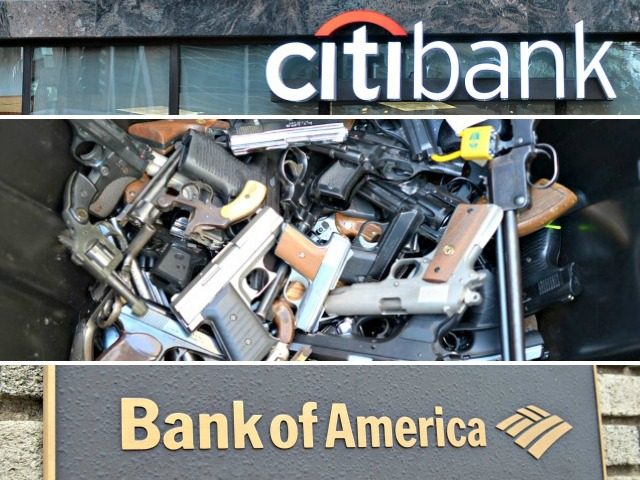
Louisiana Attorney General Jeff Landry and the state’s Bond Commission denied $600 million to Citibank and Bank of America over the gun control stance adopted by both companies.
Citibank and Bank of America were both to be part of a road financing plan in the state, but were omitted from the financial plan after arbitrarily placing new gun controls on banking customers.
Louisiana Executive Division press secretary Ruth Wisher told Breitbart News that Landry and State Treasurer John Schroder have been working on the state’s response to corporate gun control “for some time.” Omitting them from the $600 million is part of that response
On March 23, 2018, Breitbart News reported Citibank’s new gun control regulations, which require gun store customers to quit selling “high capacity” magazines in order to do business with the bank. Citibank also demanded bank store customers refuse long gun sales to anyone 18-20 years old, even though long gun sales to 18-20-year-olds are legal (and 18-20-year-olds can use fully automatic weapons in the U.S. military).
On April 13, 2018, Reuters reported that Bank of America was reworking their policy so as to end with customers “who make military-style firearms for civilians” Bank of America does not differentiate between the fact that military rifles are fully automatic, whereas civilian firearms are only semiautomatic.
In other words, a military weapon will shoot an entire magazine of ammunition with one pull of the trigger but an AR-15 will only shoot one round per trigger pull, just like a double-action revolver.
AWR Hawkins is an award-winning Second Amendment columnist for Breitbart News, the host of the Breitbart podcast Bullets with AWR Hawkins, and the writer/curator of Down Range with AWR Hawkins, a weekly newsletter focused on all things Second Amendment, also for Breitbart News. He is the political analyst for Armed American Radio. Follow him on Twitter: @AWRHawkins. Reach him directly at awrhawkins@breitbart.com. Sign up to get Down Range at breitbart.com/downrange.
More and More of What We Do Depends on Government Permission
The granting or withholding of that approval is a powerful lever over our lives.
Do you have permit for that? If you want to keep that permit, you’d better do as you’re told.
Increasingly, that’s the theme of modern America. More and more of what we do is dependent on permission from the government. That permission, unsurprisingly, is contingent on keeping government officials happy. Rub those officials the wrong way and they’ll strip you of permission to travel the roads, leave the country, or even make a living.
That’s not a recipe for a free country.
In February of this year, the IRS began sending the U.S. State Department lists of Americans who have a seriously delinquent tax debt, so that these individuals can be denied the right to travel overseas.
“[T]his only applies to a seriously delinquent tax debt,” cautions tax attorney Robert W. Wood, “more than $50,000. Even so, that $50,000 includes penalties and interest. A $20,000 tax debt can grow to $50,000 including penalties and interest.”
Passport revocation isn’t contingent on criminal conviction, or suspicion of flight. Your travel documents can be yanked just for the outstanding debt—even if you’re already outside the country.
“If you’re already overseas, the State Department may, but is not required to, provide a passport permitting your return home,” writes former federal prosecutor Justin Gelfand. “And a 1952 statute makes it a crime for a U.S. citizen to enter or exit the country without a valid passport.”
That law requiring a passport to cross the border in either direction, combined with the threat to strip passports from alleged tax debtors, effectively makes the country one big debtors’ prison.
What connection is there between taxes and the right to travel? None. Members of Congress and other government officials just thought they could coerce more people into meeting IRS demands if they made the right to travel (not so much a “right” any more) dependent on keeping the taxman happy.
Not that the right to travel within the borders remains free of government demands. If you take a look at the website for your state’s Department of Motor Vehicles, chances are you’ll find language similar to: “Once the Texas Department of Public Safety (DPS) is notified by the Attorney General of Texas, or a Texas Court ordering a revocation, DPS will revoke a Texas resident’s driving privilege for failure to pay child support.”
Texas didn’t impose that requirement on its own—it was required to do so by the federal government. Under the provisions of the welfare reform law passed in 1996, “States must adopt laws that allow them to suspend driver’s, professional, occupational, and recreational licenses of individuals who owe overdue support,” according to the U.S. Department of Health and Human Services. Which means that not just travel but also the right to hold a job and make a living is at issue in a country that now requires licenses of roughly one-quarter of all workers.
All 50 states have complied with that federal requirement, the National Conference of State Legislatures reports, although the triggers for revocation vary. Some states allow for temporary licenses—or allow debtors to travel to and from work so they can at least earn the money to pay the outstanding debt. But that’s up to the state.
Also up to states is the process for suspension, which is administrative with little in the way of due process.
“Arizona law has given the [Department of Child Support Services, or DCSS] authority to administratively suspend a professional or occupational license (such as a contractor’s license) without going to court,” boasts the state’s Division of Child Support Services. “The DCSS may request the court to suspend or restrict a driver’s license or recreational license.”
While the details vary, most states allow for a window of time, from a couple of weeks to a few months, to pay up or appeal the bureaucratic gut-punch. Good luck with that appeal.
What connection is there between licenses to drive the roads and work in your field and child support obligations? Again, none. They’re just a handy lever to extract compliance from the population without too much muss and fuss. They’re such a handy lever, in fact, that government officials have succumbed to the temptation to extend their use.
“[I]n 19 states, government agencies can seize state-issued professional licenses from residents who default on their educational debts,” The New York Times reported last fall. “Another state, South Dakota, suspends driver’s licenses, making it nearly impossible for people to get to work.”
As with revoking passports to extract tax payments and denying licenses to collect child support, stripping licenses from people who fall behind on student loans involves administrative procedures with limited due process. It also, finally, may be a bit much for even some politicians.
“Difficulty repaying a student loan debt should not threaten a graduate’s job. It makes no sense to revoke a professional license from someone who is trying to pay their student loans,” said Sen. Marco Rubio (R-Fla.). He and Sen. Elizabeth Warren (D-Mass.) introduced a bipartisan bill to “prevent states from suspending, revoking or denying state professional licenses solely because borrowers are behind on their federal student loan payments.”
Assuming the bill passes, that’s great as far as it goes. But it doesn’t solve the underlying problem: Too many activities—a growing number—have quietly transformed from rights that we quietly exercise at will into privileges requiring state approval.
“As a general rule, until 1941, U.S. citizens were not required to have a passport for travel abroad,” the National Archives report.
Assuming the bill passes, that’s great as far as it goes. But it doesn’t solve the underlying problem: Too many activities—a growing number—have quietly transformed from rights that we quietly exercise at will into privileges requiring state approval.
“As a general rule, until 1941, U.S. citizens were not required to have a passport for travel abroad,” the National Archives report.
On a similar note, only about 5 percent of American workers needed licenses to do their jobs in the 1950s.
And, “In 1930, only 24 states required a license to drive a car and just 15 states had mandatory driver’s exams. South Dakota was the last state to begin issuing licenses (without exams), in 1954,” the History Channel tells us.
Those bureaucratic developments, all justified as improvements in safety and national security, put people increasingly under the thumbs of government officials and make us incredibly vulnerable to pressures and penalties that are entirely unrelated to our supposed transgressions. Get on the wrong side of a vindictive official or a mindless bureaucracy, and you’re effectively subject to house arrest and an economic knee-capping.
Such government control over vast areas of our lives makes it very difficult to pretend that we’re free. Free people don’t fret that they may lose government permission to work and travel.
Photo Credit: Ingram Publishing/Newscom
YUBA CITY (CBS13) – A Yuba City man says law enforcement confiscated his money but he didn’t commit a crime. Now he’s fighting to get back tens of thousands of dollars.
Yuba City resident Josh Gingerich buys and flips trucks. A recent buying trip to do that cost him a bag of cash which was seized by a U.S. Drug Enforcement Administration (DEA) drug interdiction task force at O’Hare Airport.
Yuba City resident Josh Gingerich buys and flips trucks. A recent buying trip to do that cost him a bag of cash which was seized by a U.S. Drug Enforcement Administration (DEA) drug interdiction task force at O’Hare Airport.
“A little over 29 grand,” the amount taken said Gingerich who was not arrested and did not break any laws. “No marijuana, no drugs.”
He believes an airport TSA agent saw the money in his backpack and tipped off the DEA.
“They take you down to a dingy basement room,” said Gingerich. “No cameras…no nothing.”
Gingerich said he was set up by the officers who he says claimed to smell marijuana on a plastic bag filled with dirty laundry in his backpack. He said officers dumped the clothes, filled the bag with cash, then brought it to the drug dog.
“They can just do what they want,” said Gingerich.
Within the United States, it is legal to carry cash, says Benjamin Ruddell of the ACLU.
“There’s no prohibition on carrying cash, or carrying a large amount of cash,” said Ruddell who points out what they believe is flawed with the DEA Civil Asset Forfeiture Program.
“If the purpose of this is to disrupt illegal drug activity…we’d see some of these people be arrested,” said Ruddell.
Last March, the U.S. Justice Department Inspector General released a report saying from 2007–2016, the DEA seized $3.2 billion with zero convictions tied to this money.
“It should be against the law,” said Gingerich.
Gingerich also questions whose being given this seizure power. In his case, there was a Chicago police officer working on the DEA drug interdiction team. The officer has at least 27 Chicago Police Department complaints. He was cleared on all but one. Six of the 27 were for illegal searches. He has also been sued, resulting in two settlements involving bad searches and a bad drug arrest.
This happened to Gingerich in February, and he hired Attorney Michael Schmiege to get his money back.
“It’s not a quick and easy process. It’s not like traffic court. It can drag on for years,” said Schmiege.
Schmiege also says drug dogs often hit on the money.
“Most United States currency has trace amounts of narcotics on it,” said Schmiege.
Another twist is that Gingerich lives in California, where marijuana is legal.
“You’re supposed to be innocent until proven guilty,” said Gingerich who wants his money back and interest too.
If Gingerich fails to get his money, it will be divided up between the federal government and local police on the task force.
The ACLU says Illinois gets $20 million to $30 million a year from these seizures.
DEA Statement: “The Asset Forfeiture Program aims to employ asset forfeiture powers in a manner that enhances public safety and security. This is accomplished by removing the proceeds of crime and other assets relied upon by criminals and their associates to perpetuate their criminal activity against our society. Asset forfeiture has the power to disrupt or dismantle criminal organizations that would continue to function if we only convicted and incarcerated specific individuals. Seizures made during the course of interdiction operations do not rely on only one fact when determining probable cause. Multiple facts, circumstances, statements and other factors go into the decision to seize an asset. These must be taken as a whole in order to understand the probable cause for a seizure, each of which, has a process for contesting available to them.”
***********************************************
So be careful out there Folks as there are a lot of thieves out there! Grumpy
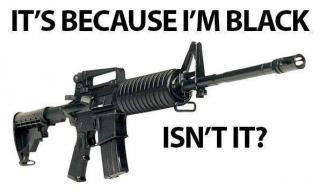
From Gunpowder Magazine

South Africa Calls for 300,000 Gun Owners to Turn Over Their Weapons
By: José Niño
South Africa is opening the door for tyranny.
The Constitutional Court of South Africa recently ruled that 300,000 gun owners must turn in their firearms.
This judgement came in response to the North Gauteng High Court’s ruling in 2017 which said Section 24 and Section 28 of the Firearm’s Control Act were unconstitutional.
A report from The Citizen explains what Section 24 and Section 28 entail:
South Africa is opening the door for tyranny.
The Constitutional Court of South Africa recently ruled that 300,000 gun owners must turn in their firearms.
This judgement came in response to the North Gauteng High Court’s ruling in 2017 which said Section 24 and Section 28 of the Firearm’s Control Act were unconstitutional.
A report from The Citizen explains what Section 24 and Section 28 entail:
“Section 24 of the Act requires that any person who seeks to renew a licence must do so 90 days before its expiry date Section 28 stipulates that if a firearm licence has been cancelled‚ the firearm must be disposed of or forfeited to the state. A 60-day time frame was placed on its disposal, which was to be done through a dealer.”
Now that the High Court’s initial ruling has been overturned, gun owners who failed to renew their firearms licenses must hand in their firearms to the nearest police station, where authorities will then proceed to destroy them.
Many naïve political observers will paint this event as a casual gun control scheme, but any astute student of politics will recognize that the floodgates are now open for further encroachments – not only on the gun rights of South Africans, but also on others facets of theirs lives.
A look at South Africa’s current political climate will give us an idea of the potential ramifications of this gun control scheme.
Political Trouble Brewing in South Africa?
Though South Africa witnessed rising levels of economic freedom shortly after Apartheid ended in 1994, the country has taken a more interventionist path to economic development in recent years.
This situation is becoming more pronounced with the South African National Assembly recently voting 241-83 to amend the South African constitution to allow for land expropriation without compensation.
The socialist-leaning African National Congress (ANC) and the Economic Freedom Fighters (EFF) parties are leading the charge for expropriation under the banner of fixing racial disparities that have supposedly remained intact since Apartheid’s conclusion.
While land confiscation has not been officially finalized, South Africans should worry about the direction their country is going.
And how does gun control fit into this equation?
Gun Control: A Tool for Tyranny
No matter how socialist apologists rationalize it, the redistributionist agenda the South African government is pursuing will not be implemented passively. Ultimately, it must be carried out by force.
The kind of force socialists seek is a monopolized kind, which extreme forms of gun control like gun confiscation help facilitate.
The history of gun confiscation is one of repeated cases of tyranny.
From countries such as Cuba to the Soviet Union, aspiring demagogues have used gun confiscation to disarm the populace. Logically, an unarmed populace will put up little resistance against their tyrannical acts.
In South Africa’s case, farmers and their workers are already suffering ongoing attacks against their property. One could only imagine what it would be like for these persecuted farmers once they are stripped of their right to self-defense.
For many Americans who have enjoyed historically unprecedented gun rights, South Africa’s gun control experience may seem distant and strange.
But make no mistake about it, South Africa’s latest flirtation with gun control is not based on good intentions, especially when considering the political climate the country is enduring.
South Africa should serve as a fair warning to Americans of the dangerous consequences gun control poses.
José Niño is a Venezuelan-American political activist based in Fort Collins, Colorado.