Categories
All About Guns Anti Civil Rights ideas & "Friends"

Some of the major Anti-Gun Myths

7 Anti-Gun Myths That Need to Be Debunked ASAP

7, anti gun, myths, that, need, to, be, debunked, asap, ,

7 Anti-Gun Myths That Need to Be Debunked ASAP
Since the tragedy at Sandy Hook elementary in Newtown, Connecticut, America has been embroiled in a renewed gun control debate. In the Information Age there can be a lot of misinformation, and gun control is unfortunately no exception. Here are some of the ways you are being misled.
1. “Assault Weapons”


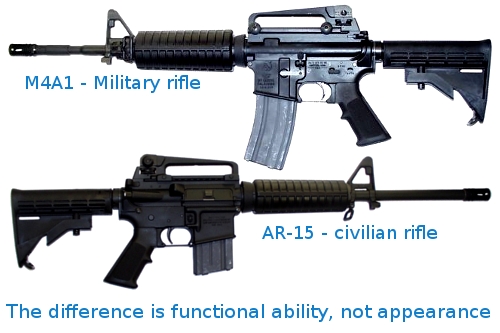
The term “assault weapon” is a made-up political term. AR-15’s are not military rifles; so unscrupulous politicians refer to them as “military-style assault weapons.” ‘Style’ – as in cosmetic appearance – is the only true word in that description. The Military uses the M4A1 carbine rifle, which looks outwardly very much like an AR-15, but they do not have the same functionality; AR-15s are not machine guns, though the terminology used is meant to imply they are. Senator Diane Feinstein (R-Calif.) says AR-15’s are designed for killing as many people in close quarters combat as possible, when in fact the AR-15 is an intermediate to distance rifle with a range of 400-600m. Feinstein and others claim AR-15’s are not used for hunting; but in fact there are dozens of varieties of AR-15 used for hunting everything from varmint/small game to deer, elk, and dangerous game. The AR-15 is not the weapon of choice for most mass shooters according to James Alan Fox, a highly respected criminologist from Northeastern University in Boston; handguns are. In fact, rifle homicides comprise a very small amount of homicides, accounting for less than 3% of homicides (323 out of 12,664 in 2011) mass shootings or otherwise.
2. “High Capacity Magazines”

Some politicians would have us believe that so-called “high capacity” magazines are responsible for a wave of death sweeping the nation. Academic, scholarly research shows the vast majority of homicides average four shots with less than 10 shots fired. While the Aurora shooter infamously used a 100-round magazine drum, these are novelty items that are prone to jam. In fact, it did jam probably saving lives. But mass shooters don’t need 100-round magazines to commit atrocity – the shooters at Virginia Tech and Columbine used 10-round magazines, they just brought a lot of them (17 and 13 respectively). James Alan Fox states mass shooters often meticulously plan their attacks in advance; a high capacity magazine ban will not deter them as Virginia Tech and Columbine illustrate.
3. Gun Show “Loophole”

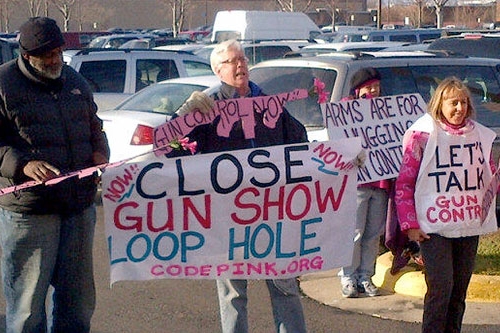
Several people, including President Obama have stated that 40% of guns were bought via “gun show loopholes.” This is not true. For one, the term “gun show loophole” implies that people are deviously getting around something when in actuality; it is just selling personal private property and is not illegal or nefarious.
Additionally, private sales may not actually occur at a gun show at all. More important than loose terminology is that this claim is based on a study from 1994 of 251 people. The Washington Post evaluated this claim with the study’s original authors and says the president distorted the truth. The actual range is 14%-22% with a plus or minus error margin of 6%.
This means the final accurate range of this study is as low as 8%, but no more than 28%; neither figure is 40%. Further, it’s implied that closing private sales would solve the issue of criminals obtaining guns; it doesn’t. It fails to address illegal trafficking and straw man purchases.
A Department of Justice study indicates that 78.8% of criminals get guns from friends or family (39.6%) or from the street/illegally (39.2%). To this point, the FBI states there are 1.2 million gang members in U.S. and that gangs illegally traffic guns as addition to narcotics.
4. Mass Shootings Are Not Increasing:

Former President Bill Clinton, Mother Jones and others have claimed that mass shootings are increasing. Once again not true. James Alan Fox’s analysis of the Mother Jones‘ study indicates they left out mass murders which made it seem there was an increase after the Federal assault weapon ban expired (they’ve updated their story since).
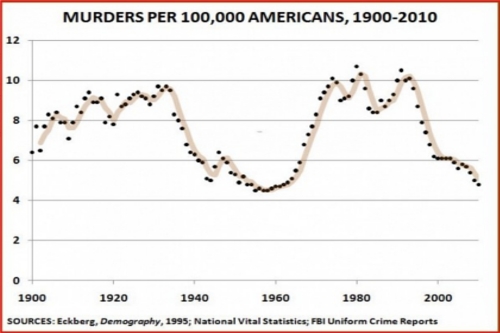
Some mass murders receive more media attention than others, however the number has been consistently about 20 annually since 1976. The number dead from these mass shootings fluctuates from about 25 to 150, depending on the year (Fox’s chart is shown above).
In 2012, it was less than 100. Though tragic, this represents a fraction of 1% of homicides. In recent years, homicides by raw number peaked in 1991 at 24,700; it’s dropped in half since, and the homicide rate per 100,000 people today is less than it was even in 1900 (see below).
5. Anti-Gun Organizations Lump in Suicide & Injuries With Crime Data:

After a mass murder shooting anti-gun organizations like the Brady campaign inevitably call for gun restrictions; these organizations also cite gun violence data other than crime data to include suicides and injuries.
This is misleading. Although accidents and suicide are public health concerns, it is disingenuous to include them with homicide in response to a horrific crime. According to the Center for Disease Control (CDC), suicide rates have crept up slightly 2000-2009, but are still lower than the rate per 100,000 from 1950-1990.
It’s not accurate to say guns contribute to suicide causal factors since the rate is lower now. And ultimately, legislation aimed to prevent crime by banning weapons and limiting magazine capacity has no reasonable connection to either suicide or accidents.
We ought to compare apples to apples: suicide with suicide prevention, accidents with safety programs, and homicide with policy that would realistically reduce homicide.
6. Too Many Are Being Killed:

This statement is political gaming and wordplay. How many dead would be okay? Who wouldn’t want less murder? Ideally, zero would be the goal, but that begs the question of how to prevent any tendency of violence in humans.
This phrase is not only meaningless in terms of contributing to policy that achieves a positive end result, but also dangerous in that the appeal to emotion runs the risk of circumventing genuine solution in favor of sound byte.
It makes sense to try to achieve goals with policies other than those proven to be ineffective, as the previous Federal assault weapons ban was. Lastly, homicides are at an all time low.
7. False Zero-Sum Dichotomy – “Either/Or”:

Famous anti-gun rights advocate New York City Mayor Michael Bloomberg said, “I want the Congress to have to stand up and say ‘I’m with the NRA and support killing our children’, or ‘No'” (Time magazine, January 28, 2013, p.30). On CNN’s Piers Morgan, Congressman Jerry Nadler (D-N.Y.) said, “the NRA is enablers of mass murder.”
This overly simplistic incendiary rhetoric does nothing to further our national discussion, and falsely frames the debate as a zero-sum, winner-take-all, ‘either/or’ proposition – either you hug a gun or hug a kid, but you couldn’t possibly be for both gun rights and your child’s safety.
That is preposterous. The NRA is not “the gun industry,” and preservation of the Second Amendment is not of interest only to gun manufacturers. Nearly half of NRA funding comes from individual donors.
The NRA is comprised of average people who want safe neighborhoods, schools, and streets. Rather than offer ridiculous false dichotomy and grandstanding, we should be looking for genuine solutions.
BONUS: We Need More Laws:

This is the granddaddy lie. We already have a lot of laws. It’s illegal to kill your mom, steal a gun, take that gun onto school property, forcibly break and enter, and murder kids.
We already have laws preventing mentally ill & felons from obtaining guns, and we have a background check system (NICS). The Sandy Hook shooter was denied to legally purchase a gun because of the NICS system.
We tried a federal assault weapons ban (AWB) before. What we do need is better enforcement of existing laws. Congress has not fully funded NICS. Many states do not fully report felony and mental health data to NICS.
The Justice Department only prosecutes a fraction of those who criminally falsify background check forms. We desperately need to engage in genuine discussion about real solutions to the violence problem. These solutions are not likely to yield instantaneous results, or win the next election cycle; yet it is what we would do if we were serious about addressing the issue.
The underlying causes include: gang activity, which accounts for 48-90% of violent crime depending on jurisdiction; drug abuse, the single biggest predictor of violence with-or-without mental illness; concentrated urban population and poverty; and mental illness, including de-institutionalization, treatment and intervention, and other facets of mental health.

Categories
Anti Civil Rights ideas & "Friends" Dear Grumpy Advice on Teaching in Today's Classroom Grumpy's hall of Shame

As a Retired Teacher, I am not surprised by this in today's World of Education

NY College Summons Student To A Meeting For Holding Unloaded Guns In Off-Campus Video

Anand Venigalla
Anand Venigalla

BROOKVILLE, N.Y, – -(AmmoLand.com)- He held a gun. Then his college held a meeting.
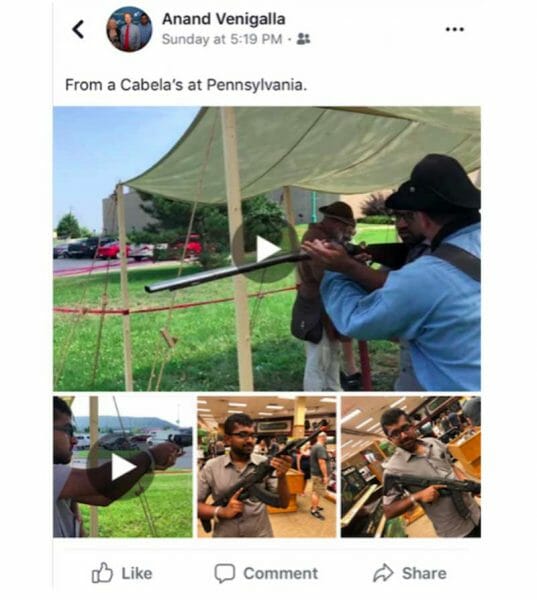
In another shot to individual rights on college campuses, administrators at Long Island University Post called a student to a mandatory meeting after he posted photos and videos to Facebook showing him legally holding unloaded firearms at an off-campus event hosted by Cabela’s, the popular outdoor sporting goods chain.
The Foundation for Individual Rights in Education today is calling on LIU to acknowledge that mandatory administrative meetings about non-threatening social media posts chill individual rights.

“By calling in a student for a mandatory meeting about photos of his participation in a recreational gun event, Long Island University has sent a message to its entire student body: Watch what you say,” said FIRE Senior Program Officer Sarah McLaughlin. “Universities that promise to protect free speech should not hold mandatory meetings for students who engage in it.”

TAKE ACTION: TELL LONG ISLAND UNIVERSITY TO RESPECT STUDENT EXPRESSION
According to LIU, another student complained that junior Anand Venigalla “might have violent intentions,” seemingly due to his participation in the Cabela’s event. LIU’s director of student engagement contacted Venigalla on Aug. 7, saying it was “imperative” they meet as soon as possible. The administrator later told FIRE that the meeting was not an investigation, but warned Venigalla that it was mandatory.
FIRE first wrote to LIU on Aug. 31 to express its concerns about the school’s violation of its commitment to free expression, pointing out that “students cannot be summoned for questioning every time they post a photo of themselves engaging in recreational firearm use.”
During Venigalla’s meeting with LIU, the director also brought up an essay he wrote for a class on war, terrorism, and justice in November 2017. Venigalla mentioned in the essay that political violence against authorities, but not civilians, can be justified in certain situations, citing the Boston Tea Party as an example. It is not clear how the administration obtained the essay. The director also questioned Venigalla about a Facebook comment expressing disappointment over losing an election for a student government position, in which Venigalla said the Greek life system wields too much political power on campus. For LIU administrators, apparently three examples of constitutionally-protected speech somehow warrant a mandatory meeting with administrators.

“Free expression matters because it is through the unrestricted expression of ideas that we learn and grow in wisdom,” Venigalla said.

LIU, apparently realizing that their case against Venigalla was meritless, declined to investigate further. However, campus inquiries like this chill expression. Though LIU is private and not bound by the First Amendment, it is legally and morally bound to honor the promises it makes to students.
TAKE ACTION: TELL LONG ISLAND UNIVERSITY TO RESPECT STUDENT EXPRESSION


Foundation for Individual Rights in Education (FIRE)

Foundation for Individual Rights in Education (FIRE)
The Foundation for Individual Rights in Education (FIRE) is a nonpartisan, nonprofit organization dedicated to defending and sustaining the individual rights of students and faculty members at America’s colleges and universities. These rights include freedom of speech, freedom of association, due process, legal equality, religious liberty, and sanctity of conscience — the essential qualities of liberty.

Categories
Anti Civil Rights ideas & "Friends" California

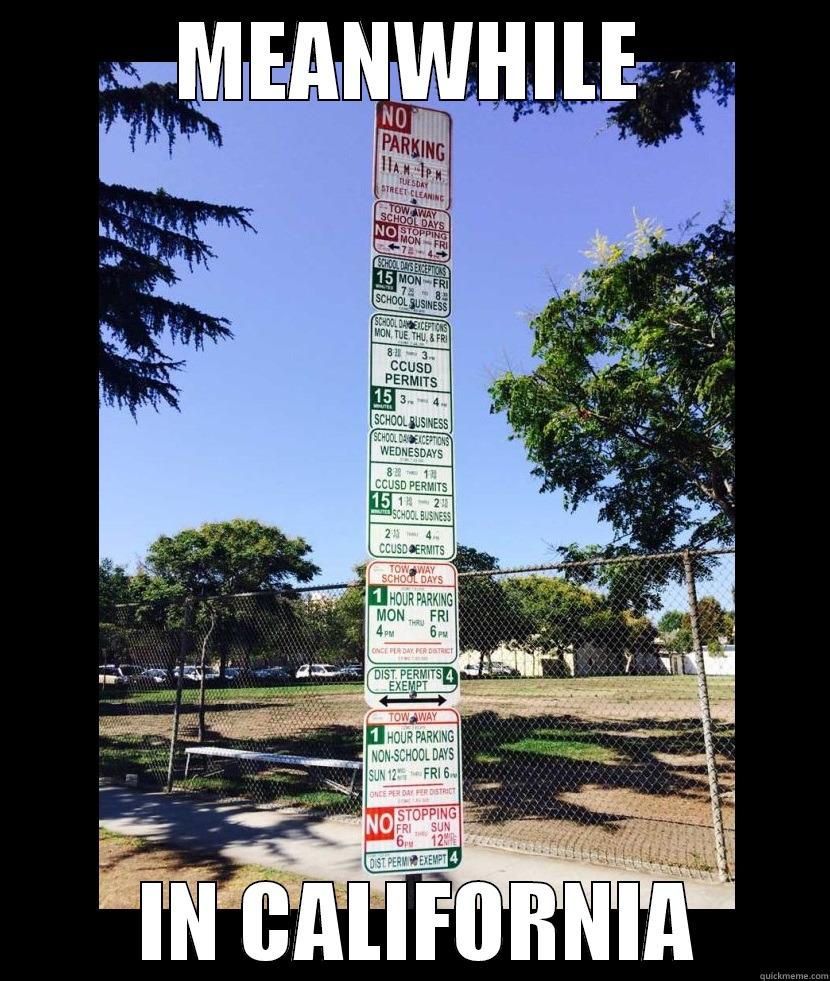
California’s new gun control laws

https://youtu.be/b4fqSOhISsEImage result for CALIFORNIA MEMES

Image result for CALIFORNIA MEMES

Categories
Anti Civil Rights ideas & "Friends" Well I thought it was funny!

To all our Friends out there (Yeah I know you read this to keep up) Just for you!

Related image

Categories
Anti Civil Rights ideas & "Friends" Born again Cynic! California

My Senator at work, I really do hope that that this is fake!!

Categories
Anti Civil Rights ideas & "Friends" Born again Cynic! Hard Nosed Folks Both Good & Bad War

Africa wins again!

Land Reform and Farm Murders in South Africa: The Untold Story of the Boers and the ANC

The Untold Story of South African Land Reform and Farm Murders
South African farm murders have long been a niche cause on the Internet, and the country has made headlines again due to a South African government plan to seize the land of white farmers under the guise of “South African land reform.”
News of these farm murders and land seizures have gained steam with the release of Lauren Southern’s documentary Farmlands. And United States President Donald Trump has brought even more attention to the plight of Afrikaners with his tweet that he would be looking into the South African land and farm seizure.
Most people don’t know much about the history of South Africa beyond the simplistic propaganda of the 1980s – white South Africans bad, ANC good. The history and current situation of South Africa, however, is much more complex.

Defining Terms: Who Are the Key Players?

Before going any further, terms should be defined and the key players identified:

  • ANC: The African National Congress, the leading party in South Africa since the end of apartheid.
  • Afrikaners: Dutch-, German- and French Huguenot-descended white South Africans who primarily speak a language called Afrikaans.
  • Bantu: A group of black South Africans including the Xhosa (of which Nelson Mandela was a member) who originally lived in the northeast of the country.
  • Boers: A subset of Afrikaners who still lead a rural and agricultural existence.
  • Democratic Alliance: Currently the second-largest party in the South African parliament, the Democratic Alliance is a broad-based centrist party that is comparatively economically liberal for South Africa. It enjoys broad, multiracial support, though it is most popular among all racial minorities – white, Coloured and Indian. Its black supporters are often derided as “clever blacks” by ANC supporters.
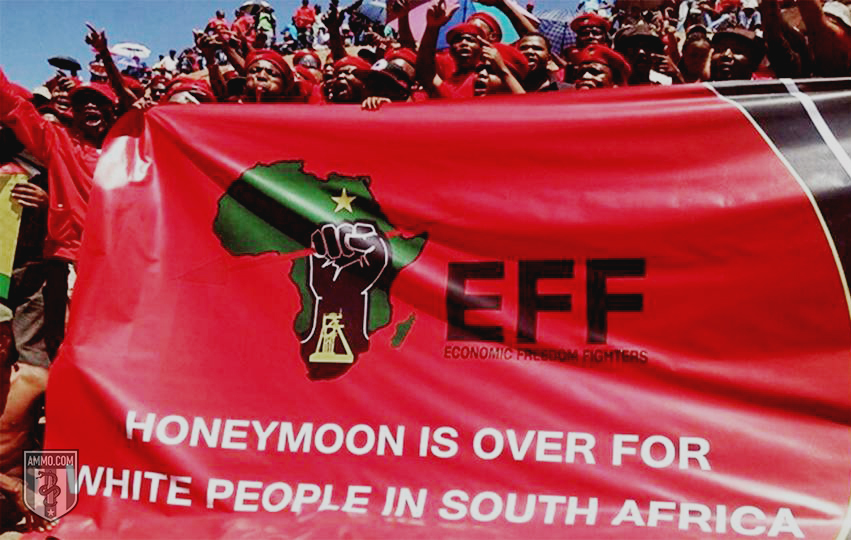
  • EFF: The Economic Freedom Fighters, a far-left political party in South Africa that has pushed the South African government to seize land from white farmers. Sometimes derisively called “Everything for Free,” the EFF is the third-largest party in South Africa, but is poised to become the second.
  • Khoisan: A popular name for the original inhabitants of most of the territory now known as South Africa. This is not an ethnic designation, but a linguistic one. These are who the Dutch settlers first encountered.

A Brief History of South Africa: From Early Settlement to the Boer War

To understand the current situation in South Africa, it is important to first understand the country before, during and after apartheid.
South Africa’s modern history begins with the Dutch East India Company, which established trading posts for sailors along the coast. Dutchmen soon started settling the area, with little, if any, conflict with the native Khoisan population. Dutch settlers, however, quickly came into conflict with the Dutch East India Company’s authoritarian rule.
Freedom-seeking Dutch settlers moved north starting in the 17th Century. In 1852, Boers founded the South African Republic (known as the “Transvaal Republic”) and then the Orange Free State in 1854.
These are called “Boer Republics” and they, in turn, came into conflict with both southward-expanding Bantu tribes (most notably the Zulu, who were in the process of conquering other nearby Bantu tribes) and the British Empire.
White South Africans” are typically treated as a monolith, but there are two main, distinct groups: The Afrikaans-speaking Afrikaners and the English-speaking British. Indeed, there were intense hostilities between these two groups, especially after the Second Boer War when the Boer Republics were reforged as British colonies.
Telling the Afrikaners to “go home” is a nonsensical statement. They are not Dutch. They do not hold Dutch passports, nor would they at any point have been welcomed back by the Kingdom of the Netherlands.
In many regions of South Africa, the Afrikaners have been around longer than the Bantus and have a stronger claim on the land, having purchased it from Khoisans. On the other hand, traditionally Bantu land was conquered from other Bantu tribes or taken by the Bantus from the Khoisans.

A Brief History of South Africa: The Boer Wars
The Untold Story of South African Land Reform and Farm Murders
“The Boer Wars” refers to two wars between the Boer Republics and the British Empire, but mostly the second one. The first was a rout for the Boers and left the British Empire with egg on their face. They would not be embarrassed a second time.
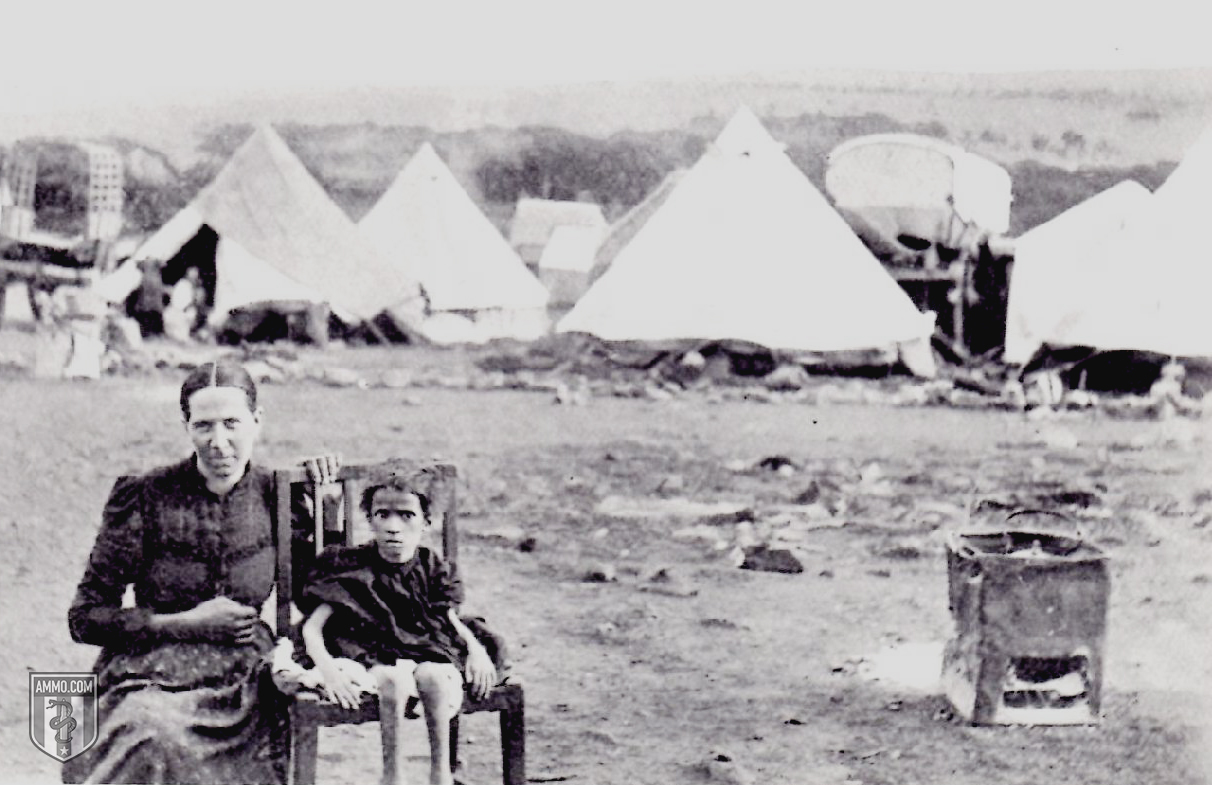
The first concentration camps were built for Boers. Not just any Boers, but primarily the wives and children of Boer Commandos (irregular guerilla troops) fighting the British Empire. The strategy was simple: Lock up their women and children, and they will lose their will to fight.
It worked. Adding insult to injury, the most publicized photo of the concentration camps, a picture of seven-year-old Lizzie van Zyl nearly starved to death, was touted in the British press as evidence of parental neglect by the Boers. There was great international outcry against the British during the Boer War, but it never amounted to much.
Boer Republics were reconstituted as British colonies. In 1910, three British colonies were unified as the Union of South Africa. After World War I, South West Africa, today known as Namibia, was administered effectively as a fifth province of South Africa, but for obscure reasons never integrated.
South Rhodesia voted on membership, nearly joining, but the argument that it would become “the Ulster of Africa” proved too powerful. The history of South Africa is largely that of a rebellious and unhappy British Dominion until 1948.

A Brief History of South Africa: Enter Apartheid
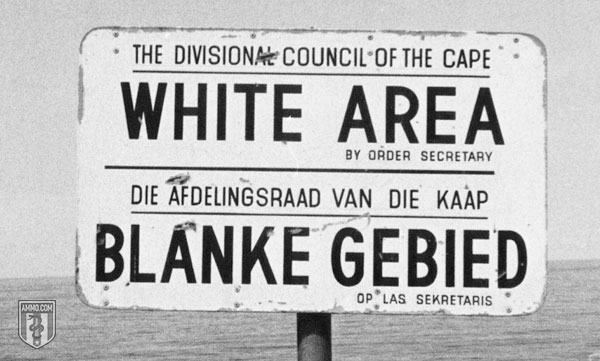
The Untold Story of South African Land Reform and Farm Murders“Apartheid” is an Afrikaans word meaning “separateness.” It was a series of laws drafted beginning in 1948, after the success of the Afrikaner-heavy National Party in the national elections.
There was a split in the party between those who favored apartheid as it happened versus those who favored complete separation, including parallel governance. The former won out in no small part due to a thirst for cheap black labor.
Most people know the basics of apartheid, but they are worth going over briefly here: South Africans were classified into one of four racial categories: white, black, Coloured (a non-pejorative term in South Africa, meaning roughly “mixed race”) and Asian or Indian. In 1949, mixed marriages were outlawed with cross-racial intercourse outlawed the following year. In 1953, amenities were segregated by law.
Increasingly, the blacks of South Africa were segregated into townships and Bantustans, the latter being nominally independent “homelands” for Africans. This meant that as foreign nationals, in the eyes of the Union of South Africa, they were required to carry documentation to work in South Africa and needed to leave after they were done.
Coloureds, who had the vote, were slowly disenfranchised. Indians and other Asians were never allowed to vote.
Between the end of World War II and the declaration of a republic in 1961, internal politics were dominated by the division between conservative republican Afrikaners and liberal monarchist British whites.
Apartheid enjoyed greater support among Afrikaners and less among British South Africans. British Prime Minister Harold Macmillan’s “Wind of Change” speech increased support for apartheid among British South Africans because of a sense of abandonment by the homeland.
Many were upset at being forced by the British government to choose between South African and British citizenship and passports.
Still, none of this amounted to what the National Party hoped to achieve – a cohesive and united white South African identity. Support for apartheid was always tepid among British South Africans.
It is certainly true that notions of racial superiority were a prime motivator for apartheid, but there was another factor in play: Communism.
The Suppression of Communism Act was passed by the first apartheid government, banning any Communist organization. The Act took a broad view of what constituted “Communism.”
However, given the infiltration of mass movements, particularly in the developing world at the beginning of the Cold War, this is perhaps less cynical than it is commonly made out to be. The Act was used to suppress the African National Congress, something we will talk about in detail later.
Finally, it’s worth mentioning that Afrikaner society is fundamentally and deeply conservative. Pornography and gambling were illegal in apartheid-era South Africa.
Most businesses could not open on Sundays. Abortion, homosexuality and reproductive education were tightly regulated.
There was no television until 1976, as this was believed to be immoral and a vehicle of Communism. English-language programming was seen as a threat to Afrikaans culture.

A Brief History of South Africa: The Rise of the ANC and Nelson Mandela
The Untold Story of South African Land Reform and Farm Murders
The Suppression of Communism Act was the instrument used to outlaw the African National Congress. While the ANC is typically thought of as a democratic-liberal organization, this is simply not true.
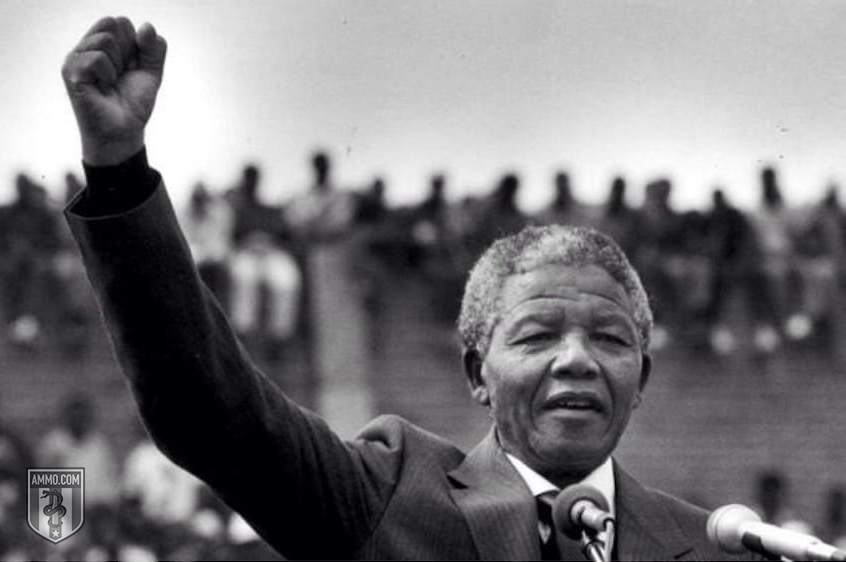
The ANC’s closest ally was the South African Communist Party. Indeed, Nelson Mandela, the face of anti-apartheid resistance, was not only a member of the SACP, he served on its Central Committee, something he denied for decades.
The SACP has never to this day contested its own candidates in South Africa, instead fielding their people on ANC slates.
What’s more, the SACP partnered with the ANC in forming Umkhonto we Sizwe (“Spear of the Nation”), the paramilitary wing of the anti-apartheid movement.
The average person on the street likely thinks that Nelson Mandela was imprisoned simply for being black or opposing apartheid.
In fact, he was imprisoned for a bombing campaign carried out by Umkhonto we Sizwe, of which he was the head. In fact, Nelson Mandela was convicted of 193 acts of terrorism.
He was offered his freedom multiple times on the simple condition that he condemn terrorist attacks against the apartheid regime. He refused every time.
The ANC was not the only organization in South Africa opposed to apartheid. Many white South Africans saw the system as unsustainable.
However, outside of South Africa, the situation was largely posed by the media as a question of “apartheid forever or the ANC.”
The ANC and its allies in the Communist Party and the trade union congress COSATU (known as the tripartite alliance) were not the only alternative to the ruling National Party and thus apartheid.
The Progressive Federal Party was the main parliamentary opposition to apartheid, which, as the name implies, was in favor of a federated South Africa. The New Republic Party was likewise in favor of power sharing and oriented toward reconciliation with the Commonwealth.
The New Republic Party and the Progressive Federal Party were also bitter enemies. The New Republic Party was a conservative party denounced as racists by the Progressive Federal Party.
The Progressive Federal Party was a liberal party derided by the NRP with the nickname “Packing for Perth,” due to the impression that their members were all emigrating to Australia.
Two-thirds of South African whites supported some sort of federalism or power sharing, but moderate elements never received any international support.
Nor was the ANC the sole representative of South African blacks. Zulu nationalists, currently represented by the Inkatha Freedom Party, were often bitter enemies of the ANC by the 1980s.
Many black South Africans served in the police force and other aspects of the government, leading to the rise of a barbaric form of retribution known as “necklacing.”
This is filling a tire with gasoline, hanging it around the neck of a suspected collaborator or political opponent, and lighting the tire on fire. Death can take several hours.
Winnie Mandela, then-wife of Nelson Mandela, declared that “With our boxes of matches, and our necklaces, we shall liberate this country.” This caused the ANC to create some distance between itself and her, but ultimately she was given further positions in the movement and the ANC government.

A Brief History of South Africa: The ANC in the Saddle

The Untold Story of South African Land Reform and Farm Murders
In 1994, the African National Congress took power in South Africa.
At this time, its paramilitary organization was integrated into the country’s regular defense forces. Convicted bomber Robert McBride, praised by no less than IRA terrorist Martin McGuinness, is the Executive Director of the Independent Police Investigative Directorate.
Touted as the “Rainbow Nation,” the fall of apartheid in South Africa was part of an overall feeling of optimism throughout the world surrounding the Fall of Communism.
However, not everything was roses in the new Republic of South Africa. The Truth and Reconciliation Commission was an attempt to lay bare the crimes of the apartheid regime.
The tribunal, which did not dispense with sentences, but merely sought to find the truth, has been criticized for not dispensing any justice. Neither former National Party government members nor ANC partisans were punished by the Commission.
The elephant in the room at all times was an overwhelming increase in the crime rate. The term “rape gate” entered popular parlance as South Africans installed panic room doors on their bedrooms.
Crime is the main reason for emigration from South Africa. The 2013 murder rate was seven times that of the United States, the 11th highest in the world. Between 2005 and 2015, over 200,000 South Africans were murdered – this in a country of about 50 million. There were over 17,000 murders in 2013 alone.
Compare this to just over 14,000 in the United States during the same year, despite the fact that South Africa’s population is approximately equivalent to two states – California and Texas.
This is only the official murder rate. Many suspect that the rate is higher, due to a disengagement from formal policing and a reliance upon private security firms.
Quality of public services has likewise deteriorated, with rolling blackouts being the norm in South Africa.
The ANC presides over what is potentially the largest welfare state in the world, according to economist Mike Schussler in 2010. Six percent (3.3 million South Africans) of the population pays 99 percent of the taxes, while 31 percent (16.4 million) receive social grants.
This means there are five South Africans receiving welfare for every one paying taxes. 71 percent of South African children live in houses where no adult is employed.
South Africa has a sweeping affirmative action quota program. Employee demographics must, under the South African Employment Equity Act, represent the racial demographics of South Africa as a whole.
This means that, for example, the national power company was pressured to fire a number of skilled white engineers, while the country was going through rolling blackouts. The country currently has a labor shortage of approximately 800,000 skilled workers.
The affirmative action program has not lead to a significant increase in the number of skilled black technical workers. In 1994, 15 percent of black South Africans held skilled technical positions.
In 2014, this percentage had increased to 18. Meanwhile, between 1992 and 1997, the number of skilled technical degrees dropped by 13 percent while the number of degrees in public administration and social services skyrocketed by 199 percent.
Finally, the specter of corruption has hung over the ANC regime. Scandals surrounding the ANC government have included bribery in arms deals, the abolition of a task force dedicated to organized crime and corruption, sexual misconduct including criminal charges, and using government and civil organizations to fight its political opponents, particularly those in the Democratic Alliance.

What Are the South African Farm Murders?
The Untold Story of South African Land Reform and Farm Murders
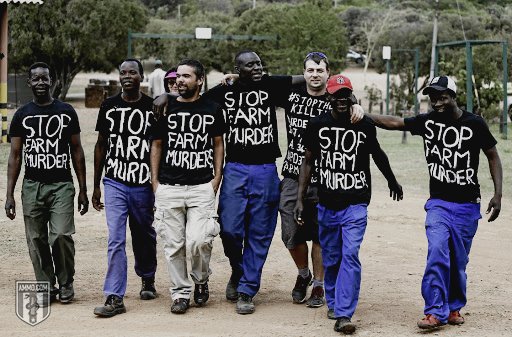
It is currently twice as dangerous to be a South African farmer than a South African police officer. The murder rate among South African farmers is three times that of the standard murder rate in South Africa, which is already one of the highest in the world.
The government claims the motives for the farm attacks are robbery. However, this does not pass muster. Farm attacks frequently include raping the female members of the household – including young children – while forcing the male members of the household to watch.
The victims are often then tortured to death in front of each other. Farmers claim police response to these attacks is sluggish at best and nonexistent at worse. The government stopped collecting statistics about farm murders in 2008.
What’s more, the attacks on white farmers in South Africa tend to have pitched levels of brutality about them. Without getting too lost in the weeds of the grizzly details, it’s worth mentioning some of the more grotesque attacks on farmers at least in passing:

  • In 2012, a 12-year-old boy was drowned in boiling water after watching both his parents murdered and his mother raped.
  • A 56-year-old grandmother was gang raped during a robbery netting approximately $2,000.
  • Five men sexually assaulted a woman in front of her 5-year-old son over the course of an hour and a half.
  • Over the course of six hours, a woman was tortured by having her skin cut off, raped and had her feet power drilled.
  • A 66-year-old man was beaten to death in front of his wife. She escaped being gang raped by saying that she had HIV.
  • Bedridden Alice Lotter, 76, and her daughter Helen, 57 were tortured to death over several hours, including by being stabbed in the genitals with a broken glass bottle. One had one of her breasts removed while still alive. “Kill the Boer” was painted on the wall in their blood.
  • Knowledge Mandlazi went on a killing spree in 2014, murdering five whites and stating that “My hate for white people made me rob and kill.” He held up his middle finger to surviving victims in the courtroom.

Another common form of attack is the land invasion. In one example, 100 men began squatting land. The farmer did the sensible thing and left. Who could blame him in the kind of environment described above?
Far from being a “white nationalist conspiracy theory,” farm attacks have been reported on and denounced by Human Rights Watch and former Australian Prime Minister Tony AbbotAfriforum, a wing of Christian trade union Solidarity, likewise reports on farm attacks regularly.

What Is Behind the South African Farm Attacks?
The Untold Story of South African Land Reform and Farm Murders
Anti-white racism is a popular current in mainstream South African politics. The song “Kill the Farmer, Kill the Boer” is still publicly sung, despite this being declared a hate crime.
The traditional means of protecting rural South Africans, the commando units, were disbanded in 2003, leaving many South African farmers with no protection.
Anti-white rhetoric in South Africa is very real and very mainstream. Here are a few examples:

Compare this with the woman sentenced to three years in prison for calling someone a “kaffir.” It’s not surprising that some South Africans have begun getting trained by Israeli commandos to protect themselves and their property.

What Are the Farm Seizures?
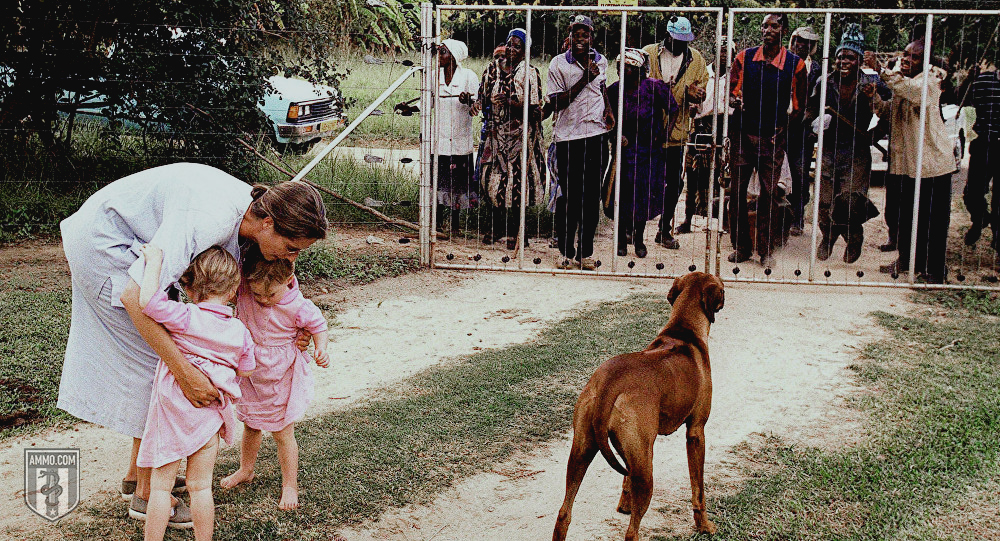
The Untold Story of South African Land Reform and Farm MurdersThe South African Constitution has recently been amended to allow for Soviet-style expropriations of farms without compensation. Zulu lands are specifically exempted.
This is a bit nonsensical for two reasons. Many white South Africans have been in South Africa longer than most Americans have been in America.
Second, the dominant black ethnic group, the Bantus, doesn’t have a strong claim to most of the land in South Africa – the Khoisans would, but they sold it to the Boers or had it conquered by the British.
This is as if the U.S. government started seizing land from white families in upstate New York traditionally belonging to the Iroquois and giving it out to the Cherokee.
Still, despite the fact that farm seizures are precisely the means by which Zimbabwe ended up in such a failed state, there seems to be no stopping farm seizures in South Africa.
Perhaps worst of all, there are rumors that South Africa’s banks intend to collect mortgage payments even after properties have been confiscated.
In the final analysis, the farm seizures in South Africa aren’t just about dispossessing an unpopular, market dominant racial minority – though that would be disturbing enough. It’s also a threat to South Africa’s incredibly fragile democracy.
The ANC is a dominant party with little chance of losing elections and thus, little reason to behave accountably. Add to this the lack of a broad-based middle class with a vested interest in strong property rights, and you have a recipe for kleptocracy and starvation.

Bibliography

Categories
All About Guns Anti Civil Rights ideas & "Friends"

Fearful that the Right-to-Carry was getting too much good publicity

Gun Control Twist: Saving One Life “Does Not Justify” Right-to-Carry

Opinion

If It Saves But One Life Boo Hoo

Fairfax, VA – -(Ammoland.com)- Gun control advocates often use some version of the phrase “if it saves one life” in order to justify their ineffective proposals.

This week, the anti-gun editorial page of the Chicago Sun-Times offered a different take.

Fearful that the Right-to-Carry was getting too much good publicity in the wake of an Illinois concealed carry permit holder’s heroic actions, the Sun-Times editorial board felt it necessary to lecture its readers, “One brave rescue of a Cicero cop doesn’t justify concealed guns.”
According to a news report from the Sun-Times, on September 13, Cicero Police Officer Luis Duarte and his partner were attempting to pull over a vehicle when the driver sped off. Officer Duarte and his partner gave chase and were able to immobilize the suspect’s car. Trapped, the driver retrieved a gun and fired at the officers, striking Officer Duarte four times.
As the officers and the suspect exchanged gunfire, a nearby motorist, and Right-to-Carry permit holder, exited his vehicle and came to the aid of the officers, firing at the gunman. The gunman was struck during the exchange and was later taken to the hospital in serious condition.
Following the incident, Cicero Police Superintendent Jerry Chlada praised the armed citizen, noting, “We were lucky enough to have a citizen on the street there who’s a concealed-carry holder, and he also engaged in gunfire.” Cicero town President Larry Dominick offered similar appreciation for the carry permit holder, stating, “He got out and started helping the police, which is something I’ve got to be proud of.” Illinois became a Right-to-Carry state in 2013, making it one of the more recent states to adopt a shall-issue permitting regime, and the last to adopt a system by which a citizen can be licensed to carry a gun for self-defense.
All of this commendation for the selfless act of an armed hero proved too much for the Sun-Times. Lamenting the support the incident might provide for the Right-to-Carry, the paper huffed, “Hang your argument on a single anecdote, and you can defend almost anything.” Going further, the editors argued that “one brave deed does not justify bad public policy.”
First, Right-to-Carry is not bad public policy. Right-to-Carry permit holders have proven themselves to be exceptionally law-abiding. Repeated examinations of Right-to-Carry permit holder revocation data in large states like Florida and Texas has shown that concealed carry permit holders are among the most law abidingdemographic in the country.
Second, instances of private individuals using firearms to defend themselves and others go well beyond the anecdotes that make the press. In his most recent analysis of the data on defensive gun uses, Florida State University Criminologist Gary Kleck determined that Americans use firearms for self-defense about 1 million times per year. Some of the Sun-Times’ ignorance on this matter might stem from the Center for Disease Control’s failure to report this information to the public.
To be sure, gun rights supporters enjoy individual stories of armed citizens confronting criminals – and there is no shortage of them. The Armed Citizen column, and before that Guns & Bandits, has been a staple of The American Rifleman since 1932. In 1996, NRA-ILA published a special compilation booklet of armed citizen stories where ordinary Americans had directly assisted law enforcement officers in their fight against crime.

The Sun-Times’s denigration of the Right-to-Carry and denial of defensive gun uses is nothing out of the ordinary. It’s the way they dismissed gun owners that is interesting.

Decades of anti-gun messaging has told the American public that if a gun control measure “saves just one life” any infringement on the rights of law-abiding gun owners is justified.

For example, in early 2013, President Barack Obama implored Congress to enact gun control by stating, “If there’s even one thing we can do to reduce this violence, if even one life we can save, we have an obligation to try it.” Vice-President Joe Biden reiterated the president’s sentiment, noting, “As the president said, if your actions result in only saving one life, they’re worth taking.”

A pair of older, Chicago-related examples occurred in the 1990s. In 1994, the Cook County Board of Commissioners passed a ban on commonly-owned semi-automatic firearms. Upon passage, Commissioner John P. Daley told the Sun-Times, “If this legislation saves one life, so be it.” In 1998, Mayor Richard M. Daley touted the Windy City’s frivolous lawsuit against the gun industry and other gun control measures in an op-ed for the Sun-Times. Demanding action, the mercurial mayor wrote, “One life lost is one too many.”
Coupled with the messaging of their anti-gun allies, the Sun-Times appears intent on creating a can’t-lose scenario for gun control. This holds that if even one life may be saved by a particular gun control measure, it must be adopted. However, if a measure permitting access to firearms for self-defense may save one life, it is not adequate justification to condone such freedom. Gun rights supporters should give this latest evolution in gun control rhetoric the same consideration as its traditional iteration: none.


National Rifle Association Institute For Legislative Action (NRA-ILA)
About:
Established in 1975, the Institute for Legislative Action (ILA) is the “lobbying” arm of the National Rifle Association of America. ILA is responsible for preserving the right of all law-abiding individuals in the legislative, political, and legal arenas, to purchase, possess and use firearms for legitimate purposes as guaranteed by the Second Amendment to the U.S. Constitution. Visit: www.nra.org

Categories
All About Guns Anti Civil Rights ideas & "Friends"

So who owns all the Guns out there?

More Truth Leaks Out About Gun Control

More Truth Leaks Out About Gun Control

U.S.A. -(Ammoland.com)- People with impressive titles tell us all sorts of things. These experts are often wrong. They are either talking outside their area of competence, or they are lying to us. I keep seeing examples like this about gun control. The more I learn, the more I have to trust my own research to be sure I have the truth. Have you noticed this too?

No One Owns Guns Anymore?

There is a claim that gun ownership is declining and most of the guns in the US are owned by only a few gun owners. I tried to take that story seriously since the report was from the Washington Post rather than the National Enquirer.
It is true that we don’t have solid nationwide data to evaluate that assertion that gun ownership is delining. We do have solid data from some states, and we have inferential data from across the country, both of which strongly contradict that claim.
The federal government doesn’t keep a registry of gun owners. However, gun shops use the FBI national instant background check system to see if a potential gun buyer is allowed to buy a gun. The number of background checks has grown year after year. Gun manufacturers also reported growing cumulative sales to the US market.

NICS Checks Per Month in Millions

In contrast to national data, some states register each gun and each gun owner. Anti-rights states like California, Illinois, New York, Connecticut and Massachusetts require mandatory permits before you can buy a gun. Some require a gun owner’s identification card as well.
These states have steadily increased the regulatory burden on gun owners, and that should have made gun ownership decline. If the existing gun owners in these states were the only people who buy guns, then the number of registered gun owners would have stayed the same or fallen. Instead, we saw the number of registered gun owners increase in these states.
We have other data as well. We saw the number of concealed carry license holders increase by about 6 percent to 17.25 million people. Deep in mind that 13 states allow citizens to carry without a permit.
Gun control advocates could argue the point. The growing number of registered gun owners in anti-gun states does not exactly follow the growth of gun ownership nationwide. It is true that each NICS background check does not conclusively document a gun sale. The extraordinary and undocumented claim by the Washington Post is that the number of gun owners declined even though all these other indicators went up.

Only white men living out in the country own guns?

We’ve been sold the story that gun owners are old white men. As I said before, we don’t know exactly who owns a gun. We have even less information about the sex and racial makeup of gun owners. As we dig deeper, we find out that even the NRA doesn’t know the racial mix of its members. However, the fundraising group Friends of the NRA does know the race of its members and guests. If there are a group of old, racist gun owners somewhere, then we should have found them here at Friends of the NRA..but we didn’t.
Instead, we found that 40 percent are women. 40 percent are minority members. The average age is between 40 to 45. That looks an awful lot like the rest of the USA.
The industry trade group for gun manufacturers gets reports from firearms retailers about their customers. 66 percent of new shooters are between 18 and 34 years old. 37 percent of new shooters are female. 47 percent of new shooters live in urban/suburban settings. That doesn’t fit the stereotype we were sold.
When you stop to think about it, it makes sense that older people own more guns than younger people. Older people have had a lifetime to accumulate wealth and possessions. They own more houses and more cars as well. It makes sense that they would also own the most guns.. almost.
It turns out that the rate of gun ownership is almost the same between people under 35 years of age, and those 35 and above. What is surprising is that young people are almost twice as likely to carry concealed.
Some states collect information on the sex and race of those who apply for concealed carry permits. More of us are carrying concealed each year, but the rate at which women and minorities are applying for their permits is growing at twice the average rate.

We’re killing our school children with assault rifles?

California Senator Dianne Feinstein asked questions of Judge Brett Kavanaugh during his confirmation hearings. Senator Feinstein said there were hundreds of school shootings with assault weapons in recent history. I went back over 60 years and counted three mass murders in US schools where semi-automatic rifles were used. None of the attacks used an automatic weapon. Not one.
If they were not mass murders, then maybe Senator Feinstein was confused by less deadly attacks on our schools? The US Department of Education said that there were 235 incidents where a gun was used at a school last year. That number doesn’t match the databases I’ve seen. In fact, it looks so strange that even National Public Radio questioned the claim. NPR used an independent research service to contact all of the schools who listed a gunshot on or near campus. NPR was able to confirm 11 incidents. Keep in mind that is about a dozen incidents among 130 thousand schools. The rate of 1 in ten thousand schools is certainly not an epidemic..and that is a good thing.

The US leads the world in mass murder?

 A professor from the University of Alabama released an unpublished report to the New York Times. The professor claimed that the US had 31 percent of the mass murders in the world from 1966 to 2012 even though the US only has 5 percent of the world’s population. No one was allowed to see the data.
Other researchers produced their own report and came up with very different answers. One report said the US had about 1.4 percent of the mass murders, again with a population of 5 percent. The US went from being the most dangerous, to one of the safer countries..and this data is available for review. What should we conclude when the headlines from the New York Times miss the target by a factor of 30 or more?

The more I learn, the more I have to trust my own research to be sure I have the truth.

Please let us know as you see more mistakes published by the press.


Slow Facts
About Rob Morse
The original article is here.  Rob Morse writes about gun rights at Ammoland, at Clash Daily, and on his SlowFacts blog. He hosts the Self Defense Gun Stories Podcast and co-hosts the Polite Society Podcast. Rob is an NRA pistol instructor and combat handgun competitor

Categories
Anti Civil Rights ideas & "Friends" Born again Cynic!

Asset Forfeiture Is THE Biggest .gov Scam Ever

____________________________________Justice


Maybe this ruling/agreement can be taken to other places. Philadelphia Will Dismantle Its Asset Forfeiture Program and Pay $3 Million to Victims.

Four years after Philadelphia police seized the home of Markela and Chris Sourovelis for a minor drug crime committed by their son, the city has agreed to almost completely dismantle its controversial civil asset forfeiture program and pay $3 million to its victims.
The Institute for Justice, a libertarian public interest law firm, announced today that the city had agreed to a settlement in a federal civil rights class-action lawsuit challenging its forfeiture program.

The Constitution (that document that no one reads anymore) maintains that government can’t impose excessive fines, and it also can’t take private property without just compensation. The way asset forfeiture works in this country violates both of those restrictions.

A 2015 report by the Pennsylvania chapter of the American Civil Liberties Union found that almost a third of cash forfeiture cases in Philadelphia involved money owned by people who had not been found guilty of a crime.

The “court” in which you had to appear to contest this was run by prosecutors – no judges, and no “court-appointed attorneys.” And it sounds like very little justice. (Hat tip to Irons in the Fire.)

Categories
Anti Civil Rights ideas & "Friends" Born again Cynic! Well I thought it was funny!

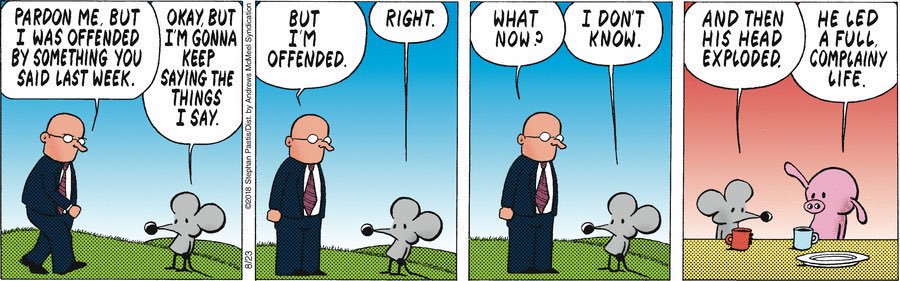
I say that we try this in the real World & see what happens!

Image result for Pearls Before Swine