Categories
A Victory! All About Guns Anti Civil Rights ideas & "Friends"

Hawaii Bans On High Capacity Magazines For Guns Fail At Legislature By Blaze Lovell

Some of the more restrictive measures to further tighten Hawaii’s already stringent gun laws are among dozens of bills failing to pass as the Legislature gets ready to wrap business in three weeks.

Bills that would have banned rifle magazines greater than 10 rounds and any gun that could fire 50-caliber rounds or more have stalled for this legislative session.

Most police reform measures have also failed this session, as have efforts to legalize recreational use of marijuana.

Even more bills could die between now and April 29, the day lawmakers are scheduled to adjourn the 2021 session.

House members take their oath of office on opening day of the 2021 legislature.
Lawmakers will further winnow bills as the legislative session approaches its end. Cory Lum/Civil Beat

The gun measures this year faced heavy opposition from local activists. Most vocal has been the Hawaii Firearms Coalition, which mobilized hundreds of its members to submit testimony to lawmakers opposing a variety of measures.

Senate Bill 301 would ban 10-round magazines while Senate Bill 307 would eliminate any firearm capable of shooting a 50-caliber round.

Both bills had a single referral to Rep. Mark Nakashima’s Judiciary and Hawaiian Affairs Committee but failed to get a hearing by a legislative deadline Friday afternoon.

Nakashima said in February that he wasn’t inclined to hear SB 301, noting gun reforms that the Legislature passed in previous sessions.

The House killed a similar measure in 2020, citing a pending California court case over magazine capacity bans. Todd Yukatake, an assistant director with the Hawaii Firearms Coalition, also pointed to the 9th U.S. Circuit Court of Appeals case Duncan v. Becerra as a reason to hold the bill.

SB 307, the ban on 50-caliber firearm, is also too broad, according to Yukatake. The bill could also capture some revolvers and big-game hunting rifles.

Sen. Karl Rhoads, who introduced the bill, has previously said the intent of banning weapons that can fire those large rounds was to prevent someone from sniping at people from more than a mile away.

“There’s few people in the world that can do that,” Yukatake said. “It’s not the rifle. It’s the skill of the person using it.”

The Senate on Tuesday is expected to take up measures regarding storage of firearms and a ban on so-called “ghost guns,” firearms assembled at home from various parts.

No New Police Data

Several other law enforcement measures are now dead.

Senate Bill 742 would require county police departments to collect more data on each police stop, arrest and use of force incident. The data would be used to inform police policies going forward, but the police chiefs of each of Hawaii’s four departments raised concerns that the addresses of crime victims might be revealed.

Under SB 742, the departments would be required to compile an annual report with all the data points requested in the bill, among them, the addresses of individuals who called police to report a crime.

The bill had the support of the American Civil Liberties Union Hawaii, which pushed for the measure in the wake of reports that Honolulu police disproportionately arrested and used force against Micronesians, Blacks, Samoans, Native Hawaiians and other Pacific Islanders.

SB 742 needed to clear Nakashima’s committee earlier this session by March 25, but he said Friday that he never scheduled the bill for a hearing because neither the advocacy organizations pushing for the bill nor the bill’s author asked him to move it forward.

Black Lives Matter supporters hold signs along Beretania Street fronting the Capitol.
Despite the national outcry for police reform in 2020, most measures in Hawaii failed to gain traction. Cory Lum/Civil Beat

“There are a lot of bills that come through, so if there are any kinds if requests to hear those, I try to hear those,” Nakashima said. “On this (SB 742), we got nothing.”

Though he didn’t schedule the bill, Nakashima said he is supportive of police collecting more data.

Meanwhile, Nakashima’s committee on Friday moved along Senate Bill 726, a ban on no-knock warrants in Hawaii. The bill and others like it in the U.S. were pushed forward after the police killing of Breonna Taylor, a Louisville, Kentucky, emergency worker who was shot to death in a botched police raid.

Though that bill moved forward, the Legislature largely dropped the ball on advancing police reform measures this session, despite nationwide calls for better accountability in policing. Bills to allow citizens to record police, ban chokeholds and eliminate the use of military-style equipment by police departments all dropped off earlier this session.

Pot Bills Die, Again

Hawaii also should not expect recreational pakalolo stores anytime soon.

Senate Bill 676 cleared the Senate in early March but never got a hearing in the House. The bill would have allowed anyone 21 years of age and older to possess a small amount of marijuana that could be purchased from dispensaries licensed under a state-run program.

And Hawaii lawmakers don’t appear ready yet to further decriminalize larger amounts of marijuana.

In 2019, lawmakers decriminalized the possession of up to 3 grams of weed. Senate Bill 758 sought to increase that amount more than eightfold. Like SB 676, the decriminalization measure also never got a House hearing.

Categories
All About Guns Anti Civil Rights ideas & "Friends"

MailOnline US - news, sport, celebrity, science and health stories

Biden says ‘no Amendment in the Constitution is absolute’ and calls gun violence ‘a public health crisis’ and ’embarrassment’ as he prepares to sign SIX executive orders cracking down on firearms

  • President Joe Biden described mass shootings in America as a ‘public health crisis’ and declared ‘no amendment to the constitution is absolute’ 
  • He unveiled a series of executive orders designed to curb gun violence
  • ‘Gun violence in this country is an epidemic and it’s an international embarrassment,’ he said 
  • ‘Nothing I’m about to recommend in any way impinges on the Second Amendment. These are phony arguments,’ Biden said 
  • More actions expected with Biden saying this is ‘just a start’ 
  • Biden was joined by Vice President Kamala Harris and AG Merrick Garland
  • In audience were Jill Biden, Doug Emhoff and Gabby Giffords 
  • Biden unveiled six actions his administration is taking: a crackdown on the proliferation of ‘ghost guns,’ which are built from kits
  • Also will tighten requirements on pistol braces that allow for more accurate shooting; the DoJ will publish ‘red flag’ legislation for the states
  • Invest in evidence-based community violence interventions; and DoJ will issue an annual report on gun trafficking 

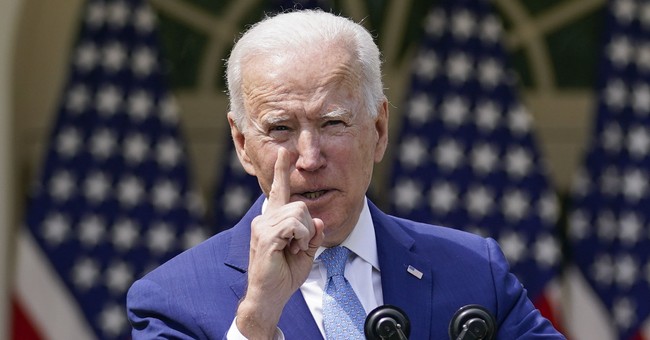
President Joe Biden on Thursday described mass shootings in America as a ‘public health crisis’ and declared ‘no amendment to the constitution is absolute’ as he unveiled a series of executive orders designed to curb gun violence.

He started off on the defensive, declaring he was not trying to impinge on the Second Amendment, an argument gun rights groups, Republicans and some Democrats have made.

Biden unveiled six actions his administration is taking: a crackdown on the proliferation of ‘ghost guns,’ which are built from kits; tighten requirements on pistol braces that allow for more accurate shooting; the Department of Justice will publish ‘red flag’ legislation for the states; invest in evidence-based community violence interventions; and DoJ will issue an annual report on gun trafficking.

‘Nothing I’m about to recommend in any way impinges on the Second Amendment. These are phony arguments, suggesting that these are second amendment rights at stake,’ he said at the event in the Rose Garden.

‘No amendment to the constitution is absolute,’ Biden declared, pointing to the famous Supreme Court ruling that you can’t yell fire in a crowded theater as part of the First Amendment’s free speech clause.

‘From the very beginning you couldn’t own any weapon you wanted to own, and from the very beginning of the Second Amendment existed certain people weren’t allowed to have weapons. So the idea is just bizarre to suggest that some of the things we’re recommending are contrary to the Constitution,’ he said.  ‘Gun violence in this country is an epidemic and it’s an international embarrassment.’

‘For God’s sake, it has to stop.’

Biden says no Amendment ‘is absolute’ in new gun crackdown
President Joe Biden was joined in the Rose Garden by Vice President Kamala Harris and Attorney General Merrick Garland in his announcement on new gun control measures

President Joe Biden was joined in the Rose Garden by Vice President Kamala Harris and Attorney General Merrick Garland in his announcement on new gun control measures

First lady Jill Biden was in the Rose Garden for Biden's announcement

First lady Jill Biden was in the Rose Garden for Biden’s announcement

Gun control advocate Gabby Giffords - the congresswoman shot by a constituent at an event in Tucson, Ariz., in 2011 - was in the Rose Garden for the announcement

Gun control advocate Gabby Giffords – the congresswoman shot by a constituent at an event in Tucson, Ariz., in 2011 – was in the Rose Garden for the announcement

Biden was joined in the Rose Garden by Vice President Kamala Harris and Attorney General Merrick Garland. Sitting in the audience were first lady Jill Biden, second gentleman Doug Emhoff, advocate Gabby Giffords – the congresswoman shot by a constituent at an event in Tucson, Ariz., in 2011 – and several Democratic lawmakers who have pushed for gun control legislation on Capitol Hill.

At several points his speech was interrupted by applause from the Democratic-friendly crowd.

After his remarks, Biden jogged down from the podium to give Giffords an elbow bump. She blew him a kiss. ‘I wasn’t supposed to do that,’ he said afterward, adding: ‘Let’s get to work.

Biden’s speech centered on how gun violence affects Americans lives, particularly children, and pointed out its cost to the nation.

‘Gun violence in our neighborhood is having profound impact on our children, even if they’re never involved,’ he said, noting gun violence costs the country $280 billion a year.

‘We can save lives, create safe and healthy communities, and build economies that work for all of us, and save billions of American dollars,’ Biden said.

The orders are the first of what is expected to be a series of actions by the Biden’s administration, which has faced increased pressure to tackle the issue in the wake of mass shootings in Atlanta and Boulder, Colo. Ahead of Biden’s remarks, aides called the actions an ‘initial’ offering.

‘Folks this is just the start,’ the president said.

Biden called on the Senate to pass three House-approved bills that would bring universal background checks including on private gun sales; close what is known as the ‘Charleston loophole,’ which allows a gun sale to go through if a background check isn’t finished after three days; and reauthorize the Violence Against Women Act.

‘They’ve offered plenty of thoughts and prayers members of Congress, but they not passed a single new federal law to reduce gun violence,’ he said.

‘Enough prayers. Time for action.’

State laws differ on background checks. Tennessee, for example, on Thursday become the latest state to allow most adults 21 and older carry handguns without first clearing a background check after Gov. Bill Lee signed the measure into law.

And Biden’s son Hunter Biden may have committed a felony offense by lying on a background check before purchasing a gun, according to a report in Politico out last month.

Hunter Biden answered ‘no’ in response to the question ‘Are you an unlawful user of, or addicted to, marijuana or any depressant, stimulant, narcotic drug, or any other controlled substance?’ as part of the background check. He has admitted to being an addict and wrote a memoir – ‘Beautiful Things’ – about his experiences.

 FACT CHECK

GUN SHOWS: President Biden fumbled a line in the speech when he talked about background checks in gun shows.

‘Most people don’t know you walk into a store and you buy a gun, you have a background check, but you go to a gun show, you can buy whatever you want, no background check,’ he said.

Then Biden brought up the Charleston loophole, which allows a gun sale to go through if a background check isn’t finished after three days, and he’s calling on Congress to close.

CHECK: But he fumbled the explanation of gun shows: most states do not require background checks for firearms purchased at gun shows from private individuals but federal law only requires licensed dealers to conduct checks.

SECOND AMENDMENT: Biden said in his speech: ‘From the very beginning you couldn’t own any weapon you wanted to own, and from the very beginning of the Second Amendment existed certain people weren’t allowed to have weapons,’ he said.

CHECK: Biden has made similar claims in the past and Politifact fact checked a May 2020 assertion when Biden argued during the presidential campaign that ‘from the very beginning you weren’t allowed to have certain weapons. You weren’t allowed to own a cannon during the Revolutionary War as an individual.’

LAWSUITS: Biden claimed ‘the only industry in America, a billion-dollar industry, that can’t be sued – that’s exempt from being sued – are gun manufacturers.’

CHECK: Biden was likely referring to the 2005 Protection of Lawful Commerce that protects gun manufacturers from being held liable in cases when people commit crimes using their products.

But gun manufacturers can be sued in some areas – such as if their product doesn’t work.

BIDEN’S CRACKDOWN ON GUNS

 The Justice Department, within 30 days, will issue a proposed rule to help stop the proliferation of ‘ghost guns.’

We are experiencing a growing problem: criminals are buying kits containing nearly all of the components and directions for finishing a firearm within as little as 30 minutes and using these firearms to commit crimes. When these firearms turn up at crime scenes, they often cannot be traced by law enforcement due to the lack of a serial number. The Justice Department will issue a proposed rule to help stop the proliferation of these firearms. ‘Anyone from a criminal to a terrorist can buy this kit as little as 30 minutes put together a weapon,’ President Biden said in his remarks.

The Justice Department, within 60 days, will issue a proposed rule to make clear when a device marketed as a stabilizing brace effectively turns a pistol into a short-barreled rifle subject to the requirements of the National Firearms Act.

‘We want to treat pistols modified with stabilizing braces with the seriousness they deserve,’ Biden said. The alleged shooter in the Boulder tragedy last month appears to have used a pistol with an arm brace, which can make a firearm more stable and accurate while still being concealable.

The Justice Department, within 60 days, will publish model ‘red flag’ legislation for states 

Red flag laws allow family members or law enforcement to petition for a court order temporarily barring people in crisis from accessing firearms if they present a danger to themselves or others. The President urged Congress to pass an appropriate national ‘red flag’ law, as well as legislation incentivizing states to pass ‘red flag’ laws of their own. ‘These laws allow a police, or a family member to petition, a court in their jurisdiction, and say, I want you to temporarily remove from the following people, any firearm that they possess, because they’re a danger and a crisis, they’re presenting a danger to themselves and others,’ Biden said. In the interim, the Justice Department’s published model legislation will make it easier for states that want to adopt red flag laws to do so.

The Administration is investing in evidence-based community violence interventions 

Community violence interventions are proven strategies for reducing gun violence in urban communities through tools other than incarceration. Because cities across the country are experiencing a historic spike in homicides, the Biden-Harris Administration is taking a number of steps to prioritize investment in community violence interventions. Biden said reducing gun violence in communities ‘can save lives, create safe and healthy communities, and build economies that work for all of us, and save billions of American dollars.’

The Justice Department will issue an annual report on firearms trafficking 

In 2000, the Bureau of Alcohol, Tobacco, and Firearms (ATF) issued a report summarizing information regarding its investigations into firearms trafficking, which is one way firearms are diverted into the illegal market where they can easily end up in the hands of dangerous individuals. Since the report’s publication, states, local, and federal policymakers have relied on its data to better thwart the common channels of firearms trafficking. But there is good reason to believe that firearms trafficking channels have changed since 2000, for example due to the emergence of online sales and proliferation of ‘ghost guns.’ The Justice Department will issue a new, comprehensive report on firearms trafficking and annual updates necessary to give policymakers the information they need to help address firearms trafficking today.  ‘This report will better help policymakers address firearms trafficking as it is today,’ Biden said.

 In his remarks, Biden announced tighter regulations requiring buyers of so-called ‘ghost guns’ to undergo background checks.

‘Ghost guns’ are normally assembled from parts and milled with a metal-cutting machine and often lack serial numbers used to trace them.

‘Anyone from a criminal to a terrorist can buy this kit as little as 30 minutes put together a weapon,’ Biden said in his remarks.

It’s legal to build a gun in a home or a workshop and there is no federal requirement for a background check.

The Bureau of Alcohol, Tobacco, Firearms and Explosives estimated 10,000 ghost guns were recovered by law enforcement in 2019. They are seen as a growing problem in America.

Biden also went after pistol braces that allow for more accurate shooting, saying he make them subject to the requirements of the National Firearms Act. The gunman in the recent Boulder shootings used a pistol brace, which can transform a pistol  into a short-barrel rifle.

Additionally, Biden named gun control advocate David Chipman as his nominee to head the Bureau of Alcohol, Tobacco, Firearms and Explosives. Chipman, a veteran ATF agent, headed Giffords’ gun control advocacy group.

Biden named gun control advocate David Chipman as his nominee to head the Bureau of Alcohol, Tobacco, Firearms and Explosives. Chipman, a veteran ATF agent, headed Giffords' gun control advocacy group

Biden named gun control advocate David Chipman as his nominee to head the Bureau of Alcohol, Tobacco, Firearms and Explosives. Chipman, a veteran ATF agent, headed Giffords’ gun control advocacy group

The ATF has not had a confirmed permanent director since 2015. It is currently run by Acting Director Regina Lombardo.

He also repeated his call to allow for the suing of gun manufacturers by victims of gun violence.

‘If I get one thing on my list, if the Lord came down and said Joey, you one of these, give me that one,’ Biden said.

Congress in 2005 passed the Protection of Lawful Commerce in Arms Act, which gave gun manufacturers a large amount of immunity from being sued for monetary damages by victims of gun violence and their relatives.

White House press secretary Jen Psaki was questioned at Thursday’s briefing about Biden’s desire to end immunity for gun manufacturers. As a presidential candidate, Biden said one of his first actions would be to send legislation to Capitol Hill on the issue.

‘There’s no holdup it. Just legislation needs to be reintroduced,’ Psaki said on the issue.

‘He is leading the charge by advocating for this moving forward by using the bully pulpit of his presidency in the Rose Garden to advocate for this legislation moving forward. It is the role of Congress, of course, to push legislation forward to vote on it to move it through committees, and he certainly is hopeful they’ll do exactly that on this issue,’ she noted.

The president’s announcement falls short of the sweeping crackdown on guns he campaigned on while his administration tries to figure out how to pass tougher legislation through Congress with stiff Republican opposition.

A few Republicans have expressed outrage at Biden’s executive orders, which would have to be challenged in a court of law.

Rep. Lauren Boebert of Colorado, who campaigned for Congress with her glock at her side, urged Republican state attorneys general to challenge the orders in court.

‘Republican Attorney Generals, get ready to fight the Biden executive orders on gun control all the way! I’ll be doing my part from the House! Let’s ensure we stop this tyrant,’ she tweeted.

House Republican Leader Kevin McCarthy said in a statement: ‘Today, President Biden announced his attempts to trample over our constitutional Second Amendment rights by executive fiat.’

And Republican Sen. Ted Cruz of Texas argued the answer wasn’t more legislation but a crackdown on those who used guns in crimes.

‘The right to keep and bear arms is fundamental for preserving our liberty. The answer is not to restrict the Second Amendment rights of law-abiding citizens, the answer is to go after violent criminals and come down on them like a ton of bricks,’ he tweeted.

And Rep. Marjorie Taylor Greene of Georgia tweeted a photo of herself with an AK-47, writing: ‘The right of the people to keep and bear arms SHALL NOT be infringed!’

Biden has faced increasing pressure to act after a spate of mass shootings across the U.S. in recent weeks – including rampages in massage spas in Atlanta and a grocery store in Boulder, Colorado.

But the White House has repeatedly emphasized the need for legislative action on guns.

But it’s highly unlikely the House measures would get the 60 votes needed to proceed in the 50-50 Senate. It’s not just Republican objections, Democratic Senator Joe Manchin of West Virginia has expressed opposition to the House measures.

The homemade firearms – often assembled from parts and milled with a metal-cutting machine – often lack serial numbers used to trace them

Categories
All About Guns Anti Civil Rights ideas & "Friends"

Tucker torches Biden’s pick to head ATF is an ‘unhinged’ man

Categories
All About Guns Anti Civil Rights ideas & "Friends"

From the NRA – Hunter Biden Incident Shows that Gun Laws are for the Little People (I am not surprised at all by this are you?)

Hunter Biden Incident Shows that Gun Laws are for the Little People

There is a central hypocrisy at the heart of the gun control effort. High-profile gun control-supporting politicians, the Hollywood elite, and billionaire tycoons, will advocate to strip ordinary Americans of their right to defend themselves and their family, all the while enjoying the security that armed men with guns provide.

As Hunter Biden’s 2018 firearm incident shows, this hypocrisy extends even to incidents where a high-profile individual has taken the step of procuring their own firearm. The message from these elites could not be clearer: Gun laws are only for the little people.

For those who have yet to learn of Hunter’s escapades in firearm ownership, according to a report from Politico, the troubled son of the president purchased a .38-caliber revolver from a Delaware Federal Firearms Licensee (FFL) on October 12, 2018.

In order to acquire the gun, Hunter filled out the required BATFE Form 4473. On October 23, Hallie Biden, widow to Joe Biden’s son Beau and then-companion to Hunter, searched the ne’er-do-well’s truck, which was parked at her home in Wilmington, Del., and found the handgun.

Apparently fearing for Hunter’s safety, Hallie wrapped the revolver in a shopping bag and threw it into a trash receptacle outside nearby gourmet grocery store Janssen’s Market – which is located across the street from the campus of Alexis I. du Pont High School.

Later that day, after Hunter told Hallie to retrieve the firearm, Hallie returned to where she had disposed of the gun but could not find it. At this point law enforcement was notified of the missing firearm, prompting an investigation that reportedly involved the Delaware State Police, the United States Secret Service, and the Federal Bureau of Investigation.

As it happens, between Hallie’s disposal of the firearm and her return to the market, a man who routinely searches the store’s trash receptacles for recyclables recovered the firearm. This man returned the revolver a few days after finding it.

According to Politico, prior to the firearm’s return a pair of Secret Service agents visited the FFL where Hunter purchased the firearm in an attempt to obtain the corresponding Form 4473.

The Politico report noted,

Secret Service agents approached the owner of the store where Hunter bought the gun and asked to take the paperwork involving the sale, according to two people, one of whom has firsthand knowledge of the episode and the other was briefed by a Secret Service agent after the fact.

The gun store owner refused to supply the paperwork, suspecting that the Secret Service officers wanted to hide Hunter’s ownership of the missing gun in case it were to be involved in a crime, the two people said. The owner, Ron Palmieri, later turned over the papers to the Bureau of Alcohol, Tobacco, Firearms, and Explosives, which oversees federal gun laws.

As has been made clear in a previous item regarding this incident, NRA does not allege that Hunter or Hallie engaged in any criminal conduct. However, Hunter and Hallie’s conduct give rise to several legal questions.

Hunter was discharged from the U.S. Navy Reserve in 2014 after he tested positive for cocaine. Further, at various times, Hunter has been a notorious and admitted drug user. Hunter’s lengthy battle with drugs has been chronicled by himself and the Biden family in numerous interviews and a forthcoming memoir titled, “Beautiful Things.”

An April 1, 2020 USA Today piece on Hunter’s memoir contained the following summary of some of its contents,

In the spring of 2018, he used his “superpower – finding crack anytime, anywhere” – in Los Angeles. At one point, a dealer pointed a gun at his head before he realized Biden was looking for drugs.

He later learned how to cook drugs and spent a lot of time with thieves, addicts and con artists. “I never slept. There was no clock. Day bled into night and night into day,” he writes.

The situation grew out of control. “I was smoking crack every 15 minutes,” he writes.

Biden returned to the East Coast in the fall of 2018, again wanting to get better, though that didn’t happen.

Eventually, his family tried to stage an intervention. “I don’t know what else to do,” Joe Biden told him. “I’m so scared. Tell me what to do.” His son replied: “Not (expletive) this.” 

It wasn’t until he met now-wife Melissa Cohen in Los Angeles – whom he married after only a week of knowing – that he got sober again. They told each other they loved each other on their first date; she had the same eyes as Beau, he writes. She championed his sobriety and dumped out his crack.

It is illegal for a person “who is an unlawful user of or addicted to any controlled substance” to possess a firearm. Possession of a firearm by a prohibited person is punishable by up to 10 years imprisonment.

In order to purchase a firearm from an FFL, a buyer must fill out a Form 4473. The form asks, “Are you an unlawful user of, or addicted to, marijuana or any depressant, stimulant, narcotic drug, or any other controlled substance?” Hunter answered “no” to this question.

Lying on a form 4473 is two separate crimes. It is a crime when a person “knowingly makes any false statement or representation with respect to the information required by this chapter to be kept in the records of a person licensed under this chapter,” such as the Form 4473. A violation of this provision is punishable by up to 5 years imprisonment. It is also a crime for a person to “make any false or fictitious oral or written statement” to a dealer “with respect to any fact material to the lawfulness of the sale.” A violation of this provision is punishable by up to 10 years imprisonment.

Janssen’s Market is located less than 250 yards from the campus of Alexis I. du Pont High School.

As a U.S. senator, Joe Biden was a key proponent of the federal Gun-Free School Zones Act of 1990. The initial version of this unconstitutional and unwise policy was struck down by the U.S. Supreme Court in U.S. v. Lopez. A later, similarly constitutionally dubious, version remains on the books.

18 USC 922(q)(2)(A) provides,


(A) It shall be unlawful for any individual knowingly to possess a firearm that has moved in or that otherwise affects interstate or foreign commerce at a place that the individual knows, or has reasonable cause to believe, is a school zone.

18 USC 921 (a)(25) defines school zone as,

(25) The term “school zone” means—

(A) in, or on the grounds of, a public, parochial or private school; or

(B) within a distance of 1,000 feet from the grounds of a public, parochial or private school.

18 USC 922(q)(2)(B) does provide for some exemption for possession of a firearm,

(i) on private property not part of school grounds;

(ii) if the individual possessing the firearm is licensed to do so by the State in which the school zone is located or a political subdivision of the State, and the law of the State or political subdivision requires that, before an individual obtains such a license, the law enforcement authorities of the State or political subdivision verify that the individual is qualified under law to receive the license;

(iii) that is—

(I) not loaded; and

(II) in a locked container, or a locked firearms rack that is on a motor vehicle;

(iv) by an individual for use in a program approved by a school in the school zone;

(v) by an individual in accordance with a contract entered into between a school in the school zone and the individual or an employer of the individual;

(vi) by a law enforcement officer acting in his or her official capacity; or

(vii) that is unloaded and is possessed by an individual while traversing school premises for the purpose of gaining access to public or private lands open to hunting, if the entry on school premises is authorized by school authorities.

Maybe Hallie had a Delaware License to Carry a Concealed Deadly Weapon or placed the firearm in a locked container while she brought the gun to the store. However, a reasonable person might wonder whether an individual who would throw a handgun wrapped in a shopping bag away in a publicly accessible trash receptacle, would comport their conduct within these narrow exceptions while traversing the public roadways to Janssen’s Market.

If Hunter and Hallie are guilty of any illegal conduct, it’s difficult to fault the pair for ignoring the potential legal ramifications of their actions. After all, these gun control measures were not designed to be followed by well-connected elites like them.

This point is underscored by the Secret Service’s alleged involvement in the case. Rather than having their conduct scrutinized by federal law enforcement, if the Politico report and Hunter’s contemporaneous text messages are to be believed, the federal government tried to cover up for the prominent pair.

As well-protected politicians and their establishment allies push for new gun controls, ordinary law-abiding Americans should know that these hypocrites have no intention of parting with their own elaborate security measures or being otherwise inconvenienced by the burdens they foist upon the rest of us.

————————————————————————————Hey its a small Club and we are not in it & never will be! Grumpy


Categories
All About Guns Anti Civil Rights ideas & "Friends"

The Battle of the Arm Brace By KEVIN D. WILLIAMSON

A bump fire stock at a shop in Orem, Utah, October 4, 2017 (George Frey/Reuters)

Every so often, some very strange and exotic-seeming financial instrument goes bust in a categorical fashion, and people ask: “Why does this thing even exist in the first place?” The answer is almost always regulation, if you drill down far enough. This isn’t to say that regulation is categorically bad or that we shouldn’t regulate finance, only that regulations produce reactions. Credit-default swaps, for example, are a way of providing default insurance on bonds and other debt obligations in a way that avoids some regulatory hassles.

As it is in structured finance, so it is in firearms. The “bump stock” used by the Las Vegas killer is one of many inventions meant to get around the restrictions on fully automatic firearms, which as a practical matter amount to a general prohibition. The firearm the Boulder shooter used is described as an AR-type pistol with an arm brace. These exist mainly as a way to get around federal restrictions on “short-barreled rifles,” which you can buy only if you satisfy a cumbrous qualification process and comply with extensive regulations.

There isn’t really any good reason to restrict short-barreled rifles: Shorter barrels usually result in less power and inferior accuracy — they generally are less deadly than their full-sized counterparts. Shorter rifles are easier to conceal, but not as easy as a handgun.

AR-style “pistols” of the sort used in Boulder are basically short-barreled AR rifles with the shoulder stocks removed. They aren’t really handguns, though they are classified, sold, and regulated that way. They are not easy to shoot well, and so aftermarket innovators have created a number of devices to help with that, including “forearm braces” that can be used, if you are so inclined, as an uncomfortable improvised shoulder stock, which in my experience is what about 99.44 percent of shooters do. It’s a short-barreled rifle in all but name, a product that evolved in the marketplace in response to federal restrictions.

Rifle cartridges are generally more powerful than handgun cartridges, but there are lots of exceptions. There are revolvers, for example, that fire rounds considerably more powerful (as measured by muzzle energy) than the 5.56mm rounds typically found in AR-type rifles.

So, expect to hear demands for new restrictions on arm braces or on “assault pistols.” Like expanded background checks, such restrictions would be unlikely to have any effect on mass shootings and almost certainly would have zero effect on the nontheatrical violent crime that makes up the bulk of American criminal violence.

There are things that Joe Biden could legally, ethically, and intelligently do — today — to address shootings. The U.S. attorneys who refuse to prosecute most ordinary straw-buyer cases all work for him. So do the guys over at the ATF who can’t be bothered to go pick up an improperly transferred firearm when they erroneously approve a sale. Biden instead is calling for unworkable and unconstitutional measures that would provide excellent opportunities for culture-war skirmishes but would do nothing to stop the bloodshed.

He could — if he could be bothered — order the people who work for him to do their damned jobs. That is a thing that could happen. That it isn’t happening — that it hasn’t already happened — is how you know the Biden administration is not serious about this.


Categories
Anti Civil Rights ideas & "Friends" Dear Grumpy Advice on Teaching in Today's Classroom Grumpy's hall of Shame Some Sick Puppies!

May he rot in Hell – Vasily Blokhin, history’s most prolific executioner

Vasili Mikhailovich Blokhin

Vasily Mikhailovich Blokhin.

Vasily Blokhin is recorded as having executed tens of thousands of prisoners by his own hand, including his killing of about 7,000 Polish prisoners of war during the Katyn massacre in spring 1940, making him the most prolific official executioner in recorded world history. He was the NKVD major in charge of executing the Polish officers from the Ostashkov camp, and he believed in personally doing the killing that his superiors had ordered him to supervise.

Born in 1885, he was known as the NKVD’s chief executioner, having been hand-picked for this position by Joseph Stalin himself. Blokhin personally killed tens of thousand of men and women during Stalin’s Great Purges of the 1930s, so it was only natural that the NKVD would turn to him when it came time to dispatch the officers held in the Soviet prison camps. Along with a team of about thirty NKVD men from Moscow, mainly drivers and prison guards, Blokhin arrived at the NKVD prison in Kalinin (Tver) and set himself up in a sound-proofed cellar room that had a sloping floor for drainage. He then put on his special uniform, consisting of a leather cap, long leather apron, and elbow-length gloves. On a table next to him was a briefcase filled with his own personal Walther PPK pistols, for Blokhin, a true artist at his trade, would use no one else’s tools but his own.

Vasili Blokhin's official photo

Vasily Blokhin’s official photo.

After the prisoner’s identity was verified, he was brought handcuffed into the cellar room where Blokhin awaited in his long apron, like some horrible butcher. One guard later testified: “The men held [the prisoner’s] arms and [Blokhin] shot him in the base of the skull…that’s all”. Blokhin worked fast and efficiently, killing an average of one men every three minutes during the course of ten-hour nights – the killings were always done at night, so that the bodies could be disposed of in darkness.

Although this has never been completely proven, historians suspect that Blokhin shot 7,000 men over a period of twenty-eight days, which would make him one of the most prolific murderers of all time. However many people he killed, Blokhin was consistently promoted by his superiors for performing “special tasks”. He lost his job after Stalin died. The cause of Blokhin’s death, in 1955, was listed as suicide.
Katyn massacre
The Katyn massacre, also known as the Katyn Forest massacre was a mass execution of Polish nationals carried out by the People’s Commissariat for Internal Affairs (NKVD), the Soviet secret police, in April and May 1940. The massacre was prompted by NKVD chief Lavrentiy Beria’s proposal to execute all captive members of the Polish Officer Corps, dated 5 March 1940. This official document was approved and signed by the Soviet Politburo, including its leader, Joseph Stalin. The number of victims is estimated at about 22,000.

Interesting facts:

  • Blokhin initially decided on an ambitious quota of 300 executions per night; and engineered an efficient system in which the prisoners were individually led to a small antechamber—which had been painted red and was known as the “Leninist room”—for a brief and cursory positive identification, before being handcuffed and led into the execution room next door. The room was specially designed with padded walls for soundproofing, a sloping concrete floor with a drain and hose, and a log wall for the prisoners to stand against.
  • He had brought a briefcase full of his own Walther pistols, since he did not trust the reliability of the standard-issue Soviet TT-30 for the frequent, heavy use he intended. The use of a German pocket pistol, which was commonly carried by German police and intelligence agents, also provided plausible deniability of the executions if the bodies were discovered later. Another reason he used the Walther rather than his standard issue Tokarev was the blow back. The Walther’s lower recoil made it easier for him (as well as other executioners for the NKVD) to kill large numbers of people in one night. Walthers were readily available due to the cooperation between the Soviets and Nazi’s in which the Germans ended up giving a fair amount of arms to their Soviet Allies.
  • Each night, 24–25 trenches, measuring eight to ten meters (24.3 to 32.8 feet) total, were dug by a bulldozer to hold the night’s corpses, and each trench was covered up before dawn.
  • Blokhin and his team worked without pause for ten hours each night, with Blokhin executing an average of one prisoner every three minutes. At the end of the night, Blokhin provided vodka to all his men.
  • On April 27, 1940, Blokhin secretly received the Order of the Red Banner and a modest monthly pay premium as a reward from Joseph Stalin for his “skill and organization in the effective carrying out of special tasks”.
  • His count of 7,000 shot in 28 days remains the most organized and protracted mass murder by a single individual on record; and saw him being named the Guinness World Record holder for ‘Most Prolific Executioner’ in 2010.
  • Blokhin’s rank was stripped from him in the de-Stalinization campaigns of Nikita Khrushchev. He reportedly sank into alcoholism, went insane, and died February 3, 1955, with the official cause of death listed as “suicide”.
  • The Soviet government admitted that the Soviet Secret Police were responsible for the Katyn massacre in 1990. Before that they claimed that the Germans did it. The Germans actually invited an international delegation to investigate the mass grave in 1943, which also concluded that the Soviets had done it. In order to try to ‘get away’ with it, the Soviets staged show trials against German POWs to blame them for Katyn, and tried to hold German defendants accountable for Katyn at Nuremberg (which the Allies refused).

Vasily Blokhin was buried in 1955 at the Novodevichy Cemetery. In the late 1960’s, after Khrushchev era ended, the titles and medals were returned to him, and he himself was rehabilitated by the state. The history’s most prolific executioner found a tomb to rest, unlike ten thousands of people killed by him.
Vasili Blokhin tomb

Vasily Blokhin tomb.

Categories
All About Guns Allies Anti Civil Rights ideas & "Friends" California

Sadly there is way too much true in there to be funny!

No photo description available.

Categories
Anti Civil Rights ideas & "Friends"

Something that I have suspected for quite a while!

Categories
All About Guns Anti Civil Rights ideas & "Friends"

National Review – Biden’s Ill-Considered Gun-Control Gambit

Addressing the abominable news from Boulder, Colo., on Monday, President Biden acknowledged that he was “still waiting for more information regarding the shooter.” And then, without pausing for breath, he said it: “I don’t need to wait another minute, let alone an hour,” Biden affirmed, “to take commonsense steps that will save the lives in the future and to urge my colleagues in the House and Senate to act.”

With respect, Mr. President, you do.

In front of the cameras, Biden called upon the Senate to pass “universal background checks.” But Colorado, in which these killings took place, already has such a system — and, besides, the shooter bought his gun from a store, not privately, passing a background check in the process. Responding to Biden’s demand, Senator Marco Rubio was justifiably confused. “I just don’t understand why everybody keeps focusing on that,” Rubio said. “It wouldn’t have prevented any of these shootings.”

The president’s other ideas were just as ill-considered. As he confirmed once again, Biden hopes to prohibit the sale of certain cosmetically displeasing rifles and to ban magazines that are capable of holding more than ten rounds. But, as one of the architects of the now-expired 1994 “assault-weapons ban,” he should know better than that. Not only are so-called “assault weapons” used so infrequently in crimes that the FBI does not even keep statistics — rifles of all types, recall, are used less frequently as murder weapons than are hammers, fists, or knives — but the evidence that prohibiting them does anything of consequence is non-existent.

When, in 2004, the “assault-weapons” ban was up for renewal, a report issued by the Department of Justice submitted that “should it be renewed, the ban’s effects on gun violence are likely to be small at best and perhaps too small for reliable measurement.” Congress let it lapse, and, since then, the evidence has become no stronger. In their 2014 work, The Gun Debate: What Everyone Needs to Know, Stanford University’s Philip J. Cook and Kristin A. Goss concluded that “there is no compelling evidence that [the ban] saved lives,” while, in a research review that was updated in April of 2020, the RAND Corporation found the evidence that “assault-weapons” bans reduce homicides in general and mass shootings in particular to be “inconclusive.” The AR-15 is the most commonly owned rifle in the United States, and, as such, is almost certainly protected under the Supreme Court’s “in common use” standard. In Congress and in the courts, “inconclusive” ain’t gonna cut it.

“This is not a partisan issue,” President Biden said on Monday, “it’s an American issue.” And, indeed, it is. And yet Biden’s rhetoric suggests that he believes this dispute is between a set of people that has all the right answers and a set that simply refuses to accept that they’re wrong — a conviction that could not be further from the truth. Only one in four Americans believes that “stricter gun control” would “help a lot” to prevent gun violence, while more than half believe that universal background checks would make either a “small difference” or “no difference at all.” Over time, gun-control advocates such as Biden have simply tuned out this fact, to the point at which they are now unable to conceive of their critics as anything other than corrupt, bloodthirsty wreckers. Even now, with the National Rifle Association as weak as it has been in decades, gun-controllers assume that Congress’s continued hesitance must be the result of something nefarious. It’s not. Americans just aren’t sold on the agenda.

And why would they be, given that that agenda is built atop the pretense that there is an easy answer to an appalling and vexatious problem — the Constitution be damned. Public polling shows that even the most popular gun-control ideas tend to become disfavored once the debate shifts from the abstract to the particulars, and it is the particulars that matter. There are no panaceas, only hard work. We must, of course, try to keep guns out of the hands of those who should not have them. We must, of course, do what we can to address mental illness. We must, of course, invest in policing. But we should not seek symbolic victories at the expense of the Bill of Rights, by banning the most popular rifle in America, overriding the background-check systems of 37 states, and pretending that the Second Amendment doesn’t exist.

Categories
All About Guns Anti Civil Rights ideas & "Friends" Well I thought it was funny!

Yep