Categories
All About Guns Anti Civil Rights ideas & "Friends"

Feds Confiscate Guns in Flathead Valley With 30 Vehicles, Three Tanks, and Helicopter By PUBLISHER – The Montana Daily Gazette & Polemics Report

Heretofore ignored by the legacy press and mainstream media, in February, federal authorities invaded a neighborhood in the Flathead Valley with militarized police and terrorized its occupants with what appears to be Waco-level tyrannical overreach

In 1992, a federal siege occurred in Boundary County, Idaho, at a location known as Ruby Ridge.  The eleven-day siege lasted from August 21-31 and resulted in the deaths of one U.S. Marshall, and the wife and son of Randy Weaver, the target of the siege.  This event captured the attention of the nation. To secure the land around this seven-person home composed of three adults and four children, the federal government saw fit to send in hundreds of federal agents, as well as associated vehicles and air support.

The reasons for the siege are not pertinent here, but the fact is many lessons were learned as a result.  Those lessons revolved around Rules of Engagement, the use of force, and other legal concerns.  One would have hoped the lessons would be applied in future encounters, but in 1993 the same FBI Hostage Rescue Team commander took part in the siege and raid of the Branch Davidian compound in Waco, Texas. After fifty-one days, the compound was breached and seventy-five people were killed, including twenty-five children.  Nearly thirty years after Ruby Ridge, it seems that the only real lesson federal agencies applied from Ruby Ridge and Waco is that they needed to do a better job of keeping their activities out of the eyes of the public.  Why?  Because a similar event occurred in Western Montana on February 2, 2021, and it’s likely you’ve not heard anything about it.

The BearCat armored personnel carrier is often equipped with


In the early Tuesday morning hours, motion sensors alerted the occupant, hereafter referred to as John Doe (names have been changed to protect the innocent) that there was movement along the driveway to his home.  Given the time of day, the location of the home, and some recent history that will be discussed later, Doe knew he needed to react, but in a non-threatening manner.  His decision was to put on a pair of pants, remain barefoot and shirtless, and move to the front porch with his hands raised in the air.  What appeared in the driveway was the lead vehicle of three BearCat armored personnel carriers – commonly referred to as personnel tanks (pictured left) – in a convoy of over thirty total vehicles.

The BearCats are armed with a rotating turret for housing customer-specific weapon systems. Five gun ports are located on each side of the vehicle, and an additional two on the rear. The vehicle are often equipped with .50 BMG or 7.62mm rifles. It is a military-grade vehicle often used by U.S. Special Forces and the Australian military.

But on this day, they were cruising the Flathead Valley with thirty other police vehicles in tow.

Also surrounding the house were one-hundred-plus federal agents with a helicopter in support.  Federal agents immediately took Doe into custody and placed him in loose-fitting flex cuffs into the back of one of the BearCat vehicles. Inside the vehicle, John was placed on the outer wall, and at his feet were loaded weapons.  Doe later concluded that this had to be a setup, for if he were to try to free himself, he would likely be killed.  Seemingly unbeknownst to the Feds, Doe’s 88-year-old mother (who suffers from dementia) was asleep in the house. The actual homeowner, Jane Doe, was also in the home. This is why Doe wanted to avoid confrontation and the stress of such an event by presenting himself peacefully. What looked to be a quick and peaceful resolution then took a strange turn to the worse.

Why did agents breach the house when Doe was already in custody? Counter to standard practice, the team chose to enter a window next to Doe’s basement door.  That window is over three feet off the ground and thus difficult to breach and enter by a team that needs to move fast.  There are many windows in the house that would have made a breach entry a lot easier.  This window was different, not only in its height above ground and the resulting impact on the tactics used, but it is also right next to Doe’s bed.  If Doe had not exited the house and moved to the front porch to peacefully present himself, the concussion grenade employed by the breaching team would have landed on him while he was sleeping.  There’s no telling what would have happened in that instance, but John’s death is a possibility.

Federal agents obviously knew the home’s layout and they immediately entered Doe’s storage and security room and disconnected all security cameras while conducting a search. Though not included on the warrant, the federal agents searched John’s gun safes, a detached garage, and vehicles parked around the residence.

What provoked this Montana this raid?  Doe’s former girlfriend from North Carolina filed a restraining order (a civil matter, not criminal) against Doe in that state claiming he was homicidal, suicidal, a threat to her, and had bomb-making materials with the intention to cause harm.  She also claimed he had booby traps all over the home and the surrounding property.  But none of this was true.

Doe does in fact hold a Federal Firearms License (FFL) and is licensed for all weapons, ammunition, and powders on his property.  Given this fact, federal agents can request to see all his material at any time, no siege required. Circumstances brought Doe back to Montana and, despite the foregoing, a restraining order secured under false information in North Carolina caused a massive raid in Montana involving federal agents from around the country.

According to the Constitution, federal operators may not engage in law enforcement activities without the permission of the local county sheriff, something that is often overlooked and ignored, which is the case here.

Doe was not read his rights until two hours into the event. He was eventually transported to the Flathead County jail by a Deputy Sheriff who was not aware of the preceding events until well after the fact. Doe was released three days later on his own recognizance.  Jane was never read her rights despite being questioned by federal agents.  John, Jane, and John’s mother were not the only victims of this raid.  John’s neighbor, who shares a long driveway with him, was detained in handcuffs for two hours as he left for work. A close friend of John’s heard what had happened and was detained when he went to the house to check on his well-being.

On March 5, Doe and his neighbor both received mail that contained a list of confiscated weapons, but no ammunition was listed despite it all having been confiscated.  The list further contained only about twenty percent of the total number of items taken.  The address listed on the paperwork was John’s neighbor’s house and it remains unclear why both homes received the notice.

As of the date of the publication of this article, there continues to be a news blackout of this event. John has not been charged with any federal crimes, gun-related or otherwise. Jane has had to pay over $4,000 in out-of-pocket repairs for property damage to her home caused by the breaching team and the subsequent search. (She has received forms to request reimbursement from the Feds). Doe has had to pay thousands of dollars for legal representation.

The Feds spent thousands of tax dollars to execute this raid with agents from around the country, even as far away as Pennsylvania, Florida, and Virginia. Now that Joe Biden is so focused on removing the 2nd Amendment from the Constitution, these actions could become the norm. Americans will be made criminals as unconstitutional measures such as H.R.8 and H.R.127 pass through the U.S. House, on to the U.S. Senate, and ultimately to Joe Biden’s desk.  Let us all hold accountable the government that works for We the People, because what happened to John is not what America is supposed to be.

[Editor’s Note: The Montana Daily Gazette stands by the veracity of this report from a field reporter and we believe the Legacy Press has been intimidated into silence by the federal government. Names have been changed to protect the innocent]

A CALL TO ACTION:

Bringing you conservative news and commentary means it is tough out there on social media. We’re constantly getting kneecapped and constrained by tech companies who find the truth intolerable, resulting in our reach being severely throttled.

For this reason, please consider supporting us directly. If you like what you are reading and desire to to see more, please support our work here.


Categories
All About Guns Anti Civil Rights ideas & "Friends"

Biden Administration Urges Supreme Court To Let Cops Enter Homes And Seize Guns Without A Warrant

Nick Sibilla


The U.S. Supreme Court on Wednesday will hear oral argument in Caniglia v. Strom, a case that could have sweeping consequences for policing, due process, and mental health, with the Biden Administration and attorneys general from nine states urging the High Court to uphold warrantless gun confiscation. But what would ultimately become a major Fourth Amendment case began with an elderly couple’s spat over a coffee mug.

In August 2015, 68-year-old Edward Caniglia joked to Kim, his wife of 22 years, that he didn’t use a certain coffee mug after his brother-in-law had used it because he “might catch a case of dishonesty.” That quip quickly spiraled into an hour-long argument. Growing exhausted from the bickering, Edward stormed into his bedroom, grabbed an unloaded handgun, and put it on the kitchen table in front of his wife. With a flair for the dramatic, he then asked: “Why don’t you just shoot me and get me out of my misery?”

Perhaps unsurprisingly, the tactic backfired and the two continued to argue. Eventually, Edward took a drive to cool off. But when he returned, their argument flared up once again. This time, Kim decided to leave the house and spend the night at a motel. The next day, Kim phoned home. No answer.

Worried, she called the police in Cranston, Rhode Island and asked them to perform a “well check” on her husband and to escort her home. When they arrived, officers spoke with Edward on the back deck. According to an incident report, he “seemed normal,” “was calm for the most part,” and even said “he would never commit suicide.”

However, none of the officers had asked Edward any questions about the factors relating to his risk of suicide, risk of violence, or prior misuse of firearms. (Edward had no criminal record and no history of violence or self-harm.) In fact, one of the officers later admitted he “did not consult any specific psychological or psychiatric criteria” or medical professionals for his decisions that day.

MORE FOR YOU

Did You Get A Second Stimulus Check Today? Here’s Why

Trump Signs Executive Orders To Extend COVID-19 Economic Relief, Includes Unemployment Benefits, Eviction Moratorium

Biden: Stimulus Bill Passed During Lame Duck Session Is ‘At Best Just A Start’

Still, police were convinced that Edward could hurt himself and insisted he head to a local hospital for a psychiatric evaluation. After refusing and insisting that his mental health wasn’t their business, Edward agreed only after police (falsely) promised they wouldn’t seize his guns while he was gone.

Compounding the dishonesty, police then told Kim that Edward had consented to the confiscation. Believing the seizures were approved by her husband, Kim led the officers to the two handguns the couple owned, which were promptly seized. Even though Edward was immediately discharged from the hospital, police only returned the firearms after he filed a civil rights lawsuit against them.

Critically, when police seized the guns, they didn’t claim it was an emergency or to prevent imminent danger. Instead, the officers argued their actions were a form of “community caretaking,” a narrow exception to the Fourth Amendment’s warrant requirement.

First created by the Supreme Court nearly 50 years ago, the community caretaking exception was designed for cases involving impounded cars and highway safety, on the grounds that police are often called to car accidents to remove nuisances like inoperable vehicles on public roads.

Both a district and appellate court upheld the seizures as “reasonable” under the community caretaking exception. In deciding Caniglia’s case, the First Circuit U.S. Court of Appeals acknowledged that “the doctrine’s reach outside the motor vehicle context is ill-defined.” Nevertheless, the court decided to extend that doctrine to cover private homes, ruling that the officers “did not exceed the proper province of their community caretaking responsibilities.”

Siding with law enforcement, the First Circuit noted that a police officer “must act as a master of all emergencies, who is ‘expected to…provide an infinite variety of services to preserve and protect community safety.’” By letting police operate without a warrant, the community caretaking exception is “designed to give police elbow room to take appropriate action,” the court added.

In their opening brief for the Supreme Court, attorneys for Caniglia warned that “extending the community caretaking exception to homes would be anathema to the Fourth Amendment” because it “would grant police a blank check to intrude upon the home.”

That fear is not unwarranted. In jurisdictions that have extended the community caretaking exception to homes, “everything from loud music to leaky pipes have been used to justify warrantless invasion of the home,” a joint amicus brief by the ACLU, the Cato Institute, and the American Conservative Union revealed.

This expansion could also have perverse effects and disincentivize people from calling for help. As that brief noted, “When every interaction with police or request for help can become an invitation for police to invade the home, the willingness of individuals to seek assistance when it is most needed will suffer.”

But in its first amicus brief before the High Court, the Biden Administration glossed over these concerns and called on the justices to uphold the First Circuit’s ruling. Noting that “the ultimate touchstone of the Fourth Amendment is ‘reasonableness,’” the Justice Department argued that warrants should not be “presumptively required when a government official’s action is objectively grounded in a non-investigatory public interest, such as health or safety.”

“The ultimate question in this case is therefore not whether the respondent officers’ actions fit within some narrow warrant exception,” their brief stated, “but instead whether those actions were reasonable,” actions the Justice Department felt were “justified” in Caniglia’s case.

As a fail-safe, the Justice Department also urged the Supreme Court to uphold the lower court ruling on qualified immunity grounds, arguing that the officers’ “actions did not violate any clearly established law so as to render the officers individually liable in a damages action.”

But the Biden Administration, along with the courts that have extended the community caretaking exception, overlook a key component of the Fourth Amendment: the Security Clause. After all, the Fourth Amendment opens with the phrase, “the right of the people to be secure.”

In an amicus brief, the Institute for Justice noted that “to the Founding generation, ‘secure’ did not simply mean the right to be ‘spared’ an unreasonable search or seizure” but also involved “harms attributable to the potential for unreasonable searches and seizures.” Expanding the community caretaking exception to “allow warrantless entries into peoples’ homes on a whim,” argued the IJ brief, “invokes the arbitrary, looming threat of general writs that so incited the Framers” and would undermine “the right of the people to be secure” in their homes.

The IJ brief further argued that extending the “community caretaking” exception to the home would “flatly contradict” the Supreme Court’s prior rulings, which “has only discussed community caretaking in the context of vehicle searches and seizures.” In those cases, “the animating purpose for the exception [was] to allow officers to remove damaged or abandoned vehicles that pose a risk to public safety.” By contrast, the IJ amicus asserted,  “that justification is entirely absent” when it comes to homes.

“The Fourth Amendment protects our right to be secure in our property, which means the right to be free from fear that the police will enter your house without warning or authorization,” said Institute for Justice Attorney Joshua Windham. “A rule that allows police to burst into your home without a warrant whenever they feel they are acting as ‘community caretakers’ is a threat to everyone’s security.”

Categories
All About Guns Anti Civil Rights ideas & "Friends" Cops Fieldcraft

Boulder Colorado. Threats and Solutions.

Categories
All About Guns Anti Civil Rights ideas & "Friends"

Nevada Lawmakers Disagree On Gun Bill

State Lawmakers Disagree On Gun Bill

AB286 would increase penalties for some violations and ban the manufacturing and possession of kit guns.
Wednesday, March 17th 2021, 6:24 PM PDT
Updated: 


Legislators are discussing a bill that would increase restrictions on some gun laws. Existing law gives businesses the right to prohibit people from carrying firearms on their property. Assembly Bill 286 would take that one step further, increasing the penalties.

“This is actually giving teeth to that provision, allowing private business owners who have implemented or restricted people from visiting their premise with firearms to lean on law enforcement,” Assem. Sandra Jauregui, D-Las Vegas said.

Jauregui is the bill’s primary sponsor. She says the bill would only apply to businesses who opt in. People who violate the restriction would face a misdemeanor for the first offense, a gross misdemeanor for the second offense and a Category E felony for the third.

A big focus is on the Las Vegas Strip, where they have seen a spike in gun crimes.

“We need to make sure that Las Vegas continues to be an inviting place for the 40 million tourists who visit every single year,” Jauregui said.

Many of the resorts on the Strip already prohibit firearms in their properties. Currently, the violation is a trespassing charge.

“It is essential that we signal to our customers all over the world that Las Vegas is the safest place to be,” John McManus, Executive Vice President of MGM Resorts said.

Supporters say increasing safety on the Strip would result in more visitors and an improved economy. Some lawmakers say it could do the opposite because of some of the gun conventions at the Las Vegas resorts.

“We had one of our biggest shows, today, tell us that they would probably leave if this bill went through and that’s $100 million by itself,” Assem. Jim Wheeler, R-Minden said “Probably another $100 million in other gun shows throughout the state.”

The restriction would include hotel parking lots. Opponents say that would affect hunters. If they travel, they would not be able to have the weapon in the hotel or in their car unless it was off-property.

“I leave that in my truck and I go to that hotel, if that hotel has chosen to be a gun free zone, what am I going to do? I can’t bring my firearm,” Assem. Robin Titus, R-Smith Valley said.

Some say leaving a gun in a car, on a street leaves it vulnerable for theft. Others say it affects 143,000 Nevadans that have a permit to carry a concealed weapon.

“These are people that have been licensed, trained, gone through background checks and are authorized by their county sheriff, not to mention the 27 other states that we do recognize their permits,” Dan Reid, Western Regional Director of the National Rifle Association said. “CCW holders are amongst the most law-abiding people in this country.”

The second part of the bill would ban people from owning or manufacturing kit guns in Nevada. Many refer to them as ghost guns because they do not have serial numbers. People can order the parts online and assemble them at home.

“This means that ghost gun building blocks can be delivered right to the front door of a convicted domestic abuser, a gun trafficker, a child or a white supremacist,” Emily Walton, Member of Everytown for Gun Safety and Moms Demand Action said.

“These guns are untraceable,” Jauregui said. “They don’t have serial numbers so if they are used in a crime, it makes it difficult for law enforcement to be able to identify them.”

The bill would also have an affect on people who build guns as a hobby. Antique firearms and replicas would be exempt. Kit gun owners would have a grace period before they would have to sell their homemade guns out-of-state or surrender them.

“We make guns and having that as a private business and private ownership, to be outlawed is wrong,” Titus said.

“This is a long-standing American tradition,” Reid said. “People have been making their own firearms for personal use since before the American Revolutionary War. This is completely legal for personal use.”

Jauregui says she is willing to work with lawmakers to improve the bill. Her goal is to make Nevada a safer state for residents and visitors.

“We know we’re not going to prevent every single crime or every single act of gun violence,” Jauregui said. “We know that. We’re trying to prevent some of them.”

“Like all gun laws, they restrict the law abiding citizen and they do not restrict the criminal because the criminal doesn’t follow the gun laws,” Wheeler said.

Wednesday’s Assembly Committee on the Judiciary meeting was the first step in the process. The bill could still change before a vote.

Categories
Anti Civil Rights ideas & "Friends"

NYC ‘Queen’s’ Plea for Unarmed Citizen Intervention Shows Elitist Arrogance by David Codrea

Read more: https://www.ammoland.com/2021/03/nyc-queens-plea-for-unarmed-citizen-intervention-shows-elitist-arrogance/#ixzz6pdHpQ3xR
Under Creative Commons License: Attribution
Follow us: @Ammoland on Twitter | Ammoland on Facebook

Why wouldn’t the rulers treat people who demand to be swindled out of their rights with arrogant contempt? (NYC Mayor’s Office/Twitter)

U.S.A. – -(Ammoland.com)- “After ‘Defunding The Police,’ NYC First Lady Pleads For Citizens To Intervene In Violent Crimes As Assaults Spike,” The Daily Wire reported Monday. The story noted a series of tweets from Chirlane McCray, wife of New York City Mayor Bill de Blasio urging citizens to place themselves at potential physical risk in the face of hostility and escalating violence.

“As attacks on Asian American communities continue, we’re asking New Yorkers to show up for their neighbors and intervene when witnessing hateful violence or harassment,” McCray pontificated. “I know that can be frightening when you aren’t sure what to do or say, but you can learn.

Intervene against who, exactly?

“Authorities” are keeping who the hate crime perpetrators are close to the vest, making it especially dangerous to get involved if for no other reason than fear of being smeared as a racist for defending against a minority aggressor.

“Fear is a normal feeling when stepping into a confrontation, but being prepared can help,” McCray continues, undeterred by anything so mundane as reality. “I’ll share @iHollaback ‘s 5 D’s, which are easy to remember tactics that we can all use to de-escalate a situation. D is for Distract, Delegate, Document, Delay, and Direct.”

Entitled sociopaths who will punch, stab or shoot you because they feel like it will justify it internally by viewing iHollaback’s wholly unqualified “street harassment” response advice with a “D” of their own, for “Disrespect.” Come to think of it, McCray should have added another “D” for “Duck.”

That’s because her advice doesn’t seem very prudent in a city marked by shootings that had “doubled in 2020 and were up 75 percent last month compared to a year prior.” Big Apple citizen disarmament edicts guarantee the “law-abiding” will be at an extreme disadvantage.

Consider the Sullivan Law, and subsequent New York State edicts and specialized New York City prohibitions. Look at what’s required just to get “permission” to own a gun in that town. Forget about carrying one “legally” unless you’re rich and connected or a celebrity.

Not that Queen Chirlane needs to concern herself with that. She doesn’t need to worry about being “street harassed” or to depend on the kindness of (unarmed) strangers should she find herself being threatened. McCray, hubby, and their royal brood are protected 24/7 by armed security details, and that includes outside the city limits.

Back when he was sticking his toe in presidential waters, de Blasio and the Mrs. were guarded by “at least 10 detectives, including two supervisors, who stayed at the same hotels and ferried the couple around Iowa, South Carolina and other early primary states.” Hizzoner even assigned one of his bodyguards to accompany their son to Yale and “ordered NYPD Executive Protection Unit to move his daughter out of a Brooklyn apartment.”

The curious thing is, between the mayor’s phony budget cuts and his wife’s wholly political pandering, information about reductions in protective detail costs appears to be as guarded as they are. Anybody hear her demand to defund her own security? Or say getting rid of that part of NYPD would be “utopia”?

As for the hapless citizens who pay for it all (and yet somehow always seem to elect elitist violence monopolists to rule over them), the demand that they be rendered defenseless yet still put themselves in harm’s way — to do the job NYPD’s gun law enforcers can’t do — is stunning in its elitist arrogance. It recalls nothing so much as Marie Antoinette’s apocryphal quote when told the people had no bread:

“Let them eat cake.”

You gotta wonder if at any point a people who have welcomed their freedom to be so abused will wake up and repurpose some of those horse-drawn carriages the mayor tried to ban as tumbrels.

Categories
All About Guns Anti Civil Rights ideas & "Friends"

Gun Shows and the Ghost Gun Boogeyman MARCH 4, 2021 BY L.A. PAREDES

Did you know that if you’ve got the know-how to assemble IKEA furniture that you can assemble a ghost gun? Did you know that gun shows go so far as to actually display ghost guns like candy?

That’s the spin pushed by proponents of two new bills introduced in the California Legislature, both aimed at shutting down gun shows (SB 264-Min/D) and the sale of so-called “ghost” guns (AB 311-Ward/D).  The baloney comments about IKEA and candy are all part of the villainization of guns and their owners, and is being used as evidence that we are facing a ghost gun epidemic.

Scare tactics – pure and simple.

Last I checked, IKEA furniture doesn’t require meticulous drilling and labor with specialized hand tools, all which are required to create a working firearm component. The National Shooting Sports Foundation (NSSF) has it right when they say that “GHOST GUNS ARE A GUN CONTROL BOOGEYMAN.”  Ever since the foundation of our country, Americans have had the ability to legally make firearms on their own.  What’s more, this legal activity is regulated by state and federal firearm statutes.

AB 311 would ban the sale of “precursor parts” at gun shows – which, according to anti-gun propaganda, leads to a proliferation of ghost guns.  This is yet another attempt to close the non-existent “gun show loophole” because it would have the net effect of banning gun shows altogether since much of a show’s inventory are “gun parts.”

The word “loophole” is just another politicized term the gun controllers have invented – much like “ghost gun” and “assault weapon.”  There is not, nor ever has been a gun show “loophole.” No one can just waltz into a gun show and out with a gun, because all statutory and regulatory rules apply.  According to NSSF, “You must run a federal background check on any individual you sell a firearm to through the FBI’s National Instant Criminal Background Check System (NICS). The same paperwork, recordkeeping, age restrictions, and other rules also apply, as if the sale occurred in the dealer’s place of business. Further, only a small percentage of tables at gun shows, about 20 to 25 percent, actually sell firearms. The others sell books, accessories or other items.”  Plus, reporting that unlicensed dealers can sell firearms at gun shows is 100% untrue. Whoever does this is engaging in criminal activity.

Here in California, a press release by the Attorney General dated May 19, 2020, indicated that out  of 400 investigations under the Armed Prohibited Persons System, 2 so-called ghost guns were found, both possessed by one individual.  But Assemblyman Chris Ward – the author of AB 311 – has said the California Bureau of Firearms seized 512% more ghost guns from persons identified through the APPS database in 2019 than in 2018.  That sounds alarming, right? But once we drilled down on these numbers, this percentage translates to 41 guns in 2019 versus 8 guns in 2018. Out of the DOJs 21,916 contacts with prohibited individuals, 0.002% of the cases uncovered a firearm with no serial number. And, when reading the report’s citations, ghost guns data seems to be intermingled with stats about firearms that have had their serial numbers removed. It is difficult, therefore, to make an honest evaluation of the data when the data itself is not credible.

For all the fear mongering and mischaracterization of data, neither 3D printed gun files nor unfinished receiver blanks constitute “firearms” or “handguns” because they are not “firearms.”   Additionally, an unfinished receiver sold as a kit with other unregulated gun parts is not a “combination of parts from which a firearm […] can be assembled” because the unfinished frame must first be manufactured before it can be assembled.  And no amount of additional unregulated parts sold alongside an unregulated unfinished receiver blank can magically transform a non-firearm into a “firearm” or a “handgun.”

There’s a lot that can be said about any legislation to rid the state of gun shows, but it’s all driven by Boogey-man type rhetoric. Bad guys don’t follow the law.  That’s why they are bad guys.  We have our work cut out for us here, and GOC will continue to fight the good fight.

Federally, our sister organization Gun Owners of America is working overtime as well on the ghost gun issue, recently submitting a letter to President Biden about any prospective executive actions.  You can read the letter in its entirety as well as Ammoland’s commentary on this issue HERE

Categories
A Victory! Anti Civil Rights ideas & "Friends" Darwin would of approved of this! Good News for a change! Manly Stuff One Hell of a Good Fight Some Red Hot Gospel there! This looks like a lot of fun to me! Well I thought it was funny! Well I thought it was neat!

When a jerk finds out that THE REAL WORLD can be a mighty hard thing at times!


I have found that you do not f**k with men with Beards. As junior has just been educated about here. Grumpy

Categories
All About Guns Anti Civil Rights ideas & "Friends"

Ban On 205 Different ‘Assault Weapons’ Introduced By Sen. Feinstein Tyler Durden’s Photo BY TYLER DURDEN

Authored by Jack Phillips via The Epoch Times (emphasis ours),

Sen. Dianne Feinstein (D-Calif.) on Thursday introduced a ban on more than 200 “assault weapons” after the House passed two gun-control measures pertaining to background checks.

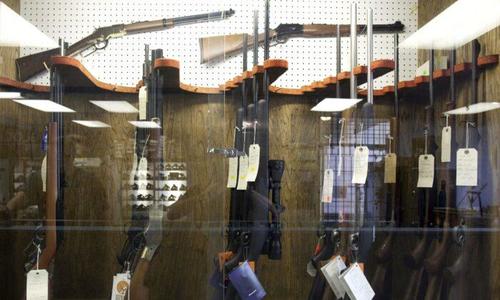
Hunting rifles on display in a glass case at a gun and rifle store in downtown Vancouver in a file photo. (The Canadian Press/Jonathan Hayward)

Her bill (pdf), called the “Assault Weapons Ban of 2021,” is co-sponsored by 34 Senate Democrats and would ban ammunition magazines that hold more than 10 rounds—similar to the bans on magazines in New York state and California.

According to the legislation, which was also introduced in the House by Rep. David Cicilline (D-R.I.), the ban would encompass more than 205 rifles. Feinstein’s bill would allow current owners of the guns to retain possession of them. If that gun is transferred, a person has to undergo an FBI background check before getting the firearm.

The bill also bans any weapon that has the capacity to use a magazine that isn’t a fixed ammunition magazine and has one or more characteristics such as a pistol grip, forward grip, a threaded barrel, a folding or telescoping stock, or a barrel shroud.

The bill “requires that grandfathered assault weapons are stored using a secure gun storage or safety device like a trigger lock” and prohibits the transfer of high-capacity ammunition magazines while banning “bump-fire stocks and other devices that allow semi-automatic weapons to fire at fully automatic rates,” according to a news release from Feinstein’s office. Bump-fire stocks were made illegal in March 2019.

“It’s been 17 years since the original Assault Weapons Ban expired, and the plague of gun violence continues to grow in this country. To be clear, this bill saves lives. When it was in place from 1994-2004, gun massacres declined by 37 percent compared with the decade before. After the ban expired, the number of massacres rose by 183 percent,” Feinstein said in a statement Thursday.

There are more than 20 million modern sporting rifles owned by private citizens, according to the National Shooting Sports Foundation, as reported by pro-Second Amendment website Bearingarms.com.

Republicans and gun-rights groups have said proposals from Feinstein, who has long advocated for gun control, are unconstitutional and won’t prevent firearms from getting in the hands of criminals.

“Law-abiding Americans use them for every type of lawful purpose, including personal and home defense, hunting, marksmanship competitions, and recreational target practice,” stated the National Rifle Association (NRA) when Feinstein attempted to introduce the bill in 2019. “Needless to say, however, the modern criminal element will not be playing by the antiquated rules that Feinstein hopes to apply to the rest of us,” the group asserted.

On Thursday, the House passed two Democratic-backed gun control measures, including one would that would expand background checks to those purchasing weapons over the internet, at gun shows, and through certain private transactions. Only eight Republicans joined the Democrats in backing the bill.

The second bill, passed 219-210 with only two Republicans supporting it, would give authorities 10 business days for federal background checks to be completed before a gun sale can be licensed.

Reuters contributed to this report.

Categories
All About Guns Anti Civil Rights ideas & "Friends"

U.S. House Bows to Biden, Passes Legislation to Cancel Your RIGHT to Obtain a Firearm

U.S. House Bows to Biden, Passes Legislation to Cancel Your RIGHT to Obtain a Firearm

The U.S. House Representatives, with the urging and support of Joe Biden, passed two bills on Thursday – H.R. 8 and H.R. 1446 – that would usher in a sweeping overhaul of how firearms are bought and sold in the U.S. Neither would impede criminals, who overwhelmingly obtain their firearms outside normal channels of lawful commerce. But together they would transform the constitutionally protected right to obtain firearms into a privilege administered at the whim of anti-gun bureaucrats.

To understand why these bills are so consequential, it’s important to understand how retail firearm sales work under existing federal law.

Currently, the primary means by which the federal government regulates firearms is through a network of licensed dealers (FFLs) making commercial sales. Anyone who repetitively engages in firearm sales for livelihood and profit is required to become an FFL. Failure to do so is already a federal felony. So when the media mentions “unlicensed dealers,” they’re actually talking about criminals, not people falling into a legal “loophole.”

Anyone buying a gun from an FFL must first go through a computerized, point-of-sale background check administered by the FBI. This check, which is supposed to be instant, searches several national databases to determine if a would-be buyer falls into any statutorily-defined category of “prohibited persons,” which include such things as felons, people who have been committed to a mental institution, and illegal aliens.

If the search does not turn up a disqualifying record, the system notifies the dealer to proceed. Sometimes, however, the records are unclear, and a response cannot be provided immediately. This results in a delay of up to three business days to allow the FBI to conduct additional research.

If the FBI still has not resolved the check within that three business day period, the FFL has the option (but not a requirement) to proceed with the sale, provided he or she has no reason to believe the buyer is prohibited. This is known as a default transfer.

The system is structured this way not because of some inadvertent loophole but as an intentional safeguard to protect Americans’ constitutional right to obtain firearms.

As with any constitutional right, the burden is on the government to justify a restriction, which in the case of a background check means the FBI must be able to locate a disqualifying record before it blocks a sale. The three day default transfer window ensures the government maintains the burden of proof, provides a specific timeframe to resolve incomplete checks, incentivizes the FBI to administer the system efficiently, and ensures legal transfers are not subject to extended delays.

Without the automatic default transfer option, the FBI could block even legal firearm sales, simply by refusing to complete the check.

Private individuals who are not selling firearms with the principle objective of livelihood and profit can make occasional transfers, sales, loans, or gifts of firearms without becoming an FFL. They cannot, however, transfer a firearm to anyone who they have reason to believe is legally prohibited from buying firearms. Private individuals also have the option (but not the requirement) to process a private transfer using the services of an FFL, with the attendant background check and record-keeping required of the dealer for a commercial sale.

The bills passed by the House last week would – in the case of H.R. 8 – presumptively ban any private transfer of a firearm, including loans and gifts, as well as – in the case of H.R. 1446 – eliminate the automatic three day default transfer period for dealer sales.

This means that every time a firearm changed hands, the transfer would have to be processed by an FFL, which would involve fees, background checks, and government-accessible paperwork documenting the sale. Friends and neighbors could no longer freely loan, sell, or trade firearms amongst the people they know and trust. Even some family members could no longer share firearms with each other.

Handing a firearm over to someone without hiring an FFL to facilitate the exchange would be a federal crime under H.R. 8, unless you could show the situation fell into certain narrow and confusing exceptions. For example, you could loan someone a gun for self-defense, but only if the person was actually under attack at the time. You could not loan someone a firearm as a safeguard against danger that had not yet materialized.

Making matters worse, H.R. 1446 would empower the FBI to indefinitely delay a firearm sale or transfer, simply by failing to complete the “instant” check that would now be mandatory for EVERY non-exempt transfer. There would be no automatic default transfer window. Instead, it would be up to the intended recipient of the gun to appeal a delayed background check and ask – for the second time – for an answer from the FBI.

If the FBI failed to answer this SECOND request for a resolution to the background check, the dealer would have to wait an additional 10 business days before deciding whether to transfer the gun. So, at a minimum, H.R. 1446 would allow the FBI to arbitrarily impose an extended delay, even in the case where a person stood on his or her rights by appealing the FBI’s non-answer to the check. If the person did not appeal, there would be NO option for the dealer to transfer the gun, even though the FBI had not shown the transfer was illegal.

Taken together, these bills transform the right to obtain firearms into a privilege administered at the say-so of the government. They also set the stage for a universal registry of gun owners and the transformation of the current “shall-issue” paradigm for FFL transfers to eligible buyers into a “may-issue” system where the FBI can block sales on a case-by-case basis as they see fit.

Arch anti-gun Senator Chuck Schumer has already promised that the legislation will get a vote in the Senate, where the margin for victory or defeat is razor thin.

That is why every freedom-loving American must contact their senators NOW and firmly but respectfully demand that they vote NO on H.R. 8 and H.R. 1446.

Giving the government total authority to document and oversee the movement of every legal gun in America is a recipe for a crackdown on law-abiding gun owners, while leaving criminals operating outside the bounds of the law untouched.

Do not delay. Make your voice heard TODAY or suffer the potential loss of your rights tomorrow! Contact your U.S. Senators Now!

Categories
Anti Civil Rights ideas & "Friends" Born again Cynic! Dear Grumpy Advice on Teaching in Today's Classroom Grumpy's hall of Shame

Something that is really sad to read – Confessions of a Public Defender

Michael Smith, American Renaissance, May 9, 2014

Still liberal after all these years.
[Editor’s Note: This is just one of thirteen essays in our newly-released collection of first-hand reports about the reality of race, Face to Face with Race.]
I am a public defender in a large southern metropolitan area. Fewer than ten percent of the people in the area I serve are black but over 90 percent of my clients are black. The remaining ten percent are mainly Hispanics but there are a few whites.
I have no explanation for why this is, but crime has racial patterns. Hispanics usually commit two kinds of crime: sexual assault on children and driving under the influence. Blacks commit many violent crimes but very few sex crimes. The handful of whites I see commit all kinds of crimes. In my many years as a public defender I have represented only three Asians, and one was half black.
As a young lawyer, I believed the official story that blacks are law abiding, intelligent, family-oriented people, but are so poor they must turn to crime to survive. Actual black behavior was a shock to me.
The media invariably sugarcoat black behavior. Even the news reports of the very crimes I dealt with in court were slanted. Television news intentionally leaves out unflattering facts about the accused, and sometimes omits names that are obviously black. All this rocked my liberal, tolerant beliefs, but it took me years to set aside my illusions and accept the reality of what I see every day. I have now served thousands of blacks and their families, protecting their rights and defending them in court. What follow are my observations.
Although blacks are only a small percentage of our community, the courthouse is filled with them: the halls and gallery benches are overflowing with black defendants, families, and crime victims. Most whites with business in court arrive quietly, dress appropriately, and keep their heads down. They get in and get out–if they can–as fast as they can. For blacks, the courthouse is like a carnival. They all seem to know each other: hundreds and hundreds each day, gossiping, laughing loudly, waving, and crowding the halls.
When I am appointed to represent a client I introduce myself and explain that I am his lawyer. I explain the court process and my role in it, and I ask the client some basic questions about himself. At this stage, I can tell with great accuracy how people will react. Hispanics are extremely polite and deferential. An Hispanic will never call me by my first name and will answer my questions directly and with appropriate respect for my position. Whites are similarly respectful.
A black man will never call me Mr. Smith; I am always “Mike.” It is not unusual for a 19-year-old black to refer to me as “dog.” A black may mumble complaints about everything I say, and roll his eyes when I politely interrupt so I can continue with my explanation. Also, everything I say to blacks must be at about the third-grade level. If I slip and use adult language, they get angry because they think I am flaunting my superiority.
At the early stages of a case, I explain the process to my clients. I often do not yet have the information in the police reports. Blacks are unable to understand that I do not yet have answers to all of their questions, but that I will by a certain date. They live in the here and the now and are unable to wait for anything. Usually, by the second meeting with the client I have most of the police reports and understand their case.
Unlike people of other races, blacks never see their lawyer as someone who is there to help them. I am a part of the system against which they are waging war. They often explode with anger at me and are quick to blame me for anything that goes wrong in their case.
Black men often try to trip me up and challenge my knowledge of the law or the facts of the case. I appreciate sincere questions about the elements of the offense or the sentencing guidelines, but blacks ask questions to test me. Unfortunately, they are almost always wrong in their reading, or understanding, of the law, and this can cause friction. I may repeatedly explain the law, and provide copies of the statute showing, for example, why my client must serve six years if convicted, but he continues to believe that a hand-written note from his “cellie” is controlling law.
The risks of trial
The Constitution allows a defendant to make three crucial decisions in his case. He decides whether to plea guilty or not guilty. He decides whether to have a bench trial or a jury trial. He decides whether he will testify or whether he will remain silent. A client who insists on testifying is almost always making a terrible mistake, but I cannot stop him.
Most blacks are unable to speak English well. They cannot conjugate verbs. They have a poor grasp of verb tenses. They have a limited vocabulary. They cannot speak without swearing. They often become hostile on the stand. Many, when they testify, show a complete lack of empathy and are unable to conceal a morality based on the satisfaction of immediate, base needs. This is a disaster, especially in a jury trial. Most jurors are white, and are appalled by the demeanor of uneducated, criminal blacks.
Prosecutors are delighted when a black defendant takes the stand. It is like shooting fish in a barrel. However, the defense usually gets to cross-examine the black victim, who is likely to make just as bad an impression on the stand as the defendant. This is an invaluable gift to the defense, because jurors may not convict a defendant—even if they think he is guilty—if they dislike the victim even more than they dislike the defendant.
Most criminal cases do not go to trial. Often the evidence against the accused is overwhelming, and the chances of conviction are high. The defendant is better off with a plea bargain: pleading guilty to a lesser charge and getting a lighter sentence.
The decision to plea to a lesser charge turns on the strength of the evidence. When blacks ask the ultimate question—”Will we win at trial?”—I tell them I cannot know, but I then describe the strengths and weaknesses of our case. The weaknesses are usually obvious: There are five eyewitnesses against you. Or, you made a confession to both the detective and your grandmother. They found you in possession of a pink cell phone with a case that has rhinestones spelling the name of the victim of the robbery. There is a video of the murderer wearing the same shirt you were wearing when you were arrested, which has the words “In Da Houz” on the back, not to mention you have the same “RIP Pookie 7/4/12” tattoo on your neck as the man in the video. Etc.
If you tell a black man that the evidence is very harmful to his case, he will blame you. “You ain’t workin’ fo’ me.” “It like you workin’ with da State.” Every public defender hears this. The more you try to explain the evidence to a black man, the angrier he gets. It is my firm belief many blacks are unable to discuss the evidence against them rationally because they cannot view things from the perspective of others. They simply cannot understand how the facts in the case will appear to a jury.
This inability to see things from someone else’s perspective helps explain why there are so many black criminals. They do not understand the pain they are inflicting on others. One of my robbery clients is a good example. He and two co-defendants walked into a small store run by two young women. All three men were wearing masks. They drew handguns and ordered the women into a back room. One man beat a girl with his gun. The second man stood over the second girl while the third man emptied the cash register. All of this was on video.
My client was the one who beat the girl. When he asked me, “What are our chances at trial?” I said, “Not so good.” He immediately got angry, raised his voice, and accused me of working with the prosecution. I asked him how he thought a jury would react to the video. “They don’t care,” he said. I told him the jury would probably feel deeply sympathetic towards these two women and would be angry at him because of how he treated them. I asked him whether he felt bad for the women he had beaten and terrorized. He told me what I suspected—what too many blacks say about the suffering of others: “What do I care? She ain’t me. She ain’t kin. Don’t even know her.”
No fathers
As a public defender, I have learned many things about people. One is that defendants do not have fathers. If a black even knows the name of his father, he knows of him only as a shadowy person with whom he has absolutely no ties. When a client is sentenced, I often beg for mercy on the grounds that the defendant did not have a father and never had a chance in life. I have often tracked down the man’s father–in jail–and have brought him to the sentencing hearing to testify that he never knew his son and never lifted a finger to help him. Often, this is the first time my client has ever met his father. These meetings are utterly unemotional.
Many black defendants don’t even have mothers who care about them. Many are raised by grandmothers after the state removes the children from an incompetent teenaged mother. Many of these mothers and grandmothers are mentally unstable, and are completely disconnected from the realities they face in court and in life. A 47-year-old grandmother will deny that her grandson has gang ties even though his forehead is tattooed with a gang sign or slogan. When I point this out in as kind and understanding way as I can, she screams at me. When black women start screaming, they invoke the name of Jesus and shout swear words in the same breath.
Black women have great faith in God, but they have a twisted understanding of His role. They do not pray for strength or courage. They pray for results: the satisfaction of immediate needs. One of my clients was a black woman who prayed in a circle with her accomplices for God’s protection from the police before they would set out to commit a robbery.
The mothers and grandmothers pray in the hallways–not for justice, but for acquittal. When I explain that the evidence that their beloved child murdered the shop keeper is overwhelming, and that he should accept the very fair plea bargain I have negotiated, they will tell me that he is going to trial and will “ride with the Lord.” They tell me they speak to God every day and He assures them that the young man will be acquitted.
The mothers and grandmothers do not seem to be able to imagine and understand the consequences of going to trial and losing. Some–and this is a shocking reality it took me a long time to grasp–don’t really care what happens to the client, but want to make it look as though they care. This means pounding their chests in righteous indignation, and insisting on going to trial despite terrible evidence. They refuse to listen to the one person–me–who has the knowledge to make the best recommendation. These people soon lose interest in the case, and stop showing up after about the third or fourth court date. It is then easier for me to convince the client to act in his own best interests and accept a plea agreement.
Part of the problem is that underclass black women begin having babies at age 15. They continue to have babies, with different black men, until they have had five or six. These women do not go to school. They do not work. They are not ashamed to live on public money. They plan their entire lives around the expectation that they will always get free money and never have to work. I do not see this among whites, Hispanics, or any other people.
The black men who become my clients also do not work. They get social security disability payments for a mental defect or for a vague and invisible physical ailment. They do not pay for anything: not for housing (Grandma lives on welfare and he lives with her), not for food (Grandma and the baby-momma share with him), and not for child support. When I learn that my 19-year-old defendant does not work or go to school, I ask, “What do you do all day?” He smiles. “You know, just chill.” These men live in a culture with no expectations, no demands, and no shame.
If you tell a black to dress properly for trial, and don’t give specific instructions, he will arrive in wildly inappropriate clothes. I represented a woman who was on trial for drugs; she wore a baseball cap with a marijuana leaf embroidered on it. I represented a man who wore a shirt that read “rules are for suckers” to his probation hearing. Our office provides suits, shirts, ties, and dresses for clients to wear for jury trials. Often, it takes a whole team of lawyers to persuade a black to wear a shirt and tie instead of gang colors.
From time to time the media report that although blacks are 12 percent of the population they are 40 percent of the prison population. This is supposed to be an outrage that results from unfair treatment by the criminal justice system. What the media only hint at is another staggering reality: recidivism. Black men are arrested and convicted over and over. It is typical for a black man to have five felony convictions before the age of 30. This kind of record is rare among whites and Hispanics, and probably even rarer among Asians.

StatsSource: Bureau of Justice Statistics.

At one time our office was looking for a motto that defined our philosophy. Someone joked that it should be: “Doesn’t everyone deserve an eleventh chance?”
I am a liberal. I believe that those of us who are able to produce abundance have a moral duty to provide basic food, shelter, and medical care for those who cannot care for themselves. I believe we have this duty even to those who can care for themselves but don’t. This world view requires compassion and a willingness to act on it.
My experience has taught me that we live in a nation in which a jury is more likely to convict a black defendant who has committed a crime against a white. Even the dullest of blacks know this. There would be a lot more black-on-white crime if this were not the case.
However, my experience has also taught me that blacks are different by almost any measure to all other people. They cannot reason as well. They cannot communicate as well. They cannot control their impulses as well. They are a threat to all who cross their paths, black and non-black alike.
I do not know the solution to this problem. I do know that it is wrong to deceive the public. Whatever solutions we seek should be based on the truth rather than what we would prefer was the truth. As for myself, I will continue do my duty to protect the rights of all who need me.