Gov. Phil Murphy is at it again, trying to push through a huge package of extreme anti-gun measures.
It was this week, during an address at Saint Luke Baptist Church in Paterson, that Murphy called on lawmakers to enact his gun-control agenda, one that he first unveiled in April of 2021.
“The bills that I introduced one year ago are basic measures that will keep guns out of the wrong hands, help law enforcement apprehend the perpetrators of gun violence, and hold the gun industry accountable for its deceptive and dangerous practices,” said Gov. Murphy.
“I hope to work with my Legislative partners to continue making New Jersey a national leader in gun safety and prevent the meaningless violence and loss of life that results from the gun violence epidemic,” he added.
Mandating electronic registration of all ammunition purchases
Mandating unreliable, useless “microstamping” technology for all handguns (to stamp firearms serial numbers on spent ammunition)
Allowing gun manufacturers to be sued for misuse of their products by criminals
Imposing gun registration on those moving into NJ with legal firearms previously acquired
Banning gun ownership for all citizens under age 21
Mandating training in order to simply own firearms
Using $12 million in taxpayer funds for anti-gun grants to universities and cities
Mandating that firearms dealers carry “smart” guns
Organizing anti-gun states to implement region-wide gun control
Unsurprisingly, the Michael Bloomberg-funded Moms Demand Action is backing Murphy’s move to chill the 2A rights of law-abiding gun owners.
“This bill package includes vital, common sense reforms that would provide comprehensive solutions to the gun violence that devastates New Jersey communities,” said Amy Faucher, a volunteer with the group’s New Jersey chapter.
“Our state continues to lead nationally in the gun violence prevention movement, and furthering that status means passing these important bills,” she added.
Alan Gottlieb, the founder of the Second Amendment Foundation, criticized Gov. Murphy for targeting responsible New Jerseyans instead of the real perpetrators of gun crime.
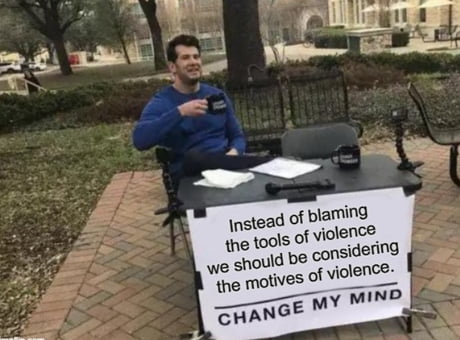
“Someone needs to tell Governor Murphy that a gun does not have a brain to hate with or a finger to pull its own trigger,” Gottlieb told GunsAmerican via email. “He needs to support legislation that keeps violent criminals off the streets and stop attacking gun ownership for law-abiding New Jersey people.”
This is the third wave of anti-gun measures Murphy has proposed since taking office in 2018. His administration has already succeeded in passing “red flag” confiscation orders, banning certain standard capacity magazines, criminalizing private transfers, and prohibiting so-called “ghost guns,” among other restrictions.
While Dems control both chambers following November’s elections, they lost seven seats to Republicans. NJ.com reports that Dems have been “cautious about tackling more progressive or hotly debated policy with all 120 seats in the Legislature up for grabs again in two years.”
An Atlanta security guard was brutally murdered outside a restaurant on the city’s southwest side earlier this week.
Investigators say the shooting happened around 7 p.m. Monday at American Wings & Seafood. The victim, identified as 51-year-old Anthony Frazier, was shot in the back of the head.
Surveillance video released to the public shows exactly how the deadly encounter played out.
Mr. Frazier is walking up the sidewalk when the young perp sneaks up from behind him and fatally shoots the older man.
Local patron Kam Kae told WSB-TV that the victim was a standup guy.
“So attentive, he always watched the door. Why would somebody do that to him?” she asked.
“For the most part, they’re very wholesome people, the owners themselves. Usually, they’re always on point, very attentive with orders. I know that they hire security just for their safety as well as the consumers safety. He was a good guy,” she added.
Along with the suspect who was wearing a black Nike ball cap and carrying a camouflage backpack, police want to speak with several witnesses, one of which saw the incident but declined to intervene or administer aid to the victim.
Several others showed up after the shooting and appear to rifle through Mr. Frazier’s clothes. Police put out a photo of all of those involved:
Police are looking for these five individuals.
Very hard thing to watch happen, not only the cold-blooded murder of a responsible citizen but the complete indifference to it by those witnesses in the neighborhood. Hopefully, this is not a sign of the times. (THEY ARE!!! Grumpy)
These guns have been legal and unregulated since the time of the Pilgrims. But long before the president’s announcement, Pennsylvania Democrats were already pushing six “ghost gun” bills that would make privately made firearms illegal.
So why isn’t the Biden Administration trying to regulate those objects?
The answer is that this president is not as interested in protecting public safety, as much as he wants to implement a radical gun control regime. The new ATF rule could incarcerate gun owners for committing non-violent, highly technical violations of complex and unconstitutional laws, while doing nothing about the rising number of crimes committed by real criminals.
Predictably, the murder rate, which had been on a downward trend for over 20 years, spiked. In fact, 12 Democrat-controlled cities from Philadelphia to Portland broke homicide records last year. These are 12 cities where leaders have coddled criminals, yet inexplicably, did everything possible to discourage law-abiding individuals who merely wish to exercise their Second Amendment-protected rights. Philadelphia was no exception.
The spike in crime across our country is the result of the failed leadership and the social policies of left-wing radicals. It has nothing to do with firearms enthusiasts building guns in their garages and home workshops.
The anti-gun left may try to demonize these firearms by referring to them as “ghost guns.” But the fact remains that hundreds of thousands of honest gun owners today are making their own legal guns — and virtually none of these guns will be used in any crime.
The White House claims that serializing firearms is necessary to stop criminals, but in reality, there is no evidence that registering firearms — or stamping them with serial numbers — prevents crime. Virtually every gun used in a crime already has a serial number.
So why has Joe Biden declared war on legal gun owners? In a word: control.
Serialization is not designed to stop criminals. It’s intended to register the law-abiding, which history shows is the first step toward confiscation. And if you don’t think confiscation could ever occur in this country, just recall Beto O’Rourke yelling: “Hell, yes, we’re going to take your AR-15, your AK-47!”
The double-standards by the anti-gun left are breathtaking. Pennsylvania Attorney General Josh Shapiro was at the Rose Garden ceremony, applauding the president’s restrictions on homemade firearms. Never mind that Shapiro’s office has been accused of illegally transferring a homemade gun to a television journalist preparing a story on the issue without conducting a background check; that would violate both state and federal law. The transfer was made to facilitate an NBC News report on a local supplier of P80 kits.
With the anti-gun left, we constantly see “rules for thee, but not for me.” The Biden administration openly admitted that he ordered this “ghost gun” regulation because he “was having trouble getting [gun control] passed in the Congress.” That is lawless and anti-constitutional behavior. The president is not a king who can issue decrees on a whim.
In our system of government, Congress makes the laws. Gun Owners of America will be working with pro-gun congressmen and senators to overrule this unconstitutional decree.
Erich Pratt is the Executive Director of Gun Owners of America.
If California’s much-vaunted gun control laws have failed to choke off the supply of legal and illegal weapons, why do politicians continue to claim that enacting even more will have an effect? (Andrew Burton, New York Times)
By Dan Walters
CalMatters
Inevitably, last weekend’s horrendous fusillade of bullets on a downtown Sacramento street that left six people dead and at least a dozen wounded generated demands for new gun controls in state that already has the nation’s most restrictive firearms laws.
However, if anything, what happened just two blocks from the state Capitol underscores the folly of believing that “gun violence” can be meaningfully reduced by trying to choke off the supply of firearms – any more than the prohibition of liquor or the war on drugs succeeded.
Nor have these laws prevented the lawless from obtaining weapons via theft, smuggling from other states or the illicit manufacture of untraceable “ghost guns.” Indeed, state restrictions have made the black market even more lucrative, mirroring the side effects of Prohibition and the decades-long drug war.
Initial evidence indicates that those who fired more than 100 rounds in a street crowded with bar and nightclub patrons probably were violating one or more gun laws. The two brothers that police arrested and are suspected of involvement in the mass shooting were charged with illegal possession of weapons – one for possession of an illegal fully automatic firearm.
So why, if California’s much-vaunted gun control laws have failed to choke off the supply of legal and illegal weapons, do politicians continue to claim that enacting even more will have an effect?
Some may believe it, the evidence notwithstanding, while others want to appear to be doing something about a problem because they don’t have any other answers. And those who propose and enact new gun laws are often woefully ignorant about guns or even existing laws.
In the aftermath of the shooting, Sacramento Mayor Darrell Steinberg lamented to a radio interviewer about California’s difficulty in reducing the number of guns, saying, “You just have to go to a gun show in Reno to buy an assault weapon without a background check and come right back to California.”
Advocates of more laws often cite a “gun show loophole” but it’s a myth. Under federal law, one must be a resident of Nevada and undergo a federal background check to legally buy a gun in Reno.
Moreover, while California professes to have banned “assault weapons,” the state’s definition of them involves cosmetic features, rather than their lethality. Perfectly legal semi-automatic rifles that lack those features are available for sale everywhere in the state.
The newest effort at gun control in California, backed by Gov. Gavin Newsom, would authorize personal lawsuits against the manufacturers and sellers of illegal assault rifles or ghost guns, mirroring a new Texas law allowing suits against those who perform abortions.
The legislation, Senate Bill 1327, is just a stunt – one of Newsom’s periodic jabs at a rival state. Those who could be sued under the bill are already committing criminal acts in California and a federal law prohibits suits against manufacturers of legal firearms, including the “assault weapons” that California and a few other states purport – but fail – to outlaw.
The bottom line is this: Actor Alec Baldwin’s claims notwithstanding, guns don’t fire on their own. Someone must accidentally or purposely pull the trigger and that should be the focus of efforts to reduce violence – such as more vigorous enforcement of laws banning gun possession by felons and those under court order.
After reaching historic lows in the mid-2010s, gun violence rates in America have gone up in recent years, and they remain higher than in some other parts of the developed world. There are hundreds of laws and regulations at the federal and state level that restrict Americans’ access to guns, yet according to some advocates, social science research shows that a few more “simple, commonsense” laws could significantly reduce the number of injuries and deaths attributed to firearms.
There has been a massive research effort going back decades to determine whether gun control measures work. A 2020 analysis by the RAND Corporation, a nonprofit research organization, parsed the results of 27,900 research publications on the effectiveness of gun control laws. From this vast body of work, the RAND authors found only 123 studies, or 0.4 percent, that tested the effects rigorously. Some of the other 27,777 studies may have been useful for non-empirical discussions, but many others were deeply flawed.
We took a look at the significance of the 123 rigorous empirical studies and what they actually say about the efficacy of gun control laws.
The answer: nothing. The 123 studies that met RAND’s criteria may have been the best of the 27,900 that were analyzed, but they still had serious statistical defects, such as a lack of controls, too many parameters or hypotheses for the data, undisclosed data, erroneous data, misspecified models, and other problems.
And these glaring methodological flaws are not specific to gun control research; they are typical of how the academic publishing industry responds to demands from political partisans for scientific evidence that does not exist.
Not only is the social science literature on gun control broadly useless, but it provides endless fodder for advocates who say that “studies prove” that a particular favored policy would have beneficial outcomes. This matters because gun laws, even if they don’t accomplish their goals, have large costs. They can turn otherwise law-abiding citizens into criminals, they increase prosecutorial power and incarceration, and they exacerbate the racial and socioeconomic inequities in the criminal justice system.
The 123 papers identified by RAND tested 722 separate hypotheses about the impact of gun control policies for “statistical significance.” Peer-reviewed journals generally accept a result as statistically significant if it has a one-in-20 chance or less of being due to random chance. So if researchers run 100 tests on the relationship between two things that obviously have no connection to each other at all—say, milk consumption and car crashes—by pure chance, they can be expected to get five statistically significant results that are entirely coincidental, such as that milk drinkers get into more accidents.
In terms of the gun control studies deemed rigorous by RAND, this means that even if there were no relationship between gun laws and violence—much like the relationship between drinking milk and getting into car accidents—we’d nevertheless expect about five percent of the studies’ 722 tests, or 36 results, to show that gun regulations had a significant impact. But the actual papers found positive results for only 18 combinations of gun control measure and outcome (such as waiting periods and gun suicides). That’s not directly comparable to the 36 expected false positives, since some combinations had the support of multiple studies. But it’s not out of line with what we would expect if gun control measures made no difference.
Also concerning is the fact that there was only one negative result in which the researchers reported that a gun control measure seemed to lead to an increase in bad outcomes or more violence. Given the large number of studies done on this topic, there’s a high statistical likelihood that researchers would have come up with more such findings just by random chance. This indicates that researchers may have suppressed results that suggest gun control measures are not working as intended.
Most inconclusive studies also never get published, and many inconclusive results are omitted from published studies, so the rarity of pro-gun-control results and the near-total absence of anti-gun-control results is a strong argument that, based on the existing social science, we know nothing about the effects of gun control.
The reasons that we have no good causal evidence about the effectiveness of gun control are fundamental and unlikely to be overcome in the foreseeable future. The data on gun violence are simply too imprecise, and violent events too rare, for any researcher to separate the signal from the noise, or, in other words, to determine if changes in gun violence rates have anything to do with a particular policy.
One common research approach is to compare homicide rates in a state the years before and after gun control legislation was passed. But such legislation can take months or years to be fully implemented and enforced, if ever. Most modern gun control measures only affect a minority of gun sales, and new gun sales are a small proportion of all firearms owned. Very few of the people who would be prevented from buying guns by the legislation were going to kill anyone, and many of the people who were going to kill someone would do it anyway, with another weapon or by getting a gun some other way.
Therefore, the most optimistic projection of the first-year effect of most laws on gun homicides would be a reduction of a fraction of a percent. But gun homicide rates in a state change by an average of six percent in years with no legislative changes, based on FBI Uniform Crime Reporting (UCR) data going back to 1990. As a statistician’s rule of thumb, this kind of before-and-after study can only pick up effects about three times the size of the average year-to-year change, meaning that such studies can’t say anything about the impact of a gun law unless it leads to an 18 percent change or greater in the gun murder rate in a single year. That’s at least an order of magnitude larger than any likely effect of the legislation.
One way to try to get around these limitations is to use what statisticians call “controls,” which are mathematical tools that allow them to compare two things that are different in many ways, and isolate just the effect they’re looking for. In this case, gun control studies often compare the violence rates in two or more states that have stricter versus more lax gun laws, and they try to control for all the differences between the states except for these policies.
Another option for researchers is to compare violence rates in a single state with national averages. The idea is that factors that change homicide rates other than the legislation will affect both state and national numbers in the same way. Comparing changes in the state rate to changes in the national rate supposedly controls for other factors that are affecting rates of violence, such as a nationwide crime wave or an overall decline in shootings.
The problem here is that national violence rates actually don’t track well with individual states’ violence rates. Based on the FBI’s UCR data, annual changes within states have only about a 0.4 correlation with national rates when there is no change in legislation. That means the difference between any individual state’s rate and the national rate is more volatile than the change in the state’s rate on its own. The control adds noise to the study rather than filtering noise out. The same problem exists if you try to compare the state to similar or neighboring states. We just don’t have good controls for state homicide rates.
To find an effect large enough to be measured, gun control researchers sometimes group together dozens or hundreds of state legislative initiatives and then look for changes in homicide rates. But states with strong gun control regulations are different from states with weaker gun control regulations: they’re generally richer, more liberal, more urban, and they have lower murder and suicide rates. The cultural differences are too big and there’s just too much uncertainty in the data to say anything about what would happen if we enforced Greenwich, Connecticut, laws in Festus, Missouri.
Researchers try to avoid the pitfalls of before-and-after studies or inter-state comparisons by using longer periods of time—say, by studying the change in gun homicide rates in the 10 years after legislation was enacted compared to the 10 years before. Now you might plausibly get an effect size large enough to be distinguished from one year’s noise, but not from 20 years’ noise.
Another limitation on the usefulness of all gun control studies is that the underlying data are incomplete and unreliable. Estimates of the number of working firearms in the U.S. differ by a factor of two—from around 250 million to 600 million—and most uses of firearms go unreported unless someone is killed or injured. We have some information on gun sales, but only from licensed dealers, and on gun crimes, but not all crimes are reported to the police, not all police report to the FBI, many non-crimes are reported, and reported crimes often have missing or erroneous details.
Even if you could somehow assemble convincing statistical evidence that gun violence declined after the passage of gun control legislation, there are always many other things that happened around the same time that could plausibly explain the change.
The solution is more basic research on crime and violence, rather than more specific studies on gun control legislation. Better understanding can lead to precise experimentation and measurement to detect changes too small to find in aggregate statistical analyses.
By way of comparison, take the contribution of cigarette smoking to cancer. For years, smoking was alleged to cause cancer on the basis of aggregate statistics, and the studies were deeply flawed. Eventually, however, medical researchers—not statisticians or policy analysts—figured out how cigarette smoking affected cells in the lungs, and how that developed into cancer. Certain types of cancer and other lung problems were identified that were virtually only found in smokers. With this more precise understanding, it was possible to find overwhelming statistical evidence for each link in the chain.
In terms of studies on gun violence, suppose someday psychological researchers can demonstrate empirically the effect that being abused as a child has on the probability a person will commit a gun homicide. This more specific understanding of why violent crime occurs would allow precise, focused studies on the effect of gun control legislation. Instead of comparing large populations of diverse individuals, researchers could focus on specific groups with high propensities for gun violence.
Only when we know much more about why people kill themselves and each other, and how the presence or absence of guns affects rape, assault, robbery and other crimes, can we hope to tease out the effect of gun control measures.
It’s not just gun control. Nearly all similar research into the effects of specific legislation suffers from the same sort of problem: too much complexity for the available data. Political partisans yearn for statistical backing for their views, but scientists can’t deliver it. Yet researchers flood to favored fields because there is plenty of funding and interest in results, and they peer review each other’s papers without applying the sort of rigor required to draw actual policy conclusions.
This doesn’t mean that gun control legislation is necessarily ineffective. But short of legitimate scientific evidence, belief in the efficacy of additional gun control laws is, and will remain, a matter of faith, not reason.
Tellingly, the studies that have gotten the most media or legislative attention aren’t among the 123 that met RAND’s approval. The best studies made claims that were too mild, tenuous, and qualified to satisfy partisans and sensationalist media outlets. It was the worst studies, with the most outrageous claims, that made headlines.
One prominent study, which was touted from the debate stage by Sen. Cory Booker (D–N.J.) when he was running for president in the 2016 election, made the astounding claim that a permit requirement for handgun purchases in Connecticut reduced their gun murder rate by 40 percent. It is true that the state’s gun murder rate fell rapidly after that law was passed in 1995, but so did gun murder rates throughout the country. The study’s 40 percent claim is the actual murder rate in Connecticut compared to something the researchers call “synthetic Connecticut,” which they constructed for the purpose of their study—a combination of mostly Rhode Island, but also Maryland, California, Nevada, and New Hampshire.
As it turns out, the authors’ entire claimed effect (the 40 percent reduction they reported) was due to the fact that Rhode Island experienced a temporary spate of about 20 extra murders between 1999 and 2003, and synthetic Connecticut was more than 72 percent Rhode Island.
Even compared to synthetic Connecticut, the decline the authors found didn’t last. Although the law remained on the books, by 2006, the gun murder rate in real Connecticut had surpassed synthetic Connecticut, and then continued to increase to the point where it was 46 percent higher. The authors, despite publishing in 2015, elected to ignore data from 2006 and afterwards.
This study is typical of the field: strong claims based on complex models and uncertain data. Worse, researchers often cherry pick outcome measures, time periods, and locations to get their preferred results.
For example, take the studies that look at whether bans on assault-style weapons and large-capacity magazines, which are often passed together, have reduced the frequency or deadliness of mass shootings. Researchers define basic terms like “assault weapons” and “mass shootings” differently. They limit their data by time, place, or other factors, such as classifying an event as an act of terror or gang violence and therefore not considering it a mass shooting.
These studies suffer from even greater data issues than other gun violence research. Mass shootings are extremely rare relative to other forms of gun violence, and most of them don’t involve assault weapons. Though estimates vary depending on the definitions used, mass shootings involving assault weapons constitute a small fraction of one percent of all gun homicides.
The U.S. federal ban on assault weapons and large capacity magazines, which was the subject of numerous studies that reached widely varying and often contradictory conclusions about its efficacy, was in place for 10 years, from 1994 to 2004. Before, during, and after the time the law was in effect, many societal factors caused crime rates to vary widely, making it impossible to draw useful conclusions about the effect of the ban on anything, and in particular on something as rare as mass shootings. But with all the noise in the data, it is easy for researchers to find weak results that support any conclusion they hope to reach.
Moreover, states and countries with bans define assault weapons and other key elements of laws differently. Combined with the data problems inherent in comparing different populations of people over different periods of time, comparisons between states and countries are almost meaningless.
Another RAND Corporation meta-analysis updated in 2020 found inconclusive evidence that bans on assault weapons and large-capacity magazines have any effect on mass shootings or violent crime.
But how about the more straightforward question of whether owning a gun makes you more or less safe? One widely influential study that has constantly resurfaced in headlines since it was published in the New England Journal of Medicine in 1993 concluded that, “rather than confer protection, guns kept in the home are associated with an increase in the risk of homicide by a family member or intimate acquaintance.”
There are major problems with this study. First of all, the researchers concluded that keeping a gun at home increases a person’s risk of being killed, but nearly half the murders they included in their analysis were not committed with a firearm. And among gun owners who were killed with a gun, the authors didn’t establish whether the weapon used was the victim’s own gun or if it belonged to another person.
This points to another explanation for why research on this topic is so often inconclusive: individual differences can’t easily be controlled for in social science research. A gun expert with a gun safe in a high crime neighborhood may well be safer with a gun, whereas a careless alcoholic living in a low crime area who keeps loaded guns in his kids’ closet is certainly going to be less safe. People want a simple overall answer to whether guns make you less safe or more safe in order to inform legislation, but social science cannot deliver that.
Population averages can be useful when one rule has to be applied to everyone—for example, estimating how many lives would be saved by a pollution control regulation, or how many dental cavities are prevented by fluoridating the water supply. But with guns and personal safety, the relevant question is not whether guns make the average gun owner safer, but which people guns make safer and which people guns make less safe.
Anyone basing a gun control position on scientific evidence of any kind is building on sand. We have no useful empirical data on the subject, no body of work that rises above the level we would expect based on random chance, either for or against gun control measures. And the claim that there are “simple, commonsense” laws we could pass that would significantly reduce gun violence, if only we had the political will to go through with them, is simply false.
These are complex issues that require rigorous scientific investigation to come to any kind of useful conclusion, and they depend far more on individual variation and broad social and cultural factors than on any regulation. We should not look to pass laws that sweep up innocent victims while potentially doing more harm than good, all with the alleged backing of science that can’t possibly tell us what we need to know.
Produced and edited by Justin Monticello. Written by Monticello and Aaron Brown. Graphics by Adani Samat and Isaac Reese. Audio production by Ian Keyser.
Photos: Hollandse-Hoogte/ZUMA Press/Newscom; Robin Rayne/ZUMAPRESS/Newscom; Ted Soqui/Sipa USA/Newscom; YES Market Media/Yaroslav Sabitov/YES Market Medi/Newscom; Chuck Liddy/TNS/Newscom; YES Market Media/Yaroslav Sabitov/YES Market Medi/Newscom; Brett Coomer/Rapport Press/Newscom; Martha Asencio-Rhine/ZUMAPRESS/Newscom; Jebb Harris/ZUMA Press/Newscom; John Gastaldo/ZUMA Press/Newscom; Greg Smith/ZUMA Press/Newscom; Richard Ellis/ZUMA Press/Newscom; Matthew McDermott/Polaris/Newscom; KEVIN DIETSCH/UPI/Newscom; Bill Clark/CQ Roll Call/Newscom; Michael Brochstein/ZUMAPRESS/Newscom; Sandy Macys / UPI Photo Service/Newscom; E. Jason Wambsgans/TNS/Newscom; Eye Ubiquitous/Newscom; Matthew McDermott/Polaris/Newscom
AARON BROWN teaches statistics at New York University and at the University of California at San Diego, and he writes regular columns for Bloomberg and Wilmott.
At a recent event, part of a series of “community safety town hall” meetings on strategies for preventing violent crime, the mayor turned on her woke vibe and identified a “common theme” in rising crime. “There are too many young people in this room who do not feel loved. Too many. And we’ve got to change that around, if we’re going to change around the trajectory of their lives.”
The youth town hall coincided with a news report that 57% of those arrested as suspects in Chicago carjacking’s were juveniles, an increase from 2020, when the percentage of arrestees who were under 18 was 49%.
Previously, the mayor had blamed the carjacking crisis on the pandemic-related shutdown of schools, remote learning, and kids with “pure boredom.” According to her, the increase in violent crime in general was attributable to former President Donald Trump and the alleged failure of federal leadership on gun control, and the COVID pandemic and criminal court shutdowns. However, Chicago courts and schools have now reopened and we have the most gung-ho gun control president ever, so some other factors must be in play.
Rule One in the anti-gun activist playbook is blame guns. It’s not surprising to find that a fresh plan out of the mayor’s office to cut crime includes a gun “buyback.” An April 4th press release announcing bold “City-led initiatives designed to aid residents and businesses in promoting safety within their communities and their city” includes “getting guns out of the hands of dangerous people.”
Specifically, “the City has begun raising money for the [Chicago Police Department] to host what will be the largest gun-turn-in program in Chicago’s history,” to be held this summer and fall. The target amount of one million dollars will be funded by private entities, “business and philanthropic partners” like BMO Harris Bank, Blommer Chocolate Company, Cabrera Capital Markets, Motorola Solutions, and Wanxiang America. All of these companies, according to the release, have “demonstrated their commitment to improving public safety and removing guns from Chicago’s streets by making generous contributions to this historic turn-in.” Any other businesses interested in “join[ing] us in supporting the removal of dangerous firearms from our streets” through their own financial contributions were urged to get in touch with the city.
Two of the participating companies quoted in the release mention how much they look forward to the historic “buyback” making the city safer (as the American arm of a Chinese company phrases it) “via the physical removal of as many guns as possible.”
The donors are doomed to disappointment, as these programs are nothing more than feel-good public relations ploys. A Baltimore Sun editorial describing that city’s gun buyback noted that “researchers stopped studying the issue years ago because evidence of the futility of the programs was so overwhelming …Studies have found that the people that turn in the guns more than likely weren’t going to commit a crime with their firearms and that many of the exchanged guns don’t even work.”
Even The Trace, Michael Bloomberg’s tame gun-control news site, admits “[t]here’s no evidence that gun buybacks actually curb gun violence.” In a clear indication of the utter uselessness of these buybacks, one activist claims the futility of the buybacks isn’t important because these events “show that we care enough and make time to do the program.”
The same spirit of chasing futility appears in Chicago’s amicus brief, filed in the pending U.S. Supreme Court gun rights case of New York State Rifle & Pistol Association Inc. v. Bruen, No. 20-843, in support of New York State’s draconian handgun licensing regime.
The brief explains that while Chicago has enforced strict state and local laws regarding “concealed carry of firearms, prohibitions on carry in sensitive places, and an assault weapons ban, among other firearms restrictions, … a crisis of deaths due to gun violence continues,” with 2020 being “Chicago’s second-deadliest year in the past two decades.”
This is as close as the City is likely to come to admitting that gun control isn’t working. Regardless, though, expect Chicago politicians to continue to throw money and resources at this latest bit of feel-good foolishness, to show that they “care enough” about the community.
Sacramento Shooting Leads to Ridiculous Anti-gun Response
MONDAY, APRIL 11, 2022
In the early morning hours of April 3, shooting erupted near the corner of 10th and K Street in downtown Sacramento, Calif. The shooting resulted in the tragic deaths of six people and the wounding of 12 others. Police are still investigating at press time, but the facts suggest multiple shooters were involved in the incident and that the shooting shared characteristics more in common with general street violence than the type of indiscriminate crimes typically used to promote gun control efforts.
The incident was dubbed a “mass shooting” by many in the media. This, as Northeastern University Criminologist James Alan Fox has noted in a March 6, 2021 USA Today item titled “You’re right to be confused about the number of mass shootings,” can be misleading. The professor explained,
A corollary concern, besides whether the threshold [for a mass shooting] is based on deaths or injuries as well, is the varying nature and location of mass shootings. [One measure of “mass shootings”] include[s] a large share of family shootings in private residences as well as gun battles related to gang conflict or illicit drug trade…
What truly frightens folks are the seemingly indiscriminate and deadly shootings in public locations — a restaurant, shopping mall, theater, church, school, and now supermarket. Such dreadful events can happen to anyone, at any time, and without warning.
Immediately after the incident, President Joe Biden put out a statement demanding more gun control. The April 3 press release demanded, “Ban ghost guns. Require background checks for all gun sales. Ban assault weapons and high-capacity magazines. Repeal gun manufacturers’ immunity from liability.” The statement stood in contrast to that put out by the usually flamboyant Gov. Gavin Newsom, whose office noted that the incident was still being investigated, before offering a much milder call to “bring an end” to such violence.
California already has four-fifths of the gun control measures that Biden proposed. Obviously, none of these measures prevented the Sacramento shooting.
Ban on so-called “ghost guns” (privately made firearms)
Cal.Penal Code § 29180 requires that a person, “prior to manufacturing or assembling a firearm,” apply to the California Department of Justice for a unique serial number. The law then demands “[w]ithin 10 days of manufacturing or assembling a firearm… the unique serial number or other mark of identification provided by the department shall be engraved or permanently affixed to the firearm.” The person is then required to notify the state that they have complied with the marking requirements of § 29180. Further, § 29180 required owners of all privately made firearms manufactured prior to enactment of the statute to comply with the statute’s marking provisions.
Those found in violation of § 29180 face up to a year in prison for an offense involving a handgun and six months in prison for an offense involving a long-gun.
California has also severely curtailed the sale of common parts used by firearm hobbyists to make their own firearms. Defined as “precursor parts” by Cal.Penal Code § 16531, these items are subject to the same background check requirements as firearms under state law.
Criminalization of private transfers
Cal.Penal Code § 28050 requires that “[a] person shall complete any sale, loan, or transfer of a firearm through” a licensed firearm dealer pursuant to a background check. Further, Cal.Penal Code § 26500 provides “[n]o person shall sell, lease, or transfer firearms unless the person has been issued a” dealer license.
Illegal transfer of a firearm is punishable by up to six months imprisonment.
Ban on commonly-owned semi-automatic firearms
California banned commonly-owned semi-automatic firearms (often mislabeled “assault weapons”) in 1989.
Cal.Penal Code § 30600 provides,
Any person who, within this state, manufactures or causes to be manufactured, distributes, transports, or imports into the state, keeps for sale, or offers or exposes for sale, or who gives or lends any assault weapon… except as provided by this chapter, is guilty of a felony, and upon conviction shall be punished by imprisonment pursuant to subdivision (h) of Section 1170 for four, six, or eight years.
Cal.Penal Code § 30605 provides,
Any person who, within this state, possesses any assault weapon, except as provided in this chapter, shall be punished by imprisonment in a county jail for a period not exceeding one year, or by imprisonment pursuant to subdivision (h) of Section 1170.
Ban on standard-capacity magazines
Cal.Penal Code § 16740 defines “large-capacity magazines” as “any ammunition feeding device with the capacity to accept more than 10 rounds.” This definition includes the standard capacity magazines sold with America’s most popular firearms.
Cal.Penal Code § 32310 provides,
any person in this state who manufactures or causes to be manufactured, imports into the state, keeps for sale, or offers or exposes for sale, or who gives, lends, buys, or receives any large-capacity magazine is punishable by imprisonment in a county jail not exceeding one year or imprisonment pursuant to subdivision (h) of Section 1170.
and,
any person in this state who possesses any large-capacity magazine, regardless of the date the magazine was acquired, is guilty of an infraction punishable by a fine not to exceed one hundred dollars ($100) per large-capacity magazine, or is guilty of a misdemeanor punishable by a fine not to exceed one hundred dollars ($100) per large-capacity magazine, by imprisonment in a county jail not to exceed one year, or by both that fine and imprisonment.
The truth is that California’s gun control regime places it below the Constitutional floor when it comes to respect for the Second Amendment right. This may be made clear in the coming months in the U.S. Supreme Court case New York State Rifle and Pistol Association v. Bruen.
The suspects
As of press time, police have made three arrests in connection with the Sacramento shooting. As these individuals have not been convicted of any crime in relation to the shooting they will be referred to as Suspect 1, Suspect 2, and Suspect 3 in order of arrest.
According to Sacramento NBC affiliate KCRA, Suspect 1 is a 26-year-old male and was booked on charges of “assault with a firearm and being a prohibited person in possession of a firearm.” Summarizing Suspect 1’s criminal history, the news outlet reported,
[Suspect 1] has been wanted in Riverside County since 2015. Jail records show he has an outstanding warrant for a misdemeanor domestic violence charge.
According to court documents, [Suspect 1] “inflicted bodily injury resulting in a traumatic condition” to his spouse.
[Suspect 1] pled guilty to the charge in 2014 and was sentenced to 30 days of custody and 36 months of probation.
The Riverside County District Attorney’s Office confirmed to NBC News that [Suspect 1] later violated two terms of probation: the community service requirement, and the 52-week class requirement.
A $5,000 bench warrant was issued by the court in 2015.
KCRA 3 Investigates also learned [Suspect 1] spent time in an Arizona prison. He was released in 2020 after serving just over a year-and-a-half for violating probation in separate felony convictions for attempt to commit aggravated assault in 2016, and a conviction on a marijuana charge in 2018.
Suspect 2 is the 27-year-old brother of Suspect 1. According to the Sacramento Bee, Suspect 2 was booked “on charges of assault with a deadly weapon and possession of a firearm by a prohibited person.” The Los Angeles Times reported that Suspect 2 was also charged for being in “possession of a stolen handgun that was converted to be a fully automatic weapon.”
The man arrested for possessing a machine gun at the scene of Sunday’s deadly shooting in Sacramento was allowed to leave prison in February despite opposition from the county’s district attorney to his early release…
Almost exactly a year ago, Dist. Atty. Anne Marie Schubert’s office opposed [Suspect 2’s] release from state prison to the Board of Parole Hearings in a two-page letter… The district attorney’s office asked that he not be freed because he is a career criminal and a danger to the community.
The district attorney’s letter explained,
“[Suspect 2] has committed several felony violations and clearly has little regard for human life and the law, which can be shown by his conduct in his prior felony convictions of robbery, possession of a firearm and prior misdemeanor conviction of providing false information to a peace officer.”
The paper reported that Suspect 2 was sentenced to 10 years imprisonment on two felony assault charges for beating his girlfriend with a belt and entered the California state prison system in January 2018. Despite, the district attorney’s pleas, Suspect 2 was released in February 2022.
Summarizing Suspect 2’s criminal history with firearms, the prosecutor explained,
In January of 2013, just six months after his eighteenth birthday, [Suspect 2] was contacted by law enforcement officers. [Suspect 2] attempted to discard an assault rifle which he had concealed in his waistband under his clothing. The rifle had a pistol grip and the capacity to accept a detachable magazine in front of the pistol grip. [Suspect 2] was also found to be in possession of two fully loaded twenty-five round magazines for the assault weapon.
Suspect 3 is a 31-year-old male and was arrested on charges of being a prohibited person in possession of a firearm. According to an account from USA Today, Suspect 3 “was caught on camera wielding a firearm after the shooting, though police do not believe the weapon was used in the shootout.”
Presented with the facts about California’s gun control regime and the criminal histories of those arrested in connection with the Sacramento shooting, it is clear that no amount of gun control could have made a difference in the Sacramento tragedy. Moreover, other criminal justice interventions, perhaps measures tailored to those who actually commit violent crime, clearly had the best chance of preventing this tragedy.
Beverly Hills’ only gun shop, Beverly Hills Guns, received an order on April 7 advising the shop that it has 60 days to close.
Store owner Russell Stuart told Breitbart News the order came from property management. He recounted that his secretary received an envelope and walked to Stuart with sorrow in her eyes.
Stuart opened the envelope and read the order.
Beverly Hills Guns has been in existence for two years, at the same address, with zero issues. Stuart explained that the order to shutter the current store means he will have to find a new location, sign a lease, and only after signing a lease,get a new license from the ATF, approval from the California DOJ, and approval from the city of Beverly Hills. The cost in time, moving, and loss in sales could be astronomical.
Stuart told Breitbart News, “Beverly Hills Guns has been one of the most popular retail stores in the city and I’ve been incredibly proud of the work that we’ve been able to do to bring the Second Amendment to the city of Beverly Hills and to its residents, who have been experiencing one of the worst crime waves in the city’s history… As the 204th ranked safest city in California behind Long Beach and Inglewood, I am sad to see that the owners of my office do not feel the need to have a store like mine in their building during this crucial and dangerous time for our residents.”
On December 30, 2021, Breitbart News reported that the rich and famous were flocking to Beverly Hills Guns for protection from the craziness that has overtaken day-to-day life in Los Angeles.
At that time, Stuart told Los Angeles Magazine that his clientele included “prominent actors, real estate moguls and film execs.”
He noted surging sales in response to the crime that has overtaken Los Angeles, saying, “Everyone has a general sense of constant fear, which is very sad. We’re used to this being like Mayberry.”
Crime in Los Angeles continues to surge, posing a danger to law-abiding citizens.
For example, on March 23, 2022, Breitbart News reported that LAPD chief Michael Moore noted robberies with a firearm were up 44 percent in Los Angeles. But in less than 60 days, Beverly Hills Guns will be shuttered and will not be there to sell home defense and self-defense firearms to concerned, law-abiding citizens.
AWR Hawkins is an award-winning Second Amendment columnist for Breitbart News and the writer/curator of Down Range with AWR Hawkins, a weekly newsletter focused on all things Second Amendment, also for Breitbart News. He is the political analyst for Armed American Radio and a Turning Point USA Ambassador. Follow him on Instagram: @awr_hawkins. Reach him at awrhawkins@breitbart.com. You can sign up to get Down Range at breitbart.com/downrange.