Categories
All About Guns Anti Civil Rights ideas & "Friends" Cops

EXCLUSIVE: Why the ATF Targeted the Q Honey Badger (and Other Stuff) by Dr Will Dabbs

The ongoing saga between the ATF and Q’s Honey Badger leaves a lot of people asking, “Why the Honey Badger?” For that question, we turned to Rick Vasquez, the former Acting Chief of the Bureau of Alcohol, Tobacco, Firearms and Explosives (ATF) Firearms Technology Branch (FTB).

ATF Vet’s Take on Hunting the Honey Badger

Vasquez is uniquely positioned to comment on some of the most incendiary issues affecting American gun owners today. He currently serves as a consultant through RickVasquezfirearms.com. He provides testimony in accordance with statutes and regulations overseeing firearms as well as professional expertise in National Firearms Act/Gun Control Act issues, firearms importation, weapons training, and advanced gunsmith and evaluation services. When gun problems require serious horsepower, Vasquez is the man.

Rick’s Resume

During his 21 years in the Marine Corps, Vasquez served as Chief Instructor at the precision weapons shop at Quantico, Virginia. He fielded the M16A2 service rifle for the 6th Marine Regiment and coordinated the Marines’ development and implementation of the Barrett M82 .50-caliber anti-materiel rifle. He also served as a Marine Security Guard Detachment Commander in three different embassies including Moscow. Vasquez later worked for the State Department Diplomatic Security Service.

Vasquez subsequently transferred to the ATF Firearms Technology Branch, reviewing guns and gear to adjudicate compliance with firearms law. He eventually headed the FTB, crafting determinations of profound importance to the firearms industry. His insights into the inner workings of the ATF are literally unparalleled.

Vasquez subsequently transferred to the ATF Firearms Technology Branch, reviewing guns and gear to adjudicate compliance with firearms law. He eventually headed the FTB, crafting determinations of profound importance to the firearms industry. His insights into the inner workings of the ATF are literally unparalleled.

Vasquez is the archetypal warrior curmudgeon, a self-described “crotchety old guy,” and ever the Marine. He is the cumulative product of countless hard places and countless hard things. He is also a patriot. Vasquez’s devoted his entire adult life to service.

Vasquez isn’t overly burdened about hurting people’s feelings either. He prefers the right thing over political correctness. His observations on politics, guns, and freedom are mesmerizing.

Why the Q Honey Badger?

There are around four million Pistol Stabilizing Braces in circulation today. However, the ATF recently declared that the Q Honey Badger, with its 7-inch barrel and sliding PSB, was actually a Short-Barreled Rifle (SBR). Not only does an SBR require fingerprints, a $200 transfer tax, and a six- to nine-month wait, possession of an unregistered SBR is a felony good for up to 10 years in federal prison.

The current legal morass surrounding PSBs is a ghastly mess. We’ll explore that later. There are no published criteria discriminating PSB-equipped pistols from SBRs. Absent codified definitions the industry cannot determine if they are in compliance. My question to Vasquez was why Q, and why now? Why did the ATF single out the Honey Badger?

“When the first arm braces were approved there was not a great deal of thought put into their approval,” he said. “The letters are on the internet and can be reviewed. The original letter says in essence that they were approved as an arm brace but without specific criteria for features. There was no features test applied. The restrictive features being applied today are evolutionary in an effort at restricting the arm brace.”

No Rhyme or Reason

The FTB analyzes each product via some ethereal “looks like a stock to me”-sort of assessment. The width of the brace, the length of pull, and the orientation of the brace relative to the sights all fold in. This is actually the third time the ATF has administratively reclassified a brace-equipped gun as an NFA item. One case involved Fostech, while another concerned Kalashnikov.

“This opinion letter written on Q’s arm brace is a curious anomaly,” Vasquez said. “ATF opinion letters are typically lengthy, wordy, and spell out the features that are good and, if installed, bad. Now ATF’s response for a standard criterion on an arm brace is that they are not authorized by DOJ to provide criteria. Yet we have at least three seizures of arm braces described as stocks via ‘unwritten criteria.’”

Bully Tactics

There has been one prosecution of someone accused of redesigning a PSB-equipped pistol into an SBR. Vasquez says that the ATF singles out smaller companies because of their relative lack of resources.

“They used an arm brace that lacked the FTISB seal of approval,” Vasquez explained. “What is that seal of approval? Even though they are made as an arm brace and meet the known criteria of an arm brace, there is no regulation requiring ATF approval.”

Companies like SIG, HK, and Springfield Armory have deep pockets and armies of lawyers. Q, Fostech, and Kalashnikov, however, lack the assets to support a protracted and expensive legal fight.

The decision-makers at the ATF know this. These small companies represent low-hanging fruit. A victory against Fostech or Q better positions the ATF to move against larger stuff later. Vasquez believes these latest efforts reflect deliberate attempts to break these smaller companies and build precedents.

“Given the lack of standards if ATF can win a case on the arm brace then they can cite that court case in follow-on cases,” Vasquez said.

Political Motivations

Everything turns on the upcoming election. Entrenched ATF policy-makers with a hardline agenda are positioned to enter a Biden Presidency launching a new regulatory offensive. The White House is pushing back, but Trump is in a political fight for his life. An outgoing President’s power is profoundly diminished.

In fact, the curious case against the Q Honey Badger took yet another turn recently. After an uproar from the firearm industry, the ATF curiously sent another letter to Q’s representative. It informs the ATF backed off the Cease & Desist, taking 60 days to look into the matter further. That 60-day mark would conveniently push a decision to after the election … convenient indeed.

Q announced it would not resume manufacturer of the Honey Badger Pistol at this time. There remains a high level of distrust toward ATF’s motives.

“We believe this 60-day suspension is an effort to put manufacturers, distributors, and consumers at ease, and to postpone the issue pas the presidential election in hopes that a new administration will take a different view,” Q wrote in a response. “Using licensees as political pawns is unbecoming of a regulatory agency and ignoring the underlying evaluation in this letter is simply irresponsible.

Q will not succumb to this level of irresponsibility. Therefore, without further clarification from ATF on their evaluation, we will not continue manufacturing the Honey Badger Pistol.”

ATF Radio Silence

Inquiries from companies like Q and SB Tactical have thus far not been addressed. The ATF meets requests for technical guidance with deafening silence. Vasquez feels that this intransigence reflects intentional stalling.”

“How difficult is it to provide criteria? The ATF interprets the regulations and statutes driven by political leanings,” Vasquez said. “If those making firearm decisions are anti-gun then opinions are written accordingly. This isn’t supposed to be ATF’s method of operation yet here we are.”

The ATF currently appears to be hedging its bets. By dragging its feet until after the election the agency can adapt to changing tides. For American gun owners, however, these tides might very well be portents of a coming hurricane.

“Instruction and direction from this DOJ will simply disappear if the administration loses the election,” Vasquez said. “At that point the antigun agenda espoused by many in the ATF leadership will take off like a rocket.”

————————————————————————————– Yeah I know that this is really old but I thought it very interesting none the less. It just confirms my cynical view of the Government and the right to have a gun. Grumpy


Categories
Anti Civil Rights ideas & "Friends" COOL!!!!!!!!!!!!!!!!! Well I thought it was neat!

The five-member Okeechobee, Florida city council and Police Chief Donald Hagan may each be forced to pay $5,000 personally – without using taxpayer dollars – for violating Florida’s powerful preemption statute, which only allows the state legislature to regulate firearms.

As previously reported, the city adopted an illegal ordinance shortly before Hurricane Helene made landfall, which banned the sale of guns and ammunition and prohibited firearm possession in public by anyone other than law enforcement or members of the military.

After learning of the civil rights violation, Florida Carry, Inc. sent a demand letter titled Written Notice of Preemption Violation and Offer of Settlement, to the city council and Chief Hagan, warning the recipients they have violated Florida’s preemption statute.

The letter, which was written by Florida Carry, Inc. General Counsel Eric J. Friday, spelled out that the pro-gun group has sufficient standing to bring a lawsuit if the ordinance is not repealed within 30 days, and demanded the payment of $30,000 in damages and attorneys’ fees to “resolve this matter prior to initiation of litigation.”

Okeechobee City Attorney John J. Fumero, in a response sent Wednesday, claimed that the city’s Second Amendment violation was merely an “inadvertent mistake in using an outdated emergency ordinance form that, legally and factually, did not apply to the circumstances at hand regarding Hurricane Helene.”

Besides. Fumero wrote, no one ever enforced the illegal ordinance.

“At no time did the City, or the Police Chief, contemplate, nor take any action, to prohibit, confiscate or otherwise regulate firearms or ammunition in any fashion or manner. This was never the intention of the City. This was never implemented by the City. Moreover, to ensure this never happens again, the City has developed and implemented a new emergency ordinance form and process,” the city attorney wrote.

Fumero’s boss, Okeechobee Mayor Dowling R. Watford, Jr. and police spokesman Detective Jarret Romanello, gave numerous interviews to local media claiming city officials were reviewing the entire incident to determine how the “mistake” occurred. Romanello also claimed he looked forward to “providing more answers as soon as the review is complete.”

In his response, Fumero also balked at Florida Carry’s monetary demand.

“We see no legal, factual or public policy basis for your organization demanding payment of taxpayer dollars to satisfy your assertion of ‘damages and attorneys’ fees. The City is a rural small town that fundamentally believes in gun rights and the Second Amendment. From any standpoint, for Florida Carry, Inc. to take legal action against the City, under the circumstances described herein, is patently inappropriate and unjustified,” he wrote.

In an email reply to Fumero, Friday advised the city attorney to re-read Florida statute Sec. 790.33, which does not require actual enforcement of a preemption violation, since enactment itself is enough to prove liability.

“Inadvertence and ignorance of the law by government is no more of an excuse for violating civil rights than when a citizen ‘inadvertently’ violates the law and is arrested and prosecuted,” Friday wrote. “I will begin drafting my Complaint seeking relief, including personal fines against the city officials under whose jurisdiction this knowing and willful enactment occurred. You may want to inform the relevant officials that they are not allowed to use tax dollars to defend themselves from such liability, and that any fine assessed will be personally payable by them, to alleviate your concerns about tax dollars.

Lee Williams is a board member of Florida Carry, Inc. 

This story is presented by the Second Amendment Foundation’s Investigative Journalism Project and wouldn’t be possible without you. Please click here to make a tax-deductible donation to support more pro-gun stories like this.


About Lee Williams

Lee Williams, who is also known as “The Gun Writer,” is the chief editor of the Second Amendment Foundation’s Investigative Journalism Project. Until recently, he was also an editor for a daily newspaper in Florida. Before becoming an editor, Lee was an investigative reporter at newspapers in three states and a U.S. Territory. Before becoming a journalist, he worked as a police officer. Before becoming a cop, Lee served in the Army. He’s earned more than a dozen national journalism awards as a reporter, and three medals of valor as a cop. Lee is an avid tactical shooter.

Categories
All About Guns Anti Civil Rights ideas & "Friends" You have to be kidding, right!?!

Chaos’ – MA Gov. Healey Inks ‘Emergency’ Enactment of New Gun Law by Dave Workman

Gov. Maura Healey’s signing of an emergency order implementing the new gun law in Massachusetts has created “chaos,” according to one gun rights leader. IMG Stock-884183940

When Massachusetts Gov. Maura Healey signed an emergency enactment of the state’s new gun control law, she was trying to head off a petition drive that would have derailed the new restrictions at least until  2026, according to a report at Mass.live.

The result, however, according to Jim Wallace, executive director of the Massachusetts Gun Owners Action League (GOAL) has been “chaos.” He accused the governor of “once again silencing the voice of the people” by essentially heading off the petition campaign, mounted by a licensed firearms dealer and conducted by a small army of volunteers, which needed to gather at least 49,716 valid signatures from registered voters to put the new law on hold until it could be placed on the 2026 ballot, according to the Associated Press.

By telephone, Wallace told Ammoland that Healey moved fast when it looked like the petition had gathered far more signatures—perhaps several thousand—than necessary. The Boston Globe reported the petition drive had collected more than 65,000 signatures. Counting was to have begun shortly, with a town-by-town breakdown. The Democrat governor was not about to let that happen.

As explained by the AP story, Healey’s emergency enactment “cracks down on privately made, unserialized ‘ghost guns, criminalizes possession of bump stocks and trigger cranks and requires applicants for a gun license to complete live-fire training.” It also expands the state’s “red flag” law—also known as the extreme risk protective order (ERPO) law—authorizing people other than family members, such as health care professionals, to seek court intervention if someone is deemed to be a threat to themselves or others.

The AP report also acknowledged, “The action by Healey frustrates efforts by gun rights activists who had hoped to gather enough signatures to suspend the law before it took effect.”

GOAL has already filed a federal challenge to the licensing and training mandates. Wallace predicted it will take multiple legal actions, each challenging different sections of the law, to correct what he called an “insane” situation. He also predicted that if the law actually goes on the 2026 ballot, “the other side will spend millions to defeat us.”

Interestingly, the way Mass.Live writer John Micek portrays the fight is a “culture war battle” which many may have thought could not happen in such a politically “deep blue” state. Well, surprise, there are tens of thousands of angry, frustrated gun owners in the Bay State.

Indeed, there is much irony in the fact that the Revolutionary War began in Massachusetts with the Battles of Lexington and Concord in April 1775 over an attempt by the British to seize arms and munitions belonging to the militia.

According to Masslive.com, as of July there were 568,251 active firearms licenses in the Commonwealth, per data compiled by the Firearms Record Bureau. A number that large hints at the potential voter turnout if this measure winds up on a ballot.

In a message posted on the GOAL website, Wallace asserted that Healey, by signing H.4885 into law (Chapter 135 of the Acts of 2024), kept the final language of the bill secret “until the night before the legislature voted on it.” He called it “the worst attack on civil rights in modern U.S. history.”

He is hopeful the federal complaint already filed by GOAL will be taken up “immediately” and will result in an injunction against the law’s enforcement.

How this may play into the November election hasn’t been discussed, but it is clear to GOAL’s Wallace that Massachusetts gun owners are in a prickly mood.

“Massachusetts residents have no idea what to do,” he said. As things stand right now, “nonresidents cannot bring in any gun, period.” That’s not good news as the hunting season is getting underway. The commander of the State Police needs to approve a roster of acceptable firearms, he explained.

On top of everything else, Wallace said ammunition sales must also be recorded.

“It’s insane,” he lamented. “Right now, nonresidents are in danger. If they come into the state with a gun to hunt or compete, they’re a felon.”

If additional lawsuits are filed, it could bog things down if a court decides to issue an injunction against all or parts of the law.

Wallace calls the new law a “tantrum” against the U.S. Supreme Court’s ruling in New York State Rifle & Pistol Association v. Bruen in June 2022. That decision, adopted 6-3 and written by Justice Clarence Thomas, was viewed as a landmark change for the way lower courts and state and local governments must address Second Amendment issues. The ruling will have long-term effects on new and existing gun control laws, many of which are being challenged already by gun rights organizations such as GOAL, the Second Amendment Foundation, National Rifle Association, Gun Owners of America, California Rifle & Pistol Association, Firearms Policy Coalition and others.

About Dave Workman

Categories
All About Guns Anti Civil Rights ideas & "Friends" You have to be kidding, right!?!

5 states that SUCK for GUN OWNERS. Stupid Gun Laws!

Categories
Anti Civil Rights ideas & "Friends"

Kamala Harris’s 20-Year War on Gun Rights: What Every Gun Owner Needs to Know ~ VIDEO

Categories
All About Guns Another potential ENEMY OF THE PEOPLE Anti Civil Rights ideas & "Friends"

Federal Judge Upholds Gun Ban: What This Means for the 2nd Amendment by F Riehl

In a recent case out of Hawaii, a U.S. District Court has upheld a federal gun ban, denying a motion to dismiss the indictment of Christopher Chan, who was charged with unlawfully possessing a machine gun and a short-barreled rifle. Judge Derek Watson, appointed by President Obama, ruled that these types of firearms are not protected under the Second Amendment. While the court’s decision isn’t surprising, given the political landscape in Hawaii, it raises critical issues about how the Second Amendment is being interpreted today.

The Case: U.S. v. Christopher Chan

The case stems from an incident where Christopher Chan was found in possession of a short-barreled rifle and a machine gun. These are firearms that, under the National Firearms Act (NFA), must be registered, and in this case, they weren’t. Chan’s legal team argued that the charges violated his Second Amendment rights, asserting that these firearms are “arms” protected by the Constitution. They also challenged the Commerce Clause, arguing that Congress didn’t have the authority to regulate the possession of these firearms.

However, Judge Watson’s decision struck down both arguments, claiming that neither the short-barreled rifle nor the machine gun falls within the scope of the Second Amendment’s protection. This ruling is significant because it highlights the ongoing tension between federal gun laws and the constitutional right to bear arms.

Categories
All About Guns Anti Civil Rights ideas & "Friends" California

The Nickel-and-Diming of Gun Owners in California By Larry Keane

Make no mistake: California’s politicians are rabidly anti-Second Amendment. They will attempt any and every gun control policy on law-abiding Americans no matter how absurd or unconstitutional. California’s Gov. Gavin Newsom set the stages for a national political run at some point by launching a dead-end effort to adopt a new Constitutional Amendment to do away with the pre-existing common law rights enshrined within the Second one.

Now, despite the tidal wave of gun control laws coming every year from the supermajorities in Sacramento, California Attorney General Rob Bonta wants to nickel-and-dime the Californians who do follow the laws even more to suppress even further their ability to exercise their Second Amendment rights.

Under a newly-announced policy and as TTAG recently covered, AG Bonta is increasing the fee charged to law-abiding Californians who follow all the laws to purchase ammunition, including undergoing a background check, from one dollar to five dollars. Sure, he says there’s an open public comment period for his office to receive feedback, but we all know the writing’s on the wall.

The Background

Fortunately, in January of this year, U.S. District Court Judge Robert Benitez of the U.S. District Court for the Southern District of California struck down the gun control law in California that required law-abiding gun owners to submit to a background check verification and pay a $1 fee every time they wanted to purchase ammunition.

“The ammunition background checks laws have no historical pedigree and operate in such a way that they violate the Second Amendment right of citizens to keep and bear arms,” Judge Benitez wrote in his decision in Rhode v. Bonta.

It was welcome news. For recreational target shooters who want to spend time practicing at the range, or young shooters participating in the highly popular youth shooting leagues or just regular hunters who enjoy heading to the fields and woods to get out and enjoy America’s greatest outdoor pastime, that additional cost can add up quickly.

Unfortunately, the U.S. Court of Appeals for the Ninth Circuit followed up shortly after and granted a stay on the permanent injunction issued by Judge Benitez, meaning all ammunition purchases in California were again required to be performed with background checks administered by California’s Department of Justice (CalDOJ) and all ammunition must be obtained solely through a government-licensed firearm and/or ammunition retailer.

AG Bonta celebrated the ruling, saying it meant California’s “life-saving ammunition laws will remain in effect as we continue to defend them in court.” There is no data that demonstrates charging law-abiding Californians a fee to run a background check on the purchase of ammunition has saved lives.

400% Fee Hike

With the ammunition background check and fee scheme remaining in place even as Rhode v. Bonta works through the courts, AG Bonta hasn’t had his fill and isn’t letting his foot off the gun control gas pedal.

In an announcement posted on the CalDOJ’s website on Aug. 23, AG Bonta proposed jacking up the ammunition check fee cost from one dollar to five dollars – a 400 percent increase that all law-abiding Californians will bear each and every time they want to buy ammunition.

“As authorized by Penal Code section 30370, subdivision (e), the Department’s current regulations established a $1.00 fee for a Standard Ammunition Eligibility Check (SAEC) and $1.00 fee for a COE Verification check. This fee has not been sufficient to cover the Department’s operating costs for the ammunition authorization program,” CalDOJ website states. “The proposed regulation raises the fee for a SAEC and COE Verification check from $1.00 to $5.00.”

AG Bonta is holding a 45-day public comment period that ends on Oct. 8, 2024. This is obviously political theater. If you believe AG Bonta will actually take into consideration any comments from law-abiding Californians who oppose this blatant nickel-and-diming of their Second Amendment rights, well then I have a Golden Gate bridge to sell you. All of this while he does nothing to prosecute and get tough on the criminals who actually perpetuate criminal gun violence.

Not Stopping the Fence-Jumpers

All the myriad of gun control laws in California are already on the books and those still being pursued by Gov. Newsom and AG Bonta haven’t – and won’t – decrease crime in the Golden State. And they aren’t stopping law-abiding Californians from purchasing firearms, either. According to current NSSF-adjusted National Instant Criminals Background Check System (NICS) data, more than 650,000 Californians bought a gun in 2024 alone. Industry estimates reveal that could include as many as 190,000 first-time buyers who have had enough and decided to take responsibility for their personal safety.

August of 2024, marked the 61st month in a row that more than 1 million background checks have been processed for the purchase of a firearm nationally and more than 22 million Americans have become first-time gun owners since 2020. That’s about the same as the population of Florida.

Even with the nickel-and-dime gun control coming from the likes of AG Bonta, Americans are exercising their God-given rights to keep and bear arms for lawful purposes, including self-defense. If they register to vote and get to the polls and #GUNVOTE on Nov. 5, gun owners will make a difference in the election, even possibly in California.

Categories
All About Guns Anti Civil Rights ideas & "Friends" Cops

AL: Montgomery Mayor Signs Ordinance Curbing Concealed Carry By Mark Chesnut

Shutterstock

Alabama’s constitutional, or “permitless,” concealed carry law is coming under further fire from another elected official in the state.

Last week we reported that Mobile County Sheriff Paul Burch was gathering information to try to get legislation introduced requiring a permit for 18- to 20-year-olds. Now, the mayor of Alabama’s capital city has signed a local ordinance putting further restrictions on the law.

The ordinance, signed by Mayor Steven Reed on September 6, requires anyone carrying a concealed firearm to also carry a photo ID, a restriction not currently contained in Alabama’s carry law. Reed contends that the law alleviating permit requirements for carrying a concealed firearm has hindered the ability of law enforcement officers to seize “illegal guns.”

Under the Montgomery ordinance, police can confiscate a concealed firearm if the gun holder is not carrying a photo ID. It further stipulates that the firearm would remain in police custody until the gun holder pays a fine and provides proof of purchase to the local precinct within 30 days.

“The permitless carry bill took away an important way for law enforcement officers to take illegal handguns,” Reed said during Friday’s bill signing ceremony. “What we hope this will do is maybe give us a little bit of movement back to being able to take some of those guns.”

Not everyone was thrilled with the new ordinance, however. One of the questions opponents have posed is exactly how officers are going to determine if a gun is “illegal.” And exactly what makes a gun “illegal” when being carried concealed in a constitutional carry state.

There is also the issue of Alabama’s firearms preemption law. And one person who says the Montgomery scheme violates that law just happens to be Alabama Attorney General Steve Marshall.

“The Montgomery City Council’s ordinance related to firearms violates state law,” a spokesperson for the AG’s office said in a statement. “The Code of Alabama plainly states that the Legislature is the sole regulator of firearms and related matters.”

In fact, the preemption law states: “The purpose of this section is to establish within the Legislature complete control over regulation and policy pertaining to firearms, ammunition, and firearm accessories in order to ensure that such regulation and policy is applied uniformly throughout this state to each person subject to the state’s jurisdiction and to ensure protection of the right to keep and bear arms recognized by the Constitutions of the State of Alabama and the United States.”

It’s likely that the state will choose to sue Reed and Montgomery over the ordinance sometime soon. We’ll keep an ear to the ground and update TTAG readers should that happen or if other action is taken concerning the ordinance.

Categories
All About Guns Anti Civil Rights ideas & "Friends"

By Jacob Gershman WSJ

Firearms advocates fight state restrictions on the most popular rifle in the U.S.

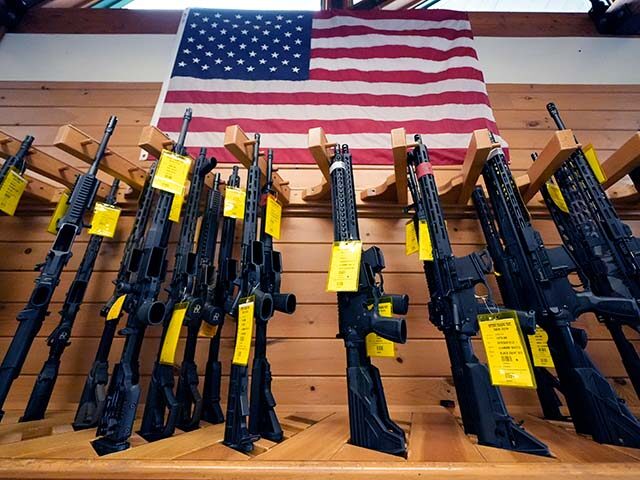
A showdown over America’s bestselling rifle is heading to the Supreme Court this fall: Gun-rights groups are asking the court to consider whether the AR-15 and other rifles described as assault weapons are deserving of constitutional protection.

Should the conservative Supreme Court take up the case in its new term, it could put some of the gun-control movement’s biggest victories in jeopardy.

Nine Democratic states and Washington, D.C., have restrictions on the purchase or possession of AR-15 rifles and other firearms labeled assault weapons, with many enacted after a 20-year-old gunman used an AR-15-style rifle to kill more than two dozen first-graders and faculty at Sandy Hook Elementary School in Connecticut in 2012.

The high court in a landmark 2008 opinion said law-abiding Americans have a right under the Second Amendment to protect themselves with handguns.

But justices have never said if that right extends to the AR-15.

A makeshift memorial for the victims of the Sandy Hook Elementary School shooting. Photo: Robert F. Bukaty/AP

“The court has yet to weigh in squarely on what kinds of guns can be prohibited,” said Joseph Blocher, a law professor at Duke University and co-director of the Duke Center for Firearms Law. “These cases are a lot harder than either side makes them out to be,” he said.

The court in its 2008 opinion said an individual’s right to bear arms is limited to weapons used for self-defense and other lawful purposes, and suggested that dangerous and unusual weapons designed for military use—such as the fully automatic military M16 rifle—fall outside Second Amendment protections.

The ‘perfect vehicle’

An August federal appeals court ruling upholding Maryland’s AR-15 ban offers the Supreme Court a prime chance to enter the fray.

The 10-5 decision by the Fourth U.S. Circuit Court of Appeals is the most substantial pronouncement from lower courts on the right to own an AR-15 since the Supreme Court expanded Second Amendment protections two years ago in a decision that said gun regulations are valid only if they are consistent with historical precedent.

The Fourth Circuit’s entire roster of active judges heard the case. Two-thirds of the bench agreed that the AR-15 was a combat weapon too destructive and ill-suited for self-defense to be treated like handguns.

The majority opinion by Judge Harvie Wilkinson, who was appointed by President Ronald Reagan, said the AR-15’s fearsome firepower makes it “ill-suited for the vast majority of self-defense situations in which civilians find themselves.”

He described it as a military-style weapon best suited for “wreaking death and destruction,” quoting a trauma surgeon who likened getting struck in the liver with an AR-15 to a watermelon exploding onto concrete.

“Compared to a handgun, the AR-15 is heavier, longer, harder to maneuver in tight quarters, less readily accessible in an emergency, and more difficult to operate with one hand,” he wrote.

A person wears an NRA hat in front of the U.S. Supreme Court in Washington, D.C. Photo: stefani reynolds/AFP/Getty Images

Students fire AR-15s during a shooting course at Boondocks Firearms Academy in Jackson, Miss. Photo: Chandan Khanna/AFP/Getty Images

Five judges signed onto a lengthy dissent that accused the majority of disparaging the weapon and its millions of law-abiding owners.

Judge Julius Richardson, a President Donald Trump appointee who wrote the dissent, wrote that AR-15 rounds are more likely to fragment and wobble passing through walls compared with handguns, diminishing the risk to bystanders. He said the rifle’s accuracy only enhances its suitability for self-defense.

“For these reasons, law enforcement has long found the AR-15 to be an effective weapon for urban building raids and hostage situations,” he wrote. He also cited a 2021 survey of AR-15-style rifle owners about their reasons for purchasing the weapon. More than 60% said home defense was a reason.

The gun-rights groups that brought suit against Maryland have asked the Supreme Court to review the Fourth Circuit decision. They submitted a petition to the court last week that said the case was the “perfect vehicle” to resolve questions over the right to own AR-15s.

In July, the Supreme Court declined to review a similar case on Illinois’s AR-15 ban. Two justices, Clarence Thomas and Samuel Alito, urged the court to clarify what makes a weapon dangerous and unusual.

But legal observers say the Supreme Court is more likely to take up the case out of Maryland. The lower-court litigation, unlike in the Illinois case, is completed with a final judgment against the plaintiffs and amassed a more extensive evidentiary record. The Fourth Circuit ruling also carries more weight coming from the full bench instead of a typical three-judge panel.

Other appeals courts are currently weighing AR-15 restrictions enacted in New Jersey, California and Connecticut.

A notorious gun

No other firearm has so divided Americans. Gun owners swear by them. The weapons fire rounds with smooth ease at ferocious speeds. They are lightweight, highly customizable, reliable and built to last—costing about as much as a laptop computer. U.S. civilians own approximately 20 million AR-15s, according to industry estimates.

The ubiquity of the rifles and owner survey data are helpful evidence for gun-rights plaintiffs, said Dave Kopel, a Second Amendment scholar who has argued that AR-15s should be protected. But enough justices have to be convinced that the rifles aren’t super-dangerous compared with smaller firearms, said Kopel.

While handguns have been used more often in mass shootings, AR-15s and other semiautomatic rifles were used in four of the five deadliest mass shootings in American history, according to data from Hamline University’s Violence Prevention Project.

A body is covered with a sheet after a mass shooting in Las Vegas in 2017. Photo: Steve Marcus/Las Vegas Sun/AP

In the 2017 Las Vegas massacre, a single man perched in a hotel suite rained more than 1,000 rounds onto a country music festival, killing 60 and wounding hundreds. It was also the weapon of choice for the gunman who attempted to assassinate Trump.

Proponents of AR-15 bans question how often the rifles have saved lives.

“I’ve never seen a single case where it was at all clear that having an AR-15 as opposed to a handgun led to a better defensive outcome,” said Stanford law professor John Donohue, a gun-policy researcher.

Categories
Anti Civil Rights ideas & "Friends" You have to be kidding, right!?!

Just amazing!