Category: Ammo

Many don’t realize it, but the double-action revolver dates back to the mid-19th century. One of the earliest was an English creation from the company of Deane and Adams, and was a .456-cal., five-shot cap-and-ball revolver. In America, Ebanezer Townsend Starr designed a .44-cal. double-action percussion revolver with a six-shot cylinder around 1856 and began producing it commercially in 1858, just in time to have it be a part of the American Civil War. When Rollin White patented the bore-through cylinder in April 1855, the concept of a repeating cartridge revolver would soon be combined with a trigger-cocking design that would be the foundation of revolvers to this day.
White—who once had been employed by Colt and had developed his bored-through patent while there—took that patent and several others with him when he parted company with Colt, eventually working out a deal with Smith & Wesson, which had been dabbling with the double-action revolver concept as early as 1872 in some top-break revolvers. Those early efforts had some problems—as do nearly all early designs. Single-action revolvers declined in popularity, the favor went to Colt’s 1878 double-action design and Forehand & Wadsworth double-action, top-break revolvers, which have a more-than-casual resemblance to Smith & Wesson top-breaks. In 1879, James H. Bullard worked up a break-top, double-action revolver design, first a .32-caliber, and later that year a .38-cal. design with a cartridge that became the .38 S&W.
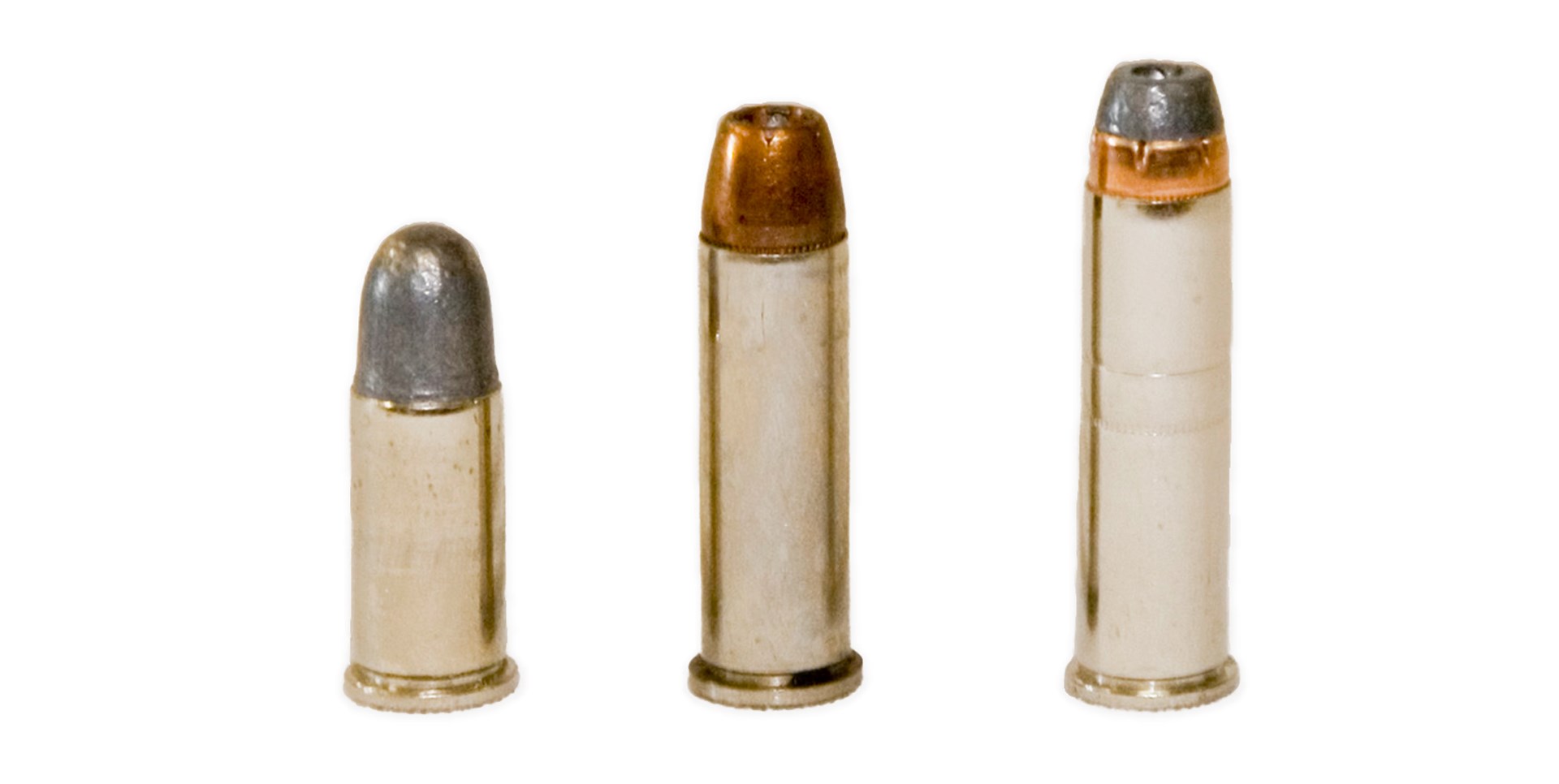
Shown (l. to r.): .38 S&W, .38 Spl. and .357 Mag. Image courtesy of author.
Like many firearms’ designs, the first efforts are for lower-powered cartridges in order to get the bugs and manufacturing mechanics worked out, but soon, the demand came for more power. Colt had less-than-acceptable results with its .38 Long Colt cartridge. However, Colt did have a superior—read stronger—design with its solid-frame, swing-out cylinder double action. Smith & Wesson started developing a solid-frame revolver in 1894 dubbed the Hand Ejector, the first of which were chambered in .32 S&W Long and .38 S&W.
Yielding to the demand for more power, Smith & Wesson beefed up and improved its solid-frame revolver it developed into the K-frame in 1899. It was called the Military and Police (M&P) model and was available in .32-20 Winchester Center Fire (WCF) and a new cartridge—designed in 1898—known as the .38 Smith & Wesson Special. Both the revolver and its .38-cal. cartridge would rock the handgun realm worldwide. It is, in a word, ubiquitous.
The .38 Special (Spl.) is dimensionally identical to the .38 Long Colt except for length; the .38 Spl. is 0.529″ longer. Too, the .38 Long Colt is derived from the .38 Short Colt, thereby meaning both of the Colt cartridges can be safely fired in a .38 Spl.-chambered firearm. Initially, the .38 Spl. was loaded with 21 grains of blackpowder for a velocity of 775 f.p.s. with a 158-grain lead, round-nose bullet, however, within a year, smokeless powder loads became available.
In 1900, the navy ordered 1,000 M&P revolvers, and the following year, the army did the same. Police departments and target shooters flocked to the M&P revolvers. Colt began chambering its revolvers to .38 Spl. in 1907 with the Police Positive. Just about every manufacturer making revolvers has made or is building .38 Spl. revolvers.
Barrel lengths run from 1 3/4″ in snubby revolvers to 10″ as the one used in the first-generation Thompson/Center Contender single-shot pistol. Profiles run from pencil-thin, straw-like tubes to massive barrels an inch or more in diameter. The fat barrels are most often custom jobs installed on dedicated target guns. The .38 Spl. made its way into the chambers of derringers and even a semi-automatic target pistol.
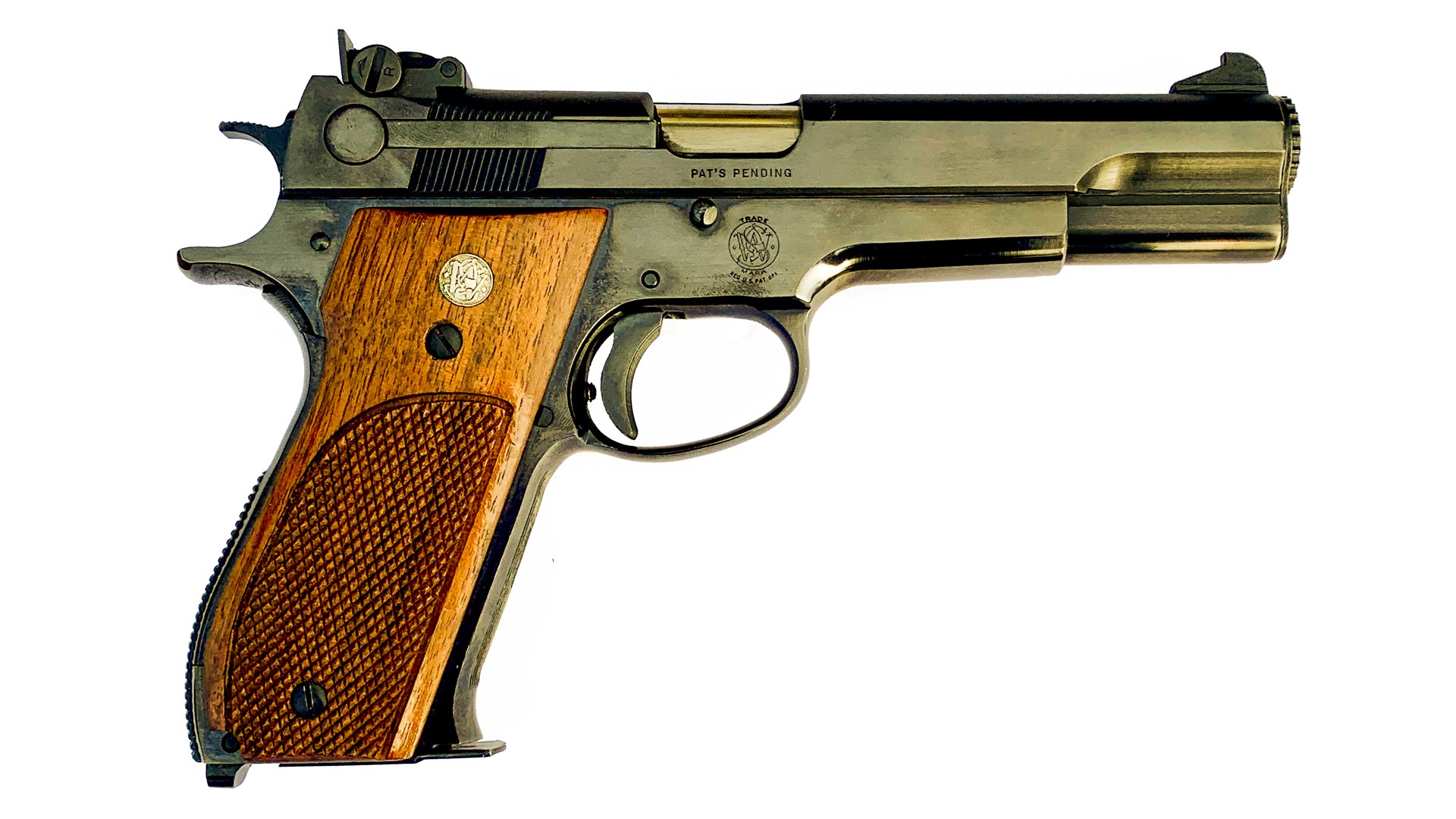
Interestingly, Smith & Wesson made a semi-automatic pistol for use with wadcutter bullets that had a frame based upon its Model 39 but was chambered for .38 Spl. from 1961 to 1993. The Model 52 was expensive to build because of the hand-fitting necessary to guarantee a five-shot group at 50 yards that was 2″ or less. Known also as the 38 Master, the Model 52 garnered a lot of championships in competitive bullseye shooting.
Colt also ventured into the wadcutter semi-auto market with its Gold Cup National Match .38 Spl. Mid Range based upon—not surprisingly—its M1911 pistol from 1960 to 1974. Just for grins, I looked up what these two competing semi-autos bring on the current market. Count on a Model 52 to clear $1,500 or so out of your pocket at the time of this writing, and the Colt is bringing $2,500 to $3,500 at the gun auctions.
The .38 Spl. is nothing if not versatile. Bullet weights for factory ammo range from the 90-grain Super Vel Super Snub to the old Winchester Super Police load featuring a 200 grain full-metal-jacket bullet. As a comparison, the Super Vel bullet comes screaming out of a 1 5/8″ barrel Smith & Wesson at 1,300 to 1,350 f.p.s. Out of a 4″ service revolver, it’s headed downrange at 1,530 f.p.s. The Super Police load was discontinued in the early 1980s, so no velocity quotes were available, but you can certainly figure a bullet twice as heavy as the Super Sub will be loafing along at a much slower pace.
Few, if any, police departments are using the .38 Spl. today. The various 9 mm Luger pistols have pretty much taken over that market. Nonetheless, many of today’s veteran officers slip a .38 Spl. snubby in a coat pocket for those “just-in-case” moments. Too, many concealed carry packers keep a .38 Spl. revolver handy. For those occasions that warrant it, I often have a Smith & Wesson Model 342PD in a pocket holster. Granted the 342PD is chambered in the big-brother .357 Mag., but I carry is stoked with Speer 135-grain, Gold Dot SB (short barrel) .38 Spl. ammo.
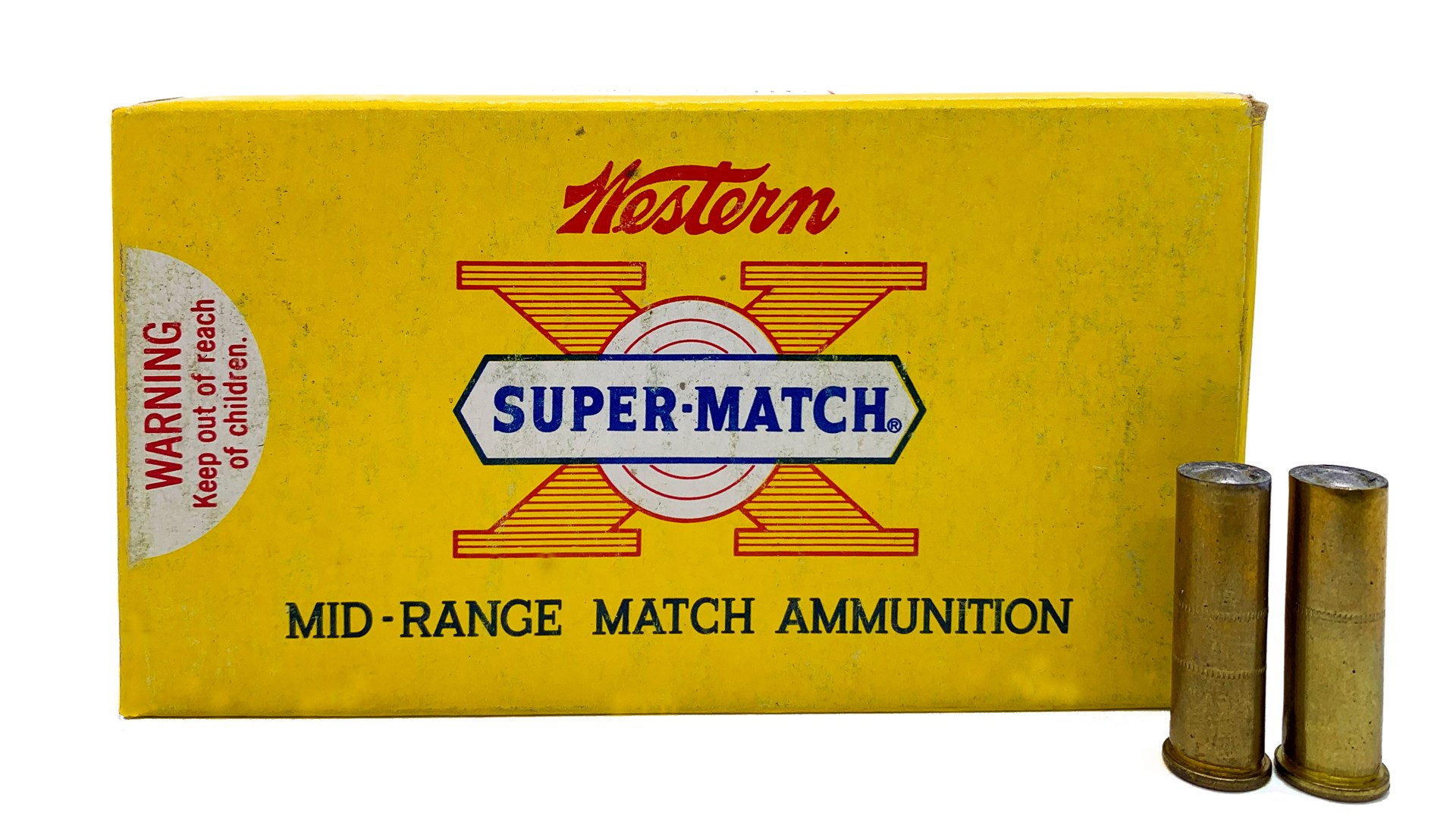
Handloaders can improve on factory loads a bit, but unless you are using it in a .357 Mag.-chambered revolver, it’s best to keep the loads sane. The vast majority of my loading experience with the .38 Spl. is in loading wadcutters for practice. In the last half century, I’ve probably loaded somewhere close to 50,000 rounds of these paper hole-punchers. I used to run the standard 3.2 grains of Bullseye in back of a 148-grain wadcutter. Now I use 3 grains of Trail Boss.
There have been literally millions of revolvers chambered in .38 Spl. over its 124-year lifespan. Manufacturing continues to this day from cheap to opulent. The first handgun many of us—including me—ever shot was a .38 Spl. I can’t imagine being without a few of them.
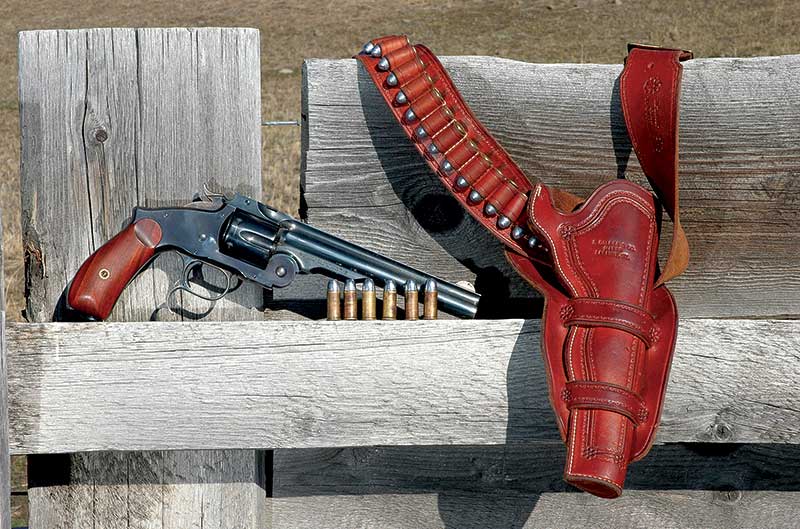
This is Duke’s Navy Arms 3rd Model .44 Russian. He did not even
consider selling it during Duke’s Great Gun Sale in 2008.
After writing a feature recently on why the .44 S&W Special isn’t so special, now I’m going to detail why I do like its ballistic twin, the .44 S&W Russian. At least I like it in this one particular revolver. That’s the Navy Arms’ replica of Smith & Wesson’s Model #3, 3rd Model .44 Russian.
Circa 1872 the Russian Government wanted to start buying Smith & Wesson’s new top break Model #3 revolvers. Very important to the company was the fact they were willing to pay in gold. But the Russians wanted nothing to do with Smith & Wesson’s own .44/100 cartridge because it used a heel-type bullet. That’s where a reduced diameter shank fits inside the cartridge case while the full diameter of the bullet is the same as the outside of the cartridge case. Just look at a round of .22 Long Rifle. They’re still made that way. The Russians explained if the bullet fit inside the cartridge case with revolver chambers bored accordingly things would work much better. They certainly did, and still do. Of course with all that gold in the balance Smith & Wesson said, “you bet!”
The result was the .44 S&W Russian. Smith & Wesson’s own cartridge then gained the name of .44 S&W American. Case length for the Ruskie one was set at .97″ with bullet diameter at .429″. Through the decades the .44 S&W Russian was loaded with bullets as heavy as 275 grains over black powder charges as heavy as 23 grains. By the smokeless powder era in the early 1900s, factory loads were standardized with a 246-grain roundnose bullet at about 755 fps. And when the .44 S&W Special came along in 1908 it was given the exact same bullet at the exact same speed but in a case 1.16″ long.
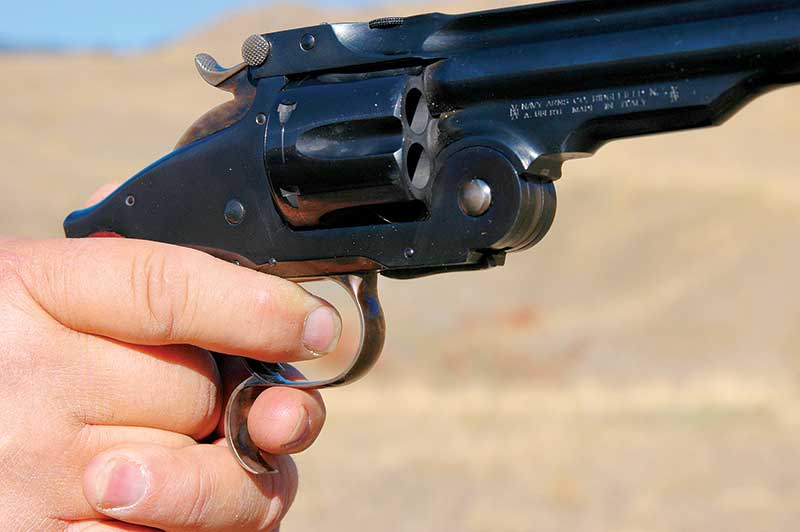
Why the odd hook on the trigger guard?
Picky Russians
In its first 30 years of existence the .44 Russian cartridge gained a superb reputation for accuracy, of course as fired in the several versions of Smith & Wesson top break revolvers. It’s recorded some notable handgun target shots were able to keep five .44 Russian bullets inside a 3″ circle at 50 yards. That’s probably true, and it should be emphasized not many handguns made today will do that even with smokeless propellants.
Between 1872 and 1874 the Smith & Wesson Model #3 went through three revisions as requested by the Russians. Collectors named them 1st, 2nd and 3rd Models. With each, the Russians asked for design changes altering the Model #3’s appearance so much the company started to grouse — despite the gold.
By the 3rd Model .44 Russian, the S&W Model #3 had a “knuckle” at the top of the grip resulting in a saw-handle shaped grip frame, and that odd spur hanging off the trigger guard. Many theories have been thrown out as to the purpose for the spur. The most likely one is Russian Cavalry tactics called for horse mounted troopers to charge with their revolvers cocked and with the trigger finger resting on the spur. That likely saved a lot of horses from being shot in the back of the head as Lt. Col. George A. Custer did to his own horse once when chasing a bison. I’ve found the spur makes a dandy finger rest for two-handed shooting and the saw handle grip keeps the hand positioned on the revolver exactly the same from shot to shot.
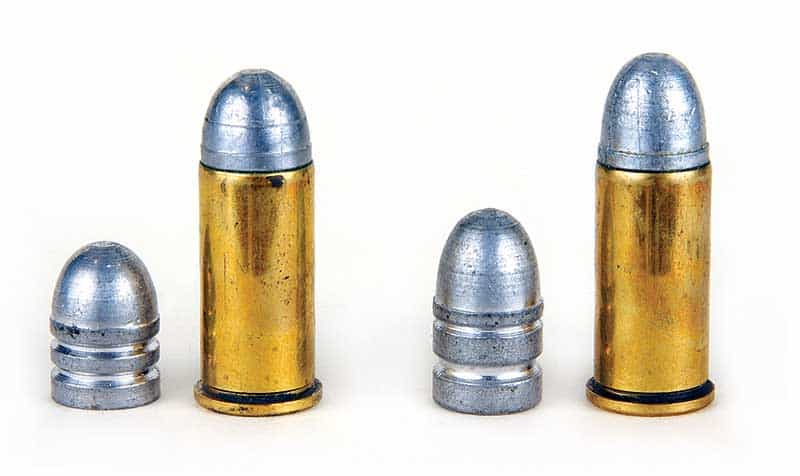
Left is Lyman #429478 (200 grains) and at right is Lyman #429383 (248 grains).
Good Guns
At one time I owned a sample of each of those vintage S&W .44 Russian revolvers but hardly ever fired them because they were very fragile and also very valuable. So when Navy Arms announced their replica of the 3rd Model .44 Russian about 10 years back, I jumped on it. While it is not an exact clone of the old S&W 3rd Model .44 Russians, it’s not bad, and the differences are minor. The Navy Arms’ version has a 7″ barrel as opposed to the original’s 6½”, and the original had a front sight forged integral with the barrel while the replica’s is pinned on. Oh, and some dimensions are slightly different by a few hundredths of an inch. So what.
My Navy 3rd Model .44 Russian is extremely accurate with either smokeless or black powder loads. I’ve settled on two loads: 248 grain roundnose bullets (Lyman #429383) or 200 grain roundnose bullets (Lyman #329478) over 4.0 grains of Bullseye or 19 grains of Swiss FFFg blackpowder. Its point of impact is about dead on with the latter bullet and about 2″ higher than point of aim at 50 feet with the former. Despite its tiny sights I’ve gotten one hole groups at 50 feet from a sandbag rest, and standing with two hands I can keep dueling tree paddles swinging. It doesn’t gum up with black powder fouling for at least 50 or so rounds.
When I had Duke’s Great Gun Sale in 2008 and disposed of 50 seldom used firearms, all my original S&W .44 Russian revolvers went. Putting the Navy Arms 3rd Model .44 Russian on the auction block was never even considered.

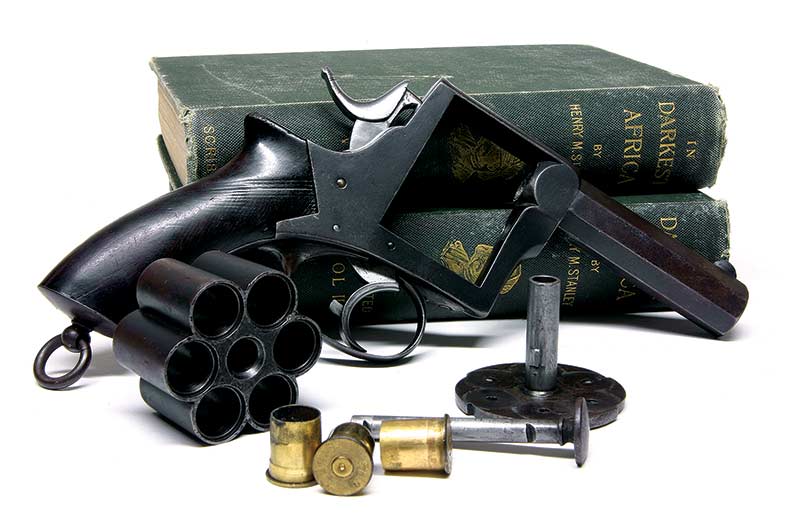
Whether munitions drove the development of firearms or firearms drove the development of munitions is one of those chicken and egg questions which keeps coffee table philosophers busy and off the streets. There’s at least one case where we can make the argument that available munitions drove the development of the guns — with the great .577 revolvers produced in the late Victorian Era.
With the exception of the huge Dragoon and Walker Colts, percussion revolvers were typically anemic performers by today’s standards. Even the .44 1860 Army model, perhaps the most widely made and distributed of the Colt percussion revolvers, offered mediocre ballistic performance. The 148 grain conical ball ambling along at a stately 800 fps sounds suspiciously like the .38 Special round-nose factory load which nobody has ever accused of superior man-stopping prowess. Yes, you could kill somebody deader than a hammer with one, but not always right now.
The advent of cartridge revolvers and ammunition didn’t improve matters a great deal. Only the .45 Colt with its 250 gr. bullet at 900 fps was really an adequate performer. Pity the poor English whose concurrent revolver developments offered nothing nearly so useful. The early British cartridge revolvers were chambered for a variety of pathetic little numbers such as the .442 Webley and .450 Adams, most of which tossed along 200-220 gr. bullets at 550-650 fps, underwhelming to say the least. But lackluster performance was no academic question to users of these guns.
The British Empire spanned the globe and was, in many cases, peopled by reluctant participants in this imperial glory. Often as not, these folks did not domesticate well and caused all manner of trouble. Indeed, many offered spirited and effective resistance. Whether on a mission from God to expel the white devils, or simply fortified by locally manufactured pharmaceuticals, the locals often took a lot of killing.
Many a brave officer in the Queen’s service discovered this the hard way after emptying his token side arm to no effect, then getting gigged in the guts or sliced from crown to crotch. Didn’t take much of this for the brighter members of the officer corps to understand more stopping power was in order. Since officers provided their own side arms, those who could afford to procured better ones.
In those days, the only propellant was black powder. The only way to get more power was to use more powder. More powder, in turn required larger
cartridges which, not surprisingly, required larger guns. Out of the quest for effective man-stopping revolvers came some of the most fascinating revolvers ever made, the .577s. Doubtless, designers settled on the .577 caliber because of the familiar Enfield and Snider rifles of the day, figuring that a shortened case suitable to revolvers would do the trick. Regardless, in this instance black powder was the chicken that laid the revolver performance egg.
Cartridge Guns
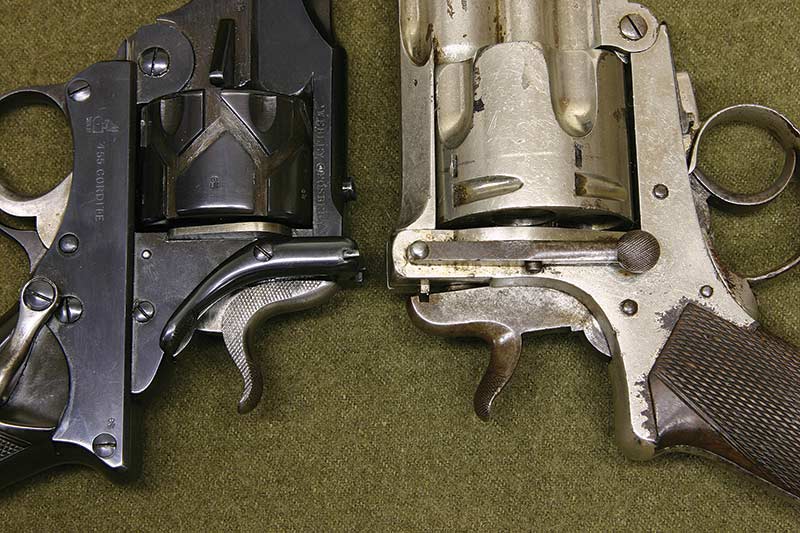
While some .50 and .54 caliber percussion revolvers exist, the literature doesn’t show any .577s. Most known .577s are cartridge guns. Even so, these guns evolved some over their brief history. Early coiled-brass cartridge cases were not terribly dependable and caused function problems. The earliest known solid-frame specimens had complicated cylinder assemblies with backing plates with firing pin holes that fitted between
the case heads and standing breech to assure dependable cycling even in the event of a case failure.
Problem was that reloading was time-consuming and troublesome since you ended up with a handful of parts during the loading operation — cylinder, backing plate and axel, to say nothing of the ammo. Drop any one part and the gun was disabled, a real bummer in a square surrounded by dervishes intent on doing Allah’s work against the infidels.
Improvements in cartridge cases gave rise to the more conventional revolvers made along the lines of the familiar top-break ejector Webleys. In
their final iteration, .577 revolvers used a drawn brass cartridge case heaving a 400 gr. bullet at about 725 fps — by all accounts an effective manstopper. Determining who made the .577 revolvers is a bit tricky. Patent holders and retailers were not always manufacturers. While Webley and Tranter probably produced the earlier solid-frame guns with the backing-plate cylinders, it isn’t clear Webley ever produced any top-break .577s. Some were probably made by Pryse in England, and perhaps by other licensed English makers. Some were manufactured on the continent by August Francotte & Co. of Liege and retailed by outfitters such as the Army and Navy cooperative and various sporting arms makers.
All top-break ejector revolvers I’ve seen have been made on the Pryse patent, regardless of the retailer’s name. Distinguished from the Webley latch system, the Pryse top fastener between barrel extension and receiver consists of a couple of frame-mounted levers which retract a couple of pins from a hole in the barrel extension to permit opening. At least a couple variations in the guns exist with subtle differences in barrel
form, cylinder length and hammer fastener. One thing is for certain, .577 revolvers are extremely rare. Credible estimates suggest fewer than a hundred or so of all stripes were ever made.
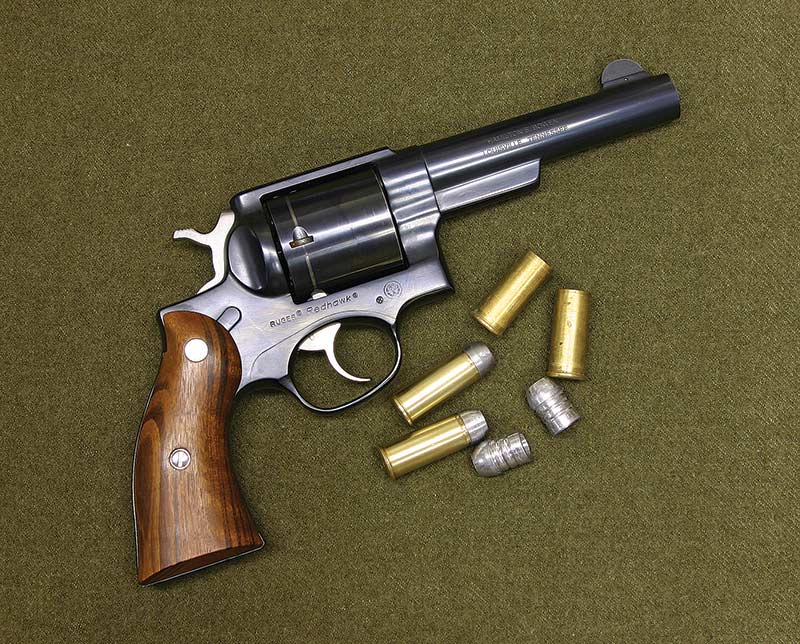
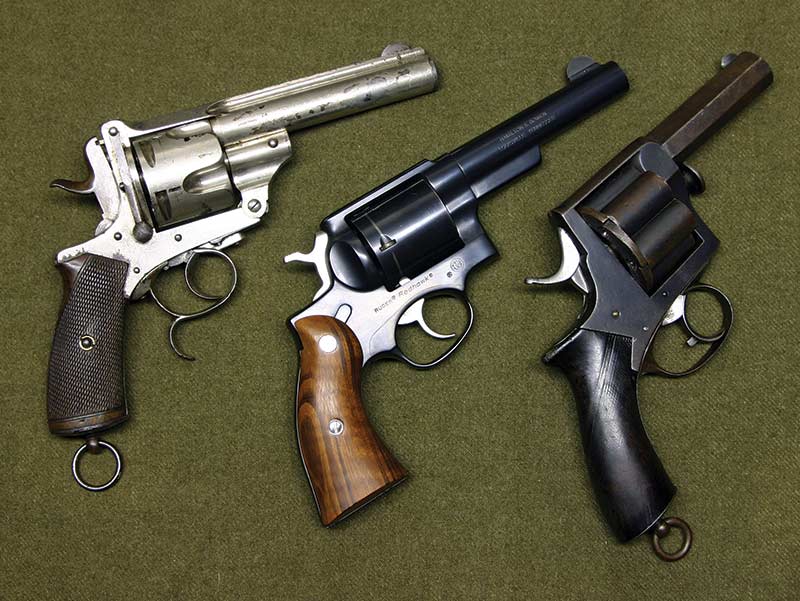
Rare or not, vintage .577 revolvers are magnificent arms. The examples we have here are very similar in size and weight to the contemporary Ruger Redhawk. They are perfectly handy and agile in their handling. Recoil, while not insubstantial, is a gentle heave and not bothersome. Sadly, most devout gun cranks will never have a chance to see, let alone shoot one of these marvels. That gave rise to the notion it might be nice to try and build a modern .577.
Ordinary?
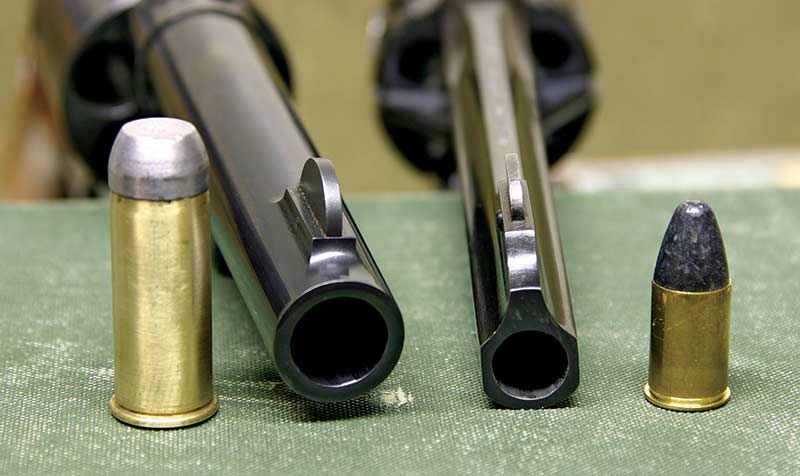
In keeping with the character of the original .577s, we (“we” being the Bowen Classic Arms crew, shop dog, et al) wanted a revolver of relatively ordinary size and shape, not some outsized, eight-pound monstrosity with all the grace and handling of an anvil. The basic problem was the cartridge size. The original .577 revolver cartridges were based on shortened .577 Express cases. Since these cases were quite heavily tapered, the original .577 revolvers actually have groove diameters more on the order of .610″-.615″ rather than the usual .585″- .588″ for .577 rifles.
Our only hope of shoe-horning a .577 cartridge of some kind into a revolver lay in dramatically reducing its diameter. Pegging the groove diameter, rather than the bore diameter, at .577, was a good place to start. Even so, if you added in .015″ per side for the brass and a bit of cartridge taper, you’d still have a case with a head diameter of about .610″. For the smallest possible cartridge, the solution was a heeled bullet with a .577 front driving band in a .577″ diameter case, basically a giant .22 Long Rifle cartridge.
So far, so good. But if the groove diameter is .577″, how could the gun shoot well with a heel of only .547″ diameter? More head scratching offered the answer in the form of the Minie ball with its hollow base. In theory, the skirt would obdurate to driving-band diameter and give guidance on each end of the bullet. Since bullets would weigh around 400 grains and be subject to considerable recoil inertia, how to crimp them
firmly was the next question. Heeled bullets can’t be roll crimped because the case mouth is covered by the bullet. Time-tried technology in the form of collet crimping saved the day.
All that remained to complete the basic cartridge design was to procure a suitable parent case. Perusing spec sheets on virtually every known cartridge case turned up nothing useful. Alas, our baby was a bastard. Nothing would do but to make cases. Obviously, drawn brass would have been prohibitively expensive so we turned to the Ballard Rifle & Cartridge Company who, at the time, produced excellent turned brass (now produced by Rocky Mountain Cartridge Company). With the flexibility of CNC machinery, they could make cases of virtually any description. And thus was born the .577 No. 2 revolver cartridge.
Redhawk Rebore
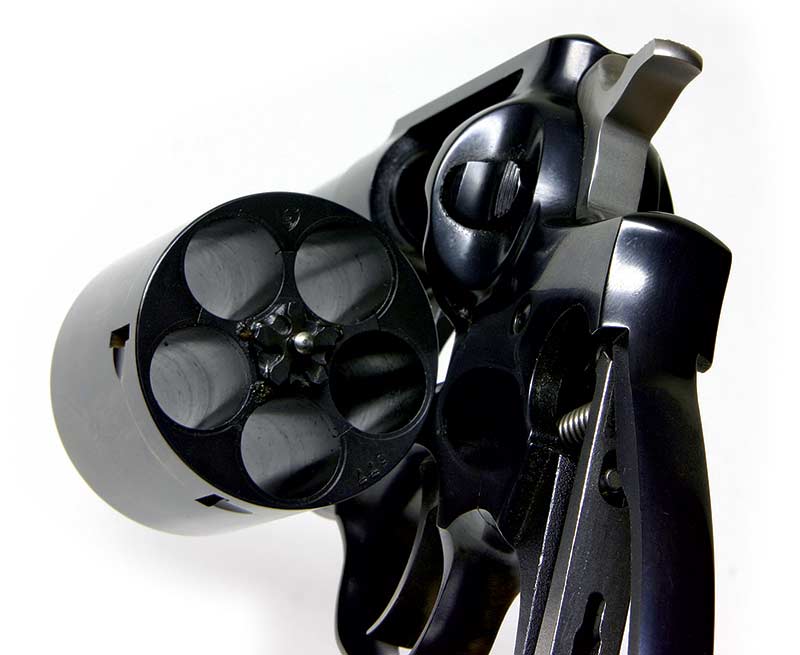
The smallest .577 revolver cartridge still required a substantial gun. At the time, the Ruger Redhawk was the obvious candidate since no other normal revolver had its cylinder and barrel shank diameters. Even then, the .577 No. 2 Revolver cartridge is a tight fit. The chamber walls and webs of the 5-shot cylinder are quite thin, limiting the gun to black powder pressures. Barrels with .565″ bore and .577″ groove diameters are not a size found in nature, so to speak, but we were able to gull our good friend Cliff LaBounty into making a rifling head to rebore the
original Redhawk barrel. In keeping with the vintage nature of the gun, the top strap and barrel were modified to resemble a Smith & Wesson M&P fixed-sight model. Building the gun was simple enough — ammunition proved to be much more troublesome.
Initial test firing was conducted with standard pistol primers, FFFg powder and a generic black powder lube. Muzzle velocity was about 725 fps but accuracy was disappointing. After 15- 20 rounds, powder and lead fouling were so bad bullets would not stay on the target paper at 20 yards. Consulting with an expert may be unmanly but, in this case, it saved the day.
Mike Venturino and his shooting cohorts had begun to unravel the lost secrets of sustainable black powder accuracy. Mike counseled there are
three basic elements: Use magnum primers, use a drop tube to charge the cases with powder and use SPG lube. Armed with this intelligence, we tried again. Muzzle velocities were still around 725 fps +/- 5 fps. Off-hand groups shrunk to a couple inches and fouling, even after 25-30 rounds, never impaired accuracy or function. Recovered bullets showed the skirts hadexpanded to engage the rifling as hoped.
With good ammo in hand, regulating the sights was a snap. The .577 Redhawk has performed flawlessly to date. Thanks to the weight reduction afforded by .577 chambers and bore, handling is light and quick. Recoil is substantial, much like a heavy .44 Magnum loading but without the bite and piercing report. Scientific penetration tests conducted against a handy fence post demonstrated very modest penetration but a great deal of whack. After two or three solid hits, the post stayed right where it was, unable to escape.
Sadly, the future for newly-made .577 revolvers is pretty bleak. The National Firearms Act of 1934 classifies rifled, breech-loading guns with
bores larger than .5″ as “destructive devices” and levies on the transfer of such arms a $200 tax. Production for resale of destructive devices requires a license costing thousands of dollars a year to maintain.
Big-bore sporting long arms are largely exempt but the BATF would not extend any such sympathy to a .577 revolver and treats the gun exactly the same as a 155MM howitzer. Quite a distinction for a revolver that was state of the art in 1885. Within a few years of their introduction, the .577
revolvers disappeared, usurped by smaller guns made possible by smokeless power — yet another argument in favor of ammunition as chicken and gun as egg.

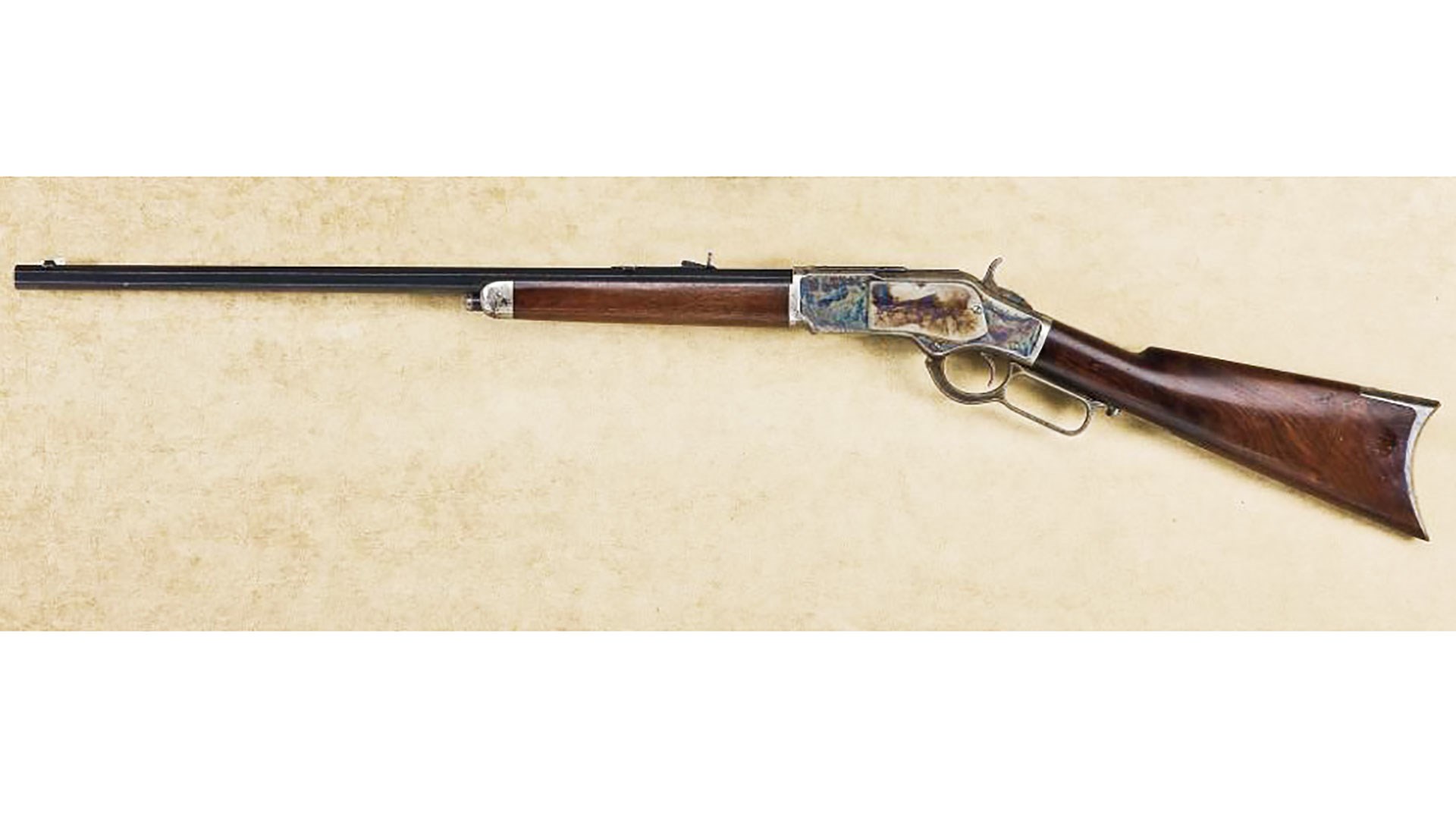
During the last quarter of the 19th century, as the industrial revolution was flourishing, a great deal of experimentation occurred. The firearm industry was as big a player in this as anybody. Winchester’s Model 1873 rifle had virtually set the American West on fire; its .44-40 Winchester Center Fire (WCF) was the go-to cartridge of the day. Then, as now, there were always a few who sought minimization—a way to use less resources to achieve a similar end.
In 1874, Winchester reduced the neck of the .44-40 to accommodate a .40-cal. (.401″) bullet. Someone must have thought that “.40-40” didn’t have much of a marketing ring to it, so they looked at the bore diameter, .394″. Apparently, that didn’t have the “zing” they wanted either, so they came up with .38-40 WCF. As it did with the .44-40 WCF, Colt would chamber its Single Action Army (SAA) for the smaller bore some four years later.
In 1882, Winchester once again pared down its cartridge to .32 cal. (.3125″), reduced the charge of black powder to 20 grains and called it the .32-20 WCF. Originally touted as a combination cartridge suitable for varmints, small game and deer, the deer component was fairly quickly dismissed, save for shots less than 100 yards in the neck or head.
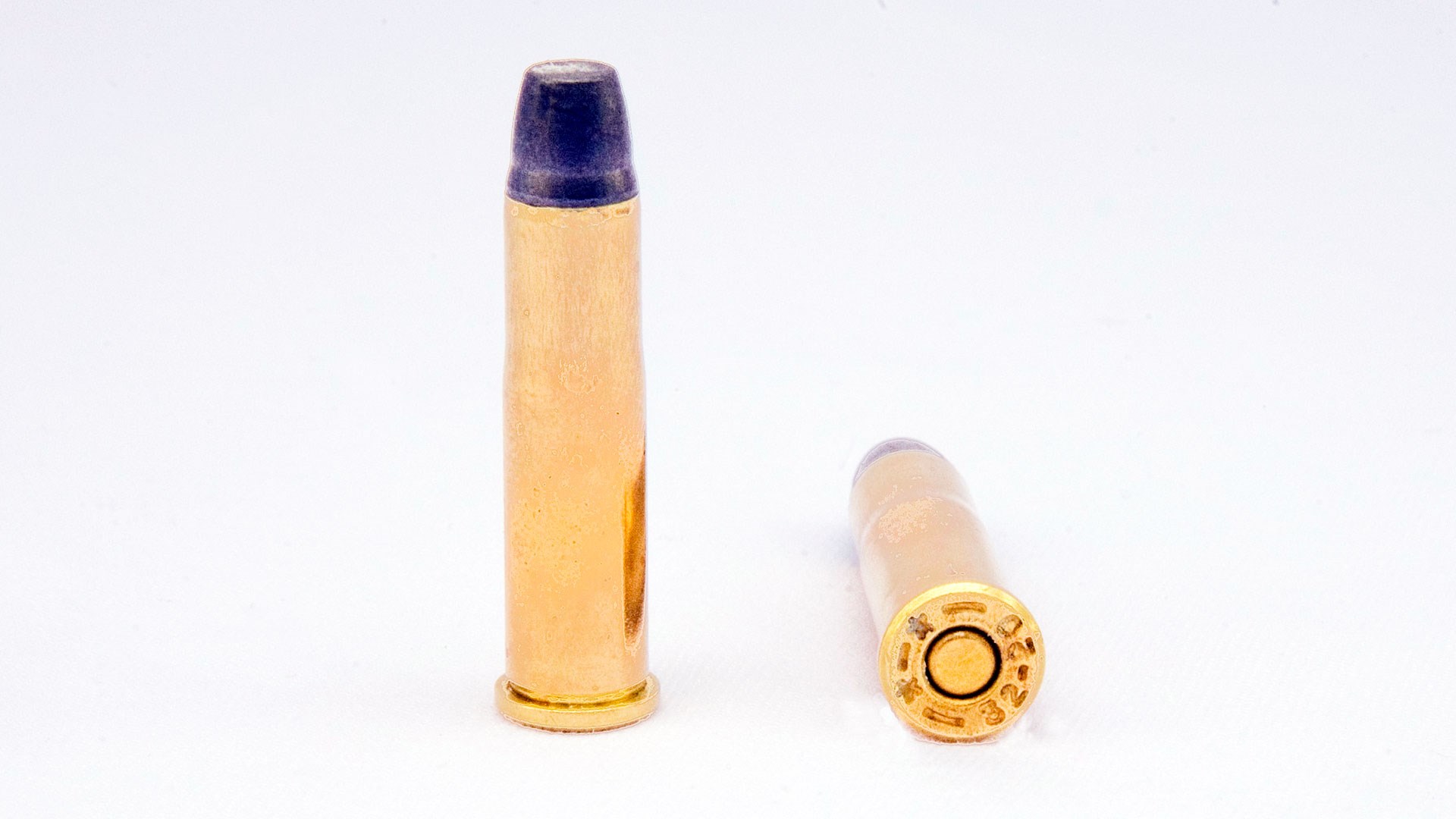 Two examples of a .32-20 WCF cartridge.
This was when 20 grains of FFFg black powder would generate 1,250 f.p.s. and just 399 ft.-lbs. of energy with a 115-gr. bullet. Compare that to a .30-30 Win.—considered by many to be the “floor” of deer cartridges—with a 150-gr. bullet at 2,390 f.p.s. and 1,903 ft.-lbs. of energy. Having said all that, Paco Kelly, of leverguns.com fame, says he shot some two dozen Virginia whitetail deer with a Model 92 Winchester chambered in .32-20 WCF in the 1970s.
As with its predecessors, it took Colt about five years to chamber its SAA in .32-20 WCF. Still later, it would chamber its double-action Frontier, Army Special and Police Positive revolvers in .32-20 WCF. Not to be outdone, Smith & Wesson chambered its .32-20 WCF Hand Ejector First Model in the Winchester cartridge. Martini chambered its single-shot Cadet rifle in .32-20 for use as a trainer and target rifle. Remington chambered its Model 25 and 25A rifles in .32-20 WCF from 1923 until 1935. With that, the .32-20 WCF remained popular throughout the first quarter of the 20th century.
That popularity is quite similar to the small and lightweight pistols of today. They are usually carried by one of two types, either more-or-less novice types that want some protection but are unwilling to dress around a full-size pistol, or the really savvy, deep-cover, gun guy (or gal) who is cool as ice under fire and can accurately place their shots. The former are more plentiful than the latter. Their logic is that no one wants to get shot with anything.
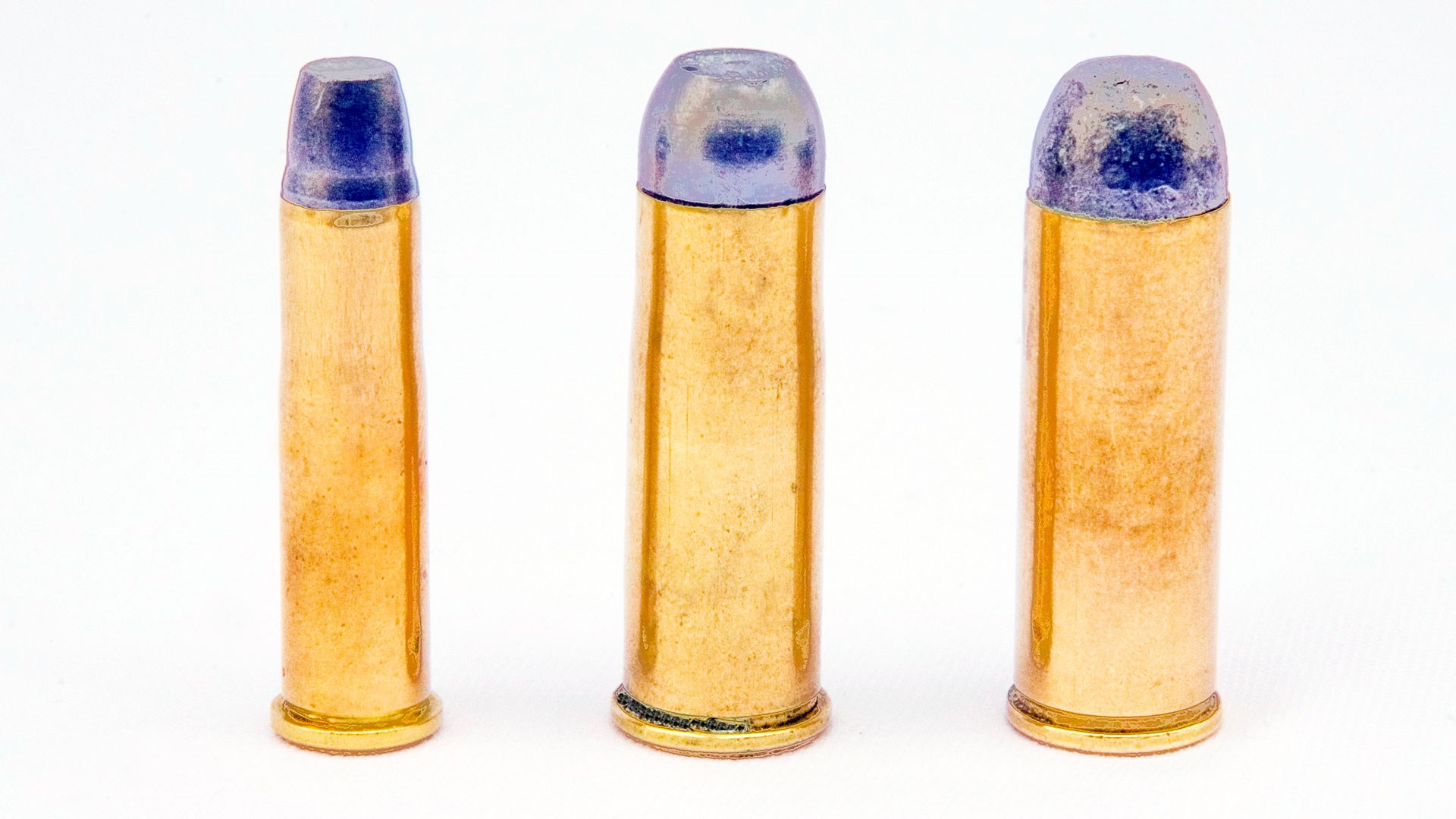 The .32-20 WCF (left) compared with the .44-40 WCF (center) and .45 Colt (right).
The accuracy of the .32-20 WCF is another reason for its popularity. Small game hunters and pest shooters found the cartridge to be very accurate within its range limitations. Hunters wanting to kill a rabbit or squirrel for the stove liked that the cartridge didn’t tear up too much meat.
By the time World War II rolled around, all three Winchester cartridges, .44-40 WCF, .38-40 WCF and .32-20 WCF were moribund. Winchester stopped chambering rifles for them, Colt was lowering the curtain on the SAA and hunters were becoming more fascinated with magnum cartridges. The general consensus on into the 1960s—even the ’70s—was that you couldn’t kill a prairie dog or a woodchuck unless the bullet was traveling at more than three times the speed of sound.
As with so many things, however, what goes around comes around. The sport of handgun metallic-silhouette shooting renewed some interest in the .32-20 WCF. Winners needed a flat-shooting, accurate cartridge that could tip over a steel target at 100 meters, and didn’t threaten to separate their hand from their wrist.
Older examples of .32-20 WCF revolvers were quickly swept up, and for a while the only feasible way to get one was to build it. More than a few Ruger Blackhawk revolvers chambered in .30 Carbine were converted to—or had another cylinder chambered—for the .32-20 WCF.
In reality, these were actually “.30-20 WCF” revolvers because the barrels remained .30 caliber, with a groove diameter of .308″, as opposed to .3125″. As such, in order to retain its accuracy reputation, handloaders had to use .30-cal. bullets. More than a few Thompson/Center Contender barrels chambered in .30 Carbine also got a reaming as well. Even in the stilted world of Schüetzen matches, the .32-20 WCF has made some inroads on the traditional .32-40 chamberings.
All of this resulted in a mild renaissance of the chambering in the Marlin 1894CL in 1988 and Ruger making a limited run of Blackhawk revolvers for Buckeye Sports, of Canton, Ohio, chambered in true .32-20 WCF. Both, sadly, are no longer produced. The .32-20 WCF has been fruitful and multiplied. Spinoffs include the .25-20 WCF (1895), the .218 Bee (1937) and its case has been modified slightly to produce usable ammo for the Nagant M1895 revolver with its 7.62×38 mm R cartridge, as well as the .310 Cadet rifle cartridge of British fame.
Today’s .32-20 WCF shooters are pretty much relegated to handloading the cartridge, though occasionally you’ll find a handful of factory ammo. Since it’s a bottlenecked cartridge, carbide dies are out, and because of its very thin neck and the necessity of being extra careful—read slow—in the reloading process to keep from ruining too many cases, producing ammo for it is not for the impatient.
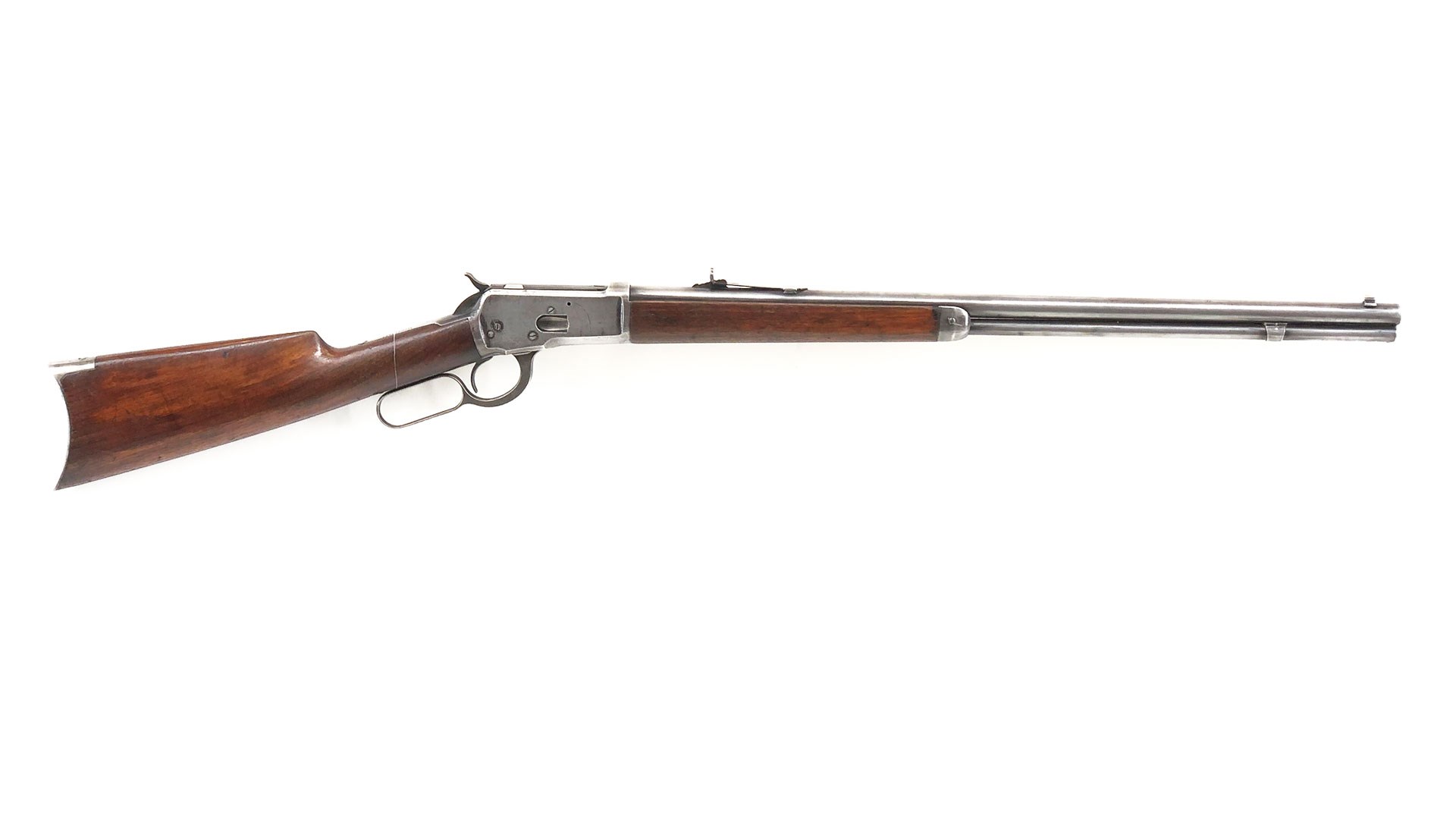 An example of a Winchester Model 92 chambered in .32-20 WCF.
The first order of business is to determine whether you are loading for a .30-cal. or a true .32-cal. barrel. That, of course dictates bullet diameter, which may or may not limit your bullet selection.
Then you must decide what power level you can load, which is determined upon your gun type. Model 1873 rifles and first-generation Colt SAAs should not be subjected to hot loads. Their design and metallurgical makeup won’t hold up to that kind of abuse. Newer guns like the Marlin 1894CL, Ruger Blackhawk and T/C Contender can take hotter loads. The .32-20 WCF is inexpensive to load, especially if you use cast bullets.
The .32-20 WCF may not set the modern world on fire. It’s not a popular choice in the self-defense world anymore. Small game hunters wanting a .32-caliber rifle or pistol can choose the .32 H&R Magnum or .327 Federal Magnum can get the job done just as well. But for the traditional minded hunter, the gentleman who may choose to hide a short-barreled single action deep in his coat or the man who embraces history, they will find that the .32-20 WCF suit them right down to the ground.