A lot of us joke about the weirdness that comes out of California, but I’ve seen some really odd stuff. For example, anti-gun lawmakers removing laws specifically meant to reduce “gun crime.” That’s just one example, though, and you see it when you look at a specific context, namely that they’re not necessarily anti-crime but anti-gun owners. At least, that’s my take on it.
However, earlier this week, we had an official make a very odd admission on Twitter.
Now, for most of us, the name John Hamasaki means less than jack squat. For San Franciscans, though, his name means something. He’s one of the city’s police commissioners.
That’s right. He’s admitting that guns save lives.
And he didn’t react well to people who thought he might have been joking.
Now, let’s evaluate this for a moment. The NYPD confiscated a firearm from a 17-year-old, someone far too young to legally possess a firearm. In swoops a San Francisco police commissioner to tell them that while that might make things safer, it might also cost that 17-year-old his life because he doesn’t have the means to protect himself.
This is someone who was actually breaking the law when found with the firearm.
What Hamasaki is doing is apparently arguing that such people should be permitted to carry their firearms because it may solely be for self-defense.
Meanwhile, San Francisco and the entire state of California are downright hostile to law-abiding citizens trying to get firearms, and here we have a San Francisco police commissioner openly stating that a firearm in the hands of someone who can’t legally have one may just be for self-defense.
Well…ain’t that special?
Of course, he’s not incorrect. Much like we law-abiding types, criminals also carry guns for protection. They fear for their life as well. One major difference, though, is that they’re often doing something that will run them afoul of other armed people who are likely to decide to shoot them.
Most of us don’t make those kinds of enemies.
My question of Hamasaki is whether or not he will speak out against the draconian gun restrictions that exist in the state of California, particularly the conceal carry licensing system that makes it virtually impossible for a law-abiding citizen to get such a permit. After all, if he can advocate in favor of a 17-year-old kid in New York carrying a gun, surely he can advocate for law-abiding citizens in his city and state, right?
Somehow, I doubt he will.
See, unfortunately, the stance of so many people in our larger cities is that anything a criminal does should be explained away. These are the people advocating for no bail to put bad people back on the streets while also advocating for taking our guns. I’m sorry, but how does that work?
As Hamasaki noted, guns save lives. However, they don’t just save the lives of some punk in New York or San Francisco. They save the lives of law-abiding citizens who just want to be left alone from criminals who refuse to respect that desire.
Editor’s Note: Want to support Bearing Arms so we can tell the truth about Joe Biden and the Left’s radical gun control agenda? Join Bearing Arms VIP. Use the promo code GUNRIGHTS to get 25% off your membership.
What is the reason that we prepare? What is our ultimate justification for what we’re doing?
If you watch “Doomsday Preppers” or some other show on TV, the answer would seem to be that it’s because we’re crazy. They selected people and edited the clips to make them look crazy, which led to years of people laughing at preparedness.
This last year has changed the public perception of preparedness.
So, then, why do we do it?
The ultimate reason, when you break it down completely, is FREEDOM. We prepare so that we are SELF RELIANT and don’t have to trust anyone else to come to our rescue. The evidence is clear in the wake of Hurricane Katrina, the midwest floods, and the Texas weather outages, that the government is going ride over the hill to save you about an hour after you’ve already died.
How does this view of being self-reliant match up with the Ultimate Tactical Handbook?
It is for freedom that Christ has set us free.
Stand firm, then, and do not let yourselves
Be burdened again by a yoke of slavery.
Galatians 5:1
Seems clear: Be self-reliant. You are your own rescuer, protector, and provider.
When you look at the riots over the spring and summer of 2020, you will realize that the police are not coming to protect you. In fact, the Supreme Court case of Castle Rock v Gonzales says they have no duty to protect you. In Portland, when both the far right and the far left faced off in the streets, the Portland Police Bureau admitted that they were not capable of protecting the city when the two factions fought each other. This will be more common in 2021, so be prepared to fend for yourself.
When people in New Orleans relied on the government to come to their rescue, they found that rather than feeding everyone, the government’s first response was to go door-to-door and seize 551 firearms, all of which were lawfully owned. Then they forcibly relocated people to the SuperDome, where they were actually at greater risk. There was a shortage of food & water at the SuperDome, and crime was rampant inside.
So, again, relying on ourselves is good, but not merely good enough.
Let’s say I lived in New Orleans, and I had stored up 120 days of food and water, I had secured my house, obtained personal protection firearms, and had my own generator. Sounds prepared, right?
Well, on day 4, while I was getting ready to make lunch, our good friend General Russell Honore and his troops arrived at my house and demanded entry. They flashed emergency orders, and seized my firearms for “security & safekeeping”, then declared that they were seizing my food and generator under the emergency order. They then put me and my family in a truck and drove us to the SuperDome.
Did my preparedness help?
Inside the SuperDome, food and water began to run out and the National Guard began to ration it. Recovered bodies from the surrounding area began to pile up, and in an emergency, live people plus a lot of dead bodies equals illness. Three people died inside the SuperDome from various causes. Does that sound like people you should rely on?
What does this mean for preparedness folks who live in a city and plan on “bugging in”? I can’t answer that for YOU, but for me, if I had remained in the city, and the government showed up, I’d follow Galations 5:1 and not let myself be burdened with a yoke of slavery. Relying on someone else to feed, house, and protect you is SLAVERY.
The best advice I can give is to have a plan that allows you to either hide yourself and your gear effectively, or a plan that allows you to leave undetected in a hurry. The best of both worlds is to have hidden most of your supplies and have the means to leave quickly and hide for a day or two, until you can come back safely.
In Clay Martin’s excellent book on urban preparedness, Concrete Jungle, he describes how to do these things, and I highly recommend it (see link below).
A book you need
If you plan on bugging in, you need to start NOW on Operational Security (OPSEC). Telling the world all about your preparations will make you a target. Many people think “My neighbors won’t take my stuff” or “My Facebook friends would never steal from me”. Those people underestimate the power of hunger. Hungry people, or people with children on the edge of starvation, will act very differently than they do now. They may show up and demand food, or band together and take food.
OPSEC
Even worse, when the troops take them to a relocation camp, and offer them extra food in exchange for reporting “hoarders” or “people hiding guns”, people WILL report you, if they know.
In preparedness, I see lots of people talking about how, after an event, when bugging in, they’ll fortify their house. A fortified house looks like a fortified house. When hungry people, or people intent on looting, see a fortified house, they think “there’s good stuff in there”. It’s far better to make your house look unoccupied or unremarkable in any way.
I know, folks like us love to fly our American flag right next to the “Come and Take It” flag. We are already seeing ANTIFA target houses flying either of those flags, so what do you think will happen post-event? Oh, you’ll take it down then, after the event and when the WROL situation exists?
What if I told you that the left is already preparing for mass violence, and recording addresses they suspect? THEY ARE.
This last weekend, the Young Social Democrat Association had booths set up in Washington state. There was literature on the tables about setting up “Community Emergency Response Teams”. These teams would be comprised of armed personnel for “community self-defense” as well as medics. Do you think you’re part of the community they’ll defend?
It’s interesting that they avoided using the term “militia”, but an armed “community self defense” group is INDEED a militia.
They told these groups to form and begin establishing “safe houses” and gathering information. By gathering information, they mean identifying anyone who isn’t a radical socialist for “redistribution”. Make no mistake, their preparedness plan is to seize your supplies and redistribute them to each other. They are already forcibly taking over neighborhoods and buildings, and we aren’t even fully into a WROL situation.
Keep your bug-in location as low-key as possible, and if a WROL situation develops, take the same position as The Rooftop Koreans did, and be ready to defend your stuff.
OK, so they’re not on a Rooftop, but they ARE Korean.
During the LA Riots of 1992, the Korean business community suffered the most loses. Over 2,300 businesses owned by Koreans were destroyed (half of all property damage). When they realized that the police wouldn’t be able to get help to them for over a week, the Rooftop Koreans banded together, armed themselves and began manning the roofs of their business. For several days they exchanged gunfire with looters, but they didn’t lose anymore buildings. Not a single Korean was charged with a crime.
Rooftop Korean is the dialect I speak.
Keep your preparations low key, have a way to hide them, and retain your ability to move out quickly, even if it’s only temporarily. Retain also the ability to defend yourself.
Operational Security means making sure that only the people who need to know are aware of your plans. This applies to every area of life, not just preparedness. Americans put a ridiculous amount of information on social media for everyone to see. People brag about leaving for a two-week vacation, not realizing the OPSEC error in telling people that your home is now unoccupied and you are out of the country.
Make sure you keep your circle of people who know your preparedness plans small. If you join a mutual aid group (see, I didn’t say militia or community self defense team), keep the group small. You need enough people in your group to be able to band together and defend each other, but not so many that a full leadership organization is required. Once you set up some type of large hierarchy, the potential exists for one person to force others to give things up.
Remember our goal, self-reliance and individual freedom.
But, every group needs leader, so what do we do? We take a lesson from the military organizations of 1700s. In the 1700s, and most of the 1800s, military units elected their officers. In a small, 4-5 family mutual aid organization, that’s a simple and effective way to handle it.
In a WROL situation, there won’t be any “lone wolf” people after 30 days. Find a group of like minded people and organize now.
I hope this helped you remember why we prepare, and gave you some ideas for be self-reliant. Most importantly, I hope it inspired you to remember that we ARE a free people, and the government doesn’t really have the authority to tell us where we can go and how many of us can gather at once.
If you’d like to help us keep up our work here, consider making a donation.
Only through mass non-compliance with all gun and knife
laws will we ever overthrow Britains anti-gun fascist gun laws. “Vengeance will be mine, one bullet at a time”
Philip Luty died on April 8, 2011 after a
two year struggle with cancer. This web
site will be kept online as a memorial.
—Ken Holder webmaster@webleyweb.com
Welcome to my Homemade Firearms web site. The web site devoted to the homemade gun and techniques of improvised firearm manufacture. In these days of increasingly oppressive anti-gun policies and almost police state politics affecting many other areas of our lives, it has never been more important for the aware citizen to know how a working firearm is constructed.
“There are over 550 million firearms
in worldwide circulation; that’s one
firearm for every twelve people.
The only question is;
how do I arm the other eleven?”
EXPEDIENT HOMEMADE FIREARMS VOL II is now available. Free Download
(A 13,641,248-BYTE .PDF FILE)Photo Gallery
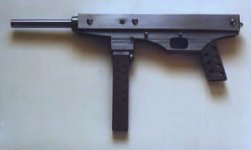
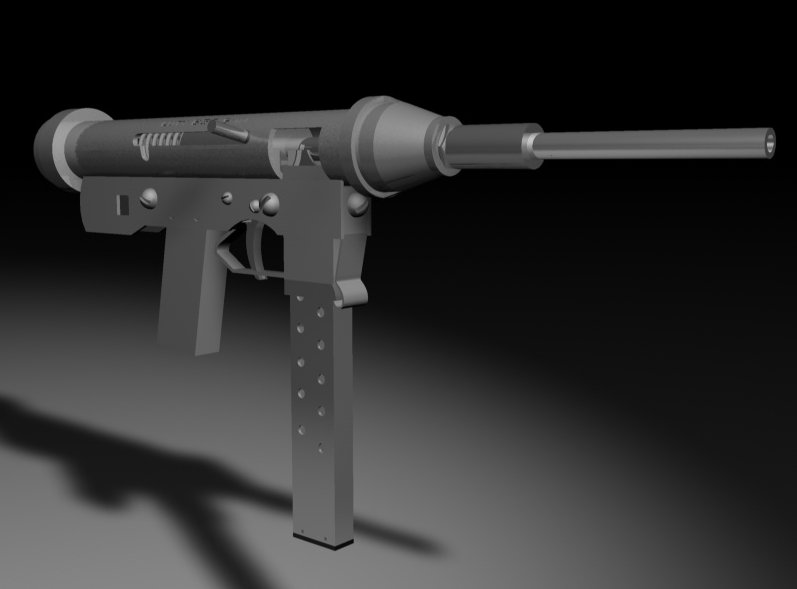
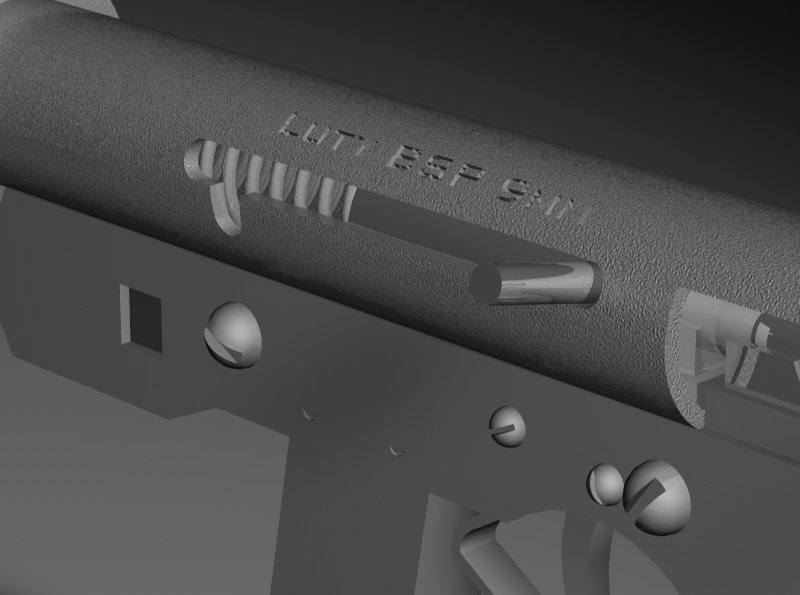
NEW DOWNLOAD! The ‘BSP’ 9mm SMG They say the best things in life are free … but not in this case! Complete plans (including photo’s and illustrations) showing the construction process of this 9mm BSP- SMG.
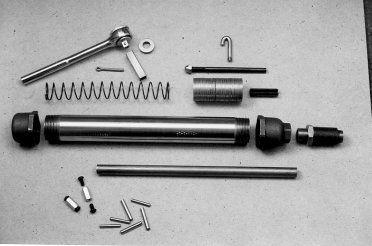
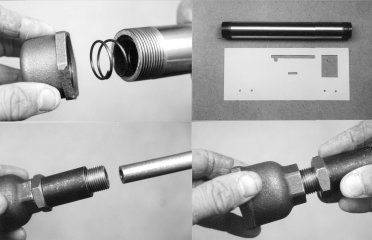
*This firearm design is perhaps the simplest of all improvised SMG’ designs. *Constructed using off the shelf British Standard Pipe fittings and hardware products. Downloadable plans—FREE DOWNLOAD!
Let’s face a few facts. The faceless bureaucrats who are determined to disarm law abiding citizens are not doing so because they are “Nice People” concerned about you or I being the victim of a crook with a gun.
Their Friends in the media who miss no opportunity to churn out the lies, myths and misinformation that have, in the eyes of many, demonised gun owners do not do so because they wish to disarm the local ‘Drug lord’. They do so because they see the private ownership of firearms as a threat to their own power base and an obstacle in the way of their ‘New world order’ mentality. An Orwellian society, nanny state, surveillance society, call it what you wish, they are all part of the same despotic ideas that have, in the last century alone, lead Europe twice down the path of dictatorship and destruction. An armed society is the ‘safety net’, a last wall of defence, the people possess (Possessed?) against the ‘Big brother’ nightmare many see being created all around us. No wonder those with ill intent would like to see the people disarmed!
Some people may find such rhetoric distasteful but it is a truth some find harder to swallow than the cosy ideas we are brainwashed into thinking make our society safer by those who wish to control what we believe, think and do. Some naive individuals adhere to the view that only the police and army should have access to firearms. I call that a police state mentality and a very dangerous mentality at that. History is littered with examples of regimes around the world that have first disarmed their own citizens, always behind the smoke screen of ‘law and order’ and then proceeded to commit atrocities or all out genocide against their own unarmed and helpless citizens. In such circumstances, the ability of the private individual to build his own homemade/improvised gun, or perhaps go into full scale underground arms manufacture, maybe of even greater importance.
My own view is that the gun not only belongs in the hands of the agents of the state (they can never be disarmed) but in the hands of the people as a whole. This is the surest way of maintaining the correct balance of power between state and citizen. The mad rush of government to create a ‘gun free’ Utopia will not, of course, have any effect on the crime rate. The criminal, by definition, does not obey the law and is therefore unaffected by any anti firearms legislation. Gun control will, however, create more and more victims of violent crime as long as we allow ourselves to be disarmed behind the smokescreen of ‘Crime control’. This is the unpalatable truth you will never read in the media or hear from any politically correct politician.
Unfortunately, while we continue to allow the media anti gun propaganda mills to churn out their lies, myths and misinformation we will continue to see the destruction of the ancient liberties and freedoms once securely enshrined under the “Common laws of England”.
When any government deprives a citizen of his freedom or property, the individual must take action to publicise his grievances. To this end, I hope to illustrate in the following pages, the futility of gun control, and that no amount of arbitrary legislation can ever prevent those wanting firearms from owning them. The individual who has the ability to construct his own homemade gun can never be permanently disarmed by any level of gun control legislation.
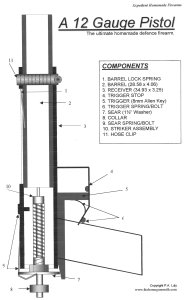
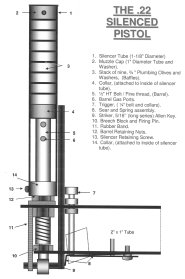
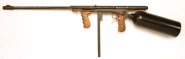
So as to allow you to get a ‘feel’ for the subject of homemade guns, the following pages illustrate how a reasonably light weight and portable homemade Machine gun was assembled from readily available ‘Off the shelf’ materials and components. No lathe or milling machine was required or used.
The firearm that can truthfully be described as “a homemade gun” should be one built using the type of hand tools and materials that the average individual could easily acquire.
The Homegunsmith is proud to support
NOTICE Neither the registered owner or any other person affiliated with this website shall be held liable or responsible, or in any way encumbered by the material posted on this page or any other unit sub-page within this site. Neither shall any material upon this page or any unit sub-page be construed as encouraging persons to engage or partake in, or incite any unlawful activity.
With the exception of governments to manufacture weapons of mass destruction (and flog’em to oppressive regimes around the world) be it hereby known that our great and benevolent leaders have decreed that the building of firearms for the protection and security of the individual (or any other reason) is positively forbidden. Anyone building guns, artillery pieces, mortars, rocket launchers, etc, etc does so at his own discretion, risk and enjoyment.
Adopted by the British Army in 1871, the .577-450 Martini-Henry was a modification of the .577 Snider Cartridge that was reduced down to .45 caliber. Specifically designed to be used in the new Martini-Henry rifle, the .577-450 Martini-Henry cartridge was used by soldiers and hunters in the British Empire for many decades.
Though the cartridge is now obsolete and has since fallen out of use, the .577-450 can still be an effective hunting cartridge under certain circumstances.
When the British Army adopted the Martini-Henry rifle, it was the first rifle that they had ever adopted that was originally designed as a breechloader. The rifle, along with the accompanying .577-450 cartridge, was an instant success due to its rapid rate of fire and long effective range.
Two loads were originally produced for the cartridge: a rifle load and a carbine load. The rifle load fired a 480-grain lead bullet propelled by 85 grains of black powder to reach a velocity of approximately 1,350 fps. The carbine load, designed for use by the cavalry and artillery in their Martini-Henry carbines, fired a 410 grain bullet pushed by 71 grains of black powder.
The .577-450 cartridge was originally designed with a rolled brass case (left center). However, these cartridges were difficult to extract from a hot, dirty chamber, as would be common under heavy combat conditions. To improve their reliability, the case was changed to the more modern drawn brass case (right center), which was much less prone to jamming.
The British Army used the .577-450 Martini-Henry all over their empire for the next few decades. The cartridge was accurate out to around 400 yards under normal conditions, or potentially as far as 1,000 yards when used by an expert rifleman under ideal conditions.
In addition to the impressive accuracy and range of the cartridge, the large, soft bullets fired by the .577-450 were also known for causing devastating wounds.
The rifle and cartridge became very famous during the Zulu War, specifically at the Battles of Isandlwana and Rorke’s Drift. In addition to use in Africa, the Martini-Henry was also utilized extensively by the British in Asia, especially in India and Afghanistan (where thousands of “Khyber Pass” copies were illicitly produced).
Though officially withdrawn from front-line service with the British Army in 1889, the Martini-Henry was used by various reserve and police forces for many decades, and thousands of the rifles can still be found in former British colonies all over the world.
.577-450 Martini-Henry Loads
Due to the age of the cartridge, factory .577-450 Martini-Henry ammunition can be very difficult to obtain. It is possible to find the occasional box of factory-loaded ammunition at gun shows and on the Internet. It is usually very expensive on the rare occasion when you do find it.
Because of the difficulty obtaining factory ammunition, hand-loading the .577-450 is the way to go. Though hand-loading the. 577-450 Martini-Henry is not for the faint of heart, it is certainly possible and the components and tools that you need are available.
Finding brass is relatively easy: Jamison Brass & Ammunition produces and sells good quality Boxer-primed .577-450 Martini-Henry cases. It is also not too challenging (or expensive) to find appropriately sized reloading dies.
Finding bullets is a little more difficult. Even though the bullet is nominally .45 caliber, the cartridge was originally designed to use paper patched bullets, so the bore is actually slightly larger than .45 caliber. Because of this, very few Martini-Henry rifles will accurately fire the .458 diameter bullets designed for the .45-70 Government (below) and similar rifles because they are too small to engage the rifling without a paper patch.
Further complicating the situation is the fact that the actual bore diameter of a Martini-Henry rifle varies between models and even manufacturers. That being said, if you want to shoot loads without a paper patch, the bullet generally needs to be between .463 and .468 caliber (.466 diameter bullets are the perfect size for my Martini-Henry).
To be certain of the proper bullet size, you need to measure the bore of your particular rifle. Once you do that, there are manufacturers that will be happy to produce a custom bullet or bullet cast for you.
Fortunately, there is a fair amount of reloading data using both smokeless and black powder for the .577-450 Martini-Henry available online. So, once you’ve gone through all of the hassle of finding all of the appropriate components, it’s not too hard to find loads that closely mimic the performance of the original loads that the British used in the 1800s.
Additionally, if your rifle is in good shape, and you are using appropriately sized bullets, the .577-450 can be a very accurate cartridge.
Hunting With the .577-450 Martini-Henry
Even though finding .577-450 Martini-Henry ammunition can be a real hassle, it can be an extremely effective hunting cartridge. Since the cartridge enjoyed such widespread use in the British Army, it should not be surprising that it has also been used extensively used by hunters all over the British Empire as well. Virtually every species of big game in the world from antelope to tiger to elephant has been successfully taken by hunters using the .577-450 Martini-Henry over the years.
John “Pondoro” Taylor famously used the .577-450 Martini-Henry to hunt elephant and Cape Buffalo for a short period of time at the beginning of his career. While it certainly worked for him, I would not recommend using the .577-450 on thick skinned dangerous game. The cartridge is a much better choice on smaller game like deer, feral hogs, black bear, and most species of African plains game.
I’ve personally used the .577/450 Martini-Henry to take a kudu, warthog, and springbok. I was using a 400gr Hawk custom bullet fired at 1,520 feet per second, which was quite effective on all three animals. The bullet exited the warthog and springbok, but I recovered the bullet from the kudu. As you can see below, it did not expand very well, probably due to the velocity being too low. However, all three animals were taken cleanly and only ran a short distance after the shot.
Even though the .577-450 can be a capable performer at long range, it is better to only take shots at relatively close range (where bullet drop is minimal) when using it for hunting. At 50 to 150 yards, it can even be effective on large animals like elk, moose and eland. Also, since it fires a heavy-sized bullet at a slow to moderate velocity, the .577-450 does not produce large amounts of ruined, blood shot meat like high-velocity cartridges do.
While the cartridge has fallen by the wayside in recent years, the .577-450 Martini-Henry can still be a great cartridge for hunting many species of big game. Finding ammunition can be a chore, but the cartridge is still a solid performer under the right conditions.
Countless hunters all over the world have taken many different species of exotic game with the .577-450 Martini-Henry since it was first developed nearly 150 years ago. There is no reason why you can’t do the same thing with this unique and storied cartridge
Davy Crockett’s last words to General Santa Anna: “I’m willing to discuss the terms of surrender, if you tell your men to lay down their weapons and assemble peacefully, I promise to take you all to General Houston and I’ll try my best to save most of your lives, That said Sams’ a might prickly”
I ran across this description of the battle of the JAVA Sea, and how roughly the Allies were handled by the Japanese. After Reading this, I can see why. And Our torpedo’s really sucked and I keep wondering how those turds were ever foisted on the Naval services, both the Submarines, Planes and Ship torpedo’s were garbage, now the Japanese Torpedo’s worked exceedingly well. I now know more about the battle of the Java Sea.
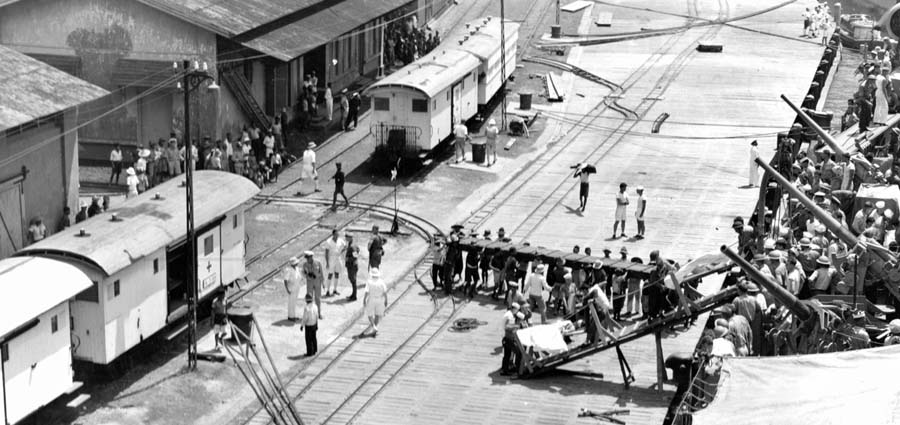
The ships left just before sunset on February 26, 1942, passing out of a harbor jammed with wreckage, battered docks, fires, the stench of burning oil, and Dutch women, children, and old men—most of them relatives of the crews heading out—waving their men goodbye and good luck. On the outgoing ships, there were answers back, American sailors cheering, Dutch sailors playing bugles, British and Australian warships hoisting their immense battle White Ensigns fore and aft, the heavy cruiser HMS Exeter’s loudspeaker system blaring a familiar song: “A-Hunting We Will Go.”
A combined force of American, Australian, British, and Dutch warships was heading out to sea from Surabaya Harbor in the Dutch East Indies to stop a massive Japanese force from invading the capital island of the 300-year-old Dutch possession. On this motley collection of warships stood all hope of stopping the Japanese advance.
Since the outbreak of war in the Pacific, Japan’s forces had proved virtually invincible. From Hawaii to Singapore, the emperor’s men had crushed all their opponents, conquering Hong Kong, Malaya, Wake Island, Guam, and most of the Philippines.
Now, like a giant octopus, their tentacles were spreading to surround Java, the administrative headquarters of the Dutch East Indies, their primary target in the invasion of Southeast Asia. Two prongs of Japanese warships, transports loaded with seasoned soldiers and powerful aircraft, were headed for Java’s opposing ends.
As Japan’s swords swung down on Java, the Allies had created their first joint command, called ABDA, for the American, British, Dutch, and Australian forces involved.
This attempt at a unified command turned out to be a disaster from the start because of its improvised nature, the lack of Allied forces, and the onrushing Japanese.
British Field Marshal Sir Archibald Wavell, commanding ABDA from Java, could only helplessly watch Japanese troops storm into Singapore, Sumatra, the Celebes, Borneo, and Timor before admitting that the idea was a failure. He fled to Ceylon, leaving Dutch Admiral C.E.L. Helfrich in charge of a dwindling and poorly equipped band of British, Dutch, American, and Australian troops, airmen, and sailors.
There were good reasons for that. The Dutch troops in the Indies were among their best, the King’s Netherlands Indies Legion, a veteran force that had policed the colony for centuries, battling native uprisings. And while the Dutch airmen flew poor aircraft like Brewster F2A Buffalo fighters that were easy meat for Japan’s nimble Mitsubishi Zero fighters, their long-service sailors manned modern destroyers, highly effective submarines with torpedoes that worked (unlike their American counterparts), and two tough light cruisers, the East Indies fleet flagship De Ruyter and her older sister Java.
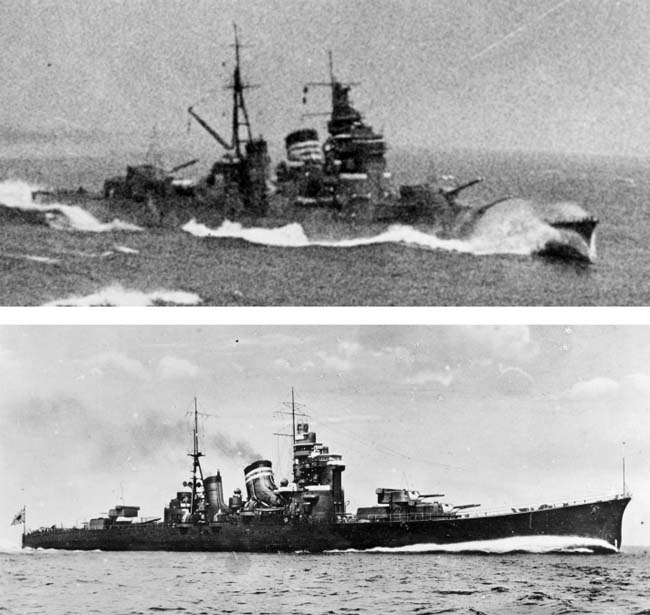
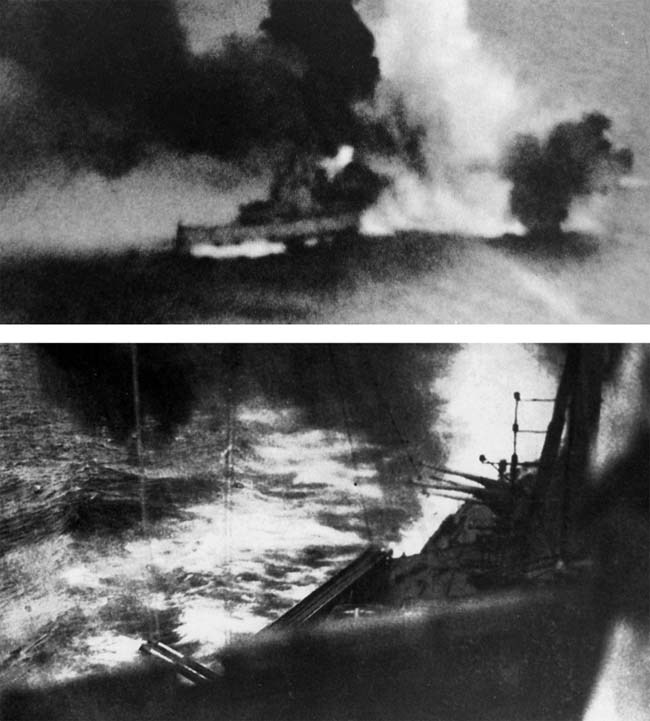
TOP: The Japanese heavy cruiser Haguro steams at high speed. Haguro was one of the cruisers engaged at the Battle of the Java Sea guarding transports and firing its heavy guns and torpedoes. ABOVE: The Japanese heavy cruiser Nachi was heavily engaged at the Battle of the Java Sea as the Imperial Japanese Navy inflicted a stinging defeat on ABDA naval forces.
Equipped with two seaplanes, depth charge launchers, torpedoes, and the sophisticated Hazemeyer fire control system for her seven 5.9-inch guns and her 10 40mm antiaircraft guns, De Ruyter was built specifically for East Indies service. Now De Ruyter’s hour had come. She would not be the only defense of Java. The surviving ships of Britain’s Far Eastern Fleet, Australian warships, and the U.S. Asiatic Fleet had been
ordered under Dutch command into “ABDA Float,” which created additional punch.
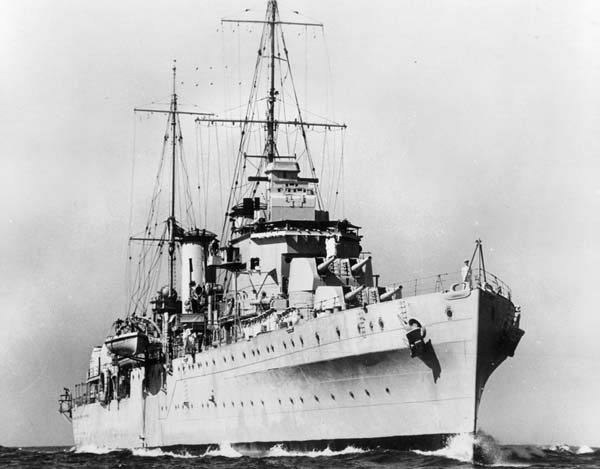
Among the ships was the heavy cruiser USS Houston, the Asiatic Fleet’s longtime flagship, distinctive by her tall foremast, and HMS Exeter, which had run the German pocket battleship Graf Spee into Montevideo in 1939.
The British provided the light cruisers Danae, Dragon, and Durban, Australia the more modern light cruisers Hobart and Perth, and the Americans the old light cruiser Marblehead and new Boise. The British, Americans, and Dutch also offered a collection of destroyers.
But there were still numerous weaknesses. The British and Dutch destroyers were fairly modern ships. The three elderly British light cruisers were withdrawn. USS Boise ran aground on an uncharted reef, tore up her keel, and had to be sent home, taking her radar with her. Marblehead endured numerous bomb hits and had to depart as well.
When the Japanese attacked Houston with medium bombers, the American cruiser’s crewmen discovered that most of her antiaircraft shells were duds. Before Boise headed for stateside yards, she handed over all her AA ammunition to Houston.
The Australian cruiser HMAS Perth was a survivor of the disaster at the Battle of the Java Sea but was lost in action at the Battle of Sunda Strait a month later.
The heavy cruiser badly needed it—she had seen endless action in the weeks since Pearl Harbor. Worse, a Japanese bomb had slammed through her quarterdeck and exploded in the base of her aft 8-inch turret. Quick work by a veteran crew prevented a fire that would have sunk the ship, but the three aft 8-inch guns were put out of action, and Java lacked any facilities to repair them.
To make matters worse for the four navies concerned, they had no common ammunition, language, communications, or procedures. While the British and Australians shared the same procedures, and the Americans, Australians, and British the same language, there were still great differences.
Rear Admiral Karel Doorman, who commanded the surface naval forces of ABDA, had to use simple flag or radio signals to communicate with his ships’ captains. Doorman could signal by blinker light in plain English, but in battle, with smoke and confusion, that was dangerous. He would then relay his orders by high-frequency radio to Houston, where a Dutch liaison officer would translate them to Houston’s skipper, Captain Albert Rooks.
He in turn could relay them by American “Talk-Between Ships” short-range radio to other American vessels, but that did not help the British or Australians, whose flag signals were different from those of the Dutch and the Americans. An American officer called the communications situation “farcical.”
Lieutenant Harold Hamlin of Houston put it bluntly: “Everyone knows you cannot assemble 11 football players who have never seen each other before and go out and beat Notre Dame. Two hours after it assembled, it was out on patrol.”
But that was all the Allies had, and they defied Japanese strength and odds. In January, four ancient American four-stack destroyers swooped in on a collection of Japanese transports anchored off Balikpapan and sank three of them, a morale-boosting victory. American and Dutch submarines knocked off the occasional freighter, and Admiral Doorman himself led a night strike in Badung Strait on Japanese shipping on February 19.
Doorman, 53, a Utrecht native, had been a naval officer since 1910 and a pilot since 1915; he was one of the Dutch Navy’s first flying instructors. In 1938, he headed the Dutch Navy’s air arm. In 1940, he was promoted to rear admiral and assigned to command the fleet forces in the East Indies.
An experienced deck sailor, he had a logical and sound approach to problems and understood the value and impact of airpower in the modern age.
He led his ships to Badung Strait in three packets, relying on darkness to cover his advance, attack, and retreat. Chaos reigned from the start. A Dutch destroyer ran aground. The three packets could not communicate with each other. Allies and Japanese hurled broadsides and torpedoes back and forth, but the only result was the damaging of a Japanese destroyer, the same to the American destroyer Stewart, and the sinking of the Dutch destroyer Piet Hein.
Doorman took his ships home to Java’s main naval base, Tjilatjap, and Stewart was placed in a 15,000-ton floating drydock where she promptly rolled over on her port side, taking the destroyer and the drydock out of the game. The Japanese captured Stewart after conquering Java and use her for the rest of the war as a patrol ship.
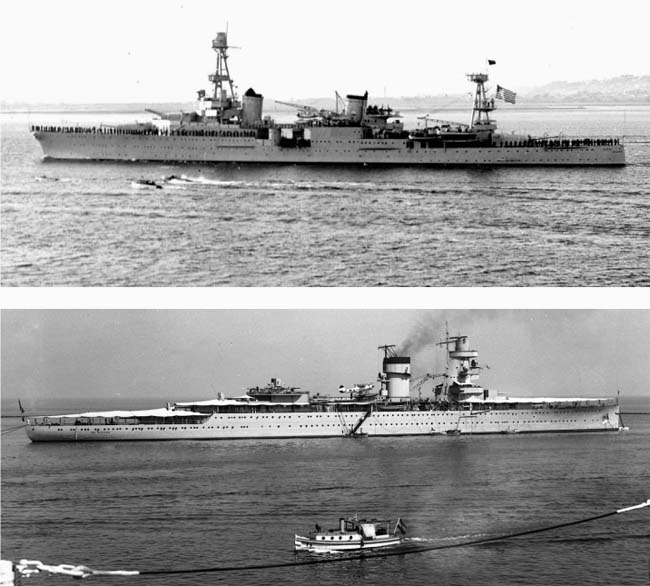
TOP: The cruiser USS Houston sustained damage at the Battle of the Java Sea but was later sunk at Sunda Strait. ABOVE: The Dutch cruiser De Ruyter was a casualty of the Battle of the Java Sea, sunk by enemy gunfire and effective Long Lance torpedoes.
The remaining vessels prepared for the next round, but it was difficult. American destroyers’ numbers were being whittled down: Stewart was gone, Whipple was out of action from a collision, Pillsbury and Parrott were out of torpedoes and needed overhaul, and Pope had developed feed-water leaks—she was losing more water from her condensers than they could take in.
The Americans could only marshal four destroyers, all “flush-deckers” from the 1920s: Ford, Edwards, Alden, and Paul Jones. They lacked an elevated forecastle, so they could not fire their forward 4-inch gun in rough seas or at top speed. On Houston, engineers shoved the wrecked after 8-inch turret into normal position and slapped a steel roof over it, hoping to fool the Japanese into believing it was operational.
Meanwhile, the Japanese forces descended on Java. From the west came 56 transports and freighters guarded by four heavy cruisers, two light cruisers, and a light aircraft carrier. From the east came 41 transports covered by two heavy cruisers, one light cruiser, and seven destroyers, under Rear Admiral Takeo Takagi, a fairly routine officer by Japanese standards.
Behind this power, as deep cover, was even more power: the mighty carriers that had shattered the American battle line at Pearl Harbor, a battleship, and nine more heavy cruisers.
Takagi’s force got down to business on February 26, forming a two-column convoy with ships a mile apart, the convoy 20 miles long. The merchant ships were handled poorly by ill-trained civilian crews, and Japanese destroyers struggled to keep order.
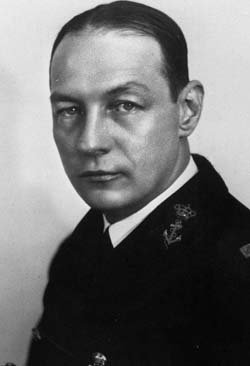
Dutch Admiral Karel Doorman, photographed in 1930, was killed in action while commanding ABDA naval forces at the Battle of the Java Sea.
Among the tin cans shepherding these vessels was the Amatsukaze, under Commander Tameichi Hara, who was annoyed at the merchant vessels’ lack of discipline. They emitted huge clouds of black smoke, ignored blackout regulations, and defied rules on radio silence.
“The weather was beautiful; sparkling sun by day, and bright moonlight silvered the sea every night. Even at night, trained eyes could span the length of the entire force. Five Allied submarines had been observed by our reconnaissance planes, but none menaced our ships. To this day, I do not understand why enemy submarines failed to come out,” Hara wrote later.
Actually, there was a good reason. The American submarines’ torpedoes stubbornly refused to work, so the sub skippers were reduced to reporting on the Japanese movements, which were confirmed by British codebreaking teams operating in Ceylon and London.
With this information in hand, Doorman could prepare. He recalled Exeter, Perth, and three destroyers from Tandjong Priok in western Java to Surabaya, and crewmen on Pope, watching the Anglo-Australian ships steam in, their White Ensigns flying, let out hearty cheers.
When Exeter tied up and shifted colors, her skipper, Captain Oliver Gordon, was summoned with his Perth counterpart, Captain Hector “Hec” Waller, to meet with Doorman and the other senior officers at Dutch naval headquarters, the requisitioned Netherlands Indies Electricity company building. All hands showed up in proper uniform, befitting long-service officers.
Doorman shook hands with every ship captain. He gave the briefing in English, but there was not much to say. He intended to leave harbor and attack the enemy convoy southwest of the Celebes. With Houston’s after gun turret knocked out, she would not be the last ship in line. With the Dutch destroyer Kortenaer suffering leaking boilers, the whole fleet’s top speed would be 25 knots.
On the evening of the 26th, Doorman’s Combined Striking Force sailed from Surabaya, battle flags streaming. Chaos reigned again as De Ruyter collided with a tug and water barge in the harbor, sinking both, but doing no damage to the flagship. They found no enemy forces, and by noon the destroyers were short of fuel. He headed back to Surabaya to refuel, dodging Japanese bomber aircraft on the way home. Houston’s new AA gun load helped fend off the Japanese.
When Doorman reached port, there were messages from Helfrich ordering him back to sea as soon as fueling could be completed. The Japanese were definitely on their way.
Doorman signaled back: “This day the personnel reached the limit of endurance. Tomorrow the limit will be exceeded.” But at 2:27 pm on February 27, the Combined Striking Force headed for sea once again, following a contact report that put the Japanese convoy just 90 miles to the north. Doorman signaled his ships in a plain English semaphore: “Am proceeding to intercept enemy unit, follow me, details later.”
The Striking Force formed up into two columns—one led by Doorman on De Ruyter, with Exeter, Houston, Perth, and Java trailing. The British destroyers steamed ahead of De Ruyter as a screening force, while the American and Dutch destroyers were a separate column on the cruisers’ rear and port quarter, held back by their older engines and kept back because of their weak armor, which made them susceptible to enemy fire.
The American four-pipe destroyers coughed up black smoke.
On the other side, Japanese reconnaissance planes were hard at work searching for Doorman’s force. Takagi had issues of his own. His combat group consisted of heavy cruisers Nachi and Haguro, the light cruiser Jintsu, and eight destroyers, including Hara’s Amatsukaze. The two forces were evenly matched, but Takagi had the burden of escorting 41 transports and freighters.
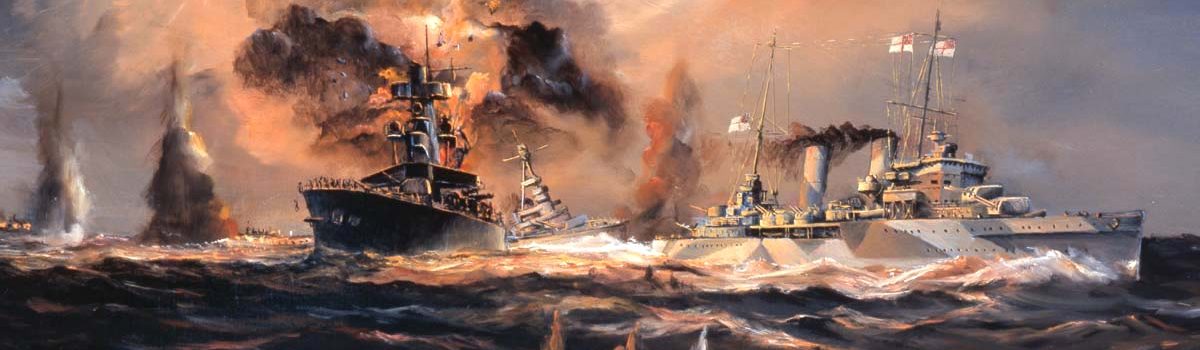
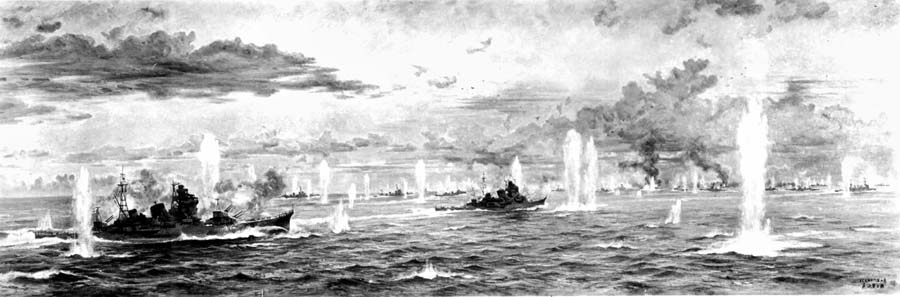
A depiction of the action at the Battle of the Java Sea
Takagi followed Doorman’s movements closely, mystified by his slow advance (12 knots) and odd courses.
There was reason for that. As the afternoon wore on and the Allies lost touch with the Japanese, Doorman was concerned that his battered ships and exhausted men might simply get ambushed. He decided to head back yet again for Surabaya and refuel and take on more ammunition.
At 3 pm, Doorman stood on his flagship’s bridge, heading into Surabaya’s outer harbor. At that moment, he received a signal from Helfrich. The Japanese Eastern Force had been sighted north of Surabaya near Bawean Island. Helfrich was ordering Doorman to attack immediately.
Despite his fatigue and that of everyone else in the fleet Doorman followed orders, signaling, “Follow me. The enemy is 90 miles away.” The ships turned back into the preset formation and shuffled north without refueling.
As Doorman’s ships headed north, the Japanese had their eye on them. One of Nachi’s scout planes reported to Takagi: “The enemy fleet has turned around again. The double column formation is now shifting to single column. The enemy is gaining speed and is headed on a course of 20 degrees.” A signal 10 minutes later confirmed the Allied speed: 22 knots.
Takagi reacted immediately. He shot off his cruisers’ remaining observation planes, ordered his minesweepers and patrol craft to herd the transports into order and away from the Allied fleet, and formed battle line: Rear Admiral Raizo Tanaka’s light cruiser Jintsu heading the eight destroyers, behind that another flotilla headed by the light cruiser Naka with six more destroyers under Rear Admiral Shoji Nishimura, Nachi and Haguro behind them.
Next, the human preparations: sailors put on working uniforms and helmets, officers white dress uniforms; many men went to their ship’s shrines for a quick prayer and to don hachimaki headbands, and finally, immense Rising Sun battle ensigns were broken from every masthead.
At 3:30 pm, the visibility was perfect, the sea was calm, and the two forces pounded toward each other, heading into the biggest surface action since the Battle of Jutland in 1916.
At first the officers on Exeter thought they had spotted the invasion convoy and not its screen, but then Electra reported at 4:12 pm: “One cruiser, unknown number large destroyers bearing 330 degrees, speed 18, course 220 degrees.” Electra had spotted Jintsu and Amatsukaze.
On Amatsukaze, Warrant Officer Shigeru Iwata, one of Hara’s top lookouts, yelled “Enemy ship!” and everyone trained their binoculars to the south. Hara recognized the lead cruiser from his recognition books as De Ruyter, and Iwata confirmed it: “De Ruyter is 28,000 meters [20 miles]. Closing rapidly.”
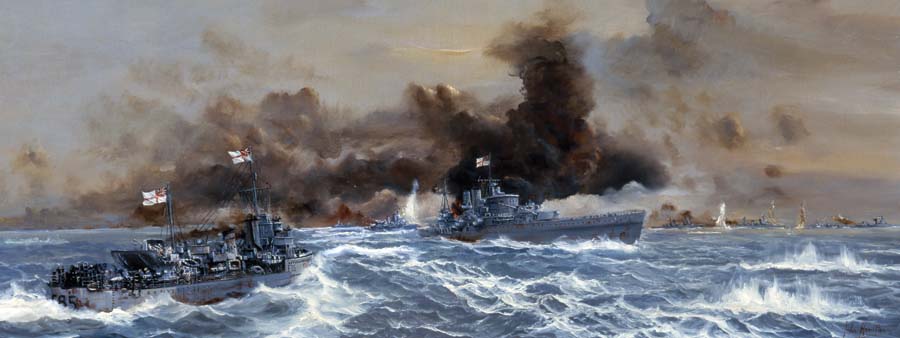
In defense of the damaged cruiser HMS Exeter, the British destroyers Encounter, Jupiter, and Electra dash toward the enemy amid a smokescreen at the Battle of the Java Sea. Painting by John Hamilton.
Hara yelled, “Gunners and torpedomen, get ready. Our target is the lead cruiser in the enemy column!” Hara realized he was heading into his first major sea battle.
At 4:14 Electra reported: “Two battleships, one cruiser, six destroyers.” Before the various officers had time to react, Electra amended the report: “Two heavy cruisers.”
Heavy cruisers they were. At that moment, Nachi and Haguro entered gun range, and at 4:16 pm both cruisers opened a full broadside with a combined 20 8-inch guns at a range of 28,000 yards. The Allied ships answered back, with Houston’s after turret silenced by damage and Exeter’s simply unable to train on the Japanese, who were trying to cross Doorman’s “T,” the oldest naval maneuver to gain tactical supremacy since the invention of gunpowder.
Now the problems of communication came in. In the Royal Navy, ships did not open fire until the senior officer gave the word, and Doorman had not done so yet. On Exeter, Gordon puzzled over what to do. “Had we been in company with a British Senior Officer, I could and probably would, have hoisted a very brief flag signal—if I had received no order—asking permission to open fire but in this case I knew the limitations of inter-ship communication.”
The first Japanese 8-inch shells fell short at 30,000 yards. The Japanese gunners were too excited. This was their first surface action.
Doorman ordered course 20 degrees left to parallel the Japanese ships, putting the three leading British destroyers on the cruisers’ starboard bow. The Japanese hurled shells at Electra, and Doorman ordered the destroyers to head to the Allied column’s port side to await their moment with their torpedoes. He also sent a radio message to Surabaya for air support, but the few bombers the Dutch and Americans had on Java headed straight for the transports.
Now Doorman gave the order, and the two Allied heavy cruisers opened fire. Houston’s shells had a crimson dye to assist spotting, and the blood-red geysers of her first short shots frightened some Japanese officers on Nachi. The concussion of Houston’s guns opening fire hurled Winslow against a bulkhead and ripped his “soup-bowl” steel helmet from his head. Winslow, shaking with excitement, recovered his tin hat and realized that his tension of waiting for battle had ended.
On the Japanese side, Jintsu led her column directly toward Electra. At 18,000 yards, her group opened fire and straddled the British destroyer. Electra and Jupiter opened up at 16,000 yards and straddled the Japanese.
The last ship to open fire was Perth, at the tail of the Allied line, equipped with 6-inch guns. Captain Waller told an officer on the bridge that waiting for his moment to open fire in a surface engagement was more terrifying than enduring the Luftwaffe’s bombing in the Mediterranean.
After eight minutes, Doorman changed course at 4:29 pm to 248 degrees, so that both columns were parallel and the Allied light cruisers could open fire. All of the ships were being straddled. Nobody was scoring any hits yet.
At 4:31, the Japanese scored a hit; an 8-inch shell slammed into De Ruyter’s armored deck and down into her auxiliary engine room where it failed to explode. Four minutes later, Doorman closed the range on a course of 267 degrees, at which point Nishimura, aboard the light cruiser Naka, ordered his seven destroyers forward to unleash 43 “Long Lance” torpedoes at the enemy. The rest of the fleet joined in as well, except Nachi, whose crew had left the stop valve on their compressed oxygen system open too long by accident.
Houston had a reputation as one of the U.S. Navy’s best gunnery ships, but her rangefinders were outdated by World War II’s rapidly advancing standards. She lacked radar and remote-control servo motors to enable crews to train and elevate guns without using sweat and muscle. Ranges were triangulated visually. In the overheated gun houses in the dim red light, 70 gunners cranked wheels to train guns, open breeches, and stuff shells and powder bags.
On the fifth salvo, a fuse box was jarred loose from the Turret One bulkhead, disabling the electro-hydraulic ramming mechanism. The crew now had to load and ram the breech by hand, an almost impossible task in peacetime. But they accomplished it in wartime, almost keeping pace with Turret Two, for 65 salvos until repairs were accomplished.
Up above, Lieutenant Winslow watched the shellfire and saw the dull red glow of exploding shells. Convinced Houston had beaten up the enemy, he yelled down a voice-tube into the turrets, “We’ve just kicked hell out of a 10-gun Jap cruiser.” The men cheered back. One of the enemy cruisers seemed to withdraw.
But then, a frayed electrical lead in the forward main gun director, abetted by the whipping back and forth of the towering foremast housing, caused problems with gunnery deflection adjustments. Houston’s rangefinders and gunners no longer knew where their shells would land.
While this went on, a Japanese shell hit Houston’s main deck aft of the anchor windlass, zoomed through the second deck, and out the starboard side above the waterline without exploding. Another hit ruptured an oil tank on Houston’s port side after, but it failed to explode. The Americans wondered if the Japanese suffered from dud shells, too.
“Salvo after salvo exploded into the sea around us,” Lieutenant Winslow wrote. “I was mesmerized by the savage flashes of enemy guns, and the sigh of their deadly shells flying toward us like giant blackbirds.”
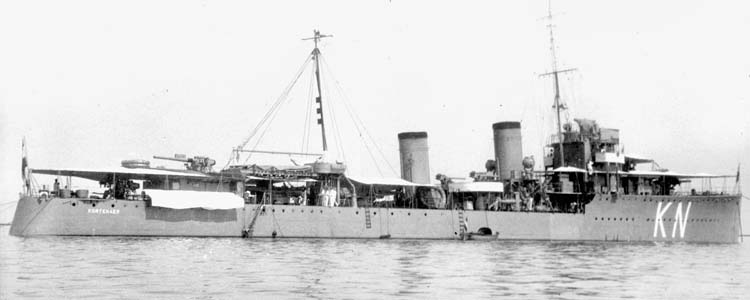
The Dutch destroyer Kortenaer was among the ABDA ships sunk in a hail of Japanese shells and torpedoes during the night Battle of the Java Sea in February 1942.
Meanwhile, Exeter took 12 salvos to get a straddle. Then Gordon saw the orange flash of a shell bursting on a cruiser’s superstructure. He yelled, “That’s a hit!” It sure looked like one to everyone, but it wasn’t … the Japanese cruisers suffered no damage in the action. The destroyer Asagumo did—an Allied shell hit her, killing five and wounding 19, disabling her engine.
Exeter, on the other hand, did take hits. At 5:07 pm, a shell passed through the S2 4-inch gun shield and killed the four members of the gun crew. The shell kept going and entered the No. 1 boiler room ventilator and exploded in the boiler room, killing all 10 of its crewmen. Steam vented through the waste pipe, and Exeter began losing speed. It felt like “a mighty can-opener being driven into the ship.”
Six of Exeter’s eight boilers were put out of action. Electrical power failed, and the cruiser’s speed fell to 11 knots. Damage control parties moved in, but the great heat from the explosion and superheated steam made it impossible to enter the boiler room until the next day.
Gordon realized his ship could not hold its place in line at 11 knots, and he altered course to port to get out of the battle line and avoid collision. Unfortunately, the shellfire and concussion had knocked out Houston’s TBS radio and damaged her signal lights. Heavy smoke obscured her alphabet flags and halyards, as well as the Aldis lamps used for signaling. Commander Henry E. Eccles, skipper of the destroyer Edwards, wrote, “From then on, all communication was by flashing lights obscured by gun smoke, smoke screens, and hampered by rapid movements.”
Not knowing what was going on, thinking he had missed an order from Doorman, Rooks followed Exeter in column, turning to port. As Houston turned, the ship had to check fire. On Perth, Waller, seeing the two cruisers ahead of him maneuver and Exeter blow off steam, headed in a counterclockwise loop to the north to cover the heavy cruisers’ retreat with a 30-foot wall of smoke that gave them a reprieve, while Java followed Houston.
Doorman, sailing off without a column behind him, heeled De Ruyter over to port and closed Exeter, signaling, “What is your damage?”
Gordon flagged back: “Hit in one boiler room. Maximum speed 15 knots.” Doorman ordered Exeter to head for Surabaya and reformed the other cruisers on a northeasterly course.
Before anyone had much time to react, smoke, squalls, and fog came down on the action. Doorman retired at 5:20, trying to regroup. Nobody on the Allied side seemed to know what was going on. Eccles wrote later, “The crystal ball was our only method of anticipating the intention of Commander Combined Striking Force.”
Tanaka, however, took advantage of the squalls and Allied confusion, ordering eight destroyers to “to close and charge the enemy” behind his cruiser Jintsu to hurl torpedoes and shells at the nearest Allied ships, the American destroyers.
The Allied ships opened fire at 7,000 meters, and in seconds everybody was covered in smoke—American smoke screens on their side, missed Allied shells on the Japanese side. The Japanese closed to 6,000 meters, then 5,000 meters, and a tense Hara gripped the rail of his bridge, sweat streaming down his face, his knees trembling.
At 5:27, Tanaka ordered his ships to open fire. Hara yelled “Fire torpedoes!” As the Long Lances swished through the water, the Allied ships turned to the west.
The Japanese torpedo salvo finally closed its targets, and at least one smacked home, blasting the Dutch destroyer Kortenaer. The 1928-built destroyer jackknifed in two and sank almost immediately, scattering survivors—including her skipper—across the water. It was the first time the Allies had met up with the Japanese Long Lance torpedo in a surface action, and all hands were stunned.
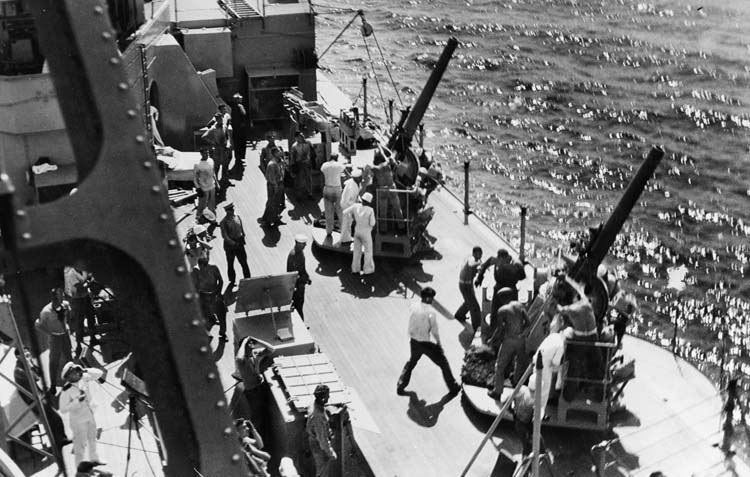
The 5-inch antiaircraft gun crews of the cruiser USS Houston dash to their posts during a firing exercise. The Houston was reported sunk several times before the ship was actually lost at Sunda Strait.
On Houston, Ensign Smith watched Kortenaer’s two split sections slide into the water, looking like the twin towers of a cathedral.“There was only 15 or 20 feet separating her bow from the stern,” he said later. Another seaman next to Winslow yelled, “Jesus Christ, look at that!” Winslow saw a tremendous geyser of water rising 100 feet into the air.
Lieutenant Commander A. Kroese, commanding Kortenaer, reported later, “On the stern the doctor was sitting, dressed in a khaki suit, life belt and steel helmet. As a result of the explosion, the smoke apparatus had begun to work and heavy white clouds were rising from the ship. The doctor sat in the midst of it all like some kind of fire-god.
“After a short time the stern turned over on its side, and those who were still clinging to it jumped hastily into the sea. Soon half of the Kortenaer sank from sight, but the bows of the ship floated for a long time sticking straight up in the air.
“After the ship had gone down, a number of rafts, sufficient to support all the survivors, began to float up. The Commander gave orders to tie the rafts together so that we would form a group easily visible to a rescuer…. Our situation was far from comfortable, for much of the surface of the water was covered with a heavy film of black fuel oil from the ship’s bunkers.”
With Kortenaer sunk and Exeter severely damaged, Doorman’s battle plan and fleet were in serious trouble, even though the Japanese had scored only one hit out of 64 torpedoes launched. Doorman turned his flagship to join his other ships and regroup. Everybody on the Allied ships wondered how they could have been torpedoed at such an incredible distance from the Japanese warships. Not knowing about the Long Lance, the Allied skippers presumed there were Japanese submarines in the neighborhood.
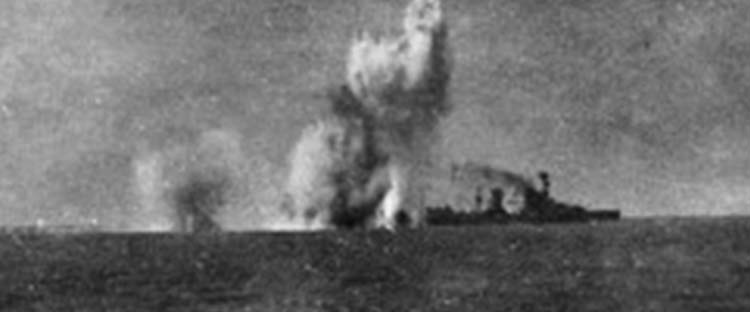
Splashes from Japanese shells bracket the Dutch cruiser Java during the Battle of the Java Sea. The ship fell victim to enemy torpedoes and sank during the February 1942 fight.
On the other side, Nishimura’s 4th Destroyer Flotilla maneuvered to port to link back up with Tanaka’s ships for another attack. Doorman responded by ordering his ships to follow him southeast and then northeast, spewing smoke to cover his moves, to put his main force between the enemy and the battered Exeter, giving that cruiser a chance to escape.
As the Japanese regrouped, Doorman realized he had to strike first, sending in his three British destroyers, Electra, Encounter, and Jupiter, to make independent attacks. After doing so, they would join the Dutch destroyer Witte de With and escort Exeter to Surabaya.
On Electra, Commander C.W. May told his men on the main loudspeaker at 5:25, “The Japanese are mounting a strong torpedo attack against the Exeter. So we are going through the smoke to counterattack.” While this went on, Exeter’s crew restored power to the guns and steam to 15 knots. With that, her guns opened fire on Jintsu, which made smoke and maneuvered away from Exeter’s 8-inch shells.
Electra, ahead of her sisters, sprinted forward to the northwest, into the smoke, and emerged through the murk and gloom to find the pagoda-like superstructure and bulbous funnel tops of Jintsu leading six destroyers toward her. Gunner Cain felt naked to the enemy.
The Japanese opened up with dozens of shells, most of which were near misses that rocked the destroyer. Electra returned the fire, gun crews doing so with veteran experience. But a Jintsu shell hit below the bridge, followed by more that broke the after boiler room mains, and Electra slowed to a halt. A Japanese destroyer blazed away at the immobile British ship, but Electra fired torpedoes back—to no avail. All of them missed.
Jintsu poured more shells into Electra, and Gunner Cain fired his turret under local control. Soon the guns were out: A Turret knocked out … B Turret evacuated when a fire started beneath it … the searchlight platforms demolished … a fire started aft that blocked ammunition supply to the X and Y Turrets … the ship’s whaler and motor boat smashed. Commander May ordered “Abandon ship.”
Electra’s self-sacrifice saved Exeter and scored a single hit on Jintsu that killed one man and injured four, and also bought time for Encounter and Jupiter to pop through the smoke and hurl torpedoes at the Japanese.
Encounter’s skipper, Lt. Cmdr. Morgan, saw the hordes of Japanese ships and heeled his destroyer hard over after launching torpedoes, followed by Jupiter and Witte de With. The three tin cans formed up around Exeter to escort the battered cruiser out of harm’s way. On the way, Witte de With was damaged when one of her depth charges broke loose in the maneuvering, fell overboard, exploded abaft, and shook the ship like a hammer blow.
Up on De Ruyter’s flag bridge, Doorman faced more impending disaster. As Exeter steamed off, she took six 8-inch guns, half of Doorman’s such armament. With Electra and Kortenaer sunk, Doorman was down to six destroyers.
Doorman reformed his line to find himself on the Japanese side of the smoke screen, parallel to the heavy cruisers Nachi and Haguro. The Japanese cruisers closed the range and opened fire, aiming at Houston.
Now it was the American ship’s turn to be in trouble, as she was running short on ammunition. Houston had sortied without time to rebunker her magazines, and now had fired off 303 rounds per turret, leaving only 50 rounds per gun.
Most importantly, the remaining shells were in the aft magazine for the useless No. 3 Turret. Chief Petty Officer Otto Schwarz and his shipmates hauled greasy shells out of storage racks abaft and hand carried the 260-pound projectiles in slings through the narrow passageways and up ladders, across decks, and into the two forward handling rooms.
In addition, the life of an 8-inch gun of the time was about 30 rounds. That level had been exceeded, and the liners of the gun barrels had crept out of the guns an inch or more. The gun casings were so hot it would be hours before they could be touched.
Doorman would not give up. Neither would the Japanese. The Japanese ordered their transports to turn south and head for Java’s beaches while the combatant ships polished off the Allied Striking Force.
Crewmen of the cruiser USS Marblehead view damage from a Japanese bomb hit. Marblehead managed to limp into port after sustaining the damage.
At 6 pm De Ruyter’s after port lookouts spotted Jintsu. The Dutch cruiser opened fire, but the gathering dusk and smoke obscured the Japanese. The Japanese closed to 4,400 yards of the Allied ships and launched torpedoes. The Japanese ships heeled over to avoid the shells that their officers knew would be returned. Doorman, realizing the danger, ordered his ships to turn south, and the torpedoes shot harmlessly past his ships.
At 6:21, the sun set on the battle, but the fighting went on through twilight. In the dark, Allied communications worsened—signal lights were broken from shellfire damage, and flags were useless. At 6:06, De Ruyter signaled Edwards with her signal lamps to “Counterattack.” Moments after Edwards acknowledged the order, De Ruyter flashed “Cancel counterattack,” followed by “Make smoke.”
Commander Binford of Edwards was baffled. As leader of the American destroyers, he had taken them on the requested counterattack course. Then came a last signal: “Cover my retirement.” Binford was even more puzzled. Did that mean make smoke? Steam protectively across Java’s stern as it turned away? Binford decided that the only way to cover a cruiser column’s retirement was with the greatest U.S. Navy tradition: attack, even though his ships were 32 years old.
Binford’s tin cans charged toward two ships visible in the dusk to the northwest—the cruisers Nachi and Haguro, which were guarding the invading transports. On the U.S. destroyer Alden’s bridge, a sailor said, “I always knew these old four-pipers would have to go in and save the day.”
Up on Nachi’s bridge, Takagi saw the American destroyers advance. He could also see Surabaya’s lighthouse in the distance, its glass windows reflecting in the sunset.
Binford ordered his destroyers by flag signal to make a torpedo attack. The tin cans raced through the smoke, nearly colliding. They sprinted through and cracked on top speed, set up for broadside torpedo attack on the Japanese cruisers to starboard, and Binford ordered the fusillade of fish. Then Binford’s destroyers changed course 180 degrees, maintaining full speed to fire their port tubes at the Japanese.
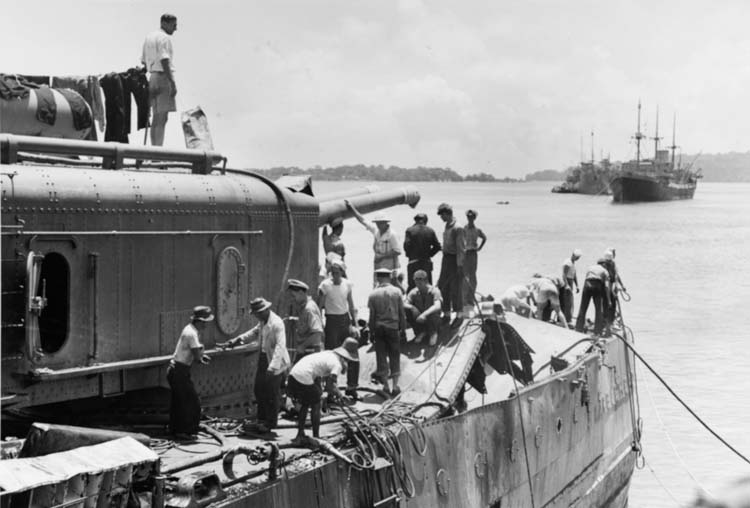
Wounded crewmen of the cruiser USS Marblehead are removed from the ship after coming into port in Java. The elderly Marblehead was an obsolete design at the beginning of World War II.
Incredibly, all the American torpedoes missed. The Japanese changed course to “comb” the American torpedo tracks and avoided damage.
Binford ordered his ships to full speed to clear the area, steaming off at 32 knots into the darkness toward Doorman. As the destroyers closed with Doorman, Binford saw a new signal from the Dutch admiral: “Follow me.”
Binford was happy to comply but wondered what was going on now.
The American torpedo attack had accomplished little materially but put a little fear into Takagi. The American counterthrust had not damaged any of his ships but showed that they were still fighting and could inflict more damage. They were not routed.
Takagi tried to figure out what Doorman would do next: he might break off and head for Surabaya for fuel and ammunition or head around to the north and attack the transports. Worrying about the latter possibility, Takagi broke off the action and turned away to guard his transports.
Doorman saw Nachi and Haguro turn back and at 6:30 radioed Helfrich at Lembang: “Enemy retreating west. Where is convoy?” Helfrich radioed that he had no current information.
Across the water, the Japanese were confused, too. Amatsukaze’s skipper, Tameichi Hara, wrote, “Almost every man in Tanaka’s Destroyer Squadron 2 was disgruntled at the order to break off action. Our ships had not expended as much ammunition as the others and I also felt that we had forfeited a chance of giving hot pursuit and finishing off the enemy.”
Even so, Takagi took advantage of the break to recover his five seaplanes—a difficult task in peacetime, let alone wartime—which left them nearly immobile when Doorman’s force reappeared.
At first, Takagi and his crews thought the approaching ships were the Japanese battleships Haruna and Kirishima of Battleship Division 3, which had been in the Indian Ocean only two days before. It was unlikely such ships, no matter how powerful their engines, could have reached the Java Sea in such time.
On Nachi’s bridge, an officer asked that very question, and Commander Ishikawa screamed in rage, “Damn! Those are enemy ships, and four of them are heading toward us. They are only 12,000 meters away.”
Takagi’s men were no longer at action stations, and it took him three minutes to realize the situation. Biting his lip, Takagi ordered his men back to action stations. Bugles and loudspeakers gave the order, warship engines cranked up to battle speed, and the heavy cruisers made smoke to hide their movements. It took three minutes for the fleet to haul in the last seaplane and power its engines up. With only two cruisers against four Allied cruisers, Takagi knew he was outnumbered. And the enemy might be headed for his transports.
Doorman had set off to the northeast, then to the northwest, groping in the dark to find the enemy. He had no idea Takagi’s ships were sitting there, recovering aircraft. He was down to four cruisers and the British destroyer Jupiter in column; Exeter and her two escorts were headed for Surabaya. The four American destroyers were in a separate column, trying to keep up, lacking torpedoes and running short of fuel.
The new skirmish broke out when Jintsu dropped a flare to illuminate the target. At 7:33 PM, Perth and Houston opened fire, but their shells fell short.
The Japanese hit back with star shells to further illuminate their target. On Perth, Waller saw the flashes in the enemy column and assumed they were torpedoes. He ordered a harsh turn to starboard, and all the Allied ships did the same. Both sides checked fire. On Houston, Winslow and his shipmates saw the flares burst over their heads with an eerie, greenish light. “Helpless as pinioned ducks in a shooting gallery, we stood by, fearful that the enemy was closing in for the kill,” he wrote later.
Doorman, it is thought, was influenced by his lack of information about the location of the Japanese convoy, so he feared that the convoy would head southward and make landfall. He chose to reverse course and head for the Java coast to be in a better position to intercept the convoy.
At 7:55, the Allied force swung south to the coast of Java amid increasing moonlight. At about 9 pm, the force turned to starboard to parallel the coast. Behind Doorman’s column of cruisers, Binford’s four American destroyers puffed along, gulping fuel. Binford told the officer of the deck on Edwards, “I’m not going in there after Doorman. That Dutchman has more guts than brains.” He ordered his ships to head for Surabaya to refuel and reload ammunition. Unable to contact Doorman directly, he radioed the shore bases and asked them to relay the message to Doorman. They didn’t. So Doorman steamed along, unaware that four of his destroyers were no longer under his command.
With that going on, the night was rent at 9:25 pm when a gigantic explosion tore into the hull of Jupiter, the destroyer at the tail of Doorman’s column, sending fire and smoke into the air. Jupiter’s skipper signaled: “I am torpedoed.” Actually, Jupiter wasn’t. The destroyer had smacked into a stray Dutch mine, part of a field laid only that day, which had blasted open her forward bulkhead in the engine room and sent water gushing in. Damage control parties kept the destroyer afloat for four hours. That enabled Jupiter’s crew to abandon ship properly, using lifeboat davits and Carley floats. Some 78 members of her crew survived the sinking and piloted their boats to the nearby Java coast.
TOP: HMS Exeter is fatally struck by the guns of four Japanese cruisers on March 1, 1942. Exeter was a veteran of the sinking of the German pocket battleship Graf Spee. ABOVE: The Japanese heavy cruiser Myoko fires on the cruiser HMS Exeter at the Second Battle of the Java Sea on March 1, 1942.
Doorman received this latest piece of bad news and altered course north, entering an area littered with life rafts from the earlier losses at 10:17. On Houston, Winslow had been relieved as officer of the deck and had gone to the forward AA director tower in the mainmast to take a few minutes’ nap before the next stage of the battle. He had just closed his eyes when he heard shrill whistles and shouting to starboard. He leaped to his feet and saw groups of men in the drink, yelling in Dutch.
Doorman ordered Encounter to release itself from escorting Exeter and race back to the scene to pick up survivors. Houston fired off flares to mark the area, and Encounter found 113 survivors of Kortenaer, including their commanding officer, Lt. Cmdr. A. Kroese.
Back in Surabaya, Exeter and Witte de With arrived by 11 pm and began repairs and refueling. Binford and his four ships were about to enter the harbor when he received a message from Doorman through the complex communications chain to head for Tanjong Priok to refuel and rearm. Binford turned about and then realized the futility of such action. He conferred with his other skippers, and they agreed that racing to Batavia in the face of Japanese ships and planes without ammunition and fuel would lead to disaster. He ordered his ships into Surabaya to refuel and rebunker and then head south out of the Java Sea.
Back on De Ruyter, Doorman was headed for the last and most dramatic hour of the battle and his life. Lacking destroyer protection, short on ships and ammunition, the Allied force was steaming north on a slight zigzag course. Headed on a slightly converging course but southerly direction was Takagi, still trying to keep between the Allied ships and the transports. Nobody knew where the other side was, as both sides lacked radar and reconnaissance planes.
At 11 pm, both sides sighted each other, with Nachi and Haguro heading south, De Ruyter, Perth, Houston, and Java headed north, in order. Bright moonlight illuminated the battle, and both sides opened fire at extreme range. After a full afternoon of combat action and steaming, neither side’s gun crews were effective. Both sides closed the range to 8,000 yards.
At 11:22 pm, Nachi launched eight torpedoes and Haguro hurled four at the Allied column. One of them hit De Ruyter a few minutes after 11:30 pm and set off an explosion that enveloped the flagship’s stern in a sea of flame. The fire hit the pyrotechnics locker and sent flares and rockets flying into the night sky in a garish and ghastly fireworks display. De Ruyter’s crew raced to their ship’s bow to flee the explosion.
De Ruyter “blew up with an appalling explosion and settled aft, heavily afire,” Waller observed. “It happened with the suddenness and completeness that one sees in the functioning of a good cigarette lighter—a snap and a burst of flame.” A Perth sailor said, “I thought it would fry us. It was so close you could smell burning paint and a horrible stink like burning bodies.”
On Perth, behind De Ruyter, Paymaster Commander Owen watched the fire before him and thought it was the most fearsome thing he had ever seen. On Perth’s bridge, Waller threw his cruiser into a tight turn to avoid colliding with De Ruyter, which threw Owen off his feet. Perth barely missed smacking into the flagship. On Houston, Rooks took evasive action as well.
As the two cruisers maneuvered, another Japanese torpedo hit Java, setting off a massive fire in the other Dutch cruiser. Crewmen on Perth felt the heat.
Java slid to a halt, and Captain P.B.M. Van Staelen ordered his men to abandon ship. Water flooded Java’s compartments, and the cruiser rose up almost vertically. Dutch sailors scrambled and leaped over the sides and into the water as the cruiser went to the bottom.
More than 500 sailors survived Java’s sinking and the oil-soaked waters, giving three cheers for their ship and Queen Wilhelmina.
On De Ruyter another massive explosion rocked the cruiser, and the ship’s distinctive superstructure vanished. The ship’s 40mm antiaircraft ammunition started exploding, and a senior officer ordered the crew to abandon ship.
As De Ruyter sank, Doorman sent off one last signal: all ships were not to stand by but to leave survivors and make for Batavia. Admiral Karel Doorman then joined 344 officers and men of the Royal Netherlands Navy and U.S. Navy Lieutenant Otto F. Kolb of his staff at the bottom of the Java Sea. Another American sailor was luckier. Signalman First Class Marvin E. Sholar slid into the water and was pulled from the drink by the U.S. submarine S-37, which was returning from a patrol.
On Perth Waller realized he was now senior officer present afloat and in the best traditions of the Royal and Royal Australian Navies took decisive action. He ordered Perth and Houston to break off action, feint southeast, and then steam at high speed to Tanjong Priok for fuel, ammunition, and orders.
Winslow wrote, “The Houston and Perth raced on into the night. Behind us blazed the funeral pyres of our comrades-in-arms, whom we deeply mourned.”
The Battle of the Java Sea, the biggest surface naval battle since Jutland, was over. The Japanese had won easily; their invasion of Java had been delayed by exactly one day. And now there was no longer any Allied naval force capable of contesting the Japanese invasion of Java.
Soon there would no longer be any Allied naval force. With ammunition and fuel running short, leadership gone, and two cruisers badly damaged, it was time to flee.
Perth and Houston left first, fueling at Tandjong Priok on February 28 and heading out that afternoon, trying to slip through the Sunda Strait by darkness. Instead they met up with a Japanese force invading Java from the west and blazed away in a doomed “Fireaway-Flanagan” for nearly two hours.
The Allied cruisers damaged three destroyers while sinking a minesweeper and a transport and forcing three transports to beach themselves. But a broadside of Japanese guns and torpedoes tore apart Perth and Houston, sinking both. A total of 307 Perth men and 368 Houston men survived to endure the horror of Japanese POW camps.
At Surabaya, Exeter refueled and repaired. Joined by Encounter and Pope, which still had a full torpedo load, having missed the Java Sea battle, Exeter sailed late on February 28. She headed northeast and then west, hoping also slip through Sunda Strait. The three ships never got there. Four Japanese cruisers ambushed the ships and overwhelmed all three. Only 800 men survived the two British ships, and 149 men from Pope survived.
Binford’s four American destroyers had a better fate. They left Surabaya late on February 28, and sailed through the Bali Strait eastward and reached Fremantle in Australia on March 4. All four ships spent the rest of the war on convoy duties in the Pacific and Atlantic.
On the night of February 28, Japanese troops landed on Java and began moving on their objectives. Despite the best efforts of American artillery, British tanks, and Australian and Dutch troops, the defenses collapsed. On March 9, the Dutch East Indies surrendered. The Japanese had expected to conquer the oil- and resource-rich archipelago in six months. They did it in three.
Many things contributed to the failure of the Allies at the Battle of the Java Sea. Foremost was the inferiority of Allied numbers and power to the Japanese force. The Japanese vessels were modern, equipped with powerful torpedoes, and had crews well trained in using them. The Allied sailors were long-service veterans, but they had not trained or worked together for any length of time and were operating elderly ships with inefficient weapons.
The American destroyers dated back to 1916, and their torpedoes did not detonate.
Most importantly, the command structure in the Dutch East Indies was the first such attempt by the Allies to create a unified multinational force. It lacked unity, cohesion, common communications procedures, and clear chains of command and authority.
Later in the war, when multinational Allied forces invaded Sicily, Italy, France, Burma, and Germany, the command procedures were more authoritative and clear, weaponry and communications unified, tactics simplified. The multinational Allied fleet that returned to Java to bombard and shell Japanese installations and oil fields in 1944 would bear little resemblance to the fleet that went down at the Java Sea beyond the national flags that flew over the attacking warships.






![Your Country Needs You [helpless]!](http://www.thehomegunsmith.com/pics/kitchener3.jpg)