Categories
All About Guns

BIG BORE BELLY GUNS PART 1 KEEP IT CLOSE WRITTEN BY JOHN TAFFIN


Today they are most often known as pocket revolvers or sometimes snub-guns. However, several eons ago in the pre-politically correct days when I was a teenager, they were known as belly guns. This has several meanings such as “easy-to-conceal,” “for use at very close distances” and even “shot from the hip or at ‘belly’ level.” For our purposes here we will define BBBG (Big Bore Belly Gun) as a single- or double-action sixgun with a barrel shorter than 4″ and chambered in a cartridge more powerful, and with a larger bullet diameter, than the age-old .38 Special.

At mid-century, most belly guns were thought to be 2″ .38 Specials such as the Colt Detective Special or the Smith & Wesson Chief’s Special. These were guns of choice as backup for peace officers and quite often the main armament of detectives. They also fit well in pocket, purse, backpack, kit bag and hunters often carried them should the chance of a grouse present itself. I have found the Chief’s Special to be invaluable for carrying in situations where it was absolutely imperative it not be known I was armed.
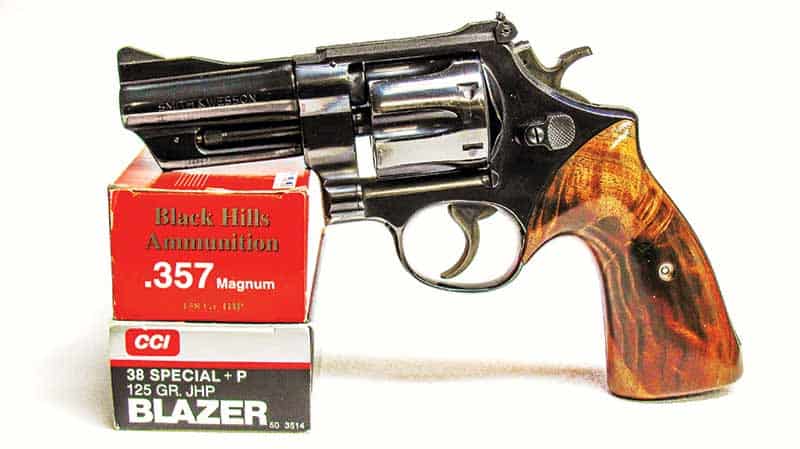
 

The most serious-looking short-barreled .357 Magnum ever — the S&W 3-1/2″ Model 27.

Beginnings


Every Western movie, whether “B” or “TV,” gives the impression every Western town was filled with men openly carrying firearms. Actually, the opposite was true as many towns had ordinances against the carrying of firearms, so quite often sixguns were carried quite discreetly and out of sight. Walker/Dragoons and the follow-up Colt 1860 Army were not that easy to conceal so gunfighters had to correct the situation.

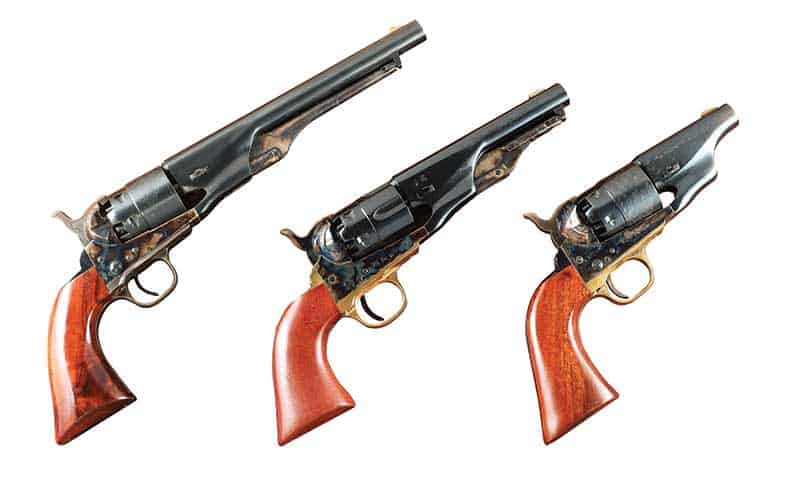
The Mormon gunfighter and peace officer, Porter Rockwell, may have been one of the early proponents of Big Bore Belly Guns as he often cut back the barrels of Dragoons and 1860 Army .44s to make them easier to conceal and faster to reach if needed.

El Paso Marshall Dallas Stoudenmire also favored an 1860 Army with the barrel cut way back to 2-7/8″ and converted to fire .44 cartridges. James Hume of Wells Fargo, who captured Black Bart, also carried a cut-down Colt 1860 .44 as a hideout gun.

When Colt brought out the Single Action Army in 1873, it had a 7-1/2″ barrel. Most sixgunners were satisfied with the power afforded even if the Colt was quite large. However, enterprising shooters on both sides of the law decided they could make improvements. Many examples have been found with the barrels cut back as far as 2″ and some even went so far as to remove the barrel altogether. These sixguns were for very up close and personal situations.

It did not take Colt long to start offering Sheriff’s or Storekeeper’s Models without ejector rod housings and very short barrels. This would continue into the 2nd Generation with the 3″ Sheriff’s Model .45s and then as the 3rd Generation came along both .45 and .44 examples were offered.

In 1877 Colt brought out their first double-action sixguns with the .38 Long Colt Lightning and .41 Long Colt Thunderer. These were also soon offered without ejector rods and short barrels for easy concealment. Meanwhile Merwin, Hulbert & Co. offered their superbly engineered Pocket Army in .44-40 and in both single- and double-action versions.
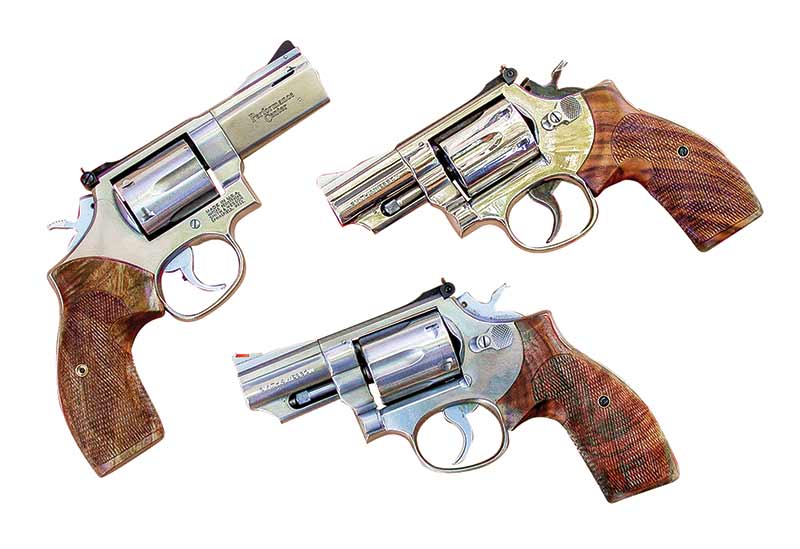
 

Combat Magnums with 3″ heavy barrel and 2-1/2″ barrel lengths in stainless and nickel.

Ranger Up


The Texas Rangers in the first half of the century were often quite flamboyant. They definitely dressed the part with brush jacket, fancy boots, a white Stetson and especially took great care in selecting their sidearms. Manuel T. “Lone Wolf” Gonzaullas was such a ranger and he had several sets, pairs of sidearms along with suitable holsters. At times he carried a pair of Smith & Wesson .44 Specials, a pair of .45 ACP 1911s with the front of the trigger guard cutaway and also a pair of Colt Single Actions with the front of the trigger guard removed.

He also went for Big Bore Belly Guns in a big way. A pair of 2″-barreled Colt Single Actions were covered with Indian signs and fitted with grips having inlaid semi-precious stones. He also used a highly customized Colt 1917 .45 ACP with a shortened butt, 2″ barrel with ramp front sight and the front of the trigger guard cutaway. He always made the most impressive sight.


Changes


Smith & Wesson changed the face of sixgunning forever in 1935 with the introduction of the original .357 Magnum. The first .357s produced had 8-3/4″ barrels and examples were sent to Elmer Keith and J. Edgar Hoover of the FBI. Keith wrote his up in the American Rifleman and had the barrel cut back to 6-1/2″ for easier handling. It was just about this time the FBI officially began to be armed and the .357 Magnum had the barrel cut back to 3-1/2″, even with the ejector rod.

To my sixgunning eyes this is the most serious-looking revolver ever produced. The FBI also went for it in a big way with agents such as Hank Sloan and Jelly Bryce soon carrying 3-1/2″ S&W .357 Magnums. Jelly Bryce received a lot of attention for his fast draw exploits with the new short-barrel .357 Magnum and was featured drawing and shooting in Life magazine in 1945. Many police departments followed suit with Smith & Wesson providing hundreds of 3-1/2″ .357 Magnums to departments around the country.

Perhaps the most famous 3-1/2″ Magnum was purchased in 1935 by an active-duty lieutenant in Hawaii. Six years later we were at war and the lieutenant was soon to be a general and was easily spotted by his troops as his symbol of leadership was a pair of ivory-stocked sixguns. One was a blued 3-1/2″ Smith & Wesson .357 Magnum while the other was a fully engraved, nickel-plated Colt Single Action he had purchased in El Paso in 1916 before accompanying Black Jack Pershing into Mexico after Pancho Villa.

George S. Patton called the .357 Magnum his “killing gun,” however, there is no record of him ever using it in such a way. He did take out two of Villa’s officers with his .45 Colt in 1916.
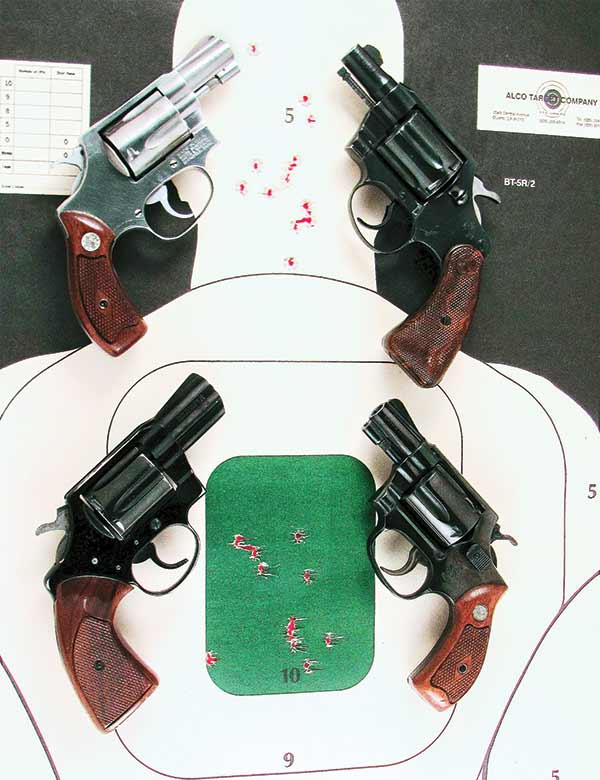
 

The most popular belly guns in the 20th century were the S&W Chief’s Special and the Colt Detective Special.

Today


Today 3-1/2″ .357 Magnums are highly desired by both shooters and collectors. There are three basic categories, namely the original Registered Magnums, the Pre-Model 27 versions, and the Model 27s. I have the last two, however, the first version has escaped me and is definitely now too valuable and at too high a price for me to search out.

Chief Border Inspector Bill Jordan began lobbying Smith & Wesson for a lighter .357 Magnum. He felt, correctly, metallurgy had improved to the point where they could make a smaller .357 Magnum. He suggested the Military & Police as the basic platform. Smith & Wesson responded using special heat-treated M&P frames with full-length cylinders to fill out the frame window and a heavy 4″ barrel. Bill Jordan called the new “Combat Magnum” the answer to a peace officer’s dream.

However, just as with the original long-barreled .357 Magnum, there were shooters wanting the Combat Magnum made easier to conceal. Once again, Smith & Wesson listened and cut the original barrel length of the Combat Magnum from 4″ to 2-1/2″ and put a round butt on the grip frame. The result in the 1960s was the smallest BBBG available.

For carrying all day, the 4″ Combat Magnum cuts about 1/2 lb. off of the weight of the original .357 Magnum and this makes a huge difference at the end of the day. The 2-1/2″ version is even better at this. In fact some peace officers began to carry the 2-1/2″ Model 19/66 as their backup gun.

Categories
All About Guns

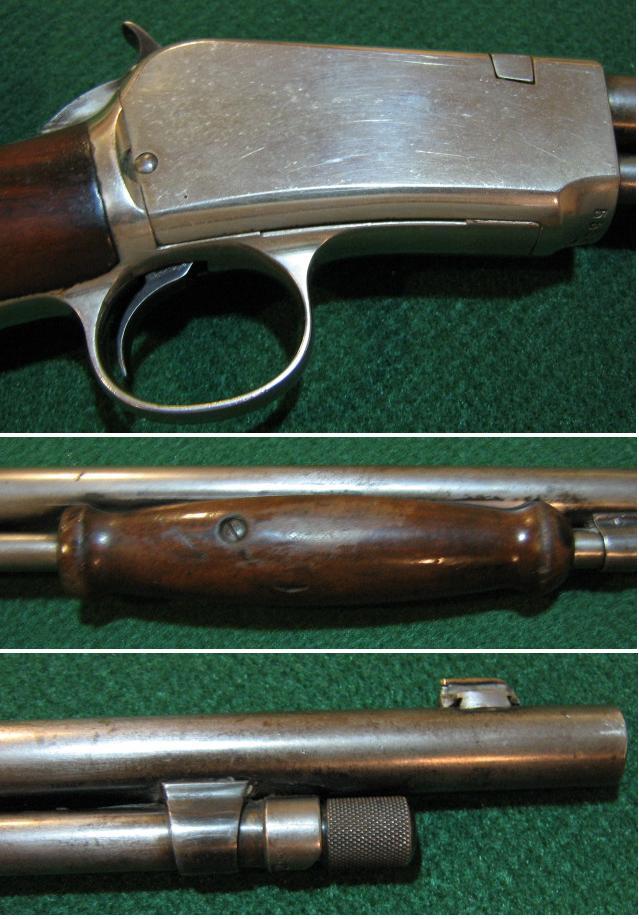
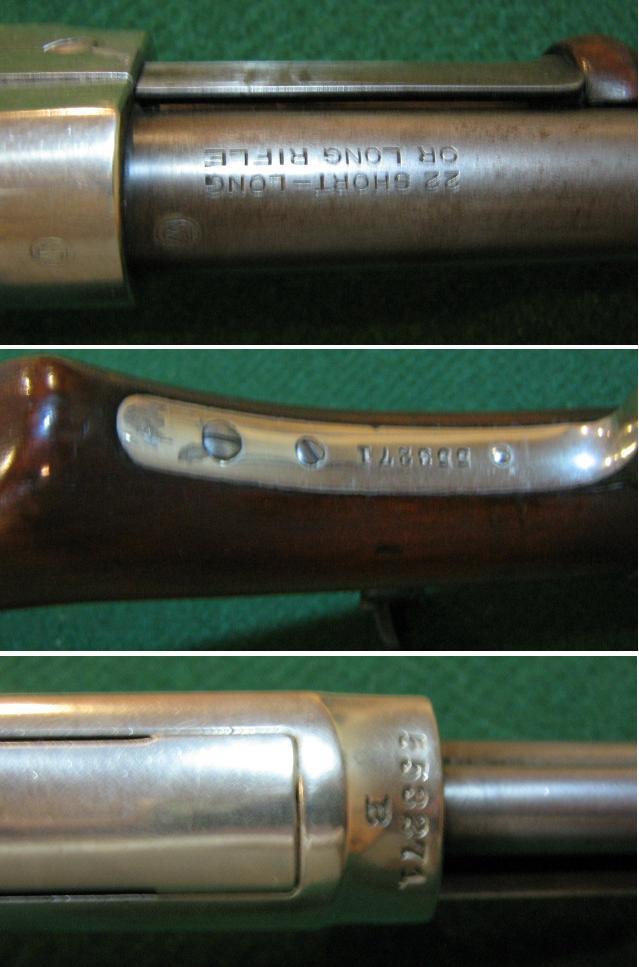
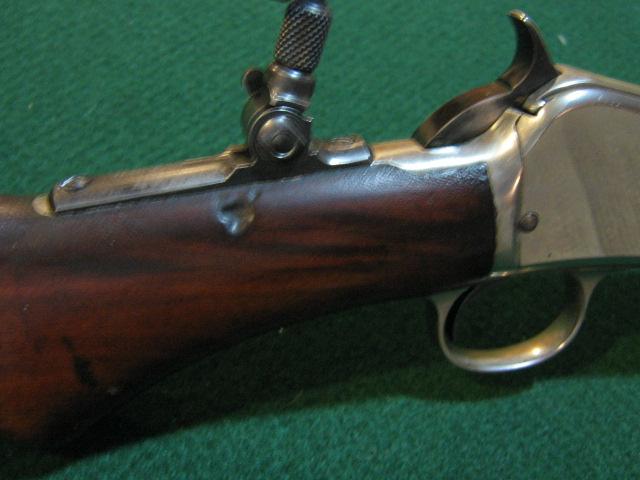
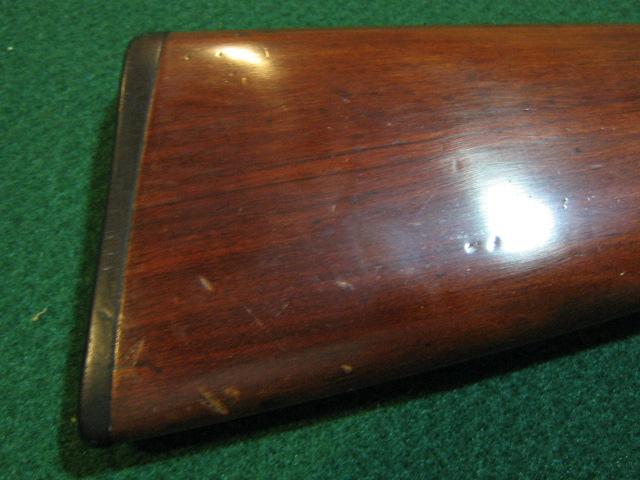
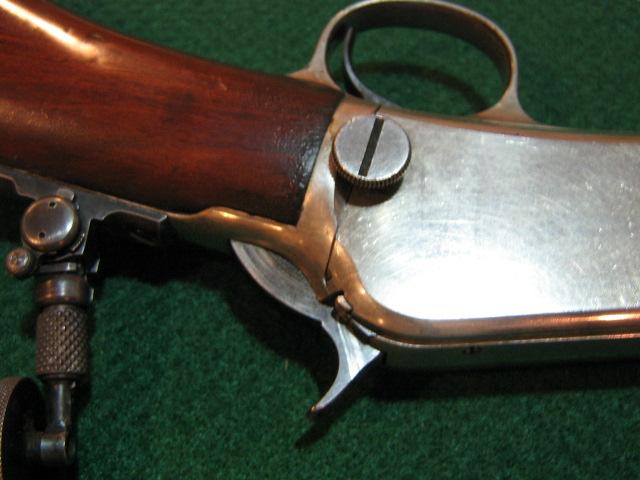
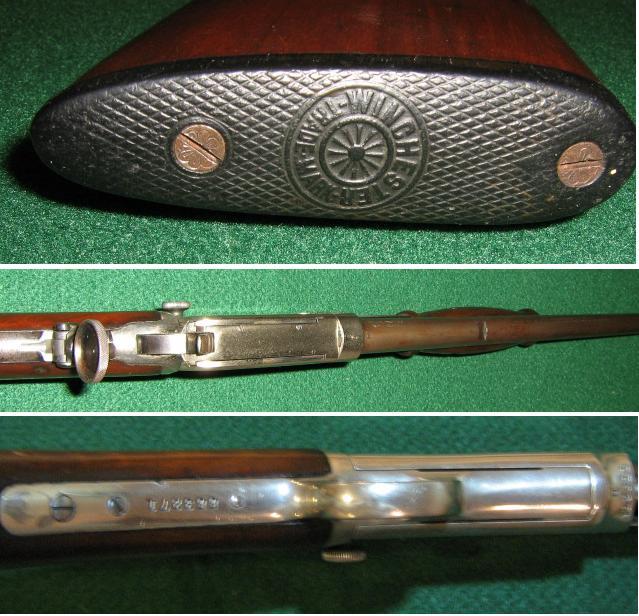
A Winchester 1906 X-Pert 20in Round Barrel w/Lyman Tang Sight in 22LR

Winchester `06 X-Pert 20in Round Barrel w/Lyman Tang Sight - Picture 1
Winchester `06 X-Pert 20in Round Barrel w/Lyman Tang Sight - Picture 2
Winchester `06 X-Pert 20in Round Barrel w/Lyman Tang Sight - Picture 3
Winchester `06 X-Pert 20in Round Barrel w/Lyman Tang Sight - Picture 4
Winchester `06 X-Pert 20in Round Barrel w/Lyman Tang Sight - Picture 5
Winchester `06 X-Pert 20in Round Barrel w/Lyman Tang Sight - Picture 6
Winchester `06 X-Pert 20in Round Barrel w/Lyman Tang Sight - Picture 7
Winchester `06 X-Pert 20in Round Barrel w/Lyman Tang Sight - Picture 8

Categories
All About Guns Grumpy's hall of Shame Gun Fearing Wussies The Horror!

The kid got off way too easy! Grumpy

Categories
All About Guns Gear & Stuff

What I call a nice set up for the BBQ

Categories
All About Guns

Toppling Goliath Mornin Latte and Colt Peace Keeper 357

Categories
All About Guns War

5 Things You Don’t Know About: Sniper Rifles

Categories
All About Guns Cops

ONE POLICEMAN’S CUSTOM REVOLVER WRITTEN BY MASSAD AYOOB


Wyatt Earp. The name resonates through American history, and not just among peace officers. Stuart Lake’s biography Wyatt Earp, Frontier Marshal established him as a national legend when it was published in 1931, a couple of years after Earp’s death in California. It was this book that first discussed Earp’s special Colt .45 revolver with extra-long barrel, the Buntline Special.

The story went that E.Z.C. Judson, a novelist and show promoter who specialized in Western Frontier themes and wrote under the nom de plume of Ned Buntline, presented these special Colts to five ace Dodge City lawmen: Charlie Basset, Neil Brown, Bill Tilghman, Bat Masterson and of course, Earp, in 1876.

According to Lake, Judson, “Sent to the Colt’s factory for five special forty-five caliber sixguns of regulation single-action style, but with barrels four inches longer than standard — a foot in length — making them eighteen inches over all. Each gun had a demountable walnut rifle stock, with a thumbscrew arrangement to fit the weapon for a shoulder-piece in longrange shooting.”

Lake wrote, “ ‘There was a lot of talk in Dodge about the specials slowing us on the draw,’Wyatt recalled. ‘Bat and Bill Tilghman cut off the barrels to make them standard length, but Bassett, Brown and I kept ours as they came. Mine was my favorite over any other gun.’”


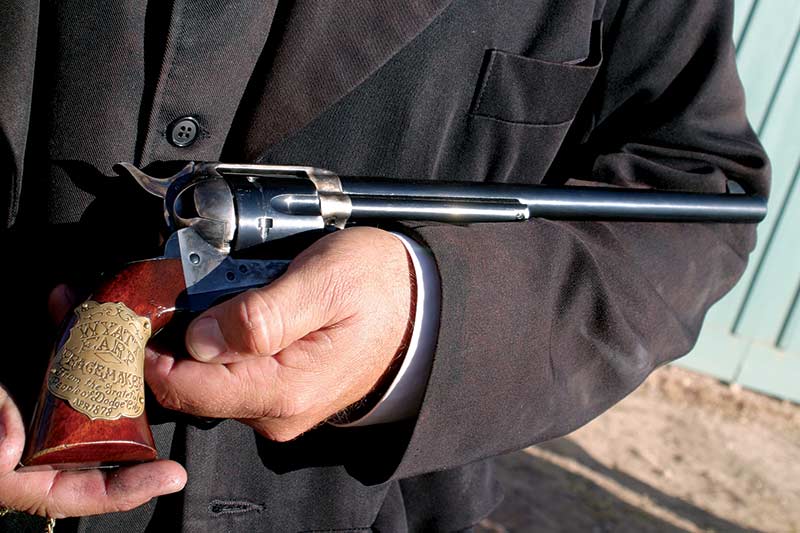
A reenactor in Tombstone plays the Earp part with this 12″
barrel Uberti clone of the fabled Buntline Special.

Legend Debunked?


By the 1950s, however, the legend of the Buntline Special was in question. The Colt factory, it was learned, had no records of having shipped five revolvers with foot-long barrels to anyone named Judson or Buntline. Earp claimed his Buntline had been lost in Alaska in the early 1900s, and there was no trace of the alleged Bassett and Brown specimens. Ironically, this was during the period in the 1950s when TV’s The Life and Legend of Wyatt Earp, with skilled single-action-man Hugh O’Brien in the title role, had helped to build both the legend of Earp and the legend of the Buntline. In 1957, Colt brought out a version of the SAA marked “Buntline Special,” complete with 12″ barrel.

However, with no proof available from Colt’s — and with many historians convinced Lake was more press agent than impartial biographer, and prone to exaggeration — it became the “in thing” among gun people to confidently dismiss the Buntline Special as myth, debunked and discredited.

Well, “debunked” and “discredited” are pretty strong words. More recently, evidence has emerged indicating Earp may have indeed received and used a special long-barrel SAA.


Historical Aspects


The great Colt authority James E. Serven wrote long ago that during the time of the Earp years, Colt would custom tailor longer barrels on order for a dollar an inch. Earp biographer Allen Barra noted in 1998 that long barrel SAAs had been on sale at the Centennial exposition in Philadelphia in 1876, where they could have been bought without shipping records showing it, and “Buntline” was a Philadelphian. Wyatt Earp’s wife Josie spoke of the extra longbarreled Colt in unpublished notes for her memoirs. Bat Masterson said of his close friend and colleague, “Wyatt would bend the long barrel of his Buntline Special around the gunman’s head and lug him to the calaboose.”

Judson/Buntline was also known to have visited the Colt plant in Hartford, Conn., in the 1870s, notes Lee Silva, the Western historian and antique gun expert who believes the Buntline Special did in fact exist, and that Earp did indeed use one. I met Silva in October ’06 at the 125th Anniversary Symposium on the “OK Corral Shooting,” conducted by another respected Earp historian, Michael Hickey. Silva explained several reasons why he didn’t think the Buntline revolvers were a myth.

“There’s little doubt,” Silva establishes, “that Buntline was on a firstname basis with the Colt factory, and the flamboyant Buntline, as well as Buffalo Bill, was a welcomed celebrity to be used by the Colt factory in obtaining publicity for its guns.” Silva is speaking of an 1873 visit to Hartford by Buntline, the promoter of Buffalo Bill Cody’s successful “Wild West” shows. Silva concludes, “And so, Buntline was also certainly in a position to walk in the back door of the Colt factory a few years later and make a deal on some of the unusual extra-long-barreled revolvers he had seen at the Philadelphia Centennial in the spring of 1876.”

Another noted shootist in Tombstone, Ariz., “Buckskin” Frank Leslie, was an acquaintance of Wyatt Earp who ordered a 12″ SAA from the Colt factory in January 1881. That transaction is recorded. Silva does not think this is a coincidence.


Pretty Large


Testifying at the inquest after the OK Corral incident, a butcher named Bauer described Wyatt Earp firing a revolver that was “pretty large, 14 or 16 inches long, it seems to me.” The latter measurement would be about right for a 10″ Buntline, the barrel length Silva believes these guns actually had. Witnesses are notorious for poor recollection of weapon size, but Silva told me, “Bauer was a butcher, who worked every day with 8″, 9″, 10″ knives. He had a trained eye and was the best possible witness as to the size of this particular object.” Good point.

Silva believes the real reason for the five-gun presentation was that in 1876, Buffalo Bill had abandoned “Ned Buntline” to go out and do his own Wild West show, and the promoter was looking for five new, genuine frontiersmen and former buffalo hunters for a new show. Earp and the others filled that bill on both counts. Silva hypothesizes that, seeing the unique long-barrel Colts at the Philadelphia exposition, it would have occurred to Judson/Buntline that they would be accurate, longrange guns prized by serious shooters and marksmen, as Earp and the other four were known to be.

Many more convincing arguments are in Lee Silva’s Wyatt Earp, A Biography of the Legend, Volume I, the Cowtown Years, which includes a large section on “The ‘Buntline Special’ Colt Controversy.” At 991 pages, seven pounds, and a retail price of $89.95, this superbly researched book is worth every penny, and can be ordered from Silva at P.O. Box 556, Sunset Beach, CA 90742.

Categories
All About Guns

From the Vault: Teddy Roosevelt’s Smith & Wesson No. 3

Categories
All About Guns

Ethiopian Oddities: Strange Smallbore Gewehr 71 Carbine

Categories
All About Guns Allies Gear & Stuff

Let’s Talk Tanks