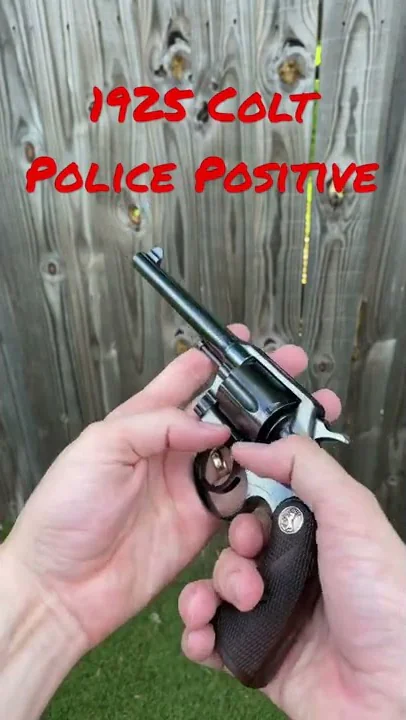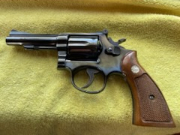
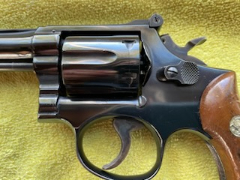
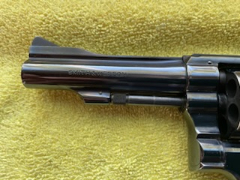
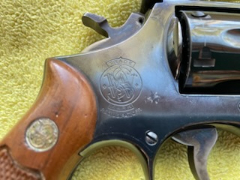
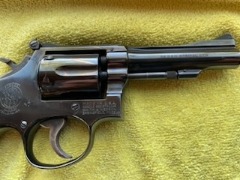
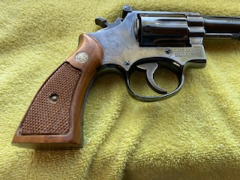

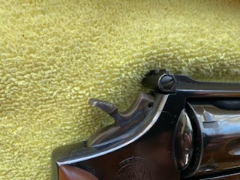
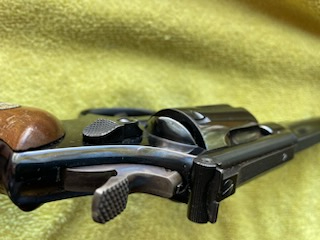
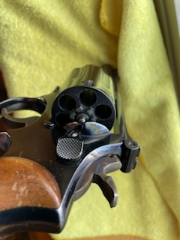
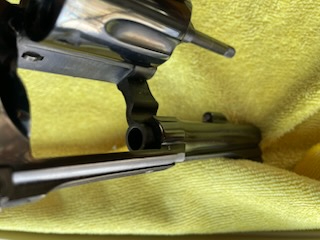
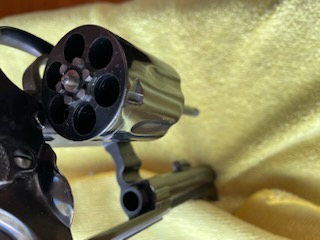
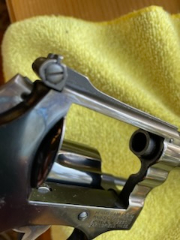

A few guns from Tyler Gun Works, a family-owned business in the
western portion of the Texas Panhandle that specializes in color case and bluing.
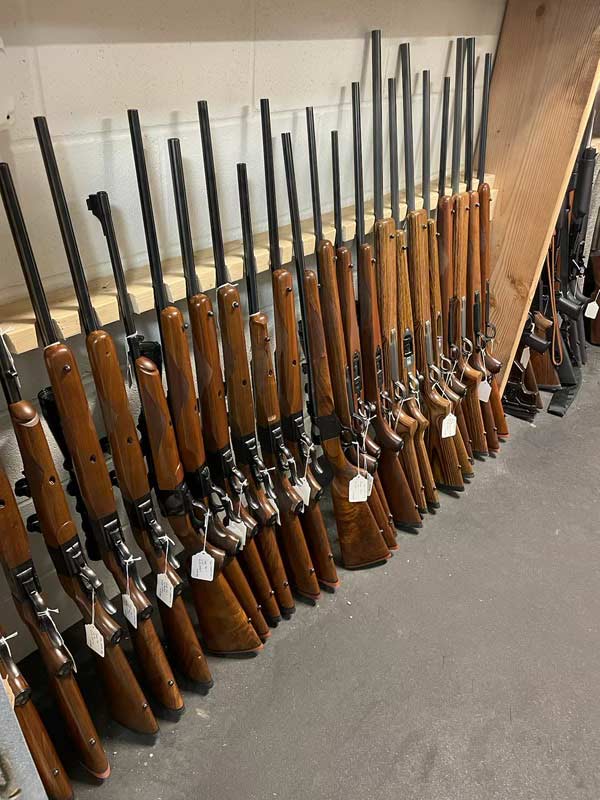
Isn’t it funny how the older we get the more we like guns that are like us? You know, older, slightly used, maybe having a few interesting dings, scars and marks. We love showing off our “battle scars” after a few bourbons with our buddies, right? It’s a contest of sorts on having the most interesting blemish and story to accompany the mark, be they body, or gun. This is why I head straight to the “used” rack when I enter a gun shop. They interest me more.
Lately, things have been scarce, though. You’ve probably noticed it too. People are grabbing guns, ammo, heck even reloading supplies, without ever shooting or handloading a cartridge in their life. While the first string “new” gun rack is bare from lack of production, supply chain and employee shortage, even the used racks are looking bare these days, which has me a little annoyed. But there are other options for finding these used gems that I’ll share with you.
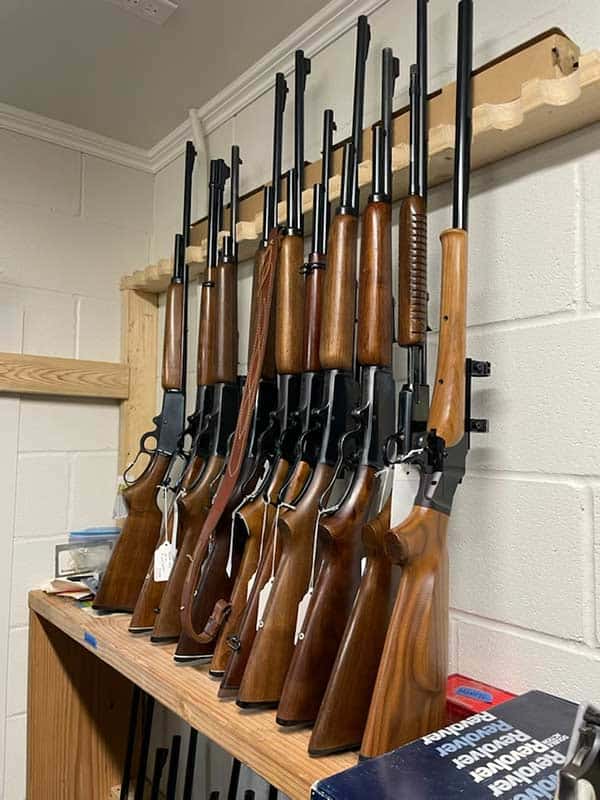
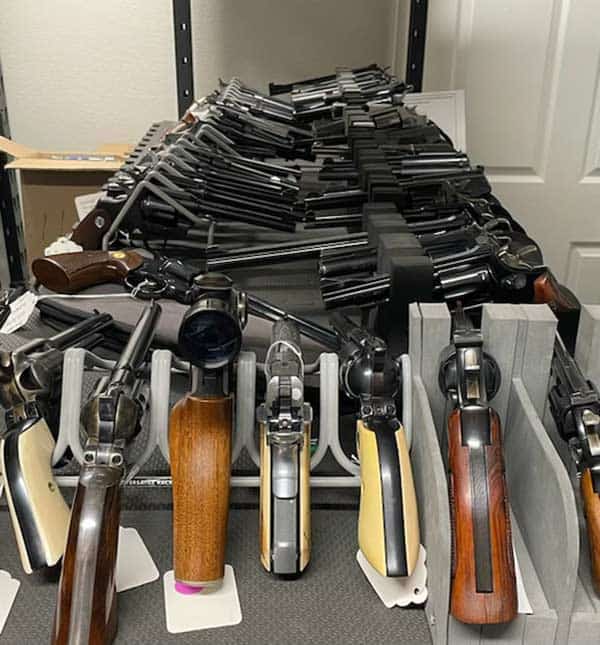
A few guns from Tyler Gun Works, a family-owned business in the
western portion of the Texas Panhandle that specializes in color case and bluing.

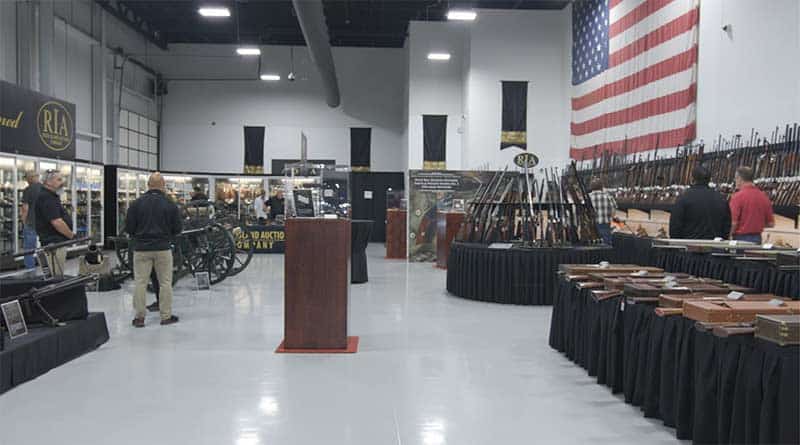
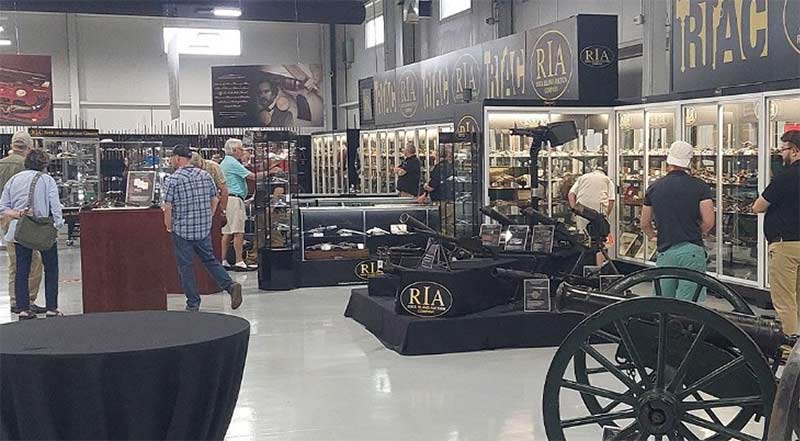
Rock Island Auction will have thousands of guns listed during
their Sporting & Collector Firearms Auction from Oct. 4-7.
Many may be aware of the Sporting & Collector Firearms Auction held by Rock Island Auction — the auction house known for high dollar collectable firearms to the tune of several hundreds of thousands of dollars. Sure, that’s great for the top 1%, and we’re happy for them to be able to afford such treasures. But for us mere mortals, the Sporting & Collector auction is geared toward us with a lot of guns ranging from a few thousand to a few hundred bucks.
Most of the guns are listed on consignment and there are several ways to bid on them. You need to start an account, which is easy enough. Go to the Rock Island Auction website click on the ‘start an account’ button in the top right corner, and fill out the prompted pages. It’s easy!
The Sporting & Collector Auction runs from Oct. 4-7 and is the first auction on the screen. Click on ‘view catalog’ and the listings will appear by lot number. On the left is a filter system where you can narrow down your search by gun type, brand, caliber, make, or model. When something looks interesting you can bid two different ways.
Bids can be live, where you actively bid by telephone during the live auction. Or you can do a sealed bid where you simply post the top amount you’re willing to go to. You will be notified if you are out bid, giving you the chance to up the ante, if you so choose.
There are a lot of guns in this auction and I wasn’t aware of Rock Island having these types of auctions. I’m glad I know now, as it is a great way of grabbing a gun that slips through the crack depending on others wants and needs.

If bidding isn’t your cup of tea, you can go the traditional route, and choose from a list Bobby Tyler has. Tyler Gun Works is a provider of metal finishing server services, most commonly Color Case. Over the years, Tyler found it necessary to have an online store where he could sell the custom guns he built. His customers are loyal to him for life.
“As life goes on, we obviously don’t live forever. My promise to all my customers is to be here to the best of my ability, for as long as I can,” he said. “As time went on, I started getting a lot of calls from widows of loyal customers and started helping them move their spouses’ collections.”
Tyler continued, “There are two things important for me to do at these times. Making sure the widow was not being taken advantage of by a local swap shop. The next thing it allowed me to do was bring honor to the previous owner, knowing how the guns were represented, sold and cared for. We have a large clientele of people who shop on our website daily. We specialize good quality used firearms at a fair price. Just take some time and go to a local gun show and you’ll see what I’m talking about! As always, we stand behind our product 100% of the time. We have over 500 high-quality used firearms in stock. Everything has been checked out and described well with lots of photos.”
Check out their website at TylerGunWorks.com, or if you find yourself in the Texas Panhandle, stop in and visit the store. On the website, you’ll find firearms organized by different categories. While you’re there you might as well check out their grips and other gun swag. Shipping is always free when you shop from their website.
So, as promised, there are two different ways of scratching the itch when you have some extra money burning a hole in your pocket or feel the need to find something you didn’t know you can’t live without. Good Hunting! There’s always room for one more.

Gun control is in the news these days, because gun control is forever in the news. Elected officials who wouldn’t know a gas tube from a sling swivel weaponize the latest headlines and pontificate accordingly, the Constitution be damned. Whether it is Ruby Ridge, Waco, the Oklahoma City bombing, Operation Fast and Furious, or Albert Patterson, it is in the unintended consequences where the true preventable tragedy rests.

Albert Patterson was the kind of warrior about whom books are written. A 22-year veteran of the British Paras and the 22d Special Air Service, Patterson was the very tip of the spear fighting for Queen and country in hotspots around the globe. While serving during the Falklands War, Albert Patterson lost 22 friends when a Sea King helicopter he was supposed to be on crashed into the sea. While in combat Patterson captured an Argentine officer and confiscated his pistol.

Albert Patterson was a natural born warrior. Once his time with the British Army was complete he took private security jobs where he could put his unique skills to good use. He maintained a home both in Hereford in the UK as well as Thailand. Most of his time was spent overseas.

Military life is hard on a family, and the world of Special Operations all the more so. I resigned my commission once I realized I could either be a soldier or a Dad but couldn’t be both. By 2014 Patterson’s marriage had self-destructed. His ex-wife noticed Patterson’s brother poking around their old home and called the cops to report him as a burglar.

Police searched the Patterson home and discovered the Browning Hi-Power pistol Patterson had taken from the Argentine officer, five rounds of hollowpoint ammunition, 177 rounds of 9mm ball, four Enfield revolvers, and some component parts from an L1A1 SLR rifle. The Hi-Power had sat unmolested in Patterson’s basement for 33 years. At that point Albert Patterson, now in his sixties, was well and truly screwed.
Gun Control in England

In 1584 William of Orange was assassinated by an assailant with a wheellock pistol. This led Queen Elizabeth I to enact Britain’s first gun control law banning possession of wheellock pistols near the royal palace. The British Bill of Rights of 1688 states, “That the Subjects which are Protestants may have Arms for their Defence, suitable to their Condition, and as allowed by Law.” Suffice it to say that moldy old writ doesn’t carry much weight today.

The Pistols Act of 1903 strived and failed to regulate the possession of handguns in Britain. The Firearms Act of 1920 was crafted to restrict ownership of WW1-surplus firearms by the working class. This act first mandated that British citizens obtain a firearm certificate to own a gun. In 1937 the British Home Secretary ruled that, “Firearms cannot be regarded as a suitable means of protection and may be a source of danger.” Ironic that this edict was issued three years before the epic Battle of Britain. The Firearms Act of 1968 further consolidated British gun laws.

Prior to 1988 there yet remained a thriving gun culture in the UK. I have an ArmaLite AR180 in my personal collection that was produced by Sterling Armaments in Dagenham in the early 1980’s. However, in August of 1987 an unhinged antiques dealer named Michael Robert Ryan went on an undeniably horrific rampage in Hungerford and killed sixteen people. He ultimately murdered both an unarmed police officer and his own mother before shooting himself. This sordid tragedy precipitated the Firearms Act of 1988. This law prohibited pump-action shotguns and self-loading rifles. Sterling Armaments went bankrupt that same year.

An amendment to the Firearm Act in 1997 criminalized the possession of handguns without meaningful exception. It was so oppressive that Olympic athletes were no longer allowed to train with their target pistols. As a result 57,000 British subjects surrendered 162,000 handguns along with 700 tons of ammunition. During this time apparently Albert Patterson was serving overseas and unable to avail himself of the resulting firearms amnesty.

In 2006 the British government further restricted the commerce in primers, air rifles, paintball guns, airsoft weapons, and replica firearms. Today airsoft guns are restricted in the UK to use by members of an organized airsoft site conducting permitted activities and possessing third-party liability insurance. Wow.

I was in the UK a couple years ago. One evening while having dinner with my wife in an English pub I saw an older gentleman sit down at the bar and produce a stack of paper targets he had clearly perforated with an air rifle. While nursing his pint of bitter the man carefully measured his groups and documented the results in a notebook. The whole episode simply reeked of oppressive melancholia.
Albert Patterson’s Gun

The P35 Browning Hi-Power is one of the most popular military weapons in the world. John Moses Browning contrived the gun as a submission for some French military pistol trials. However, the great man died before the design could be perfected. Dieudonne Saive, the Belgian gun designer responsible for the FN FAL rifle, completed the work. The apparently-perfect linkless short recoil action of the Hi-Power went on to drive easily 90% of the world’s combat pistols. If you’re not familiar with the particulars just strip your favorite Glock, SIG, Springfield Armory, or HK handgun. That’s all unfiltered Hi-Power inside.

More than 1.5 million Hi-Power pistols have seen service with around ninety nations. In 1982 during the Falklands War both the Argentines and the British issued their own versions of the Hi-Power. The Hi-Power retains its rabid acolytes even today.

Accumulating battlefield trophies is as old as warfare. A teenaged David took the sword of Goliath after relieving him of his head as depicted in the Biblical book of Samuel. To expect young warriors to go off to faraway lands and risk their lives without bringing back mementos of their service is simply magical thinking.

The 1983 invasion of Grenada was the last conflict wherein American troops were legally allowed to retain captured firearms. An Army officer comrade of mine had his career ruined when his ex-wife reported the Makarov pistol he had smuggled back from the First Gulf War. That same gun could be had at the local pawn shop for less than $200 at the time. A cursory review of the trajectory of British gun control demonstrates that the United States is currently following a similar albeit somewhat delayed path.
The Rest of the Story

In January of 2015 Albert Patterson was arrested and charged with possession of an autoloading handgun and associated ammunition. He pled guilty and explained that his infrequent times at home had never coincided with firearms amnesty periods. The sentencing judge Christopher Plunkett reviewed his exemplary record of military service and still remanded him to a custodial prison term of fifteen months. By way of explanation he said, “In the wrong hands these weapons could lead to the death of police officers or cause all sorts of mayhem. It is this risk Parliament is concerned about.”

There resulted a national outcry, much of it organized by The Sun newspaper. The petition for his release garnered some 160,000 signatures. Colonel Richard Kemp, former commander of British forces in Afghanistan, said, “This is another example of our troops being persecuted by a government and courts obsessed with political correctness. An SAS hero who risked his life to defend our country shouldn’t be treated like a South London drug dealer. He should be freed immediately. The country should be grateful for what he did.”

Albert Patterson spent fifteen years with the SAS. Prior to his sentence Patterson had actually been to prison once before. In 1987 he dove through the roof at Peterhead Prison as part of an SAS assault team to rescue 56-year-old Jackie Stuart, a kidnapped prison guard taken captive during a violent uprising. The appeals court explained that the mandatory sentence for possession of such a firearm was five years, implying that this war hero was getting off easy. Patterson’s ex-wife testified that he had never even fired the gun.

The British people seem quite proud of their gun control laws. British police officers seldom carry firearms, and there were only three fatal shootings of British police officers in England and Wales during the eleven years following 2000. However, Britain is not America.

American gun owners currently possess more than 400 million firearms. You and I own twenty times as many guns as there are soldiers under arms in every military in the world combined. Gun control laws will simply never work here. That ship has sailed.

If we outlawed all commerce in firearms tomorrow American criminals would remain well armed until the sun burns out. What future gun control legislation could very effectively do, however, is incarcerate military heroes for non-violent possession of war trophies or precipitate another unnecessary Waco-grade bloodbath. Our own great nation is following a similar track, albeit offset by a decade or two. We’ve got to vote like our freedom depends upon it.

This institutional aversion to firearms now pervades the British populace. Lofty Wiseman, a respected former SAS operator, had this to say, “If you have a weapon in a house with ammunition, there’s always that temptation…you can never say you’re going to use it but different circumstances, state of mind, if it’s there, it can be used so that’s where you must have laws.” To have such castrated pablum spewed by a supposedly free nation’s warrior class is just sad.


The United States Air Force’s decision to divest the A-10C “Warthog” has larger ramifications for future wars than just an airframe. The service plans to drastically reduce its capability and capacity to provide Close Air Support (CAS) to ground forces, leaving the sons and daughters of America and her allies to fight without a dedicated CAS aircraft for the first time since Vietnam.
The venerable “Warthog” is viewed by some as a Cold War relic that only exists as a jobs program for congressional representatives. This is myopic.
With nearly four decades in service, the A-10C stems from the lessons (re)learned after Vietnam. From inception, the A-10C was a purpose-built CAS platform with demonstrated battlefield survivability. Because of its rugged design paired with heavy and diverse payloads of modern stand-off decoys and weapons, each A-10C delivers more firepower to support ground forces than its fighter counterparts. Further, its AAR-47 missile warning system is especially effective at defeating nearly all Man-Portable Air Defense Systems (MANPADS).
I spent a 24-year career as a Marine Infantry Officer, later transitioning to Marine Special Operations Command (MARSOC), commanding at the Team, Platoon, and Company levels in both Joint and Combined combat environments.
On September 26, 2007, my platoon was on the receiving end of a complex ambush against an entrenched enemy. We fought our way out, often engaging enemy fighters inside of 100 meters and sometimes at hand-grenade range. In a difficult and violent action, we broke the back of the enemy’s assault.
We used two A-10Cs to destroy the enemy element isolated in a trench line. The A-10C’s impressive firepower and danger-close delivery of bombs facilitated the extrication of my 35-member assault force without a single U.S. casualty. This simply would not have been possible without the A-10C working in close consonance with my Joint Terminal Attack Controller (JTAC); a trained air support employment specialist.
I’m a living testament to the A-10C’s utility.

In its 2023 budget, the Air Force revealed a 5-year plan to eliminate its A-10C CAS aircraft without an adequate replacement and to cut Terminal Air Control Party Specialist/Joint Terminal Attack Controller (TACP/ JTAC) manning by 50%.
The USAF is a staunchly fighter-oriented culture where platforms like the F-35 and the NGAD fighter are touted as machines that will provide CAS and fight enemy aircraft with equal aplomb, but the Air Force’s plan will divest nearly all close support expertise, crippling America’s ability to employ airpower in close proximity to friendly forces on the ground. Ground troops would be supported by a small, expensive fleet of fragile aircraft that are far less effective at CAS than the A-10C. In low-intensity conflicts, it will cost lives. In Major Combat Operations, it risks losing battles.
The U.S. is terrible at predicting the next battlespace and future wars. Having a robust quiver of options is better than eliminating a proven platform like the A-10C. Paradoxically, if the USAF follows its own doctrine to justify getting rid of the A-10C this only bolsters the case for keeping it.
No aircraft engages the enemy alone. Much like ground forces use “combined arms” (tanks, artillery, infantry, and aviation) to prevail on land, the Air Force uses “Force Packaging” to win in the air. The four major threats to aircraft over a modern battlefield are:
The Air Force spends a lot of taxpayer dollars to ensure its fighter team (F-16; F-15EX; F-22; and F-35) can kill or negate enemy aircraft and radar SAMs, but the sensitive skins, engines, and reduced capacity for flares make these aircraft extremely vulnerable to ADA and MANPADS. In contrast, the A-10C is by far the most survivable aircraft against ADA and MANPAD threats found directly above the battlefield and is the only CAS platform specifically designed to protect ground forces in battle.
In a firefight, I sought to dominate high ground, known as “key terrain,” to achieve tactical superiority. The airspace directly overhead the battlefield is the ultimate key terrain. An American ground commander fighting against a capable and determined adversary needs an aircraft with a massive amount of firepower and eyes on both friendly troops and the enemy. Without the A10C’s capability, the USAF cedes the most important position on the battlefield where CAS is a powerful surgical tool. I can’t imagine fighting without A-10Cs which provided me a critical advantage in a dynamic, highly-contested combat environment.

Further, the A-10C was designed to operate from expeditionary airstrips. This works to the A-10C’s advantage in peer conflicts. Advanced fighter aircraft require concrete or asphalt surfaces of at least 8,000 feet in length. Countries like China will use any weapon they can, like ballistic and cruise missiles, to negate aircraft carriers and airfields capable of supporting fighters. Alternatively, the A-10C can island hop around the Pacific with a small support package and operate from 5,000 to 6,000 feet of dirt, grass, or even a short stretch of highway.
The A-10C thrives using a combination of Force Packaging and intelligent tactics, as evidenced in the 2016 deployment of the A-10C to support U.S. forces in Syria. Although Air Force leadership and Beltway pundits would prefer Congress forget about the A-10C operating within multiple surface-to-air missile engagement zones and merging with Russian fighters during Operation Inherent Resolve, the A-10C proved itself on the modern battlefield.
The decision to divest the A-10C is not new; the platform is always considered for retirement when the USAF talks of modernization. The Air Force’s voracious spending habits force an ever-smaller fleet of overpriced aircraft; a single F-35 costs nearly $145 million, which doesn’t account for the billions of dollars spent researching and developing emerging design technologies. Once procured, F-35 operating costs are more than double that of the A-10C, with sustainment costs three times budget expectations.
The A-10C needs a tech refresh, but the aircraft is paid for, and there is little to suggest that the A-10C can’t maintain its relevance with ~$3 million each in modernization and upgrades. That is pennies on the dollar compared to the F-35; the 10-year cost to replace A-10Cs with F-35s is $68 billion. The USAF, just ten years after the initial fielding of the F-35, spent $4 billion dollars on the research and development of an engine it no longer plans to procure. For comparison, it cost less than $1 billion to build and install new wings on the entire A-10C fleet, and another $1 billion could create an all-new, digitally-enhanced A-10EX, capable of employing next-generation weapons, locating threat systems, and acting as an over-the-horizon communications node.

Money aside, the Key West Agreement of 1948 charged the USAF to provide Close Air Support to the U.S. Army. The A-10Cs real benefit combines specialists (pilots) with a purpose-built airplane, and the funds used to field the A-10C were pulled from the Army’s own Close Air Support programs. Divesting the only CAS-designed aircraft in the USAF without a replacement is akin to dereliction of duty.
As a mission planner requesting CAS assets for ground operations, I was told to ask for aircraft capabilities to support my mission, rather than specific types of aircraft. Since many aircraft share capabilities (ex. ability to employ GPS-guided munitions) and there are always limited assets to meet multiple demands for CAS, focusing on capabilities creates the flexibility to draw from a variety of platforms to fulfill the requirement.
But this created an argument that U.S. ground forces don’t care what platform delivers ordnance so long as those forces receive it. Advocates of this argument fail to realize that the A-10C is the best CAS platform because of its capabilities. In fact, many JTACs cleverly requested Close Air Support assets capable of “employing forward-firing ordnance, below low weather decks, including 30-millimeter rounds.” This ensured A-10Cs; it provided capabilities no other asset could.
To that point, in June 2018 the A-10C conducted a CAS flyoff against the F-35. The results demonstrated the most effective platform to perform CAS against a peer adversary is the A-10C. The test also highlighted the force multiplication achievable by allowing A-10s to focus on supporting ground forces while fighter assets like the F-35, F-16, and F-18 act in their primary roles to counter air threats and suppress enemy air defenses.

After the fly-off, the A-10C bested the F-35 in CAS, Airborne Forward Air Control, and Combat Search and Rescue mission performance–both in low-threat and high-threat environments. An F-35 pilot was quoted as saying “I need F-35s on the leading edge to detect systems and provide a screen against advanced enemy fighters. I need Warthogs in-depth with the magazine firepower to smite our enemies from the face of the earth.” As a former Ground Force Commander (GFC), I agree. There are two salient reasons for this:
The A-10C has integrated modern technology. First, with four radios and four data-link options that talk to ground troops, its communications package is more compatible with ground maneuver elements than any other fighter. And second, although some A-10Cs are equipped with the newest jam-resistant GPS, its direct-fire weapons and its pilots’ eyes-on tactics negate the effects of GPS jamming. In GPS-denied environments where communications will be severely degraded, other fighters will struggle to accurately deliver GPS-dependent weapons. This is crucial for a GFC in a close fight where seconds feel like hours.
The A-10C also provides an asymmetric advantage by providing CAS from 75 feet above ground level up to 35,000 feet MSL. With moderate speeds and an extremely tight turning radius, which reduces re-attack timelines, the A-10C is responsive, can remain close to friendly forces for long periods of time, and has flexible, forward-firing weapons. These weapons provide more options to quickly engage targets. No other aircraft provides effective CAS in the low-altitude arena, which the war in Ukraine has shown to be one of the few places CAS can be employed in contested airspace.
Unlike the F-35, which requires a prepared airfield to support GFCs from altitudes miles above the battlespace, the A-10C pilot can remain eyes-on friendly forces; enemy forces; utilize targeting pods to generate coordinates for artillery missions; and dominate an adversary in close proximity from tree-top level using 30-mm armor-piercing incendiary rounds, or from 30,000 feet and dozens of miles away using small-diameter bombs.

The A-10C program is important because it trains pilots to become experts in Joint Fires integration. Their training is directly focused on Close Air Support, Forward Air Control, and Combat Search and Rescue, all of which are complementary missions requiring detailed knowledge of Joint Fires. On June 22, 2016, Joel Bier wrote in The National Interest, “The oncoming challenge is clear: The Air Force must collectively preserve the A-10C pilot manning pool as a force-in-being to save CAS expertise from the dilution of current training and personnel bureaucracy, regardless of its fiscally based hardware decisions.”
Further, Dan Grazier highlighted the inadequacy of CAS training in the F-35 community, showing through official USAF documents that “…no F-35 pilot of any experience level in any component of the Air Force is required to fly a single close air support training mission in 2023 or 2024.” When an aircraft is primarily responsible for destroying enemy aircraft and surface-to-air missile sites, pilots who exclusively train for those missions do not have the time to focus on supporting ground forces. Advocacy for the A-10C is based upon its capability to provide CAS better than any other Mission Design Series. A-10C pilots and the Tactical Air Control Party community maintain that legacy.
There is also a looming 50% reduction of air-ground combat integration specialists. Tactical Air Control Party (TACP) represents the largest proportion of Joint Terminal Attack Control qualified personnel in the USAF. They are experts in Joint Fires integration and the employment of surface and air-based fires essential to successful large-scale combat operations and work directly with GFCs to employ air power. For the U.S. Army, this reduction will eliminate TACP support below the Brigade level in a large conflict. These mission-focused teams of CAS professionals habitually train with A-10C pilots to ensure the safe, proper, and expeditious employment of CAS.

I worked closely with these impressive Airmen during my time in Special Operations where we have a saying that “humans are more important than hardware.” In this case, it proves particularly true, and hobbling the USAF’s TACP manning defies logic since it directly affects the Army’s ability to fight our enemies, particularly peer adversaries.
Ground combat is difficult and at times confusing. As a GFC and qualified JTAC, I could control my own air support in combat. My background and training provided a distinct advantage. I understood ground force fire and maneuver, and I could utilize air support assets to maximize my Marines’ abilities to succeed. However, as a JTAC-qualified GFC, I was the exception; trying to manage CAS while maintaining control of my unit was not optimal.
Having CAS-trained professionals in the air above me and a TACP next to me on the ground is the ideal partnership. A TACP at my side, focused on using air to achieve my intent for CAS, significantly improved my unit’s effectiveness. This is especially important in dynamic, asymmetric environments where high-altitude aircraft dropping bombs on coordinates without eyes on the battlefield will be worthless at best, and cause fratricide or civilian casualties at worst.
Loss of the A-10C and a preponderance of TACPs will create a huge gap wherein a dedicated CAS team doesn’t exist for use in combat like the ongoing war in Ukraine; tailor-made for the A-10C as I wrote about here.

One of the SOF truths is “competent [forces] cannot be created after the emergency occurs.” Getting rid of the A-10C; its qualified CAS-trained pilots; and the air-ground integration expert TACPs is a recipe for disaster.
Vietnam demonstrated that America doesn’t like to wage wars with overwhelming pain to its people. I don’t know what future war holds, but I do know that the largest risk is assumed by ground forces who will go to war without adequate platforms and the flexible engagement options required to fight effectively. That Congress and the DoD are ignoring this is a mistake of epic proportions.
The American public deserves an explanation of why the Air Force is putting American sons and daughters at risk and should have an opportunity to weigh in on this incredibly important and costly decision. For more information and to contact your congressional representatives, please visit https://www.troops-in-contact.org/

Ivan F. Ingraham is a freelance writer and veteran. He served for 24 years in the U.S. Marine Corps as a Special Operations Officer. This is his first submission to The Havok Journal.
As the Voice of the Veteran Community, The Havok Journal seeks to publish a variety of perspectives on a number of sensitive subjects. Unless specifically noted otherwise, nothing we publish is an official point of view of The Havok Journal or any part of the U.S. government.