Categories
All About Guns Anti Civil Rights ideas & "Friends" California

California bill would force credit card companies to adopt category codes for gun stores By Cam Edwards

California bill would force credit card companies to adopt category codes for gun stores
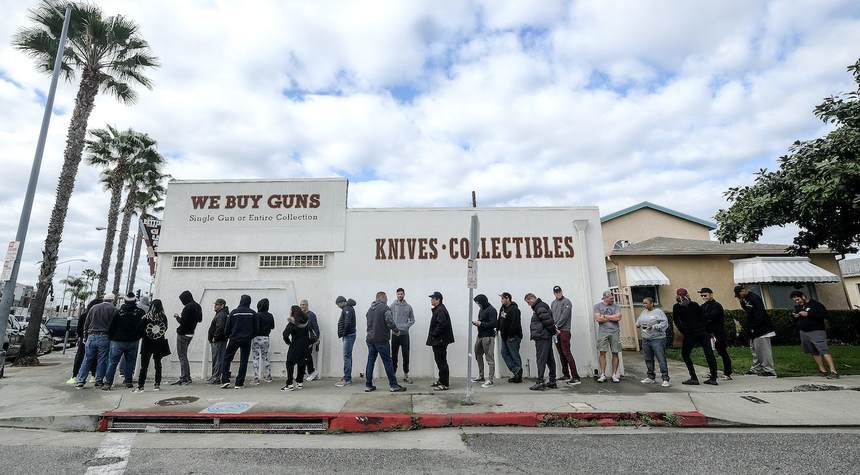
AP Photo/Ringo H.W. Chiu
When major credit card companies announced earlier this year that they would not be implementing new merchant category codes on sales at gun stores, in part because of pending legislation in several states that would prohibit them from doing so, I predicted it wouldn’t be long before anti-gun states like California took the opposite approach and began mandating the use of those codes.

I will say that there was one thing that surprised me in the anti-gunner’s collective statement of outrage: not one of them said anything about blue-states like California responding in kind to the red-state laws that supposedly led to the cold feet on the part of companies like Visa and Mastercard. Maybe they don’t want to tip their hands, but those efforts are almost certainly coming. Gavin Newsom loves to pick culture war fights, and if he’s going after Walgreens over abortion then it probably won’t be long before he demands credit card companies either implement these MCCs or face the wrath of lawmakers in Sacramento.

Here we are just a few months later and sure enough, some of the California legislature’s most vociferous anti-gunners are doing just that. AB 1587 was approved by the Assembly on a 76-0 vote, and is now moving through the Senate. On Thursday the Senate Banking and Financial Institutions Committee gave it’s preliminary approval, and AB 1587 is scheduled to be heard in Senate Judiciary next Tuesday along with AB 1089, another anti-gun measures that adds three-dimensional printers and CNC milling machines to the definition of firearm-related products; requiring “anybody who uses a three-dimensional printer or CNC milling machine to manufacture a firearm to be a state-licensed manufacturer” while prohibiting “the sale, purchase, possession, or receipt of a three-dimensional printer that has the sole or primary function of manufacturing firearms”.

Ahead of next week’s hearing AB 1587’s primary Senate sponsor is already trying to make the case that the legislation will be able to prevent mass shootings and gun trafficking.


Unsurprisingly, Min’s argument doesn’t stand up to the slightest bit of scrutiny. First, the merchant category codes wouldn’t identify specific transactions, only dollar amounts and the date and location of purchases. How are credit card companies supposed to determine if a particular transaction is “suspicious” enough to warrant reporting? These MCCs are supposed to help identify financial crimes like fraud, not serve as some sort of Minority Report-style pre-crime surveillance system, and even some credit card company execs have pointed out that the codes will be of no use in identifying potential killers.

Heck, as the Firearms Policy Coalition pointed out to Min, even the legislative analysis of AB 1587 directly contradicts his assertions.


California already collects more information on gun and ammo buyers than what would be gathered through the use of merchant category codes for firearm retailers, with “universal” background checks run on all purchases of both guns and ammunition. AB 1587 is a culture war tit-for-tat response to laws in Florida, Mississippi, and other states that would fine companies that adopt and utilize the codes. Just as those states provide financial penalties for adopting the codes, AB 1587 would empower California Attorney General Rob Bonta to fine both those companies that don’t start make those codes available for retailers as well as retailers themselves if they don’t start using the codes by March, 2025.

This is yet another blatant attack on gun owners, firearm retailers, and our Second Amendment rights, and I have no doubt that the Senate Judiciary Committee will give it the green light. The bigger questions are how much pushback the legislation will receive from the credit card companies themselves, and who will be the first to sue over the requirement once Gavin Newsom signs the bill into law.


 

Categories
All About Guns

Iver Johnson Safety Automatic Revolver 32 S&W–Shooting Review

Categories
All About Guns

Elmer Keith: Jack O’connor’s Nemesis

Categories
All About Guns

Getting An Old Rifle Ready To Use Again

Categories
All About Guns

Crogar M91: MP40 Meets Yugo M56 in the Croatian Homeland War

Categories
All About Guns

Most Amazing Guns You Have Never Seen

https://youtu.be/EqjiskOZM9c

Categories
All About Guns

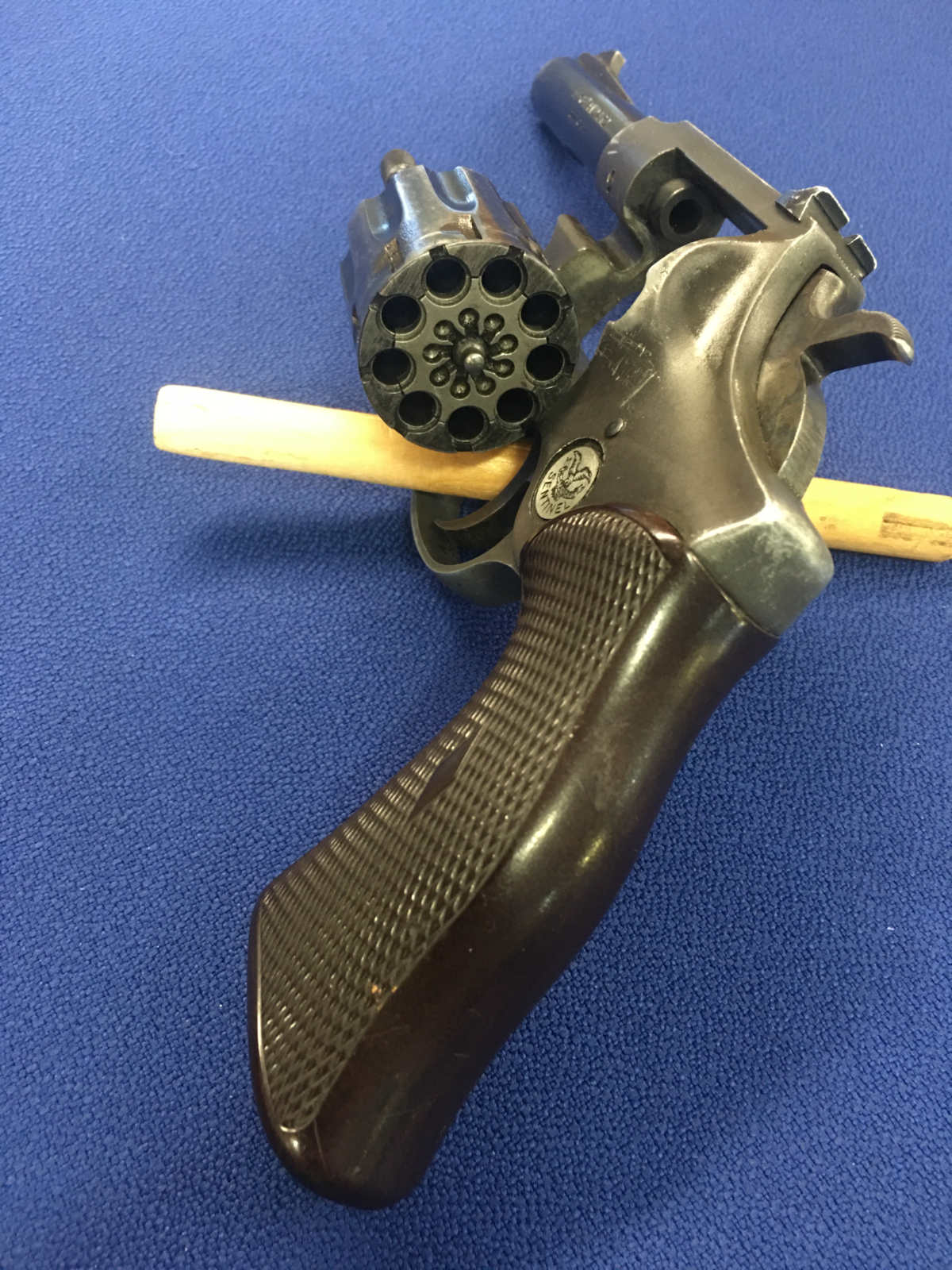
A HIGH STANDARD R-101 SENTINEL, CHAMBERED IN .22 LR

HIGH STANDARD R-101 SENTINEL, CHAMBERED IN .22 LR - Picture 2
HIGH STANDARD R-101 SENTINEL, CHAMBERED IN .22 LR - Picture 3
Categories
All About Guns Anti Civil Rights ideas & "Friends"

See why I always say slippery slope?

image

Categories
All About Guns Anti Civil Rights ideas & "Friends"

I think that he meant a leg to stand on

Categories
All About Guns Allies Anti Civil Rights ideas & "Friends" Born again Cynic!

French Gun Control Failed, Leaving Law-Abiding Citizens Helpless As Nation Burned BY TYLER DURDEN

Submitted by Aidan Johnston, federal affairs director for Gun Owners of America

In case you missed it, France entered into a pseudo-civil war this past weekend. Rioters took to the streets, destroyed billions of dollars in local property, violent criminals pulled out their illegal guns, and there was nothing the average disarmed Frenchman could do about it.

These recent riots proved the old adage, “When guns are outlawed, only outlaws will have guns.”

France has much stricter gun laws than anywhere in the United States. French citizens do not have the individual right to bear arms, nor carry a firearm in public for self-defense. Instead, they have strict regulations for anyone that does want to keep a firearm at home:

  • limits on the type and amount of guns and ammo you can own; 
  • universal background checks; and 
  • gun registration. 

Nevertheless, what began in France as mostly peaceful protests would end with fully automatic weapons and banned “weapons of war” being used to terrorize the streets of France.

Protesters started by burning cars, starting fires, and shooting off fireworks, but soon began using shotguns to shoot out police cameras.

Criminals soon brought out the bigger guns—semiautomatic AK-style firearms. Video footage revealed the criminals shooting directly into the air in the city center—endangering the surrounding area.

Shortly after that, footage surfaced online of protestors with handguns and belt-fed machine guns marching down the street in broad daylight. Terrorized citizens ran and screamed as security alarms blared.

Meanwhile, average French citizens attempted to stand up to the rioters with wooden bats and other improvised weaponry.

France’s gun control did nothing to protect its people.

Criminals dominated the streets. In this short period of civil unrest, thousands were arrested, and more than a billion dollars of damage was done to local businesses—which doesn’t even include schools, town halls, or community centers.

These rioters didn’t care for France’s gun laws. They had illegal firearms—such as banned, fully-automatic belt-fed machine guns.

They took those illegal firearms and shot them in public to wreak havoc—without regard for France’s ban on the public carry of firearms or the safety of the general public.

While armed criminals ignored French gun laws and destroyed cities, Florida’s permitless concealed carry law went into effect.

Anti-gun advocates decried Florida for becoming a “more dangerous state.” Yet, Florida celebrated the weekend in peace while gun-controlled France burned.

The Founding Fathers fostered our well-armed society “for the security of [our] free state.” In other words, the individual Second Amendment right is protected for the common good and helps us keep ourselves, our loved ones, and our nation safe.

For example, during the race riots in Los Angeles, local Korean business owners stood up to criminals by arming their employees and guarding their neighborhoods from the rooftops.

Again, during riots in Kenosha, Wisconsin, locals like Kyle Rittenhouse used firearms to patrol local communities, put out fires, offer first aid, and defend themselves from violent criminals.

In the United States, our Second Amendment empowers citizens with the means to stand up to tyranny—whether by an oppressive government, a violent criminal, or a roving gang of bandits during civil unrest.

France’s example has proven that gun control only affects law-abiding citizens.

Criminals won’t give up their guns no matter what gun restrictions the government enacts, and the Second Amendment says that the People shouldn’t have to give up their guns either.

We refuse to sit idly by while bureaucrats or legislators enact “feel good” measures that disarm you and leave you searching for improvised weapons during the next wave of riots.

*   *   *