Category: All About Guns
Categories
Top 5 Budget 1911 Pistols


After years in the making, the National Museum of the United States Army opened its doors on Veterans Day 2020. Located in Ft. Belvoir, Va., off Liberty Drive, the museum spans 185,000 square feet and represents the effort of more than 30 different organizations led by the U.S. Army and the Army Historical Foundation.
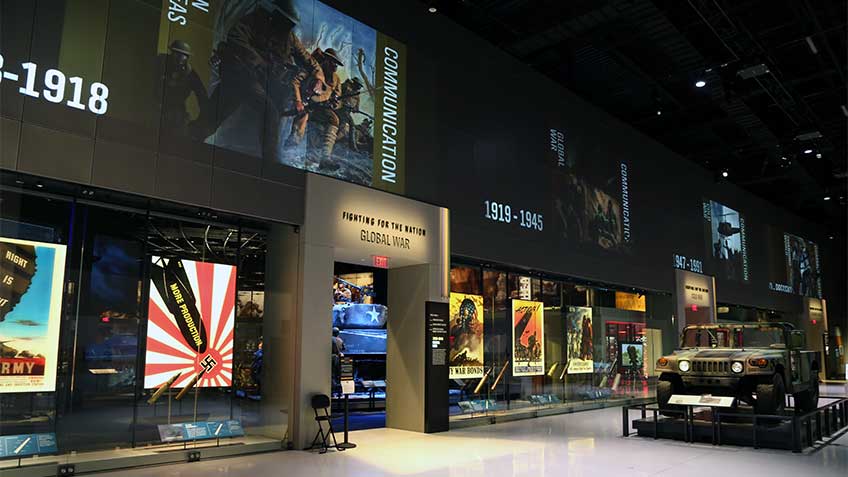
The five-story structure sits on 84 acres of ground and contains nearly 1,400 artifacts spread across 11 galleries that tell the story of the U.S. Army from its founding to its position in the modern world. The heart of the museum and where most artifacts are found lie in seven large galleries that span the history of the Army and highlight key roles it played in the development of the United States.
American Rifleman staff had a chance to view the museum during a media event a week prior to the museum opening its doors. Here are five amazing artifacts you can see when you come down to the National Museum of the United States Army:
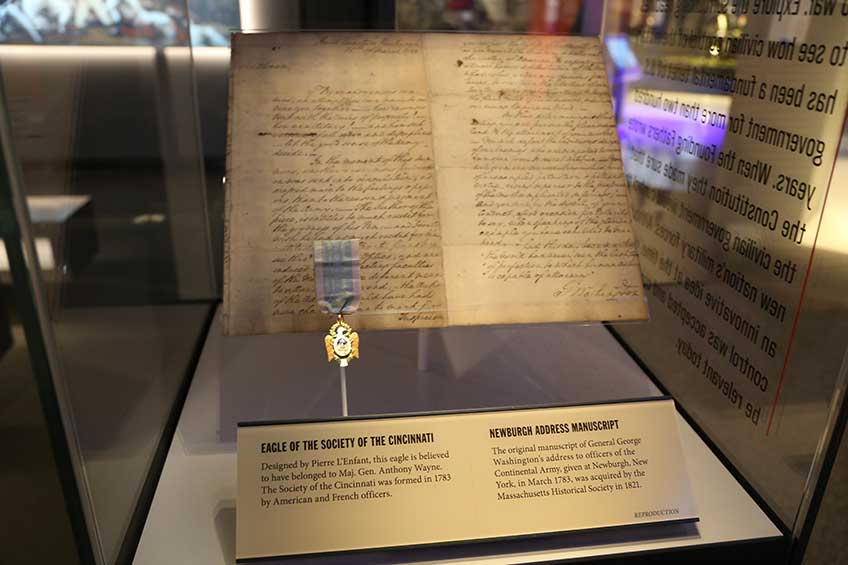
George Washington’s Newburgh Address
In March 1783, the fledgling United States faced a moment of crisis that almost ended the American experiment before it began. While the nation engaged in peace talks with Great Britain, the soldiers and officers of the Continental Army were reaching a breaking point. They hadn’t been paid in more than a year, and the promise of a lifetime pension for the officers still had no source of funding. An anonymous letter circulated the army camp in Newburgh, NY, which stirred talk of rebellion and a possible military coup against the Continental Congress.
When George Washington heard these rumblings, he knew immediate action was required. What followed on March 15 was one of Washington’s finest hours and a defining moment in the early history of the nation. Washington told his men to be patient, saying that doing so would prove their “unexampled patriotism…rising superior to the pressure of the most complicated sufferings.” After the address, Washington stirred the emotions of his men as he struggled to read a letter from Congress. After faltering, he paused and said, “Gentlemen, you will permit me to put on my spectacles, for I have not only grown gray but almost blind in the service of my country.”
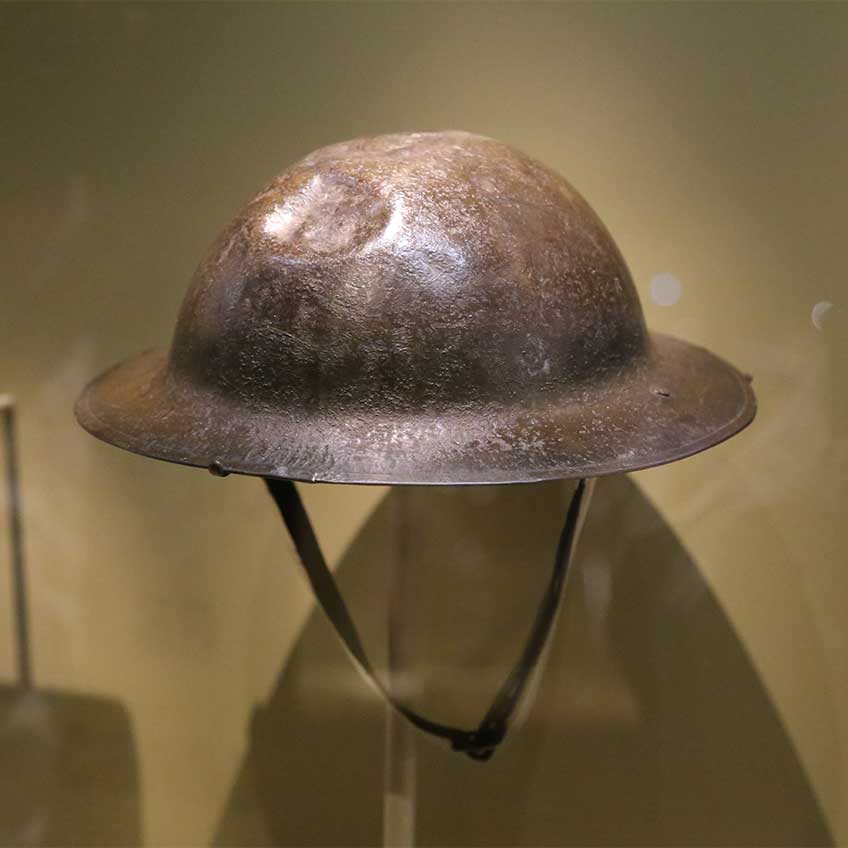
Sgt. Alvin York’s Helmet
In October 1918, then-Corporal Alvin York of the 82nd Division of the U.S. Army joined a group of American soldiers with a mission to take out a machine-gun position in the German lines during the Meuse-Argonne Offensive. While wearing the helmet pictured above, York and his men suddenly came under fire from a German machine gun while dealing with a group of captured German soldiers. To deal with this threat, York embarked on a series of incredible actions that would see him awarded the Medal of Honor.
Likely armed with an M1903 Springfield rifle, York lowered himself and began “touching off” the German machine gunners as quickly as he could. Then, six German soldiers with bayonets fixed charged York, who had expended all the rounds in his rifle. York then drew his M1911 pistol and shot each German soldier, from back to front. Ultimately, through his individual actions, York silenced all the machine-gun positions in the area and captured 132 German soldiers. French Marshal Ferdinand Foch remarked that it “was the greatest thing accomplished by any soldier in all the armies of Europe.”
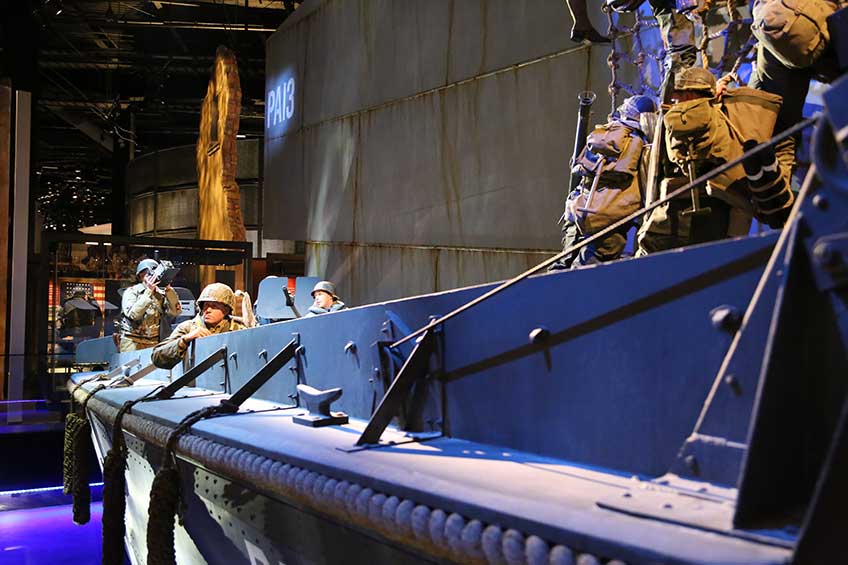
D-Day LCVP
As part of Operation Overlord, the beach landings in Normandy on June 6, 1944, represented one of the largest seaborne invasions in human history. More than 150,000 soldiers supported by nearly 200,000 naval personnel aligned themselves off the northern Channel coast with the aim of cracking Hitler’s Atlantic Wall and establishing a beachhead. The Allied invasion assembled the largest fleet of ships ever gathered.
Nearly 7,000 vessels from eight different navies made up the fleet, and 4,126 landing craft were the largest part of the assemblage, all designed to ferry fighting men from the ships to the five invasion beaches. Of these landing craft, one of the most famous is the “Landing Craft, Vehicle, Personnel” (LCVP), more popularly known as the “Higgins boat” after its designer, Andrew Higgins. More than 23,000 Higgins boats were produced during the war for use in the Atlantic and Pacific theaters. Few survive today, and even fewer are known to have been used in the Normandy landings. The Higgins boat at the National Museum of the U.S. Army is one of six known survivors from D-Day.
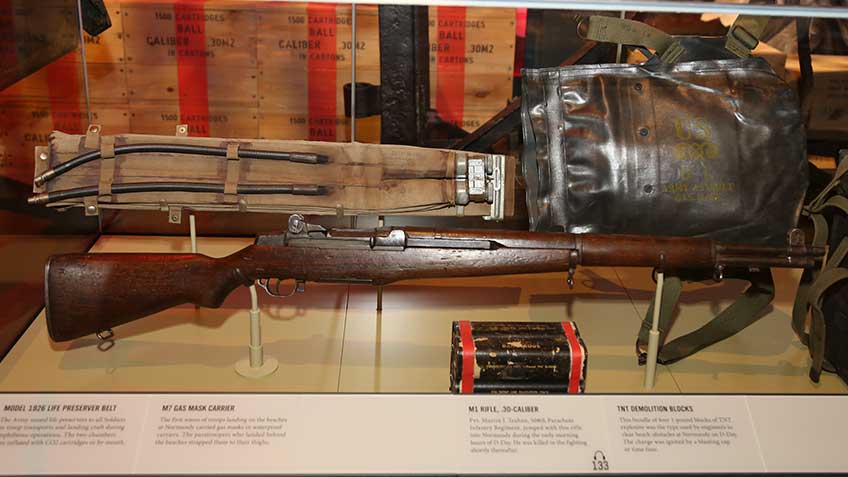
Pvt. Martin J. Teahan’s M1 Garand
At 2:15 a.m. on June 6, 1944, the 508th Parachute Infantry Regiment (PIR) of the 82nd Airborne took part in the opening phase of Operation Overlord, jumping behind German lines. The 508th PIR’s objectives were to capture the French town of Sainte-Mère-Église, secure Merderet River crossings and establish defensive positions in preparation for the Normandy landings. Among those who jumped from the skies that morning was 21-year-old Pvt. Martin J. Teahan.
He joined his comrades in the heavy fighting on D-Day, and while scouting near Picauville, France, Pvt. Teahan was shot in the leg, captured and later killed by a German soldier. Several days after the landing, a French farmer found an M1 Garand engraved with the name “M. Teahan” and held onto it for 72 years until its discovery in 2016. Pvt. Teahan is one of 9,388 American soldiers who lie in the Normandy American cemetery near Colleville-sur-Mer, France, but the rifle he fought with has an honored place in the U.S. Army’s National Museum.
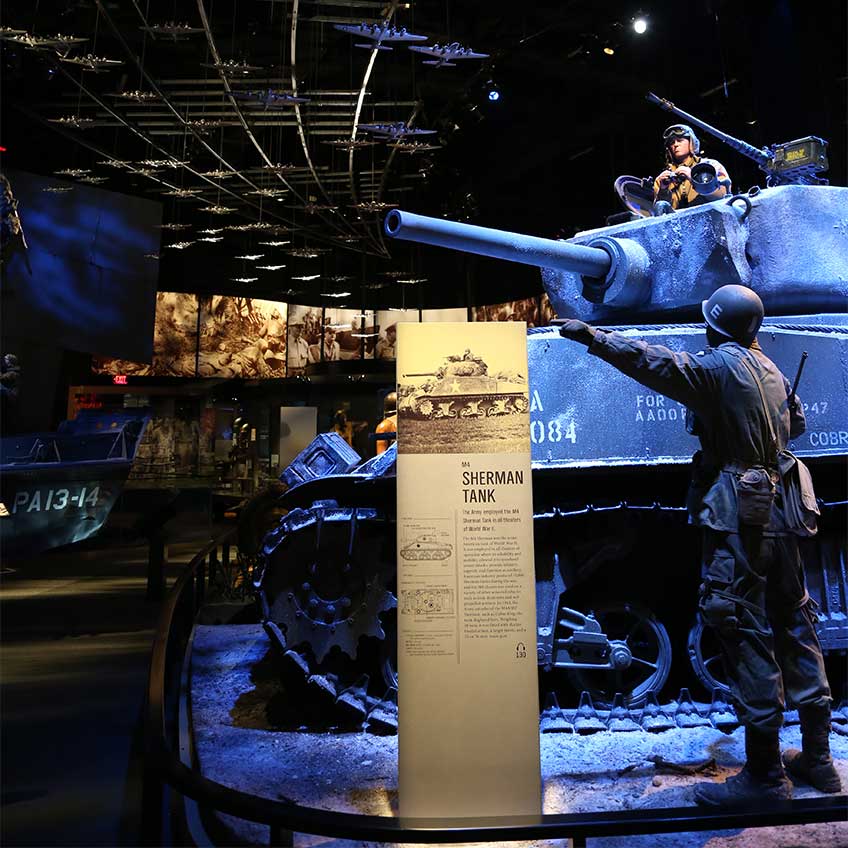
The Sherman tank “Cobra King” is shown painted in its wartime finish in a winter display that highlights its role during the Battle of the Bulge.
M4A3E2 Sherman “Cobra King”
During the winter of 1944, Allied armies were making significant progress against the Nazi war machine. The combined forces of the British and Americans on the Western Front of World War II had brought them nearly to the border of Germany itself. Hitler and his command staff had only enough men and materiel to mount one last offensive. Known today as the “Battle of the Bulge,” the German blow pushed through the Ardennes Forest with the aim of splitting the Allied lines. The Germans hoped this would destroy the Allied armies in northwestern France and prevent the use of the Antwerp port, forcing them into a surrender settlement.
While the German advance accomplished none of its aims, the assaulting force managed to surround the 101st Airborne in the Belgian town of Bastogne. With heavy cloud cover preventing any reliable means of air support or resupply, the men of the 101st Airborne held out against the odds during five days of heavy fighting. On Dec. 26, 1944, lead elements of the 37th Tank Battalion of the 4th Armored Division broke through German lines, effectively ending the siege of Bastogne. At the head of the column was “Cobra King,” an M4A3E2 Sherman tank that held the honor of being the first unit through the lines.
These are just five of the nearly 1,400 artifacts visitors can see in the National Museum of the U.S. Army, and there are many more priceless artifacts that tell the story of the nation through the eyes of its soldiers. From the rifles of the American Revolution to an engine recovered from one of the helicopters immortalized in “Blackhawk Down,” there’s something for everyone to see.
Museum entry is free, but timed-entry tickets are required and can be reserved on the museum’s website. The museum is open from 9 a.m. to 5 p.m. and is closed Christmas Day. Parking is free, and the museum is located 25 minutes from Ronald Reagan Washington National Airport. For more information, visit thenmusa.org.

Categories
King Colts By Bart Skelton
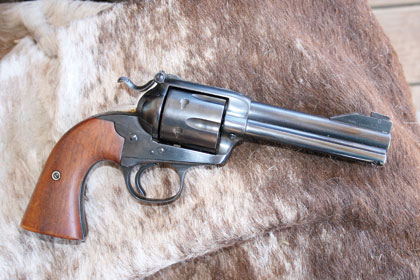
It’s one of those prolific points of discussion when it comes to guns, one that can be very touchy with some folks, and it seems that everybody who fools with guns has an example. The ones that got away. My own cases in this unfortunate study are disheartening, and I generally attempt to avoid serious thought of them as the grieving can be embarrassing. But now and again something will trigger thoughts of a fugitive firearm that I slipped up and let go, and the pining starts, regardless.
The most recent episode involved a visit with one of my brush-beating compadres, midwestern land baron, NRA Board Member, and wildfowl conservationist Lance Olson. A renowned collector and expert in firearms, Olson frequents the Southwest and other areas of the country in search of various collectibles, occasionally permitting me to catch a glimpse–or even handle–some of his acquisitions.
During his latest sortie, I discovered Olson had landed a fine Colt Single Action Army in one of my all-time favorite calibers, .44 Special. A 1st Generation Colt, the revolver had been highly customized. Upon closer examination, it was clear the gun had been modified by late gunsmithing legend Dean King. I generally cringe at the sight of a good 1st Generation single action that’s been modified–such behavior is villainous in my book–but I do find modifications by King to be much less offensive.
Olson’s revolver was a 4¾-inch single action with original Colt hard rubber grips featuring the famous eagle. The finish was of bright blue, no casecolors. The barrel had been fitted with a ventilated rib, which ran from the front of the gun’s frame to the end of the barrel, one of King’s signatures.
The revolver’s sights were another King touch. Gunsmith King invented the famous mirror front sight, which was basically a ramped sight with the blade set high. The ramp featured a small, round mirror that had been inset into the top of the ramp in front of the sight blade at an angle. This permitted available light to be reflected directly upon the front sight for maximum clarity. The rear sight was fully adjustable and looked similar to a Smith & Wesson rear sight.
It was after World War I when Mr. King began his famous gunsmithing work. Back then nobody really thought twice about wrecking the value of a Colt Single Action Army, heck they were still in production. King’s modifications were executed tastefully and really enhanced the shootability of a handgun. While most of these modifications were done on Colts, Mr. King experimented with other firearms as well.
As I looked over Monsieur Olson’s King Colt, it brought back memories of a couple of guns that I’d let get away from me, including one of my dad’s personal favorite revolvers. Dad had a respectable compilation of firearms, though he never considered himself a real collector.
He had a number of favorites that remained constant; otherwise he never felt much emotion about trading anything off. One of the main handguns always by his bedside was a Colt SAA 1st Generation in .45 Colt. The revolver had been customized to his personal specifications and was a finely timed piece of work. The action was silky smooth, and the trigger pull was one of the lightest I’d ever felt on a revolver.
While the Colt had no ventilated rib, it was fitted with a King mirror front sight, and the rear sight was what I always thought was a Smith & Wesson adjustable but could have likely been a King as well, though I never thought to ask. The revolver’s backstrap had the bluing polished away to natural steel and was finished off with a beautiful set of Herrett’s French Walnut grips. In all, it was a fine sixgun–one I should have figured out how to have kept after my dad’s untimely passing.
As luck would have it, I was contacted by an old friend of our family’s a few years back, one Mrs. Bennie Dean. Her late husband, Tom, had been a dear friend of my dad’s; they had worked together as U.S. Customs Investigators in South Texas in the late 1960s. Tom was a shooter and gun enthusiast, and he had told my dad that he had always wanted a Colt Bisley. He, too, admired King’s stuff and was fond of Dad’s single action .45. The old man scrounged up a Bisley–they weren’t too hard to come by back then at a decent price–and went to work on a custom sixgun for Tom.
Upon getting in touch with me, Mrs. Dean advised that she had something of Tom’s that I needed. This gracious lady and I struck a deal, and I walked away with that Bisley. The old shooter was marked Colt Single Action Army .45 Colt, yet it had been converted to shoot .45 ACP. The front sight was a ramped and mirrored King with the adjustable rear sight. I’ve always been fond of the Bisley, and I found the gun to be a real prize. Shortly after acquiring the old beauty, I entered in a cowboy action shoot down in the Texas Big Bend and placed decently using the old hogleg. It is definitely one revolver that I’ll not let get away, and while it’s not my dad’s old .45, it’s almost as good.
My gun-trading skills have always been mediocre at best, and Lance Olson knows it, which is likely why he allows me to peruse his trappings. During his last raid, not only was he in possession of the Colt single action, he also produced a fine little Colt Pre-Woodsman .22. Upon examining it, I noticed the adjustable sights were made by King. The front sight wasn’t the mirrored variety; it was the shadow model, which is almost as good. This sight was slightly undercut towards the muzzle, again to maximize the clarity of the sight blade.
Incredibly, that little Colt is now resting in my gun safe, where I intend for it to stay, along with the King Bisley. Next time you happen across an old revolver that’s been modified a bit, be sure to give it a once-over. If it has a King marking, it’s liable to be a keeper.

Holy snap! That is so not cool…
At 7:30 p.m. on 3 July 2023, North Carolina State Trooper Jeffrey Dunlap pulled to the side of Interstate 26 to assist what he assumed to be a stranded motorist. The driver, Wesley Scott Taylor, then inexplicably produced a .44 Magnum Desert Eagle handgun and shot Dunlap in the chest at near-contact range. The massive 240-grain jacketed hollow point flattened on Trooper Dunlap’s armored Kevlar vest.
Despite having been centerpunched by a .44 Magnum round, Dunlap drew his service weapon and killed Taylor in the subsequent exchange of fire. The only reason Jeffrey Dunlap, a distinguished 13-year veteran of the Highway Patrol, got to go home to his family that evening was that he was wearing superb state-of-the-art soft body armor.
- Origin Story
- Catching Attention
- A Visionary
- Kwolek Makes Kevlar
- But What Could You Actually Do With Kevlar?
- READ MORE: Biden’s Joint Speech to Congress: What do you think deer are wearing kevlar vests?
- A Vested Interest in Survival…
- READ MORE: Eberlestock Bulletproof Backpack
- The Rest of the Kevlar Story
- Things End Well For Kwolek
The National Institute of Justice (NIJ) reports that the lives of more than 3,000 Law Enforcement officers have been saved since the first issue of soft body armor began in the 1970s. That’s thousands of kids who got to keep their parents thanks to this extraordinary contrivance. Have you ever wondered where all that began?
Origin Story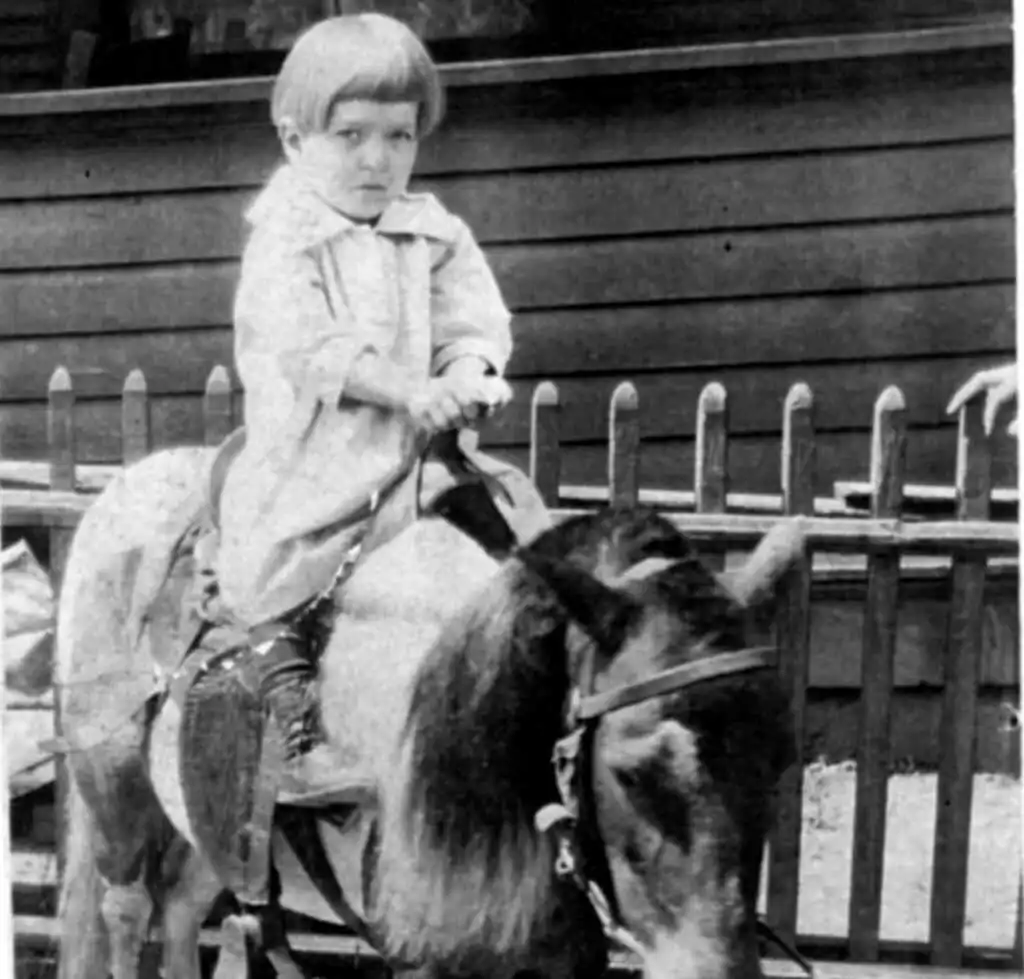
Stephanie Louise Kwolek was born to Polish parents in Pittsburgh, Pennsylvania, in 1923. She was one of two children. Her father was a naturalist, and her mother was a seamstress. Though she was extremely close to her father, he tragically died when she was ten.
Young Stephanie and her dad spent countless hours roaming the Pennsylvania forests. Along the way, Stephanie developed a deep and abiding love for nature. Out of that grew a passion for science. Stephanie outpaced her classmates in school and resolved at a young age to become a physician.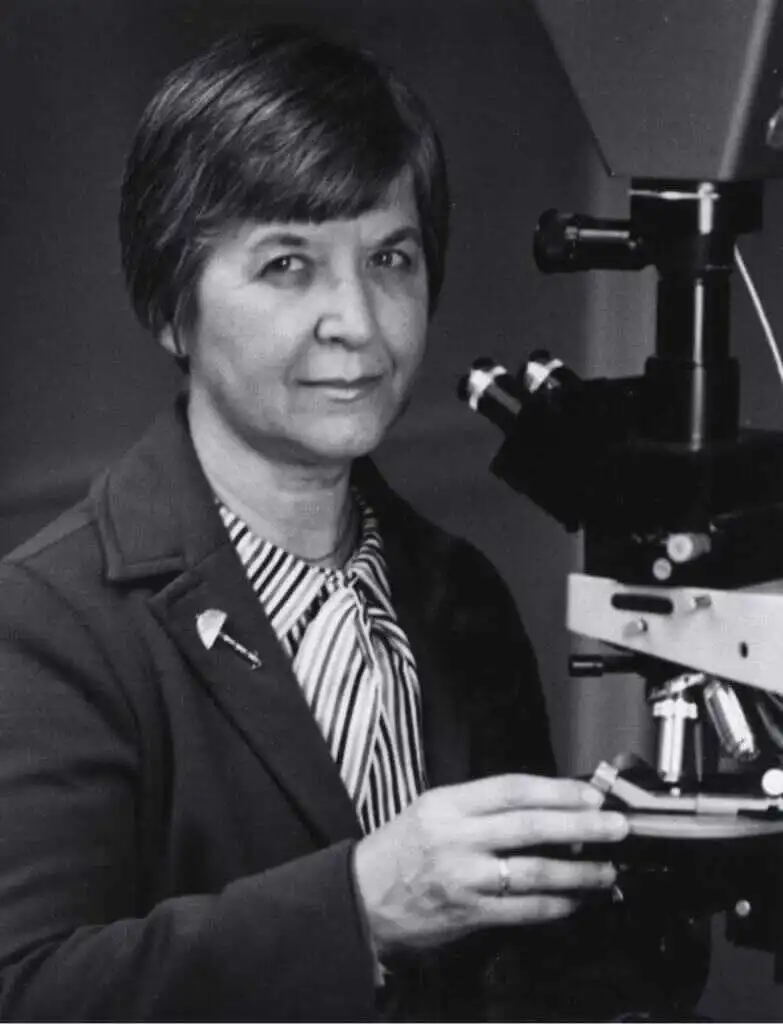
Then, in 1946, Stephanie graduated from Carnegie Mellon University with a BS in Chemistry. This seemed a decent path to medical school. However, she took a temporary job in a chemistry lab to make money for her medical training. While there, she met Dr. William Charch who worked at DuPont Chemical. Charch is the guy who invented waterproof cellophane.
Catching Attention
Dr. Charch was impressed with the young woman’s drive and intellect and arranged for her to interview at DuPont for a position as a chemist. She got the job but never intended to stay. Throughout her early time at DuPont, Stephanie really just wanted to use her position as a springboard into medical school.
The late 1940’s was an interesting time in America. Sixteen million American men had recently served in World War 2. One in every thirty-eight died. Many large companies struggled to fill their vacancies amidst the massive economic boom that blossomed out of the war. Stephanie’s project at DuPont involved researching radical new chemical technologies. DuPont had introduced nylon recently, and their research in exotic polymers was cutting edge.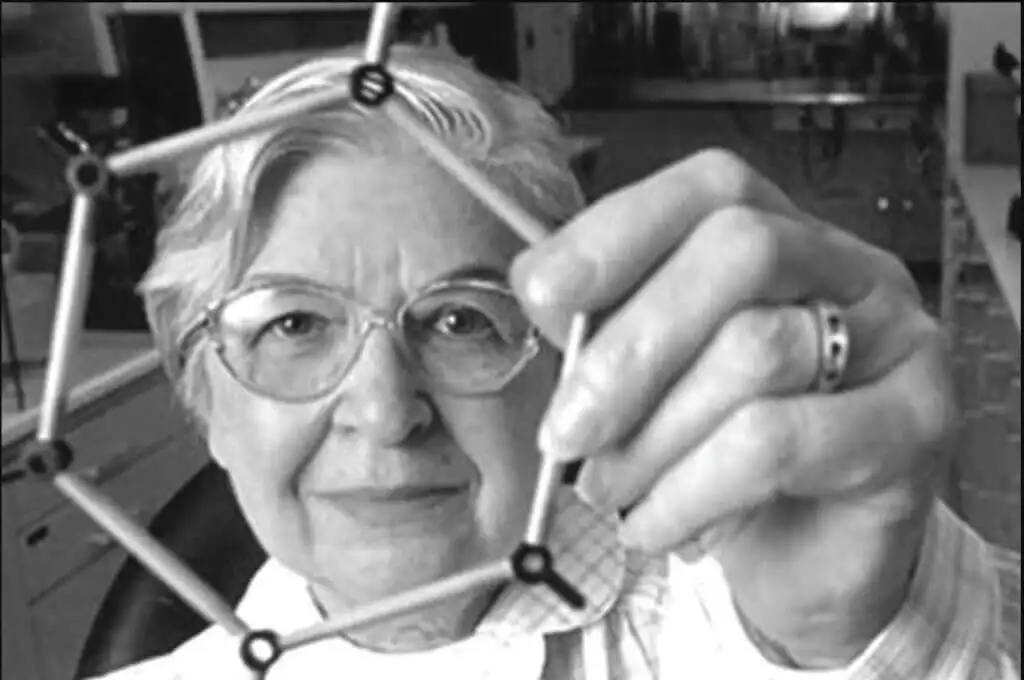
In short order, Stephanie discovered that she actually had a very real gift for chemistry and shelved her plans for medical school. WW2 had served as an engine to expand the body of scientific knowledge at an unprecedented rate. With technology exploding in the Space Age, Kwolek found herself uniquely positioned to lead that charge. Over the course of the next four decades working at DuPont, Stephanie Kwolek made some truly earth-shaking discoveries.
A Visionary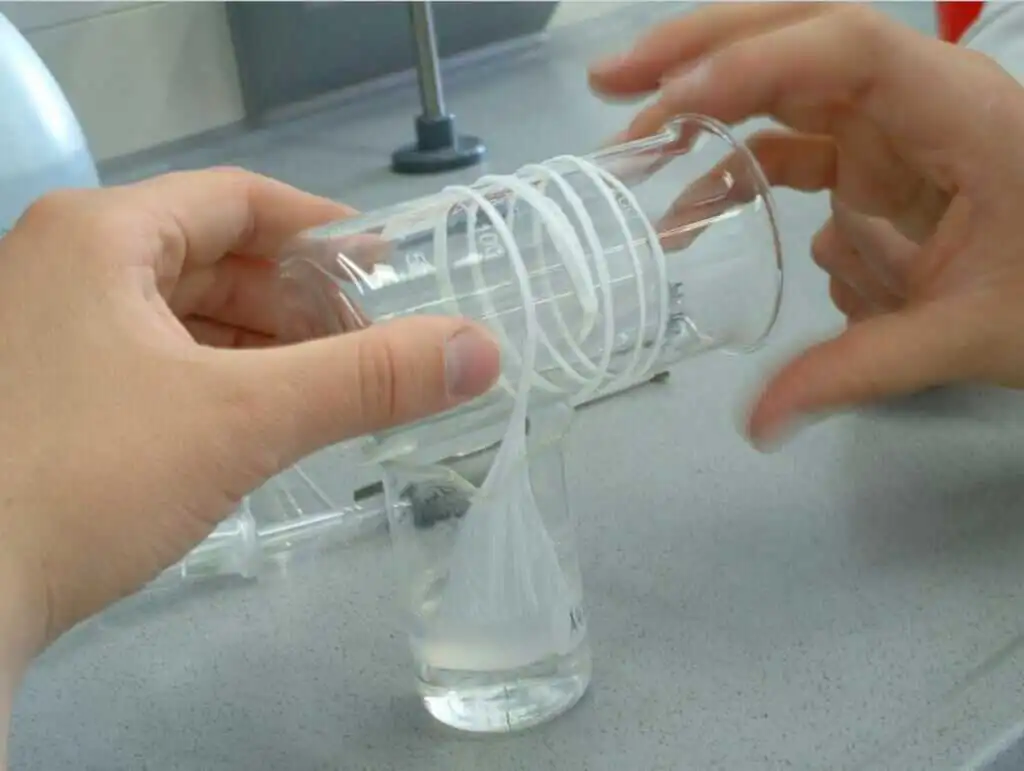
First off, the Nylon Rope Trick is a staple of modern academic chemistry research labs. I’ve done it myself a couple of times. Stephanie Kwolek first defined it. The experiment involves combining an aliphatic diamine with a solution containing aliphatic diacid chloride that is not miscible in water.
The result is a synthetic diamide that propagates as a soft film on the surface of the solution. This process is called interfacial polymerization.
By gently grasping the film and pulling it off of the solution, the resulting Nylon 66 will form a strand that can be wrapped around a stick or similar object. As the film is removed this allows the reaction between the two reagents to propagate further, creating yet more nylon. Lastly, by gently wrapping these fibers around a stick, raw nylon can be harvested.
Kwolek’s work in the 1950s and ’60s orbited around unconventional applications for exotic synthetic materials. Most of these were aramids, short for “aromatic polyamides.” The resulting fibers, in addition to being extremely tough, could be formed into a wide variety of exotic materials.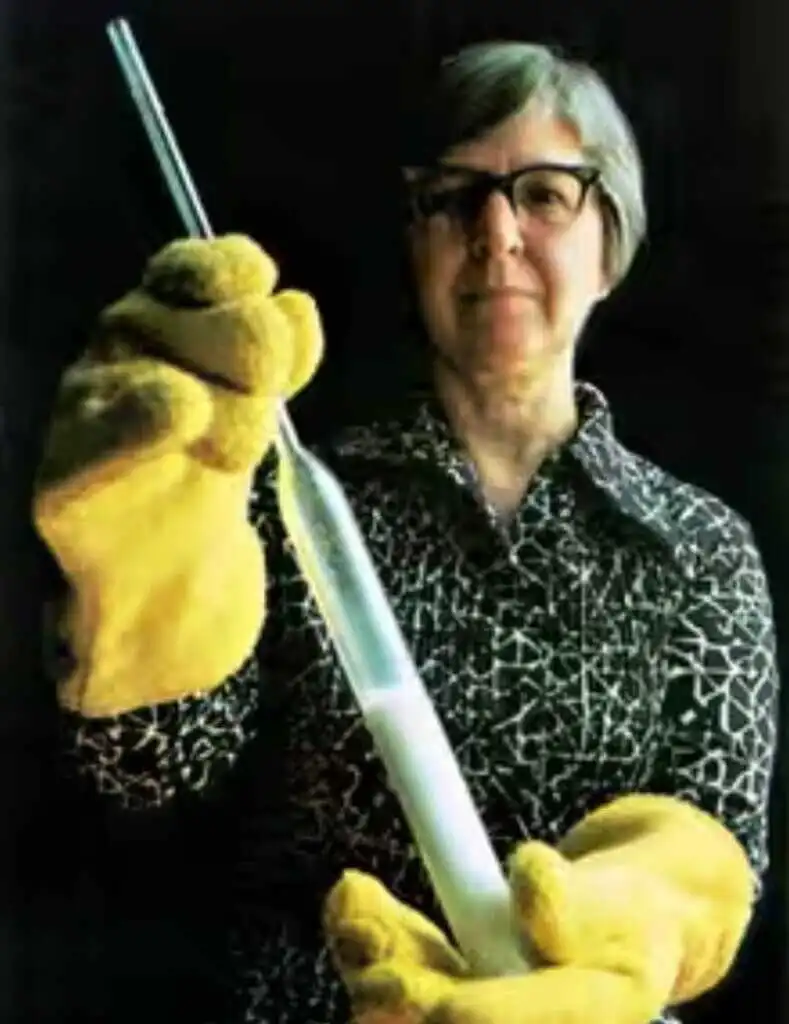
Kwolek Makes Kevlar
Kwolek’s mandate was to develop a new, tough, synthetic material that could be used in lieu of steel in reinforcing automobile tires. One of the materials she discovered was a low-viscosity, turbid, stir-opalescent liquid that looked very similar to buttermilk. This solution of poly-p-phenylene terephthalate and polybenzamide formed a liquid crystal and was typically considered a waste product.
On a whim, Kwolek persuaded Charles Smullen, the technician responsible for the spinneret machine in the DuPont lab where she worked, to let her try to extract uniform fibers from this literal garbage. Smullen, for his part, was concerned this new chemical compound would clog up his delicate machine.
Kwolek got her way and was thrilled to find that the resulting fibers were five times stronger than steel at a substantially lighter weight. She discovered that this radical new material could be made even stronger via heat treatment. Kwolek and her colleagues christened this amazing new material Kevlar.
But What Could You Actually Do With Kevlar?
The astronomical casualty numbers that came out of World War 2 showed a desperate need for lightweight body armor that would still leave a soldier sufficiently mobile to accomplish his mission. By weaving Kevlar fibers into sheets, Kwolek found that the resulting material was durable in ways that bordered on the supernatural. Eventually, somebody tried shooting it, and the whole world moved just a little bit.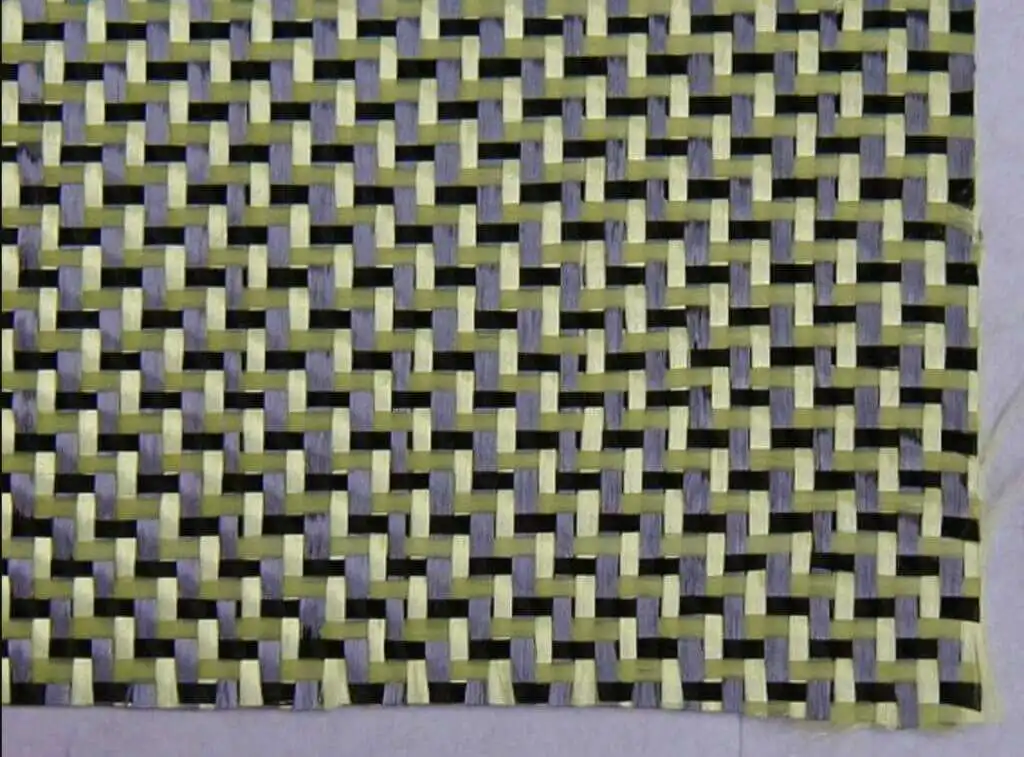
By weaving Kevlar fibers into tight sheets, engineers can produce amazingly tough materials.
The Kevlar sheets used in bullet-resistant vests are tightly woven and must be protected from the sun. Like most synthetic polymers, Kevlar degrades in direct sunlight. Stopping bullets is a function of efficient energy dissipation. In essence, when struck by a bullet Kevlar fibers will stretch without breaking.
So long as the projectile is not unduly powerful and the material is properly oriented, Kevlar did indeed reliably stop bullets, at least the handgun sort. That observation really got the juices flowing.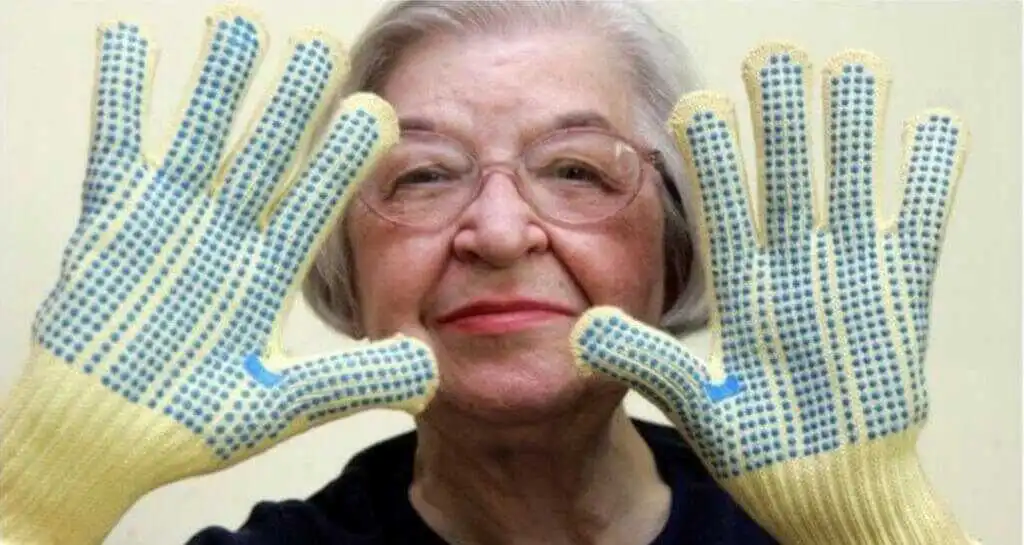
Ropes, cables, cell phone cases, race cars, parachute shroud lines, boats, aircraft, and space vehicles all incorporate Kevlar nowadays. The stuff is legit everywhere. By the time Kwolek died at age ninety in 2014, more than one million Kevlar vests had been produced for issue to Law Enforcement personnel.
A Vested Interest in Survival…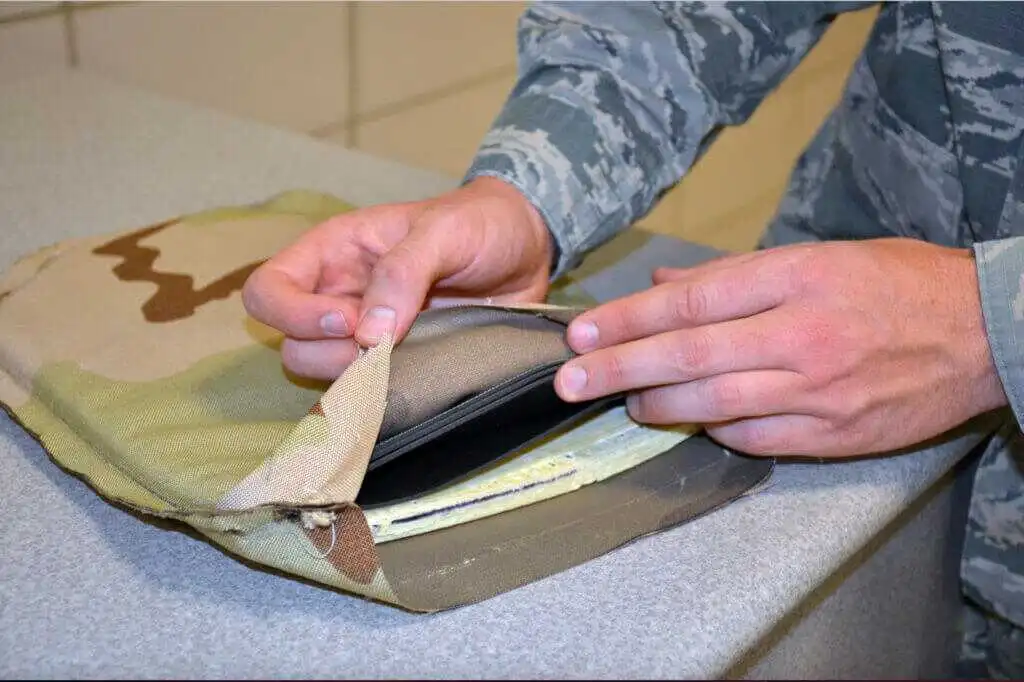
Modern soft body armor is divided into several frankly confusing categories. Level IIA and IIIA are expected to stop most handgun rounds such as 9mm Para, .357 Magnum, and .44 Magnum. In the case of the larger calibers, the bullet will not penetrate, but the violence implicit in surviving such a hit can still cause soft tissue injury.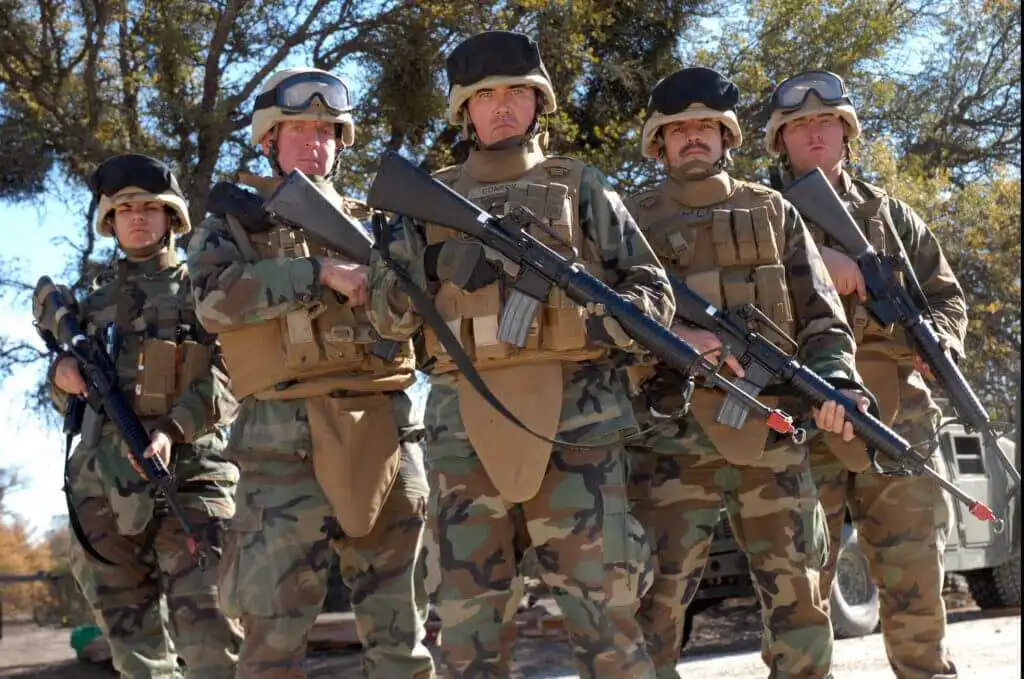
All the cool kids go to war in body armor these days. Those codpieces, while critically important, always look just a wee bit comical.
Level III and IV body armor is rated to stop large-bore, high-velocity projectiles from long guns. As the degree of protection increases, however, the vests typically get heavier and bulkier. When the threat simply becomes too threatening, most soldiers in the Armies of advanced nations as well as tactical teams will use plate armor that is made from either alloyed steel or advanced ceramic materials. Plate armor will reliably stop all but the nastiest armor-piercing rifle rounds.
The Rest of the Kevlar Story
At the time of her death, Stephanie Kwolek held 28 patents. In addition to Kevlar, she was also instrumental in the development of both Nomex and Spandex.
In so doing, Kwolek likely did more to extinguish flaming aviators and support sagging body parts than any scientist before or since. Kwolek’s exotic new materials have become commonplace around the globe.
Because she worked for DuPont, Kwolek relinquished the rights to materials discovered on company time to her employer. As a result, despite the fact that the resulting monetization of her ideas brought in literally billions of dollars, Kwolek herself benefitted minimally from her groundbreaking discoveries. According to Google, her net worth was around $5 million at the time of her death.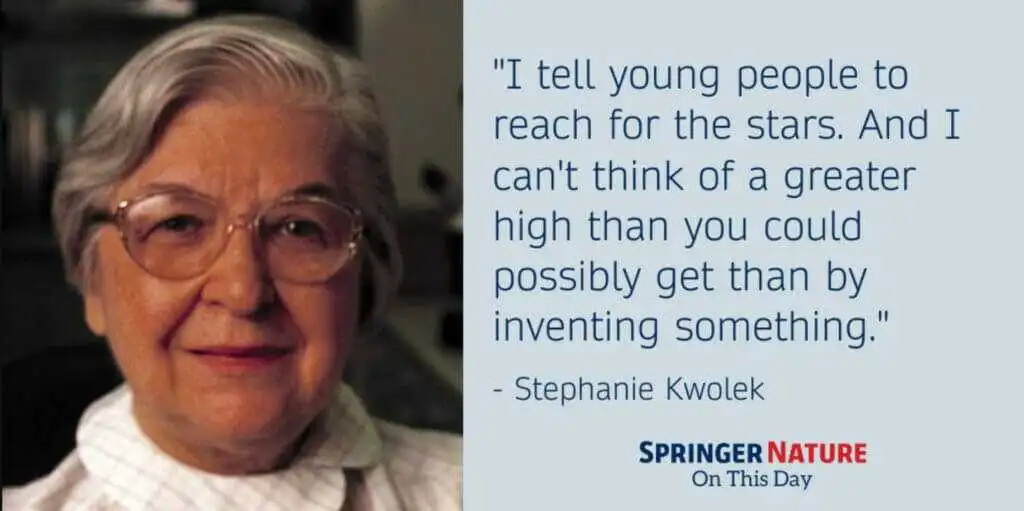
Things End Well For Kwolek
Despite her relatively modest financial success, Kwolek was honored with a wide variety of personal and professional awards. She was ultimately granted a further three honorary degrees as well. By all accounts, she led an exceptionally satisfying life. Here are a few quotes—
“I guess that’s just the life of an inventor: what people do with your ideas takes you totally by surprise.”
“I hope I’m saving lives. There are very few people in their careers that have the opportunity to do something to benefit mankind.”
“Not long ago, I got to meet some troopers whose lives had been saved. They came with their wives, their children, and their parents. It was a very moving occasion.”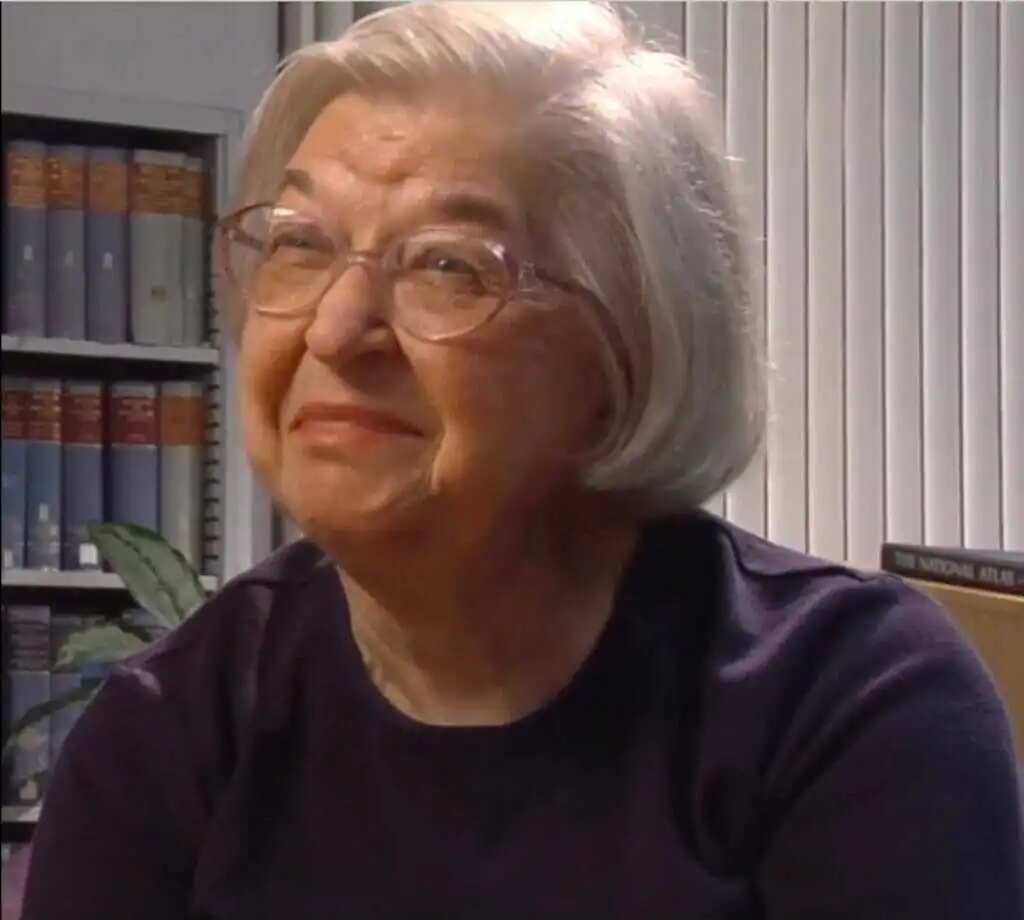
The extraordinary female inventor Stephanie Kwolek clearly found ample satisfaction with her life’s work. Whether it was flame-retardant clothing for military aviators, bullet-resistant vests that have ultimately saved countless cops, or push-up brassieres and bikini swimsuits, Kwolek’s inventions have legitimately changed the world.
It was obviously a pretty great thing that she never followed through on her plans for medical school.