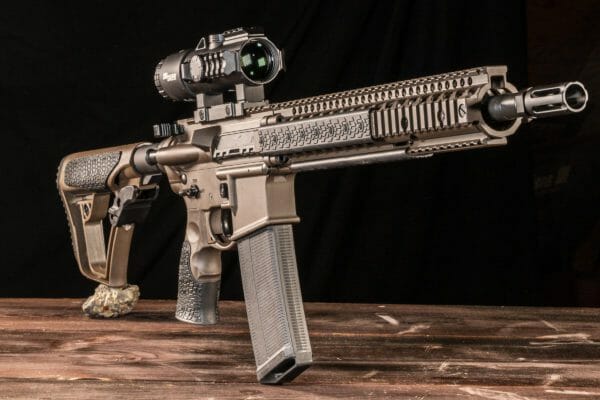
When the young paste-eaters at Michael Bloomberg’s anti-gun propaganda factory, known as the Trace, team up with the stodgy window-lickers at the Gun Violence Archive to produce a story about the utility of the AR-15 platform as a modern self-defense tool, it’s hard not to get too excited.
It’s like watching two freight trains headed toward each other on the same track. You know the results are going to be cataclysmic. None of these halfwits have ever heard a shot fired, much less one fired in anger, or especially one fired to good effect. They know less about what makes a reliable home defense weapon than I do about man-buns, skinny jeans, or avocado toast.
We have debunked the Trace and the Gun Violence Archive so often it’s getting old. The kids at the Trace masquerade as legitimate journalists when, in fact, they’re nothing more than highly paid anti-gun activists. The GVA purports to track gun crimes and maintain a list of mass shootings, but their data is collected from media, and even social media sources, and their stats are so inflated they’d have you believe a mass shooting occurs nearly every time someone draws from a holster. When the two anti-gun nonprofits combine for a story, it’s bound to be something as bereft of facts as it is poorly written, and to that standard, their most recent collaboration does not disappoint.
A story published Tuesday asks: “How Often Are AR-Style Rifles Used for Self-Defense? Supporters of AR-15s, often used in mass shootings and racist attacks, say they’re important for self-defense. Our analysis of Gun Violence Archive data suggests otherwise.”
The story was written by one of the Trace’s senior fabulists, Jennifer Mascia, who is “currently the lead writer of the Ask The Trace series and tracks news developments on the gun beat.” Mascia has also led the Trace’s hilarious we’re journalists, not activists, propaganda campaign on social media.
Mascia claims her story was a response to a reader’s question: “Many gun owners claim to buy assault-style rifles for defense. So how many documented cases are out there where someone actually defended themselves with an assault-style rifle?”
Mascia reportedly searched the GVA’s data for “assault weapon,” which she said the GVA defines as “AR-15, AK-47, and all variants defined by law enforcement.” Of course, there’s no mention of whether the weapons were capable of select-fire and, therefore, actual assault weapons. She started with 190 incidents, which she whittled down for various reasons. The results: “That left 51 incidents over a nine-and-a-half-year span in which legal gun owners brandished or used an AR-style rifle to defend life or property. That averages out to around five per year.”
It is noteworthy that the firearms “expert” whom Mascia found to further beclown herself – who wrote in a CNN story that the AR is the last gun he’d recommend for self-defense – is none other than former Washington D.C. police officer Michael Fanone. He’s the officer who cried a lot before the January 6 Commission – the one with the beard who cried a lot, if that helps jog your memory.
“I’m more familiar with the gun than most people: I own one. And one thing I know for sure is that this weapon doesn’t belong in the hands of the average civilian,” Fanone wrote of the AR platform in the CNN story.
The network must have liked the cut of his jib. Fanone is now a CNN contributor and hawking a new book: “Hold the Line: The Insurrection and One Cop’s Battle for America’s Soul.” (Nancy Pelosi highly recommended it.)
Since he’s so afraid of the AR platform, I can’t help but wonder what weapon Fanone, or for that matter, Mascia, would recommend for home defense. If I had to guess, it probably has two barrels, a wooden stock and exposed hammers.
I’m somewhat familiar with the AR myself, which is why I trust it to defend my hearth and home. It’s light, accurate, and deadly, which is exactly the point, and something we should stop making allowances for.
Despite the exhortations of Bloomberg’s activists or crybaby ex-cops, an AR-15 is exactly what I want when The Bad Man comes a-calling.
About Lee Williams
Lee Williams, who is also known as “The Gun Writer,” is the chief editor of the Second Amendment Foundation’s Investigative Journalism Project. Until recently, he was also an editor for a daily newspaper in Florida. Before becoming an editor, Lee was an investigative reporter at newspapers in three states and a U.S. Territory. Before becoming a journalist, he worked as a police officer. Before becoming a cop, Lee served in the Army. He’s earned more than a dozen national journalism awards as a reporter, and three medals of valor as a cop. Lee is an avid tactical shooter.

Used guns are a great way to shop for a bargain-priced self-defense pistol. As we accept more modern guns with modern features, like rails, optics, and ambidextrous controls, we can find guns that lack those features for a relatively fair price. That’s why we’ve come to the classic carry gun corner to find you an option for a great handgun at a great price.
Before I gush over some quasi-retro firearms, let’s be real here. There are some downsides to these classic carry guns. Most of them are heavier and bigger than modern guns. There is a reason that the P365 was so revolutionary. These older guns are not as efficient.
The biggest downside will come from trying to find a holster. Old guns aren’t typically addressed by modern holster manufacturers. This can limit you significantly in your holster selection. That can make carrying some of these classics a chore or require a custom holster to be made.
All that being said…
Beretta recently revived the 80 series with the 80X, but the classic 80 series are still some classic carry guns. The 80 series is made up of a mix of .22LR, .380 ACP, and .32 ACP handguns. The most popular is the .380 Model, which consists of the 83, 84, 85, and 86 models. These are small, compact firearms but are not pocket pistols. They are incredibly well-made and very easy to shoot.
Their ergonomics are on point and are some of the best examples of what a metal-framed gun can be. They have that Beretta M9 style shape, with much thinner grips that make the gun easier to conceal and more accessible to those with small hands. They are hand-filling guns, and that makes them quite easy to control. Capacity varies between thirteen and seven rounds depending on caliber and design. Beretta made various models in both single and double-stack capacities.
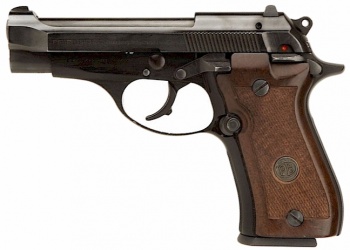
The Beretta 80 Series seem out of date until you start shooting. They are all fairly light recoiling and very easy to control. They don’t beat your hand up like a .380 Pocket pistol and are much easier to control than even a P365 in 9mm. Guns like the Beretta 81 offer a .32 ACP option with very little recoil for those who might be recoil-sensitive. The .22LR options are silly soft to shoot. These are all top-of-the-line classic carry guns.
Beretta makes legendary firearms, and you’d have a hard time finding one that didn’t work well. These guns might be past their prime and seem old school, but they are very easy to handle and fun to shoot. They are more akin to the Shield EZ series, especially the 86 with its tip-up barrel.
The P series might have been the series of firearms that established Ruger as a company that makes tanks for guns. They might be ugly, but they are 100% functional, incredibly reliable, and last forever. The Ruger P series guns are still kicking around and are still quite affordable. I run across these guns for less than 300 dollars all day long, and they still represent self-defense-worthy handguns.
The P series is fairly broad. You can pick from numerous models in various calibers, including 9mm, 40 S&W, and .45 ACP. The P Series lasted from 1985 all the way up to 2013. Over that time, there were tons of variants. The P85 through P944 used investment cast metal frames, and the P95 and beyond used a polymer frame. The modern polymer frame models also feature a rail system.
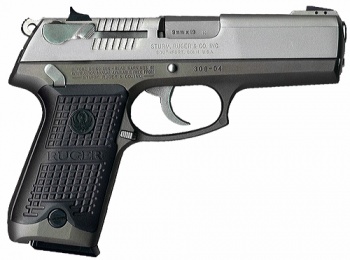
These are pure ’80s guns. They feature the hammer fire design that was popular for the era. The gun has a combined de-cocker and safety that was ambidextrous. They are fairly simple guns but were quite easy to shoot and handle. The guns feature modern capacities and, outside of the .45 ACP, used double-stack magazines.
They aren’t fancy, they aren’t pretty, but they do function well. If you can get past their blocky design and ugly frames, you can have a very capable firearm for very little money. I’d choose a Ruger P series over most modern budget options. If you are looking for a more carry-friendly option, the P94 and P95 offer compact options for a tank-like classic carry gun.
Smith and Wesson produced a number of semi-auto handguns from 1913 onward, and in the late 1980s, they arrived at what is collectively known as the third-generation pistols. These represent the last line of S&W automatics to use all metal frames, DA/SA hammer-fired actions, and a mix of double and single-stack magazines. They were quite popular with police forces and remain a great option these days.
Some are more expensive than others. The S&W 1006 and 1026 in 10mm, for example, are not cheap options. However, the 5906, the various 900 series guns, and even the 4506 tend to be fairly affordable and easy to find. These third-gen guns come in all the big calibers, including 9mm, 45 ACP, 40 S&W, and, of course, the aforementioned 10mm. What’s a gun from the late 80s and early 90s without a 10mm chambering?
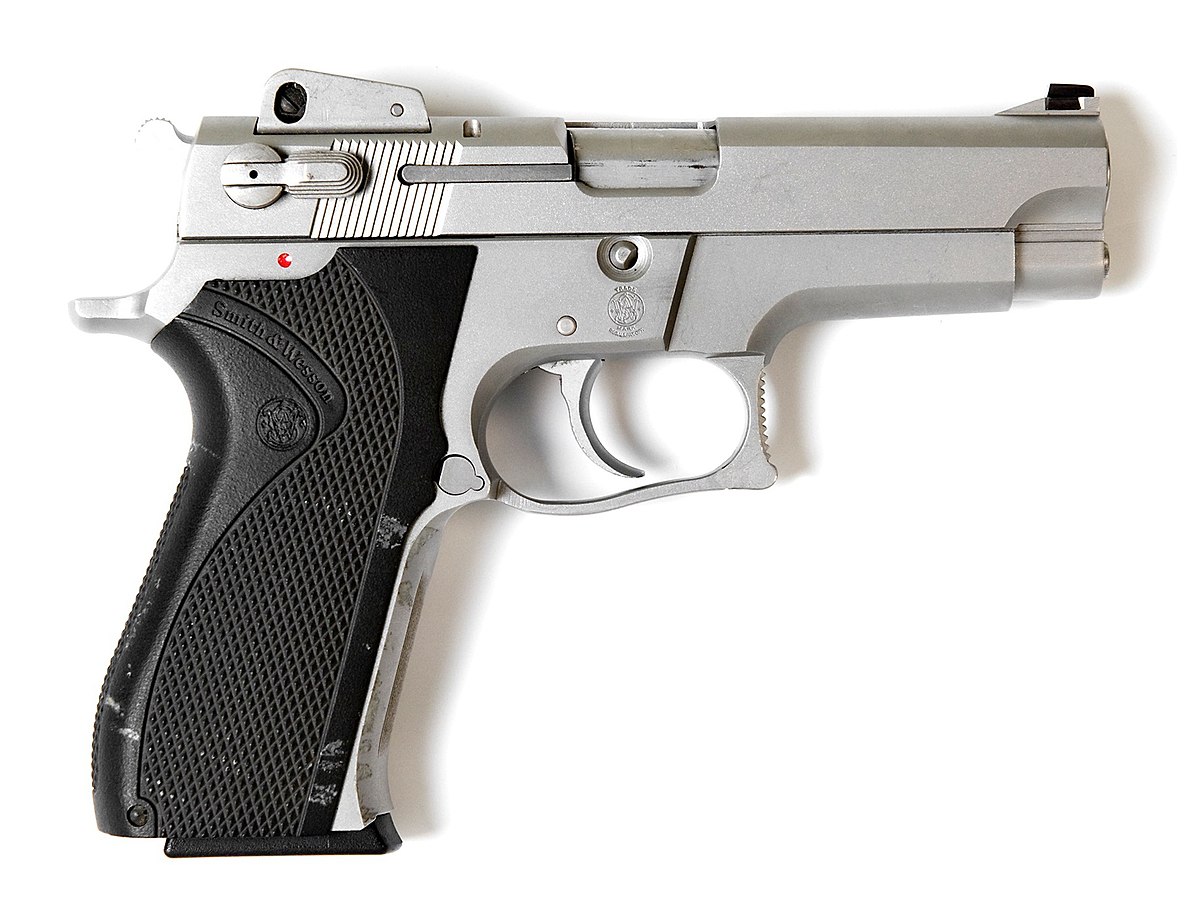
These heavy steel guns might weigh you down a fair bit, but they can still be fantastic classic carry guns and home defense options. S&W produced some small subcompact models, including the various 9mm subcompacts like the 908 and 3914, and basically every model that starts with 39. These are still quite compact, and while unusual in today’s era, they still last for basically ever.
If you find a lack of Picatinny rails disturbing, then the TSW models might be for you. These guns feature a nice metal rail for all the accessories you could ever need, but the TSW models tend to call for a higher price on the used market.
Let’s stick with S&W because they’ve been around a long time, and they have a wide variety of pistols in their lineup. In the late 1990s, it was apparent that polymer-frame, striker-fired guns were going to be the dominant force in firearms. S&W had already tried to produce one in the budget-friendly Sigma series but got sued by Glock. Plus, the Sigma series weren’t duty-ready guns. S&W teamed up with Walther to produce an S&W pistol.
Kind of an S&W pistol, anyway. It’s a Walther P99 with a standard rail. The SW99 and P99 are nearly identical, and the SW99 came in both 9mm and 40 S&W, like the P99, but the SW99 also got the 45 ACP. These polymer frame pistols were a joint effort. Walther made the frames, and S&W made the slides and barrels. Like the P99, these are one of the very few DA/SA guns that are striker-fired. A decocking button sits on the top to instantly toss it back to double action only.
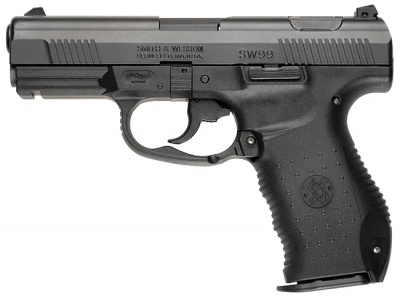
The SW99 trigger is absolutely fantastic. The DAO is super smooth, and while heavy, it glides rearward. The single action is crazy light and absolutely fantastic. It’s a great setup that I wish was a bit more common. I really like the striker-fired DA/SA design. Sadly, the SW99 is one of the very few options out there.
What’s great is that the SW99 remains affordable. Walther fans want P99s, and guns like the P99 compact are fairly tough to find. However, the SW99 compact is easy to find and fairly cheap. These guns use Walther mags, and they tend to be fairly common. This is one of my favorite classic carry guns.
Finally, another great option is the great many Glock police trade-ins out there. Glock pistols dominate the law enforcement market, and with a new generation of Glock getting out there and with competition from SIG, used Glocks are hitting the market hard. Glocks are great guns that last forever and are well-reputed for their durability, reliability, and general effectiveness.
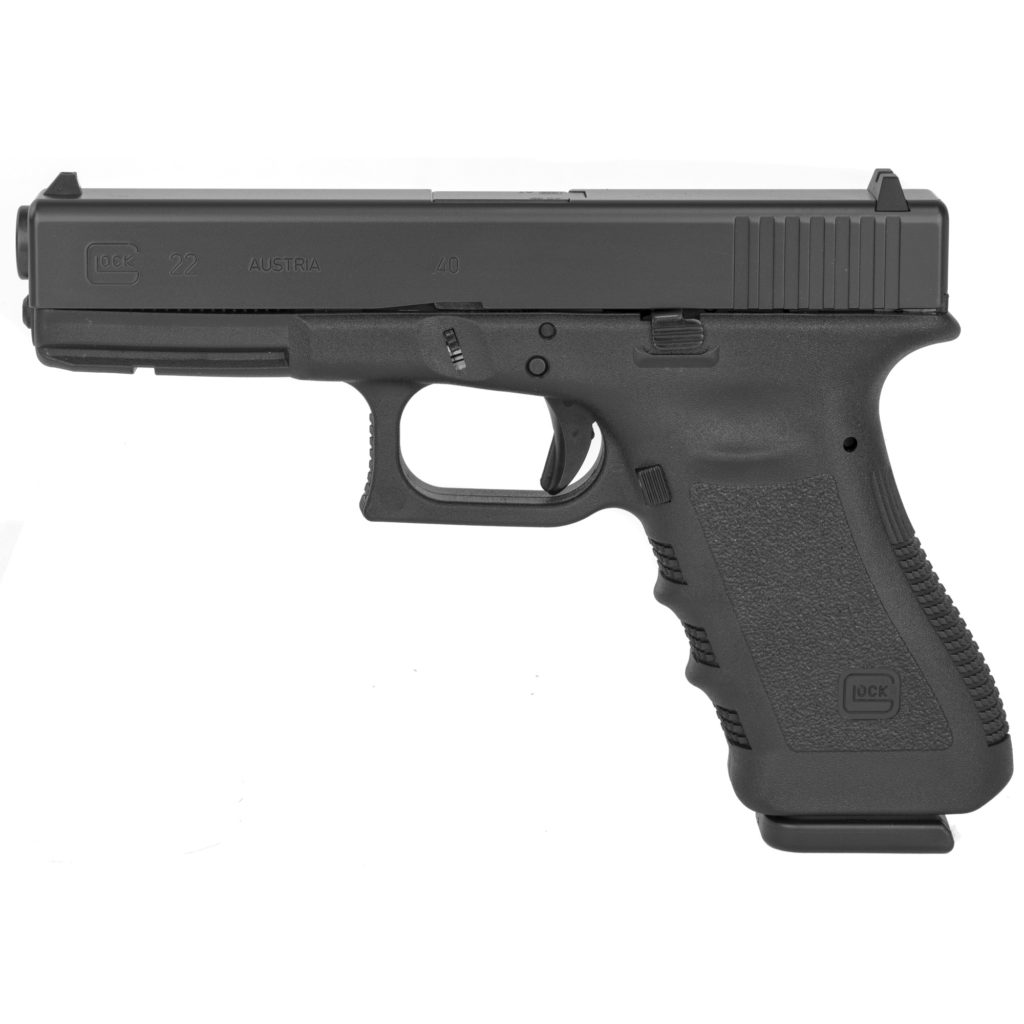
A lot of these Glock pistols are the .40 S&W models that have been traded in for the great 9mm influx. Plenty of Glock 22s are floating around at a great price. Additionally, the Glock 23 and 27 are popular trade-ins. In 40 S&W, these guns can be found for less than 400 dollars. That’s a great price for a very reliable weapon, even if you have to deal with 40 S&W.
With that said, we do see some 9mms coming in and out, and these are great grabs. The desirability of 9mm does create an increased cost, but they are still fairly affordable firearms all around. Glock trade-ins are a great way to get a great handgun for a low price. If you see one, act quickly because they tend to sell fast.
The used gun market is nothing like other used markets. Used cars can be a gamble. Used furniture is for the insane, but used guns are a great choice. When something is wrong, it’s easy to see. Cracks in frames, bad bores, and the like don’t hide easily. Typically, used guns are rarely shot, but they often have a chunk of their price squirreled away.
A used gun allows you to get a great gun at a budget gun’s price. Sure, they might not always have rails, night sights, or be optics ready, but they go bang and do so reliably.