Category: All About Guns
Categories
Finland’s High Power Rig
A STUDY IN SWISS ARMS
Here’s a fun anecdote about the Swiss Army: The story goes that when asked what they would do if invaded by a force twice their size they said, “Shoot twice and go home.” Depending on whom one asks, this conversation took place either just before World War I or just before World War II, but it doesn’t really matter either way. The story was designed to convey an attitude. The Swiss Army is small if you only count the active portion. However, for an invader the Swiss Army is a potential guerrilla nightmare, considering the terrain and the well trained populace amongst whom shooting is a national pastime. Considering the government literally handed out firearms and ammunition to the public, this shouldn’t come as a shock.
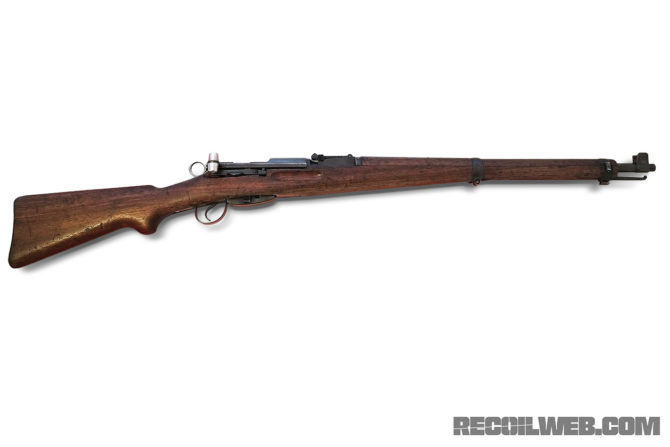
In the event the Swiss needed to call on themselves during the World War II years, the Karabiner 31, or K31, would’ve done most of the work. The K31 stood out among World War II small arms for many reasons, but its most noticeable feature is its straight-pull action. The straight-pull action was certainly not unique among military small arms. Switzerland had extensive experience with straight-pulls, but rifles such as the Ross and Lee Navy, though not widely issued, and now somewhat forgotten, were issued by Canada and the United States Navy respectively.
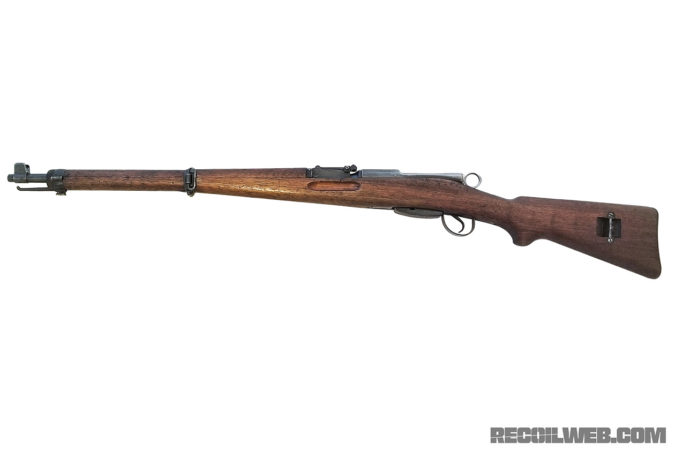
Superbly crafted, the supply of original K31’s has almost completely been swallowed up by the civilian market in the U.S. and Switzerland. The odd-looking hook below the muzzle allows three or more rifles to be stacked, free standing in camp.
Unlike the Ross and Lee Navy, the K31 never saw real action in the hands of the troops to whom it was originally issued. However, there’s no reason to suspect it wouldn’t have performed magnificently had it been called upon to do so.
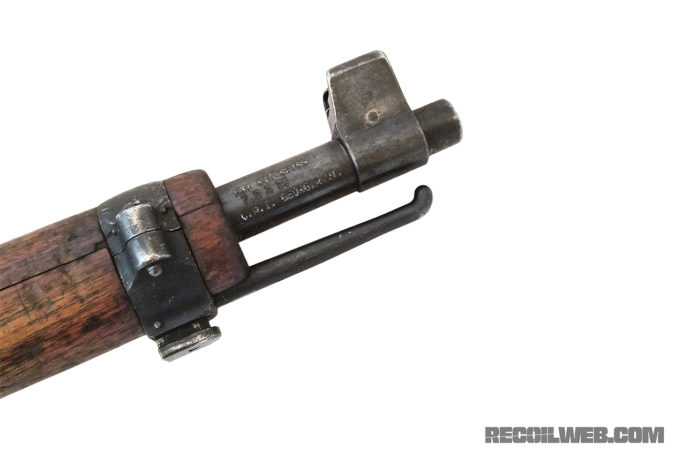
The standard-issue K31 was the last of the Swiss service straight-pulls. The K31 was chambered in 7.5×55 Swiss (GP 11), which was a very modern cartridge for its era with comparable ballistics to the 7.62 NATO round. Fed from interesting six-round stripper clips made of compressed paper and metal, the K31 sported an easily detachable six-round box magazine. Like the SMLE, which also had an easily detachable magazine, spare magazines were more the exception than the rule. The GP11 fired a 174-grain, boat-tailed bullet at about 2,550 fps on average. Generating almost 2,550 foot-pounds of energy, the GP11 clearly stood out for its effectiveness amongst older cartridges still widely in use during World War II, such as the 7.92×57, 7.62x54R, and 7.62×63. Further, in the K31, the GP11 round is actually quite pleasant to shoot.
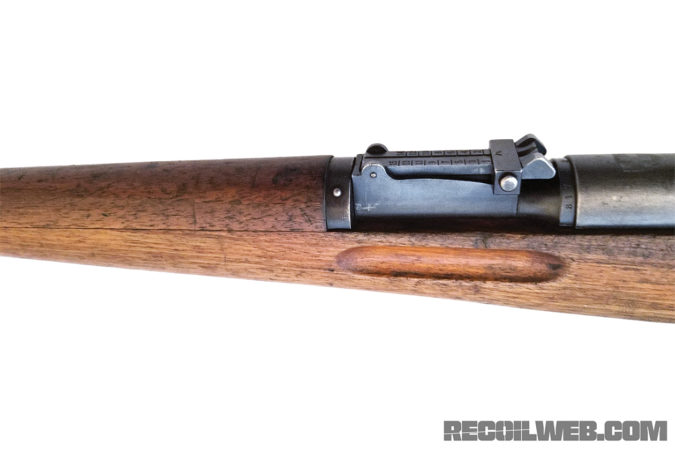
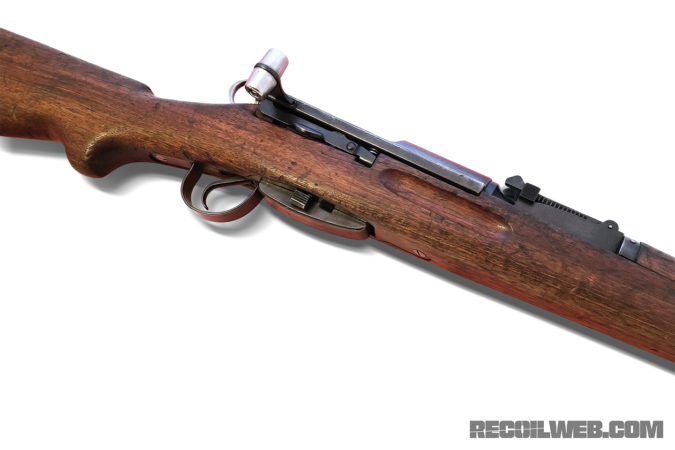
If you’ve never fired a straight-pull, especially a K31, one feature of the action is genuinely going to surprise you the first time you try one; it’s quick. While the straight-pull action isn’t as fast as a semi-automatic, it’s clearly faster and far less awkward than even the notoriously speedy SMLE. The K31 straight-pull bolt is also amazingly slick due to its combination of design and craftsmanship. When trained on the K31, a good shooter can manage a healthy rate of fire of up to 20 rounds of aimed fire per minute.
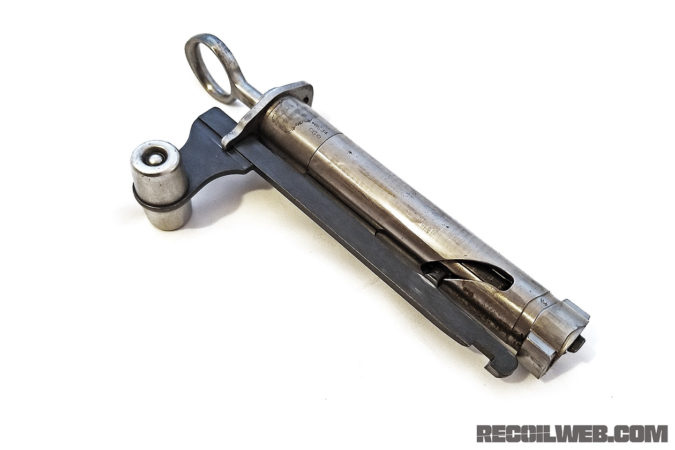
Yanking on the bolt handle rotates the two-lug bolt head via the cam path cut in the bolt body.
Germanic small arms are notoriously well crafted, but for standard-issue weapons, the K31 is a stand-out among them. Compare one to a K98 side-by-side and head-to-head, and you’ll see the difference. As issued, the common K31 demonstrates an unusually high degree of fit and finish, and an unissued K31, especially with a walnut stock, looks more like an extremely unusual, but high-end sporting rifle. It’s a complex rifle with a number of unusual features beyond the intricate clockwork bolt, including the barrel installation system that requires specific training and knowledge. There are but a handful of gunsmiths in the United States who will install new barrels on a K31. To offer an idea of how well made these rifles are, it has been estimated that the production cost alone of a standard K31 would approach $2,500 per unit if made today.
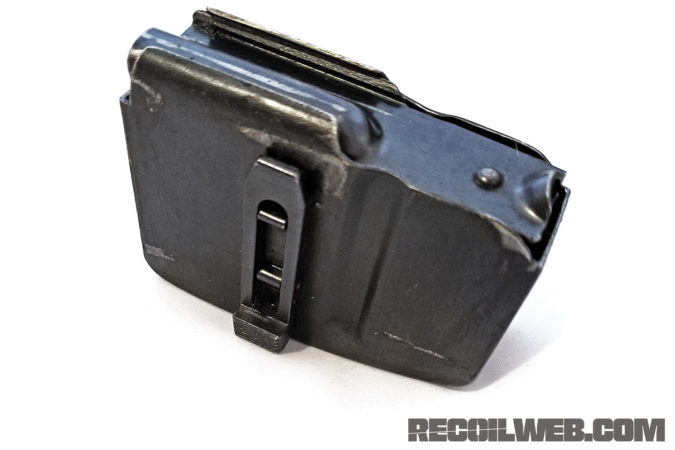
Performance on the range is also exemplary. While the effective range of the K31 chambered in 7.5 Swiss is often cited in the 600m range, in reality, it’s effective up to 800m with little difficulty and beyond that with tuned rifles and match or handloaded ammunition. It’s popular in vintage rifle matches here in the U.S., and it’s widely popular in other countries as well, but again, this isn’t surprising due to its quality, craftsmanship, and effectiveness. Surplus ammunition is getting harder to find and more expensive than it once was, which is a shame. Most of the GP11 imported into the U.S. was made by RUAG, and even the common ball ammunition approached match standards. Handloading components are now easy to acquire in the U.S., and if you have enough patience, time, and money to invest in Berdan reloading components, the Swiss GP11 brass is very high quality and lends itself to reloading.
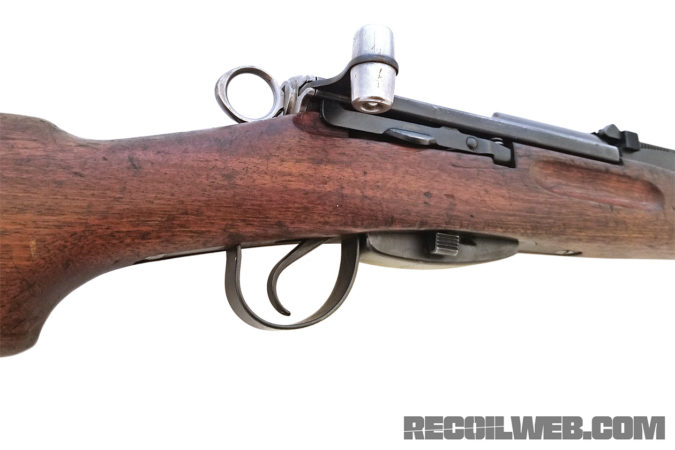
There are more exotic variants of the K31 out there if you want to look. There are a couple of sniper models and a number of match-tuned rifles out there as well. Accessories are sometimes challenging to find, and expensive, but generally as well made as the rifles.
One last note: When (you want one even if you don’t know it yet) you buy a K31, look under the buttplate. Swiss soldiers often put their name and information on a slip of paper and secured it there. Some of them are still living, and occasionally have been known to respond to communication about their rifles.
K31
Caliber: 7.5×55 Swiss
Overall length: 43 inches
Barrel length: 25.6 inches
Weight (unloaded): 8.8 pounds
Magazine capacity: 6 rounds (standard)
Effective Range: 600 M+
Categories
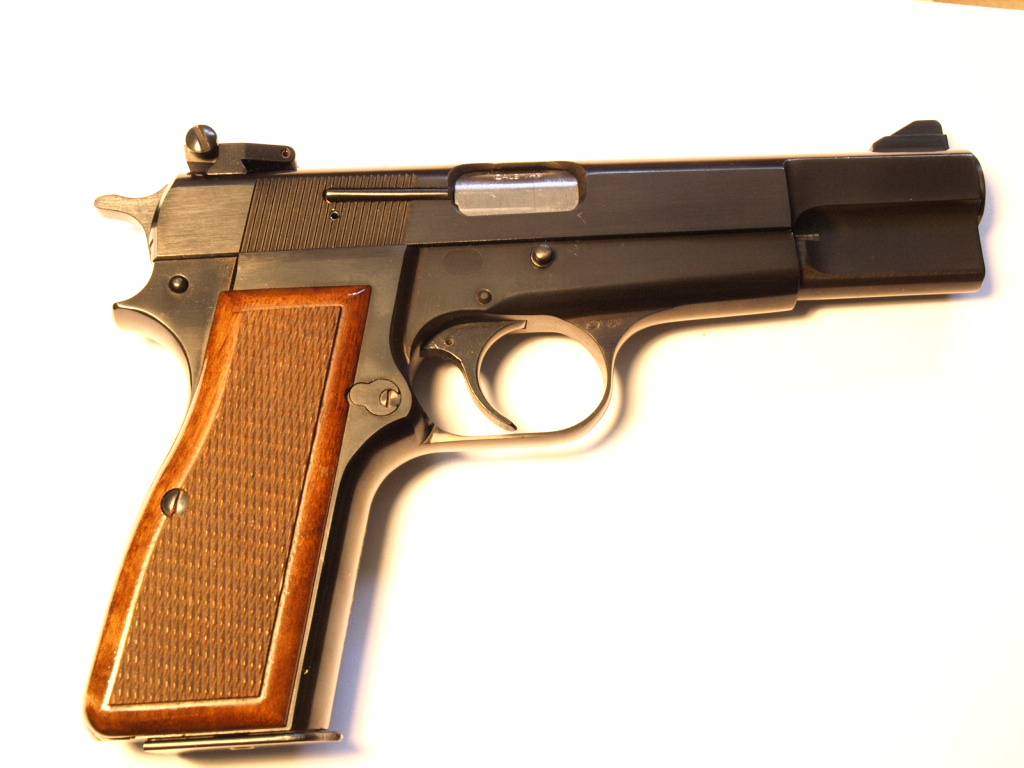
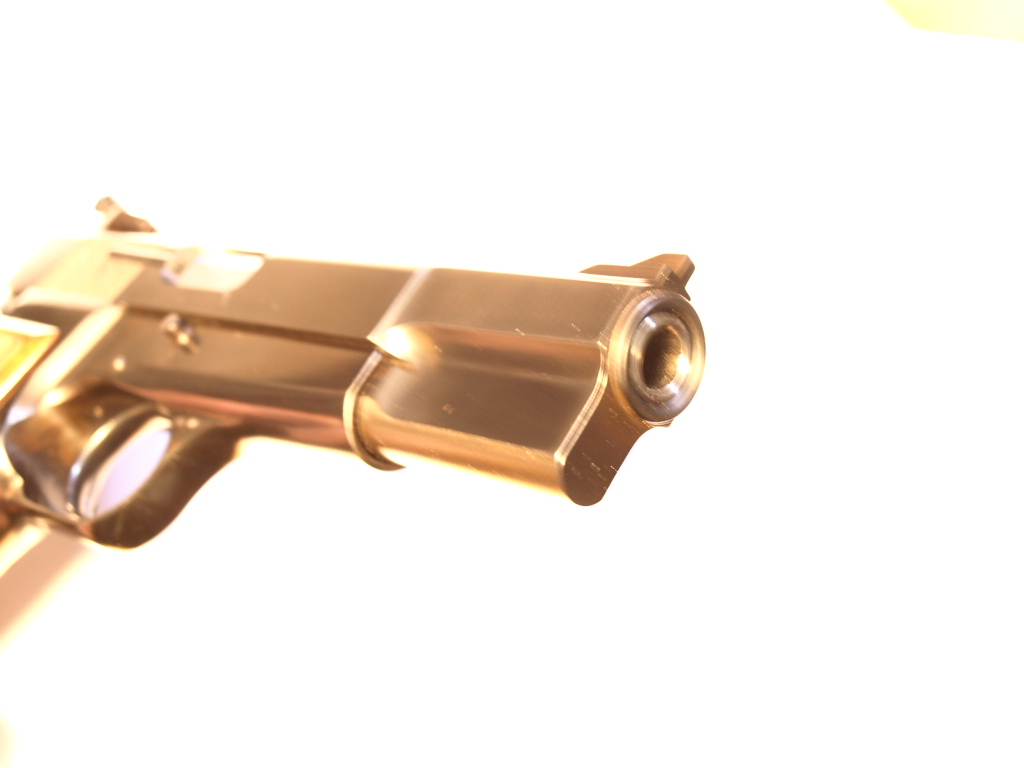
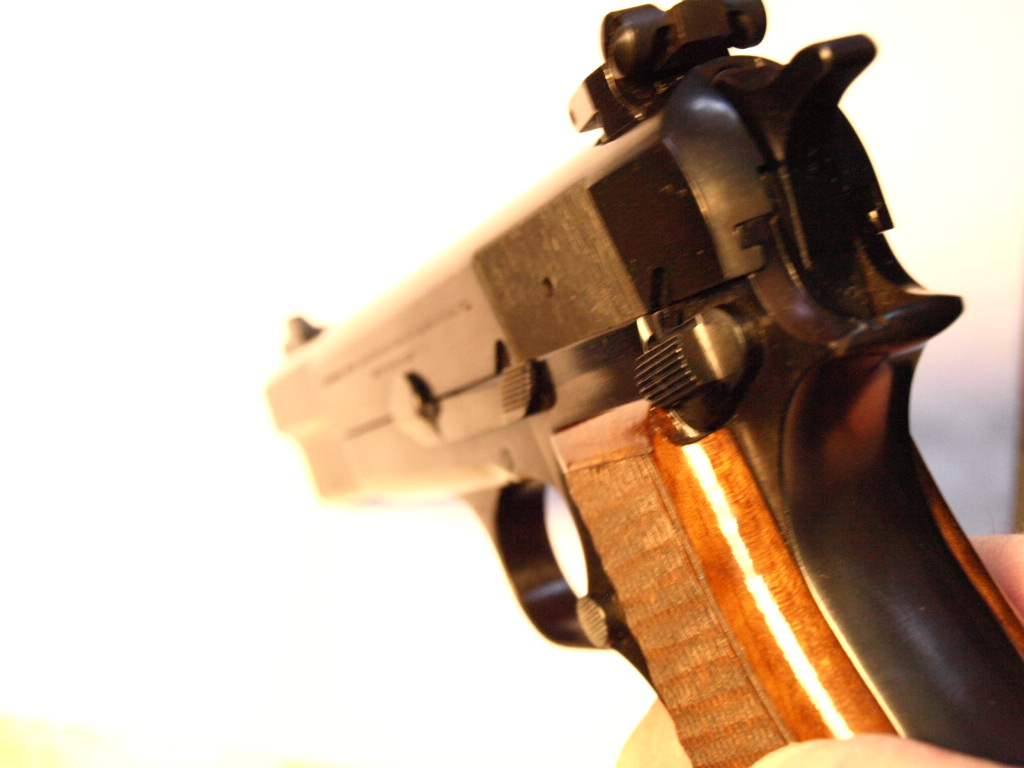
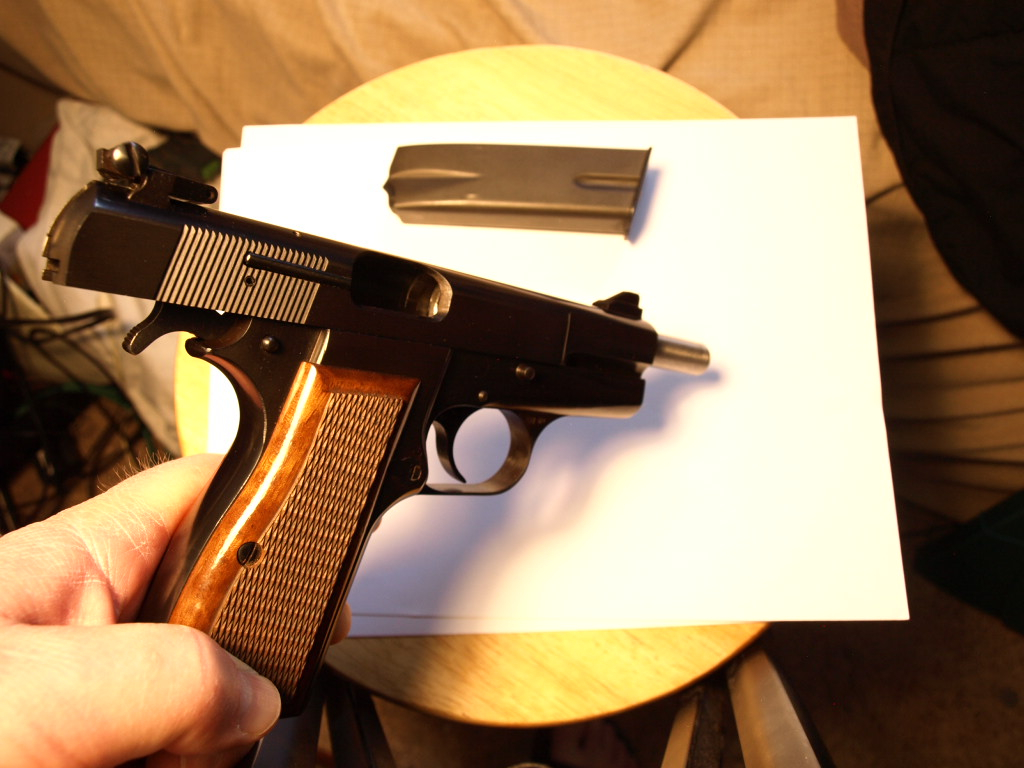
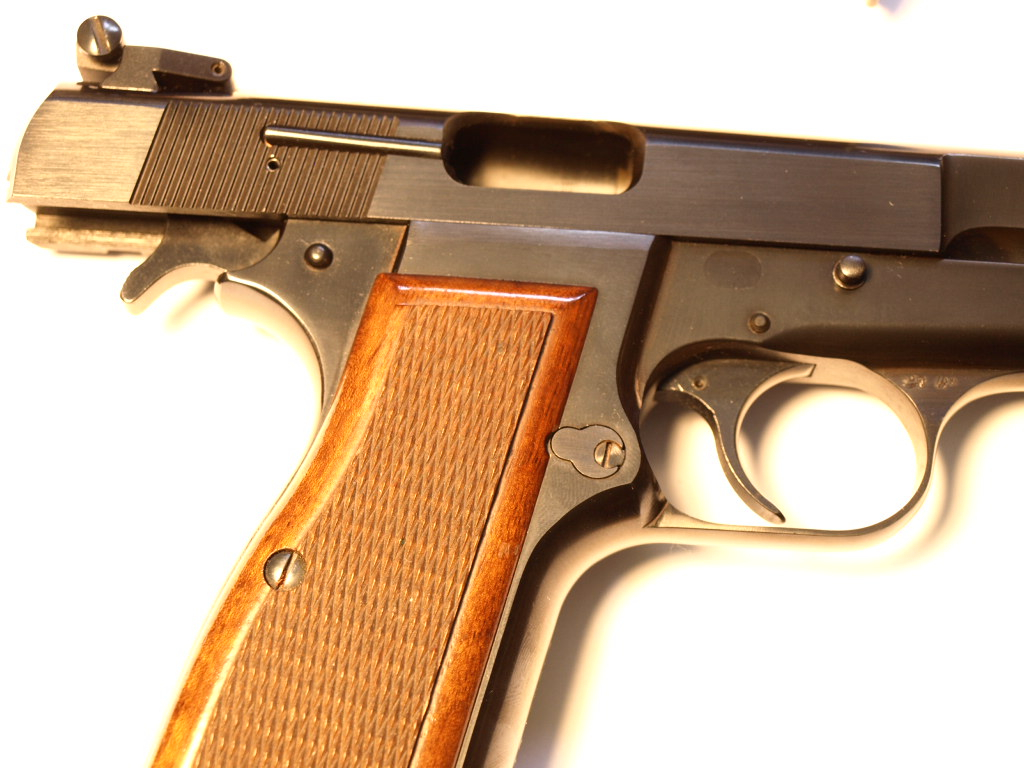
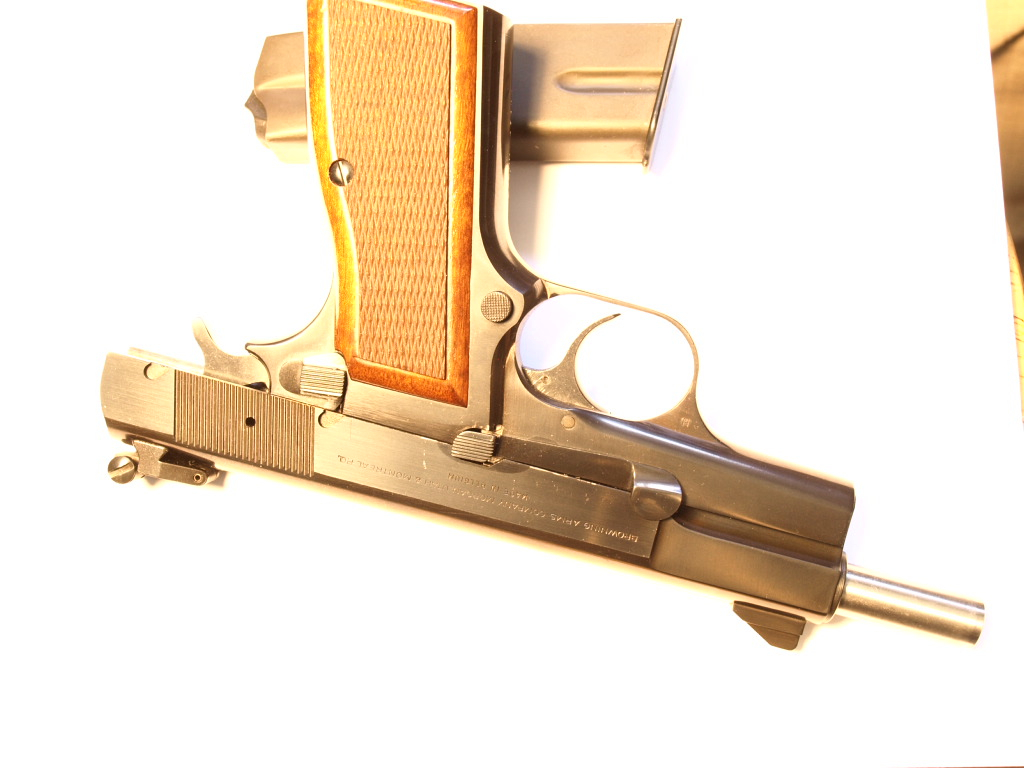
A Browning HI POWER 9mm Luger
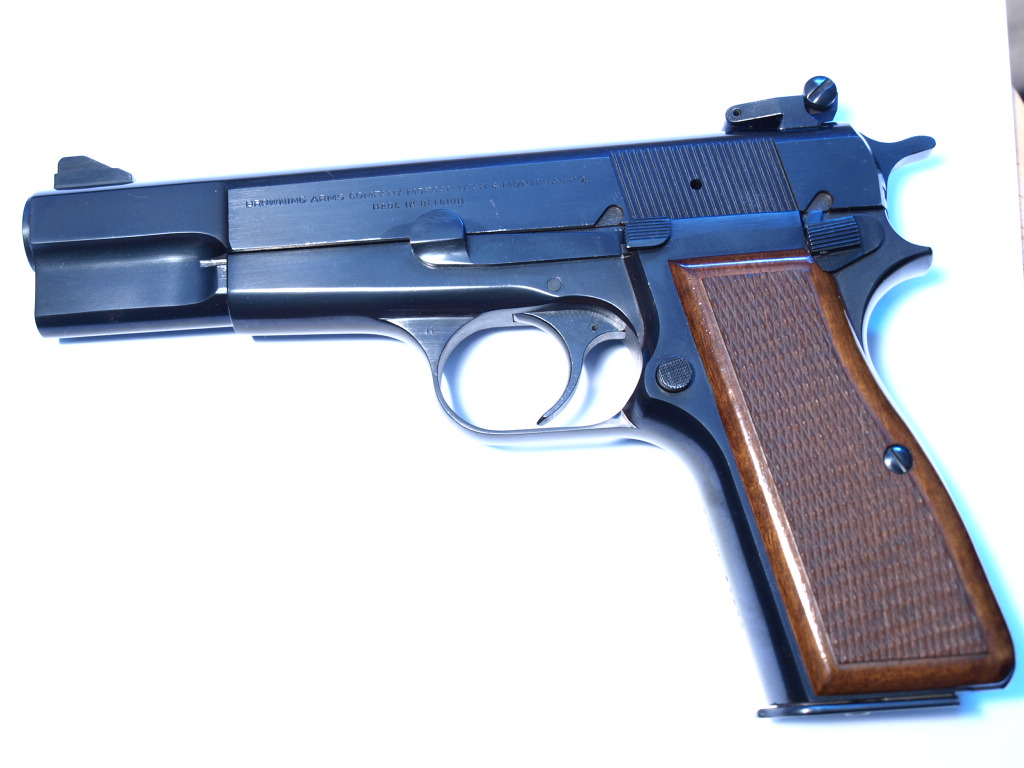
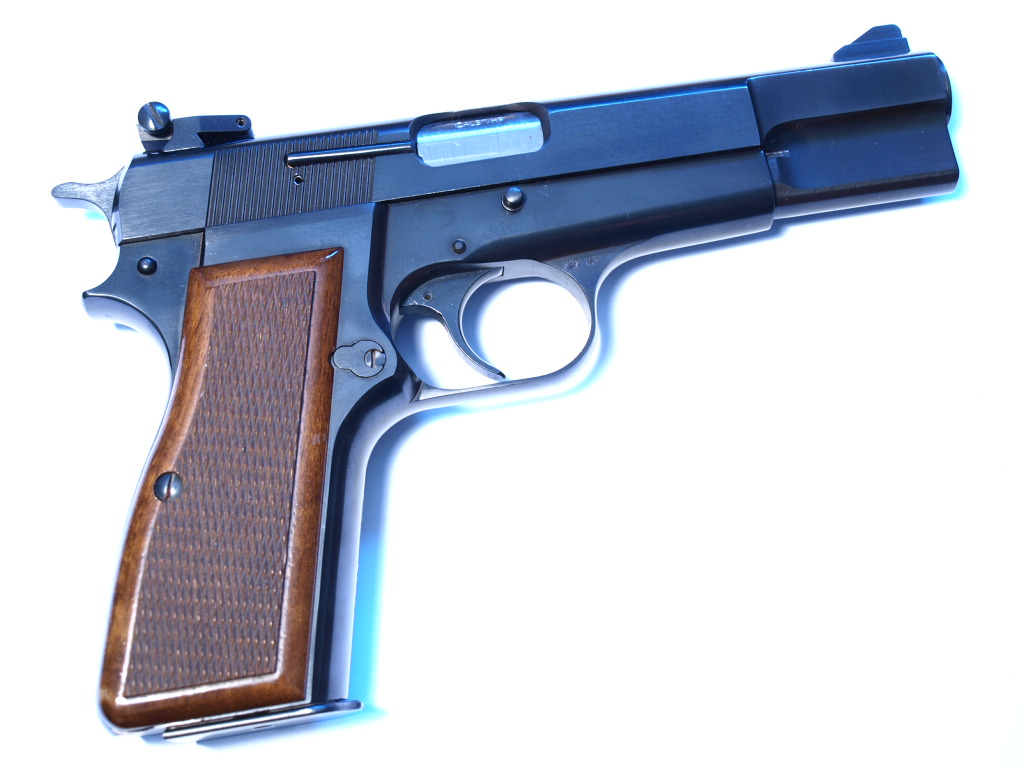
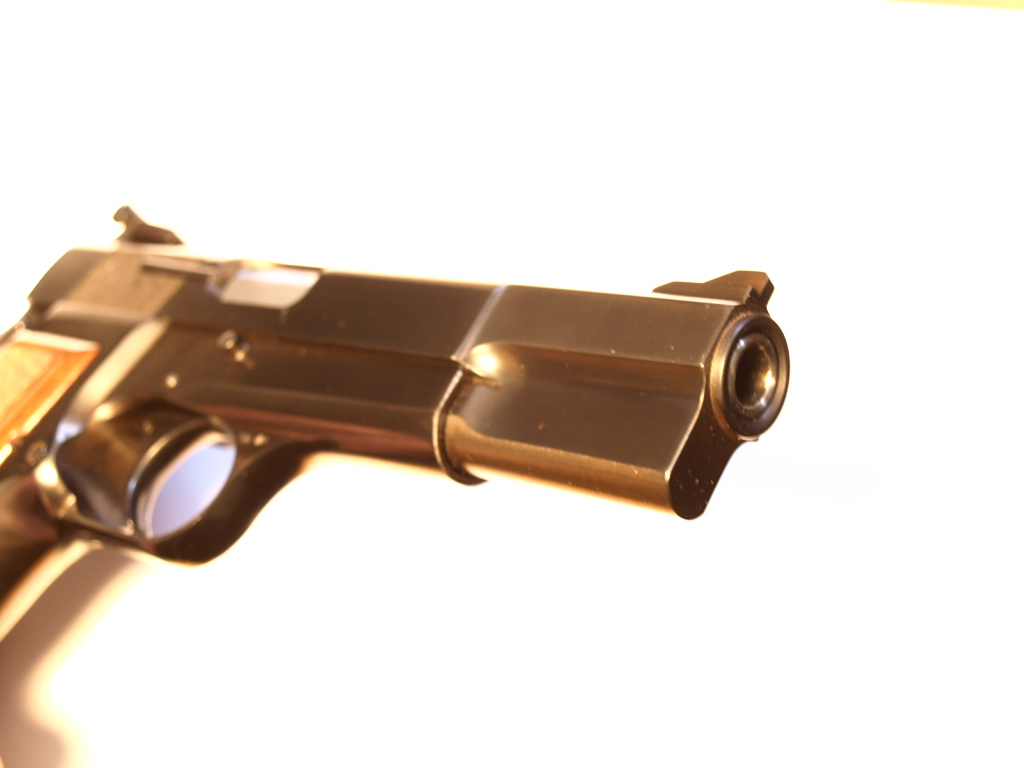
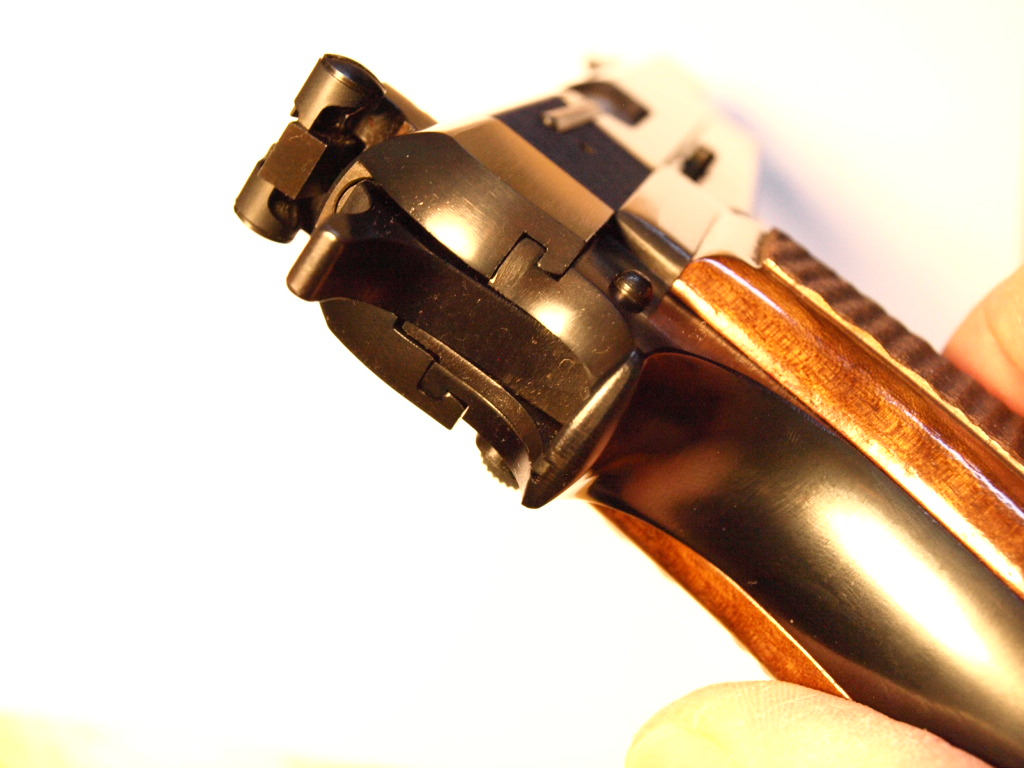
Categories
M777 is Dead On!
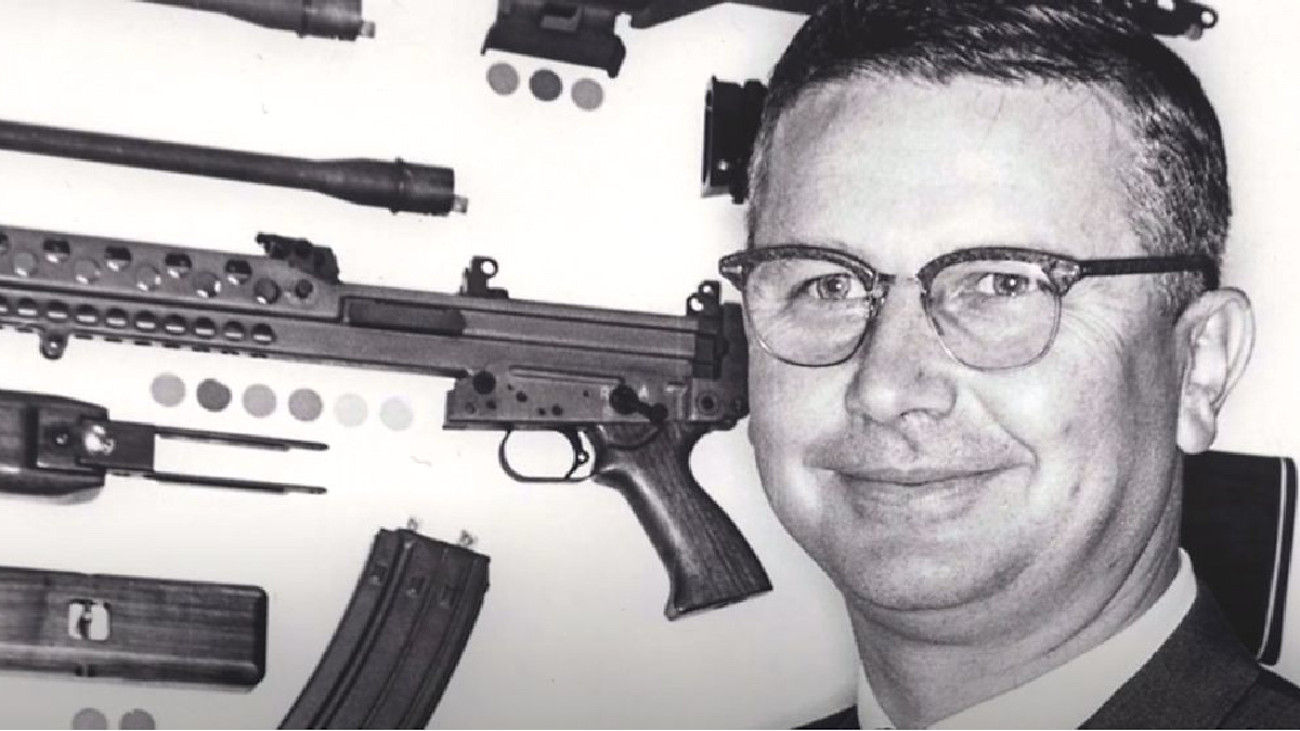
Eugene Stoner is one of the most influential firearm designers of all time. While he was not as prolific as John Moses Browning, Stoner’s inventions were a dramatic departure from traditional gun design in the post-WWII years, and they drastically changed the entire course of firearm design in the latter half of the 20th century.
Stoner is best known for the AR rifle platform that he developed in the 1950s while working for ArmaLite. The rifle was revolutionary not only for its modularity and simplicity, but also because it incorporated modern materials that Stoner used in the aircraft industry—materials that had never before been seen in firearms.
When guns were still made of wood and steel, Stoner built his two-part AR receivers from lightweight aluminum alloys. The furniture on his new in-line rifles was weather-resistant fiberglass and later polymer, colored brown, green, or black instead of being shaped from moisture-absorbing walnut.
The AR-10 chambered in .308 Win. came first. Stoner then downsized it to accommodate the new .223 Rem. cartridge and the military’s correspondingly new philosophy of using small caliber, high velocity ammo over larger calibers like the old .30-06. The result was the AR-15, which would become the military’s M16 rifle. It is still in service today as the M16A4, making it the longest serving rifle in U.S. military history by far.
Over the next 60 years, the modular design of the AR-10 and AR-15 would become the basis for an array of modern firearms now used for military and law enforcement applications, hunting, competition shooting, long-range shooting, plinking, and home- and self-defense.
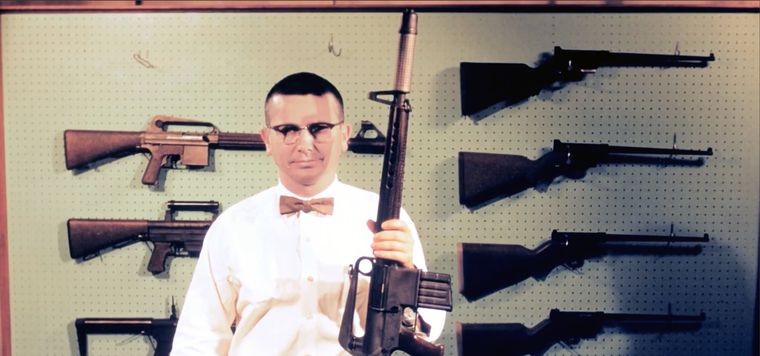
Stoner’s Early Years Colt acquired the proprietary rights to the AR-15 in 1959 from ArmaLite’s parent company, and Stoner soon followed leaving ArmaLite for Colt in 1961. There he worked on a number of projects, primarily the Stoner 63 machine gun system.
A decade later, Stoner left Colt and co-founded Ares Inc., where he worked on various machine gun projects and the Future Assault Rifle Concept (FARC). In 1989, he left Ares and joined Knight’s Armament Company a year later.
He continued working on machine-gun designs at KA and also developed the SR-25 rifle, an improved version of the AR-10 that was built for accuracy. The rifle would become the Mark 11 Mod 0 Sniper Weapon System used by U.S. Navy SEALs.
Sidearm Upgrades for Law Enforcement In the early ’90s, law enforcement was regularly finding itself outgunned in metro areas where gang violence was high. At this time, many local and state police officers, as well as federal agents, were still carrying .38 Special revolvers.
Departments that could afford to do so began transitioning to semi-automatic 9mm pistols. In 1985, the U.S. military adopted the 9mm M9 pistol, known to the civilian world as the Beretta 92FS. A number of police departments, like the LAPD, soon followed.
While some departments and agencies adopted modern semi-autos like the SIG Sauer P226 and P229, others chose the Glock 17 or 19. Understandably, Colt wanted a piece of the sales from police departments updating their arsenals and saw an opportunity to get ahead of the technological curve in the handgun world.
A Happy Coincidence While Colt launched the Double Eagle pistol series in 1989 (a double-action version of the 1911), the storied gunmaker wanted something to compete directly against Glock: a high-tech 9mm with a polymer frame.
Coincidentally, around that time, Stoner and C. Reed Knight at KA had designed a prototype intended to be a versatile, rugged, and lightweight compact handgun.
What they came up with was solid. Colt saw a gun they thought could be molded into what they wanted to bring to market. KA sold the production rights for Stoner and Knight’s design to Colt, who proceeded to transform it into the Colt All American Model 2000 pistol.
Word spread that this would be a revolutionary new firearm redefining how people thought about American-made semi-auto handguns. Colt put a lot of cash behind a huge, far-reaching ad blitz before the Model 2000’s formal introduction at SHOT Show 1990. It was supposed to be the gun that would carry Colt into a new millennium.
Instead, the Model 2000 wound up being one of the most hated modern handguns ever. It was an absolute and utter failure.
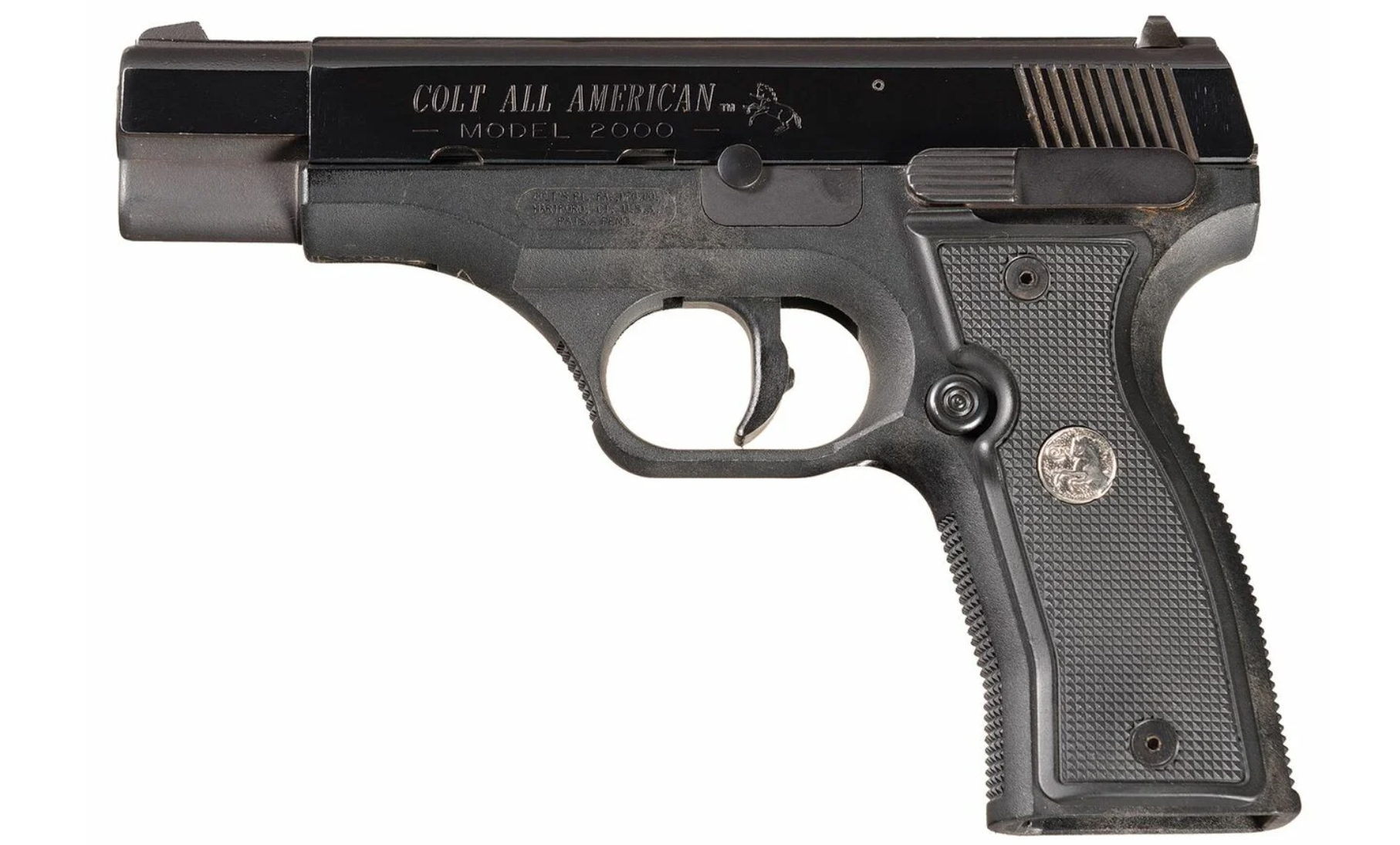
The Design The Stoner/Knight prototype was an interesting gun that used a rotating barrel and five locking lugs instead of a tilting Browning-type design. It also had an interesting trigger, which we’ll get to later.
Once the gun left Stoner and Knight’s hands, Colt’s engineers started changing things. The gun that went into production was a lot different from the KA prototype.
On paper, the Model 2000 was pretty close to what we expect from a 9mm pistol. Even today, some features were a little ahead of their time.
It was striker fired instead of being a DA/SA or DA-only design, something pretty much only Glock was producing at the time, and what likely drew Colt to the prototype.
The gun Stoner and Knight built had a steel frame and a single-stack magazine, which became a polymer frame and a double-stack 15-round magazine. It had the same capacity as the Beretta 92FS. The Model 2000 would also be offered with an aluminum-alloy frame.
The 2000 was easier to field strip than the Beretta or the Glock 17 for that matter. Once the slide was removed, the two-piece trigger assembly could simply be lifted out of the frame, foreshadowing the modular design of the SIG Sauer P320 and its fire control unit.
The trigger mechanism on the Model 2000 that Stoner and Knight came up with was certainly unique. It used a patented roller bearing system to create a trigger that didn’t hinge, but instead pulled straight back into the frame of the gun. This created a somewhat long, but extremely smooth, trigger pull.
Where It Went Off the Rails That all sounds great, so what the hell went wrong?
Well, a number of things which were all the result of Colt’s re-engineering and production methods. In order to make the Model 2000 marketable as a duty pistol, Colt lengthened the barrel and also added length to the grip, making the pistol larger overall.
The prototype gun had a one-piece slide, but Colt’s longer slide was actually two pieces. The narrow front piece acted like a large barrel bushing that was removed when the gun was disassembled. Astonishingly, the gun’s front sight was mounted on this removable part, and that’s bad for accuracy.
The Model 2000’s trigger was, by far, its biggest problem. The original specs called for a 6-pound trigger pull weight, which is a little heavy but totally acceptable on a duty gun. For the production gun, Colt increased the pull weight to a knuckle-battering 12 pounds on the recommendation of the company’s liability attorneys. Combined with the long pull of the gun’s odd trigger mechanism and an equally lengthy reset, the Model 2000 was exceptionally difficult to shoot accurately or quickly. That’s a problem for law enforcement.If the pistol had functioned well, it may have been possible to overlook its aesthetics—which is why people assumedly buy Hi-Point pistols. But since the Colt 2000 was an absolute horror to shoot, people came down on its looks hard, and deservedly so.
The thing was objectively hideous. The muzzle end looked like it came off an old Browning Hi-Power pistol, while the grip and frame are a cross between Beretta and FN frames of the era, with a generic and bulky steel slide on top. It looked awkward and by all accounts, didn’t feel much better.
The Model 2000 also suffered from reliability issues as well as accuracy issues—even beyond what a heavy trigger caused. In short, the gun was a damn mess.
The way Colt built the All American 2000 is partially to blame for its shoddy construction. Colt contracted the creation of the gun’s parts to an outside vendor instead of creating them in house. The components were then assembled in Colt’s West Hartford factory. That’s right, Colt took a gun they didn’t design, tweaked it to meet a set of specs, farmed out its production, and then slapped it together for sale with the Colt Pony Logo on it. What could go wrong? Pretty much everything.
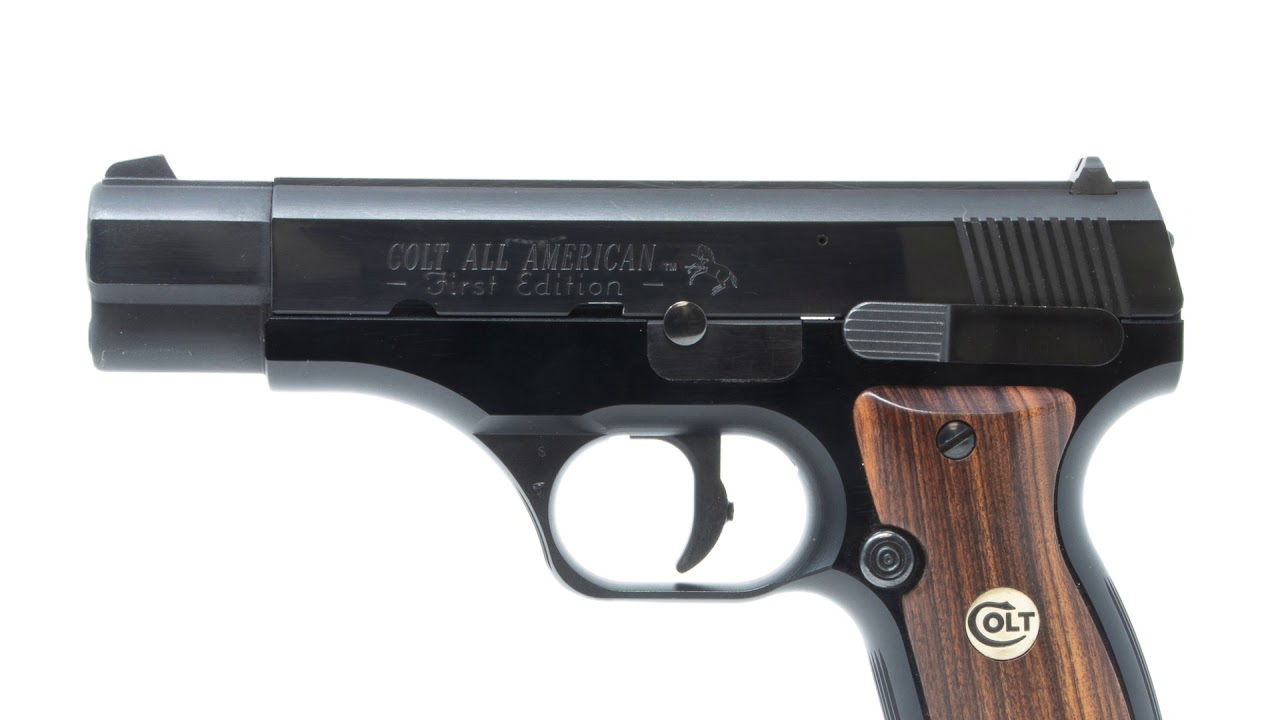
It didn’t take long for word about Colt’s new gun to get around. Sales following the gun’s release in 1991 were terrible and never picked up. The Model 2000’s short life ended in a death rattle when it was recalled in 1993 for safety issues.
By 1994, it was all over. Colt ceased production and the Model 2000 went down among the worst failures in the gunmaker’s long history. The Double Eagle pistol line got some traction for being one of the few guns at the time offered in 10mm Auto, but it too proved to be a failed enterprise. Things were getting rocky for Colt at that point.
Sadly, it was also the final major firearm design from Eugene Stoner before he passed away April 24, 1997. The Model 2000 was a lousy final entry for one of the world’s greatest gun designers and inventors, and its failures weren’t even his fault.