Categories
All About Guns Allies War

British Sten Submachine Gun – Shooting Review

Categories
All About Guns

EM2 Rifle: Britain vs. America Round 3 by Ashley Hlebinsky

EM2 Rifle Cover

Years ago, when I was still an assistant curator, I gave a vault tour to the Outdoor Channel’s Gun Stories production crew. When I opened one of the vault doors, they got incredibly excited to see a firearm about which I knew very little — a firearm that’s rare in the United States and one that has developed a cult following — the British EM2 Rifle.

This selective-fire bullpup rifle went head to head during the NATO Trials (1950s) with the guns that would become the U.S. M14 and the FN FAL. While I’ve discussed the unique technological developments that stemmed from this time period in previous articles, especially in terms of experiments with actual space age materials and concepts, one thing I haven’t touched on was the impact of the North Atlantic Treaty Organization (NATO).

In 1949, NATO was established by the U.S., Canada, and other European countries. The goal was to create a transatlantic security alliance to protect against the Soviet Union. This agreement was intended as a reciprocal one in which economically stable countries could help reinvigorate others destroyed by World War II and in turn create a united front to protect the world from encroaching communism.
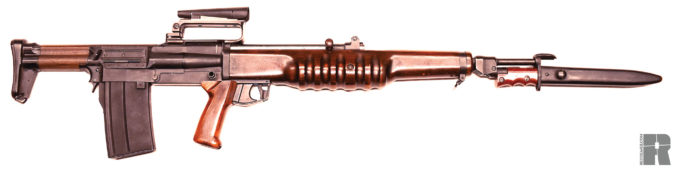
EM2 Rifle

While I won’t get into all the nitty-gritty details and arguments about the pros and cons of the agreement, I will confirm that it influenced the adoption of military technology across the allied countries. As a result, some technological inventions during this time frame were tested, but many were tested in search of standardizing rifles and cartridges.

Several of these inventions were created to meet a need for the government, such as the .280 intermediate cartridge — the caliber in most EM2 type rifles — but not widely adopted. While the EM2 type rifles have developed quite a following as an infallible firearm and caliber combo and therefore was purely eliminated due to NATO and American bias against their cartridge, it wasn’t without fault.

This article will explore a bit of the EM2 type history. However, the entire history with a detailed summation of the technology, accoutrements, trials, as well as success and failures behind these bullpups will be published in a book by Jonathan S. Ferguson, Keeper of Firearms and Artillery for the Royal Armouries in Leeds, so I won’t spoil all the fantastic details. I’m grateful though that Ferguson provided me a preview into this fascinating history — one that is full of what ifs, colloquial perception, and politics.

TRY SPELLING THAT NAME ON A STARBUCKS CUP

Kazimierz Stefan Januszewski, a Polish immigrant, was a prisoner of war in Hungary who escaped to Britain by way of Italy and France. There’s speculation on his career in Poland; he was a part of the Polish Army and some believe worked in the Radom Factory before 1939. Once in England, he played a pivotal role in the design of weaponry technology for the military.
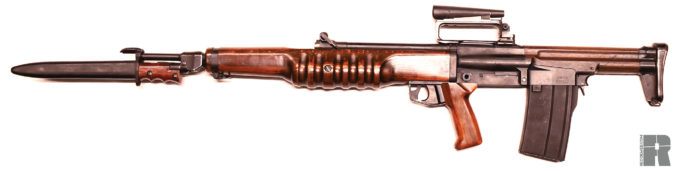
EM2 Rifle

Januszewski became a British citizen in 1947. He was a commissioned officer in Poland during the war and retained his rank as Captain in England. In 1950, he changed his name to Stefan Kenneth Janson, which was probably a smart move because no one in the history of America’s Ellis Island was going to spell that name correctly. He worked in Britain in the Armament Design Establishment until he left for the U.S. in 1953 to work for Winchester, notably for the U.S. Government’s Project SALVO.

During his time with Winchester, where he’d finish out his career and retire in 1974, he served as the Head of Engineering of the Arms Research and Development Department and ultimately Director of Arms Product Research. He oversaw the production of many civilian arms as well, including the Winchester Models 190, 255, 1200, and 1400 firearms.

However, you didn’t come here to read about the commercial shotguns he made for Winchester. Most people are a little more interested in his work with Britain’s Infantry Personal Weapon Program — which would lead to his development of the EM2 rifle.

EM2 TYPE RIFLE PROGRAM

While bullpups had been around for a while, the EM2 was one of the first bullpup service rifles adopted by any nation, albeit temporarily. It did receive a military designation following acceptance by the Brits and was known as: Rifle, 7mm, No.9 MK.1.

EM2 type rifles weren’t widely adopted by other NATO members, and the 7.62 NATO cartridge ultimately won out with the adoption of an FN FAL variant in the UK (the L1A1 Rifle, Self Loading), and the M14 in the U.S.
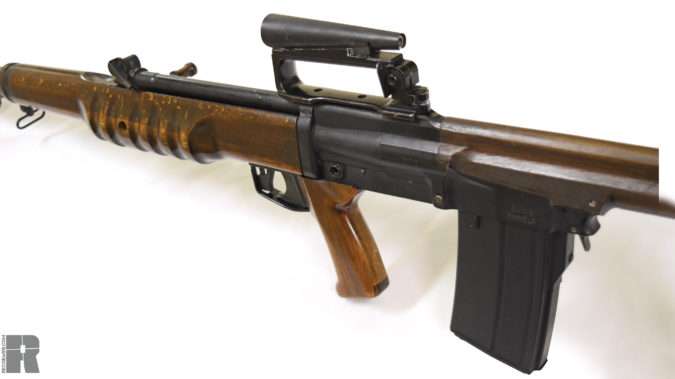
The Unit sight: a 1x optic with an etched reticle. It was unusual to see an optic mounted to a standard infantry rifle until the 1980s, so, in this way, the EM2 was ahead of its time. 

Many fans of the EM2 believe purely American politics are to blame for the rejection of the rifle. While the U.S. and the adoption of the NATO cartridge did play a role, it was in large part Winston Churchill’s decision to ax it. In fact, Ferguson’s research shows that the reasons for leaving the EM2 type rifles behind in history is far more nuanced than some realize. While the firearm did well in testing, in fact better in some trials than the FAL, it had pragmatic and practical issues.

Now, I keep writing “EM2 type rifles” and that’s because it’s more of a colloquialism for a series of similar rifles used in testing. The name was used in early prototypes, so it stuck. The predecessors to the EM2 were multiple EM-1s, including the Korsac and Thorpe design. Although, Janson’s first prototype, code named MAMBA, was introduced on May 27, 1947, at the same time as Thorpe’s EM-1.

There were many similarities between these prototypes. They were bullpups, meaning the pistol grip and magazine is forward of the action, which in turn makes the firearm shorter and lighter. Several were also equipped with similar magazines and an ahead-of-its-time Unit optic sight.

Janson worked on Korsac’s EM-1 and, in 1947, under the Infantry Personal Weapon Program, led a team using Korsac’s EM-1 to base his EM2 rifle. He eventually received two patents — 2,775,166 and 2,935,915 — and chambered the firearm in .280 — England’s contender in the fight for a standardized NATO cartridge. In 1949, the EM2 was pitted against the Fabrique Nationale Herstal Carabine Universell and the Birmington Small Arm’s Company’s prototypes. They were all chambered for the .280. They were tested against the M1 Garand as a control. During this testing, the EM2 did encounter stoppages, but not as many as the BSA and M1 Garand.
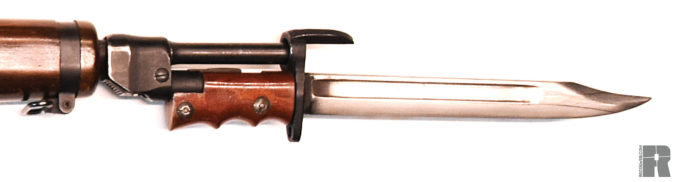
EM2 Rifle bayonette

In the U.S. Trial of February 1950, the EM2 was tested against FN and the American T-25, which was chambered in .30 Lightweight rifle. The EM2 did receive criticism, including that it couldn’t be fired from the left shoulder and the trigger heated to the point of causing blistering. In the end, the EM2 and the T-25 were declared to require significant improvements. While the EM2’s story was over in America, trials continued back in England. While briefly adopted, it was quickly overturned by Churchill. In the end, the EM2 was a good rifle. It, like the other trials guns, needed modifications but had it been adopted, cost could’ve been a prohibitive factor. It’s estimated that only five EM2s could be made for the same cost as six FALs, which adds up. Additionally, the U.S. wasn’t backing down on caliber. Despite the fact that some EM2 rifles diverted from the .280 norm and were actually chambered in 7.62 NATO, ultimately good ole Churchill was just a much bigger fan of the FAL. In fact, an engraved presentation piece made for him sits in the Imperial War Museum today.

AN EM2 TYPE RIFLE IN AMERICA

As I mentioned in the introduction, the Cody Firearms Museum has one of these EM2 type rifles from the Winchester collection. This firearm is a “Rifle, 30 inch, X2E1’ chambered in 7.62x51mm.” It was a part of a series built at RSAF Enfield, probably in the latter half of 1951. It’s serial number EN109. According to Ferguson, the rifle was gifted in May of 1960. While it’s conceivable that Janson was involved in the gifting process, it cannot be confirmed.

It never ceases to amaze me that, to most of the world, Winchester is the quintessential Western brand, thanks in part to Winchester’s marketing campaign after World War I. Yet somehow no matter what I study and where I go, it seems all roads lead back to Winchester — even something as British as a bullpup.

[Editor’s Note: Photography Courtesy of the Cody Firearms Museum. This Article First Appeared in RECOIL #56.]
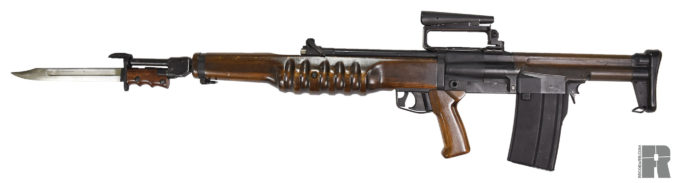

EM2 Rifle
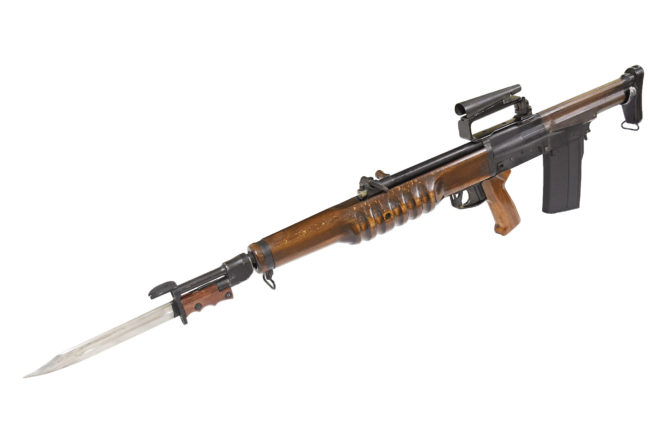
Did you know that the British don’t actually use the term bullpup? They used the term buttless rifle. Above you can see a bayonet mounted to this EM2, however, it also accepted a grenade launcher as an attachment. 

EM2 TYPE RIFLE (X2E1)

Make: Royal Small Arms Factory
Barrel length: 26 inches
Overall length: 35 inches
Weight: 7.7 pounds
Caliber: 7.62x51mm
Action: Gas-operated; Flapper Locked
Mag capacity: 20 rounds
Rate of Fire: 450-600 rounds/min
Categories
All About Guns

STAR becheverria eibare spana S.A CAL.22 LR Restoration

Categories
A Victory! All About Guns Well I thought it was funny!

A very Zombie Holiday!

Categories
All About Guns Cops War

LIGHTNING STRIKES THRICE: LESSONS FROM ONE OFFICER’S SHOOTINGS WRITTEN BY MASSAD AYOOB

Situation: Over a span of years, a lawman is forced to fire at three violent, armed criminals.

Lesson: Action beats reaction, so you must be committed to reacting immediately. The more intelligence you can gather before a confrontation, the better. And sometimes, the way your department treats you can be more traumatic than the incident itself.

I met Richard Rippy when I was an expert witness working for the defense in the United States v. Richard Palmer case. It was a Federal criminal case against a Lake County, Fla., sheriff’s deputy charged in a furtive movement shooting. Rippy had been the accused officer’s firearms and deadly force instructor. His input had been pivotal in allowing a defense team led by Attorneys Alan Diamond and Kepler Funk to win a total acquittal. Rippy had helped us to establish that in a dangerous incident in the darkness, Palmer had done what he had been trained to do, and what he had been trained was in keeping with best practices.

In the course of preparing for the case, I learned Rippy himself had been involved in three fatal line-of-duty shootings during his own 32 years of service, first as a municipal police officer with the City of Eustis, Fla., from which he retired as a sergeant and then with the Lake County, Fla. Sheriff’s Office, retiring for good with the rank of lieutenant in 2019. I suspected his experiences would impart valuable lessons to our readers. That turned out to be the correct assessment.

Background

As a young U.S. Marine, Rippy had gone through Primary Marksmanship Instructor School. When he left the USMC to enter domestic law enforcement in 1987, he joined the 25-man police department of the City of Eustis in Lake County, Fla. It was policy that an officer had to serve on the job for years before being considered as an instructor, but his USMC background earned him a waiver, and he was soon a police firearms instructor, taking every advanced course he could find.

He started out with the department issue service revolver, S&W’s Model 19 .357 Combat Magnum. In 1991 Eustis PD joined the rest of the nation in the switch to the semi-automatic service pistol, and he was issued a 16-shot .40 caliber GLOCK 22. Shortly after that transition, the GLOCK would be used in his first officer-involved shooting.

Madman With A Knife

December 23, 1991, 7:47 p.m. Rippy is one of several officers dispatched to a call at an apartment complex. A citizen has reported an emotionally disturbed person has been shaking people down in the hallways with a large knife. Lt. Mike Whittaker, the watch commander, leads Rippy and Officers Joel Tart and Jeff Breedlove to the top of the stairs in time to see the suspect running toward them.

The man ducks into an apartment, from which the legitimate resident emerges on crutches moments later, shouting, “He’s got a knife!”
Hoping he can reason with the suspect, the lieutenant leads from the front as the officers make entry, single file, with Rippy second in line behind the lieutenant. Passing through a narrow hallway into the living room, Breedlove flanks to the left behind their leader and Rippy to the right.

And suddenly, the knife-wielder is coming toward them. Rippy, thoroughly familiar with Dennis Tueller’s research proving the average adult male can close seven yards with a knife in a second and a half, instantly realizes the maniac is way too close to the lieutenant, who attempts to backpedal to create distance. But the lieutenant’s rearward path is blocked by a coffee table, and he loses his balance, and the six-foot, 200-lb. assailant is barely more than a step away from him, lunging with the big knife upraised in an icepick hold.

The room erupts into gunfire.

Rippy’s GLOCK is in a two-handed Weaver stance, and he is looking over the top of the pistol, not trying to aim, as he unleashes four rapid shots. Breedlove is firing also. The knifeman collapses before he can reach the lieutenant.

The officers secure the blood-soaked would-be cop killer and attempt first aid, but it proves useless. Rippy’s 165-grain jacketed hollow points have hit “center mass,” and a bullet from Breedlove’s G22 has destroyed the thumb of the knife hand. The deceased, John Lemberg, turns out to have no criminal record but a long history of serious mental health issues.

It was over for Lemberg but not for Rippy. He would remember later, “We didn’t have a lot of officer-involved shootings back then, and the department didn’t have a protocol in place. We were placed on administrative leave. FDLE (Florida Department of Law Enforcement) investigated the shooting and we were cleared by them and even by the Grand Jury. During that time, they sent us for psychological evaluations. They told me I had failed without telling me why and the department didn’t seem to know what to do. Finally, they sent me for a second psych eval, and I was told I had passed. I was finally back at work after being out on leave for two months and never having been told why I hadn’t passed the first evaluation.”

Murderer With A 9mm

March 11, 1996, 5:11 a.m. It has been a busy few shifts in Eustis and surrounding areas. There have been too many BOLOs (Be On the Lookout) alerts for all the officers to read, but Rippy has learned that earlier in the night, another officer had taken a burglary report that sounded more like a drug rip-off. Later the department received an anonymous tip that the suspect was at the Caramar Hotel in Eustis. Rippy is one of the officers who responds.

The plan is a “knock and talk.” When the hotel room door opens, Rippy is surprised to see not a stereotyped “drug thug” but a well-groomed black man about 5’10” and 170 lbs. wearing a suit and tie. The cop’s first impression is “preacher or businessman” and he wonders if the tip was bogus.

He does not know he is face to face with Derrek Williams, who has come to the city to do a burglary and rob people of drugs. Moreover, Williams has done a carjacking in nearby Lakeland in which he has shot and killed an elderly man and woman and has shot and wounded another victim in a drug transaction not far away in Leesburg.

And Williams is carrying a loaded S&W 5906 9mm under his impeccable suit.

Out of habit, Rippy politely asks Williams if he could put his hands on the dresser so the officer can pat him down. The unexpected response is, “I’ve been doing drugs tonight.” Rippy responds placatingly, “I’m not concerned about that.” A seemingly compliant Williams places his hands on the dresser as told.

As Rippy’s hands go to Williams’ waistband, so, suddenly, do the suspect’s own hands. And the killer explodes into movement, spinning to his right, away from Rippy — and coming up with the silver-colored semiautomatic. The muzzle of the S&W is at Rippy’s forehead in an instant. He is staring down the barrel. And he sees Williams’ finger pull the trigger.

There is no shot. Rippy explodes into defensive action, shoving Williams away from him and reaching for his own pistol. Williams turns and runs toward the bathroom. Rippy follows his GLOCK up now, firing. The gunman disappears into the bathroom.

Rippy hears the “tap-rack” sound of his deadly opponent manipulating his pistol and then a single muffled gunshot and a thud.
It is over almost as quickly as it began. Derrek Williams has shot himself in the head. His death was instantaneous.

Reconstruction would show the would-be cop killer had apparently been nervously manipulating his pistol earlier in the evening, taking the loaded magazine in and out of the 9mm. The Model 5906, like all commercially sold third-generation S&W auto pistols, had a magazine disconnector safety that would not allow the chambered round to fire unless the magazine was fully seated. When Williams pulled the trigger on Rippy, the magazine had not been locked into place. That saved Rippy’s life.

Rippy was shocked to discover none of his bullets hit the offender. He fired while both men were running. He had not tried to use his sights because he hadn’t thought there was time.

Once again, the investigation showed the officer had acted properly, but the department’s psych eval came back saying Rippy had failed. He would tell American Handgunner years later, “They never told me why I had failed. I was asking myself, ‘Do they have some preconception of what I’m supposed to say, and I’m not saying it? Do they think I’m being too matter-of-fact about it?’ I did what I had to do, and I told them so. I had a conversation with the department, was told I was cleared to come back to work, and that was that.”

Abuser With A .45

Rippy had transferred from Eustis PD to the Lake County Sheriff’s Office, a larger agency headquartered in Tavares, Fla., employing more than 500 sworn personnel. LCSO issued the same service pistol, the G22, but with 180-grain jacketed hollow point .40 S&W ammunition.
August 26, 2011, 5:01 p.m. William Hall, a ruggedly built blond-haired white guy weighing about 185 lbs., has barely been out of prison after serving a drug-related sentence when his wife calls in a domestic abuse complaint. Rippy and other deputies determine Hall has gone to a neighbor’s house.

As they approach the dwelling, Hall unexpectedly emerges. Rippy can see the man is holding a 1911 pistol to his own head as he approaches the deputies. Rippy draws his GLOCK and yells at him repeatedly to drop the gun.

The distance closes quickly. Rippy shouts a final command to drop the gun.

Instead, Hall swings the pistol down and points it at Rippy.

The lawman fires first. Two-handed, point shoulder rather than aim, indexed on center mass. The bullets strike the center torso, and Hall falls heavily to his side, down before he can trigger what turns out to be a Springfield .45. Hall will not survive.

It is over, just that quickly. More than a decade after this, his last shooting, the retired lieutenant will tell American Handgunner, “I’m sure it was a suicide by cop. I couldn’t let him get any closer. We were five to seven yards apart when I shot him. The Sheriff’s Office had a better protocol than the city did when I worked there. FDLE conducted the investigation, and it was also cleared by the State’s Attorney’s Office. This time, there was no psych eval, though LCSO encouraged us to seek psychological counseling if we wanted it.”

Lessons

Most law enforcement officers will go their careers without having to fire their duty weapons at anyone. But obviously, most is not all. When we outsiders analyze these cases, we learn a lot. One thing we learn is that the involved officer himself is a priceless resource for lessons because no one will have thought about it so much as the individual who lived through it. Given his extensive training and experience as an instructor, Rick Rippy is positioned to provide particularly valuable insights into the three fatal shootings he personally experienced.

Proximity can be deadly. In each of these three shootings, a call for service brought Rippy and his brother officers to the scene, and in each case, the perpetrator’s actions “closed the gap.” Action beats reaction. The offender gets to be the actor and forces you to be the reactor. The closer he gets, the less time you have in which to react. This means you must be committed beforehand to look for and react appropriately to deadly stimuli — if this, then that! In each case, Rippy’s ability to do so saved his own life and the lives of other officers present. It is a lesson he has emphasized to the many officers he trained throughout his long career.

Those who may face homicidal criminals need to be familiar with the physio-psychological aspects of violent encounters. In every one of his shootings, Rippy experienced tachypsychia, the sense of things happening in slow motion. The word translates to “the speed of the mind.” As our brain goes into a hyper-speed survival mode, processing input much faster than usual, it creates that sense of slow motion. Says Rippy, “I always felt things slow down. I felt anxiety going into the call; then, in all three of them, it was like slow-motion movies. In all of them, though, it was a matter of two to four seconds.” Having been trained that this might happen, Instructor Rippy was not distracted when it did, and he stayed focused on what he needed to do to solve the lethal problems he was facing.

“You can’t read enough; you can’t train enough. Don’t take it for granted that you’re going to go home,” Rippy wants you to know. “If you don’t educate yourself on current trends, you’re making a mistake.”

Gather as much intelligence as possible beforehand about the situation you may be entering. Says Rippy, “After the Williams incident, in particular, I kicked myself for not having found the time to read the BOLOs. It would have given me warning that we might be going up against a multiple murderer, not just a burglary suspect.”

Train for worst-case shooting problems. Note that when he stood in place and delivered fire, Rippy had a high hit ratio and quickly stopped the fights, but when he had to run while shooting at a running man, he missed. It’s harder to hit a moving target than a standing one. It’s harder to hit a standing target when you are moving than when you are standing still. When you and the target are both moving, as in the Williams shooting, the marksmanship element becomes exponentially more difficult, even for expert shooters like Rippy.

Prepare for post-traumatic issues. Post-event symptoms such as insomnia due to adrenaline dump are virtually universal. Remember so-called “post-shooting trauma” is less a reaction to your having to shoot a criminal than it is your reaction to how your world has treated you for doing it. Rippy told me, “After the first one, I had insomnia bad. A lot of that was the anxiety of not knowing what the department was going to do. It’s not normal if you don’t replay it in your head. It helps train you for a future situation. Taking a life is not exactly a normal thing.”

Consideration must be given to the person who was forced to shoot. The failure of not one but two psychologists to tell the involved officer why he “flunked the psych test” is almost unforgivable. Such evaluations must be objective, not subjective; those doing the evaluations must be cross-trained by such organizations as the Force Science Institute to understand the unique ramifications of having been forced to kill in defense of self and other innocent parties.

Consider legal aftermaths. Rippy’s last two shootings were so obviously justifiable neither criminal nor civil liability evolved. In the first shooting, the estate of the deceased sued the department, resulting in a “chump change settlement” of $35,000, but at least the City of Eustis explained to Rippy they settled because it was cheaper than going to trial and winning. This was cold comfort to the involved officer, who understandably thought the settlement was a slap in his face.

And one more often-overlooked consideration. When Rick Rippy retired, he had severe hearing loss. While some might associate this with a lifetime of being a firearms instructor, Rick feels at least part of it was having had to fire a gun repeatedly in close quarters without hearing protection in the line of duty. He notes, “They give us all kinds of documented physical evaluations when we come on ‘The Job,’ but not usually a hearing test. Thus, the officer has no baseline to show how much hearing he or she lost in the line of duty.”

Let us close by thanking retired Lieutenant Richard Rippy for his many years of service and for the insights he has shared with American Handgunner’s readers.

Categories
All About Guns

I Have This Old Gun: Terry Carbine

Categories
All About Guns War

Artillery They Shall Not Grow Old 3mins

Categories
All About Guns Anti Civil Rights ideas & "Friends"

Senate Republicans block assault weapons ban, background checks bill BY ALEXANDER BOLTON

Senate Republicans on Wednesday blocked efforts by Senate Democrats to pass an assault weapons ban and universal background checks legislation after the United States over the weekend broke the record for the most mass shootings in a single year. 

Republican Sen. John Barrasso (R-Wyo.) objected to Senate Majority Leader Chuck Schumer’s (D-N.Y.) request for unanimous consent to pass the assault weapons ban, despite the pleas of Democratic senators who took to the Senate floor to cite the harrowing statistics of gun violence in America.

“The scourge of gun violence in America is a national crisis. The American people are sick and tired of enduring one mass shooting after another. They’re sick and tired of vigil and moments of silence for family, friends, classmates, coworkers,” Schumer argued on the Senate floor.

The assault weapons ban, originally sponsored by the late Sen. Dianne Feinstein (D-Calif.), would ban semiautomatic rifles with pistol grips, forward grips and folding or telescoping stocks, as well as rifles outfitted with grenade launchers, barrel shrouds or threaded barrels to allow for noise and flash suppressors to be attached.

But Barrasso argued that the Democratic-drafted bill would infringe on the Second Amendment and deprive law-abiding gun owners of an important liberty.

“Americans have a constitutional right to own a firearm. Every day, people across Wyoming responsibly use their Second Amendment rights to keep and bear arms,” he said. “Democrats are demanding that the American people give up their liberty.”

He said that Democrats are trying to ban many types of semiautomatic firearms “because of the way they look.”

He asserted that popular rifles such as AR-15s “work the same way as popular shotguns and other rifles used for hunting and personal protection.”

“The Second Amendment is freedom’s essential safeguard. Without it, there can be no liberty and there can be no security. So Mr. President, I object.”

Democratic Sen. Chris Murphy (Conn.) later stood up on the floor to ask for unanimous consent to pass legislation to require universal background checks for firearms purchases.

“We don’t have more mental illness in this country, we don’t spend less money on law enforcement, we don’t have angrier people, we have more guns, and we are much more permissive in this country about allowing felons, dangerous people, to get their hands on guns,” he said.

Gallup poll conducted in June 2022 found that 92 percent of Americans favor requiring background checks for all firearm sales.

“This just feels like a test of democracy. It really does. Like, how does democracy survive if 90 percent of Americans, 90 percent of Republicans, 90 percent of Democrats want something, and we can’t deliver it?” Murphy asked before he asked for unanimous consent to pass the background checks bill.

Utah Republican Sen. Mike Lee took to the floor immediately to object.

“I want to note at the outset we’re not asked to vote in this chamber on polling questions. We vote on legislation,” he said.

He said the legislation to expand background checks “has some real problems with it.”

“This is not solely about transactions involving guns at gun stores. This is about the father who wishes to pass down a hunting rifle to his son or the friend who wants to lend a shotgun to his neighbor who is in need of protection at the time,” Lee said before objecting to Murphy’s request.

Categories
All About Guns

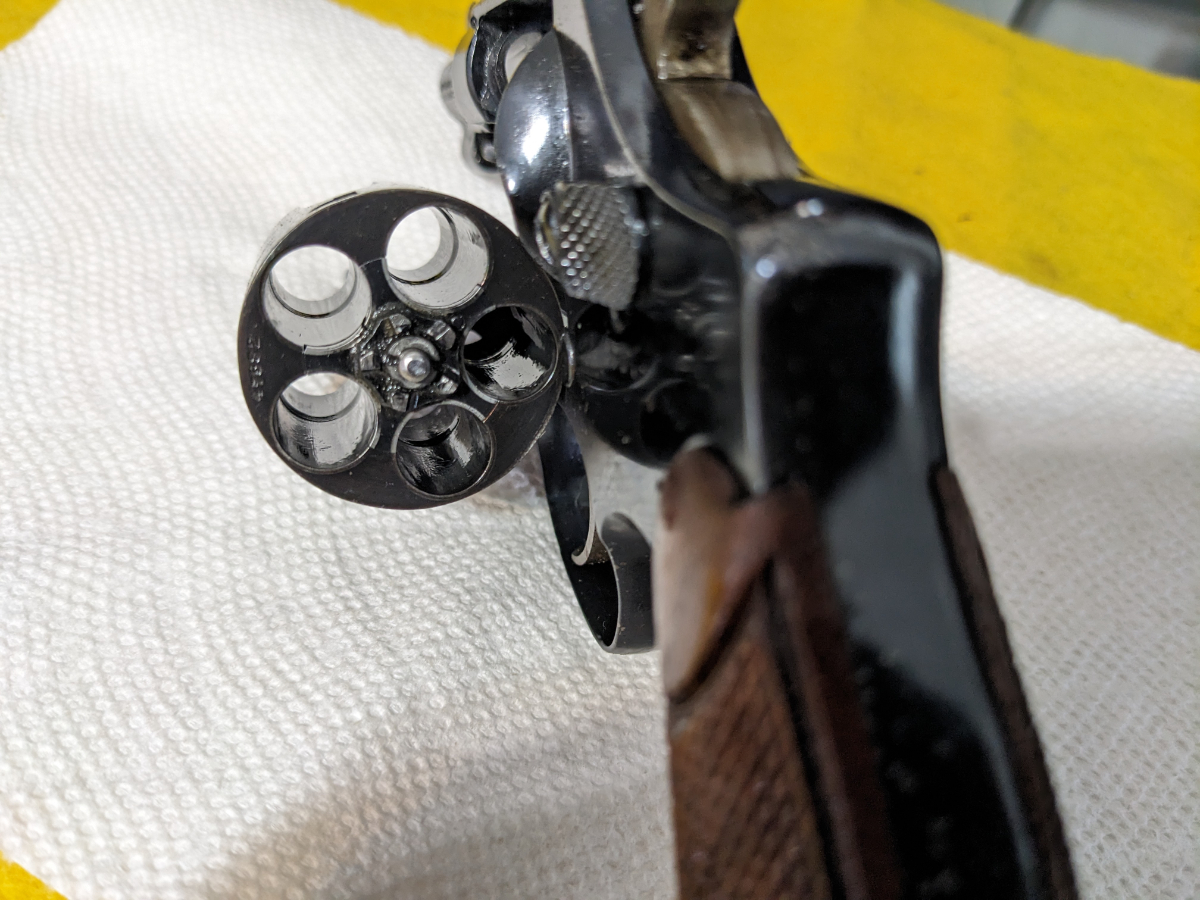
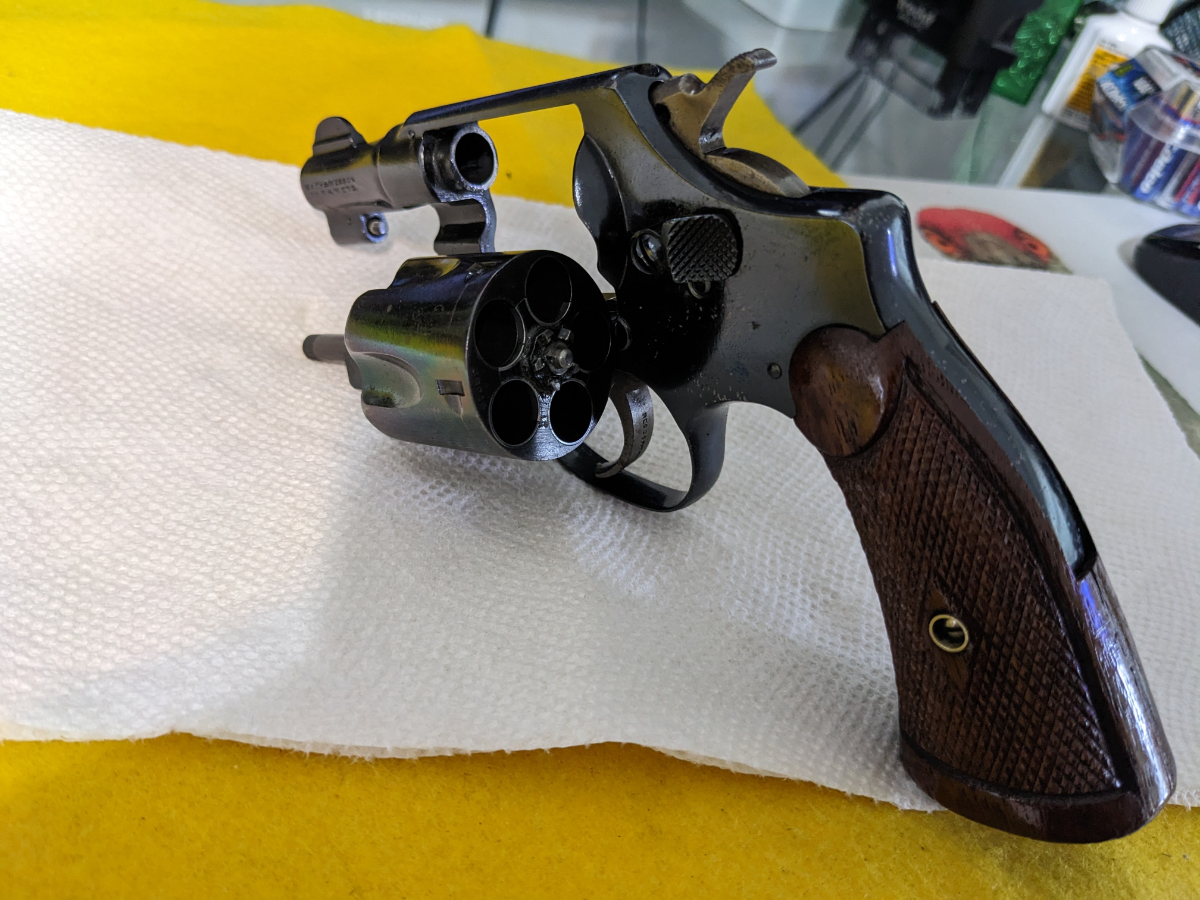
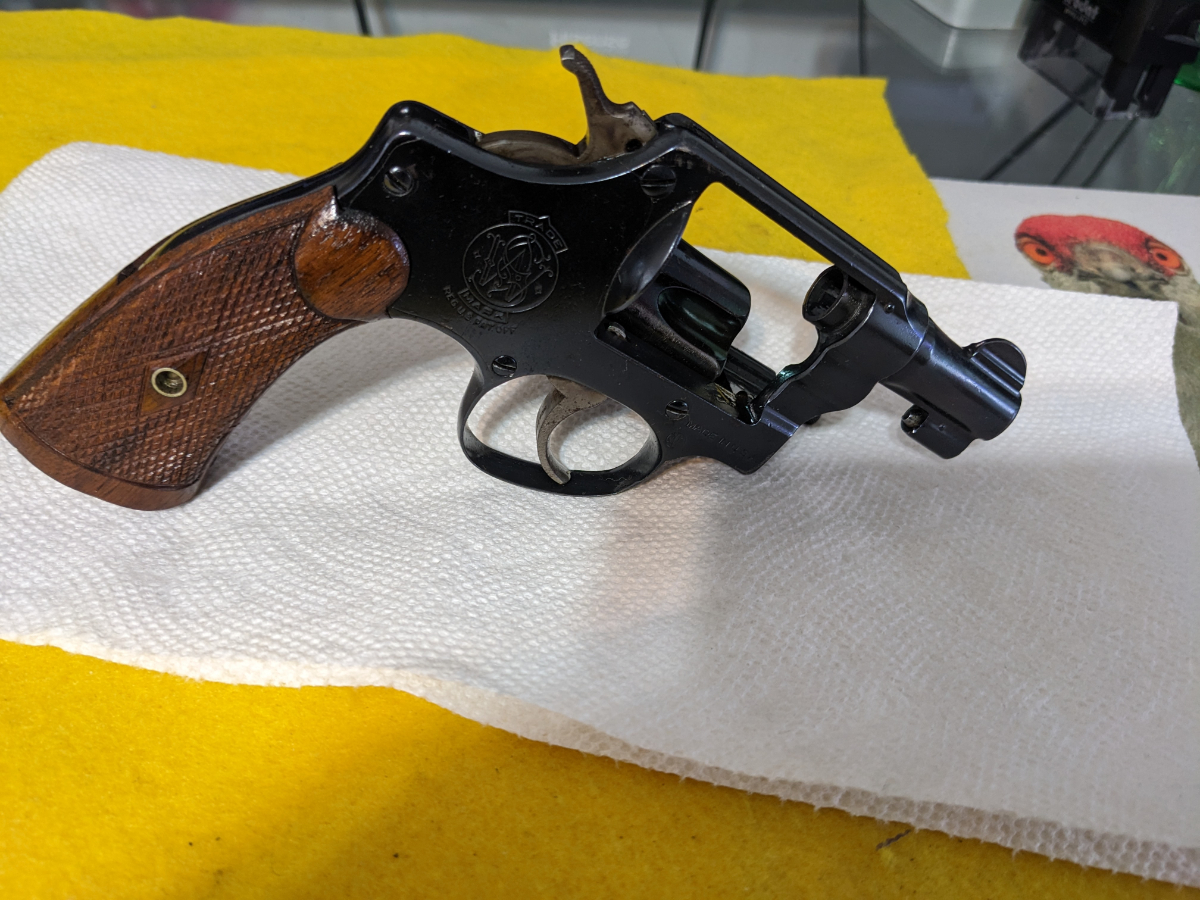
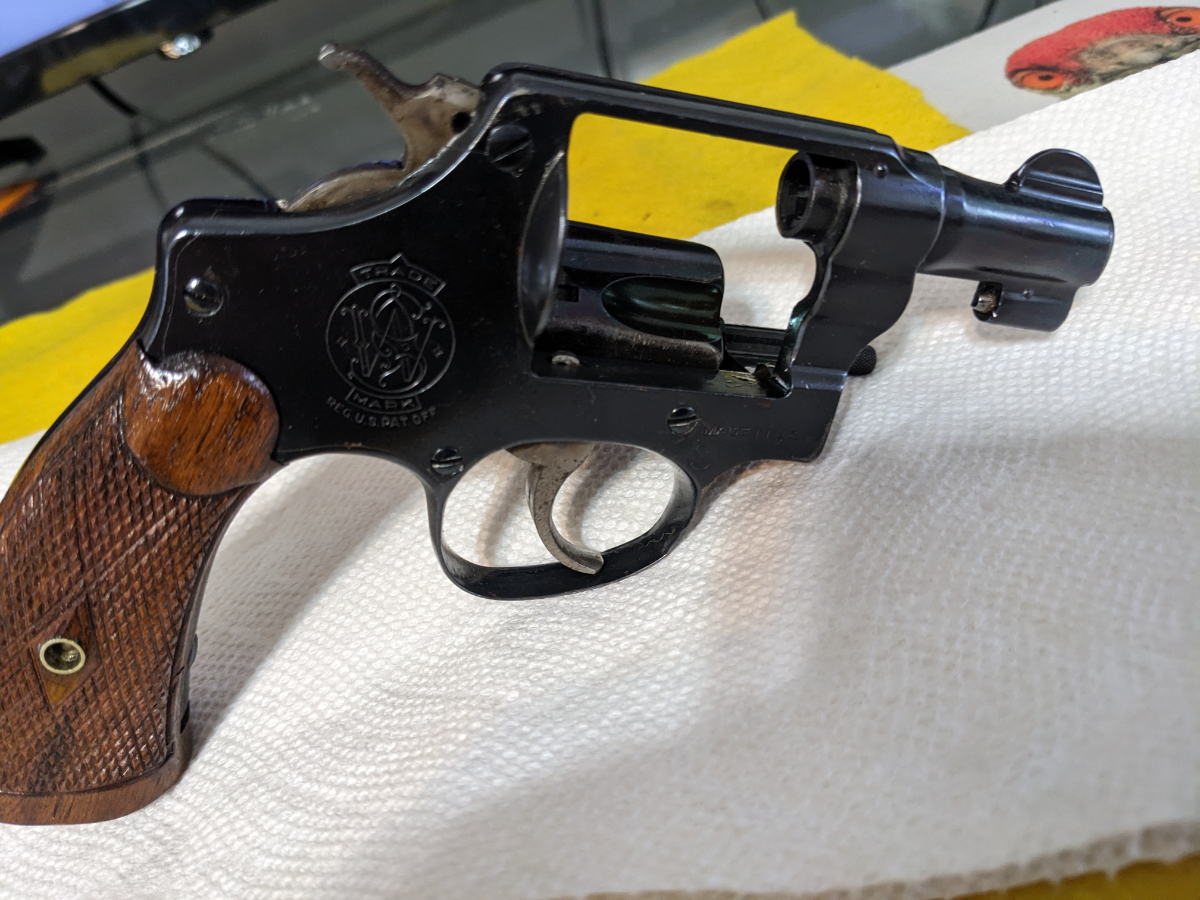
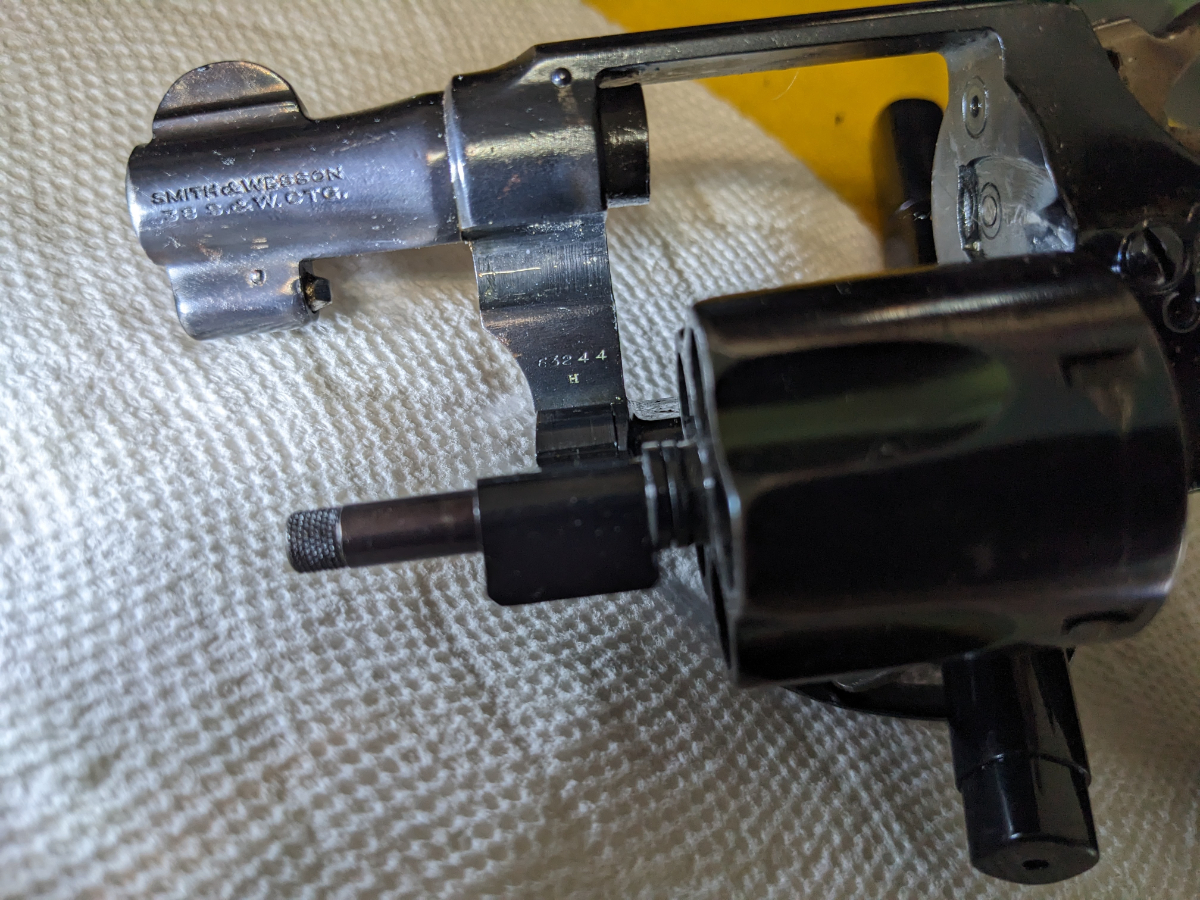
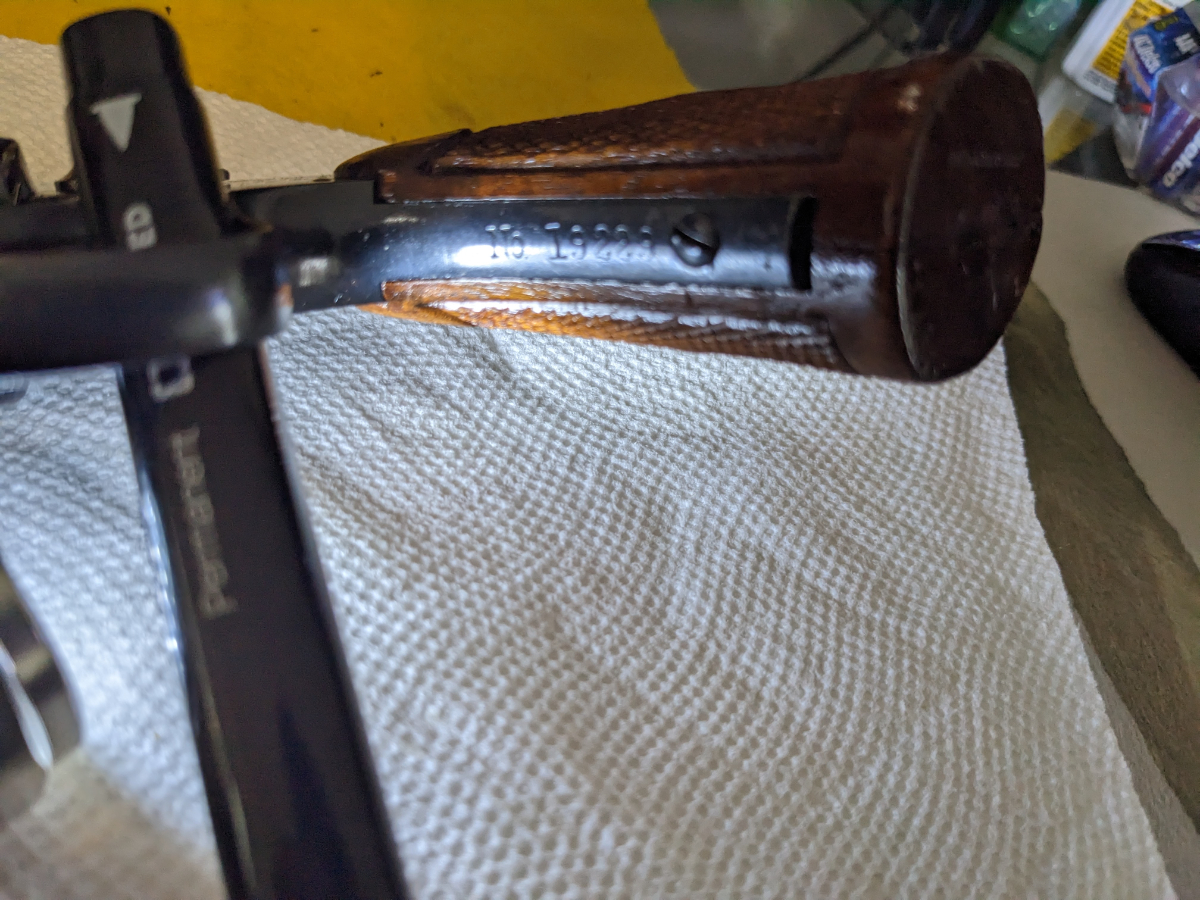
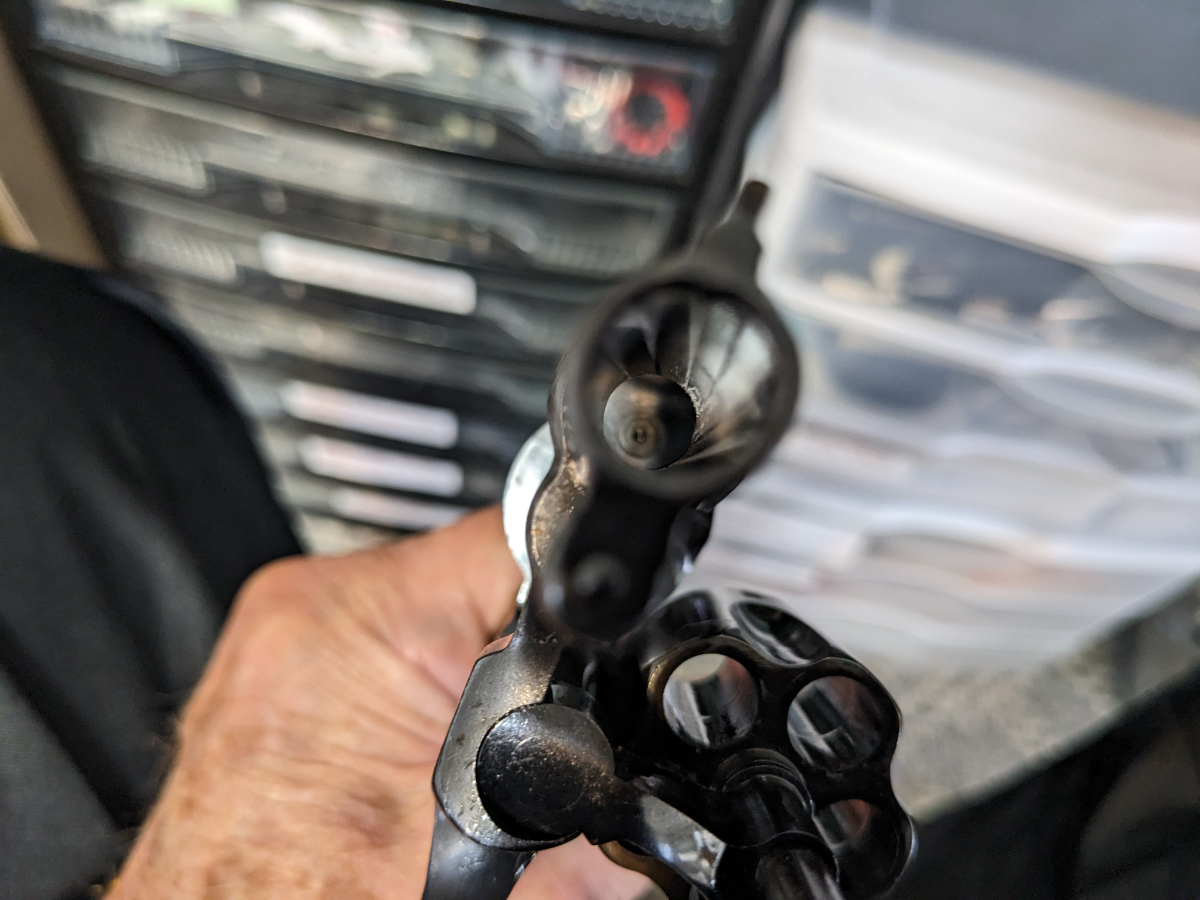
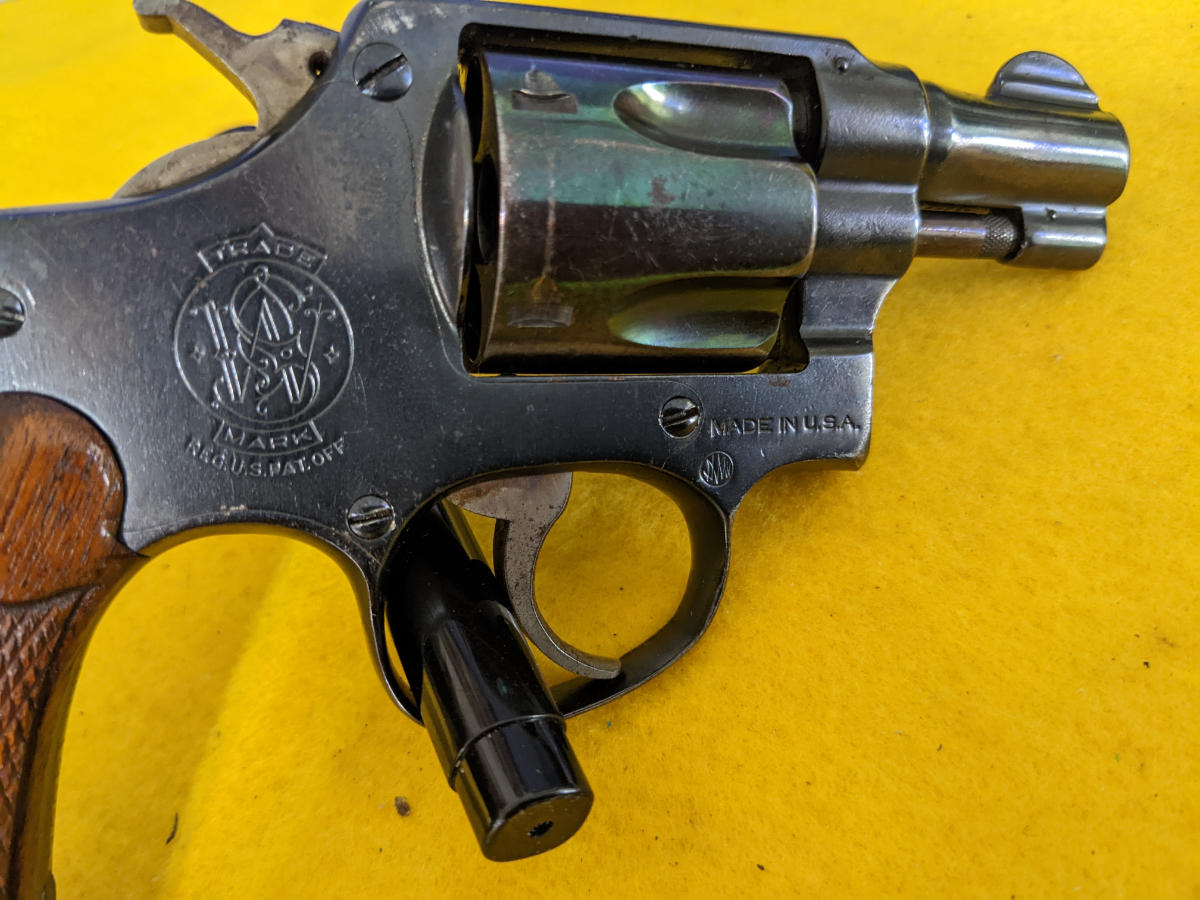
A Smith & Wesson Chiefs snub nose 2 inch barrel in caliber .38 Special

Smith & Wesson Chiefs snob nose 2 inch barrel It has pin barrel single bar front site and checkered wood grips old style .38 Special - Picture 5Smith & Wesson Chiefs snob nose 2 inch barrel It has pin barrel single bar front site and checkered wood grips old style .38 Special - Picture 5Smith & Wesson Chiefs snob nose 2 inch barrel It has pin barrel single bar front site and checkered wood grips old style .38 Special - Picture 8
Smith & Wesson Chiefs snob nose 2 inch barrel It has pin barrel single bar front site and checkered wood grips old style .38 Special - Picture 9
Smith & Wesson Chiefs snob nose 2 inch barrel It has pin barrel single bar front site and checkered wood grips old style .38 Special - Picture 10


Smith & Wesson Chiefs snob nose 2 inch barrel It has pin barrel single bar front site and checkered wood grips old style .38 Special - Picture 5

Smith & Wesson Chiefs snob nose 2 inch barrel It has pin barrel single bar front site and checkered wood grips old style .38 Special - Picture 5Smith & Wesson Chiefs snob nose 2 inch barrel It has pin barrel single bar front site and checkered wood grips old style .38 Special - Picture 5
Categories
All About Guns

Minute of Mae: Norwegian Krag–Jørgensen 1895 Carbine