Categories
All About Guns The Green Machine This great Nation & Its People War

Riflemen On The Front Lines by BILL SHADEL

WWII Illustration

From The June 1944 Issue Of American Rifleman

In peacetime, when we talk of rifle shooting and rifle training and rifle competition, the general public thinks it’s just the hobby of a few—a small-time sport. Even in wartime, it takes time and battle experience to get down to the fundamentals. But now, just as in World War I, we’re learning that riflemen count, and that too much emphasis cannot be placed on their training. For battle riflemen aren’t made in a day, nor even in a few weeks on the range.

Here are some stories you haven’t seen in your daily papers—because these men are not heroes; they’re just good all-around riflemen:

On Mt. Castellone, one day in February, a two-hour Boche barrage heralded an attack by two German battalions on a ridge held by one platoon of one company of one battalion of the 36th Division. Two platoons were sent up to help meet that attack—less than a company, riflemen, with a few ’03 grenade launchers and a supply of grenades for close quarters—against two well-armed German battalions.

Platoon Sergeant H.C. Pruett, of Brownwood, Texas, was in charge of one of those two supporting platoons. The first platoon was already engaged when Pruett arrived. The Jerries had some four hundred yards to cover. Pruett threw his men into the fight as riflemen, in the prone or kneeling position according to each man’s locations. As riflemen, they started picking off Germans. The Boche were coming on in groups of three or four, running, ducking, hitting cover, rising to charge again. Pruett himself knocked down seven out of five different groups, getting one and sometimes two as each group made its short rush forward.

“The guys all around me were doing the same,” Pruett says. “We made ‘em pay for that yardage! But a few finally got up to within about fifty yards of us and we started heavin’ hand grenades.” That was a hot spot for Pruett and he was thankful the ‘03s would still work, for their rifle grenades were effective. “Must have had too much oil on the M1s,” he suggested. But he had some very definite opinions about marksmanship! “It pays off,” he said. “Every man ought to know his rifle, and how to shoot it. Hunting, back home, helped me. I’ve heard a lot of fellows say the same.”

Sergeant J.B. Johnson of Gustine, Texas, put the whole story of marksmanship in a few words when he said, “I don’t want a fellow around me that can’t shoot! He’s no help, and he’s just usin’ up ammunition—which, around these mountains, you can’t carry enough of, or get more!”

Yes, it pays. One hundred and thirty-two dead Germans were found in front of that ridge position. In the three defending platoons, only three men were hit with small-arms fire.

Categories
All About Guns Ammo

A Takedown in .338 Win & .416 Ruger

Categories
All About Guns

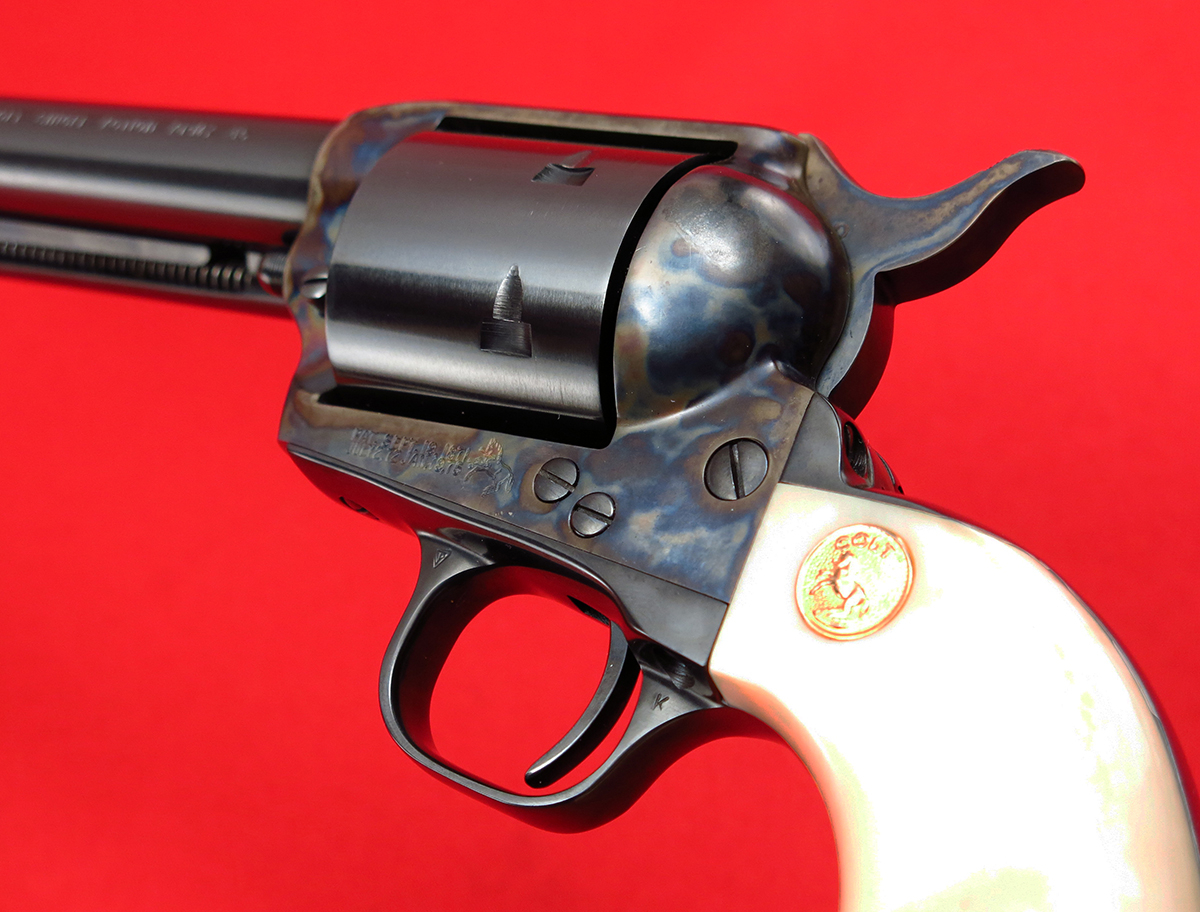
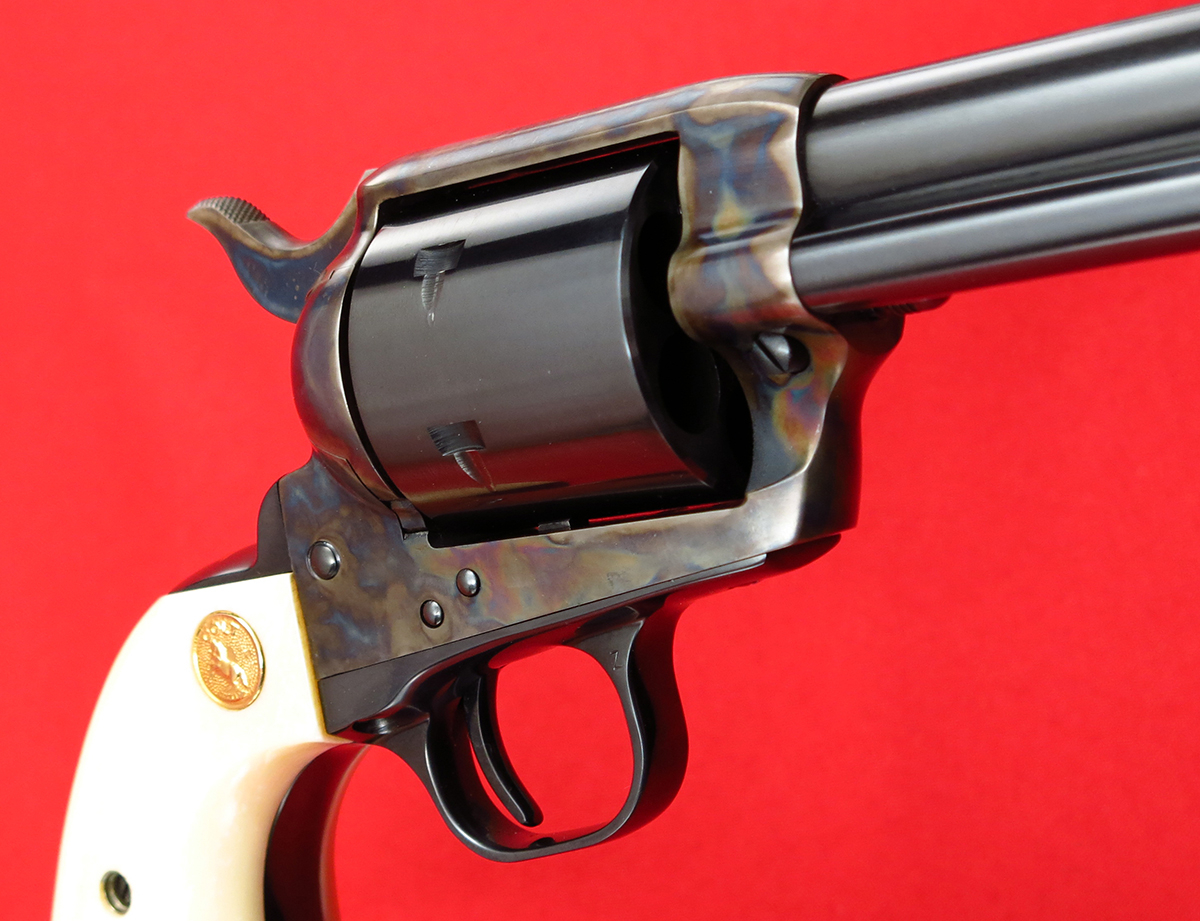
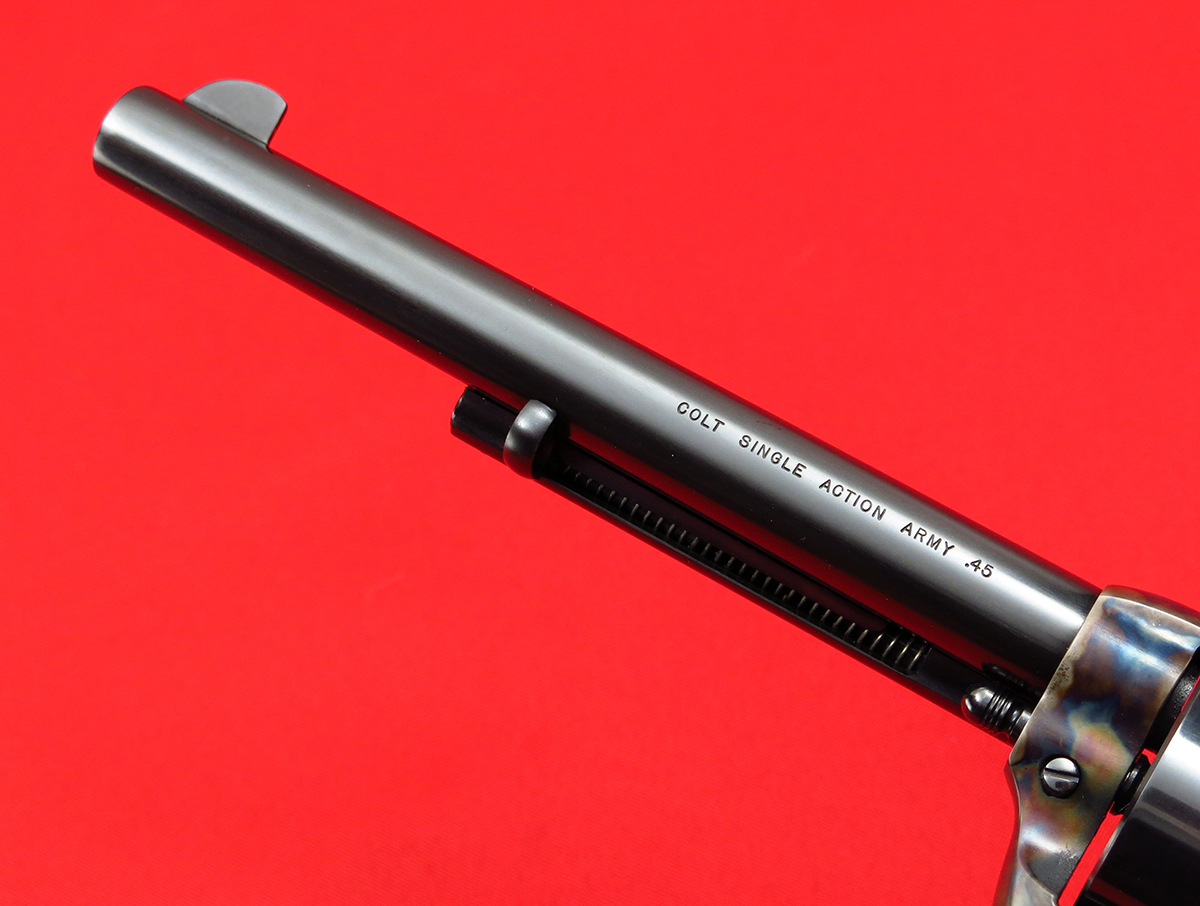
A Colt SINGLE ACTION ARMY SAA…”HORSEPISTOL” 1-OF-250 LTD ED, FACTORY IVORY GRIPS in caliber 45 Long Colt, MFD in 1984

Categories
All About Guns

SIG’s World War Two Semiauto Rifle: The Model U

Categories
All About Guns

Walther Olympia: Germany’s Interwar Target Pistol

Categories
All About Guns You have to be kidding, right!?!

American Rifleman Archives: Farewell to an Enfield by AMERICAN RIFLEMAN STAFF

farewell.jpg

First published in American Rifleman, July, 1989.

By Orson O. Buck

Shooters of the U.S. beware. Give way an inch to the anti-gun lobby and you’ll end up like the poor folk here in Great Britain. And it’s not just handguns I’m talking about.

Regulations which have recently come into force have made all semi-auto rifles larger than .22 Long Rifle illegal. If you’ve got one (and each is individually licensed), you have to hand it in. After much hassle in parliament it’s been agreed you get paid for it—at the time of writing (February) just £150 ($260). It’s legalized robbery!

And now even shotguns have to be individually registered as well, although as yet, there’s no limit on the number you can have.

There’s always been a sneaky bit in United Kingdom firearms legislation, too. It forms Section 5 of the 1968 Act, and it allows the police chief of each area discretion to refuse a license. It’s mostly been used pretty reasonably—an alcoholic finds it rather difficult to own a rifle, for instance—but if you’re getting on in years and a bit frail…?

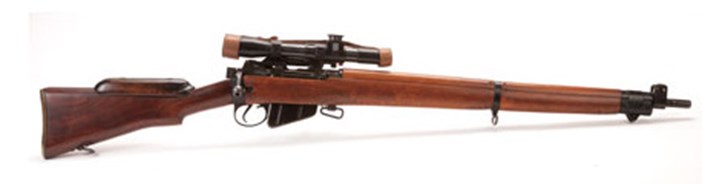
The other day I witnessed a heartbreaking scene. The owner of a superb firearm, a sniper rifle from World War II, was virtually in tears as he hammered a bullet into the rifling at the breech end and then proceeded to fill the chamber with weld metal. Why? Because he was talked into it! His three-year license was due for renewal, and the police said he was too feeble to go hunting or paper-punching anymore. So, logically, he couldn’t have any use for it, he had to sell it if he could or surrender it to the authorities—with no compensation—and it would be destroyed. The thought of this was intolerable to the old chap, hence the welding exercise. At least that way he could hang it on the wall and dream of days gone by.
What days, too! As a Scotsman he’d hoped to be drafted into a Scottish reg­iment, but it was not to be. During the Great War of 1914-18 the British Army had encouraged men to enlist in county regiments and units even more localized. Such battalions as “The Manchester Pals” were formed where most of the men knew each other and came from a very small area indeed. They fought well, these formations. Too well. In the big battles of that war whole battalions were vir­tually erased in minutes—20,000 casual­ties in the first hour of the Battle of the Somme.

Can you imagine the effect on a small town when it learns that practically all the men it sent to the war are never to return? The collapse of civilian morale was so great as to be bordering on revolt in some cases. So when the next war came that was one lesson the army had learned. Men from the draft were dis­tributed among regiments that bore no connection to their home localities. Our man, then, found himself in a light infantry unit.

But he did well there. Finding that he could shoot straight, he was sent on a snipers’ course and passed with flying colors. Then to Italy with the 79th Di­vision (the badge was a yellow battleaxe on a blue background—maybe some of you vets remember seeing it). On to Special Forces, a high score, a couple of wounds, and he was back on the civvy street.

Wanting a rifle for hunting and target shooting but not having a lot of pennies at the time, he looked around for one of the surplus No. 4 Enfields that were becoming available and that he knew so well. He saw one advertised, mail order, complete with scope sight. In due course it arrived. Now, one thing a soldier re­members, after his ID number, is his rifle’s serial number. The one in a million chance had come up; this had been his very own tool, the one he’d scored with again and again.

For many happy years he shot on the range, using the ordinary aperture Sight but occasionally fitting the scope from its steel box when it came to taking a deer or two in the winter and the light was poor. This was one of the plus points of the No. 4. The scope could be dis­mounted, carried separately in a transit case and refitted immediately before ac­tion without any loss of zero.

The rifle itself was specially selected, in .303 British of course, and the battle sight, a 200-yd. zeroed peep, was milled off to permit mounting the scope, but the ladder sight was left intact. Two machined steel blocks were screwed to the left side of the receiver. Each has a threaded hole. The bottom halves of the scope rings are an integral part of a steel bracket which carries two screws with two large knurled-heads. These screwslocate in the receiver blocks, giving repeatability of lock-up every time. Naturally, the inevitable presence of machin­ing tolerances meant that every scope rifle job was a one-off, and this is cor­roborated by the sight and rifle numbers being entered on a label in the transit box.

After 45 years (the combination was made in 1943), the scope’s lenses are still clear although of only 2X. Eye relief is rather critical, of course. Each end of the scope tube has a slide-over shade, and the reticle is the post and rail type. The sight is fabricated from brass and immensely strong, but obviously this strength carries a weight penalty. In fact, the complete job, rifle plus scope, turns in at just 11 lbs. unloaded. Of course, when used with the scope the stock had to be higher than standard at the comb in order to get a firm “pinch” with the cheek. This was achieved by having a wooden block with two short pins which dropped into holes on top of the butt and was secured by a leather strap. Unfor­tunately, this block has gone AWOL over the years, but it would probably have added another 8 ozs. or so to the total, giving an all-up of over 12 lbs. loaded. Quite a handful.

But now all our old “Tommy” can do is doze and dream…that stag on the hill when the snow was 3-ft. deep but the sky a brilliant blue…that machine gun whose crew dropped one by one…

Korean War Sequel
The tale of the British “Tommy” who rediscovered his World War II rifle has its sequel in Henry G. Upfold of Arizona.

Earlier this year Upfold visited a gun shop in Sierra Vista, Ariz., to purchase a handgun. Spotting an M1 Garand on the wall, Upfold asked to examine it.

“I recognized the number right away,” he told a newspaper reporter, explaining his formula for remembering the rifle’s serial number, 1994017. “I was 19 when I was in Korea. 9 is my mom’s birth month. 4 is my birth month, there was a zero, and I was 17 when I enlisted.” he explained.

Upfold was issued the rifle by the Army in Sasebo, Japan, en route to Korea in July 1953. It was to remain his constant companion there until he turned it in at Taegu, Korea, in November 1954.

“I slept with it, and I’ve been through the mud and rain with it,” said Upfold, who is retired because of disability. He was able to purchase his old rifle, and a trip to the range confirmed it was still as accurate as he remembered.

Categories
All About Guns Allies Another potential ENEMY OF THE PEOPLE Good News for a change! Gun Fearing Wussies

Why Trudeau’s Gun Bans Are Doomed To Fail

Categories
All About Guns

A very special Winchester Model 12

Categories
All About Guns

Some great reasons on why I don’t own one anymore!

by Team Armscor

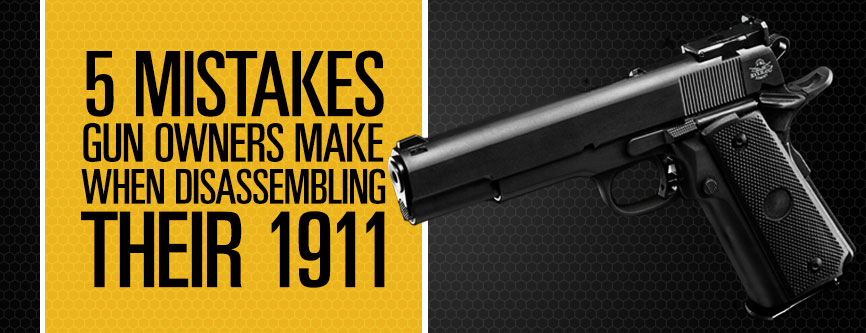
Every new gun owner makes mistakes at some point. And it’s nothing to be ashamed of. Don’t assume that you’re immune to mistakes. Most are not catastrophic and have fairly simple preventive measures.

Ignoring the manual

Look, the manual is included for a reason. If it isn’t, or you bought the gun used, then you can easily find it online. The 1911 is a century-old design, and the manual hasn’t changed much in all that time. It was developed as a military sidearm, which requires manuals that anybody can understand. I have lost count of the number of times I have had to explain why the bushing rotates both directions.

Reading the manual thoroughly before you disassemble a 1911 is not only simple and logical, but it also prevents the asking of embarrassing questions that you would have known the answers to had you simply read it to begin with.

Not checking the chamber

We’ve all seen those news stories about how somebody got shot cleaning an empty gun. It is horrible and easily prevented. All you have to do is hit the magazine release and rack the slide (in that order). No need to rack the slide half a dozen times or jam your pinky in there. Just rack it, and look into the chamber, not down the barrel. Forgetting to remove the magazine will prevent the slide from coming forward, which makes it impossible to remove the slide.

Using a carpeted room

Carpet is a wonderful thing. It keeps your feet warm in the winter and cushions your steps as you try to walk quietly and not wake the kids. However, as many 1911 owners have discovered over the years, a recoil spring that is dropped or flies across the room can vanish into carpet and remain lost to the world until the next time you vacuum.

The same is true of the mainspring when you fully disassemble the weapon. The springs may also snag in carpet fibers, leading to kinked springs and malfunctions or spring breakage. The dining room or kitchen are best if you have carpet, but try to avoid the bathroom, as nobody wants to fish the spring out of there.

Mishandling the recoil spring plug

Even when disassembling your 1911 in a tiled or hardwood-floored room, it is extremely important to maintain control of every part of the gun at all times. The recoil spring is under constant pressure, and, when you press the recoil spring plug down to turn the bushing, it can slip free and go flying across the room.

To avoid this, you simply need to place your hand over the muzzle of the gun while turning the bushing clockwise. This keeps the bushing locked in the slide, which can stop the spring from making a hasty exit. The placement of your hand creates a cup that will catch the recoil spring plug before the spring fully extends, thus preventing it from becoming a projectile.

Scratching the finish

Anybody who knows the 1911 knew this was coming. 1911 owners will carry a gun that has holster wear, ancient rust pitting and grips that the dog chewed on if they have to. But that little crescent scratch will have them hide their beloved 1911s from the world in shame. This mistake has sold more refinishing jobs than anything, other than the AR15 boom.

The problem comes up when reassembling the 1911. Everything goes perfectly, and your springs and plug are in place and not in the carpet or toilet. You have it cleaned out and lubed up. Then you go to slip that slide stop pin into place. It snags a little on the barrel link, and you swing it back up into place. You hear that satisfying “snap” before glancing down in abject horror at the little scratch smiling up at you, clear as day.

The prevention is simple, though. If you hold the gun upside down while placing the slide stop, the barrel link will line up more smoothly on a new gun. You can also place a card of some sort to allow the slide stop to rotate in contact with the card without damaging the finish.

Keep in mind

It’s not unusual to encounter one or all of these mistakes if you’re new to the world of 1911s. (In fact, it’s practically a rite of passage.) But keeping these common pitfalls in mind can help you to avoid future annoyances and dangers. Be a smart first-timer.

Categories
All About Guns

Marlin 1897 Cowboy .22 Levergun