Category: All About Guns
Remington Model 16
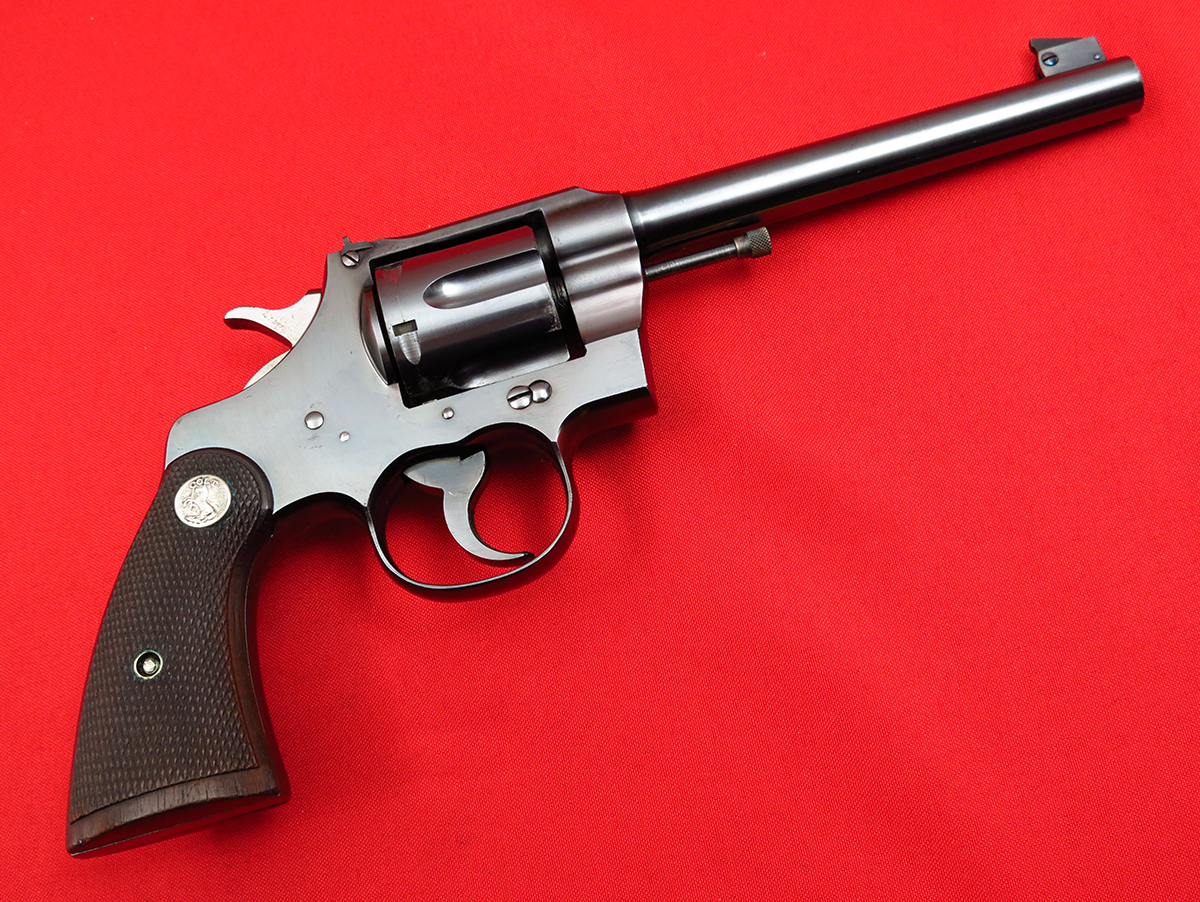
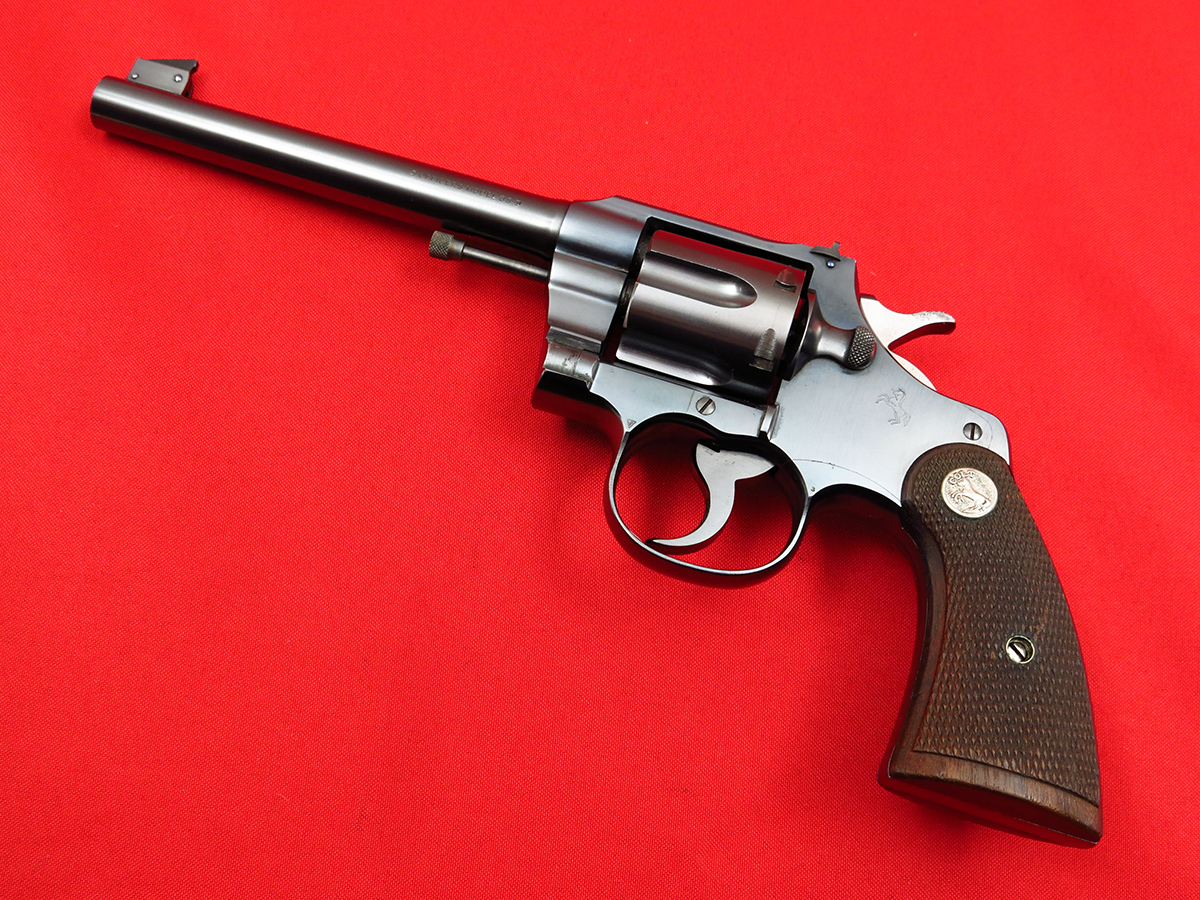
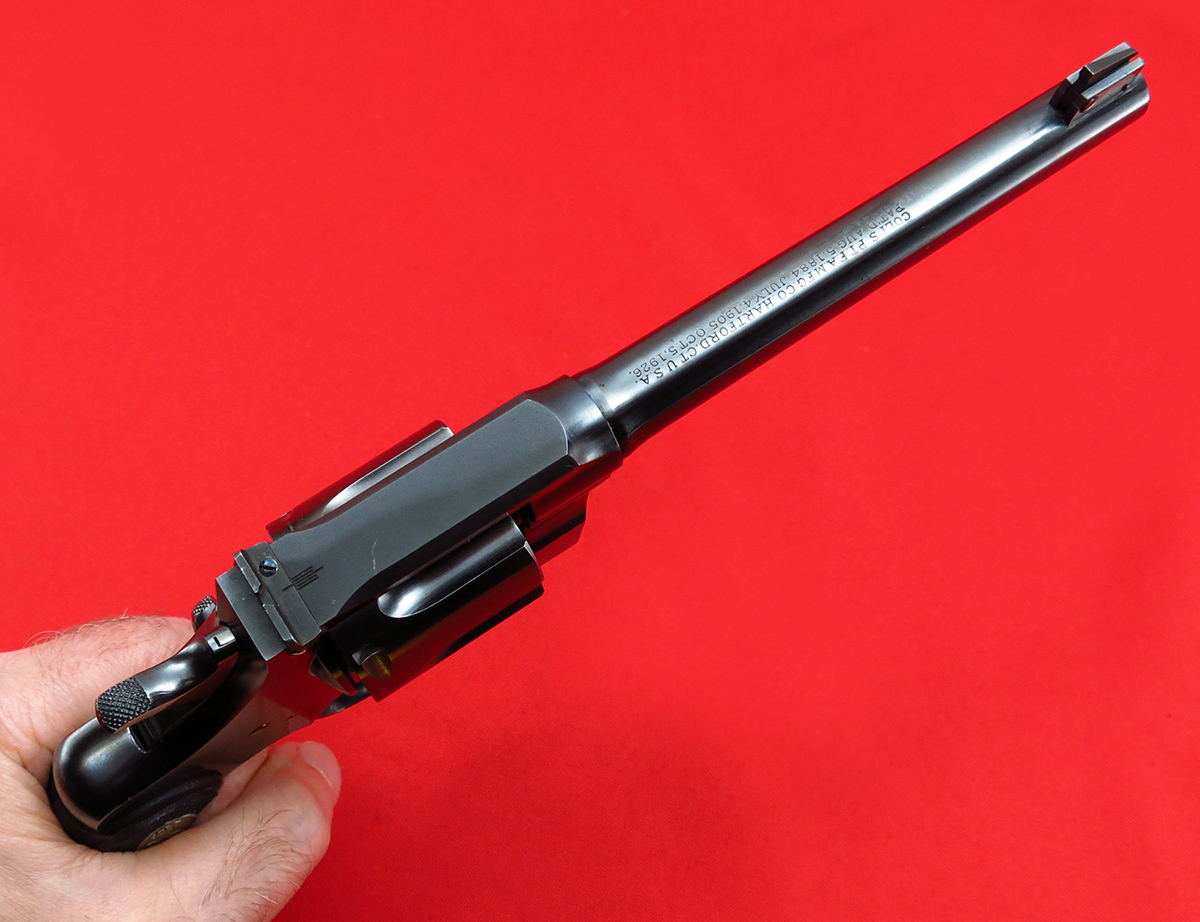
Colt Official Police

That muzzle break sure is one nasty looking piece of iron! Grumpy


![]()
At 2247 hours on 24 April 1980, a U.S.A.F. MC130 Combat Talon aircraft callsign Talon 1 touched down in the flat desert 200 miles from the Iranian capital of Teheran. U.S. Army Rangers dismounted and secured the landing area, code-named Desert One, for follow-on Air Force cargo planes and Navy helicopters.
93 Delta Force operators and 13 Special Forces soldiers from Detachment A of the Berlin Brigade as well as a dozen Rangers and sundry support troops stood poised to attempt one of the most daring special operations missions in history. The objective was to free 52 American hostages held by Iranian extremists.

The Rangers secured a nearby highway and stopped traffic as it was encountered. This included a civilian bus containing 43 passengers who were detained on the ground onboard one of the EC130 cargo planes. Minutes after the bus was secured, a fuel tanker ignored the Rangers’ orders to stop and attempted to run through their roadblock. It was later determined that the tanker was smuggling illicit gasoline. In desperation, one of the Rangers unlimbered a shoulder-fired M72 Light Antitank Weapon (LAW).

Sighting the disposable rocket launcher in the dark using its luminescent sight, the Ranger center-punched the heavily-laden truck. Like a milk jug hit with a high-powered rifle round, the truck and its contents erupted in a brilliant fireball that was visible for miles around. A passenger in the truck died in the attack, though the driver escaped in a follow-on pickup. From that point, everything seemed to fall apart.

Prior planning had determined that the mission required a minimum of six operational RH-53D Sea Stallion helicopters to be successful. With only five mission-capable aircraft remaining, the decision was made to abort. In the subsequent chaos, a helicopter taxied into an Air Force cargo plane and exploded. Eight American troops died in the inferno, and another four were injured. The mission was a humiliating failure. However, the lessons learned at Desert One helped transform American Special Operations Forces into the most respected and capable on the planet.
Light Anti-Tank Weapon
But what about that LAW launcher? Work on the M72 LAW, or Light Antitank Weapon, first began at Redstone Arsenal in 1959. The mission was to design a more effective and more portable replacement for both the M31 HEAT antitank rifle grenade and the bulky and heavy M20A1 Super Bazooka. American needed an anti-armor weapon to counter the rapidly advancing tank technology developed by the Soviets.

A design team that included Frank Spinale, Charles Weeks, and Chris Choate developed one of the most enduring weapons in the American arsenal.
The M72 consists of a disposable launcher that fires an unguided 66mm solid-fuel rocket. The basic concept is essentially an arithmetic mean between the American bazooka and the German WWII-vintage Panzerfaust.

The light anti-armor weapon saw a great deal of use in the Vietnam War and has been improved multiple times over the years. The latest M72A7 weighs 7.9 pounds and has a maximum effective range of 220 meters. The point-initiated, base-detonated round travels at 480 feet per second. A mechanical setback feature prevents the warhead from detonating unless it has been fired.

The LAW consists of a single consumable round of ammunition carried within a pair of nested telescoping tubes. The internal tube is aluminum, while the outside sort is fiberglass. When collapsed, the LAW is waterproof and 25” long. Once extended and ready to fire, the M72 is 35” long. The weapon’s minimum arming range is ten meters. The front sight is graduated in 25-meter increments, and the rear peep sight automatically adjusts itself for ambient temperature.
Running the M72 LAW
To deploy the LAW for firing, the operator pulls out the safety pin and pivots the backplate clear. This allows the front cap to fall off of the launcher. You then grasp the launcher front and rear from the top and extend it vigorously. The inner tube telescopes and will lock in place. The front and rear sights are spring-loaded and pop up of their own accord. Now rotate the weapon onto the firing shoulder, taking care to ensure that the backblast area is clear. The backblast is considered dangerous to bystanders out to about 40 meters.

With the weapon pointed downrange, you then pull the firing mechanism forward using the weak hand. The LAW is now armed and ready to fire. Sight the weapon appropriately, support the front with the weak hand, and squeeze downward from the top against the rubber-coated trigger bar to fire the rocket. Once fired, the launcher is considered disposable. No one is reloading these with a fresh anti-tank rocket.
If the launcher needs to be returned to its stowed condition prior to being armed you can press down on the rubber-coated takedown button on the top to release the two tubes. As you telescope the tubes back into themselves, fold the front and rear sights down into the stowed position. Replacing the end caps is fairly self-explanatory.
Staying Power
All military weapons evolve, and Uncle Sam launched a program to replace the LAW back in the 1980s. The end result was the Swedish AT4. The transition was supposed to start in 1983, but the old LAW just won’t die.

The AT4 weighs between 15 and 18 pounds depending upon the variant and is 40” long. That means an operator can carry two LAWs for the same size and weight burden of a single AT4. As a result, the LAW remains in service even today.

The LAW and AT4 were both designed with the antitank role in mind. However, the tactical demands of the Global War on Terror involved relatively few antitank engagements. Dismounted forces actually needed an easily-portable weapon that could handily punch through walls, destroy cars, trucks and similar unarmored vehicles, or obliterate an enemy fighting position without hampering a soldier’s capacity to move quickly on the battlefield.

While the M72 isn’t likely to take out a main battle tank, it can still be used effectively against lightly armored vehicles or as an anti-structure weapon. When faced with an, “If it ain’t broke, don’t fix it” scenario, the LAW clung to life. It’s hard to beat the munition for high explosive rocket that a soldier or Marine can easily carry.
The LAW remains in production in Norway, Turkey, and the U.S.. Unit cost runs between $750 and $2,200 depending upon the particulars. Despite being nearly 65 years old, the M72 shows no sign of being replaced anytime soon. Sometimes LAWs just don’t need to be changed.
Ruger Security .380

Fudd [\’f∂d\] (noun): A term that was originally a derogatory word for gun owners who hunted but were dismissive of modern semi-auto “tactical” type firearms. It has evolved to refer to a shooter who is mired in the past and scornful of any technological innovation that occurred much after they learned how to shoot.
When confronted with any development newer than that, they retreat behind a stream of cliches such as “I don’t want my life to depend on batteries” or “It’ll give away your position,” like a squid behind a cloud of ink.
In the ’80s, there was a great popular science series produced by the BBC and hosted by James Burke, titled The Day the Universe Changed. It traced the effects of various scientific and technological leaps that altered our understanding of the world. One quote from it really stood out:

While we haven’t seen any developments in the world of firearms and their tactical application recently that are as big a deal as the adoption of the heliocentric model of the solar system or the discovery of DNA, the last few decades have still seen some really big changes nonetheless.
For example, there are law enforcement officers who recently retired after 30-plus years who were issued revolvers as their duty sidearm out of the academy, and a Marine Corps Master Gunnery Sergeant right now was probably already a junior NCO when he saw his first issued optical sight.
One of the main attributes of the modern Fudd is that at some point, they might actually have been right — and then they simply stopped learning. A variation of the Fudd is the “good enough for me” crowd.
EXAMPLE: WEAPON-MOUNTED LIGHTS
The idea of putting a light on a firearm isn’t new, and we’re not talking about the memes you see with a brass lantern hanging off a flintlock pistol (though those were actually used for hunting).
As far back as the interwar years in the first half of the previous century, there were attempts to put an illumination tool on a pistol. Smith & Wesson service revolvers in the U.S. and P08 Lugers in Germany were the recipients of early WML experiments.

However, flashlights back then were pretty weaksauce, especially those small enough to squeeze onto a pistol. The average flashlight wasn’t all that great well into fairly recent times; Gen X’ers and older Millennials can probably remember camping trips with cheap plastic or sheet metal flashlights that held a couple of C- or D-cell batteries, were about half as bright as a dead firefly, and didn’t have enough battery life for a night of sneaking out of the tent and exploring the woods looking for a good place to tell ghost stories.
While the ’70s and ’80s saw some SWAT and SOF use of Kel-Lite or Maglite flashlights attached to shotguns or SMGs, it was SureFire’s introduction of compact flashlights with xenon bulbs combined with lithium batteries that really started the WML revolution (see our interview with SureFire founder John Mathews in RECOIL Issue 35).
Still, though, the lights were bulky and expensive, and battery life was spotty. Sixty-something lumens didn’t give a lot of bounce or spill to work with, and while the SureFire 6P and its clones and copycats revolutionized the handheld light business, the incandescent WML remained a very niche tool used for the most part by high-speed go-fast dudes.
It wasn’t until the LED revolution in the middle part of the first decade of this millennium that weapon-mounted lights began to shrink in physical size, while output and battery life ballooned to levels that would’ve been unimaginable to the kids who’d been playing flashlight tag at camp with those 2-cell Evereadys back in the ’80s.

Nowadays, quality WMLs, with plenty of output to allow searching with bounce and spill, and enough battery life to make it worthwhile to have one on a pistol, are common and relatively inexpensive.
EXAMPLE: OPTICAL SIGHTS ON COMBAT RIFLES
Sticking optical sights atop military-issue rifles has been a thing for almost as long as rifling the barrels of military long-guns, but for the longest time, it was limited to extremely niche applications. Snipers were guys who were issued specialty weapons and expected to care for them like specialist troops. This was the way well into the ’70s.
But optics manufacturers were constantly trying to satisfy commercial customers who were dragging scopes into the outbacks of Alaska and Africa, and scopes were getting more durable. With battery-powered optics, the same revolution that took over flashlights was occurring. Lithium batteries offered more power and longer lives, and LEDs required less of a power draw.
By the turn of the millennium, optical sights, whether zero-magnification electronic sights or magnified optics, were pretty much ubiquitous on the long guns of high-speed, low-drag types.
But even then, you had a large chunk of well-known civilian firearms trainers railing against this development. Clint Smith was known for saying that five minutes after the lights went out, men with iron sights would rule the world.

Meanwhile, the military was gearing up to issue optical sights — whether the magnifying ACOG or the red-dot Aimpoint — to pretty much everyone. Sight durability and battery life had advanced to the point that optical sights were no longer the province of specially trained snipers and could be handed to every enlistee with the expectation that they’d be as durable as the rest of his or her kit.
We’ve reached the point that pretty much every junior enlisted deployed to some of the most climatically hellish corners of the globe has done so with some sort of scope mounted on their service rifle — and has done so for a decade. This is no longer a niche or edge technology.
If you’re still raving at optics on long guns at this stage, you’re a Fudd.
With that battle fought and largely won, where’s the front line of Fudd-ism right now?
FRONTLINE OF FUDDISM: DOTS ON HANDGUNS
Pistol red dots go back way farther than most partisans on either side of rabid gun forum fights realize it does. There were guys machining C-More sights into pistol slides back in the ’90s. Was the C-More “duty rated?” Certainly not, but they weren’t using them to drive nails or pass ice-and-mud tests just to dome bad guys.
Yet again, we see the Impractical > Specialized > General Use pipeline in effect.
Competitive shooters used cumbersome frame-mounted red dots, but electro-optical sights were too big or fragile to mount on a pistol slide. At some point the technology advanced to the point that these sights were small enough to attach to a pistol slide, and a visionary dude or two realized, “Hey, red-dot optics work great on carbines, so what if we stuck them on pistols?”
The first instructor to make a serious argument for the practical/tactical use of pistol dots was Kelly McCann back in the late ’90s, and a lot of people dismissed it as a silly idea — but not everyone.

This started the development feedback loop for both sights and mounting systems. Ironically, development was turbocharged by the Trijicon RMR, whose ruggedness and small size came from the fact that it was originally designed to be tough enough to mount atop a magnified optic on a JSOC carbine.
Where are we now with slide-mounted optics? Well, they’re well past the experimental stage and even beyond the point where only supersecret tactical units use them. Regular private citizens are carrying them every day, and if you’re worried about being an early adopter, don’t worry, as big city police departments are starting to make them general-issue too.
We’re not far from the point where opposing the slide-mounted MRDS in 2022 will seem as Fudd-like as decrying the transition away from revolvers in 1992 or jacketed hollow points in 1982.
TRICKLE-DOWN TACTICAL ECONOMICS
Here’s a good approximation for the acceptance arc of anything technical or tactical in this industry: It starts out as a pie-in-the-sky, not-ready-for-prime-time idea, and that’s where most of it stays. There’s a much higher risk of failure for innovators or early adopters.
Sometimes, though, it offers enough of a theoretical advantage that forward-thinking competitors or special operations-type units mess with it and work out the best ways to make use of it. That feedback gets back to manufacturers, the hardware gets better, and the end users then further refine the techniques and tactics … lather, rinse, repeat.
Eventually, if it proves a success, it spreads out into the wider shooting world.
Surfing this curve for any given development can be hard for the end user who isn’t spending sponsorship money or government budget on their gear and training. The line between avoiding the disappointment of an early adopter and being a retrograde Fudd who avoids modernity by reflex can be quite fine.
Imagine a line extending from a point at the left-hand side that’s labeled “this is dumb and won’t work” to a point on the right-hand side reading “everybody does this; it’s commonly accepted wisdom.” Just left of the middle would be “smart people using other people’s money.”
If you want to safely be on the cutting edge without going broke or looking like a Luddite, riding slightly to the right of that middle point is the place to be.
It pays dividends to regularly examine your biases about guns, accessories, and training then compare them to what people at the top of their game are doing. There’s absolutely nothing shameful about changing your mind when presented with new evidence or information — quite the contrary, even if you’ve yet to plunk down the time or money yourself.
In other words, just because something used to be true doesn’t mean it’s still true. Or you can just bury your head and become a Fudd — it’s a lot easier than using your brain.