Category: All About Guns
Categories
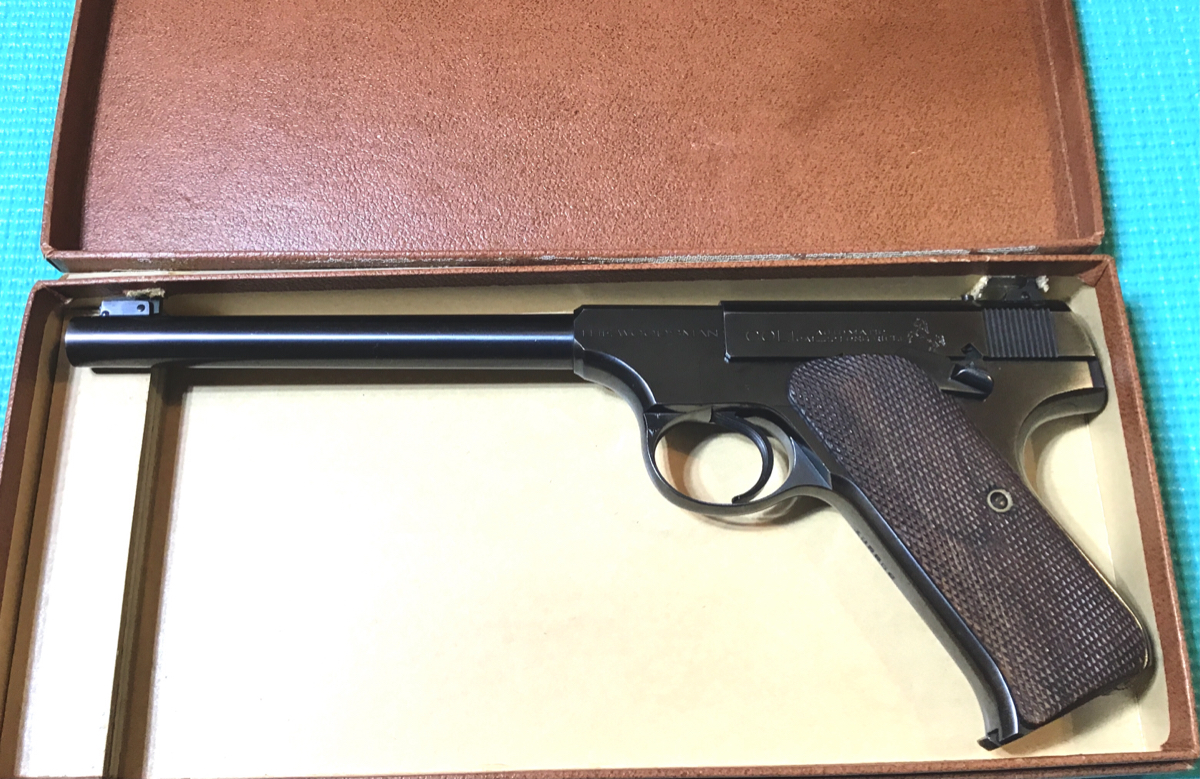
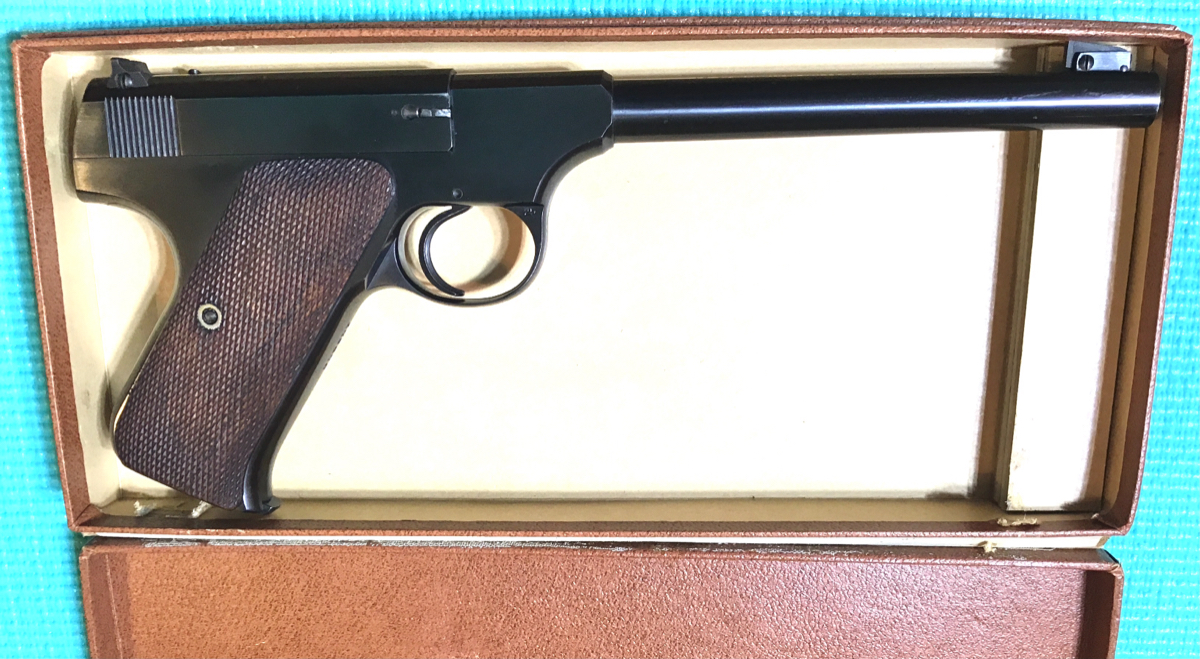
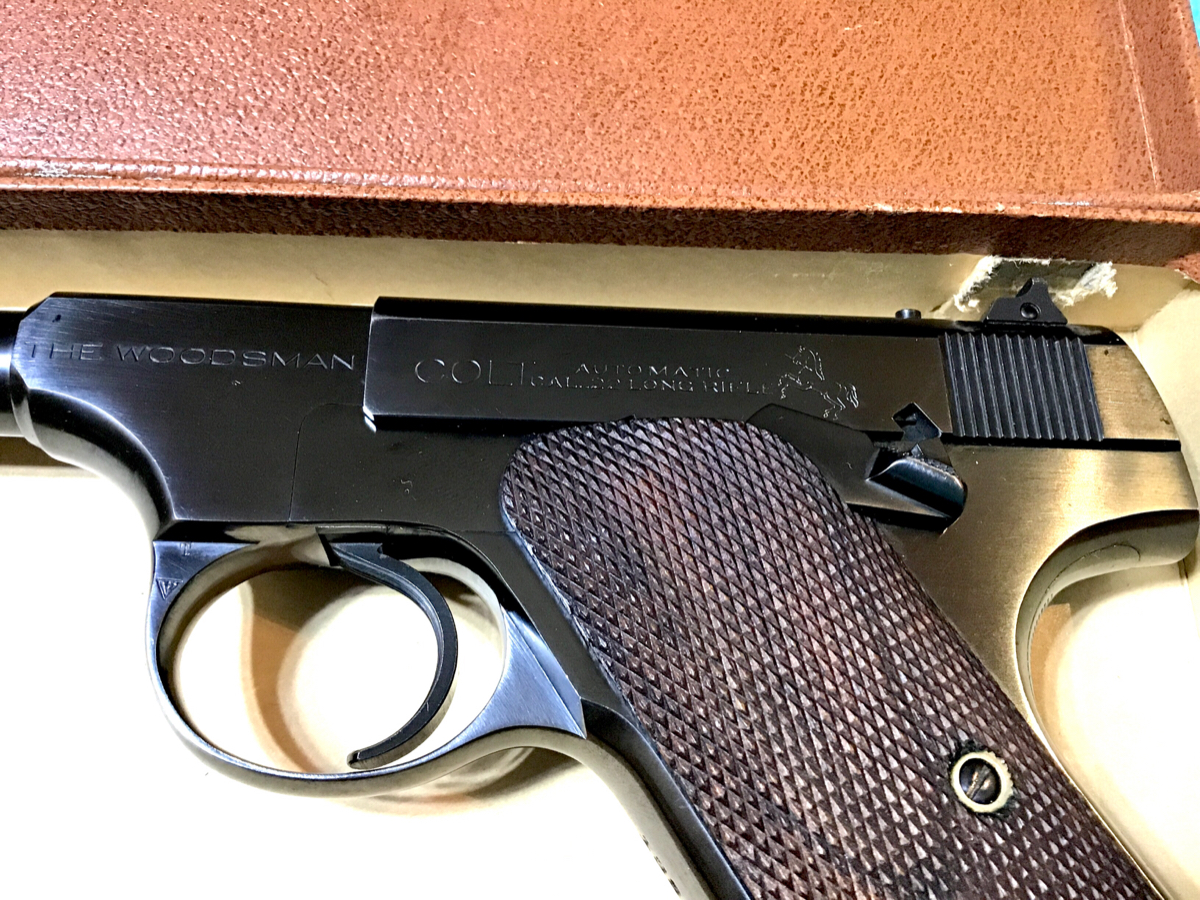
A Colt WOODSMAN in 22LR
Categories
Mini Martini Cadet in .357 Mag
Categories
Imagine the stories it could tell!

Categories
1886 Lebel POV firing
In an effort to outdo Smith & Wesson’s fast-loading, top-break revolvers, Colt brought a solid-frame, swing-out-cylinder revolver to the market in 1889. Its initial models were large-frame handguns in .38 and .41 calibers designed for military use. The success of those models led to Colt’s introduction of smaller-scaled double-actions for the law-enforcement and civilian markets.
The Colt New Pocket, a six-shot revolver offered in various .32-cal. cartridges, was introduced in 1893. Three years later, the New Police was introduced, which married the New Pocket frame with a larger grip for law-enforcement duty. It was promptly adopted by the New York City Police Dept. at the urging of then-police commissioner Theodore Roosevelt.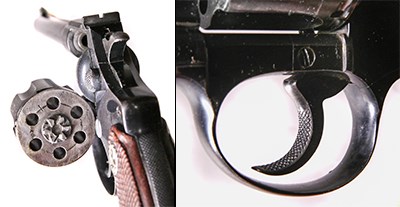
The New Pocket was replaced by the Pocket Positive in 1905. This model got its name from the “Positive Lock” mechanism patented by Colt in 1905 that prevented the revolver from firing unless the trigger was pulled. Likewise, the New Police adopted the same mechanism and added the option of .38 New Police or .38 S&W chamberings to become the Police Positive. Along with Colt’s large-frame Official Police, the Police Positive would go on to be a popular law-enforcement sidearm, and just more than 1,000 were supplied to the British during World War II.
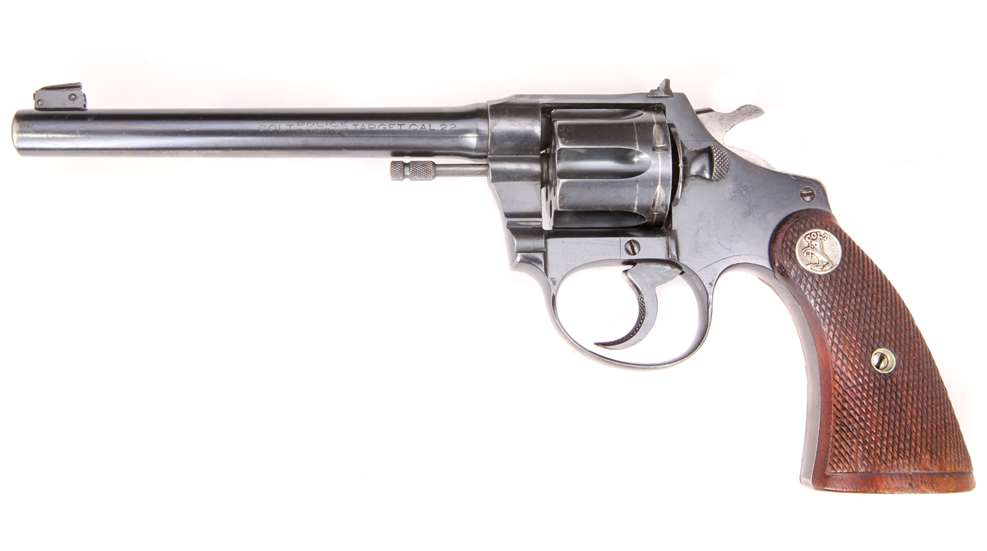
As with the New Police, a target version of the Police Positive was made. It featured a 6″ barrel and an adjustable rear sight with the topstrap of the frame matted to reduce glare. The trigger and backstrap were checkered. In addition to the .32 cartridges offered in the Police Positive, the Target model was also available chambered in .22 Long Rifle and .22 WRF. In 1923, hard rubber stocks were replaced by checkered walnut, and the cylinder’s chambers were recessed after 1934. A nickel finish was offered on both the standard and target models.
Like the Police Positive, the Target model was made in two versions. The First Issue was made from 1905 through 1925. The Second Issue began in 1926 and had a slightly heavier frame that increased the overall weight of the revolver by about 4 ozs.
The Police Positive Target would serve as a small-frame companion to Colt’s large-frame Officers Model Target. According to Colt’s marketing literature, it was “a fine arm and made to meet the demand for a light, small caliber Target Revolver—medium in price—for both indoor and outdoor shooting; light, smooth pull, well balanced, with the full Colt Grip.” The combination of an affordable price and manageable size meant that the Police Positive Target was more likely to be found on the belt of an outdoorsman than on the competition range. Consequently, many will be found, like the example pictured, with holster wear.
While production of the standard Police Positive would continue until 1947, the last Police Positive Target models were made in 1941. About 28,000 were produced over its production run. The legacy of Colt’s solid-frame, swing-out cylinder, double-action revolvers, like the Police Positive, lives on in the company’s current Anaconda, Python and Cobra models.
The Police Positive Target pictured is a Second Issue model manufactured in late 1930. It is in NRA Good Condition and is valued at $650.
Like the Police Positive, Target models will be encountered with British proofs. Target models in one of the .32-cal. chamberings will bring about a 40 percent premium compared to the rimfire versions.
Gun: Colt Police Positive Target
Manufacturer: Colt’s Mfg. Co.
Chambering: .22 Long Rifle
Manufactured: 1930
Condition: NRA Good (Modern Gun Standards)
Value: $650
Categories
Can Jerry outrun an M1 Garande?

When it comes to self-defense, you have many concealed carry options. Who you are, what you carry, what you wear and where you will be can all influence your choices.
In my previous article about the best daily carry gun, I explained that once someone decides to include a firearm in their self-defense plan and be their own “first responder,” they should carry it wherever it is legal to do so. At home, on vacation, at work, when out to dinner with friends and family — even when exercising.
If a person could predict, without a doubt, when and where a criminal attack would occur — the prudent person would just stay home that day or avoid the specific place where the crime is predicted to occur. Law-abiding citizens do not seek out trouble, but also cannot predict when trouble will find them.
Your Choice in Concealed Carry Options
Some citizens who obtain licenses to carry do not expand their training beyond that which is required to obtain the license. In most states, the required training is a “safety class” that is in no way related to carrying a pistol in public. Not building on basic firearms safety training with classes that are appropriate to carrying a gun in public is a huge mistake in my opinion.
The number of “Constitutional Carry States” has grown significantly, and more people than ever are carrying guns — which is a good thing to my mind. However, some are going about their lives without what I consider as much training as they could have, and that is unwise.
Your Choice in Concealed Carry Options
Some citizens who obtain licenses to carry do not expand their training beyond that which is required to obtain the license. In most states, the required training is a “safety class” that is in no way related to carrying a pistol in public. Not building on basic firearms safety training with classes that are appropriate to carrying a gun in public is a huge mistake in my opinion.
The number of “Constitutional Carry States” has grown significantly, and more people than ever are carrying guns — which is a good thing to my mind. However, some are going about their lives without what I consider as much training as they could have, and that is unwise.
Let me state this here — I remain strongly opposed to any type of government-mandated training, permitting or licensing to own or carry a firearm. However, it is my long-held view that responsible gun owners should voluntarily seek out training that is appropriate to their needs.
Citizens who regularly think about personal safety seek to expand their training. Unfortunately, many are often “stuck” with a “one-size-fits-some” program. Most of these programs are built around a strong side belt holster and a mid-sized or even a full-sized pistol. Many trainers are very experienced, come from law enforcement or military backgrounds and teach important skills such as shooting from unconventional positions, shooting while moving, shooting fast and accurately and the proper use of cover and concealment. Some instructors even cover the legal aspects of the use of deadly and non-deadly force as it applies to private citizens.
In my experience, though, few instructors teach people how to carry and draw a gun from a position other than from the dominant side hip. This training may work for males who normally carry on their hip — but what about females?
A New Look — Options for Women Who Carry
In my experience, many women dislike strong-side belt holsters because their hips’ shape makes an inside-the-waistband (IWB) holster uncomfortable. On the other hand, outside-the-waistband (OWB) holsters often “print” through women’s clothing.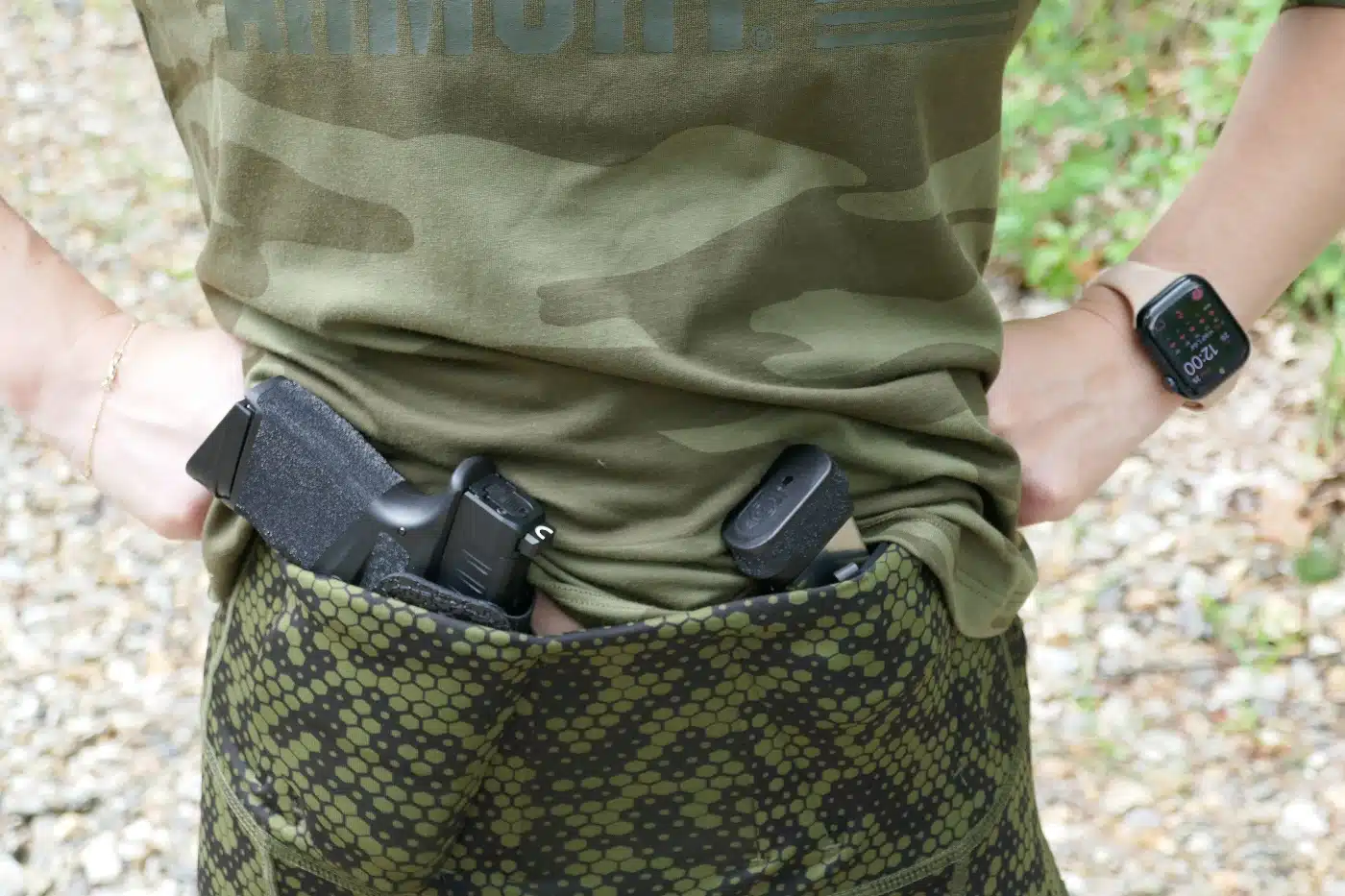
The Springfield Armory Alexo Athletica line offers an excellent line of carry-centered clothing for both men and women. Pursuant to our topic here, the women’s products offer many concealment options.
The Alexo Athletica line includes women’s leggings with built-in pouches to carry a small gun such as a Hellcat. Each pair has more than one “gun pouch”, to allow carry in a comfortable and accessible location. When paired with a DeSantis Flextech pocket holster, the trigger is properly protected.
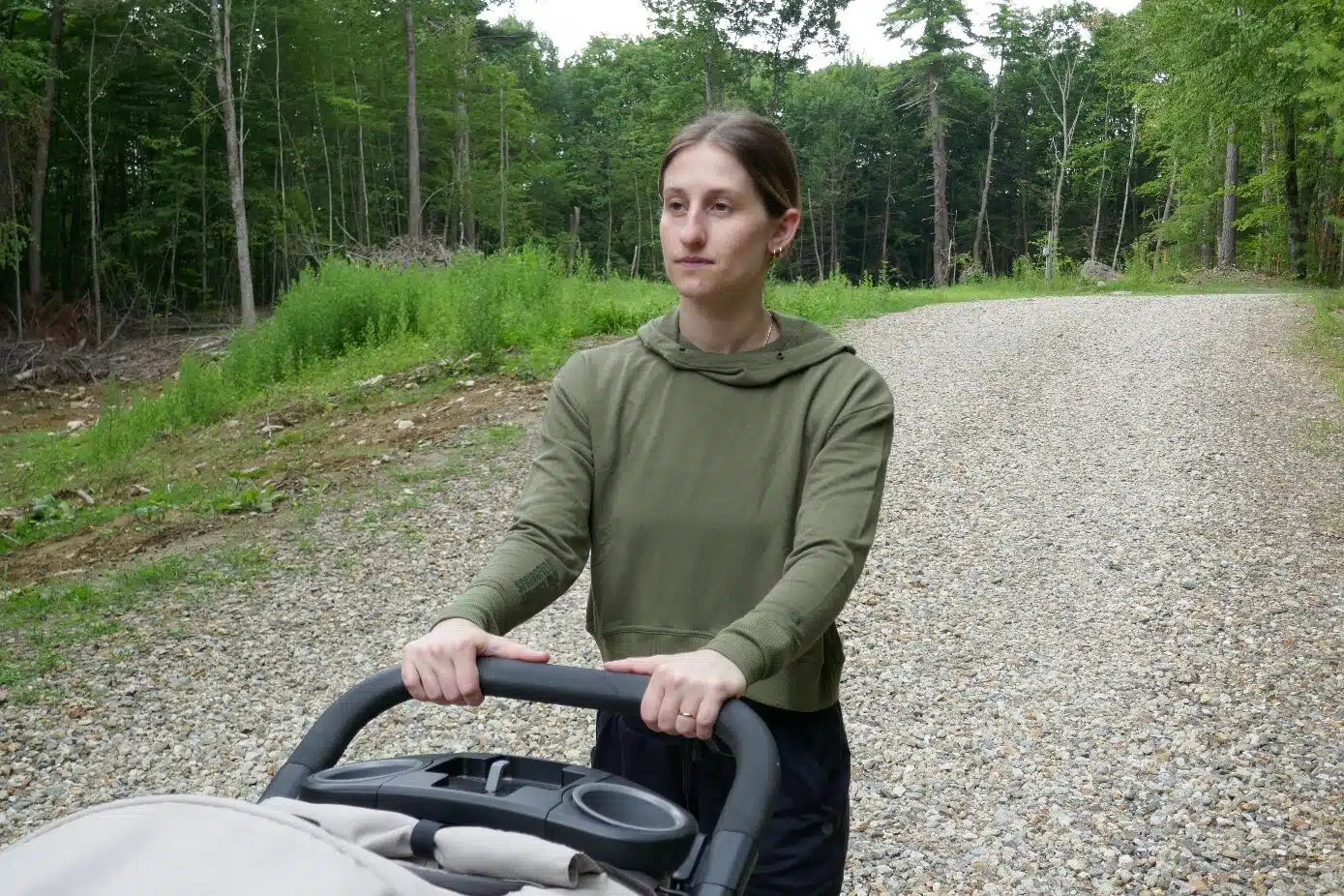
I’m acquainted with a young mother who carries a Springfield Armory Hellcat and have been helping her out with some self-defense training. The Hellcat is small enough to conceal well and packs substantial firepower due to the availability of 11-, 13- and 15-round magazines. The Alexo Athletica line of clothing works well for her because the Hellcat weighs just over a pound and fits neatly in the appendix carry position.
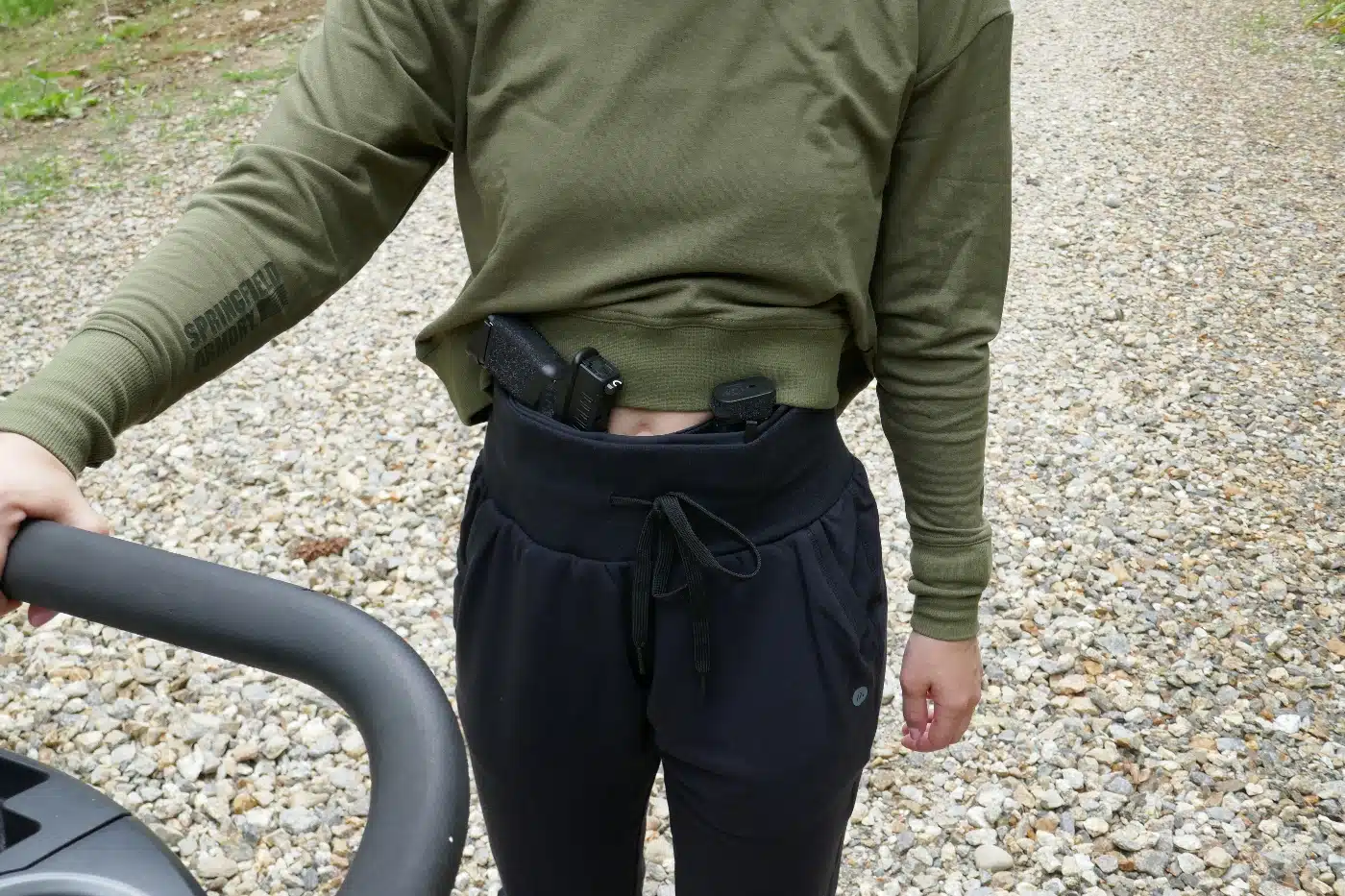
Drawing and presenting the pistol for her came relatively easy: in one day I was able to teach her these lifesaving skills. Reholstering is the same as for other pocket-style holsters. The loaded Hellcat is inserted into the DeSantis Flextech, and then the entire package is placed into the built-in pouch sewn into the Alexio Athletica leggings or pants. This lady is well-prepared; she carries a spare magazine in a NeoMag, clipped to one of the pouches on the opposite side of her body.
Packing It In with Off-Body Carry
Some women prefer to use a “holster purse” because it accommodates a full-size pistol, such as a Springfield 1911 TRP. In my experience, they like pistols like this due to their weight, as is easier for many to shoot well. Now, this type of carry requires the caveat that — unlike a pistol in a holster on your body — you must never release control of that bag since it contains a firearm.
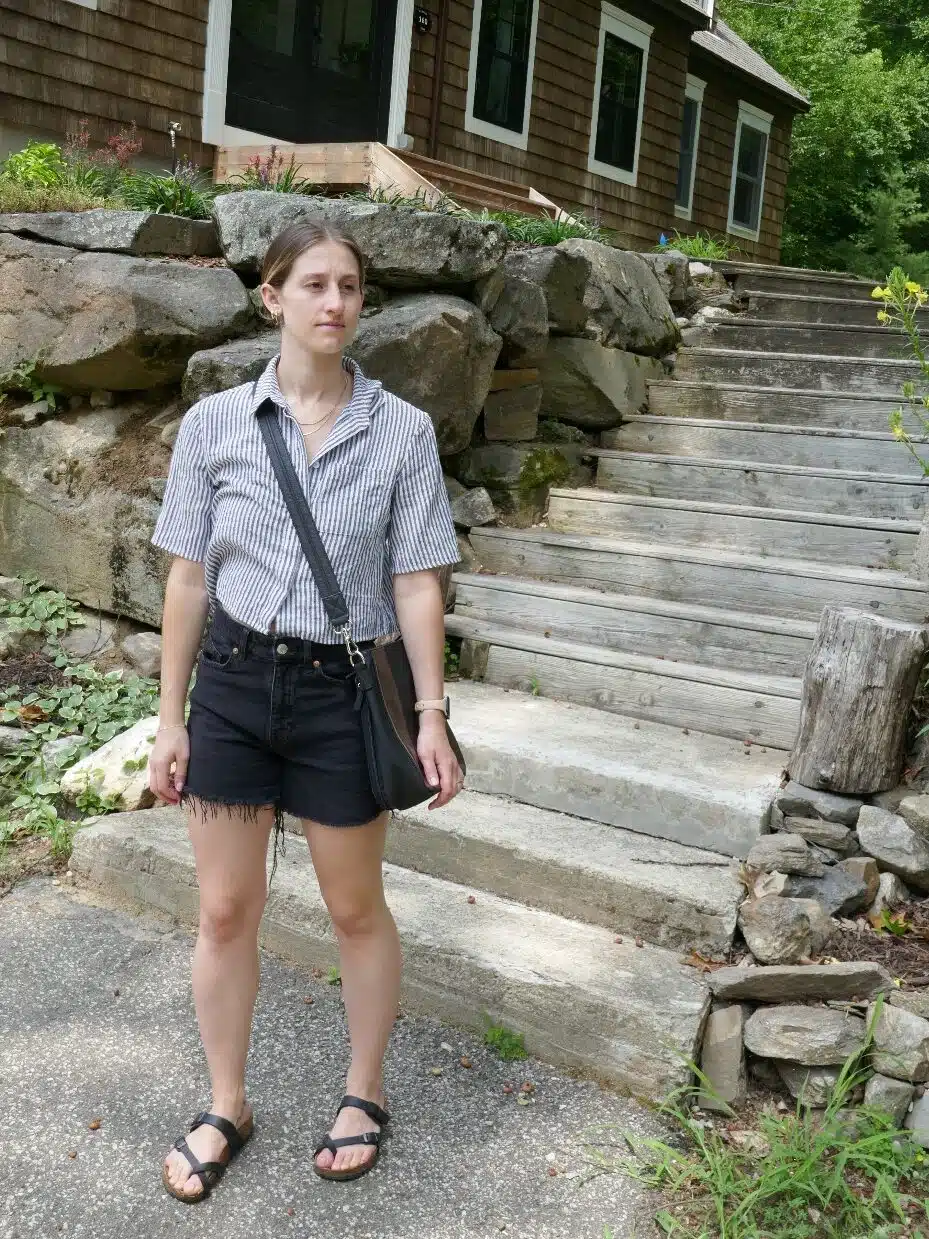
Holster purses have a pocket for a pistol that is accessed separately from the main compartment. Most quality purses intended for carrying a firearm have a strap that sandwiches a piece of metal cable between leather or fiber to prevent the purse from being violently torn away from the owner.
Drawing a pistol from a holster purse is very different than drawing from “on body” carry — including the Alexo Athletica leggings. The purse needs to be carried so that the concealed pistol points in a safe direction and, when needed, repositioned so that it is pointed at the threat. The user must reach inside, get a firing grip on the pistol and then use the support hand to pull the purse away from the pistol after having manipulated the zipper to open the pouch. In this mode of drawing, the purse ends up on the support side of the body and the pistol is pointed at the threat without crossing anyone or anything else.
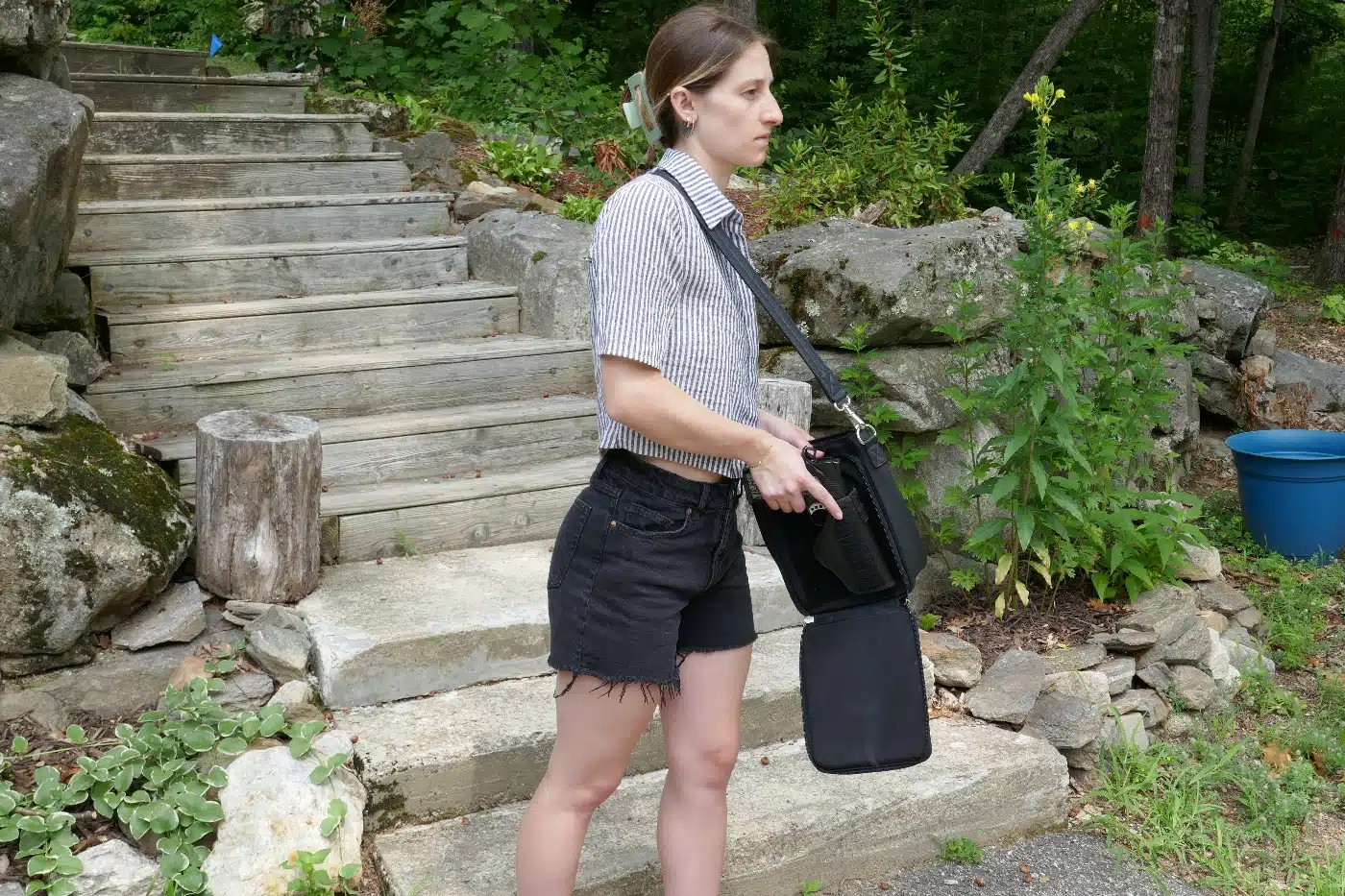
This technique must be practiced with an unloaded gun — guided by a qualified firearms instructor — until it is reflexive. Once the draw has been perfected, then and only then should the trainee move on to live-fire practice using the holster purse with their preferred carry gun.
As noted, the trade-off of using a Holster Purse is that it can never be put down as long as there is a firearm in it. Not in a shopping cart, not on an empty chair in a restaurant — never. Those who carry a gun should never lose (or give up) control of their firearm, and a firearm should never be left where unauthorized people may be able to grab it.
Final Thoughts on Your Concealed Carry Options
When I work with someone who has requested specialized training, I spend time learning about their lifestyle, daily activities and which types of carry methods they intend to use and why. I also ask about any other training they may have so I can get an idea of what if any, basic pistol handling skills they may have already learned.
Once I have learned as much as I can, I develop an individualized training plan. It is best to always start off with an unloaded pistol and practice drawing without the use of a cover garment. Once the draw stroke has been mastered AND my student can place accurate hits on a silhouette target from three to 15 yards, we incorporate drawing from concealment.
Most carry methods are not hard to master, but in order to properly learn these life-saving skills, gun owners should seek out training from an experienced and well-qualified instructor to learn how to draw and aim a pistol from someplace other than a holster on a belt on the dominant side of the body.