Categories
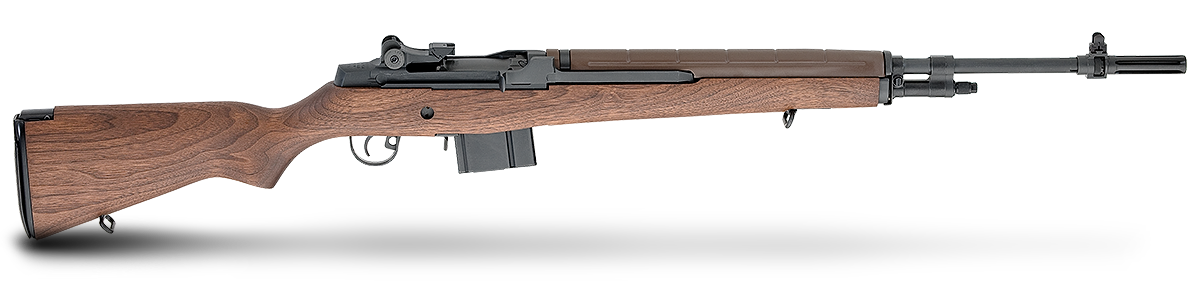
The renowned M14 service rifle has a complex history: it was the U.S. military’s shortest-lived service rifle yet one of the longest in service. While its time as a standard-issue rifle for G.I.s was brief, its power and performance have ensured its continued use as a sniper and Designated Marksman Rifle (DMR), cementing its legacy.
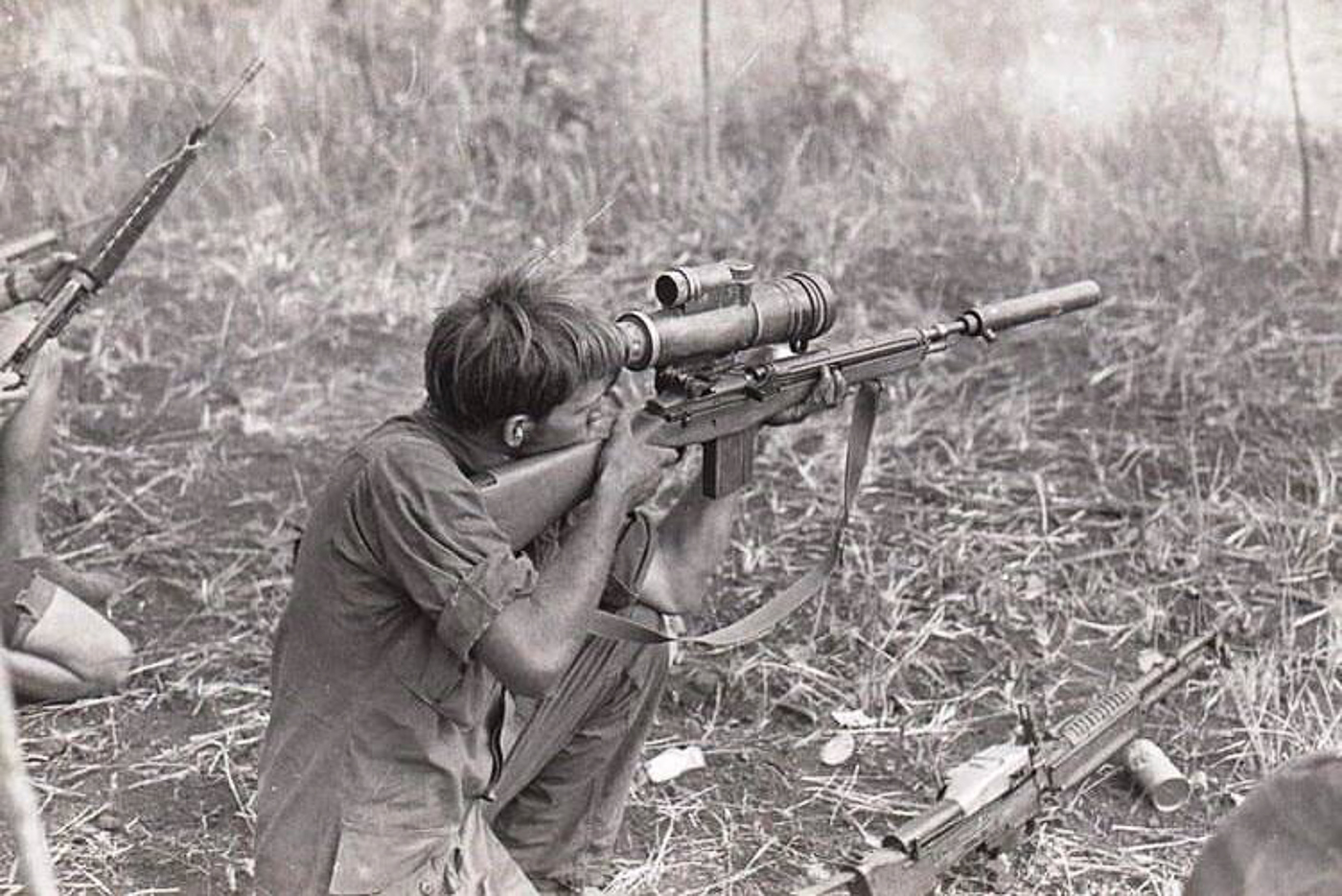
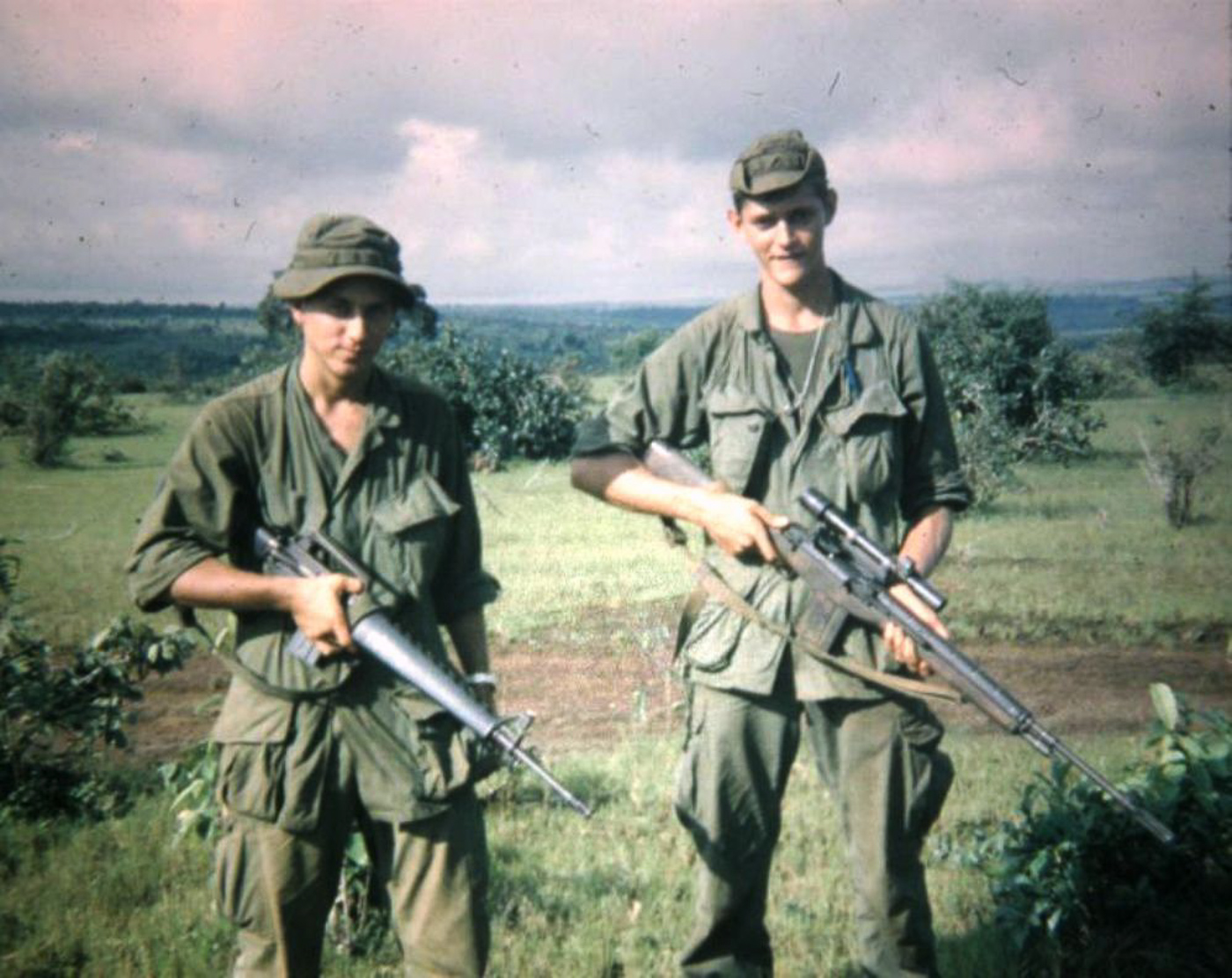
In fact, while the M14 initially served as the primary service rifle in the dense jungles of Vietnam, it was also there that it earned its place among the pantheon of American sniper rifles.
In Vietnam, the U.S. military quickly recognized the need for accurate long-range fire to engage distant targets and conduct counter-sniper operations. Early in the Vietnam conflict, marksmen relied on aging M1C and D Garands from World War II. Some fortunate snipers received accurized M14 rifles used in marksmanship competitions.
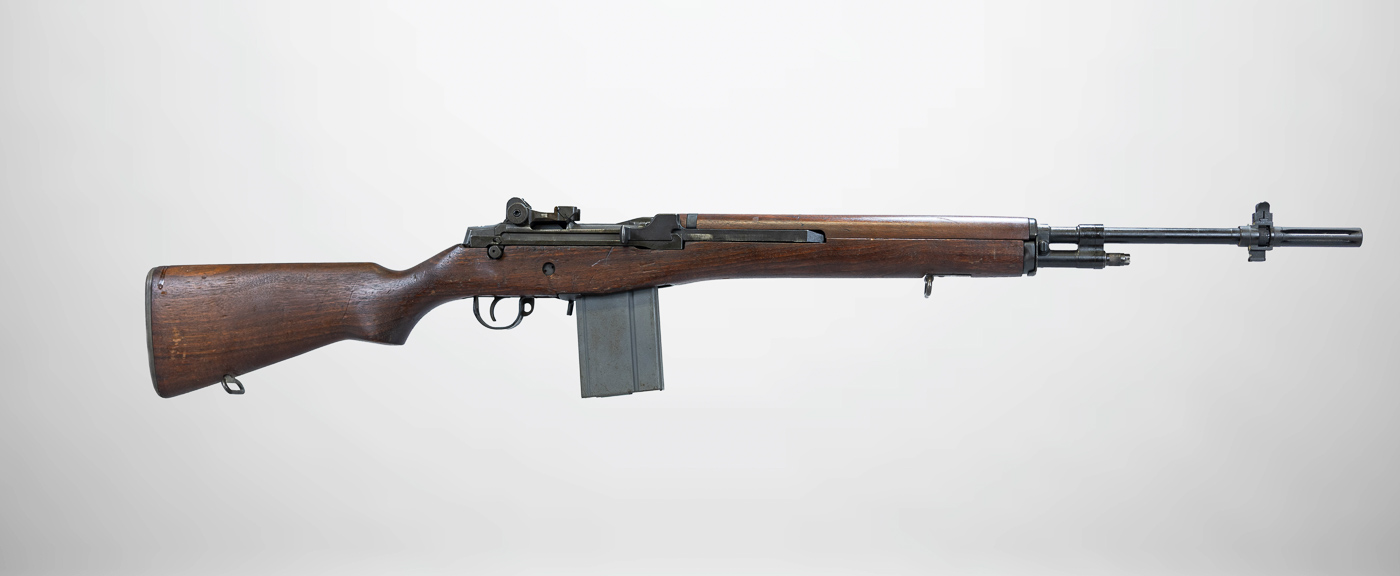
The Army was slow to develop sniper doctrine, especially compared to the Marine Corps. This slow progress finally sped up on February 23, 1967, when the Headquarters, U.S. Army, Vietnam, issued a “Letter of Instruction” to the Army Concept Team in Vietnam (ACTIV) to “determine the organizational, doctrinal, and material requirements for sniper operations by U.S. Army units in the Republic of Vietnam.” All ahead full.
Army leadership now recognized the strategic value and need for snipers. The Army adopted a systematic approach to selecting rifles and establishing training standards. After issuing instructions to ACTIV, an information-gathering campaign began.
ACTIV worked diligently to collect information, evidence, and firsthand accounts from field commanders who used snipers, even when those commanders had limited sniping resources.
This also included communication with the Army Marksmanship Unit at Fort Benning, Georgia (USAMU). While not snipers learned in the art of stalking, these shooters were the Army’s top marksmen and experts on rifles and riflery. The USAMU provided advice on rifles, precision shooting techniques, and other essential equipment.
That spring, Winchester Model 70 and M14 rifles arrived. Over the next six months, ACTIV observed and gathered data as they worked to develop a clear understanding of sniper operations in Vietnam. In 1968 — one year later — ACTIV’s findings were released in the classified document titled “Sniper Operations and Equipment.” In it, ACTIV recommended:
(3) The accurized M14 was to be designated as the standard sniper rifle in Vietnam.
(4) A standard sniper telescope was to be designated.
(5) A sniper-training program was to be provided for units in Vietnam.
(6) Expand doctrine for employment of snipers to be developed and included in appropriate field manuals.
ACTIV’s listings were further expanded in an official document titled “Equipment for the American Sniper.” In it, it stated, “It is safe to say that the American sniper could be regarded as the greatest all-around rifleman the world has ever known, and his equipment should include the best aids to his dangerous calling that the inventive genius of the United States can produce.” For American snipers to succeed, they relied on the United States’ military-industrial strength.
The Army, which aimed to develop sniper tactics, training, and systems in-country (rather than in the U.S.), needed a ready-made rifle option. This had to be either existing military hardware or civilian-built. The first four rifles reviewed included an accurized M14 with a 2.5X M84 riflescope, the M14 National Match Rifle (used by the USAMTU) equipped with a Redfield scope, an M16 with a 3X Realist sight, and finally, the Winchester Model 70 with a 3X Weaver scope.
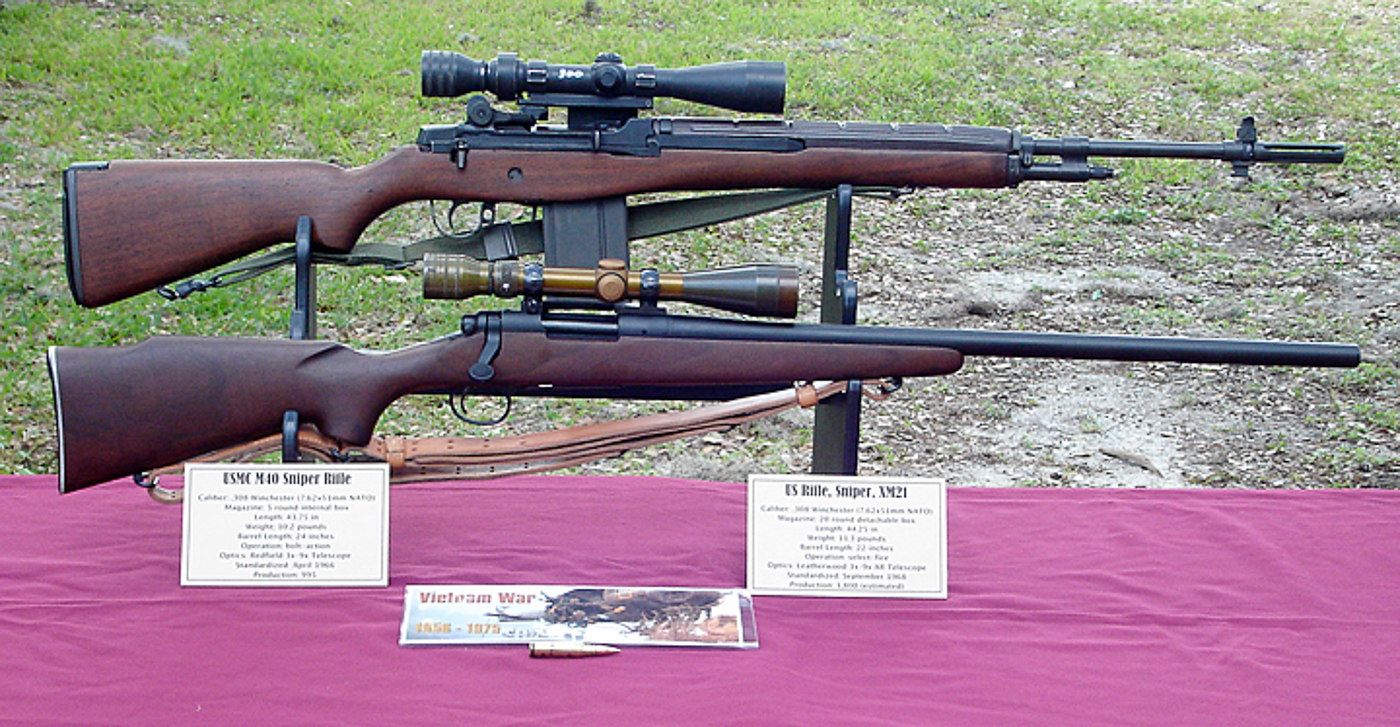
For similar reasons to the Marine Corps, the Model 70 was quickly relegated because of its .30-06 Springfield chambering. Additionally, without access to competition-level ammunition for the M16, the platform faltered, though the idea of an accurized M16 platform persisted for later development.
As for the two M14 variants, there was not much that distinguished them. The only difference was the mounting systems for their respective optics. Selected M14 rifles received match-grade barrels, unitized gas systems, trimmed handguards, and reamed flash suppressors. The rifle’s triggers were adjusted to slightly over 4.5 pounds, National Match sights were fitted, and actions were glass bedded. The Army also had access to the renowned Lake City M118 7.62x51mm match ammunition used by the Marine Corps.
During testing, end users were 75%-100% confident in the M14 system, with the optic option receiving high praise. In ACTIV’s final report, examiners stated, “The major reason for the preference of the M14 was greater range and accuracy.
The limited number of commanders who had experience with the M14 w/ ART preferred it to the M14 w/ M84 because of the power and the range-finding feature of the telescope.” ACTIV concluded that the Accurized M14 should “be designated as the standard sniper rifle for Vietnam.” (This, of course, was not limited to the Vietnam conflict, but to global units).
In February of 1969, the M14 was adopted as the XM-21, and Rock Island Arsenal quickly went to work. Throughout the war, Rock Island built more than 1,200 rifles. In 1972, the XM21 was officially adopted as the Rifle, 7.62mm Sniper 21, or simply, the M21.
The M21 received both praise and criticism. Its service life extended well beyond the Fall of Saigon. However, the original rifle was never designed to be a sniper rifle. The main flaw was the nature of the system itself. Its accuracy was adequate for general infantry use, but to get the most out of the platform, it required the services of actual armorers. This made field servicing difficult. That said, the M21 did have notable successes.
The legacy of the M21 is murky. Like previous conflicts, after the withdrawal from Vietnam, the Army’s sniper program went dormant. However, in the late 1970s, renewed interest emerged in establishing a dedicated sniper school amid Cold War tensions.
The M21 competed with the M40A1 and other commercially available rifles, eventually maintaining its status as the Army’s primary sniper rifle. While the rifle performed well, in 1988, after a longer-than-expected service life, it was replaced by the M24 bolt-action rifle, similar to the Marines’ M40A1.
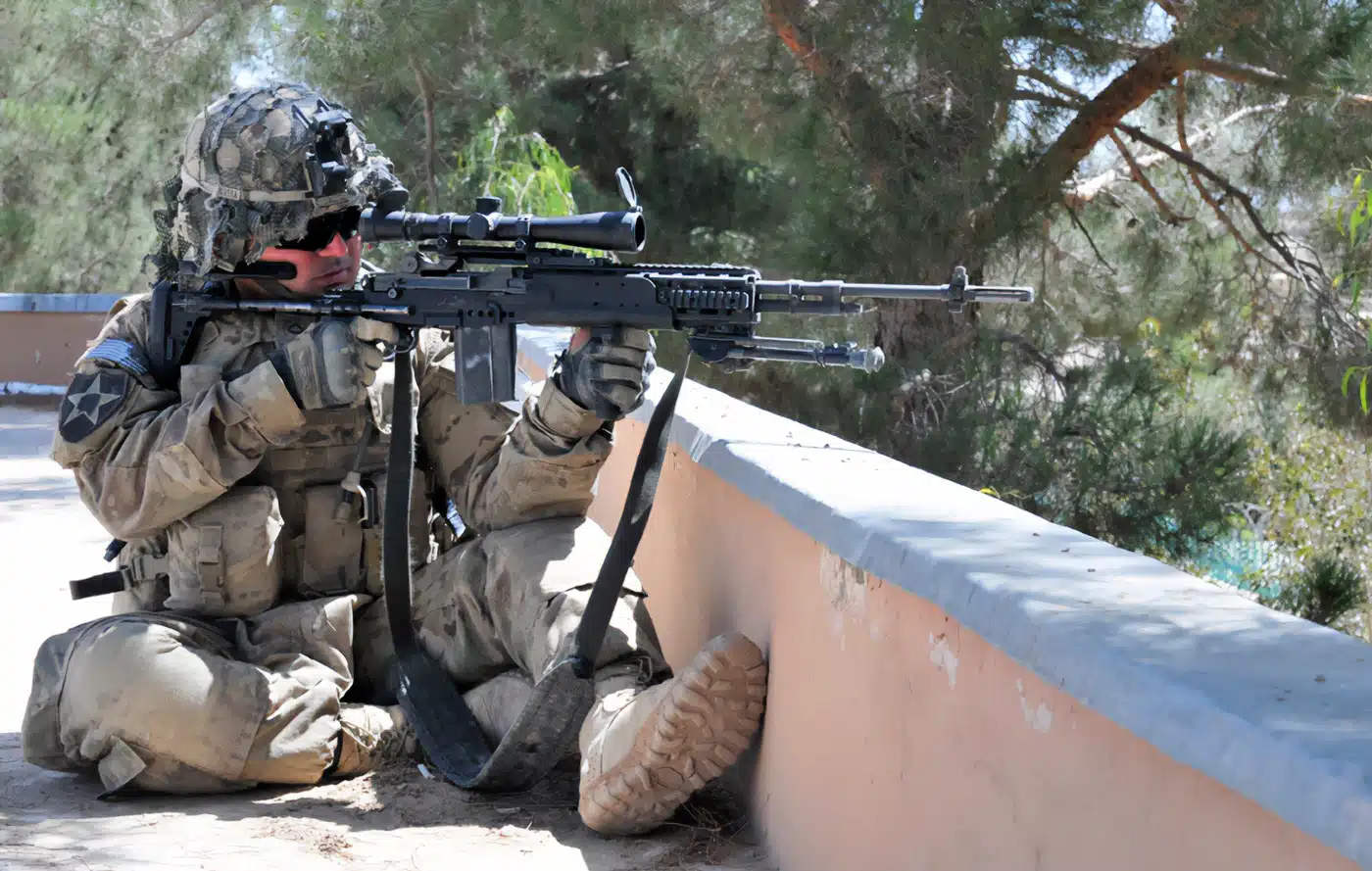
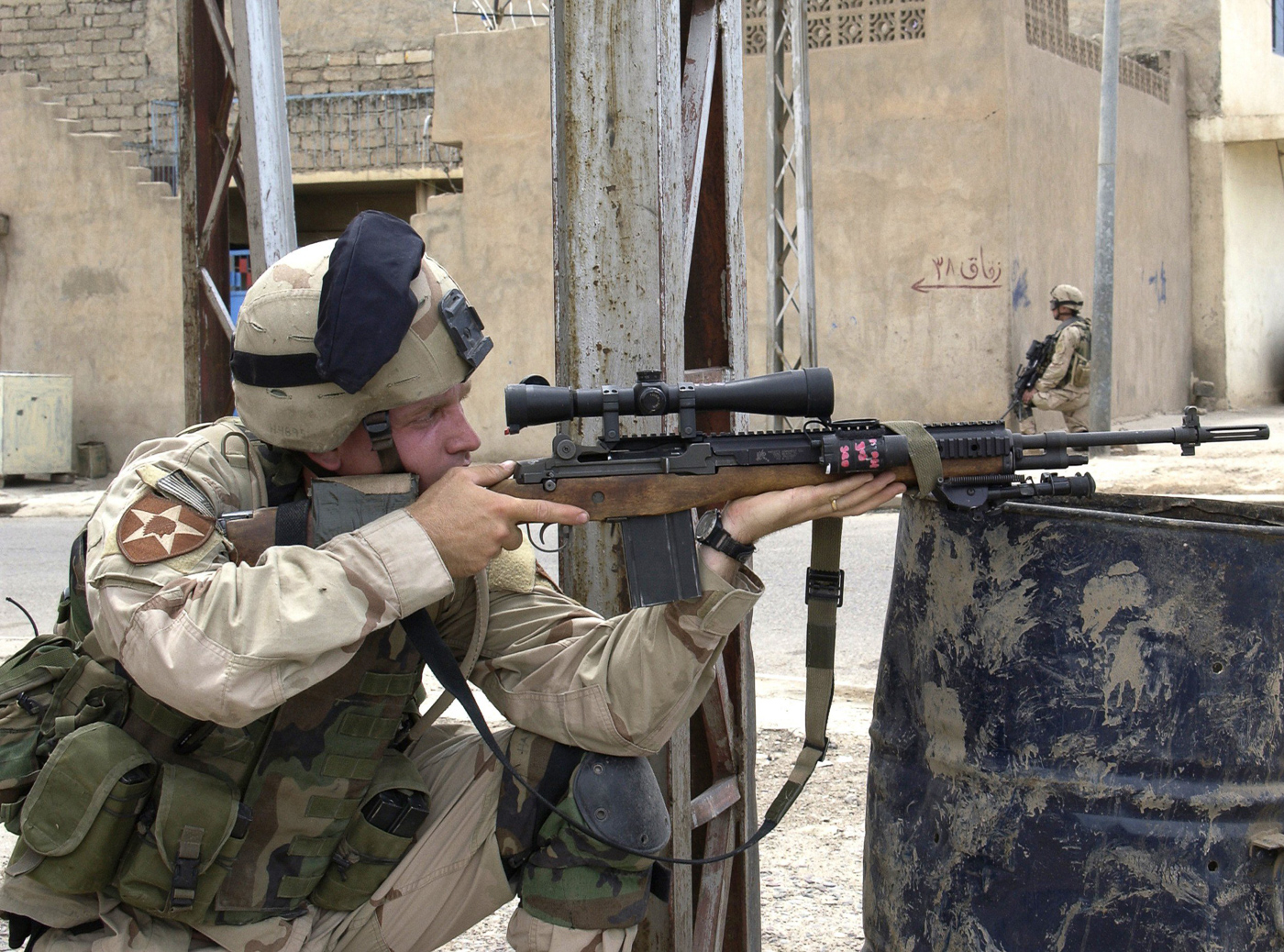
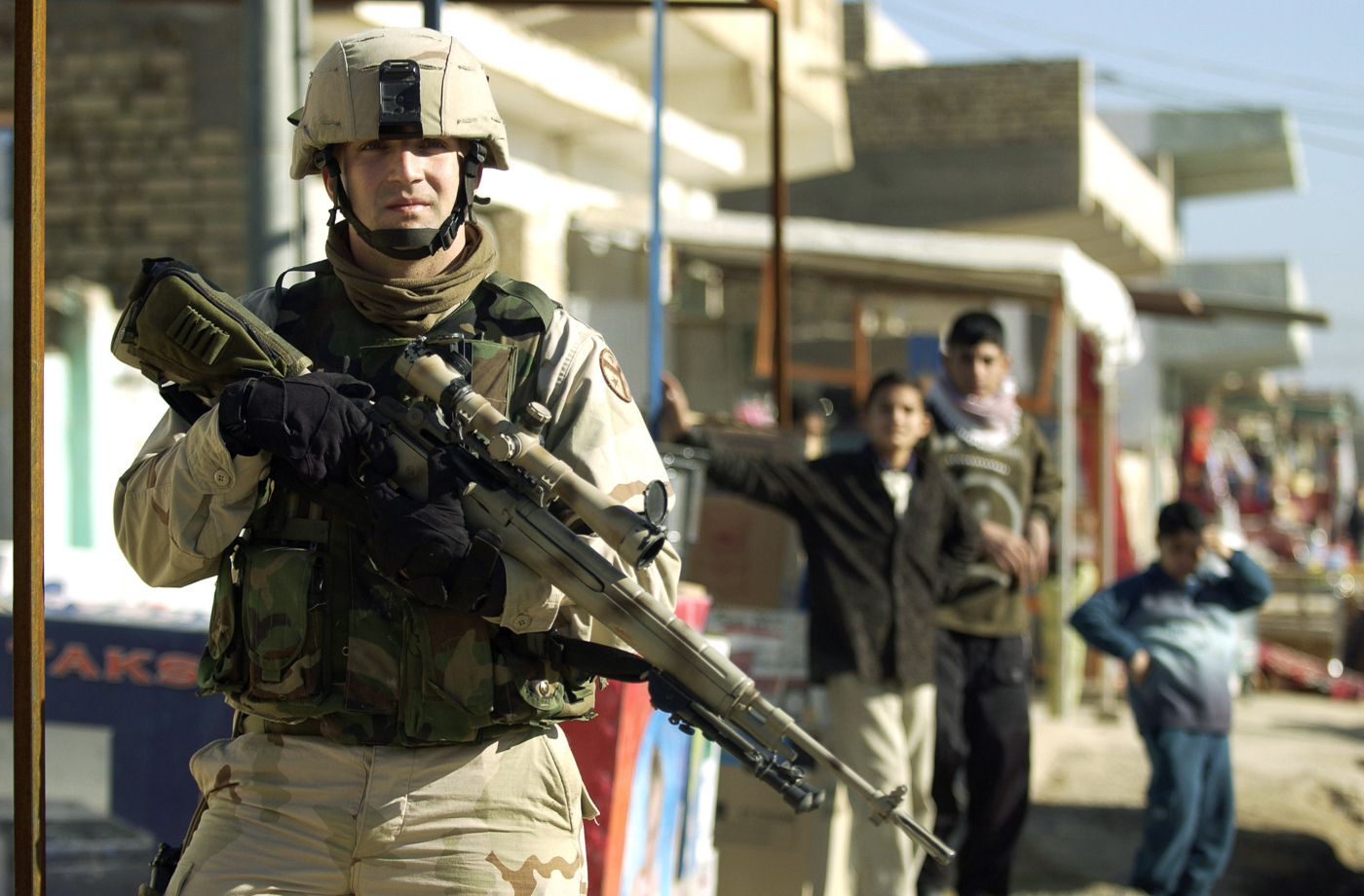
Interestingly, the M21 is a rifle that refuses to go quietly. As the 21st-century conflicts in Afghanistan and Iraq expanded in scope and complexity, the U.S. Army needed a force multiplier weapon. The M21 was once again pressed into combat by both snipers and newly formed Designated Marksman Units to provide precision fire support for small infantry units in the Global War on Terror (GWOT). A notable part of the rifle’s history was the development and deployment of the M14 EBR (Enhanced Battle Rifle).
The M14 EBR featured a chassis made from lightweight aircraft aluminum (developed by Sage International). This chassis was designed to support night vision devices mounted in front of the day optic, along with various combat accessories never before used in modern warfare. The system was designed to be ready for soldiers right out of the box. Pentagon officials viewed the M14 EBR-RI as an interim solution and eventually replaced it with the M110.
The M21 is a crucial rifle to study when exploring the history of American snipers. The M21 was developed during the height of sniper evolution. While earlier conflicts employed snipers in different roles, it was in Vietnam’s jungles that military strategists truly recognized their battlefield importance.
The M14, while a short-lived battle rifle, became one of history’s most influential weapons, helping shape the American sniper community. First with the Cold War and through the Global War on Terror, the M14 performance has cemented the rifle as one of the most unique and significant sniper rifles in America’s arsenal. Today’s version of the rifle continues in service as the M21A5 Crazy Horse where is has served around the globe including in combat operations in Iraq and Afghanistan.
Editor’s Note: Please be sure to check out The Armory Life Forum, where you can comment about our daily articles, as well as just talk guns and gear. Click the “Go To Forum Thread” link below to jump in!



Situation: Early in your life, you find yourself set against the most dangerous and vicious criminals of your place and time.
Lesson: You will be proud of stopping murderous violence. You will regret not being present when you might have been able to do so. And you’ll find ways to do things differently and, sometimes, better.
The year 2023 is the 200th anniversary year of the Texas Rangers. James Gillett (1856-1937) wrote his autobiographical Six Years With the Texas Rangers in 1921. He is one of the few gunfighters of the Old West who left an account of his adventures in his own words. Remembered by firearms historians as the proponent of an unusual method for carrying a six-gun, his legacy includes more lessons than that.
Gillett wrote that at the age of 12, he bought an Enfield percussion musket for $3.50. “It was almost as long as a fence rail, and at my age, I could not begin to hold it out and shoot it off-hand, so I had to use a rest … I could cock my gun with both hands, but if I failed to get a shot, I was not strong enough to let the hammer down without letting it get away, so I had to carry it cocked.
To keep from losing the (percussion) cap, I would take it off the tube and put it in my pocket until I had a chance for another shot,” he wrote. Gillett added that a year later, “I bought a double-barrel shotgun for $12. With it, I killed quail, ducks, and other small game, all of which I sold on the streets of Austin. By the fall of 1870, I was 14 years old and could handle a gun rather well for one of my age.”
Gillett became a working cowboy at about age 16, and it wasn’t long after that he joined the Texas Rangers. It was 1875, and he would have been about 19. He was not the only teen to join that storied band. The youngest Texas Ranger killed in the line of duty, as historian Tom Clavin reports in his book Follow Me To Hell: McNelly’s Texas Rangers and the Rise of Frontier Justice, was L.B. “Sonny” Smith, shot and killed at age 17 by rustlers in a pitched gun battle in June of 1875. Other Rangers avenged the death, shooting the young man’s killers “to doll rags” in the parlance of the time.
One element of a Texas Ranger’s job description in that time and place was “Indian Fighter.” It was a couple of months after young Smith’s death that Jim Gillett got into his first shootout, a battle between a company of Rangers and a group of well-armed Indians. Wrote Gillett, “The captain with a smile turned to us and said, ‘Boys, they are going to fight us. See how beautifully the old chief forms his line of battle.’ From a little boy, I had longed to be a Ranger and fight the Indians. At last, I was up against the real thing, and with not so much as an umbrella behind which to hide, I was nervous. I was awfully nervous.”
Gillett continued, “In a minute, we had killed two horses and one Indian was seen to be badly wounded.” The situation devolved into the Rangers pursuing their foe, both on horseback. Gillett related, “The redskin riding behind would point his gun back and fire at me, holding it in one hand. I retaliated by firing at him every time I could get a cartridge in my old Sharps carbine. I looked back and saw Ed Seiker coming to my aid as fast as (his horse) would run. He waved encouragement to me. Finally, the old brave ceased shooting, and as I drew a little closer, he held out his gun at arm’s length and let it drop, probably thinking I would stop to get it. I gave it but a passing glance as I galloped by …
I drew up within 20 steps of the brave, jumped from my mount, and made a sort of random shot at the horse, Indian and all. The big .50 caliber bullet struck the Indian pony just where its head coupled on its neck, passed through the head, and came out over the left eye. It killed the horse at once, which fell forward 20 feet.”
Then, wrote Gillette, “By this time Ed Seiker had arrived and was dismounting. The fugitive warrior now peeped from behind a tree, and I got a fine shot at his face but overshot him 6″, cutting off a limb just over his head. He broke to run again, and as he came into view, Ed placed a bullet between his shoulders. He was dead in a minute … Seiker scalped him. We took his bow, shield, and a fine pair of moccasins.”
Gillett wrote that at the age of 12, he bought an Enfield percussion musket for $3.50. “It was almost as long as a fence rail, and at my age, I could not begin to hold it out and shoot it off-hand, so I had to use a rest … I could cock my gun with both hands, but if I failed to get a shot, I was not strong enough to let the hammer down without letting it get away, so I had to carry it cocked. To keep from losing the (percussion) cap, I would take it off the tube and put it in my pocket until I had a chance for another shot,” he wrote. Gillett added that a year later, “I bought a double-barrel shotgun for $12. With it, I killed quail, ducks, and other small game, all of which I sold on the streets of Austin. By the fall of 1870, I was 14 years old and could handle a gun rather well for one of my age.”
Gillett became a working cowboy at about age 16, and it wasn’t long after that he joined the Texas Rangers. It was 1875, and he would have been about 19. He was not the only teen to join that storied band. The youngest Texas Ranger killed in the line of duty, as historian Tom Clavin reports in his book Follow Me To Hell: McNelly’s Texas Rangers and the Rise of Frontier Justice, was L.B. “Sonny” Smith, shot and killed at age 17 by rustlers in a pitched gun battle in June of 1875. Other Rangers avenged the death, shooting the young man’s killers “to doll rags” in the parlance of the time.
One element of a Texas Ranger’s job description in that time and place was “Indian Fighter.” It was a couple of months after young Smith’s death that Jim Gillett got into his first shootout, a battle between a company of Rangers and a group of well-armed Indians. Wrote Gillett, “The captain with a smile turned to us and said, ‘Boys, they are going to fight us. See how beautifully the old chief forms his line of battle.’ From a little boy, I had longed to be a Ranger and fight the Indians. At last, I was up against the real thing, and with not so much as an umbrella behind which to hide, I was nervous. I was awfully nervous.”
Gillett continued, “In a minute, we had killed two horses and one Indian was seen to be badly wounded.” The situation devolved into the Rangers pursuing their foe, both on horseback. Gillett related, “The redskin riding behind would point his gun back and fire at me, holding it in one hand. I retaliated by firing at him every time I could get a cartridge in my old Sharps carbine. I looked back and saw Ed Seiker coming to my aid as fast as (his horse) would run. He waved encouragement to me. Finally, the old brave ceased shooting, and as I drew a little closer, he held out his gun at arm’s length and let it drop, probably thinking I would stop to get it. I gave it but a passing glance as I galloped by …
I drew up within 20 steps of the brave, jumped from my mount, and made a sort of random shot at the horse, Indian and all. The big .50 caliber bullet struck the Indian pony just where its head coupled on its neck, passed through the head, and came out over the left eye. It killed the horse at once, which fell forward 20 feet.”
Then, wrote Gillette, “By this time Ed Seiker had arrived and was dismounting. The fugitive warrior now peeped from behind a tree, and I got a fine shot at his face but overshot him 6″, cutting off a limb just over his head. He broke to run again, and as he came into view, Ed placed a bullet between his shoulders. He was dead in a minute … Seiker scalped him. We took his bow, shield, and a fine pair of moccasins.”
In December of 1877, the Rangers were after a murder suspect named Dick Dublin. When they caught up with him, Gillett wrote, “We were so close upon Dublin that he had no time to mount his horse or get his gun, so he made a run for the brush. I was within 25 yards of him when he came from behind the wagon, running as fast as a big man could. I ordered him to halt and surrender, but he had heard that call too many times and kept going. Holding my Winchester carbine in my right hand, I fired a shot directly at him as I ran. In a moment, he was out of sight.”
Gillett continued, “I hurried to the place where he was last seen and spied him running up a little ravine. I stopped, drew a bead on him, and again ordered him to halt. As he ran, Dublin threw his hand back under his coat as though he were attempting to draw a pistol. I fired. My bullet struck the fugitive in the small of the back just over the right hip bone and passed out near his left collar bone. It killed him instantly. He was bending over as he ran, and this caused the unusual course of my ball …We found him unarmed, but he had a belt of cartridges around his waist.”
There were times when Gillett was on the scene of famous gun battles but wasn’t the man who pulled the trigger on the outlaw in question. Gillett was among the party that took down infamous outlaw Sam Bass. He wrote, however, “Bass’ death wound was given him by Dick Ware, who used a .45 caliber Colt’s long-barreled six-shooter.
The ball from Ware’s pistol struck Bass’ belt, cutting two cartridges in pieces and entering his back just above the right hip bone. The bullet mushroomed badly and made a fearful wound that tore the victim’s right kidney all to pieces. From the moment he was shot until his death three days later, Bass suffered untold agonies.”
Gillett was among the many who pursued the great Apache war chief Victorio, and reading between the lines of the Ranger’s autobiography, it’s clear he wanted to be in on the kill of an enemy he considered responsible for the murder of many innocent settlers. Many whites in the West bitterly believed “the only good Indian was a dead Indian,” and Gillett’s chapter on the Apache chief was, in fact, titled “Victorio Becomes a Good Indian.” The chief had been killed in a battle with Mexican forces. Gillett bore a grudging respect for Victorio and declared him a brilliant strategist. Such was the hatred — and occasional atrocity — that manifested on both sides of the Indian Wars on the 19th Century American frontier.
At the end of 1881, two Mexican brothers murdered a New Mexico newspaper publisher in Socorro and fled across the border. The brothers were spotted in El Paso, Texas, where their uncle was a judge. Gillett arrested one brother (and, mistakenly, another innocent man) and angrily refused the judge’s bribe of $1,000 to let his nephew go. A month later, acting on a tip, Gillett and fellow Ranger George Lloyd crossed into Mexico, seized the other killer brother, and brought him back across the border. The suspect was snatched from Gillett by a lynch mob and promptly strung up.
“Expedited extradition” or kidnap? Gillett answered that question himself. He wrote, “… I thought I might as well ’fess up.’ I told (Texas Ranger Captain Baylor) I had arrested Baca at Saragosa and kidnapped him out of Mexico. Captain Baylor’s eyes at once bulged to twice their natural size.”
Though Gillett was not criminally charged for his action, it brought his six-year career with the Texas Rangers to an end.
In Old El Paso
Gillett wrote, “Immediately on leaving the Rangers, I had accepted a position as a captain of guards on the Santa Fe Railroad under my friend, Captain Thatcher. I did not remain long in the railroad’s employ, however, resigning after a few months to become assistant city marshal under Mr. (Dallas) Stoudenmire (in El Paso).
On his resignation as marshal, I was appointed to succeed him.” Stoudenmire was unfortunately on an alcoholic downward spiral and soon got into a brawl with an ex-deputy named Page at the Acme Saloon. The local newspaper reported, “Stoudenmire drew his pistol and fired at Page; the latter, however, knocked the weapon upward, and the ball went into the ceiling. Page then wrenched the pistol from Stoudenmire and the latter drew a second pistol and the two combatants were about to perforate each other when Marshal Gillett appeared on the premises with a double-barrel shotgun and corralled both of them.” Stoudenmire would later die in another booze-fueled saloon shoot-out.
In the spring of 1885, Jim Gillett resigned from El Paso to go into ranching. He died peacefully at age 80 in 1937 at his ranch in Marfa, Texas.
We old gun guys consider the book Triggernometry: A Gallery of Gunfighters by Eugene Cunningham (1896–1957) to be a classic “must read” in the field. Younger gun guys and gals should consider it likewise. It was first published in 1941. Its author knew some of the last surviving Old West gunfighters. He dedicated the book to a pair of straight-shooting Texas Rangers who had personally mentored him. One was the legendary John Hughes. The other was … Jim Gillett.
Cunningham wrote, “During (John Wesley Hardin’s) transfer from one jail to another in the custody of Ranger Lieutenant N.O. Reynolds, the Ranger guards were very curious, as men of arms, to see what this wizard of the sixes could do. With Lieutenant Reynolds’ grudging consent, they handed Hardin empty pistols and told him to show his stunts. Jim Gillett says nothing he had ever dreamed of compared with Hardin’s speed and skill. The quick draw, the spin, the rolls, pinwheeling, border shift — he did them all with magical precision.”
Though he was known to carry guns in many holsters or even stuffed inside his shirt, Hardin was famous for having designed and often worn a leather vest with holsters built in, butt forward, riding in a similar fashion to shoulder holsters. Gillett was clearly aware of this.
Added Cunningham, “When James B. Gillett succeeded Dallas Stoudenmire as chief of police of old El Paso … (his admirers) presented him with a beautiful pair of white-handled double-action six-shooters, holstered in a John Wesley Hardin vest. Captain Gillett relates with much enthusiasm his pride in the outfit. He went back to his office and exhibited the vest and pistols to his deputies. They were impressed by the elegance of the rigout. They asked for a demonstration of Wes Hardin’s cross-arm draw. Gillett says he lifted his hands to shoulder level, then snapped them down, crossing each other to the butts of the new weapons. His hands interfered with each other. The pistols, coming out, clashed together. He tried it again and again, with little more success. Deputy Marshal Scotten said gravely, ‘Jim, that’s a tony rig-out … We’ll bury you, later in the week, in that vest.’ ‘And I was having the same idea,’ Captain Gillett told me.”
Which leads us to …
Gillett’s Quick Draw Rig
Cunningham quotes Gillett as having told him, “I had always worn a pistol in a belt holster, and I was used to drawing fast from that position. This was no time for me to be changing my style of drawing! I got out of that vest, and later it was raffled off. A little later, I put on a belt which carried two Colts without holsters. I like that belt better than anything I’ve ever used on the ground.”
Per Cunningham’s description, “On the belt is riveted a plate slotted to receive the hand-made pin-headed screw which replaces the regular hammer-screw of the single-action Colt. To carry the pistol, the pin is entered in the slot, and the pistol pushed back until the pin drops into the slight depression at the rear end of the slot. It hangs there, swinging easily.”
Cunningham continues, “‘I used to have to watch the gambling games,’ Captain Gillett says. ‘So I’d sit on the edge of a table or on the bar in a saloon. I could swing the gun muzzles up or down, and they were out of the way and, at the same time, ready for instant use. I could shoot the pistols — though I never had to — without drawing them, just as one shoots out of an open-toed swivel holster.’”
Gillett was an innovative soul to the end of his days. The Texas History Blog notes, “(Gillett) had an active mind, and in 1936, he was issued a patent for a safe bathtub. It came equipped with a stout rope to be attached to the ceiling. If a user started to slip, he could grab the rope, steady himself and ‘utter a prayer of thanksgiving to Mr. Gillett’s patent,’ a newspaper account stated.”
Regarding Gillett’s killing of Dick Dublin, we have to remember in that time and place, gunfire was considered an acceptable method to stop the flight of felony suspects. Dublin was wanted for the murder of two men and, until that day, had proven exceptionally elusive.
Remember, too, Gillett’s account of Dublin reaching as if for a concealed handgun when the Ranger shot him. This is known in our time as a “furtive movement shooting.” This movement is reasonably consistent with reaching for a gun and not reasonably consistent with anything else when considering the totality of the circumstances. The rule has always been, “You don’t have to be right; you have to be reasonable.” Sadly, today there are prosecutors who charge “good guys” who shoot “bad guys” under these circumstances, notwithstanding having graduated from three years of law school and passing a bar exam. Perhaps such things were better understood in the 19th Century.
Today, the anti-gun movement wants to ban young adults aged 18 to 20 from purchasing even rifles or shotguns. They advance the theory the human brain is not fully formed and capable of responsible decision-making until age 25 or so. Gillett’s experience long ago gives the lie to this. He became a Texas Ranger in his late teens, was quickly promoted to sergeant, and was appointed the chief law enforcement officer of the city of El Paso at the age of 25. His skill at arms learned very early stood him in good stead when he had to fight for his life and to protect the innocent.
The racial hatred of the Indian Wars, and the atrocities known to be perpetrated by both sides, is apparent in Gillett’s book. Dehumanizing the opponent is a characteristic of war. Gillett’s attitude is a classic example.
Even in the 1880s, Gillett was miraculously lucky to escape charges for the kidnapping in Mexico. Sometimes justice and law are two different things. Gillett was lucky this breach of the latter cost him only his career with the Texas Rangers.
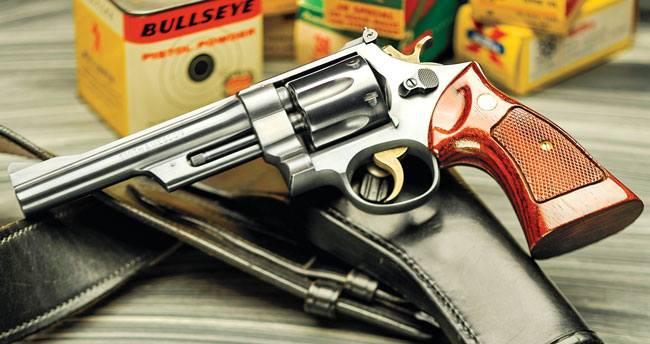
Oh, and the gun stud on the belt slot? That didn’t catch on. One can picture the revolver flopping constantly, and not being where the hand reached for it if the draw was preceded by dynamic movement. A photo of Gillett during his Ranger years shows him wearing his 7.5″-barrel Colt single action .45 in a relatively high-riding leather scabbard on his right hip. Shooting from the hip, one rationale for Gillett’s belt contraption has never been a sure thing. We note that when he shot the murder suspect Dublin, Gillett himself said he “drew a bead” first.
Bibliography: Six Years With The Texas Rangers: 1975 to 1881 by James B. Gillett, ©1921, published 1925 by Yale University Press; Triggernometry: A Gallery of Gunfighters by Eugene Cunningham, University of Oklahoma Press, 1941; Follow Me to Hell: McNelly’s Texas Rangers and the Rise of Frontier Justice by Tom Clavin, St. Martin’s Press, 2023; The Texas History Blog, “James Buchanan Gillett, Texas Ranger” https://texoso66.com/2016/09/15/james-buchanan-gillett-texas-ranger/