Categories
All About Guns Ammo

TOUGHEST CAPE BUFFALO WITH 500 NITRO EXPRESS

Categories
All About Guns

Some more 1911 Porn

Categories
All About Guns

Machine Gun Comparison – BAR – BREN – Type11 – MG42

Categories
All About Guns

Firearms Expert Reacts To Call Of Duty: Black Ops Cold War’s Guns

Categories
All About Guns

Firearms Expert Reacts To EVEN MORE Escape From Tarkov Guns

Categories
All About Guns

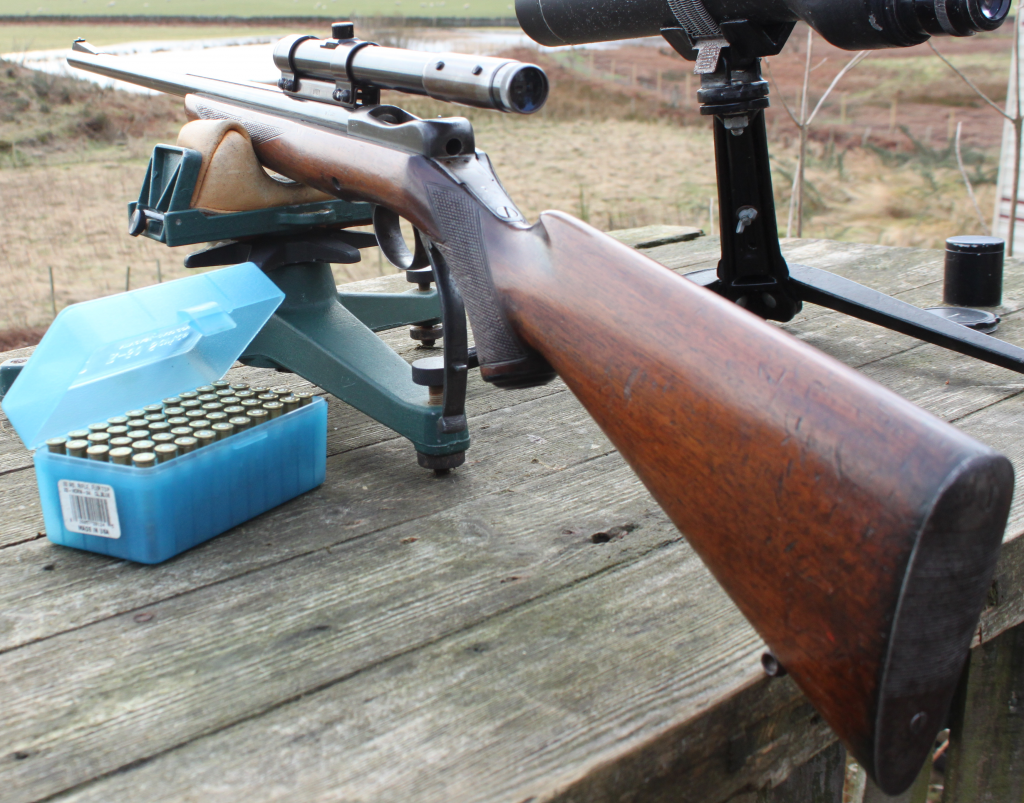
A Really neat looking Martini Cadet Rifle


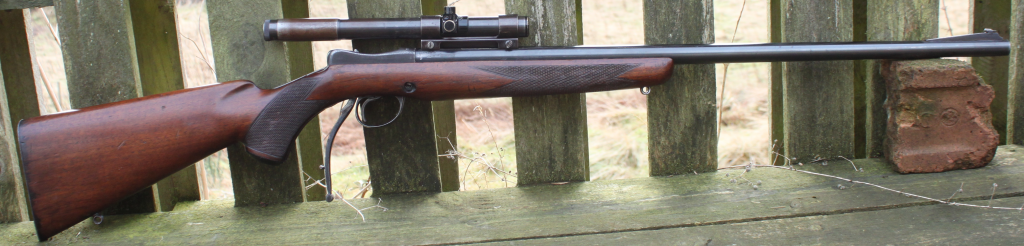
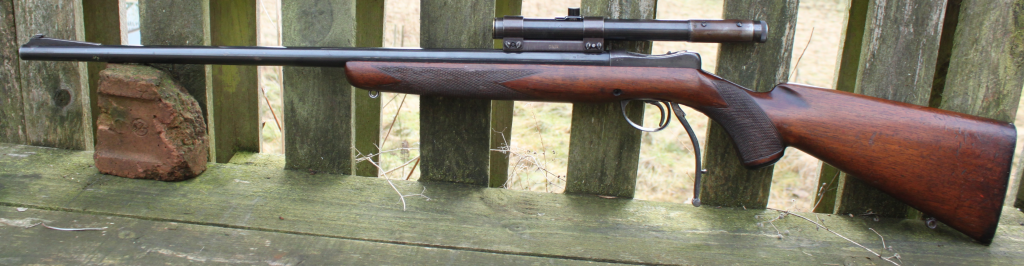
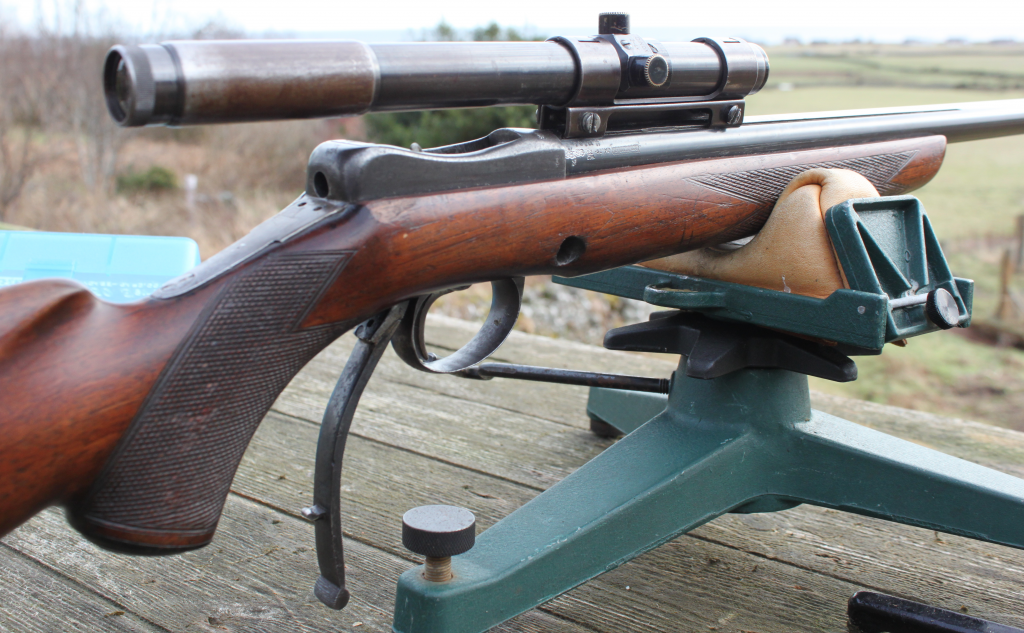
It is a Martini cadet Rifle that somebody who knows what they were doing. Chambered in 218 Bee, which is a vastly under rated “obsolete” varmint round in my humble opinion! Grumpy

Martini 218 Bee

Martini 218 Bee

Categories
All About Guns This great Nation & Its People

Ernest Hemingway’s Guns Excerpts and photos from the book Hemingway’s Guns: The Sporting Arms of Ernest Hemingway, by Silvio Calabi, Steve Helsley, and Roger Sanger


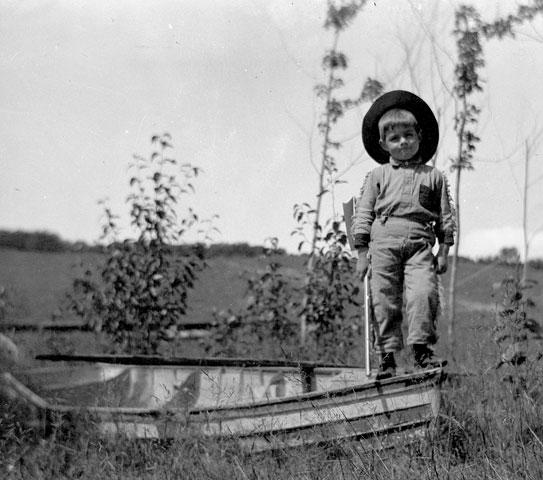
Walloon Lake, Michigan, summer 1904. Ernest Miller Hemingway at the age of 5, posing with a break-action Markham King air rifle that then sold for about 75¢. Markham Co. advertisements pointed out that “Every live, healthy boy wants a ‘King’ Air Rifle. It’s boy nature to want a gun; to want to get out in the fields and woods, nearest to nature, and enjoy youthful life to its fullest extent. Get your boy a ‘King’ Air Rifle. It will mean health and boyish happiness—and steady nerves, keener eyesight and well-developed powers of observation.” Eyesight aside, Hemingway became a convincing testament to Markham’s claim.

JOHN F. KENNEDY LIBRARY

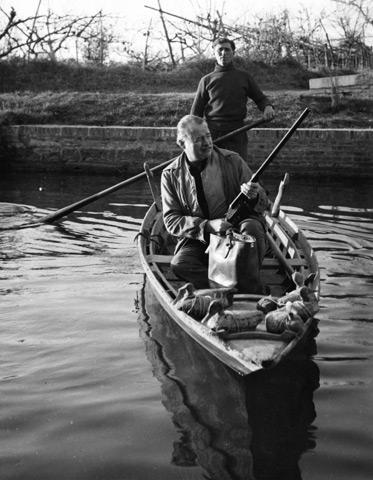
Torcello, Italy, fall 1948. Hemingway shows off his newly acquired Scott gun while setting out with one of Count Kechler’s or Baron Franchetti’s gamekeepers to hunt ducks. Note the decoys in the bow of the boat. Torcello is an island in the Lagoon of Venice, a few miles northeast of the city.

JOHN F. KENNEDY LIBRARY
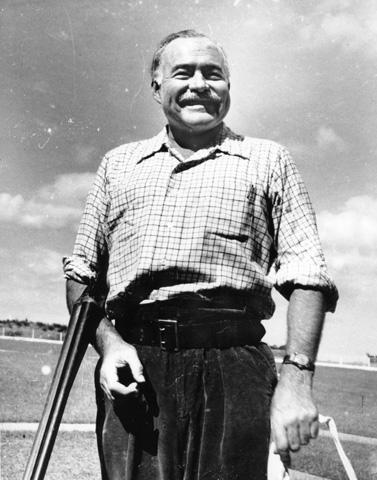
Aging but still fit, Hemingway poses at the Club des Cazadores, in Cuba, with his beloved Scott side-by-side in the late 1940s.

JOHN F. KENNEDY LIBRARY
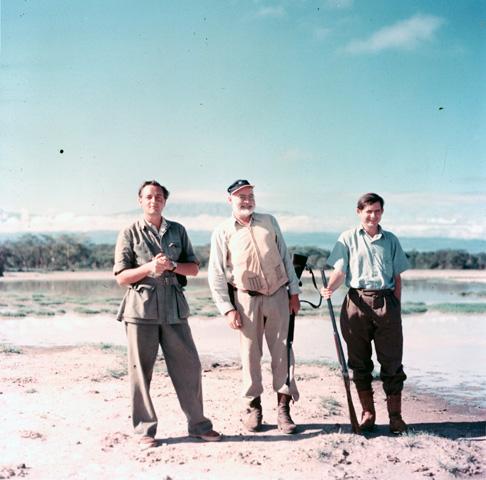
Ernest Hemingway in East Africa on his second safari, from September 1953 into January 1954. On his right is Denis Zaphiro, the Kenya game warden who was attached to the Hemingway party and became the character “G.C.” in Under Kilimanjaro and True at First Light. (G.C. for “gin-crazed,” from the British fondness for gin in general and gin & tonics in the tropics). Although the son of an Egyptian-born Greek trader and bureacrat, Denis was a proper British public-school type, quiet but with a dry, wry sense of humor, good manners, and evident empathy and patience. He was, of necessity, a crack shot and cool under pressure—traits that Hemingway valued highly. He grew close to both Ernest and Mary and in 1957 spent nearly four months as their house guest in Cuba and the US.

On Papa’s left is his middle son Patrick, who at the age of 21, in 1951, relocated to East Africa and for 24 years worked as a white hunter, a forestry officer and an instructor of game wardens and professional hunters. At the time he was based in Tanganyika (Tanzania) and visiting his father in camp. The photo was probably taken by his stepmother, Mary Welsh, the fourth and final Mrs. Hemingway.

JOHN F. KENNEDY LIBRARY

Wingshooting in Kenya, the second safari: Hemingway with his Scott, possibly pass-shooting sand grouse or doves by a water hole somewhere in the open country north of their Kimana camp—a kind of game shooting for which a pigeon gun is well suited. Note the forward sling swivel, which was removed by A&F in 1960. Denis Zaphiro is backing Papa up. Both men have bolt-action rifles handy, just in case. On the skyline behind Zaphiro is Mawenzi, the Kilimanjaro Massif’s second most easterly peak. The main peak, Kibo, swathed in cloud, lies behind Hemingway.

JOHN F. KENNEDY LIBRARY
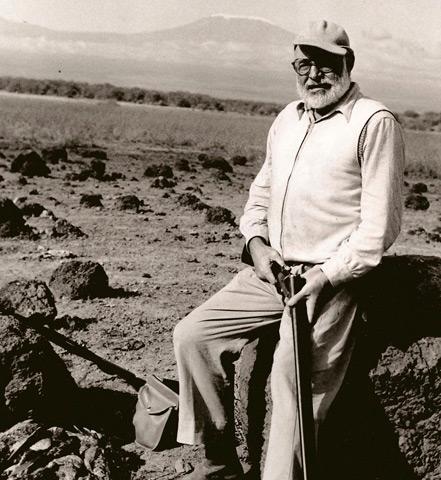
Hemingway cradling his Scott gun, the action open and its Greener-style locking extension clearly visible. The snowcapped summit of Mt. Kilimanjaro, at 19,341 feet the tallest mountain on the African continent, has emerged from the clouds.

JOHN F. KENNEDY LIBRARY
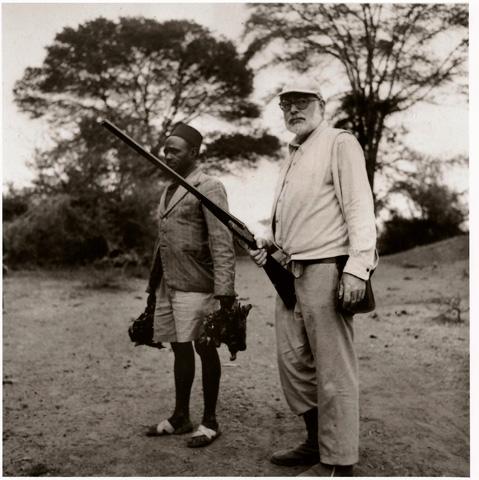
Wingshooting on safari. Still only 54, Papa shows the wear and tear of a rugged, high-mileage, hard-drinking and accident-prone life (although the worst was yet to come). This is the best photo of the long-barreled and straight-stocked Scott gun.

JOHN F. KENNEDY LIBRARY
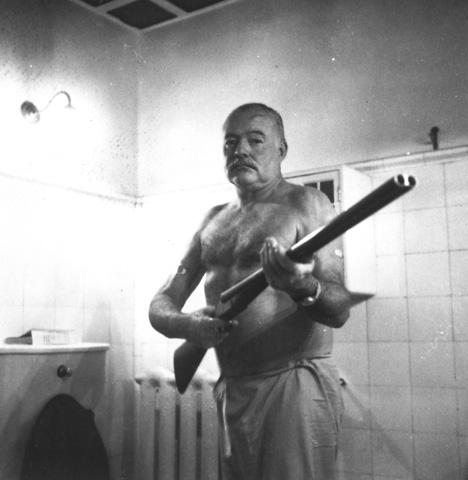
Cuba, late spring 1952. The Finca Vigía had been plagued by a series of break-ins. Hemingway and his 12-gauge Scott were on guard. One night in January ’53 thieves entered the house again. Ernest heard them, slipped out of bed, picked up a .22 rifle and fired a shot at the last one escaping out this bathroom window. Mary wrote that the next morning they found blood on the terrace outside.

JOHN F. KENNEDY LIBRARY
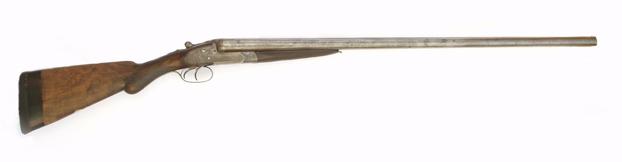
A well-worn W. & C. Scott & Son Monte Carlo B—Serial No. 60293, c. 1898, with 30-inch Damascus (twist-forged) barrels and a stock extension with a soft recoil pad. Note the cocking-indicator window in the lockplate. Appropriately for a pigeon gun, it has a non-automatic safety catch, double triggers and two ivory sighting beads on its rib. The Monte Carlo B also has a Greener-style “treble-grip” locking crossbolt. Lloyd Arnold described Hemingway’s Scott as “a plain piece, but handsome in its clean lines.” This example was loaned to the authors by Rob Shelton, of California, for comparison purposes
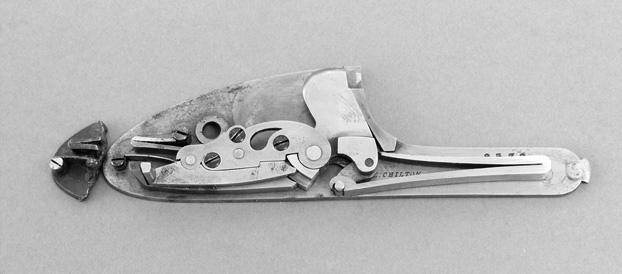
The scrap of destroyed lockplate with the corresponding lock from the Shelton Monte Carlo B, No. 60293. The minor differences, in spring thickness and screws, can be attributed to a difference in age, and thus production, between the two guns.

STEVE HELSLEY
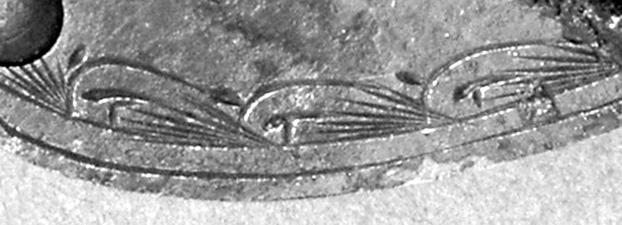
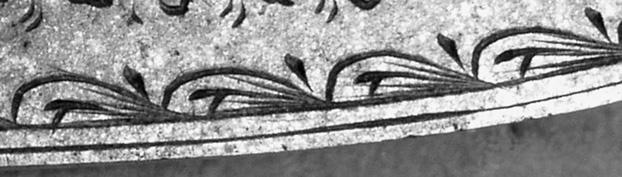
Border-engraving detail from the lockplate of the destroyed Hemingway gun.

STEVE HELSLEY

Border-engraving detail from a lockplate of Monte Carlo B No. 60293, the Shelton comparison gun.

STEVE HELSLEY
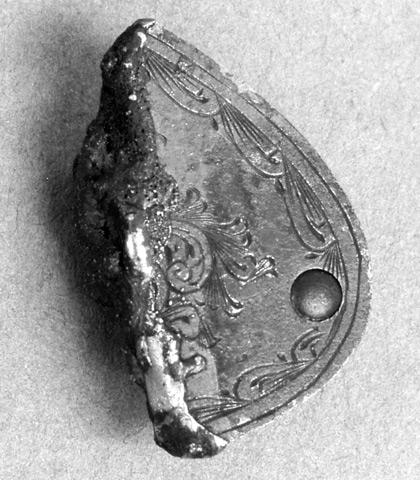
The key to the puzzle—the remnant scrap of left lockplate, less than three-quarters of an inch long, its burnt edge showing the effects of an oxy-acetylene torch.

STEVE HELSLEY
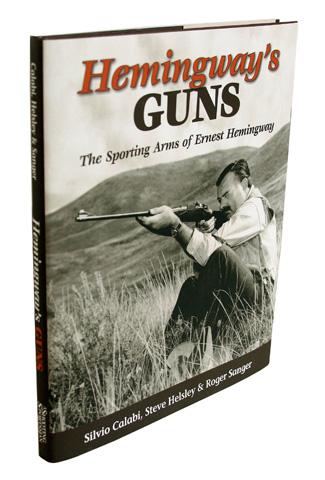
Excerpted from the book Hemingway’s Guns: The Sporting Arms of Ernest Hemingway, by Silvio Calabi, Steve Helsley, and Roger Sanger.

—————————————————————————————-The man REALLY knew how to live! By the way this is a good book to boot. Grumpy

Categories
All About Guns Art One Hell of a Good Fight Well I thought it was neat!

How about some Josey Wales for a startup for today?

Categories
All About Guns

GENEROSITY OR STUPIDITY? BY MIKE “DUKE” VENTURINO

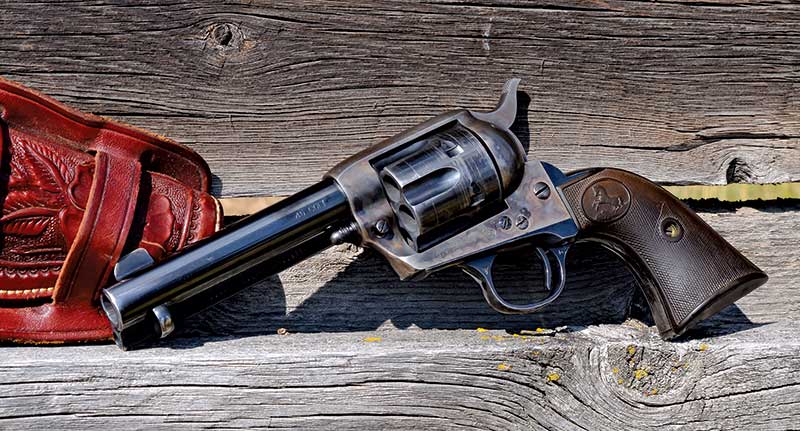
Duke sold this 2nd Generation Colt SAA .357 Magnum to Jim Schumaker
in 1977 and bought it back from him in 1996.


Back in the 1970s, during the years I lived in and around Yellowstone National Park, I became friends with a Mississippian named Jim Shumaker. For several years we lived in that area having lots of good times as single men in their 20s are apt to do. Jim was the sort of friend who stepped up when I busted my knee in 1976. Until I got back on my feet, he stopped by my place every afternoon after work to see to it my dog and I were cared for.


I Want That

Not long into our friendship, we discovered a shared interest in single action revolvers. His was a Ruger Blackhawk (Old Model) .357 Magnum. Mine were Colt SAAs (2nd Generation) in calibers .357 Magnum and .45 Colt. As soon as he laid eyes on my Colts, he became covetous. Many times he said, “Sell me one of your Colts: either one.” Of course, my answer was always, “Nope, ain’t gonna happen.”

One fine spring day while I was still on crutches he came by and said, “Put on your boots. You need to get out in the sunlight. And get both your Colts out too.” He had permission to shoot “gophers” (actually ground squirrels) on a nearby ranch. The place was truly infested with the little varmints, and we shot away lots of my .357 and .45 handloads that afternoon. Jim intermittently pleaded, “Sell me one of these.” And I always said, “Never.” In those years between the end of 2nd Generation production and beginning of 3 rd Generation production, you couldn’t just walk into a gun store and buy a Colt SAA off the shelf.

One Saturday in 1976 Jim and I drove to Bozeman, Montana, and as usual perused gun stores. In the Powder Horn on Bozeman’s main street, we were looking over the used gun racks for anything of interest. A fellow walked past us and I, ever being observant, noticed the grip of a Colt SAA sticking out of the fellow’s front trouser pocket. So, I sort of followed him and eavesdropped as he spoke to the store owner behind the new handgun counter. He wanted to trade his Colt SAA .45 for a S&W .357 Magnum. The store owner said he wasn’t interested.


Jim Schumaker’s 1914 vintage Colt SAA .45 — a happenstance find in 1976.

Art Of The Deal


At that point I intruded and asked the gent if we could look at the Colt. It about made me speechless — a condition my friends think is nigh impossible. It was an early 1900s 1st Generation .45 with 4¾” barrel in very nice condition. I asked, “How much?” He said, “That .357 S&W I want is about $250. I’ll take that much.” Now this is where the question about me being generous or stupid arises. I turned to Jim and said, “Well there’s your Colt, right there.” The deal was consummated, and we walked out of the store with what turned out to be a 1914 vintage SAA. The .45’s seller was happy to get his .357 Magnum, and the store owner was happy to make a sale.

Walking down Bozeman’s main street we both were enveloped in the pleasant aura of a job well done when suddenly the thought hit me, “I could have sold Jim one of my Colts and bought that .45 for myself.” Almost simultaneously, Jim turned to me and said, “Why didn’t you buy this one for yourself?” The question remains unanswered to this day. Was it generosity or stupidity? I’ll let you readers decide for yourselves.

Jim got set up to reload .45 Colts and we did lots of SAA shooting. In fact, we both bought 3rd Generation SAAs after they came out. His was a 7½” barreled .44 Special and mine was the same barrel length .45. Ironically, Jim did end up with my .357 SAA, after I became involved in varmint shooting and needed some bucks for a new scope. Nineteen years later Jim visited, and I bought it back from him and still have it.

As always, time changes things. We both got married and began careers. Jim was hired by a nationwide hotelier and managed establishments from coast to coast. And of course, I became a gun’riter and stayed in Montana. We kept in touch over the years and Yvonne and I were pleased he and his wonderful wife Karen decided to return to this area upon retirement. He still has that Colt .45 and once in a while we get together and I get to shoot it again. Always we reminisce about those great old bygone days.

Categories
All About Guns

A nice looking .32 Special: Marlin Model 36 vs concrete