Category: All About Guns
Harriet Tubman carried a pistol. It’s not a fact many historians tout, but it’s the truth. In fact, women both renowned and obscure have used a variety of firearms throughout the ages to protect themselves, provide for their families and even become famous. In this article, we’ll be looking at nine of the most well-known #gungirls to leave their mark on female firearm history.
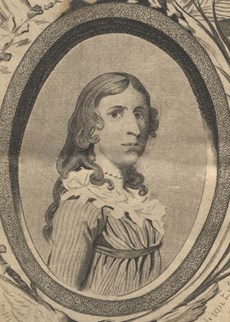 1. Deborah Sampson (c. 1760 – 1827)
First up, we have Deborah Sampson. Much like the beloved fairy tale, this courageous woman became a real-life Mulan when she decided to disguise herself as a man in order to fight in the Revolutionary War. Sampson went to great lengths to avoid detection, even treating her own wounds on more than one occasion. From sewing up a nasty sword gash on her forehead to removing a bullet from her own thigh, Sampson proved there is no feat too tough for a woman with a trusty rifle by her side. (Image: Engraving by George Graham. From a drawing by William Beastall, which was based on a painting by Joseph Stone.Public Domain)
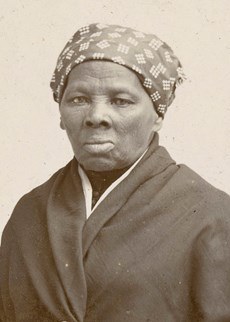 2. Harriet Tubman (c. 1822 – 1913)
As a fearless advocate for the liberation of herself and others, it only makes sense that a warrior like Harriet Tubman would carry both a pistol and a cavalry saber on her missions. Known for her no-nonsense attitude, Tubman even reportedly used her pistol to “encourage” escaping slaves who became too fearful to continue halfway through the journey to freedom. (Image: Horatio Seymour Squyer, 1848. National Portrait Gallery, 18 Dec 1905. Public Domain)
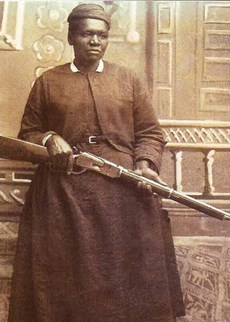 3. Mary Fields (c. 1832 – 1914)
As the first female African-American star-route mail carrier in the United States, Mary Fields did not take her position lightly. Despite constant threats from wildlife, weather and bandits, Fields became known as “Stagecoach Mary” for her untarnished reputation of reliability, and credited her success to the multiple firearms she carried. Her pistol of choice? A .38 Smith & Wesson. (Image: Circa 1895. Public Domain)
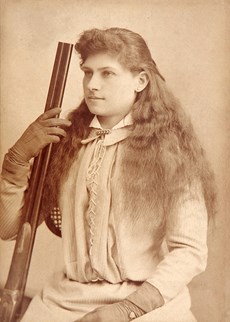 4. Annie Oakley (1860 – 1926)
When her father died while she was still a child, it fell to young Annie Oakley to be the breadwinner for her family, and win she did. By the age of 7, she was trapping animals and began hunting and shooting proficiently within the next year. In fact, she became so skilled that by the time she was 15, she was able to completely pay off the mortgage on her widowed mother’s farm with her earnings. Traveling the world to compete in shooting competitions while repeatedly setting historic records, everywhere Oakey went, fame and success seemed to follow. Her achievements will forever remain beyond incredible, though she wasn’t the only exemplary woman to shoot in style … (Image: Baker’s Art Gallery, Columbus, Ohio. 1880s. Public Domain)
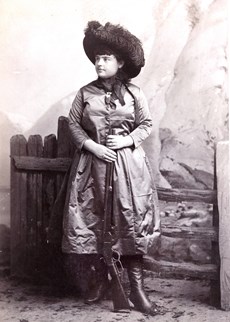 5. Lillian Smith (c. 1871 – 1930)
Born with a thirst for adventure and a flair for the dramatic, Lillian Smith was seemingly destined to be an accomplished trick shooter. At just 10 years old, her father allegedly made a $5,000 wager that she couldn’t be out-shot, and no one dared rise to the challenge. Later known as the “Champion California Huntress” for her daring feats, Smith even went on to perform in front of Queen Victoria herself. Though often confused with Annie Oakley, the two actually preferred entirely different shooting styles, as Oakley was most famous for her shotgun trick shots, while Smith performed best with the rifle. (Image: Anderson, 785 Broadway, NY. 1886. Public Domain)
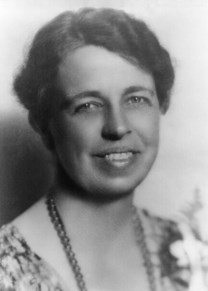 6. Eleanor Roosevelt (1884 – 1962)
Revered as one of the most influential First Ladies of all time, Eleanor Roosevelt has been a household name for decades. However, one of her most important habits remains largely unknown. In 1933, after her husband’s victory in the election, Roosevelt obtained a permit for a pistol, and was said to take it with her whenever she wished to leave the White House without the hassle of U.S. Secret Service protection. Roosevelt continued her license and firearm ownership up until her death, proving that the need for self-defense is independent of both age and social rank. (Image: The United States Library of Congress’s Prints and Photographs division. 1933. Public Domain)
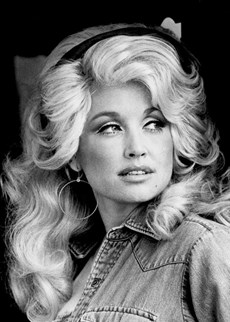 7. Dolly Parton (1946 – present)
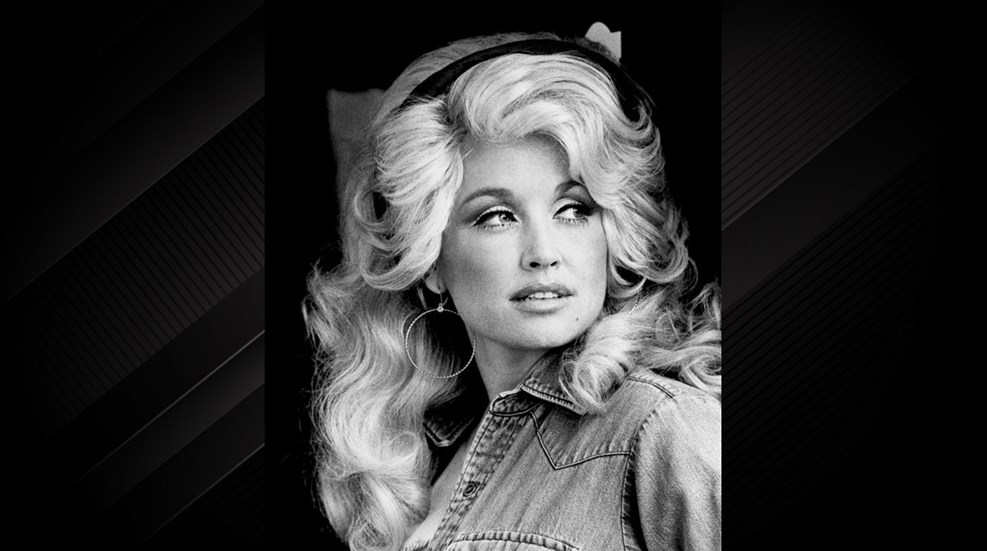
Besides being one of the most successful country singers of all time, Dolly Parton is a longtime concealed-carry permit holder and advocate for the right to self-defense. When asked why she never travels without a gun in an interview, the “9 to 5” singer didn’t bother mincing words. “Two men [approached] us, [thinking] we were ‘up for sale,’” Dolly recalled of a night out with a friend early on in her career. “One of them started pullin’ at me … tryin’ to handle me … the whole works.” When the men failed to get the message that neither woman was interested, Dolly pulled out her gun, prepared to defend herself. No further action was necessary, but the entertainer was still shaken by the encounter. “I was terrified, and I was mad too,” Parton remembered. Though, she certainly doesn’t intend on ever feeling that way again; the 11-time Grammy award winner has never gone anywhere without her .38 since. (Image: RCA Records, 1977. Public Domain)
 8. Angelina Jolie (1975 – present)
Jolie is famous for her on-screen portrayals of gun-wielding women warriors, but unlike many other stars, the actress feels no shame in her decision to bring work home with her. Reportedly an avid firearms collector and enthusiast, Jolie is said to own everything from a custom-made Cisco 1911 pistol to sniper rifles. (Image: Cc. Foreign and Commonwealth Office, 2014.)
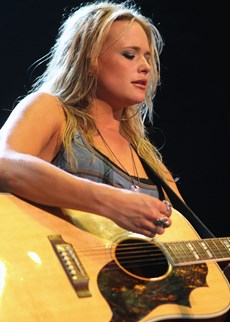 9. Miranda Lambert (1983 – present)
“I am my own protection!” is Miranda Lambert’s unapologetic stance on self-empowerment, and we are right there with her. Growing up the daughter of a police officer, Lambert recalls learning firearm safety at an early age, explaining, “It’s my normal.” After receiving death threats several years ago, she decided to take matters into her own hands. Rather than hiring bodyguards, she began carrying concealed for protection. Despite the growing controversy of her decision, Lambert has made it clear she’s sticking to her guns (quite literally). (Image: Wikipedia user, Lukelambert. 2007. Public Domain)
Bonus: Margaret Corbin
Though not exactly a confirmed #gungirl, Margaret Corbin did take her husband’s place reloading and firing cannons during the Revolutionary war after he fell in battle. She was later honored as the first woman to ever receive a military pension and hailed as “the first woman to take a soldier’s part in the War for Liberty.”

Categories
Danish M1941 Suomi SMG
If you or someone you know is in crisis, call the National Suicide Prevention Lifeline at 1-800-273-8255 or text HOME to the Crisis Text Line at 741741.
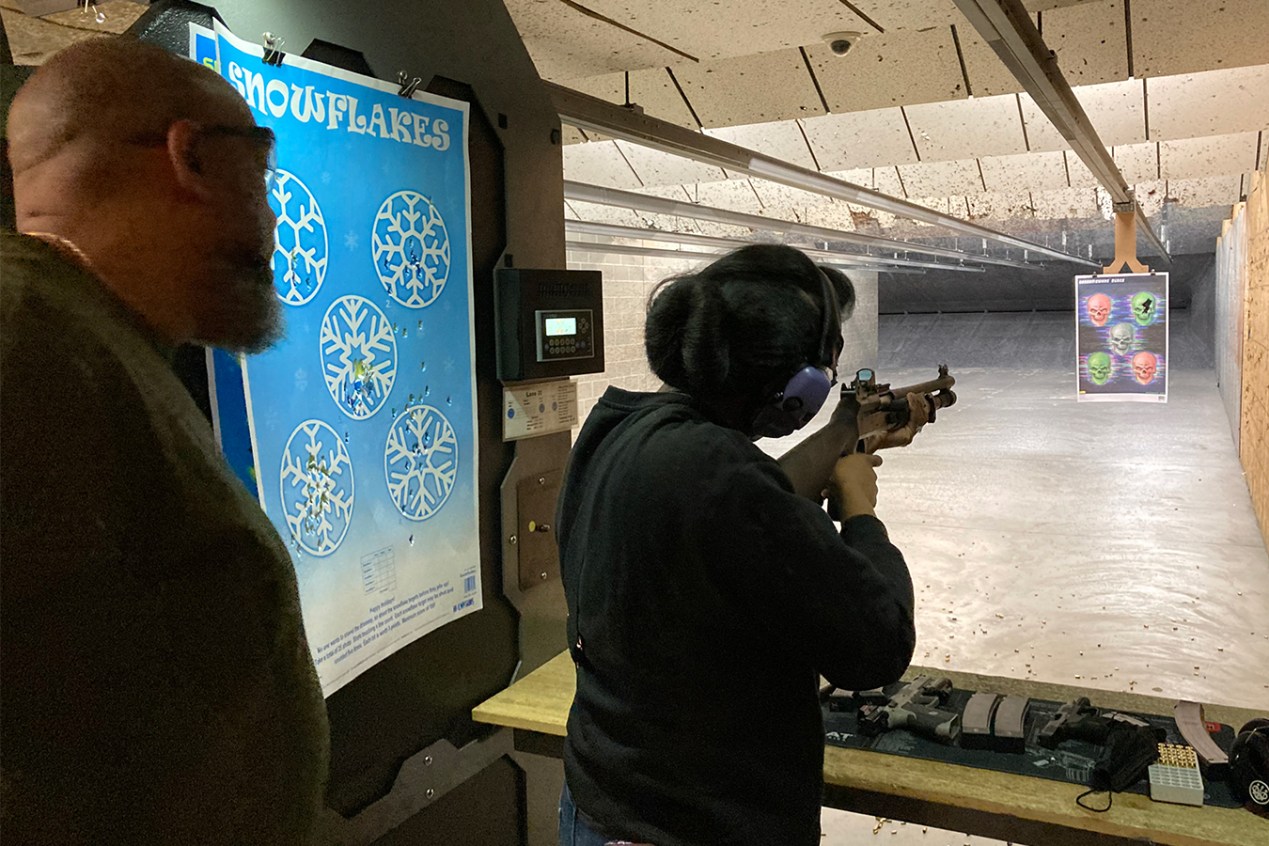
When Russell and Sharis Lewis want to unwind, they pack up their guns and drive from their home in a suburb north of St. Louis to an indoor range called the SharpShooter on the city’s south side.
Russell dons big protective headphones, carefully lays out his firearms, and selects a Panzer Arms M4 12-gauge semiautomatic shotgun. He takes aim at paper targets, including one labeled “snowflakes,” and squeezes the trigger.
“It’s just something about the power and being able to release that and let it go downrange,” he said. “It relaxes me.”
Sharis, Russell’s wife, practices with her new handgun, a Sig Sauer P365. She bought it because she’s been worried about the increasing crime in her area.
The Lewises are part of a growing cohort of African American gun owners. Nationwide, surveys found that 25% of Black adults owned a gun in 2021, up from 14% six years earlier.
Gun buying among African Americans has soared in recent years. At the same time, suicide rates have increased among young Black men. Experts believe the trends may be linked, because having a gun in the home increases suicide risk exponentially, for every person who lives there.
But even gun enthusiasts say that the newest generation of gun owners sometimes lack the training and information they need to keep themselves safe around firearms. Homicides in Missouri reached a record high in 2020, spurring even more people to buy guns. But the number of suicides in the state was even higher, and the suicide rate has been on the rise for a decade.
That’s where Bill Mays works — in the fraught space where gun ownership and suicide intersect.
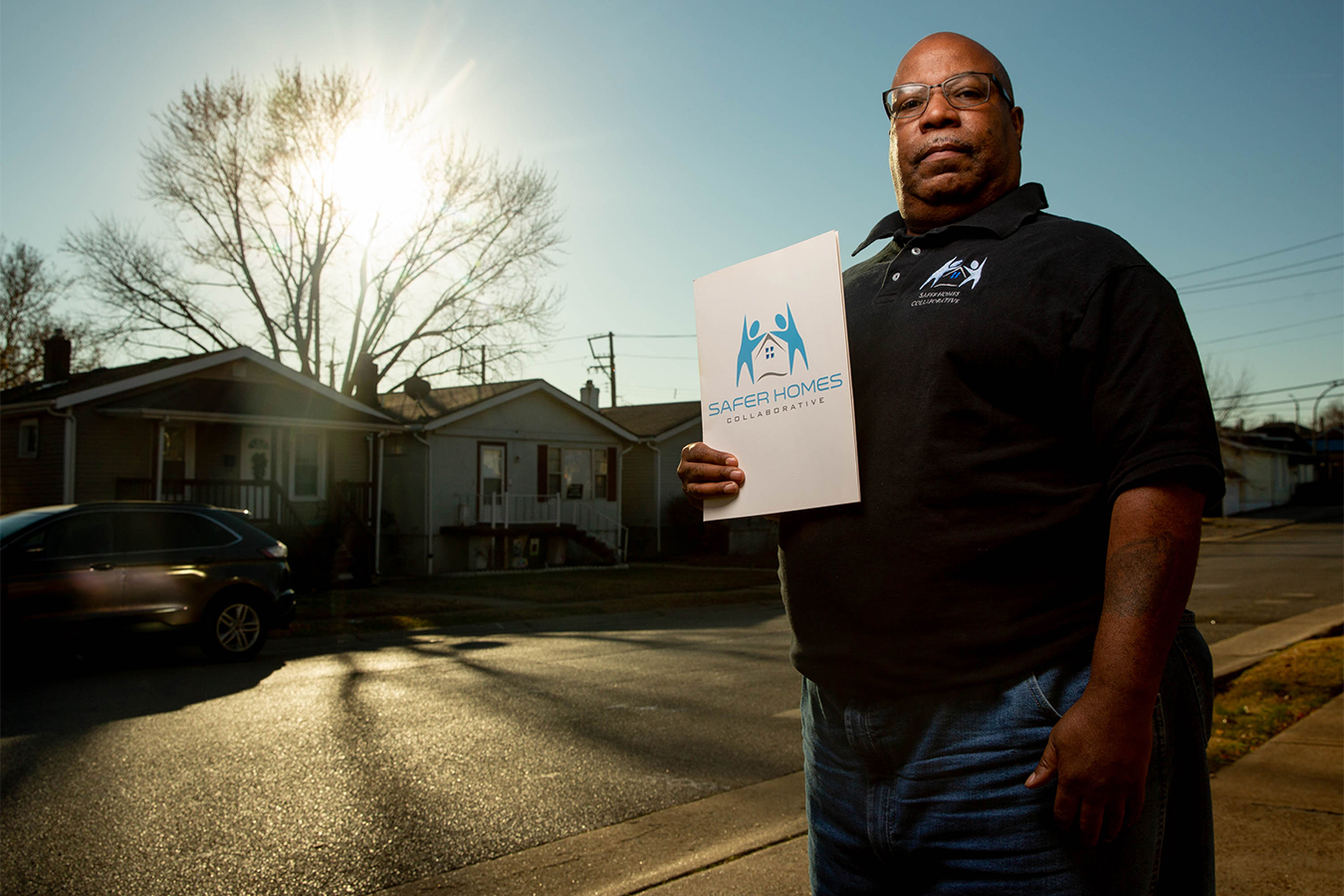
As a firearms trainer and an advocate of “concealed carry,” Mays has been part of the St. Louis gun community for years. He said he knows how to talk with fellow gun enthusiasts in ways that health experts usually can’t — especially about sensitive subjects like suicide risk, mental health issues, and crisis management for gun owners.
“It’s a matter of, ‘If it walks like a duck, talks like a duck, then what is it?’ I’m a duck!” Mays said. Mays is Black and works for the Safer Homes Collaborative, a project based at the University of Missouri-St. Louis. The effort aims to persuade gun sellers, gun owners, and their relatives to create systems for temporarily preventing people experiencing a crisis from accessing firearms.
Suicide is usually an impulsive act. One study found that nearly half of survivors reported that the time between first considering suicide and making an attempt was 10 minutes or fewer. If people in crisis can be kept away from a means of killing themselves for even a short period, their risk of dying can drop dramatically.
“That’s the thing about suicide, is that you can have that feeling, but if someone intervenes, you know, that feeling can easily go away,” Mays said.
A few years ago, Mays said, he was having suicidal thoughts himself. He remembers one episode when a phone call with his daughter pulled him out of the crisis.
Firearms are a focus of suicide prevention efforts because they are more efficiently lethal than other methods. Nine in 10 people who attempt suicide with a gun die.
Missouri’s Safer Homes Collaborative is modeled on the New Hampshire Gun Shop Project, which sought to soothe any fears about stepping on Second Amendment rights by enlisting gun owners to deliver the message, as part of a strategy called “means reduction” — a twist on the concept of “harm reduction” in addiction treatment.
Proponents of means reduction say suicides can be reduced significantly if businesses refuse to sell firearms to people who are in crisis and if family members temporarily keep guns away from people who feel suicidal.
For decades, the suicide rate of older white men has been among the highest in the U.S., in part because of their high rates of gun ownership. Having a gun in the home increases the suicide risk for everyone who lives there.
However, suicides rates among young Black men increased almost 50% nationally from 2013 to 2019. And the suicide rate for younger Black children (ages 5-12) has climbed and is more than double the rate for younger white children.
Although the overall suicide rate for white Americans — including teenagers — remains much higher than the rate among African Americans, the new trends concern Deborah Azrael, associate director of the Harvard Youth Violence Prevention Center.
Azrael co-authored a new study estimating that from January 2019 to April 2021, around 16 million Americans had guns introduced to their homes for the first time. Of the new buyers, about 20% were Black.
Azrael said it’s time to update assumptions about who may be in danger: “Gun ownership is more diverse now, and so when we talk to people about the risks of guns, we want to make sure we’re reaching out across the board, and not just to the people we’ve typically thought of as gun owners in the past.”
Similarly, stereotypes about who is “typically” at risk for suicide are changing. Reba Rice-Portwood said that when she was growing up in St. Louis in the 1970s and ’80s, suicide was seen as a problem that existed outside her African American community.
“When someone would die by suicide and if we heard about it on television or we read about it or something like that, we would always assume that it was a Caucasian,” said Rice-Portwood, 55.
Her thoughts about that changed abruptly and tragically several years ago when she lost Ricky, her son.
Rice-Portwood said Ricky had an “old soul.” He loved Sam Cooke and looked out for older people in his apartment complex. She said her son was also tormented by depression.
One day in 2014, she got a frantic call from her son’s fiancée, who told her that Ricky had shot himself. He was only 22.
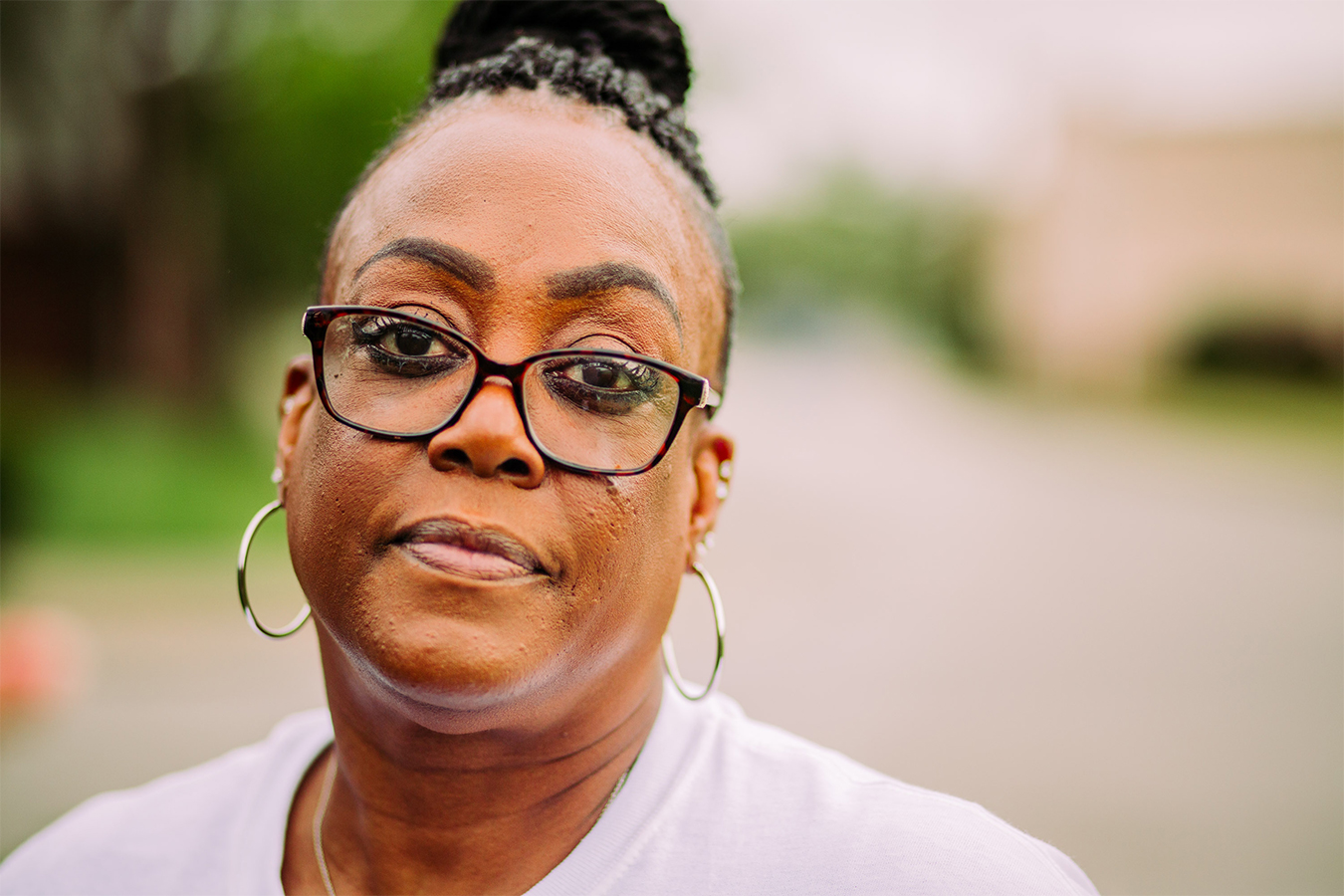
“What did I do so bad in this life for God to allow my son to pass?” Rice-Portwood asked.
She strained to understand how her son, who was known to struggle with mental illness, managed to get a gun, a question that remains unanswered. And then, amid her grief and confusion, came some surprising news: Ricky’s fiancée had discovered she was pregnant.
Today, Rice-Portwood is raising her grandson, Jackson, who’s 6 years old. On a Saturday morning at her apartment, he shows off his multiplication skills on a tablet while “Granny” beams.
After working many years inside jails, Rice-Portwood became a mental health counselor. Nowadays, she’s outspoken about the need to address trauma among young African Americans in St. Louis. She grapples with how to stop the spread of gun violence, especially when the proliferation of firearms in her community seems impossible to contain.
Despite what happened to her son, Rice-Portwood keeps a .380 pistol in a safe at home. Like Sharis Lewis, she’s a gun owner for one big reason: fear of crime. “Actually, I went to the grocery store about three weeks ago, you know, and was almost carjacked,” Rice-Portwood said. “That’s the reason why I still have it now.”
St. Louis had the highest homicide rate among large U.S. cities in 2020, according to FBI data.
Self-defense is the main reason people buy guns, according to a 2017 Pew Research Center survey, but many Black gun owners say that, for them, self-defense can be a thorny concept.
Sharis Lewis started carrying a firearm because she isn’t comfortable with the idea of calling police for protection. The Lewises live in Florissant, not far from Ferguson, where Black resident Michael Brown was killed by police officer Darren Wilson in 2014.
“Some people, they rely on law enforcement, which, for African Americans, that’s not always the safest course of action either,” Sharis said. “I would rather control the situation.”
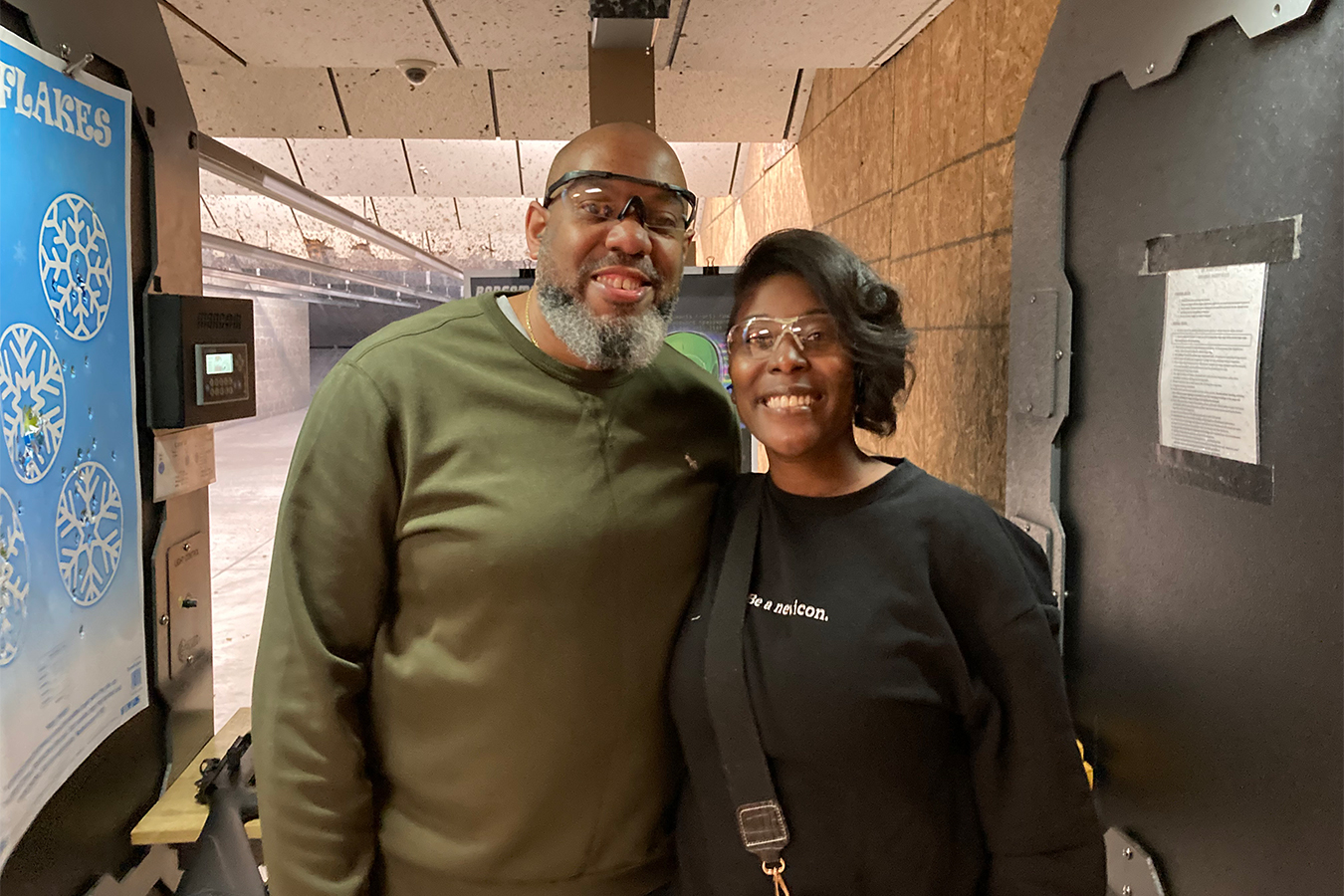
For Bill Mays and his friends, discussions about self-defense and guns have taken on increased urgency.
At the BBQ restaurant next door to the SharpShooter range, Bill Mays met up with the Lewises. After placing lunch orders, they launched into talking about firearms, and recent incidents of violence against African Americans.
Mays said his work in suicide prevention and a renewed interest in religion had changed his relationship with firearms. Mays recently stopped carrying a gun, though he continues to hunt.
“I think a lot about the Bible. And the experience with Jesus — would Jesus walk around with a firearm? Of course not,” Mays said. “But it’s more than that. It’s just a point of — I don’t want to hurt anybody.”
But he wants to keep helping the people who do carry guns, especially the newest gun owners. And he hopes that those conversations, however tough, might help prevent suicide deaths in Missouri.
This story is from a reporting partnership that includes KCUR, NPR, and KHN.