Category: All About Guns
U.S.A. –-(AmmoLand.com)-– On Tuesday, April 12, Governor Brian Kemp of Georgia signed SB319, the Constitutional Carry (permitless carry) bill. The bill became effective when the Governor signed the bill.
Second Amendment supporters have been attempting to pass Constitutional Carry through the Georgia legislature for years. Governor Kemp pledged support for the measure in 2018. From fox5 atlanta.com:
Kemp said the bill is a public safety measure.
“SB 319 makes sure that law-abiding Georgians — law-abiding Georgians, including out daughters and your family too — can protect themselves without having the permission of the state government. The constitution of the United States gives us that right, not the government,” Kemp said Tuesday. “HB 218 ensures that individuals who are licensed to carry in another state are also authorized to do so here in Georgia.”
The governor initially promised the measure when he first ran for governor in 2018, but little was done to advance it. It’s been revived now that Kemp faces opposition in this year’s primary from former U.S. Republican Sen. David Perdue and others. Longtime proponents of gun rights have credited Kemp’s advocacy for moving the issue forward.
In 2022 Governor Kemp is in a tight primary race, in part because of his lack of performance during the 2020 elections. More and more evidence is accumulating of significant irregularities during the election in Georgia, which was a pivotal state in the presidential election.
Governor Kemp vigorously championed Constitutional Carry in Georgia during his primary campaign. The large signing ceremony for the bill was carried out in front of Gable Sporting Goods. Gable Sporting Goods is a long-established sporting goods store in Douglas, Georgia, which is in the Atlanta metropolitan area.
With Governor Kemp’s signature, Georgia becomes the fourth state to pass Constitutional Carry (permitless carry) in 2022, and the 25th member of the Constitutional Carry club in the United States. Half of all states have now restored their legal system to the situation where no permits to carry were required, as was the case in all the United States in 1791 when the Second Amendment, as part of the Bill of Rights, was ratified. The 25 states who have restored the right to carry handguns in most public places, openly or concealed are:
Alabama, Alaska, Arizona, Arkansas, Georgia, Idaho, Indiana, Iowa, Kansas, Kentucky, Maine, Mississippi, Missouri, Montana, New Hampshire, North Dakota, Ohio, Oklahoma, South Dakota, Tennessee, Texas, Utah, Vermont, West Virginia, and Wyoming.
With the addition of Georgia, states, where no permit to carry, is required cover about 2,343,089 square miles or 61.6% of the land area of the United States.
Constitutional Carry has become a strong movement as people seek a return to a Constitutionally limited government in the United States. In 2002, only Vermont had Constitutional Carry. It had always maintained the right to carry without a permit, openly or concealed. In 2003 Alaska enacted a Constitutional Carry law. Arizona followed in 2010, Wyoming in 2011, and Arkansas in 2014. From 2015 to 2022, 20 more states joined the club.
Nebraska narrowly failed to join the club, by two votes in its unicameral legislature, the day before Governor Kemp signed Constitutional Carry in Georgia. Pennsylvania and Louisiana both passed bills with strong majorities, only to have Democrat governors veto them.
About Dean Weingarten:
Dean Weingarten has been a peace officer, a military officer, was on the University of Wisconsin Pistol Team for four years, and was first certified to teach firearms safety in 1973. He taught the Arizona concealed carry course for fifteen years until the goal of Constitutional Carry was attained. He has degrees in meteorology and mining engineering, and retired from the Department of Defense after a 30 year career in Army Research, Development, Testing, and Evaluation.

Smith & Wesson Model 19
| Smith & Wesson Model 19 | |
|---|---|

S&W Model 19, polished nickel, 6″ barrel
|
|
| Type | Revolver |
| Place of origin | United States |
| Production history | |
| Designer | Smith & Wesson |
| Manufacturer | Smith & Wesson |
| Produced | 1957–1999 2018—present |
| Variants |
|
| Specifications | |
| Cartridge | .357 Magnum |
| Action | Double action |
| Feed system | 6-round cylinder |
| Sights | Adjustable |
The Smith & Wesson Model 19 is a revolver produced by Smith & Wesson that was introduced in 1957 on its K-frame. The Model 19 is chambered for .357 Magnum. The K-frame is somewhat smaller and lighter than the original N-frame .357, usually known as the Smith & Wesson Model 27. A stainless steel variant of the Model 19, the Smith & Wesson Model 66, was introduced in 1971.
History[edit]
The .357 Magnum is the oldest “magnum” handgun cartridge. Smith & Wesson played a major part in the development and success of the cartridge and revolver that went with it. Firearms writer and experimenter Philip Sharpe is credited for its development during the 1930s when police agencies were asking for a more powerful round. S&W’s Douglas B. Wesson agreed to produce a new revolver that would handle “high-intensity” .38 Special loads,[1] but only if Winchester would develop a new cartridge. Elmer Keith, a well known author and wildcatter at the time, was experimenting with hand loading .38 Special ammunition beyond their original specifications, taking advantage of the newer and better designed firearm frames and metallurgy, and also played a major role in the development of the .357 Magnum. Winchester introduced the .357 Magnum, which was dimensionally identical to the .38 Special except for a .125 inch longer case, and the first revolvers (referred to as “.357 Magnum Models”) were completed by S&W on April 8, 1935.[2]
Retired Assistant Chief Patrol Inspector of the U.S. Border Patrol, famous gunfighter, and noted firearms and shooting skills writer Bill Jordan consulted with Smith & Wesson on the design and characteristics of the Model 19. Jordan’s idea for a “peace officer’s dream”[3] sidearm was a heavy-barreled four-inch K-Frame .357 Magnum with a shrouded barrel like the big N-frame .357 and adjustable sights. After a year of experimentation with improved-strength steels and special heat-treating processes, the result was the .357 Combat Magnum (later designated Model 19), with the first serial-number gun (K260,000) presented to Jordan on November 15, 1955.[2][4]
The .357 Magnum, four-inch barreled model was standard issue to uniformed officers of the former U.S. Immigration and Naturalization Service[5] as well as Patrol Agents of the U.S. Border Patrol until both agencies adopted .40 caliber semi-automatic pistols.[6]
A rare S&W M19-3 was built for the French GIGN. In 1972 they ordered 500 of these revolvers that have serial numbers in the M&P range from D639300 to 639800. With only 500 guns produced, this is the rarest M19 version.
This specific model 19-3 has a fixed sight and is pinned & recessed. It has a three inch barrel.
Styles[edit]
The Model 19 was produced in blued carbon steel or nickel-plated steel with wood or rubber combat grips, an adjustable rear sight, full-target or semi-target hammer, serrated wide target trigger or combat-type trigger, and was available in 2.5″ (3″: Model 66—rare), 4″, or 6-inch barrel lengths. The weights are 30.5 ounces, 36 ounces, and 39 ounces, respectively. The 2.5- and 3-inch barrel versions had round butts, while the others had square butts.[2]
The Model 19 was produced from 1957 (first model number stampings) to November 1999. The Model 66 was produced from 1970 until 2005. The Model 66 differed by its use of stainless steel and its smooth target-type trigger. The Model 68 was a limited-production version of the Model 66 made for the California Highway Patrol and Los Angeles Police Department chambered in .38 Special with a 6″ barrel. The Model 19 and the Model 66 had the same trigger options.[2] One of the last variations of the Model 19 ordered for police use was the 2.5″ Model 19-5, special ordered under SKU #100701 as the standard issue sidearm for Special Agents of the US Department of State’s Diplomatic Security Service. This model featured a .400″ wide, smooth “combat” trigger, Pachmayr Professional Compac rubber grips, and most notably a matte black finish instead of the common high-polished blue.[2]The 2.5″ barrelled Model 66 was carried by I&NS Special Agents until the mid 1990’s when the agency adopted a .40 caliber semi-automatic pistol as its standard issue sidearm.[5]
Engineering changes were designated with a “dash-” number after the model number. The engineering changes are as follows:[2]
Model 19 variants[edit]

4″ Model 19-5, polished nickel plated with woodgrain square grips

2.5″ Model 19-5 of the US Diplomatic Security Service, featuring unusual matte black finish
| Model | Year | Modifications |
|---|---|---|
| 19 | 1957 | Introduction. |
| 19-1 | 1959 | Change extractor rod, right to left-hand thread. |
| 19-2 | 1961 | Cylinder stop changed, deleted trigger guard screw. |
| 19-2 | 1963 | Introduce 6″ barrel. |
| 19-2 | 1963 | 50 manufactured with 2.5″ barrel, serial range K544672–K544721. |
| 19-2 | 1966 | Introduce 2.5″ barrel as standard. |
| 19-3 | 1967 | Relocation of rear sight leaf screw. |
| 19-3 | 1968 | Delete diamond-insert grip. |
| 19-4 | 1977 | Change gas ring from yoke to cylinder. |
| 19-5 | 1982 | Eliminate cylinder counter bore and pinned barrel; small change in cylinder length to 1.62″. |
| 19-6 | 1988 | New yoke retention system; radius stud package; floating hand; hammer nose bushing. |
| 19-6 | 1992 | Blue finish only is cataloged. |
| 19-7 | 1994 | Add Uncle Mike’s Combat synthetic grips; drill and tap frame; change extractor; change rear sight leaf. |
| 19-7 | 1995 | Delete square butt. |
| 19-7 | 1996 | Discontinue 6″ barrel production; begin shipments in blue foam-filled plastic cases. |
| 19-7 | 1997 | Change to MIM thumbpiece and trigger, ship with trigger locks. |
| 19-8 | 1998 | Change frame design, eliminate cylinder stop stud, serrated tangs. |
| 19-8 | 1998 | Add internal lock, add MIM hammer w/ floating firing pin. |
| 19-8 | 1999 | Discontinue 2.5” barrel. |
| 19-9 | 2018 | Reintroduced with 4.25” barrel and Performance Center Carry Comp with 3” barrel. |
Model 66[edit]
.jpg)
A model 66-2, displayed with two speedloaders
| Model | Year | Modifications |
|---|---|---|
| 66 | 1971 | Stamping of each model. |
| 66-1 | 1977 | Changed the gas ring from the yoke to the cylinder. |
| 66-2 | 1982 | Eliminated pinned and recessed, slightly lengthened cylinder. |
| 66-3 | 1986 | New yoke retention system/radius stud package/hammer nose bushing/floating hand. |
| 66-4 | 1994 | Change rear sight leaf, drill and tap frame, introduce Uncle Mike’s grips, change extractor. |
| 66-5 | 1998 | Change in frame design: eliminate cylinder stop stud/eliminate serrated tangs/change to MIM hammer with floating firing pin/change internal lockwork. |
| 66-6 | 2002 | Introduced internal lock. |
| 66-7 | 2003 | Two piece barrel and internal lock. |
| 66-7 | 2005 | Discontinued. |
| 66-8 | 2014 | Reintroduced with 4.25″ barrel; 2.75″ barrel offering added in 2017. |
Model 68[edit]
| Model | Year | Modifications |
|---|---|---|
| 68 | 1977 | Introduction |
Criminal use[edit]
Two Model 19s, along with two Browning Hi-Power pistols, were used in the 1996 Dunblane massacre.[7] This led to the enactment of Firearms (Amendment) Act 1997 and Firearms (Amendment) (No. 2) Act 1997, effectively banning handguns in the UK.[8]
References[edit]
- ^ Wood, Keith (May 13, 2015). “10 Things You Didn’t Know About Smith & Wesson”. americanhunter.org. Retrieved September 20, 2019.
Daniel Wesson’s grandson, Colonel Douglas B. Wesson
- ^ Jump up to:a b c d e f Supica, Jim; Nahas, Richard (3 January 2007). Standard Catalog of Smith & Wesson. Iola, Wisconsin: F+W Media, Inc. pp. 136, 186–188. ISBN 0-89689-293-X.
- ^ Taffin, John (2006). “The combat magnum: good gun gone”. Guns Magazine. Retrieved 2009-08-02.
- ^ Sweeney, Patrick (2004). The Gun Digest Book of Smith & Wesson. Iola, Wisconsin: Gun Digest Books. pp. 40–41. ISBN 0-87349-792-9.
- ^ Jump up to:a b Former I&NS Special Agent
- ^ Former Border Patrol Agent
- ^ Cullen, Douglas W (30 September 1996). “The Public Inquiry into the Shootings at Dunblane Primary School on 13 March 1996” (PDF). ISBN 0 10 133862 7. Retrieved 7 April 2018.
- ^ “Britain’s changing firearms laws”. BBC News. 12 November 2007. Retrieved 30 November 2018.
Categories
FN MAG: Best of the Western GPMGs
Categories
The sound of Hitler’s Buzz Saw
Categories
Heym SR30 in 8x68S

(Zhang’s Gate, the old entrance to Mukden Arsenal)
For people interested in Japanese firearms of WWII, the name Mukden Arsenal is familiar. The history of the facility after Japan’s defeat is less well known. Under various names, it did survive for some time, producing an odd mix of WWII weapons after the war’s end.
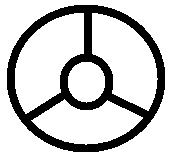
(Mukden Arsenal proofmark during WWII)
Mukden and Manchukuo
The arsenal was located in Mukden, today called Shenyang. Prior to the 20th century it was called Fengtian (a name later briefly revived), later Mukden, and in Japanese; Hoten. This large city is located in China’s Manchuria region.

Advertisements
REPORT THIS AD
(Manchukuo on a Third Reich-era German globe.)
The nation of Manchukuo existed between 1932 – 1945. Other than the WWII axis powers, this puppet regime had little international diplomatic recognition, other than an acknowledgement it existed.

(Manchukuo in red, and Japan as it’s borders were recognized, in blue in 1939. Taiwan, South Sakhalin, Korea, and the small Kwangtung Leased Territory were then integral parts of Japan.)
Manchukuo’s capital was Hsinking (today Changchun), and it’s ‘second city’ was Mukden. Manchukuo shared land borders with the USSR, Mongolia, Mengjiang (a less-advanced Japanese protectorate), China, and Japan’s Chosen province (today, North & South Korea). Japan also directly ruled the small but ultra-strategic Liaodong peninsula, which it called the Kwangtung Leased Territory.
Japanese encroachment into Manchuria started during the Russo-Japanese War and culminated with a full occupation in 1931. A year later, the puppet state of Manchukuo was created. Of all of Japan’s collaboration protectorates, Manchukuo was considered the most “advanced” in Tokyo by 1939, and served as something of a template as to what other conquered lands might end up as, assuming victory in WWII.

(A 1930s postcard showing Puyi and celebrating the military “alliance” between Japan and it’s puppet Manchukuo.)
Puyi, nominally the last heir of China’s Qing throne, was established by the Japanese military as a figurehead emperor of Manchukuo. The real power remained vested in the IJA.
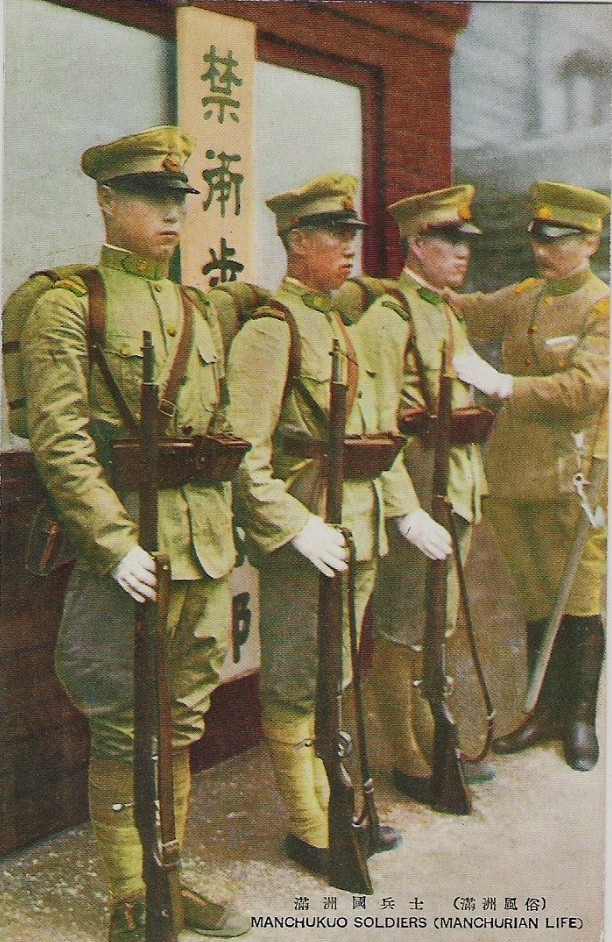
(1930s postcard showing Manchukuo army soldiers. The rifles appears to be the Kuang-Hsu, a Chinese knockoff of Japan’s Type 30, by then obsolete. The Japanese doled these captured guns off to Manchukuo as they shared 6.5mm Arisaka ammunition with Type 38s.)
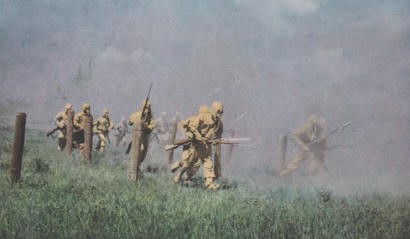
(Manchukuo army soldiers undertake a chemical warfare drill during the 1930s. They are armed with Type 38 Arisakas.)
Manchukuo did have it’s own military. It was armed with a mixture of Imperial Japanese Army-standard guns, local products of Mukden Arsenal (these two categories sometimes overlapping), and captured Chinese weapons. There was also an insignificant Manchukuo air force and navy.
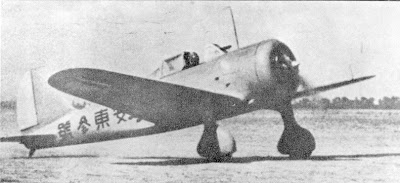
(Ki-27 “Nate” fighter of the small Manchukuo air force.)
I) THE ORIGINAL MUKDEN ARSENAL
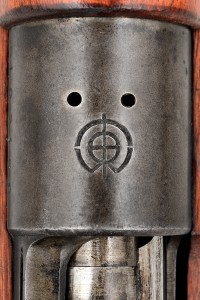
(Proofmark of Mukden Arsenal between 1918-1931)
A small gun factory was established in Mukden in 1897. Later during China’s warlord period, the de facto ruler of the area, Generalissimo Zhang Zoulin, sought to expand this asset.

His opportunity came at the end of World War One in Europe. One of his lieutenants was friends with the Far East sales agent of the Austro-Hungarian arms company Böhler. Barred by the armistice from gun production, Böhler clandestinely sold machinery including riflers, a frame press, and geschosspresse (bullet-makers) to Zhang. As it became clear that the Austro-Hungarian empire was permanently doomed, and, that Zhang had good money; other Böhler machinery followed along with incomplete Mauser rifles that the company was hiding from the allies. Some now-jobless Böhler engineers took Zhang up on his employment offer and ventured to Mukden.
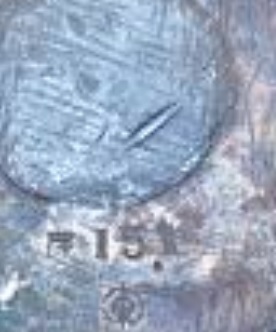
(Interwar 70mm artillery shell with Mukden Arsenal proofmark.)
Additional gunsmithing gear came from the Danish company Nielsen & Winther in the 1920s. Meanwhile, the Generalissimo purchased technical books outlining Kijoru Nambu’s concepts, later featured in the Arisaka line. Besides blue-collar Chinese workers, the technical department had 1,516 foreigners: the Austrians, czarist Russians who had fled the USSR, some Britons, Japanese, and even a few Americans. Monthly output was about 8,000 long guns.

(Early production of 6.5mm Arisaka ammunition had a “MA” (Mukden Arsenal) headstamp, as many of the managers were European or American at the time. This round was made in November (11) of the Manchu Year 15, or 1926 in the AD system.)
The arsenal was soon also making 400,000 rounds of ammunition per year and dabbling into handguns, light artillery, and small gasoline engines. By the late 1920s Mukden Arsenal was quite an enterprise.

(Description of the arsenal in the Sydney Morning Herald newspaper in Australia during 1929.)
the Liao-13 aka “Mukden Mauser”

The arsenal’s best product of this era, and it’s most famous item ever, was the Liao-13, commonly known as the Mukden Mauser. Entering production in 1924, this was one of the best bolt-action battle rifles ever made. It combined Japanese and European concepts. The Liao-13 was 4’1″ long and weighed 9½ lbs. It fired the 7.92x57mm Mauser cartridge (2,700fps muzzle velocity) from a 5-round stripper-loaded internal magazine. The front sight was a fixed blade, the rear a tangent adjustable to 2,000 meters (2,187 yards). The rifle was compatible with several Chinese and European ringed-hilt bayonets.
The general concept (styling, caliber, and action) was based on the Gewehr m/1917, an Austro-Hungarian design which never made it to mass production. Most likely, these were the incomplete guns imported in 1918-1920. On the other hand, distinct Japanese influences are seen as well: the dust cover, oval bolt handle, and gas relief ports on the receiver. The bolt itself was a work of art, combining the best features of European Mausers and Japan’s Type 38. The dust cover controlled the bolt’s travel, giving a smooth, crisp motion to battery.

(Action of a Liao-13 with the dust cover removed.) (National Rifle Association photo)
About 140,000 of these excellent rifles were made between 1924-1938. In whichever conflict – the warlord battles, WWII, the Chinese civil war, or the Korean War – these were well-liked guns. They are tremendously collectable today, both for historical value and their high-quality construction as weekend shooters.

(Manchukuo army soldiers with Mukden Mausers.) (photo via Shotgun News magazine)
As detailed later below, the Mukden Mauser story did not end in 1938 as there were later production runs and rechamberings.
Mukden broomhandles

Like every other arsenal in China, Mukden made knockoffs of the Mauser c/96 inbetween the world wars. These were not remarkable and not really what the arsenal was famous for.
II) THE SECOND MUKDEN ARSENAL

(Zhang’s Gate during the Japanese era.)

(Proofmark of Mukden Arsenal between 1931 – 1945. It was sometimes done with the three rays touching the circle.)
The arsenal’s second iteration, and the one most famous, started in September 1931. The Imperial Japanese Army seized the buildings, along with 210,000 complete or nearly-finished firearms, and 3.1 million rounds of ammunition. While it originally shared some of the warlord-era facilities, this was a completely separate entity that quickly expanded on a vast scale.

(1932 map of Mukden showing the arsenal.)
Puyi’s petty royal court aside, Manchukuo was centered around gigantic corporations, backed by and servant to the Japanese military, and controlled in Japan.
The arsenal was officially renamed Mukden Army, Inc. and owned 50% by the puppet Manchukuo government, and two 25% splits by the Japanese companies Mitsui and Okura. In 1938, the Japanese government took over 100% of the shares and renamed the entity Hoten Arsenal. In English-language documents, the Mukden name was still used.
Quite surprisingly, the Czechoslovak company Skoda invested in the arsenal during the 1930s and showed some interest in buying the facility from the Japanese government. This hope ended in 1938 when Germany dismembered Czechoslovakia.
other similar companies in Manchukuo
As mentioned above, Manchukuo was dominated by Japanese-servant corporations. The companies below were separate from Mukden Arsenal, but their stories intertwined.
Many of the entities below were owned by Mantetsu, started in 1905 as a government-supported company for Japanese interests in China. At it’s peak Mantetsu owned 15 companies (the crown jewel being the SMR), and 33 subsidiaries. Total employee strength was over a third of a million. It’s operations and planning were linked to those of the imperial military. Despite being in Manchukuo, it was legally a Japanese tax entity and during the Great Depression provided a full ¼ of the empire’s revenue.
During WWII, Mantetsu forged a type of katana called Koa-Issin which was desirable by IJA officers, and are highly collectable today.

In August 1945 Mantetsu’s final CEO, Mr. Motomiki Yamaziki, gave a surrender directly to the Soviet army as if the company was a sovereign state, which speaks volumes as to it’s onetime importance.
South Manchuria Railway
The SMR spanned all of Manchukuo. It was laid across Manchuria by czarist Russia to connect Siberia with warm-water Port Arthur. After Japan’s 1905 victory, it was massively expanded and came to be regarded as a man-made natural resource; linking central Asia with the rest of the world. It also allowed rapid deployment of IJA troops into China.
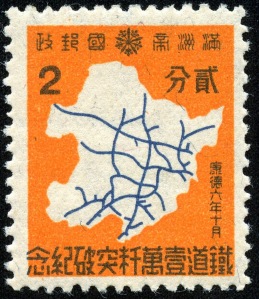
(Manchukuo postage stamp celebrating the 10,000th kilometer of track laid by the SMR.)
Politics aside, in the late 1930s the SMR was truly admired world-wide. It had top-notch locomotives and luxurious stations. Militarily, armies from Berlin to Washington noted how it enabled rapid force deployment.

(A former SMR locomotive which was still in Chinese civilian use in 1984.)
A bizarre aspect was the SMR’s Zone and army. The Zone was a 62-meter strip on either side of the tracks (about 136 yards total) over the entire network, plus areas around stations, sidings, etc. From 1931 onwards it was legally not part of Manchukuo, nor was it in Japan. It was exempt from the laws of either. Basically it was a spiderweb-shaped corporate country. If somehow clumped together, the Zone would have been the area of New York City.
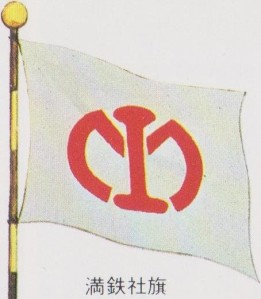
(The Zone’s defense force’s flag was the SMR trademark in red on a white field. It was sized so that as the flag fluttered, it appeared as the Japanese rising sun from a distance.)

(Period artwork showing the Zone’s force on patrol.)
The Zone had it’s own army. In theory these were volunteers, some local but many ethnic Koreans and some Japanese. As time went on, the latter dominated, and eventually the “volunteers” were entire IJA platoons or regiments that came and went in unit strength.

(Souvenir album sold to Japanese soldiers assigned to the SMR area before WWII. Manchukuo is in green, while Japan’s Chosen province (Korea) and the small Kwangtung Leased Territory are in red.) (Mr. Tadao Nakata collection)
This corporate army wore IJA-standard clothing, with the SMR trademark in place of the star. The standard weapons were the Mukden Mauser and Type 38 rifles.

(The winter headwear was simply an Imperial Japanese Army standard Fuyu no-boshi Type I with the railroad’s trademark in place of the IJA star.) (Mr. Tadao Nakata collection)
The army’s charter “allowed cooperation with that of Japan” and this was used as a loophole for the IJA to do whatever it wanted inside Manchukuo. In 1937, with full-blown war against China underway and WWII looming, there was no time for pretenses and the Zone and it’s army were abolished as the IJA openly operated in Manchukuo.
Mukden Arsenal could have never existed without the SMR. The vast quantity of guns and ammunition it made, and the steel and coal to make them, were dependent on the railroad.
In the final week of WWII, the Soviet army overran the whole SMR operating area. Many locomotives and railcars were looted to the USSR. What remained was eventually absorbed by the PRC’s state-owned railway. As late as 2000, China Railways still had six ex-SMR railcars on it’s books. Others ended up elsewhere. During the Korean War, an entire train (Japanese-made Pasi-Go locomotive plus ex-SMR flatbeds) was captured intact. North Vietnam used an ex-SMR Kawanishi locomotive during the Vietnam War.
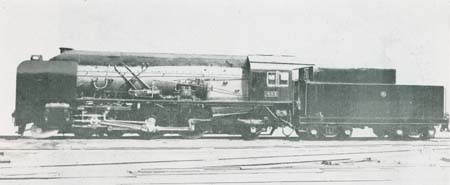
(The ex-SMR locomotive captured during the Korean War.)
In 2017, the remains of the SMR are part of China Railways Harbin spur but they are a shadow of their former importance.
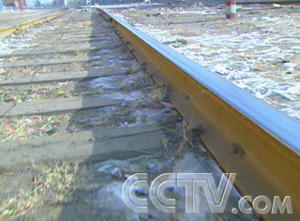
(From a 2005 Chinese TV news story on remaining ex-SMR routes still in Chinese use.)
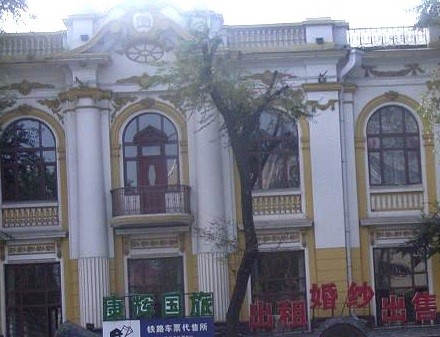
(SMR’s former legal & military liaison department in Harbin, PRC, in 2017. It is now a mixed retail / office building. It retains the arrowed wagon wheel; an international shorthand for military logistics.)
Showa Steel
Located in Anshan, Showa was once one of Earth’s largest steel mills, rivaling anything in Pittsburgh or the Ruhr. Like the SMR, Showa was critical to Mukden Arsenal’s operation. In fact it was critical to every Japanese arsenal; during the final year of WWII it’s weapons-grade steel output exceeded the rest of the empire’s mills combined.

(Showa Steel’s trademark)

(One of several giant blast furnace complexes under construction before WWII.)
Showa was founded in April 1933. It was owned by another Japanese company in Manchukuo, Mangyo; who’s stock was split 50/50 between Nissan and the Japanese military. It was one of the only Japanese factory complexes that actually expanded under allied bombing. Besides steel mills, it owned mines, power plants, etc.
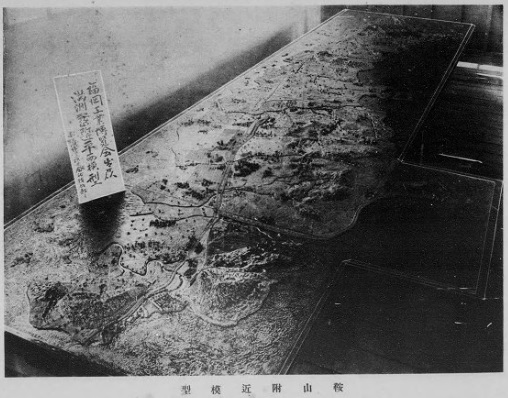
(1930s scale model of the sprawling Showa Steel complex of factories, warehouses, mines, and power plants.)

(Showa Steel’s coal & coke department built this technical library at Fushun. Assuming a Japanese victory in WWII, it was hoped to someday house mankind’s combined knowledge of coal. Rampaging Soviet troops trashed the library in 1945.)
Showa was bombed twice by American B-29s, and defended by a squadron of Ki-84 “Frank” fighters. As the Soviets launched their invasion in August 1945, they intentionally did not bomb it for want of capturing it intact, which they did. What followed was an epic looting, with things ranging from huge blast furnaces to office typewriters being carted off to the USSR.
In 1946, the nationalist Chinese gained custody of what remained. They tried to recover from the looting, partly to support Mukden Arsenal which they now also controlled. In 1948, Mao’s 8th Route Army fought a pitched battle against the nationalists inside the factories, emerging victorious. After the battle the complex was little more than rubble. The communists renamed it Angang Steel 1, and slowly started rebuilding.
During the Korean War, the ex-Japanese airbase next to the complex was used as a staging site for MiG-15 jets being sent to North Korea. The steel mill itself was a mess and contributed little to the communist effort in the Korean War.
The Cultural Revolution further retarded recovery and it was not until 1980 that the 1934 output level was matched. Today the complex is called Anshan Steel Ltd and owned by Baosteel. By 2017 (below), the only trace of Showa Steel is the layout of the streets.

Manchuria Aircraft Manufacturing, Ltd (Mansyu)
A spinoff of Nakajima, Mansyu was headquartered in Harbin, but had a second factory plus airstrip in Mukden. During WWII, the latter was appropriated by the IJA and was called Mukden North on Allied bombing charts. In 1953, the communist government rebuilt the factory as Shenyang Aircraft. It quickly grew, and eventually superseded Harbin Aircraft, which was founded at the defunct Mansyu’s headquarters in Harbin. Today Shenyang is the PRC’s largest warplane company. The WWII runway built by the Japanese (obviously extended and repaved) is still in use.
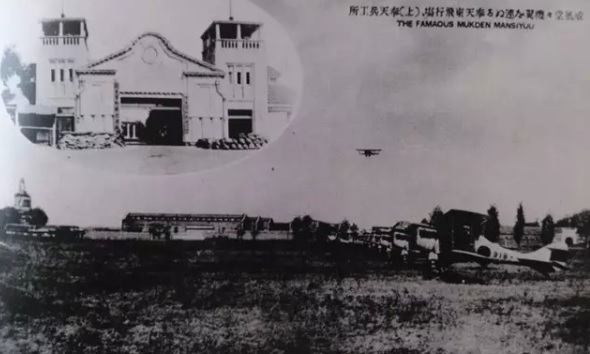
(1930s postcard of Mansyu’s Mukden sub-facility, with the Arsenal gate in the upper left.)
products of the second Mukden / Hoten Arsenal
During WWII, a vast variety of Japanese weaponry and equipment was made at Mukden Arsenal, so much that it would be easier to list what wasn’t. Below is a list of the Mukden weapons most commonly used after WWII ended.
the Type 38

(Mukden Arsenal-marked Type 38)
The Meiji Type 38 was standard to the IJA before and during WWII, and was also one of Manchukuo’s rifles during the brief lifespan of it’s army. About 3½ million were made, of which only 148,000 were built at Mukden Arsenal. The low number was because production started at Mukden only in 1932, already 26 years deep into the Type 38’s 36-year production span.

Excellent for the World War One era in which many were built, the Type 38 was 4’3″ long and weighed 9¼ lbs. It introduced the characteristic Arisaka bolt cover. The Type 38 fired the 6.5x50mm Arisaka cartridge (139 grain FMJ bullet; 2,500fps muzzle velocity) from an internal 5-round magazine. This rifle was accurate out to 500 yards. The bolt was extremely well designed, tough, and easy to manipulate.

(Mukden-made Type 38 with intact Japanese markings.)

(Mukden-made Type 38. “HA” may have been a past owner’s initials, or possibly a post-WWII inventory mark denoting Hoten Arsenal. Alternatively if it was captured by the USSR in August 1945, it might be a cyrillic NA.)
There was also a Type 38 carbine version, which was 1′ shorter, 2 lbs lighter, and lacked a bayonet lug. Mukden Arsenal made about 28,000 of these. A similar quantity of the 470,000 made at three other arsenals were refurbished at Mukden during WWII. These rifles were given to truck crews, railway guards, depot masters, etc; of which more were concentrated on mainland Asia than in the Pacific theatre.

(Mukden Arsenal-marked carbine version.)

(Manchukuo cavalry with the carbine version in WWII. Japan still used some horse cavalry units in the area as late as August 1945. Meanwhile the Manchukuo army never motorized at all.)
Mukden Arsenal ceased production in early 1944, at which time it was the last Japanese arsenal making Type 38s. It’s involvement with the rifle did not end there however, as some later returned for rechambering.
the Type 99
Probably the most famous Japanese rifle, the Type 99 was intended to retain all the Type 38’s good features but move up to a more robust cartridge. This bolt-action rifle fired the 7.7x58mm Arisaka cartridge (2,400fps muzzle velocity) from an internal 5-round stripper-loaded magazine. It was 3’8″ long and weighed 9½ lbs.

The rear sight had an anti-aircraft feature. When fully erected, two sidebars could be extended. The soldier used the left / right (depending on the plane’s course) sidebar to calculate a lead based on his guess of it’s airspeed, meanwhile the horizontal rectangle guided an appropriate muzzle rise. Not surprisingly, this rarely worked during WWII and by the time of the Type 99’s appearance in the Korean and Vietnam wars, was laughable.

(Mukden Arsenal-marked Type 99.)
The National Rifle Association considers the Type 99’s bolt among the best ever designed and the rifle overall was a very good design, with strong construction. It’s mediocre reputation from WWII was usually the result of being mismatched in battle against semi-auto M1 Garands.

(Photo from a 1951 US Army ‘enemy weapons’ handbook of the Korean War. Many North Korean and Chinese Type 99s were missing the dust cover and monopod by then.)
Mukden Arsenal’s production of Type 99s started in early summer 1944 and ran until the end of WWII. The exact total made there is uncertain, as unlike arsenals in Japan proper, Mukden considered the whole Type 99 run one lot.
Mukden Mauser production during WWII
Generalissimo Zhang’s masterpiece remained popular and there were several short spurts of new production, about 10,000 rifles total, before and during WWII. These guns were destined for the puppet Manchukuo army.
Late in 1944, low-scale production of a 6.5mm Arisaka version of the Mukden Mauser began. This was called the Type 45. Besides the required chamber dimension changes, these had a steel block inside the magazine to allow existing production jigs to be used with the 6.5mm round.

(A 6.5mm Arisaka-chambered Mukden Mauser used by the nationalists after WWII.)
Japan intended these for their own use only; it was designed to merge the great features of the Mukden Mauser with the tremendous stockpile of 6.5mm Arisaka rounds on the Asian mainland. These were all new-production and not rechamberings, as the Arisaka cartridge had different shouldering in addition to being shorter than the Mauser round.
the Type 11

This basic light machine gun was 3’7″ long and weighed 22½ lbs. It was air-cooled and had a 400rpm rate of fire. It fired the 6.5mm Arisaka cartridge from a hopper feed, which held six 5-round Type 38 rifle strippers.

The idea was that an infantry unit would only need to take stripper-loaded ammo into battle. Unfortunately it also tended to jam often, and to counterbalance the hopper’s weight the buttstock was twisted the opposite direction, making for an uncomfortable aim.
The 6.5mm Arisaka round was found to unduly stress the Type 11, so a genso (reduced) cartridge was also manufactured at Mukden for machine gunners. These are stamped “G” but otherwise appear identical.
Mukden Arsenal’s run of this machine gun was short, from 1932 to 1936. Of the 30,000 total made, few came from Mukden. None the less, the Type 11 remained in Japanese use for all of WWII and captured/surrendered examples were used by both sides during the Chinese civil war, and by North Korea during the Korean War. Mao’s communists called the Type 11 “the twisted son” on account of the offset buttstock.
the Type 96
The Type 11’s intended replacement, production of the Type 96 started at Mukden Arsenal in 1936 and ran off and on until the end of WWII. Roughly ¼ of the 41,000 total made came from here.
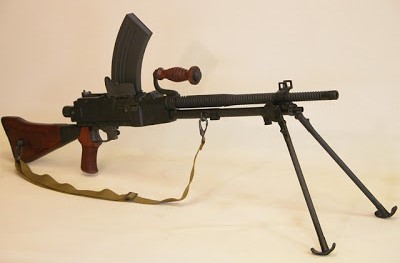
The air-cooled Type 96 was 3’6″ long and weighed 20 lbs. It retained the 6.5mm Arisaka cartridge, but now fired from a detachable 30-round top-seated banana magazine. The rate of fire remained 400rpm. Optional accessories were a scope, a bayonet, and a 1’² armor piece that sat in front of the bipod.
The Type 96 failed to solve the Type 11’s tendency to jam. In theory a conventional magazine was more reliable, but the gun’s design itself had a flaw that often resulted in empty casings expanding and causing an extraction failure.
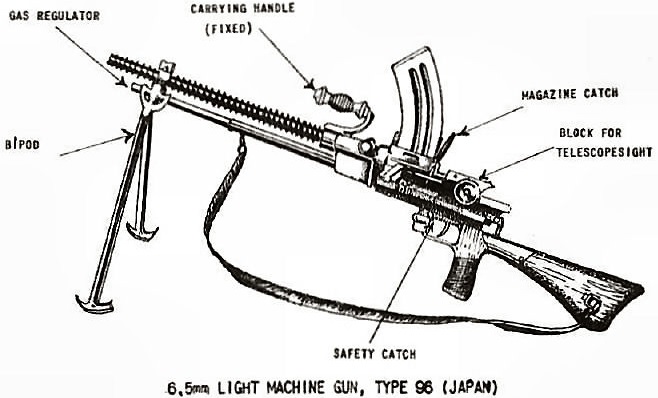
(US Army sketch from a Korean War communist weapons handbook.)
Many Type 96s survived the end of WWII in Manchuria, and were used by both sides during the Chinese civil war. Mao later sent some to North Korea, where they served in the Korean War.
the Type 99
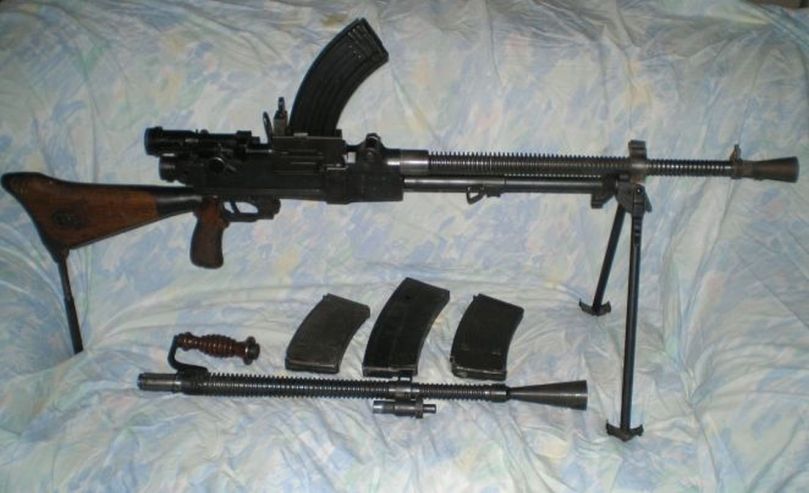
Japan’s final LMG design of the war, the Type 99 entered production at Mukden Arsenal in 1940 and was built there until the end of WWII. About ¼ of the 53,000 total came from Mukden.

(Sketch from a Korean War US Army handbook on communist forces weapons.)
The Type 99’s objective was to follow the infantry rifle shift from 6.5mm to 7.7mm. The later’s stout recoil required a complete redesign of the Type 96. The air-cooled Type 99 had a 700rpm rate of fire. It was 3’11” long and weighed 23 lbs. Despite the larger ammo, a 30-round banana was retained, as was the ability to fit a scope or bayonet. It had a fast barrel-change device.
Like the Type 96, Type 99s were used after WWII in the Chinese civil war and Korean War.
the Type 92
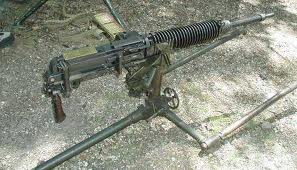
This was the standard IJA heavy machine gun throughout WWII. Air-cooled via it’s metal fins, the Type 92 fired 7.7mm Arisaka rounds at 450rpm from 30-round rigid strips (which Mukden Arsenal manufactured). The strips were at first made of bronze, then as WWII went on scrap steel, and finally oiled cardboard.

The Type 92 was 3’10” long and with it’s tripod, weighed a hefty 122 lbs. The tripod had receptacles for wooden poles so that infantry could move a battle-ready gun like a stretcher. It was accurate out to 850 yards or with a scope, to about 1,500 yards.

(Mukden Arsenal proofmark on a Type 92 machine gun.) (photo via James D. Julia auctioneers)
The strip feed was the Type 92’s main downfall, as a 7 second burst would exhaust a strip; taking much longer to grab a replacement and set it in the receiver. The strips were lubricated to avoid extraction jams, invariably the oil attracted dust and dirt which caused even more frequent failures.
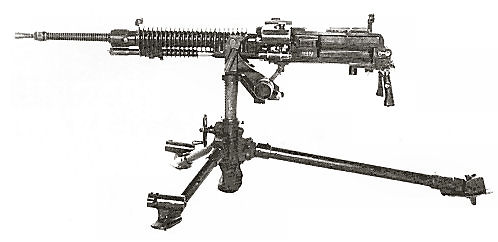
(Type 92 captured by the US Army during the Korean War.)

(A nationalist soldier poses with an ex-Japanese Type 92 during the Chinese civil war.)
Mukden Arsenal made a low number of the 45,000 manufactured. However, a disproportionate ratio of Mukden’s Type 92s existed after WWII, as Mao’s troops liked the gun during the Chinese civil war. Type 92s were used heavily by North Korea during the Korean War’s first year, and then again appeared in a brief spurt when the Chinese intervention began. The nationalists used a few during the civil war as well, and when they fled to Taiwan, some went with them backing up M2 Browning .50cal’s imported from the USA.
Mukden trainers
During the Sino-Japanese war, the IJA captured colossal numbers of Hanyang 88 rifles, considered too obsolete for reissue. Mukden Arsenal remade some into youth instructional rifles, as marksmanship was a required high school course in Japan until 1945. The best had Arisaka sights fitted and the buttstock sanded down to an Arisaka-shape. Others simply had Chinese markings removed. The high school trainers in Japan proper were dumped into the Pacific during the American occupation. Some in Mukden which hadn’t yet shipped found their way into the North Korean army during the Korean War.
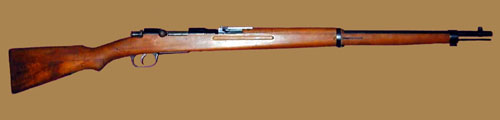
(Mukden Arsenal trainer conversion of a captured Hanyang.)
Like all imperial arsenals, Mukden made trainers for boot camp use. These were assembled from factory second parts, and often lacked bayonet lugs and other features. Sometimes the barrels were not rifled. Mukden Arsenal also made blanks, and frangible bullets of wood or cellulose, for these.
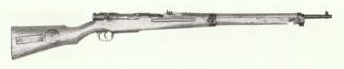
(Mukden Arsenal smoothbore trainer.)

(Various training-only light machine guns.)
knee mortars
Mukden Arsenal was one of the manufacturers of both the Type 10 and Type 89 grenade mortars. The main difference between the two was that the Type 89 was rifled and, besides grenades, could also fire a built-for-the-purpose 50mm round.
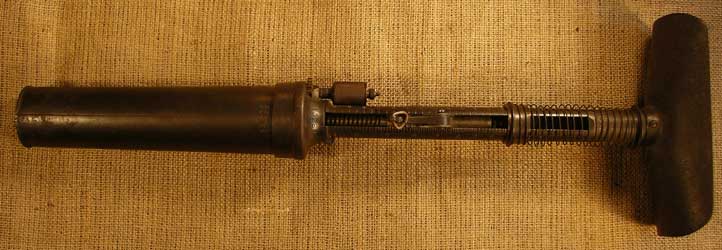
(Type 89 grenade mortar.) (photo via Nambu World website)
The unfortunate story of these weapon’s nicknames is well-known. During WWII, captured paperwork was incorrectly translated, specifically the character “Ni”, and combined with the baseplate’s shape, led to the impression that they fired off the knee. Some GIs suffered serious leg injuries with captured examples, but the problem was nowhere near as common as is portrayed today as the error was quickly rectified.

(This description, taken from a 1951 US Army Korean War guide to communist forces weapons, features a bold warning less any young soldiers who enlisted after WWII make the error.)
The correct operation was to emplace the baseplate on a log, sandbag, etc at a 45º angle. A scaled thumbwheel throttled chamber pressure, giving the correct ballistic drop to a range estimated by the soldier, usually between 100 to 300 yards away. The weapon discharged by pulling a leather tab attached to a trigger mechanism in the weapon’s neck.
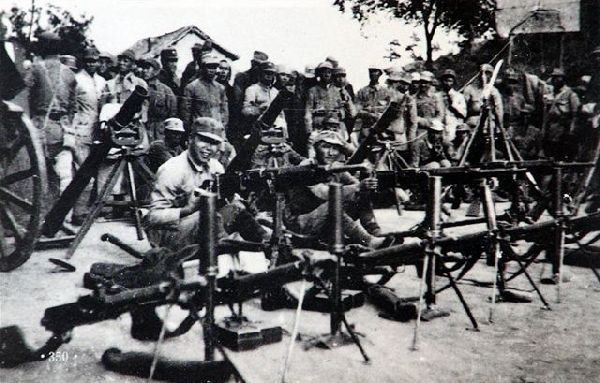
(Taken during the 1945-1949 Chinese civil war, this unit of Mao’s 8th Route Army has a stunning variety of WWII-vintage Japanese weapons. Standing upright inbetween the Type 11 light machine guns and ahead of the Type 92 heavy machine guns are Type 89 knee mortars. The communists found the Type 89 highly effective. China’s modern People’s Liberation Army (PLA) considers the 8th Route Army as it’s historical genesis.)
Due to their light size (2′ long, 10 lbs) they were immensely popular with Mao’s troops during the Chinese civil war. Examples popped up during France’s Indochina war, with communist elements in both the Korean and Vietnam wars, and during the Indonesian war of independence.
submachine guns at Mukden Arsenal during WWII
Japan fielded only one submachine gun during WWII, the lackluster Type 100. It’s not thought that Mukden Arsenal made any of these.
There were two other designs, the Type II Model A and Type II Model B. The II/A was designed by Nambu and fielded by the Imperial Japanese Navy in very low quantities during the Sino-Japanese war, where it was unsuccessful. The Type II/B was an even rarer bullpup design.
Throughout WWII, Japanese soldiers complained that they had no answer to the USA’s Tommys and Grease Guns. In 1944, blueprints of both Type IIs were sent to Mukden Arsenal to see if they could make a submachine gun that was superior to, but cheaper than, the Type 100.
Mukden designers came up with a blowback-operation gun firing the 8x22mm Nambu pistol cartridge from a 50-round box magazine. It combined the action of the II/B with the layout of the II/A. Little else was done but invaluable experience and tooling was gained, which would pay off after WWII as described further below.
Mukden Arsenal artillery
Mukden Arsenal made a wide variety of light and medium artillery, and an actual majority of the IJA’s artillery ammunition, during WWII.
the Type 41
The Type 41 mountain gun, despite it’s name, was usually employed by Japanese cavalry units. It fired the 75mm Krupp cartridge (1,427fps muzzle velocity) out to 4¼ miles. The gun weighed 1,200 lbs and had a flimsy carriage unsuitable for motor towing. These were actually made by Osaka Arsenal, however, as most were with IJA units on the Asian mainland, Mukden Arsenal became the prime refurbishment facility. It was kept busy as by the 1940s, most were worn out and needed overhauls.

(Illustration from a Korean War US Army handbook.)
Type 41s were used by both sides during the Chinese civil war, and by North Korea during the Korean War. South Korea actually had a few as well, inherited from an IJA unit which surrendered on it’s future territory in 1945. The Thai army continued to field a battery into the 1950s.
the Type 38
Described as both a field gun and a mountain gun, this weapon shared the same 75mm Krupp cartridge as the Type 41. It was a superior gun, with a range of 5 miles. As designed it weighed 1 ton. Type 38s were used throughout WWII but only sporadically in the Pacific; with the vast bulk being stationed on the Chinese front, Burma, Indochina, and the Japanese homeland.

(Type 38 Improved artillery piece, inset showing the modified breech designed at Mukden Arsenal.) (US Department of Defense archives)

(Mukden Arsenal headstamped 75mm Krupp round.)
Mukden Arsenal wasn’t the original maker but like the Type 41, was named the Type 38 refit facility. Mukden designed a version called Type 38 Improved which was a ¼ ton heavier but had a range over 6 miles and a more robust carriage. About 400 existing pieces were converted, plus 500 Type 38 Improved guns built from scratch.

(Chinese marines man an original-style Type 38 being used as a static coastal defense gun in the 1950s.)
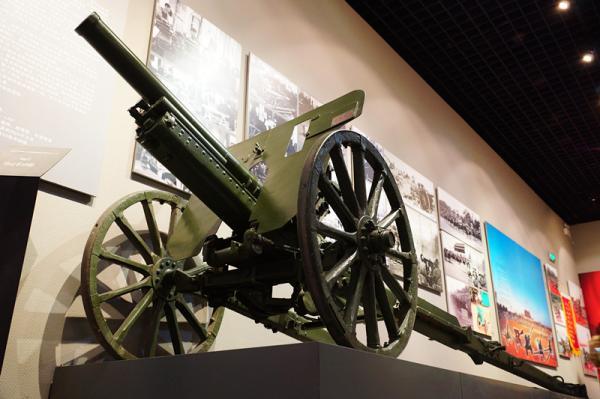
(Original-style Type 38 which was used by Mao’s communists and then briefly the formal PLA after the communist victory in the Chinese civil war.)
These guns were immensely popular with Mao’s communists after WWII. They were used throughout the 1945-1949 civil war, in some cases dueling with nationalists Type 38s. North Korea (and to a small extent, South Korea) also used these guns during the Korean War. After the Chinese civil war ended, the PLA was reluctant to retire it’s stockpile and retained some into the early 1960s. The Mongol army, which had captured a few during Mongolia’s cooperation in the 1945 Soviet attack on Manchukuo, retained some into the 1950s.
the Liao-13
There is often confusion regarding this rare design as during WWII and the Chinese civil war which followed, the nationalist army designated captured Type 38s as Liao-13, a designation it also assigned to imported Krupp Mo.1903s. Meanwhile, Mukden Arsenal took the Type 38 Improved effort a step further and made a follow-on effort also called the Liao-13, more confusing as it matched the official name of the Mukden Mauser.
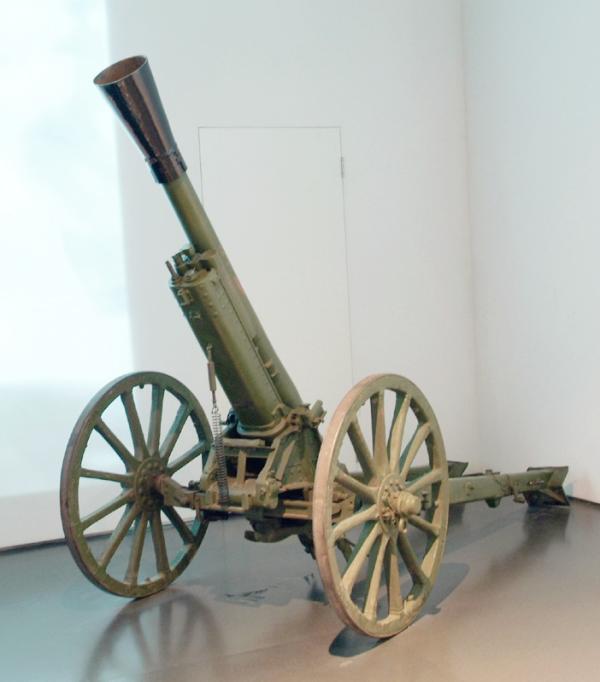
Only a handful of these were made, and it never received a Japanese type number as it was a private effort of the Arsenal. As Soviet troops approached in 1945, some of the few built were hidden by sliding them down a muddy riverbank in Shenyang. The nationalists retrieved them in 1946 and put them into storage. Surprisingly they remained when Mao’s communists took over. They were briefly used for a while, and one remained employed as a saluting cannon into the 1970s.
the Liao-16
This was an improved version of the Japanese Type 88 75mm anti-aircraft gun, of which Mukden Arsenal manufactured ammunition for. A small number of these prototypes were produced but apparently never shipped out, most being utilized for AA defense of the arsenal itself.

other WWII production
As mentioned previously Mukden Arsenal made all sorts of ammunition for the Japanese army and navy.

(Mukden Arsenal-stamped 6.5mm Arisaka ammo package.)

(Mukden Arsenal headstamped Type 91 hand grenade. During WWII, American soldiers called this “the headbanger” because to arm the fuze, the soldier pulled the pin and struck it on a hard surface, typically his own helmet.)
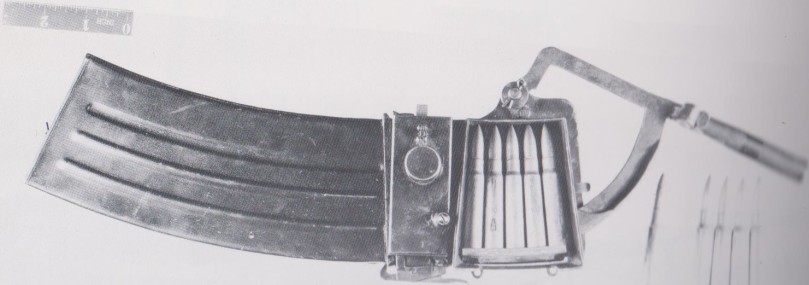
(Mukden Arsenal manufactured this tool for speedloading Japanese box magazines.)
It also had a cutlery shop which manufactured bayonets and guntos (short katanas). Many of the empire’s Type 30 bayonets were manufactured here.

(Mukden Arsenal-manufactured Type 30) (photo via Lawrence Ordnance)
The Type 30 continued in use with China, North and South Korea, North Vietnam, Thailand, and Indonesia after WWII. Even as the Arisakas faded away, it was sturdy and handled well as a general infantry knife.
In mid-1945 production of edged weapons was halted in favor of “pole bayonets”, crude items compatible with Type 38s and Type 99s. The American occupation force in the home islands discovered a plan for civilians to affix them to bamboo for use against the never-mounted final invasion, hence the English nickname.

(Mukden Arsenal pole bayonet)
Oddly, a Mukden-marked pole bayonet is rare today as after WWII they were militarily junk and considered ugly “take-home” trophies by both the Americans and Soviets, most being discarded.
III) THE END OF WWII AT MUKDEN ARSENAL
The largely ethnic-Chinese workforce at Mukden Arsenal remained loyal to Japan throughout WWII. However by 1945 communist infiltrators were present and as it became clear that Japan would lose, slowdowns and absenteeism became common.
On 9 August 1945, twelve entire Soviet army groups plus a lone Mongol division launched a massive invasion of Manchuria. Fighting started a few hours before the Nagasaki atomic bombing and was one of the “twin shocks” which influenced Emperor Hirohito.
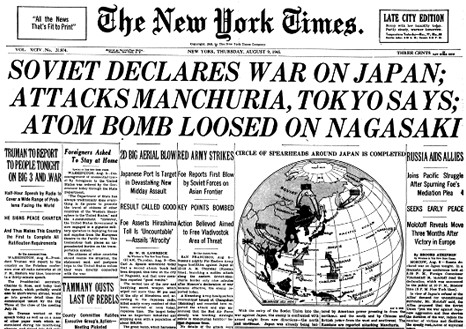
The invasion’s outcome was never in doubt but what was amazing was it’s execution. In just twelve days, the Soviets overran all of Manchuria, half of Korea, and part of northern China; an area roughly the combined size of Texas, Arizona, and New Mexico. The Soviets took minimal losses; while Japan’s Kwangtung Army, three army groups in strength, was annihilated.
Manchukuo’s army, about 200,000 strong, melted into oblivion. Most of these men enlisted for a paycheck and hot meal, and cared nothing about Puyi’s puppet regime. During the first week many deserted, often taking their rifles and joining Mao’s communists.

(In late 1945 the Soviet occupation army built a victory column in front of the SMR passenger station in Mukden. Photo on the right shows the monument and station in modern Shenyang as they appeared in 2002.)
Nine days into the offensive, the Soviets overran the city of Mukden and Mukden Arsenal. The facility was largely captured intact.
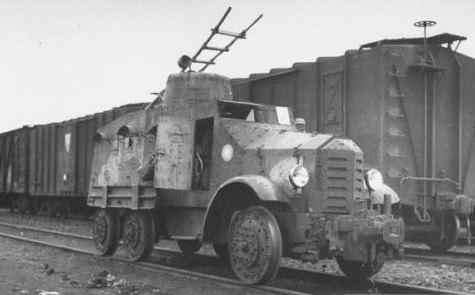
(Japan’s Type 91 So-Mo armored car had a wheelbase compatible to the SMR’s gauge and could run on either tires or rails. This surrendered example was disarmed by the Soviets and used as a service truck on the former SMR near Mukden in 1946.)

(One of the arsenal’s buildings as the Soviets left it when they departed in 1946.)
Like everywhere in Manchuria, Mukden Arsenal was looted by the Soviets. This is not surprising, more so is that anything remained at all. The reason is lost to time; perhaps Stalin wondered if his occupation of Manchuria might end up as a semi-permanent affair as in eastern Germany, and was saving the Arsenal’s remains for his own later use.
IV) 90th NORTH CHINA ARSENAL
The USSR promised to turn over Manchuria to Chiang Kai-Shek’s recognized government instead of Mao’s communists, who they actually favored. Predictably the Soviets dragged their feet to give Mao every advantage. The USSR had no interest in Japanese gear, however Field Marshall Rodon Malinovsky began a covert program to transfer ex-IJA arms to Mao’s forces.
In late 1945 President Truman was insistent that something be turned over to the nationalists immediately, and Stalin relented. During the spring of 1946, the US Army conducted a massive (and expensive) airlift of Chinese troops into defunct Manchukuo’s two largest cities, Hsinking and Mukden. In the later, damaged and looted former Japanese airfields were used as the terminus and by March 1946, the nationalists controlled the city, it’s surrounding towns, and the arsenal.
The nationalists reverted to the city’s traditional name, Fengtian. Due to damage and looting, they estimated Fengtian Arsenal to have been knocked back to the level of Generalissimo Zhang’s era. Missing were many heavy presses and drills, but especially precision instruments like calipers.
On 7 July 1946, enough new gear was airlifted in (Mao’s forces already made overland transport dangerous) to declare Fengtian Arsenal again partially open for business. It was renamed 90th North China Arsenal.

(90th North China Arsenal proofmark, used 1946-1948. The ‘split 8’ is actually an overlaid stylized 9 and 0, the line representing the now-breached border of extinct Manchukuo.)
90th North Arisakas
The first guns made were Type 99s. Other than omitting the chrysanthemum these were identical to Japanese guns of WWII. Several hundred were made, partially using leftover WWII parts. During WWII, Japanese rifles specified a two-piece stock as there were few large-trunk forests left in the home islands by the 1930s. Post-WWII Chinese Arisaka stocks are often one piece of lumber as there was no such issue.
These guns saw immediate use in the Chinese civil war. Some were later returned for conversion into the rifle described below. Others served on as-is.
the North China Type 35

(90th North China Arsenal Type 35 captured during the Korean War)
This gun was made between 1946-1948. It was a Type 99 converted from the 7.7mm Arisaka cartridge to the 7.9x57mm Mauser round. Here, the nationalists were being quite optimistic in long-term planning. In 1946 the Chinese army’s main rifles were the Zhongzheng Type 24 and Hanyang 88, both leftover WWII weapons using the 7.9mm Mauser round. The nationalist ZB-53 machine gun also used it. Assuming quick victory over Mao’s rebels, it was intended to utilize the Arsenal’s existing ex-Japanese dies and jigs with the ROC army’s standard ammunition.

(photo via Rifles Of The World book)
The barrel was cropped at the receiver end, and the chamber itself was slightly altered. The magazine spacing difference was slight enough that it could be accommodated by running production at the extreme end of it’s tolerance span. These guns could be either new production or conversions of ex-Japanese Type 99s from WWII.
Tens of thousands of these were made / converted, and it was a successful effort. The 90th North China Type 35 was strong, accurate, and reliable. Chiang Kai-Shek’s forces used them throughout the civil war, and Mao’s men used captured examples.

(Information published by the US Army during the Korean War regarding communist use of the Type 99.)
Type 35s were used by North Korea and the Chinese during the Korean War. A particular example was China’s IX army group, which had a whole ex-nationalist division. These men had been marooned on the mainland when the nationalists fled to Taiwan, and were offered a chance to switch allegiance in lieu of a POW camp. The whole division was still equipped with Type 35s, plus some unmodified Arisaka Type 99s, when it was sent to Korea in 1950.
Mukden Mausers 1946-1948
Many of these well-liked guns were inherited by the nationalists after WWII and 90th North China Arsenal refurbished and reissued them, all the better as they fit into the plan for centering the logistics system on the 7.9mm Mauser cartridge.
the North China Type II
This is one of the arsenal’s rarest offerings. As mentioned, in the waning days of WWII Mukden Arsenal had run it’s submachine gun project. Amazingly all materials related to it survived the Soviet occupation. In 1946, a tiny number of these guns were made in 8mm Nambu before a switch to .45ACP. The Type II was 3′ long and weighed 7½ lbs. It had a 30-round detachable banana magazine and fired at 600rpm.
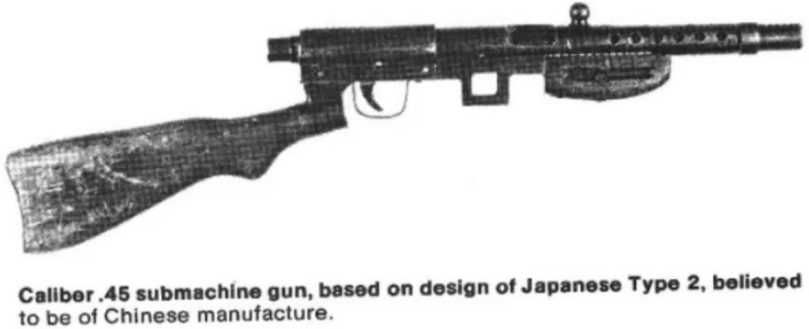
Production was very low, no more than a few hundred at most, and curtailed to free up capacity for Type 36 submachine guns. Despite it’s rarity, some were captured by Mao’s communists and a few popped up in Korea, where it was initially thought to be a Japanese weapon undiscovered during WWII.
As of 2017, only two are known to exist. One is displayed at the Beijing Military Museum and the other is in PLA storage.
the North China Type 36
This was the main gun made at the arsenal when the nationalists ran it. During WWII, the USA lend-leased thousands of M3 Grease Guns to Chiang Kai-Shek’s army, and to a small extent, Mao’s guerillas. Congress terminated Lend-Lease at the end of WWII.

A decision was made in China to reverse-engineer the M3, specifically the M3A1, for local production. Although the Grease Gun was America’s most basic submachine gun of the war, it was not easy to copy. The M3’s bolt requires two longitudinal drill-outs it’s entire length to fit the gun’s guide rods. The stamped body pieces have to be welded together without heat warping them. It took 90th North China the better part of six months to get it down pat.
In functional respects, the Type 36 matched the M3. It fired the .45ACP cartridge (920fps muzzle velocity) from a 30-round box magazine at 450rpm. It was 2’6″ long with the stock collapsed and weighed 8 lbs empty. It was nominally accurate to 100 yards but in reality a close-quarters “spray” weapon.

(Sketch from a Korean War US Army handbook. As an insult the PLA refused to call the American .45ACP cartridge by name and designated it “11x32mm, Pistol” which is not it’s exact dimensions in metric.)
The original M3 was never glamorous but Type 36s were even more sloppy, marred by messy welds, rough edges, and omission of things like the oiling kit and nut which allowed servicing with a common wrench. Type 36 parts almost never worked in American-made M3s, and sometimes the tolerances were so bad that they didn’t fit in other Type 36s.
None the less, 10,000+ were made in 1947 and 1948 before the communists overran the arsenal. These served with both the nationalists and communists during the civil war, and with Chinese troops during the Korean War.
the North China Type 31
Similarly, the USA had lend-leased M2 60mm mortars to China during WWII, and this design was duly pirated and put into production in 1947. The North China Type 31 was a fairly exact copy and had interchangeable parts with American M2s.

The Type 31 weighed 42 lbs and fired a 3 lbs shell out to 1,900 yards. It was a very popular mortar in the nationalist inventory, and later in the PLA, which used them in the Korean War. A small number were later transferred to North Vietnam.
the vz.26
China had obtained a license for this excellent Czechoslovak machine gun in the 1930s, and made them under license at Taku Naval Arsenal and Gongxian Arsenal during WWII. The air-cooled vz.26 fired the 7.92x57mm Mauser cartridge from a 20-round box magazine at 500rpm. It was 3’9″ long and weighed 23 lbs.
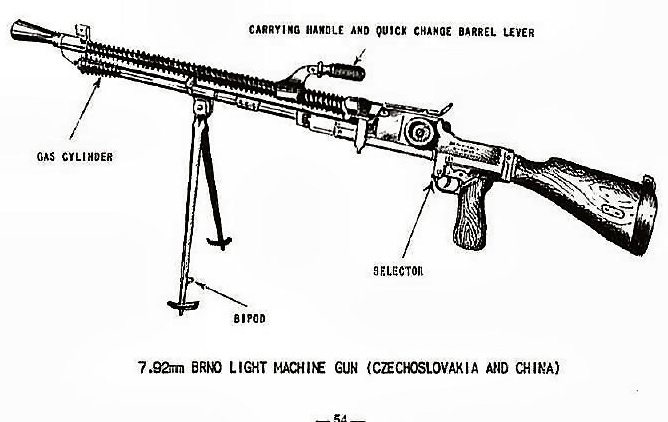
(Sketch from a 1951 US Army guide to enemy weapons in the Korean War.)
With Japanese machine gun production over, open capacity at 90th North China Arsenal was used to start vz.26 production there as well. Besides the standard 7.92 Mauser version, a 6.5mm Arisaka model was also produced. This Japanese ammunition had no advantage but was still plentiful in supply.

(6.5mm Arisaka-chambered vz.26 captured during the Korean War.)
These guns were made in 1947-1948 and appeared with Chinese troops in the Korean War.
miscellaneous WWII-era designs 1946-1948
In 1946-1947, a short run of Type 89 knee mortars was made at 90th North China Arsenal, as they were popular during the Chinese civil war. These were identical to the WWII weapons. A handful of Type 99 light machine guns were made, again identical too the WWII version.
Time and effort was wasted in 1947 in a failed attempt to reverse-engineer and tool up for a M1 Garand clone.

(A simplified bayonet manufactured between 1946-1948.)
WWII-era ammunition at 90th North China Arsenal 1946-1948
More important than the arsenal’s gun output was it’s ammunition production, critical to the nationalist effort during the civil war. By 1947, a bewildering variety of types was being made there: 6.5mm Arisaka, 7.7mm Arisaka, 7.9mm Mauser, .45ACP, 9mm Parabellum, 20x72mm AA, .30 Carbine, 50mm Japanese, 81mm M43, 60mm M49, and 75mm Krupp.
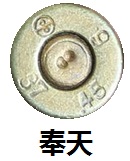
(90th North China headstamped .45ACP round. This one was made in September (9) of Manchu Year 37, or 1948 in the AD system.)
The .45ACP production was phenomenal, peaking at 1,000,000 rounds/month in 1947. A variety of WWII-vintage nationalist guns used .45ACP during the civil war: M1928 / M1A1 Thompsons, M3 Grease Guns and the Type 36 clone, the Shanxi Type 17 broomhandle, and M1911 handguns.
Some of this 1946-1948 .45ACP ammunition made its way in the 1990s to the USA via a Joliet, IL company called Paragon Sales. It’s unlikely it came directly from China. A more likely source is Thailand which is an ally of both the PRC and USA. Paragon ceased operations in the early 2000s.
fall of Fengtian
Chiang Kai-shek’s generals managed the Manchurian theatre terribly during the civil war.
By the summer of 1948, nationalist control was limited to landlocked corridor between Fengtian and Changchun. The arsenal’s output fell as steel stock was harder to get after the communists controlled the former South Manchuria Railway. Increasingly the arsenal’s raw materials and finished goods came and went by WWII-surplus C-47 Skytrain aircraft. In the autumn of 1948, Mao’s general Lin Biao launched his Liaoshen Offensive. At the end of October, a five-day pitched battle was fought inside Fengtian itself, destroying much of the historic walled city.
The nationalists planned to dynamite the entire arsenal. However a fifth column of 300 communists on the arsenal’s payroll frustrated these efforts. On the afternoon of 1 November 1948, Mao’s troops secured the arsenal. Other than damage from the battle, it was fully intact. A nationalist air force bombing raid failed miserably and thereafter the arsenal was securely in communist hands.
V) SHENYANG DAWN ARSENAL
The communists gave the city it’s current name of Shenyang and the complex was renamed Shenyang Dawn Arsenal. Production quickly resumed and was up and running again on 2 December 1948.

(Shenyang Dawn Arsenal’s proofmarks, used from 1948 until it’s disestablishment. The proofmark grew more fancy over the years.)
WWII-era Japanese guns after 1948
The North China Type 35, the Mauser-rechambered Arisaka Type 99, continued in both rechambering and even a small batch of new-production at Shenyang under the communists. Mao’s forces used these guns as frontline weapons until the nationalists were driven from the mainland in 1949, and then as secondary or reserve weapons into the 1950s. After the armistice which ended the Korean War in 1953, some were dumped off onto the North Korean army which was desperate for any guns it could get as it rebuilt it’s army.
WWII-vintage Type 99s not rechambered were obsoleted in 1949 as 7.7mm Arisaka ammunition was starting to become less plentiful (but by no means scarce). Some were provided to North Vietnam, others to Indonesia which also used the rifle after gaining independence in 1949.

(WWII-vintage Type 38 with early PLA markings applied in the 1950s. This one was never restocked, as seen by the seam from the Japanese two-piece style.)
There were still a decent number of Type 38s in use in 1948, and because 6.5mm Arisaka ammunition was both plentiful and in production, Shenyang Dawn Arsenal ran an ongoing refurbishment effort through the 1950s. Typically the sights, barrel, and bolt were reconditioned and a new one-piece stock fitted. The last known examples of these were in 1969, by which time the Type 38 had long since been relegated to reserve storage in China.
Shenyang 7.62x39mm Arisakas
These are among the most bizarre perturbations of WWII firearms ever done. As the RPD and SKS entered service, it was decided to take in some 6.5mm Arisaka Type 38s still in PLA use and convert them to the Soviet 7.62x39mm cartridge.
There were several versions of this modification, in degrees of strangeness. The first, which was usually done to the shorter cavalry carbine version, retains the Japanese barrel, with the main changes coming to the chamber and the magazine. In the latter the follower plate was reshaped and a sheet metal guide inserted to compensate for the different cartridge dimension.

(photo from Forgotten Weapons website)
The second, and most common, was done to regular Type 38s. In this case, the entire barrel was removed and replaced with that of the SKS – barrel, bayonet, front sight, and all. This was then grafted onto the remachined receiver after the forestock was cut down. The magazine was altered as above. There were variations within this style itself; sometimes a grotesquely cut Type 38 barrel with new front sight was used instead of the SKS barrel. The magazine modifications had problems and sometimes a new Chinese-designed follower and spring was used. For reasons unknown, the back of the buttstock was shaved down on many.

(photo from Forgotten Weapons website)
These rifles had serious flaws. Accuracy was atrocious. With either the SKS or cut Type 38 barrel, the rifling was often recrowned sloppily. The Soviet round had entirely different ballistics than the WWII Japanese cartridge, and the combination of sight pairings did not agree with the bullet’s flight. The magazine was unreliable and feed failures were common. The 7.62mm Soviet round had a much stouter recoil than the 6.5mm Arisaka, and combined with the rifle’s reduced mass, made them miserable to shoot.
As early as the late 1950s, these 7.62 Type 38s were being passed to logistics and artillery units, with the goal of standardizing ammunition supply with frontline troops using the Type 56 (SKS clone). A significant number were dumped off to North Vietnam in the early 1960s, and American troops encountered them with some regularity during the Vietnam War.
WWII-era Mauser rifles after 1948
Incredibly, some of the old Mukden Mausers were taken in for refurbishment at Shenyang in 1948-1949. The production tooling was obviously long since gone, so those missing dust covers did not have them replaced.
Mukden Mausers served with the communists through the final expulsion of the nationalists off the mainland. After China’s Hainan Island campaign in 1950, the PLA declared the gun obsolete and they were sent to the CPC Militia. This probably actually extended the rifle’s service life, as CPC Militia units did not participate in the Korean War, and were last in line for weapons updates afterwards. CPC Militia units had Mukden Mausers on hand as late as 1979.
There was also a very odd project in the late 1940s to truncate the barrels of captured nationalist vz.24 rifles and fit components of WWII Japanese weapons, to produce a carbine for tank crews. Little else is known about it and it was possibly a failure.
the SG-43
The Goryunov SG-43 was a common Soviet machine gun during WWII. It was 3’10” long and weighed 91 lbs on it’s wheeled mount. Air-cooled, it fired the 7.62x54mm(R) cartridge (2,624fps muzzle velocity) from a 250-round belt at 600rpm.

Some of these were transferred to Mao’s troops in Manchuria by the withdrawing Soviets in 1946. In 1949, China reverse-engineered the design as the Type 53. Production began at Shenyang Dawn Arsenal and eventually about 500 were built there. These served on into the 1960s.
the Type 36
As the arsenal was captured relatively undamaged, the communists continued Type 36 submachine gun production unabated. These guns were identical to the nationalist-era weapons, except of course for the new proofmark.
WWII-era ammunition production after 1948
The communists reduced the variety of ammunition types being made. By the start of the Korean War in 1950, it had been trimmed to 6.5mm Arisaka, .45ACP, 75mm Krupp, and 7.9mm Mauser. Production of Mauser ammo was then discontinued during the Korean War to free up capacity for Soviet-standard calibers.
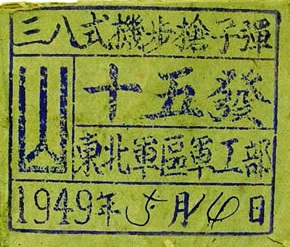
(6.5mm Arisaka box label from Shenyang Dawn Arsenal, dated May 1949)
VI) END OF THE ROAD
discontinuation of WWII-era guns
After the end of the Korean War in 1953, the arsenal began to move away from the WWII era. In 1954, production of the Type 54 handgun began. This was a 9mm semi-auto based on the Soviet TT platform. In 1955, Shenyang Dawn Arsenal began production of the Type 56, the Chinese SKS clone. The first 500 Chinese SKS’s were made at Shenyang and this would briefly become the PLA’s main battle rifle. Confusingly, in 1956 production began of the Type 56, the Chinese AK-47 clone, which shared it’s type number with the SKS clone. In 1958, production of the Type 59 handgun (a Makarov PM clone) began.
switch to aerospace
In 1953, Chairman Mao decreed that the arsenal be converted to aerospace use, specifically aircraft engines. The conversion started in 1954, with the old Mukden Arsenal vehicle overhaul building. The new enterprise was now known as Limeng Shenyang Factory.
The switch was gradual, and firearms production continued in declining numbers as building by building was changed to aircraft engines. As this happened, many of the older buildings were torn down.
There is no set firm date as to when the last gun came out of the former arsenal. Most sources feel it was around 1969.
During the arsenal’s heyday, it had expanded into the city and some of the buildings now outside of the current aerospace plant remain. For example the elementary school built for employee’s children is now a small market in Shenyang.
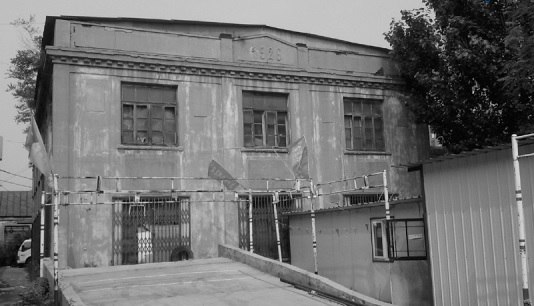
(Built in 1926, Mukden Arsenal’s then-state of the art ballistics lab is today used by a Shenyang computer company as a storage warehouse.)

(The former Imperial Japanese consulate in Shenyang is now a Chinese government-run guesthouse.)
Zhang’s gate at the original entrance is now long gone. The SMR rail spur which once served the arsenal has been torn up and replaced with a paved city street. Many of the warehouses on the east side old grounds were torn down during the 1960s and 1970s and replaced with residential buildings. In the 1980s, Chang’an road in Shenyang was expanded to four lanes and the old original road now sits inside the company’s perimeter.
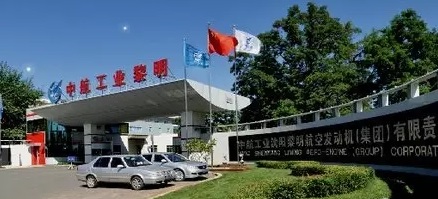
(The entrance to AVIC Shenyang Liming Aero-Engine in 2017. It is not in the same spot as the old arsenal gate.)
During the 1990s the company was reorganized as AVIC Shenyang Liming Aero-Engine, LLC. The company is a key player in China’s warplane industry and the former arsenal grounds are today a restricted area.

(The arsenal grounds in WWII and 2017. The red arrow points to the spot of Zhang’s gate, long since demolished. A modern building sits on the old gate’s location. The current entrance is two streets to it’s left on the 2017 photo.)
Some small buildings of the WWII-era arsenal remain as of 2017, including the water tower built by the Japanese. In 2004, the PRC government gazetted surviving pre-1949 structures on the former Mukden Arsenal grounds as cultural relics, ensuring future preservation. This is not the same as National Monuments in the USA and does not infer public access.

(Zhang’s gate sandbagged during WWII, now long gone.)

(This manhole cover near the former arsenal was forged by Mantetsu and bears it’s trademark. It survived WWII, the Chinese civil war, and the eyes of the Cultural Revolution. As of 2017 it is still doing it’s job on a Shenyang street.)