Category: All About Guns

I have had need of a gun when facing two-legged predators but twice thus far. However, I have had cause to wield a firearm for real numerous times against malevolent animals capable of killing me. This week was one for the books.

In the interest of full transparency, I really hate venomous snakes. There are doubtless those who feel that water moccasins are our pals whose irreplaceable contribution to the great circle of life is what keeps us from being utterly overrun by vermin. Whatever. Something else can eat the mice. It’s not like they’re endangered rhinos or federally protected snail darters. According to the WHO, venomous snakes typically kill between 81,000 and 138,000 people per annum worldwide.

I live in the Deep South. I stepped on a really big one once while out walking in the woods with my kids. It felt like I had trod upon Arnold Schwarzenegger’s forearm. I had that one ventilated with a .22 pistol at a slant range of three feet before my 7-year-old son walking behind me knew anything was amiss.

We have a lake on the place, and that attracts them like locusts. I killed thirteen moccasins the first year we lived here and nine the next. I snatched my precious daughter up one time when her little bare pink foot was about to come down on one coiled up on the back patio. In my corner of heaven they’re literally everywhere.
Know Your Enemy

There are four venomous snakes endemic to the US, only three of which are common. Coral snakes employ a neurotoxin akin to that of a cobra that is unimaginably lethal. However, coral snakes are by their nature docile and also fairly rare. I’ve never seen one in the wild. I’m told they have to gnaw on you a bit to do any real damage. The day I sit still and let a snake gnaw on me will be the day I vote Democrat.

The real players are the pit vipers—copperheads, water moccasins, and rattlesnakes of sundry flavors. These animals employ a hemotoxin that breaks down tissues and disrupts blood clotting.

Around 25% of poisonous snake bites are dry, meaning they do not involve envenomation. However, bites from pit vipers can produce some truly hideous wounds. I’ve seen a few as a physician, and snakebite is high up on my list of medical things I don’t want.

Antivenin is trade-named CroFab, and it costs $3,198 per dose. CroFab is made by milking poisonous snakes and synthesizing the nasty bits out of the venom. This stuff is injected into sheep, and the subsequent antibodies are harvested, cleaned, and tested. These antibodies are then dehydrated and packaged as a powder.

CroFab is polyvalent. This means that this one drug treats bites from all three pit vipers. As a result positive identification of the snake in question is not necessary.

Treating a snakebite can require a single dose of CroFab or quite a few. An article I read recently concerned a nine-year-old bitten on the big toe by a copperhead while at summer camp in Illinois. She kept the toe. However, her entire hospital stay cost $142,938. A friend bitten in the hand by a water moccasin ultimately shelled out $36,000 for the privilege. Did I mention that I really hate venomous snakes?
The Engagement

My bride and I walk around my rural farm about five days a week. I invariably carry a gun. This particular day I chose a really nice suppressed .22 rifle from TacSol. I slapped a ten-round magazine in place and called it good.

We struck out around the lake and saw a real monster as soon as we got near the water. He was swimming across the lake with his head held unnaturally high. Moccasins do that. He was heading away from me at a slant. If he got to the far bank I’d likely lose him. I’d conservatively estimate his size as breathtakingly gigantic.

I ran around the lake but could only get within about fifty meters before the brush got thick. I stopped, took a few deep breaths to steady my heart, and drew a bead off-hand. The snake was moving so I had to lead him just a hair.

The first round was right off his nose. The second was a bit behind. The third centerpunched the monster’s head. It sounded like I had hit a side of beef with a boat paddle. The massive snake rolled, showing me its cream-colored speckled belly. I jogged over close, found a small hole in the brush, and hit him with a single round of insurance amidships. A stream of bubbles erupted, and he headed down to meet Old Hob.

I caught my breath, suddenly feeling really good about being me. My beautiful bride had that “My hero!” look in her captivating eyes. One less water moccasin meant the world was now a better place. However, I needed some more ammo.

I jogged back to the house and dropped a box of fifty Federal Premium Hunter Match hollowpoints in my pocket. As I headed back to meet my wife I saw number two.

This one was almost but not quite as big as the first. He was heading across the lake at a leisurely pace. This time I could quietly slip around to roughly where the serpent planned to make landfall. He stopped about twenty-five meters out, curled his head back, and stared at me all hungry-like. I popped him between the eyes with a single round. My security shot pithed his gut, but he still floated.

If the hides aren’t terribly perforated I like skinning these things. The entrails smell like rotten fish, and you want to mind the pokey bits at the front. However, soak the skins in a 50/50 mixture of glycerin and rubbing alcohol and then stretch them out on a board and they’re quite pretty. The last couple of nice ones I had got eaten by something in my workshop. This would make a splendid replacement.

I ran over and mounted the canoe to fetch the demised beast. About halfway there number three broke cover and started trekking left to right. I paddled like a madman on an intercept course. Once within about twenty meters I swapped my paddle for my rifle and judged the geometry of the engagement.

The snake was moving left to right, while the canoe was slowing down of its own accord. I was about to launch a 40-grain bullet at about 1,000 fps from a moving platform at a moving target. Churning through all that math would have been a Gordian chore for a computerized fire control system. However, the system God designed that perches atop my homely shoulders managed it all in an instant. I blew this guy’s head off with a single round. Three up, three down, all in the span of ten minutes.
The Gun

A brace of c-notes will land you a fabulous base model Ruger 10/22 from your local Walmart. This gun shoots straight and well. Many’s the burgeoning shooter has cut his or her teeth on such an entry-level smoke pole. However, the suppressed TacSol X-Ring Takedown rifle is the .22 rifle for professionals.

Everything about this gun is literally perfect. The extended charging handle is reversible. I keep mine on the left so I can run it with my weak hand.

The Magpul X-22 Backpacker furniture is indestructible and nicely executed. Lock the bolt to the rear, pull forward on a spring-loaded stud, give the barrel a twist, and the gun breaks in half for storage. The front half snaps into the bottom of the stock to make a nice compact package. Assembly takes less time to undertake than to describe.


The 6061-T6 aluminum receiver has a built-in 15-MOA Picatinny rail for optics, and there’s a rear port for cleaning access. The Ruger BX trigger breaks like a prom queen’s heart, while the extended magazine release makes mag changes fast and painless. The all-up weight of this gun is a paltry 3.7 pounds, so it is easy to tote.

My X-Ring Takedown rifle also sports a TacSol TSS integrally-suppressed barrel. This suppressor is the same diameter as a bull barrel, so it fits the Backpacker stock perfectly. It also includes a top-end set of fiber optic sights mounted both front and rear.

The can is aluminum, while the entrails are titanium. It is just stupid quiet. I can shoot this thing all day long without plugs in complete comfort.
Ruminations

I topped my Rolls Royce rifle off with a Leupold VX-R Patrol 1.25-4x20mm optic. All up this rig is just crazy expensive. However, it carries like it’s not there, shoots like a laser, and lets me leave my muffs at home. I can consistently hit a target the size of my thumb on the move at fifty meters so long as I do my part.

Thanks to my TacSol rig there are currently three fewer deadly creatures wandering around my world waiting to poke me with poison. I’m stoked. That and my wife now thinks I’m kind of awesome.
www.tacticalsol.com
www.magpul.com

Categories
Me too!

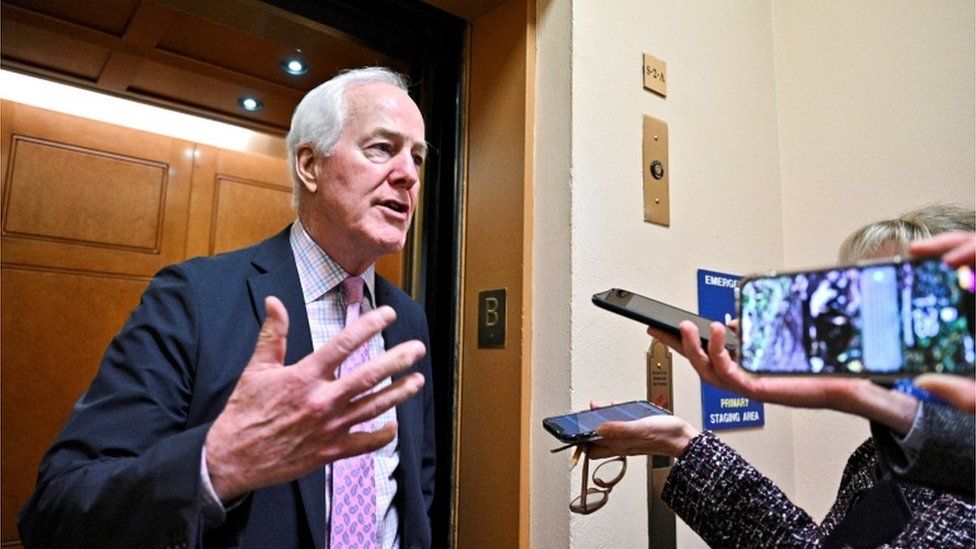 IMAGE SOURCE,REUTERS
The lead Republican negotiator for what would be the US Senate’s first gun control bill in a generation has walked out of talks with Democrats.
Texas Senator John Cornyn has played a key role in drafting the framework of a proposed firearms bill following mass shootings in Texas and New York.
Leaving Washington, he said: “I’m through talking.”
The plans include tougher checks for buyers under the age of 21 and cracking down on illegal gun purchases.
The proposals have shown some rare cross-party cooperation on the issue of gun control, but still fall far short of what many Democrats and activists have been calling for.
Recent attempts to tighten gun laws in the US – which has the highest rate of firearms deaths among the world’s wealthy nations – have failed to get the required support in Congress.
The flurry of action comes after 19 young children and two adults were killed at a school in Uvalde, Texas, less than two weeks after a racially motivated shooting at a grocery store in Buffalo, New York, left 10 dead.
But Mr Cornyn’s walk-out has placed a question mark over the legislation’s future. Axios, a political outlet, reported earlier on Thursday that conservative colleagues of the Texas senator are frustrated at his handling of the talks and want time to consider the text of any proposal before it is introduced to the chamber floor.
The legislative window to pass a new law is narrowing as November’s mid-term elections loom, but the lead Democratic negotiator said he was still hopeful the bill could go to a vote next week.
A bipartisan group of senators has been working to draft the text of a bill for lawmakers to vote on before they leave for a two-week 4 July recess.
But they have become bogged down in recent days, as Democrats and Republicans disagree on provisions that would strip certain Americans of their guns.
Mr Cornyn told reporters on Thursday that now is the time for action: “I don’t know what they have in mind, but I’m through talking.”
Earlier in the day, he warned that time was running out to reach an agreement.
“We’re about run out of our rope here, and we got to make some final decisions today if we’re going to be able to get this on the floor next week,” he told radio host Hugh Hewitt.
Connecticut Democrat Chris Murphy and North Carolina Republican Thom Tillis told reporters later on Thursday that the group was still inching towards an agreement.
“To land a deal like this is difficult. It comes with a lot of emotions,” said Mr Murphy, who is leading the Democratic negotiations.
“It comes with political risk to both sides. But we’re close enough that we should be able to get there.”
Senators say disagreements remain over incentives for states to enact so-called red flag laws, which allow police to seize guns from people deemed dangerous. Talks are also ongoing to close the “boyfriend loophole”, which permits abusive partners to buy guns.
If both the Senate and House of Representatives can agree on a bill, it would go to President Joe Biden’s desk to be signed into law.
President Biden has said the plans are a step in the right direction but fall far short of what he called for.

Despite the high rate of firearms deaths, many people in the US cherish their gun rights, which are protected by the Constitution’s Second Amendment to “keep and bear arms”.
These are the first gun safety laws in decades to receive this level of bipartisan support, with previous Democratic attempts at strengthening controls frustrated by Republicans.
Similar efforts in the wake of a previous school shooting at Sandy Hook in Connecticut nearly a decade ago – in which 20 children and six adults were killed – failed to get the required number of votes in Congress.
The Senate, or upper chamber of Congress, is currently split – with 50 Democrats and 50 Republicans – and legislation must have 60 votes to overcome a blocking manoeuvre known as the filibuster.
Ten of the 20 senators who proposed the measures are Republicans, meaning the new legislation could reach that threshold.
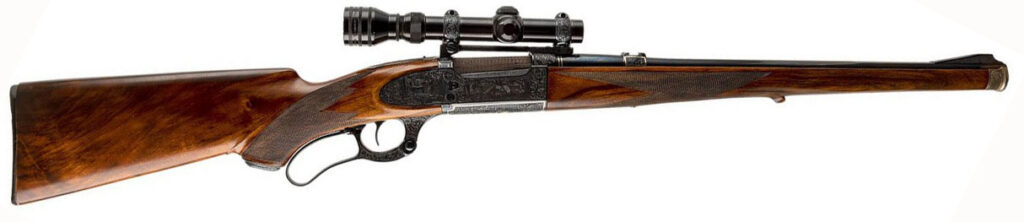
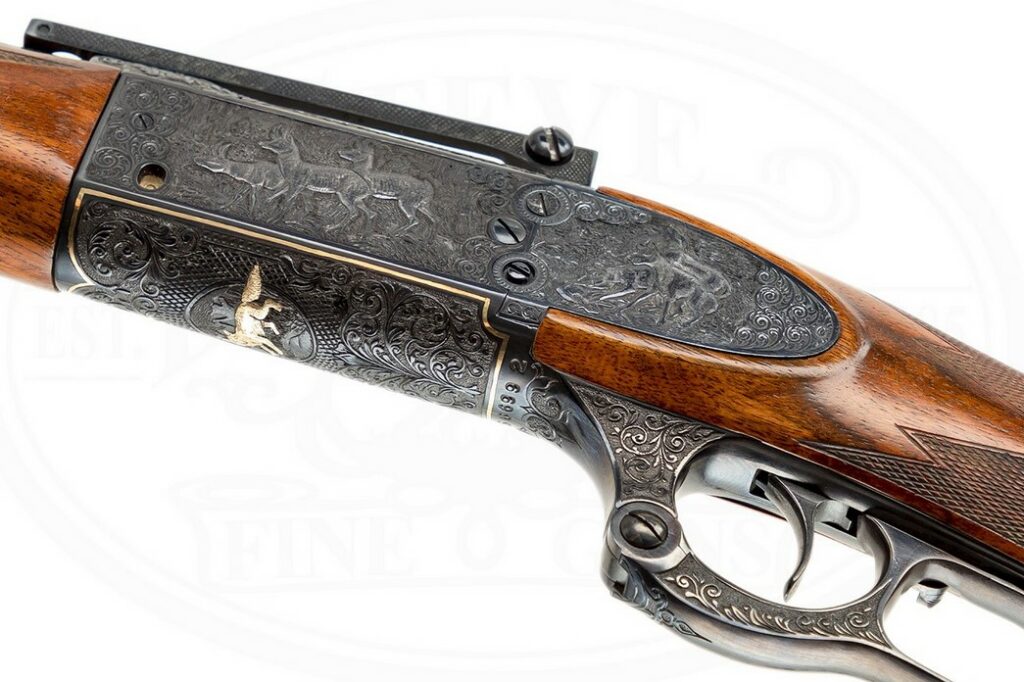
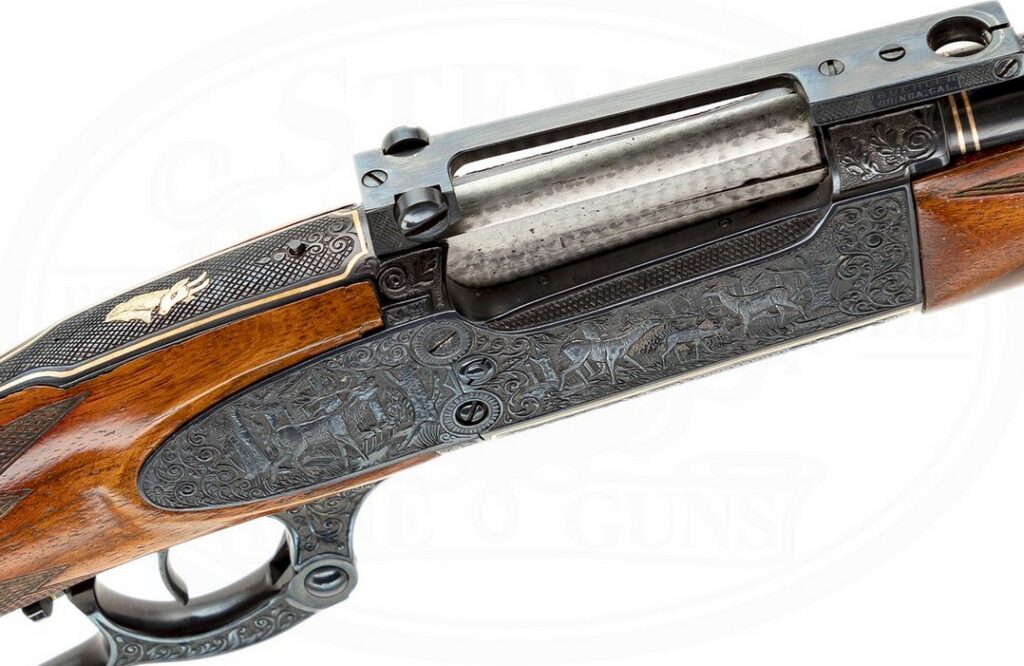
Nice huh?

Colt Introduces “Baby Snake” for Rimfire Shooters: King Cobra Target 22 LR Revolver
West Hartford, CT (May 31, 2022) – Colt’s Manufacturing introduced its newest snake gun—the King Cobra Target 22 LR at the National Rifle Association Annual Meetings. From competition to plinking and small game hunting, this baby Cobra does it all and packs 10-rounds of .22 LR in its cylinder.
Exceptionally solid and all-American built, the King Cobra Target 22 LR was designed and made to be shot—a lot! Expect to see these revolvers at the many formal and informal rimfire competitions at gun clubs around the nation. Don’t be surprised when the winners of these competitions are using the King Cobra Target 22 LR.
The King Cobra Target 22 LR features US forged stainless steel construction. The one-piece stainless steel barrel is built for the utmost accuracy, topped with an adjustable target rear sight, fiber optic front sight, and Hogue® overmolded rubber grips.
“We are very excited to debut this new baby snake to our customers at NRA Annual Meetings,” said Justin Baldini, VP of Product Strategy, Colt CZ-USA. “Shooting .22 LR is such an important part of shooting sports. It’s where we come to learn as a beginner; and where we return as seasoned shooters to cost-effectively enjoy more time at the range. We’re confident that new and old Colt fans will love what we’ve done with the new King Cobra 22 LR.”
The King Cobra Target 22 LR is available with 4-inch and 6-inch barrel lengths, and both feature a 1:16RH rifling twist.
Colt: Still making history.
Colt’s Manufacturing Company LLC (www.colt.com) is among the world’s leading designers, developers and manufacturers of firearms. Founded by Samuel Colt in 1836, Colt’s Manufacturing has supplied civilian, military and law enforcement customers in the United States and abroad for over 185 years. Colt operates its manufacturing facility in West Hartford, Conn.
Malik Harris, 18, attempted to rob the NC Tobacco store in Greensboro, North Carolina late last month. An armed citizen stopped Harris in the act, fatally shooting him, WFMY 2 repots.
The incident happened sometime in the morning before 11 a.m. on Saturday, Feb. 29th. Harris entered the store armed with a handgun and quickly started making demands, according to store clerk Adil Khawaja.
“There were three or four customers in the store. And the guy came in and put the gun on all the customers, made everyone come [behind the counter] at gunpoint,” Khawaja explained.
An elderly lady walked in during the holdup and Harris quickly confronted her.
“He grabbed her by the neck, brought her back [behind the counter] at gunpoint,” with the rest of the customers, Khawaja said.
While Harris was dealing with the woman, one of the customer who was already behind the counter retrieved his own firearm. That’s when the situation turned deadly for the teen robber.
“[The customer] shot him four or five times,” said Khawaja. “It happened like in 45 seconds. Like 30 to 45 seconds.”
Though multiple shots were fired, Harris was only hit once. But that’s all it took. First responders rushed him to a local hospital but he would not survive the injury.
Khawaja felt bad for Harris, but also pointed out the misguided nature of his plan. That is to say, armed robbery in a state with permissive carry laws and a well-armed citizenry.
“I wish it could have ended up differently,” said Khawaja. “Personally, I don’t want to see an 18-year-old kid die. He didn’t even start his life yet. That was just a very, very poor decision in a state like North Carolina, where everyone has guns.”
Meanwhile, Greensboro Police say an investigation is still ongoing.
It’s not clear at this point if the citizen who shot Harris was a concealed carry permit holder. If he (or she) was, then it seems based on the available facts that it’s a clear-cut case of self-defense. If the individual did not have a valid permit, he or she may face charges for carrying unlawfully.
To obtain a permit in NC, one must complete a firearms training course and be at least 21 years of age.
Here is what Old Malik looked like.
Shamare Malik Harris, age 18