A critic of worsening crime in 1925 New Orleans decried that, “no city in America has worse protection from the criminal classes. Something must be done.”
The residents of New Orleans were laissez faire toward prohibition, gambling, prostitution, and drugs.
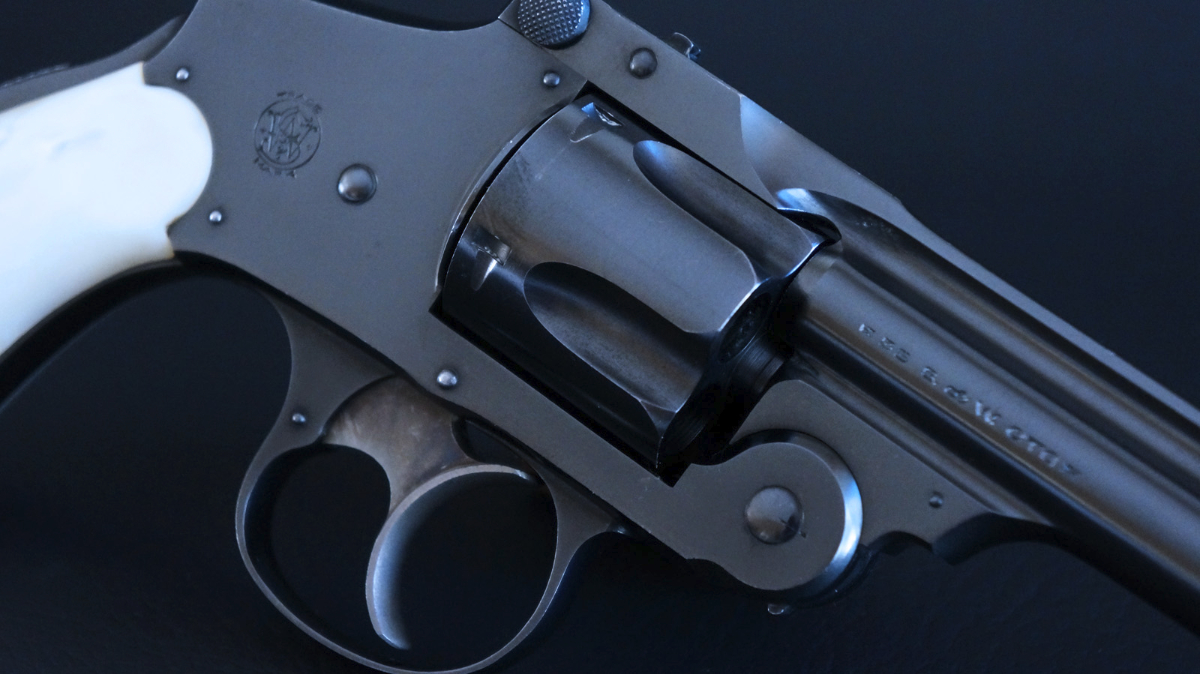
Into this stepped Thomas Healy, promoted from chief of detectives to superintendent of the New Orleans Police Department. He served in the position from 1925 to the end of 1928 when he retired. An engraved Colt Government Model semi-automatic pistol with a blued finish and carved grips presented to him early in his tenure as superintendent is on offer in Rock Island Auction Company’s Premier Auction, May 13-15.

Under Healy, the New Orleans Police Department bought high-powered cars and speedy armored motorcycles to pursue getaway cars “as part of the 100 miles per hour police force.”
The vehicles would be used in “striking relentless blows” against a wave of petty hold-ups and burglaries in the outlying precincts, Healy announced.
The department purchased Tommy guns to match the criminal firepower of bank robbers.
He closed down 1,000 gambling halls at the behest of anti-gambling interests despite knowing that under the law they would be reopened, remarking, “What do they want me to do? Do they want me to shoot all gamblers as fast as we arrest them? All we can do is make arrests. … We raid them again and they open up again. Their charter protects them. This raiding keeps on forever with no definite results.”
In 1928, two of Al Capone’s brothers were arrested in New Orleans upon Healy’s order. Released because of lack of evidence, Healy ordered them out of town or risk further arrest.

In the midst of this Roaring 20s sense of self-indulgence was the rollicking French Quarter. Its vibrancy drew writers and artists. Its low rents drew working class people as more wealthy residents departed away from the sugar refineries and warehouses.
A cleaning lady stepped into the second floor apartment on Ursulines Avenue, a few blocks from the Mississippi Riverfront and Jackson Square. On an October morning of 1927, she discovered blood. She cried out for help. Two men responded and the police were called.
Officers entered the apartment and found more than just drops of blood. They found a grisly crime scene. A gore-covered bathroom, and fingers. Blood-spattered women’s clothes. A bloody cane knife. And in a pair of trunks, the bodies of two women, decapitated and dismembered. They were Theresa and Leonide Moity, and they had been bludgeoned to death before being expertly cut apart and stuffed in the trunks.
Leonide and Theresa were sisters-in-law. Leonide was separated from her husband, Joseph Moity, and Theresa announced to her husband, Henry Moity, the previous day that the two women were moving out. Healy, the police superintendent, knew the brothers must be found.
Joseph, who had taken their children to live with his parents in New Iberia, La., turned himself in the night the bodies were discovered. He insisted his brother Henry was the killer. Healy learned that Joseph left after catching Leonide with another man. The couple fought over money, accusations of infidelity, and heavy drinking.

Henry Moity was in the wind. He served in the U.S. Navy but received a dishonorable discharge. Healy radioed the seven ships set to depart New Orleans with a description of Henry including his bushy dark hair, dark brown eyes, and tattoos on his arm of a flower with a lady’s face and a nude woman.
Two days later, crewmen on the freighter Gem, reported Henry to the Lafourche Parish Sheriff. Henry had given a fake name but was recognized by his tattoos described in newspaper accounts.
Henry first denied the killings saying it was the work of a redheaded Norwegian and that he was forced to assist. He eventually caved, giving a full confession, believing Theresa was having an affair with their landlord and that he resented his sister-in-law for being a negative influence on his wife.
The parish coroner noted the murderer’s skill with a knife.
“The killer who decapitated Mrs. Henry Moity . . . knew enough not to try to cut through the bone, but to cut through the joint.”
Henry had worked as a butcher’s assistant in New Iberia before moving to New Orleans. He was found guilty and given two concurrent life sentences.

Before ascending to the superintendent position, Healy, as head of detectives, found himself in a scandal involving his predecessor, Guy Molony.
Superintendent Molony, who had a history as a soldier of fortune, was caught up in a false arrest investigation for which the facts remain murky nearly 100 years later. During the investigation, Healy was accused of withholding information in the investigation but was cleared.
Conveniently, the scandal went away after the suicide of a police commander of officers involved in the incident was viewed as an admission of guilt in the whole affair.
After the dust cleared, Molony subsequently returned to Honduras where he had previously served as a mercenary. This cleared the way for Healy, who was unscathed by the accusations he faced in the scandal, to be made superintendent of police in the spring of 1925.

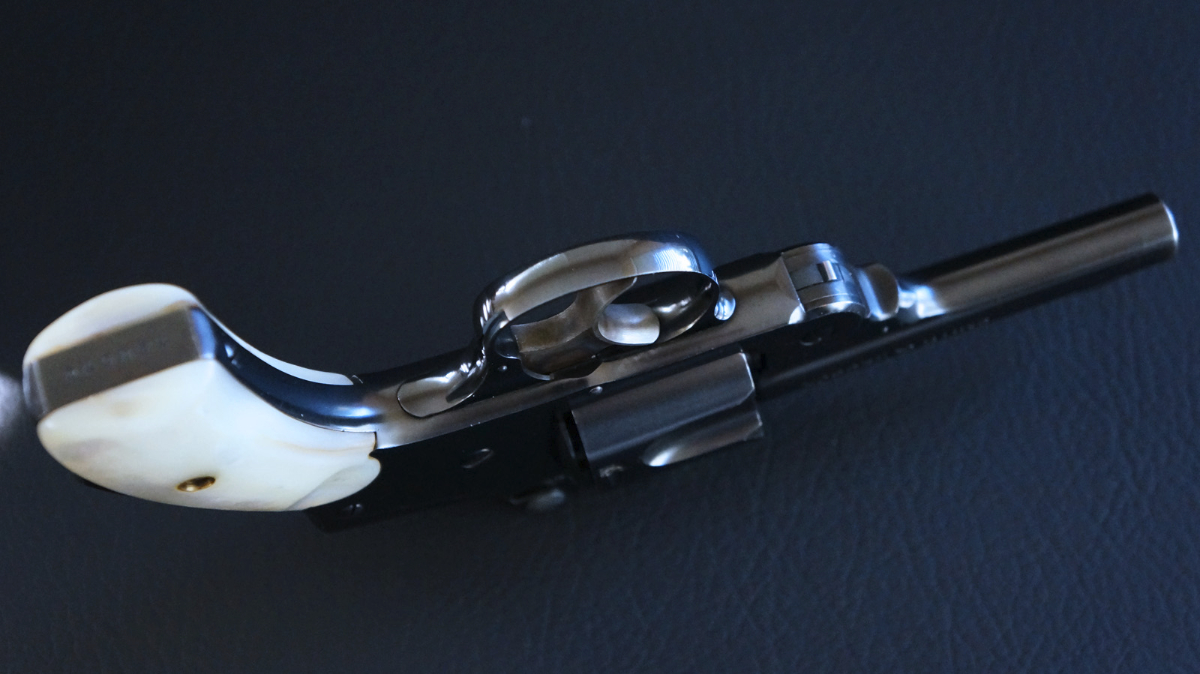
Thomas Healy received this beautifully engraved Colt Government Model pistol shortly after he was elevated to head of the New Orleans Police Department in 1925. During his time leading the N.O.P.D., Healy ran off Al Capone’s brothers, helped solve a grisly murder, shut down gambling salons, and increased the department’s crime-fighting capabilities.
This early 1911A1 model has floral scrolling engraved in flourishes over 25 percent of its exquisitely blued surface and has the owner’s initials engraved on the grips along with an eagle clutching arrows and an olive branch. This magnificent example of a Colt Government Model of the M1911A1 will be offered at Rock Island Auction Company’s May 13-15 Premier Auction.
Sources:
The Trunk Murders and Sausage Ghost of the 1920s, Atlas Obscura
I love taking off on a road trip with unexpected surprises waiting in the wings. Recently, the Gun Talk crew set off for the Shooting Sports Showcase, which was hosted by the Professional Outdoor Media Association and the National Association of Sporting Goods Wholesalers. The merry gang of Gun Talkers then set their sights on “The Gathering” hosted by Palmetto State Armory. While shooting, we noticed several guns that stood out.
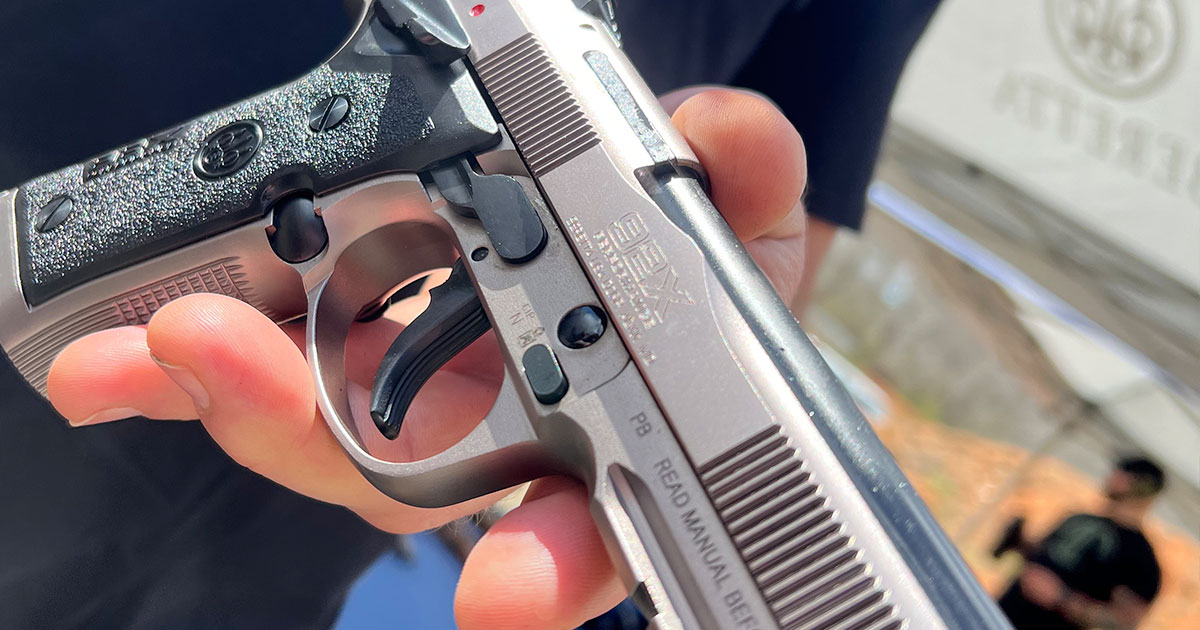
Before I get emails telling me the 92X Performance is not new, let me tell you this is new to me. I hadn’t had a chance to run the 92X Performance and was pleasantly surprised about the weight and feel of the pistol. I enjoy a good 92, but the 92X was well balanced and accurate, even for a non-pistol guy like me. https://www.beretta.com/en/92x-performance/
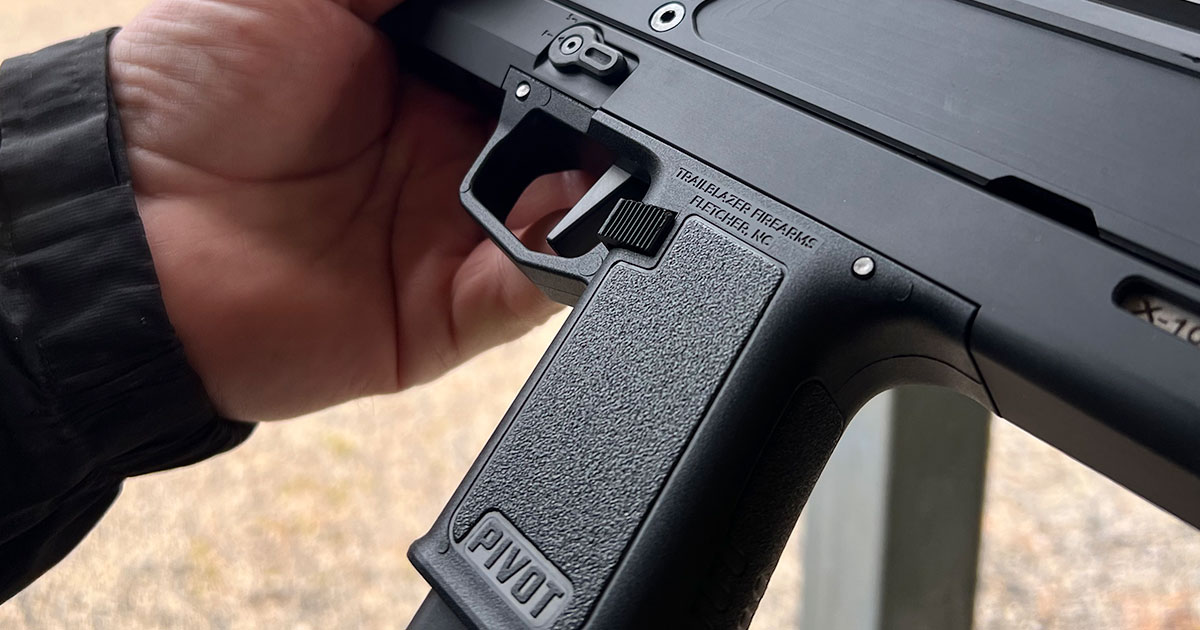
The Pivot from Trailblazer Firearms was the craziest/wildest firearm of the trip. Basically, the upper pivots around at the press of a button, making it a slim, compact 9mm. I see this as a gun that can be stowed in vehicles, backpacks, or in tight places around the house. It accepts GLOCK pattern magazines and is equipped with a collapsible buttstock. https://trailblazerfirearms.com/
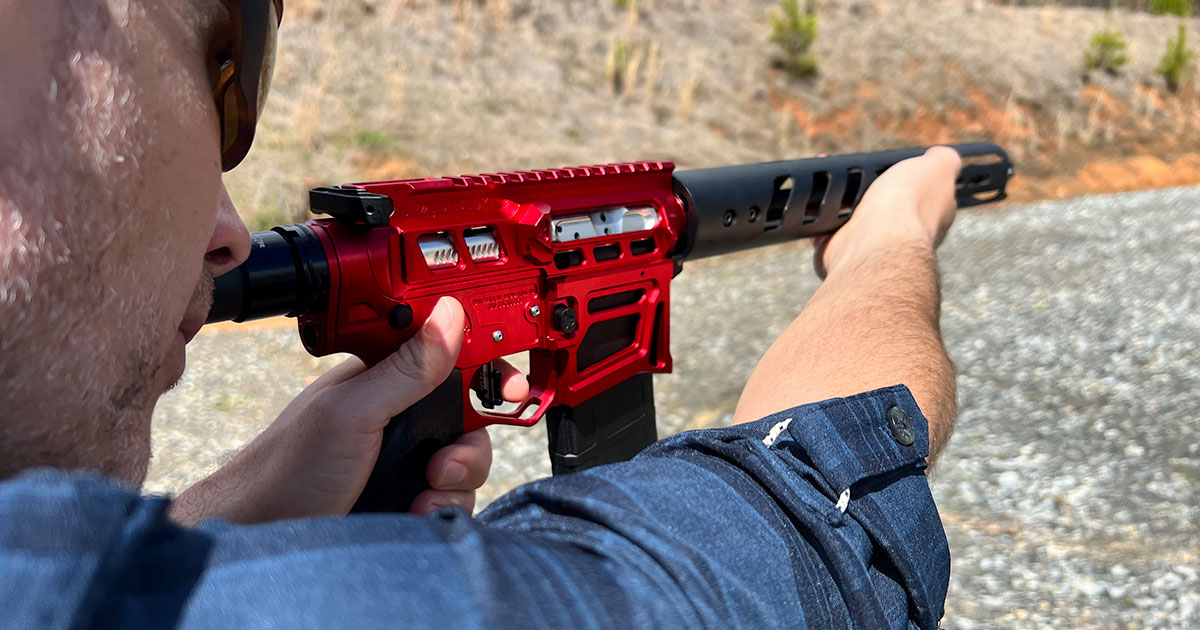
Under 5 POUNDS! Typically, you expect a little weight when someone hands over an AR-15 rifle. The Lead Star Lightweight Rifle (LWR) practically disappeared when I took hold. It is lightweight, but I bet it kicks like a mule. This wasn’t the case either. The LWR is highly skeletonized but maintains its functionality and purpose. If you have a couple grand lying around the house, this one is worth looking at. Plus, it is offered in some flashy colors if that is your jam. https://www.leadstararms.com/prime-lwr-ar-15-lightweight-rifle-red/
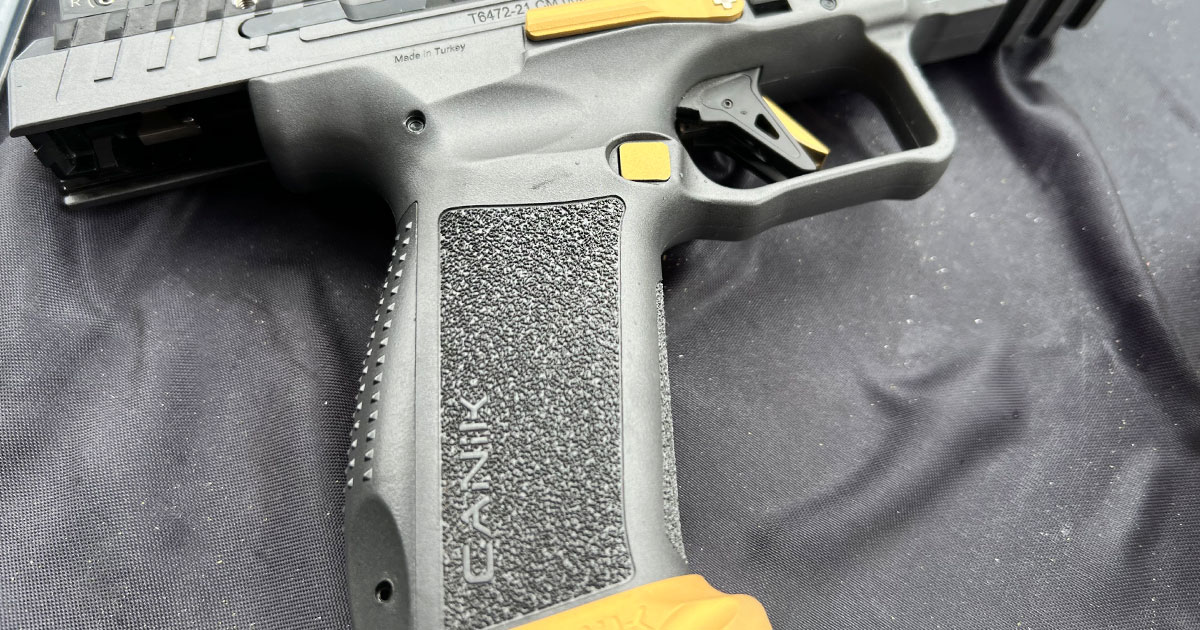
I’m seeing a pattern while I’m listing these guns out. Apparently, I like flashy guns. The Canik SFX Rival is one of those that is flashy and runs like a scalded dog. Many features of this gun can be found on high-performance, custom guns. All the base features make the SFX Rival a great competition gun for newcomers to the competitive scene. https://www.canikarms.com/en/products_detail/sfx-rival
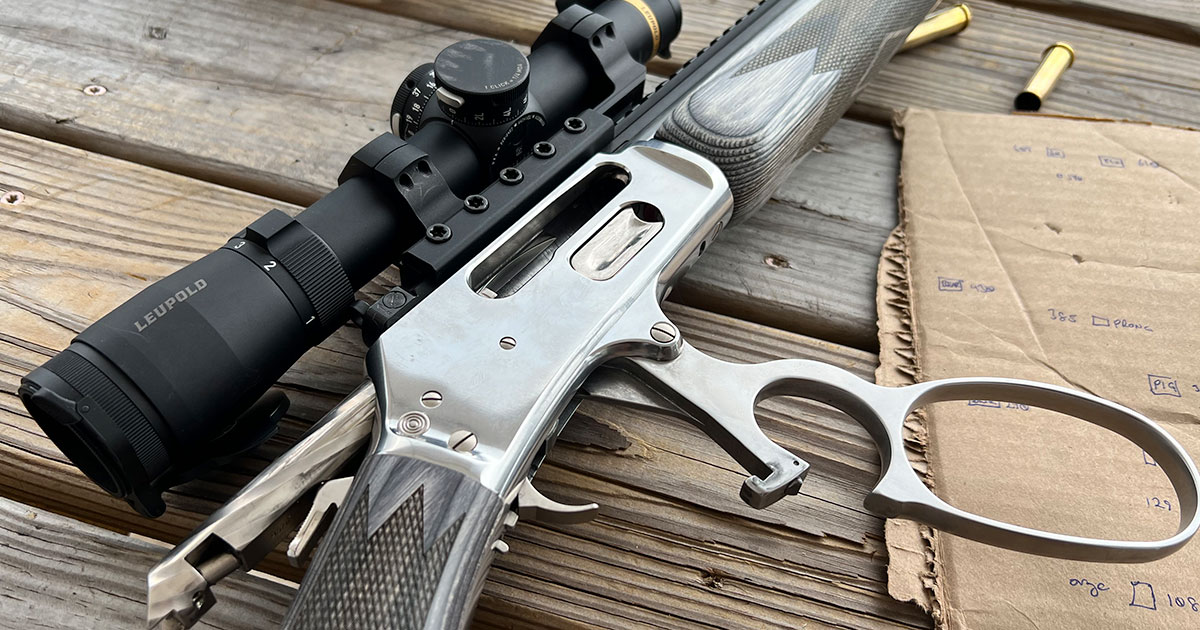
It goes without saying that we are all thrilled Marlin is back. The Model 1895 SBL is a breath of fresh air, knowing the brand is in such goods hands. Marlin isn’t sitting idle or wasting time cranking out the same old guns. The 45-70 is highlighted by a beautiful gray laminate stock, nickel-plated bolt, refined stock, and threaded barrel. I’d like to shout out to the brilliant mind that implemented the threaded barrel. As older age sets in, I’ve become less of a fan of recoil. https://www.marlinfirearms.com/s/model_1895sbl/
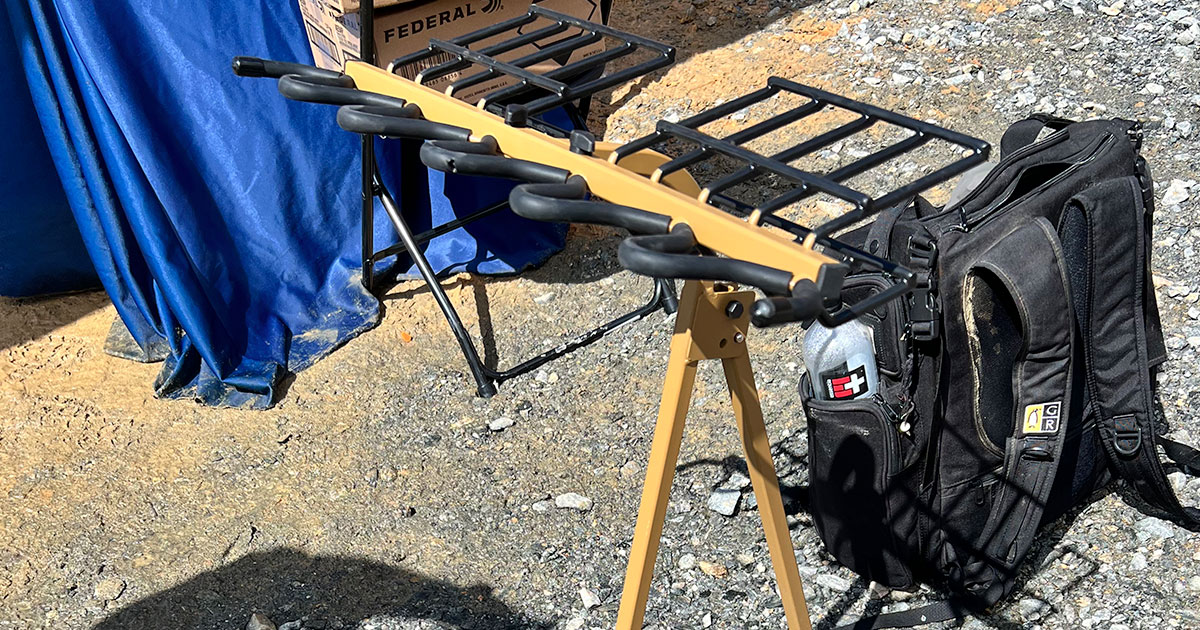
Savior Equipment needs to fire the person responsible for branding. All three Gun Talk members stopped in our tracks to admire the lightweight, portable firearm rack. However, there were zero brand logos whatsoever. It took some digging, but I found the Mobile Firearm rack. It’ll only set you back $86 bones. That’s worth the price for something handy on and off the range. I just ordered three. https://amzn.to/3qktyve
There were several other standouts, and, to be honest, they aren’t listed here because I was having so much fun shooting them, I forgot to get pics. I’ll try harder next trip out. ~ KJ
KJ
Kevin Jarnagin (KJ) hails from Oklahoma but quickly established Louisiana roots after joining the Gun Talk team. KJ grew up as a big game hunter and often finds himself in a different venture often. Whether it’s making his way to British Columbia for elk or training with pistols, KJ always seems to find a gun in his hands and adventure on his mind.