
Categories

There are never any war movies about truck drivers. The movies are always about the door kickers, the submariners, or the fighter pilots. However, wars are generally not technically won by such as these. It was the Red Ball Express with its endless lines of 2 and ½-ton trucks that did more to win the Second World War for the Allies than most anything else.
 Artificial harbors constructed on the Normandy assault beaches at great expense and effort helped sustain the Allied drive until more permanent solutions could be found.
With the Normandy invasion beaches firmly in Allied hands American and Commonwealth forces fanned out across Western Europe seizing terrain, villages, and populations from the occupying Germans as they went. However, in short order, it became obvious that the logistical demands of these rampaging armies could not be met by the Mulberry ports in Normandy. The answer, among other things, was the Belgian port of Antwerp.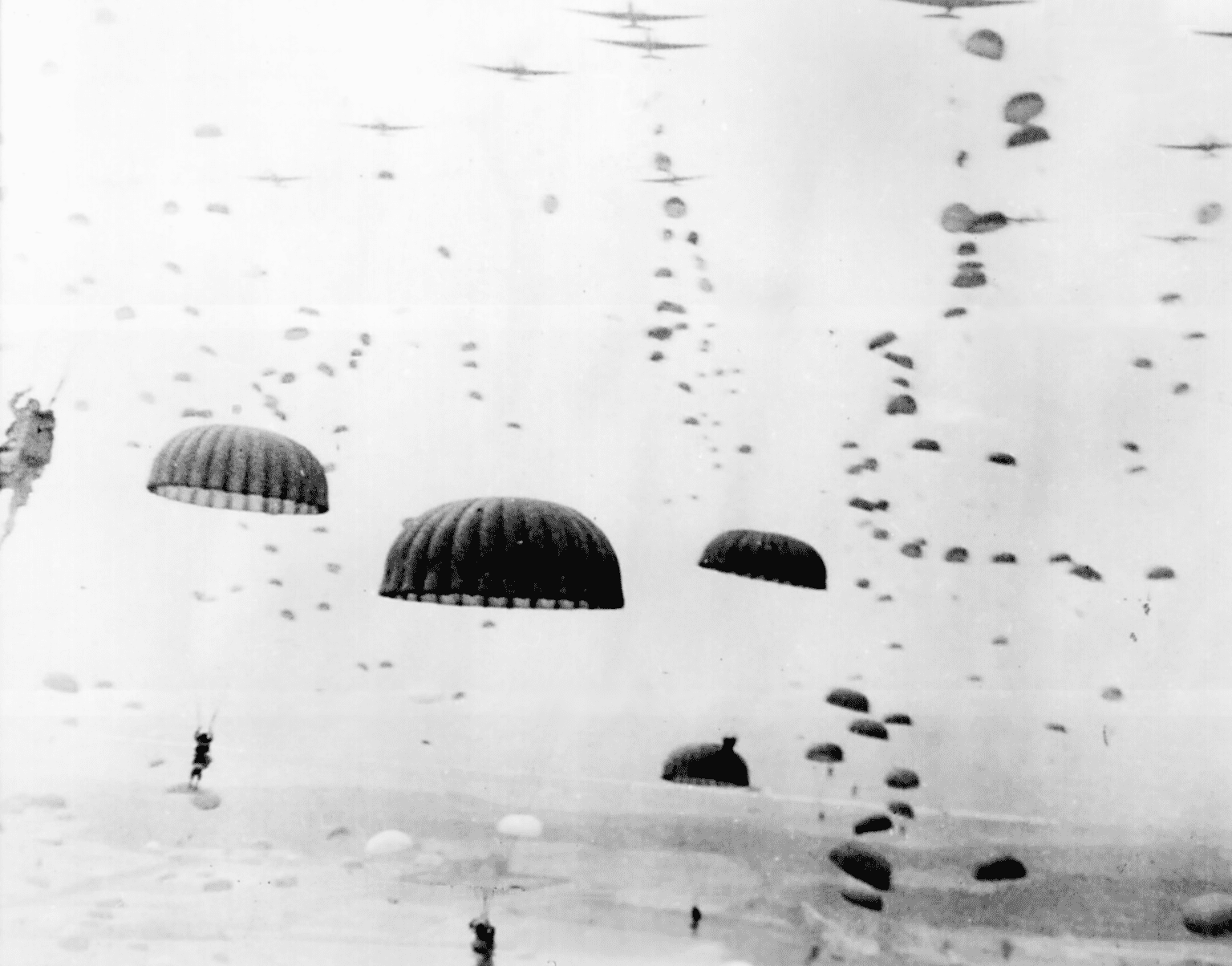
The city of Antwerp itself fell to the British 2d Army roughly one month after D-Day. By mid-September, however, the British 21st Army Group was consumed with Operation Market Garden, the ill-fated airborne brainchild of Field Marshal Montgomery. As a result, while British forces held Antwerp, they still did not have control of the seaside approaches, particularly Walcheren Island. This modest island overlooked the Scheldt Estuary and was heavily garrisoned by the German 15th Army. With the Germans entrenched on Walcheren Island and covering the approaches to Antwerp the Allies were unable to use the port to unload supplies for the advancing combat forces. The result was the Battle of the Scheldt.


The assault to seize Walcheren Island distilled down to a series of complex interrelated operations. RAF Bomber Command, in a profoundly controversial decision, bombed the dikes at Westkapelle, Flushing, and Veere, flooding the island. This move barely inconvenienced the defending Germans who held the high ground but was utterly catastrophic for the civilians who lived there.
At 0545 hours on November 1, 1944, elements of No 4 Commando churned ashore. They landed in the scant light of dawn just east of the Oranjemolen, a prominent windmill on the sea dike at a spot called Flushing. The main force of this combined French and English unit landed around 0630. At that point things got real.
 By 1944 LTC Robert Dawson was a seasoned and respected Commando officer.
The commander of No 4 Commando was one LTC Robert W.P. Dawson. LTC Dawson, like so many other combat commanders, was faced with the unfettered chaos of pitiless close quarters combat. The Commandos had the resources and they had a plan. However, the Germans had other ideas.
Dawson’s small reconnaissance element landed via a pair of LCP (Landing Craft Personnel) boats. The American version of this versatile craft was the legendary Higgins boat. These shallow-draft workhorses featured bow ramps that could drop to disgorge troops on a hostile beach. The experience of riding a Higgins boat into battle against an entrenched enemy would have been unimaginably horrible, but they were tried and proven.
By the time the main body landed at 0630, the Germans were fully activated, raking the landing areas with fire from small arms as well as a fast-firing 20mm antiaircraft cannon. The No 4 Commando LCA (Landing Craft Assault) boats carrying their heavy weapons foundered on stakes placed in the surf and sank some 20 yards from the beach. The Commandos nonetheless salvaged their three-inch mortars and used them to good effect as they rolled up the German defenses.
The Commandos reduced each German strongpoint sequentially. Early in the morning the battle seemed about evenly matched. However, with the arrival of the lead battalion of the British 155thInfantry Brigade, the tide began to turn. As the Commandos seized German prisoners they were sent to the beaches to help unload supplies. Once the Commandos cleared these emplacements they found them to be well-supplied with food and ammunition. However, the German troops were second-rate, many of them suffering from medical maladies after being so long away from proper support.
Throughout it all, LTC Dawson deftly led his men from the front. Dawson peeled off rearguard elements as needed to secure the German defensive positions against subsequent infiltration. By 1600 that day No 4 Commando’s primary objectives had been seized.

LTC Robert William Palliser Dawson spent the entire war with No 4 Commando. He joined the unit in 1940 as one of its first subalterns. In August of 1942, Captain Dawson commanded C Troop during the ill-fated raid on Dieppe.
By 1943, Dawson was promoted to Major and was serving as XO of No 4 Commando. In April of that year, Lord Lovat relinquished command of the unit to Dawson, and they began training in earnest for D-Day. On June 6, 1944, Dawson found himself at Ouistreham as part of Operation Overlord.
Dawson was wounded twice during this assault but refused medical evacuation. Despite his injuries, he continued to lead his men in combat. The citation for his subsequent decoration states, “It was due to his leadership and direction that the attack was successfully pressed home.”

When LTC Dawson landed at Flushing as part of Operation Infatuate, he carried a unique prototype weapon. After the miraculous evacuation at Dunkirk, the British found themselves with an Army but few firearms. The inexpensive Sten submachine gun helped carry them through the dark days as they desperately rebuilt their military into a viable fighting force. By 1944, however, British industry had crafted an improved replacement.

Using the Sten as a starting point, the British General Staff issued the specifications for its replacement in early 1944. The new gun should weigh no more than six pounds and fire 9mm Para ammunition. The rate of fire should be less than 500 rpm, and the gun should be adequately accurate to place five consecutive semiautomatic shots within a one-foot-square block at 100 yards.
George William Patchett was the chief designer at the Sterling Armaments Company, and he had his first operational prototype ready for testing in early 1944. Officially known as the Patchett Machine Carbine Mk 1, the Patchett gun fired from the open bolt and fed from the left in the manner of the Sten. Unlike the Sten, however, the Patchett gun had the feed mechanism located over the pistol grip for improved balance.
The Patchett incorporated some novel design features. The bolt featured helical cuts to move debris and fouling clear of the action as it cycled. The underfolding stock, though complicated, collapsed to about nothing yet offered a steady platform for accurate fire when extended. Most importantly, however, the Patchett did away with the Sten’s ghastly double column, single-feed magazine.
The curved double column, double-feed magazine of the Patchett gun featured a novel follower made of roller bearings and was likely the best submachine gun magazine ever devised. These boxes carried 34 rounds and were easy to orient in the dark. As magazine supply could have been an iffy thing in the latter parts of WW2, the Patchett was designed to accept either Sten or Patchett mags seamlessly.
The British were impressed with the Patchett and ordered 120 copies for combat trials. A few of these weapons saw limited service with the Paras at Arnhem during Operation Market Garden. LTC Dawson carried one of these first 120 guns during Operation Infatuate. The weapon he wielded during this critical operation, serial number 78, is currently on display with the Imperial War Museum.
The exigencies of total war hampered the adoption of the Patchett gun, and it was not until 1951 that the decision was made to replace the Sten. The Patchett was rechristened the L2A1 Sterling and issued throughout the British military. The Sterling soldiered on until 1994 when it was replaced by the L85A1 assault rifle. The Sterling saw some of its most widespread exposure as the basis for the BlasTech E-11 Blasters wielded by the Imperial Stormtroopers during the timeless sci-fi epic Star Wars.

Several other Commando units landed around Westkapelle as part of Operation Infatuate, seizing intermediate objectives and reducing enemy strongpoints. One of these, 47 Commando under the command of LTC C.F. Phillips, eventually fought their way around the periphery of the island to link up with Dawson and his Commandos in their consolidated positions.

With the support of HMS Warspite, Roberts, and Erebus as well as rocket-firing landing craft and a squadron of Typhoon fighter-bombers the Commandos were ultimately successful. Along the way, they captured some 40,000 Germans. After extensive minesweeping operations to clear the estuary the first Allied cargo vessels unloaded in November of 1944. This efficient port along with its associated transportation arteries served as a critical source of supply for the bloody fighting that was to come.

LTC Dawson was President of the Commando Association after the war and was described as, “Charming, kind, and understanding” by those with whom he served. Dawson was honored as a Commander of the Order of the British Empire (CBE) and was awarded the Distinguished Service Order (DSO). He died in 1988 at the age of 74, a hero from a generation of heroes, and one of the first men to carry the Sterling submachine gun in combat.
NASHVILLE, Tenn. (WKRN) — In Tennessee, you can buy and sell short-barrel shotguns and rifles—SB2628 made it legal earlier this year.
“We work in a gun shop and I am a firearms trainer,” said Blaise Lane, High Caliber Weaponry and Training director of operations. “So, I am hugely supportive of the Second Amendment and everyone’s ability to own firearms for self-defense, for sporting and any other requirement that they would have firearms for.”
High Caliber is a gun store in Nashville. Lane said there’s nothing wrong with the new law—it just doesn’t do anything. “Currently, it doesn’t change anything,” he said.
That’s because there’s already a federal law called the National Firearms Act (NFA) in place that’s allowed short-barrel guns since 1934.
In fact, Lane and his employees say the new law has probably caused more confusion than clarity.
“It’s a show bill,” he said. “The Tennessee legislature will already be prepared, should the NFA get abolished.”
The debate about guns has been prominent throughout the country the last few years. Critics of this new law say the bill’s passage is regressive despite the lack of effect.
“I believe it’s a step in the wrong direction because it’s slowly pushing the envelope and making it potentially easier to end some of the restrictions,” Silent No Longer Tennessee director, Greta McClain, said. “Which, some people call them restrictions, I call them safeguards.”
McClain, a former Metro Nashville police officer, also talked about her own personal experience with short-barrel guns.
“When I was with the police department, I was shot at three times by a man with a sawed-off shotgun. He was, at most, 15 feet away from me and missed,” she said. “So, the concern that I have, and I’m sure a lot of people have, is if somebody thinks that it’s appropriate for them to use deadly force, there’s just as much likelihood that they’re going to hit innocent bystanders as they are whomever they’re aiming at.”
McClain is referring to the notion that sawed-off shotguns are considerably less accurate.
Naturally, the Tennessee Firearms Association disagrees with McClain’s thoughts on the law.
“I think it is a step in the right direction,” director John Harris said. “It sends a message of the public policy that at least some of the legislators are holding at this point.”
But Harris did agree that the new law created uncertainty. “What it, unfortunately, has done is create some confusion in the public about whether or not a person still needs to go out and, if they acquire one, pay the federal tax and comply.”
Currently, to buy a short-barrel gun, you have to pay a $200 fee for taxes, file NFA paperwork, and send in your fingerprints for a background check.
Now, Harris and Lane both say they’ve had people tell them they can bypass those regulations with the new law in place, but that is not the case.
Harris went a step further in his criticism of gun laws in Tennessee. “Oh, they’re an absolute mess, they’re a disaster,” he said. “The laws should be simple enough that the average person, the average police officer, the average district attorney, the average judge, the average juror, the average person all agree, without having to look it up, what the law allows or prohibits.”

The Tower of London is a cool place to learn about the history of England. In the center there is the White Tower. It houses the Royal Armouries collection as well as gifts given to the Crown. As one of the Yeomen Warders (the Beefeater guards) had said: “I say gifted, but usually at the end of a blade or gun”
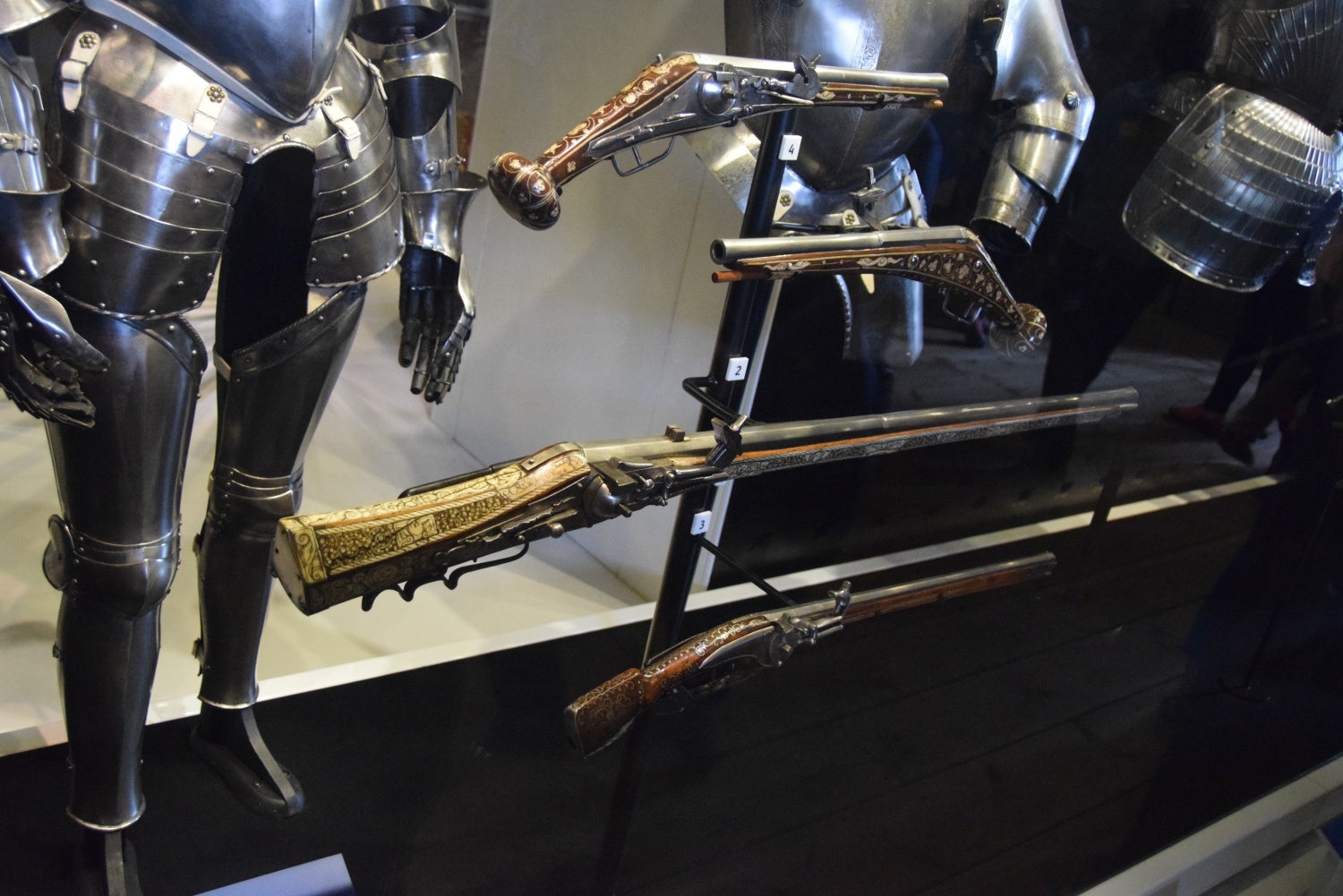
Along side historic armour, there is a nice collection of early and modern firearms in the exhibit. Here are some that caught my eye.
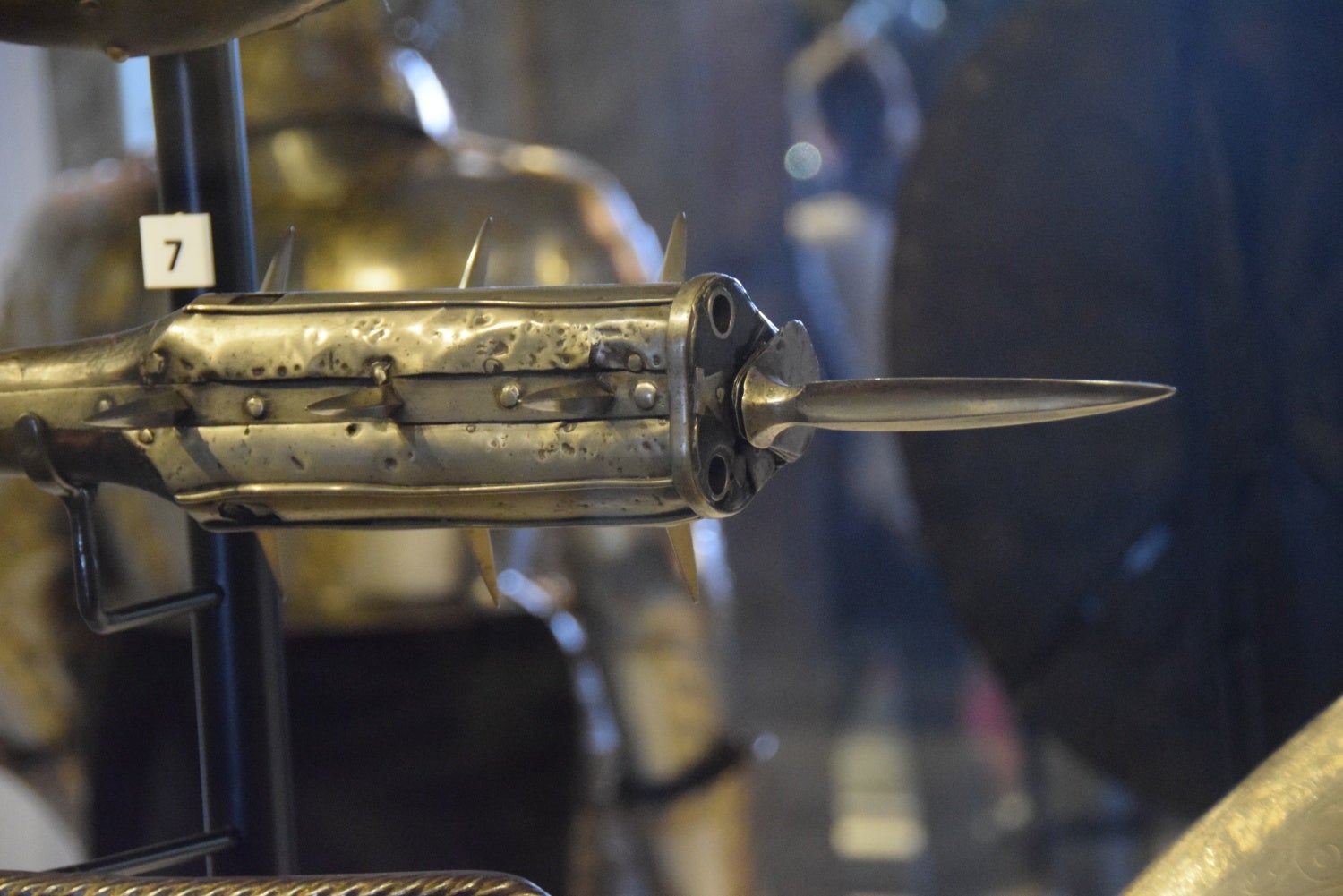
This is the Holy Water Sprinkler. This combination mace and gun was recorded among Henry VIII’s possessions in 1547.There are three barrels along the outside of the the spike. The touch holes are at the base of the head. In the 17th century it was nicknamed “King Henry ye 8ths Walking Staff”. And in the 18th century the story was embellished that Henry carried this while patrolling London at night and testing the city’s guards.
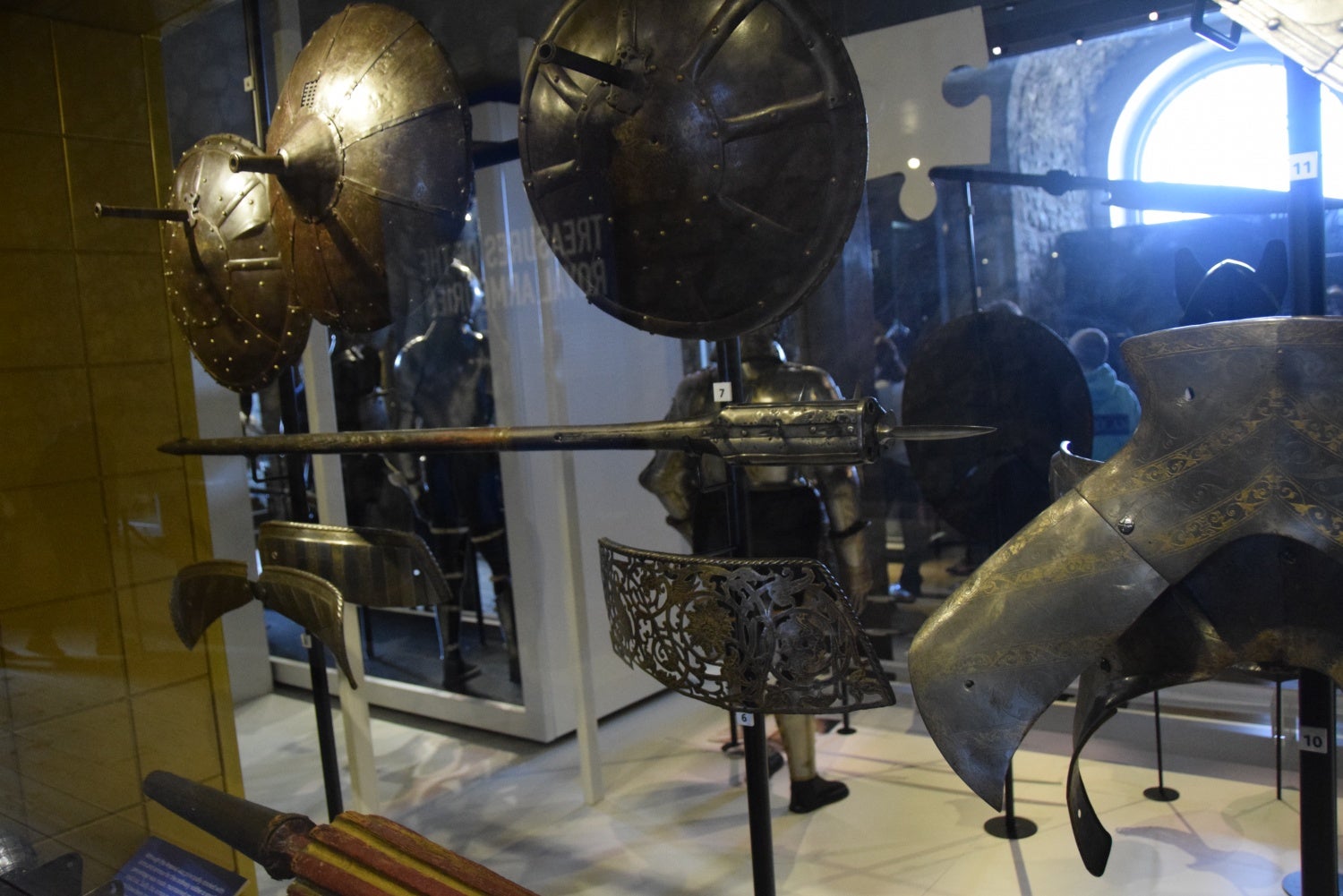
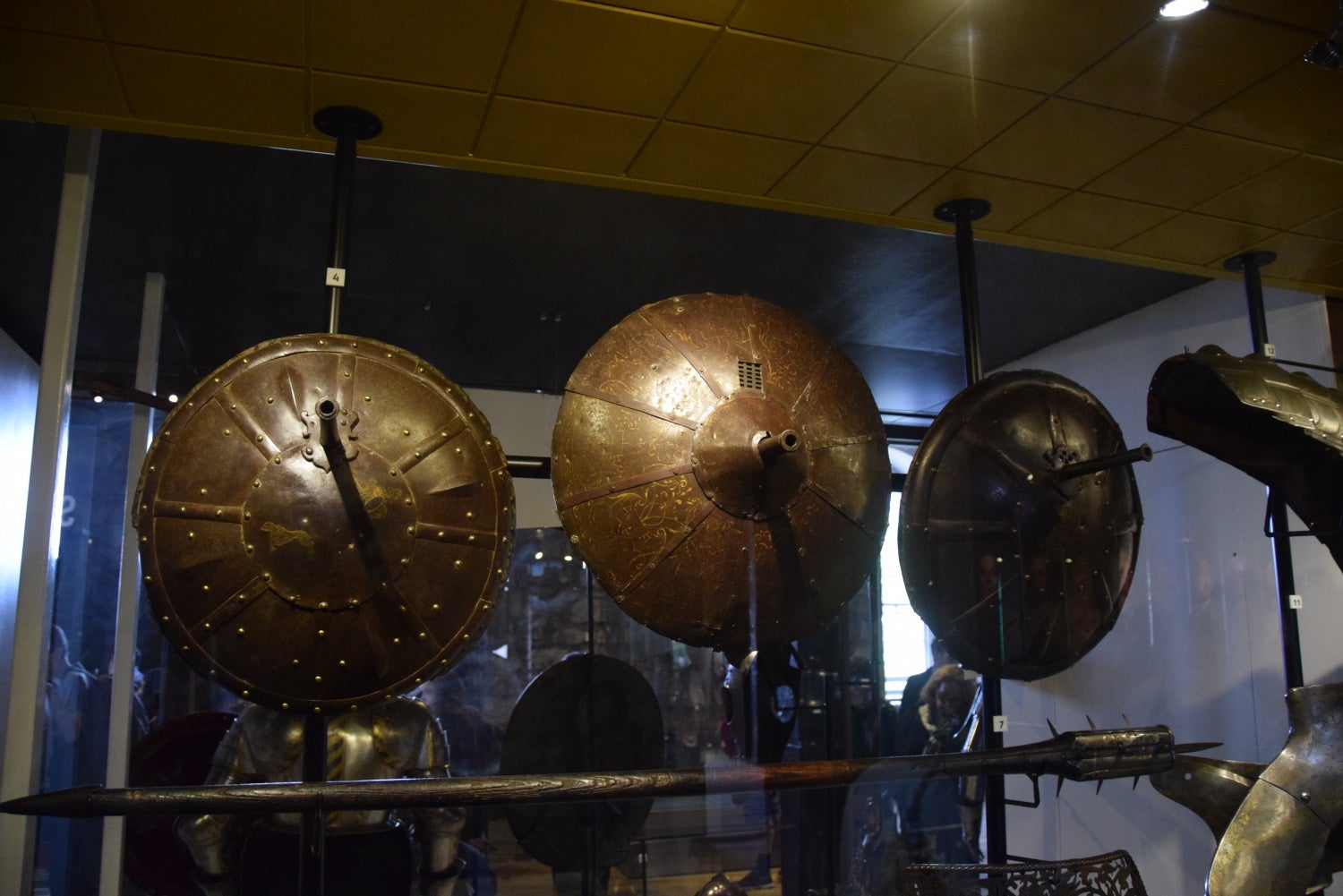
Henry VIII took a keen interest in firearm development. Examples of gun shields were excavated from the sunken Mary Rose, possibly indicating that Henry armed his warships with these. The guns were breech-loaders using a pre-loaded iron cartridge and fired with a match cord.
Mace and wheel lock pistol.
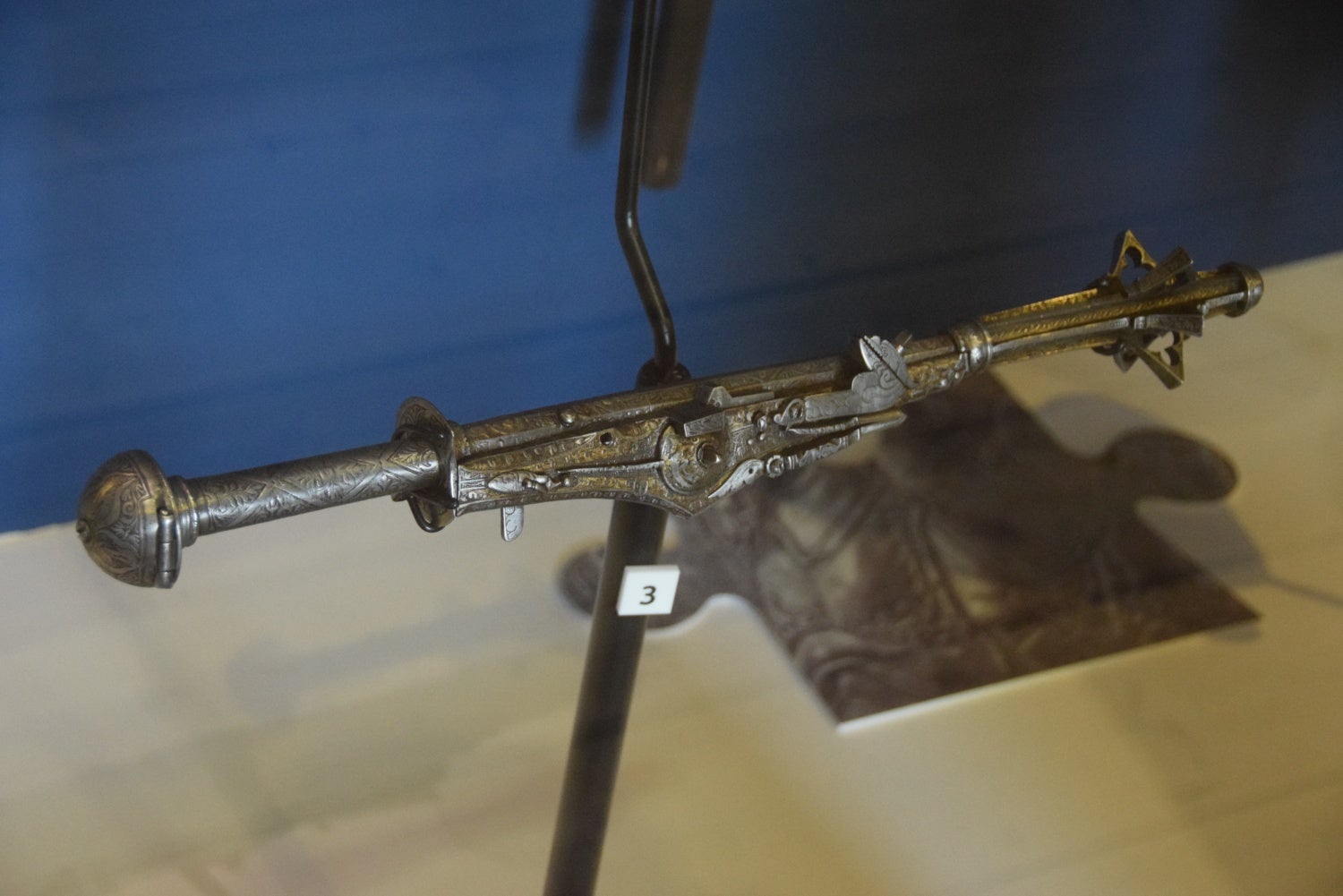
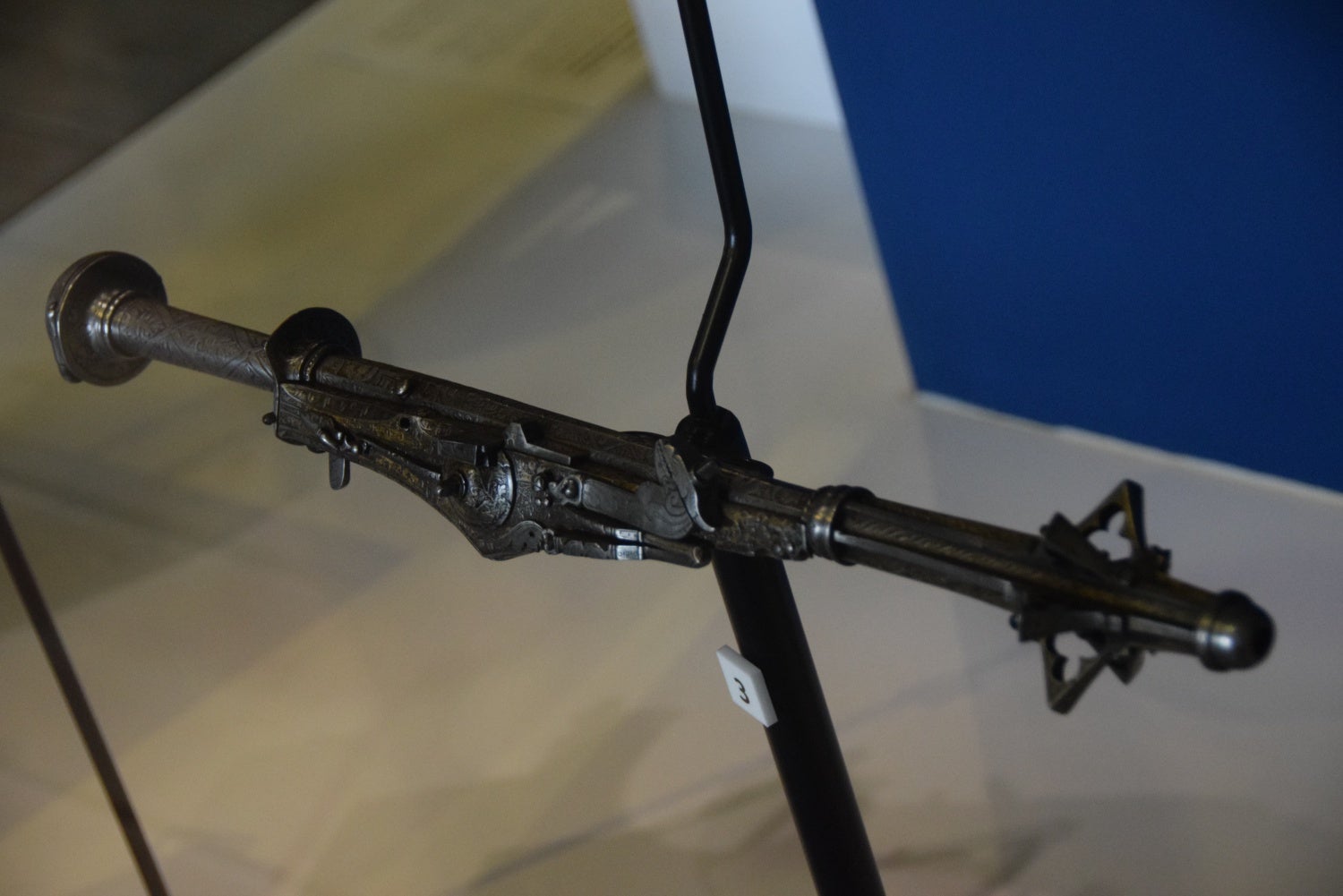

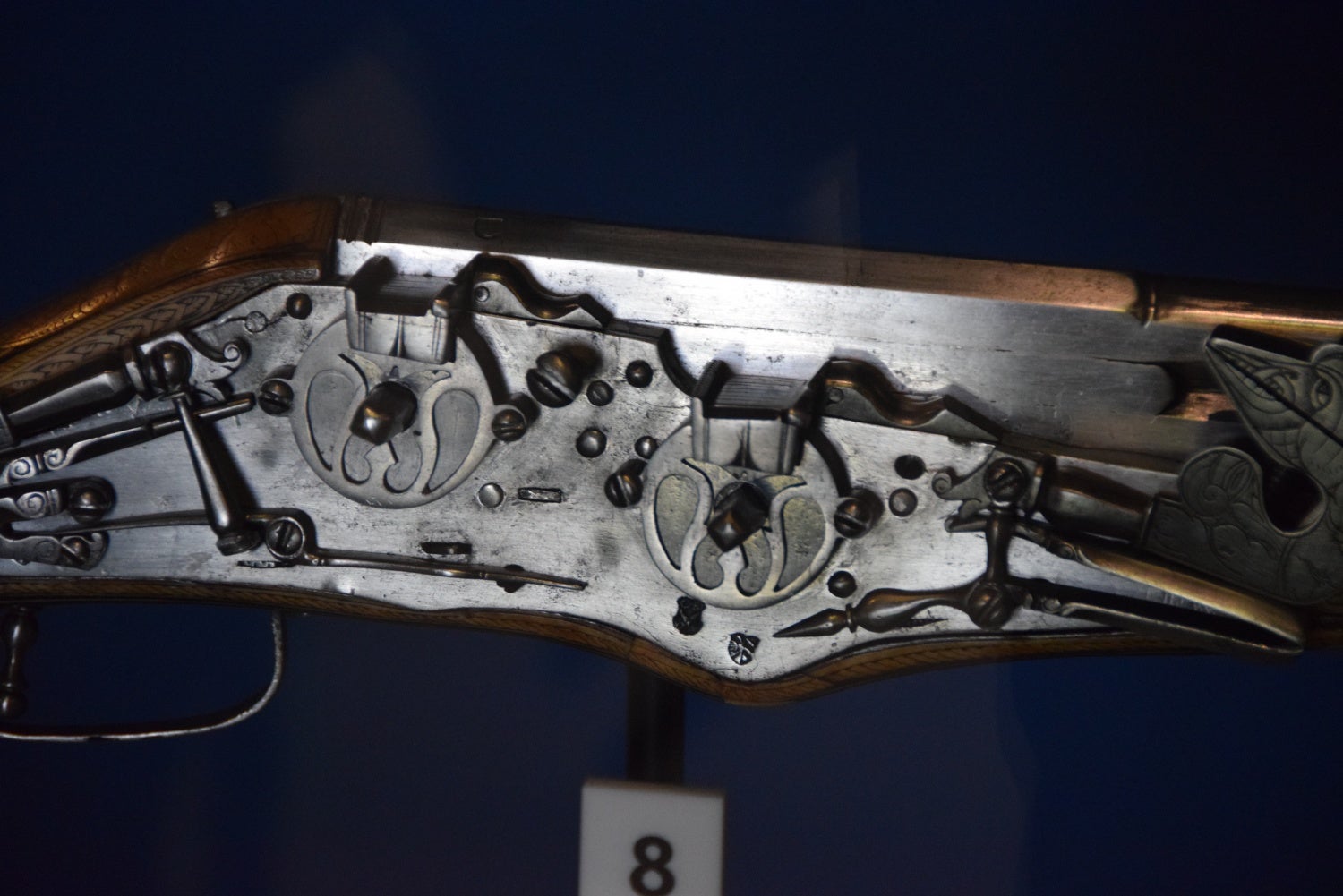
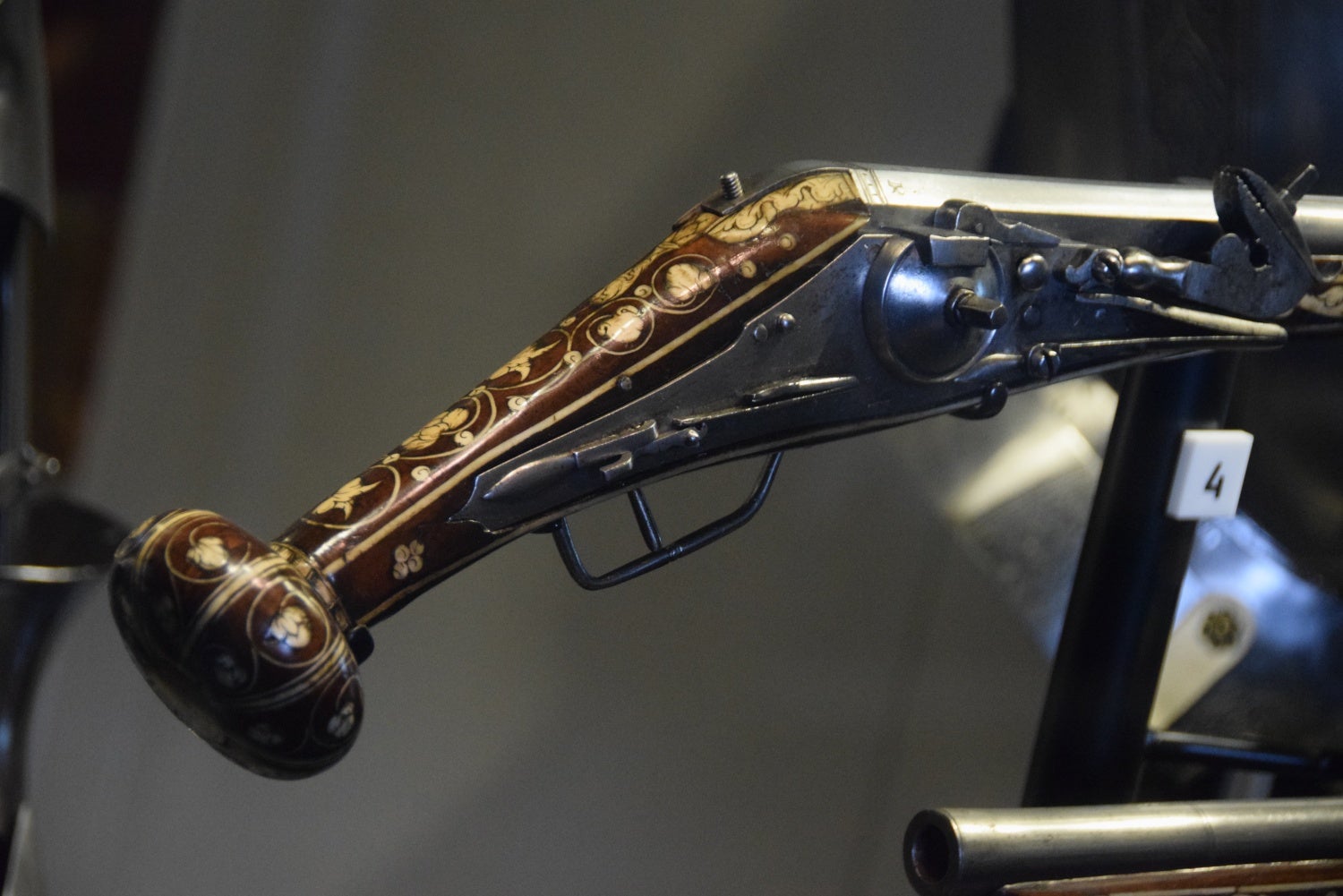
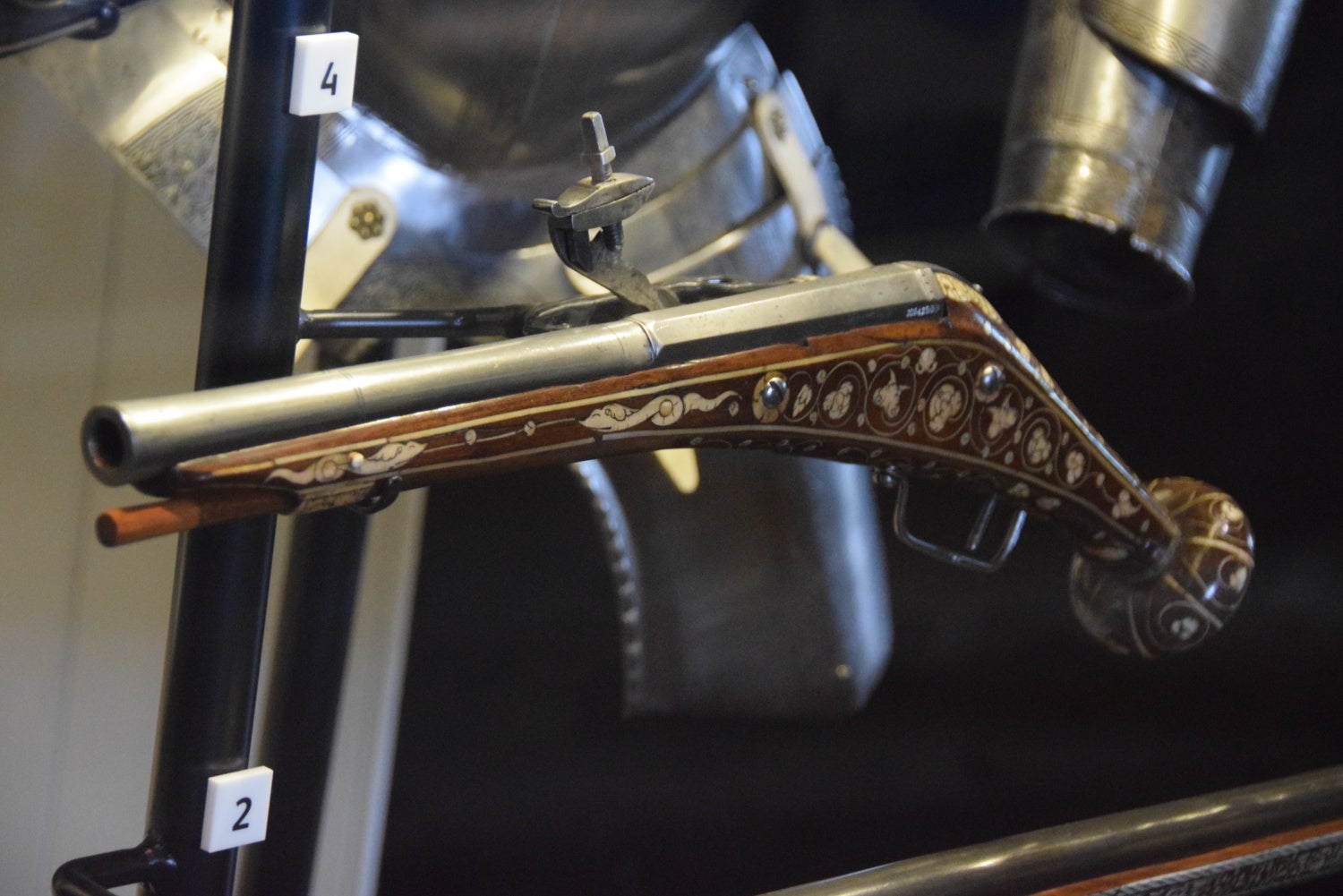
The armoury has a few wheel lock pistols. This one is double barreled and suspected to be made by Peter Danner.

Gorgeous intricate detail.

This display is sponsored by Swarovski.
The shotgun is called the “Raven Gun”. It was ordered by the Trustees of the Armouries from gunmaker David McKay Brown. Famous jeweler, silversmith, and engraver Malcolm Appleby was commissioned to decorate the gun. The engravings feature Ravens, the traditional guardians of the Tower.
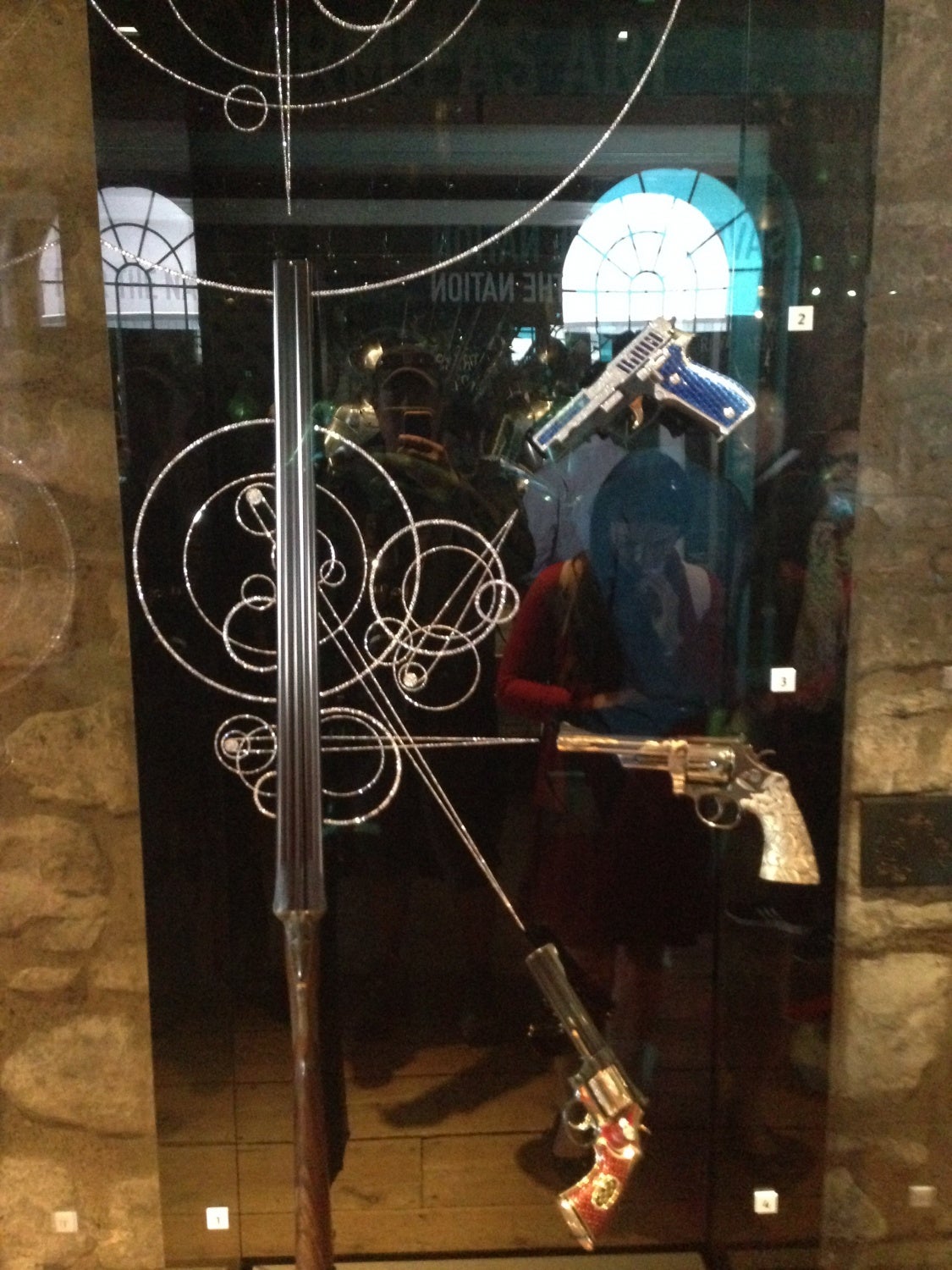
This jeweled revolver is a customized .357 Magnum with red gold, red enamel and diamond decoration. It was ordered by a client from a North London jeweler. It was never claimed and was handed to the Metropolitan Police under the 1997 buy-in program. It was transferred to the Royal Armouries in October 2006.

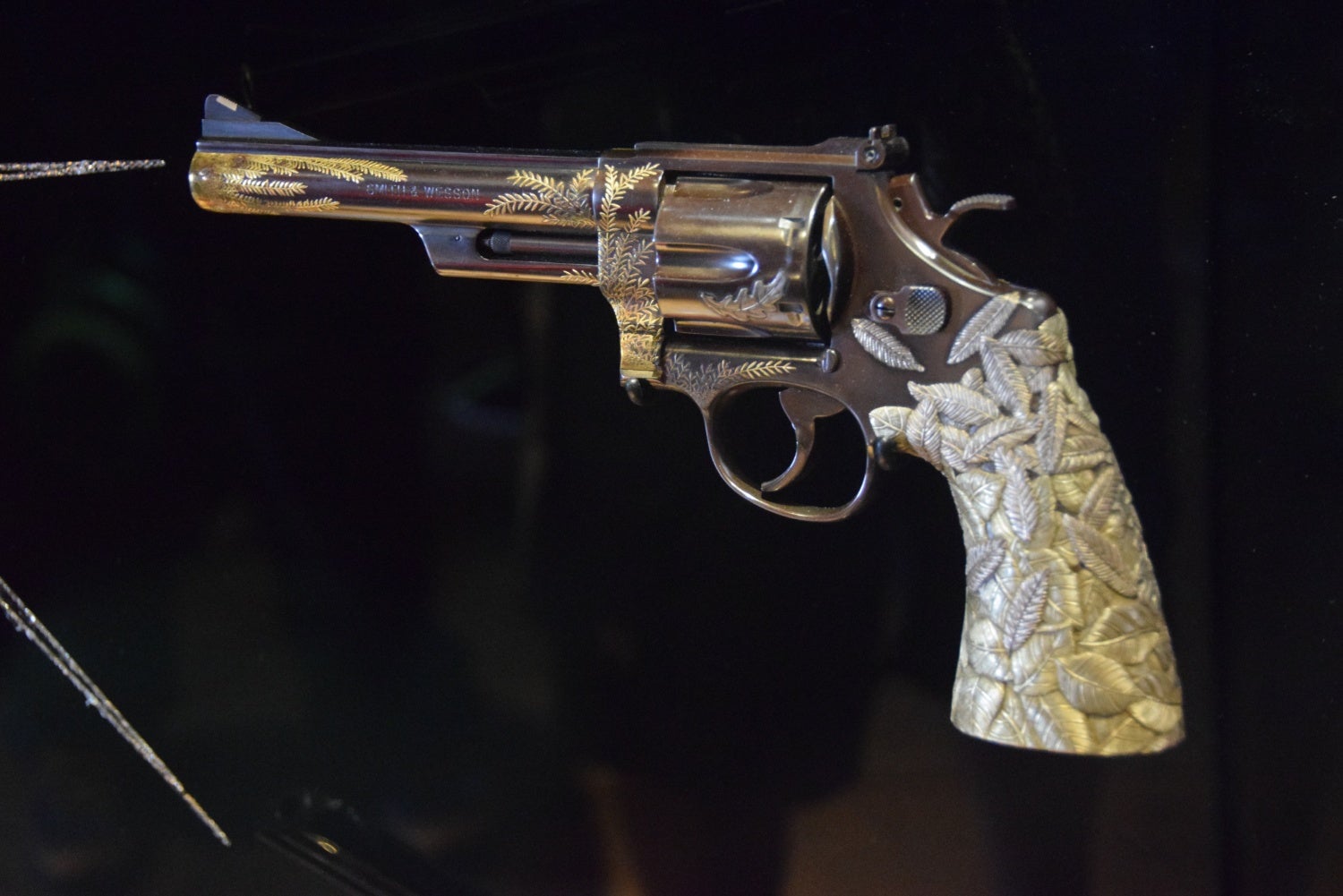
“Tiffany Revolver”. Smith and Wesson donated this revolver back in 1989 and the Trustees of the Armouries commissioned Tiffany and Co. decorate it. The leaves represent the 5 different woods used in gun-making.
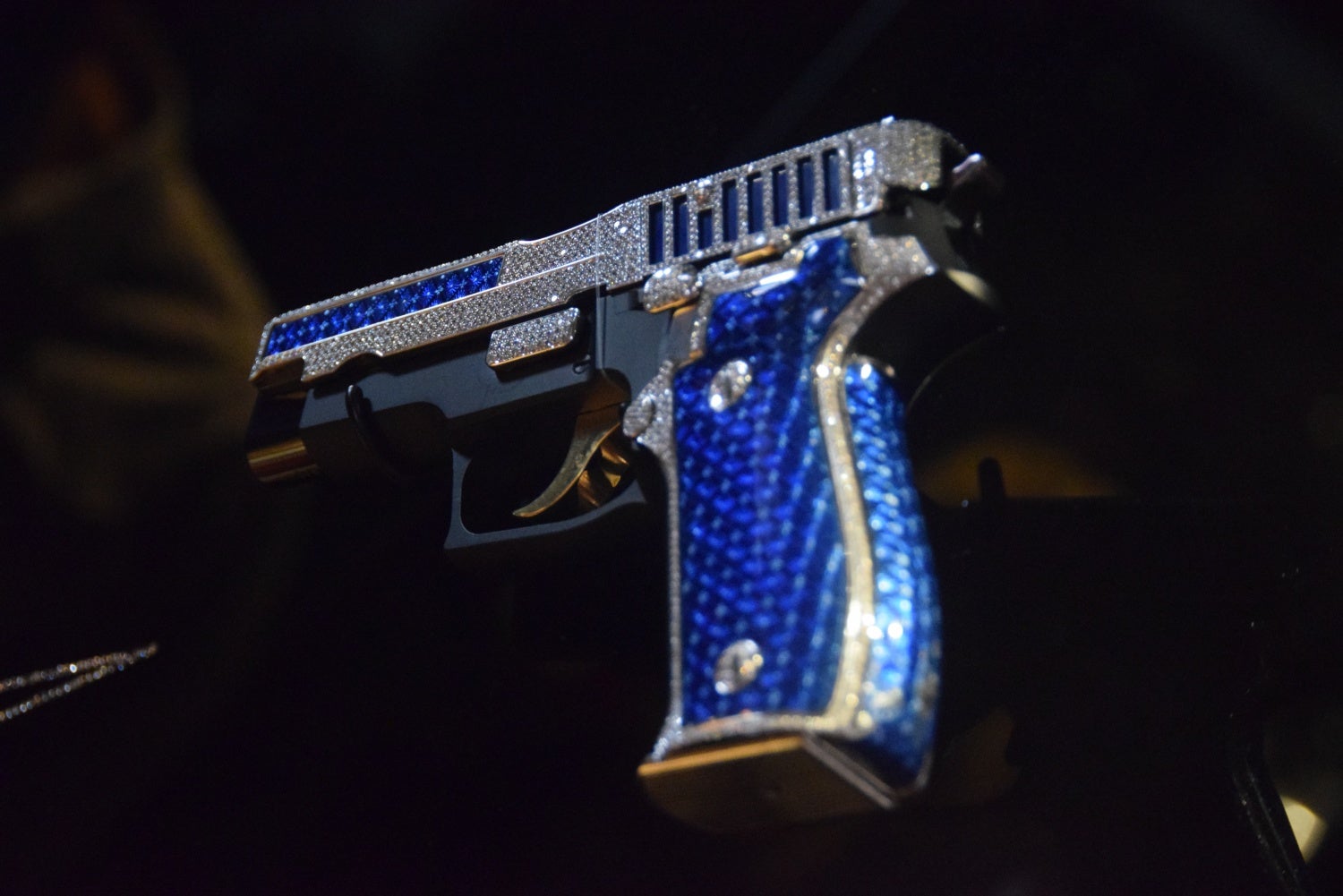
This jeweled Sig Sauer was commissioned by an individual with blue enamel panels, white gold, and 1,517 diamonds!!! Just like the red gold revolver, this gun was bought by the Metropolitan Police back in 1997. Important or unusual firearms, purchased in that 1997 scheme, were offered to suitable museums. The rest were destroyed.
Gold plated Sterling MK4

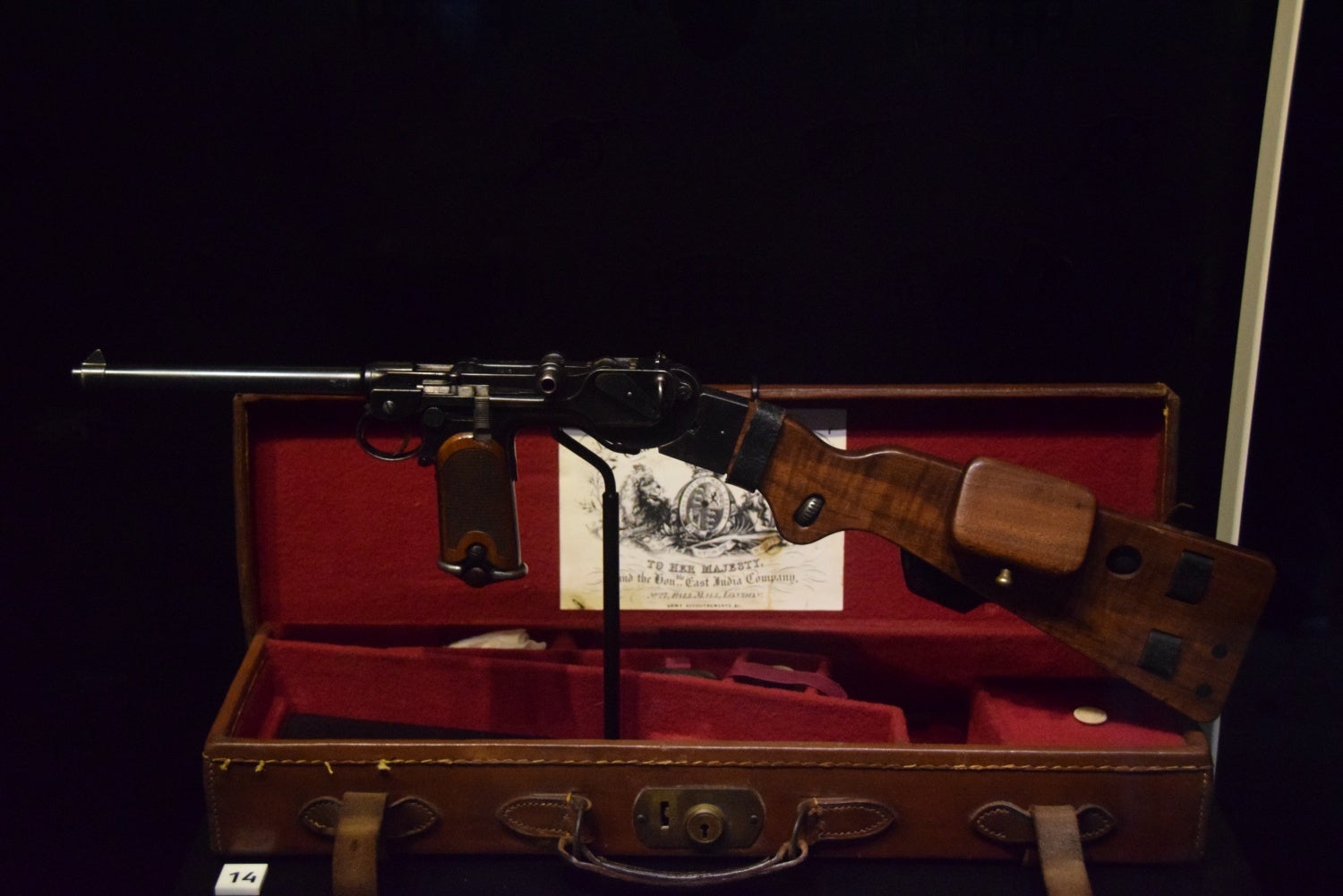
German Borchardt Model 1893.
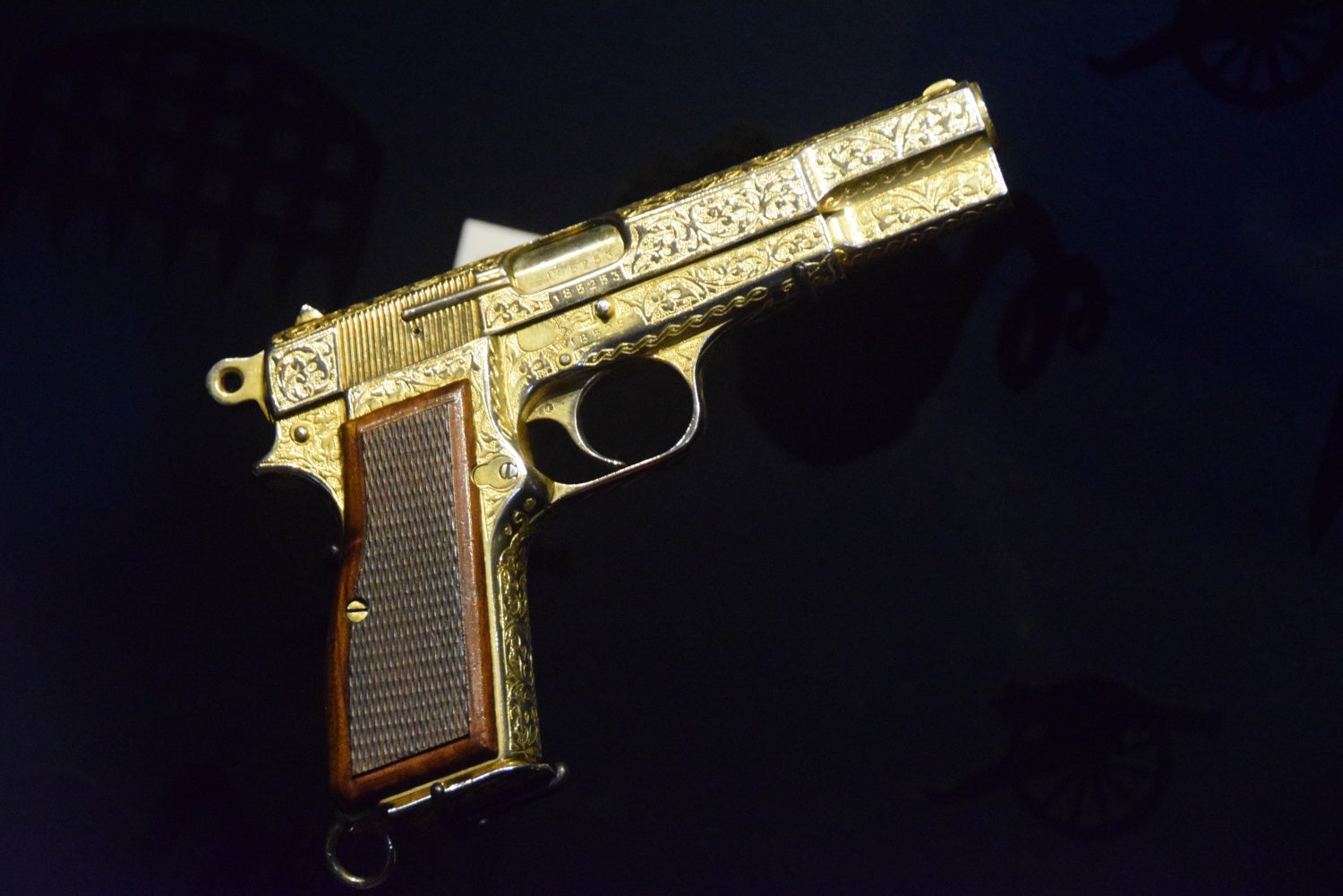
This Hi-power Browning clone was made by FMAP-DGFM in the 1970s. This particular gun was a presentation gift and was notoriously used in a murder in London several years later.
This dragon display is a nod to the past. As a show of British military strength, they would make displays from masses of weapons.
Royal Armouries Head of Creative Programmes, Karen Whitting dreamed up the idea for the mighty beast, inspired by the small figures of a dragon and a hydra in the scale model of the Grand Storehouse. Working with the creative team at Haley Sharpe Design a concept drawing was produced which York-based Paragon Creative have brought wonderfully to life.
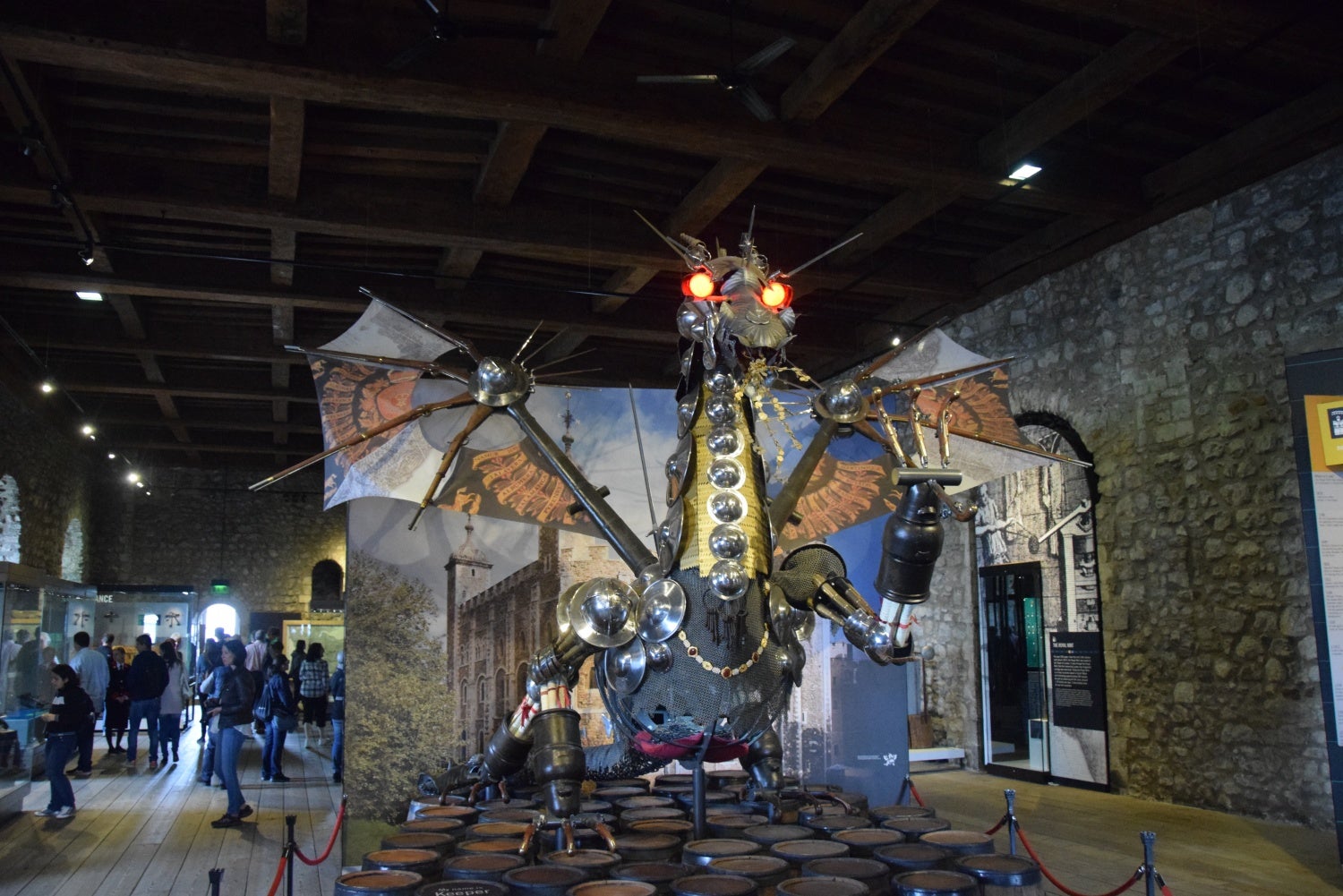
The dragon consists of over 2,672 items including:
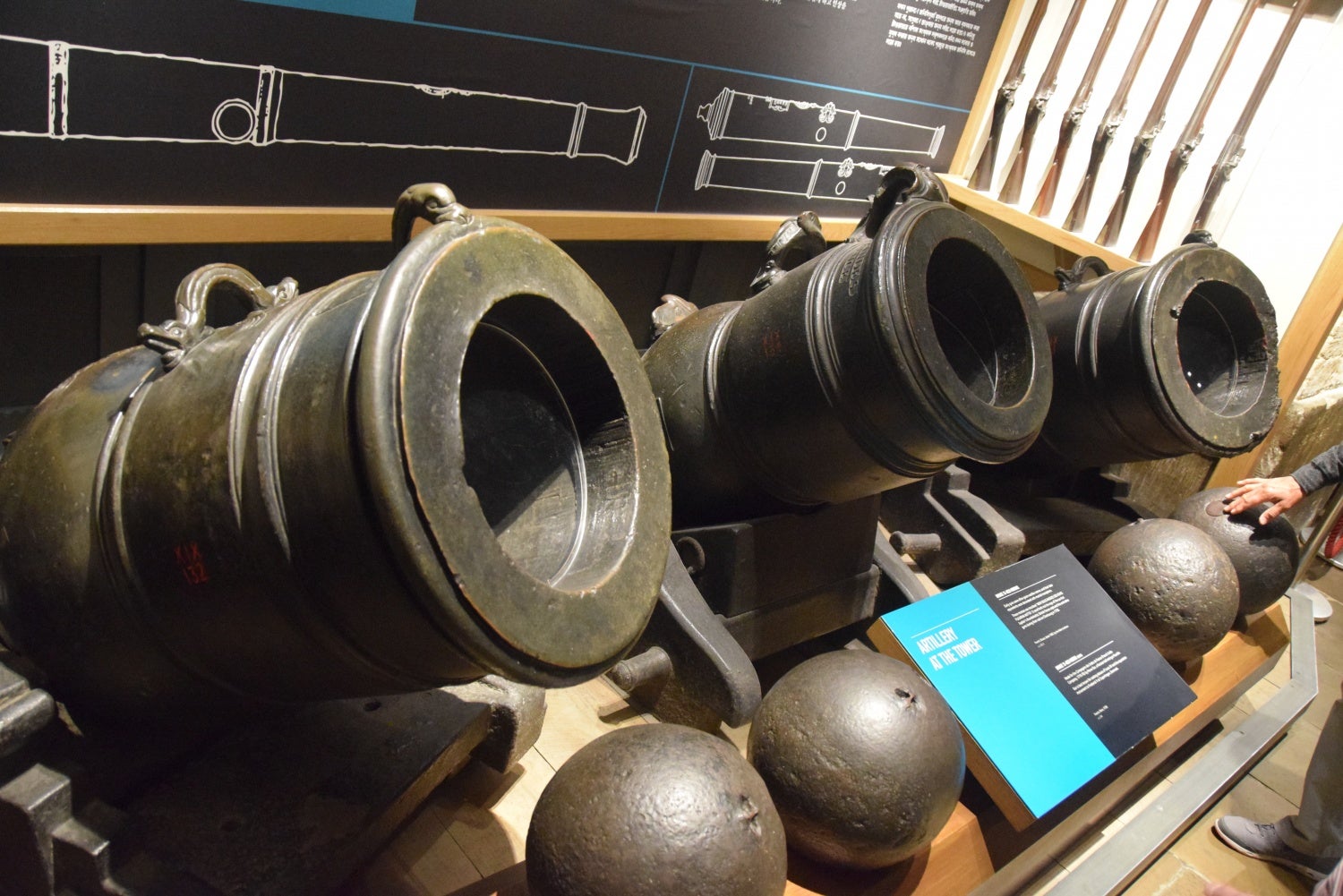
Here are some stubby cannons.
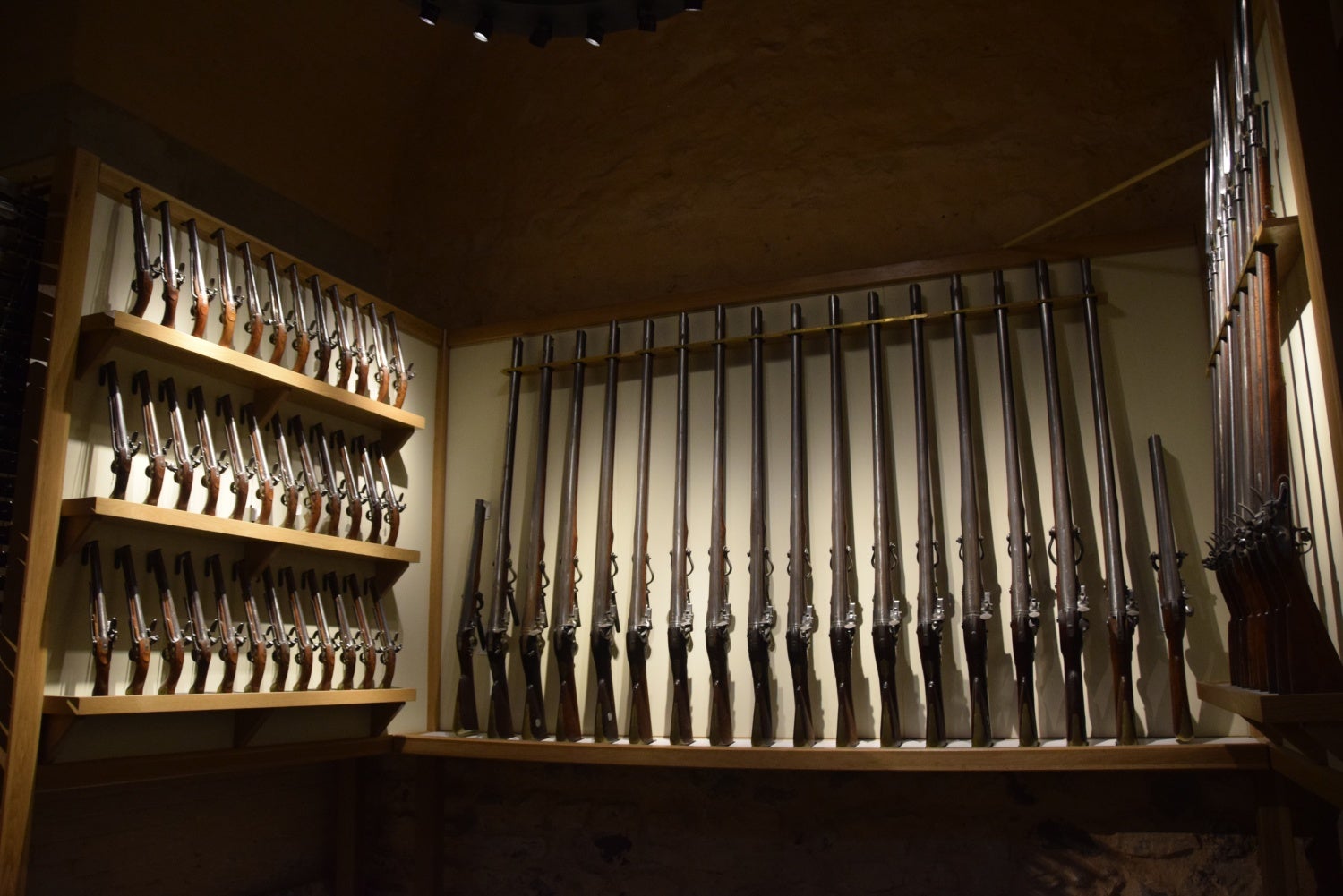
A display of flintlocks.
The Tower of London is a very interesting place and their exhibit is amazing.


